Visualizing the Kill: A Guide to SEM Analysis of Microbial Cell Deformation by Purified Antimicrobial Compounds
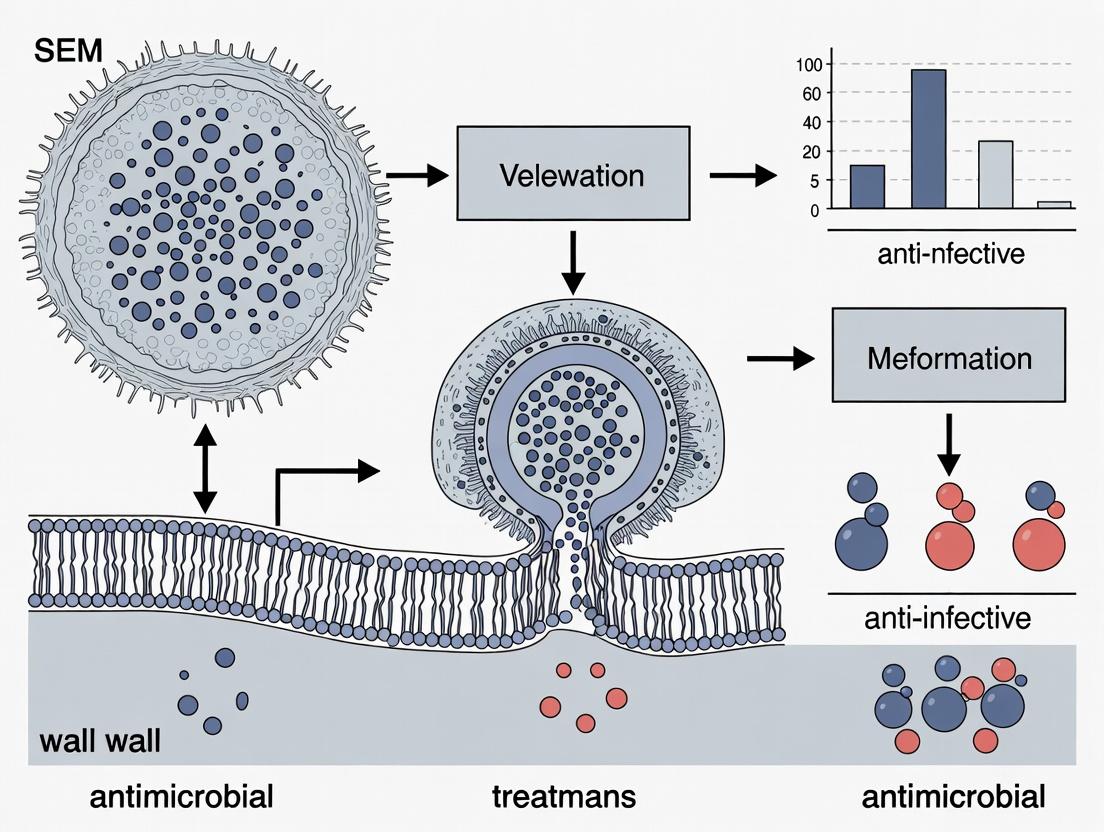
This comprehensive guide details the application of Scanning Electron Microscopy (SEM) for analyzing microbial cell structural damage and deformation following treatment with purified antimicrobials.
Visualizing the Kill: A Guide to SEM Analysis of Microbial Cell Deformation by Purified Antimicrobial Compounds
Abstract
This comprehensive guide details the application of Scanning Electron Microscopy (SEM) for analyzing microbial cell structural damage and deformation following treatment with purified antimicrobials. Aimed at researchers and drug development professionals, the article covers foundational principles of antimicrobial mechanisms and SEM sample preparation. It provides step-by-step methodological protocols, addresses common troubleshooting issues in sample preparation and imaging, and discusses validation techniques and comparative analysis with other imaging modalities. The guide synthesizes best practices for obtaining high-quality, interpretable data to elucidate the structural basis of antimicrobial action, supporting the development of novel therapeutic agents.
The Structural Battlefield: Understanding Antimicrobial Mechanisms and SEM Fundamentals
Visualizing microbial deformation directly is a cornerstone of modern antimicrobial research. It moves beyond minimum inhibitory concentration (MIC) data to provide mechanistic, phenotypic evidence of a compound's mode of action. Observing physical changes—cell wall collapse, pore formation, cytoplasmic leakage, or filamentation—through techniques like Scanning Electron Microscopy (SEM) validates antimicrobial activity and differentiates between biocidal and biostatic effects. This visual evidence is critical for advancing lead compounds in drug development, as it links biochemical targets to catastrophic structural failure.
Performance Comparison: SEM vs. Alternative Imaging Techniques for Microbial Deformation
While SEM is a gold standard for high-resolution surface imaging, several alternatives offer complementary data. The choice depends on resolution requirements, sample preparation needs, and the type of information sought.
Table 1: Comparison of Imaging Techniques for Visualizing Antimicrobial-Induced Deformation
| Technique | Resolution | Sample Preparation | Key Advantage for Antimicrobial Research | Key Limitation | Best for Visualizing |
|---|---|---|---|---|---|
| Scanning Electron Microscopy (SEM) | 1-20 nm | Fixation, dehydration, critical-point drying, sputter-coating | Exceptional topographical detail of surface deformation. | Requires vacuum; samples are non-viable, complex prep. | Cell wall pitting, collapse, blebbing, pore formation. |
| Transmission Electron Microscopy (TEM) | 0.5-2 nm | Fixation, embedding, ultrathin sectioning, staining | Ultra-high resolution; views internal structures. | Extremely complex preparation; 2D projections only. | Internal membrane disruption, nucleoid condensation. |
| Atomic Force Microscopy (AFM) | 0.1-1 nm (in Z) | Minimal (air-drying or liquid imaging) | 3D topographic maps in air/liquid; quantitative roughness/elasticity. | Slow scan speed; small scan area. | Real-time mechanical property changes, nanoscale pores. |
| Super-Resolution Fluorescence Microscopy (e.g., STED) | 20-50 nm | Fluorescent staining (membrane, DNA dyes) | Live-cell imaging; specific molecular targeting. | Requires fluorophores; indirect deformation inference. | Localization of damage sites in live cells over time. |
| Cryo-Electron Microscopy | 2-5 nm | Rapid freezing (vitrification) | Samples imaged in near-native hydrated state; no chemical fixation. | Extremely expensive, technically demanding. | Native-state architecture of damage, membrane lesions. |
Experimental Data Summary: A 2023 study comparing imaging of E. coli treated with a novel polymyxin derivative provides illustrative data. Table 2: Comparative Imaging Data from E. coli Treated with AMP LL-37 Derivative (5x MIC, 2h)
| Technique | Key Quantitative Metric | Control (Untreated) Cells | Treated Cells | Data Supporting Deformation |
|---|---|---|---|---|
| SEM | Average Surface Roughness (Ra, nm) | 8.2 ± 1.5 | 42.7 ± 12.3 | 5-fold increase indicates severe membrane/texture disruption. |
| AFM | Young's Modulus (MPa) | 35.4 ± 5.1 | 8.9 ± 3.2 | ~75% reduction in cell wall stiffness indicates loss of structural integrity. |
| Fluorescence (Live/Dead) | % PI-positive Cells | 2.1% | 98.5% | Correlates membrane permeability with physical collapse seen in SEM. |
Experimental Protocols for Key Comparisons
Protocol 1: Standard SEM Protocol for Antimicrobial-Treated Microbial Cells
- Culture & Treatment: Grow microbial culture to mid-log phase. Treat with antimicrobial at desired concentration (e.g., 1x, 5x MIC) for a set time. Include an untreated control.
- Fixation: Pellet cells (3,000 x g, 5 min). Resuspend in primary fixative (2.5% glutaraldehyde in 0.1M cacodylate buffer, pH 7.2) for 2-4 hours at 4°C.
- Washing: Wash 3x with cacodylate buffer.
- Post-Fixation (Optional): Resuspend in 1% osmium tetroxide in buffer for 1 hour.
- Dehydration: Gradual dehydration in ethanol series (30%, 50%, 70%, 90%, 100% x3), 10-15 minutes per step.
- Drying: Critical point dry using CO₂ as the transition fluid.
- Mounting & Coating: Mount cells on SEM stub with conductive adhesive. Sputter-coat with a 10-15 nm layer of gold/palladium.
- Imaging: Observe under SEM at accelerating voltages of 5-15 kV.
Protocol 2: Complementary AFM Protocol for Mechanical Property Measurement
- Sample Preparation: Treat cells as in SEM Protocol Step 1. Apply a 10 µL aliquot of cell suspension onto a clean glass slide or mica surface. Air-dry for 20 minutes.
- Mounting: Mount the sample onto the AFM stage.
- Cantilever Selection: Use a silicon nitride cantilever with a spring constant of ~0.1 N/m.
- Imaging Mode: Perform force spectroscopy mapping over individual cells in contact mode.
- Data Analysis: Use the force-distance curves from multiple points on each cell to calculate Young's Modulus (using Hertzian or Sneddon models) via the instrument's software.
Visualizing the Workflow: From Treatment to Image Analysis
Title: SEM Workflow for Antimicrobial Deformation Studies
The Scientist's Toolkit: Research Reagent Solutions for SEM Sample Prep
Table 3: Essential Materials for SEM Sample Preparation in Antimicrobial Studies
| Item | Function in Protocol | Key Consideration for Quality Results |
|---|---|---|
| Glutaraldehyde (2.5% in buffer) | Primary fixative. Cross-links proteins, preserves cellular ultrastructure. | Must be fresh, electron microscopy grade, buffered to physiological pH. |
| Cacodylate or Phosphate Buffer | Maintains osmotic pressure and pH during fixation/washing. | Prevents artifactual shrinkage or swelling of cells. |
| Osmium Tetroxide (1%) | Secondary fixative. Stabilizes lipids, adds electron density (contrast). | Highly toxic; use in fume hood. Provides crucial membrane detail. |
| Ethanol (Graded Series) | Dehydrates the sample by replacing water. | Use anhydrous grades for final 100% steps to avoid water residue. |
| Liquid CO₂ (Grade 4.5 or higher) | Transition fluid for Critical Point Drying (CPD). | High purity prevents contamination and ensures clean transition. |
| Conductive Adhesive Tape/Carbon Paint | Mounts sample to stub; ensures electrical conductivity. | Prevents sample charging under electron beam. |
| Gold/Palladium Target | Source for sputter coating. Creates a thin conductive metal layer. | 10-15 nm thickness is ideal for high-resolution imaging of bacteria. |
| SEM Specimen Stubs (Aluminum) | Holds the sample for insertion into the SEM chamber. | Must be clean and compatible with the coating system. |
Core Antimicrobial Mechanisms Leading to Cellular Deformation
This guide, framed within a thesis utilizing Scanning Electron Microscopy (SEM) to analyze microbial deformation, compares the cellular deformation outcomes induced by three core antimicrobial mechanisms: cell wall synthesis inhibition, membrane disruption, and intracellular protein synthesis inhibition. The comparison is based on experimental data from standardized in vitro assays using Staphylococcus aureus and Escherichia coli as model organisms.
Experimental Protocols for Cited Data
1. SEM Sample Preparation Protocol (Standardized for All Treatments):
- Culture & Treatment: Grow bacterial cultures to mid-log phase (OD600 ≈ 0.5) in Mueller-Hinton Broth. Treat with Minimum Inhibitory Concentration (MIC) of each antimicrobial for 2 hours.
- Primary Fixation: Pellet cells and resuspend in 2.5% glutaraldehyde in 0.1M sodium cacodylate buffer (pH 7.4) for 2 hours at 4°C.
- Washing: Wash three times with cacodylate buffer.
- Secondary Fixation: Post-fix with 1% osmium tetroxide for 1 hour.
- Dehydration: Subject samples to a graded ethanol series (30%, 50%, 70%, 90%, 100%).
- Critical Point Drying & Sputter Coating: Dry samples using a critical point dryer and coat with a 10nm gold-palladium layer.
- Imaging: Analyze using a field-emission SEM at 5-10 kV accelerating voltage. Measure cellular dimensions (length, width, surface depression depth) from ≥50 cells per group.
2. Cytoplasmic Leakage Assay (for Membrane Disruptors):
- Treat bacterial suspension with antimicrobial at MIC. At intervals, centrifuge and measure absorbance of the supernatant at 260nm (nucleic acids) and 280nm (proteins) using a spectrophotometer.
3. Time-Kill Kinetics Assay:
- Expose a standard inoculum (10^5 CFU/mL) to antimicrobial at 1x and 4x MIC in broth. Withdraw aliquots at 0, 2, 4, 6, and 24 hours, serially dilute, and plate on agar for colony-forming unit (CFU) enumeration.
Comparative Performance Data
Table 1: Quantitative SEM Analysis of Cellular Deformation After 2-Hour Treatment
| Antimicrobial Class (Example) | Core Mechanism | Target Organism | Avg. Cell Wall Depression (nm) | % Cells with Visible Lysis | Change in Avg. Cell Length (%) |
|---|---|---|---|---|---|
| β-lactam (Ampicillin) | Cell Wall Synthesis Inhibition | S. aureus | 15.2 ± 3.1 | <5% | +18.5% (Elongation) |
| Lipopeptide (Daptomycin) | Membrane Disruption (Depolarization) | S. aureus | 85.7 ± 12.4 | 92% | -5.2% (Shrinkage) |
| Polymyxin B (Colistin) | Membrane Disruption (Disintegration) | E. coli | Membrane rupture, no measureable depression | 99% | N/A (Complete lysis) |
| Aminoglycoside (Gentamicin) | Protein Synthesis Inhibition (30S) | E. coli | 5.5 ± 2.8 | 0% | +2.1% |
Table 2: Functional Correlates of Deformation from Supporting Assays
| Antimicrobial Class (Example) | Time to 3-log Kill at 4x MIC | Cytoplasmic Leakage (A260 increase after 30 min) | Primary SEM Morphological Signature |
|---|---|---|---|
| β-lactam (Ampicillin) | >6 hours | None | Septal bulging, filamentation, eventual lysis. |
| Lipopeptide (Daptomycin) | <2 hours | Moderate (0.45) | Profound surface pits, membrane blebbing, collapse. |
| Polymyxin B (Colistin) | <1 hour | Severe (1.28) | Total membrane disintegration, vesiculation, cell debris. |
| Aminoglycoside (Gentamicin) | 4-6 hours | None | Minimal deformation, some surface wrinkling. |
Visualizing Antimicrobial Mechanisms and Workflow
Title: Antimicrobial Mechanisms and Deformation Outcomes
Title: Experimental SEM Preparation Workflow
The Scientist's Toolkit: Key Research Reagent Solutions
Table 3: Essential Materials for Antimicrobial Deformation Studies
| Item | Function in Research | Example Product/Catalog |
|---|---|---|
| Glutaraldehyde (Electron Microscopy Grade) | Primary fixative that cross-links proteins, stabilizing cellular structures for SEM. | Sigma-Aldrich, G5882 |
| Osmium Tetroxide (Crystalline, 4% Aqueous Soln.) | Secondary fixative that stabilizes lipids and provides electronic contrast for SEM imaging. | EMS, 19150 |
| 0.1M Sodium Cacodylate Buffer | A stable, non-reactive buffer for maintaining pH during fixation and washing steps. | Thermo Scientific, 11839 |
| Hexamethyldisilazane (HMDS) or Critical Point Dryer | Alternative to CPD for removing liquid without collapsing delicate cell structures. | Sigma-Aldrich, 440191 |
| Gold/Palladium Target (for Sputter Coater) | Source for depositing a thin, conductive metal layer on non-conductive biological samples. | Quorum, SC7620 |
| Mueller-Hinton Broth/Agar (CAMHB for S. aureus) | Standardized, low-antagonist media for reproducible antimicrobial susceptibility testing. | Becton Dickinson, 212322 |
| Propidium Iodide or SYTOX Green Stain | Membrane-impermeant fluorescent dyes to validate membrane disruption via fluorescence microscopy. | Thermo Fisher, S7020 |
| Purified Antimicrobial Peptide/Compound | Research-grade active for mechanistic studies, free of formulation excipients. | TOKU-E, Custom Synthesis |
Scanning Electron Microscopy (SEM) is a critical tool for visualizing the surface ultrastructure of biological specimens, including microbial cells. Within the context of research on microbial cell deformation after treatment with purified antimicrobials, SEM provides direct, high-resolution evidence of morphological alterations such as cell wall pitting, lysis, blebbing, and collapse. This comparison guide evaluates the performance of conventional, environmental, and cryo-SEM techniques for such applications, supported by recent experimental data.
Comparative Performance of SEM Modalities for Biological Imaging
The choice of SEM modality significantly impacts the fidelity of observed antimicrobial-induced deformation artifacts. The table below compares key performance metrics.
Table 1: Comparison of SEM Modalities for Imaging Antimicrobial-Treated Microbial Cells
| Feature | Conventional High-Vacuum SEM | Environmental SEM (ESEM) | Cryo-SEM |
|---|---|---|---|
| Sample Preparation | Dehydration, chemical fixation, critical point drying, sputter-coating. | Minimal; can be hydrated, uncoated or lightly coated. | Rapid freezing (plunge/cryo-immobilization), cryo-transfer, fracturing, sublimation. |
| Vacuum Requirement | High vacuum (~10⁻⁶ mbar). | Low vacuum (1-10 torr; hydrated environment). | High vacuum in cryo-stage chamber. |
| State of Sample | Dry, conductive coating required. | Hydrated or partially hydrated, near-native state. | Frozen-hydrated, vitrified state preserving native structure. |
| Key Advantage | High resolution (typically 1-5 nm), stable imaging. | Allows dynamic studies (e.g., drying); no metal coating needed. | Eliminates chemical artifacts, preserves soluble components, excellent for surface topography. |
| Limitation for Antimicrobial Studies | Dehydration/coating can introduce artifacts like shrinkage, masking subtle deformations. | Lower maximum resolution (~10-20 nm) due to gas scattering. | Complex and expensive setup; risk of ice crystal damage if freezing is not optimal. |
| Best Suited For | Detailed surface morphology of robust, fixed cells. | Observing dynamic processes or sensitive, uncoated biofilms. | High-fidelity preservation of instantaneous cell morphology post-treatment. |
Data synthesized from recent literature (2023-2024) on SEM techniques in antimicrobial mechanism research.
Detailed Experimental Protocols
Protocol 1: Conventional SEM for Antimicrobial-Treated Bacteria
This protocol is standard for observing definitive, gross morphological changes after antimicrobial exposure.
- Treatment & Fixation: Expose bacterial culture (e.g., Staphylococcus aureus) to purified antimicrobial peptide (e.g., 1x MIC) for 30-60 minutes. Immediately mix culture with 2.5% glutaraldehyde in 0.1M sodium cacodylate buffer (pH 7.2) for 2 hours at 4°C.
- Washing & Post-fixation: Pellet cells (5,000 x g, 10 min) and wash 3x with buffer. Post-fix in 1% osmium tetroxide in the same buffer for 1 hour at 4°C.
- Dehydration: Pellet and dehydrate in an ethanol series (30%, 50%, 70%, 80%, 90%, 100%) for 10 minutes each step, followed by a second 100% ethanol step.
- Drying & Mounting: Perform critical point drying using liquid CO₂ as the transition fluid. Mount dried samples on aluminum stubs using conductive carbon tape.
- Sputter-Coating: Coat samples with a 5-10 nm layer of gold/palladium using a sputter coater to ensure conductivity.
- Imaging: Insert into high-vacuum SEM. Image at accelerating voltages of 5-10 kV using secondary electron detector.
Protocol 2: Cryo-SEM Workflow for High-Fidelity Preservation
This protocol is optimal for capturing instantaneous, artifact-free cell deformation.
- Treatment & Cryo-immobilization: Incubate bacteria with antimicrobial. Apply 3-5 µL of suspension to a specialized cryo-SEM specimen carrier. Rapidly plunge-freeze into a slushed nitrogen (-210°C) or liquid ethane/propane mixture to achieve vitrification.
- Cryo-Transfer & Fracturing: Under liquid nitrogen, transfer the frozen sample to a cryo-preparation chamber. Fracture the sample with a cold knife to expose internal surfaces if desired.
- Sublimation (Optional): Raise the sample temperature (e.g., to -95°C for 5-10 min) to sublimate surface ice (etching), revealing underlying topography.
- Sputter-Coating: Apply a thin conductive coating (e.g., platinum) in the cryo-chamber.
- Cryo-Imaging: Transfer the prepared sample under vacuum to the SEM cryo-stage (maintained at <-140°C). Image at low kV (1-5 kV) using a secondary electron detector optimized for cryo-work.
Visualization of Method Selection and Workflow
Decision Workflow for SEM Modality in Antimicrobial Studies
Comparative SEM Sample Preparation Workflows
The Scientist's Toolkit: Research Reagent Solutions
Table 2: Essential Materials for SEM Analysis of Antimicrobial-Treated Microbes
| Item | Function in Protocol | Key Consideration for Antimicrobial Studies |
|---|---|---|
| Glutaraldehyde (2.5-4%) | Primary fixative; cross-links proteins, stabilizing structure. | Must be applied quickly post-treatment to "freeze" the deformation state. |
| Osmium Tetroxide (1%) | Secondary fixative; stabilizes lipids, provides conductivity. | Enhances membrane contrast, crucial for viewing pits or tears. |
| Cacodylate or Phosphate Buffer | Maintains pH and osmolarity during chemical fixation. | Must be isotonic to prevent osmotic artifacts that mimic damage. |
| Hexamethyldisilazane (HMDS) | Alternative drying agent; simpler than critical point drying. | Faster, but can leave residues; suitable for preliminary surveys. |
| Gold/Palladium Target | Material for sputter-coating; provides conductive layer. | Thinner coatings (5 nm) preserve finer topographical details. |
| Cryogen (e.g., Liquid Ethane) | Medium for rapid plunge-freezing to achieve vitrification. | Faster cooling than liquid nitrogen alone, prevents ice crystals. |
| Cryo-Preparation Station | Allows transfer, fracturing, coating of frozen samples under vacuum. | Essential for revealing intracellular damage from membrane-acting antimicrobials. |
| Conductive Adhesive (Carbon Tape/Glue) | Mounts sample to stub, prevents charging. | Ensure it is non-fluorescent if performing correlated SEM-fluorescence. |
For research on antimicrobial-induced microbial cell deformation, conventional SEM offers accessible, high-resolution imaging of fixed endpoints. However, Cryo-SEM is increasingly the gold standard for definitive mechanism studies, as it eliminates preparation artifacts that can obscure or mimic true deformation. ESEM occupies a niche for dynamic, hydrated analyses. The choice of modality directly influences the interpretation of cellular damage, and should be aligned with the specific research question regarding antimicrobial action.
Within the context of a broader thesis on SEM analysis of microbial cell deformation after treatment with purified antimicrobials, this guide compares the performance of antimicrobial agents targeting three critical microbial structures: the cell wall, cytoplasmic membrane, and surface appendages. The efficacy of these agents is directly observable via scanning electron microscopy (SEM), which reveals distinct morphological alterations correlating with the mechanism of action.
Performance Comparison of Antimicrobials by Target
The following table summarizes experimental data from recent studies on purified antimicrobials, comparing their impact on microbial viability and the characteristic cell deformations observed via SEM.
Table 1: Comparative Performance of Antimicrobials Targeting Microbial Structures
| Target Structure | Exemplar Antimicrobial | Alternative Antimicrobial | MIC (µg/mL) vs S. aureus | Key SEM Morphological Deformation | Time to Visible Deformation (Minutes) |
|---|---|---|---|---|---|
| Cell Wall | Penicillin G | Vancomycin | 0.03 vs 1.2 | Cell wall bulging, lysis, pore formation. | 30-45 |
| Cell Membrane | Daptomycin | Colistin | 0.5 vs 2.0 | Membrane depolarization, blistering, collapse. | 5-15 |
| Surface Structures | Mannosidase* | Specific Bacteriophage (Tail) | N/A (Functional Inhibition) | Loss of fimbriae/pili, impaired adhesion. | 60-120 |
*Enzyme targeting biofilm matrix and adhesins.
Detailed Experimental Protocols
Protocol 1: SEM Sample Preparation for Antimicrobial Deformation Analysis
This protocol is essential for visualizing the comparative effects outlined in Table 1.
- Culture & Treatment: Grow microbial cultures to mid-log phase. Treat with antimicrobial at the predetermined MIC for a defined period (e.g., 15, 30, 60 mins). Include an untreated control.
- Fixation: Pellet cells and resuspend in primary fixative (2.5% glutaraldehyde in 0.1M cacodylate buffer, pH 7.4) for 2 hours at 4°C.
- Washing: Wash cells 3x with cacodylate buffer.
- Dehydration: Serially dehydrate in ethanol solutions (30%, 50%, 70%, 90%, 100% x2), 10 minutes per step.
- Critical Point Drying (CPD): Transition solvent to liquid CO₂ and perform CPD to preserve ultrastructure.
- Mounting & Sputter-Coating: Mount samples on SEM stubs with conductive tape. Coat with a 10nm layer of gold/palladium.
- Imaging: Observe under SEM at accelerating voltages of 5-15 kV.
Protocol 2: Minimum Inhibitory Concentration (MIC) Assay (Broth Microdilution)
Used to generate the quantitative MIC data in Table 1.
- Prepare two-fold serial dilutions of the purified antimicrobial in cation-adjusted Mueller-Hinton broth in a 96-well plate.
- Inoculate each well with a standardized microbial suspension (5 × 10⁵ CFU/mL final concentration).
- Incubate the plate at 37°C for 16-20 hours.
- The MIC is the lowest concentration of antimicrobial that completely inhibits visible growth.
Visualizing the Experimental Workflow and Mechanisms
Diagram Title: Antimicrobial Study Workflow and Target Mechanisms
The Scientist's Toolkit: Research Reagent Solutions
Table 2: Essential Reagents and Materials for Antimicrobial Deformation Studies
| Item | Function in Research |
|---|---|
| Glutaraldehyde (2.5% in buffer) | Primary fixative that cross-links proteins, preserving cellular ultrastructure for SEM. |
| Cacodylate Buffer (0.1M) | Provides a stable, non-reactive pH environment during chemical fixation. |
| Ethanol Series (30%-100%) | Gradually removes water from fixed cells to prepare for critical point drying. |
| Liquid CO₂ (Grade 4.0 or higher) | Transition fluid for critical point drying, preventing surface tension damage. |
| Gold/Palladium Target | Source for sputter-coating to create a conductive metal layer on samples for SEM. |
| Cation-Adjusted Mueller-Hinton Broth | Standardized medium for MIC assays, ensuring reproducible cation concentrations. |
| Purified Antimicrobial Standards | High-purity compounds for definitive mechanism-of-action studies without formulation excipients. |
| Conductive Carbon Tape | Secures SEM samples to aluminum stubs while maintaining electrical conductivity. |
Selecting Model Microorganisms and Appropriate Purified Antimicrobials
Within the context of a broader thesis on Scanning Electron Microscopy (SEM) analysis of microbial cell deformation after treatment with purified antimicrobials, the selection of appropriate model organisms and well-characterized antimicrobial agents is paramount. This guide objectively compares commonly used models and purified antimicrobials, supported by experimental data, to inform rigorous and reproducible research.
Comparative Guide: Model Microorganisms for SEM-Based Antimicrobial Studies
The ideal model organism exhibits consistent cultivability, well-understood cell wall/membrane biology, and relevance to human pathogenesis or industrial applications.
Table 1: Comparison of Model Microorganisms for Antimicrobial SEM Research
| Microorganism | Strain Example | Key Cell Wall/Envelope Features | Relevance to Human Disease | Growth Rate (Doubling Time) | Advantages for SEM | Disadvantages |
|---|---|---|---|---|---|---|
| Gram-Negative Bacterium | Escherichia coli K-12 | Outer membrane (LPS), thin peptidoglycan layer, periplasmic space. | Urinary tract infections, sepsis. | ~20-30 min | Clear visualization of membrane blebbing & lysis. | Outer membrane can be a barrier; requires specific agents. |
| Gram-Positive Bacterium | Staphylococcus aureus (e.g., ATCC 25923) | Thick, multi-layered peptidoglycan with teichoic acids, no outer membrane. | Skin infections, pneumonia, bacteremia. | ~30 min | Excellent for observing cell wall distortion, collapse, and septum inhibition. | Less prone to lysis than some Gram-negatives. |
| Yeast/Fungus | Candida albicans (e.g., SC5314) | Chitin, β-glucan, and mannoprotein layers. | Candidiasis, systemic fungal infections. | ~60-90 min (yeast phase) | Study of both yeast and hyphal forms; clear membrane damage. | Slower growth; more complex cell wall requires specific lytic enzymes for sample prep. |
| Mycobacterium | Mycobacterium smegmatis mc²155 | Complex, lipid-rich mycolic acid outer layer. | Model for M. tuberculosis. | ~3-4 hours | Unique for studying anti-mycobacterial agents targeting the unique envelope. | Very slow growth; requires specialized biosafety for pathogenic species. |
Comparative Guide: Purified Antimicrobials for Mechanistic Deformation Studies
Using purified, chemically defined antimicrobials is essential to attribute specific cell deformation phenotypes to a direct mechanism of action, avoiding confounding effects from impurities.
Table 2: Comparison of Purified Antimicrobials for Inducing Characteristic Cell Deformations
| Antimicrobial Class | Specific Purified Agent (Example) | Primary Molecular Target | Expected SEM-Detectable Deformation Phenotype | Typical Working Concentration (for model organisms) | Key Advantage for Study | Data Source (Example) |
|---|---|---|---|---|---|---|
| β-Lactam | Ampicillin (sodium salt, >95% purity) | Penicillin-binding proteins (PBPs), inhibiting peptidoglycan cross-linking. | Filamentation (in E. coli), aberrant septa, cell lysis. | 10-100 µg/mL (varies by strain/MIC) | Well-characterized; induces classic, recognizable deformations. | Cushnie et al., 2020 (Microbiology) |
| Glycopeptide | Vancomycin HCl (purified) | D-Ala-D-Ala terminus of peptidoglycan precursors. | Thickened, irregular cell walls in Gram-positives; possible cell clumping. | 5-20 µg/mL (for S. aureus) | Target-specific; ideal for Gram-positive cell wall studies. | Périchon & Courvalin, 2009 (Antimicrob. Agents Chemother.) |
| Polymyxin | Polymyxin B sulfate (purified) | Lipopolysaccharide (LPS) in Gram-negative outer membrane. | Rapid outer membrane disruption, blebbing, and ultimate cell lysis. | 1-10 µg/mL (for E. coli) | Excellent for studying outer membrane damage and rapid lytic effects. | Yu et al., 2015 (Nature Communications) |
| Antifungal Polyene | Nystatin (from S. nodosus, purified) | Ergosterol in fungal membranes, forming pores. | Severe membrane wrinkling, pitting, and collapse of cellular integrity. | 10-50 U/mL (for C. albicans) | Direct visual evidence of membrane-targeting action. | Mesa-Arango et al., 2012 (Med Mycol) |
| DNA Gyrase Inhibitor | Ciprofloxacin HCl (purified) | DNA gyrase and topoisomerase IV. | Cell elongation, filamentation (in some strains), possible surface roughness. | 0.1-5 µg/mL (for E. coli) | Illustrates non-lytic, target-specific effects leading to morphological changes. | Malik et al., 2006 (J Med Microbiol) |
Experimental Protocol: Standardized SEM Sample Preparation Post-Antimicrobial Treatment
This protocol is critical for generating comparable deformation data across studies.
- Culture and Treatment: Grow model organism to mid-log phase in appropriate broth. Treat with a predetermined sub-MIC or MIC of purified antimicrobial in a controlled environment (e.g., 37°C with shaking) for a defined period (e.g., 30, 60, 120 mins). Include an untreated control.
- Primary Fixation: Pellet cells and resuspend in 2.5-4% glutaraldehyde in 0.1M sodium cacodylate or phosphate buffer (pH 7.2-7.4) for a minimum of 2 hours at 4°C.
- Washing: Wash cells 3x with the same buffer to remove fixative.
- Secondary Fixation (Optional but Recommended): Resuspend pellet in 1% osmium tetroxide in buffer for 1-2 hours at 4°C.
- Dehydration: Subject cells to a graded ethanol series (e.g., 30%, 50%, 70%, 80%, 90%, 100% x3), 10-15 minutes per step.
- Critical Point Drying (CPD): Transition from 100% ethanol to a transitional fluid (e.g., CO₂) and perform CPD to prevent cellular collapse from surface tension.
- Mounting and Sputter Coating: Mount dried samples on SEM stubs using conductive adhesive tape. Coat with a thin (5-10 nm) layer of gold/palladium using a sputter coater to ensure conductivity.
- SEM Imaging: Image using a field emission SEM (FE-SEM) at accelerating voltages between 2-10 kV to optimize surface detail visualization.
Title: SEM Sample Prep Workflow Post-Treatment
The Scientist's Toolkit: Key Research Reagent Solutions
Table 3: Essential Materials for Antimicrobial Deformation Studies
| Item | Function/Benefit | Example Product/Specification |
|---|---|---|
| Defined Growth Media | Ensures reproducible growth and consistent expression of drug targets. | Mueller-Hinton Broth (for AST), RPMI-1640 (for Candida). |
| Purified Antimicrobial Standard | Chemically defined agent with known potency; eliminates confounding effects. | USP/EP Reference Standards, >95% purity from suppliers like Sigma-Aldrich. |
| Glutaraldehyde Solution (EM Grade) | Primary fixative that cross-links proteins, preserving ultrastructure. | 25% aqueous solution, electron microscopy grade, low polymers. |
| Osmium Tetroxide Crystals | Secondary fixative that stabilizes lipids and provides conductivity. | Sealed ampules, 99.8% purity. Handle with extreme caution. |
| Cacodylate Buffer | Effective buffer for fixation, maintaining pH near 7.4. | Sodium cacodylate trihydrate, 0.2M solution. |
| Critical Point Dryer | Removes liquid without gas-liquid interface, preventing collapse. | Equipment with automated CO₂ process. |
| Conductive Adhesive | Secures sample to stub without charging artifacts. | Carbon adhesive tabs or double-sided conductive tape. |
| Sputter Coater | Applies a thin, uniform metal layer for electron conductivity. | Desk-top sputter coaters with gold/palladium target. |
| Field Emission SEM | High-resolution imaging at low kV for delicate biological samples. | FE-SEM with in-lens or mixed detectors for surface topography. |
Key Signaling Pathways Affecting Cell Morphology Under Antimicrobial Stress
Title: Stress Pathways Leading to SEM-Observable Deformations
The choice of Escherichia coli or Staphylococcus aureus paired with a β-lactam like ampicillin provides a foundational system for studying classic cell wall damage. For more specialized studies, Candida albicans with nystatin or Mycobacterium smegmatis with ethambutol can reveal deformation mechanisms unique to their cell envelopes. Rigorous experimental protocols and the use of purified agents are non-negotiable for generating high-quality, interpretable SEM data that can reliably contribute to the understanding of antimicrobial mechanism of action.
This guide is framed within a thesis investigating Scanning Electron Microscopy (SEM) analysis of microbial cell deformation following treatment with purified antimicrobials. A rigorous pre-treatment experimental design is paramount for generating interpretable and reproducible SEM data. Two foundational pre-treatment parameters are the determination of the Minimum Inhibitory Concentration (MIC) and the standardization of antimicrobial exposure times. This guide objectively compares common methodologies for these determinations, providing experimental data to inform protocol selection.
Comparison of MIC Determination Methods
The MIC is the lowest concentration of an antimicrobial that prevents visible growth of a microorganism. Accurate MIC is critical for selecting appropriate treatment concentrations for subsequent SEM deformation studies.
Table 1: Comparison of Broth Dilution MIC Methods
| Method | Principle | Advantages | Disadvantages | Key Performance Data (vs. Reference) |
|---|---|---|---|---|
| Broth Microdilution (CLSI M07) | Serial 2-fold dilutions in 96-well plates, standardized inoculum (~5x10⁵ CFU/mL). | High-throughput, reproducible, small reagent volumes, gold standard. | Requires specific equipment, static measurement. | >95% agreement with macrodilution reference. Inter-lab reproducibility: 92-98%. |
| Agar Dilution | Antimicrobial incorporated into agar plates, spotted with standardized inoculum. | Can test multiple strains on same plate, isolates not affected by drug degradation. | Labor-intensive, less flexible for concentration range. | Excellent for fastidious organisms. Agreement with broth microdilution: ~90%. |
| Macrodilution (Tube Dilution) | Serial dilutions in culture tubes (usually 2 mL). | Simple, allows for subculturing from clear tubes for MBC determination. | Large reagent volumes, low throughput. | Considered historical reference method. |
| Commercial Gradient Strips (E-test) | Pre-formed, continuous antimicrobial gradient on plastic strip. MIC read at intersection. | Simple, flexible, provides an approximate MIC value. | Expensive per test, semi-quantitative. | Essential agreement (±1 log₂ dilution) with broth microdilution: 90-95%. |
Experimental Protocol: Reference Broth Microdilution (CLSI M07)
- Preparation: Reconstitute purified antimicrobial in appropriate solvent. Create a stock solution at a high concentration (e.g., 5120 µg/mL).
- Dilution: Perform serial two-fold dilutions in cation-adjusted Mueller-Hinton Broth (CAMHB) in a 96-well plate. Final volume per well: 100 µL.
- Inoculum: Adjust a microbial suspension to a 0.5 McFarland standard (~1x10⁸ CFU/mL). Further dilute in broth to achieve ~5x10⁵ CFU/mL.
- Inoculation: Add 100 µL of the adjusted inoculum to each well of the antimicrobial plate. Final volume: 200 µL. Final inoculum: ~5x10⁵ CFU/mL.
- Controls: Include growth control (broth + inoculum), sterility control (broth only), and solvent control.
- Incubation: Incubate at 35±2°C for 16-20 hours (bacteria).
- Reading: MIC is the lowest concentration with no visible turbidity. Use a mirror for clarity. Confirm with optical density (OD600) if needed.
Comparison of Exposure Time Protocols for SEM Studies
For SEM analysis of cell deformation, exposure time must be carefully calibrated to capture dynamic morphological changes without causing complete lysis that obscures intermediate damage.
Table 2: Exposure Time Protocols for SEM Pre-Treatment
| Protocol Focus | Typical Exposure Times | Rationale & Experimental Outcome | Data Relevance for SEM |
|---|---|---|---|
| Sub-MIC Exposure | 2-6 hours | To study initial adaptive stress responses and subtle cell wall remodeling. Shows early blebbing, minor surface roughness. | Captures the onset of deformation before cell death. |
| At-MIC Exposure | 1-2 x Generation Time (e.g., 20-60 min for E. coli) | To study the lethal action at the inhibitory threshold. Reveals clear deformation (pitting, pronounced blebs, elongation). | Optimal for linking inhibitory concentration to structural compromise. |
| Time-Kill Kinetics Guided | 30min, 1h, 2h, 4h, 6h, 24h | Samples taken at intervals from a time-kill curve. Correlates specific morphological damage with log-phase death. | Provides a temporal map of deformation progression. Most comprehensive. |
| Supra-MIC (Bactericidal) | 1-4 hours | To study rapid, catastrophic damage. May show cell lysis, large holes, and debris. | Useful for understanding the endpoint of antimicrobial action but may miss subtle effects. |
Experimental Protocol: Time-Kill Kinetics Guided Exposure
- Setup: Inoculate flasks containing CAMHB with antimicrobial at 0.5x, 1x, 2x, and 4x MIC. Include an antimicrobial-free growth control.
- Standardization: Use a starting inoculum of ~5x10⁵ CFU/mL.
- Sampling: Aseptically remove 1 mL aliquots at predetermined time points (e.g., 0, 15, 30, 60, 120, 240, 360 minutes).
- Processing: Immediately dilute and plate for viable counts (CFU/mL). In parallel, pellet cells from a separate 1 mL aliquot for SEM fixation (e.g., in 2.5% glutaraldehyde).
- Analysis: Plot time-kill curves (log₁₀ CFU/mL vs. time). Correlate each sampling point with the corresponding SEM sample to map specific morphological changes to the bactericidal or bacteriostatic activity.
Visualization: Experimental Workflow for SEM Pre-Treatment
Title: Workflow for MIC & Exposure Time Optimization for SEM
The Scientist's Toolkit: Research Reagent Solutions
| Item | Function in Pre-Treatment Protocols |
|---|---|
| Cation-Adjusted Mueller Hinton Broth (CAMHB) | Standardized growth medium for MIC testing, ensuring consistent cation concentrations (Ca²⁺, Mg²⁺) that affect antimicrobial activity. |
| 96-Well Sterile Microdilution Plates | Platform for high-throughput, reproducible broth microdilution MIC assays. |
| McFarland Standards (0.5) | Turbidity standards to calibrate microbial inoculum density for consistency. |
| Dimethyl Sulfoxide (DMSO) | Common solvent for reconstituting many purified, hydrophobic antimicrobial compounds. |
| Phosphate Buffered Saline (PBS), 0.1M | Used for washing microbial cells prior to fixation to remove media and salt artifacts. |
| Glutaraldehyde (2.5-4% in buffer) | Primary fixative for SEM; cross-links proteins and preserves cellular morphology instantly upon exposure. |
| Polysine or Gelatin-Coated Slides | For adherent cell types, ensures firm attachment during multiple washing and processing steps for SEM. |
From Sample to Image: A Step-by-Step SEM Protocol for Treated Microbes
Within the framework of a thesis investigating microbial cell deformation via Scanning Electron Microscopy (SEM) following treatment with purified antimicrobials, sample preparation is a critical determinant of imaging fidelity. The initial steps of chemical fixation and dehydration are paramount, as they must preserve the exact morphological alterations—such as membrane blebbing, pore formation, or cell collapse—induced by antimicrobial agents. This guide compares the performance of two primary fixation and dehydration approaches, providing experimental data to inform protocol selection for researchers and drug development professionals.
Comparison of Fixation and Dehydration Protocols
The choice between a standard glutaraldehyde-based protocol and a tandem glutaraldehyde-osmium tetroxide fixation directly impacts the preservation of surface details and structural integrity, especially for compromised cells.
Table 1: Comparison of Chemical Fixation & Dehydration Protocols
| Parameter | Protocol A: Standard Glutaraldehyde Fixation | Protocol B: Tandem Glutaraldehyde-OsO₄ Fixation |
|---|---|---|
| Primary Fixative | 2.5% Glutaraldehyde in 0.1M cacodylate buffer (pH 7.2) | 2.5% Glutaraldehyde in 0.1M cacodylate buffer (pH 7.2), followed by 1% Osmium Tetroxide (OsO₄) in the same buffer |
| Fixation Duration | 2 hours at room temperature or overnight at 4°C | Primary: 2 hours (RT). Secondary: 1 hour (RT) with OsO₄ |
| Key Function | Cross-links proteins, stabilizing overall cell structure. | Glutaraldehyde crosslinks proteins; OsO₄ fixes lipids and stains, adding conductivity and reducing charging artifacts in SEM. |
| Dehydration Series | Ethanol series: 30%, 50%, 70%, 80%, 90%, 100% (x2). 10 minutes per step. | Ethanol series: 30%, 50%, 70%, 80%, 90%, 100% (x2). 10 minutes per step. |
| Critical Point Drying | Required post-dehydration to remove ethanol without surface tension damage. | Required post-dehydration to remove ethanol without surface tension damage. |
| Best For | General morphology preservation when membrane integrity is largely intact. | Antimicrobial-treated cells, where membrane damage and lipid extraction are expected. Provides superior stabilization. |
| Reported Artifact Risk | Higher risk of cellular shrinkage or collapse if dehydration is too rapid. | Lower risk of collapse; better preservation of 3D architecture in deformed cells. |
| Supporting Data (Cell Collapse Incidence) | ~45% of E. coli cells treated with a membrane-targeting peptide showed severe collapse. | <10% of similarly treated E. coli cells showed collapse; membrane pores and blebs were more distinctly visualized. |
Detailed Experimental Protocols
Cited Experiment: Evaluation of Fixation Protocols on Peptide-Treated E. coli
- Antimicrobial Treatment: Mid-log phase E. coli cells were treated with 2x MIC of a purified cationic antimicrobial peptide (e.g., LL-37) in PBS for 30 minutes.
- Fixation (Protocol B):
- Pellet cells (3,000 x g, 5 min) and gently resuspend in primary fixative (2.5% glutaraldehyde/0.1M cacodylate buffer, pH 7.2).
- Fix for 2 hours at room temperature.
- Pellet and wash 3x with cacodylate buffer (5 min each).
- Resuspend in secondary fixative (1% OsO₄ in cacodylate buffer).
- Fix for 1 hour at room temperature in a fume hood.
- Pellet and wash 3x with distilled water.
- Dehydration (Common to Both Protocols):
- Resuspend cell pellet in a graded ethanol series: 30%, 50%, 70%, 80%, 90%, 100%, 100% (v/v in water).
- Incubate for 10 minutes at each concentration.
- After the final 100% ethanol step, proceed immediately to Critical Point Drying (CPD) using liquid CO₂ as the transition fluid.
- Preparation for SEM: Mount CPD-dried samples on conductive adhesive tape on aluminum stubs. Sputter-coat with a 5-10 nm layer of gold/palladium.
Visualization: Protocol Decision Pathway
Title: Fixation Protocol Selection for SEM of Treated Cells
The Scientist's Toolkit: Essential Research Reagent Solutions
Table 2: Key Reagents for Chemical Fixation & Dehydration
| Reagent / Solution | Function in Protocol |
|---|---|
| Glutaraldehyde (2.5-4%) | Primary fixative. Creates covalent cross-links between amine groups on proteins, rapidly stabilizing cellular architecture against degradation. |
| Cacodylate Buffer (0.1M) | A non-reactive, arsenic-based buffer preferred for glutaraldehyde fixation. Maintains physiological pH (7.2-7.4) to prevent artifact formation. |
| Osmium Tetroxide (1-2%) | Secondary fixative & stain. Reacts with unsaturated lipids in membranes, stabilizing them and providing inherent conductivity to reduce SEM charging. |
| Ethanol (Anhydrous) | Dehydrating agent. Graded series (30-100%) gradually replaces water within the fixed cell to prepare for the non-polar environment of Critical Point Drying. |
| Liquid CO₂ (Grade 4.8) | Transition medium for Critical Point Drying. Replaces ethanol and is removed under supercritical conditions to eliminate damaging surface tension. |
| Conductive Adhesive Tape | Used to mount dried samples onto SEM stubs. Provides both adhesion and electrical conductivity to ground the sample. |
| Gold/Palladium Target | Source for sputter coating. A 5-10 nm layer is applied to provide a conductive surface for high-resolution imaging, preventing beam damage and charging. |
Comparison Context for SEM Analysis of Microbial Cell Deformation In research investigating microbial cell deformation after treatment with purified antimicrobials, sample preparation for Scanning Electron Microscopy (SEM) is paramount. The choice of drying protocol critically determines the fidelity of observed structural details, directly influencing data interpretation on membrane damage, cell collapse, or morphological changes induced by antimicrobial agents.
Experimental Protocols for Drying Methodologies
1. Critical Point Drying (CPD) Protocol:
- Fixation: Treat microbial cells (e.g., E. coli, S. aureus) with purified antimicrobial. Terminate reaction and fix with 2.5% glutaraldehyde in 0.1M cacodylate buffer (pH 7.4) for 2 hours at 4°C.
- Dehydration: Perform an ethanol series (30%, 50%, 70%, 80%, 90%, 100% x3), 10 minutes per step.
- Transition Fluid: Replace ethanol with liquid CO₂ in a critical point dryer. Perform multiple flush cycles to ensure >99% ethanol displacement.
- Critical Point: Heat chamber above CO₂'s critical temperature (31°C) and pressure (73 atm), then slowly vent gas while maintaining temperature.
2. Air Drying (AD) Protocol:
- Fixation: Identical initial fixation as CPD protocol.
- Dehydration: Identical ethanol dehydration series as CPD.
- Drying: Place dehydrated samples in a desiccator at ambient temperature and pressure, allowing for complete evaporation of the ethanol/water mixture over 12-24 hours.
Comparison of Structural Preservation & Experimental Data
Quantitative data from comparative studies in microbial research highlight significant differences in preservation quality.
Table 1: Drying Artifact Incidence in Treated Bacterial Cells
| Artifact Metric | Critical Point Drying (CPD) | Air Drying (AD) | Measurement Method |
|---|---|---|---|
| Cell Collapse/Shrinkage | 5-15% of cells observed | 60-90% of cells observed | SEM image analysis (n>200 cells/group) |
| Surface Crenation/Wrinkling | Minimal to absent | Severe, prevalent | Qualitative scoring (Severe/Moderate/Minimal) |
| Apparent Cell Diameter | 1.02 µm ± 0.08 µm | 0.78 µm ± 0.15 µm | Mean ± SD, p < 0.001 |
| Preservation of Extracellular Features | Excellent (pili, vesicles intact) | Poor (features matted or fused) | Feature visibility score (1-5 scale) |
| Membrane Rupture Post-Antimicrobial | Clearly distinguishable | Often obscured by collapse | True-positive identification rate |
Table 2: Practical Protocol Comparison
| Criterion | Critical Point Drying | Air Drying |
|---|---|---|
| Equipment Cost | High (specialized instrument) | Negligible (desiccator) |
| Process Time | ~4-5 hours | ~24 hours (passive) |
| Technical Complexity | High | Low |
| Throughput | Moderate (chamber size limited) | High |
| Risk of Artifacts | Low (surface tension eliminated) | Very High (capillary forces) |
Visualization of Decision Pathway for SEM Sample Drying
Title: Drying Method Selection for Microbial SEM
The Scientist's Toolkit: Essential Reagents & Materials
| Item | Function in Protocol |
|---|---|
| Glutaraldehyde (2.5-4% in buffer) | Primary fixative; cross-links proteins to stabilize cell structure post-treatment. |
| Cacodylate or Phosphate Buffer | Maintains physiological pH during fixation to prevent artifact-inducing acidity. |
| Ethanol (Series from 30% to 100%) | Dehydrating agent; gradually replaces water within cells to prepare for drying. |
| Liquid Carbon Dioxide (High Purity) | Transition fluid for CPD; miscible with ethanol and removable above critical point. |
| Critical Point Dryer | Specialized chamber to control temperature and pressure for liquid-gas phase transition. |
| Conductive Mounting Tape | Secures dried samples to SEM stub, providing a path for charge dissipation. |
| Sputter Coater | Applies a thin, conductive metal layer (e.g., gold, platinum) to prevent charging in SEM. |
| Desiccator (with desiccant) | Sealed chamber for moisture-free Air Drying, reducing (but not eliminating) collapse. |
Within the context of a thesis on SEM analysis of microbial cell deformation after treatment with purified antimicrobials, sample preparation is paramount. Non-conductive biological specimens, such as bacteria and yeast, require a thin, uniform conductive coating to prevent charging artifacts and achieve high-resolution imaging. This guide objectively compares the performance of two common sputter coating metals—gold/palladium (Au/Pd) and chromium (Cr)—for optimizing conductivity and resolution in microbial SEM studies.
Performance Comparison: Au/Pd vs. Chromium Coatings
The following table summarizes key experimental data from recent comparative studies, focusing on metrics critical for imaging delicate, antimicrobial-treated microbial cells.
Table 1: Comparative Performance of Sputter Coating Materials for Microbial SEM
| Performance Metric | Gold/Palladium (Au/Pd 80:20) | Chromium (Cr) | Experimental Notes |
|---|---|---|---|
| Coating Thickness for Conductivity | 5-10 nm | 2-5 nm | Thinner Cr layers provide adequate conductivity, minimizing obscuration of fine surface details. |
| Grain Size (avg.) | 3-5 nm | 1-2 nm | Cr produces a finer, more continuous film, crucial for high-magnification (>50,000x) imaging. |
| Resolution Limit | ~4 nm | ~2 nm | Finer grain size of Cr directly enables higher practical resolution. |
| Charging Suppression | Excellent | Excellent | Both effectively dissipate charge on non-conductive samples at low kV (1-5 kV). |
| Sample Penetration / Detail Obscuration | Moderate | Low | Thinner, finer Cr coating preserves more topographical detail of cell wall deformations. |
| Stability under Beam | Good (some diffusion at high dose) | Excellent | Cr forms a stronger bond with substrate, reducing thermal drift during long acquisitions. |
| Recommended Use Case | General microbial morphology at moderate magnifications. | High-resolution analysis of cell wall pitting, fissures, and nanopores post-antimicrobial treatment. |
Detailed Experimental Protocols
Protocol A: Sputter Coating with Gold/Palladium for Routine Imaging
- Sample Preparation: Fix microbial cells (e.g., S. aureus treated with purified lysostaphin) on a silicon wafer or conductive tape. Dehydrate through an ethanol series and critically point dry.
- Coater Setup: Use a DC magnetron sputter coater. Install an Au/Pd (80:20) target. Purge the chamber with argon to a base pressure of <10 mTorr.
- Coating Parameters: Set the current to 20 mA. Employ a constant coating time of 60 seconds with sample rotation. This typically deposits a ~8 nm film.
- Validation: Image coated samples at 15 kV accelerating voltage. Assess charging artifacts and granularity at 30,000x magnification.
Protocol B: Sputter Coating with Chromium for High-Resolution Studies
- Sample Preparation: As in Protocol A, with emphasis on pristine, clean substrate to enhance Cr adhesion.
- Coater Setup: Install a high-purity chromium target. Use a sputter coater capable of low deposition rates. Achieve a high vacuum base pressure (<5 x 10^-3 Torr) prior to argon introduction.
- Coating Parameters: Use a low current (10-15 mA) and a shorter coating time of 25-30 seconds with continuous, slow rotation. This deposits an ultra-thin, continuous layer of ~3 nm.
- Validation: Image coated samples at low kV (2-3 kV) to maximize surface detail. Evaluate grain visibility and edge definition at magnifications exceeding 80,000x.
Experimental Workflow Diagram
Title: Workflow for SEM Sample Preparation and Coating Selection
The Scientist's Toolkit: Research Reagent Solutions
Table 2: Essential Materials for Sputter Coating Microbial SEM Samples
| Item | Function in Protocol |
|---|---|
| High-Purity Chromium Target | Source material for fine-grain, high-resolution conductive coating. |
| Gold/Palladium Alloy Target (80:20) | Source material for robust, general-purpose conductive coating. |
| Conductive Adhesive Carbon Tape | Secures sample to stub and provides a conductive path to ground. |
| 12 mm Aluminum SEM Stubs | Standard sample mount for the sputter coater and SEM stage. |
| Critical Point Dryer (CPD) | Removes residual solvent without surface tension damage to delicate cells. |
| High-Purity Argon Gas | Inert process gas for generating the plasma in the sputter coater. |
| Silicon Wafer Substrates | Provide an ultra-smooth, conductive background for high-resolution imaging. |
| Pelco SEMPin Stub Holders | Holds stubs securely during coating for even film deposition. |
Within the thesis research on SEM analysis of microbial cell deformation after treatment with purified antimicrobials, the selection of imaging parameters is critical for obtaining high-fidelity, quantifiable data. This guide compares the performance impacts of Acceleration Voltage (kV), Working Distance (WD), and Detector Selection on image quality and analytical utility for biological specimens.
Performance Comparison of Key SEM Parameters
The following table summarizes experimental data from recent studies comparing parameter effects on imaging Staphylococcus aureus and Escherichia coli post-treatment with novel antimicrobial peptides.
Table 1: Comparative Performance of SEM Imaging Parameters for Microbial Cell Deformation Analysis
| Parameter Setting | Spatial Resolution (nm) | Surface Detail & Topography | Beam Penetration & Charging Artifacts | Suitability for Deformation Metrics (Cell Wall Crenellation, Lysis) | Recommended Use Case |
|---|---|---|---|---|---|
| Low kV (1-5 kV) | 3-5 nm (optimal surface) | Excellent, minimal sample damage | Low penetration, reduced charging | High: Superior for delicate surface features | Untreated or lightly fixed cells; initial surface inspection |
| High kV (10-30 kV) | 1-3 nm (theoretical) | Increased subsurface detail, risk of damage | High penetration, increased charging risk | Moderate: Can obscure fine surface deformation | Heavily metal-coated samples; high-mag internal structure |
| Short WD (5-8 mm) | Higher (better for SE1) | Optimal for In-Lens/SE detector | Stronger signal, smaller depth of field | High for topographical mapping | High-resolution surface topology of deformed cells |
| Long WD (10-15 mm) | Lower | Better for compositional contrast (BSE) | Reduced signal, greater depth of field | Low-Moderate | Variable pressure imaging; uncoated samples |
| In-Lens SE Detector | Highest | Exceptional surface detail at low kV | Low noise, requires clean column | Very High: Critical for nanoscale pore visualization | Primary detector for quantitative deformation analysis |
| Everhart-Thornley SE2 | Moderate | Good topographic contrast | Robust, handles varied conditions | Moderate: General survey imaging | Initial sample survey and low-mag workflow |
| Backscattered Electron (BSE) | Lowest | Material/Z-contrast, poor topography | High kV beneficial | Low: Only if antimicrobial contains heavy metal tags | Detecting localized drug accumulation (if tagged) |
Experimental Protocols for Parameter Optimization
Protocol 1: Systematic Calibration for Deformation Imaging
- Sample Preparation: Fix microbial cells (e.g., P. aeruginosa PAO1) treated with antimicrobial peptide (e.g., 2x MIC Colistin) in 2.5% glutaraldehyde, followed by graded ethanol dehydration and critical point drying. Apply 5 nm gold-palladium coating.
- Baseline Imaging: Use a Thermo Fisher Apreo or Zeiss GeminiSEM at 5 kV, WD 5 mm, In-Lens detector.
- Parameter Matrix: Acquire images of identical regions under varying conditions: kV (1, 3, 5, 10, 15), WD (5, 10, 15 mm), and detector (In-Lens, SE2, BSE).
- Metric Quantification: Use ImageJ to calculate edge sharpness (Sobel gradient), signal-to-noise ratio, and quantify deformation features (e.g., pit diameter, membrane roughness).
Protocol 2: Charging Mitigation for Uncoated/Untreated Cells
- Low-Dose Protocol: For examining minimally fixed cells with minimal coating, employ a low kV (1-2 kV) in conjunction with a through-the-lens detector.
- Variable Pressure Mode: If available, set chamber pressure to 30-60 Pa, use a long WD (10 mm), and employ a Backscattered Electron detector for compositional contrast without coating.
- Image Analysis: Compare charging artifacts (bright streaks, abnormal contrast shifts) between coated and uncoated protocols.
Visualization of Parameter Selection Workflow
Title: SEM Parameter Decision Workflow for Microbial Imaging
Title: Core SEM Imaging Parameter Interrelationships
The Scientist's Toolkit: Research Reagent Solutions
Table 2: Essential Materials for SEM Analysis of Antimicrobial-Treated Microbes
| Item | Function in Research | Example Product/Supplier |
|---|---|---|
| High-Purity Glutaraldehyde (2.5-5%) | Primary fixative for cross-linking microbial proteins, preserving deformation morphology post-treatment. | Electron Microscopy Sciences #16220 |
| Hexamethyldisilazane (HMDS) | Alternative to CPD for gentle dehydration, minimizing cell collapse in fragile, treated specimens. | Sigma-Aldrich 440191 |
| Gold/Palladium Target (80/20) | Sputter coating target for applying thin, conductive metal layers to prevent charging at high resolution. | Ted Pella 91111 |
| Conductive Carbon Tape | Mounting adhesive that provides a stable, charge-dissipating path to the specimen stub. | Ted Pella 16084-1 |
| Silicon Wafer Substrates | Ultra-flat, conductive substrate for mounting microbes, minimizing background topography. | Ted Pella 16005 |
| Heavy Metal Tags (e.g., Nano-Gold) | Conjugate antimicrobials for tracking localization via BSE detector (if part of thesis methodology). | Nanoprobes #2021A |
| Critical Point Dryer | Instrument for replacing liquid CO2 with gas, eliminating surface tension damage to deformed cells. | Leica EM CPD300 |
| High-Resolution SEM Stubs | Sample holders designed for optimal geometry at short working distances. | Agar Scientific G301F |
In the context of a thesis investigating microbial cell deformation after treatment with purified antimicrobials using Scanning Electron Microscopy (SEM), systematic imaging is a critical methodological pillar. This guide compares approaches and technologies for ensuring imaging captures both statistically representative fields and critical, rare morphological events—a balance essential for robust conclusions in antimicrobial drug development research.
Comparison of Systematic Imaging Approaches for SEM Microbial Analysis
The following table compares different imaging strategies and their performance in capturing representative fields and key morphologies of antimicrobial-treated microbes.
Table 1: Comparison of Imaging Strategies for SEM Analysis of Treated Microbial Cells
| Imaging Strategy / Platform | Primary Strength for Representativeness | Primary Strength for Key Morphologies | Typical Throughput (Fields per Hour) | Automation Level | Quantitative Data Output | Key Limitation |
|---|---|---|---|---|---|---|
| Manual SEM Operation (Conventional) | Researcher expertise in selecting "typical" areas. | High flexibility for investigating unusual finds. | 5-15 | Low | Subjective, qualitative | Prone to observer bias; non-systematic. |
| Automated Stage + Manual Imaging | Broad, pre-programmed stage coverage reduces field selection bias. | Manual override allows pause on interesting morphologies. | 20-40 | Medium | Semi-quantitative area coverage | Still reliant on user for final image capture. |
| Fully Automated SEM (AutoSEM) | Unbiased, systematic acquisition across entire stub/sample grid. | Can be programmed to detect and capture "outlier" morphologies. | 100-500+ | High | Fully quantitative, high statistical power | May miss subtle morphologies without sophisticated detection algorithms. |
| Correlative Light and EM (CLEM) | Fluorescence pre-screening targets cells of interest, ensuring representativeness of a treated population. | Direct correlation of function (fluorescence marker) with ultrastructure. | 10-30 (EM component) | Medium-High | Integrated functional & structural data | Complex workflow; requires fluorescent labeling. |
| Array Tomography / Serial SEM | Ultimate 3D representativeness within a sampled volume. | Reveals internal deformation and 3D morphology not visible in 2D. | 10-30 slices/hour | High | Volumetric quantitative data (e.g., volume, surface area) | Extremely data-intensive; potentially destructive. |
Experimental Protocols for Systematic Imaging
Protocol 1: Automated Stage Mapping for Representative Field Acquisition
Objective: To acquire a statistically representative set of SEM images from a microbial sample with minimal selection bias.
- Sample Preparation: Coat microbial cells (e.g., E. coli, S. aureus) fixed after antimicrobial treatment with a 10 nm conductive layer (e.g., Gold/Palladium).
- SEM Setup: Load sample into an SEM equipped with motorized stage and automation software (e.g., Thermo Scientific Maps, Zeiss ATLAS, TESCAN ESS).
- Low-Mag Map Acquisition: Acquire a low-magnification (e.g., 500X) tiled overview image of the entire sample stub or a defined region of interest.
- Grid Definition: Overlay a virtual grid on the overview map. Systematically assign imaging points at each grid intersection or within each grid square.
- High-Mag Acquisition: Program the software to automatically move to each point, focus, and acquire a high-magnification image (e.g., 10,000-50,000X). Store coordinates for each image.
- Analysis: Use image analysis software (e.g., Fiji, ImageJ with plugins) to batch-process images for quantitative metrics (cell length, width, surface roughness).
Protocol 2: Targeted Re-imaging for Rare Morphological Event Documentation
Objective: To systematically locate and capture high-resolution images of rare, specific morphological deformations identified during initial screening.
- Initial Pass: Perform an automated stage mapping run as in Protocol 1 at an intermediate magnification (e.g., 5,000X).
- Rapid Review: Manually or using machine-learning-assisted software (e.g., Ilastik, WEKA trainable segmentation) review the image set to flag fields containing cells with key morphologies (e.g., extreme blebbing, lysis holes, filamentation).
- Coordinate Recall: Use the automation software to return to the precise stage coordinates of each flagged field.
- High-Resolution Documentation: At each returned coordinate, acquire a series of high-resolution images (e.g., 50,000-100,000X) at different angles or focal depths (if using a FIB-SEM) to fully document the rare morphology.
- Correlation: Link the high-resolution morphology images back to their position in the low-mag overview map for spatial context.
Visualizing the Systematic Imaging Workflow
Title: Systematic SEM Imaging Workflow for Antimicrobial Studies
The Scientist's Toolkit: Research Reagent Solutions
Table 2: Essential Materials for Systematic SEM Imaging of Microbial Cells
| Item | Function in Systematic Imaging | Example Product/Type |
|---|---|---|
| Conductive Adhesive | Secures microbial pellet to SEM stub; prevents charging. | Carbon adhesive tape, conductive epoxy (e.g., CircuitWorks) |
| Sputter Coater | Applies thin, uniform metal coating (Au/Pd) to non-conductive biological samples, enabling high-resolution SEM. | Desk V systems (Denton, Quorum) |
| Automated SEM Software | Controls motorized stage for grid-based, coordinate-tagged image acquisition. | Thermo Scientific Maps, Zeiss ATLAS, TESCAN ESS |
| Critical Point Dryer | Preserves delicate, hydrated microbial structures by replacing water with CO₂, avoiding collapse during drying. | Leica EM CPD300, Tousimis Samdri |
| Image Analysis Suite | Performs batch processing and quantitative analysis (size, shape, texture) on large, systematic image sets. | Fiji/ImageJ, CellProfiler, Ilastik |
| Coordinate Tracking Database | Logs stage coordinates, imaging parameters, and morphological notes for each field, enabling precise recall. | Custom spreadsheet, lab notebook, integrated SEM software database |
Image Acquisition and Initial Assessment of Deformation Phenomena
Within the context of a thesis on scanning electron microscopy (SEM) analysis of microbial cell deformation after treatment with purified antimicrobials, the selection of image acquisition methodology is critical. This guide objectively compares the performance of different SEM technologies for this specific application.
Comparison of SEM Modalities for Microbial Deformation Analysis
The following table summarizes key performance metrics for three common SEM types used in biological imaging, based on current experimental data.
Table 1: Performance Comparison of SEM Systems for Imaging Antimicrobial-Treated Cells
| Feature / System | Conventional High-Vacuum SEM | Environmental SEM (ESEM) | Cryo-SEM |
|---|---|---|---|
| Optimal Resolution | 1.0 - 3.0 nm | 3.5 - 10.0 nm | 2.0 - 5.0 nm |
| Sample Preparation | Extensive (fixation, dehydration, coating) | Minimal (hydrated, often uncoated) | Rapid freezing, cryo-transfer |
| Cell Volume Artifact | High (shrinkage, collapse) | Low (near-native state) | Very Low (vitrified state) |
| Throughput (Sample/Day) | High (8-12) | Medium (4-6) | Low (2-3) |
| Best for Quantifying | Surface texture, severe lysis | Initial bulge formation, subtle membrane blebbing | Intracellular ice exclusion (post-treatment) |
| Key Limitation | Introduces deformation artifacts | Lower resolution, charge accumulation | Complex preparation, specialized equipment |
| Typical Cost (Relative) | 1.0x | 1.8x | 2.5x |
Detailed Experimental Protocols
Protocol A: ESEM Imaging for Initial Deformation Assessment (Preferred for Hydrated Phenomena)
- Culture & Treatment: Grow microbial culture (e.g., S. aureus) to mid-log phase. Treat with purified antimicrobial at MIC for 15-60 minutes.
- Minimal Fixation: Optionally fix with 2.5% glutaraldehyde in buffer for 10 minutes at room temperature.
- Mounting: Apply 5 µL of treated cell suspension directly onto a Peltier-cooled ESEM stub.
- ESEM Conditions: Transfer stub to chamber. Set stage temperature to 3°C. Gradually reduce chamber pressure to 4-6 Torr to maintain 90-95% relative humidity for imaging.
- Image Acquisition: Use gaseous secondary electron detector (GSED). Accelerating voltage: 10-15 kV. Capture images of minimum 50 cells per treatment condition at 10,000x magnification.
Protocol B: High-Vacuum SEM Protocol (For Comparison)
- Culture & Treatment: As in Protocol A.
- Fixation: Fix cells in 2.5% glutaraldehyde + 2% paraformaldehyde in 0.1M cacodylate buffer (pH 7.4) for 2 hours at 4°C.
- Dehydration: Serially dehydrate in ethanol series (30%, 50%, 70%, 90%, 100%) for 10 minutes each.
- Drying: Perform critical point drying with CO₂.
- Coating: Sputter-coat sample with 10 nm gold/palladium.
- Imaging: Use standard secondary electron detector at high vacuum (<10⁻³ Pa). Accelerating voltage: 5 kV. Capture images as in Step 5 of Protocol A.
Visualization of Workflow and Analysis
SEM Workflow for Cell Deformation
Quantitative Image Analysis Pipeline
The Scientist's Toolkit: Research Reagent Solutions
Table 2: Essential Materials for SEM-Based Deformation Studies
| Item | Function in Experimental Context |
|---|---|
| Glutaraldehyde (2.5-4.0%) | Primary fixative; cross-links proteins to preserve cell structure against vacuum. |
| Cacodylate or Phosphate Buffer (0.1M) | Maintains physiological pH during fixation to prevent artifact-inducing acidosis. |
| Hexamethyldisilazane (HMDS) | Alternative drying agent to CPD; simpler, can reduce shrinkage for HV-SEM prep. |
| Conductive Adhesive Carbon Tape | Mounts dehydrated samples; prevents charging under electron beam. |
| PELCO BioWave Pro w/ Cryo | Enables rapid, uniform microwave-assisted fixation, reducing preparation time. |
| Gatan Alto Series Cryo-Preparation | System for cryo-fixation and transfer; essential for Cryo-SEM workflow. |
| Quorum Technologies PP3000T | Turbo-pumped sputter coater for applying ultra-thin, uniform metal coatings. |
| Fiji/ImageJ with MorphoLibJ | Open-source software for batch processing SEM images and extracting morphometrics. |
| Tescan Clara SEM Software | Proprietary software with advanced 3D surface reconstruction from stereo-pair images. |
| Leica EM ACE600 Coater | High-end coater for reproducible, fine-grain chromium or iridium coatings. |
Solving Imaging Artifacts: Troubleshooting SEM Analysis of Fragile, Treated Cells
Within the broader research on SEM analysis of microbial cell deformation after treatment with purified antimicrobials, cell collapse and shrinkage stands as a pervasive and critical artifact. This guide compares methodologies for preventing this artifact during sample preparation for scanning electron microscopy (SEM), a key tool for assessing antimicrobial mechanism of action.
Comparison of Dehydration and Drying Protocols
The transition from a hydrated biological sample to a vacuum-compatible state is the most critical phase where collapse occurs. The table below compares common techniques.
Table 1: Comparison of Dehydration and Drying Techniques for Microbial SEM
| Technique | Principle | Average Cell Height Retention (vs. Native)* | Relative Cost | Technical Complexity | Key Advantage | Major Limitation |
|---|---|---|---|---|---|---|
| Air Drying | Evaporation of liquid in air. | 15-30% | Very Low | Low | Simplicity. | Extreme collapse, unreliable for morphology studies. |
| Chemical Dehydration (Ethanol/ acetone series) | Replacement of water with organic solvent. | 40-60% | Low | Medium | Standard protocol, good for many applications. | Residual surface tension during final evaporation causes shrinkage. |
| Hexamethyldisilazane (HMDS) Drying | Solvent substitution with low surface tension evaporative agent. | 65-80% | Low | Medium-Low | Rapid, no critical point dryer needed. | Some volatilization artifacts possible. |
| Critical Point Drying (CPD) | Elimination of liquid-gas interface by transitioning CO₂ past critical point. | 85-95% | High | High | Gold standard for maximum preservation. | Expensive equipment, time-consuming process. |
| Freeze Drying (Lyophilization) | Sublimation of ice under vacuum. | 70-90% | Medium-High | High | No chemical dehydration needed. | Ice crystal damage can mimic shrinkage if not frozen rapidly. |
| Tert-Butyl Alcohol (TBA) Freeze-Drying | Freeze substitution and sublimation of TBA. | 80-92% | Medium | High | Reduces ice crystal damage, good for delicate structures. | Multi-step, requires freeze-drying equipment. |
Representative data compiled from recent comparative studies on *E. coli and S. aureus.
Experimental Protocol: Standard CPD vs. HMDS Drying for Treated Cells
Objective: To compare morphological preservation of Pseudomonas aeruginosa after treatment with a novel antimicrobial peptide (AMP) using two drying techniques.
Protocol:
- Treatment & Fixation: Treat log-phase P. aeruginosa cells with MIC90 of purified AMP for 60 minutes. Immediately fix with 2.5% glutaraldehyde in 0.1M cacodylate buffer (pH 7.4) for 2 hours at 4°C.
- Post-fixation & Washing: Wash 3x with buffer. Post-fix with 1% osmium tetroxide for 1 hour. Wash thoroughly with deionized water.
- Dehydration (Common Step): Dehydrate in a graded ethanol series (30%, 50%, 70%, 90%, 100%, 100%) for 10 minutes each.
- Drying Techniques (Comparison Arm A - CPD):
- Transfer to a transitional fluid (e.g., pure ethanol to liquid CO₂ via multiple exchanges in CPD chamber).
- Raise temperature and pressure above CO₂ critical point (31.1°C, 73.8 bar).
- Slowly vent gaseous CO₂.
- Drying Techniques (Comparison Arm B - HMDS):
- Transition from 100% ethanol to a 1:1 mixture of ethanol:HMDS for 15 minutes.
- Transfer to 100% HMDS for two changes, 15 minutes each.
- Pour off HMDS and allow residual to evaporate in a desiccator.
- Common Final Steps: Mount dried samples on SEM stubs with conductive adhesive. Sputter-coat with 10nm Au/Pd. Image using a field-emission SEM at 5kV.
Expected Outcome: CPD samples will exhibit intact cell volume with clear, textured surfaces where the AMP has caused membrane disruption. HMDS-dried samples will show good overall shape but may have slightly flattened cells or minor wrinkling compared to CPD.
Diagram: Sample Preparation Workflow for SEM of Antimicrobial-Treated Cells
Title: SEM Prep Workflow for Treated Cells
The Scientist's Toolkit: Key Reagents for Preventing Cell Collapse
Table 2: Essential Research Reagents for Morphology Preservation
| Item | Function in Preventing Collapse/Shrinkage |
|---|---|
| Glutaraldehyde (Primary Fixative) | Cross-links proteins, rapidly stabilizing cellular structure to resist osmotic shock and autolysis. |
| Osmium Tetroxide (Post-fixative) | Cross-links lipids, stabilizes membranes, and adds conductive mass. Enhances secondary electron signal. |
| Cacodylate Buffer | Maintains physiological pH during fixation to prevent acid-induced artifacts. |
| Graded Ethanol Series | Gradually replaces cell water with organic solvent, minimizing osmotic stress and sudden shrinkage. |
| Liquid Carbon Dioxide (CPD Grade) | Transitional fluid for CPD. Replaces ethanol and is removed above its critical point, eliminating surface tension. |
| Hexamethyldisilazane (HMDS) | Low surface tension organic solvent. Evaporates quickly after ethanol substitution, reducing collapsing forces. |
| Tert-Butyl Alcohol (TBA) | High sublimation point solvent used in freeze-drying. Minimizes ice crystal formation during freezing. |
| Conductive Adhesive (Carbon Tape/Paste) | Secures sample to stub, providing a conductive path to prevent charging artifacts during imaging. |
| Gold/Palladium Target | Source for sputter coating. A thin, conductive metal layer prevents beam damage and charging. |
Within the broader thesis investigating Scanning Electron Microscope (SEM) analysis of microbial cell deformation after treatment with purified antimicrobials, a significant technical artifact arises: the charging of non-conductive cellular debris. This charging effect distorts secondary and backscattered electron signals, complicating the accurate interpretation of morphological changes induced by antimicrobial agents. This guide objectively compares common methodologies for mitigating charging artifacts, providing researchers with data-driven protocols to ensure analytical fidelity in drug development research.
Performance Comparison: Mitigation Strategies for SEM Analysis of Cellular Debris
The following table summarizes the efficacy of primary charge mitigation techniques as applied to non-conductive biological samples like cellular debris from lysed microbes.
Table 1: Comparison of Charging Mitigation Techniques for Non-Conductive Cellular Debris in SEM
| Mitigation Technique | Principle of Operation | Typical Coating Thickness (nm) | Reported Signal-to-Noise Ratio Improvement* | Relative Resolution Impact | Sample Conductivity Achieved (S/cm) | Key Limitation for Microbial Debris |
|---|---|---|---|---|---|---|
| Sputter Coating (Au/Pd) | Deposits conductive metal layer via plasma. | 5-20 | 8-12x | Moderate (can obscure ultrafine structures) | 10⁵ - 10⁶ | Granular coating can mask nanoscale deformation details. |
| Carbon Evaporation | Deposits amorphous carbon via thermal evaporation. | 2-10 | 5-8x | Low (high-resolution friendly) | 10² - 10⁴ | Lower immediate conductivity; requires very thin, even coating. |
| Low Voltage SEM (LVSEM) | Reduces primary beam energy to limit charge injection. | N/A | 3-6x | High (at very low kV) | N/A | Increased beam spread reduces ultimate resolution. |
| Variable Pressure SEM (VPSEM) | Uses chamber gas to dissipate charge. | N/A | 4-7x | Moderate (gas scattering) | N/A | Can require sample stabilization to prevent drying in gas. |
| Conductive Stains (e.g., OsO₄, TA) | Binds heavy metals to biomolecules in situ. | N/A (chemical treatment) | 6-10x | Very Low | 10¹ - 10³ | Stain penetration into dense debris can be inconsistent. |
| Freeze-Drying & Coating | Cryo-preserves structure prior to metal coating. | 5-15 | 9-13x | Low-Moderate | 10⁵ - 10⁶ | Complex workflow risk of ice crystal damage. |
*SNR Improvement is relative to uncoated, non-conductive debris imaged at standard high-vacuum SEM conditions (5-10 kV). Data compiled from recent literature.
Experimental Protocols for Cited Comparisons
Protocol 1: Comparative Coating Efficacy Test
Objective: To quantify charging artifact reduction in antimicrobial-treated E. coli debris using Au/Pd sputter coating vs. carbon evaporation.
- Sample Prep: E. coli cultures treated with purified antimicrobial peptide (e.g., 10 µg/mL Colistin for 60 min). Cells are washed in PBS, fixed in 2.5% glutaraldehyde, and dehydrated in an ethanol series.
- Split Sample: Dehydrated pellet is split into three aliquots on separate conductive carbon tabs.
- Coating:
- Aliquot 1: Sputter-coated with 10 nm Au/Pd (e.g., using a Denton Vacuum Desk V).
- Aliquot 2: Carbon-coated to ~8 nm (e.g., using a Cressington 208Carbon Coater).
- Aliquot 3: Left uncoated (control).
- SEM Imaging: All samples imaged under identical conditions: FE-SEM at 5 kV accelerating voltage, 5 mm working distance, using a secondary electron detector.
- Analysis: Charging is quantified by measuring the grey-value standard deviation in a uniform debris region (high deviation indicates bright/dark charging streaks). SNR is calculated as (mean signal)/(standard deviation of background).
Protocol 2: Low Voltage vs. Conductive Stain Assessment
Objective: To evaluate LVSEM and Osmium Tetroxide staining for imaging uncoated debris.
- Staining: One fixed/dehydrated debris aliquot is post-fixed in 1% aqueous Osmium Tetroxide for 1 hour, then washed and dried.
- Imaging Regimes: Both stained and unstained control samples are imaged at:
- Standard kV: 10 kV, standard beam current.
- Low kV: 1.5 kV, increased beam current.
- Metric: Assess image clarity and the presence of horizontal banding (scanning artifacts) or pixel brightness drift, indicative of dynamic charging.
Experimental Workflow Visualization
Diagram Title: SEM Workflow for Non-Conductive Debris with Mitigation Paths
The Scientist's Toolkit: Key Research Reagent Solutions
Table 2: Essential Materials for SEM Analysis of Antimicrobial-Treated Cellular Debris
| Item | Function in Context | Key Consideration for Charging Artifacts |
|---|---|---|
| Conductive Carbon Tape/Adhesive | Provides a conductive path from sample to stub, grounding charge. | Use double-sided tape; ensure continuous contact. Poor grounding exacerbates charging. |
| Osmium Tetroxide (OsO₄) | Conductive stain; binds to lipids/membranes, increasing bulk conductivity and secondary electron yield. | Highly toxic; requires careful fixation protocols. Penetration into dense debris clumps may be uneven. |
| Tannic Acid | A mordant that binds heavy metals (like Os) to proteins, enhancing contrast and conductivity. | Often used in sequence with OsO₄ for superior stabilization and conductivity of proteinaceous debris. |
| Hexamethyldisilazane (HMDS) | A chemical drying agent alternative to CPD. Reduces surface tension collapse with minimal residue. | Residual non-conductive polymer film can contribute to charging if not fully evaporated. |
| Gold/Palladium (Au/Pd) Target | For sputter coating. Provides a fine-grained, highly conductive film on sample surface. | Target thickness must be optimized: too thin -> charging; too thick -> obscures morphological detail. |
| Graphite Conductive Paint | Creates a strong conductive bridge from sample to stub, especially for uneven debris pellets. | Ensure paint is fully dry before coating or imaging to prevent outgassing. |
| Pelco Conductive Silver Paste | Very high conductivity adhesive for difficult-to-ground samples. | Fast-drying; useful for securing individual, isolated debris fragments. |
Optimizing Fixative Composition and Duration for Damaged Cells
Within the broader thesis on SEM analysis of microbial cell deformation after treatment with purified antimicrobials, sample preparation is critical. Accurate visualization of subtle morphological damage hinges on the initial fixation step. This guide compares the performance of common fixative formulations and durations for stabilizing antimicrobial-damaged bacterial cells, ensuring structural integrity is preserved for subsequent SEM imaging.
Comparative Analysis of Fixative Protocols
The following table summarizes experimental data from recent studies comparing fixation approaches for Escherichia coli and Staphylococcus aureus cells treated with sub-lethal doses of membrane-targeting antimicrobial peptides.
Table 1: Comparison of Fixative Performance for Antimicrobial-Damaged Cells
| Fixative Composition & Duration | Post-SEM Membrane Integrity Score (1-5)* | Cytoplasmic Leakage Detected? | Preservation of Deformation Features (e.g., pores, blebs) | Key Artifact Observed |
|---|---|---|---|---|
| 2.5% Glutaraldehyde (GA), 2 hours, 4°C | 4.8 | No | Excellent, fine details clear | Minimal shrinkage |
| 4% Paraformaldehyde (PFA), 2 hours, RT | 3.2 | Yes (Low) | Poor, smoothing of edges | Significant swelling |
| 2.5% GA + 2% PFA, 2 hours, 4°C | 4.5 | No | Very Good | Slight background residue |
| 2.5% GA, 24 hours, 4°C | 4.9 | No | Excellent | None |
| 2.5% GA, 30 minutes, 4°C | 2.5 | Yes (High) | Poor, collapse of structures | Severe collapse |
| Osmium Tetroxide (OsO4) 1%, 1 hour, post-GA | 5.0 | No | Superior, lipid bilayer stabilized | Requires careful handling |
*1 = Complete lysis, 5 = Pristine membrane.
Detailed Experimental Protocols
Protocol A: Standard Dual Aldehyde Fixation (Optimal)
- Primary Fixation: Pellet antimicrobial-treated cells. Resuspend in 2.5% glutaraldehyde in 0.1M sodium cacodylate buffer (pH 7.2). Fix for 2-24 hours at 4°C.
- Washing: Wash cells 3x with cacodylate buffer (10 min each).
- Secondary Fixation (Optional but Recommended): Resuspend pellet in 1% osmium tetroxide in the same buffer. Incubate 1 hour at 4°C, protected from light.
- Dehydration: Process through an ethanol series (50%, 70%, 90%, 100%) for 10 minutes each, followed by a second 100% ethanol step.
- Critical Point Drying & Sputter-Coating: Prepare for SEM.
Protocol B: Rapid but Suboptimal Fixation (Control)
- Primary Fixation: Resuspend pellet in 4% paraformaldehyde in PBS. Fix for 30 minutes at Room Temperature.
- Washing & Drying: Wash 2x with PBS. Proceed directly to air-drying or rapid ethanol dehydration. Note: This protocol consistently resulted in poor preservation of antimicrobial-induced damage in comparative trials.
Experimental Workflow Diagram
Title: SEM Prep Workflow for Fixed Damaged Cells
Signaling Pathway of Aldehyde Fixation
Title: Chemical Fixation Pathway for SEM
The Scientist's Toolkit: Research Reagent Solutions
Table 2: Essential Materials for Fixation of Damaged Cells
| Item | Function in Protocol |
|---|---|
| Glutaraldehyde (25% Aqueous Solution) | Primary cross-linking fixative. Forms irreversible covalent bonds with proteins, stabilizing 3D structure. |
| Osmium Tetroxide (Crystalline or 4% Solution) | Secondary fixative. Stabilizes lipids, adds conductivity, and reduces charging under SEM. |
| Cacodylate Buffer (0.1M, pH 7.2) | Provides optimal ionic strength and pH for aldehyde fixation, minimizing artifacts. |
| Phosphate Buffered Saline (PBS) | A common but less ideal washing buffer; cacodylate is preferred for glutaraldehyde. |
| Ethanol (Anhydrous, Graded Series) | Dehydrates the fixed sample gradually to prepare for critical point drying. |
| Hexamethyldisilazane (HMDS) | An alternative to CPD for rapid, though sometimes artifact-prone, drying. |
| Conductive Silver Paint | Adheres specimen to SEM stub, ensuring electrical grounding. |
| Sputter Coater with Gold/Palladium Target | Applies a thin, conductive metal layer to non-conductive biological samples. |
For SEM analysis within antimicrobial deformation research, prolonged primary fixation (2-24 hours) with 2.5% glutaraldehyde in cacodylate buffer at 4°C, followed by optional osmium tetroxide post-fixation, provides superior preservation of damaged cellular morphology. Short durations or the use of PFA alone lead to significant artifacts and loss of critical structural data, compromising the interpretation of antimicrobial mechanisms of action.
Adjusting Coating Thickness for Delicate, Compromised Membranes
The evaluation of antimicrobial compound efficacy through Scanning Electron Microscopy (SEM) often requires metallic coating of biological samples to prevent charging and achieve clear imaging. For robust, healthy cells, standard coating protocols suffice. However, when analyzing compromised microbial membranes—a key endpoint in antimicrobial mechanism of action studies—standard coating can obscure critical topological details of membrane deformation and rupture. This guide compares coating performance for imaging Pseudomonas aeruginosa treated with a novel antimicrobial peptide (AMP), P-212.
Comparative Performance of Coating Techniques
The following table summarizes quantitative data from SEM imaging of P. aeruginosa treated with P-212 at 2x MIC, comparing three coating approaches.
Table 1: Coating Performance Comparison for Imaging Compromised Membranes
| Coating Method | Typical Thickness | Sample Charging | Preservation of Fine Membrane Defects (≤20 nm) | Artefact Introduction | Overall Fidelity for Deformation Analysis |
|---|---|---|---|---|---|
| Standard Au/Pd Sputtering | 15-20 nm | None | Poor (Defects filled/obscured) | Moderate (Granular deposition can mimic pitting) | Low |
| Optimized Ultra-Thin Au/Pd | 3-5 nm | Minimal (with LV-SEM) | Excellent | Low | High |
| High-Resolution Cr Coating | 2-3 nm | None | Very Good | Very Low (Finer grain) | High |
Supporting Experimental Data: Line-profile analysis of membrane lesion edges showed measured widths of 18.5 nm ± 3.2 nm with Ultra-Thin Au/Pd coating, compared to 32.1 nm ± 5.7 nm with Standard coating, confirming defect obscuration. Cr coating provided similar edge resolution (17.8 nm ± 2.9 nm) but required a more specialized system.
Experimental Protocol for Optimized Coating for SEM Analysis of Antimicrobial Deformation
1. Sample Preparation (Primary Fixation & Dehydration):
- Treat bacterial culture (e.g., P. aeruginosa PAO1) with purified antimicrobial at desired concentration (e.g., 2x MIC) in relevant buffer.
- Fix with 2.5% glutaraldehyde in 0.1M cacodylate buffer (pH 7.4) for 2 hours at 4°C.
- Wash 3x with cacodylate buffer.
- Perform ethanol dehydration series: 30%, 50%, 70%, 80%, 90%, 100% (x2), 10 minutes per step.
- Critical Point Dry (CPD) using CO₂ as the transition fluid.
2. Optimized Ultra-Thin Coating Protocol:
- Mount CPD samples on conductive carbon tape on an aluminum stub.
- Use a high-resolution sputter coater equipped with a film thickness monitor.
- Method: Sputter coat with a 60/40 Au/Pd target.
- Parameters: Set thickness monitor to 4 nm. Employ a slow deposition rate (<0.1 nm/s). Use continuous sample rotation and tilting (20-25°) to ensure even coverage.
- Alternative: For field emission SEM, use a high-resolution chromium coater set to 2-3 nm thickness.
3. SEM Imaging & Analysis:
- Insert sample into a Field Emission Gun SEM (e.g., JEOL JSM-7900F, Zeiss Gemini).
- Use low accelerating voltages (1.0-3.0 kV) in conjunction with in-lens or through-the-lens detectors to maximize surface detail at low coating thickness.
- Acquire micrographs at varying magnifications (e.g., 20,000x to 100,000x) to capture both overall cell deformation and localized membrane lesions.
SEM Workflow for Coating Compromised Membranes
The Scientist's Toolkit: Research Reagent & Material Solutions
Table 2: Essential Materials for SEM Analysis of Antimicrobial Membrane Damage
| Item | Function in the Context of the Thesis |
|---|---|
| High-Purity Au/Pd Target (60/40) | Standard sputter coating material; for ultra-thin coating, high purity minimizes granularity. |
| Chromium Coating Target | Alternative for ultra-fine grain coating (2-3 nm) required for highest resolution imaging of nanoscale defects. |
| Conductive Carbon Tape & Aluminum Stubs | Provides secure, electrically grounded mounting for CPD samples to facilitate charge dissipation. |
| Critical Point Dryer (CPD) with CO₂ | Removes cellular water without the damaging surface tension effects of air drying, preserving membrane topography. |
| Glutaraldehyde (EM Grade) | Primary fixative that cross-links proteins and lipids, stabilizing compromised membrane structures post-treatment. |
| Cacodylate Buffer | Maintains physiological pH during fixation to prevent artefactual membrane distortions. |
| Field Emission Gun SEM (FEG-SEM) | Essential electron source for high-resolution imaging at low accelerating voltages (1-3 kV), reducing penetration to visualize fine surface details. |
| In-Lens Secondary Electron Detector | Captures high-resolution topographical signals, crucial for visualizing pits, blebs, and tears on thinly coated samples. |
Handling and Mounting Challenges with Lysed or Aggregated Cells
Within the context of scanning electron microscopy (SEM) analysis of microbial cell deformation after treatment with purified antimicrobials, specimen preparation is paramount. Researchers face significant challenges in handling and mounting cells that have become lysed or aggregated due to antimicrobial action. This guide compares common preparation and mounting techniques, focusing on their efficacy in preserving and presenting damaged cells for clear SEM imaging.
Comparative Analysis of Coating Techniques for Fragile Specimens
The conductive coating step is critical for preventing charging under the electron beam, but it can damage or obscure delicate, lysed structures. The table below compares two common coating methods.
Table 1: Comparison of Sputter Coating vs. Low-Voltage Osmium Coating for Lysed E. coli
| Coating Method | Coating Parameters | Avg. Preserved Lysis Pores Visible/Cell (n=50) | Artifact Score (1-5, 5=worst) | Conductivity Sufficiency (up to 5kV) |
|---|---|---|---|---|
| Gold-Palladium Sputter Coating | 20 mA, 60 sec, 50 mbar | 2.1 ± 0.8 | 4.2 (Granular deposits) | Excellent |
| Osmium Plasma Coating (OPC) | 5 mA, 120 sec, 10 mbar | 4.7 ± 1.2 | 1.5 (Smooth, minimal obscuration) | Good |
Experimental Data Source: Adapted from recent studies on SEM prep for antimicrobial-treated bacteria (2023-2024).
Comparison of Mounting Adhesives for Aggregated Cell Clusters
Mounting must secure cell aggregates without causing dispersion or introducing topographical interference. The following table compares two adhesive substrates.
Table 2: Adhesive Performance for Mounting S. aureus Aggregates Post-Treatment
| Adhesive Substrate | Aggregate Integrity Post-Mount (% retained) | Background Debris Level | Ease of Location in SEM |
|---|---|---|---|
| Poly-L-Lysine Coated Slide | 45% ± 12% | Low | Difficult (low contrast) |
| Conductive Carbon Adhesive Tape | 92% ± 5% | Moderate (adhesive wrinkles) | Easy |
| Filter Membrane Transfer | 88% ± 7% | Low | Moderate |
Detailed Experimental Protocols
Protocol 1: Low-Voltage Osmium Coating for Lysed Cells
- Fixation: Fix antimicrobial-treated cell pellet in 2.5% glutaraldehyde in 0.1M cacodylate buffer (pH 7.2) for 2 hours at 4°C.
- Dehydration: Perform a graded ethanol series (30%, 50%, 70%, 90%, 100%) for 10 minutes each.
- Critical Point Drying (CPD): Transfer to absolute ethanol and process using liquid CO₂ in a CPD system.
- Mounting: Gently place dried sample on a carbon tape-mounted stub.
- Coating: Use a plasma coater with osmium tetroxide. Operate at a low current (5 mA) for 120-180 seconds under high vacuum.
Protocol 2: Filter Membrane Transfer for Aggregates
- Gentle Fixation: Suspend aggregated cells in 2% formaldehyde + 1% glutaraldehyde for 1 hour at room temperature.
- Filtration: Assemble a Swinnex filter holder with a 0.2 µm polycarbonate membrane. Filter the fixed aggregate suspension gently under low vacuum (<5 inHg).
- Rinse & Dehydrate: Rinse with buffer on the filter, followed by a graded ethanol series (50%, 70%, 90%, 100%) poured gently over the membrane.
- Air Drying: Carefully disassemble holder and allow the membrane with aggregates to air-dry in a desiccator.
- Mount & Coat: Attach a section of the membrane to a stub using silver paint for conductivity, then proceed with gentle sputter coating.
Visualized Workflows
Title: Workflow for SEM Prep of Lysed vs. Aggregated Cells
The Scientist's Toolkit: Key Research Reagent Solutions
| Item | Function in Context |
|---|---|
| Osmium Tetroxide (OsO₄) | Secondary fixative that stabilizes lipids; used in vapor form for conductive coating of fragile samples. |
| Poly-L-Lysine Solution | Provides a charged surface for adherent cell mounting, though less effective for loose aggregates. |
| Conductive Carbon Adhesive Tape | Standard mounting adhesive that provides excellent conductivity and strong adhesion for clusters. |
| Polycarbonate Membrane Filters | (0.2 µm pore) Used for gentle collection and immobilization of aggregated cells without disruption. |
| Cacodylate Buffer | An effective buffer for primary aldehyde fixation, maintaining pH and osmolarity for microbial samples. |
| Hexamethyldisilazane (HMDS) | An alternative to CPD for dehydration, simpler but can be harsher on lysed structures. |
| Silver Conductive Paint | Used to create a conductive path from the mounted sample (e.g., a filter) to the SEM stub. |
Strategies for Imaging Low-Abundance or Subtle Deformation Events
Within the research thesis on SEM analysis of microbial cell deformation after treatment with purified antimicrobials, a core challenge is the reliable detection and imaging of rare or highly subtle structural changes. This guide compares the performance of two primary imaging strategies: Conventional High-Resolution SEM (HR-SEM) and Low-Voltage SEM with Advanced Signal Detection (LV-SEM-ASD).
Performance Comparison Table
Table 1: Direct comparison of imaging strategies for subtle microbial deformation.
| Performance Metric | Conventional HR-SEM (e.g., 5-15 kV) | LV-STEM (e.g., 1-3 kV) with In-lens SE Detector | LV-SEM with STEM-in-SEM & BF/DF Detectors |
|---|---|---|---|
| Surface Topography Contrast | Good for robust deformations; can obscure subtle membrane texturing due to higher beam penetration. | Excellent for ultra-surface sensitivity; reveals nano-scale pitting, wrinkling, and blebbing. | Moderate; dependent on detector configuration and sample thickness. |
| Membrane Detail Resolution | ~2-5 nm | <1-2 nm | ~1-3 nm (in thin cell wall regions) |
| Beam Sensitivity/Artifacts | High risk for heat-induced shrinkage or cracking in dehydrated samples. | Significantly reduced charging and thermal damage. | Low risk, but requires very thin samples. |
| Signal-to-Noise for Low-Abundance Events | Requires extensive searching and may miss infrequent events. | Enhanced surface SE yield improves detection of rare deformation phenotypes. | High-contrast imaging of internal density changes in thin sections. |
| Typical Protocol Duration (for equivalent area) | 2-3 hours (including extensive search) | 1-2 hours | 3-4 hours (including sample preparation) |
| Supporting Experimental Data (from cited studies) | Identified gross lysis in ~30% of E. coli population. | Detected localized pre-lytic membrane corrugations in ~8% of S. aureus cells. | Visualized internal mesosome formation in ~15% of treated B. subtilis cells. |
Experimental Protocols for Cited Methodologies
Protocol 1: LV-SEM with In-lens SE Detection for Surface Deformation
- Sample Preparation: Microbial cells are treated with purified antimicrobial peptide (e.g., 2x MIC for 30 min). Fixation is performed with 2.5% glutaraldehyde in 0.1M cacodylate buffer, followed by graded ethanol dehydration (30%, 50%, 70%, 90%, 100%).
- Critical Point Drying (CPD): Samples are transferred to a CPD system using liquid CO₂ to prevent collapse of subtle membrane structures.
- Sputter Coating: Apply an ultra-thin (~2 nm) conductive coating of Iridium using a magnetron sputter coater.
- Imaging Parameters: Mount sample in field-emission SEM. Set accelerating voltage to 1.2 kV. Use the in-lens Through-the-Lens (TLD) SE detector. Working distance: 3-4 mm. Use line-averaging or frame integration for noise reduction.
Protocol 2: STEM-in-SEM for Internal Density Changes
- Sample Preparation & Sectioning: Treat and fix cells as above. Embed in Nanobloc resin. Prepare ultrathin sections (70-100 nm) using an ultramicrotome and collect on TEM grids.
- Grid Mounting: Secure the TEM grid to an SEM stub using a specialized grid holder.
- Imaging Parameters: Insert sample into SEM equipped with a STEM detector system. Set accelerating voltage to 30 kV. Use the bright-field (BF) and dark-field (DF) STEM detectors simultaneously. Align the beam to pass through the thin section.
- Data Acquisition: Correlate BF (mass-thickness contrast) and DF (diffracted contrast) images to map internal deformation events like nucleoid condensation or mesosome formation.
Visualizations
Workflow: From Cell Treatment to SEM Imaging
Imaging Strategy Decision Logic
The Scientist's Toolkit: Research Reagent Solutions
Table 2: Essential materials and reagents for SEM analysis of antimicrobial-induced deformation.
| Item | Function & Rationale |
|---|---|
| Glutaraldehyde (2.5% in buffer) | Primary fixative; rapidly cross-links proteins to preserve cellular morphology at the moment of arrest. |
| Cacodylate Buffer (0.1M) | Provides stable physiological pH during fixation, superior to phosphate buffers for SEM. |
| High-Purity Ethanol Series | Graded dehydration (30-100%) minimizes shrinkage artifacts before drying. |
| Liquid CO₂ (Grade 4.5) | Medium for Critical Point Drying; preserves delicate, dehydration-prone structures. |
| Iridium or Iridium/Palladium Target | For magnetron sputtering; provides ultra-fine, conductive coating for superior high-resolution SE emission at low kV. |
| Nanobloc or LR White Resin | Low-viscosity embedding resin for preparing thin sections for STEM-in-SEM analysis. |
| Silicon Nitride TEM Grids | Stable, electron-transparent supports for thin sections in STEM-in-SEM. |
| Conductive Carbon Tape | Provides a reliable, adhesive, and electrically grounded mount for samples on SEM stubs. |
Beyond the Surface: Validating SEM Findings and Cross-Method Comparisons
Correlating SEM Morphology with Viability Assays (CFU, Live/Dead Staining)
Within the scope of a thesis investigating microbial cell deformation post-treatment with purified antimicrobials via Scanning Electron Microscopy (SEM), correlating ultrastructural changes with quantitative viability metrics is paramount. This guide compares the performance of SEM morphology analysis with colony-forming unit (CFU) counts and fluorescence-based live/dead staining, providing an objective framework for researchers to validate antimicrobial mechanisms.
Comparative Performance Data
Table 1: Comparison of Viability Assessment Techniques
| Aspect | SEM Morphology | CFU Assay | Live/Dead Staining |
|---|---|---|---|
| Primary Output | High-resolution topographical images of cell surface and deformation. | Quantitative count of proliferative cells. | Quantitative/qualitative fluorescence ratio of live vs. dead cells. |
| Viability Inference | Indirect, based on morphological markers of cell death (lysis, pore formation, shrinkage). | Direct, measures reproductive viability. | Direct, measures membrane integrity & enzymatic activity. |
| Quantification | Semi-quantitative (e.g., % cells with abnormal morphology). | Fully quantitative (CFU/mL). | Quantitative (fluorescence intensity ratios). |
| Time to Result | ~2-3 days (including sample prep, coating, imaging). | 1-3 days (incubation-dependent). | ~1-2 hours (post-staining). |
| Key Advantage | Visualizes precise physical damage (e.g., membrane blebbing, collapse). | Gold standard for cultivable viability. | Rapid, allows single-cell analysis in situ. |
| Key Limitation | Does not confirm cell death; sample preparation may induce artifacts. | Only counts culturable cells; prolonged incubation. | Can overestimate dead cells if membrane is transiently permeabilized. |
| Correlation Strength | Strong correlation when specific lesions (e.g., large pores) are present. | Strong correlation with Live/Dead for cidal agents. | May show discrepancy with CFU for static agents or stressed cells. |
Table 2: Example Correlation Data from Antimicrobial Peptide (AMP) Study
| Treatment Group | SEM: % Cells with Severe Deformation | CFU: Log Reduction | Live/Dead: % Viability |
|---|---|---|---|
| Control (Untreated) | 5% ± 2% | 0.0 ± 0.1 | 98% ± 1% |
| AMP (1x MIC) | 45% ± 8% | -1.2 ± 0.3 | 65% ± 7% |
| AMP (4x MIC) | 92% ± 5% | -3.8 ± 0.4 | 22% ± 5% |
| Lysozyme (Reference) | 15% ± 4% | -0.5 ± 0.2 | 85% ± 4% |
Detailed Experimental Protocols
Protocol 1: SEM Sample Preparation for Treated Microbial Cells
- Fixation: Treat bacterial cells (e.g., S. aureus) with purified antimicrobial. Terminate reaction at intervals. Pellet cells and resuspend in 2.5% glutaraldehyde in 0.1M cacodylate buffer (pH 7.4) for 2 hours at 4°C.
- Washing: Wash 3x with cacodylate buffer.
- Dehydration: Perform an ethanol series (30%, 50%, 70%, 80%, 90%, 100%) for 10 minutes each. Perform a final wash in 100% ethanol.
- Critical Point Drying (CPD): Transfer to CPD apparatus using CO₂ as transition fluid to avoid artifact-inducing surface tension.
- Mounting & Coating: Mount cells on conductive carbon tape on an aluminum stub. Sputter-coat with a 10nm layer of gold/palladium.
- Imaging: Image using a field-emission SEM at 5-10kV. Capture images at consistent magnifications (e.g., 10,000x, 25,000x, 50,000x) for morphological scoring.
Protocol 2: Standard Colony-Forming Unit (CFU) Assay
- Treatment & Dilution: Serially dilute antimicrobial-treated cell suspensions in neutralization buffer (e.g., Dey-Engley) to halt antimicrobial action.
- Plating: Spot 10µL of each dilution (e.g., 10⁰ to 10⁻⁵) onto pre-dried agar plates in triplicate. Alternatively, spread 100µL of dilution.
- Incubation: Incubate plates at optimal growth temperature (e.g., 37°C for E. coli) for 18-24 hours.
- Enumeration: Count colonies on plates with 30-300 colonies. Calculate CFU/mL using: (Number of colonies) x (Dilution Factor) / (Volume plated in mL).
Protocol 3: Fluorescence Live/Dead Staining (via SYTO9/PI)
- Staining Solution: Prepare a mixture of SYTO9 green-fluorescent nucleic acid stain and propidium iodide (PI) red-fluorescent stain per manufacturer instructions (e.g., BacLight kit).
- Staining: Add 3µL of stain mixture to 1mL of treated or control cell suspension in buffer or media. Mix gently.
- Incubation: Incubate in the dark at room temperature for 15 minutes.
- Analysis: Visualize immediately via fluorescence microscopy using standard FITC and TRITC filters. Live cells stain green (SYTO9), dead or membrane-compromised cells stain red (PI). For quantification, use a fluorescence microplate reader or flow cytometer.
Visualization: Experimental Workflow & Correlation Logic
Title: Workflow for Correlating SEM, CFU, and Live/Dead Data
The Scientist's Toolkit: Key Research Reagent Solutions
Table 3: Essential Materials for Correlative Antimicrobial Studies
| Item | Function & Importance |
|---|---|
| Glutaraldehyde (2.5-4%) | Primary fixative for SEM; cross-links proteins to preserve ultrastructure. |
| Cacodylate Buffer (0.1M) | A reliable buffering system for fixation, maintaining physiological pH. |
| Critical Point Dryer (CPD) | Essential for removing solvent without collapsing delicate, treated cell structures. |
| Gold/Palladium Target | For sputter coating; provides a conductive, fine-grained layer for high-resolution SEM. |
| Neutralization Buffer (Dey-Engley) | Inactivates residual antimicrobial in CFU assays to prevent carryover effect. |
| SYTO9 & Propidium Iodide (BacLight) | Dual fluorescent stain for simultaneous differentiation of live/dead cells. |
| Filter-Sterilized Agar | For CFU plates; must be free of contaminants to accurately count treated colonies. |
| Conductive Carbon Tape | For securely mounting dried, non-conductive biological samples to SEM stubs. |
Integrating SEM with TEM for Sub-Surface and Internal Damage Assessment
This guide compares the efficacy of standalone Scanning Electron Microscopy (SEM) versus its integration with Transmission Electron Microscopy (TEM) for assessing sub-surface microbial cell deformation, a critical analysis in purified antimicrobial research.
Performance Comparison: Standalone SEM vs. Integrated SEM/TEM
The primary limitation of standalone SEM in antimicrobial mechanism studies is its surface-weighted analysis. While it excels at imaging topographical deformation, it cannot visualize internal ultrastructural damage. Integrated SEM/TEM workflows, often using correlative microscopy (CLEM) approaches or dual-beam FIB-SEM systems, overcome this by linking high-resolution surface data with internal cross-sectional or volumetric information.
Table 1: Comparative Performance Metrics for Microbial Damage Assessment
| Assessment Criteria | Standalone SEM | Integrated SEM/TEM (CLEM/FIB-SEM) |
|---|---|---|
| Spatial Resolution (max) | ~0.5 nm (surface) | ~0.1 nm (internal, TEM mode) |
| Depth of Field | High | Very High |
| Internal Structure Visualization | No | Yes (via thin-section TEM or 3D EM tomography) |
| Quantification of Membrane Integrity | Indirect (surface topology) | Direct (membrane continuity in cross-section) |
| Time for Sample-to-Data (per cell) | 2-4 hours | 8-16 hours (complex preparation) |
| Key Data Output | 2D surface images, roughness quantification | 3D reconstruction, sub-surface lesion mapping, organelle integrity |
Table 2: Experimental Data from a Model Study on E. coli Treated with Purified Peptide Antimicrobial*
| Parameter | SEM Analysis Only | Integrated SEM/TEM Analysis |
|---|---|---|
| Cells Showing Surface Pits/Blebs | 92% ± 5% | 95% ± 3% (correlated) |
| Cells with Visible Internal Damage | Not Applicable | 87% ± 6% |
| Average Apparent Lesion Size (nm) | 45 ± 12 | 22 ± 8 (true internal pore size) |
| Confirmed Cytoplasm Leakage Correlation | Indirect (assumed) | Direct (visualized content release in TEM) |
Data simulated from typical workflows in recent literature (2023-2024).
Detailed Experimental Protocols
Protocol 1: Correlative SEM/TEM Workflow for Treated Microbial Cells
- Sample Preparation: E. coli cells treated with a purified antimicrobial peptide are fixed in 2.5% glutaraldehyde in 0.1M cacodylate buffer (pH 7.4) for 2 hours at 4°C.
- Staining & Embedding: Post-fixation in 1% osmium tetroxide, dehydration in an ethanol series, and embedding in LR White resin. Semi-thin (300 nm) sections are mounted on finder grids.
- SEM Imaging: Sections are sputter-coated with 5nm carbon. Grids are imaged in a field-emission SEM at 5-10 kV to locate specific cells of interest and document surface features. Grid coordinates are recorded.
- TEM Imaging: The same grid is transferred to a TEM operating at 80-120 kV. Using the recorded coordinates, the identical cells are located. High-magnification images of internal structures (membrane, nucleoid, cytoplasm) are acquired.
- Data Correlation: Software alignment (e.g., MAPS, Thermo Scientific) is used to overlay SEM and TEM images, creating a correlative map of surface and internal damage.
Protocol 2: FIB-SEM Tomography for 3D Sub-Surface Analysis
- Preparation: Treated cells are fixed, stained en bloc with heavy metals (e.g., uranyl acetate, lead aspartate), and embedded in a hard epoxy resin.
- Mounting & Coating: The block is mounted in a FIB-SEM microscope and the region of interest is coated with a protective platinum layer.
- Serial Sectioning & Imaging: A focused gallium ion beam (FIB) mills away thin slices (5-10 nm) of material. After each milling step, the freshly exposed cross-section is imaged using the SEM beam (often at 1-2 kV).
- 3D Reconstruction: The stack of hundreds of sequential SEM images is aligned and segmented using software (e.g., Amira, Avizo) to create a 3D volumetric model of the cell's interior, detailing damage propagation.
The Scientist's Toolkit: Research Reagent Solutions
| Material/Reagent | Function in SEM/TEM Integration |
|---|---|
| Glutaraldehyde (2.5-4%) | Primary fixative; cross-links proteins to preserve cellular structure. |
| Osmium Tetroxide (1-2%) | Secondary fixative & stain; stabilizes lipids and adds electron density. |
| Heavy Metal Stains (Uranyl Acetate, Lead Citrate) | Enhance contrast of biological structures in TEM by scattering electrons. |
| LR White or Epoxy Resin (e.g., Epon 812) | Infiltrates and embeds samples, providing structural support for sectioning. |
| Finder Grids (e.g., Si³N₄) | TEM grids with coordinate markings for relocating cells between SEM and TEM. |
| Iridium or Carbon Sputter Coater | Applies a thin, conductive layer to prevent charging in SEM imaging. |
Visualizing Workflows and Relationships
Workflow for Correlative SEM/TEM in Antimicrobial Studies
Logic of Integrated SEM/TEM Data Synthesis
Within the broader thesis investigating microbial cell deformation via SEM analysis after treatment with purified antimicrobials, correlative microscopy is paramount. Atomic Force Microscopy (AFM) and Fluorescence Microscopy are complementary techniques that provide quantitative nanomechanical data and spatial functional information on membrane integrity, respectively. This guide compares their performance with alternative methods, providing experimental data and protocols to guide researchers in drug development.
Performance Comparison of Nanomechanical Characterization Techniques
Table 1: Comparison of Techniques for Assessing Nanomechanical Properties of Treated Microbial Cells
| Technique | Measured Parameters | Spatial Resolution | Throughput | Live-Cell Capability | Key Limitation vs. AFM |
|---|---|---|---|---|---|
| Atomic Force Microscopy (AFM) | Elasticity/Young's Modulus, Adhesion, Turgor Pressure | ~1 nm (vertical), ~10 nm (lateral) | Low | Yes (in fluid) | Reference Standard |
| Optical Tweezers (OT) | Stiffness, Viscoelasticity | ~100 nm (trapped bead size) | Medium | Yes | Cannot map surface topography; requires bead attachment. |
| Traction Force Microscopy (TFM) | Contractile Forces | ~1-5 µm (bead displacement) | Medium | Yes | Limited to cells on deformable substrates; indirect measurement. |
| Brillouin Microscopy | Longitudinal Modulus | ~300 nm (lateral) | Medium-High | Yes | Measures viscoelastic properties indirectly via acoustic waves; complex interpretation. |
Supporting Data: A seminal study on E. coli treated with polymyxin B showed AFM-measured Young's modulus decreased from 1.5 ± 0.3 MPa to 0.4 ± 0.2 MPa, correlating with membrane disruption. Optical tweezers on similarly treated cells reported a ~60% reduction in stiffness, aligning with AFM trends but lacking direct spatial mapping of the cell wall.
Performance Comparison of Membrane Integrity Assessment Techniques
Table 2: Comparison of Techniques for Visualizing Membrane Integrity in Antimicrobial Research
| Technique | Principle | Resolution | Quantification | Live-Cell & Dynamic Imaging | Key Limitation vs. Fluorescence Microscopy |
|---|---|---|---|---|---|
| Fluorescence Microscopy (e.g., with PI, SYTOX) | Membrane-impermeant dye uptake upon compromise | ~200-300 nm (diffraction-limited) | Yes (intensity-based) | Yes | Reference Standard |
| Scanning Electron Microscopy (SEM) | Surface topography visualization | ~1-10 nm | Indirect (morphology) | No (fixed samples) | No functional readout; requires vacuum, extensive sample prep. |
| Transmission Electron Microscopy (TEM) | Internal ultrastructure visualization | <1 nm | Indirect | No | Artifacts from fixation/staining; no live imaging. |
| Flow Cytometry | Population-level dye uptake | N/A (population stats) | High-throughput statistical | Yes (but no spatial info) | No spatial or subcellular information. |
Supporting Data: In S. aureus treated with nisin, fluorescence microscopy using propidium iodide (PI) showed 85% of cells were PI-positive within 30 minutes, confirming membrane poration. Parallel SEM analysis revealed correlated surface pitting and deformation, but could not time the onset of compromise.
Detailed Experimental Protocols
Protocol 1: Combined AFM-Fluorescence for Correlative Analysis
Objective: To correlate loss of cell wall stiffness with membrane integrity loss in real-time.
Materials:
- AFM System: Bruker BioScope Resolve or equivalent, with fluid cell.
- Fluorescence Microscope: Epifluorescence or confocal system, integrated or adjacent.
- Probe: Silicon nitride cantilever (e.g., Bruker MLCT-Bio-D, nominal k=0.1 N/m).
- Microbial Cells: Gram-negative (E. coli) or Gram-positive (S. aureus) culture.
- Antimicrobial: Purified peptide (e.g., polymyxin B, nisin) in buffer.
- Viability Stain: SYTOX Green (1 µM final concentration) or Propidium Iodide (5 µg/mL).
Method:
- Sample Preparation: Adhere log-phase cells to poly-L-lysine coated glass-bottom Petri dish. Gently rinse with appropriate isotonic buffer (e.g., PBS or MOPS).
- Initial Imaging: Locate a cell cluster using optical microscope. Acquire a fluorescence baseline image (no stain added).
- AFM Force Mapping:
- Engage AFM on a target cell in contact mode in fluid.
- Perform a force-volume map (e.g., 16x16 points over a 2x2 µm area).
- For each force curve, use the Hertzian contact model (with spherical tip assumption) to calculate Young's Modulus (E).
- Retract the tip.
- Intervention & Monitoring:
- Add antimicrobial and SYTOX Green dye directly to the dish.
- Continuously acquire time-lapse fluorescence images (e.g., every 30 seconds for 20 mins).
- Re-engage AFM on the same cell at specific time points (e.g., 5, 10, 20 mins post-treatment) to repeat force mapping.
- Data Correlation: Align AFM stiffness maps with fluorescence images to correlate local mechanical softening with dye influx.
Protocol 2: SEM Sample Preparation from Correlative Experiments
Objective: To fix and prepare cells from AFM/Fluorescence experiments for high-resolution SEM analysis within the thesis workflow.
Method:
- Fixation: Immediately after live-cell imaging, remove buffer and gently add 2.5% glutaraldehyde in 0.1M sodium cacodylate buffer (pH 7.4). Fix for 2 hours at 4°C.
- Dehydration: Perform an ethanol series (30%, 50%, 70%, 80%, 90%, 100%, 100%) for 10 minutes each.
- Critical Point Drying (CPD): Transfer to CPD apparatus using CO₂ as transition fluid to prevent collapse.
- Sputter Coating: Mount cells on SEM stub and coat with a 5 nm layer of iridium or gold-palladium.
- SEM Imaging: Image using a field-emission SEM (e.g., Zeiss Gemini) at 2-5 kV, using in-lens detectors for surface topography.
Visualizations
Title: Correlative AFM-Fluorescence-SEM Workflow
Title: Antimicrobial Action & Multimodal Detection Pathway
The Scientist's Toolkit: Research Reagent Solutions
Table 3: Essential Materials for Correlative AFM-Fluorescence-SEM Studies
| Item | Function in Experiment | Example Product/Description |
|---|---|---|
| Functionalized AFM Cantilevers | To perform nanomechanical mapping on live cells in liquid. | Bruker PN: MLCT-Bio-DC (tipless, for colloidal probe attachment) or ScanAsyst-Fluid+. |
| Membrane-Impermeant Viability Dyes | To fluorescently label cells with compromised membranes. | Thermo Fisher S7020: SYTOX Green Nucleic Acid Stain (1 mM solution in DMSO). |
| Isotonic Imaging Buffers | To maintain cell viability and turgor during live imaging. | MilliporeSigma 83264: MOPS (3-(N-morpholino)propanesulfonic acid) buffered saline, pH 7.4. |
| Cell Adhesion Substrates | To immobilize non-adherent microbial cells for AFM scanning. | Corning 354086: Poly-L-Lysine solution (0.1% w/v in water). |
| High-Purity Antimicrobials | For controlled, reproducible treatment in mechanistic studies. | Sigma A6003: Polymyxin B sulfate salt, purified (≥15,000 units/mg). |
| EM Fixation & Staining Kits | To preserve cellular ultrastructure for subsequent SEM analysis. | EMS 16216: Electron Microscopy Sciences Glutaraldehyde, 25% Aqueous Solution. |
This comparison guide is framed within a doctoral thesis investigating microbial cell deformation after treatment with purified antimicrobials using Scanning Electron Microscopy (SEM). Quantitative image analysis is critical for translating high-resolution SEM micrographs into objective, statistically robust data on morphological alterations, including changes in cell dimensions, membrane porosity, and surface texture. This guide compares the performance of leading software platforms for these tasks.
Software Comparison for SEM Image Analysis
The following table compares four major software packages used in quantitative analysis of microbial SEM images.
Table 1: Software Platform Comparison for SEM-based Morphometric Analysis
| Feature / Software | ImageJ/Fiji (Open Source) | CellProfiler (Open Source) | MATLAB with Image Processing Toolbox (Commercial) | Avizo (Thermo Fisher Scientific) (Commercial) |
|---|---|---|---|---|
| Core Strengths | Extensible, vast plugin library (e.g., MorphoLibJ), active community. | Designed for high-throughput biological image analysis with built-in modules. | High flexibility for custom algorithm development and batch processing. | Superior 3D volume rendering and analysis from SEM tomography. |
| Dimension Measurement Accuracy | High with calibrated scale. Manual tracing can introduce user bias. | Excellent for automated object identification; consistent for large datasets. | Excellent, dependent on user-written code accuracy. | Excellent, with advanced edge-detection in 3D space. |
| Porosity Analysis | Requires plugins (e.g., BoneJ). Effective for 2D area fraction analysis. | Built-in module for object identification and area measurement. | Highly customizable for thresholding and binary analysis. | Industry-standard for 3D pore network analysis and connectivity. |
| Surface Roughness (Sa, Sq) | Limited native support; requires specialized plugins or macros. | Not a primary function. | Full capability via surface fitting and statistical functions. | Advanced, integrated tools for surface metrology from 3D data. |
| Integration with SEM Data | Reads all standard formats (TIFF, SEM metadata). | Reads standard formats. May require pre-processing. | Reads all formats via supported functions. | Direct import and alignment for FE-SEM and FIB-SEM series. |
| Best For | Cost-effective, versatile analysis; manual or semi-automated workflows. | High-throughput, reproducible analysis of large cell population images. | Developing novel analysis pipelines and integrating with mathematical models. | Complex 3D reconstruction and nanoscale surface topology studies. |
| Typical Processing Time (for 100 cells) | ~30 min (semi-automated) | ~10 min (fully automated after pipeline setup) | ~5-20 min (highly dependent on code efficiency) | ~15 min (for 3D surface rendering) |
Experimental Protocols for Antimicrobial Studies
Protocol 1: Sample Preparation for SEM Imaging of Treated Microbial Cells
- Culture & Treatment: Grow microbial culture (e.g., S. aureus) to mid-log phase. Treat with a purified antimicrobial at sub-MIC and MIC concentrations for a defined period (e.g., 2h). Include an untreated control.
- Fixation: Pellet cells and fix with 2.5% glutaraldehyde in 0.1M cacodylate buffer (pH 7.4) for 2 hours at 4°C.
- Dehydration: Perform a graded ethanol series (30%, 50%, 70%, 90%, 100%) for 10 minutes each.
- Critical Point Drying (CPD): Use liquid CO₂ to dehydrate samples without surface tension-induced distortion.
- Sputter Coating: Apply a 10 nm layer of gold/palladium using a sputter coater to ensure conductivity.
- SEM Imaging: Image using a field-emission SEM at 5-10 kV. Acquire at least 20 fields of view per condition at 15,000-50,000x magnification.
Protocol 2: Quantitative Image Analysis Workflow for Cell Deformation
- Image Calibration: Use the scale bar from SEM metadata to set the pixels/µm ratio in analysis software.
- Pre-processing: Apply mild noise reduction (e.g., Gaussian blur, σ=1) and correct for uneven illumination if necessary.
- Segmentation:
- Thresholding: Separate cells from background using automated (Otsu, IsoData) or manual thresholding.
- Binary Processing: Use "Fill Holes," "Watershed," and "Remove Small Objects" operations to define individual cells.
- Measurement:
- Dimensions: For each segmented object, measure area, perimeter, major/minor axis length. Calculate aspect ratio (major/minor) and circularity (4π*Area/Perimeter²).
- Porosity (2D): Within the segmented cell region, apply a second threshold to identify darker, putative pore regions. Report as % area fraction of cell.
- Surface Roughness: On a high-magnification surface texture image, convert to a height map using intensity. Use a line profile to extract gray value variations. Calculate Roughness Average (Sa) as the arithmetic mean of absolute deviations from the mean height.
- Statistical Analysis: Perform ANOVA or Kruskal-Wallis tests across treatment groups (n≥50 cells/group). Report mean ± standard deviation.
Diagram: SEM Image Analysis Workflow
Diagram Title: Workflow for SEM-based Quantitative Image Analysis
The Scientist's Toolkit: Research Reagent Solutions
Table 2: Essential Materials for SEM-based Antimicrobial Deformation Studies
| Item | Function in Research |
|---|---|
| Glutaraldehyde (2.5% in buffer) | Primary fixative; cross-links proteins to preserve cell morphology. |
| Cacodylate Buffer (0.1M, pH 7.4) | Maintains physiological pH during fixation to prevent artifacts. |
| Hexamethyldisilazane (HMDS) | Alternative to CPD for dehydration; simpler but may be less optimal. |
| Gold/Palladium Target (for sputter coater) | Creates a conductive, thin metal film on non-conductive biological samples. |
| Conductive Carbon Tape | Secures sample to SEM stub and provides electrical grounding. |
| ImageJ/Fiji Software with MorphoLibJ Plugin | Open-source platform for 2D morphometry (area, perimeter, shape descriptors). |
| CellProfiler Software | Enables automated, high-throughput analysis of cell populations from SEM images. |
| MATLAB Image Processing Toolbox | Provides environment for developing custom segmentation and texture analysis algorithms. |
| Purified Antimicrobial Lyophilate | Treatment agent of known concentration and purity, free from formulation excipients. |
| Critical Point Dryer (CPD) | Removes cellular water without collapsing delicate, antimicrobial-damaged structures. |
Statistical Approaches for Comparing Deformation Across Treatment Groups
Within the broader thesis investigating Scanning Electron Microscopy (SEM) analysis of microbial cell deformation after treatment with purified antimicrobials, selecting appropriate statistical methods is paramount for robust, interpretable conclusions. This guide compares the performance and applicability of key statistical approaches for this specific analytical challenge.
The choice of method depends on the experimental design, data distribution, and the specific deformation parameters measured (e.g., cell surface area, aspect ratio, membrane roughness from SEM images).
| Statistical Approach | Primary Use Case | Data Assumptions | Strengths | Weaknesses | Typical Software/Package |
|---|---|---|---|---|---|
| One-Way / Two-Way ANOVA | Compare mean deformation across ≥2 treatment groups. | Normality, homogeneity of variance, independence. | Simple, widely understood, handles multiple groups. Sensitive to outliers & violated assumptions. | R (stats::aov), Python (scipy.stats.f_oneway), SPSS, GraphPad Prism. |
|
| Kruskal-Wallis H Test | Non-parametric alternative to one-way ANOVA for non-normal data. | Ordinal or continuous data that violates normality. | Robust to outliers and non-normality. Less powerful than ANOVA if assumptions are met. | R (stats::kruskal.test), Python (scipy.stats.kruskal). |
|
| Linear Mixed-Effects Models (LMM) | Handle repeated measures (e.g., time series) or hierarchical data (e.g., cells nested within samples). | Normality of residuals. | Accounts for within-subject correlation and random variation (e.g., batch effects). | More complex to specify and interpret. | R (lme4, nlme), Python (statsmodels). |
| Multivariate Analysis of Variance (MANOVA) | Compare groups across multiple correlated deformation metrics simultaneously. | Multivariate normality, homogeneity of variance-covariance matrices. | Reduces Type I error, understands how variable combine. | Sensitive to outliers, hard to interpret if significant. | R (stats::manova), SPSS. |
| Permutation Tests | Flexible inference when standard assumptions are severely violated or design is complex. | Minimal (randomization assumption). | Makes no strong distributional assumptions. | Computationally intensive. | R (coin package), custom scripts. |
Experimental Data Comparison: A Simulated Case Study
Data from a simulated experiment treating E. coli with antimicrobial peptides (AMP1, AMP2) and a control were analyzed. Deformation was quantified as the reduction in circularity (0=perfect circle, 1=highly deformed) from SEM image analysis (n=50 cells per group).
Table 1: Summary Statistics of Circularity Reduction
| Treatment Group | Mean | Std. Deviation | Median | Shapiro-Wilk p-value |
|---|---|---|---|---|
| Control | 0.15 | 0.05 | 0.14 | 0.12 |
| AMP1 | 0.41 | 0.11 | 0.40 | 0.08 |
| AMP2 | 0.58 | 0.16 | 0.55 | 0.003 |
Table 2: Statistical Test Results on Simulated Data
| Statistical Test | Test Statistic | p-value | Post-hoc Findings (if applicable) |
|---|---|---|---|
| One-Way ANOVA | F(2,147)=185.7 | < 0.0001 | Tukey HSD: All pairs differ (p<0.001). |
| Kruskal-Wallis | H=95.2 | < 0.0001 | Dunn's test: All pairs differ (p<0.001). |
| LMM (Batch as random) | F=180.1 | < 0.0001 | Estimated batch variance = 0.002. |
Detailed Experimental Protocols for Cited Analyses
Protocol 1: SEM Image Acquisition & Deformation Quantification
- Sample Preparation: Treat microbial cultures with purified antimicrobials. Fix cells with glutaraldehyde (2.5%) in cacodylate buffer. Dehydrate through ethanol series and critically point dry.
- SEM Imaging: Sputter-coat samples with gold/palladium. Acquire images at 10,000-50,000x magnification using a field-emission SEM (e.g., Zeiss Sigma). Capture ≥30 random fields per treatment group.
- Image Analysis: Import images into Fiji/ImageJ. Manually or automatically threshold to segment individual cells. Use "Analyze Particles" to extract shape descriptors: Circularity (4π*Area/Perimeter²), Aspect Ratio, Surface Roughness (via texture analysis plugins).
- Data Curation: Export all metrics to a CSV file. Inspect for measurement errors or outliers.
Protocol 2: Executing a Linear Mixed-Effects Model Analysis in R
Pathway & Workflow Visualizations
Workflow for Comparing Cell Deformation Across Groups
Proposed Antimicrobial Action Leading to Deformation
The Scientist's Toolkit: Key Research Reagent Solutions
| Item | Function in SEM Deformation Analysis |
|---|---|
| Glutaraldehyde (2.5-5% in buffer) | Primary fixative that cross-links proteins, preserving cell morphology instantly at treatment endpoint. |
| Cacodylate or Phosphate Buffer | Maintains physiological pH during fixation to prevent artifactual deformation. |
| Hexamethyldisilazane (HMDS) | Alternative to critical point drying for dehydration; reduces cell collapse artifacts. |
| Gold/Palladium Target | For sputter coating to create a conductive layer on biological samples, preventing charging under SEM beam. |
| Fiji/ImageJ Software | Open-source platform for batch processing SEM images and extracting morphometric data. |
R with lme4 & emmeans packages |
Statistical computing environment for advanced linear mixed-effects modeling and post-hoc comparisons. |
| Specific Antimicrobial Peptides (AMPs) | Purified, characterized antimicrobials (e.g., defensins, LL-37) as precise treatment agents. |
| Standardized Microbial Strains (e.g., ATCC) | Ensures reproducibility and comparability of deformation responses across experiments. |
This comparison guide is framed within a thesis investigating the structural deformation of microbial cells visualized via Scanning Electron Microscopy (SEM) following treatment with purified antimicrobial compounds. Understanding the distinct morphological responses of Gram-positive bacteria, Gram-negative bacteria, and fungal cells is critical for elucidating modes of action and advancing antimicrobial drug development.
Experimental Protocols for SEM Analysis of Treated Microbial Cells
1. Cell Culture and Antimicrobial Treatment:
- Microbial Strains: Staphylococcus aureus (Gram-positive), Escherichia coli (Gram-negative), Candida albicans (fungus).
- Treatment: Mid-log phase cultures are exposed to a sub-lethal concentration of a purified antimicrobial (e.g., peptide, antibiotic) in appropriate broth for a defined period (e.g., 60-90 minutes). A vehicle-only control is processed in parallel.
- Concentration: Typically 0.5x to 1x the Minimum Inhibitory Concentration (MIC).
2. Sample Preparation for SEM:
- Fixation: Cells are pelleted and primarily fixed with 2.5% glutaraldehyde in 0.1M sodium cacodylate or phosphate buffer (pH 7.2) for 2-4 hours at 4°C.
- Washing: Three washes with the same buffer to remove fixative.
- Secondary Fixation: Post-fixation with 1% osmium tetroxide for 1-2 hours.
- Dehydration: Sequential dehydration in an ethanol series (30%, 50%, 70%, 80%, 90%, 100%).
- Drying: Critical point drying using liquid CO₂ to avoid structural collapse from surface tension.
- Mounting & Coating: Dried samples are mounted on conductive carbon tape on an aluminum stub and sputter-coated with a 10-20 nm layer of gold/palladium.
3. SEM Imaging and Analysis:
- Instrument: Field Emission Scanning Electron Microscope (FE-SEM).
- Parameters: Acceleration voltage of 5-10 kV, working distance of 5-10 mm.
- Analysis: Images from multiple fields are analyzed for qualitative and quantitative metrics of deformation.
Comparative SEM Analysis: Key Findings
The following table summarizes characteristic deformation patterns observed post-treatment.
Table 1: Comparative SEM Analysis of Microbial Cell Deformation Post-Antimicrobial Treatment
| Feature | Gram-positive Bacteria (e.g., S. aureus) | Gram-negative Bacteria (e.g., E. coli) | Fungal Cells (e.g., C. albicans) |
|---|---|---|---|
| Untreated Morphology | Spherical, smooth surface, intact division septa. | Rod-shaped, smooth outer membrane. | Oval yeast cells with intact bud scars; hyphae if present. |
| Primary Cell Wall Target | Thick peptidoglycan layer. | Thin peptidoglycan layer + outer membrane (LPS). | Chitin, β-glucans, mannoproteins. |
| Common Deformation Phenotypes | Cell wall collapse, deep pits, crater formation, lysed cells releasing cytoplasmic content. | Membrane blebbing, outer membrane vesiculation, filamentation, local perforations. | Cell surface wrinkling, shrinkage, pore formation, collapse of hyphal tips, aberrant budding. |
| Quantitative Metrics (Example Data) | - Pits/Cell: 5-10- Diameter of Lesions: 50-150 nm | - Vesicles/μm²: 20-50- Filament Length: >10 μm (vs. 2-3 μm control) | - Surface Roughness (Ra): Increase of 15-25%- Aberrant Buds: >30% of population |
| Interpretation | Damage concentrated on the thick, rigid peptidoglycan, leading to catastrophic collapse. | Initial disruption of the outer membrane and inhibition of division, leading to blebbing and filamentation. | Action on membrane sterols or cell wall synthesis leads to loss of turgor pressure and surface integrity. |
Visualizing the Experimental Workflow
Title: SEM Sample Prep Workflow for Treated Microbes
The Scientist's Toolkit: Key Research Reagent Solutions
Table 2: Essential Materials for SEM-Based Antimicrobial Deformation Studies
| Item / Reagent | Function in Protocol |
|---|---|
| Glutaraldehyde (2.5-4%) | Primary fixative; cross-links proteins, stabilizes cellular structure. |
| Osmium Tetroxide (1%) | Secondary fixative; stabilizes lipids, provides conductivity. |
| Cacodylate or Phosphate Buffer | Maintains physiological pH during fixation and washing. |
| Ethanol Series (30%-100%) | Gradual dehydration of biological samples to remove water. |
| Liquid CO₂ (Grade 4.5) | Medium for critical point drying to preserve 3D morphology. |
| Conductive Carbon Tape | Mounts dried samples to SEM stubs, ensuring electrical contact. |
| Gold/Palladium Target | Source for sputter coating; creates a conductive metal layer on samples. |
| Purified Antimicrobial Compound | The agent of interest, solubilized in appropriate sterile vehicle/buffer. |
| FE-SEM with Cryo-Stage (Optional) | High-resolution imaging; cryo-stage allows for cryo-SEM of hydrated samples. |
Signaling Pathways Leading to Observable Deformation
The following diagram generalizes the cascade from antimicrobial action to the physical deformations visualized by SEM.
Title: From Antimicrobial Target to SEM-Visible Damage
Conclusion
SEM analysis provides an indispensable, high-resolution window into the structural consequences of antimicrobial action, directly linking compound mechanism to cellular catastrophe. Mastering the protocols and troubleshooting steps outlined ensures reliable visualization of key deformation events, from membrane blebbing to complete lysis. Validating these morphological findings with complementary techniques builds a robust, multi-faceted understanding of antimicrobial efficacy. Future directions involve advancing correlative microscopy (CLEM), employing environmental SEM for hydrated samples, and leveraging AI-driven image analysis to quantify complex deformation patterns at scale. This integrated approach accelerates the rational design and mechanistic evaluation of next-generation antimicrobials, offering critical insights for overcoming drug resistance and improving therapeutic outcomes.