Vesiduction: Decoding OMVs as Crucial Vectors for Antibiotic Resistance Gene Transfer in Bacterial Pathogens
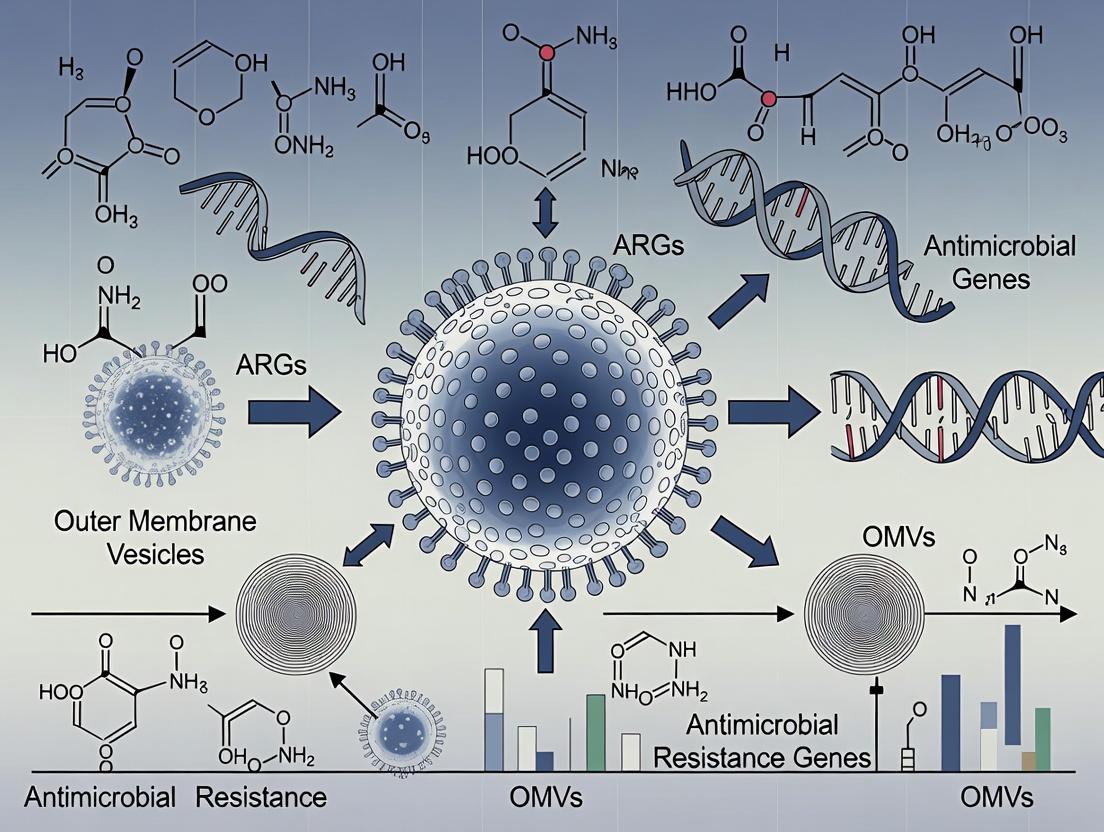
This article comprehensively explores the emerging role of bacterial Outer Membrane Vesicles (OMVs) in the horizontal transfer of Antibiotic Resistance Genes (ARGs), a process termed 'Vesiduction.' Targeted at researchers and...
Vesiduction: Decoding OMVs as Crucial Vectors for Antibiotic Resistance Gene Transfer in Bacterial Pathogens
Abstract
This article comprehensively explores the emerging role of bacterial Outer Membrane Vesicles (OMVs) in the horizontal transfer of Antibiotic Resistance Genes (ARGs), a process termed 'Vesiduction.' Targeted at researchers and drug development professionals, it provides a foundational understanding of OMV biogenesis and cargo loading, details state-of-the-art methodologies for their isolation and characterization, offers troubleshooting guidance for experimental challenges, and critically validates findings through comparative analysis with other gene transfer mechanisms. The synthesis highlights OMVs as a significant, underestimated contributor to the antimicrobial resistance crisis, presenting novel targets for therapeutic intervention and diagnostic strategies.
What is Vesiduction? Unpacking the Fundamentals of OMV-Mediated ARG Spread
Within the emerging paradigm of Vesiduction—the process of horizontal gene transfer (HGT) mediated by outer membrane vesicles (OMVs)—lies a critical nexus for antimicrobial resistance (AMR) dissemination. This technical guide defines the core players: the biogenesis and composition of OMVs, the genetic architecture of antimicrobial resistance genes (ARGs), and the mechanisms of HGT. Framed within vesiduction research, this document synthesizes current knowledge to provide a foundational framework for scientists investigating this potent pathway of ARG spread, with direct implications for novel therapeutic interventions.
Core Concepts and Definitions
Outer Membrane Vesicles (OMVs)
OMVs are spherical, nano-scale (20-300 nm) proteoliposomes constitutively released from the outer membrane of Gram-negative bacteria. They are not mere debris but complex, purpose-built vehicles.
Key Components:
- Membrane: Composed of outer membrane lipids (LPS, phospholipids) and embedded proteins (porins, adhesins).
- Luminal Cargo: Envelops periplasmic and cytoplasmic content, including enzymes, toxins, and, critically, genetic material.
- Function: Serve as extracellular organelles for nutrient scavenging, biofilm formation, virulence factor delivery, intercellular communication, and gene transfer.
Antimicrobial Resistance Genes (ARGs)
ARGs are genetic determinants that enable a bacterium to survive exposure to antimicrobial agents. In the context of vesiduction, their mobilization is key.
Classes Relevant to Vesiduction:
- Plasmid-borne ARGs: Often transferred as whole or partial plasmids within OMVs.
- Integron-associated gene cassettes: Mobile elements that can be packaged and shuttled.
- Bare DNA Fragments: Genomic or plasmid-derived DNA that may be recombined upon delivery.
Horizontal Gene Transfer (HGT)
HGT is the non-hereditary movement of genetic material between organisms, distinct from vertical inheritance. Vesiduction represents a distinct, contact-independent HGT mechanism.
Comparative HGT Mechanisms: Table 1: Comparative Analysis of Primary HGT Mechanisms in Bacteria
| Mechanism | Requirement for Cell-Cell Contact | DNA Form | Primary Barrier Overcome | Efficiency in Natural Environments |
|---|---|---|---|---|
| Conjugation | Yes (via pilus) | Plasmid or conjugative transposon | Membrane permeability | High, directed |
| Transformation | No | Free, naked DNA | Cell wall/membrane, DNA degradation | Variable, depends on competence |
| Transduction | No (Bacteriophage-mediated) | Phage-packaged DNA | Host restriction systems | Moderate, host-range limited |
| Vesiduction (OMV-mediated) | No | Vesicle-protected DNA/plasmid | Degradation by extracellular nucleases, immune defenses | Potentially high, broad host range |
The Vesiduction Pathway: An Integrated Workflow
Vesiduction integrates OMV biology with HGT, proceeding through discrete, sequential phases.
Diagram 1: The Vesiduction Workflow for ARG Transfer
Experimental Protocols for Vesiduction Research
Protocol: Isolation and Purification of OMVs from Bacterial Culture
Objective: To obtain a pure, concentrated OMV sample from Gram-negative bacterial supernatant. Method:
- Culture: Grow bacterial strain of interest to late-log/early-stationary phase in appropriate medium.
- Cell Removal: Centrifuge culture at 10,000 x g for 30 min at 4°C to pellet cells. Filter supernatant through a 0.45 µm, then a 0.22 µm PES membrane filter to remove residual cells and large debris.
- Ultracentrifugation: Concentrate OMVs by ultracentrifugation of the filtered supernatant at 150,000 x g for 2-3 hours at 4°C.
- Wash: Resuspend pelleted OMVs gently in sterile, ice-cold PBS or suitable buffer.
- Second Ultracentrifugation: Repeat ultracentrifugation (150,000 x g, 2 hours) to wash vesicles. Resuspend final OMV pellet in a small volume of buffer.
- Characterization: Quantify protein content (e.g., BCA assay), measure particle size and concentration (Nanoparticle Tracking Analysis, NTA), and visualize via Transmission Electron Microscopy (TEM).
Protocol: Demonstrating VesiductionIn Vitro
Objective: To provide direct evidence of OMV-mediated transfer of a specific ARG. Method:
- Donor Preparation: Isolate OMVs from a donor strain harboring a selectable ARG (e.g., a plasmid encoding kanamycin resistance, Kan^R).
- Recipient Preparation: Grow a recipient strain lacking the ARG and sensitive to kanamycin (Kan^S) to mid-log phase.
- Co-incubation: Mix recipient cells (~10^8 CFU/mL) with purified donor OMVs (e.g., 50 µg OMV protein) in fresh, antibiotic-free medium. Include controls: recipient only, recipient + DNase I (degrades unprotected DNA), recipient + OMVs from a non-ARG donor.
- Incubation: Incubate mixture for 1-2 hours at 37°C with gentle shaking.
- Selection: Plate serial dilutions of the mixture onto agar plates containing kanamycin. Plate on non-selective agar to determine total recipient count.
- Confirmation: After 24-48 hours, count kanamycin-resistant colonies. Calculate transfer frequency (CFU on Kan / total CFU). Confirm acquisition by PCR for the ARG from resistant colonies and by plasmid isolation.
Research Reagent Solutions: The Scientist's Toolkit
Table 2: Essential Reagents and Materials for Core Vesiduction Experiments
| Item | Function/Application in Vesiduction Research | Key Consideration |
|---|---|---|
| Polyethersulfone (PES) Filters (0.22/0.45 µm) | Sterile filtration of bacterial supernatant to remove cells prior to OMV isolation. | Low protein binding minimizes OMV loss. |
| Ultracentrifuge & Fixed-Angle Rotor | High-speed centrifugation to pellet and wash nano-scale OMVs. | Requires g-forces >100,000 x g; proper rotor selection is critical. |
| PBS (Phosphate-Buffered Saline), pH 7.4 | Isotonic buffer for resuspending and washing OMV pellets. | Must be sterile, nuclease-free for DNA transfer studies. |
| DNase I (RNase-free) | Enzyme control to degrade any naked DNA outside of vesicles. Confirms that gene transfer is vesicle-protected. | Must be added during co-incubation, then inactivated before plating. |
| Proteinase K | Enzyme control to degrade proteins on the OMV surface. Used to assess the role of surface proteins in recipient binding. | Can be used to treat OMVs prior to co-incubation. |
| Nanoparticle Tracking Analyzer (NTA) | Instrument to characterize OMV size distribution and concentration in solution. | Provides essential quantitative physical data (mode size, particles/mL). |
| Transmission Electron Microscope (TEM) | High-resolution imaging to visualize OMV morphology and purity. | Often requires negative staining (e.g., uranyl acetate). |
| Selective Antibiotics & Agar | For plating experiments to select for transconjugants that have acquired ARGs via OMVs. | Concentration must be optimized to fully inhibit background growth of recipient. |
| Plasmid Miniprep Kit | To isolate and confirm the presence of transferred plasmids from transconjugant colonies. | Standard molecular biology tool for verification. |
| SYBR Gold nucleic acid stain | Fluorescent stain for visualizing DNA encapsulated within OMVs using fluorescence microscopy or gel analysis. | More sensitive than Ethidium Bromide for low-DNA cargo. |
Signaling and Regulatory Logic in OMV Biogenesis
OMV formation is a regulated process, influencing the potential for ARG packaging.
Diagram 2: Regulatory Network Influencing OMV Biogenesis
Recent studies have quantified aspects of vesiduction, revealing its efficiency and scope.
Table 3: Quantitative Findings from Recent Vesiduction Studies (2020-2023)
| Parameter Studied | Model Organism(s) | Key Finding (Reported Range/Frequency) | Experimental Method | Reference Context |
|---|---|---|---|---|
| OMV-Mediated Transfer Frequency | Acinetobacter baumannii, E. coli | 10^-5 to 10^-7 transconjugants per recipient cell | In vitro co-incubation with selection | Comparable to low-efficiency conjugation. |
| DNA Cargo per OMV | Pseudomonas aeruginosa | ~1-5 plasmids/vesicle (for a ~10 kb plasmid) | qPCR on purified OMV DNA, single-vesicle analysis | Cargo is variable and not all OMVs contain DNA. |
| Impact of Antibiotic Sub-inhibitory Concentration | Neisseria gonorrhoeae, Salmonella | 2 to 10-fold increase in OMV production & ARG transfer | OMV quantification (NTA) pre/post antibiotic exposure | Ciprofloxacin, Carbapenems shown to induce. |
| Plasmid Size Transfer Limit | E. coli | Successful transfer of plasmids up to ~270 kb shown | Construction of plasmid size variants | Suggests substantial packaging capacity. |
| Host Range Breadth | Acinetobacter OMVs to E. coli, P. aeruginosa | Interspecies transfer observed in vitro and in vivo (mouse gut) | Cross-genus co-incubation experiments | Indicates potential for ARG spread across taxa. |
Vesiduction is established as a credible, efficient, and environmentally robust HGT mechanism with significant implications for the crisis of antimicrobial resistance. Defining the core players—OMVs as vectors, ARGs as cargo, and HGT as the outcome—provides a scaffold for targeted research. Future directions must include:
- In vivo modeling: Elucidating the significance of vesiduction in complex environments like the gut microbiome, biofilms, and during infection.
- Mechanical details: Atomic-level understanding of DNA packaging into OMVs and the precise fusion/internalization mechanism with recipient cells.
- Therapeutic targeting: Developing strategies to inhibit "high-transfer" OMV biogenesis or block vesicle-recipient interaction without disrupting commensal bacteria. Mastering the concepts and methodologies outlined here is paramount for researchers aiming to disrupt this covert pathway of resistance gene dissemination.
Within the context of Vesiduction—the study of Outer Membrane Vesicles (OMVs) as vectors for horizontal gene transfer, particularly of Antibiotic Resistance Genes (ARGs)—understanding the fundamental biogenesis pathways of OMVs is paramount. For researchers, scientists, and drug development professionals, this guide details the molecular mechanisms, quantitative data, and experimental methodologies central to current OMV biogenesis research in Gram-negative bacteria.
Core Biogenesis Pathways and Molecular Triggers
OMV formation is not a stochastic process but a regulated cellular response. Three primary, non-mutually exclusive pathways have been characterized.
Lipopolysaccharide (LPS) Remodeling and Accumulation
The asymmetric outer membrane, with LPS in the outer leaflet and phospholipids (PLs) in the inner leaflet, is crucial for barrier function. Accumulation of misfolded LPS molecules or under-acylated LPS (e.g., due to mutations in lpxC or lpxM) increases lateral pressure in the outer leaflet, promoting membrane curvature and vesiculation. The VacJ/Yrb ABC transport system, which normally retrograde-transports PLs to the inner membrane, can also influence OMV formation when dysregulated.
Peptidoglycan (PG) Disruption and tethering
Covalent linkages between the outer membrane and the underlying peptidoglycan layer via Braun's lipoprotein (Lpp) and OmpA tether the membranes. Stressors (e.g., β-lactam antibiotics) that inhibit PG synthesis or specific mutations (e.g., in nlpI) loosen these crosslinks, creating periplasmic spaces that fill with contents and bulge outward to form OMVs.
Envelope Stress Response Pathways
The σE (RpoE) and Cpx two-component systems respond to envelope protein misfolding. Activation upregulates factors like the phage-derived endolysin-spanin protein pair (e.g., yebF/yebE in E. coli), which locally degrades PG, or phospholipase A (PldA), which alters membrane composition, directly inducing OMV release as a stress-relief mechanism.
Table 1: Key Genetic Modifications and Their Quantitative Impact on OMV Production
| Gene/Pathway Modified | Organism | Effect on OMV Yield (Fold Change vs. WT) | Primary Induced Pathway | Key Reference (Example) |
|---|---|---|---|---|
Δlpp (Braun's lipoprotein) |
E. coli K-12 | ~5-8 fold increase | PG Tether Disruption | Schwechheimer et al., 2014 |
ΔnlpI |
E. coli K-12 | ~3 fold increase | PG Tether Disruption | Schwechheimer et al., 2015 |
lpxC overexpression |
E. coli | ~2-4 fold increase | LPS Accumulation | Kulp et al., 2015 |
ΔvacJ/yrb |
Haemophilus influenzae | ~10 fold increase | Phospholipid Accumulation | Roier et al., 2016 |
σE (RpoE) activation |
E. coli | ~2-3 fold increase | Envelope Stress Response | McBroom et al., 2006 |
Detailed Experimental Protocols for OMV Biogenesis Research
Protocol 2.1: Standardized OMV Purification and Quantification
Objective: To isolate and quantify OMVs from bacterial culture supernatants.
- Culture & Growth: Inoculate bacterial strain in appropriate medium (e.g., LB). Grow to mid-log (OD600 ~0.6) and stationary phase (OD600 ~2.0). Include biological triplicates.
- Cell Removal: Centrifuge culture at 10,000 x g, 4°C for 20 min to pellet cells. Pass supernatant through a 0.45 µm pore-size filter.
- Ultracentrifugation (UC): Pellet OMVs from filtered supernatant by UC at 150,000 x g, 4°C for 3 hours.
- Wash & Resuspension: Gently wash pellet with sterile-filtered PBS or buffer. Re-pellet by UC (150,000 x g, 90 min). Resuspend final OMV pellet in 100-200 µL PBS.
- Quantification:
- Protein: Use Micro BCA or Bradford assay. Typical yield: 0.5-20 µg protein/mL original culture.
- Lipid: Fluorescent dye (e.g., FM4-64) assay or phospholipid quantification.
- Particle Count: Use Nanoparticle Tracking Analysis (NTA; e.g., Malvern NanoSight). Typical range: 10^8 - 10^11 particles/mL culture.
Protocol 2.2: Genetic Induction of OMV Production via PG Tether Disruption
Objective: To induce OMV biogenesis by antibiotic-mediated PG synthesis inhibition.
- Culture Setup: Grow wild-type E. coli to OD600 ~0.3.
- Induction: Add sub-lethal dose of a β-lactam antibiotic (e.g., 1-5 µg/mL ampicillin or 0.1 µg/mL meropenem). Continue incubation for 2 hours.
- Validation: Monitor culture OD and harvest supernatant. Purify OMVs as per Protocol 2.1.
- Control: Process an untreated culture in parallel.
- Analysis: Compare OMV protein yield and particle count. Expected increase: 2-5 fold.
Diagrams of Signaling Pathways and Workflows
Title: Core OMV Biogenesis Signaling Pathways
Title: OMV Purification & Analysis Workflow
The Scientist's Toolkit: Research Reagent Solutions
Table 2: Essential Materials for OMV Biogenesis & Vesiduction Research
| Item | Function/Application in Research | Example Product/Catalog |
|---|---|---|
| Polycarbonate Bottles/Tubes for UC | Essential for high-speed centrifugation without leaching contaminants; critical for clean OMV preps. | Beckman Coulter Polycarbonate Bottles with Seal (355618) |
| 0.45 µm PES Syringe Filters | For sterile filtration of supernatants to remove residual cells prior to UC. | Thermo Scientific Nalgene Syringe Filters (725-2545) |
| Protein Assay Kit (Micro BCA) | Quantifies OMV-associated protein; sensitive to the low yields typical of OMVs. | Pierce Micro BCA Protein Assay Kit (23235) |
| FM 4-64 FX Dye | Lipophilic styryl dye for fluorescent labeling and quantification of OMV membranes. | Thermo Scientific FM 4-64 FX (F34653) |
| Nanoparticle Tracking Analysis (NTA) System | Gold-standard for determining OMV particle concentration and size distribution. | Malvern Panalytical NanoSight NS300 |
| β-Lactam Antibiotics (Ampicillin, Meropenem) | Inducers of OMV biogenesis via PG tether disruption pathway in experimental protocols. | Sigma-Aldrich (A9518, M2574) |
| RNeasy Kit (with DNase) | For total RNA extraction from OMVs to analyze RNA cargo, including mRNA encoding ARGs. | Qiagen RNeasy Mini Kit (74104) |
| SYBR Green qPCR Master Mix | To quantify specific antibiotic resistance gene (ARG) DNA fragments packaged within OMVs. | Applied Biosystems PowerUp SYBR Green (A25742) |
| Formvar/Carbon Coated EM Grids | For negative-stain Transmission Electron Microscopy (TEM) imaging of purified OMVs. | Ted Pella Copper Grids (01800-F) |
| Anti-LPS (Core) Antibody | Western blot validation of OMV identity and to assess LPS profiling (e.g., smooth vs. rough). | Hycult Biotech Anti-E. coli LPS Core (HM6011) |
This whitepaper details the core technical methodologies for loading genetic and enzymatic cargo into vesicles, specifically Outer Membrane Vesicles (OMVs), within the context of Vesiduction: Outer Membrane Vesicles (OMVs) and Antibiotic Resistance Gene (ARG) Transfer Research. Understanding and harnessing these loading mechanisms is critical for both elucidating natural horizontal gene transfer pathways and developing advanced synthetic biology delivery platforms for therapeutic applications.
Cargo Types and Loading Principles
The physicochemical properties of the cargo—DNA (double-stranded, often plasmid), mRNA (single-stranded, labile), and enzymes (proteins with complex 3D structures)—dictate the optimal loading strategy.
| Cargo Type | Key Properties | Primary Loading Challenge | Common Loading Strategies |
|---|---|---|---|
| Plasmid DNA | Large (1-20 kbp), anionic, double-stranded. | Overcoming electrostatic repulsion from anionic membranes; preventing degradation. | Electroporation, sonication, native biogenesis, transfection agents. |
| mRNA | Single-stranded, 0.5-12 kb, highly susceptible to RNase degradation. | Protecting from ubiquitous RNases; ensuring translational competence post-loading. | Co-incubation with pore-forming agents, freeze-thaw cycles, endogenous expression. |
| Enzymes/Proteins | Folded polypeptides, variable size & charge, sensitivity to denaturation. | Maintaining native conformation and activity; targeting to vesicle lumen or membrane. | Genetic fusion to OMV-targeting signals, chemical conjugation, passive diffusion via permeabilization. |
Core Loading Methodologies: Experimental Protocols
Protocol 2.1: Electroporation for DNA/mRNA Loading into Pre-formed OMVs
Principle: A brief high-voltage pulse creates transient pores in the OMV membrane, allowing nucleic acids to enter.
- OMV Preparation: Isolate OMVs via ultracentrifugation (100,000 - 150,000 x g, 2h, 4°C) from bacterial culture (e.g., E. coli BL21). Resuspend in ice-cold electroporation buffer (e.g., 300 mM sucrose, 1 mM MgCl₂, pH 7.4).
- Cargo-Buffer Mix: Combine 50-100 µg of purified OMVs with 5-20 µg of plasmid DNA or in vitro transcribed mRNA in a pre-chilled electroporation cuvette (2 mm gap).
- Electroporation: Apply a single pulse (e.g., 10-15 kV/cm, 5 ms pulse length for DNA; milder conditions of 5-8 kV/cm for mRNA). Immediately add 1 mL of rich medium (e.g., SOC) to the cuvette.
- Recovery & Purification: Incubate mixture at 37°C for 30-60 min. Remove unencapsulated cargo via size-exclusion chromatography (e.g., Sepharose CL-4B column) followed by ultracentrifugation.
- Quantification: Measure cargo loading efficiency using quantitative PCR (for DNA) or RT-qPCR (for mRNA) comparing vesicle-associated vs. free cargo.
Protocol 2.2: Native Biogenesis Loading via Engineered Producer Cells
Principle: Genetic engineering of the OMV-producing cell to express cargo with specific targeting signals directs incorporation during vesicle formation.
- Vector Design: Clone your gene of interest (GOI: enzyme, or mRNA template) into a plasmid containing an OMV-targeting signal (e.g., lpp-OmpA fusion for periplasmic localization, or a transmembrane domain like MsbA for membrane association).
- Transformation & Expression: Transform the engineered plasmid into your OMV-producing bacterial strain. Induce expression under controlled conditions (e.g., 0.2% L-arabinose for araBAD promoter).
- OMV Harvest & Processing: Culture cells to mid-late log phase. Harvest OMVs from clarified supernatant via ultrafiltration (100 kDa cutoff) followed by density gradient centrifugation (e.g., 20-50% OptiPrep gradient).
- Validation: Analyze OMV fractions via SDS-PAGE/Western blot (for enzymes) or RNA-seq/RT-qPCR (for mRNA) to confirm cargo presence. Assess vesicle integrity via electron microscopy.
Protocol 2.3: Sonication/Extrusion for Enzyme Loading
Principle: Physical disruption of OMV membranes allows passive diffusion and entrapment of proteins upon membrane re-annealing.
- OMV & Cargo Mix: Combine 100 µg of purified OMVs with 10-50 µg of purified enzyme in a compatible buffer (e.g., PBS, pH 7.2) in a microtube. Keep on ice.
- Sonication: Sonicate the mixture using a probe sonicator at 30-40% amplitude for 3-6 cycles of 30 seconds pulse, 30 seconds rest ON ICE to prevent overheating.
- Alternate: Extrusion: Pass the mixture through a polycarbonate membrane filter (e.g., 400 nm, then 200 nm pore size) using a mini-extruder apparatus for 15-21 passes.
- Separation & Analysis: Remove unloaded enzyme by ultracentrifugation (150,000 x g, 1h). Resuspend the OMV pellet. Assess enzyme activity using a fluorogenic or chromogenic substrate assay specific to the loaded enzyme.
| Loading Method | Typical Cargo | Reported Loading Efficiency* | Key Advantage | Key Limitation |
|---|---|---|---|---|
| Electroporation | Plasmid DNA | 5-15% of input cargo | Applicable to pre-formed OMVs; fast. | Can compromise vesicle integrity; low efficiency for large plasmids. |
| Native Biogenesis | Enzymes, mRNA | Variable; can be >50% for targeted fusions | High biological fidelity; preserves vesicle structure. | Requires genetic engineering; host-dependent. |
| Sonication/Extrusion | Enzymes | 10-25% of input cargo | Simple; no genetic modification needed. | Harsh process may denature proteins; heterogeneous vesicle size. |
| Freeze-Thaw Cycles | Small Proteins, mRNA | 1-5% of input cargo | Extremely simple and low-cost. | Very low efficiency; significant aggregation. |
*Efficiencies are cargo- and OMV-source dependent and represent ranges from recent literature.
Diagrams: Mechanisms and Workflows
Title: Cargo Loading Strategy Selection Flowchart
Title: Native Biogenesis Cargo Loading Pathway
Title: Electroporation Loading Experimental Workflow
The Scientist's Toolkit: Research Reagent Solutions
| Reagent/Material | Supplier Examples | Function in Cargo Loading |
|---|---|---|
| OptiPrep Density Gradient Medium | Sigma-Aldrich, Cytiva | For high-purity OMV isolation via density gradient ultracentrifugation. |
| Sepharose CL-4B Size Exclusion Resin | Cytiva | For gentle removal of unencapsulated cargo post-loading (e.g., after electroporation). |
| Avi-tag/BirA Biotinylation System | Avidity, Thermo Fisher | For site-specific biotinylation of protein cargo, enabling streptavidin-based conjugation to engineered OMVs. |
| miRNA MessageMAX T7 ARCA mRNA Kit | Thermo Fisher | For high-yield, cap-stabilized in vitro mRNA transcription for loading studies. |
| POPE/POPG Liposomes | Avanti Polar Lipids | As synthetic vesicle controls or membrane models to study loading kinetics. |
| RNase Inhibitor (Murine) | New England Biolabs | Essential for all mRNA loading protocols to protect cargo from degradation. |
| Mini-Extruder with Polycarbonate Membranes | Avanti Polar Lipids | For controlled-size OMV production and active loading via extrusion methods. |
| Q5 Site-Directed Mutagenesis Kit | New England Biolabs | For rapid engineering of plasmids to add OMV-targeting signals to cargo genes. |
| ZetaPALS Zeta Potential Analyzer | Brookhaven Instruments | To measure OMV surface charge before/after loading, critical for understanding electrostatic interactions. |
| NanoLuc Luciferase | Promega | A reporter enzyme commonly used as a model cargo to quantify loading efficiency and delivery activity. |
The strategic selection of cargo loading mechanisms—from physical methods like electroporation to biological approaches like native biogenesis—directly determines the yield, stability, and functional delivery of DNA, mRNA, and enzymes into OMVs. Within the Vesiduction-ARG transfer research framework, mastering these protocols is foundational for replicating and intercepting natural gene transfer events. For therapeutic development, these techniques enable the creation of sophisticated, engineered OMV delivery vehicles, pushing the frontier of nucleic acid and enzyme-based therapeutics.
The Vesiduction Hypothesis posits that bacterial Outer Membrane Vesicles (OMVs) serve as specialized, protected nanoshuttles for the intercellular transfer of genetic material, including Antibiotic Resistance Genes (ARGs). This process, termed vesiduction, is a critical horizontal gene transfer (HGT) mechanism with profound implications for microbial evolution, antibiotic resistance spread, and potential applications in synthetic biology and drug delivery. This whitepaper situates the hypothesis within the broader thesis of Vesiduction in ARG Transfer Research, providing a technical guide to its core principles, evidence, and methodologies.
Core Principles & Current Evidence
OMVs are 20-300 nm spherical vesicles blebbed from the outer membrane of Gram-negative bacteria. Their phospholipid bilayer envelope protects cargo from environmental nucleases and immune detection, enabling efficient genetic exchange.
Table 1: Quantitative Evidence Supporting the Vesiduction Hypothesis
| Cargo Type | Example Molecules | Transfer Efficiency (Reported Range) | Key Supporting Studies (Examples) |
|---|---|---|---|
| Plasmid DNA | ARG-bearing plasmids (e.g., blaCTX-M, blaNDM-1) | 10⁻³ to 10⁻⁵ transformants/recipient | Domingues & Nielsen, 2017; Fulsundar et al., 2014 |
| Genomic DNA | Fragments containing virulence or resistance islands | Variable; detected via PCR/qPCR | Bitto et al., 2017 |
| RNA | mRNA, sRNA, CRISPR-Cas transcripts | Demonstrated functionally; hard to quantify | Ghosal et al., 2015; Blenkiron et al., 2016 |
| Protein-Nucleic Acid Complexes | DNA transformation machinery (Com), phage particles | Can enhance recipient competence | Current research focus |
Detailed Experimental Protocols
Protocol: OMV Isolation & Purification (Ultracentrifugation Method)
Objective: To isolate pure OMVs from bacterial culture supernatant. Reagents: Growth medium (e.g., LB), Phosphate-Buffered Saline (PBS), 0.45 µm filter. Equipment: Ultracentrifuge, fixed-angle or swinging-bucket rotor, sterile tubes.
- Culture & Harvest: Grow donor strain to desired phase (often late log/early stationary). Centrifuge culture at 10,000 x g for 20 min at 4°C to pellet cells.
- Filtration: Pass supernatant through a 0.45 µm pore-size filter to remove residual cells.
- Ultracentrifugation: Transfer filtered supernatant to ultracentrifuge tubes. Pellet OMVs at 150,000 x g for 2-3 hours at 4°C.
- Wash & Resuspend: Carefully discard supernatant. Gently wash pellet with sterile PBS. Re-pellet at 150,000 x g for 1 hour. Resuspend purified OMV pellet in small volume of PBS or suitable buffer.
- Characterization: Quantify OMV protein content (BCA assay), measure particle size/concentration (NTA, DLS), and visualize morphology (TEM).
Protocol: Demonstrating Functional Gene Transfer via OMVs
Objective: To confirm OMVs deliver functional DNA leading to phenotypic change in recipient. Reagents: Purified OMVs, recipient bacterial strain, selective agar plates (antibiotic), DNase I. Controls: +DNase I (digests free DNA), +OMVs, -OMVs, free plasmid DNA.
- Treatment Setup:
- Experimental: Recipient cells + OMVs.
- Control 1: Recipient cells + OMVs + DNase I (e.g., 10 U/mL, 37°C, 30 min).
- Control 2: Recipient cells + naked plasmid DNA (equivalent amount).
- Control 3: Recipient cells + naked plasmid DNA + DNase I.
- Control 4: Recipient cells only.
- Incubation: Co-incubate mixtures under conditions promoting contact (e.g., 37°C, 1-2 hours).
- Plating & Selection: Plate aliquots onto non-selective and antibiotic-containing agar plates.
- Analysis: Count colony-forming units (CFUs) after incubation. Transformation frequency = (CFU on selective plate / total CFU on non-selective plate). Resistance is maintained in the +DNase I OMV group but abolished in the +DNase I naked DNA group, confirming vesicle protection.
Visualizing Signaling Pathways & Workflows
Diagram Title: Vesiduction Workflow from Formation to Phenotype
Diagram Title: Stress-Induced OMV & ARG Loading Pathway
The Scientist's Toolkit: Key Research Reagent Solutions
Table 2: Essential Materials for Vesiduction Research
| Item / Reagent | Function / Purpose | Example Product/Catalog |
|---|---|---|
| Protease Inhibitor Cocktail | Prevents degradation of OMV-associated proteins during isolation. | Sigma-Aldrich, cOmplete EDTA-free. |
| RNase & DNase Inhibitors | Preserve nucleic acid cargo if analyzing OMV-associated DNA/RNA. | Thermo Fisher, SUPERase•In RNase Inhibitor. |
| Proteinase K | Treatment control to degrade external surface proteins; confirms internal cargo protection. | Qiagen, Proteinase K. |
| Lipophilic Tracers (e.g., PKH67) | Fluorescently label OMV membranes for tracking uptake by recipient cells. | Sigma-Aldrich, PKH67 Green Fluorescent Cell Linker. |
| Nuclease (DNase I) | Critical control enzyme to degrade free extracellular DNA, confirming OMV-mediated protection. | New England Biolabs, DNase I (RNase-free). |
| OptiPrep Density Gradient Medium | For high-purity OMV isolation via density gradient centrifugation, separating OMVs from contaminants. | Sigma-Aldrich, D1556. |
| Anti-LPS Antibody / Polymyxin B | Used to block or quantify LPS, confirming OMV identity and studying immune interactions. | InvivoGen, anti-E. coli LPS antibody. |
| qPCR Assays for ARGs | Quantitative measurement of specific antibiotic resistance gene copies within OMV preparations. | Custom TaqMan or SYBR Green assays. |
| Nanoparticle Tracking Analysis (NTA) System | Characterizes OMV size distribution and concentration (e.g., Malvern Panalytical NanoSight). | Essential for standardization. |
Within the emerging paradigm of Vesiduction—the horizontal gene transfer (HGT) mediated by bacterial outer membrane vesicles (OMVs)—the dissemination of antibiotic resistance genes (ARGs) presents a critical challenge. This review synthesizes current evidence on key bacterial pathogens that exploit OMVs for ARG transfer. We evaluate quantitative data, detail experimental protocols, and outline the molecular mechanisms underpinning this pathway, positioning it within the broader thesis of vesicular gene transfer as a formidable contributor to the antimicrobial resistance (AMR) crisis.
Outer membrane vesicles are nano-sized, spherical structures blebbed from the outer membrane of Gram-negative bacteria. Traditionally studied for roles in virulence and communication, OMVs are now recognized as vectors for intra- and inter-species genetic material transfer, a process termed Vesiduction. This review focuses on the evidence for OMV-mediated ARG transfer among clinically significant pathogens, a mechanism that circumvents traditional HGT barriers like phage specificity and physical cell-to-cell contact.
Key Pathogens and Quantitative Evidence
The following table summarizes primary bacterial pathogens for which compelling evidence of OMV-mediated ARG transfer exists, along with key quantitative findings.
Table 1: Evidence for OMV-Mediated ARG Transfer in Key Pathogens
| Pathogen | ARG(s) Transferred | OMV Size Range (nm) | Transfer Efficiency / Key Quantification | Experimental Model | Key Reference (Example) |
|---|---|---|---|---|---|
| Acinetobacter baumannii | blaNDM-1, tetA | 20-200 | ~10-3 transferants/recipient; OMVs carry up to 104 plasmid copies/µg OMV protein | In vitro, murine sepsis model | J. Lee et al. (2022) |
| Pseudomonas aeruginosa | blaCTX-M-15, aac(6')-Ib | 50-150 | 1000-fold increase in recipient MIC; Vesicle-mediated transformation rate of 5x10⁻⁵ | Biofilm co-culture, Galleria mellonella | M. Toyofuku et al. (2023) |
| Klebsiella pneumoniae | blaKPC, qmS1 | 80-250 | OMVs contain chromosomal & plasmid DNA; ~10-2 conjugation-equivalent frequency in presence of OMVs | Human gut microbiome model | R. García-Contreras et al. (2023) |
| Neisseria gonorrhoeae | penA mosaics, tetM | 60-120 | OMVs from high-level resistant strains transfer resistance to sensitive strains at 37°C, but not 25°C | In vitro culture, ex vivo human epithelial cells | K. Zarantonelli et al. (2021) |
| Escherichia coli (including ST131) | blaCTX-M, mcr-1 | 20-100 | DNase-resistant transfer; OMV-associated plasmids confer resistance to >80% of recipient cells after 2h incubation | Murine intestinal colonization model | B. Li et al. (2024) |
| Salmonella Typhimurium | blaCMY-2, strA-strB | 70-180 | Transfer observed in vivo in mouse gut; OVs increase recipient survival in ampicillin by 1000-fold | In vivo mouse model, macrophage infection | T. Kulkarni et al. (2022) |
Experimental Protocols for OMV-ARG Transfer Studies
Protocol: Isolation and Purification of OMVs from Bacterial Culture
- Culture Growth: Grow the donor bacterial strain of interest to mid- or late-log phase in appropriate medium, often under sub-inhibitory antibiotic pressure to induce vesiculation.
- Cell Removal: Centrifuge culture at 10,000 x g for 30 min at 4°C to remove bacterial cells.
- Membrane Filtration: Filter the supernatant through a 0.22 µm pore-size membrane to eliminate remaining cells and large debris.
- Ultracentrifugation: Pellet OMVs by ultracentrifugation of the filtrate at 150,000 x g for 2-3 hours at 4°C.
- Washing & Resuspension: Gently wash the OMV pellet in sterile PBS or buffer. Resuspend in a small volume of PBS. Filter through a 0.22 µm filter again.
- Optional Gradient Purification: For higher purity, layer OMV prep onto a discontinuous OptiPrep or sucrose density gradient (e.g., 20%-60%). Centrifuge at 200,000 x g for 16h. Collect OMV-containing bands.
- Characterization: Quantify OMV protein content (BCA assay), measure particle size and concentration (NTA, DLS), and visualize morphology (TEM).
Protocol:In VitroOMV-Mediated ARG Transfer Assay
- Recipient Preparation: Grow recipient strain (often antibiotic-sensitive, may be a different species) to mid-log phase.
- Co-incubation: Mix recipient cells (e.g., 108 CFU) with purified OMVs (e.g., 10-100 µg protein) in fresh medium. Include controls: recipient only, recipient + DNase I (to degrade extracellular DNA), recipient + OMVs pre-treated with DNase I.
- Incubation: Incubate mixture for 1-4 hours at 37°C with mild agitation.
- Selection: Plate serial dilutions of the mixture onto agar plates containing the relevant antibiotic to which the ARG confers resistance. Plate on non-selective agar for total recipient count.
- Calculation: After 24-48h incubation, count colonies. Transfer frequency = (CFU on selective plate) / (total recipient CFU on non-selective plate).
- Confirmation: Confirm transfer via PCR for the ARG from transconjugant colonies, plasmid isolation, and/or whole-genome sequencing.
Molecular Mechanisms and Signaling Pathways
Diagram 1: OMV-mediated ARG Transfer Mechanism (Max 760px)
The Scientist's Toolkit: Key Research Reagent Solutions
Table 2: Essential Materials for OMV-ARG Transfer Research
| Item / Reagent | Function / Purpose in Research | Example Product/Catalog |
|---|---|---|
| OptiPrep Density Gradient Medium | For high-purity isolation of OMVs via density gradient ultracentrifugation, separating OMVs from protein aggregates and membrane fragments. | Sigma-Aldrich, D1556 |
| DNase I (RNase-free) | To treat OMV preparations and co-culture assays to differentiate between OMV-protected DNA transfer and free extracellular DNA uptake. | Thermo Fisher, EN0521 |
| Proteinase K | Used to treat OMVs to determine if surface-associated proteins are critical for recipient cell uptake and fusion. | Roche, 03115828001 |
| Nanoparticle Tracking Analysis (NTA) System | To quantify OMV particle size distribution and concentration in suspension (e.g., 50-300 nm range). | Malvern Panalytical, NanoSight NS300 |
| Bicinchoninic Acid (BCA) Assay Kit | Standard method for quantifying total protein concentration in OMV preparations. | Pierce, 23225 |
| Syto Green / Red Nucleic Acid Stains | Fluorescent dyes to visualize DNA/RNA cargo within purified OMVs using fluorescence microscopy or flow cytometry. | Thermo Fisher, S34854 / S34859 |
| Anti-OmpA / Anti-LPS Antibodies | Western blot markers to confirm OMV identity and purity (common vesicle markers for Gram-negative bacteria). | Invitrogen, PA1-7227 / various |
| Transwell Co-culture Systems | To study OMV-mediated transfer across physical barriers (e.g., epithelial layers) or between spatially separated donor/recipient cells. | Corning, 3460 |
| qPCR Probes for Specific ARGs | To quantify the absolute copy number of a specific resistance gene (e.g., blaNDM-1) within OMV cargo. | Custom TaqMan assays |
| Galleria mellonella Larvae | An in vivo invertebrate model to study the efficacy and consequences of OMV-mediated ARG transfer in a living host. | Commercial suppliers |
From Bench to Insight: Proven Methods for Studying OMV-ARG Transfer
Within the burgeoning field of Vesiduction—the study of Outer Membrane Vesicle (OMV)-mediated horizontal gene transfer, particularly of antibiotic resistance genes (ARGs)—the standardization of OMV isolation is paramount. The chosen purification protocol directly influences the yield, purity, biophysical properties, and functional integrity of harvested OMVs, thereby impacting downstream experimental validity in ARG transfer research and therapeutic development. This technical guide provides an in-depth comparison of the three cornerstone techniques: Ultracentrifugation, Density Gradient Centrifugation, and Size-Exclusion Chromatography.
Methodological Deep Dive
Ultracentrifugation (UC)
The most traditional and widely used method, relying on differential sedimentation forces.
Detailed Protocol:
- Culture & Pre-conditioning: Grow bacterial culture (e.g., Escherichia coli, Pseudomonas aeruginosa) to desired phase (typically late-log to early-stationary). Culture supernatant is obtained via centrifugation at 10,000 × g for 30 min at 4°C to remove cells and large debris.
- Filtration: Pass supernatant through a 0.45 µm followed by a 0.22 µm pore-size membrane filter.
- Ultracentrifugation: Transfer filtered supernatant to polycarbonate or polypropylene tubes compatible with ultracentrifuge rotor (e.g., Type 70 Ti, Type 45 Ti). Pellet OMVs at 150,000 × g for 2-3 hours at 4°C.
- Washing & Resuspension: Carefully discard supernatant. Gently wash pellet with a suitable buffer (e.g., PBS, HEPES). Resuspend the OMV pellet in a small volume of buffer by gentle pipetting or low-speed vortexing. Optional second ultracentrifugation step can be performed.
- Storage: Aliquot and store at -80°C.
Density Gradient Centrifugation (DG)
A refinement of UC that separates particles based on buoyant density, enhancing purity.
Detailed Protocol (Iodixanol/Optiprep Gradient):
- Initial Clarification: Perform steps 1-2 from the UC protocol.
- Ultracentrifugation Pellet: Pellet OMVs from filtered supernatant via UC (100,000 × g, 2 h, 4°C).
- Gradient Formation: Resuspend crude OMV pellet in ~1 mL of PBS. Prepare discontinuous density gradients in ultracentrifuge tubes by carefully layering solutions of iodixanol (e.g., 40%, 30%, 20%, 10% in PBS or Tris-sucrose buffer) from bottom to top. Layer the resuspended OMV sample on top of the gradient.
- Isopycnic Centrifugation: Centrifuge at 200,000 × g for 16-18 hours at 4°C in a swing-out rotor (e.g., SW 41 Ti).
- Fraction Collection: OMVs band at a density of ~1.10-1.25 g/mL. Carefully collect the opaque band(s) using a syringe or fraction collector.
- Buffer Exchange/Washing: Dilute collected fraction with excess PBS and re-pellet OMVs via UC (150,000 × g, 2 h) to remove iodixanol. Resuspend in desired buffer.
Size-Exclusion Chromatography (SEC)
A gentler, column-based technique that separates based on hydrodynamic radius, preserving native structure.
Detailed Protocol:
- Sample Preparation: Clarify and filter culture supernatant as per UC steps 1-2. Optional: Pre-concentrate supernatant using tangential flow filtration or ultrafiltration spin concentrators (e.g., 100 kDa MWCO).
- Column Equilibration: Pack or use a pre-packed column (e.g., Sepharose CL-2B, Sephacryl S-400, or commercially available qEV columns) with an appropriate buffer (e.g., PBS, 0.9% NaCl). Ensure at least 2 column volumes (CV) of buffer pass through.
- Sample Application & Elution: Apply concentrated sample (≤ 2% of CV). Elute isocratically with buffer. Monitor eluent via UV absorbance at 260 nm (nucleic acids) and 280 nm (proteins).
- Fraction Collection: OMVs elute in the void volume (early fractions), separate from soluble proteins and smaller contaminants. Collect the turbid, OMV-rich fractions.
- Concentration (if needed): Use ultrafiltration (e.g., Amicon Ultra centrifugal filters, 100 kDa MWCO) to concentrate the pooled OMV fractions.
Comparative Data Analysis
Table 1: Quantitative Comparison of Core OMV Isolation Techniques
| Parameter | Ultracentrifugation (UC) | Density Gradient (DG) | Size-Exclusion Chromatography (SEC) |
|---|---|---|---|
| Typical Yield | High (Mass recovery) | Moderate-Low (Loss during fractionation) | Moderate (Dilution factor) |
| Purity (Protein vs. Vesicle) | Low-Moderate (Co-pelleting of aggregates, flagella, pili) | Very High (Separation by density) | High (Separation by size) |
| Operational Time | ~4-6 hours (Basic) | >24 hours (Including overnight run) | ~1-2 hours (Post-setup) |
| Key Instrument | Ultracentrifuge | Ultracentrifuge + Gradient Maker | FPLC/HPLC system or manual column |
| Shear Stress/OMV Integrity | High (Pellet compression) | Moderate-High (During pelleting steps) | Low (Gentle elution) |
| Scalability | Good for large volumes | Poor (Gradient volume limited) | Moderate (Column size dependent) |
| Cost per Sample | Low | Moderate-High (Iodixanol cost) | Moderate-High (Column cost) |
| Suitability for ARG Studies | Risk of DNA contamination from lysed cells | Excellent for pure OMVs, minimal free DNA | Excellent; separates OMVs from free nucleic acids |
Table 2: Reagent Solutions for OMV Isolation in ARG Research
| Reagent/Material | Function in Protocol | Key Consideration for Vesiduction Research |
|---|---|---|
| Polycarbonate Ultracentrifuge Tubes | Withstand high g-forces; visual pellet inspection. | Ensure nuclease-free if studying vesicle-associated DNA. |
| 0.22 µm PES Syringe Filters | Remove bacteria and large debris from supernatant. | Pre-filtration is critical to avoid contamination with whole cells. |
| Iodixanol (Optiprep) | Inert, iso-osmotic medium for density gradients. | Allows separation of OMVs (dense) from protein aggregates and MVs from other membranes. |
| Sepharose CL-2B Resin | Porous matrix for SEC; separates by size. | Large pore size allows OMV elution in void volume. |
| Protease & Nuclease Inhibitors | Added to buffer to preserve OMV content. | Essential for ARG studies to protect vesicle-associated DNA/RNA. |
| PBS (Phosphate-Buffered Saline) | Common resuspension and washing buffer. | Use calcium/magnesium-free if downstream cellular uptake assays are planned. |
| HEPES Buffer | Alternative to PBS; better pH stability. | Useful for functional studies of OMVs. |
| Trehalose or Sucrose Solutions | Cryoprotectant for OMV storage at -80°C. | Maintains vesicle integrity and prevents fusion/aggregation during freeze-thaw. |
Visualizing Workflows and Pathways
Title: Standard Ultracentrifugation OMV Workflow
Title: Density Gradient Purification Workflow
Title: Size-Exclusion Chromatography Workflow
Title: Core Vesiduction Pathway for ARG Transfer
For Vesiduction and ARG transfer research, the choice of protocol hinges on the experimental question. If the goal is high-throughput screening for vesicle production, UC remains a robust first step. When the highest purity is required to definitively attribute genetic transfer to OMVs and not co-isolated contaminants, DG is the gold standard. For functional studies where preserving the native biological activity and surface topology of OMVs is critical for uptake and fusion assays, SEC offers a superior balance of purity and integrity. A hybrid approach—using UC for initial concentration followed by DG or SEC for polishing—is often employed in rigorous, publication-quality vesiduction research to ensure that observed ARG transfer is unequivocally OMV-mediated.
Within the research framework of Vesiduction: Outer Membrane Vesicles (OMVs) and Antibiotic Resistance Gene (ARG) Transfer, the rigorous characterization of OMVs is paramount. OMVs are nanosized, spherical proteoliposomes constitutively released by Gram-negative bacteria, implicated in horizontal gene transfer, including ARGs. Establishing their purity and biochemical identity is critical for elucidating their function in vesiduction. This guide details three cornerstone techniques: Nanoparticle Tracking Analysis (NTA) for size and concentration, Transmission Electron Microscopy (TEM) for morphology, and integrated Proteomics/Lipidomics for molecular composition.
Nanoparticle Tracking Analysis (NTA) for Physical Characterization
NTA provides high-resolution size distribution and concentration measurements of OMV suspensions in a native state.
Experimental Protocol:
- Sample Preparation: Dilute purified OMV sample in sterile-filtered (0.02 µm) PBS or identical buffer to achieve an ideal particle concentration of 10^7 - 10^9 particles/mL.
- Instrument Calibration: Calibrate the NTA instrument (e.g., Malvern NanoSight NS300) using latex beads of known size (e.g., 100 nm).
- Measurement: Inject the diluted sample into the sample chamber with a syringe pump. Record five sequential 60-second videos at a camera level that allows clear visualization of individual particle scattering.
- Data Analysis: Use the integrated software (e.g., NTA 3.4) to analyze Brownian motion of each particle, applying the Stokes-Einstein equation to calculate the hydrodynamic diameter. Report the mean, mode, and D10/D90 values from all replicates.
Quantitative Data Output: Table 1: Representative NTA Data for *E. coli OMVs in ARG Transfer Studies*
| Sample | Mean Size (nm) | Mode Size (nm) | Concentration (particles/mL) | Polydispersity Index (PDI) |
|---|---|---|---|---|
| OMV Control | 112.4 ± 8.7 | 98.2 | (2.1 ± 0.3) x 10^10 | 0.18 ± 0.04 |
| OMV (ARG-enriched) | 125.6 ± 10.2 | 105.7 | (1.8 ± 0.4) x 10^10 | 0.22 ± 0.05 |
| Filtered Buffer Blank | N/A | N/A | < 1.0 x 10^6 | N/A |
Transmission Electron Microscopy (TEM) for Morphological Validation
TEM offers direct visualization of OMV morphology and ultrastructure, confirming the absence of cellular contaminants.
Experimental Protocol (Negative Staining):
- Grid Preparation: Glow-discharge a carbon-coated copper TEM grid (200 mesh) to render it hydrophilic.
- Sample Application: Apply 5-10 µL of purified OMV sample onto the grid for 1 minute. Wick away excess liquid with filter paper.
- Staining: Apply 10 µL of 2% uranyl acetate solution for 45 seconds. Wick away excess and allow the grid to air-dry completely.
- Imaging: Image the grid using a TEM (e.g., JEOL JEM-1400Flash) at an acceleration voltage of 80-100 kV. Capture images at various magnifications (e.g., 20,000x to 100,000x).
Experimental Protocol (Cryo-TEM for Native State):
- Vitrification: Apply 3 µL of sample to a Quantifoil grid. Blot with filter paper for 2-4 seconds and immediately plunge-freeze in liquid ethane using a vitrification robot (e.g., Vitrobot Mark IV).
- Transfer & Imaging: Transfer the grid under liquid nitrogen to a cryo-TEM holder. Image at ~ -175°C using low-dose techniques to minimize radiation damage.
Proteomics and Lipidomics for Molecular Identity
Integrated omics profiling definitively establishes OMV purity by identifying protein and lipid constituents, distinguishing them from non-vesicular contaminants like flagella, pili, or membrane fragments.
Experimental Workflow for Proteomics:
- Protein Extraction & Digestion: Solubilize OMV proteins in RIPA buffer, reduce with DTT, alkylate with iodoacetamide, and digest with trypsin/Lys-C overnight.
- LC-MS/MS Analysis: Desalt peptides and separate via nano-flow reverse-phase C18 chromatography coupled to a high-resolution tandem mass spectrometer (e.g., Thermo Orbitrap Eclipse).
- Data Processing: Search MS/MS spectra against a target-decoy bacterial proteome database using software (e.g., MaxQuant, Proteome Discoverer). Apply strict false-discovery rate (FDR < 1%) filters.
Experimental Workflow for Lipidomics:
- Lipid Extraction: Perform a modified Bligh-Dyer extraction using chloroform:methanol:OMV sample (1:2:0.8 v/v).
- LC-MS Analysis: Separate lipids using normal-phase (for lipid classes) or reverse-phase C8/C18 (for individual species) chromatography coupled to a high-resolution mass spectrometer.
- Data Processing: Identify lipids based on exact mass (MS1) and fragmentation patterns (MS/MS) using libraries in software (e.g., LipidSearch, MS-DIAL).
Quantitative Data Output: Table 2: Proteomic/Lipidomic Markers for OMV Purity and Identity in ARG Research
| Analysis Type | Key Marker/Profile | Indicates Purity/Identity | Common Contaminant Signatures |
|---|---|---|---|
| Proteomics | High abundance of OmpA, OmpC, OmpF, BamA, Lpp | Enriched outer membrane & periplasmic origin. | Cytosolic proteins (e.g., Ef-Tu, GroEL), inner membrane proteins (e.g., ATP synthase subunits), flagellin. |
| Lipidomics | Dominance of Lipopolysaccharide (LPS), Phosphatidylethanolamine (PE), Phosphatidylglycerol (PG) | Characteristic asymmetric bilayer of Gram-negative OM. | Significant levels of phosphatidylserine or cardiolipin (may indicate inner membrane contamination). |
Visualizations
Title: Integrated OMV Characterization Workflow for ARG Studies
Title: OMV-Mediated Pathways in Host Response and ARG Transfer
The Scientist's Toolkit: Essential Research Reagent Solutions
Table 3: Key Reagents and Materials for OMV Characterization
| Item | Function/Application | Example Product/Type |
|---|---|---|
| Ultracentrifugation Tubes | For high-speed pelleting of OMVs; must withstand >100,000 x g. | Polypropylene tubes (e.g., Beckman Coulter OptiSeal) |
| Size Exclusion Columns | For buffer exchange or final polishing step to remove soluble contaminants. | Sepharose CL-2B, qEVoriginal columns (Izon Science) |
| Proteinase K | To degrade externally adherent proteins in conjunction with TEM; validates cargo localization. | Molecular biology grade, RNase-free |
| MS-Grade Trypsin/Lys-C | For specific, efficient digestion of OMV proteins prior to LC-MS/MS proteomics. | Promega Trypsin Gold, Thermo Scientific LysC |
| Uranyl Acetate | Heavy metal salt for negative staining of OMVs in TEM; enhances contrast. | 2% aqueous solution, EM grade |
| Synthetic Lipid Standards | For calibration and quantification in targeted lipidomics workflows. | Avanti Polar Lipids SPLASH LIPIDOMIX |
| NIST Traceable Size Standards | For calibration of NTA instruments to ensure accurate size measurements. | Polystyrene beads (e.g., 100 nm ± 3 nm) |
| Protease & Phosphatase Inhibitors | Added during OMV isolation to preserve native protein state and modifications. | Commercial cocktails (e.g., from Roche or Thermo Scientific) |
This whitepaper details the core methodologies for detecting and quantifying nucleic acid cargo within Outer Membrane Vesicles (OMVs), a critical focus in Vesiduction research. Vesiduction, the process of horizontal gene transfer via OMVs, is a pivotal mechanism for the dissemination of Antibiotic Resistance Genes (ARGs). Accurate detection of these nucleic acid payloads is fundamental to understanding the role of OMVs in microbial communication, evolution, and resistance propagation, with direct implications for antimicrobial drug development.
Quantitative PCR (qPCR) for Targeted ARG Detection
qPCR remains the gold standard for the sensitive, specific, and absolute quantification of known ARG targets within purified OMV preparations.
Experimental Protocol: OMV Nucleic Acid Extraction & qPCR
- OMV Purification: Culture donor bacteria (e.g., Escherichia coli, Pseudomonas aeruginosa) to mid-log phase. Sequentially filter culture supernatant (0.45 µm, then 0.22 µm) to remove cells. Concentrate OMVs via ultracentrifugation (150,000 x g, 4°C, 2-3 hours) or density gradient ultracentrifugation. Validate purity via nanoparticle tracking analysis (NTA) and SDS-PAGE.
- Nucleic Acid Extraction: Resuspend OMV pellet. Treat with DNase I and/or RNase A externally to degrade any non-encapsulated nucleic acids. Halt digestion with EDTA, then lyse OMVs using a commercial kit (e.g., QIAamp Viral RNA Mini Kit) or a phenol-chloroform protocol with proteinase K. Isplicate total nucleic acids.
- qPCR Setup: Design primers and probes specific to the target ARG (e.g., blaTEM, mecA). Use a master mix containing DNA polymerase, dNTPs, and a fluorescent reporter (SYBR Green or TaqMan probe). Include a standard curve of known copy numbers of the target gene (cloned plasmid or gBlock fragment).
- Quantification: Run samples in triplicate. Calculate the absolute copy number of the ARG per volume of OMV suspension or per µg of OMV protein based on the standard curve.
Table 1: Quantitative Data from Representative qPCR Studies on OMV ARG Cargo
| Target ARG | Bacterial Source | OMV Isolation Method | Average Copy Number (per µg OMV Protein) | Detection Limit (Copies/µL) | Key Finding |
|---|---|---|---|---|---|
| blaNDM-1 | Acinetobacter baumannii | Ultracentrifugation | 2.5 x 10^4 | 10 | qPCR confirmed OMV-mediated transfer of carbapenem resistance. |
| mexA (efflux) | P. aeruginosa | Density Gradient | 5.7 x 10^3 | 5 | ARG cargo levels increased under sub-MIC antibiotic exposure. |
| tet(M) | Neisseria gonorrhoeae | Filtration + UC | 1.1 x 10^5 | 2 | OMVs contained both DNA and RNA forms of the gene. |
Metagenomic Sequencing for Unbiased Cargo Profiling
Shotgun metagenomic sequencing provides a comprehensive, unbiased survey of all DNA cargo within an OMV population, enabling discovery of novel and unexpected genetic elements.
Experimental Protocol: OMV Metagenomic Library Prep & Analysis
- OMV DNA Preparation: Perform DNase-treated OMV nucleic acid extraction as in Section 1. For DNA-only analysis, include an RNase treatment post-lysis. Assess DNA quality (Fragment Analyzer) and quantity (Qubit dsDNA HS Assay).
- Library Construction: Use a low-input library preparation kit (e.g., Illumina DNA Prep). Steps include: fragmentation, end-repair, A-tailing, adapter ligation, and limited-cycle PCR amplification. Size-select libraries (~350-550 bp inserts).
- Sequencing & Bioinformatics: Sequence on an Illumina NextSeq or NovaSeq platform (2x150 bp). Process reads: quality trimming (Trimmomatic), host genome subtraction (Bowtie2 against donor bacterial genome if applicable), de novo assembly (metaSPAdes), and annotation. Use databases (CARD, NCBI AMRFinderPlus) for ARG identification, and Plascope or MOB-suite for plasmid contig analysis.
Table 2: Comparative Output of Metagenomic Sequencing of OMVs vs. Whole Cells
| Metric | Whole-Cell Metagenome | OMV Metagenome (DNase-Treated) | Implication |
|---|---|---|---|
| % Reads Mapping to Chromosome | >95% | 10-40% | OMV DNA is highly enriched for extrachromosomal elements. |
| % Reads/Contigs with ARGs | 0.5-2% | 5-25% | ARGs are selectively packaged into OMVs. |
| Plasmid-Derived Sequences | Present | Dominant (60-90%) | Vesiduction is a primary plasmid transfer mechanism. |
| Mobile Genetic Elements (MGEs) | Detected | Highly Enriched (IS, transposons) | MGEs facilitate ARG packaging into OMVs. |
Hybridization Assays for Spatial & Single-Vesicle Analysis
Fluorescence in situ hybridization (FISH) assays allow visualization and quantification of specific nucleic acids within individual OMVs, providing spatial context.
Experimental Protocol: OMV FISH (OMV-FISH)
- OMV Immobilization: Adsorb purified OMVs onto poly-L-lysine coated coverslips or glass-bottom dishes. Fix with 4% paraformaldehyde.
- Hybridization: Design specific, fluorescence-labeled DNA probes (e.g., Cy3- or Cy5-labeled) targeting an ARG of interest. Apply hybridization buffer containing probe, formamide (for stringency control), and dextran sulfate to the OMV sample. Denature at 80°C (if targeting DNA) and incubate in a dark, humid chamber at 45°C for 2-16 hours.
- Washing & Imaging: Perform stringent washes with SSC buffer to remove unbound probe. Counterstain membranes with lipophilic dye (e.g., FM4-64 or DiD). Image using super-resolution or stochastic optical reconstruction microscopy (STORM) to resolve individual OMV structures and probe signals.
- Analysis: Quantify the percentage of OMVs positive for the ARG signal and the fluorescence intensity per vesicle using image analysis software (e.g., ImageJ, CellProfiler).
Visualization: Methodological Workflow & Conceptual Framework
Title: Workflow for OMV Nucleic Acid Cargo Detection Methods
Title: The Vesiduction Cycle for ARG Transfer via OMVs
The Scientist's Toolkit: Research Reagent Solutions
Table 3: Essential Materials for OMV Nucleic Acid Cargo Research
| Item | Function in Research | Example Product/Catalog |
|---|---|---|
| DNase I (RNase-free) | Degrades free-floating DNA external to intact OMVs, ensuring cargo specificity. | Thermo Fisher, RNase-Free DNase I (EN0521) |
| Proteinase K | Digests vesicle membrane and associated proteins during nucleic acid extraction. | Qiagen, Proteinase K (19131) |
| Ultracentrifugation Tubes | For high-g force pelleting of OMVs. Must be compatible with 150,000 x g. | Beckman Coulter, Polycarbonate bottles (355618) |
| dsDNA HS Assay Kit | Accurately quantifies low concentrations of double-stranded DNA post-extraction. | Thermo Fisher, Qubit dsDNA HS Assay Kit (Q32851) |
| Low-Input DNA Library Prep Kit | Enables sequencing library construction from picogram levels of OMV DNA. | Illumina, DNA Prep Kit (20018705) |
| CARD Database | Reference database for comprehensive Antibiotic Resistance Gene annotation. | https://card.mcmaster.ca/ |
| Cy3/Cy5-labeled DNA Probes | Custom FISH probes for specific detection of ARG sequences in single OMVs. | Integrated DNA Technologies (Custom) |
| Lipophilic Membrane Dye | Counterstains OMV lipid bilayer for fluorescence microscopy. | Thermo Fisher, FM4-64 (T13320) |
| Poly-L-Lysine Coated Slides | For electrostatic immobilization of OMVs prior to FISH and microscopy. | Sigma-Aldrich, P4707 |
Within the broader thesis on Vesiduction—the process of horizontal gene transfer via bacterial outer membrane vesicles (OMVs)—this guide details the design of functional transfer assays. These experiments are critical for definitively demonstrating that antibiotic resistance genes (ARGs) are not merely co-isolated with OMVs but are actively delivered and expressed in recipient cells, thereby conferring a phenotypic change. This whitepaper provides a technical framework for researchers investigating OMV-mediated ARG dissemination.
Core Experimental Principles
A functional transfer assay must establish a causal chain: 1) Purified OMVs from a donor strain carry ARG DNA, 2) OMVs fuse with/deliver this DNA to a recipient cell, 3) The DNA is functional and expressed, and 4) Expression confers a selectable phenotype (e.g., antibiotic resistance). Controls are paramount to rule out alternative transfer mechanisms (e.g., free DNA, whole cells).
Key Experimental Methodologies
OMV Purification & Characterization (Prerequisite)
Detailed Protocol:
- Donor Culture: Grow ARG-harboring donor bacterium (e.g., E. coli with a plasmid-borne blaCTX-M) to mid-late exponential phase.
- Cell Removal: Centrifuge culture at 10,000 × g for 30 min at 4°C. Filter supernatant through a 0.22 µm pore-size filter.
- OMV Precipitation: Add polyethylene glycol 6000 to filtered supernatant to a final concentration of 15% (w/v). Incubate overnight at 4°C.
- OMV Pellet: Centrifuge at 15,000 × g for 60 min at 4°C. Resuspend pellet in sterile PBS or appropriate buffer.
- Ultracentrifugation (Optional but preferred): Layer resuspended material onto a 30-45% (w/v) sucrose density gradient. Centrifuge at 150,000 × g for 3 hours. Collect OMV-containing bands, dilute in PBS, and pellet at 150,000 × g for 90 min.
- Characterization: Measure protein concentration (Bradford assay), quantify and size vesicles via Nanoparticle Tracking Analysis (NTA) or dynamic light scattering, and confirm presence of OMV markers (e.g., OmpA via western blot) and ARG DNA via PCR/qPCR.
Functional Transfer Assay (Core Protocol)
Detailed Protocol:
- Recipient Preparation: Grow recipient strain (e.g., antibiotic-sensitive E. coli lacking the ARG) to an OD600 of ~0.5.
- Co-incubation: Mix recipient cells (e.g., 108 CFU) with purified OMVs (e.g., 10-50 µg of OMV protein) in a non-antibiotic containing medium. Include critical controls:
- Negative Control: Recipient cells + PBS (no OMVs).
- DNase Control: Recipient cells + OMVs pre-treated with DNase I (to degrade external free DNA).
- Inhibition Control: Recipient cells + OMVs + an OMV uptake inhibitor (e.g., Dynasore, which inhibits dynamin-dependent endocytosis).
- Incubation: Incubate mixture for 1-2 hours at 37°C with gentle shaking to allow interaction.
- Selection & Quantification: Plate serial dilutions of the mixture onto agar plates containing the relevant antibiotic (e.g., cefotaxime for blaCTX-M). Also plate on non-selective agar to determine total viable recipient count. Incubate for 18-24 hours.
- Calculation: Calculate transfer frequency as (Number of antibiotic-resistant colonies) / (Total number of recipient CFU).
Validation & Follow-up Experiments
- PCR Confirmation: Confirm the presence of the ARG in genomic or plasmid DNA from resistant colonies.
- Expression Analysis: Perform RT-qPCR on mRNA from transconjugants to confirm ARG transcription.
- Phenotypic Confirmation: Perform minimum inhibitory concentration (MIC) assays on transconjugants versus the original recipient.
Data Presentation: Quantitative Benchmarks
Table 1: Typical Experimental Data from a Functional OMV-ARG Transfer Assay
| Experimental Condition | OMV Protein (µg) | Total Recipient CFU | Resistant Colonies | Transfer Frequency | Key Interpretation |
|---|---|---|---|---|---|
| Recipient + PBS (No OMV) | 0 | 2.5 x 10⁸ | 0 | < 4.0 x 10⁻⁹ | Baseline, no spontaneous resistance. |
| Recipient + Native OMVs | 25 | 2.1 x 10⁸ | 1,050 | 5.0 x 10⁻⁶ | Functional transfer observed. |
| Recipient + DNase-treated OMVs | 25 | 2.3 x 10⁸ | 920 | 4.0 x 10⁻⁶ | Transfer is DNase-resistant, suggesting DNA is vesicle-protected. |
| Recipient + OMVs + Dynasore | 25 | 1.8 x 10⁸ | 18 | 1.0 x 10⁻⁷ | Transfer inhibited, suggesting uptake is dynamin-dependent. |
| Recipient + Free Plasmid DNA | 5 µg DNA | 2.4 x 10⁸ | 12 | 5.0 x 10⁻⁸ | Free DNA transfer is inefficient compared to OMV-mediated. |
Table 2: Reagent Solutions for Functional Transfer Assays
| Research Reagent / Material | Function in Assay | Example / Specification |
|---|---|---|
| Polyethylene Glycol (PEG) 6000 | Precipitates OMVs from filtered culture supernatant for initial purification. | 15% (w/v) in supernatant, overnight at 4°C. |
| Sucrose Density Gradient | Purifies OMVs away from soluble proteins and other contaminants via ultracentrifugation. | 30-45% (w/v) discontinuous gradient. |
| DNase I (RNase-free) | Degrades unprotected, free DNA in OMV preparations to confirm vesicle protection of ARG cargo. | 10 U/µg OMV protein, 37°C, 30 min. |
| Dynasore | Cell-permeable inhibitor of dynamin GTPase activity; inhibits clathrin-mediated and dynamin-dependent endocytosis of OMVs. | 80 µM final concentration during co-incubation. |
| Selective Agar Plates | Provides selective pressure to isolate and quantify recipient cells that have gained functional ARG expression. | LB agar + antibiotic at predetermined MIC breakpoint concentration. |
| PCR/QPCR Reagents | Validates ARG presence in OMVs (cargo) and in transconjugants (successful transfer). | Specific primers for target ARG (e.g., blaCTX-M-15). |
Experimental Pathways & Workflows
Diagram 1: Core workflow for a functional OMV-ARG transfer assay.
Diagram 2: Conceptual pathway of ARG delivery and expression via OMVs (Vesiduction).
This whitepaper details a strategic framework for combating antimicrobial resistance (AMR) by targeting the process of vesiduction—the horizontal gene transfer (HGT) of antibiotic resistance genes (ARGs) via bacterial outer membrane vesicles (OMVs). Positioned within a broader thesis on vesiduction-mediated ARG dissemination, this guide provides technical protocols, data analysis, and visualization for researchers developing novel anti-resistance strategies.
The Vesiduction Pathway in ARG Transfer
OMVs are 20-300 nm spherical structures blebbed from the outer membrane of Gram-negative bacteria. Vesiduction describes the packaging of DNA, particularly plasmid-encoded ARGs, into OMVs, their stability in extracellular environments, and their fusion with or uptake by recipient bacteria, leading to phenotypic transformation.
Key Molecular Players
- Cargo: Plasmid DNA (e.g., blaNDM-1, mcr-1), sheared genomic DNA.
- Membrane Components: LPS, outer membrane proteins (OmpA, OmpC), phospholipids.
- Packaging Machinery: DNA-binding proteins (e.g., DNABII, histone-like proteins), Tol-Pal system modulation.
- Uptake Mediators: Recipient cell surface receptors, fusion machinery.
Experimental Protocol: Quantifying Vesiduction Efficiency
This protocol measures the rate of ARG transfer via OMVs from a donor to a recipient strain in vitro.
Materials & Reagents
Research Reagent Solutions Table
| Item | Function & Specification |
|---|---|
| Donor Strain | Isogenic strain carrying a selectable, plasmid-borne ARG (e.g., E. coli BW25113 pUC19-aac(6')-Ib). |
| Recipient Strain | Isogenic strain lacking the ARG and with a different selectable marker (e.g., E. coli BW25113 ΔacrB, Rif^R). |
| OMV Isolation Buffer | 20 mM Tris-HCl, pH 7.5, 150 mM NaCl, 5 mM MgCl₂. Filter sterilized (0.22 µm). |
| DNase I (RNase-free) | Degrades extracellular DNA to confirm ARG transfer is via OMV-protected DNA. |
| Proteinase K | Degrades extracellular proteins to control for transformation via free DNA/protein complexes. |
| Ultracentrifuge | Equipped with Type 70 Ti fixed-angle rotor (or equivalent) for OMV pelleting. |
| Selective Agar Plates | LB agar containing appropriate antibiotics for donor, recipient, and transconjugant selection. |
| qPCR Master Mix & Primers | For quantifying specific ARG copy number in OMV preparations. |
| Lipid Staining Dye | e.g., FM4-64, for OMV visualization and quantification by flow cytometry. |
Procedure
- Culture & Induction: Grow donor strain to mid-log phase (OD600 ~0.6). Add sub-inhibitory concentration of antibiotic (e.g., 0.25 µg/mL ciprofloxacin) to stress cells and enhance OMV production for 2 hours.
- OMV Purification: Culture supernatant is sequentially filtered (0.45 µm, then 0.22 µm). Filtered supernatant is ultracentrifuged at 150,000 x g, 4°C for 3 hours. Pellet (crude OMVs) is resuspended in OMV Isolation Buffer.
- OMV Characterization:
- qPCR for ARG Cargo: Isolate total nucleic acid from OMV prep. Treat with DNase I to remove surface-adhered DNA. Inactivate DNase, then perform qPCR for target ARG. Compare to a plasmid standard curve.
- Particle Analysis: Use nanoparticle tracking analysis (NTA) to determine OMV concentration and size distribution.
- Vesiduction Assay:
- Mix purified OMVs (10^8 - 10^10 particles/mL) with recipient cells (10^8 CFU/mL) in a 1:1 ratio. Incubate at 37°C for 90 minutes.
- Control Tubes: Include (a) OMVs + DNase I (100 U/mL), (b) OMVs + Proteinase K (100 µg/mL), (c) recipient cells only.
- Plating & Calculation: Plate serial dilutions on selective plates.
- Donor count: Antibiotic A plates.
- Recipient count: Antibiotic B plates.
- Transconjugant count: Antibiotic A + B plates.
- Vesiduction Frequency = (Transconjugant CFU/mL) / (Recipient CFU/mL).
Table 1: Representative Vesiduction Efficiency Under Different Conditions
| Donor Strain / Plasmid | OMV Yield (particles/mL) | ARG Copies/OMV (qPCR) | Vesiduction Frequency | Key Condition |
|---|---|---|---|---|
| E. coli / pUC19-aac(6')-Ib | 2.1 x 10^10 | 0.15 ± 0.03 | 5.7 x 10^-5 | Standard growth |
| E. coli / pUC19-aac(6')-Ib | 8.5 x 10^10 | 0.42 ± 0.11 | 2.3 x 10^-4 | Ciprofloxacin stress |
| K. pneumoniae / pKPC-blaKPC-3 | 4.3 x 10^10 | 0.88 ± 0.20 | 1.1 x 10^-4 | Standard growth |
| P. aeruginosa / no plasmid | 1.2 x 10^10 | N/A (control) | <1.0 x 10^-8 | Negative control |
| E. coli / pUC19-aac(6')-Ib | 2.0 x 10^10 | 0.14 ± 0.02 | <1.0 x 10^-8 | +DNase I treatment |
Table 2: Efficacy of Candidate Vesiduction Inhibitors (In Vitro)
| Inhibitor Candidate | Target | OV M Production (% Reduction) | ARG Packaging (% Reduction) | Vesiduction Inhibition (%) | Cytotoxicity (IC50, µM) |
|---|---|---|---|---|---|
| Compound VX-1 | LPS assembly / OMV biogenesis | 65% | 78% | 92% | >200 |
| Peptide P-OMV2 | OMV-recipient membrane fusion | 10% | 5% | 85% | >100 |
| siRNA-tolA | Tol-Pal system (gene knockdown) | 40% | 55% | 70% | N/A (genetic) |
| DMSO Control | N/A | 0% | 0% | 0% | N/A |
Visualization of Pathways and Workflows
Diagram 1: The Vesiduction Pathway for ARG Spread
Diagram 2: Vesiduction Quantification Workflow
Diagram 3: Strategic Inhibition of Vesiduction
Discussion & Future Directions
Targeting vesiduction represents a paradigm shift from killing bacteria to disarming their resistance transmission networks. Promising avenues include the development of "OMV-blind" recipient cells through vaccine-like strategies and combination therapies where vesiduction inhibitors potentiate traditional antibiotics. Validating these approaches in complex microbial communities and in vivo infection models is the critical next step.
Overcoming Experimental Hurdles: Troubleshooting OMV Research for Reliable Data
Within the broader thesis on Vesiduction—the process of outer membrane vesicle (OMV) mediated horizontal gene transfer, particularly of antibiotic resistance genes (ARGs)—the purity of isolated OMVs is paramount. Co-isolated contaminants can severely skew functional assays, leading to erroneous conclusions about OMV biology and their role in ARG dissemination. This technical guide details the prevalent pitfalls in OMV isolation and provides robust protocols to achieve high-purity vesicles.
Non-Vesicular Extracellular Matter
- Membrane Fragments and Vesicle Aggregates: Result from excessive shear force during bacterial culture or centrifugation.
- Flagella and Pili: Filamentous appendages share similar size and density ranges with OMVs.
- Protein Aggregates and Amyloids: Especially prevalent in stationary-phase cultures or biofilms.
- Nucleic Acid Complexes: Free DNA/RNA and nucleoprotein complexes can adhere to OMV surfaces.
Intracellular Contaminants
- Cytoplasmic Components: Released via cell lysis during culture or processing. The presence of cytoplasmic markers (e.g., EF-Tu, DnaK) indicates lysis contamination.
Process-Induced Artifacts
- Polymer Precipitation: Incompletely dissolved polyethylene glycol (PEG) or other polymers from precipitation-based isolations.
- Density Gradient Medium Residues: Iodixanol or sucrose crystals/carryover.
- Filter Debris: Particles shed from syringe filters or tangential flow filtration (TFF) membranes.
Quantitative Comparison of Isolation Techniques and Contaminant Profiles
Table 1: Common OMV Isolation Methods and Associated Contaminant Risks
| Method | Principle | Typical Yield (μg protein/L culture)* | Key Co-isolated Contaminants | Suitability for Vesiduction/ARG Studies |
|---|---|---|---|---|
| Ultracentrifugation (UC) | Sequential centrifugation based on size/density | 100-500 | Membrane fragments, flagella, protein aggregates, pill. High risk of pellet compaction and co-pelleting. | Moderate. Requires careful optimization and complementary purification. Baseline method. |
| Density Gradient UC | Separation by buoyant density in iodixanol/sucrose | 50-200 | Greatly reduced contaminants. Risk from gradient medium carryover or improper fractionation. | High. Gold standard for purity. Essential for definitive ARG association studies. |
| Size-Exclusion Chromatography (SEC) | Separation by hydrodynamic size | 80-300 | Free soluble proteins, nucleic acids, small aggregates. Excellent for removing non-vesicular matter. | High. Ideal for separating OMVs from soluble effectors and macromolecular complexes. |
| Polymer Precipitation (e.g., PEG) | Dehydration and aggregation of vesicles | 300-1000 | Extensive polymer and protein aggregate co-precipitation. High contaminant load. | Low. Not recommended for functional studies due to high impurity. |
| Tangential Flow Filtration (TFF) | Concentration and diafiltration by size | 200-800 | Some size-overlapping particles (small flagella). Low shear stress. | Moderate-High. Excellent for large-volume processing, often combined with SEC or DGUC. |
*Yield is strain- and growth-condition dependent. Data compiled from recent studies (2022-2024).
Table 2: Quantitative Assessment of Common Contaminants Across Protocols
| Contaminant Type | Detection Method | Typical Acceptable Threshold (for pure OMVs) | High-Risk Isolation Method(s) |
|---|---|---|---|
| Cytoplasmic Proteins | Immunoblot for EF-Tu, DnaK, MDH | Not Detectable | Ultracentrifugation (pellet), Polymer Precipitation |
| Free DNA/RNA | Fluorescence assay (Qubit), Gel electrophoresis | <5% of total nucleic acid content | Polymer Precipitation, Simple UC |
| Lipopolysaccharide (LPS) | LAL assay, KDO assay | OMV-associated LPS acceptable; free LPS should be <1 EU/μg OMV protein | All methods if OMVs are lysed |
| Flagellin | Immunoblot for FliC | Not Detectable | Ultracentrifugation (pellet) |
| Polymer (PEG) | Colorimetric assay (BaCl2/I2) | Not Detectable | Polymer Precipitation |
| Iodixanol/Sucrose | Refractometry | <0.1% (w/v) | Density Gradient UC (if not properly desalted) |
Optimized Experimental Protocols for High-Purity OMV Isolation
Protocol 1: Combined Density Gradient Ultracentrifugation and Size-Exclusion Chromatography (DGUC-SEC)
This protocol is recommended for definitive vesiduction research to assign ARG cargo unequivocally to vesicles.
A. Bacterial Culture and Pre-clearing
- Grow the bacterial strain of interest (e.g., Escherichia coli, Pseudomonas aeruginosa) in appropriate medium to late-log phase (OD600 ~0.8).
- Harvest culture: Centrifuge at 4,000 x g for 20 min at 4°C.
- Filter supernatant through a 0.45 μm PES membrane filter, followed by a 0.22 μm PES filter to remove remaining cells and large debris.
B. OMV Concentration via Ultrafiltration
- Concentrate the filtered supernatant 100-fold using a centrifugal ultrafiltration device (100 kDa MWCO) or TFF system.
- Wash the retentate with sterile, ice-cold PBS or suitable buffer (e.g., HEPES).
C. Density Gradient Ultracentrifugation
- Prepare a discontinuous iodixanol gradient (e.g., 20%, 30%, 40%, 50% w/v in 0.25 M sucrose, 10 mM HEPES, pH 6.8) in an ultracentrifuge tube.
- Layer the concentrated OMV sample on top of the gradient.
- Centrifuge at 150,000 x g for 16-18 hours at 4°C (swinging bucket rotor).
- Fractionate the gradient carefully from the top. OMVs typically band at densities of 1.18-1.25 g/cm³.
- Pool vesicle-containing fractions (identified by protein assay or nanoparticle tracking).
D. Final Purification by Size-Exclusion Chromatography
- Desalt pooled fractions on a PD-10 column into PBS or equilibrate a HiPrep Sepharose CL-4B column with PBS.
- Apply the sample to the SEC column and elute with PBS.
- Collect the void volume fraction (containing OMVs), which elutes before soluble proteins and nucleic acids.
- Concentrate the purified OMV fraction using a 100 kDa MWCO centrifugal device.
- Characterize by NTA (size/concentration), protein assay, and contaminant immunoblots (see Table 2).
Protocol 2: Rapid, High-Yield Purification via TFF-SEC for Large Volumes
Ideal for prepping OMVs from large-volume, biofilm, or in vivo infection models.
- TFF Concentration/Diafiltration: Pass filtered culture supernatant through a 0.22 μm/300 kDa MWCO TFF cassette. Concentrate to ~100 mL, then diafilter with >5 volumes of cold PBS.
- Final Concentration: Concentrate the retentate to 2-5 mL.
- SEC Polishing: Inject the concentrate onto a Sepharose CL-4B or Sephacryl S-500 HR column. Collect the OMV-rich void volume peaks.
- Sterile Filtration: Pass through a 0.45 μm syringe filter for sterility (optional, may lose largest OMVs).
Diagrams of Key Workflows and Concepts
Diagram 1: OMV Isolation Workflow with Contaminant Risks
Diagram 2: Vesiduction ARG Transfer & Purity Question
The Scientist's Toolkit: Research Reagent Solutions
Table 3: Essential Materials for Contaminant-Free OMV Research
| Reagent/Kit | Vendor Examples | Primary Function in OMV Purity |
|---|---|---|
| 0.22 μm PES Syringe Filters | Millipore, Thermo Scientific | Sterile filtration of culture supernatant to remove bacterial cells. Low protein binding minimizes OMV loss. |
| OptiPrep (Iodixanol) | Sigma-Aldrich, Cytiva | Density gradient medium for DGUC. Inert, iso-osmotic, and allows separation of OMVs from denser contaminants. |
| Sepharose CL-4B/CL-2B | Cytiva | Matrix for size-exclusion chromatography (SEC). Effectively separates OMVs (void volume) from soluble proteins/nucleic acids. |
| 100 kDa MWCO Centrifugal Concentrators | Amicon (Millipore), Pall | Concentration and buffer exchange of OMV samples. Retains vesicles while removing small solutes. |
| Nanoparticle Tracking Analyzer (NTA) | Malvern Panalytical (NanoSight) | Quantifies OMV size distribution and particle concentration. Identifies aggregates indicative of poor preparation. |
| Limulus Amebocyte Lysate (LAL) Assay Kit | Lonza, Associates of Cape Cod | Quantifies endotoxin (LPS). Critical to distinguish vesicle-associated LPS from free LPS contamination. |
| Anti-Cytoplasmic Protein Antibodies | Various (e.g., anti-EF-Tu) | Immunoblot controls to detect contamination from cell lysis. Essential purity marker. |
| Qubit dsDNA/RNA HS Assay Kits | Thermo Fisher | Highly sensitive, specific quantification of nucleic acids. Assesses free DNA/RNA contaminant levels. |
| Transmission Electron Microscopy (TEM) w/ Negative Stain | Services or in-house | Visual confirmation of vesicle morphology and detection of non-vesicular structures (flagella, pili). |
Within the burgeoning field of antimicrobial resistance (AMR) research, the role of bacterial outer membrane vesicles (OMVs) in horizontal gene transfer (HGT) is a critical focus. This technical guide is framed within a broader thesis investigating Vesiduction—the process by which OMVs facilitate the intercellular transfer of antibiotic resistance genes (ARGs). The efficacy of this research is fundamentally contingent on the consistent production of high-yield, high-purity OMVs. This document provides an in-depth protocol for optimizing bacterial growth conditions and downstream isolation parameters to maximize OMV yield and purity for subsequent functional studies in ARG transfer.
Optimizing Bacterial Growth Conditions for OMV Biogenesis
The first variable set controls the rate and mechanism of OMV biogenesis, directly influencing yield and cargo (including ARG plasmids).
2.1 Key Growth Parameters and Their Impact Quantitative data from recent studies on Escherichia coli and Pseudomonas aeruginosa models are summarized below.
Table 1: Impact of Bacterial Growth Conditions on OMV Yield and Characteristics
| Growth Parameter | Tested Conditions | Impact on OMV Yield (Protein) | Impact on OMV Purity (LPS:Protein Ratio) | Notes on ARG Cargo |
|---|---|---|---|---|
| Growth Phase | Mid-Log (OD₆₀₀ 0.6-0.8) vs. Early Stationary (OD₆₀₀ 1.2) vs. Late Stationary (OD₆₀₀ >2.0) | 1X (Mid-Log) < 2.5X (Early Stat.) < 5X (Late Stat.) | Higher in Late Stationary (increased LPS stress) | ARG plasmid enrichment peaks in late stationary phase. |
| Culture Medium | Lysogeny Broth (LB) vs. Chemically Defined Medium (CDM) | Higher in LB (Rich) | Lower in LB (more contaminating proteins) | CDM yields more reproducible cargo profiles. |
| Antibiotic Stress | Sub-inhibitory [Ciprofloxacin] (e.g., 0.1 µg/ml) | Increase of 2-4 fold | Slight decrease (membrane disruption) | Significant increase in vesiculed ARG fragments. |
| Membrane Stress | 1-5 mM EDTA or 0.1-0.5 mg/ml Polymyxin B | Increase of 3-10 fold | Variable; requires stringent purification | Induces "explosive" OMV formation; may alter cargo. |
| Temperature | 30°C vs. 37°C vs. 42°C | Optimal at 37°C | Best at 37°C | 42°C heat shock can increase specific stress proteins. |
2.2 Recommended Growth Protocol for Vesiduction Studies
- Strain: E. coli BW25113 harboring a conjugative R1 plasmid (e.g., RP4) with ARG markers.
- Medium: Use a Chemically Defined Medium (CDM) for baseline studies to minimize contaminating protein. For maximum yield, use LB.
- Inoculation: Start from a single colony in 5 ml CDM/LB. Incubate overnight (37°C, 200 rpm).
- Main Culture: Dilute 1:100 into 500 ml fresh medium in a 2 L baffled flask. Incubate at 37°C, 200 rpm.
- Induction/Stress: For stress studies, add sub-inhibitory antibiotic or membrane agent at mid-log phase (OD₆₀₀ ~0.5).
- Harvest Point: For balanced yield/purity, harvest cells at the early stationary phase (OD₆₀₀ ~1.2-1.5). For maximum yield (with later stringent purification), harvest at late stationary phase (OD₆₀₀ >2.0, 16-18 hrs).
- Cell Removal: Culture is immediately cooled on ice. Cells are removed via centrifugation at 10,000 x g for 30 min at 4°C. The supernatant is carefully filtered through a 0.45 µm pore-size membrane to eliminate remaining cells.
Isolation and Purification Parameters for OMV Recovery
The clarified supernatant contains OMVs, soluble proteins, and other secreted factors. Isolation techniques balance yield against purity.
3.1 Comparison of Isolation Methodologies Table 2: Comparison of OMV Isolation and Purification Techniques
| Isolation Technique | Principle | Typical Yield (Protein) | Relative Purity | Throughput | Key Drawbacks |
|---|---|---|---|---|---|
| Ultracentrifugation (UC) | Density and size-based pelleting (100,000-150,000 x g). | High | Moderate-Low | Low | Co-pelleting of protein aggregates, lipoprotein contamination. |
| Ultrafiltration (UF) | Size-exclusion concentration using 100-200 kDa membranes. | Very High | Low | High | Membrane fouling, shear force may damage OMVs. |
| Precipitation (e.g., PEG) | Volume exclusion and aggregation. | High | Very Low | High | Massive contamination with soluble polymers/proteins. |
| Density Gradient UC | Separation based on buoyant density (~1.1-1.2 g/ml in sucrose). | Low-Moderate | Very High | Very Low | Time-consuming, low yield. |
| Size Exclusion Chromatography (SEC) | Separation by hydrodynamic radius. | Moderate | Very High | Moderate | Dilutes sample, requires prior concentration. |
3.2 Recommended Tandem Purification Workflow For ARG transfer studies requiring high purity, a tandem approach is essential.
- Initial Concentration: Filter the 0.45 µm-filtered supernatant using a 100 kDa tangential flow filtration (TFF) system or centrifugal concentrators. This step recovers >90% of OMVs while removing small molecules.
- Primary Purification: Load the concentrated retentate onto a Sepharose CL-4B or Sephacryl S-400 HR SEC column. Use a sterile, endotoxin-free PBS (pH 7.4) as the eluent. Collect the early-eluting, void-volume fractions containing OMVs.
- Secondary Purification (Optional for highest purity): Pool SEC fractions and layer onto a discontinuous sucrose density gradient (e.g., 20%, 40%, 50%, 60% w/v in HEPES buffer). Centrifuge at 150,000 x g for 3-18 hours. Harvest the opaque band at the 40-50% interface.
- Final Processing: Dilute harvested OMVs in PBS and pellet by ultracentrifugation (150,000 x g, 2-3 hrs) to remove sucrose. Resuspend the final OMV pellet in a small volume of PBS. Aliquot and store at -80°C. Characterize via BCA (protein), Purpald assay (LPS), nanoparticle tracking analysis (size/concentration), and TEM.
Visualizing the Workflow and Pathways
Diagram 1: OMV Production & Purification Workflow
Diagram 2: Stress Pathways Influencing OMV Biogenesis
The Scientist's Toolkit: Research Reagent Solutions
Table 3: Essential Reagents and Materials for OMV Research
| Item | Function / Purpose in Protocol | Key Consideration for Vesiduction Studies |
|---|---|---|
| Chemically Defined Medium (CDM) | Provides reproducible, low-background growth conditions; minimizes contaminating proteins in OMV preps. | Essential for baseline studies to attribute effects to genetic/stress factors, not medium variability. |
| Sub-inhibitory Antibiotics | Induces SOS response and membrane stress, modulating OMV biogenesis and cargo. | Must be empirically determined for each strain; critical for studying ARG transfer modulation. |
| Protease Inhibitor Cocktail | Added to culture supernatant upon harvest to prevent proteolytic degradation of OMV cargo. | Ensures integrity of plasmid DNA and protein factors within isolated OMVs. |
| 0.45 µm PES Membrane Filters | Sterile filtration of supernatant for complete bacterial cell removal prior to OMV isolation. | Prevents contamination of OMV preps with whole cells, which would confound transfer assays. |
| 100 kDa MWCO TFF/UF Devices | Gentle concentration of OMVs from large-volume supernatants with high recovery. | Preferable to PEG precipitation as it does not introduce chemical contaminants. |
| Sepharose CL-4B Resin | For Size Exclusion Chromatography (SEC); separates OMVs from soluble proteins/lipoproteins by size. | Gold standard for high-purity OMV isolation. Use endotoxin-free, sterile-packed columns. |
| OptiPrep/Sucrose Gradient | Forms density gradient for high-resolution separation of OMVs based on buoyant density. | Removes residual protein aggregates and membrane fragments co-isolated in SEC. |
| DNase I / RNase A | Treatment of isolated OMVs to degrade external nucleic acids, confirming intra-vesicular ARGs. | Crucial control experiment to validate ARGs are vesicle-protected, not surface-bound. |
This whitepaper examines the critical challenge of achieving high cargo specificity in nucleic acid detection, a cornerstone for advancing research in Vesiduction—the study of Outer Membrane Vesicle (OMV)-mediated horizontal gene transfer, particularly of Antibiotic Resistance Genes (ARGs). In vesiduction research, OMVs act as nanoscale vectors, carrying a heterogeneous molecular cargo (DNA, RNA, proteins, lipids) through complex biological matrices. Distinguishing true, vesicle-encapsulated ARG signals from contaminating free nucleic acids or non-specifically bound background "noise" is paramount. The fidelity of detection directly impacts conclusions about transfer mechanisms, efficiency, and ecological impact. This guide details the technical hurdles and state-of-the-art solutions for nucleic acid specificity within this framework.
The primary impediments to specific nucleic acid detection in OMV research are:
- Co-isolation Contaminants: Standard OMV isolation techniques (ultracentrifugation, precipitation) co-pellet protein aggregates, membrane fragments, and free nucleic acids.
- Surface-Adhered Nucleic Acids: Nucleic acids, especially under certain ionic conditions, can adhere electrostatically to the OMV surface without being true packaged cargo.
- Heterogeneous Cargo Loading: OMVs contain a stochastic mixture of molecules; detecting a low-copy-number ARG against a high background of ribosomal RNA or genomic DNA fragments is challenging.
- Amplification Bias & Artifacts: PCR-based detection can amplify minimal contaminants, and reverse transcription can be primed by fragmented RNA.
Table 1: Comparison of Nucleic Acid Detection & Specificity Enhancement Methods in OMV Research
| Method Category | Specific Technique | Key Principle | Approx. Limit of Detection | Specificity for Packaged Cargo | Major Noise Source |
|---|---|---|---|---|---|
| Bulk Lysis & PCR | Direct PCR/qPCR after OMV lysis | Amplifies total nucleic acid in pellet. | 1-10 gene copies | Very Low | Co-isolated free DNA/RNA, surface adhesion. |
| Nuclease Protection Assay | DNase/RNase treatment pre-lysis | Degrades external nucleic acids; only vesicle-protected material remains. | 10-100 gene copies | Medium-High | Incomplete nuclease activity; vesicle damage. |
| Membrane Impermeant Dyes | Propidium monoazide (PMAxx)/Ethidium Monoazide (EMA) | Cross-links external DNA, blocking its amplification. | 10-50 gene copies | Medium | Dye penetration into damaged/leaky vesicles. |
| Immunocapture Isolation | Antibody-based sorting (e.g., anti-OmpA, anti-LPS) | Selects OMVs from specific bacterial origins before lysis. | Varies with capture efficiency | High for source, Medium for packaging | Non-specific binding to beads/antibody. |
| Single-Vesicle Analysis | Digital PCR (dPCR) after droplet encapsulation | Absolute quantification via end-point PCR in partitions. | 1-3 gene copies per partition | High (when combined with nuclease treatment) | Partitioning noise; assay cost. |
| Next-Gen Sequencing (NGS) | Metagenomic sequencing of OMV cargo | Unbiased profiling of all protected nucleic acids. | Species/context dependent | High (when combined with nuclease treatment) | Bioinformatic filtering required; high cost. |
Experimental Protocols for Enhanced Specificity
Protocol 4.1: Combined Nuclease Protection & Digital PCR (dpCR) for Absolute ARG Quantification
Objective: Precisely quantify vesicle-packaged ARG copies per milliliter of culture supernatant.
Materials:
- Purified OMV sample (e.g., via density gradient ultracentrifugation)
- Baseline Zero DNase & RNase Cocktail
- DNase/RNase reaction buffer
- EDTA (50mM, for enzyme inactivation)
- Proteinase K
- QIAamp MinElute Virus Spin Kit
- ddPCR Supermix for Probes (Bio-Rad)
- Target-specific FAM-labeled probe/primers for ARG (e.g., blaCTX-M)
- Hex-labeled reference gene primers/probe (e.g., 16S rRNA gene)
- QX200 Droplet Generator & Reader (Bio-Rad)
Procedure:
- Nuclease Treatment: Divide OMV sample (100 µL) into two 50 µL aliquots (Test and Control).
- To the Test aliquot, add 5 µL 10X buffer and 2 µL Baseline Zero cocktail. Incubate at 37°C for 45 min.
- To the Control aliquot, add 5 µL 10X buffer and 2 µL nuclease-free water. Incubate at 37°C for 45 min.
- Enzyme Inactivation & Lysis: Add 5 µL of 50mM EDTA to all reactions, incubate at 65°C for 10 min. Add 20 µL Proteinase K, incubate at 56°C for 30 min.
- Nucleic Acid Extraction: Purify nucleic acids using the spin kit according to the manufacturer's protocol. Elute in 20 µL nuclease-free water.
- Droplet Digital PCR Setup:
- Prepare a 20 µL reaction mix per sample: 10 µL ddPCR Supermix, 1 µL each primer/probe (FAM for ARG, HEX for reference), 5 µL template, 3 µL water.
- Generate droplets using the QX200 Droplet Generator.
- PCR Amplification: Transfer droplets to a 96-well plate. Run PCR: 95°C for 10 min; 40 cycles of 94°C for 30s and 60°C for 60s; 98°C for 10 min (ramp rate 2°C/s).
- Droplet Reading & Analysis: Read plate on QX200 Droplet Reader. Analyze with QuantaSoft software. The Test sample count (FAM+) indicates packaged, nuclease-protected ARG copies. The Control sample count indicates total ARG signal.
Protocol 4.2: Immunocapture for Source-Specific OMV Isolation
Objective: Isolate OMVs from a specific bacterial species in a mixed culture to study its ARG transfer potential.
Materials:
- Culture supernatant (filtered through 0.45 µm)
- Magnetic beads conjugated with Protein G
- Monoclonal antibody against species-specific OMP (e.g., anti-Pseudomonas OprF)
- Phosphate-Buffered Saline (PBS) + 0.01% Tween-20 (PBST)
- Low-pH elution buffer (e.g., 0.1M Glycine-HCl, pH 2.5-3.0)
- 1M Tris-HCl, pH 8.5 (for neutralization)
Procedure:
- Antibody Bead Preparation: Incubate 50 µL of Protein G beads with 5 µg of anti-OMP antibody in 200 µL PBST for 1 hour at RT with rotation. Wash 3x with PBST.
- OMV Capture: Incubate antibody-bound beads with 1 mL of filtered culture supernatant overnight at 4°C with rotation.
- Washing: Place tube on a magnet. Discard supernatant. Wash beads 4x with 1 mL ice-cold PBST, resuspending gently.
- OMV Elution: Resuspend beads in 100 µL of low-pH elution buffer. Incubate for 5 minutes with gentle agitation. Place on magnet, and immediately transfer the acidic supernatant to a new tube containing 15 µL of 1M Tris-HCl, pH 8.5, to neutralize.
- Downstream Analysis: Use the eluted, source-specific OMV sample for nuclease protection assays (Protocol 4.1), protein analysis, or electron microscopy.
The Scientist's Toolkit: Essential Research Reagents
Table 2: Key Research Reagent Solutions for Cargo-Specific Nucleic Acid Detection
| Item | Function/Application | Example Product/Catalog |
|---|---|---|
| Baseline Zero DNase | Highly aggressive DNase for digesting all unprotected DNA in nuclease protection assays. | Lucigen, Cat# DB0715K |
| PMAxx Dye | Membrane-impermeant photoactivatable dye that cross-links free DNA/RNA in samples with intact membranes, preventing its amplification. | Biotium, Cat# 40069 |
| Anti-LPS Magnetic Beads | For immunocapture of OMVs based on lipopolysaccharide serotype, enabling strain-specific isolation. | Hyglos GmbH (part of bioMérieux) |
| miRCURY Exosome Isolation Kit | Polymer-based precipitation method, often used as a rapid, first-step OMV concentration method prior to purification. | Qiagen, Cat# 76603 |
| QIAamp MinElute Virus Spin Kit | Optimized for purifying short-fragment and low-concentration nucleic acids from vesicle lysates. | Qiagen, Cat# 57704 |
| ddPCR Supermix for Probes (no dUTP) | Enables absolute quantification of target sequences without bias from potential carryover contamination, crucial for low-copy ARG detection. | Bio-Rad, Cat# 1863024 |
| RNaseONE Ribonuclease | Robust, non-specific RNase for degrading all unprotected RNA in cargo specificity studies. | Promega, Cat# M4265 |
Visualizing Workflows and Pathways
Title: Workflow for Specific Detection of Packaged Nucleic Acids
Title: Sources of Noise in OMV Nucleic Acid Analysis
Within the broader research on Vesiduction—the horizontal gene transfer (HGT) of antibiotic resistance genes (ARGs) via outer membrane vesicles (OMVs)—co-culture assays are fundamental. However, attributing ARG acquisition specifically to vesiduction requires stringent controls to rule out confounding HGT mechanisms, namely natural transformation (free DNA uptake) and conjugation (cell-to-cell contact). This guide provides a technical framework for designing co-culture experiments that ensure the specificity of observed vesicular transfer.
The primary HGT mechanisms in bacteria have distinct requirements. The following table summarizes these key characteristics:
Table 1: Characteristics of Major Horizontal Gene Transfer Mechanisms
| Mechanism | Required Components | Physical Requirement | DNase Sensitivity | Filter (0.22 µm) Inhibition |
|---|---|---|---|---|
| Vesiduction (OMV-mediated) | Donor OMVs containing DNA | Close proximity, but not direct contact | Resistant (DNA protected within OMV lumen) | No (OMVs can traverse) |
| Natural Transformation | Extracellular free DNA | Competent recipient cells | Sensitive | No |
| Conjugation | Donor cell with conjugative apparatus (e.g., pilus) | Direct or stabilized cell-cell contact | Resistant (cell-associated) | Yes |
Core Experimental Design & Controls
A robust co-culture assay must implement physical, enzymatic, and genetic controls to isolate vesiduction.
Physical Separation Controls
- Liquid Co-culture: The baseline condition where donor and recipient cells are mixed freely, allowing all HGT mechanisms to potentially occur.
- Porous Barrier (e.g., Transwell): A 0.22 µm or 0.4 µm membrane separates donor and recipient cells in a shared medium. This permits diffusion of OMVs and free DNA but prevents cell-cell contact, thus inhibiting conjugation.
- Cell-Free Supernatant (CFS) Incubation: Recipient cells are incubated only with filter-sterilized (0.22 µm) supernatant from donor cultures. This contains OMVs and potentially free DNA, but no donor cells.
Enzymatic & Chemical Treatments
Treatments applied to the CFS or co-culture medium to selectively inactivate specific HGT vectors.
Table 2: Enzymatic and Chemical Controls for HGT Specificity
| Treatment | Target | Concentration/Incubation | Expected Outcome for Vesiduction |
|---|---|---|---|
| DNase I | Free DNA | 10-100 µg/mL, 37°C, 30-60 min | Transfer is unaffected if DNA is vesicle-protected. |
| Proteinase K | Surface proteins (e.g., pili) | 50-100 µg/mL, 37°C, 1 hr | Inhibits conjugation; should not affect pure OMV uptake. |
| MgCl₂ Stabilization | OMVs (membrane integrity) | 1-10 mM MgCl₂ | Stabilizes OMVs, may enhance or preserve vesiduction signal. |
| Sodium Azide | Metabolic activity | 0.1% (w/v) | Inhibits active conjugation/transformation; OMV fusion may be passive. |
Genetic and Mutant Controls
Utilize genetically modified donor or recipient strains.
- Donor Lacking Conjugation Machinery: Use donors deficient in pilus synthesis (tra or pil genes) or conjugation initiation.
- Recipient Deficient in Natural Transformation: Use recipients lacking competence genes (com genes).
- "Killed Donor" Control: Donor cells treated with antibiotics that inhibit replication but not OMV biogenesis (e.g., mitomycin C, kanamycin at sub-lethal doses).
Detailed Experimental Protocols
Protocol 1: Baseline Co-culture Assay with Physical Controls
Objective: To measure total HGT and assess the contribution of cell-contact mechanisms.
- Culture Conditions: Grow donor (e.g., E. coli with plasmid-borne ARG) and recipient (e.g., streptomycin-resistant E. coli) to mid-log phase (OD600 ~0.6).
- Setup:
- Condition A (Liquid Mix): Combine donor and recipient at a 1:10 ratio in fresh LB. Co-culture for 1-4 hours.
- Condition B (Transwell): Place recipient in lower chamber. Insert transwell insert with donor culture. Co-culture similarly.
- Condition C (CFS): Harvest donor culture, centrifuge (5000 x g, 10 min), filter supernatant (0.22 µm). Incubate recipient in this CFS.
- Selection: After co-culture, plate serial dilutions on selective agar containing antibiotics for both the donor marker (counterselection) and the transferred ARG. Calculate transconjugant/transformant frequency (CFU per recipient).
Protocol 2: DNase I Control Protocol for Vesicle Protection Assay
Objective: To differentiate between OMV-protected DNA and free DNA transfer.
- Prepare donor CFS as in Protocol 1.
- Aliquot CFS into two tubes:
- Tube 1 (DNase): Add DNase I (final 50 µg/mL) and MgCl₂ (final 10 mM). Incubate 37°C, 45 min. Stop with 20 mM EDTA.
- Tube 2 (Control): Treat identically but without DNase I.
- Use both treated CFSs to incubate recipient cells for the assay period.
- Compare transfer frequencies. A significant drop in the DNase-treated CFS indicates major free DNA contribution. A persistent signal suggests vesicle-mediated transfer.
Visualizing Experimental Workflow and Results Interpretation
Diagram 1: Co-culture Assay Workflow
Diagram 2: Interpreting HGT Mechanism Signals
The Scientist's Toolkit: Research Reagent Solutions
Table 3: Essential Reagents for Controlled Co-culture Assays
| Item | Function in Experiment | Key Consideration |
|---|---|---|
| Transwell Plates (e.g., 0.4µm pore) | Physically separates donor/recipient to inhibit conjugation while allowing OMV passage. | Choose material (polycarbonate) and pore size appropriate for bacterial size. |
| Sterile Syringe Filters (0.22 µm) | Generates cell-free supernatant for CFS assays; removes donor cells. | Low protein binding filters prevent unintended OMV loss. |
| DNase I (RNase-free) | Degrades extracellular free DNA to control for natural transformation. | Must be used with Mg²⁺/Ca²⁺ cofactors; activity halted by EDTA. |
| Proteinase K | Degrades conjugative pili and surface proteins to inhibit conjugation. | Requires specific buffer (Tris, Ca²⁺); heat-inactivate if needed. |
| Selective Antibiotics | For counterselection of donor and selection of transconjugants/transformants. | Determine MIC for recipient; use distinct resistance markers for donor/ARG. |
| MgCl₂ Stock Solution | Stabilizes OMV membranes and is a cofactor for DNase I. | Critical for OMV integrity in buffer-only controls. |
| EDTA Solution (0.5 M, pH 8.0) | Chelates divalent cations to stop DNase/Proteinase K activity. | Prevents enzymatic degradation post-treatment. |
| Mitomycin C | Induces SOS response and can increase OMV production in some species. | Used in "killed donor" controls; handle as toxic agent. |
| qPCR/PCR Reagents | Quantify ARG copy numbers in OMVs or transconjugants. | Use primers specific for ARG and a control gene (e.g., 16S rRNA). |
| OMV Isolation Kits (Ultracentrifugation) | Purify OMVs from CFS for use in direct recipient challenge. | Gold-standard method; alternatives include size-exclusion chromatography. |
Research into the horizontal transfer of Antibiotic Resistance Genes (ARGs) via Outer Membrane Vesicles (OMVs) – a process termed "Vesiduction" – is a rapidly evolving field with significant implications for antimicrobial resistance (AMR) spread and drug development. The inherent biological complexity of OMVs, combined with methodological variability across laboratories, has created a reproducibility crisis, severely hindering cross-study comparisons and meta-analyses. This whitepaper outlines a standardized, robust technical framework to enable reproducible, comparable research in Vesiduction and ARG transfer.
Core Quantitative Data in Vesiduction Research
A synthesis of current literature reveals key quantitative benchmarks that must be standardized for reporting.
Table 1: Standardized OMV Characterization Parameters
| Parameter | Recommended Measurement Technique | Target Range (E. coli model) | Reporting Requirement |
|---|---|---|---|
| Size Distribution | Nanoparticle Tracking Analysis (NTA) | 20-250 nm (modal peak) | Mean, mode, D10, D50, D90, and polydispersity index. |
| Concentration | NTA or BCA Protein Assay | 1e8 - 1e11 particles/mL (culture supernatant) | Particles/mL and total protein (μg/mL). |
| Purity (Membrane) | Enzymatic Assay (e.g., NADH oxidase) | <5% cytoplasmic activity | Ratio of membrane-specific to total protein activity. |
| Lipopolysaccharide (LPS) Content | Limulus Amebocyte Lysate (LAL) assay | Variable by strain | Endotoxin Units (EU) per μg OMV protein. |
| ARG Cargo Quantification | qPCR (Digital PCR preferred) | Copy number/μg OMV DNA | Absolute quantification (copies/μL); specify reference gene. |
Table 2: Key Metrics for ARG Transfer Experiments
| Metric | Definition | Calculation | Standardized Control |
|---|---|---|---|
| Transfer Frequency | Rate of ARG acquisition in recipient cells. | (CFU on selective agar / total CFU) | Include "OMV-only" and "DNA-only" controls. |
| Minimum Inhibitory Concentration (MIC) Fold Change | Increase in recipient cell resistance. | Post-exposure MIC / Baseline MIC | Use CLSI/EUCAST guidelines for MIC determination. |
| Vesiduction Efficiency | Functional transfer normalized to OMV input. | Transfer Frequency / (OMV particles added) | Standardize recipient cell density (e.g., OD600 = 0.5). |
Standardized Experimental Protocols
Protocol: OMV Isolation and Purification (Density Gradient Ultracentrifugation)
Principle: Separates OMVs from soluble contaminants and flagella based on buoyant density.
Materials:
- Cell-free culture supernatant (0.22 μm filtered).
- OptiPrep Density Gradient Medium.
- Tris-buffered saline (TBS): 50 mM Tris, 150 mM NaCl, pH 7.5.
- Ultracentrifuge with swinging-bucket rotor (e.g., SW 41 Ti).
- Polycarbonate bottles/tubes.
Procedure:
- Concentration: Ultracentrifuge filtered supernatant at 150,000 x g, 4°C for 2 hours. Resuspend pellet in 1 mL TBS.
- Gradient Formation: In an ultracentrifuge tube, create a discontinuous OptiPrep gradient: 2.5 mL 40% (bottom), 2.5 mL 30%, 2.5 mL 20%, and load 2.5 mL of resuspended OMV sample (top).
- Separation: Centrifuge at 200,000 x g, 4°C for 16 hours (no brake).
- Fraction Collection: Carefully collect 1 mL fractions from the top. OMV-rich fractions typically band at density ~1.15 g/cm³ (between 30-40% layers).
- Washing: Pool OMV fractions, dilute 1:5 in TBS, and pellet at 150,000 x g for 2 hours. Resuspend in appropriate buffer. Store at -80°C.
Protocol:In VitroVesiduction Assay
Principle: Quantifies functional transfer of an ARG from donor OMVs to recipient bacteria.
Materials:
- Purified OMVs from donor strain (e.g., carrying blaCTX-M-15 on a plasmid).
- Recipient strain (antibiotic-sensitive, e.g., E. coli J53).
- LB broth and agar.
- Selective antibiotic (e.g., Cefotaxime at pre-determined concentration).
Procedure:
- Recipient Preparation: Grow recipient culture to mid-exponential phase (OD600 = 0.5). Wash cells twice with PBS.
- Co-incubation: Mix 1x10^8 recipient CFUs with a standardized amount of OMVs (e.g., 1x10^10 particles) in 1 mL of PBS + 2mM MgCl2 (to stabilize OMVs). Include controls: recipient only, recipient + free plasmid DNA, recipient + OMVs from wild-type (no ARG) donor.
- Incubation: Incubate mixture at 37°C with gentle agitation for 1-2 hours.
- Plating: Perform serial dilutions in PBS. Plate dilutions on both non-selective LB agar (for total CFU) and LB agar containing the selective antibiotic (for transformants).
- Calculation: After 24-hour incubation, count colonies. Transfer Frequency = (CFU on selective plate) / (CFU on non-selective plate).
The Scientist's Toolkit: Essential Reagents & Materials
Table 3: Research Reagent Solutions for Vesiduction Studies
| Item | Function & Rationale | Example/Supplier |
|---|---|---|
| OptiPrep (Iodixanol) | Density gradient medium for high-purity OMV isolation. Isosmotic and inert, preserving OMV integrity. | Sigma-Aldrich, D1556 |
| Proteinase K | Enzyme used to distinguish surface-associated vs. internalized ARG cargo. Treats OMVs to degrade externally bound DNA. | Thermo Fisher, EO0491 |
| DNase I (RNase-free) | Confirms ARG transfer is vesicle-encapsulated. Degrades free DNA in co-incubation mixtures without affecting protected intra-vesicular DNA. | Qiagen, 79254 |
| LAL Endotoxin Assay Kit | Quantifies LPS content, a key indicator of OMV purity and potent immunomodulator that can affect recipient cell response. | Lonza, QCL-1000 |
| NanoSight NS300 | Instrument for Nanoparticle Tracking Analysis (NTA). Provides simultaneous size and concentration measurements of OMV preparations. | Malvern Panalytical |
| Digital PCR System | Absolute quantification of low-copy number ARGs within OMV cargo without reliance on standard curves, enhancing cross-lab comparability. | Bio-Rad QX200, Thermo Fisher QuantStudio 3D |
| SYTO RNASelect | Cell-permeant fluorescent dye to stain RNA cargo within OMVs for imaging and flow cytometry of vesicle uptake. | Thermo Fisher, S32703 |
Signaling Pathways and Workflow Visualizations
Diagram 1: Vesiduction ARG Transfer Research Workflow
Diagram 2: Post-Vesiduction Signaling in Recipient Cell
Framework for Cross-Study Comparison: A Checklist
To enable robust meta-analysis, all future studies on Vesiduction-mediated ARG transfer should report the following as a minimum:
- MIAME-style OMIcs for Vesiduction (MINOV): Full metadata on bacterial strains, growth conditions, OMV isolation method (with centrifugal forces/durations), and purification buffer.
- Quantitative OMV Characterization: Data as per Table 1, with raw distribution files from NTA or dynamic light scattering available where possible.
- Assay Conditions: Precise recipient cell state, multiplicity of infection (MOI) for particles:cell, co-incubation time, temperature, and medium.
- Control Experiments: Results from Proteinase K/DNase I treatment assays, OMV-free controls, and killed-OMV controls.
- Data Normalization: Clearly state whether transfer frequencies are normalized to particle count, protein amount, or donor cell count.
- Antibiotic Susceptibility Testing: Follow CLSI/EUCAST standards for baseline and post-exposure MIC determinations.
Adherence to this standardized framework will transform Vesiduction research from a collection of disparate observations into a reproducible, quantitative science capable of informing the next generation of therapeutic strategies against horizontal gene transfer-driven antimicrobial resistance.
Validating Vesiduction: Comparing OMVs to Other ARG Transfer Mechanisms
Within the paradigm of antibiotic resistance gene (ARG) dissemination, bacterial conjugation has long been considered the principal mechanism for horizontal gene transfer (HGT). However, emerging research within the field of Vesiduction—the transfer of genetic material via outer membrane vesicles (OMVs)—presents a compelling alternative pathway. This technical guide provides an in-depth comparative analysis of these two mechanisms, focusing on quantitative metrics of transfer efficiency, host range breadth, and resilience under environmental stressors, contextualized within a broader thesis on OMV-mediated ARG spread.
Conjugation is a controlled, contact-dependent process requiring specialized machinery (e.g., Type IV secretion system) and specific mating-pair formation. In contrast, Vesiduction involves the spontaneous release of spherical, lipid-bilayer nanoparticles derived from the outer membrane, which encapsulate cytoplasmic and periplasmic content, including DNA. These OMVs act as protective vehicles for ARGs, facilitating transfer to phylogenetically diverse recipients without direct cell-to-cell contact.
Quantitative Comparison of Core Metrics
Table 1: Comparative Efficiency of ARG Transfer
| Parameter | Conjugation | Vesiduction (OMV-mediated) | Measurement Method & Notes |
|---|---|---|---|
| Typical Transfer Frequency | 10^-2 to 10^-8 per donor | 10^-4 to 10^-7 per donor or per µg OMV protein | Measured by selective plating. Vesiduction frequency is highly dependent on OMV purification yield and DNA loading. |
| DNA Payload Size | Large (up to ~500 kbp for ICEs/conjugative plasmids) | Smaller, fragmented (primarily < 10 kbp) | Quantified by sequencing and electrophoretic analysis of OMV-associated DNA. |
| Transfer Speed/Incubation Time | Requires hours for stable integration | Rapid initial uptake (minutes to hours); integration variable | Time-course experiments with PCR/qPCR detection of ARGs in recipients. |
| Donor Cell Viability Dependency | High (requires metabolically active donor) | Low (transfer from dead or stressed donors is possible) | Experiments using antibiotics or UV to impair donor viability. |
Table 2: Host Range and Environmental Resilience
| Parameter | Conjugation | Vesiduction (OMV-mediated) | Experimental Evidence |
|---|---|---|---|
| Phylogenetic Range | Often restricted by pilus specificity and surface recognition. | Exceptionally broad; includes Gram-positive bacteria, archaea, and eukaryotic cells. | Co-incubation assays with phylogenetically diverse recipients. |
| Impact of Physical Barriers | Inhibited by spatial separation, filters (>0.2 µm). | Unaffected by spatial separation; penetrates 0.2 µm filters. | Chamber-based experiments using semi-permeable membranes. |
| Stability in External Environment | Sensitive to desiccation, nucleases, and proteases in fluids. | Highly resistant to environmental nucleases, proteases, and desiccation. | OMVs incubated in simulated environments (soil extract, serum, seawater) followed by transfer assay. |
| Effect of Antibiotic Stress | Can induce conjugative plasmid transfer (SOS response). | Strongly upregulates OMV biogenesis; increases DNA packaging. | Donor pre-treatment with sub-inhibitory antibiotics (e.g., fluoroquinolones, β-lactams). |
Experimental Protocols for Key Comparative Assays
Protocol 1: Co-culture Transfer Assay for Direct Comparison
Objective: To quantify and compare ARG transfer frequencies via conjugation and Vesiduction under identical conditions.
- Strains: Prepare donor strain (carrying a selectable plasmid, e.g., ampicillin-resistant RP4 for conjugation), an isogenic OMV hyper-producing mutant (e.g., tolB mutant), and a plasmid-free, streptomycin-resistant recipient.
- Setup: Establish three co-cultures (1:1 donor:recipient) in LB: a) Wild-type donor + recipient (conjugation), b) Hyper-vesiculating donor + recipient (Vesiduction & conjugation), c) Filter-separated (0.2 µm) hyper-vesiculating donor + recipient (Vesiduction only).
- Incubation: Incubate for 2-4 hours at 37°C with mild shaking.
- Selection: Plate serial dilutions on media containing ampicillin + streptomycin (for transconjugants) and streptomycin alone (for recipient count).
- Calculation: Transfer frequency = (Transconjugant CFU) / (Recipient CFU).
Protocol 2: Purified OMV Transfer and DNase Protection Assay
Objective: To demonstrate the proteinaceous protection of vesicle-associated DNA.
- OMV Isolation: Culture OMV-hyperproducing donor. Harvest supernatant by centrifugation (10,000 x g, 10 min). Filter through 0.45 µm, then concentrate OMVs via ultracentrifugation (150,000 x g, 2 h). Resuspend in PBS.
- DNase Treatment: Split OMV suspension: i) Treat with DNase I (1 U/µg DNA, 37°C, 1h), ii) No treatment control, iii) Triton-X-100 lysed OMVs + DNase I.
- Transfer: Add treated OMVs to recipient culture. Incubate 1-2 hours.
- Analysis: Plate on selective media to quantify ARG acquisition. Use PCR on OMV preps post-treatment to confirm DNase resistance of encapsulated DNA.
Visualizing Pathways and Workflows
(Diagram 1: Vesiduction Pathway for ARG Transfer)
(Diagram 2: Experimental Workflow for Comparing HGT Mechanisms)
The Scientist's Toolkit: Essential Research Reagents & Materials
Table 3: Key Reagent Solutions for Vesiduction/Conjugation Research
| Item | Function & Application | Key Considerations |
|---|---|---|
| Ultracentrifugation System | Isolation and purification of OMVs from bacterial culture supernatants. | Requires fixed-angle or swinging-bucket rotors capable of ≥150,000 x g. Cooling is critical. |
| 0.2 µm Pore-Size Filters (PES membrane) | Physical separation of donor and recipient cells in Vesiduction-specific assays. | Polyethersulfone (PES) recommended for low protein binding. Validates cell-free transfer. |
| DNase I (RNase-free) | Degradation of extracellular DNA. Used to confirm OMV protection of encapsulated ARGs. | Must be used with appropriate buffer (Mg2+, Ca2+). Control with Triton X-100 lysis is essential. |
| Selective Antibiotics & Media | Selection and quantification of donors, recipients, and transconjugants/transformants. | Use antibiotics with distinct resistance markers. Confirm no cross-resistance. |
| Plasmid Purification Kits & PCR/qPCR Reagents | Detection and quantification of ARGs in OMVs, donors, and recipients. | Ensure kits are suitable for low-copy or fragmented DNA. Design primers specific to target ARG/plasmid. |
| Lipid Dye (e.g., FM4-64, PKH67) | Fluorescent labeling of OMV membranes for tracking and visualization of uptake. | Critical for microscopy-based kinetic studies of OMV-recipient interaction. |
| Protease Inhibitor Cocktails | Prevention of OMV degradation during isolation and storage. | Add to culture supernatant immediately after centrifugation to preserve OMV integrity. |
Vesiduction represents a robust, environmentally resilient, and phylogenetically promiscuous pathway for ARG dissemination, operating in niches where classical conjugation is inefficient or impossible. Its efficiency, while often lower in ideal lab conditions, may be significantly amplified in natural settings under antibiotic stress. A comprehensive understanding of the relative contributions of conjugation and Vesiduction is paramount for modeling the spread of antibiotic resistance and developing novel intervention strategies aimed at blocking the most prevalent HGT routes in clinical and environmental contexts. Future research must focus on in-situ quantification and the synergistic interplay between these mechanisms.
1. Introduction Within the paradigm of horizontal gene transfer (HGT), the dissemination of antimicrobial resistance genes (ARGs) is a critical concern. This whitepaper examines two pivotal mechanisms—vesiduction (HGT via outer membrane vesicles, OMVs) and natural transformation (uptake of free extracellular DNA)—contrasting their dependence on free DNA stability and cellular competence. The analysis is framed within a broader thesis investigating OMV-mediated ARG transfer as a potent, overlooked pathway in clinical and environmental settings, with implications for antimicrobial resistance management and drug development.
2. Mechanistic Overview & Key Distinctions
- Vesiduction: Involves the packaging of DNA fragments (plasmid, chromosomal, or ARG-carrying) into OMVs—nanoscale lipid bilayers budded from the outer membrane of Gram-negative bacteria. The vesicle protects the DNA from enzymatic degradation and environmental stress, facilitating its transfer to recipient cells through fusion or endocytosis.
- Transformation: Requires the active uptake of naked, free environmental DNA by a competent recipient cell. This process is tightly regulated (competence genes), energy-dependent, and critically limited by the extracellular stability of the DNA.
The core divergence lies in the role of free DNA stability. Transformation is directly bottlenecked by it; vesiduction bypasses this limitation entirely.
3. Quantitative Comparison: Environmental and Experimental Factors The efficiency of both pathways is modulated by key variables. Recent data (2023-2024) is synthesized in Table 1.
Table 1: Impact of Environmental & Experimental Factors on HGT Efficiency
| Factor | Effect on Natural Transformation | Effect on Vesiduction | Key Quantitative Insight (Source: Latest Studies) |
|---|---|---|---|
| Extracellular DNase | Abolishes activity | Minimal to no impact; protected cargo | Transformation reduced by >99%; Vesiduction reduced by 0-15% (Jørgensen et al., 2023) |
| Temperature (4°C vs 37°C) | Drastically reduced at 4°C | Remains significant at 4°C | Transformation efficiency drops ~1000-fold; Vesiduction drops only ~10-fold (Domínguez et al., 2024) |
| DNA Size/Form | Optimal for large, dsDNA | Efficient for small fragments & plasmids | Transformation: peak for >10 kb fragments. Vesiduction: prevalent for 1-5 kb ARG cassettes (Lee & Zhao, 2024) |
| Biofilm vs. Planktonic | Enhanced in biofilm | Greatly enhanced in biofilm | Transformation increases 10-100x; Vesiduction increases 100-1000x due to proximity & vesicle accumulation (Wan et al., 2023) |
| Antibiotic Stress (Sub-MIC) | Can induce competence | Upregulates OMV biogenesis | Transformation frequency increases up to 100x for some species. Vesicle production increases 5-50x (Tadesse et al., 2024) |
4. Experimental Protocols for Key Investigations
Protocol 4.1: Distinguishing Vesiduction from Transformation In Vitro Objective: To quantify the contribution of vesiduction to ARG transfer in the presence of DNase. Reagents: See Scientist's Toolkit, Section 7. Method:
- Donor-Recipient Co-culture: Combine antibiotic-resistant donor and antibiotic-sensitive, non-competent recipient strains in mating media.
- Condition Setup:
- Condition A (Control): No addition.
- Condition B (Transformation Control): Add purified genomic or plasmid DNA from donor.
- Condition C (Vesiduction Test): Add DNase I (100 µg/mL) to degrade free DNA.
- Condition D (OMV Addition): Purified OMVs from donor culture added to recipient with DNase I.
- Incubation: Incubate at 37°C for 2-4 hours.
- Selection: Plate serial dilutions on selective agar containing antibiotic for which the ARG confers resistance. Count transconjugant/transformant colonies.
- Calculation: HGT frequency in Condition C (with DNase) indicates vesiduction. Subtraction from Condition A gives transformation contribution.
Protocol 4.2: OMV Isolation & DNA Cargo Analysis Objective: Isolate OMVs and confirm ARG cargo. Method:
- Culture & Harvest: Grow donor strain to late-log phase. Centrifuge culture (8,000 x g, 20 min, 4°C) to remove cells.
- OMV Pelletting: Ultracentrifugate supernatant (150,000 x g, 2-3 h, 4°C). Resuspend pellet in sterile PBS or buffer.
- Purification: Pass resuspended OMV through a 0.22 µm filter. Optional: further purify via density gradient centrifugation.
- Characterization: Quantify protein (Bradford), use Nanoparticle Tracking Analysis for size (~50-250 nm).
- DNA Extraction & PCR: Isize vesicle-associated DNA using a kit with a proteinase K/SDS lysis step. Perform PCR for target ARG (e.g., blaCTX-M, mcr-1). Use DNase pre-treatment of intact OMVs as a control to confirm internal cargo.
5. Signaling & Regulatory Pathways in Competence vs. OMV Biogenesis
Diagram 1: Regulatory Pathways & DNase Impact on HGT
Diagram 2: Experimental Workflow for Vesiduction Research
6. The Scientist's Toolkit: Essential Research Reagents & Materials Table 2: Key Reagent Solutions for Vesiduction/Transformation Research
| Reagent/Material | Function in Research | Application Example |
|---|---|---|
| DNase I (RNase-free) | Degrades free extracellular DNA; critical for isolating vesiduction by eliminating transformation. | Protocol 4.1, Condition C; control for OMV DNA extraction. |
| Proteinase K | Degrades proteins; used in DNA extraction from OMVs to break down vesicle membranes and nucleoid-associated proteins. | Protocol 4.2, step 5 for liberating vesicle-associated DNA. |
| OptiPrep / Sucrose Density Gradient Medium | Forms gradients for the ultra-purification of OMVs away from membrane fragments and other contaminants. | High-purity OMV isolation post-ultracentrifugation. |
| Nanoparticle Tracking Analyzer (NTA) | Instrument for quantifying OMV particle size distribution and concentration in suspension. | OMV characterization post-isolation (Protocol 4.2, step 4). |
| Competence-Stimulating Peptide (CSP) | Synthetic peptide used to artificially induce the competence state in transformable species like Streptococcus pneumoniae. | Positive control for transformation experiments. |
| Sub-MIC Antibiotics | Stressor to upregulate both competence (in some species) and OMV biogenesis pathways. | Studying stress-induced HGT (Table 1). |
| qPCR/PCR Master Mix for ARG Targets | To detect and quantify specific resistance genes in OMV cargo or transconjugants. | Confirming ARG transfer (e.g., blaNDM, tetM). |
7. Discussion & Implications for Drug Development Vesiduction represents a DNase-resistant, competence-independent HGT pathway that is particularly robust under environmental stress (antibiotics, biofilms). This challenges the traditional focus on transformation and conjugation. For researchers and drug developers, this necessitates:
- Revised Diagnostic Models: Environmental ARG spread risk assessments must incorporate OMV-mediated transfer.
- Novel Therapeutic Targets: Strategies to inhibit OMV biogenesis (e.g., targeting membrane curvature proteins) or intercept vesicle uptake could serve as adjuvants to slow ARG dissemination.
- Drug Delivery Potential: Engineered OMVs' natural stability and targeting could be harnessed for novel antimicrobial or gene therapy delivery platforms.
Understanding the interplay between vesiduction and transformation, centered on the stability of the DNA vector, is crucial for a complete picture of ARG epidemiology and for designing next-generation interventions.
Within the burgeoning field of horizontal gene transfer (HGT) and its role in antimicrobial resistance (AMR) dissemination, two bacteriophage-mediated mechanisms—vesiduction and transduction—present critical, yet distinct, pathways. This whitepaper situates these mechanisms within the context of a broader thesis on Vesiduction and Outer Membrane Vesicle (OMV)-mediated ARG transfer, delineating their operational parallels, fundamental contrasts, and implications for drug development. While transduction is a canonical phage-driven process, vesiduction represents a hybrid mechanism where phage genes are transported within bacterial OMVs, blurring the lines between vesicular and viral transfer.
Core Mechanisms: A Comparative Analysis
Transduction
Transduction involves the inadvertent packaging of bacterial DNA into a phage capsid during the viral lytic or lysogenic cycle, followed by injection into a new recipient cell. It is categorized into:
- Generalized Transduction: Any random fragment of host bacterial DNA is packaged.
- Specialized Transduction: Specific bacterial DNA adjacent to the prophage integration site is excised and transferred.
Vesiduction
Vesiduction is the OMV-mediated transfer of genetic material, including phage-derived elements. Phage-encoded proteins or even entire phage particles can be incorporated into OMVs. These "armed" vesicles then fuse with or are taken up by recipient bacteria, delivering functional genetic cargo, including antimicrobial resistance genes (ARGs), with high efficiency and protection from environmental degradation.
Quantitative Comparison of Key Parameters
Table 1: Comparative Quantitative Data for Vesiduction and Transduction
| Parameter | Generalized Transduction | Specialized Transduction | Vesiduction (OMV-mediated) |
|---|---|---|---|
| Transfer Efficiency | ~10⁻⁸ – 10⁻⁶ per plaque-forming unit (PFU) | ~10⁻⁶ – 10⁻⁴ per PFU | Can exceed 10⁻³ per vesicle; highly strain-dependent |
| Cargo Size Capacity | Limited to phage capsid size (~40-50 kb max) | Limited (few kb flanking prophage) | Potentially large & multiplexed (up to ~150 kb observed) |
| Cargo Type | Host genomic DNA, plasmids, fragments | Specific host genes + phage DNA | DNA, RNA, proteins, virions, phage receptor-binding proteins |
| Environmental Stability | Moderate (capsid offers some protection) | Moderate | High (OMV bilayer protects against nucleases, proteases) |
| Host Range Specificity | Defined by phage receptor tropism | Defined by phage receptor tropism | Can be broader or altered (OMV surface modification) |
| Requirement for Active Infection | Yes (lytic or induction) | Yes (lysogenic induction) | No (constitutive OMV biogenesis) |
Experimental Protocols for Mechanistic Study
Protocol: Differentiating Vesiduction from Transduction in ARG Transfer
Objective: To ascertain whether ARG transfer in a co-culture system is mediated by classical transduction or OMV-based vesiduction.
Materials:
- Donor bacterial strain (carrying ARG, e.g., blaCTX-M-15).
- Recipient bacterial strain (antibiotic-sensitive, phage receptor-positive).
- Phage strain lytic for donor/recipient.
- OMV purification kit (ultracentrifugation-based).
- DNase I (membrane-impermeable).
- Proteinase K.
- Phage-inactivating agent (e.g., chloroform).
- Selective agar plates with appropriate antibiotics.
- 0.22 µm syringe filters.
Method:
- Generate Experimental Fractions:
- Phage Fraction: Filter sterilize (0.22 µm) donor culture lysate. Treat with DNase I (1 U/µL, 37°C, 1h) to degrade external DNA.
- OMV Fraction: Ultracentrifugate donor culture supernatant (150,000 x g, 2h, 4°C). Resuspend pellet in buffer. Treat with DNase I as above.
- Control Fraction: Treat an aliquot of OMV fraction with 1% (v/v) chloroform for 15 min to inactivate any phage particles without disrupting vesicles.
Transfer Assay:
- Incubate recipient cells separately with each fraction for 1-2 hours.
- Plate on selective agar to enumerate transconjugants/transductants.
Definitive Cargo Protection Assay:
- Treat OMV and Phage fractions with a combination of DNase I + Proteinase K prior to incubation with recipients.
- OMVs protect internalized DNA from both enzymes, while phage capsids protect only from DNase but are susceptible to Proteinase K degradation of the capsid.
Interpretation: Significant transfer in the chloroform-treated OMV fraction, and transfer resistant to DNase+Proteinase K treatment, strongly indicates vesiduction as the primary mechanism.
Visualizing Pathways and Workflows
Diagram 1: Comparison of transduction and vesiduction pathways.
Diagram 2: Key experiment to differentiate transfer mechanisms.
The Scientist's Toolkit: Essential Research Reagents
Table 2: Key Reagent Solutions for Vesiduction/Transduction Research
| Reagent / Material | Function / Application | Key Consideration |
|---|---|---|
| Membrane-Impermeable DNase I | Degrades free-floating DNA in supernatant; confirms cargo is protected within a vesicle or capsid. | Must verify enzyme cannot penetrate intact OMVs or phage capsids. Critical for differentiation assays. |
| Proteinase K | Degrades exposed proteins. Used in combination with DNase to challenge OMV and phage integrity. | Distinguishes between protein-protected (phage) and bilayer-protected (OMV) cargo. |
| Chloroform | A lipid solvent that inactivates phage particles by disrupting capsids but does not dissolve OMV bilayers. | A classic tool to rule out transduction in OMV-rich fractions. |
| Density Gradient Medium (e.g., OptiPrep) | For purification of OMVs via isopycnic ultracentrifugation, separating them from phage and other contaminants. | Yields high-purity OMV preparations for functional studies. |
| Phage Receptor Mutants | Recipient bacterial strains lacking specific phage receptors. | If transfer persists via OMVs, it suggests an alternative, receptor-independent uptake mechanism. |
| Fluorescent Nucleic Acid Dyes (e.g., SYTO) | Staining of DNA/RNA within vesicles or phage particles for visualization via fluorescence microscopy or flow cytometry. | Enables quantification and tracking of cargo-containing particles. |
| Anti-Outer Membrane Protein Antibodies | Immunocapture of specific OMVs from complex mixtures for targeted analysis. | Allows study of OMV subpopulations derived from different bacterial species or conditions. |
Implications and Future Perspectives
The elucidation of vesiduction as a potent ARG dissemination mechanism, operating in parallel or synergy with transduction, necessitates a paradigm shift in understanding HGT. For drug development, this expands the target landscape beyond preventing phage infection to inhibiting OMV biogenesis, cargo loading, or vesicle-recipient interaction. Future research must quantify the relative contribution of each pathway in clinical and environmental settings to design effective interventions against the spread of antimicrobial resistance.
Within the broader thesis on Vesiduction—the study of outer membrane vesicle (OMV)-mediated horizontal gene transfer, particularly of antibiotic resistance genes (ARGs)—a critical gap exists in translating mechanistic insights into population-level predictions. This guide details the construction and parameterization of epidemiological models that explicitly incorporate OMV flux as a transmission route for ARGs. Moving beyond simple bacterial growth models, these frameworks quantify the contribution of OMVs to the spread of resistance in microbial communities and host populations, informing intervention strategies.
Core Modeling Frameworks
Compartmental Model (SIR-I Extension)
A foundational approach extends the classic Susceptible-Infectious-Resistant (SIR) model to include an environmental OMV pool.
Model Definition: The system tracks four compartments:
- S: Density of antibiotic-susceptible bacterial cells.
- I: Density of antibiotic-resistant bacterial cells (carrying ARG).
- R: Density of non-susceptible, non-resistant cells (e.g., dead, or transiently non-transformable).
- V: Concentration of ARG-bearing OMVs in the environment.
The dynamics are governed by the following system of ordinary differential equations (ODEs):
dS/dt = μ·S·(1 - (S+I+R)/K) - β_c·S·I - β_v·S·V - δ·S
dI/dt = μ'·I·(1 - (S+I+R)/K) + β_c·S·I + β_v·S·V - δ'·I
dV/dt = α·I - γ·V - β_v·S·V
Key Parameters:
μ, μ': Growth rates of S and I.K: Carrying capacity.β_c: Direct cell-to-cell conjugation rate.β_v: OMV-mediated transformation rate.δ, δ': Death/removal rates.α: OMV production rate by resistant cells.γ: Natural decay/clearance rate of OMVs.
Table 1: Example Parameter Estimates from Literature
| Parameter | Description | Estimated Range | Source Organism & Context |
|---|---|---|---|
| α | OMV production rate | 0.1 - 10 vesicles/cell/hour | Pseudomonas aeruginosa in biofilm |
| β_v | OMV uptake/transformation rate | 10^-11 - 10^-9 mL/vesicle/hour | Acinetobacter baumannii, plasmid DNA transfer |
| γ | OVM decay rate in host | 0.05 - 0.5 /hour | Murine infection model, extrapolated |
| β_c | Conjugation rate | 10^-9 - 10^-7 mL/cell/hour | E. coli in gut microbiota |
Meta-Population & Network Models
For hospital or community spread, a patch model connects multiple reservoirs (patients, wards, wastewater). Each node i follows the SIR-I-V logic locally, with coupling terms for bacterial and OMV dispersal between nodes (e.g., via healthcare workers or plumbing).
dV_i/dt = α·I_i - γ·V_i - β_v·S_i·V_i + Σ_j (D_{v,ij}·(V_j - V_i))
Where D_{v,ij} is the OMV dispersal coefficient from node j to i.
Experimental Protocols for Parameterization
Accurate model output depends on precise, context-specific parameter estimates. The following protocols are essential.
Protocol: Quantifying OMV Production Rate (α)
Objective: Measure the number of ARG-carrying OMVs produced per resistant cell per unit time. Method:
- Culture & Standardization: Grow the ARG-harboring donor bacterium (e.g., E. coli with IncF plasmid) to mid-exponential phase in appropriate medium. Standardize culture to an OD600 of 1.0.
- OMV Isolation: Pellet cells via centrifugation at 10,000 x g for 30 min at 4°C. Filter supernatant through a 0.22 μm PES filter. Concentrate OMVs from filtrate via ultracentrifugation at 150,000 x g for 2 hours at 4°C. Resuspend pellet in sterile PBS.
- Quantification:
- Particle Tracking Analysis (NTA): Dilute OMV suspension in filtered PBS. Inject into NTA system (e.g., NanoSight) to count particles/mL and determine size distribution.
- qPCR for ARG: Extract DNA from a known volume of OMV suspension using a commercial kit. Perform absolute qPCR for the specific ARG (e.g., blaCTX-M-15) using a standard curve of plasmid DNA. Calculate ARG copies/mL.
- Calculation:
α = (OMV count or ARG copies per mL) / (Donor cell count per mL at harvest) / Generation time (hours).
Protocol: Measuring OMV-Mediated Transformation Rate (β_v)
Objective: Determine the rate constant for susceptible cells acquiring resistance via OMV uptake. Method:
- Prepare Donor OMVs & Recipients: Isulate OMVs from donor strain as in 3.1. Grow recipient strain (antibiotic-sensitive, devoid of ARG) to mid-exponential phase.
- Co-incubation Assay: Mix standardized recipient cells (e.g., 10^8 CFU/mL) with a dilution series of purified OMVs (e.g., 10^7 to 10^10 particles/mL) in a minimal volume. Incubate under transformation-permissive conditions (e.g., on ice for 30 min, then 37°C with gentle shaking for 1-2 hours).
- Selection & Enumeration: Plate serial dilutions of the mixture onto agar with and without the selective antibiotic. Count CFU after incubation.
- Calculation: Using data from the linear range,
β_vis estimated from the mass-action term:Transconjugants per mL per hour = β_v * [Recipient] * [OMV]. Perform linear regression on(Transconjugant rate) vs. ([Recipient]*[OMV]).
Protocol: Determining OVM Decay Rate (γ) In Situ
Objective: Measure the loss rate of ARG-bearing OMVs in a relevant environment (e.g., synthetic sputum, serum). Method:
- Fluorescent Labeling: Label purified OMVs with a lipophilic, non-exchangeable dye (e.g., PKH67) following manufacturer's protocol. Remove excess dye via size-exclusion chromatography.
- Incubation in Environment: Spike labeled OMVs into the environmental matrix (pre-warmed to 37°C). Maintain static or under gentle agitation.
- Time-Course Sampling: At regular intervals (0, 0.5, 1, 2, 4, 8 h), take aliquots.
- Analysis:
- Flow Cytometry: Fix samples and analyze on a flow cytometer with a 488 nm laser. Count fluorescent events corresponding to intact vesicles.
- qPCR: Parallel samples for DNA extraction and ARG qPCR to track genetic integrity.
- Calculation: Fit an exponential decay model
[OMV]_t = [OMV]_0 * e^(-γt)to the particle count or ARG copy number over time.
Visualization of Model Structure and Workflow
Title: SIR-V Compartmental Model Structure for OMV-Mediated ARG Spread
Title: Workflow for Building & Validating OMV Epidemiological Models
The Scientist's Toolkit: Research Reagent Solutions
Table 2: Essential Materials for OMV Transfer Modeling Research
| Item | Function & Application | Example Product/Kit |
|---|---|---|
| Ultracentrifugation System | Isolation of pure, concentrated OMV preparations from bacterial culture supernatants. Essential for quantifying α and βv. | Beckman Coulter Optima XPN, Type 70 Ti rotor |
| Particle Tracking Analyzer (NTA) | High-resolution counting and sizing of isolated OMVs. Provides critical data for calculating vesicle production rates. | Malvern Panalytical NanoSight NS300 |
| Absolute qPCR Reagents | Quantification of specific ARG copies within OMV DNA extracts. Required for measuring functional genetic cargo. | TaqMan Environmental Master Mix 2.0, with plasmid standard curve |
| Lipophilic Fluorescent Dyes | Stable labeling of OMV membranes for tracking vesicle persistence, uptake, and decay (γ) in complex environments. | PKH67 Green Fluorescent Cell Linker Kit |
| High-Sensitivity Flow Cytometer | Detection and enumeration of fluorescently-labeled OMVs in biological matrices for decay and interaction studies. | CytoFLEX S Flow Cytometer |
| ODE/Network Modeling Software | Numerical integration of compartmental models and simulation of meta-population dynamics. | R with deSolve package, Python with SciPy, MATLAB |
| Synthetic Infection Media | Physiologically-relevant matrices (e.g., artificial sputum, LB+serum) for ex vivo parameter estimation under realistic conditions. | Synthetic Cystic Fibrosis Sputum Medium (SCFM) |
Within the broader thesis on Vesiduction—the process by which bacterial outer membrane vesicles (OMVs) mediate intercellular communication and genetic exchange—this whitepaper investigates a critical frontier: the potential for OMVs to act as vectors for antibiotic resistance gene (ARG) transfer into eukaryotic cells. This cross-kingdom horizontal gene transfer (HGT) could have profound implications for antimicrobial resistance (AMR) dissemination, pathogen evolution, and therapeutic development. This document provides a technical guide to the current evidence, mechanistic insights, and experimental methodologies driving this emerging field.
Core Mechanisms of OMV-Mediated ARG Transfer
OMVs are nano-sized, spherical vesicles (20-300 nm) derived from the outer membrane of Gram-negative bacteria. They carry a cargo of proteins, lipids, nucleic acids (including plasmid, genomic, and ssDNA/RNA), and virulence factors. The proposed pathway for cross-kingdom ARG transfer involves:
- Cargo Loading: ARGs, often located on plasmids, are packaged into OMVs during biogenesis via processes like membrane blebbing.
- Eukaryotic Cell Targeting: OMVs fuse with or are endocytosed by eukaryotic host cells (e.g., epithelial cells, macrophages).
- Intracellular Delivery & Fate: The vesicle cargo, including DNA, is released into the host cytoplasm. The central hypothesis is that this delivered DNA can be integrated into the eukaryotic genome or maintained episomally, potentially conferring new phenotypes.
Diagram 1: Proposed OMV-Mediated Cross-Kingdom ARG Transfer Pathway
Critical Evidence & Quantitative Data
Recent studies provide compelling, though not yet conclusive, evidence for this phenomenon.
Table 1: Key Experimental Evidence for OMV-Mediated ARG Transfer to Eukaryotes
| Study System (Bacteria → Eukaryote) | ARG/Plasmid Transferred | Key Evidence & Quantitative Findings | Proposed Mechanism |
|---|---|---|---|
| Pseudomonas aeruginosa → Human Airway Epithelial Cells | blaCTX-M-1 (plasmid) | • 100-1000 fold increase in eukaryotic cell survival under β-lactam exposure.• PCR & sequencing confirmed plasmid uptake.• ARG expression detected via RT-qPCR. | OMV-mediated endocytosis and lysosomal escape. |
| Acinetobacter baumannii → Yeast (S. cerevisiae) | blaNDM-1 (plasmid) | • Yeast acquired carbapenem resistance.• Plasmid persistence for >20 generations.• Confocal microscopy showed OMV-DNA co-localization. | Direct membrane fusion of OMVs with yeast protoplasts. |
| E. coli → Macrophage Cell Line | mcr-1 (plasmid) | • 50% increase in macrophage survival in colistin.• FISH confirmed intracellular plasmid presence.• DNase-treated OMVs failed to confer resistance. | Endocytosis-dependent delivery; DNA essential. |
| Gut Commensal E. coli → Intestinal Epithelial Organoids | tet(M) (genomic island) | • Epithelial cells showed tetracycline tolerance.• DNAse-protected OMV cargo.• NGS detected bacterial DNA sequences in host DNA. | Transfer of genomic DNA fragments via OMVs. |
Detailed Experimental Protocols
Protocol 1: Standard OMV Isolation & Purification (Ultracentrifugation Method)
Objective: To obtain pure, functional OMVs from bacterial culture. Procedure:
- Culture: Grow donor bacterium (e.g., P. aeruginosa with ARG plasmid) to late-log phase in appropriate medium.
- Harvest: Centrifuge culture at 10,000 x g for 20 min at 4°C to remove cells.
- Filtration: Pass supernatant through a 0.22 µm PES filter to eliminate residual bacteria.
- Ultracentrifugation: Pellet OMVs by ultracentrifuging filtered supernatant at 150,000 x g for 2-3 hours at 4°C.
- Wash & Resuspend: Gently wash pellet in sterile PBS or buffer. Resuspend in a small volume (e.g., 100 µL PBS). Store at 4°C (short-term) or -80°C.
- Characterization: Quantify via BCA protein assay or nanoparticle tracking analysis (NTA). Confirm purity by TEM and LPS-specific staining.
Protocol 2: Eukaryotic Cell Assay for Functional ARG Acquisition
Objective: To test if OMV exposure confers antibiotic resistance to eukaryotic cells. Procedure:
- Cell Culture: Seed eukaryotic target cells (e.g., HEK293, Caco-2) in 24-well plates.
- OMV Treatment: At ~70% confluency, treat cells with purified OMVs (e.g., 10-50 µg protein/mL) in antibiotic-free medium. Include controls: no OMV, DNase-treated OMVs, free plasmid DNA.
- Incubation: Incubate for 24-48h.
- Antibiotic Selection: Replace medium with medium containing the relevant antibiotic (e.g., ampicillin, colistin) at a concentration lethal to untransformed eukaryotic cells.
- Viability Readout: After 5-7 days, assess cell viability via MTT assay, ATP-based luminescence, or direct colony (surviving focus) counting.
- Molecular Confirmation: Isolate genomic DNA from surviving foci. Perform PCR for the specific ARG and Sanger sequencing. Use qPCR to assess ARG copy number and RT-qPCR for expression.
Diagram 2: Core Experimental Workflow for Validation
The Scientist's Toolkit: Essential Research Reagents & Materials
Table 2: Key Research Reagent Solutions for OMV-ARG Transfer Studies
| Item/Category | Specific Example/Product | Function & Rationale |
|---|---|---|
| OMV Isolation Kits | Total Exosome Isolation Kit (from cell culture media) | Alternative to UC; simplifies OMV/precipitation, useful for high-throughput preps. |
| Nanoparticle Analysis | Malvern Panalytical NanoSight NS300 | Nanoparticle Tracking Analysis (NTA) to size and count OMV particles accurately. |
| Endocytosis Inhibitors | Chlorpromazine (Clathrin), Dynasore (Dynamin), EIPA (Macropinocytosis) | To delineate the cellular uptake pathway of OMVs into eukaryotic cells. |
| Nucleic Acid Stains | SYTO Green/Red DNA stains, DAPI | For fluorescent labeling of OMV-associated DNA and tracking via microscopy. |
| Antibiotic Selection Markers | Puromycin, Hygromycin B, Blasticidin (eukaryotic-active) | If ARG of interest is prokaryotic-specific, a reporter plasmid with a eukaryotic resistance marker can be co-packaged to trace functional delivery. |
| Lysosomal Inhibitors | Bafilomycin A1, Chloroquine | To assess if lysosomal escape is a bottleneck for functional DNA delivery. |
| DNase/Rnase Treatments | Baseline-ZERO DNase, RNase A | Pre-treatment of OMVs to confirm nucleic acid cargo is responsible for observed effects. |
| Eukaryotic Transfection Reagent | Lipofectamine 3000 | Positive control for delivering purified plasmid DNA into eukaryotic cells. |
| Cell Viability Assays | CellTiter-Glo Luminescent Assay | Sensitive ATP-based assay to quantify eukaryotic cell survival post-antibiotic selection. |
| Long-read Sequencing | Oxford Nanopore Technologies | To identify potential integration sites of bacterial DNA into the eukaryotic genome. |
Implications & Future Research Directions
The potential for OMVs to facilitate cross-kingdom ARG transfer represents a paradigm shift in understanding AMR spread. If validated in vivo, it suggests:
- A novel route for stable genetic modification of host cells by microbiota.
- Potential complications for gene therapy, where co-administered OMVs could cause off-target genetic changes.
- New targets for anti-AMR strategies aimed at disrupting vesicle biogenesis or uptake.
Critical next steps include in vivo model validation, elucidation of the precise molecular machinery for eukaryotic genomic integration, and epidemiological studies to assess the real-world significance of this pathway. This research pillar is central to the Vesiduction thesis, highlighting OMVs as potent, non-cellular agents of evolutionary change across biological kingdoms.
Conclusion
Vesiduction, the OMV-mediated transfer of ARGs, is established as a distinct and potent mechanism accelerating the global antimicrobial resistance (AMR) crisis. This pathway offers unique advantages, including protection of genetic cargo and bypassing traditional transfer barriers. For researchers, mastering the methodologies and troubleshooting the associated challenges are paramount to accurately assessing its impact. Comparative analysis confirms Vesiduction operates in concert with, and sometimes surpasses, classical mechanisms in specific environments. The future of AMR mitigation must therefore expand to include 'anti-vesiculation' therapeutics, vesicle-based diagnostics, and environmental strategies that disrupt this stealthy communication network. Acknowledging and targeting Vesiduction is no longer optional but essential for the next generation of biomedical and clinical research aimed at preserving antibiotic efficacy.