Unveiling Resistance: Advanced Methods for Detecting Antibiotic Resistance Gene Cassettes in Clinical and Environmental Samples
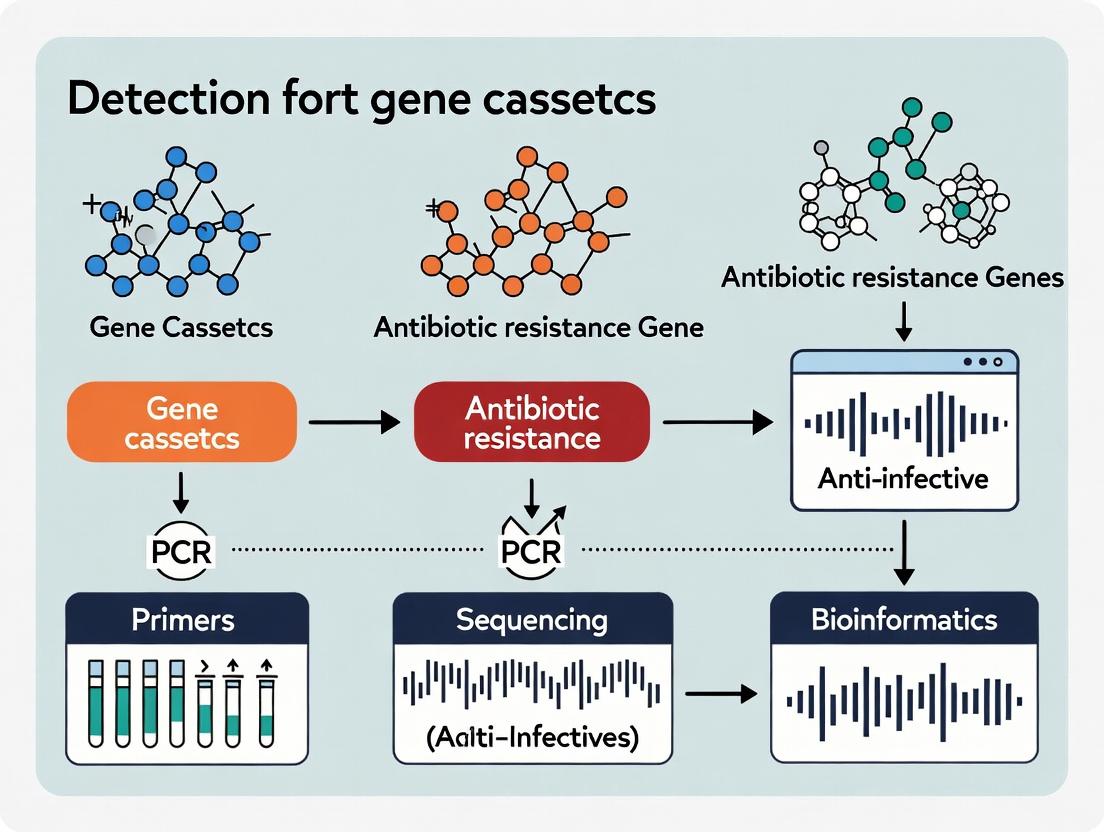
This article provides a comprehensive review of state-of-the-art detection methods for antibiotic resistance gene cassettes (ARG-cassettes), critical mobile genetic elements driving the global antimicrobial resistance (AMR) crisis.
Unveiling Resistance: Advanced Methods for Detecting Antibiotic Resistance Gene Cassettes in Clinical and Environmental Samples
Abstract
This article provides a comprehensive review of state-of-the-art detection methods for antibiotic resistance gene cassettes (ARG-cassettes), critical mobile genetic elements driving the global antimicrobial resistance (AMR) crisis. Targeting researchers, scientists, and drug development professionals, it explores the foundational biology of integrons and cassettes, details current methodological approaches from PCR to next-generation sequencing, addresses common challenges in detection and data interpretation, and validates techniques through comparative analysis. The review synthesizes best practices for accurate surveillance and discusses implications for novel therapeutic strategies and public health policy.
Understanding the Enemy: The Biology and Significance of Antibiotic Resistance Gene Cassettes
1. Introduction
Within the context of antimicrobial resistance (AMR) research, gene cassettes and integrons are pivotal genetic elements responsible for the rapid dissemination of resistance genes among bacterial populations. An integron is a genetic platform that can capture, integrate, and express mobile gene units known as gene cassettes. These cassettes typically contain a single promoterless gene (often an antibiotic resistance gene) and a specific recombination site (attC). The integron provides a promoter for their expression. This efficient system enables bacteria to stockpile multiple resistance genes, leading to multidrug resistance. Accurate detection and characterization of these elements are therefore critical for epidemiological studies and developing novel therapeutic strategies.
2. Core Definitions and Quantitative Overview
| Component | Key Features | Primary Role |
|---|---|---|
| Integron | Contains: attI site (recombination site), intI gene (integrase), Pc promoter. | Genetic platform for cassette acquisition and expression. |
| Gene Cassette | Circular, non-replicative DNA element. Contains a gene and a attC site (59-be). | Mobile unit carrying functional genes (e.g., aadA, dfr, bla). |
| attC site | Imperfect inverted repeats; recombination site recognized by integrase. | Target for site-specific recombination into the integron. |
| intI Gene | Encodes the integrase enzyme. | Catalyzes cassette excision and integration. |
Table 1: Core components of integrons and gene cassettes.
3. Experimental Protocols for Detection and Analysis
Protocol 3.1: PCR Amplification of Integron Variable Regions Objective: To screen for and determine the array of gene cassettes within class 1, 2, and 3 integrons. Materials:
- Bacterial genomic DNA extract.
- Primers: 5'-CS (5'-GGCATCCAAGCAGCAAGC-3') and 3'-CS (5'-AAGCAGACTTGACCTGA-3') for class 1 integrons.
- PCR Master Mix, Nuclease-free water, Thermocycler. Procedure:
- Prepare a 25 µL PCR reaction: 12.5 µL Master Mix, 1 µL each primer (10 µM), 2 µL template DNA (50 ng/µL), 8.5 µL water.
- Cycling conditions: Initial denaturation: 94°C for 5 min; 30 cycles of [94°C for 30 sec, 55°C for 30 sec, 72°C for 2 min]; Final extension: 72°C for 7 min.
- Analyze PCR products by agarose gel electrophoresis (1.5% gel). A single band indicates a conserved integron; multiple or a large band (~>1.5 kb) suggests a variable cassette array.
- Purify PCR products and sequence using the 5'-CS primer to identify cassette gene sequences.
Protocol 3.2: High-Resolution Cassette Array Mapping (Long-Read Sequencing) Objective: To fully resolve complex and long cassette arrays without assembly bias. Materials:
- High molecular weight genomic DNA.
- Oxford Nanopore Technologies (ONT) ligation sequencing kit or PacBio SMRTbell prep kit.
- Specific primers targeting conserved integron regions (e.g., intI1 and qacEΔ1 for class 1). Procedure:
- Perform long-range PCR (using a high-fidelity polymerase) or prepare unsheared genomic DNA for sequencing library preparation.
- For targeted enrichment, use the PCR amplicon from Protocol 3.1 as input for the long-read sequencing library prep, following manufacturer instructions.
- Sequence on the respective platform (e.g., ONT MinION or PacBio Sequel).
- Base-call and perform quality control. Analyze reads using bioinformatics tools (e.g., IntegronFinder, BLAST) to map the precise order and identity of all cassettes in the array.
4. Diagrams
Diagram Title: Integron Structure and Cassette Integration Mechanism
Diagram Title: Experimental Workflow for Cassette Array Analysis
5. The Scientist's Toolkit: Research Reagent Solutions
| Reagent / Material | Function in Research |
|---|---|
| Conserved Segment (CS) Primers | Degenerate primers annealing to conserved integron regions, enabling amplification of unknown intervening cassette arrays. |
| High-Fidelity DNA Polymerase | Essential for accurate, long-range PCR amplification of integron variable regions prior to sequencing. |
| Long-Read Sequencing Kit (ONT/PacBio) | Provides the platform-specific chemistry to generate reads long enough to span entire, multi-cassette arrays in a single read. |
| attC-specific Probes | Used in hybridization assays (Southern/Northern blot) or fluorescence in situ hybridization (FISH) to detect and localize cassettes. |
| Recombinant Integrase Enzyme | For in vitro studies of cassette recombination kinetics, specificity, and inhibition assays. |
| IntegronFinder Software | Bioinformatics tool for in silico identification of integrons and their cassettes in bacterial genome sequences. |
Application Notes
Gene cassettes, primarily found within integron systems, are discrete mobile genetic elements that carry antibiotic resistance genes, often without a promoter. Their mobility and recombination are central to the rapid dissemination of multidrug resistance. This document provides application notes and protocols for the detection and analysis of these cassettes, supporting a broader thesis on detection methods for antibiotic resistance gene cassettes.
Key Quantitative Data on Cassette Prevalence and Diversity
Table 1: Prevalence of Common Resistance Gene Cassettes in Clinical Isolates (2020-2024 Meta-Analysis Summary)
| Cassette Gene | Resistance Conferred | Common Integron Type | Average Prevalence in Gram-negative Isolates (%) | Primary Geographic Hotspots |
|---|---|---|---|---|
| aadA variants | Aminoglycosides | Class 1 | 25-40% | Asia, Europe, North America |
| dfrA variants | Trimethoprim | Class 1 | 15-30% | Global |
| blaVIM | Carbapenems (MBL) | Class 1 | 1-8% (rising) | Mediterranean, Asia |
| blaIMP | Carbapenems (MBL) | Class 1 | 0.5-5% | Asia, South America |
| qac genes | Disinfectants | Class 1 | 20-35% | Healthcare settings globally |
| catB variants | Chloramphenicol | Class 1 | 5-15% | South America, Asia |
Table 2: Common Experimental Techniques for Cassette Analysis
| Technique | Target | Throughput | Key Quantitative Output | Typical Timeframe |
|---|---|---|---|---|
| PCR & Sequencing | attC sites, gene cassette arrays | Low-Medium | Sequence, array length | 1-2 days |
| Long-read Sequencing (ONT, PacBio) | Full integron structure | High | Complete sequence of cassette arrays, genomic context | 3-5 days |
| qPCR with SYBR Green | Cassette gene abundance | High | Copy number, relative abundance | 4-6 hours |
| Metagenomic Shotgun Sequencing | Cassette diversity in communities | Very High | Relative abundance, novel cassette discovery | 1-2 weeks |
Detailed Experimental Protocols
Protocol 1: Amplification and Sequencing of Gene Cassette Arrays from Class 1 Integrons
Objective: To amplify and sequence the variable region of Class 1 integrons to determine the content and order of gene cassettes.
Materials:
- DNA template (bacterial colony lysate or purified genomic DNA).
- PCR primers: 5'-CS: GGCATCCAAGCAGCAAGC and 3'-CS: AAGCAGACTTGACCTGA.
- High-fidelity DNA polymerase master mix.
- Agarose gel electrophoresis system.
- PCR purification kit.
- Sanger sequencing reagents or services.
Procedure:
- PCR Setup: In a 25 µL reaction, combine: 12.5 µL master mix, 1 µL each primer (10 µM), 2 µL template DNA (10-50 ng), 8.5 µL nuclease-free water.
- Thermocycling Conditions:
- Initial denaturation: 95°C for 5 min.
- 35 cycles of: 95°C for 30 sec, 55°C for 30 sec, 72°C for 1-3 min/kb (based on expected array size).
- Final extension: 72°C for 7 min.
- Analysis: Run 5 µL PCR product on a 1.5% agarose gel. Expect a smear or discrete bands.
- Purification and Sequencing: Purify the PCR product. Submit for Sanger sequencing using the 5'-CS primer. For long arrays, consider primer walking or long-read sequencing.
Protocol 2: High-Throughput Detection of Cassette Genes via qPCR
Objective: To quantitatively assess the abundance of specific resistance cassette genes (e.g., aadA2, dfrA12) in bacterial isolates or environmental DNA.
Materials:
- DNA samples.
- TaqMan probe-based qPCR master mix.
- Specific primer/probe sets for target cassette genes and a reference gene (e.g., 16S rRNA).
- Real-time PCR instrument.
Procedure:
- Primer/Probe Design: Design assays targeting conserved regions within the cassette gene. Example for aadA2:
- Forward: 5'-CGAAGCTTTATTGGAAGCAG-3'
- Reverse: 5'-GCTTGATGCCGTAGCTCAGT-3'
- Probe: 5'-[FAM]ACCCGCATACAGCATCACCGT-[BHQ1]-3'
- Reaction Setup: Prepare 20 µL reactions in triplicate: 10 µL master mix, 0.5 µL each primer (10 µM), 0.25 µL probe (10 µM), 2 µL DNA, 6.75 µL water.
- qPCR Run:
- Hold: 50°C for 2 min, 95°C for 10 min.
- 40 cycles: 95°C for 15 sec, 60°C for 1 min (acquire data).
- Data Analysis: Use the ΔΔCt method relative to the reference gene and a control sample to calculate relative fold-change in gene abundance.
Visualizations
Diagram Title: Gene Cassette Integration via Integron
Diagram Title: Cassette Detection & Analysis Workflow
The Scientist's Toolkit: Research Reagent Solutions
Table 3: Essential Materials for Gene Cassette Research
| Item | Function & Application | Example/Supplier (for informational purposes) |
|---|---|---|
| High-Fidelity DNA Polymerase | Accurate amplification of cassette arrays for sequencing. Reduces PCR errors in repetitive attC regions. | Q5 High-Fidelity (NEB), Platinum SuperFi II (Thermo Fisher) |
| Integron-Specific PCR Primers (5'-CS/3'-CS) | Consensus primers amplifying the variable region between intI and qacEΔ1/sul1 in Class 1 integrons. | Standard oligonucleotide synthesis. |
| TaqMan Probe qPCR Assays | Quantitative, specific detection of individual cassette genes in complex samples. | Custom-designed assays (e.g., Thermo Fisher, IDT). |
| Long-Read Sequencing Kit | Resolves complete structure of integron cassette arrays and genomic context. | Oxford Nanopore Ligation Sequencing Kit (SQK-LSK114), PacBio HiFi libraries. |
| attC-specific Bioinformatics Pipeline | Identifies and annotates cassette arrays from whole-genome or metagenomic data. | IntegronFinder, ICEberg 3.0. |
| Mobilome Enrichment Reagents | Enriches plasmid/transposon DNA to study cassette vectors. | PlasmidSafe ATP-Dependent DNase, Kits from Qiagen/Norgen. |
Antibiotic resistance gene (ARG) cassettes are mobile genetic elements, typically arrays of resistance genes flanked by recombination sites, integrated into integrons. Their mobility facilitates rapid horizontal gene transfer (HGT) across clinical and environmental bacterial populations, driving the dissemination of Antimicrobial Resistance (AMR). Surveillance that merely identifies ARGs misses the critical context of their mobilization potential. Detecting the cassettes themselves—their structure, composition, and carriage on mobile elements like plasmids—is therefore paramount for assessing transmission risk and understanding resistance epidemiology within a One Health framework.
Quantitative Data: Cassette Prevalence and Impact
Table 1: Prevalence of Common Resistance Gene Cassettes in Clinical vs. Environmental Isolates (2020-2024 Meta-Analysis Data)
| Cassette Array (Example) | Common Resistance Phenotype | Clinical Setting Prevalence (%) | Environmental/Wastewater Prevalence (%) | Key Mobile Element Carrier |
|---|---|---|---|---|
| aadA2 | Streptomycin/Spectinomycin | 12-18% in Enterobacteriaceae | 22-30% in WWTP effluent | Class 1 Integrons, Plasmids |
| dfrA1 + aadA1 | Trimethoprim, Streptomycin | 8-15% in E. coli | 15-25% in agricultural soil | Class 1 Integrons |
| blaGES | Carbapenem (ESBL/Carba) | 3-8% in P. aeruginosa | 1-4% in hospital wastewater | Class 1 Integrons, GEI |
| qacEΔ1 + sul1 | Disinfectants, Sulfonamides | 40-60% in clinical Gram-negatives | 50-70% in WWTP biofilms | Class 1 Integrons (3'-CS) |
Table 2: Impact of Cassette Detection on AMR Surveillance Outcomes
| Surveillance Approach | Key Output | Limitation | Advantage with Cassette-Specific Detection |
|---|---|---|---|
| Phenotypic AST | MIC | No genetic info, slow | Identifies mobilization risk of observed resistance. |
| PCR for Single ARG | ARG Presence | Misses genetic context, overestimates risk if chromosomal. | Distinguishes chromosomal (stable) from cassette-borne (mobile) ARGs. |
| Whole Genome Sequencing (WGS) | All genetic data | Complex data, requires bioinformatics for cassette identification. | Enables precise tracking of cassette variants and their associated platforms (plasmid/Integron) across strains. |
Key Methodologies for Cassette Detection
Protocol: PCR for Cassette Array Amplification (Integron-Targeted)
Objective: To amplify the variable region of a class 1 integron, revealing the cassette array. Reagents & Equipment:
- DNA template (bacterial colony lysate or extracted DNA)
- Primers: 5'-CS (5'-GGCATCCAAGCAGCAAGC-3') and 3'-CS (5'-AAGCAGACTTGACCTGA-3')
- PCR master mix (Taq polymerase, dNTPs, buffer)
- Thermocycler
- Agarose gel electrophoresis system
Procedure:
- Prepare 25 µL PCR reaction: 12.5 µL master mix, 1 µL each primer (10 µM), 2 µL DNA template, 8.5 µL nuclease-free water.
- Thermocycling conditions:
- Initial denaturation: 95°C for 5 min.
- 30 cycles: 95°C for 30s, 55°C for 30s, 72°C for 1-3 min (1 min/kb estimated product).
- Final extension: 72°C for 7 min.
- Analyze products on 1.5% agarose gel. Sequence amplicons for cassette identification.
Protocol: Long-Read Sequencing for Complete Cassette Context
Objective: To resolve the complete structure of resistance cassettes and their genomic location. Reagents & Equipment:
- High-quality, high-molecular-weight genomic DNA (gDNA)
- Oxford Nanopore Technologies (ONT) ligation sequencing kit or PacBio SMRTbell prep kit
- Appropriate long-read sequencer (MinION, GridION, or PacBio Sequel)
- Bioinformatics tools: Flye or Canu (assembly), IntegronFinder (cassette identification), BLAST (annotation)
Procedure:
- gDNA Preparation: Use a gentle lysis protocol (e.g., phenol-chloroform) to avoid DNA shearing. Assess integrity via pulsed-field gel electrophoresis.
- Library Prep: Follow manufacturer's protocol for ligation-based library preparation (ONT) or SMRTbell construction (PacBio).
- Sequencing: Load library onto the sequencer. Aim for >50x coverage.
- Bioinformatics Analysis:
- De novo assembly using long-read assembler.
- Identify integron structures using IntegronFinder.
- Annotate resistance genes within cassettes using CARD or ResFinder databases.
- Identify plasmid sequences using PlasmidFinder.
Visualization of Concepts and Workflows
Title: AMR Cassette Mobilization Pathway Between Clinical and Environmental Settings
Title: Workflow for Cassette Detection from Samples
The Scientist's Toolkit: Key Reagent Solutions
Table 3: Essential Research Reagents for Cassette Detection Experiments
| Item Name | Supplier Examples | Function in Cassette Detection |
|---|---|---|
| 5'-CS / 3'-CS Primers | IDT, Thermo Fisher | Consensus primers to PCR amplify the variable cassette region of class 1 integrons. |
| High-Fidelity PCR Mix | NEB (Q5), Takara (PrimeSTAR) | For accurate amplification of cassette arrays prior to Sanger sequencing. |
| Rapid DNA Extraction Kit | Qiagen DNeasy Blood & Tissue | Quick genomic DNA prep for screening PCRs. |
| HMW DNA Extraction Kit | Qiagen Genomic-tip, MagAttract HMW | For obtaining long, intact DNA fragments crucial for long-read sequencing. |
| Oxford Nanopore Ligation Sequencing Kit (SQK-LSK114) | Oxford Nanopore Technologies | Prepares genomic DNA libraries for long-read sequencing on MinION/GridION platforms. |
| PacBio SMRTbell Prep Kit | PacBio | Prepares libraries for sequencing on PacBio Sequel/Revio systems. |
| IntegronFinder Database | Public Git Repository | Bioinformatics tool for identifying integron sequences and cassettes in genome assemblies. |
| CARD & ResFinder Databases | McMaster University, DTU | Curated databases for annotating resistance genes found within cassettes. |
| PlasmidFinder Database | DTU | Used to identify plasmid replicons, linking cassettes to mobile vectors. |
Within the context of detecting and characterizing antibiotic resistance gene cassettes, understanding the role of the attC recombination site and promoter variations is critical. Integrons, particularly class 1, are key genetic platforms that capture and express mobile gene cassettes via site-specific recombination, primarily mediated at the attC site (also known as the 59-be element). The expression of resistance genes within these cassettes is governed by a common promoter, Pc, located within the integron platform. Variations in the attC site structure and promoter strength directly impact recombination efficiency and expression levels of antibiotic resistance genes, influencing phenotypic resistance profiles.
Quantitative Data onattCSites and Promoters
Table 1: CommonattCSite Characteristics Across Major Integron Classes
| Integron Class | Typical attC Length (bp) | Core Site (RYYYAAC) | Inverse Core (GTTYR) | Recombination Efficiency (Relative to attCaadA7=1.0) |
|---|---|---|---|---|
| Class 1 | 57-141 | Present | Present | 0.2 - 2.5 |
| Class 2 | 48-120 | Present (often degenerate) | Present (often degenerate) | 0.05 - 0.8 |
| Class 3 | 60-135 | Present | Present | 0.3 - 1.5 |
| Mobile (Class 4) | 55-150 | Present | Present | 0.5 - 3.0 |
Note: Recombination efficiency is influenced by *attC site folding and sequence conservation. Data compiled from recent studies (2023-2024).*
Table 2: Promoter Variants (Pc) and Their Impact on Gene Cassette Expression
| Promoter Variant | -35 Region | -10 Region | Spacer Length (bp) | Relative Transcriptional Strength (% of PcWT) | Associated Resistance Phenotype (MIC Increase Fold) |
|---|---|---|---|---|---|
| PcWT (Weak) | TTGACA | TAAACT | 17 | 100% (Baseline) | 1x (Baseline) |
| PcH1 (Strong) | TTGACA | TGGACT | 17 | ~600% | 4-8x (e.g., for aadB) |
| PcH2 (Strong) | TTGACA | TAAACT | 14 | ~800% | 6-10x (e.g., for dfrA) |
| PcS (Very Weak) | TTGGCA | TAAGCT | 18 | ~10% | 0.5-1x (often sub-clinical) |
Experimental Protocols
Protocol 1:attCSite Recombination Assay (In Vitro)
Purpose: To measure the recombination efficiency of a specific attC site variant. Materials:
- Purified IntI1 integrase.
- Donor plasmid containing the gene cassette with the attC site of interest.
- Recipient plasmid containing the attI site.
- Recombination buffer (20 mM Tris-Cl pH 7.5, 50 mM NaCl, 5 mM MgCl2, 1 mM DTT).
- Proteinase K and SDS stop solution.
- Competent E. coli cells (recA- strain).
- Selective agar plates.
Method:
- Set up a 20 µL recombination reaction: Mix 50 ng donor plasmid, 50 ng recipient plasmid, and 200 ng IntI1 integrase in recombination buffer.
- Incubate at 30°C for 2 hours.
- Stop the reaction by adding 1 µL of 10% SDS and 1 µL of Proteinase K (20 mg/mL). Incubate at 37°C for 15 min.
- Transform 5 µL of the reaction mixture into 50 µL of competent E. coli cells.
- Plate cells on agar containing antibiotics selective for the recombinant product.
- Count colonies after 16-20 hours incubation at 37°C. Calculate recombination frequency as (recombinant CFUs / total CFUs from recipient plasmid control).
Protocol 2: Analysis of Promoter Variant Strength
Purpose: To quantify the transcriptional activity of Pc promoter variants driving a reporter gene. Materials:
- Reporter plasmid series: Promoterless gfp or lacZ vector.
- PCR reagents and primers to amplify Pc variants from clinical isolates.
- Gibson Assembly or restriction enzyme-based cloning reagents.
- Spectrophotometer or fluorometer.
- LB broth and appropriate antibiotics.
Method:
- Cloning: Amplify Pc promoter variants from genomic DNA of bacterial isolates. Clone each variant upstream of the promoterless reporter gene (gfp/lacZ) in the vector.
- Transformation: Transform each constructed plasmid into a standard E. coli strain (e.g., DH5α).
- Culture: Inoculate triplicate cultures in LB with antibiotic. Grow to mid-log phase (OD600 ~0.5).
- Measurement:
- For lacZ: Perform β-galactosidase assay using ONPG substrate. Measure absorbance at 420 nm.
- For gfp: Measure fluorescence (excitation 488 nm, emission 510 nm).
- Normalization: Normalize reporter activity to cell density (OD600). Express results relative to the activity of the standard PcWT promoter.
Visualizations
Title: attC Site Recombination Pathway
Title: Promoter Variation Impact on Resistance
The Scientist's Toolkit
Table 3: Essential Research Reagents and Materials
| Item | Function/Application | Key Provider Examples |
|---|---|---|
| Purified IntI1 Integrase | Catalyzes recombination between attI and attC sites in in vitro assays. | Recombinant expression & purification in-house; some commercial enzyme suppliers. |
| attC / Pc Variant Synthetic DNA Fragments | For constructing controls and standards in recombination/expression assays. | Integrated DNA Technologies (IDT), Twist Bioscience. |
| Promoterless Reporter Vectors (e.g., pPROBE-GFP, pRS551) | Backbone for cloning and quantifying promoter activity of Pc variants. | Addgene, in-house plasmid repositories. |
| Clinical Isolate DNA Panels (MDR Gram-negatives) | Source of natural attC site and promoter diversity for analysis. | ATCC, BEI Resources, hospital microbiology labs. |
| High-Fidelity PCR Mix | For accurate amplification of attC and promoter regions from complex samples. | Thermo Fisher Scientific, New England Biolabs, QIAGEN. |
| β-Galactosidase Assay Kit (ONPG-based) | Quantitative measurement of promoter activity when using lacZ reporter. | Thermo Fisher Scientific, Merck Millipore. |
| Microplate Fluorometer | Sensitive detection of GFP output from promoter-reporter fusions. | BioTek, BMG LABTECH. |
| Bioinformatics Suites (e.g., IntegronFinder, AttCfinder) | In silico identification and analysis of attC sites in genome sequences. | Open-source web servers/standalone tools. |
Application Notes
Integrons, particularly class 1, 2, and 3, are primary platforms for antibiotic resistance gene cassettes (ARGcs). These genetic elements capture, rearrange, and express genes conferring resistance to most antibiotic classes. The dissemination of cassettes carrying genes for extended-spectrum β-lactamases (ESBLs), carbapenemases, and aminoglycoside-modifying enzymes is a critical driver of multidrug-resistant (MDR) infections. Emerging determinants include variants of blaNDM, blaKPC, and mcr genes within novel cassette arrays, complicating treatment paradigms.
Quantitative Survey of Prevalent Cassette-Associated Genes
The following tables summarize current surveillance data on prevalent cassette-borne resistance determinants.
Table 1: Prevalence of Common Cassette-Associated Resistance Genes in Clinical Isolates (2020-2024)
| Gene | Resistance Conferred | Primary Cassette Family | Approx. Global Prevalence (%)* | Notable Variants |
|---|---|---|---|---|
| aadA | Aminoglycosides | Class 1, 2 | 45-60 | aadA1, aadA2, aadA5 |
| dfrA | Trimethoprim | Class 1, 2 | 30-50 | dfrA1, dfrA5, dfrA7 |
| blaVIM | Carbapenems | Class 1 | 5-15 | blaVIM-1, blaVIM-2 |
| blaNDM-1 | Carbapenems | Class 1 | 8-20 | blaNDM-5, blaNDM-7 |
| qac | Disinfectants | Class 1 | 20-35 | qacEΔ1 |
| catB | Chloramphenicol | Class 1 | 10-25 | catB3, catB8 |
Prevalence data is an aggregated estimate from recent genomic surveillance studies in *E. coli and K. pneumoniae.
Table 2: Emerging Cassette-Associated Genes Under Surveillance
| Gene | Resistance Conferred | Primary Cassette Family | First Reported in Cassette | Current Concern Level |
|---|---|---|---|---|
| mcr-9 | Colistin | Class 1 | 2019 | High |
| blaGES | ESBL/Carbapenems | Class 1 | 2021 | Moderate-High |
| armA | Aminoglycosides | Class 1 | 2020 | Moderate |
| cfr | Phenicols, Lincosamides... | Class 1 | 2018 | High |
Experimental Protocols
Protocol 1: High-Throughput Detection of Gene Cassette Arrays Using Long-Read Sequencing
Objective: To fully characterize the structure and gene content of integron cassette arrays from bacterial isolates. Principle: Long-read sequencing (Oxford Nanopore Technologies, PacBio) spans repetitive integron structures, allowing unambiguous determination of cassette order and identification of novel genes.
Materials:
- Pure bacterial genomic DNA (gDNA), >5 µg, high molecular weight.
- SQK-LSK114 Ligation Sequencing Kit (Oxford Nanopore).
- NEB Next Ultra II FFPE DNA Repair Mix (New England Biolabs).
- AMPure XP Beads (Beckman Coulter).
- R9.4.1 Flow Cell (Oxford Nanopore).
- MinKNOW Software (Oxford Nanopore).
- Bioinformatics tools: Flye assembler, IntegronFinder, BLAST.
Procedure:
- DNA Repair & End-Prep: Treat 3 µg gDNA with 1X NEB Next Ultra II FFPE DNA Repair Mix for 30 min at 20°C. Follow with end-prep per SQK-LSK114 protocol.
- Adapter Ligation: Ligate sequencing adapters to the end-prepped DNA using AMII adapter mix. Incubate for 20 min at room temperature.
- Purification & Elution: Purify the adapter-ligated DNA using AMPure XP beads (0.4X ratio). Elute in Elution Buffer (EB).
- Priming & Loading: Prime the R9.4.1 flow cell with Flush Buffer (FB) and Flush Tether (FLT). Load the prepared library onto the flow cell.
- Sequencing: Run sequencing on MinKNOW for 48 hours (or until sufficient coverage >100x is achieved).
- Bioinformatics Analysis:
- Basecall with Guppy (HAC mode).
- Assemble reads using Flye assembler with
--nano-hqflag. - Identify integron structures in contigs using IntegronFinder (default parameters).
- Annotate cassette open reading frames (ORFs) with Prokka and compare to ARG databases (e.g., CARD, ResFinder) using BLAST.
Protocol 2: Functional Validation of Novel Cassette Gene Resistance Phenotype
Objective: To confirm the resistance phenotype conferred by a newly identified gene cassette. Principle: The gene of interest is cloned into a susceptible expression vector and transformed into a standard laboratory strain (E. coli DH5α). Minimum Inhibitory Concentration (MIC) is determined and compared to control.
Materials:
- Suspected novel resistance gene cassette.
- pCR-Blunt II-TOPO cloning vector (Thermo Fisher).
- Phusion High-Fidelity DNA Polymerase (NEB).
- E. coli DH5α chemically competent cells.
- LB Agar & Broth with appropriate antibiotics (Kanamycin 50 µg/mL).
- Mueller-Hinton II Agar & Broth (cation-adjusted).
- Antibiotic stocks for MIC testing.
- 96-well round-bottom microtiter plates.
Procedure:
- PCR Amplification: Amplify the novel cassette ORF using gene-specific primers (designed with 5'-CACC overhang for TOPO cloning) and Phusion Polymerase.
- TOPO Cloning: Ligate the purified PCR product into the pCR-Blunt II-TOPO vector per manufacturer's instructions.
- Transformation & Screening: Transform ligation mix into E. coli DH5α. Select on LB agar with Kanamycin. Screen colonies by colony PCR and confirm insert by Sanger sequencing.
- MIC Determination (Broth Microdilution):
- Inoculate 3-5 colonies of the confirmed clone into Mueller-Hinton broth. Grow to 0.5 McFarland standard.
- Prepare a 2-fold dilution series of the target antibiotic in Mueller-Hinton broth across a 96-well plate.
- Dilute the bacterial suspension to ~5 x 10⁵ CFU/mL and inoculate each well.
- Incubate at 37°C for 18-24 hours.
- The MIC is the lowest concentration of antibiotic that completely inhibits visible growth.
- Include controls: DH5α with empty vector (susceptible control) and a known resistant strain (if available).
Visualizations
Title: Integron Cassette Capture and Integration
Title: Gene Cassette Array Detection Workflow
The Scientist's Toolkit: Research Reagent Solutions
Table 3: Essential Reagents for Cassette Research
| Item | Function/Application in Research | Example Product/Catalog |
|---|---|---|
| High Molecular Weight DNA Isolation Kit | Extracts long, intact genomic DNA essential for long-read sequencing of repetitive integron structures. | Nanobind CBB Big DNA Kit (Circulomics), MagAttract HMW DNA Kit (Qiagen). |
| Long-Read Sequencing Kit | Enables library preparation for sequencing platforms that resolve complex cassette arrays. | SQK-LSK114 Ligation Kit (Oxford Nanopore), SMRTbell Prep Kit 3.0 (PacBio). |
| Broad-Host-Range Cloning Vector | For functional expression of candidate resistance genes from cassettes in model bacterial strains. | pUCP24 (Pseudomonas), pCR-Blunt II-TOPO (general cloning). |
| Phusion High-Fidelity Polymerase | Accurately amplifies resistance genes from cassette arrays for cloning or analysis, minimizing errors. | Phusion HF DNA Polymerase (NEB, M0530). |
| IntegronFinder Software | Standard bioinformatics tool for in silico identification of integron structures and cassettes in genomic data. | Open-source (Galaxy, command line). |
| CARD/ResFinder Database | Reference databases for annotating and confirming the identity of resistance genes found in cassettes. | Comprehensive Antibiotic Resistance Database (CARD), ResFinder (DTU). |
| Cation-Adjusted Mueller-Hinton Broth | Standardized medium required for performing accurate antimicrobial susceptibility testing (MIC) of clones. | Mueller-Hinton II Broth (BD BBL, 212322). |
The Detection Toolkit: From PCR Panels to Metagenomics for ARG-Cassette Identification
Within the overarching thesis on Detection methods for antibiotic resistance gene cassettes, targeted PCR amplification remains a cornerstone for confirming and characterizing known integron-associated cassette arrays. Conventional singleplex PCR provides high-fidelity amplification of individual targets, while multiplex PCR enables the simultaneous detection of multiple cassette types, offering efficiency and sample conservation. This application note details protocols for both approaches, focusing on the amplification of common antibiotic resistance gene cassettes (e.g., aadA, dfr, cat, qac) found within class 1, 2, and 3 integrons.
Research Reagent Solutions
Table 1: Essential Reagents and Materials for PCR Amplification of Cassette Arrays
| Reagent/Material | Function/Description |
|---|---|
| High-Fidelity DNA Polymerase (e.g., Pfu, Q5) | Provides accurate amplification with low error rates, critical for downstream sequencing of cassettes. |
| Hot-Start Taq DNA Polymerase | Reduces non-specific amplification and primer-dimer formation, essential for multiplex PCR. |
| 10x Multiplex PCR Buffer | Contains optimized salt and additive concentrations to support simultaneous primer annealing. |
| dNTP Mix (25 mM each) | Building blocks for DNA synthesis. |
| Template DNA (Bacterial genomic) | Purified genomic DNA from bacterial isolates, quantified via spectrophotometry (e.g., Nanodrop). |
| Cassette-Specific Primer Mix | Custom primer sets targeting conserved regions (e.g., attC sites) or specific cassette gene sequences. |
| PCR-Grade Water | Nuclease-free water for reaction assembly. |
| DNA Size Standard Ladder | For accurate sizing of amplicons on agarose gels. |
| Gel Loading Dye (with tracking dye) | Facilitates sample loading and migration monitoring during electrophoresis. |
| Nucleic Acid Gel Stain (e.g., SYBR Safe) | Intercalating dye for visualizing PCR amplicons under blue light. |
Protocols
Protocol 1: Conventional Singleplex PCR for Cassette Verification
Objective: To amplify a single, specific antibiotic resistance gene cassette from a known integron platform.
Materials: Thermal cycler, PCR tubes, reagents from Table 1.
Primer Design:
- Primers are designed to bind within the conserved integron platform (e.g., intI gene or attI site) and the specific cassette gene, or across the cassette's attC site.
- Typical primer length: 18-25 nucleotides. Tm: 55-65°C.
- Example: For aadA2 cassette amplification: Forward: 5'-GGC ATC CAA GCA GCA AG-3', Reverse: 5'-AAT CCC AGA CGC TCA C-3'.
Procedure:
- Reaction Setup (25 µL total volume):
- PCR-grade water: 16.3 µL
- 10x PCR Buffer: 2.5 µL
- dNTP Mix (10 mM): 0.5 µL
- Forward Primer (10 µM): 1.0 µL
- Reverse Primer (10 µM): 1.0 µL
- Template DNA (50-100 ng): 2.0 µL
- DNA Polymerase (1 U/µL): 0.2 µL
Thermal Cycling Conditions:
- Initial Denaturation: 95°C for 5 min.
- 35 Cycles of:
- Denaturation: 95°C for 30 sec.
- Annealing: (Primer Tm -5°C) for 30 sec.
- Extension: 72°C for 1 min/kb.
- Final Extension: 72°C for 7 min.
- Hold: 4°C.
Analysis: Run 5 µL of product on a 1.5% agarose gel. Expected product size depends on the targeted cassette (e.g., aadA variants ~500-800 bp).
Protocol 2: Multiplex PCR for Known Cassette Array Profiling
Objective: To co-amplify up to five different cassette-specific sequences in a single reaction, enabling rapid array profiling.
Materials: As per Protocol 1, but using Hot-Start Taq and multiplex buffer.
Primer Design for Multiplex:
- All primers must have similar Tm (within 2-3°C).
- Amplicon sizes must be distinct, differing by ≥50 bp for clear gel resolution.
- Primer concentrations may require empirical optimization to balance amplification efficiency.
Procedure:
- Reaction Setup (25 µL total volume):
- PCR-grade water: 14.5 µL
- 5x Multiplex PCR Buffer: 5.0 µL
- dNTP Mix (25 mM): 0.2 µL
- Primer Mix (2 µM each primer): 2.5 µL
- Template DNA (100 ng): 2.5 µL
- Hot-Start Taq Polymerase (5 U/µL): 0.3 µL
Thermal Cycling Conditions (Touchdown):
- Initial Denaturation: 95°C for 15 min.
- 10 Cycles of:
- Denaturation: 94°C for 30 sec.
- Annealing: 65°C (-1°C/cycle) for 90 sec.
- Extension: 72°C for 90 sec.
- 25 Cycles of:
- Denaturation: 94°C for 30 sec.
- Annealing: 55°C for 90 sec.
- Extension: 72°C for 90 sec.
- Final Extension: 72°C for 10 min.
- Hold: 4°C.
Analysis: Run 10 µL of product on a 2-3% agarose gel. Use a high-resolution ladder to distinguish amplicon sizes.
Data Presentation
Table 2: Expected Amplicon Sizes for Common Antibiotic Resistance Gene Cassettes in Multiplex PCR
| Target Cassette Gene | Resistance Profile | Typical Amplicon Size Range (bp) | Primer Binding Regions |
|---|---|---|---|
| aadA1/A2 | Aminoglycosides (Streptomycin/Spectinomycin) | 500 - 550 | Within aadA ORF |
| dfrA1 | Trimethoprim | 350 - 400 | dfrA ORF and attC |
| dfrA12 | Trimethoprim | 200 - 250 | dfrA ORF and attC |
| catB3 | Chloramphenicol | 600 - 650 | catB ORF |
| qacEΔ1 | Quaternary Ammonium Compounds | 150 - 200 | sul1 upstream region |
Table 3: Comparative Analysis of Singleplex vs. Multiplex PCR for Cassette Detection
| Parameter | Conventional Singleplex PCR | Multiplex PCR |
|---|---|---|
| Primary Use | Verification & sequencing of a single known cassette. | Screening for multiple known cassettes simultaneously. |
| Throughput | Low (1 target/reaction) | High (3-8 targets/reaction) |
| Template DNA Consumption | Higher per target identified | Lower per target identified |
| Optimization Complexity | Low | High (primer balancing required) |
| Risk of Non-Specific Amplification | Low | Moderate to High |
| Cost per Data Point | Higher | Lower |
| Ideal for | Definitive confirmation, cloning. | Epidemiological surveys, initial profiling. |
Visualization of Workflows
Title: PCR Workflow for Cassette Array Detection
Title: Method Selection Logic Based on Research Goal
Application Notes
Within the thesis research on detection methods for antibiotic resistance gene cassettes, qPCR serves as a cornerstone technology for both high-throughput screening of clinical/ environmental samples and precise expression analysis of resistance genes under various conditions. The following applications are critical:
- Surveillance of Antibiotic Resistance Gene (ARG) Prevalence: High-throughput qPCR arrays, including commercially available ones like the Antibiotic Resistance Genes Microbial DNA qPCR Array, enable simultaneous quantification of hundreds of ARGs and mobile genetic elements (MGEs) across numerous samples. This facilitates epidemiological studies and source tracking.
- Expression Profiling of Resistance Cassettes: Reverse Transcription qPCR (RT-qPCR) is used to measure changes in mRNA expression levels of specific ARGs (e.g., blaKPC, mecA, vanA) in bacterial isolates in response to antibiotic exposure, sub-inhibitory concentrations of biocides, or within biofilm environments.
- Validation of High-Throughput Sequencing Data: qPCR provides a cost-effective and absolute quantitative method to validate the relative abundance of ARGs identified through metagenomic or transcriptomic sequencing studies.
- Assessment of Horizontal Gene Transfer Potential: Co-amplification of ARGs and integrase genes (e.g., intI1) from environmental extracellular DNA (eDNA) or within isolates helps assess the mobilization potential of resistance cassettes.
Table 1: Example qPCR Data from a Simulated High-Throughput ARG Screening Study
| Sample ID | Target Gene (Cassette) | Mean Cq Value | Gene Copies/μL (Calculated) | ARG Classification | Associated MGE Detected? (Y/N) |
|---|---|---|---|---|---|
| WWTP-01 | blaCTX-M-1 | 22.3 | 1.5 x 10⁴ | Extended-Spectrum Beta-Lactamase | Y (intI1) |
| WWTP-01 | sul1 | 19.8 | 5.7 x 10⁴ | Sulfonamide Resistance | Y (intI1) |
| WWTP-01 | tet(M) | 30.1 | 8.2 x 10¹ | Tetracycline Resistance | N |
| Clinical-15 | mecA | 16.5 | 3.0 x 10⁵ | Methicillin Resistance | Y (SCCmec cassette) |
| Clinical-15 | aac(6')-aph(2'') | 25.4 | 2.1 x 10³ | Aminoglycoside Resistance | N |
| Soil-09 | vanA | 34.9 | 1.1 x 10¹ | Vancomycin Resistance | Y (Tn1546) |
Table 2: Example Expression Analysis of blaKPC Under Ciprofloxacin Stress
| Ciprofloxacin Concentration (μg/mL) | Mean Cq (Target blaKPC) | Mean Cq (Reference Gene rpoD) | ΔCq | ΔΔCq | Fold Change in Expression (2^-ΔΔCq) |
|---|---|---|---|---|---|
| 0 (Control) | 23.1 | 20.2 | 2.9 | 0.0 | 1.0 (Baseline) |
| 0.25x MIC | 21.8 | 20.5 | 1.3 | -1.6 | 3.0 (Upregulated) |
| 0.5x MIC | 22.5 | 21.0 | 1.5 | -1.4 | 2.6 (Upregulated) |
| 1x MIC | 28.9 | 21.3 | 7.6 | 4.7 | 0.04 (Downregulated) |
Experimental Protocols
Protocol 1: High-Throughput SYBR Green qPCR Screening for ARGs in Environmental DNA
Objective: To quantify the abundance of a panel of antibiotic resistance genes and integrase genes from purified environmental DNA extracts.
Materials: See "The Scientist's Toolkit" below.
Procedure:
- Primer Preparation: Reconstitute and dilute lyophilized primer sets for your target ARGs and MGEs (e.g., intI1, tnpA of common transposons) to a working concentration of 10 μM. Include a universal 16S rRNA gene primer set for total bacterial load normalization.
- Reaction Plate Setup: In a 96- or 384-well plate, assemble reactions in triplicate. For each 20 μL reaction:
- 10 μL of 2X SYBR Green Master Mix.
- 0.8 μL each of forward and reverse primer (10 μM) (final 400 nM each).
- 2-5 μL of template DNA (adjust volume so total DNA is within the validated linear range, typically 1-10 ng).
- Nuclease-free water to 20 μL.
- Include a no-template control (NTC) for each primer set and a standard curve dilution series for at least one gene per run.
- Standard Curve Preparation: Perform a 10-fold serial dilution (e.g., 10⁷ to 10¹ copies/μL) of a linearized plasmid containing a known copy of a target gene amplicon.
- qPCR Run:
- Step 1: Enzyme activation: 95°C for 2 min.
- Step 2: Amplification (40 cycles): Denature at 95°C for 15 sec, anneal/extend at 60°C for 1 min (acquire SYBR Green signal).
- Step 3: Melt curve analysis: 65°C to 95°C, increment 0.5°C, hold 5 sec per step.
- Data Analysis:
- Determine Cq values using the instrument's software with a consistent threshold.
- Check melt curves for single, specific peaks.
- Generate a standard curve for each plate. Efficiency (E) should be 90-110% (R² > 0.99).
- Calculate gene copy number per μL of template using the standard curve equation.
- Normalize ARG copy numbers to the 16S rRNA gene copies to obtain relative abundance.
Protocol 2: RT-qPCR for Expression Analysis of ARGs in Bacterial Isolates
Objective: To measure the relative change in mRNA expression of a specific antibiotic resistance gene cassette upon exposure to an antimicrobial agent.
Materials: See "The Scientist's Toolkit" below.
Procedure:
- Treatment and RNA Stabilization: Grow the bacterial isolate (e.g., a K. pneumoniae carrying blaKPC cassette) to mid-log phase. Split culture and treat with sub-inhibitory concentration of antibiotic (e.g., ciprofloxacin at 0.25x MIC) for a defined period (e.g., 30 min). Immediately add a stop solution/RNA protectant to culture aliquots.
- RNA Extraction: Use a commercial kit with on-column DNase I digestion to purify total RNA. Elute in nuclease-free water.
- RNA Quantification and Quality Control: Measure RNA concentration (A260/A280 ~2.0). Verify integrity by agarose gel electrophoresis or Bioanalyzer.
- Reverse Transcription (cDNA Synthesis): For each sample, assemble a 20 μL reaction using a High-Capacity cDNA Reverse Transcription Kit:
- 1 μg total RNA (or fixed volume).
- 4 μL of 5X RT Buffer.
- 1.6 μL of 25X dNTP Mix (100 mM).
- 2 μL of 10X RT Random Primers.
- 1 μL of MultiScribe Reverse Transcriptase.
- Nuclease-free water to 20 μL.
- Run in a thermal cycler: 25°C for 10 min, 37°C for 120 min, 85°C for 5 min.
- Include a no-RT control (-RT) for each RNA sample by omitting the enzyme.
- qPCR Setup and Run:
- Design primers spanning an exon-exon junction (if applicable) for the target ARG (blaKPC) and at least one validated, stable reference gene (e.g., rpoD, gyrB).
- Use a probe-based (TaqMan) master mix for higher specificity.
- Assemble reactions in triplicate for each cDNA sample (and corresponding -RT control).
- Reaction Mix (20 μL): 10 μL 2X TaqMan Master Mix, 1 μL 20X target assay (primers & probe), 2-5 μL cDNA template (diluted 1:10), water to 20 μL.
- Run qPCR: 50°C for 2 min, 95°C for 10 min, followed by 40 cycles of 95°C for 15 sec and 60°C for 1 min (acquire FAM signal).
- Expression Analysis:
- Confirm no amplification in -RT controls.
- Calculate ΔCq for each sample (Cqtarget - Cqreference).
- Calculate ΔΔCq (ΔCqtreated - ΔCqcontrol).
- Determine fold change in gene expression using the 2^-ΔΔCq method.
Diagrams
Workflow: qPCR for ARG Screening vs Expression
Regulation & Mobilization of ARG Cassettes
The Scientist's Toolkit
Table 3: Essential Reagents and Materials for qPCR-Based ARG Research
| Item | Function & Specification | Example/Brand Consideration |
|---|---|---|
| qPCR Master Mix | Contains DNA polymerase, dNTPs, buffer, and fluorescent dye (SYBR Green) or enzyme for probe hydrolysis. Must be optimized for high-throughput formats. | SYBR Green: Applied Biosystems PowerUp, Bio-Rad iTaq Universal. Probe: TaqMan Fast Advanced. |
| Primer & Probe Assays | Sequence-specific oligonucleotides for amplification and detection. For ARGs, design to conserved regions within cassettes or use validated commercial panels. | Custom-designed primers (NCBI Primer-BLAST), or pre-plated arrays (Qiagen, Bio-Rad). |
| Nucleic Acid Extraction Kit | For high-purity, inhibitor-free DNA/RNA from complex matrices (e.g., wastewater, stool). Includes mechanical lysis and DNase I steps for RNA. | DNeasy PowerSoil Pro Kit, RNeasy PowerMicrobiome Kit (Qiagen). |
| Reverse Transcription Kit | Converts mRNA to stable cDNA for expression studies. Should include random hexamers and/or oligo-dT primers. | High-Capacity cDNA Reverse Transcription Kit (Applied Biosystems). |
| Standard Curve Template | Plasmid or gBlock containing cloned target amplicon for absolute quantification. Essential for screening studies. | Custom gene fragments from IDT; cloning into pCR4-TOPO vector. |
| Nuclease-Free Water & Plates | Critical to prevent degradation of reagents and templates. Plates must be optically clear and sealed properly. | MicroAmp Optical 384-Well Plate (Applied Biosystems). |
| Internal Control Assay | Detects a conserved bacterial gene (e.g., 16S rRNA) to normalize for total bacterial load in screening. | Universal 16S rRNA gene primers (338F/518R). |
| Reference Gene Assay(s) | Validated, constitutively expressed host genes for normalization in RT-qPCR expression studies. | Bacterial: rpoD, gyrB. Must be stable under test conditions. |
Application Notes
Within the broader thesis on detection methods for antibiotic resistance gene cassettes, long-range PCR (LR-PCR) coupled with sequencing is a critical technique for elucidating the complete structure of integrons and their associated cassette arrays. Unlike standard PCR, LR-PCR utilizes specialized enzyme mixes to amplify fragments exceeding 5 kb, enabling the recovery of entire cassette arrays from intI to the qacEΔ1/sul1 region in class 1 integrons, for example. This approach moves beyond gene-centric detection (e.g., PCR for individual cassettes) to provide structural context—revealing cassette order, integron class, and the presence of promoters and attC sites—which is vital for understanding transmission dynamics and evolutionary pathways of multidrug resistance.
Key Advantages:
- Comprehensive Context: Resolves the complete genetic architecture, informing on co-localization of resistance genes.
- Discovery Tool: Identifies novel cassettes and array configurations missed by targeted methods.
- Epidemiological Tracing: Detailed array structures serve as high-resolution fingerprints for tracking strain dissemination.
Quantitative Performance Data:
Table 1: Performance Metrics of Typical LR-PCR for Integron Cassette Arrays
| Parameter | Typical Range / Value | Notes |
|---|---|---|
| Amplicon Size | 1.5 kb - 10+ kb | Depends on integron array size and DNA quality. |
| Success Rate (Pure Culture) | 70-90% | Highly dependent on optimized protocol and template quality. |
| Success Rate (Complex Samples) | 20-50% | Inhibition and mixed templates are major challenges. |
| Typical Cycling Time | 10-15 min/kb | Longer extension times for larger products. |
| Recommended DNA Input | 10-100 ng (pure culture) 50-200 ng (environmental) | High-purity, high-molecular-weight DNA is critical. |
Table 2: Comparison of Common Long-Range DNA Polymerase Systems
| Polymerase System | Processivity | Error Rate (relative) | Best For |
|---|---|---|---|
| PCR-specialized Mix (A) | High | Low (~1x) | Fidelity-critical applications (pre-sequencing). |
| Standard Taq + Additives | Medium | High (>5x) | Screening where fidelity is less critical. |
| Hybrid Enzyme (B) | Very High | Medium (~3x) | Extremely long (>10 kb) or GC-rich targets. |
Experimental Protocols
Protocol 1: Long-Range PCR Amplification of Integron Cassette Arrays
Objective: To amplify the complete variable region of an integron from the intI gene through to the conserved 3' conserved segment (3'-CS).
Materials:
- High-quality genomic DNA (see Toolkit).
- Long-range PCR enzyme mix (e.g., specialized blend with proofreading polymerase).
- Primers (Table 3).
- Nuclease-free water, PCR tubes, thermal cycler.
Procedure:
- Primer Design: Use integron class-specific primers annealing to conserved segments.
- Class 1 Forward (IntI1F): 5'-CAG GCC GAC TTT GCT G-3' (anneals within intI1)
- Class 1 Reverse (qacEΔ1/sul1R): 5'-GTT TCT AAA AGC AGC TCG AGC-3' (anneals in 3'-CS)
- Reaction Setup (50 µL):
- Genomic DNA: 50 ng (from pure culture)
- LR-PCR Enzyme Mix (2X): 25 µL
- Forward Primer (10 µM): 2 µL
- Reverse Primer (10 µM): 2 µL
- Nuclease-free water: to 50 µL
- Optional: Add 5% DMSO for GC-rich targets.
- Thermal Cycling:
- Initial Denaturation: 94°C for 2 min.
- 35 Cycles:
- Denaturation: 94°C for 30 sec.
- Annealing: 55-60°C (optimize) for 30 sec.
- Extension: 68°C for 1 min per kb (e.g., 6 min for 6 kb expected product).
- Final Extension: 68°C for 10 min.
- Hold: 4°C.
- Analysis: Run 5-8 µL on a 0.8% agarose gel (low EEO) at 4-6 V/cm for clear separation of large fragments. Include a high-molecular-weight ladder.
Protocol 2: Sequencing and Analysis of LR-PCR Amplicons
Objective: To determine the sequence and structure of the amplified cassette array.
Materials: Purified LR-PCR product, sequencing primers (array-specific and walking primers), cycle sequencing kit, capillary sequencer or NGS platform.
Procedure:
- Amplicon Purification: Clean the LR-PCR product using a magnetic bead-based cleanup system to remove primers, dNTPs, and enzyme. Elute in 30 µL nuclease-free water.
- Sequencing Strategy:
- Sanger Sequencing: For arrays ≤ 2-3 kb. Use the original LR-PCR primers plus internal cassette-specific or attC site primers for primer walking.
- Next-Generation Sequencing (NGS): For complex or long arrays. Fragment the purified amplicon and prepare a library for short-read (Illumina) or long-read (Oxford Nanopore, PacBio) sequencing. Long-read platforms are ideal for resolving repetitive attC sites.
- Sequence Assembly & Analysis:
- Assemble reads using software (e.g., Geneious, CLC Bio, SPAdes for NGS).
- Annotate using databases (INTEGRALL, ResFinder) and tools like BLAST.
- Identify attC sites, gene cassettes (complete and partial), and integron features.
Table 3: Key Primers for Integron Cassette Array Analysis
| Primer Name | Sequence (5'->3') | Target | Application |
|---|---|---|---|
| IntI1_F | CAG GCC GAC TTT GCT G | intI1 gene | LR-PCR, sequencing |
| qacEΔ1_R | GTT TCT AAA AGC AGC TCG AGC | 3'-CS (qacEΔ1/sul1) | LR-PCR, sequencing |
| 5'-CS | GGC ATC CAA GCA GCA AG | Class 1 5'-CS | Standard PCR, sequencing |
| attCConsF | GAA RGT GCG CCW GAC AT | Conserved attC core | Cassette discovery, walking |
Diagrams
Workflow for LR-PCR and Sequencing of Integron Arrays
Structure of a Class 1 Integron Cassette Array
The Scientist's Toolkit: Research Reagent Solutions
Table 4: Essential Materials for Integron Array Analysis via LR-PCR
| Item | Function & Rationale |
|---|---|
| High-Efficiency LR-PCR Enzyme Mix | Specialized blend of thermostable polymerase with proofreading activity for high processivity and fidelity during long amplifications. |
| High-Molecular-Weight DNA Kit | Extraction kit designed to shear DNA minimally, providing long, intact templates essential for LR-PCR. |
| Integron Class-Specific Primers | Validated primers annealing to conserved regions of intI and the 3'-CS to capture the entire variable region. |
| Magnetic Bead PCR Cleanup Kit | For efficient purification of long amplicons from PCR components prior to sequencing. |
| Low Electroendosmosis (EEO) Agarose | Provides superior resolution of large DNA fragments (>5 kb) during gel electrophoresis. |
| Cycle Sequencing Kit with Dye Terminators | For Sanger sequencing and primer walking on purified amplicons. |
| Long-Read NGS Chemistry (e.g., Nanopore) | Enables sequencing of entire LR-PCR amplicons in a single read, simplifying assembly across repetitive attC regions. |
| Bioinformatics Software Suite | For sequence assembly (e.g., Canu, Flye for long reads), annotation, and integron database comparison. |
Within the broader thesis on "Detection methods for antibiotic resistance gene cassettes," this application note details the use of DNA microarrays for high-throughput surveillance. This method addresses the critical need to profile expansive resistomes—encompassing genes for beta-lactamases, aminoglycoside-modifying enzymes, tetracycline efflux pumps, and plasmid-mediated quinolone resistance—from complex samples in a single assay. It bridges the gap between low-throughput PCR and comprehensive but costly whole-genome sequencing, enabling rapid epidemiological screening and mechanistic research in resistance dissemination.
Key Research Reagent Solutions
Table 1: Essential Research Reagents & Materials
| Item | Function |
|---|---|
| Resistome-Focused Oligonucleotide Microarray | Glass slide or chip with immobilized probes (50-70mer) targeting hundreds of ARG sequences, 16S rRNA, and integrase genes. |
| Cy3/Cy5-labeled dCTP | Fluorescent nucleotides for direct or indirect labeling of sample nucleic acids, enabling dual-channel detection. |
| Universal Linkage System (ULS) Labeling Kit | Facilitates direct chemical labeling of purified genomic DNA, bypassing enzymatic steps. |
| NimbleGen Hybridization System | Provides controlled temperature and agitation for consistent probe-target binding. |
| Array Scanning Hardware (e.g., GenePix 4400A) | High-resolution laser scanner to detect fluorescence signals at multiple emission wavelengths. |
| Bioinformatics Suite (e.g., ArrayStar, R/Bioconductor) | Software for spot quantification, background subtraction, normalization, and cluster analysis. |
Experimental Protocol: Direct Genomic DNA Hybridization
A. Sample Preparation & Labeling
- Extract total genomic DNA from bacterial isolates or metagenomic samples using a bead-beating/phenol-chloroform protocol.
- Quantify DNA via fluorometry (e.g., Qubit). Use 2-4 µg of DNA per labeling reaction.
- Label DNA using the ULS labeling kit:
- Fragment DNA by incubating at 99°C for 10 minutes.
- Mix DNA with ULS-Cy5 reagent (for test sample) or ULS-Cy3 (for reference). Incubate at 85°C for 15 minutes.
- Purify labeled DNA using provided spin columns. Elute in nuclease-free water.
B. Microarray Hybridization & Washing
- Pre-hybridize the array with 1% BSA in 5x SSC at 42°C for 45 min to block non-specific binding.
- Prepare hybridization mix: Combine equal amounts of Cy5-labeled test DNA and Cy3-labeled reference DNA (e.g., pooled susceptible strain DNA) with 2x hybridization buffer. Denature at 95°C for 5 min, then snap-cool on ice.
- Apply mixture under a lifter slip onto the array. Hybridize in a sealed chamber at 42°C for 16-20 hours with gentle rotation.
- Perform stringent washes:
- Wash 1: 2x SSC, 0.1% SDS at 42°C for 5 min.
- Wash 2: 0.1x SSC, 0.1% SDS at room temperature for 10 min.
- Wash 3: 0.1x SSC at room temperature for 1 min.
- Dry slides by centrifugation (500 x g, 2 min).
C. Data Acquisition & Analysis
- Scan the array at wavelengths specific for Cy3 (532 nm) and Cy5 (635 nm). Use a photomultiplier tube (PMT) gain to avoid signal saturation.
- Align the grid and quantify spot intensity using scanner software (e.g., GenePix Pro).
- Export raw median intensity values for both channels.
- Perform bioinformatic analysis:
- Normalization: Apply Lowess (or quantile) normalization to correct for technical variation.
- Thresholding: Define a positive hit. A gene is considered present if: (i) Signal/Noise ratio > 3, and (ii) Normalized test signal > 2x the negative control spot mean.
- Cluster Analysis: Perform hierarchical clustering (Euclidean distance) to group samples by resistance profiles.
Data Presentation
Table 2: Representative Microarray Data Output: ARG Profile of Three Clinical E. coli Isolates
| Antibiotic Class | Target Gene | Isolate A (Signal Intensity) | Isolate B (Signal Intensity) | Isolate C (Signal Intensity) | Positive Threshold |
|---|---|---|---|---|---|
| Beta-lactams | blaTEM-1 | 15,842 | 324 | 18,005 | > 500 |
| blaCTX-M-15 | 25,611 | 28,900 | 402 | > 500 | |
| blaNDM-1 | 410 | 22,587 | 398 | > 500 | |
| Aminoglycosides | aac(6')-Ib | 12,455 | 15,002 | 14,887 | > 500 |
| aph(3')-VI | 288 | 18,754 | 321 | > 500 | |
| Fluoroquinolones | qnrB1 | 9,876 | 11,234 | 305 | > 500 |
| Macrolides | erm(B) | 305 | 412 | 9,450 | > 500 |
| Phenicols | catA1 | 14,200 | 298 | 310 | > 500 |
| Control | 16S rRNA | 45,000 | 46,112 | 44,987 | > 30,000 |
Visualizations
Title: Microarray ARG Detection Workflow
Title: Microarray Data Analysis Pipeline
Application Notes: A Thesis Context on ARG Cassette Detection
Within a thesis investigating detection methods for antibiotic resistance gene (ARG) cassettes, NGS approaches are indispensable for comprehensive profiling. Shotgun metagenomics and targeted amplicon sequencing offer complementary insights into the presence, abundance, diversity, and genomic context of ARG cassettes within complex microbial communities, such as those found in the human gut, wastewater, or agricultural environments.
- Shotgun Metagenomics provides a broad, unbiased view of all genetic material in a sample. It is crucial for discovering novel ARG cassettes, elucidating their genomic linkages (e.g., within integrons, plasmids, or chromosomes), and understanding co-occurrence patterns with other mobile genetic elements. This method links ARGs to taxonomic hosts, revealing key reservoirs.
- Targeted Amplicon Sequencing focuses on specific, conserved regions flanking ARG cassette arrays, such as integron-integrase genes (intI). It offers a highly sensitive, cost-effective method for profiling the diversity and dynamics of known cassette arrays across many samples, essential for longitudinal surveillance studies.
The choice between methods depends on the thesis's specific aims: discovery and context (shotgun) versus high-throughput, sensitive tracking of known targets (amplicon).
Quantitative Data Comparison
Table 1: Comparative Analysis of NGS Approaches for ARG Cassette Research
| Feature | Shotgun Metagenomics | Targeted Amplicon Sequencing (e.g., intI-centric) |
|---|---|---|
| Primary Objective | Discover novel ARGs/cassettes; define genomic context & host linkage. | Profiling known ARG cassette diversity & abundance in populations. |
| Sequencing Depth Required | High (>10-20 million reads per sample for complex communities). | Moderate (~50-100k reads per amplicon library). |
| Approx. Cost per Sample | High ($200-$1000+). | Low to Moderate ($20-$100). |
| Data Output per 10M Reads | ~1.5-3.0 GB (FASTQ). | ~0.3-0.5 GB (FASTQ). |
| Bioinformatics Complexity | High (assembly, binning, annotation). | Moderate (clustering, variant calling). |
| Sensitivity to Low-Abundance ARGs | Lower, limited by sequencing depth and host genome size. | Very High, due to targeted PCR amplification. |
| Ability to Detect Novel ARGs | Yes. | No, limited to primers' target regions. |
| Typical ARG Databases Used | Comprehensive (e.g., CARD, ResFinder, MEGARes). | Custom databases for specific cassette regions. |
Experimental Protocols
Protocol 3.1: Shotgun Metagenomics for ARG Cassette Contextualization
Objective: To sequence total community DNA for identifying ARG cassettes and their genomic neighborhoods.
- DNA Extraction: Extract high-molecular-weight (>20 kb) genomic DNA from the sample (e.g., soil, feces) using a kit optimized for complex matrices (e.g., DNeasy PowerSoil Pro Kit). Assess purity (A260/A280 ~1.8) and integrity (gel electrophoresis).
- Library Preparation: Fragment 100 ng-1 µg of DNA via acoustic shearing to ~350 bp. Perform end-repair, A-tailing, and ligation of dual-indexed adapters (e.g., Illumina TruSeq Nano). Include positive control (mock community) and negative (extraction blank).
- Size Selection & QC: Clean up libraries using SPRI beads. Validate library size distribution (Bioanalyzer/TapeStation) and quantify (qPCR).
- Sequencing: Pool libraries equimolarly. Sequence on an Illumina NovaSeq 6000 platform using a 2x150 bp paired-end configuration to a minimum depth of 10 million reads per sample.
- Bioinformatics (Core Steps):
- Quality Control: Trim adapters and low-quality bases using Trimmomatic (v0.39).
- Assembly & Binning: Co-assemble quality-filtered reads using MEGAHIT (v1.2.9) or metaSPAdes. Recover metagenome-assembled genomes (MAGs) using MaxBin2 or metaBAT2.
- ARG & Cassette Identification: Annotate contigs/MAGs against the Comprehensive Antibiotic Resistance Database (CARD) using RGI (Resistance Gene Identifier) and screen for integron-associated features (integrases, attC sites) using IntegronFinder.
- Context Analysis: Visualize regions surrounding identified ARGs using tools like clinker/Clustermap.js to identify cassette arrays and co-localized genes.
Protocol 3.2: Targeted Amplicon Sequencing of Integron Gene Cassette Arrays
Objective: To profile the diversity of integron-associated ARG cassettes by sequencing the variable region.
- Primer Design: Design degenerate primers targeting conserved segments of the integron-integrase gene (intI) and the downstream attC site (e.g., HS286/HS287 for class 1 integrons). Include Illumina overhang adapter sequences.
- PCR Amplification: Perform a first-round PCR in 25 µL reactions: 1X Q5 Hot Start HiFi Master Mix, 0.5 µM each primer, and 10-50 ng template DNA. Thermocycling: 98°C 30s; 25 cycles of (98°C 10s, 55-60°C 30s, 72°C 30s/kb); 72°C 2 min.
- Indexing PCR: Add dual-index barcodes (Nextera XT indices) in a second, limited-cycle (8 cycles) PCR.
- Pooling & Purification: Pool amplified products equally. Clean the pool using SPRI beads (0.9X ratio) to remove primer dimers.
- Sequencing & Analysis: Sequence on an Illumina MiSeq (2x300 bp) for adequate overlap. Process data using a pipeline like Cutadapt to trim primers, DADA2 for error correction and Amplicon Sequence Variant (ASV) inference, and BLASTn against a curated integron cassette database (e.g., INTEGRALL) for annotation.
Visualizations
Shotgun Metagenomics ARG Workflow
Targeted Amplicon Sequencing Workflow
NGS Method Selection for ARG Cassettes
The Scientist's Toolkit: Research Reagent Solutions
Table 2: Essential Reagents and Kits for NGS-Based ARG Cassette Research
| Item | Function in Protocol | Example Product |
|---|---|---|
| High-Efficiency DNA Extraction Kit | Lyse diverse cell types, remove inhibitors, and recover high-molecular-weight DNA from complex samples. | DNeasy PowerSoil Pro Kit (QIAGEN) |
| High-Fidelity DNA Polymerase | Accurate amplification during library PCR or target amplicon generation to minimize errors. | Q5 Hot Start High-Fidelity 2X Master Mix (NEB) |
| Dual-Indexed Adapter Kit | Provides unique barcodes for multiplexing samples during NGS library preparation. | Illumina TruSeq DNA UD Indexes |
| Size Selection Beads | Clean up reactions and select desired fragment sizes (e.g., post-ligation, post-PCR). | SPRselect / AMPure XP Beads |
| Integron-Targeting Primer Mix | Degenerate primers for amplifying variable cassette arrays from integrons. | Published HS286/HS287 or custom mixes |
| NGS Library Quantification Kit | Accurate quantification of libraries prior to pooling and sequencing via qPCR. | KAPA Library Quantification Kit (Roche) |
| Positive Control DNA | Validates entire workflow; typically a mock microbial community with known ARGs. | ZymoBIOMICS Microbial Community Standard |
| Bioinformatics Database | Curated reference for annotating ARGs and integron-related sequences. | CARD & INTEGRALL Databases |
Application Notes
Within the broader thesis on detection methods for antibiotic resistance gene cassettes, long-read sequencing technologies have emerged as transformative tools. Complex cassette arrays within integrons, particularly in multi-drug resistant Gram-negative pathogens, present a significant challenge for short-read sequencing due to repetitive elements. PacBio's HiFi (High-Fidelity) and Oxford Nanopore Technologies' (ONT) ultra-long read sequencing enable the complete, unambiguous resolution of these arrays, providing critical data on the genetic context, order, and potential mobilization of resistance determinants. This capability is essential for understanding the evolution and transmission of resistance.
Key Advantages:
- Spanning Repetitive Regions: Long reads (up to 10s of kb with PacBio, 100s of kb with ONT) can traverse entire attC sites and repeated cassette structures.
- Phasing & Methylation: Direct detection of epigenetic modifications (e.g., via ONT) can provide insights into gene regulation and strain tracking.
- No Amplification Bias: Native DNA sequencing minimizes PCR artifacts in complex regions.
Table 1: Comparative Performance of Long-Read Sequencing Platforms for Cassette Array Resolution
| Feature | PacBio (Revio/Sequel IIe Systems) | Oxford Nanopore (PromethION/P2 Solo) |
|---|---|---|
| Typical Read Length (N50) | 15-25 kb (HiFi reads) | 10-50 kb (standard); Ultra-long: >100 kb |
| Primary Accuracy | >99.9% (HiFi consensus) | ~99.0% (standard); >99.9% (Duplex or Supers accuracy modes) |
| Sample Input | 1-3 µg gDNA (size-selected) | 400-1000 ng gDNA (no size selection needed) |
| Run Time | 0.5-30 hours | 10 minutes - 72+ hours (flexible) |
| Key Strength for Cassettes | High single-read accuracy for definitive variant calling | Ultra-long reads for maximum contiguity; real-time analysis |
| Primary Limitation | Lower throughput per run; higher DNA input requirement | Lower single-read accuracy in standard modes |
| Epigenetic Detection | Indirect (via kinetics) | Direct (5mC, 6mA, etc.) |
Experimental Protocols
Protocol 1: Oxford Nanopore Sequencing for Ultra-Long Reads Across Cassette Arrays
Objective: To generate ultra-long reads (>50 kb) spanning complex class 1 integron cassette arrays from bacterial isolates.
Materials:
- Pure, high molecular weight genomic DNA (gDNA), checked via pulsed-field gel electrophoresis.
- ONT Ligation Sequencing Kit (SQK-LSK114).
- Native Barcoding Expansion Kit (EXP-NBD114/196).
- Buffer EB (10 mM Tris-Cl, pH 8.5).
- Magnetic stand, NEBNext FFPE DNA Repair Buffer, and reagents.
- PromethION R10.4.1 flow cell.
Methodology:
- gDNA Extraction & QC: Use a gentle lysis method (e.g., Nanobind CBB kit) to extract gDNA. Assess integrity via FEMTO Pulse or PFGE. Aim for a majority of fragments >50 kb.
- DNA Repair & End-Prep: Combine ~1 µg gDNA with FFPE Repair Buffer and NEBNext Ultra II End-prep enzyme mix. Incubate at 20°C for 5 minutes, then 65°C for 5 minutes. Clean up with AMPure XP beads (0.8x ratio).
- Native Barcoding: Ligate unique barcode adapters to individual samples using the Native Barcoding Kit. Pool barcoded samples equimolarly.
- Adapter Ligation & Clean-up: Ligate ONT Adapter (AMX) to the pooled, barcoded library using NEBNext Quick T4 DNA Ligase. Clean up with SPRI Select beads (0.4x ratio) to remove short fragments.
- Priming & Loading: Pre-load the flow cell with Flush Buffer (FLT) followed by Flush Tether (FLT). Mix the library with Sequencing Buffer (SQB) and Loading Beads (LB), then load onto the primed flow cell.
- Sequencing & Analysis: Run on a PromethION for up to 72 hours. Basecall in super-accuracy (sup) mode using Dorado (v7.0+). Assemble reads with Flye or Raven. Identify integrons and cassettes using IntegronFinder and alignment with CARD database.
Protocol 2: PacBio HiFi Sequencing for High-Fidelity Cassette Array Resolution
Objective: To generate highly accurate long reads for resolving complex cassette arrays and single nucleotide variants in resistance genes.
Materials:
- High molecular weight gDNA.
- SMRTbell Prep Kit 3.0.
- BluePippin Size Selection System with 15-50 kb cutoff cassettes.
- DNA/Polymerase Binding Kit (Sequel II/Revio binding kit).
- Sequel II/Revio SMRT Cell 8M.
- Diffusion Loading Kit.
Methodology:
- gDNA Shearing & Repair: Gently shear 3-5 µg gDNA to a target size of 15-20 kb using a Megaruptor system or large-bore tips. Perform DNA damage repair and end-prep per SMRTbell kit protocol.
- SMRTbell Ligation: Ligate blunt, repaired DNA into SMRTbell adapters. Use AMPure PB beads for cleanup.
- Size Selection: Perform stringent size selection using the BluePippin system to enrich fragments >10 kb, removing short fragments and adapter dimers.
- Conditioning & Binding: Treat the SMRTbell library with ExoVII to remove single-stranded DNA. Bind the library to SMRTbell polymerase using the DNA/Polymerase Binding Kit.
- Sequencing: Load the bound complex onto a Revio SMRT Cell via diffusion. Sequence on the Revio system using a 30-hour movie, generating HiFi reads.
- Analysis: Process data using the SMRT Link v11.0 circular consensus sequencing (CCS) algorithm to generate HiFi reads. Perform de novo assembly with hifiasm. Annotate cassettes via PROKKA and ABRicate against the ResFinder database.
Visualizations
ONT Ultra-Long Read Workflow
PacBio HiFi Sequencing Workflow
Long vs Short-Read for Cassette Arrays
The Scientist's Toolkit: Research Reagent Solutions
Table 2: Essential Reagents and Kits for Long-Read Cassette Analysis
| Item (Supplier) | Function in Protocol |
|---|---|
| Nanobind CBB Big DNA Kit (Circulomics) | Extraction of ultra-high molecular weight (uHMW) DNA critical for long-read libraries. |
| AMPure XP/PB Beads (Beckman Coulter) | Size-selective purification of DNA libraries; different ratios select for different fragment sizes. |
| SPRI Select Beads (Beckman Coulter) | Similar to AMPure, often specified for ONT protocols for short-fragment removal. |
| NEBNext Ultra II FS/End-prep Module (NEB) | Prepares sheared DNA ends for blunt, ligation-ready state in ONT library prep. |
| Native Barcoding Expansion Kits (ONT) | Allows multiplexing of samples by ligating unique barcode sequences to each. |
| SMRTbell Prep Kit 3.0 (PacBio) | All-in-one kit for constructing SMRTbell libraries from gDNA for HiFi sequencing. |
| BluePippin System (Sage Science) | Automated, precise size selection system to enrich the optimal fragment range for PacBio. |
| Sequel II/Revio Binding & Internal Ctrl Kit (PacBio) | Contains polymerase and internal controls for binding libraries to polymerase. |
| R10.4.1 Flow Cell (ONT) | Nanopore flow cell with a more homogeneous pore geometry, improving accuracy. |
| SMRT Cell 8M (PacBio) | The consumable containing the zero-mode waveguides (ZMWs) for Revio/Sequel IIe sequencing. |
Within the broader thesis on detection methods for antibiotic resistance gene cassettes, the accurate in silico identification of integron cassette boundaries is a critical step. This involves the precise localization of recombination sites, specifically the attC sites (also called 59-be sites), which flank individual gene cassettes. This Application Note details current bioinformatic tools and protocols for this purpose.
Key Tools and Software for Identification
The following table summarizes the primary bioinformatic tools used for attC site and cassette boundary identification, as per current literature and software repositories.
Table 1: Bioinformatic Tools for attC and Cassette Boundary Analysis
| Tool Name | Primary Function | Algorithm/Principle | Input | Key Output |
|---|---|---|---|---|
| INTEGRALL | Reference database & boundary annotation | Curated database of integrons and cassettes; manual & automated annotation. | Nucleotide sequence | Annotated sequence with attC sites and cassette boundaries highlighted. |
| IntegronFinder | De novo identification of integrons and cassettes | HMMER3 for intI detection; covariance models (Infernal) for attC site prediction. | Nucleotide sequence (FASTA) | GFF file detailing intI, attC sites, promoter, and cassette boundaries. |
| attCsiteFinder | Specific detection of attC recombination sites | Pattern matching based on attC conserved features (RYYYAAC, LH, R' sequences). | Nucleotide sequence (FASTA) | Coordinates and sequence of predicted attC sites. |
| CSI-Web (Cassette Structure Identification) | Delineation of cassette boundaries in complex arrays | Comparative analysis of attC sites and integron genomic context. | Multiple sequences from an integron region | Predicted cassette array structure. |
Detailed Experimental Protocol: Using IntegronFinder for Cassette Analysis
This protocol describes a standard workflow for identifying attC sites and delineating cassette boundaries from a bacterial genome assembly.
Protocol 3.1: Genome-Wide Integron and Cassette Detection with IntegronFinder
Objective: To identify all integron structures, including attC sites and the boundaries of gene cassettes, within a completed bacterial genome sequence.
Materials & Reagents:
- Input Data: Bacterial genome assembly in FASTA format (
genome.fasta). - Software: IntegronFinder (v2.0 or higher) installed via Conda/Bioconda.
- Computing Environment: Linux/Unix command-line environment with minimum 4GB RAM.
Procedure:
- Software Installation:
Execution of Analysis: Run IntegronFinder in its default, comprehensive mode (
--local-max) which is optimized for chromosomal integrons.--local-max: Searches for attC sites on both strands in the vicinity of the integrase.--cpu 4: Utilizes 4 processor cores for faster computation.
Output Interpretation: The main results directory (
Results_IntegronFinder_genome/) contains:*.integrons: Tab-separated file listing all found integrons.*.gbk: Annotated GenBank file visualizing integron structure.- Focus on the
*attc_table.csvfile, which lists coordinates, sequence, and strand for each predicted attC site. The regions between consecutive attC sites (and between the intI promoter and the first attC) define the cassette boundaries.
Protocol 3.2: Validation and Refinement Using attCsiteFinder
Objective: To validate attC sites predicted by IntegronFinder using a complementary, motif-based tool.
Procedure:
- Extract the genomic region identified by IntegronFinder containing the cassette array (
cassette_region.fasta). - Run attCsiteFinder on the extracted region:
- Compare the coordinates of attC sites from both tools. High-confidence sites are those predicted by both algorithms. Manual inspection for the conserved motifs (e.g., RYYYAAC, the LH, and R' sequences) is recommended for borderline cases.
The Scientist's Toolkit: Research Reagent Solutions
Table 2: Essential Resources for In Silico Cassette Analysis
| Item | Function/Description | Example/Source |
|---|---|---|
| Curated Integron Database (INTEGRALL) | Gold-standard reference for comparing and validating predicted cassettes and attC sites. | https://integrall.bio.ua.pt/ |
| HMM Profile for Integrase (intI) | Hidden Markov Model profile used by tools like IntegronFinder to detect the integrase gene. | Pfam PF00589, included in IntegronFinder distribution. |
| Covariance Model (CM) for attC | Statistical model of attC site sequence and secondary structure, providing sensitive detection. | Infernal CM file (attC.cm), included in IntegronFinder. |
| Multiple Sequence Alignment Software (Clustal Omega, MAFFT) | For aligning predicted attC sequences to analyze conservation and variant patterns. | EBI Clustal Omega web service or local installation. |
| Genomic Visualization Software (Artemis, IGV) | To visually inspect the genomic context, annotation, and boundaries of predicted cassettes. | Artemis (Sanger), Integrative Genomics Viewer (IGV). |
Visualized Workflows
Workflow for Cassette Boundary Identification
Structure of a Canonical attC Site
Overcoming Detection Hurdles: Optimizing Sensitivity, Specificity, and Data Interpretation
Application Notes
Thesis Context: This work is a component of a thesis focused on advancing detection methodologies for integron-associated antibiotic resistance gene cassettes (ARGCs). Efficient detection and characterization of novel, horizontally acquired cassettes are critical for surveillance and understanding resistance dissemination. The primary technical challenge lies in the degenerate, highly variable nature of attC recombination sites, which flank cassettes and are the targets for PCR-based discovery.
Core Challenge: attC sites exhibit extreme sequence variability in length and nucleotide composition while maintaining a conserved secondary structure essential for recombination. Designing primers that broadly capture known attC variants while also priming from novel, uncharacterized sites is non-trivial. This necessitates a strategy balancing degeneracy with specificity to minimize non-specific amplification.
Strategic Approach: The proposed solution involves a multi-tiered primer design strategy:
- Consensus-Degenerate Hybrid Primer (CDHP) Design: For known attC families.
- Non-Specific Enrichment Primer (NSEP) Design: Targeting the more conserved structural features rather than exact sequence.
- Nested/Semi-Nested PCR Protocol: To enhance specificity and yield from complex samples (e.g., metagenomic DNA).
Key Findings from Current Literature (2023-2024): Recent studies emphasize the use of long-read sequencing (Oxford Nanopore, PacBio) coupled with hybrid capture methods to discover novel cassettes without prior primer bias. However, for targeted surveillance and clinical screening, PCR remains the gold standard due to its speed and cost-effectiveness. Machine learning algorithms are now being deployed to predict attC site boundaries based on structural features, informing primer design.
Table 1: Quantitative Summary of Primer Design Strategies for attC Sites
| Strategy | Target Region | Average Primer Degeneracy (Fold) | Reported Capture Efficiency (Known Variants) | Efficacy for Novel Cassettes | Key Limitation |
|---|---|---|---|---|---|
| Fully Degenerate | Core attC sequence | 512 - 2048 | ~60-75% | Moderate | High non-specific amplification; primer dimer formation. |
| Consensus-Degenerate Hybrid (CDHP) | Conserved attC motifs (L', R', R'' etc.) | 64 - 128 | ~80-90% | Low-Moderate | Bias towards pre-defined consensus; may miss structural variants. |
| Non-Specific Enrichment Primer (NSEP) | Entire attC stem-loop region | Low (1-4) | <50% | High | Very low initial specificity; requires rigorous downstream validation. |
| Integron Integrase Gene (intI)-Directed | intI gene + outward primer | 1 (specific) | N/A | Low (cassette-adjacent only) | Only captures cassettes linked to a known intI gene. |
Experimental Protocols
Protocol 1: Two-Step Nested PCR for Novel Cassette Amplification from Metagenomic DNA
I. Materials & Reagents (Research Toolkit)
- Template: Environmental or clinical metagenomic DNA (10-100 ng/µL).
- Primers (First Round): NSEP-F (5'-TSG GHC AYG AYG ARG GH-3') / NSEP-R (5'-RTC SAG RAA SCR TCR TC-3'). Targets structural hallmarks.
- Primers (Second Round): CDHP-F (5'-GGH GAR TCH GGH ATG TSB GG-3') / CDHP-R (5'-GTA AAG CCC ACG CCR TAY TC-3'). Targets semi-conserved boxes.
- PCR Master Mix: High-fidelity polymerase (e.g., Q5 or Phusion), 5X GC buffer, 10 mM dNTPs.
- Equipment: Thermocycler, agarose gel electrophoresis system, gel purification kit.
II. Procedure
- First-Round PCR (Low-Stringency Enrichment):
- Prepare 25 µL reaction: 1X GC buffer, 0.2 mM dNTPs, 0.5 µM each NSEP primer, 1 U polymerase, 50 ng metagenomic DNA.
- Thermocycling: 98°C for 30s; 25 cycles of: 98°C for 10s, 48°C for 30s, 72°C for 45s/kb; final extension 72°C for 2 min.
- Product Purification: Run 5 µL on agarose gel. Gel-purify the smear or products >150 bp.
- Second-Round PCR (High-Stringency Specific Amplification):
- Use 1 µL of purified first-round product as template.
- Prepare as above but with CDHP primers.
- Thermocycling: 98°C for 30s; 35 cycles of: 98°C for 10s, 62°C for 30s, 72°C for 45s/kb; final extension 72°C for 2 min.
- Analysis: Gel-purify discrete bands. Clone and sequence, or prepare for direct long-read sequencing.
Protocol 2: Bioinformatic Pipeline for attC Boundary Prediction & Primer Evaluation
I. Materials & Reagents (Research Toolkit)
- Software: Infernal (cmsearch), RNAfold, Primer3, Geneious/Biopython.
- Input: Novel cassette nucleotide sequence(s) from Protocol 1.
- Database: Covariance Model (CM) for attC sites (from Rfam: RF03404).
II. Procedure
- Structural Prediction: Run
RNAfoldon the candidate sequence to identify potential stem-loop structures. - attC Site Identification: Run
cmsearchusing the attC CM against the candidate sequence (E-value cutoff < 0.01). - Boundary Delineation: Manually annotate the attC site boundaries (L', R', R'', L'' motifs) based on CM hits and structural alignment.
- Primer Design: Flanking the identified attC, use
Primer3with parameters: Tm 58-62°C, length 18-25 bp, GC% 40-60%. Critical: Allow degeneracy (IUPAC codes) only in the 3rd position of conserved amino acid codons within the attC. - In-silico Evaluation: BLAST primers against local integron database to predict cross-reactivity.
Diagrams
Title: Nested PCR Workflow for Novel Cassettes
Title: Primer Design Strategy Logic
The Scientist's Toolkit
Table 2: Essential Research Reagents & Materials
| Item | Function & Rationale |
|---|---|
| High-Fidelity DNA Polymerase (e.g., Q5, Phusion) | Essential for accurate amplification from low-abundance/complex templates; reduces PCR-derived sequence errors. |
| GC Buffer Enhancer | Critical for melting through the stable secondary structure of attC stem-loop regions during PCR. |
| Degenerate Oligonucleotides (IUPAC Mixes) | Synthesized primers containing wobble bases to account for nucleotide variation at specific positions in attC motifs. |
| Covariance Model (CM) for attC (RF03404) | Bioinformatics profile used with Infernal software to identify attC sites based on sequence and structure homology. |
| Long-read Sequencing Kit (Oxford Nanopore) | Enables direct sequencing of full-length, amplified cassette arrays without cloning, capturing novel combinations. |
| Gel Purification Kit | Necessary for size-selecting the smear from low-stringency PCR and purifying specific products from nested PCR. |
Within the broader thesis on detection methods for antibiotic resistance gene cassettes, a critical challenge is determining the genomic context of these cassettes—specifically, whether they are integrated into the bacterial chromosome or carried on mobile plasmids. This distinction is paramount for understanding transmission dynamics, stability, and the potential for horizontal gene transfer. These application notes provide current methodologies and protocols for making this determination and assessing associated gene activity.
Key Detection & Differentiation Strategies
Genomic Localization Assays
The primary methods for distinguishing chromosomal from plasmid-borne cassettes involve physical separation or selective interrogation of genomic DNA.
Protocol: Plasmid Curing and Stability Assay
- Objective: To infer plasmid carriage by observing loss of the resistance phenotype after treatment with agents that inhibit plasmid replication but not chromosomal division.
- Reagents: Acridine orange (10 µg/mL) or sodium dodecyl sulfate (SDS, 10% w/v).
- Method:
- Grow the bacterial isolate to mid-log phase in broth with sub-inhibitory antibiotic selection.
- Inoculate fresh broth containing the curing agent (e.g., acridine orange) at a sub-inhibitory concentration. Include an untreated control.
- Incubate for 24-48 hours.
- Plate serial dilutions onto non-selective agar. Incubate to obtain single colonies.
- Replica-plate or streak at least 100 colonies onto agar with and without the relevant antibiotic.
- Calculate the curing efficiency: (Colonies on non-selective agar - Colonies on antibiotic agar) / Colonies on non-selective agar × 100%. A high curing efficiency suggests plasmid-borne resistance.
Protocol: Southern Blotting with Hybridization Probes
- Objective: To physically separate chromosomal and plasmid DNA and identify the location of the cassette.
- Method:
- Perform an alkaline lysis plasmid extraction to separate plasmid DNA from total genomic DNA (which includes chromosomes and sheared plasmid).
- Run both plasmid and total genomic DNA samples on a 0.8% agarose gel. Include uncut and restriction enzyme-digested (with a cassette-flanking enzyme) samples.
- Transfer DNA to a nylon membrane (capillary or vacuum blot).
- Hybridize the membrane with a digoxigenin (DIG)-labeled probe specific to the gene cassette of interest.
- Detect using chemiluminescent or colorimetric substrates.
- Interpretation: A band only in the plasmid fraction indicates plasmid location. Bands in both fractions may indicate multiple copies or integration. Comparison of restriction fragment sizes between total and plasmid DNA can confirm integration.
Table 1: Comparison of Localization Techniques
| Technique | Principle | Time Required | Key Outcome Measure | Advantage | Limitation |
|---|---|---|---|---|---|
| Plasmid Curing | Chemical elimination of plasmids | 3-4 days | Curing Efficiency (%) | Simple, phenotypic readout | Indirect, not all plasmids are curable |
| Southern Blot | Hybridization after electrophoresis | 2-3 days | Hybridization Band Pattern | Direct physical evidence | Labor-intensive, requires specific probes |
| S1-PFGE | Plasmid separation by pulsed-field gel electrophoresis | 2 days | Size and Number of Plasmid Bands | Direct visualization of large plasmids | Does not directly localize the gene |
| Whole Genome Sequencing (WGS) | High-throughput sequencing & in silico assembly | 1-3 weeks | Sequence Contig Assembly | Definitive, provides complete context | Higher cost, requires bioinformatics |
Activity and Expression Profiling
Location alone is insufficient; activity level in different contexts is crucial.
Protocol: Comparative Transcriptional Activity by RT-qPCR
- Objective: To compare expression levels of the resistance gene from its native plasmid vs. chromosomal contexts, or before/after mobilization.
- Method:
- Extract total RNA from isogenic strains differing only in the location of the cassette (e.g., parent strain vs. a strain with the cassette moved to the chromosome via conjugation or transformation). Include a DNase treatment step.
- Synthesize cDNA using a random hexamer or gene-specific primer.
- Perform qPCR using primers for the target resistance gene and a stable reference gene (e.g., rpoB, gyrB).
- Use the comparative Cq (ΔΔCq) method to calculate relative fold-change in expression.
- Key Data: Expression fold-change linked to genomic location.
Table 2: Expression Analysis of Beta-Lactamase blaCTX-M-15 in Different Genomic Contexts (Hypothetical Data)
| Bacterial Strain | Genomic Context of blaCTX-M-15 | Mean Cq (Target) | Mean Cq (Reference) | Normalized Relative Expression | Fold Change vs. Chromosomal |
|---|---|---|---|---|---|
| E. coli EC01 | Plasmid (IncF, high copy) | 18.2 | 16.5 | 3.24 | 12.5 |
| E. coli EC02 | Chromosome (Tn3 transposon) | 22.1 | 16.3 | 0.26 | 1.0 (Baseline) |
| K. pneumoniae KP01 | Plasmid (IncHI2, low copy) | 20.8 | 15.9 | 0.86 | 3.3 |
Integrated Experimental Workflow
Title: Workflow for Distinguishing Cassette Location & Activity
The Scientist's Toolkit: Research Reagent Solutions
Table 3: Essential Reagents and Kits for Cassette Localization Studies
| Item | Function & Application | Example Product/Kit |
|---|---|---|
| Plasmid Miniprep Kit | Selective isolation of small plasmid DNA from bacterial lysates. Used as first step for Southern blot or PCR. | Qiagen QIAprep Spin Miniprep Kit |
| Gel Extraction Kit | Purification of DNA fragments from agarose gels post-electrophoresis. Critical for probe generation. | Thermo Fisher GeneJET Gel Extraction Kit |
| DIG-High Prime DNA Labeling Kit | For non-radioactive labeling of DNA probes used in Southern and Northern blot hybridization. | Sigma-Aldrich DIG-High Prime (Roche) |
| Southern Blotting System | Capillary or vacuum transfer system for moving DNA from agarose gels to nylon membranes. | Thermo Fisher PosiBlot Pressure Blotter |
| S1 Nuclease | Digests linear DNA and RNA, leaving supercoiled plasmids intact for PFGE analysis of native plasmids. | Thermo Fisher S1 Nuclease |
| PCR & RT-qPCR Master Mix | Pre-mixed, optimized solutions for amplification and quantitative analysis of target cassettes. | Bio-Rad iTaq Universal SYBR Green Supermix |
| Acridine Orange | Chemical curing agent used to eliminate plasmids from bacterial cells, indicating plasmid-borne traits. | Sigma-Aldrich Acridine Orange |
| Next-Generation Sequencing Kit | For preparation of genomic libraries for WGS, enabling definitive in silico localization. | Illumina DNA Prep Kit |
Application Notes and Protocols
Within the broader thesis on detection methods for antibiotic resistance gene (ARG) cassettes, a paramount challenge is the accurate identification and quantification of low-abundance ARGs within complex metagenomic samples, which are further complicated by co-extracted PCR inhibitors from environmental matrices. These inhibitors, such as humic acids, phenolic compounds, and heavy metals, can severely reduce amplification efficiency, leading to false negatives and skewed abundance estimates. The following notes and protocols detail strategies to overcome these intertwined challenges.
Data Presentation: Comparative Analysis of Inhibitor Removal and Target Enrichment Techniques
Table 1: Performance Metrics of Inhibitor Removal Kits for Soil Metagenomes
| Kit/Technique | Principle | Humic Acid Removal (%)* | DNA Yield Impact | Cost per Sample | Suitability for Low-Biomass |
|---|---|---|---|---|---|
| Silica-column based | Selective adsorption in high-salt, chaotropic conditions | 85-95% | Moderate loss (~30%) | $$$ | Moderate |
| Magnetic bead-based | Size-selective binding with PEG/salt | 80-90% | Low loss (~15%) | $$ | High |
| Chemical flocculation (e.g., Al₂(SO₄)₃) | Precipitation of inhibitors | 70-85% | High loss (~50%) | $ | Low |
| PVPP/Activated Charcoal | Adsorption during lysis | 60-75% | Variable | $ | High |
| Inhibitor-Tolerant Polymerase | Not a removal method; enzyme resilience | N/A | Minimal loss | $$$$ | Very High |
Data synthesized from recent (2023-2024) comparative studies in *Microbiome and Journal of Microbiological Methods.
Table 2: Enrichment Strategies for Low-Abundance ARG Cassettes
| Strategy | Method | Theoretical Fold-Enrichment* | Key Limitation | Compatibility with Long-Read Sequencing |
|---|---|---|---|---|
| Pre-PCR | Probe-based Hybrid Capture (e.g., Cas9-enriched) | 1,000-10,000x | Requires prior sequence knowledge | Yes |
| Size-Selective Fractionation | 10-50x | Co-enriches non-target DNA | Yes | |
| Post-PCR | Digital PCR (dPCR) | Absolute quantification, not enrichment | Limited multiplexing | No |
| Targeted Amplicon Sequencing | High (via primer specificity) | Primer bias; limited to known cassettes | Yes (with LR primers) | |
| Enrichment during Analysis | Computational subtraction | Requires high-depth sequencing | N/A |
*Estimated based on theoretical and reported efficiencies.
Experimental Protocols
Protocol 1: Integrated Inhibitor Removal and Hybrid Capture for ARG Cassette Enrichment
Objective: To isolate and enrich low-copy-number ARG cassettes from inhibitor-rich soil metagenomes for nanopore sequencing.
Materials: See "The Scientist's Toolkit" below.
Procedure:
- Inhibitor-Resilient DNA Extraction:
- Use a magnetic bead-based kit (e.g., DNeasy PowerSoil Pro Kit) with an added pre-wash step of 500 µL of inhibitor removal solution (120 mM sodium phosphate, pH 8.0).
- Include a negative extraction control.
- DNA Quality Assessment:
- Quantify using a fluorescent dsDNA assay (e.g., Qubit). A260/A230 ratios <1.7 indicate persistent humics.
- Run an undiluted 1 µL aliquot on a 0.8% agarose gel to check for smearing (inhibitor indicator).
- Hybrid Capture Enrichment (Adapted from Twist Bioscience Target Enrichment):
- Fragmentation & Library Prep: Shear 100 ng DNA to 400 bp using a focused-ultrasonicator. Prepare sequencing library using ligation-based kit with unique dual indices.
- Hybridization: Dilute 100-200 ng prepped library in hybridization buffer. Add a custom biotinylated probe panel (e.g., xGen ARG Cassette panel) targeting conserved integron and cassette regions. Incubate at 65°C for 16 hours.
- Capture: Bind biotinylated probe:target hybrids to streptavidin magnetic beads. Perform three stringent washes at 65°C.
- Amplification: Perform 12-14 cycles of PCR to amplify captured targets. Purify with magnetic beads.
- Sequencing & Analysis:
- Sequence on a long-read (Oxford Nanopore) or short-read (Illumina) platform.
- Process reads through a pipeline: basecalling/QC -> host/inhibitor sequence subtraction (Kraken2) -> alignment to ARG database (CARD, INTEGRALL) -> cassette structure assembly (e.g., using gene-finding and alignment tools).
Protocol 2: dPCR for Absolute Quantification Amidst Inhibitors
Objective: To absolutely quantify a specific low-abundance ARG (e.g., blaKPC) in a complex extract without standard curves, mitigating PCR inhibition.
Procedure:
- Sample Dilution Series: Prepare three serial dilutions (1:1, 1:5, 1:25) of the extracted metagenomic DNA in nuclease-free water. This helps identify the dilution where inhibition is negligible.
- Digital PCR Assay Setup:
- Use a probe-based assay (FAM-labeled) for the target ARG and a reference assay (HEX-labeled) for the 16S rRNA gene (internal control for total bacteria).
- Prepare reaction mix per manufacturer specs (e.g., Bio-Rad ddPCR Supermix for Probes). Critical: Do not add UNG/dUTP if using uracil-containing oligonucleotides.
- Partitioning: Generate 20,000 droplets using a droplet generator.
- Thermal Cycling: Use a standard two-step PCR protocol (95°C for 10 min; 40 cycles of 94°C for 30 sec and 60°C for 60 sec; 98°C for 10 min; 4°C hold).
- Droplet Reading & Analysis:
- Read droplets in a droplet reader. Set thresholds for positive/negative droplets based on controls (no-template, positive plasmid).
- The software calculates copies/µL based on Poisson statistics. The dilution series showing consistent ratio between target and 16S is used for final, inhibition-corrected calculation.
Mandatory Visualization
Diagram Title: Integrated Workflow for Low-Abundance ARG Detection
Diagram Title: Mechanisms of PCR Inhibition in Metagenomics
The Scientist's Toolkit: Research Reagent Solutions
Table 3: Essential Materials for Overcoming Low Abundance and Inhibition
| Item | Function & Rationale |
|---|---|
| Magnetic Bead-based DNA Extraction Kit (e.g., DNeasy PowerSoil Pro) | Maximizes inhibitor removal while minimizing DNA loss, crucial for low-biomass samples. |
| Inhibitor-Tolerant Polymerase Mix (e.g., OneTaq Hot Start, Gotaq) | Contains specialized polymerase and buffer components to withstand residual inhibitors post-extraction. |
| Custom Biotinylated Probe Panels (e.g., xGen, Twist) | Enables sequence-specific enrichment of low-copy ARG cassettes from total metagenomic background. |
| Streptavidin Magnetic Beads (e.g., MyOne C1) | For efficient capture and washing of probe-bound targets in hybrid enrichment protocols. |
| Digital PCR Supermix for Probes (No dUTP/UNG) | Allows absolute quantification without standard curves, circumventing inhibition via endpoint partition analysis. |
| Fluorometric DNA Quantitation Kit (e.g., Qubit) | Accurate quantification in presence of inhibitors, unlike UV-spectrophotometry (A260/A230). |
| Size-Selective Magnetic Beads (e.g., SPRIselect) | Cleanup and size selection post-enrichment; critical for removing primer dimers and optimizing library size. |
| Sodium Phosphate Buffer (120 mM, pH 8.0) | Effective pre-wash solution for soil pellets, removing soluble humics prior to cell lysis. |
Within the broader thesis on "Detection methods for antibiotic resistance gene cassettes (ARGc)," overcoming sensitivity limitations is critical. ARGc, often embedded in integrons on mobile genetic elements, can be present in low copy numbers within complex microbial communities (e.g., gut microbiomes, environmental samples). This poses a significant challenge for surveillance, outbreak tracking, and understanding resistance gene transfer. Optimizing sensitivity via Nested PCR and digital PCR (dPCR) enables the detection of rare resistance determinants, providing crucial data for epidemiological studies and informing drug development to counteract emerging resistance mechanisms.
Table 1: Comparative Analysis of PCR Methods for ARGc Detection
| Parameter | Conventional (qPCR) | Nested PCR | Digital PCR (dPCR) |
|---|---|---|---|
| Primary Mechanism | Real-time fluorescence quantification during amplification. | Two sequential amplification rounds with primer sets. | End-point PCR partitioned into thousands of individual reactions. |
| Absolute Quantification? | No (relative, requires standard curve). | No (qualitative/semi-quantitative). | Yes. |
| Theoretical Sensitivity (LOD) | ~10-100 target copies. | ~1-10 target copies. | ~1-3 target copies/reaction. |
| Precision & Tolerance to Inhibitors | Moderate; affected by PCR efficiency. | High for detection, but prone to contamination. | High; resistant to PCR inhibitors. |
| Throughput & Speed | High throughput, fast (~1-2 hours). | Lower throughput, slower (4-6 hours with setup). | Medium-high throughput, slow run (2-4 hours). |
| Key Advantage for ARGc Research | Good for high-abundance target screening. | Excellent for detecting very low-abundance ARGc in complex samples. | Absolute quantification of ARGc load without standards; detects rare variants. |
| Major Disadvantage for ARGc Research | May miss low-copy cassettes; requires pure standards. | High contamination risk; not truly quantitative. | Higher cost per sample; limited multiplexing in some platforms. |
Application Notes
Nested PCR for ARGc Discovery
- Application: Initial screening of clinical or environmental metagenomic DNA for novel or rare ARGc variants within class 1, 2, or 3 integrons.
- Note: The second round of amplification dramatically increases sensitivity, allowing the detection of cassettes present in only a small fraction of the bacterial population. Strict physical separation of first- and second-round setups is mandatory to prevent amplicon contamination.
dPCR for Absolute Quantification of ARGc Transfer
- Application: Precisely measuring the copy number of specific resistance gene cassettes (e.g., blaNDM-1) per cell or per volume of sample during conjugation experiments or in patient longitudinal studies.
- Note: dPCR's partitioning eliminates the reliance on amplification efficiency, providing absolute quantification even in samples containing PCR inhibitors (common in fecal or soil DNA extracts). This is invaluable for tracking minute changes in ARGc load in response to antibiotic treatment.
Experimental Protocols
Detailed Protocol: Nested PCR forintI1-Associated Gene Cassettes
Objective: To detect low-abundance antibiotic resistance gene cassettes located in the variable region of class 1 integrons.
I. First Round PCR (Amplify intI1 to attC region)
- Reaction Setup (50 µL):
- Template DNA (metagenomic): 5-100 ng
- 2X High-Fidelity PCR Master Mix: 25 µL
- Forward Primer intI1-F (5'-CCTCCCGCACGATGATC-3' 10 µM): 2.5 µL
- Reverse Primer attC-R (5'-AAGCAGACTTGACCTGA-3' 10 µM): 2.5 µL
- Nuclease-free H₂O: to 50 µL
- Thermocycling Conditions:
- Initial Denaturation: 95°C for 5 min.
- 25 Cycles:
- Denature: 95°C for 30 sec.
- Anneal: 55°C for 30 sec.
- Extend: 72°C for 2 min.
- Final Extension: 72°C for 7 min.
- Hold: 4°C.
- Product: A smeared amplicon of variable length (500-3000 bp).
II. Second Round (Nested) PCR (Target Specific Cassette)
- Reaction Setup (25 µL):
- Template: 1 µL of a 1:100 dilution of the first-round PCR product.
- 2X Taq PCR Master Mix: 12.5 µL
- Nested Forward Primer (e.g., within conserved integron): 1.25 µL
- Nested Reverse Primer (specific to aadA2, dfrA1, etc.): 1.25 µL
- Nuclease-free H₂O: 9 µL
- Thermocycling Conditions:
- Initial Denaturation: 95°C for 5 min.
- 35 Cycles:
- Denature: 95°C for 30 sec.
- Anneal: 60-65°C (primer-specific) for 30 sec.
- Extend: 72°C for 1 min.
- Final Extension: 72°C for 7 min.
- Hold: 4°C.
- Analysis: Run 5 µL on a 1.5% agarose gel.
Detailed Protocol: dPCR forblaKPCGene Cassette Quantification
Objective: To absolutely quantify the copy number of the carbapenemase gene blaKPC per microliter of extracted DNA from bacterial isolates.
I. Assay Design and Partitioning
- Primers/Probe: Use a validated qPCR assay for blaKPC with a FAM-labeled hydrolysis probe.
- Reaction Assembly (20 µL for partitioning):
- Template DNA (digested with restriction enzyme for uniformity): 2-5 µL
- 2X dPCR Supermix for Probes: 10 µL
- Primer/Probe Mix (18 µM each primer, 5 µM probe): 1.8 µL
- Nuclease-free H₂O: to 20 µL
- Partitioning: Load reaction mix into a dPCR chip/cartridge (e.g., Bio-Rad QX200) to generate ~20,000 droplets.
II. PCR Amplification & Data Analysis
- Thermocycling Conditions:
- Enzyme Activation: 95°C for 10 min.
- 40 Cycles:
- Denature: 95°C for 15 sec.
- Anneal/Extend: 60°C for 60 sec.
- Hold: 4°C (ramp rate: 2°C/sec).
- Reading & Analysis:
- Transfer droplets to a droplet reader.
- Software (e.g., QuantaSoft) applies a fluorescence amplitude threshold to classify each droplet as positive (contains target) or negative.
- Calculation: The copy number concentration (copies/µL) is calculated using Poisson statistics: C = –ln(1 – p) * V, where p is the fraction of positive droplets, and V is the droplet volume.
Visualization: Workflows and Logical Relationships
Diagram Title: Nested PCR Workflow for ARGc Detection
Diagram Title: Digital PCR Principle: Partition, Amplify, Analyze
The Scientist's Toolkit: Research Reagent Solutions
Table 2: Essential Materials for Sensitive ARGc Detection
| Item (Example Product) | Function in ARGc Research |
|---|---|
| High-Fidelity PCR Master Mix (e.g., Q5, Phusion) | Used in the first round of Nested PCR to accurately amplify longer, variable integron regions from complex DNA with low error rates. |
| Hot-Start Taq DNA Polymerase Master Mix | Used in the second round of Nested PCR to minimize non-specific amplification and primer-dimer formation, increasing specificity. |
| dPCR Supermix for Probes (e.g., Bio-Rad ddPCR Supermix) | Optimized reaction mix for digital PCR applications, providing consistent droplet formation and robust amplification in partitions. |
| Droplet Generation Oil & DG8 Cartridges | Consumables for generating a uniform emulsion of ~20,000 nanoliter-sized droplets for droplet-based dPCR (e.g., Bio-Rad QX200 system). |
| Integron-Targeting Primers (e.g., intI1-F, attC-R) | Consensus primers targeting conserved regions of integrons, enabling broad amplification of unknown cassette arrays in Nested PCR first round. |
| Hydrolysis Probes for ARGc (FAM/HEX) | Sequence-specific, fluorescently-labeled probes for quantitative detection and absolute quantification of known cassette genes in dPCR/qPCR. |
| UV Decontamination System (e.g., PCR Workstation) | Critical for Nested PCR setup to destroy contaminating amplicons between rounds, preventing false positives. |
| Droplet Reader & Analysis Software | Instrument and software to measure endpoint fluorescence in each partition and apply Poisson statistics for absolute quantification in dPCR. |
This document outlines optimized protocols for hybrid capture enrichment, a critical technique for Next-Generation Sequencing (NGS)-based detection. Within the broader thesis on detection methods for antibiotic resistance gene (ARG) cassettes, this method addresses the challenge of identifying and characterizing low-abundance or heterogeneous resistance determinants within complex genomic backgrounds, such as metagenomic samples or clinical isolates. Hybrid capture enables the targeted enrichment of thousands of ARG cassette variants simultaneously, providing the sensitivity and specificity required for comprehensive surveillance and mechanism elucidation, which is essential for researchers and drug development professionals combating antimicrobial resistance.
Application Notes: Performance Metrics and Considerations
Table 1: Comparative Performance of Hybrid Capture Kits for ARG Enrichment
| Kit/Provider | Target Capacity | Avg. Fold Enrichment* | On-Target Rate* | Uniformity (Fold-80 Penalty)* | Input DNA Required | Key Application Note |
|---|---|---|---|---|---|---|
| xGen Hybridization Capture | Custom Panel (up to 50 Mb) | 500-1000x | 60-80% | 1.8-2.5 | 100-250 ng | Ideal for custom panels encompassing diverse ARG cassettes and flanking integrons. |
| Twist Target Enrichment | Custom Panel (up to 10 Mb) | 1000-2000x | 70-85% | 1.5-2.0 | 10-100 ng | High uniformity beneficial for quantitative assessment of cassette abundance. |
| Illumina DNA Prep with Enrichment | Fixed Content Panels | 200-500x | >90% | 2.0-3.0 | 50-200 ng | Optimized for integrated workflow with Illumina sequencers; limited to pre-designed panels. |
| Roche SeqCap EZ | Custom Panel (up to 50 Mb) | 400-800x | 50-70% | 2.0-2.8 | 200-1000 ng | Robust performance with challenging, GC-rich target regions common in bacterial genomes. |
*Representative values from manufacturer whitepapers and peer-reviewed literature; actual performance varies by panel design and sample type.
Key Optimization Insights:
- Panel Design: Bait design must account for high sequence diversity within ARG cassette families. Tiling across conserved regions with overlapping probes is essential.
- Blocking Agents: The use of cot-1 DNA and specific blockers for adapter sequences is critical to reduce off-target binding in fragmented genomic DNA libraries.
- Hybridization Time: Extended hybridization (16-24 hours) improves capture efficiency for complex pools, especially for custom panels >5 Mb.
Detailed Experimental Protocol: Hybrid Capture for ARG Cassette Enrichment
A. Pre-Capture Library Preparation
- DNA Input: Use 50-200 ng of high-quality genomic DNA (from bacterial isolates or metagenomic extracts). For low-input samples, consider whole-genome amplification prior to library prep.
- Fragmentation & End-Repair: Fragment DNA to 200-300 bp via acoustic shearing. Repair ends using a mixture of T4 DNA Polymerase, Klenow Fragment, and T4 Polynucleotide Kinase.
- Adapter Ligation: Ligate platform-specific, dual-indexed adapters to purified, repaired fragments. Clean up using SPRI beads.
- PCR Amplification: Perform 6-8 cycles of PCR to amplify the adapter-ligated library. Purify with SPRI beads and quantify via qPCR for accurate molarity.
B. Hybrid Capture Workflow
- Denaturation & Mixing: Combine 100-200 ng of prepped library with the custom ARG cassette biotinylated bait library (e.g., xGen or Twist), human cot-1 DNA (for host depletion in clinical samples), and hybridization buffer.
- Hybridization: Denature at 95°C for 10 minutes, then incubate at 58-65°C for 16-24 hours in a thermal cycler with heated lid to facilitate probe-target binding.
- Capture with Streptavidin Beads:
- Pre-wash streptavidin-coated magnetic beads.
- Add the hybridization reaction to the beads and incubate at room temperature for 45 minutes with gentle mixing.
- Wash beads sequentially with increasingly stringent buffers (e.g., 2x SSC/SDS, followed by 0.1x SSC) at 65°C to remove non-specifically bound DNA.
- Elution & Post-Capture Amplification:
- Elute captured DNA in a low-salt buffer or nuclease-free water after denaturation at 95°C.
- Amplify the enriched library using 12-14 cycles of PCR. Purify final library.
- Quality Control & Sequencing: Assess library size distribution (Bioanalyzer/Fragment Analyzer) and quantify via qPCR. Pool and sequence on appropriate NGS platform (e.g., Illumina MiSeq/NextSeq).
Visualized Workflows
Workflow for ARG Cassette Enrichment
Molecular Basis of Hybrid Capture
The Scientist's Toolkit: Essential Research Reagents
Table 2: Key Reagent Solutions for Hybrid Capture Experiments
| Item / Reagent | Function in Protocol | Key Consideration for ARG Cassette Research |
|---|---|---|
| Biotinylated Probe Library | Contains sequences complementary to target ARG cassettes and integron regions. The core enrichment reagent. | Must be designed against a curated, up-to-date database of resistance gene variants and mobile genetic element structures. |
| Streptavidin-Coated Magnetic Beads | Solid-phase support to capture biotin-probe:target DNA complexes. | Magnetic bead size and binding capacity affect efficiency and wash stringency. |
| Human cot-1 DNA | Blocking agent to saturate repetitive sequences, crucial for clinical samples with human host DNA. | Reduces off-target capture, increasing on-target rate for pathogen ARGs. |
| Hybridization Buffer & Enhancers | Provides optimal ionic and chemical environment for specific probe-target annealing. | Formulations with betaine can help equalize hybridization efficiency across GC-rich ARG targets. |
| Stringent Wash Buffers | Removes non-specifically bound DNA post-capture. Typically low-salt and/or containing detergent. | Temperature and salt concentration must be optimized to balance specificity (off-target removal) and sensitivity (retain divergent cassette variants). |
| Post-Capture PCR Master Mix | Amplifies the low-quantity enriched library for sequencing. | Use of a high-fidelity polymerase is critical to minimize errors in sequence data used for variant calling. |
| SPRI Size-Selective Beads | Clean up and size-select DNA fragments after enzymatic steps and adapter ligation. | Critical for maintaining a tight insert size distribution, which optimizes probe hybridization kinetics. |
Application Notes
Within the context of a broader thesis on detection methods for antibiotic resistance gene cassettes (ARGCs), precise data interpretation is paramount. Detection signals must be critically evaluated to distinguish between the mere genetic presence of an ARGC, its functional expression, and its risk of horizontal mobilization. This triad represents escalating levels of clinical and epidemiological threat.
- Presence (DNA-level detection): Indicates the ARGC sequence is physically located in the sample. It confirms potential but not active threat. Methods include PCR and whole-genome sequencing (WGS).
- Expression (RNA/Protein-level detection): Confirms the ARGC is transcriptionally active, producing mRNA, and often translated into functional resistance proteins. This indicates an active resistance phenotype. Methods include RT-qPCR and proteomics.
- Mobilization Risk (Context detection): Assesses the likelihood of the ARGC moving between bacterial cells via mobile genetic elements (MGEs) like integrons, transposons, or plasmids. This defines outbreak and dissemination potential. Methods include analysis of flanking sequences and mobilization assays.
Table 1: Comparative Analysis of Detection Outcomes
| Parameter | Presence (DNA) | Expression (RNA/Protein) | Mobilization Risk (Context) |
|---|---|---|---|
| Detection Target | Genomic DNA | mRNA or resistance protein | Flanking sequences (e.g., attC sites, plasmid origins) |
| Primary Methods | PCR, qPCR, WGS | RT-qPCR, RNA-Seq, Mass Spectrometry | Long-read sequencing, PCR mapping, Conjugation assay |
| Key Question Answered | "Is the resistance gene there?" | "Is the resistance gene active?" | "Can the resistance gene spread?" |
| Clinical Relevance | Risk factor, reservoir identification | Guides effective antibiotic therapy | Predicts outbreak potential, spread to pathogens |
Experimental Protocols
Protocol 1: Tripartite ARGC Characterization from a Bacterial Isolate
- Objective: To determine the presence, expression, and mobilization context of a target ARGC (e.g., blaNDM-1) from a clinical Gram-negative isolate.
- Materials: Bacterial culture, DNA/RNA extraction kits, PCR/RT-qPCR reagents, primers for ARGC and MGE markers, sequencing reagents.
A. Detection of ARGC Presence and Genomic Context
- Extract genomic DNA using a spin-column kit.
- Perform PCR with primers specific to the target ARGC. Confirm amplicon size via gel electrophoresis.
- For positive samples, perform long-read sequencing (e.g., Oxford Nanopore) of the extracted DNA.
- Bioinformatic Analysis: Assemble sequences. Identify the ARGC and annotate flanking DNA (≥10 kb upstream/downstream). Manually curate using BLAST against databases of integron-integrase genes (intI1), transposases, and plasmid replication origins.
B. Assessment of ARGC Expression
- Extract total RNA during mid-log growth phase, with and without sub-inhibitory antibiotic exposure (imipenem 0.25x MIC). Include DNase treatment.
- Synthesize cDNA using a reverse transcriptase kit with random hexamers.
- Perform RT-qPCR using ARGC-specific primers and a housekeeping gene (e.g., rpoB) control. Use a no-reverse-transcriptase control to rule out DNA contamination.
- Calculate relative gene expression (ΔΔCq) comparing induced vs. uninduced conditions.
C. Functional Mobilization Assay (Filter Mating)
- Prepare donor (clinical isolate carrying ARGC) and recipient (rifampicin-resistant, antibiotic-susceptible E. coli J53) in late-log phase.
- Mix donor and recipient at a 1:1 ratio on a sterile membrane filter placed on non-selective agar. Incubate for conjugation.
- Resuspend cells and plate on double-selective agar (e.g., imipenem + rifampicin). Plate controls separately.
- Count transconjugant colonies after incubation. Calculate conjugation frequency (transconjugants per recipient).
- Confirm transfer via PCR on transconjugant colonies.
Protocol 2: Metagenomic Workflow for Environmental Risk Profiling
- Objective: To profile the abundance, expression, and mobility potential of ARGCs in a complex sample (e.g., wastewater).
- Workflow:
- Parallel Extraction: Split sample for co-extraction of total DNA and RNA.
- Sequencing: Subject DNA to shotgun metagenomic sequencing (Illumina). Subject RNA to metatranscriptomic sequencing (RNA-Seq).
- Presence Analysis: Map metagenomic reads to ARGC and MGE databases (e.g., INTEGRALL, NCBI AMRFinderPlus). Quantify abundance as Reads Per Kilobase per Million (RPKM).
- Expression Analysis: Map metatranscriptomic reads similarly. Calculate Transcripts Per Million (TPM) for ARGCs.
- Mobilization Risk Index: For each detected ARGC, calculate a heuristic risk score: (RPKM of ARGC) x (TPM of ARGC) x (RPKM of proximal integron-integrase or transposase genes in the assembly).
Visualizations
Title: Hierarchical Data Interpretation for ARGCs
Title: Integrated Protocol for ARGC Threat Assessment
The Scientist's Toolkit: Key Research Reagent Solutions
Table 2: Essential Materials for ARGC Characterization Experiments
| Item | Function in ARGC Research | Example/Catalog Consideration |
|---|---|---|
| Magnetic Bead-based DNA/RNA Co-extraction Kit | Simultaneous, high-purity nucleic acid isolation from complex samples for parallel omics analysis. | ZymoBIOMICS DNA/RNA Miniprep Kit |
| Reverse Transcriptase with High Processivity | Essential for converting bacterial mRNA to cDNA for expression studies, especially for GC-rich ARGC transcripts. | SuperScript IV Reverse Transcriptase |
| Hot-Start High-Fidelity DNA Polymerase | Reduces non-specific amplification in PCR for clean detection of ARGCs from complex genomic backgrounds. | Q5 High-Fidelity DNA Polymerase |
| Long-read Sequencing Kit (Oxford Nanopore) | Enables sequencing of entire ARGC cassettes and their flanking MGEs in a single read to assess context. | Ligation Sequencing Kit (SQK-LSK114) |
| Rifampicin-resistant, Plasmid-free Recipient Strain | Standardized recipient for filter mating conjugation assays to quantify horizontal gene transfer potential. | E. coli J53 AzideR or E. coli CV601 |
| Integron/Transposon Primer Panels | Multiplex or arrayed primers for conserved regions of MGEs to rapidly screen for mobilization machinery. | Published primers for intI1, tnpA of Tn3, etc. |
| Defined Antibiotic Plates for Selection | Agar plates with specific antibiotics at clinical breakpoint concentrations for selection of transconjugants. | Mueller-Hinton agar with imipenem (1 µg/mL) + rifampicin (100 µg/mL) |
Benchmarking Techniques: A Comparative Analysis of Sensitivity, Cost, and Clinical Utility
Within the ongoing research thesis on detection methods for antibiotic resistance gene cassettes, selecting the appropriate "gold standard" is critical for validation and clinical correlation. This application note provides a detailed comparative analysis and experimental protocols for culture-based phenotypic methods and molecular genotypic detection methods, focusing on their application in antimicrobial resistance (AMR) surveillance and diagnostics.
Comparative Analysis: Core Metrics and Data
Table 1: Performance Characteristics of Detection Methods
| Parameter | Culture-Based & Phenotypic AST | Molecular & Genotypic Methods (PCR, qPCR, NGS) |
|---|---|---|
| Primary Output | Phenotypic resistance confirmation, viable isolate recovery. | Presence/absence and quantification of specific ARG cassettes. |
| Turnaround Time | 24-72 hours (standard); 6-24h (rapid automated systems). | 1-8 hours (PCR/qPCR); 24-72 hours (NGS workflows). |
| Sensitivity | High for viable organisms (>10^1 CFU/ml). | Extremely high (can detect <10 gene copies/μL). |
| Specificity | Functional, detects expressed resistance. | Sequence-dependent; may detect silent or unexpressed genes. |
| Key Advantage | Provides actionable MIC data, isolates for further study. | Speed, high-throughput, detects non-culturable targets. |
| Key Limitation | Slow, requires viable organisms. | Does not prove functional expression, risk of contamination. |
| Cost per Sample | Low to Moderate ($10-$50). | Moderate to High ($20-$200+ for NGS). |
Table 2: Concordance Study Data for Key ARG Cassettes (e.g.,blaKPC,mecA)
| Resistance Cassette | Culture-Based Positives | Molecular Positives | Percent Concordance | Major Discrepancies Noted |
|---|---|---|---|---|
| mecA (MRSA) | 45 | 48 | 93.8% | Molecular +/Culture -: Potential silent gene or low expression. |
| blaKPC (Carbapenemase) | 38 | 40 | 95.0% | Molecular +/Culture -: Possible colonization vs. infection. |
| vanA (VRE) | 30 | 30 | 100% | Full concordance in recent clinical isolate study. |
Experimental Protocols
Protocol 1: Culture-Based Phenotypic Confirmation and Broth Microdilution AST
Objective: To isolate viable bacteria and determine Minimum Inhibitory Concentration (MIC) for relevant antibiotics, confirming phenotypic expression of resistance.
Materials:
- Clinical specimen (e.g., urine, blood culture broth, swab in transport medium).
- Selective agar plates (e.g., ChromID CARBA, MRSA Chromogenic agar).
- Cation-adjusted Mueller-Hinton Broth (CAMHB).
- Sterile 96-well microdilution trays (commercial AST panels or self-prepared).
- Incubator (35±2°C).
Methodology:
- Primary Culture & Isolation:
- Inoculate specimen onto relevant selective and non-selective agar plates.
- Incubate for 18-24 hours. Isolate a single colony of each morphotype.
- Inoculum Preparation:
- Pick 3-5 isolated colonies into sterile saline or broth.
- Adjust turbidity to 0.5 McFarland standard (~1-2 x 10^8 CFU/mL).
- Further dilute suspension in CAMHB to achieve final inoculum of ~5 x 10^5 CFU/mL per well.
- Broth Microdilution:
- Dispense 100 μL of the standardized inoculum into each well of a pre-prepared antibiotic dilution panel.
- Include growth control (no antibiotic) and sterility control wells.
- Seal tray and incubate for 16-20 hours at 35°C.
- MIC Determination:
- Read the lowest antibiotic concentration that completely inhibits visible growth.
- Interpret according to CLSI or EUCAST breakpoints.
Protocol 2: Multiplex qPCR Detection of Common β-Lactamase Gene Cassettes
Objective: To rapidly detect and differentiate the presence of key β-lactamase resistance gene cassettes (blaKPC, blaNDM, blaOXA-48-like) directly from a clinical sample or bacterial isolate.
Materials:
- DNA extraction kit (e.g., QIAamp DNA Mini Kit).
- Multiplex qPCR Master Mix (containing DNA polymerase, dNTPs, MgCl2).
- Sequence-specific primers and TaqMan probes for each target.
- qPCR instrument.
Methodology:
- Nucleic Acid Extraction:
- For isolates: Resuspend 1-3 colonies in 200μL PBS, extract per kit protocol.
- For direct specimens: Extract 200μL of sample (e.g., broth, urine).
- Elute DNA in 50-100μL of elution buffer.
- qPCR Reaction Setup:
- Prepare a master mix for each multiplex assay on ice:
Component Volume per 25μL rxn 2X Multiplex Master Mix 12.5 μL Primer/Probe Mix (each) 1.0 μL Nuclease-free H2O 5.5 μL Template DNA 5.0 μL - Aliquot 20μL of master mix into each well. Add 5μL of template DNA or negative/positive controls.
- Prepare a master mix for each multiplex assay on ice:
- Thermal Cycling:
- Use the following conditions:
Step Temperature Time Cycles Initial Denaturation 95°C 2 min 1 Denaturation 95°C 15 sec 40 Annealing/Extension 60°C 60 sec 40
- Use the following conditions:
- Data Analysis:
- Set fluorescence threshold above background noise. Determine Cq values.
- A sample is positive if Cq is ≤ 38-40 with appropriate curve shape. Validate with positive and negative controls.
Visualization of Methodologies and Workflows
Title: Workflow Comparison: Culture vs. Molecular Detection
Title: Decision Logic for Gold Standard Selection in ARG Research
The Scientist's Toolkit: Key Research Reagent Solutions
| Reagent/Material | Primary Function | Example Product/Catalog |
|---|---|---|
| Cation-Adjusted Mueller-Hinton Broth (CAMHB) | Standardized medium for broth microdilution AST, ensures reproducible cation concentrations critical for antibiotic activity. | Becton Dickinson BBL CAMHB (Cat. No. 212322) |
| Commercial AST Panels | Pre-configured, dehydrated antibiotic gradients in 96-well plates for standardized, high-throughput MIC determination. | Thermo Fisher Sensititre Gram Negative GNX2F Panel |
| Chromogenic Selective Agar | Rapid isolation and presumptive identification of resistant pathogens based on enzyme activity (e.g., β-lactamase). | bioMérieux ChromID CARBA SMART |
| Multiplex qPCR Master Mix | Optimized buffer, enzymes, and dyes for simultaneous amplification and detection of multiple ARG targets in a single well. | Bio-Rad ddPCR Multiplex Supermix |
| DNA Extraction Kit (Bacterial) | Efficient lysis and purification of inhibitor-free genomic DNA from complex samples for downstream molecular assays. | QIAGEN QIAamp DNA Mini Kit (Cat. No. 51304) |
| Synthetic Gene Controls (gBlocks) | Cloned positive controls for specific ARG cassettes, essential for assay validation, standard curves, and quality control. | Integrated DNA Technologies (IDT) gBlocks Gene Fragments |
| MIC Strip Test (Etest) | Gradient diffusion method providing MIC values directly on agar plates; flexible and useful for confirmation. | bioMérieux Etest strips |
Within antibiotic resistance gene cassette (ARG-cassette) research, surveillance is pivotal for tracking resistance dissemination. Quantitative PCR (qPCR) and Next-Generation Sequencing (NGS) represent two cornerstone technologies, each with distinct strengths and limitations. This application note provides a detailed comparison and protocols for their use in ARG-cassette detection and surveillance, framed within a thesis on advancing detection methodologies.
Comparative Analysis: qPCR vs. NGS
Table 1: Core Technical and Performance Comparison
| Parameter | Quantitative PCR (qPCR) | Next-Generation Sequencing (NGS) |
|---|---|---|
| Primary Function | Targeted quantification of known sequences. | Discovery and characterization of known/unknown sequences. |
| Throughput | Low to medium (tens to hundreds of targets per run). | Very High (millions to billions of reads per run). |
| Detection Limit | Very High (can detect single copies). | Lower (requires sufficient coverage; ~10-100x). |
| Quantitative Output | Excellent (absolute or relative quantitation). | Semi-quantitative (based on read count frequency). |
| Turnaround Time | Fast (< 4 hours for data acquisition). | Slow (1-3 days including library prep & analysis). |
| Cost per Sample | Low (for targeted assays). | High (instrumentation and reagents). |
| Key Strength | Sensitivity, speed, cost-efficiency for known targets. | Comprehensiveness, discovery power, context (e.g., plasmid/chromosome). |
| Key Limitation | Limited to predefined targets; no discovery. | Complex data analysis; higher cost; lower sensitivity. |
| Ideal Surveillance Use Case | High-throughput screening of priority ARG cassettes (e.g., blaKPC, mcr-1). | Characterizing cassette arrays, uncovering novel ARG combinations, and outbreak strain typing. |
Table 2: Suitability for ARG-Cassette Research Questions
| Research Objective | Recommended Method | Rationale |
|---|---|---|
| Rapid outbreak screening for a known carbapenemase gene. | Multiplex qPCR | Speed, sensitivity, and lower cost are critical. |
| Identifying the genomic context (integrons, plasmids) of an ARG. | NGS (e.g., Whole Genome Sequencing) | Provides contiguous sequence data for context analysis. |
| Quantifying gene cassette abundance in environmental metagenomes. | qPCR | Superior quantitative accuracy for low-abundance targets. |
| Discovering novel ARG cassette variants or arrangements. | NGS (e.g., Shotgun Metagenomics) | Unbiased sequencing can reveal novel combinations. |
| Longitudinal monitoring of specific ARG prevalence in a hospital. | qPCR | Cost-effective for repetitive, high-volume targeted testing. |
Detailed Experimental Protocols
Protocol 1: Multiplex qPCR for High-Priority ARG Cassettes
Objective: Simultaneously detect and quantify three high-priority beta-lactamase gene cassettes (blaKPC, blaNDM, blaOXA-48-like) from bacterial isolates or enriched samples.
Materials: See "The Scientist's Toolkit" below.
Workflow:
- Nucleic Acid Extraction: Use a commercial kit for Gram-negative bacteria to extract total DNA. Elute in 50-100 µL of nuclease-free water. Measure concentration via spectrophotometry.
- Primer/Probe Design: Use hydrolysis (TaqMan) probes. Ensure amplicon length is 70-150 bp. Verify specificity via in silico PCR against databases.
- Reaction Setup: Prepare a 25 µL reaction containing:
- 1X Master Mix (with Hot-Start DNA Polymerase, dNTPs, MgCl2)
- Primer/Probe Mix: 300 nM each primer, 100-200 nM each probe (distinct fluorophores: FAM, HEX, Cy5).
- Template DNA: 2-5 µL (10-100 ng total).
- Nuclease-free water to volume.
- qPCR Cycling Conditions: Run on a calibrated real-time cycler.
- Stage 1: Polymerase Activation: 95°C for 3 min.
- Stage 2: 40 Cycles of: Denature: 95°C for 15 sec, Anneal/Extend & Read: 60°C for 60 sec.
- Data Analysis: Use a standard curve (107 to 101 gene copies) for absolute quantification. Set threshold manually in the exponential phase. Samples with Cq > 40 are considered negative.
Title: Multiplex qPCR Workflow for ARG Detection
Protocol 2: Targeted NGS for Integron and Cassette Array Characterization
Objective: Use amplicon-based NGS to sequence the variable region of class 1 integrons to determine ARG cassette composition and order.
Materials: See "The Scientist's Toolkit" below.
Workflow:
- Primary PCR (Cassette Amplification): Amplify the variable region using conserved primers for the attI1 and qacEΔ1/sul1 regions.
- PCR Clean-up: Purify amplicons using magnetic beads to remove primers and dNTPs.
- Library Preparation (Tagmentation/Nextera XT): This protocol uses an enzymatic tagmentation approach.
- Dilute purified amplicon to 0.2 ng/µL.
- Assemble Tagmentation reaction (10 µL): 5 µL Amplicon, 2.5 µL TD Buffer, 2.5 µL ATM. Incubate at 55°C for 10 min.
- Neutralize with 2.5 µL NT Buffer.
- Indexing PCR: Add 5 µL NPM, 2.5 µL of each i5 and i7 index primer. Cycle: 72°C for 3 min; 95°C for 30 sec; 12 cycles of [95°C 10 sec, 55°C 30 sec, 72°C 30 sec]; 72°C for 5 min.
- Library Clean-up & Validation: Clean with magnetic beads. Assess size (~400-800 bp) and concentration via capillary electrophoresis.
- Sequencing: Pool libraries, denature, dilute, and sequence on an Illumina MiSeq (2x300 bp) using a v3 600-cycle kit.
- Bioinformatic Analysis: Use a dedicated pipeline (see diagram).
Title: Targeted NGS Workflow for Integron Cassette Analysis
The Scientist's Toolkit
Table 3: Essential Research Reagent Solutions
| Item | Function in ARG Surveillance | Example/Kits |
|---|---|---|
| Hot-Start Taq DNA Polymerase Master Mix | Prevents non-specific amplification during qPCR setup, critical for multiplexing and sensitivity. | TaqMan Fast Advanced, qPCRBIO Probe Mix. |
| Hydrolysis (TaqMan) Probes | Sequence-specific fluorescent probes enabling multiplex detection of different ARG targets in a single well. | Custom-designed, dual-labeled (FAM/HEX/Cy5, BHQ quenchers). |
| Magnetic Bead-based Clean-up Kits | Efficient purification of PCR amplicons and NGS libraries, removing enzymes, salts, and unused nucleotides. | AMPure XP Beads, NucleoMag NGS Clean-up. |
| Nextera XT DNA Library Prep Kit | Enzymatic tagmentation for rapid, simultaneous fragmentation and adapter tagging of amplicons for Illumina sequencing. | Illumina Nextera XT. |
| Dual-Indexing Primer Sets | Unique barcodes for sample multiplexing in NGS, allowing pooling of hundreds of samples in one run. | Illumina CD Indexes, IDT for Illumina UD Indexes. |
| Capillary Electrophoresis System | Quality control of DNA and NGS libraries, assessing size distribution, concentration, and adapter dimer presence. | Agilent Bioanalyzer, Fragment Analyzer. |
| Validated ARG Sequence Databases | Reference databases for primer design (qPCR) and sequence annotation/alignment (NGS analysis). | CARD, ResFinder, INTEGRALL, NCBI AMRFinderPlus. |
| Bioinformatics Pipeline Software | Tools for processing raw NGS data, performing quality control, assembly, and ARG annotation. | Fastp, FLASH, SPAdes, BLAST+, RGI, ARIBA. |
This document provides a detailed framework for evaluating key operational metrics—throughput, turnaround time, and infrastructure requirements—for detection methods targeting antibiotic resistance gene cassettes (ARGcs). As the spread of multidrug-resistant pathogens accelerates, the choice of detection methodology directly impacts research velocity, clinical decision-making, and resource allocation. This analysis, framed within a broader thesis on ARGcs detection, aims to equip researchers and drug development professionals with standardized protocols and comparative data to inform platform selection and experimental design.
The following table synthesizes quantitative performance metrics for current, high-utility detection platforms in ARGcs research. Data is aggregated from recent literature (2023-2024).
Table 1: Performance Metrics for ARGcs Detection Platforms
| Method | Approx. Throughput (Samples/Run) | Average Turnaround Time (From Sample to Result) | Major Infrastructure/Capital Requirements | Detected Targets per Run | Approx. Cost per Sample (Reagents) | Scalability |
|---|---|---|---|---|---|---|
| High-Throughput qPCR Array | 96 - 384 | 4 - 6 hours | Standard Real-Time PCR System, Robotic Liquid Handler | 20 - 100 predefined ARGcs | $8 - $15 | High |
| Multiplexed Next-Generation Sequencing (Illumina) | 24 - 96* | 24 - 48 hours | NGS Platform, High-Performance Computing Cluster | All ARGcs in resistome | $50 - $200 | High (Batch Dependent) |
| Nanopore Sequencing (MinION) | 1 - 24 | 4 - 12 hours | MinION Mk1C, Standard Lab Computer | All ARGcs in resistome | $100 - $500 | Moderate (Rapidly Scalable) |
| Microarray Hybridization | 12 - 48 | 8 - 10 hours | Hybridization Oven, Microarray Scanner | 100s - 1000s predefined probes | $25 - $60 | Moderate |
| Digital PCR (Droplet or Chip-based) | 1 - 96 | 3 - 5 hours | Digital PCR System | 1 - 5 ARGcs (multiplexed) | $15 - $30 | Moderate |
*Throughput for NGS is highly variable based on sequencing kit and platform (e.g., MiSeq vs. NovaSeq).
Detailed Experimental Protocols
Protocol 1: High-Throughput qPCR Array for ARGcs Profiling
Objective: To quantitatively screen 96 genomic DNA samples for a predefined panel of 84 antibiotic resistance genes, including common cassette-associated genes (intI1, aadA, dfrA, etc.).
Materials & Reagents:
- Extracted genomic DNA from bacterial isolates/environmental samples.
- Commercial 96-well qPCR Array Plate (Pre-plated with primer/probe sets for target ARGcs and control genes).
- 2X TaqMan Universal PCR Master Mix.
- Nuclease-Free Water.
- Microseal 'B' PCR Plate Sealing Film.
Procedure:
- Thaw & Centrifuge: Thaw all reagents and DNA on ice. Briefly centrifuge the qPCR array plate and master mix.
- Prepare Loading Mix: For each sample, prepare a loading mix containing 1,020 µL of 2X Master Mix, 102 µL of DNA (50 ng/µL), and 918 µL of nuclease-free water. This creates a 2,040 µL mix for one full 96-well plate.
- Load Plate: Pipette 20 µL of the loading mix into each well of the pre-plated array. Seal the plate thoroughly.
- Run qPCR Program:
- Stage 1: 50°C for 2 min (UDG incubation, if used).
- Stage 2: 95°C for 10 min (polymerase activation).
- Stage 3: 40 cycles of:
- 95°C for 15 sec (denaturation)
- 60°C for 1 min (annealing/extension).
- Data Analysis: Use the instrument's software to set the baseline and threshold. Export Ct values. A gene is considered detected if Ct < 35 and amplification curves exhibit exponential phase.
Protocol 2: Metagenomic NGS for Unbiased ARGcs Discovery
Objective: To prepare a metagenomic library from environmental DNA for sequencing on an Illumina platform to identify known and novel ARGcs.
Materials & Reagents:
- Nextera XT DNA Library Prep Kit (Illumina).
- Agencourt AMPure XP Beads.
- 80% Ethanol (Freshly Prepared).
- Qubit dsDNA HS Assay Kit.
- Bioanalyzer High Sensitivity DNA Kit (Agilent).
Procedure:
- Tagmentation: Dilute 1 ng of input DNA to 5 µL with nuclease-free water. Add 10 µL of Amplicon Tagment Mix (ATM). Incubate at 55°C for 5 min, then hold at 10°C. Immediately add 5 µL of Neutralize Tagment Buffer (NT) to stop the reaction.
- PCR Amplification & Indexing: Add 5 µL of each Nextera XT Index Primer (i7 and i5) and 15 µL of Nextera PCR Master Mix to the tagmented DNA. PCR: 72°C for 3 min; 95°C for 30 sec; 12 cycles of (95°C for 10 sec, 55°C for 30 sec, 72°C for 30 sec); 72°C for 5 min; hold at 4°C.
- Library Clean-up: Purify the PCR product using AMPure XP beads at a 0.8X bead-to-sample ratio. Elute in 25 µL of Resuspension Buffer.
- Library QC: Quantify the library using the Qubit assay. Assess the fragment size distribution using the Bioanalyzer High Sensitivity DNA chip. Expected peak: ~500-800 bp.
- Normalization & Pooling: Normalize libraries to 4 nM based on Qubit and average fragment size. Pool equal volumes of normalized libraries.
- Sequencing: Denature and dilute the pooled library per Illumina guidelines. Load onto a MiSeq or NextSeq flow cell using a 2x150 bp or 2x250 bp sequencing kit.
Visualizations
Title: NGS Workflow for ARGcs Detection
Title: qPCR vs NGS: Key Trade-offs
The Scientist's Toolkit: Research Reagent Solutions
Table 2: Essential Reagents and Kits for ARGcs Detection
| Item | Function/Application in ARGcs Research | Example Product/Provider |
|---|---|---|
| Mobio PowerSoil Pro Kit | Gold-standard for high-yield, inhibitor-free DNA extraction from complex samples (stool, soil, biofilm) for downstream detection. | Qiagen |
| Illumina Nextera XT DNA Library Prep Kit | Facilitates rapid, simultaneous fragmentation and indexing of DNA for shotgun metagenomic sequencing to profile resistomes. | Illumina |
| Oxford Nanopore Ligation Sequencing Kit (SQK-LSK114) | Prepares genomic DNA for long-read sequencing on MinION/PromethION platforms, enabling full-length ARGcs and cassette context analysis. | Oxford Nanopore Technologies |
| TaqMan Array Cards (Custom) | Pre-configured microfluidic cards with dried primer-probe sets for high-throughput qPCR screening of up to 384 ARG targets across many samples. | Thermo Fisher Scientific |
| ResFinder & PointFinder Databases | Curated, publicly available web tools and downloadable databases for in silico identification of ARGs and chromosomal point mutations from sequencing data. | Genomicepidemiology.org |
| ZymoBIOMICS Microbial Community Standard | Defined mock microbial community with characterized resistome, used as a positive control and for benchmarking method accuracy. | Zymo Research |
| Agencourt AMPure XP Beads | Solid-phase reversible immobilization (SPRI) magnetic beads for consistent size-selection and clean-up of NGS libraries. | Beckman Coulter |
Within a thesis on detection methods for antibiotic resistance gene cassettes, the discovery of a novel cassette via PCR or metagenomic sequencing is merely the first step. Definitive validation requires confirmatory analyses to verify both nucleotide sequence and functional expression. This application note details integrated protocols for confirmation using Sanger sequencing and functional cloning.
Application Notes
The increasing diversity of integrons and mobile gene cassettes drives the spread of antibiotic resistance. Preliminary detection methods (e.g., PCR, qPCR, NGS) are prone to artifacts or provide incomplete data. Sanger sequencing delivers high-fidelity, contiguous sequence data for the precise identification of cassette boundaries, open reading frames, and potential mutations. Functional cloning, however, is the definitive test for phenotypic resistance conferred by the encoded protein, separating true resistance genes from pseudogenes or non-expressed sequences.
Table 1: Comparative Output of Confirmatory Methods
| Method | Primary Output | Key Metric | Typical Readout | Role in Validation |
|---|---|---|---|---|
| Sanger Sequencing | Nucleotide sequence | Accuracy: >99.99% (per base) | Electropherogram / FASTA file | Confirms genetic structure, identifies ORFs, rules out PCR artifacts. |
| Functional Cloning | Phenotypic resistance | Minimum Inhibitory Concentration (MIC) fold-change | e.g., Vector control MIC = 2 µg/mL, Clone MIC = 32 µg/mL | Confirms the cassette encodes a functional protein that confers resistance. |
Experimental Protocols
Protocol 1: Sanger Sequencing of Purified PCR Amplicons
Objective: To obtain accurate, full-length double-stranded sequence data for a novel gene cassette amplified from clinical or environmental DNA.
Materials:
- Purified PCR product (50-100 ng/µL, ~50-100 µL total volume).
- Cassette-specific forward and reverse sequencing primers (10 µM), designed ~100-150 bp inward from the amplification primers.
- BigDye Terminator v3.1 Cycle Sequencing Kit (Thermo Fisher).
- EDTA (125 mM).
- 100% ethanol (cold).
- 70% ethanol (cold).
- Hi-Di Formamide.
- Capillary sequencer (e.g., ABI 3730xl).
Procedure:
- PCR Clean-up: Purify the initial PCR product using a spin-column-based PCR purification kit. Elute in nuclease-free water.
- Sequencing Reaction Setup: For each primer, set up a 10 µL reaction: 1-3 µL purified template (20-50 ng), 2 µL 5X Sequencing Buffer, 1 µL primer (10 µM), 0.5 µL BigDye, and nuclease-free water to 10 µL.
- Cycle Sequencing: Run in a thermal cycler: 96°C for 1 min, then 25 cycles of (96°C for 10 sec, 50°C for 5 sec, 60°C for 4 min). Hold at 4°C.
- Post-Reaction Clean-up: To each reaction, add 10 µL of EDTA (125 mM) and 50 µL of 100% ethanol. Vortex and incubate at room temperature for 15 minutes. Centrifuge at 13,000 rpm for 20 minutes. Carefully aspirate supernatant. Wash pellet with 100 µL of 70% ethanol. Centrifuge for 5 minutes, aspirate, and air-dry for 10 minutes.
- Resuspension & Sequencing: Resuspend pellets in 10 µL Hi-Di formamide. Denature at 95°C for 5 minutes, then snap-cool on ice. Load onto the capillary sequencer.
Protocol 2: Functional Cloning into a Plasmid Vector
Objective: To express the putative resistance gene from a standard plasmid backbone and assess its ability to confer antibiotic resistance in a susceptible host.
Materials:
- Gel-purified cassette insert (with added restriction sites via PCR).
- Cloning vector (e.g., pUC19 or pZE21) linearized with compatible enzymes.
- T4 DNA Ligase and buffer.
- Chemically competent E. coli DH5α (or similar, antibiotic-susceptible strain).
- SOC medium.
- LB agar plates with selective antibiotic (for vector) and the antibiotic for which resistance is being tested.
- Cation-adjusted Mueller-Hinton broth for MIC testing.
Procedure:
- Restriction Digest: Digest 200-500 ng of the purified insert and 100-200 ng of the vector with the chosen restriction enzymes for 1 hour at appropriate temperature. Gel-purify both digested fragments.
- Ligation: Set up a 10 µL ligation reaction with a 3:1 molar ratio of insert to vector, 1 µL T4 DNA Ligase, and 1X buffer. Incubate at 16°C for 16 hours (overnight).
- Transformation: Thaw competent cells on ice. Add 2-5 µL of the ligation mix to 50 µL of cells, mix gently, and incubate on ice for 30 minutes. Heat-shock at 42°C for 30 seconds, then place on ice for 2 minutes. Add 950 µL of SOC medium and recover at 37°C with shaking for 1 hour.
- Dual Selection: Plate 100 µL of the transformation onto LB agar containing the vector's antibiotic (e.g., ampicillin) and a sub-inhibitory concentration of the target antibiotic (e.g., gentamicin at 2 µg/mL). This selects for clones expressing resistance.
- Confirmation & MIC: Isolate plasmid from successful colonies and verify by restriction digest and Sanger sequencing. Perform broth microdilution MIC assays according to CLSI guidelines on the confirmed clone versus the empty vector control.
Diagrams
Title: Two-step validation workflow for novel cassettes
Title: Functional cloning protocol for cassette validation
The Scientist's Toolkit
Table 2: Essential Research Reagents for Cassette Validation
| Item | Function in Validation |
|---|---|
| High-Fidelity DNA Polymerase (e.g., Q5, Phusion) | Generates accurate, blunt-ended amplicons from crude samples for sequencing and cloning. |
| BigDye Terminator v3.1 | Fluorescent dye-terminator chemistry for cycle sequencing, providing high-resolution electropherograms. |
| Cloning Vector (e.g., pUC19) | Standard plasmid backbone with MCS, origin of replication, and selectable marker for heterologous expression in E. coli. |
| Chemically Competent E. coli DH5α | Susceptible, transformation-efficient host strain for plasmid propagation and initial phenotypic testing. |
| Cation-Adjusted Mueller-Hinton Broth | Standardized medium for performing reproducible MIC assays according to CLSI guidelines. |
| PCR/Gel Clean-up Kit | For rapid purification and concentration of DNA fragments between experimental steps (PCR→sequencing, digest→ligation). |
Abstract: Within the broader research thesis on detection methods for antibiotic resistance gene cassettes (ARGcs), this document details the applied methodologies for hospital outbreak tracing and environmental surveillance. These applications are critical for understanding the transmission dynamics of multidrug-resistant organisms (MDROs) and implementing targeted infection prevention measures.
Application Notes: Integration of ARGc Detection in Epidemiological Investigations
The core principle involves using ARGc profiles, often linked to mobile genetic elements (MGEs) like integrons, as high-resolution molecular fingerprints. Unlike species-level identification, ARGc tracking can identify the transmission of specific resistance determinants across different bacterial species, revealing hidden transmission networks.
- Outbreak Tracing: During a suspected outbreak, bacterial isolates from patients and the environment are analyzed not just for species and resistance phenotype, but for the specific structure and sequence of their ARGcs. Identical cassette arrays in distinct isolates indicate a recent common source or direct transmission event.
- Environmental Monitoring: Systematic sampling of high-touch surfaces, water sources, and wastewater within healthcare settings, followed by ARGc detection (often via qPCR or metagenomic sequencing), maps the "resistome" of the environment. This identifies persistent reservoirs of resistance genes.
Table 1: Quantitative Outcomes from Recent Hospital ARGc Surveillance Studies
| Study Focus & Location (Year) | Primary ARGc(s) Targeted | Detection Method | Key Quantitative Findings | Implication for Outbreak Control |
|---|---|---|---|---|
| ICU K. pneumoniae Outbreak, EU (2023) | blaKPC-3 within Class 1 Integron | Whole-Genome Sequencing (WGS) | 23 patient isolates with identical cassette array; 5 environmental samples (sinks) positive. 100% genetic match. | Confirmed environmental reservoir; outbreak halted after sink replacement and hygiene protocol revision. |
| VRE Transmission Network, North America (2024) | vanA Gene Cassette Cluster | Long-Read Sequencing (ONT) | Identical vanA-associated cassettes found in 15 E. faecium and 3 E. coli isolates from a single ward. | Revealed interspecies horizontal transfer, prompting enhanced contact precautions for all MDROs, not just VRE. |
| Hospital Wastewater Monitoring, Asia (2022) | Class 1 Integron Cassette Arrays (dfr, aadA, qac genes) | qPCR & Amplicon Sequencing | ARGc abundance increased 300% in wastewater post-empirical antibiotic therapy wave. Specific aadA2 cassette dominant. | Enabled real-time alert on rising resistance pressure; informed antibiotic stewardship interventions. |
| NICU Environmental Survey, Global Multi-Center (2023) | blaNDM-1 Cassette | CRISPR-Cas Enriched Sequencing | 8% of monitored incubators (surface swabs) positive for blaNDM-1 cassette; 2 linked to colonized infants. | Led to change in disinfection frequency and protocol for equipment, preventing potential outbreaks. |
Detailed Experimental Protocols
Protocol A: Environmental Surface Sampling and ARGc qPCR Screening
Objective: To detect and quantify specific antibiotic resistance gene cassettes from high-touch hospital surfaces.
Research Reagent Solutions Toolkit:
| Item | Function |
|---|---|
| Polywipe Sponge Samplers | Pre-moistened, macrofoam sponges for standardized surface area (e.g., 100cm²) sampling. |
| DNA/RNA Shield for Collection | Lysis buffer that stabilizes nucleic acids at room temperature, preserving sample integrity during transport. |
| PowerSoil Pro DNA Extraction Kit | Optimized for difficult environmental samples, removes PCR inhibitors from surfaces. |
| TaqMan Universal PCR Master Mix | For probe-based qPCR assays, providing high specificity for ARGc targets. |
| Custom TaqMan Assay for blaKPC Cassette | Primers/Probe designed to amplify a conserved region within the integron cassette. |
| Synthetic gBlock Gene Fragment | Contains exact target sequence for generating standard curve for absolute quantification. |
Methodology:
- Sampling: Using a sterile template, swab a defined area (e.g., 10x10 cm) with a pre-moistened sponge sampler. Place sampler in 15ml of DNA/RNA Shield buffer and vortex vigorously.
- Concentration: Transport to lab. Filter 10ml of buffer through a 0.22µm polyethersulfone membrane. Cut membrane into strips.
- DNA Extraction: Process membrane strips using the PowerSoil Pro kit according to manufacturer's instructions, including bead-beating step for mechanical lysis. Elute DNA in 50µL.
- qPCR Setup: Prepare reactions in triplicate. Include a 10-fold dilution series (10^1 to 10^6 copies/µL) of the gBlock standard and no-template controls.
- Reaction Mix (20µL): 10µL TaqMan Master Mix, 1µL primer-probe mix (final concentration 900nM primers, 250nM probe), 5µL template DNA, 4µL nuclease-free water.
- Thermocycling: 95°C for 10 min; 40 cycles of 95°C for 15 sec and 60°C for 1 min (data acquisition).
- Analysis: Calculate gene copy number per cm² of surface from the standard curve. Report as log10 copies/cm².
Protocol B: High-Resolution ARGc Typing for Isolate Linkage Analysis
Objective: To characterize the complete integron cassette array from bacterial isolates for phylogenetic tracing.
Research Reagent Solutions Toolkit:
| Item | Function |
|---|---|
| PureLink Genomic DNA Mini Kit | High-quality gDNA extraction from bacterial isolates. |
| 5x PrimeSTAR GXL Buffer | Optimized for long, high-fidelity PCR amplification of GC-rich integron cassette regions. |
| Forward Primer (IntI1_F: 5'-CCTCCCGCACGATGATC-3') | Binds to conserved integron integrase gene (intI1) promoter region. |
| Reverse Primer (qacEΔ1_R: 5'-AAGCAGACTTGACCTGA-3') | Binds to conserved 3'-conserved segment (3'-CS) of Class 1 integrons. |
| QIAquick Gel Extraction Kit | Purification of specific PCR amplicons from agarose gels. |
| Oxford Nanopore Rapid Barcoding Kit | For quick library preparation and long-read sequencing of amplicons. |
Methodology:
- gDNA Extraction: Extract genomic DNA from pure bacterial colonies (patient and environmental isolates) using the PureLink kit.
- Long-Range PCR: Amplify the variable cassette region.
- Reaction Mix (50µL): 10µL 5x GXL Buffer, 4µL dNTPs (2.5mM), 2.5µL each primer (10µM), 0.5µL PrimeSTAR GXL Polymerase, 100ng template DNA, nuclease-free water to 50µL.
- Thermocycling: 98°C 2 min; 30 cycles of 98°C 10s, 55°C 15s, 68°C 5-10 min (time based on expected array size); 68°C final extension 10 min.
- Amplicon Verification: Run PCR product on 0.8% agarose gel. Excise and purify bands of expected/divergent sizes.
- Library Prep & Sequencing: Follow the ONT Rapid Barcoding protocol. Pool barcoded samples and load onto a MinION flow cell (R9.4.1).
- Bioinformatic Analysis: Use base-calling (Guppy). Map reads to reference integrons (Flye, Canu). Annotate cassette genes using tools like IntegronFinder and BLAST against ARG databases (CARD, INTEGRALL).
Mandatory Visualizations
Title: ARGc Workflow for Hospital Surveillance and Tracing
Title: ARGc Transfer Pathway from Environment to Patient
Application Notes
The detection of antibiotic resistance gene (ARG) cassettes is critical for combating multi-drug resistant pathogens. CRISPR-based diagnostics and portable sequencing offer rapid, specific, and deployable solutions for point-of-need surveillance, enabling informed therapeutic decisions and outbreak containment.
CRISPR-Cas Systems for ARG Detection
CRISPR-Cas systems, particularly Cas12a and Cas13a, have been repurposed for nucleic acid detection. Upon recognition of a specific ARG target sequence, their collateral trans-cleavage activity degrades reporter molecules, generating a fluorescent or colorimetric signal. This allows for the detection of specific resistance determinants (e.g., blaKPC, mecA) within 30-60 minutes.
Portable Sequencing for ARG Cassette Characterization
Oxford Nanopore Technologies' (ONT) MinION and Mk1C devices enable real-time, long-read sequencing at the point-of-need. This technology facilitates the direct sequencing of entire ARG cassettes and mobile genetic elements from clinical or environmental samples, providing context for resistance gene transmission.
Table 1: Comparison of Featured Point-of-Need Technologies
| Technology | Example Platform | Time-to-Result | Key Advantage | Primary Application in ARG Research |
|---|---|---|---|---|
| CRISPR-Cas Detection | SHERLOCK, DETECTR | 30 - 90 minutes | High specificity & simplicity | Targeted detection of specific ARG alleles (e.g., vanA, ndm-1) |
| Portable Sequencing | ONT MinION, PacBio Sequel IIe | 10 min - 48 hours | Long reads & real-time analysis | Metagenomic profiling and complete assembly of ARG cassettes |
Table 2: Performance Metrics of Recent CRISPR-ARG Assays (2023-2024)
| Target ARG | CRISPR System | Sample Type | Limit of Detection (LoD) | Reported Specificity | Reference |
|---|---|---|---|---|---|
| mecA (MRSA) | Cas12a | Bacterial culture | 1 CFU/mL | 100% | Chen et al., 2023 |
| blaNDM-1 | Cas13a | Sputum | 10 copies/µL | 99.8% | Kumar et al., 2024 |
| vanA (VRE) | Cas12a | Stool | 50 aM | 100% | Lee et al., 2023 |
Protocols
Protocol 1: CRISPR-Cas12a-Based Detection ofblaKPC from Bacterial Lysate
Objective: To detect the presence of the carbapenemase gene blaKPC in a purified nucleic acid sample.
I. Research Reagent Solutions
| Item | Function |
|---|---|
| LbCas12a Enzyme | RNA-guided endonuclease; provides collateral cleavage activity. |
| crRNA (designed for blaKPC) | Guides Cas12a to the specific target DNA sequence. |
| ssDNA FQ Reporter (e.g., 6-FAM/TTATT/3BHQ_1) | Fluorescently quenched probe; cleavage produces fluorescent signal. |
| NEBuffer 2.1 or 3.1 | Provides optimal ionic conditions for Cas12a activity. |
| Target DNA (sample) | Contains the blaKPC gene sequence to be detected. |
| Plate Reader or Lateral Flow Strip | For endpoint (fluorescence) or visual (lateral flow) readout. |
II. Detailed Methodology
- crRNA Design: Design a 20-24 nt spacer sequence complementary to a conserved region of the blaKPC gene. Order as a synthetic crRNA.
- Reaction Setup: In a 0.2 mL tube or plate well, combine:
- 10 µL of 2X Cas12a Reaction Buffer (100 mM NaCl, 50 mM Tris-HCl, 10 mM MgCl₂, pH 7.9).
- 2 µL of LbCas12a protein (final conc. 100 nM).
- 2 µL of crRNA (final conc. 120 nM).
- 1 µL of ssDNA FQ Reporter (final conc. 500 nM).
- X µL of Target DNA (1-5 µL, up to 50 ng).
- Nuclease-free water to a total volume of 20 µL.
- Incubation: Incubate the reaction at 37°C for 45-60 minutes.
- Signal Detection:
- Fluorescent Readout: Measure fluorescence (Ex: 485 nm, Em: 520 nm) in a plate reader at 5-minute intervals.
- Lateral Flow Readout: Apply 5 µL of reaction mix to a commercial lateral flow strip. Results appear in 2-5 minutes.
Protocol 2: Rapid Sequencing of ARG Cassettes using Oxford Nanopore Technology
Objective: To sequence plasmid DNA to characterize an ARG cassette using a MinION device.
I. Research Reagent Solutions
| Item | Function |
|---|---|
| ONT Ligation Sequencing Kit (SQK-LSK114) | Provides enzymes and buffers for DNA end-prep, adapter ligation. |
| Native Barcoding Expansion Kit (EXP-NBD114) | Enables multiplexing of multiple samples in one flow cell. |
| RAPID or FLONGLE Flow Cell (R10.4.1 chemistry) | The consumable containing nanopores for sequencing. |
| Plasmid DNA (≥ 200 ng, ≥ 5 kb) | Sample containing the ARG cassette of interest. |
| HMW DNA Cleanup Beads (e.g., AMPure XP) | For size selection and purification of DNA libraries. |
II. Detailed Methodology
- DNA Quantification & Shearing: Quantify plasmid DNA using Qubit. If necessary, shear to ~8-10 kb using a g-TUBE (7,000 rpm, 1 min) to optimize pore loading.
- DNA Repair & End-Prep: Use the Ligation Sequencing Kit. Incubate 200 ng DNA with NEBNext FFPE DNA Repair Buffer and Ultra II End-prep enzyme mix at 20°C for 5 minutes, then 65°C for 5 minutes. Purify with AMPure XP beads.
- Native Barcode Ligation: Ligate unique barcode adapters (from EXP-NBD114) to each sample using Blunt/TA Ligase Master Mix. Incubate at room temperature for 20 minutes. Pool barcoded samples and purify.
- Adapter Ligation: Ligate the ONT Sequencing Adapter to the pooled, barcoded DNA. Incubate for 20 minutes at room temperature. Purify with AMPure XP beads.
- Priming & Loading the Flow Cell: Follow the kit protocol to prime the flow cell with a mix of Sequencing Buffer and Loading Beads. Load the 12 µL of prepared DNA library onto the SpotON sample port.
- Sequencing & Analysis: Start the sequencing run via MinKNOW software. Use real-time analysis tools in EPI2ME or the ARMA workflow for basecalling and immediate identification of ARG sequences.
Visualizations
Title: CRISPR-Cas12a Detection Workflow
Title: Portable Sequencing Protocol for ARGs
Conclusion
The effective detection of antibiotic resistance gene cassettes is paramount for understanding and mitigating the spread of complex, multi-drug resistant pathogens. Foundational knowledge of cassette biology informs the selection of appropriate methodological tools, ranging from targeted PCR for specific surveillance to unbiased metagenomics for discovery. Success requires navigating technical challenges through optimized protocols and rigorous validation. Comparative analyses reveal that no single method is universally superior; the choice depends on the specific question, sample type, and available resources. Moving forward, the integration of rapid, high-resolution detection methods with standardized bioinformatics and global data-sharing platforms will be critical for real-time AMR surveillance. This will directly inform the development of novel inhibitors targeting integron recombination, next-generation antibiotics that bypass cassette-encoded resistance, and evidence-based public health interventions to curb the relentless spread of these genetic elements.