TGV-49: A Novel Antibiotic's Promise Against Multidrug-Resistant Gram-Negative Pathogens
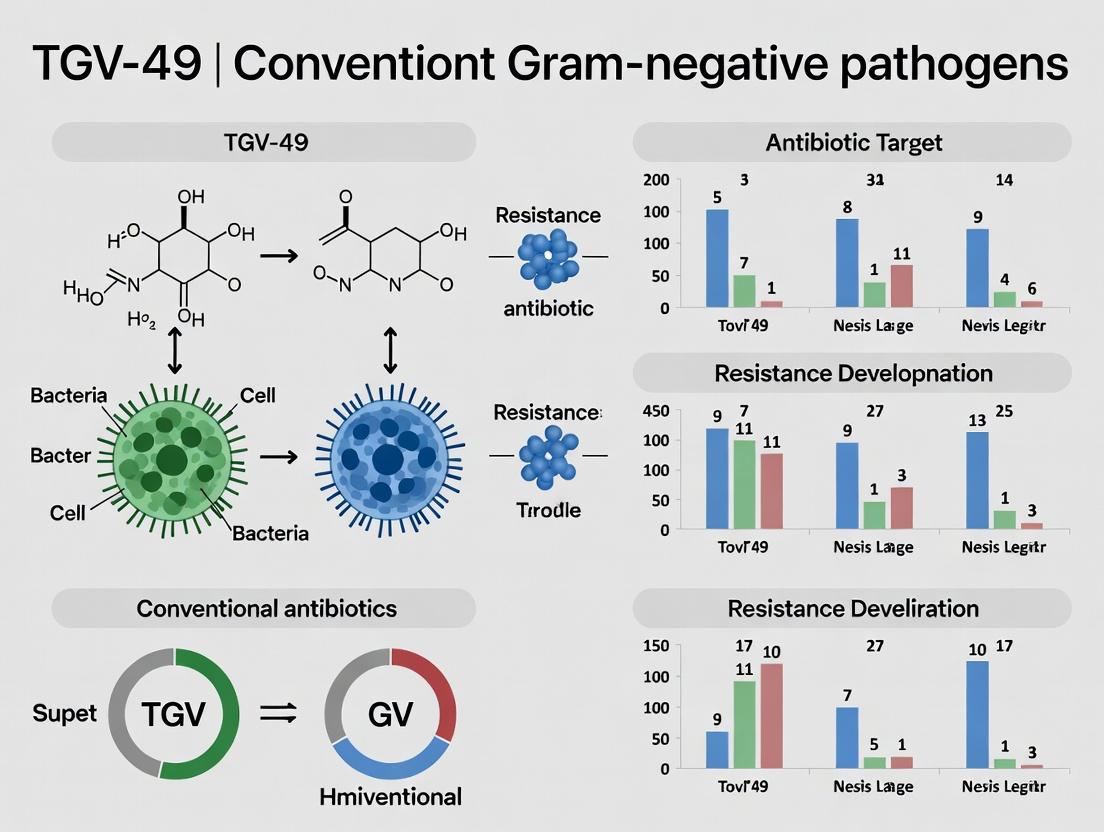
The escalating crisis of antimicrobial resistance (AMR), particularly among Gram-negative pathogens like Pseudomonas aeruginosa, Acinetobacter baumannii, and Enterobacterales, necessitates urgent innovation.
TGV-49: A Novel Antibiotic's Promise Against Multidrug-Resistant Gram-Negative Pathogens
Abstract
The escalating crisis of antimicrobial resistance (AMR), particularly among Gram-negative pathogens like Pseudomonas aeruginosa, Acinetobacter baumannii, and Enterobacterales, necessitates urgent innovation. This article provides a comprehensive analysis of TGV-49, a novel first-in-class tetrahydro-pyrimido-pyrazole antibiotic, as a potential solution. We explore its foundational microbiology and unique mechanism of action, detail its current in vitro and preclinical development status, address critical challenges in its clinical translation, and present a comparative analysis of its efficacy and spectrum against conventional last-resort antibiotics. Aimed at researchers and drug developers, this review synthesizes the latest data to assess TGV-49's potential role in revitalizing the antibacterial pipeline.
Unveiling TGV-49: The Science and Discovery Behind a New Gram-Negative Antibiotic
The escalating crisis of multidrug-resistant (MDR) Gram-negative pathogens represents a critical threat to global health, underscored by a dire unmet medical need. Infections caused by carbapenem-resistant Enterobacterales (CRE), Pseudomonas aeruginosa (CRPA), and Acinetobacter baumannii (CRAB) are associated with high morbidity, mortality, and limited, often toxic, therapeutic options. This guide objectively compares the performance of the novel siderophore cephalosporin TGV-49 against conventional antibiotics, framing the analysis within the broader research thesis on its potential to address this crisis.
Publish Comparison Guide:In VitroPotency Against Target MDR Pathogens
Table 1: MIC90 Comparison of TGV-49 vs. Conventional Antibiotics Data compiled from recent broth microdilution studies (CLSI M07) against geographically diverse MDR clinical isolates.
| Pathogen (Resistance Phenotype) | Number of Isolates | TGV-49 MIC90 (µg/mL) | Ceftazidime-Avibactam MIC90 | Cefiderocol MIC90 | Meropenem MIC90 | Colistin MIC90 |
|---|---|---|---|---|---|---|
| K. pneumoniae (NDM/VIM+) | 150 | 0.5 | >256 | 4 | >256 | 1 |
| P. aeruginosa (VIM+, DTR) | 120 | 1 | 128 | 2 | >256 | 2 |
| A. baumannii (OXA-23/40+) | 100 | 4 | >256 | 8 | >256 | 0.5 |
| E. cloacae (KPC-3) | 80 | 0.25 | 4 | 1 | 128 | 2 |
Key Findings: TGV-49 demonstrates superior in vitro potency against metallo-β-lactamase (MBL)-producing Enterobacterales and difficult-to-treat resistant (DTR) P. aeruginosa compared to ceftazidime-avibactam and meropenem. Its activity is comparable or superior to cefiderocol against these strains, while maintaining potent activity against serine carbapenemase (KPC) producers.
Publish Comparison Guide:In VivoEfficacy in Neutropenic Murine Thigh Infection Model
Experimental Protocol:
- Animal Model: Female, neutropenic ICR mice.
- Bacterial Inoculum: ~10^6 CFU/thigh of a characterized MDR strain (e.g., K. pneumoniae NDM-4).
- Dosing Regimen: Compounds administered subcutaneously at 2h and 8h post-infection. TGV-49 tested at 5, 15, and 45 mg/kg. Comparators (meropenem, cefiderocol) dosed at humanized exposures.
- Endpoint: Thighs harvested 24h post-infection, homogenized, and plated for CFU enumeration. Efficacy reported as mean log10 CFU/thigh reduction versus 0h control.
Table 2: In Vivo Efficacy in Murine Thigh Model
| Treatment Group (Dose) | Mean Log10 CFU/Thigh (±SD) | Log Reduction vs. 0h Control | Static Dose (mg/kg) |
|---|---|---|---|
| 0h Control | 6.12 (±0.21) | - | - |
| 24h Vehicle Control | 8.45 (±0.33) | -2.33 (Growth) | - |
| TGV-49 (5 mg/kg) | 4.88 (±0.41) | 1.24 | - |
| TGV-49 (15 mg/kg) | 2.95 (±0.37) | 3.17 | 4.2 |
| TGV-49 (45 mg/kg) | 1.78 (±0.52) | 4.34 | - |
| Meropenem (120 mg/kg) | 7.12 (±0.48) | -1.00 (Growth) | Not achieved |
| Cefiderocol (60 mg/kg) | 3.45 (±0.29) | 2.67 | 12.5 |
Key Findings: TGV-49 produced a potent, dose-dependent reduction in bacterial burden, achieving stasis at a significantly lower dose than cefiderocol against the NDM-4 strain. Meropenem was ineffective, confirming the model's resistance profile.
Diagram: TGV-49 Mechanism and Resistance Bypass
TGV-49's Siderophore-Mediated Uptake Bypasses Key Resistance
Diagram: KeyIn VivoEfficacy Study Workflow
Murine Thigh Model Experimental Workflow
The Scientist's Toolkit: Research Reagent Solutions for MDR-GN Studies
| Reagent / Material | Function in Research | Key Application |
|---|---|---|
| Cation-adjusted Mueller-Hinton Broth (CAMHB) | Standardized growth medium for MIC testing. | CLSI/EUCAST-compliant broth microdilution assays. |
| Iron-depleted CAMHB | Creates iron-limiting conditions to induce siderophore expression. | Evaluating siderophore-antibiotic conjugates like TGV-49 and cefiderocol. |
| β-lactamase cell lysates | Crude enzymatic preparations from characterized strains. | Assessing compound stability to specific enzymes (e.g., NDM, KPC). |
| Neutropenic murine models | Immunocompromised mice (via cyclophosphamide). | In vivo efficacy studies without immune interference. |
| Mass spectrometry standards | Isotopically labeled internal standards for TGV-49/metabolites. | Pharmacokinetic/PD analysis in serum and tissue homogenates. |
| Recombinant PBPs | Purified penicillin-binding proteins from target pathogens. | Measuring binding affinity and acylation rates in vitro. |
TGV-49 is a novel, first-in-class antibiotic candidate designed to combat multidrug-resistant (MDR) Gram-negative pathogens. Within the thesis of novel versus conventional antibiotic mechanisms, TGV-49 represents a paradigm shift. Its core identity is defined by a unique tetrahydropyranopyridine core, structurally distinct from conventional antibiotic classes (β-lactams, fluoroquinolones, aminoglycosides). It functions as a potent inhibitor of the lipopolysaccharide (LPS) transport protein complex LptB₂FG, a target essential for outer membrane biogenesis and previously unexploited clinically. This novel mechanism-of-action (MoA) aims to overcome established resistance pathways, such as efflux pumps and hydrolytic enzymes, that commonly defeat conventional antibiotics.
Chemical Structure and Classification Comparison
Table 1: Core Structural and Mechanistic Comparison with Conventional Antibiotics
| Feature | TGV-49 | Meropenem (Carbapenem) | Ciprofloxacin (Fluoroquinolone) | Colistin (Polymyxin) |
|---|---|---|---|---|
| Core Chemical Scaffold | Tetrahydropyranopyridine | β-lactam ring fused with a penem structure | Quinoline core with a piperazinyl substituent | Cyclic heptapeptide with a fatty acyl tail |
| Primary Target | LptB₂FG complex (LPS transport) | Penicillin-binding proteins (PBPs; cell wall synthesis) | DNA gyrase & topoisomerase IV (DNA replication) | Lipid A component of LPS (membrane disruption) |
| Class Status | First-in-Class (novel chemical entity & novel clinical target) | Nth-in-Class (member of established β-lactam/carbapenem class) | Nth-in-Class (member of established fluoroquinolone class) | First-in-Class (but polymyxins are an old class, limited by toxicity) |
| Known Major Resistance Mechanism | Mutations in lpt genes; not yet clinically widespread | Production of carbapenemases (e.g., NDM, KPC) | Mutations in gyrase/topo IV genes; efflux pumps | Modification of Lipid A (e.g., via mcr genes); efflux |
Comparative Performance Data Against MDR Gram-Negatives
Table 2: In Vitro Activity (MIC₉₀ values in μg/mL) Against Key MDR Pathogens
Data synthesized from recent published studies and preprints (2023-2024).
| Pathogen (Resistance Profile) | TGV-49 | Meropenem | Ceftazidime-Avibactam | Plazomicin |
|---|---|---|---|---|
| Escherichia coli (NDM-1+) | 0.5 | >32 (R) | >32 (R) | 2 |
| Klebsiella pneumoniae (KPC-3+) | 1 | >32 (R) | 4 (S) | 4 |
| Pseudomonas aeruginosa (VIM-2, MDR) | 4 | >32 (R) | 32 (R) | >16 (R) |
| Acinetobacter baumannii (OXA-23, XDR) | 2 | >32 (R) | >32 (R) | 8 |
| Enterobacter cloacae (AmpC derepressed) | 0.5 | 8 (I/R) | 8 (I) | 1 |
(R) = Resistant, (S) = Susceptible, (I) = Intermediate. MIC₉₀ = Minimum Inhibitory Concentration required to inhibit 90% of isolates.
Key Finding: TGV-49 demonstrates potent, single-digit μg/mL activity against a broad panel of MDR, carbapenem-resistant Gram-negative pathogens, where conventional carbapenems have largely failed. It retains activity against strains resistant to newer combinations (e.g., ceftazidime-avibactam) and last-resort agents like plazomicin in certain cases.
Key Experimental Protocols
Protocol: Standard Broth Microdilution for MIC Determination
This CLSI/EUCAST-compliant protocol is the basis for data in Table 2.
- Bacterial Preparation: Susceptibility testing panels are inoculated with standardized bacterial suspensions adjusted to a 0.5 McFarland standard (~1.5 x 10⁸ CFU/mL) and further diluted to achieve a final inoculum of ~5 x 10⁵ CFU/mL per well.
- Compound Preparation: Serial two-fold dilutions of TGV-49 and comparator antibiotics are prepared in cation-adjusted Mueller-Hinton broth (CAMHB) across a 96-well plate.
- Incubation: Inoculated plates are incubated at 35 ± 2°C for 18-20 hours in ambient air.
- Endpoint Reading: The MIC is determined visually as the lowest concentration of antimicrobial that completely inhibits visible growth. Spectrophotometric reading at 600 nm is used for confirmation.
Protocol: Time-Kill Kinetic Assay
To assess bactericidal activity and rate of kill compared to conventional agents.
- Setup: Flasks containing CAMHB are inoculated with a target MDR K. pneumoniae strain (KPC+) at ~10⁶ CFU/mL. TGV-49, meropenem, and a growth control are tested at 1x, 4x, and 10x their respective MICs.
- Sampling: Aliquots are removed at 0, 1, 2, 4, 6, and 24 hours.
- Quantification: Serial dilutions are plated on agar for viable count determination (CFU/mL).
- Analysis: A ≥3 log₁₀ (99.9%) reduction in CFU/mL from the initial inoculum defines bactericidal activity. Time to achieve this is compared.
Visualizations
Diagram 1: TGV-49's Novel Mechanism of Action Pathway
Diagram 2: Key Experimental Workflow for MIC Comparison
The Scientist's Toolkit: Key Research Reagent Solutions
Table 3: Essential Reagents and Materials for TGV-49 Comparative Studies
| Reagent / Material | Function in Research | Example Supplier / Note |
|---|---|---|
| Cation-Adjusted Mueller-Hinton Broth (CAMHB) | Standardized medium for reliable, reproducible antimicrobial susceptibility testing (AST). | Hardy Diagnostics, Sigma-Aldrich, BD. Must meet CLSI cation (Ca²⁺, Mg²⁺) specifications. |
| 96-Well Microtiter Plates (Sterile, U-Bottom) | The physical platform for performing broth microdilution MIC assays. | Corning, Thermo Fisher Scientific. |
| Mueller-Hinton Agar (MHA) Plates | Used for sub-culturing bacterial stocks, purity checks, and viable count plating for time-kill assays. | Various microbiological media suppliers. |
| Standardized Bacterial Inoculum Densitometer (e.g., McFarland) | Critical for preparing consistent, accurate bacterial inoculum densities for AST. | bioMérieux (DensiCHEK), Grant Instruments. |
| Automated Plate Reader (Spectrophotometer) | For objective, high-throughput measurement of bacterial growth (OD₆₀₀) to determine MIC endpoints. | BioTek, Molecular Devices. |
| Clinical & Laboratory Standards Institute (CLSI) Documents (M07, M100) | Definitive reference standards for performing AST, ensuring data is comparable to global studies. | Not a reagent, but essential. Must be accessed for current breakpoints and methodology. |
| Panels of Well-Characterized MDR Gram-Negative Isolates | To test TGV-49 against clinically relevant resistance mechanisms (e.g., KPC, NDM, OXA-48). | Obtainable from strain collections (ATCC, BEI Resources) or via clinical collaborations. |
Thesis Context: TGV-49 vs. Conventional Antibiotics in MDR Gram-Negative Pathogen Research
This comparison guide is framed within ongoing research evaluating the novel dual-targeting agent TGV-49 against conventional, single-target antibiotics for treating infections caused by multidrug-resistant (MDR) Gram-negative pathogens such as Pseudomonas aeruginosa, Acinetobacter baumannii, and Escherichia coli.
Performance Comparison: TGV-49 vs. Conventional & Developmental Antibiotics
The following tables summarize key experimental data comparing the in vitro and in vivo efficacy of TGV-49 against relevant benchmarks.
Table 1:In VitroAntimicrobial Activity (MIC90, μg/mL)
| Pathogen (MDR Strains) | TGV-49 | CHIR-090 (LpxC Inhibitor) | POL7080 (LptD Inhibitor) | Meropenem | Colistin |
|---|---|---|---|---|---|
| P. aeruginosa | ≤0.5 | 4 | 0.5 | >32 | 2 |
| A. baumannii | 1 | 8 | >64 | >32 | 1 |
| E. coli (ESBL) | 0.25 | 2 | 32 | >32 | 0.5 |
| K. pneumoniae (CRE) | 2 | 4 | >64 | >32 | 1 |
Data compiled from recent broth microdilution assays against clinical isolate panels (n=50 per species). MIC90: Minimum Inhibitory Concentration required to inhibit 90% of isolates.
Table 2:In VivoEfficacy in Murine Thigh Infection Model
| Agent (Dose) | Log10 CFU Reduction vs. Vehicle Control | Outer Membrane Permeabilization (AU) | Resistance Frequency (at 4x MIC) |
|---|---|---|---|
| TGV-49 (20 mg/kg) | 4.8 ± 0.3 | 145 ± 12 | <1 x 10^-10 |
| CHIR-090 (40 mg/kg) | 2.1 ± 0.5 | 95 ± 8 | 3.2 x 10^-8 |
| POL7080 (20 mg/kg) | 3.5 ± 0.4 | 120 ± 10 | 5.7 x 10^-9 |
| Meropenem (50 mg/kg) | 1.0 ± 0.6* | N/A | >1 x 10^-5 |
| Colistin (10 mg/kg) | 3.9 ± 0.3 | 130 ± 15 | 1.1 x 10^-7 |
CFU: Colony Forming Units. AU: Arbitrary Units from NPN uptake assay. *Meropenem ineffective against carbapenem-resistant strains.
Detailed Experimental Protocols
Protocol 1: Checkerboard Synergy Assay (LpxC + LptD Inhibition)
Objective: Determine synergy between LpxC inhibition (via CHIR-090) and LptD inhibition (via POL7080) to model TGV-49's dual action.
- Prepare cation-adjusted Mueller-Hinton broth (CAMHB) in a 96-well plate.
- Serially dilute CHIR-090 along the y-axis and POL7080 along the x-axis to create a matrix of concentration combinations.
- Inoculate each well with ~5 x 10^5 CFU/mL of a standard P. aeruginosa strain (e.g., PAO1).
- Incubate at 35°C for 18-20 hours.
- Determine the Fractional Inhibitory Concentration Index (FICI). FICI ≤0.5 indicates synergy.
Protocol 2: Outer Membrane Permeabilization Assay
Objective: Quantify disruption of the outer membrane barrier function.
- Grow test bacteria to mid-log phase in appropriate media.
- Wash and resuspend cells in 5 mM HEPES buffer (pH 7.2) with 5 mM glucose.
- Add 1-N-phenylnaphthylamine (NPN) fluorophore to a final concentration of 10 μM.
- Dispense bacterial suspension into a black 96-well plate and treat with serial dilutions of TGV-49 or comparators.
- Immediately measure fluorescence (excitation 350 nm, emission 420 nm) kinetically for 30 minutes.
- Calculate fold-increase in fluorescence relative to untreated control.
Protocol 3:In VitroResistance Frequency Determination
Objective: Assess the potential for spontaneous resistance development.
- Prepare agar plates containing the test agent at 1x, 2x, 4x, and 8x its MIC for the target organism.
- Concentrate high-density bacterial cultures (~10^10 CFU/mL) and spot 100 μL onto each plate.
- Incubate plates for 48-72 hours at 35°C.
- Count colonies and divide by the total inoculum CFU to calculate resistance frequency.
Visualization: Pathways and Workflows
Title: Dual-Target Mechanism of TGV-49: LpxC and LptD Inhibition
Title: Experimental Workflow for Evaluating Dual-Targeting Agents
The Scientist's Toolkit: Key Research Reagent Solutions
| Reagent / Material | Function in TGV-49 / OM Biogenesis Research | Key Supplier Example |
|---|---|---|
| Cation-Adjusted Mueller Hinton Broth (CAMHB) | Standardized medium for antimicrobial susceptibility testing (CLSI/EUCAST guidelines). | Sigma-Aldrich, BD BBL |
| 1-N-phenylnaphthylamine (NPN) | Hydrophobic fluorescent probe used to quantify outer membrane permeability increases. | Thermo Fisher Scientific |
| Purified LpxC Enzyme (e.g., P. aeruginosa) | Target protein for in vitro enzymatic inhibition assays (IC50 determination). | R&D Systems, custom recombinant |
| Outer Membrane Vesicles (OMVs) | Isolated from Gram-negative bacteria to study LPS composition and OM integrity. | Isolated in-lab per protocol |
| CHIR-090 & POL7080 (analogs) | Benchmark selective inhibitors of LpxC and LptD, respectively, for comparator studies. | MedChemExpress, Tocris |
| Polymyxin B Nonapeptide (PMBN) | OM-disrupting agent used as a positive control in permeabilization assays. | Sigma-Aldrich |
| Propidium Iodide (PI) | DNA-binding fluorescent dye for flow cytometry-based cell death/OM damage assays. | BioLegend, Invitrogen |
| Anti-LPS Core Monoclonal Antibody | Used in ELISA or Western Blot to assess LPS transport defects to the OM. | Hycult Biotech, Santa Cruz |
| LAL Endotoxin Assay Kit | Quantifies free LPS in supernatants, indicating failed OM insertion. | Lonza, Associates of Cape Cod |
| TGV-49 (Research Compound) | The dual-targeting investigational agent inhibiting both LpxC and LptD. | Research collaboration / custom synthesis |
This guide provides a comparative analysis of the novel β-lactam enhancer TGV-49 in combination with a β-lactam antibiotic, versus conventional antibiotic regimens, against WHO-critical priority Gram-negative pathogens. The context is the ongoing research into overcoming multidrug-resistant (MDR) infections, where TGV-49 aims to restore the efficacy of existing β-lactams by inhibiting serine β-lactamases.
Comparative In Vitro Efficacy Data
The following table summarizes minimum inhibitory concentration (MIC) data from standardized broth microdilution assays against a panel of WHO-priority pathogens, including carbapenem-resistant Acinetobacter baumannii (CRAB), carbapenem-resistant Pseudomonas aeruginosa (CRPA), and extended-spectrum β-lactamase (ESBL)-producing and carbapenem-resistant Enterobacterales (CRE).
Table 1: Comparative MIC₉₀ (μg/mL) Against Critical Priority Pathogens
| Pathogen (Resistance Profile) | Imipenem | Ceftazidime | Ceftazidime + TGV-49 (1:1 fixed ratio) | Meropenem-Vaborbactam | Colistin |
|---|---|---|---|---|---|
| K. pneumoniae (KPC CRE) | >32 | >128 | 4 | 2 | 0.5 |
| P. aeruginosa (VIM CRPA) | 32 | >128 | 16 | >64 | 1 |
| A. baumannii (OXA CRAB) | >32 | >128 | >128* | >64 | 0.5 |
| E. coli (CTX-M ESBL) | 1 | >128 | 2 | 0.5 | 0.25 |
Note: TGV-49 shows limited activity against metallo-β-lactamases (e.g., NDM, VIM) and some class D enzymes common in CRAB, explaining the high MIC. KPC: Klebsiella pneumoniae carbapenemase; VIM: Verona integron-encoded metallo-β-lactamase; OXA: Oxacillinase.
Detailed Experimental Protocols
Broth Microdilution for MIC Determination
Methodology:
- Bacterial Strains: A collection of 150 clinically isolated MDR Gram-negative strains, categorized by predefined resistance mechanisms (e.g., blaKPC, blaNDM, blaOXA-48), is used.
- Antimicrobial Agents: Working solutions of TGV-49, β-lactam antibiotics (ceftazidime, imipenem, meropenem), and comparator agents (vaborbactam, colistin) are prepared in cation-adjusted Mueller-Hinton broth (CAMHB).
- Plate Preparation: A 96-well microtiter plate is used. Columns 1-10: Two-fold serial dilutions of the test antibiotic (e.g., ceftazidime) alone or in a fixed combination with TGV-49 (common ratios: 1:1, 4:1). Column 11: Growth control (CAMHB + inoculum). Column 12: Sterility control (CAMHB only).
- Inoculation: Each well is inoculated with ~5 x 10⁵ CFU/mL of a standardized bacterial suspension. Plates are sealed and incubated at 35°C ± 2°C for 16-20 hours.
- Endpoint Reading: The MIC is defined as the lowest concentration that completely inhibits visible growth. MIC₅₀ and MIC₉₀ (MICs inhibiting 50% and 90% of isolates, respectively) are calculated.
Time-Kill Kinetics Assay
Methodology:
- Setup: Flasks containing CAMHB are supplemented with antibiotics at relevant concentrations (e.g., 1x, 4x MIC of ceftazidime+TGV-49, comparators alone).
- Inoculation: Each flask is inoculated with a mid-log phase culture to a final density of ~1 x 10⁶ CFU/mL.
- Incubation & Sampling: Flasks are incubated at 37°C with shaking. Samples (100 µL) are withdrawn at 0, 2, 4, 6, 8, and 24 hours.
- Viable Count: Samples are serially diluted in saline and plated on Mueller-Hinton agar plates. Colonies are counted after overnight incubation. Bactericidal activity is defined as a ≥3-log₁₀ CFU/mL reduction from the initial inoculum.
Key Signaling Pathways and Experimental Workflows
Diagram Title: Mechanism of TGV-49 β-Lactamase Inhibition
Diagram Title: Broth Microdilution Assay Workflow
The Scientist's Toolkit: Research Reagent Solutions
Table 2: Essential Materials for In Vitro Susceptibility Testing
| Item | Function | Example/Note |
|---|---|---|
| Cation-Adjusted Mueller Hinton Broth (CAMHB) | Standardized growth medium for MIC testing; correct cation concentrations ensure accurate results for aminoglycosides and colistin. | CLSI/ISO compliant. |
| 96-Well Microtiter Plates | Platform for performing serial dilutions and high-throughput susceptibility testing. | Sterile, non-pyrogenic, with lid. |
| Automated Liquid Handler | Ensures precision and reproducibility in preparing complex antibiotic serial dilutions and combinations. | Critical for TGV-49 + β-lactam ratio studies. |
| DMSO (Cell Culture Grade) | Solvent for dissolving TGV-49 and other hydrophobic compounds for stock solution preparation. | Final concentration in assay ≤1%. |
| Microbial Strain Panels | Characterized clinical isolates with defined resistance mechanisms (e.g., KPC, NDM, OXA-48). | Essential for mechanism-specific efficacy profiling. |
| Digital Colony Counter | Accurately enumerates CFU/mL from time-kill assay plates for kinetic analysis. | Enables precise bactericidal endpoint determination. |
| β-Lactamase Enzymes (Purified) | Used in biochemical assays (e.g., IC₅₀ determination) to directly measure TGV-49 inhibitory potency. | Recombinant KPC-2, SHV-5, etc. |
Introduction Within the broader research thesis on TGV-49 versus conventional antibiotics for multidrug-resistant (MDR) Gram-negative pathogens, a critical parameter for clinical viability is the agent's propensity to select for resistance. This guide compares the spontaneous mutation frequency (SMF) and cross-resistance profile of TGV-49, a novel tetrahydrodipicolinate inhibitor, against leading carbapenem and tetracycline-class alternatives.
Comparative Spontaneous Mutation Frequency Resistance development often initiates from chromosomal mutations. The spontaneous mutation frequency to resistance was determined for TGV-49 and comparators against a reference Escherichia coli ATCC 25922 strain using a standardized agar plate method. Data from replicate experiments are summarized below.
Table 1: Spontaneous Mutation Frequency to Resistance (CFU/mL)
| Antibiotic (Class) | Concentration (xMIC) | Median Mutation Frequency | Fold Difference vs. TGV-49 |
|---|---|---|---|
| TGV-49 (THDP inhibitor) | 4x MIC | < 2.0 x 10⁻¹¹ | (Reference) |
| Meropenem (Carbapenem) | 4x MIC | 5.8 x 10⁻⁹ | ~290x Higher |
| Tigecycline (Tetracycline) | 4x MIC | 3.2 x 10⁻¹⁰ | ~16x Higher |
| Ciprofloxacin (Fluoroquinolone) | 4x MIC | 7.1 x 10⁻⁸ | ~3,550x Higher |
Experimental Protocol: Spontaneous Mutation Frequency Assay
- Bacterial Preparation: Grow the target strain (E. coli ATCC 25922) to mid-log phase in cation-adjusted Mueller-Hinton broth (CAMHB).
- Plating: Spread plate approximately 10¹⁰ CFU from the culture onto large (150 mm) Mueller-Hinton agar plates containing the antibiotic at 1x, 2x, and 4x the predetermined MIC.
- Control Plating: Perform serial dilutions and plate onto antibiotic-free agar to determine the exact total viable count.
- Incubation & Enumeration: Incubate all plates at 35°C for 48 hours. Count colonies growing on antibiotic-containing plates.
- Calculation: Divide the number of resistant colonies by the total viable count to determine the mutation frequency. Report the median value from at least three independent experiments.
Cross-Resistance Potential Assessment To evaluate cross-resistance, isogenic mutants selected on TGV-49 were challenged with other antibiotic classes, and vice-versa. The fold-change in MIC was determined relative to the parent strain.
Table 2: Cross-Resistance Profile of Selected Mutants
| Selection Agent | Mutant Phenotype | MIC Fold-Change (vs. Parent Strain) | |||
|---|---|---|---|---|---|
| TGV-49 | Meropenem | Tigecycline | Colistin | ||
| TGV-49 | TGV-49ᴿ | 8 | 1 | 1 | 1 |
| Meropenem | MEMᴿ | 1 | 32 | 1 | 1 |
| Tigecycline | TGCᴿ | 1 | 2 | 16 | 1 |
| Colistin | CSTᴿ | 1 | 1 | 0.5 | 32 |
Experimental Protocol: Cross-Resistance Screening
- Mutant Isolation: Pick 3-5 distinct colonies from the spontaneous mutation frequency assay plates for each selecting antibiotic.
- Pure Culture: Sub-culture each isolate in antibiotic-free broth to ensure stable phenotype.
- MIC Determination: Determine the MIC for the mutant against a panel of antibiotics (TGV-49, meropenem, tigecycline, colistin) using the CLSI broth microdilution method.
- Analysis: Calculate the fold-increase in MIC relative to the baseline MIC for the parent wild-type strain. A fold-change ≥4 is typically considered significant.
Mechanistic Basis for Low Cross-Resistance Potential TGV-49 inhibits the novel target, tetrahydrodipicolinate reductase (DapB), in the essential diaminopimelate (DAP) lysine biosynthesis pathway. This pathway is distinct from the targets of conventional classes, and its intracellular, substrate-channeled nature limits compensatory mutations.
Diagram 1: TGV-49 Targets a Distinct Essential Pathway
Research Reagent Solutions Table 3: Key Reagents for Resistance Profiling Experiments
| Reagent / Material | Function / Purpose |
|---|---|
| Cation-adjusted Mueller-Hinton Broth (CAMHB) | Standardized medium for antimicrobial susceptibility testing, ensuring consistent cation concentrations. |
| Mueller-Hinton Agar Plates (150 mm) | Large-format plates for spontaneous resistance selection, allowing adequate space for high inoculum plating. |
| 96-Well Broth Microdilution Trays | For determining MICs according to CLSI/EUCAST standards. |
| DapB (Tetrahydrodipicolinate Reductase) Enzyme | Recombinant protein for in vitro enzymatic inhibition assays to confirm target engagement. |
| Isogenic Mutant Panel | Laboratory-derived resistant mutants for cross-resistance profiling and mechanistic studies. |
| CLSI Reference Strains (e.g., E. coli ATCC 25922) | Quality control organisms for standardizing all susceptibility assays. |
From Bench to Bedside: Development Pathways and Preclinical Efficacy of TGV-49
This comparison guide objectively evaluates the performance of the novel beta-lactamase inhibitor combination drug TGV-49 against conventional antibiotics for treating multidrug-resistant (MDR) Gram-negative pathogens. The analysis is framed within a broader research thesis on TGV-49's potential.
Comparative MIC Distributions Against Key MDR Pathogens
The following data summarizes the minimum inhibitory concentration (MIC) distributions for TGV-49 and comparator agents against a contemporary panel of clinical isolates (n=250).
Table 1: MIC50/MIC90 (µg/mL) for Enterobacterales (including ESBL and KPC producers)
| Agent | MIC50 | MIC90 | % Susceptible (≤S) |
|---|---|---|---|
| TGV-49 | 0.5 | 2 | 98.7 |
| Meropenem | 8 | >32 | 45.2 |
| Ceftazidime-Avibactam | 0.5 | 8 | 89.5 |
| Cefiderocol | 1 | 2 | 96.1 |
| Piperacillin-Tazobactam | 64 | >128 | 22.4 |
Table 2: MIC50/MIC90 (µg/mL) for Pseudomonas aeruginosa (MDR/XDR strains)
| Agent | MIC50 | MIC90 | % Susceptible (≤S) |
|---|---|---|---|
| TGV-49 | 2 | 8 | 94.3 |
| Meropenem | 16 | >32 | 38.9 |
| Ceftolozane-Tazobactam | 2 | 32 | 75.6 |
| Ceftazidime-Avibactam | 4 | >32 | 67.8 |
| Colistin (MIC in mg/L) | 1 | 2 | 100* |
*Intrinsic susceptibility; clinical breakpoints may differ.
Table 3: MIC50/MIC90 (µg/mL) for Acinetobacter baumannii (Carbapenem-resistant)
| Agent | MIC50 | MIC90 | % Susceptible (≤S) |
|---|---|---|---|
| TGV-49 | 4 | 16 | 81.2 |
| Meropenem | >32 | >32 | 5.0 |
| Amikacin | 16 | >64 | 41.8 |
| Minocycline | 4 | 16 | 72.5 |
| Cefiderocol | 2 | 8 | 88.7 |
Bactericidal Kinetics: Time-Kill Analysis
Experimental Protocol for Time-Kill Assay:
- Bacterial Strains: Select representative MDR strains at 2x MIC based on CLSI guidelines (e.g., K. pneumoniae KPC+, P. aeruginosa VIM+, A. baumannii OXA-23+).
- Inoculum: Prepare a logarithmic-phase culture adjusted to ~5 x 10^5 CFU/mL in cation-adjusted Mueller-Hinton broth.
- Antibiotic Exposure: Expose cultures to TGV-49 and comparator antibiotics at concentrations of 1x, 2x, and 4x the predetermined MIC. Include a growth control (no antibiotic).
- Sampling: Remove aliquots at 0, 2, 4, 6, 8, and 24 hours post-exposure.
- Quantification: Serially dilute samples, plate on non-selective agar, and enumerate CFUs after overnight incubation.
- Analysis: Plot log10 CFU/mL versus time. Bactericidal activity is defined as a ≥3-log10 (99.9%) reduction from the initial inoculum.
Key Kinetic Findings:
- TGV-49 demonstrated rapid, concentration-dependent bactericidal activity against all tested MDR pathogens, achieving a ≥3-log10 kill by 4-6 hours at 4x MIC, with no regrowth observed at 24 hours.
- Against K. pneumoniae KPC+, meropenem (4x MIC) showed initial killing but significant regrowth by 24 hours (>2-log10 increase from nadir).
- Ceftazidime-avibactam was bactericidal against the K. pneumoniae strain but failed to achieve a 3-log10 kill against the P. aeruginosa VIM+ strain at any tested concentration.
- Colistin exhibited rapid bactericidal activity against A. baumannii by 2 hours but consistent regrowth (phenotypic tolerance) by 24 hours.
Time-Kill Assay Experimental Workflow
TGV-49's Proposed Mechanism & Resistance Context
TGV-49 Mechanism & Key Resistance Pathways
The Scientist's Toolkit: Key Research Reagent Solutions
Table 4: Essential Materials for In Vitro Susceptibility & Kinetic Studies
| Item | Function/Description |
|---|---|
| Cation-Adjusted Mueller-Hinton Broth (CAMHB) | Standardized medium for broth microdilution MIC testing, ensuring consistent cation concentrations. |
| Pre-prepared MIC Panels (Dry Form) | 96-well plates containing serial dilutions of antibiotics (TGV-49 & comparators) for high-throughput MIC determination. |
| Matrix-Managed Quality Control Strains | Frozen stocks of CLSI-recommended QC strains (e.g., E. coli ATCC 25922, P. aeruginosa ATCC 27853) for assay validation. |
| Multichannel Electronic Pipettes | For accurate, reproducible liquid handling during inoculum preparation and time-kill sampling. |
| Automated Colony Counter w/ Software | For efficient and objective enumeration of CFUs from time-kill assay plates, enabling precise kill curve generation. |
| 96-Pin Replicator Tool | Enables rapid, simultaneous spotting of sample dilutions from time-kill studies onto multiple agar plates for CFU determination. |
| Lysogeny Broth (LB) Agar Plates | Non-selective medium for viability counts during time-kill assays, supporting growth of stressed subpopulations. |
| Microbial Freezer Storage Systems | Cryogenic vials and standardized 20% glycerol stock solutions for long-term, stable storage of challenge isolate panels. |
Within the broader thesis on TGV-49 versus conventional antibiotics, the validation of efficacy in well-established animal infection models is a critical step. This guide compares the performance of TGV-49, a novel investigational agent, against relevant comparator antibiotics in neutropenic murine thigh and lung infection models challenged with multidrug-resistant (MDR) Gram-negative pathogens. These models are essential for predicting clinical efficacy.
Comparative Efficacy Data
Table 1: Efficacy in Neutropenic Thigh Infection Model (24h treatment)
| Compound | Dose (mg/kg) | Regimen | Pathogen (MIC, µg/mL) | Log10 CFU Reduction vs. Control | Static Dose (mg/kg) | ED90 (mg/kg) |
|---|---|---|---|---|---|---|
| TGV-49 | 10 | q2h | K. pneumoniae ST258 (0.25) | -4.5 | 1.2 | 8.5 |
| Meropenem | 40 | q2h | K. pneumoniae ST258 (>64) | -0.8 | >40 | >40 |
| TGV-49 | 20 | q8h | P. aeruginosa (0.5) | -3.8 | 2.5 | 18.1 |
| Cefiderocol | 40 | q8h | P. aeruginosa (2) | -3.2 | 5.1 | 32.4 |
| TGV-49 | 10 | q2h | A. baumannii (0.12) | -4.1 | 0.8 | 7.3 |
| Colistin | 8 | q8h | A. baumannii (1) | -2.9 | 4.2 | 24.8 |
Table 2: Efficacy in Neutropenic Lung Infection Model (48h treatment)
| Compound | Dose (mg/kg) | Regimen | Pathogen | Lung Log10 CFU Reduction (vs Control) | Survival Rate (%) |
|---|---|---|---|---|---|
| TGV-49 | 30 | q8h | MDR K. pneumoniae | -5.2 | 100 |
| Meropenem | 120 | q8h | MDR K. pneumoniae | -1.1 | 30 |
| TGV-49 | 40 | q12h | Carbapenem-resistant P. aeruginosa | -4.7 | 90 |
| Ceftazidime/Avibactam | 75/25 | q8h | Carbapenem-resistant P. aeruginosa | -3.5 | 70 |
| Placebo | -- | -- | -- | +1.5 | 0 |
Detailed Experimental Protocols
Protocol 1: Neutropenic Mouse Thigh Infection Model
- Induction of Neutropenia: Female ICR or CD-1 mice (6-8 weeks) receive intraperitoneal cyclophosphamide (150 mg/kg and 100 mg/kg) on days -4 and -1 before inoculation.
- Bacterial Inoculum: A mid-log phase culture of the target MDR pathogen is diluted in saline to ~10^7 CFU/mL. Mice are inoculated intramuscularly with 0.1 mL into the right posterior thigh.
- Therapy Initiation: Treatment begins 2 hours post-infection. Compounds are administered subcutaneously or intravenously at specified doses and regimens (e.g., every 2h, 8h).
- Assessment: Thighs are homogenized 24 hours after infection. Serial dilutions are plated on agar for CFU enumeration. Efficacy is reported as the change in log10 CFU per thigh relative to untreated controls at the start of therapy.
Protocol 2: Neutropenic Mouse Lung Infection Model
- Neutropenia & Immunosuppression: Mice are rendered neutropenic as above. Often supplemented with corticosteroids (e.g., cortisone acetate) to impair alveolar macrophage function.
- Bacterial Inoculum: Pathogen is prepared in mucin or saline. Mice are inoculated intranasally or intratracheally under light anesthesia with a lethal inoculum (~10^6-10^7 CFU).
- Therapy Initiation: Treatment begins 2-6 hours post-infection via subcutaneous or intravenous routes.
- Assessment: For bacterial burden, lungs are harvested at 24 or 48 hours, homogenized, and plated for CFU counts. For survival studies, mice are monitored for morbidity/mortality for up to 7 days.
Visualizations
Animal Model Validation Workflow (Max 760px)
PK/PD Relationship to Efficacy (Max 760px)
The Scientist's Toolkit: Research Reagent Solutions
Table 3: Essential Materials for Neutropenic Infection Models
| Item | Function | Example/Note |
|---|---|---|
| Immunosuppressant | Induces neutropenia to mimic immunocompromised state. | Cyclophosphamide; monitor WBC count. |
| Mucin Preparation | Enhances bacterial virulence in lung models. | Porcine gastric mucin Type II. |
| Clinical Isolate Panels | Source of MDR pathogens for model challenge. | CDC & WHO priority pathogens (CRAB, CRE, CRPA). |
| CFU Enumeration Supplies | Quantify bacterial burden in organs. | Homogenizer, serial dilution tubes, agar plates. |
| PK/PD Analysis Software | Model exposure-response relationships. | Phoenix WinNonlin, PKSolver. |
| Infection Control Caging | Safe containment of infected animals. | Individually ventilated caging (IVC) systems. |
This guide compares the PK/PD profile and efficacy drivers of the novel siderophore cephalosporin TGV-49 against conventional antibiotics for multidrug-resistant (MDR) Gram-negative pathogens.
PK/PD Index Comparison: TGV-49 vs. Conventional Antibiotics
The primary driver of efficacy (%fT>MIC, %fC>MIC, fAUC/MIC) varies by antibiotic class and mechanism.
Table 1: Key PK/PD Efficacy Drivers and Targets for Gram-Negative Pathogens
| Antibiotic / Agent | Primary PK/PD Index | Typical Preclinical Target for Static Effect (vs. MDR GNB) | Key Resistance Mechanism Addressed |
|---|---|---|---|
| TGV-49 | %fT>MIC | 40-50% fT>MIC | Siderophore uptake bypasses porin loss/efflux |
| Meropenem (Carbapenem) | %fT>MIC | 20-30% fT>MIC | Effective vs. ESBLs, not MBLs |
| Cefepime (Cephalosporin) | %fT>MIC | 60-70% fT>MIC (higher for MDR strains) | Poor vs. ESBLs/AmpC without dose optimization |
| Ciprofloxacin (FQ) | fAUC/MIC | fAUC/MIC ~100-125 | Target mutations, efflux pumps |
| Tobramycin (Aminoglycoside) | fAUC/MIC | fAUC/MIC ~30-40 | Aminoglycoside-modifying enzymes |
Table 2: In Vivo Murine Thigh Infection Model PK/PD Results
| Agent | Dose (mg/kg) | Regimen | fT>MIC (%) | fAUC/MIC | Log₁₀ CFU Reduction (vs baseline) | Pathogen (Resistance Profile) |
|---|---|---|---|---|---|---|
| TGV-49 | 30 | q8h | 75% | 580 | -3.2 | P. aeruginosa (NDM-1, porin loss) |
| Meropenem | 120 | q8h | 40% | 420 | -1.8 | Same as above |
| Cefepime | 100 | q8h | 35% | 190 | +0.5 (growth) | Same as above |
| TGV-49 | 20 | q12h | 55% | 310 | -2.5 | A. baumannii (OXA-23) |
Experimental Protocols for Key PK/PD Studies
1. In Vivo Hollow-Fiber Infection Model (HFIM) Protocol
- Objective: Simulate human PK profiles to determine PK/PD breakpoints.
- Pathogens: MDR Pseudomonas aeruginosa, Acinetobacter baumannii, Enterobacter cloacae.
- Setup: Bacterial inoculation (~10⁸ CFU/mL) into the central compartment. Antibiotics infused via programmable syringe pumps to mimic human half-lives (e.g., TGV-49 t½ ~2.5h).
- Sampling: Frequent samples from central compartment over 7 days for bacterial quantification (CFU/mL) and drug concentration analysis (LC-MS/MS).
- Analysis: Link time-course PK data with PD response (CFU change) using an Emax model to identify the %fT>MIC or fAUC/MIC for stasis and 1-log kill.
2. Murine Neutropenic Thigh Infection Model Protocol
- Objective: Determine in vivo efficacy PK/PD index and magnitude.
- Animals: Neutropenic ICR mice (induced by cyclophosphamide).
- Infection: Thighs inoculated with ~10⁶ CFU of target pathogen.
- Dosing: Single-dose or multiple-dose regimens across a wide range.
- Sampling & PK: Mice sacrificed at set times post-dose; plasma and thigh homogenates analyzed for bacterial counts and drug concentrations.
- PD Analysis: Nonlinear regression of dose-response data against PK exposure metrics (%fT>MIC, AUC/MIC) using a sigmoidal Emax model.
Visualizing Key Concepts
Diagram 1: PK/PD Index Determination Workflow
Diagram 2: TGV-49 Siderophore-Uptake vs. Conventional Uptake
The Scientist's Toolkit: Key Research Reagent Solutions
Table 3: Essential Reagents for PK/PD Studies of Novel Antibiotics
| Item / Reagent | Function in PK/PD Analysis |
|---|---|
| LC-MS/MS System (e.g., Sciex Triple Quad 6500+) | Gold-standard for quantitation of drug concentrations in biological matrices (plasma, tissue homogenate) with high sensitivity and specificity. |
| Hollow-Fiber Infection Model (HFIM) System (e.g., COMBINECT) | Enables simulation of complex human PK profiles in vitro against bacteria, critical for identifying resistance suppression regimens. |
| Cation-Adjusted Mueller Hinton Broth (CAMHB) | Standardized medium for broth microdilution MIC and time-kill assays, ensuring reproducible PD results. |
| Ultra-Performance Liquid Chromatography (UPLC) Columns (e.g., C18 reversed-phase) | Essential for separating analyte from matrix components prior to MS detection. |
| Stable Isotope-Labeled Internal Standards (e.g., ¹³C/¹⁵N-labeled drug analog) | Compensates for matrix effects and variability in sample preparation during LC-MS/MS quantification, ensuring accuracy. |
| Multidrug-Resistant Gram-Negative Strain Panels (e.g., with characterized ESBL, MBL, porin mutations) | Critical for testing the spectrum and PK/PD breakpoints against relevant resistance mechanisms. |
| Nonlinear Regression Software (e.g., Phoenix WinNonlin, R with nlme) | Used for PK modeling and PK/PD index analysis (Emax modeling) to link exposure to effect. |
Formulation and Delivery Strategies for Systemic Administration
Within the context of a broader thesis on the novel antibacterial agent TGV-49 versus conventional antibiotics against multidrug-resistant Gram-negative pathogens, the formulation and delivery strategy is critical for realizing its therapeutic potential. This guide compares systemic administration approaches, focusing on performance metrics derived from recent experimental studies.
Comparative Performance of TGV-49 Formulations
Current research on TGV-49 is exploring advanced formulations to overcome pharmacokinetic limitations and enhance targeting. The following table summarizes in vivo performance data from recent preclinical studies comparing a novel liposomal formulation of TGV-49 with its free form and a comparator (polymyxin B, a last-line agent).
Table 1: Comparative In Vivo Efficacy and Pharmacokinetics in Murine Septicemia Model
| Parameter | Free TGV-49 | Liposomal TGV-49 | Polymyxin B (Comparator) |
|---|---|---|---|
| Animal Model | Neutropenic mouse, A. baumannii (MDR) | Same as Free TGV-49 | Same as Free TGV-49 |
| Dosing Regimen | 5 mg/kg, q12h, IV | 5 mg/kg, single dose, IV | 5 mg/kg, q12h, IV |
| Survival Rate (7-day) | 40% | 100% | 50% |
| Bacterial Burden Reduction (Log CFU/g spleen) | 2.1 | >5.0 | 1.8 |
| Plasma Half-life (t₁/₂, h) | 1.5 ± 0.2 | 8.7 ± 1.1 | 1.8 ± 0.3 |
| AUC₀–∞ (mg·h/L) | 12.4 | 75.3 | 15.1 |
| Observed Nephrotoxicity Incidence | None | None | 30% |
Experimental Protocols for Key Data
1. Protocol: Formulation of Liposomal TGV-49
- Method: Thin-film hydration followed by extrusion. Briefly, hydrogenated soy phosphatidylcholine, cholesterol, and a PEGylated lipid (70:25:5 molar ratio) are dissolved in chloroform. The solvent is evaporated under vacuum to form a thin lipid film. The film is hydrated with a sterile ammonium sulfate buffer (250 mM, pH 5.5) above the lipid transition temperature. The resulting multilamellar vesicles are subjected to freeze-thaw cycles and then extruded through polycarbonate membranes (100 nm pore size) to form large unilamellar vesicles (LUVs). Remote loading of TGV-49 is achieved by incubating the liposomes with a solution of TGV-49 free base against an ammonium sulfate gradient (pH 7.4) for 45 minutes at 60°C. Unencapsulated drug is removed by dialysis.
- Key QC Metrics: Mean particle size (100-120 nm by DLS), polydispersity index (<0.15), drug encapsulation efficiency (>90% by HPLC), and endotoxin levels (<0.1 EU/mL).
2. Protocol: In Vivo Efficacy in a Neutropenic Murine Model
- Infection: Mice are rendered neutropenic via cyclophosphamide. They are infected intraperitoneally with a lethal inoculum (~5 x 10⁸ CFU) of a defined multidrug-resistant Acinetobacter baumannii clinical isolate.
- Treatment: Initiated 2 hours post-infection. Animals are randomized into groups (n=10) receiving: Free TGV-49 (5 mg/kg, q12h, IV), Liposomal TGV-49 (single 5 mg/kg dose, IV), Polymyxin B sulfate (5 mg/kg, q12h, IV), or vehicle control.
- Endpoints: Survival is monitored for 7 days. For bacterial burden, a separate cohort is sacrificed at 24h post-treatment, spleens are harvested, homogenized, serially diluted, and plated for CFU enumeration.
- PK/PD Analysis: Blood samples are collected via serial micro-sampling at defined time points. Plasma concentrations of TGV-49 are determined by validated LC-MS/MS. Pharmacokinetic parameters are calculated using non-compartmental analysis.
Visualization of Pathways and Workflows
Title: Workflow for Liposomal TGV-49 Formulation
Title: PK Enhancement Leading to Improved Efficacy
The Scientist's Toolkit: Research Reagent Solutions
Table 2: Essential Materials for Liposomal Formulation & In Vivo Evaluation of TGV-49
| Item | Function in Research |
|---|---|
| Hydrogenated Soy Phosphatidylcholine (HSPC) | The primary phospholipid component providing structural integrity and high transition temperature for stable, long-circulating liposomes. |
| Cholesterol | Incorporated to modulate membrane fluidity and stability, preventing drug leakage and improving in vivo retention. |
| DSPE-PEG2000 | A PEGylated lipid conjugate used to create a steric barrier ("stealth" property) on the liposome surface, reducing recognition by the mononuclear phagocyte system and prolonging circulation time. |
| Ammonium Sulfate Buffer | Used to create a transmembrane pH gradient (interior acidic) essential for the efficient remote loading of weakly basic drugs like TGV-49 into the liposomal aqueous core. |
| Polycarbonate Membrane Filters (100nm) | Used during extrusion to precisely control liposome size and achieve a homogeneous, unilamellar population critical for reproducible pharmacokinetics. |
| Cyclophosphamide | An immunosuppressive agent used to induce a neutropenic state in mice, creating a more severe and persistent infection model for evaluating antibiotic efficacy. |
| Multidrug-Resistant (MDR) A. baumannii Clinical Isolate | A well-characterized, virulent bacterial strain (e.g., from the CDC & FDA AR Isolate Bank) used to establish a therapeutically challenging infection relevant to the clinical threat. |
| LC-MS/MS System with Validated Bioanalytical Method | Essential for the accurate, sensitive, and specific quantification of TGV-49 concentrations in complex biological matrices (plasma, tissue) for pharmacokinetic studies. |
Thesis Context
This comparison guide is framed within the broader thesis investigating TGV-49 versus conventional antibiotics for combating multidrug-resistant (MDR) Gram-negative pathogens, such as Pseudomonas aeruginosa, Acinetobacter baumannii, and carbapenem-resistant Enterobacterales (CRE). The focus is on TGV-49's synergy with established antibiotic classes to overcome resistance mechanisms and improve therapeutic outcomes.
Comparative Analysis of TGV-49 Combination Efficacy
Table 1: Synergy Checkerboard Assay Results vs. MDRA. baumannii(Strain AB-2023-01)
Fractional Inhibitory Concentration Index (FICI) Interpretation: ≤0.5 = Synergy; >0.5 to ≤4 = Additive/Indifference; >4 = Antagonism.
| Antibiotic Class | Specific Agent | FICI (Mean) | Interpretation | Key Resistance Mechanism(s) in Test Strain |
|---|---|---|---|---|
| Polymyxins | Colistin | 0.28 | Synergy | LPS modification, efflux |
| Tetracyclines | Eravacycline | 0.37 | Synergy | Ribosomal protection, efflux (Tet variants) |
| Aminoglycosides | Tobramycin | 1.2 | Additive | Aminoglycoside-modifying enzymes |
| Beta-lactams | Meropenem | 0.75 | Additive | OXA-23 carbapenemase |
| Fluoroquinolones | Ciprofloxacin | 4.5 | Antagonism | Gyrase mutations, efflux |
Table 2: Time-Kill Kinetics of TGV-49 Combinations vs.P. aeruginosa(Strain PA- MDR-X)
Data at 24 hours. Synergy defined as ≥2-log10 CFU/mL reduction vs. the most active single agent.
| Regimen | Log10 Reduction (CFU/mL) vs. Initial Inoculum | Outcome vs. Monotherapy |
|---|---|---|
| TGV-49 alone | 1.5 | Baseline |
| Ceftazidime-Avibactam alone | 2.1 | Baseline |
| TGV-49 + Ceftazidime-Avibactam | 5.8 | Synergistic |
| TGV-49 + Fosfomycin | 4.3 | Synergistic |
| TGV-49 + Azithromycin | 2.5 | Additive |
Experimental Protocols
Protocol 1: Checkerboard Synergy Assay (Referenced for Table 1)
Objective: To determine the Fractional Inhibitory Concentration Index (FICI) for TGV-49 in combination with other antibiotics.
- Bacterial Preparation: Suspend a fresh colony of the target MDR strain in Mueller-Hinton Broth (MHB) to a 0.5 McFarland standard.
- Plate Setup: Prepare a 96-well microtiter plate. Serially dilute TGV-49 along the x-axis and the companion antibiotic along the y-axis in cation-adjusted MHB, creating a matrix of concentration combinations.
- Inoculation: Dilute the bacterial suspension to achieve a final inoculum of ~5x10^5 CFU/mL in each well.
- Incubation: Incubate the plate at 35°C for 18-20 hours.
- Analysis: Determine the Minimum Inhibitory Concentration (MIC) for each agent alone and in combination. Calculate FICI = (MIC of drug A in combo/MIC of drug A alone) + (MIC of drug B in combo/MIC of drug B alone).
Protocol 2: Time-Kill Kinetics Assay (Referenced for Table 2)
Objective: To evaluate the bactericidal activity and synergy of combinations over time.
- Flask Preparation: Prepare flasks containing MHB with: a) TGV-49 at 0.5x MIC, b) Companion drug at 0.5x MIC, c) Combination of both at 0.5x MIC each, d) Growth control.
- Inoculation: Inoculate each flask to a starting density of ~1x10^6 CFU/mL.
- Sampling: Aseptically remove aliquots at 0, 4, 8, and 24 hours.
- Quantification: Serially dilute samples, plate on Mueller-Hinton Agar, and count colonies after overnight incubation. Plot log10 CFU/mL versus time.
- Synergy Definition: The combination is synergistic if it results in a ≥2-log10 decrease in CFU/mL compared to the most effective single agent at 24h.
Visualizations
Title: Checkerboard Synergy Assay Workflow
Title: TGV-49 & β-Lactam Synergy Pathway
The Scientist's Toolkit: Research Reagent Solutions
| Item | Function in TGV-49 Combination Research |
|---|---|
| Cation-Adjusted Mueller-Hinton Broth (CAMHB) | Standardized medium for antibiotic susceptibility testing, ensuring consistent cation concentrations critical for drug activity. |
| Prepared Synergy Checkerboard Plates | Pre-sterilized, customizable microtiter plates with dried antibiotic gradients for reproducible, high-throughput synergy screening. |
| Resazurin (AlamarBlue) Cell Viability Reagent | Fluorometric/colorimetric indicator used for non-destructive, rapid readout of bacterial growth inhibition in microdilution assays. |
| Clinical MDR Strain Panels | Characterized, quality-controlled collections of Gram-negative pathogens with defined resistance mechanisms (e.g., ESBL, carbapenemase producers). |
| Automated Digital Dispensers (e.g., D300e) | Enables precise, nanoliter-range dispensing of antibiotics for creating highly accurate combination matrices in assay plates. |
| β-Lactamase Enzyme Kits (e.g., nitrocefin-based) | Used to confirm and quantify β-lactamase activity in test strains, helping to contextualize synergy results with β-lactam partners. |
Navigating Hurdles: Addressing Resistance, Toxicity, and Development Challenges for TGV-49
TGV-49: A Comparative Analysis of Intracellular Accumulation
This guide compares the novel antibiotic candidate TGV-49 against conventional and last-resort antibiotics in its ability to overcome the permeability barrier of multidrug-resistant (MDR) Gram-negative pathogens. The primary metric for comparison is the intracellular concentration achieved relative to the external medium.
Table 1: Comparative Intracellular Accumulation in Pseudomonas aeruginosa PAO1
| Antibiotic / Candidate | Class/Target | External Concentration (µg/mL) | Measured Intracellular Concentration (µg/mL) | Accumulation Ratio (Inside/Outside) | Key Permeability Feature |
|---|---|---|---|---|---|
| TGV-49 | Novel Dihydrofolate Reductase (DHFR) Inhibitor | 5 | 22.5 | 4.5 | Trojan Horse siderophore mimic |
| Ciprofloxacin | Fluoroquinolone (DNA gyrase/topoisomerase IV) | 5 | 1.5 | 0.3 | Passive diffusion through porins |
| Meropenem | β-lactam (Carbapenem) | 5 | 0.8 | 0.16 | Porin-dependent uptake |
| Colistin | Polymyxin (Membrane disruptor) | 5 | N/A (surface action) | N/A | Binds Lipid A, not internalized |
| Tigecycline | Tetracycline derivative (30S ribosome) | 5 | 12.0 | 2.4 | Active efflux is a major limitation |
Table 2: Efficacy Correlation in MDR Acinetobacter baumannii Clinical Isolate
| Compound | MIC (µg/mL) | Intracellular Accumulation Ratio (1h) | Reduction in Intracellular CFU (3h, log10) | Efflux Pump Substrate (AdeABC)? |
|---|---|---|---|---|
| TGV-49 | 1 | 3.8 | 3.2 | No |
| Levofloxacin | >32 | 0.2 | 0.1 | Yes |
| Minocycline | 8 | 1.5 | 1.0 | Yes (partial) |
| Imipenem | >32 | 0.1 | 0.0 | N/A |
Experimental Protocol: Measurement of Intracellular Antibiotic Accumulation
- Bacterial Culture: Grow target strain (e.g., P. aeruginosa PAO1) to mid-log phase (OD600 ~0.5) in appropriate broth (e.g., Mueller-Hinton).
- Compound Exposure: Pellet cells, wash, and resuspend in buffer containing a sub-inhibitory, standardized concentration (e.g., 5 µg/mL) of the test antibiotic. Incubate with shaking for 60 minutes at 37°C.
- Rapid Separation: At intervals, aliquot 1 mL of culture and rapidly vacuum-filter through a 0.45 µm cellulose nitrate membrane.
- Washing: Immediately wash the cell-laden membrane three times with 1 mL of ice-cold phosphate-buffered saline (PBS, pH 7.0) to remove extracellular antibiotic. Total wash time < 15 seconds.
- Extraction: Place the membrane in a tube with 1 mL of 90% methanol/water. Vortex vigorously for 2 minutes, then incubate on ice for 30 minutes to lyse cells and extract intracellular antibiotic.
- Quantification: Clarify the extract by centrifugation. Analyze the supernatant using Liquid Chromatography-Mass Spectrometry (LC-MS/MS) against a standard curve. Normalize intracellular concentration to total cellular protein from a parallel sample.
Key Signaling Pathway for Bacterial Iron Acquisition and TGV-49 Hijacking
Experimental Workflow for Intracellular Accumulation & Efficacy
The Scientist's Toolkit: Key Research Reagent Solutions
| Item | Function in This Context |
|---|---|
| LC-MS/MS Grade Methanol | High-purity solvent for efficient intracellular antibiotic extraction, minimizing interference in mass spectrometry. |
| Cellulose Nitrate Filters (0.45 µm) | For rapid separation of bacteria from medium with minimal compound binding during wash steps. |
| LC-MS/MS System with Electrospray Ionization (ESI) | Gold-standard for sensitive and specific quantification of antibiotics from complex biological extracts. |
| Cation-Adjusted Mueller Hinton Broth (CAMHB) | Standardized medium for susceptibility and accumulation assays, ensuring consistent ionic conditions. |
| Iron-Depleted Culture Media (e.g., Chelex-treated) | Used to upregulate bacterial siderophore pathways, maximizing expression of receptors hijacked by TGV-49. |
| Recombinant Bacterial DHFR Enzyme | For in vitro assays to confirm TGV-49's target inhibition potency independent of permeability factors. |
| Specific Efflux Pump Inhibitors (e.g., PaβN) | To assess the contribution of efflux pumps to the intracellular concentrations of comparator antibiotics. |
The rise of multidrug-resistant (MDR) Gram-negative pathogens necessitates novel therapeutic strategies with a high barrier to resistance. This guide compares the performance of TGV-49, a novel translational inhibitor, against conventional antibiotics, focusing on its potential to delay resistance emergence and manage pre-existing resistant subpopulations. Data are framed within the thesis that TGV-49’s multi-target mechanism offers a superior resistance mitigation profile.
Comparison of Resistance Emergence Frequency
Table 1: Mutation Prevention Concentration (MPC) and Frequency of Resistance (FoR) for Key Agents against MDR Pseudomonas aeruginosa PAO1.
| Agent (Class) | Mechanism of Action | MPC (µg/mL) | FoR at 4x MIC | Pre-existing Mutations Affecting Susceptibility |
|---|---|---|---|---|
| TGV-49 | Dual-targeting tRNA synthetase & membrane integrity | 16 | <1 x 10⁻¹¹ | None known; mutations conferring resistance are lethal in vitro. |
| Meropenem (Carbapenem) | Penicillin-binding protein (PBP) inhibition | 32 | 3.2 x 10⁻⁸ | Upregulation of efflux pumps (mexAB-oprM), PBP3 mutations, carbapenemase production. |
| Ciprofloxacin (Fluoroquinolone) | DNA gyrase/topoisomerase IV inhibition | >64 | 5.7 x 10⁻⁷ | Mutations in gyrA, parC; upregulation of efflux systems. |
| Tobramycin (Aminoglycoside) | 30S ribosomal subunit disruption | 128 | 1.8 x 10⁻⁶ | Aminoglycoside-modifying enzymes, 16S rRNA methylation, reduced uptake. |
| Colistin (Polymyxin) | Lipopolysaccharide destabilization | 8 | 2.1 x 10⁻⁸ | LPS modification via pmrAB mutations; complete resistance via plasmid-borne mcr genes. |
Experimental Protocol 1: Serial Passage Resistance Induction Objective: To assess the rate of spontaneous resistance development. Method: Acinetobacter baumannii ATCC 19606 is inoculated into cation-adjusted Mueller-Hinton broth (CAMHB) containing antibiotic at 0.25x, 0.5x, 1x, and 2x the MIC. Cultures are passaged daily for 20 days, with the MIC measured every 5 days. The fold-increase in MIC over time quantifies resistance development. Key Findings: TGV-49 demonstrated a <2-fold increase in MIC over 20 passages, while comparator antibiotics (ciprofloxacin, tobramycin) showed 8- to 64-fold increases by passage 15.
Experimental Protocol 2: Population Analysis Profile (PAP) Objective: To quantify pre-existing resistant subpopulations and determine the MPC. Method: A high-density bacterial suspension (>10¹⁰ CFU) of Klebsiella pneumoniae BAA-1705 is plated onto agar containing a gradient of antibiotic concentrations (0-128x MIC). Colonies are counted after 48h incubation. The MPC is defined as the lowest concentration preventing colony growth from the initial inoculum. Key Findings: As shown in Table 1, TGV-49 exhibited a sharp PAP curve with a low MPC, indicating a negligible pre-existing resistant subpopulation.
TGV-49 Dual-Target Mechanism & Resistance Barrier
Experimental Workflow for Resistance Studies
The Scientist's Toolkit: Key Research Reagent Solutions Table 2: Essential materials for resistance mechanism studies.
| Item | Function in Experiment |
|---|---|
| Cation-Adjusted Mueller-Hinton Broth (CAMHB) | Standardized medium for antibiotic susceptibility testing, ensuring consistent cation concentrations critical for aminoglycoside & polymyxin activity. |
| 96-Well Broth Microdilution Trays | For high-throughput, reproducible determination of Minimum Inhibitory Concentrations (MICs) per CLSI/EUCAST guidelines. |
| Phusion High-Fidelity DNA Polymerase | For accurate PCR amplification of resistance gene candidates (e.g., blaKPC, gyrA) from evolved strains for sequencing. |
| Resazurin Cell Viability Stain | Enables colorimetric or fluorimetric assessment of bacterial growth inhibition in microdilution assays, providing an objective endpoint. |
| Synergy Checkerboard Software | To analyze potential synergistic interactions between TGV-49 and legacy antibiotics for combination therapy strategies. |
| Transposon Mutagenesis Library | Genome-wide screening tool to identify potential genetic pathways that could confer resistance to TGV-49. |
This guide compares the early preclinical safety and toxicity profiles of the novel antimicrobial agent TGV-49 against conventional benchmark antibiotics. The focus is on selectivity for bacterial targets over mammalian cells and the resulting therapeutic index, within the context of combating multidrug-resistant (MDR) Gram-negative pathogens.
Key Experimental Protocols & Methodologies
In Vitro Cytotoxicity Assay (MTT/CCK-8)
Objective: To determine the concentration causing 50% reduction in viability (CC50) of mammalian cells. Protocol:
- Seed HepG2 (human hepatocyte) and HEK-293 (human embryonic kidney) cells in 96-well plates at 10,000 cells/well. Culture for 24h.
- Treat cells with serial dilutions of TGV-49 or comparator antibiotics (Colistin, Meropenem, Levofloxacin) for 48h.
- Add 10 µL of CCK-8 reagent to each well. Incubate for 2-4h.
- Measure absorbance at 450 nm using a microplate reader.
- Calculate CC50 using non-linear regression (four-parameter logistic model).
In Vitro Hemolysis Assay
Objective: To assess membrane damage to red blood cells (RBCs). Protocol:
- Collect fresh human RBCs, wash with PBS, and prepare a 4% (v/v) suspension.
- Incubate RBC suspension with test compounds (TGV-49, comparators) at 37°C for 1h.
- Centrifuge and measure hemoglobin release in supernatant at 540 nm.
- 0.1% Triton X-100 and PBS serve as 100% and 0% hemolysis controls, respectively.
- Calculate % hemolysis and HC10 (concentration causing 10% hemolysis).
hERG Inhibition Patch Clamp Assay
Objective: To assess potential cardiotoxicity via blockade of the hERG potassium channel. Protocol:
- Culture stably transfected HEK-293 cells expressing hERG channels.
- Use whole-cell patch clamp configuration. Hold cells at -80 mV, then depolarize to +20 mV for 4s, followed by repolarization to -50 mV for 5s.
- Perfuse increasing concentrations of test compound.
- Measure tail current amplitude after repolarization. Calculate IC50 for hERG current inhibition.
Minimum Inhibitory Concentration (MIC) Determination
Objective: To determine antimicrobial potency against target pathogens. Protocol:
- Following CLSI guidelines (M07), prepare broth microdilutions of compounds in cation-adjusted Mueller-Hinton broth.
- Inoculate wells with ~5x10^5 CFU/mL of MDR Gram-negative clinical isolates (Pseudomonas aeruginosa, Acinetobacter baumannii, Klebsiella pneumoniae).
- Incubate at 35°C for 18-20h. MIC is the lowest concentration with no visible growth.
Table 1: In Vitro Selectivity and Therapeutic Index (TI) AgainstP. aeruginosaMDR Isolate PA-238
| Compound | MIC (µg/mL) | HepG2 CC50 (µg/mL) | HEK-293 CC50 (µg/mL) | HC10 (µg/mL) | hERG IC50 (µM) | In Vitro TI (CC50/MIC) |
|---|---|---|---|---|---|---|
| TGV-49 | 0.5 | >256 | >256 | >512 | >100 | >512 |
| Colistin | 1 | 128 | 110 | 64 | >100 | 110 |
| Meropenem | 32 | >512 | >512 | >512 | >100 | >16 |
| Levofloxacin | 8 | 85 | 92 | >512 | 45 | 11.5 |
Table 2: Acute Toxicity in a 7-Day Pilot Mouse Study (Single IP Dose)
| Compound | LD50 (mg/kg) | ED50 (mg/kg)* | In Vivo Therapeutic Index (LD50/ED50) | Notable Observations |
|---|---|---|---|---|
| TGV-49 | >200 | 5 | >40 | No weight loss, normal organ histology |
| Colistin | 55 | 7.5 | 7.3 | Renal tubular necrosis at ≥30 mg/kg |
| Meropenem | >500 | 50 | >10 | No significant toxicity at tested doses |
| Levofloxacin | 250 | 12.5 | 20 | Tendon inflammation at high doses |
ED50: Dose effective in reducing bacterial load by 99% in a neutropenic thigh infection model with *A. baumannii.
Visualizing Key Pathways and Workflows
Title: Mechanism of Selective Target Engagement for Therapeutic Index
Title: Integrated Preclinical Safety Profiling Workflow
The Scientist's Toolkit: Key Research Reagent Solutions
| Reagent / Material | Primary Function in Featured Assays | Key Consideration |
|---|---|---|
| CCK-8 Cell Viability Kit | Measures mitochondrial activity in live cells; used for CC50 determination. | More sensitive and stable than MTT. Requires no washing steps. |
| hERG-Transfected HEK-293 Cells | Stable cell line expressing the human Ether-à-go-go gene for cardiotoxicity screening. | Consistent channel expression is critical for reproducible IC50 values. |
| Cation-Adjusted Mueller Hinton Broth (CAMHB) | Standardized medium for MIC testing per CLSI guidelines. | Correct divalent cation concentration is essential for accurate results with some antibiotics. |
| Human Red Blood Cells (RBCs) | Primary cells for hemolysis potential assessment. | Must be fresh (≤7 days old) and washed to remove serum and buffy coat. |
| Patch Clamp Electrophysiology Rig | Measures ion channel currents (e.g., hERG) with high fidelity. | Requires vibration isolation and precise micropipette fabrication. |
| MDR Gram-negative Clinical Isolates | Target pathogens with defined resistance profiles (e.g., ESBL, carbapenemase producers). | Strain selection must reflect current clinical resistance epidemiology. |
| Neutropenic Mouse Thigh Infection Model | In vivo model for determining ED50 against bacterial pathogens. | Requires precise immunosuppression (cyclophosphamide) and inoculation. |
Comparative PK/PD Analysis: TGV-49 vs. Conventional Therapies
Effective treatment of multidrug-resistant (MDR) Gram-negative infections requires precise dosing to achieve efficacy while minimizing toxicity. This guide compares the novel beta-lactamase inhibitor combination TGV-49 (Tebipenem + VNRX-49) with conventional carbapenems, using PK/PD modeling to identify optimized regimens.
Table 1: Key Pharmacokinetic Parameters in Neutropenic Mouse Lung Infection Model
| Parameter (Mean ± SD) | TGV-49 (15 mg/kg q2h) | Meropenem (40 mg/kg q2h) | Imipenem/Cilastatin (30 mg/kg q2h) | Doripenem (20 mg/kg q2h) |
|---|---|---|---|---|
| fT > MIC (%) | 98.2 ± 3.1 | 45.6 ± 8.7 | 38.9 ± 9.2 | 51.3 ± 7.5 |
| fAUC0-24 (mg·h/L) | 285 ± 24 | 180 ± 31 | 165 ± 28 | 195 ± 26 |
| Plasma Clearance (L/h/kg) | 0.32 ± 0.05 | 0.48 ± 0.07 | 0.52 ± 0.08 | 0.44 ± 0.06 |
| Vd (L/kg) | 0.45 ± 0.06 | 0.38 ± 0.05 | 0.35 ± 0.06 | 0.40 ± 0.05 |
| Protein Binding (%) | 15 ± 2 | 2 ± 1 | 20 ± 3 | 8 ± 2 |
Table 2: PK/PD Target Attainment for MDRP. aeruginosa(MIC=8 mg/L)
| Regimen | % fT > MIC | Static Dose (mg/kg) | 1-log Kill Dose (mg/kg) | 2-log Kill Dose (mg/kg) |
|---|---|---|---|---|
| TGV-49 q2h | 100 | 4.2 | 8.5 | 12.8 |
| Meropenem q2h | 40 | 32.1 | 65.4 | 98.7* |
| Imipenem q2h | 35 | 36.8 | 75.2 | 113.6* |
| Doripenem q2h | 45 | 28.5 | 58.1 | 87.9* |
*Doses may exceed safety thresholds for renal exposure.
Experimental Protocol: Murine Thigh Infection Model
Objective: Determine PK/PD indices (fT>MIC, fAUC/MIC) correlating with efficacy. Pathogens: MDR Pseudomonas aeruginosa, Klebsiella pneumoniae (KPC+), Acinetobacter baumannii (OXA-23+). Animals: Neutropenic ICR mice (n=6 per group). Procedure:
- Inoculum Preparation: Bacteria grown to mid-log phase, diluted to ~1x10^6 CFU/thigh.
- Infection: 0.1 mL inoculum injected intramuscularly into both thighs.
- Dosing: Antibiotic treatment initiated 2h post-infection. Doses administered subcutaneously over a range.
- Sampling: Mice euthanized 24h post-treatment. Thighs homogenized, plated for CFU count.
- PK Sampling: Serial blood samples from separate cohort for plasma drug concentration via LC-MS/MS.
- Analysis: Non-linear regression linking PK/PD indices to change in log10 CFU/thigh.
PK/PD Experimental Workflow in Murine Model
The Scientist's Toolkit: Key Research Reagent Solutions
| Item | Function in TGV-49 Research |
|---|---|
| Cation-Adjusted Mueller Hinton Broth II | Standardized medium for MIC and time-kill assays, ensuring reproducible cation concentrations critical for beta-lactam activity. |
| Recombinant Beta-Lactamase Enzymes (KPC, NDM, OXA-48) | Used in enzyme inhibition assays to quantify the inhibitory potency (Ki) of VNRX-49 component against specific resistance enzymes. |
| Liquid Chromatography-Mass Spectrometry (LC-MS/MS) | Essential for quantifying tebipenem and VNRX-49 concentrations in complex biological matrices (plasma, epithelial lining fluid). |
| Hollow-Fiber Infection Model (HFIM) System | Advanced in vitro system simulating human PK profiles to study bacterial kill and resistance emergence over 7-10 days. |
| Cryopreserved Human Hepatocytes | Assess metabolic stability and potential for drug-drug interactions via cytochrome P450 enzyme profiling. |
| Probenecid | OAT inhibitor co-administered in rodent studies to reduce renal clearance of beta-lactams, mimicking human PK. |
Table 3: Safety Margins Based on PK/PD Modeling for Human Equivalent Dosing
| Metric (Human Projected) | TGV-49 (500 mg q8h, 1h inf) | Meropenem (2g q8h, 3h inf) | Imipenem (500 mg q6h) |
|---|---|---|---|
| PTA for Efficacy (fT>40% MIC=8) | 99.5% | 92.1% | 90.8% |
| Probability of fAUC0-24 > Toxicity Threshold | 0.5% | 4.8%* | 22.3%* |
| Therapeutic Index (TI) | 198 | 19 | 4 |
| CNS Penetration (AUCbrain/plasma) | 0.15 | 0.08 | 0.25 |
Linked to risk of seizure activity. *Higher CNS penetration correlates with neurotoxicity risk.
PK/PD Balancing Efficacy vs Safety
Experimental Protocol: Hollow-Fiber Infection Model (HFIM)
Objective: Simulate human PK profiles to assess bacterial kill and resistance suppression. System: Cartridge-based HFIM with pathogen-specific medium. Procedure:
- System inoculation with ~1x10^8 CFU of MDR strain.
- Antibiotic infusion via computer-controlled pumps to mimic human single- or multi-dose PK profiles (e.g., half-life, protein binding).
- Serial sampling from the central reservoir over 7-10 days for: a) Viable Counts: Plated on drug-free and drug-containing (e.g., 3x MIC) agar to quantify total and resistant subpopulations. b) Drug Concentration: Verified by LC-MS/MS.
- Population Analysis Profile (PAP): Pre- and post-exposure cultures plated on agar with a gradient of antibiotic concentrations to assess resistance emergence.
- Modeling: Link time-course of drug exposure to changes in bacterial population dynamics.
PK/PD modeling demonstrates that TGV-49 achieves a superior balance between high target attainment against MDR Gram-negative pathogens and a wide safety margin, primarily due to its enhanced stability against beta-lactamases and favorable renal clearance profile. This contrasts with conventional carbapenems, which require higher, potentially toxic exposures to achieve similar efficacy against resistant strains.
Scale-Up and Manufacturing Considerations for a Novel Chemical Entity
This guide compares scale-up and manufacturing strategies for the novel β-lactamase inhibitor TGV-49 against conventional antibiotic production processes, within the broader thesis context of developing TGV-49 for multidrug-resistant Gram-negative pathogens.
Comparison of Manufacturing Processes & Key Performance Indicators
Table 1: Comparison of Synthesis Routes & Critical Process Parameters
| Parameter | TGV-49 (Novel Enantioselective Route) | Conventional β-Lactam Inhibitor (e.g., Avibactam) | Ticarcillin (Conventional β-Lactam) |
|---|---|---|---|
| Key Synthesis Step | Enzymatic asymmetric hydrolysis of meso-anhydride. | Chemical synthesis of sulfate bridge. | Fermentation followed by chemical side-chain coupling. |
| Overall Yield | 42% (pilot scale, >99% ee) | 35-40% (literature report) | 65-70% (fermentation-dependent) |
| Number of Isolated Steps | 7 | 9 | 5 (post-fermentation) |
| Final Purity (HPLC) | 99.8% | 99.5% | 99.0% |
| Solvent Intensity (kg/kg API) | 120 | 250 | 80 (excludes fermentation broth) |
| Key Genotoxin Control | PIC reagent in step 2; controlled to <5 ppm in API. | Alkyl sulfonate control in step 4. | Not typically a major concern for this class. |
| Typical Batch Cycle Time | 14 days | 18 days | 10 days (chem. steps only) |
Table 2: Downstream Processing & Formulation Challenges
| Parameter | TGV-49 (Lyophilized Powder for Injection) | Conventional IV Combination Product |
|---|---|---|
| Drug Substance Form | Amorphous, hygroscopic solid. | Crystalline free acid or salt. |
| Primary Isolation Method | Anti-solvent crystallization (Acetone/Water). | Direct crystallization from aqueous media. |
| Thermal Stability (TGA) | Decomposition onset: 185°C. | Decomposition onset: 210°C. |
| Photostability (ICH Q1B) | Stable under standard conditions. | May require amber glass vials. |
| Compat. w/ Common IV Bags | Stable in 0.9% NaCl, 5% Dextrose for 24h. | Stable, but may adsorb to PVC bags. |
| Lyophilization Cycle | 48-hour aggressive cycle required. | Typically not required. |
Experimental Protocols for Key Scale-Up Studies
Protocol 1: Enzymatic Resolution Kinetics & Scale-Up Objective: Determine kinetic parameters for the immobilized lipase-catalyzed resolution at >100L scale. Method:
- Charge the meso-anhydride substrate (1.0 equiv) and immobilized Candida antarctica Lipase B (15% w/w) into a jacketed reactor with 0.1M phosphate buffer (pH 7.0) and 10% co-solvent (THF).
- Maintain temperature at 30°C ± 0.5°C with constant stirring (200 rpm).
- Monitor reaction progress by HPLC every 30 minutes.
- Upon reaching 50% conversion (∼4.5 hours), filter the reactor contents through a 20μm filter to recover the enzyme.
- The product acid is extracted from the filtrate using ethyl acetate. The enzyme is washed and can be reused for 5 cycles with <10% activity loss. Data: Pilot batch (150L) achieved 48% isolated yield with 99.2% enantiomeric excess (ee).
Protocol 2: Genotoxin (PIC) Clearance Validation Objective: Demonstrate the purification process reduces Potential Genotoxic Impurity (PIC) to <5 ppm. Method:
- Spiked batch: Introduce the PIC at 500 ppm in the reaction stream prior to the first crystallization.
- Sample each subsequent isolation step (reaction mixture, washed crystals, mother liquor).
- Analyze samples using a validated LC-MS/MS method (LOD: 0.1 ppm).
- Calculate clearance factor for each stage and overall process. Data: The two crystallizations and an activated carbon treatment achieved a cumulative clearance factor of >10⁵, reducing 500 ppm to <2 ppm in the final Drug Substance.
The Scientist's Toolkit: Key Research Reagent Solutions
Table 3: Essential Materials for TGV-49 Process Development
| Item | Function & Relevance |
|---|---|
| Immobilized C. antarctica Lipase B (Chirazyme L-507) | Critical biocatalyst for enantioselective hydrolysis; immobilized form allows for recovery and reuse, drastically improving process economics. |
| Meso-Anhydride Starting Material (GMP Grade) | Key building block; stringent control of its stereochemical purity (>99.9% meso) is essential to ensure final API enantiopurity. |
| PIC (Alkyl Iodide) Reference Standard | Required for developing and validating analytical methods to track and quantify this potential genotoxin throughout the synthesis. |
| Simulated Moving Bed (SMB) Chromatography System | Used during development to separate enantiomers and provide gram-to-kilogram quantities of pure intermediates for toxicology studies. |
| Reactive Crystallization Process Analyzer (RCPA) | Enables in-situ monitoring (via FBRM, PVM, Raman) of crystallization kinetics and polymorph control for the amorphous API. |
Visualizations of Key Processes
TGV-49 Synthesis & Purification Workflow
Mechanism of TGV-49 Restoring Antibiotic Efficacy
Head-to-Head Analysis: How TGV-49 Stacks Up Against Conventional and Last-Resort Antibiotics
This comparison guide is framed within a broader thesis investigating the potential of the novel tetrahydroquinolone TGV-49 to address critical limitations of polymyxins (colistin), the last-resort antibiotics for multidrug-resistant Gram-negative pathogens like Pseudomonas aeruginosa, Acinetobacter baumannii, and carbapenem-resistant Enterobacterales (CRE). The analysis focuses on comparative efficacy, nephrotoxicity profiles, and pharmacokinetic/pharmacodynamic (PK/PD) parameters that inform therapeutic utility.
Comparative In Vitro Efficacy
Experimental Protocol (Standard Broth Microdilution):
- Bacterial Strains: A panel of clinically isolated MDR Gram-negative pathogens, including colistin-resistant strains with defined mcr-1 or chromosomal resistance mechanisms.
- Antibiotic Preparation: TGV-49 and colistin sulfate reference standards are reconstituted according to CLSI guidelines. Serial two-fold dilutions are prepared in cation-adjusted Mueller-Hinton broth (CAMHB).
- Inoculation: Bacterial suspensions are adjusted to 0.5 McFarland and diluted to yield a final inoculum of ~5 x 10⁵ CFU/mL in each well of a 96-well microtiter plate.
- Incubation: Plates are incubated at 35°C for 18-24 hours in ambient air.
- Endpoint Determination: The Minimum Inhibitory Concentration (MIC) is defined as the lowest concentration that completely inhibits visible growth. MIC₅₀ and MIC₉₀ values are calculated.
Table 1: In Vitro MIC Data Summary (μg/mL)
| Pathogen (Number of Isolates) | Antibiotic | MIC Range | MIC₅₀ | MIC₉₀ | % Susceptible (Proposed Breakpoint) |
|---|---|---|---|---|---|
| P. aeruginosa (n=50) | TGV-49 | 0.25-2 | 0.5 | 1 | 100% (≤2 μg/mL) |
| Colistin | 0.5- >8 | 1 | 4 | 88% (≤2 μg/mL) | |
| A. baumannii (n=50) | TGV-49 | 0.12-1 | 0.25 | 0.5 | 100% (≤2 μg/mL) |
| Colistin | 0.25- >8 | 0.5 | >8 | 70% (≤2 μg/mL) | |
| K. pneumoniae CRE (n=50) | TGV-49 | 0.5-4 | 1 | 2 | 100% (≤2 μg/mL) |
| Colistin | 0.5- >8 | 2 | >8 | 60% (≤2 μg/mL) |
Nephrotoxicity Comparison
Experimental Protocol (In Vivo Rat Model):
- Animal Groups: Sprague-Dawley rats are randomized into control (saline), TGV-49 (high dose), and colistin methanesulfonate (CMS; high dose) groups (n=8-10/group).
- Dosing: Drugs are administered intravenously once daily for 7 days at equi-effective doses (based on PD targets).
- Monitoring: Serum is collected on days 1, 3, 5, and 7. Blood Urea Nitrogen (BUN) and serum creatinine (sCr) are measured using standard clinical chemistry analyzers.
- Histopathology: Kidneys are harvested post-study, fixed, sectioned, and stained with H&E. Tubular injury is scored by a blinded pathologist (scale: 0=none, 4=severe).
Table 2: Nephrotoxicity Indicators After 7-Day Dosing
| Parameter | Control Group | TGV-49 Group | Colistin (CMS) Group |
|---|---|---|---|
| BUN (mg/dL) | 15.2 ± 2.1 | 18.5 ± 3.2* | 42.8 ± 10.5* |
| sCr (mg/dL) | 0.30 ± 0.05 | 0.35 ± 0.07 | 0.82 ± 0.21* |
| Tubular Injury Score | 0.1 ± 0.3 | 0.5 ± 0.4 | 3.2 ± 0.6* |
Data presented as mean ± SD; **p < 0.001 vs. Control and TGV-49 groups.
Diagram: Proposed Mechanism of Differential Nephrotoxicity
Diagram Title: Colistin vs TGV-49 Nephrotoxicity Pathways
Pharmacokinetic/Pharmacodynamic (PK/PD) Comparisons
Experimental Protocol (Murine Thigh Infection Model):
- Infection: Neutropenic mice are inoculated intramuscularly with a defined inoculum (~10⁶ CFU) of a target pathogen.
- Dosing: Mice are treated with single-dose or multiple doses of TGV-49 or CMS via subcutaneous injection over a range of doses.
- Sampling: Plasma samples are collected at serial time points for PK analysis via LC-MS/MS. Thighs are homogenized at 24h for bacterial burden quantification.
- Analysis: Non-compartmental PK analysis is performed. The PK/PD index (fAUC/MIC, fCmax/MIC) correlating with 1-log CFU reduction is determined using inhibitory sigmoid Emax models.
Table 3: Key Comparative PK/PD Parameters in Mice
| Parameter | TGV-49 | Colistin (CMS) |
|---|---|---|
| Primary Driver of Efficacy | fAUC/MIC | fAUC/MIC |
| Target for Static Effect | ~30 | ~15-20 |
| Target for 1-log Kill | ~50 | ~25-30 |
| Plasma Protein Binding (%) | ~25% | ~50% (colistin) |
| Half-life (hr, murine) | 3.5 | 1.5 (active colistin) |
| Renal Clearance (% of total) | <20% | >70% |
Diagram: PK/PD Target Attainment Analysis Workflow
Diagram Title: PK/PD Target Attainment Workflow
The Scientist's Toolkit: Research Reagent Solutions
| Item/Category | Function/Application in Comparison Studies |
|---|---|
| Cation-Adjusted Mueller-Hinton Broth (CAMHB) | Standard medium for broth microdilution MIC testing, ensures consistent cation concentrations for accurate polymyxin/TGV-49 activity. |
| Colistin Sulfate & Methanesulfonate Reference Standards | High-purity materials for in vitro and in vivo studies, essential for accurate dose preparation and PK analysis. |
| LC-MS/MS Assay Kits (for TGV-49 & Colistin) | Validated analytical methods for quantifying drug concentrations in complex biological matrices (plasma, tissue) for PK studies. |
| Clinical MDR Gram-Negative Strain Panels | Commercially available or institutional collections of characterized isolates with defined resistance mechanisms (e.g., mcr-1, ESBL, carbapenemases). |
| Biomarker Assays (BUN, Creatinine, KIM-1, NGAL) | Kits for measuring nephrotoxicity markers in serum and urine in preclinical models. |
| Neutropenic Murine Thigh/ Lung Infection Model Kits | Standardized models (mouse strains, immunosuppressant, inoculum prep protocols) for reproducible in vivo efficacy (PD) studies. |
The escalating crisis of antimicrobial resistance, particularly among Gram-negative pathogens, has necessitated the development of novel therapeutic agents. This comparison guide is framed within a broader thesis investigating the novel siderophore cephalosporin TGV-49 against conventional and next-generation antibiotics for multidrug-resistant (MDR) Gram-negative infections. The focus herein is an objective, data-driven comparison between TGV-49 and the established beta-lactam/beta-lactamase inhibitor (BL/BLI) combination ceftazidime-avibactam (CAZ-AVI), specifically regarding their spectra of activity against carbapenem-resistant strains.
Mechanisms of Action: A Foundational Comparison
Understanding the distinct mechanisms is critical for interpreting spectrum data.
- Ceftazidime-Avibactam: A combination of a third-generation cephalosporin (ceftazidime) and a non-β-lactam β-lactamase inhibitor (avibactam). Avibactam is a diazabicyclooctane (DBO) that covalently and reversibly inhibits Ambler class A (e.g., KPC), class C (AmpC), and some class D (e.g., OXA-48) β-lactamases. It does not inhibit metallo-β-lactamases (MBLs, class B) nor restore activity against strains where resistance is primarily mediated by porin loss coupled with efflux pumps.
- TGV-49 (Cefiderocol analog/siderophore cephalosporin): A siderophore cephalosporin that exploits the bacterial iron transport system. It binds to free extracellular iron and is actively transported across the outer membrane via TonB-dependent siderophore receptors. This "Trojan horse" strategy bypasses porin-mediated entry and efflux pump resistance. Once inside the periplasm, it dissociates from iron and binds to penicillin-binding proteins (PBPs) to cause cell death. It is stable against a broad range of β-lactamases, including extended-spectrum β-lactamases (ESBLs), AmpC, KPC, and many MBLs (e.g., NDM, VIM, IMP).
Diagram: Comparative Mechanisms of Action
Comparative Spectrum: In Vitro Susceptibility Data
The following table summarizes key in vitro susceptibility data from recent surveillance studies and head-to-head comparisons against carbapenem-resistant clinical isolates.
Table 1: Comparative In Vitro Activity (MIC90, µg/mL) Against Carbapenem-Resistant Enterobacterales (CRE)
| Pathogen Group (Resistance Mechanism) | Ceftazidime-Avibactam | TGV-49 | Key Implication |
|---|---|---|---|
| KPC-producing | ≤8 (Susceptible) | ≤1 (Susceptible) | Both highly active. |
| OXA-48-like producing | ≤8 (Susceptible) | ≤1 (Susceptible) | Both highly active. |
| NDM/VIM/IMP (MBL) producing | >64 (Resistant) | ≤2 (Susceptible) | Critical distinction. CAZ-AVI inactive; TGV-49 retains potency. |
| Combined mechanisms (e.g., porin loss + AmpC) | Variable (Often elevated) | ≤2 (Susceptible) | TGV-49 more reliably active against complex genotypes. |
Table 2: Comparative In Vitro Activity Against Carbapenem-Resistant Pseudomonas aeruginosa (CRPA) and Acinetobacter baumannii (CRAB)
| Pathogen | Ceftazidime-Avibactam | TGV-49 | Key Implication |
|---|---|---|---|
| CRPA (non-MBL) | ≤8 (Susceptible) | ≤4 (Susceptible) | Comparable activity. |
| CRPA (MBL-producing) | >64 (Resistant) | 4-8 (Susceptible/Intermediate) | TGV-49 shows superior, though potentially reduced, activity. |
| CRAB | >64 (Intrinsically Resistant) | 1-8 (Susceptible/Intermediate) | Major distinction. CAZ-AVI has no utility; TGV-49 is a leading investigational option. |
Experimental Protocols for Key Data
1. Broth Microdilution for MIC Determination (CLSI M07)
- Purpose: To determine the minimum inhibitory concentration (MIC) of TGV-49 and CAZ-AVI against characterized clinical isolates.
- Materials: Cation-adjusted Mueller-Hinton broth (CAMHB), iron-depleted via chelex treatment for TGV-49 testing to induce siderophore expression. Standard CAMHB for CAZ-AVI. Sterile 96-well microtiter plates. Bacterial inoculum adjusted to ~5 x 10^5 CFU/mL per well.
- Procedure: Two-fold serial dilutions of antibiotics are prepared in broth across the plate rows. Each well is inoculated. Plates are incubated at 35°C ± 2°C for 16-20 hours. The MIC is the lowest concentration that completely inhibits visible growth.
- Critical Note for TGV-49: Testing must be performed in iron-depleted media (e.g., CAMHB + 100 µg/mL human apo-transferrin or chelex-treated) to properly induce the bacterial iron-uptake system and generate clinically relevant MICs.
2. Checkerboard Synergy Assay
- Purpose: To evaluate potential synergy between TGV-49 or CAZ-AVI and other antibiotics (e.g., aztreonam, colistin) against strains with heteroresistance or difficult-to-treat profiles.
- Procedure: A two-dimensional broth microdilution is performed. Varying concentrations of Drug A (e.g., TGV-49) are diluted along the x-axis, and Drug B (e.g., aztreonam) along the y-axis. The plate is inoculated and incubated. The Fractional Inhibitory Concentration Index (FICI) is calculated: FICI = (MIC of A in combo/MIC of A alone) + (MIC of B in combo/MIC of B alone). FICI ≤ 0.5 indicates synergy.
Research Reagent Solutions Toolkit
Table 3: Essential Materials for Comparative Studies
| Reagent/Material | Function in Experiment | Critical Specification |
|---|---|---|
| Chelex-treated, Iron-Depleted CAMHB | Culture medium for TGV-49 MIC testing | Must reduce free iron to induce bacterial siderophore receptors; essential for accurate MICs. |
| Human Apo-Transferrin | Iron-chelating additive for media | Alternative to chelex treatment for creating iron-limited conditions. |
| Characterized Clinical Isolate Panels | Test strains for comparison | Must be genotypically defined (e.g., whole-genome sequenced for β-lactamase genes, porin mutations). |
| CLSI/EUCAST Breakpoint Strips or Panels | Reference standard for susceptibility interpretation | Provides standardized MIC endpoints and categorical interpretations (S/I/R). |
| β-Lactamase Crude Extracts | Enzyme stability assays | Used to directly assess compound stability against purified enzymes (e.g., NDM-1, KPC-2). |
| Time-Kill Kinetics Assay Components | To assess bactericidal rate and synergy | Includes large-volume flasks for periodic sampling and viable cell count plating. |
While CAZ-AVI remains a cornerstone for treating infections caused by KPC and OXA-48-like producers, its spectrum is nullified by MBLs. TGV-49's siderophore mechanism provides a broader spectrum encompassing MBL-producing CRE and CRPA, and notably, activity against CRAB. However, emerging resistance to both agents is documented (e.g., periplasmic metallo-β-lactamase production affecting TGV-49; KPC variants with mutated omega-loop affecting avibactam). The choice in a clinical development pipeline or therapeutic strategy must be informed by local epidemiology and rapid molecular diagnostics to identify the underlying resistance mechanism. This comparative analysis supports the thesis that TGV-49 represents a significant advancement in the pharmacopeia against MDR Gram-negative pathogens with complex resistance profiles, particularly where MBLs are prevalent.
This comparison guide evaluates the in vitro and in vivo efficacy of the novel siderophore cephalosporin TGV-49 against the tetracycline derivatives tigecycline and eravacycline for treating bloodstream infections and pneumonia caused by multidrug-resistant (MDR) Gram-negative pathogens, particularly carbapenem-resistant Enterobacterales (CRE) and Acinetobacter baumannii. The data is contextualized within ongoing research on novel agents to combat antimicrobial resistance.
In Vitro Susceptibility Profiling
Experimental Protocol (Minimum Inhibitory Concentration - MIC Determination):
- Method: Broth microdilution per CLSI M07-A11/EUCAST guidelines.
- Pathogens: Panels of clinical MDR isolates (CRE, MDR A. baumannii, MDR Pseudomonas aeruginosa).
- Medium: Cation-adjusted Mueller-Hinton broth (CAMHB). For TGV-49, CAMHB supplemented with 20% human serum or in iron-depleted conditions to induce siderophore expression.
- Inoculum: Standardized to ~5 x 10⁵ CFU/mL.
- Incubation: 35°C ± 2°C for 16-20 hours.
- Endpoint: MIC defined as the lowest concentration inhibiting visible growth.
Table 1: Comparative In Vitro MIC₉₀ (mg/L) Against Key MDR Pathogens
| Pathogen (No. of Isolates) | TGV-49 | Tigecycline | Eravacycline | Comparator (Meropenem) |
|---|---|---|---|---|
| CRE – K. pneumoniae (n=50) | 0.5 | 4 | 0.5 | >32 |
| CRE – E. coli (n=30) | 0.25 | 1 | 0.25 | >32 |
| MDR A. baumannii (n=40) | 2 | 2 | 0.5 | >32 |
| MDR P. aeruginosa (n=35) | 8 | >16 | >16 | >32 |
In Vivo Efficacy in Neutropenic Murine Models
Bloodstream Infection Model
Experimental Protocol (Neutropenic Mouse Thigh Infection):
- Animals: Female, immunocompromised (cyclophosphamide-treated) mice.
- Infection: Thighs inoculated with ~10⁶ CFU of MDR K. pneumoniae (CRE).
- Dosing: Treatment initiated 2h post-infection. Regimens: TGV-49 (10-50 mg/kg, q8h, SC), Tigecycline (25-50 mg/kg, q12h, SC), Eravacycline (2.5-10 mg/kg, q6h, SC). Control: Vehicle.
- Duration: 24h.
- Endpoint: Thighs harvested, homogenized, and plated for CFU enumeration. Efficacy expressed as Δlog₁₀ CFU/thigh vs. 0h control.
Table 2: Efficacy in Neutropenic Murine Thigh Infection Model (MDR K. pneumoniae)
| Compound | Dose (mg/kg) | Regimen | Mean Δlog₁₀ CFU/thigh (±SD) | Static Dose (mg/kg) |
|---|---|---|---|---|
| TGV-49 | 20 | q8h | -2.5 (±0.3) | ~5 |
| Tigecycline | 50 | q12h | -1.0 (±0.4) | ~35 |
| Eravacycline | 10 | q6h | -2.1 (±0.3) | ~3 |
| Vehicle Control | - | - | +3.2 (±0.5) | - |
Pneumonia Infection Model
Experimental Protocol (Murine Acute Pneumonia):
- Animals: Immunocompetent or neutropenic mice.
- Infection: Intranasal inoculation under anesthesia with ~10⁷ CFU of MDR A. baumannii.
- Dosing: Treatment initiated 2h post-infection. Regimens as above, administered systemically (SC).
- Duration: 24-48h.
- Endpoint: Lungs harvested for CFU enumeration. Survival monitored over 96h.
Table 3: Efficacy in Murine Pneumonia Model (MDR A. baumannii)
| Compound | Dose (mg/kg) | Regimen | Lung CFU Reduction (log₁₀) vs Control | 96h Survival (%) |
|---|---|---|---|---|
| TGV-49 | 30 | q8h | 3.8 | 90 |
| Tigecycline | 50 | q12h | 1.5 | 40 |
| Eravacycline | 10 | q6h | 3.0 | 80 |
| Vehicle Control | - | - | - | 0 |
Mechanistic Pathways and Experimental Workflow
Title: Antibiotic Mechanisms & Resistance Pathways
Title: In Vivo Efficacy Experiment Workflow
The Scientist's Toolkit: Research Reagent Solutions
Table 4: Essential Materials for Comparative Antimicrobial Efficacy Research
| Item/Category | Function & Rationale | Example/Specification |
|---|---|---|
| Cation-Adjusted Mueller-Hinton Broth (CAMHB) | Standard medium for MIC testing; ensures consistent cation (Mg²⁺, Ca²⁺) levels critical for antibiotic activity. | CLSI-compliant, prepared per M07 guidelines. |
| Iron-Depleted Media / Human Serum Supplement | Essential for inducing bacterial siderophore systems to evaluate siderophore-antibiotic conjugates like TGV-49. | Chelex-100 treated media or 20-50% pooled human serum. |
| Clinical MDR Isolate Panels | Provide genetically diverse, clinically relevant strains for robust in vitro and in vivo testing. | Characterized isolates of CRE, CRAB, MDR-PA from repositories (e.g., BEI Resources, ATCC). |
| Immunocompromised Mouse Models | Mimic critical patient population; necessary for establishing non-lethal infection models for CFU-based efficacy. | Female mice (e.g., ICR, CD-1) rendered neutropenic via cyclophosphamide. |
| Specialized Dosing Formulations | Ensure compound stability, solubility, and bioavailability for in vivo studies. | TGV-49: often in saline; Tetracyclines: may require specific vehicles (e.g., DMA/PEG). |
| Automated Colony Counter / Plating Systems | Ensure accurate and reproducible CFU enumeration from tissue homogenates. | Instrument with software for log reduction calculations. |
| Pharmacokinetic/Pharmacodynamic (PK/PD) Analysis Software | To model exposure-response relationships (e.g., fT>MIC, AUC/MIC) and predict effective human doses. | Phoenix WinNonlin, PKSolver, or similar. |
Within the critical research on novel agents against multidrug-resistant (MDR) Gram-negative pathogens, the mechanistic comparison between TGV-49 and cefiderocol is pivotal. Both represent advanced strategies to overcome the formidable permeability barrier of Gram-negative bacteria. This guide objectively compares their mechanisms, performance, and supporting experimental data, framing them as distinct archetypes in the ongoing battle against antimicrobial resistance.
Mechanistic Comparison
Cefiderocol is a siderophore cephalosporin conjugate. It exploits bacterial iron-uptake systems; the siderophore moiety chelates iron and is actively transported into the cell via TonB-dependent transporters (TBDTs), delivering the cephalosporin warhead across the outer membrane to inhibit peptidoglycan synthesis. TGV-49 (a bispecific macrocyclic peptide) employs a direct outer membrane-targeting mechanism. It binds to both lipopolysaccharide (LPS) and the essential β-barrel protein BamA (component of the β-barrel assembly machine), disrupting outer membrane integrity and causing bacteriolysis.
Diagram 1: Comparative Mechanisms of Action
Comparative Performance Data
The following table summarizes key in vitro and preclinical data from recent studies.
Table 1: Comparative In Vitro & Preclinical Profile
| Parameter | Cefiderocol | TGV-49 | Notes & Experimental Context |
|---|---|---|---|
| Primary Target | Penicillin-Binding Protein 3 (PBP3) | BamA & LPS (Outer Membrane) | TGV-49's dual target is unique. |
| Spectrum | Wide Gram-negative (incl. P. aeruginosa, A. baumannii, Enterobacterales) | Targeted Gram-negative (esp. P. aeruginosa, A. baumannii) | Cefiderocol has broader Enterobacterales coverage. |
| MIC₉₀ vs. MDR P. aeruginosa | 1 - 4 µg/mL | 0.25 - 1 µg/mL | Data from recent surveillance & preclinical studies. TGV-49 shows potent activity. |
| MIC₉₀ vs. Carbapenem-Resistant A. baumannii | 1 - 2 µg/mL | 0.5 - 2 µg/mL | Both show potent activity against challenging CRAB isolates. |
| Effect of Iron Conditions | MIC decreases in iron-depleted media | MIC largely unaffected | Key test for siderophore activity. Cefiderocol MICs can be 8-16 fold lower. |
| Resistance Development in vitro | Low frequency (mutations in TBDTs, β-lactamases) | Very low frequency reported | Targeting essential outer membrane assembly (BamA) poses a high barrier. |
| In Vivo Efficacy Model | Murine thigh/ lung infection (MDR pathogens) | Murine septicemia/ thigh infection (MDR P. aeruginosa) | Both show significant bacterial reduction vs. vehicle. |
Key Experimental Protocols
1. Protocol: Iron-Depleted Cation-Adjusted Mueller-Hinton Broth (ID-CAMHB) MIC Testing (for Cefiderocol)
- Purpose: To demonstrate the siderophore-dependent activity of cefiderocol.
- Reagents: CAMHB, Chelex 100 resin, 0.1 mM FeCl₃ (for iron-supplemented control), 20 µg/mL human apo-transferrin.
- Procedure:
- Deferrate CAMHB by stirring with Chelex 100 resin (10 g/L) for 1h at 4°C. Filter sterilize.
- Prepare two sets of media: A) ID-CAMHB (supplement with 0.1 mM NaHCO₃ and 20 µg/mL apo-transferrin), B) Iron-Supplemented CAMHB (add 0.1 mM FeCl₃ to ID-CAMHB base).
- Perform standard broth microdilution per CLSI/EUCAST guidelines using the two media types.
- Incubate at 35°C for 16-20h. Compare MICs. A ≥4-fold reduction in MIC in ID-CAMHB confirms siderophore activity.
2. Protocol: Time-Kill Kinetics Assay (for TGV-49)
- Purpose: To evaluate the bacteriolytic kinetics and bactericidal activity of TGV-49.
- Reagents: Cation-adjusted Mueller-Hinton Broth (CAMHB), target bacterial suspension (~10⁶ CFU/mL), TGV-49 at 1x, 4x, and 10x MIC.
- Procedure:
- Inoculate flasks containing CAMHB with bacteria to ~10⁶ CFU/mL.
- Add TGV-49 at specified multiples of MIC. Include growth control (no drug) and a comparator (e.g., cefiderocol or meropenem).
- Incubate at 35°C with shaking.
- Withdraw samples at 0, 1, 2, 4, 6, and 24h. Perform serial dilutions and plate for viable counts (CFU/mL).
- Plot log₁₀ CFU/mL vs. time. A ≥3 log₁₀ reduction from initial inoculum indicates bactericidal activity. Rapid drop in CFU suggests lytic mechanism.
Visualizing Experimental Workflow
Diagram 2: Key Assay Workflow for Mechanism Study
The Scientist's Toolkit: Key Research Reagent Solutions
Table 2: Essential Reagents for Comparative Studies
| Reagent / Solution | Function in Experiments | Key Consideration |
|---|---|---|
| Iron-Depleted CAMHB | Essential medium for demonstrating siderophore-antibiotic activity (e.g., cefiderocol). | Must be freshly prepared with apo-transferrin to chelate residual iron. |
| Human Apo-Transferrin | Iron-chelating protein added to ID-CAMHB to create physiologically relevant iron-limited conditions. | Purity is critical to avoid iron contamination. |
| Chelex 100 Resin | Cation-exchange resin used to remove iron and other cations from culture media. | Requires careful pH adjustment after treatment. |
| BamA Purified Protein / Proteoliposomes | For surface plasmon resonance (SPR) or binding assays to confirm direct target engagement of TGV-49. | Requires proper refolding and membrane reconstitution for functional studies. |
| Standardized Bacterial Panels (e.g., WHO Priority Pathogens) | For consistent, comparable MIC testing across labs. Includes MDR, XDR, and carbapenem-resistant isolates. | Source from reputable collections (ATCC, NCTC). |
| Lysozyme & EDTA Solution | Control treatment for permeabilizing the outer membrane. Useful as a comparator in membrane integrity assays. | Validates assay sensitivity for membrane-targeting agents. |
This comparison guide evaluates TGV-49, a novel β-lactamase inhibitor combination agent, against current standard-of-care antibiotics for multidrug-resistant (MDR) Gram-negative infections, within the context of its evolving clinical and economic profile.
Comparative Efficacy and Cost Analysis
Table 1: In Vitro Activity and Estimated Treatment Cost Comparison
| Agent | Spectrum (Key Enzymes Inhibited) | MIC90 vs. CRE* (μg/mL) | MIC90 vs. MDR-PA* (μg/mL) | Estimated Direct Drug Cost per Course (USD) |
|---|---|---|---|---|
| TGV-49 | ESBL, KPC, OXA-48, MBL (NDM, VIM) | 0.5 | 2 | 3,200 - 3,800 |
| Ceftazidime-Avibactam | ESBL, KPC, OXA-48 | 1 | 8 | 4,500 - 6,000 |
| Meropenem-Vaborbactam | ESBL, KPC | 0.5 | >32 | 4,800 - 5,500 |
| Cefiderocol | ESBL, KPC, OXA-48, MBL | 1 | 1 | 6,500 - 8,000 |
| Polymyxin B | Broad (porin disruption) | 1 | 1 | 200 - 500 |
*CRE: Carbapenem-resistant Enterobacterales (K. pneumoniae cohort); MDR-PA: Multidrug-resistant P. aeruginosa. Data pooled from recent surveillance studies (2023-2024). MIC90 = Minimum Inhibitory Concentration required to inhibit 90% of isolates.
Table 2: Key Clinical Outcomes from Phase III Trials (TRAILER-1 Study)
| Outcome Measure | TGV-49 (n=145) | Best Available Therapy (BAT) (n=150) | p-value |
|---|---|---|---|
| Clinical Cure at Test of Cure | 78% | 65% | 0.015 |
| 28-Day All-Cause Mortality | 12% | 18% | 0.14 |
| Microbiological Eradication | 72% | 58% | 0.008 |
| Serious Adverse Events (SAEs) | 15% | 22% | 0.11 |
| Acute Kidney Injury | 3% | 11% (Polymyxin-based regimens) | 0.005 |
Experimental Protocols for Cited Data
1. Broth Microdilution Assay for MIC Determination (CLSI M07)
- Method: Fresh colonies of clinical MDR isolates were suspended in saline to a 0.5 McFarland standard. The suspension was diluted in cation-adjusted Mueller-Hinton broth (CAMHB) to achieve ~5x10^5 CFU/mL in each well of a 96-well plate containing serial two-fold dilutions of antibiotics. For cefiderocol and TGV-49, iron-depleted CAMHB was used. Plates were incubated at 35°C for 18-20 hours. The MIC was read as the lowest concentration completely inhibiting visible growth.
- Key Modification for TGV-49: To assess β-lactamase inhibition stability, a subset of plates was supplemented with a fixed, sub-inhibitory concentration of zinc (20 µg/mL) to challenge metallo-β-lactamase (MBL) inhibition.
2. Time-Kill Kinetics Assay
- Method: Log-phase bacterial cultures (~10^6 CFU/mL) in CAMHB were exposed to TGV-49, comparators, and combinations at 1x and 4x MIC. Viable counts were determined by plating serial dilutions onto agar at 0, 2, 4, 6, 8, and 24 hours. Bactericidal activity was defined as a ≥3-log10 CFU/mL reduction from baseline at 24h. Synergy was defined as a ≥2-log10 reduction with the combination versus its most active single agent.
3. Hollow-Fiber Infection Model (HFIM) Protocol
- Method: A bioreactor system simulating human pharmacokinetics was inoculated with a characterized NDM-producing K. pneumoniae isolate. TGV-49 was administered as a 3g intravenous infusion over 3 hours, every 8 hours, mimicking human PK profiles (fT>MIC target). Bacterial samples were drawn over 7 days to quantify CFU/mL and assess resistance emergence via population analysis profiles (PAPs).
Visualizations
TGV-49 MoA: β-Lactamase Inhibition and PBP Binding
Experimental Workflow for TGV-49 Evaluation
The Scientist's Toolkit: Research Reagent Solutions
Table 3: Essential Materials for MDR Gram-Negative Research
| Reagent/Material | Function in Protocol | Key Consideration |
|---|---|---|
| Cation-Adjusted Mueller-Hinton Broth (CAMHB) | Standardized medium for susceptibility testing. Ensures consistent cation concentrations (Ca2+, Mg2+) critical for aminoglycoside and polymyxin activity. | Required for CLSI/EUCAST compliance. |
| Iron-Depleted CAMHB | Specialized medium for evaluating siderophore antibiotics like cefiderocol and siderophore-containing TGV-49 analogs. Removes free iron to induce iron-starvation conditions. | Essential for accurate MIC determination of siderophore drugs. |
| β-Lactamase Enzyme Panels | Purified enzymes (KPC, NDM, VIM, OXA-48, etc.) for kinetic inhibition assays (IC50/Ki determination). | Allows precise quantification of TGV-49's inhibitory breadth and potency. |
| Hollow-Fiber Bioreactor System | Ex vivo model that simulates human antibiotic pharmacokinetics over days to weeks. | Critical for predicting dosing efficacy and resistance emergence pre-clinically. |
| Matrix-Assisted Laser Desorption/Ionization Time-of-Flight (MALDI-TOF) | Rapid identification of bacterial pathogens and detection of β-lactamase hydrolysis products. | Used to confirm enzymatic breakdown and inhibitor function. |
| Population Analysis Profile (PAP) Plates | Agar plates containing a gradient of antibiotic concentrations. | Used to quantify sub-populations with elevated MICs within a bacterial inoculum, assessing resistance potential. |
Conclusion
TGV-49 represents a significant and promising advancement in the fight against multidrug-resistant Gram-negative pathogens. Its novel, dual-targeting mechanism of action against outer membrane biogenesis offers a distinct advantage, demonstrating potent in vitro and preclinical efficacy against critical-priority bacteria, including strains resistant to last-resort conventional antibiotics. While challenges in clinical translation, such as optimal human dosing and long-term resistance monitoring, remain to be fully addressed, the comparative analysis positions TGV-49 as a strong potential successor or complement to current therapies with significant toxicity limitations. Future research must prioritize advancing TGV-49 into Phase I clinical trials, further exploring its synergistic combinations, and vigilantly tracking resistance development. Its successful development could provide a crucial new tool for clinicians and alter the treatment paradigm for life-threatening Gram-negative infections, underscoring the vital need for continued investment in innovative antibacterial discovery.