SOS Response Inhibition: A Novel Strategy to Combat Antibiotic Resistance and Potentiate Existing Drugs
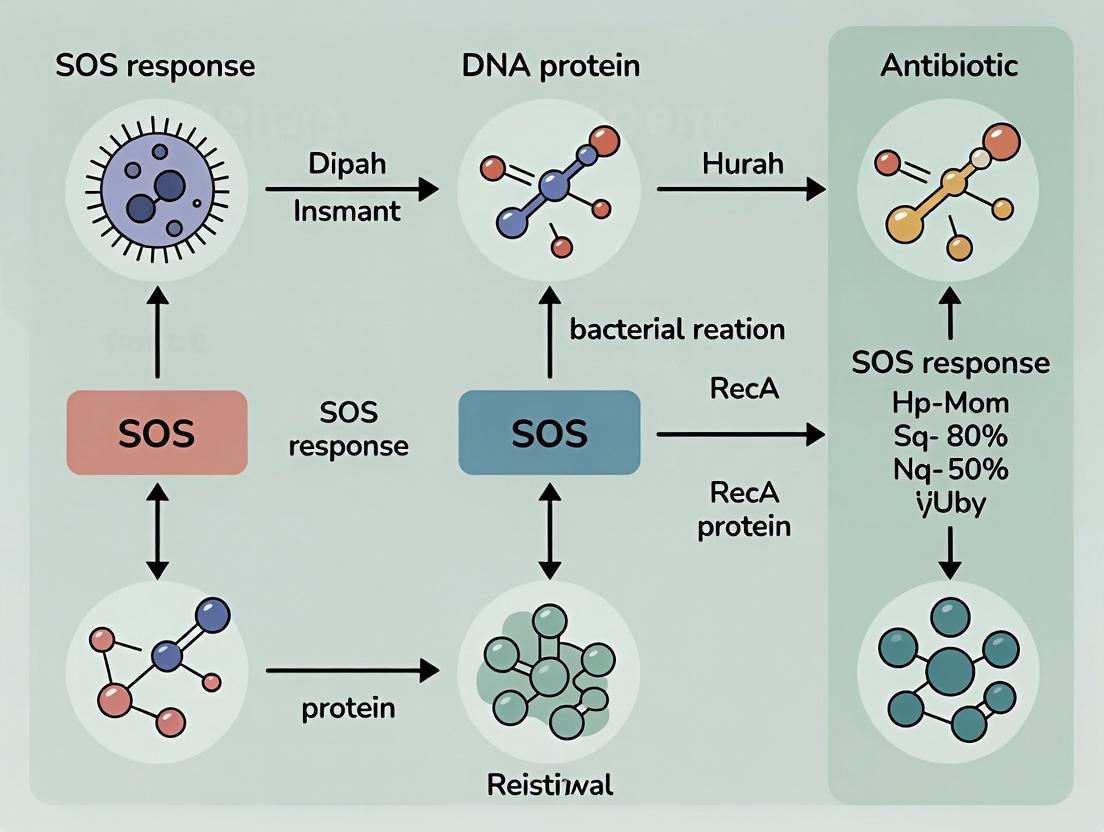
This article comprehensively examines the bacterial SOS response as a high-priority target for combating antibiotic resistance.
SOS Response Inhibition: A Novel Strategy to Combat Antibiotic Resistance and Potentiate Existing Drugs
Abstract
This article comprehensively examines the bacterial SOS response as a high-priority target for combating antibiotic resistance. Targeted for researchers and drug development professionals, it explores the foundational biology of the SOS network, details cutting-edge methodologies for its inhibition, analyzes challenges and optimization strategies for combination therapies, and validates the approach through comparative analysis with traditional and emerging alternatives. The synthesis provides a roadmap for developing SOS inhibitors as antibiotic adjuvants to restore the efficacy of our current antimicrobial arsenal.
The SOS Response Unveiled: Understanding the Bacterial Survival Pathway Driving Resistance
The SOS response is a conserved global regulatory network in bacteria that is induced by DNA damage. It facilitates DNA repair, promotes mutagenesis, and enhances bacterial survival under genotoxic stress. Within the context of combating antibiotic resistance, the SOS response represents a critical therapeutic target. Many antibiotics induce DNA damage, and the subsequent SOS activation promotes error-prone repair and horizontal gene transfer, accelerating the evolution of resistance. Therefore, precise inhibition of the SOS response could potentially restore the efficacy of existing antibiotics and slow the development of resistance. This guide details the core molecular machinery—the LexA repressor, the RecA nucleoprotein filament (RecA*), and the extensive SOS regulon—forming the basis for such targeted intervention strategies.
Core Molecular Components
LexA: The Transcriptional Repressor
LexA is a homodimeric protein that functions as the master repressor of the SOS regulon. It contains an N-terminal DNA-binding domain (with a helix-turn-helix motif) and a C-terminal domain involved in dimerization and RecA*-mediated cleavage.
- Function: In the uninduced state, LexA binds to a conserved 20-base-pair palindromic sequence known as the SOS box (or lexA box) located in the promoter regions of SOS genes, repressing their transcription.
- Key Structural Feature: The cleavage site between residues Ala84 and Gly85. RecA*-mediated autocleavage at this site inactivates LexA's DNA-binding capability.
RecA: The DNA Damage Sensor and Co-protease
RecA is a multifunctional protein with central roles in homologous recombination and SOS induction. Its activated form, RecA* (or RecA filament), is the essential signal transducer.
- Activation Mechanism: RecA is activated by binding to single-stranded DNA (ssDNA) that arises from stalled replication forks, double-strand breaks, or processing of other DNA lesions. This nucleation is facilitated by single-strand binding proteins (SSB). The RecA protein polymerizes on this ssDNA, forming a right-handed nucleoprotein filament.
- Function as a Co-protease: The RecA* filament undergoes a conformational change that enables it to facilitate the autocleavage of LexA (and other targets like the UmuD protein). It acts as a catalyst, positioning LexA to promote its self-cleavage reaction.
The SOS Regulon
The SOS regulon comprises all operons transcriptionally repressed by LexA and induced following its cleavage. The number and identity of genes vary among bacterial species.
- Core Functions: The regulon coordinates diverse cellular responses:
- DNA Repair: Nucleotide excision repair (uvrA, uvrB, uvrD), recombinational repair (recA, recN, ruvA).
- Translesion Synthesis (TLS): Error-prone DNA polymerases (umuDC, dinB), which bypass lesions but introduce mutations.
- Cell Division Inhibition: sulA (or sfiA) inhibits FtsZ ring formation, causing filamentation to allow time for repair before division.
- LexA Autoregulation: The lexA gene itself is part of the regulon, enabling rapid re-establishment of repression post-repair.
Signaling Pathway & Regulatory Logic
The induction and repression cycle of the SOS response is a classic example of a negative feedback loop with a damage-sensitive trigger.
SOS Response Induction and Resolution Cycle
Experimental Protocols for Core SOS Studies
Protocol: Measuring SOS Induction viarecAorsulAPromoter Fusions
Purpose: To quantitatively assess SOS induction in response to DNA-damaging agents or potential inhibitors. Principle: A promoterless reporter gene (e.g., gfp, lacZ) is placed under the control of an SOS-regulated promoter (e.g., PrecA, PsulA). Fluorescence or β-galactosidase activity serves as a proxy for LexA cleavage and derepression.
- Strain Construction: Introduce a plasmid-borne or chromosomal PsulA-gfp (or lacZ) fusion into the target bacterial strain (e.g., E. coli MG1655).
- Treatment: Grow cultures to mid-log phase (OD600 ~0.3-0.5). Divide into aliquots.
- Negative Control: No treatment.
- Positive Control: Treat with a known SOS inducer (e.g., 2 µg/mL mitomycin C, 0.5-1 µg/mL ciprofloxacin).
- Experimental: Treat with the test antibiotic alone and in combination with a putative SOS inhibitor.
- Incubation: Incubate with shaking for a defined period (e.g., 60-120 minutes).
- Measurement:
- For GFP: Measure fluorescence (excitation ~488 nm, emission ~510 nm) and normalize to OD600.
- For LacZ: Perform Miller assay. Take samples, lyse cells (e.g., with SDS/chloroform), add substrate ONPG, stop reaction with Na2CO3, and measure OD420. Calculate Miller Units.
- Analysis: Compare normalized reporter activity across conditions. SOS inhibition is indicated by reduced reporter induction compared to the antibiotic-alone control.
Protocol:In VitroLexA Cleavage Assay
Purpose: To directly test if a compound inhibits the RecA-mediated cleavage of LexA. Principle: Purified LexA is incubated with activated RecA (formed on oligonucleotide ssDNA). Cleavage is monitored via SDS-PAGE by the shift from full-length LexA to its N- and C-terminal fragments.
- Reaction Setup: In a buffer (e.g., 25 mM Tris-HCl pH 7.5, 10 mM MgCl2, 1 mM DTT), combine:
- Purified RecA protein (e.g., 2 µM).
- A long ssDNA oligonucleotide (e.g., dT70 at 6 µM nucleotides) to nucleate RecA.
- ATPγS (a non-hydrolyzable ATP analog, 1 mM) to stabilize the filament.
- Pre-incubate for 10 min at 37°C to form RecA.
- Inhibitor Addition: Add the putative SOS inhibitor (at varying concentrations) or vehicle control (DMSO). Incubate 5 min.
- Cleavage Initiation: Add purified LexA protein (e.g., 4 µM) to start the reaction.
- Time Course: Remove aliquots at time points (e.g., 0, 5, 10, 20, 30 min) and quench with SDS-PAGE loading buffer.
- Analysis: Resolve proteins by SDS-PAGE (15% gel). Visualize LexA and its cleavage products by Coomassie staining or western blot. Quantify band intensity to determine cleavage kinetics. Inhibition is seen as a dose-dependent reduction in LexA fragment appearance.
Table 1: Core Genetic Elements of the E. coli SOS Regulon
| Gene/Operon | SOS Box Sequence (Consensus: CTGT-N8-ACAG) | Primary Function in SOS Response |
|---|---|---|
| lexA | TACTGTATATCCCACAGTA | Autoregulation of the repressor |
| recA | TAACTGTATATATATACAGTA | Production of the signal transducer |
| uvrA | CACTGTAATATTTTTCAGCA | Nucleotide excision repair |
| sulA ( sfiA ) | GAACTGTAACAAAAACAGCC | Cell division inhibitor (filamentation) |
| umuDC | CGCTGTAACAGCTGCACAGC | Error-prone DNA polymerase V |
| dinB | CAGCTGTTTCAGGTAACAGC | Error-prone DNA polymerase IV |
Table 2: Representative SOS-Inducing Antibiotics and Their Mechanisms
| Antibiotic Class | Example Agent | Primary DNA Damage Mechanism | Typical SOS Induction Concentration ( E. coli ) |
|---|---|---|---|
| Fluoroquinolone | Ciprofloxacin | Inhibition of DNA gyrase/topoisomerase IV, leading to DSBs | 0.01 - 0.1 µg/mL (sub-MIC) |
| Nitroimidazole | Metronidazole | Reduction creates toxic radicals causing SSBs and DSBs | Variable, anerobic conditions |
| β-lactam | Cefixime (indirect) | Not direct DNA damage. SOS induced via dpiBA system in response to cell envelope stress. | >10x MIC |
| Aminocoumarin | Novobiocin | Inhibition of DNA gyrase, leading to replication arrest | ~10 µg/mL |
The Scientist's Toolkit: Key Research Reagents
Table 3: Essential Reagents for SOS Response Research
| Reagent / Material | Function / Purpose | Example / Notes |
|---|---|---|
| Mitomycin C | Classic, potent DNA crosslinker; standard positive control for SOS induction. | Use at 0.5-2 µg/mL in E. coli. Handle as toxic. |
| Ciprofloxacin | Fluoroquinolone antibiotic; induces SOS via double-strand breaks from topoisomerase inhibition. | Relevant for studying resistance development. Sub-MIC doses often used. |
| RecA Protein (Purified) | For in vitro cleavage assays, filament formation studies, and biochemical screening. | Commercially available from enzyme suppliers. |
| LexA Protein (Purified) | Substrate for in vitro cleavage assays and DNA-binding studies (EMSA). | Can be purified from overexpression strains. |
| SOS Reporter Strain | In vivo quantification of SOS induction. | e.g., E. coli MG1655 with PsulA-gfp chromosomal fusion. |
| ATPγS | Non-hydrolyzable ATP analog; stabilizes RecA nucleoprotein filaments in vitro. | Used instead of ATP in cleavage assays for more consistent results. |
| Oligo(dT)70 / poly(dT) | Long ssDNA cofactor for nucleating RecA* filaments in vitro. | Ensures homogeneous filament formation. |
| SOS Inhibitor (Reference) | Positive control for inhibition assays. | e.g., Zn²⁺ chelators (like o-phenanthroline) or novel small molecules (e.g., MciZ analogs). |
Within the urgent context of combating antibiotic resistance, the bacterial SOS response presents a critical, yet paradoxical, therapeutic target. This evolutionarily conserved stress response is a master regulator of cellular fate upon DNA damage, primarily induced by antibiotics like fluoroquinolones and beta-lactams. Its inhibition is a cornerstone thesis in novel antibacterial strategies, as it potently co-opts bacterial survival mechanisms. This whitepaper provides a technical dissection of the SOS response's dual outcomes: accurate DNA repair versus error-prone mutagenesis and horizontal gene transfer (HGT), which directly fuels resistance dissemination.
Core SOS Pathway: Induction and Key Players
The SOS regulon is controlled by the transcriptional repressor LexA and the sensor protein RecA. Under normal conditions, LexA binds to SOS box operators, repressing over 40 genes. DNA damage (e.g., single-stranded DNA gaps) leads to RecA nucleation on ssDNA, forming RecA-ssDNA filaments (RecA*). This nucleoprotein filament acts as a co-protease, facilitating LexA autoproteolysis, which derepresses the SOS genes.
Table 1: Key SOS Genes and Their Primary Functions
| Gene | Function | Role in SOS Outcome |
|---|---|---|
| lexA | Transcriptional repressor; autoregulator | Master regulator |
| recA | DNA strand exchange, co-protease activity | Signal transducer |
| uvrA, uvrB, uvrC | Nucleotide excision repair (NER) | Accurate DNA Repair |
| umuC, umuD (Y-family) | DNA polymerase V (Pol V) | Mutagenesis (TLS) |
| dinB (Y-family) | DNA polymerase IV (Pol IV) | Mutagenesis (TLS) |
| sulA | Cell division inhibitor | Cell Cycle Arrest |
| recN, ruvA, ruvB | Homologous recombination (HR) | Accurate DNA Repair |
| integrase, excisionase | Prophage induction | HGT Vector |
Diagram 1: Core SOS Induction and Dual-Output Pathways (100 chars)
The Paradox: Repair vs. Mutagenesis/HGT
Accurate DNA Repair Pathways
The primary, beneficial role of SOS is to restore genomic integrity via error-free mechanisms.
- Nucleotide Excision Repair (NER): Uvr(A)BC system removes bulky lesions.
- Homologous Recombination (HR): RecA-mediated strand invasion and synthesis using a sister chromatid template.
- Post-Replication Repair: Retrieval of information from the undamaged sister duplex.
Error-Prone Mutagenesis (Translesion Synthesis - TLS)
When lesions block replication, SOS-induced Y-family DNA polymerases (Pol IV, Pol V) bypass the damage but incorporate incorrect nucleotides with high frequency. This SIS (SOS-induced mutagenesis) is a primary engine of de novo antibiotic resistance mutations.
Table 2: Quantitative Impact of SOS-Induced Mutagenesis
| Experimental System | Inducing Agent | Fold Increase in Mutation Rate (vs. WT) | Key SOS Gene Involved | Reference (Year) |
|---|---|---|---|---|
| E. coli lacZ reversion | Ciprofloxacin (0.1 µg/mL) | ~10-20x | umuDC, dinB | Cirz et al., 2005 |
| P. aeruginosa rpoB mutants | Ciprofloxacin (0.15x MIC) | ~5-8x | umuC (imp) | Blázquez et al., 2018 |
| S. aureus Rif^R mutants | Trimethoprim | ~6x | lexA | Mesak et al., 2008 |
| E. coli MBR assay | UV Radiation | ~50x | umuDC | Nohmi et al., 2012 |
Horizontal Gene Transfer (HGT) Activation
SOS induction facilitates the direct acquisition of resistance genes.
- Prophage Induction: LexA cleavage derepresses lysogenic phage integrases/excisionases, leading to phage lytic cycles and transduction of adjacent bacterial DNA, including resistance cassettes.
- Integron Cassette Rearrangement: SOS upregulates integron integrases, shuffling gene cassettes in attC sites, promoting expression of resistance genes.
- Natural Competence: In some species (e.g., Vibrio cholerae), SOS induces competence genes for transformation.
Table 3: SOS-Mediated HGT and Resistance Dissemination
| HGT Mechanism | SOS-Regulated Element | Linked Resistance Observed | Experimental Evidence |
|---|---|---|---|
| Generalized Transduction | RecA-mediated prophage induction | β-lactam, quinolone resistance | Phage particles carry blaTEM-1, qnr genes |
| Integron Cassette Excision | intI1 Integrase upregulation | Multi-drug resistance cassette mobility | SOS inducers increase cassette excision by 5-10x |
| Conjugative Element Transfer | Unknown regulators on plasmids | Spread of vanA (vancomycin) | Mitomycin C increases plasmid transfer 100-fold |
Experimental Protocols for SOS Research
Protocol: Measuring SOS Induction via Fluorescent Reporter
Objective: Quantify SOS induction dynamics in real-time. Strain: E. coli with PsulA-gfp chromosomal fusion. Reagents:
- SOS Inducer: Ciprofloxacin (0.05-0.1x MIC) or Mitomycin C (0.5 µg/mL).
- SOS Inhibitor (Control): 6-(p-hydroxyphenyl)-azo-uracil (HPUra) or hypothesized small-molecule inhibitor.
- Growth Medium: M9 minimal medium + 0.2% glucose. Method:
- Inoculate reporter strain and grow to mid-log phase (OD600 ~0.3).
- Aliquot into 96-well black-walled plates. Add inducer ± inhibitor.
- Incubate in a plate reader at 37°C with continuous shaking.
- Measure OD600 and GFP fluorescence (ex: 485nm, em: 520nm) every 10-15 min for 8-12h.
- Data Analysis: Normalize GFP to OD600 for each time point. Calculate area under the curve (AUC) for the induction profile.
Protocol: Quantifying SOS-Mediated Mutagenesis (Fluctuation Test)
Objective: Determine mutation rate to antibiotic resistance under SOS conditions. Strain: Wild-type and lexA(Ind-) non-cleavable mutant. Method:
- Prepare 50+ parallel 1 mL cultures of each strain in LB. Grow to saturation (24-48h).
- Plate entire cultures on selective agar (e.g., rifampicin at 100 µg/mL). Plate dilutions on non-selective agar for total viable count.
- Incubate plates and count resistant colonies (Rif^R).
- Analysis: Use the Ma-Sandri-Sarkar maximum-likelihood method (via FALCOR web tool) to calculate mutation rate per cell per generation.
Protocol: Assessing HGT (Prophage Induction & Transduction)
Objective: Measure SOS-induced phage-mediated transduction of an antibiotic resistance marker. Donor Strain: Lysogenic E. coli with a defined prophage (e.g., λ) and a chromosomal antibiotic resistance gene near the attachment site (e.g., tetA). Recipient Strain: Non-lysogenic, antibiotic-sensitive strain (Tet^S). Method:
- Treat donor culture with sub-MIC ciprofloxacin (SOS inducer) for 2h.
- Filter culture supernatant (0.22 µm) to obtain cell-free phage lysate.
- Mix phage lysate with recipient cells in soft agar and pour onto selective plates (containing tetracycline to select for transductants).
- Count transductant colonies after 24h incubation. Compare to lysate from untreated donors.
The Scientist's Toolkit: Key Research Reagent Solutions
Table 4: Essential Reagents for SOS Response Research
| Reagent/Category | Example Product/Strain | Primary Function in SOS Research |
|---|---|---|
| SOS Reporters | E. coli MG1655 PsulA-gfp/mCherry | Real-time, quantitative monitoring of SOS induction. |
| Genetic Controls | lexA(Ind-) mutant (non-cleavable); ΔrecA mutant | Define SOS-dependent vs. independent effects. |
| SOS Inducers | Ciprofloxacin, Mitomycin C, UV-C light | Generate DNA damage to reliably trigger the SOS response. |
| SOS Inhibitors | HPUra (Pol III inhibitor), Zoliflodacin (novel gyrase inhibitor that weakly induces SOS), small-molecule LexA/RecA disruptors (research-grade) | Suppress the mutagenic/TLS arm of SOS for mechanistic studies and therapeutic validation. |
| TLS Polymerase Reporters | Plasmid-based umuDC'::lacZ or dinB::lacZ fusions | Specifically measure the error-prone mutagenesis branch activity. |
| HGT Reporter Systems | Lysogenic strains with defined prophage (λ, Φ80) and adjacent resistance markers; Mating assays with conjugative plasmids (e.g., F' plasmid). | Quantify SOS-mediated horizontal transfer via transduction and conjugation. |
| Antibiotic Selection Panels | Rifampicin, Nalidixic Acid, Ciprofloxacin at varying concentrations | Select for and quantify de novo resistant mutants arising from SOS mutagenesis. |
Diagram 2: Therapeutic Impact of SOS Inhibition on Resistance (98 chars)
The SOS response embodies a high-stakes evolutionary trade-off for bacteria—and a strategic vulnerability for antimicrobial therapy. Its dual outputs make targeted inhibition a compelling thesis in anti-resistance research. Suppressing the mutagenic and HGT-promoting arms (Pol V/IV, prophage induction) while potentially leaving some repair functions intact could convert antibiotics into more effective, "resistance-proof" therapies. Current research focuses on identifying small-molecule inhibitors of RecA co-protease activity or LexA binding. Validating these inhibitors requires the integrated experimental frameworks outlined herein, measuring not just survival but the direct impact on mutation rates and gene transfer frequencies. Success in this endeavor would represent a paradigm shift in adjuvant therapy, transforming how we preserve the efficacy of existing antibiotics.
Within the strategic context of inhibiting the SOS response to combat antibiotic resistance, this whitepaper details the precise molecular mechanisms by which SOS system activation directly accelerates the development of resistance. The SOS response, a conserved bacterial stress regulon, is not merely a survival pathway but a potent engine for genetic adaptation. By dynamically increasing mutation rates and facilitating horizontal gene transfer (HGT), SOS activation provides the genetic diversity upon which antibiotic selection acts, thereby directly catalyzing resistance evolution.
Molecular Core of the SOS Response
The SOS response is orchestrated by the key regulator LexA and the sensor RecA. Under normal conditions, LexA represses the transcription of over 50 SOS genes. Genotoxic stress, such as DNA damage induced by antibiotics (e.g., fluoroquinolones, β-lactams), results in the accumulation of single-stranded DNA (ssDNA). RecA binds to this ssDNA, forming a nucleoprotein filament (RecA*) that facilitates the auto-cleavage of LexA. LexA inactivation leads to the coordinated derepression of SOS genes, which are categorized by their roles in DNA repair, mutagenesis, and cell cycle regulation.
Diagram 1: Core SOS Pathway Activation
Direct Mechanisms Linking SOS to Resistance Development
Error-Prone Repair & Hypermutability
The primary direct link is the induction of error-prone DNA polymerases (translesion synthesis, or TLS, polymerases). These low-fidelity enzymes, such as Pol IV (DinB) and Pol V (UmuD'2C), are encoded by SOS genes and replicate damaged DNA at the cost of increased mutation rates.
Table 1: Key SOS-Induced Error-Prone Polymerases and Their Impact
| Polymerase | SOS Gene(s) | Mutation Signature | Contribution to Resistance Development |
|---|---|---|---|
| Pol IV (DinB) | dinB |
-1 frameshifts, base substitutions | Enables survival under stress, provides diverse alleles for selection. |
| Pol V (UmuC/D) | umuDC |
Broad spectrum: transitions, transversions | Major driver of point mutations conferring resistance (e.g., in gyrA, rpoB). |
| Pol II (PolB) | polB |
Less error-prone, some base substitutions | Contributes to adaptive mutation under prolonged stress. |
Experimental Protocol: Measuring SOS-Induced Mutagenesis (Fluctuation Test)
- Objective: Quantify the increase in mutation rate to antibiotic resistance upon SOS induction.
- Procedure:
- Culture Preparation: Inoculate multiple (e.g., 20-50) parallel, small-volume liquid cultures of the bacterial strain from a low-inoculum to ensure independent mutation events.
- SOS Induction: Treat a subset of cultures with a sub-inhibitory concentration of an SOS-inducing antibiotic (e.g., ciprofloxacin at 0.1x MIC). Leave another subset as untreated control.
- Selection: Plate the entire volume of each culture onto solid agar containing a high, selective concentration of a different antibiotic (e.g., rifampicin). Also plate diluted aliquots onto non-selective agar to determine total viable count.
- Analysis: Count resistant colonies after incubation. Calculate mutation rates using statistical models (e.g., Ma-Sandri-Sarkar maximum likelihood method) to compare rates between induced and non-induced populations.
Horizontal Gene Transfer (HGT) Promotion
SOS activation upregulates genes that are integral to the three major HGT pathways, facilitating the acquisition of pre-evolved resistance determinants.
- Conjugation: SOS induces the expression of integron integrases, which capture and shuffle resistance gene cassettes. It also regulates factors for plasmid maintenance and transfer.
- Transduction: SOS can induce prophages (bacterial viruses integrated into the genome), leading to lytic replication. During packaging, phage particles can mistakenly incorporate and transfer bacterial DNA, including resistance genes.
- Transformation: In naturally competent species, SOS components can enhance DNA uptake and integration.
Diagram 2: SOS Facilitation of Horizontal Gene Transfer
Experimental Protocol: Measuring SOS-Induced Conjugation Frequency
- Objective: Assess the impact of SOS induction on the transfer rate of a plasmid carrying an antibiotic resistance marker.
- Procedure:
- Strains: Use a donor strain containing a conjugative plasmid (e.g., an R-factor with an Amp^R gene) and a recipient strain with a different chromosomal resistance marker (e.g., Rif^R).
- Induction: Treat donor cells with a sub-inhibitory dose of an SOS inducer (e.g., trimethoprim) prior to mating.
- Mating: Mix induced donor and recipient cells at a defined ratio (e.g., 1:10) on a filter placed on non-selective agar. Perform a non-induced control mating in parallel.
- Selection: Resuspend cells and plate on agar containing antibiotics that select for transconjugants (Amp + Rif) and donors (Amp) and recipients (Rif).
- Calculation: Conjugation frequency = (Number of transconjugants) / (Number of donors).
Persister Cell Formation & Resistance Evolution
SOS activation contributes to the formation of dormant, antibiotic-tolerant persister cells. This persister state provides a protected reservoir where bacteria can accumulate SOS-induced mutations over extended time periods, even under antibiotic pressure, eventually giving rise to genetically resistant populations.
Table 2: Quantitative Impact of SOS Activation on Resistance Development
| Experimental System | SOS Inducer | Measured Outcome | Fold-Increase vs. Control | Key Implication |
|---|---|---|---|---|
| E. coli Fluctuation Assay | Ciprofloxacin (0.25x MIC) | Rifampicin Resistance Mutation Rate | 10 - 50x | Clinically relevant antibiotics boost mutability. |
| P. aeruginosa Conjugation Assay | Trimethoprim (0.5x MIC) | Plasmid pKM101 Transfer Frequency | 5 - 20x | SOS promotes spread of mobile genetic elements. |
| S. aureus Biofilm Model | Ciprofloxacin | Emergence of Ciprofloxacin-Resistant Variants | 100 - 1000x | Biofilm + SOS creates a high-evolution environment. |
The Scientist's Toolkit: Research Reagent Solutions
Table 3: Essential Reagents for Studying SOS-Mediated Resistance
| Item | Function in Research | Example/Supplier (Illustrative) |
|---|---|---|
| SOS-Inducing Antibiotics | Tool to directly activate the SOS response in vitro. | Ciprofloxacin (fluoroquinolone), Mitomycin C (DNA cross-linker). |
| LexA Cleavage Assay Kit | Measure LexA auto-cleavage activity in cell lysates. | Fluorogenic peptide substrate mimicking LexA cleavage site. |
recA::GFP Transcriptional Fusion Strain |
Visualize and quantify SOS activation at single-cell level via fluorescence. | Commercially available bioreporter strains (e.g., from E. coli Genetic Stock Center). |
| Error-Prone Polymerase Expression Vectors | Overexpress Pol IV or Pol V to study mutagenic spectra. | Plasmids with inducible dinB or umuDC operons. |
| SOS Inhibitor Compounds | Test the hypothesis that blocking SOS reduces resistance evolution. | Small molecules like "SOS inhibitor A" (targeting RecA), or novel LexA stabilizers. |
| Mobile Genetic Elements | Study HGT mechanisms (conjugation, transduction). | Defined conjugative plasmids (e.g., F-plasmid), marked transducing phages. |
| Next-Gen Sequencing Services | Quantify whole-genome mutation spectra and identify acquired resistance genes after SOS induction. | Services for whole-genome sequencing and/or targeted amplicon deep sequencing. |
Diagram 3: Experimental Workflow for Probing SOS-Resistance Link
Implications for Therapeutic Intervention: SOS Inhibition
The direct mechanistic links establish the SOS response as a high-value target for adjuvant therapy. Inhibiting SOS (via RecA or LexA disruption) is predicted to:
- Reduce de novo resistance emergence by lowering mutation rates during antibiotic treatment.
- Limit the spread of resistance by blocking HGT pathways.
- Re-sensitize resistant bacteria by preventing the repair that maintains resistance mutations under stress.
Current research focuses on identifying and optimizing small-molecule SOS inhibitors that can be co-administered with existing antibiotics to prolong their efficacy and curb the resistance crisis. This approach directly addresses the evolutionary engine of resistance, complementing traditional antimicrobial strategies.
Within the urgent framework of combating antimicrobial resistance, targeting the bacterial SOS response—a conserved global DNA damage repair network—presents a promising strategy. The rationale is that inhibiting this inducible system could potentiate existing antibiotics and curb the emergence of resistance. This guide details the core inducers of this pathway: specific antibiotic classes and environmental stressors, focusing on their mechanisms and experimental interrogation.
Core Inducers & Mechanisms of Action
Antibiotic-Induced DNA Damage
Fluoroquinolones (e.g., Ciprofloxacin, Levofloxacin): These synthetic broad-spectrum antibiotics directly cause DNA double-strand breaks. They target DNA gyrase (topoisomerase II) and topoisomerase IV, stabilizing the enzyme-DNA cleavage complex. This blockage of replication fork progression leads to lethal double-strand breaks.
β-lactams (e.g., Penicillins, Cephalosporins): Historically not considered primary DNA damaging agents, recent research indicates they indirectly induce the SOS response. By inhibiting penicillin-binding proteins (PBPs), they disrupt cell wall synthesis, leading to aberrant cell division, generation of reactive oxygen species (ROS), and subsequent oxidative DNA damage.
Other Antibiotics: Mitomycin C (a cross-linking agent) and Trimethoprim (via thymineless stress) are also potent inducers.
Environmental Stressors
- UV Radiation: Causes cyclobutane pyrimidine dimers and (6-4) photoproducts.
- Ionizing Radiation: Generates ROS leading to base damage and strand breaks.
- Chemical Mutagens (e.g., MMS, MNNG): Alkylate DNA bases.
- Hydroxyurea: Depletes nucleotide pools, causing replication fork stall.
Quantitative Data on Inducer Potency
Table 1: Potency of Key SOS Inducers in E. coli
| Inducer Class | Example Agent | Typical Experimental Concentration | Primary Lesion | SOS Induction Level (Fold-Change in Reporter)* | Key Readout |
|---|---|---|---|---|---|
| Fluoroquinolone | Ciprofloxacin | 0.01-0.1 µg/mL (∼0.03-0.3 µM) | DSB | 50-200 | recA::GFP, sulA::GFP |
| β-lactam | Ampicillin | 10-100 µg/mL | Oxidative Damage, DSB | 5-20 | recA::GFP, RNR report |
| DNA Cross-linker | Mitomycin C | 0.5-2 µg/mL | ICL | 100-500 | sulA::lacZ |
| Alkylating Agent | Methyl methanesulfonate (MMS) | 0.01-0.1% v/v | Alkylated Bases | 20-100 | umuC::lacZ |
| UV Radiation | 254 nm UV-C | 10-50 J/m² | CPDs, 6-4PP | 10-50 | recN::GFP |
| Replication Inhibitor | Hydroxyurea | 100-200 mM | Stalled Fork | 10-30 | dinD::lacZ |
*SOS induction level is highly dependent on bacterial strain, growth phase, and specific reporter construct. Values are approximate ranges from recent literature.
Experimental Protocols for SOS Induction & Analysis
Protocol 1: Measuring SOS Induction via Fluorescent Reporter (e.g.,recA-gfpfusion)
Objective: Quantify SOS response dynamics in live cells. Materials:
- Bacterial strain with chromosomally integrated PrecA-gfp or PsulA-gfp.
- LB broth and agar.
- Test inducers (e.g., Ciprofloxacin stock, MMS).
- 96-well black-walled, clear-bottom microplate.
- Plate reader with temperature control and fluorescence/OD600 capabilities.
Procedure:
- Inoculum: Grow overnight culture of reporter strain. Dilute 1:100 in fresh LB and grow to mid-log phase (OD600 ∼0.3-0.5).
- Treatment: Aliquot 200 µL of culture per well. Add inducer at desired concentration. Include a no-inducer control (LB only) and a vehicle control (e.g., DMSO for ciprofloxacin).
- Reading: Load plate into pre-warmed (37°C) plate reader. Measure OD600 and GFP fluorescence (Ex: 485 nm, Em: 520 nm) every 10-15 minutes for 6-12 hours with continuous shaking.
- Analysis: For each time point, calculate fluorescence/OD600 ratio. Normalize to the baseline value of the untreated control. Plot normalized fluorescence vs. time to visualize induction kinetics.
Protocol 2: Genetic Assessment vialacZReporter Assay (Miller Assay)
Objective: Precise, endpoint quantification of SOS gene expression. Materials:
- Strain with SOS promoter (e.g., sulA, umuDC) fused to promoterless lacZ.
- Z-buffer (60 mM Na₂HPO₄, 40 mM NaH₂PO₄, 10 mM KCl, 1 mM MgSO₄, pH 7.0).
- Chloroform, 0.1% SDS.
- ONPG (o-Nitrophenyl-β-D-galactopyranoside) solution (4 mg/mL in Z-buffer).
- 1 M Na₂CO₃ to stop reaction.
- Spectrophotometer.
Procedure:
- Treatment: Grow reporter strain to mid-log, split, and treat with inducer for a defined period (e.g., 2 hours). Include controls.
- Cell Lysis: Pellet 1 mL of culture. Resuspend in 1 mL Z-buffer. Add 50 µL chloroform and 25 µL 0.1% SDS. Vortex vigorously for 10 sec. Incubate at 28°C for 5 min.
- Reaction: Add 200 µL ONPG solution. Start timer. Incubate at 28°C until a pale yellow develops.
- Measurement: Stop reaction with 500 µL 1 M Na₂CO₃. Record reaction time (T, in minutes). Pellet debris and measure OD420 and OD550 of supernatant.
- Calculation: Miller Units = 1000 * [(OD420) - (1.75 * OD550)] / (T * V * OD600 of initial culture), where V is volume of culture assayed (1 mL).
Signaling Pathway Visualization
SOS Response Induction & Regulation
Workflow for SOS Induction & Inhibition Assay
The Scientist's Toolkit: Key Research Reagent Solutions
Table 2: Essential Materials for SOS Response Research
| Reagent / Material | Function & Application | Example / Notes |
|---|---|---|
| Fluorescent Reporter Strains | Live-cell, real-time monitoring of SOS gene expression. | E. coli MG1655 PrecA-gfp; PsulA-mCherry fusions. Commercial (e.g., KEIO collection derivatives) or custom constructs. |
| β-galactosidase (lacZ) Reporter Strains | Highly sensitive, quantitative endpoint assay for promoter activity. | E. coli PumuDC-lacZ or PsulA-lacZ transcriptional fusions. Standard for genetic studies. |
| RecA Antibody | Western blotting to monitor RecA protein levels and filament formation. | Key for confirming SOS induction at protein level. Commercial monoclonal antibodies available. |
| SOS Inducer Compounds | Positive controls for validating experimental systems. | Ciprofloxacin (fluoroquinolone), Mitomycin C (cross-linker), Methyl methanesulfonate (MMS - alkylator). Prepare fresh stocks. |
| Putative SOS Inhibitors | Test articles for therapeutic potential. | Examples: Acylated amino acid analogs (targeting RecA), LexA cleavage inhibitors (research stage). |
| Microplate Reader (with shaking & temp control) | Essential for high-throughput kinetic assays using fluorescent reporters. | Enables parallel testing of multiple inducers/inhibitors over time. |
| qPCR Primers for SOS Genes | Quantify absolute transcriptional changes across the SOS regulon. | Target recA, lexA, umuDC, sulA, uvrA, ruvA. Use housekeeping gene (e.g., rpoD) for normalization. |
| SOS Response ELISA Kit | Quantify specific SOS-related proteins or DNA damage markers. | Kits for 8-oxo-dG (oxidative damage) or specific protein phosphorylations. Less common but useful. |
The bacterial SOS response is a conserved, inducible DNA damage repair network, classically governed by the LexA repressor and RecA activator. From an evolutionary perspective, this system is a master regulator of bacterial adaptation. It transiently increases genetic diversity precisely when cells are under stress (e.g., from antibiotics), facilitating the acquisition of resistance mutations, promoting horizontal gene transfer, and enabling persistence. Inhibiting the SOS response disarms this evolutionary accelerator, rendering bacterial populations less capable of adapting to antimicrobial assault. This whitepaper frames SOS inhibition not merely as an adjuvant strategy but as a foundational imperative to outmaneuver bacterial evolution in the fight against antibiotic resistance.
The SOS Pathway: Core Components and Induction Logic
The canonical SOS pathway in Escherichia coli is summarized below. Under normal conditions, LexA binds to SOS box operators, repressing transcription of over 50 genes. Upon DNA damage, single-stranded DNA (ssDNA) accumulates, which is coated by RecA to form RecA-ssDNA nucleoprotein filaments. This activated RecA* facilitates LexA autocleavage, derepressing the regulon.
Diagram: Core SOS Induction Pathway in E. coli
Quantitative Impact: SOS-Mediated Resistance Mechanisms
Recent studies quantify the contribution of the SOS response to resistance development. Key data are consolidated in Table 1.
Table 1: SOS-Mediated Enhancement of Resistance Mechanisms
| Resistance Mechanism | SOS Gene(s) Involved | Quantified Enhancement (vs. SOS-Defective) | Experimental Organism | Reference (Year) |
|---|---|---|---|---|
| Mutation Rate (Fluoroquinolones) | dinB (Pol IV), umuDC (Pol V) |
100 to 1000-fold increase in resistant mutants | E. coli | Cirz et al., 2005 |
| Biofilm Formation | recA, lexA* (non-cleavable) |
~70% reduction in biofilm in ∆recA |
Pseudomonas aeruginosa | Gotoh et al., 2010 |
| Horizontal Transfer (Conjugation) | recA, sbmC |
Up to 1000-fold increase in plasmid uptake | E. coli | Beaber et al., 2004 |
| Persister Cell Regeneration | tisB, recA |
SOS-induced persisters show ~10x higher regrowth | E. coli | Dörr et al., 2010 |
| β-lactam Resistance Evolution | dinB*, recA* (constitutive) |
Accelerates AmpC mutation emergence by 5x | E. coli | Pribis et al., 2019 |
Strategic Inhibition: Target Sites and Experimental Protocols
The two primary targets for SOS inhibition are the RecA* nucleoprotein filament and the LexA repressor cleavage interaction.
Target 1: Disrupting RecA Filament Formation
Rationale: Small molecules that prevent RecA polymerization on ssDNA or its interaction with LexA abrogate the induction signal. Protocol: RecA ATPase Activity Inhibition Assay
- Reagents: Purified RecA protein, ATP, ssDNA (φX174 virion), ATP detection system (e.g., coupled enzyme assay), inhibitor candidates.
- Procedure:
- In a 96-well plate, mix 1 µM RecA, 10 µM ssDNA, and varying concentrations of inhibitor in reaction buffer (20 mM Tris-HCl pH 7.5, 10 mM MgCl₂, 50 mM NaCl).
- Initiate reaction with 1 mM ATP. Incubate at 37°C.
- Measure ATP hydrolysis kinetically by coupling ADP production to NADH oxidation (monitored at 340 nm) or using a colorimetric phosphate assay.
- Calculate IC₅₀ from dose-response curves.
- Validation: Confirm inhibition of SOS induction in vivo using a
recA::GFPtranscriptional fusion reporter strain treated with a DNA-damaging antibiotic.
Target 2: Stabilizing the LexA Repressor
Rationale: Peptidomimetics or small molecules that block the LexA cleavage site or its interaction with RecA* prevent derepression. Protocol: LexA Cleavage Inhibition Assay
- Reagents: Purified LexA, activated RecA* filaments (RecA + ssDNA + ATPγS), cleavage buffer, inhibitor candidates.
- Procedure:
- Pre-incubate 5 µM LexA with inhibitor (0-100 µM) for 15 min at room temperature.
- Add pre-formed RecA* nucleoprotein filaments (2 µM RecA, 6 µM ssDNA, 1 mM ATPγS).
- Incubate reaction at 37°C for 60 min.
- Stop reaction with SDS-PAGE loading buffer.
- Resolve proteins via 15% Tris-Tricine gel. Stain with Coomassie Blue or use anti-LexA Western blot.
- Quantify intact LexA vs. cleavage products. Determine % inhibition of cleavage.
Experimental Workflow for SOS Inhibitor Screening
Diagram: SOS Inhibitor Screening & Validation Workflow
The Scientist's Toolkit: Key Research Reagent Solutions
Table 2: Essential Reagents for SOS Response Research
| Reagent / Material | Function / Application | Example (Supplier) |
|---|---|---|
| Anti-LexA Antibody | Detection of LexA cleavage and cellular levels via Western blot. | Rabbit anti-E. coli LexA polyclonal (Abcam, ab#138491) |
| recA::GFP Reporter Strain | Live-cell, quantitative monitoring of SOS induction dynamics. | E. coli MG1655 PrecA-gfp (Kitagawa et al., 2005) |
| ATPase Activity Assay Kit | Quantification of RecA filament activity; high-throughput compatible. | Colorimetric ATPase Assay Kit (Innova Biosciences) |
| Non-cleavable LexA (G85D) | Control mutant for differentiating SOS-dependent/independent effects. | Plasmid expressing LexA ind- (Addgene #27183) |
| SOS Response PCR Array | Profiling expression of the full LexA regulon under various conditions. | Custom Qiagen RT² Profiler PCR Array for E. coli SOS genes |
| RecA Inhibitor (Positive Control) | Reference compound for inhibition studies (e.g., 6-(p-toluidino)-2-naphthalenesulfonic acid). | TNS, CAS #3157-44-2 (Sigma-Aldrich) |
Targeting the SOS response strategically attacks the root of rapid bacterial evolution under antibiotic pressure. By suppressing mutation, horizontal gene transfer, and persistence, SOS inhibitors can extend the therapeutic lifespan of existing antibiotics, particularly fluoroquinolones and β-lactams. The integrated experimental framework presented here provides a roadmap for developing and validating this critical class of anti-evolution agents.
Strategies and Techniques: From Target Identification to Inhibitor Development and Testing
High-Throughput Screening (HTS) Assays for LexA RecA Interaction Disruptors
The bacterial SOS response is a globally regulated DNA damage repair network, whose induction critically undermines the efficacy of many bactericidal antibiotics. The core regulatory switch involves the RecA protein, which, upon activation by single-stranded DNA (ssDNA), facilitates the auto-proteolysis of the LexA transcriptional repressor. This cleavage de-represses over 50 genes involved in DNA repair, mutagenesis, and biofilm formation, promoting survival and the acquisition of resistance. Inhibiting this LexA-RecA interaction presents a strategic avenue for potentiating existing antibiotics and reducing mutation rates. This whitepaper details the design, execution, and analysis of High-Throughput Screening (HTS) assays aimed at identifying small-molecule disruptors of the LexA-RecA interaction, a core component of a broader research thesis on SOS response inhibition to combat antibiotic resistance.
Core Assay Methodologies for HTS
The following table summarizes the primary HTS-compatible assay formats used to target the LexA-RecA interaction.
Table 1: Core HTS Assay Platforms for LexA-RecA Disruption
| Assay Type | Principle | Readout | Throughput | Key Advantages | Key Limitations |
|---|---|---|---|---|---|
| Fluorescence Polarization (FP) | A fluorescently labeled LexA peptide (containing the RecA-binding/cleavage site) is incubated with RecA-ssDNA filament. Disruptors decrease polarization. | mP (milliPolarization) | Ultra-High | Homogeneous, real-time, ratiometric, minimal artifacts. | Peptide-based, may miss allosteric inhibitors affecting full-length protein. |
| Time-Resolved FRET (TR-FRET) | Tag full-length LexA and RecA with donor (e.g., Eu3+) and acceptor (e.g., Alexa Fluor 647) labels. Interaction brings labels close for FRET. | Donor/Acceptor emission ratio | Ultra-High | Uses full-length proteins, reduced short-lived fluorescence interference. | Requires protein labeling; potential for label-induced steric hindrance. |
| AlphaScreen/AlphaLISA | Donor and acceptor beads are conjugated to LexA and RecA. Interaction brings beads within 200 nm, causing singlet oxygen transfer and chemiluminescence. | Luminescence (520-620 nm) | Ultra-High | No washing, high sensitivity, low background, tolerant to crude samples. | Bead cost; sensitive to ambient light and chemical quenchers. |
| Coupled Enzymatic (LexA Cleavage) | Monitor LexA auto-proteolysis catalyzed by activated RecA-ssDNA filament. Disruptors reduce cleavage. | Fluorescence (from quenched substrate) or Immunodetection | High | Functional assay; identifies inhibitors of the catalytic step. | More complex; signal is a decrease; susceptible to protease interference. |
Detailed Experimental Protocols
Fluorescence Polarization (FP) Assay Protocol
This is a robust, primary HTS workhorse.
Reagents:
- Purified RecA protein.
- Fluorescein-labeled LexA peptide (e.g., FITC-AVGCSRMRRYTLRRN-amide).
- ssDNA co-factor (e.g., dT30, poly(dT)).
- Assay Buffer: 25 mM Tris-HCl (pH 7.5), 100 mM NaCl, 5 mM MgCl2, 0.01% Tween-20, 1 mM DTT.
- Test compounds in DMSO.
- Positive Control: Unlabeled LexA peptide (for competition).
- Negative Control: DMSO only.
Procedure:
- RecA-ssDNA Filament Formation: Pre-incubate RecA (50 nM final) with ssDNA (20 μM nucleotides final) in assay buffer for 30 min at 30°C.
- Reaction Setup in 384-well plate:
- Add 10 nL of compound (or DMSO) via pintool.
- Add 10 μL of RecA-ssDNA filament mixture.
- Add 10 μL of FITC-LexA peptide (5 nM final). Final volume = 20 μL.
- Incubation: Incubate plate at room temperature for 60 minutes protected from light.
- Readout: Measure fluorescence polarization (ex: 485 nm, em: 535 nm) using a plate reader (e.g., PerkinElmer EnVision). Calculate milliPolarization (mP) units.
- Data Analysis: % Inhibition = [(mPcompound – mPhigh control) / (mPlow control – mPhigh control)] * 100. Low control = DMSO (max binding). High control = excess unlabeled peptide (min binding). Z'-factor >0.5 is required for robust HTS.
Coupled Enzymatic (Cleavage) Assay Protocol
This functional assay validates hits from binding assays.
Reagents:
- Purified full-length LexA protein.
- Purified RecA protein.
- ssDNA co-factor (dT30).
- ATP.
- Cleavage Buffer: 50 mM Tris-HCl (pH 7.5), 50 mM NaCl, 5 mM MgCl2, 1 mM DTT.
- Quenched Fluorescent LexA Substrate (optional, if using FRET-based LexA).
- SDS-PAGE reagents for immunoblot.
Procedure (Immunoblot Endpoint):
- Reaction Setup: In a 96-well plate, mix RecA (1 μM), ssDNA (10 μM nucleotides), and ATP (5 mM) in cleavage buffer. Incubate 10 min at 37°C.
- Inhibition: Add compound or DMSO. Incubate 10 min.
- Cleavage Initiation: Add LexA (5 μM final). Incubate at 37°C for 60 min.
- Reaction Stop: Add SDS-PAGE loading buffer.
- Analysis: Run samples on 4-20% Tris-Glycine gel, transfer to PVDF, and probe with anti-LexA antibody. Quantify intact LexA band intensity. % Inhibition calculated from loss of cleavage.
The Scientist's Toolkit: Key Research Reagent Solutions
Table 2: Essential Reagents and Materials
| Item | Function/Description | Example Vendor/Product |
|---|---|---|
| Recombinant LexA Protein | Full-length, purified protein for functional assays and labeling. | Custom expression (E. coli BL21(DE3)), His-tag purification. |
| Recombinant RecA Protein | Active, purified protein for filament formation and cleavage assays. | New England Biolabs (E. coli RecA). |
| FITC-LexA Peptide | Fluorescein-labeled peptide spanning the RecA interaction/cleavage site for FP assays. | Genscript (custom synthesis, >95% purity). |
| Oligo(dT)30 ssDNA | Standardized single-stranded DNA co-factor for RecA filament nucleation. | IDT (Ultramer DNA Oligo). |
| AlphaScreen Anti-His & Anti-GST Beads | For bead-based proximity assays using His-tagged LexA and GST-tagged RecA. | PerkinElmer (AlphaScreen His/GST Detection Kit). |
| Eu3+-Cryptate & XL665 Labeling Kits | For TR-FRET assay development with labeled full-length proteins. | Cisbio (HTRF Tag-lite Labeling Kits). |
| Anti-LexA Monoclonal Antibody | For detection of LexA cleavage in immunoblot-based secondary assays. | Abcam (ab138498). |
| Low-Volume, 384-Well Assay Plates | Optically clear, non-binding surface plates for HTS. | Corning (Cat. #4514). |
| DMSO-Tolerant Liquid Handler | For precise nanoliter compound dispensing. | Labcyte Echo 655. |
| Multimode Plate Reader | Capable of FP, TR-FRET, and AlphaScreen/AlphaLISA detection. | PerkinElmer EnVision or BMG Labtech PHERAstar. |
Visualization of Pathways and Workflows
SOS Pathway and Inhibitor Site
HTS Cascade for LexA-RecA Inhibitors
Data Analysis and Hit Triage
Primary HTS data must be rigorously normalized and validated.
Table 3: Hit Triage Criteria and Follow-up
| Triage Step | Assay/Test | Acceptance Criteria | Purpose |
|---|---|---|---|
| Primary Hit | Primary FP/TR-FRET | >50% Inhibition at 10 μM, Z-score >3. | Identify initial actives. |
| Confirmation | 8-point Dose Response (FP) | IC50 < 20 μM, Hill Slope ~1, R^2 > 0.9. | Confirm potency and curve quality. |
| Specificity 1 | Counter-screen (Label-Only) | <25% effect at 10 μM. | Rule out fluorescence quenchers/aggregators. |
| Specificity 2 | Orthogonal Binding (AlphaScreen) | IC50 within 3-fold of primary assay. | Confirm mechanism via different signal modality. |
| Function | LexA Cleavage Assay | IC50 < 50 μM, dose-dependent inhibition. | Confirm blockade of proteolytic function. |
| Biophysics | ITC or SPR | Kd < 20 μM, stoichiometry ~1. | Measure direct binding affinity. |
| Cellular Activity | SOS Reporter Gene (e.g., sulA-GFP) | Reduce fluorescence induction by mitomycin C, CC50 > 50 μM. | Demonstrate cell permeability and target engagement. |
| Potentiation | Checkerboard MIC | FIC Index < 0.5 with ciprofloxacin. | Demonstrate antibiotic synergy. |
Implementing a well-validated HTS campaign targeting the LexA-RecA interaction requires a multi-assay strategy, beginning with high-throughput binding assays (FP, TR-FRET) and culminating in functional, biophysical, and phenotypic confirmation. Integrating these disruptors with conventional antibiotics presents a promising combination therapy strategy to suppress the SOS response, thereby enhancing antibacterial efficacy and delaying the emergence of resistance, as posited by the overarching thesis. Continued optimization of assay robustness (Z' > 0.5) and a stringent triage cascade are critical for successful lead discovery.
Structure-Based Drug Design Targeting the LexA Cleavage Site or RecA Filament Dynamics
The global crisis of antibiotic resistance necessitates novel therapeutic strategies that circumvent traditional mechanisms. Within this framework, inhibiting the bacterial SOS response presents a compelling approach. The SOS system, a conserved prokaryotic DNA damage response, is a key driver of mutagenesis, horizontal gene transfer, and the resuscitation of persister cells—all critical pathways for resistance evolution. This whitepaper frames structure-based drug design (SBDD) targeting the LexA repressor cleavage site or RecA filament dynamics within the broader thesis that SOS response inhibition can combat antibiotic resistance by suppressing bacterial adaptive evolution and potentiating existing antibiotics.
Target Biology: The SOS Response Pathway
The canonical SOS pathway is initiated by DNA damage, leading to the accumulation of single-stranded DNA (ssDNA). RecA monomers bind this ssDNA, forming active nucleoprotein filaments (RecA*). These filaments facilitate the autoproteolysis of the LexA transcriptional repressor, which dimerizes and binds to SOS box operators, repressing over 60 genes involved in DNA repair, mutagenesis, and cell division. LexA cleavage occurs at a specific Ala84–Gly85 (E. coli numbering) peptide bond within its catalytic core, inactivating it and derepressing the SOS regulon.
Table 1: Core Components of the SOS Response Pathway
| Component | Function | Role in Resistance |
|---|---|---|
| RecA | Forms nucleoprotein filament on ssDNA; co-protease for LexA autocleavage. | Facilitates induction of error-prone polymerases (e.g., Pol V), leading to mutagenic resistance. |
| LexA | Transcriptional repressor of SOS genes; undergoes self-cleavage. | Its cleavage derepresses genes for horizontal gene transfer (e.g., integrases, transduction) and biofilm formation. |
| SOS Gene Network | Includes umuDC (Pol V), suIA (cell division inhibitor), uvrAB (nucleotide excision repair). |
Directly encodes mutagenic and DNA repair machinery that promotes survival and resistance acquisition. |
Diagram Title: Core SOS Pathway Leading to Antibiotic Resistance
SBDD Targeting the LexA Cleavage Site
Structural Basis for Inhibition
The LexA catalytic site comprises a serine-lysine dyad (Ser119 and Lys156 in E. coli). Cleavage involves a nucleophilic attack by Ser119 on the Ala84–Gly85 scissile bond. The cleavage site cavity is a prime target for small molecules that mimic the transition state or allosterically stabilize the uncleaved conformation.
Experimental Protocols for LexA Inhibitor Screening
Protocol 1: In Vitro LexA Autocleavage Assay
- Objective: Quantify inhibition of RecA*-mediated LexA cleavage.
- Methodology:
- Purify recombinant LexA and RecA proteins.
- In a reaction buffer (50 mM Tris-HCl pH 7.5, 1 mM DTT, 5 mM MgCl₂), incubate LexA (5 µM) with activated RecA filament (formed on ssDNA oligo) in the presence/absence of candidate inhibitor (10-100 µM range).
- At time points (0, 5, 15, 30, 60 min), quench reactions with SDS-PAGE loading buffer.
- Resolve proteins via SDS-PAGE (15% gel) and quantify intact LexA and cleavage product bands using densitometry. Calculate % inhibition relative to DMSO control.
- Key Data Output: IC₅₀ values for inhibitors.
Protocol 2: In Cellulo SOS Response Reporter Assay
- Objective: Measure inhibitor activity in living bacteria.
- Methodology:
- Use a bacterial strain (e.g., E. coli MG1655) harboring a plasmid with an SOS-responsive promoter (e.g.,
PsulAorPumuDC) fused to a reporter gene (e.g.,gfp,lacZ). - Grow culture to mid-log phase, pre-treat with sub-MIC concentrations of inhibitor for 30 min, then induce SOS with mitomycin C (0.5 µg/mL).
- After 2-3 hours, measure fluorescence (GFP) or β-galactosidase activity. Normalize to cell density (OD₆₀₀).
- Use a bacterial strain (e.g., E. coli MG1655) harboring a plasmid with an SOS-responsive promoter (e.g.,
- Key Data Output: Dose-dependent reduction in reporter signal.
Table 2: Representative Quantitative Data from LexA-Targeted Studies
| Inhibitor/Compound | Target | In Vitro IC₅₀ (LexA Cleavage) | In Cellulo EC₅₀ (Repressor Activity) | Potentiation of Ciprofloxacin (Fold Change in MIC) |
|---|---|---|---|---|
| Peptidomimetic A1 | Cleavage site | 12.3 ± 1.5 µM | 25.7 ± 3.2 µM | 4-fold (vs. E. coli) |
| Small Molecule L2 | Allosteric site | 8.7 ± 0.9 µM | 18.4 ± 2.1 µM | 8-fold (vs. P. aeruginosa) |
| ZD-3 (Literature) | Ser119-Lys156 dyad | 5.2 µM* | 15 µM* | >16-fold* |
*Data from recent literature search; values are representative.
SBDD Targeting RecA Filament Dynamics
Strategic Approaches
This strategy aims to disrupt the formation, stability, or co-protease activity of the RecA nucleoprotein filament. Targets include:
- RecA-ssDNA Interface: Block RecA binding to ssDNA.
- RecA Oligomerization Interface: Prevent filament nucleation/extension.
- RecA-LexA Interaction Surface: Interfere with the allosteric activation of LexA cleavage.
Experimental Protocols for RecA Inhibitor Characterization
Protocol 3: RecA Filament Assembly Monitoring (FRET-based)
- Objective: Real-time measurement of filament disruption.
- Methodology:
- Use a dual-labeled ssDNA oligonucleotide (5'-Cy3, 3'-Cy5).
- In a fluorescence plate reader, mix labeled ssDNA (50 nM) with RecA (2 µM) and ATP (1 mM) in buffer. FRET signal (Cy3 excitation, Cy5 emission) increases upon RecA binding and filament formation.
- Inject candidate inhibitor after signal stabilization and monitor decrease in FRET.
- Key Data Output: Rate and magnitude of filament disassembly.
Protocol 4: ATPase Activity Assay
- Objective: Determine if inhibitor affects RecA's catalytic function, essential for filament dynamics.
- Methodology:
- Use a coupled enzymatic assay (e.g., PK/LDH) or direct phosphate detection (malachite green).
- Incubate RecA (1 µM) with ssDNA (10 µM nucleotides), ATP (1 mM), and inhibitor.
- Measure NADH depletion (340 nm) or phosphate release over 30 min.
- Key Data Output: % inhibition of ATP hydrolysis rate.
Diagram Title: Three Strategic Avenues for RecA-Targeted SOS Inhibition
Table 3: Representative Quantitative Data from RecA-Targeted Studies
| Inhibitor Class | Primary Target | ATPase Inhibition IC₅₀ | Filament Disruption EC₅₀ | Effect on LexA Cleavage In Vitro |
|---|---|---|---|---|
| Nucleotide Mimetic (e.g., ADP-berberine) | ATP binding site | 4.8 ± 0.7 µM | 12.5 µM (FRET) | >90% at 20 µM |
| Small Molecule (e.g., R1) | RecA-ssDNA interface | 15.2 µM | 5.1 ± 0.4 µM (FRET) | 85% at 25 µM |
| Peptide (e.g., P1) | Oligomerization interface | N/A (non-competitive) | 8.3 µM (EMSA) | 70% at 50 µM |
The Scientist's Toolkit: Key Research Reagent Solutions
Table 4: Essential Materials for SOS Inhibition Research
| Reagent/Material | Supplier Examples | Function in Experiments |
|---|---|---|
| Recombinant His-tagged RecA & LexA Proteins | Lab purification kits (Thermo, NEB), custom vendors | Substrates for in vitro cleavage, ATPase, and binding assays. |
| Fluorescent SOS Reporter Strains | CGSC, Addgene, lab construction | In cellulo quantification of SOS inhibition via GFP/RFP/LacZ. |
| FRET-labeled ssDNA Oligonucleotides | IDT, Sigma-Aldrich | Real-time monitoring of RecA filament assembly/disassembly kinetics. |
| ATPase Activity Assay Kit | Sigma-Aldrich (MAK113), Cytoskeleton | Colorimetric/fluorometric measurement of RecA catalytic function. |
| Surface Plasmon Resonance (SPR) Chips (e.g., CMS) | Cytiva, Reichert | Label-free kinetics analysis of inhibitor binding to RecA or LexA. |
| Mitomycin C & Ciprofloxacin | Sigma-Aldrich, Tocris | Standard inducers of the SOS response and partner antibiotics for potentiation studies. |
| Crystallography Screens (e.g., Morpheus) | Molecular Dimensions, Hampton Research | For structural determination of target-inhibitor complexes. |
Structure-based drug design targeting the LexA cleavage site or RecA filament dynamics offers a mechanistically grounded, dual-pronged strategy to inhibit the SOS response. As detailed in this guide, robust experimental frameworks exist to validate and characterize inhibitors in vitro and in cellulo. Integrating these approaches with the broader thesis—that suppressing bacterial adaptive evolution can combat resistance—provides a powerful rationale for advancing these targets. The ultimate goal is to develop SOS inhibitors as potentiators of existing antibiotics, thereby restoring their efficacy and extending their clinical lifespan.
The bacterial SOS response is a conserved, inducible DNA damage repair network, centrally regulated by the LexA repressor and RecA activator. Inhibition of this pathway represents a promising therapeutic strategy to combat antibiotic resistance. By disrupting bacterial DNA repair and mutagenesis, SOS inhibitors can potentiate existing antibiotics, reduce mutation-driven resistance, and potentially reverse acquired resistance. This whitepaper provides a technical guide to three primary compound classes—peptide mimetics, small molecules, and natural products—under investigation for SOS response inhibition, with a focus on their mechanisms, screening methodologies, and development pipelines.
Peptide Mimetics are designed to disrupt critical protein-protein interactions (PPIs) within the SOS pathway, particularly those involving RecA nucleoprotein filament formation or LexA cleavage.
Small Molecules typically target enzymatic or allosteric sites on key SOS proteins (e.g., RecA ATPase activity, LexA dimerization) with the goal of high specificity and favorable drug-like properties.
Natural Products offer structurally diverse scaffolds evolved to interfere with bacterial stress responses, often through novel, non-canonical targets within or upstream of the SOS network.
Table 1: Core Characteristics of SOS Inhibitor Compound Classes
| Characteristic | Peptide Mimetics | Small Molecules | Natural Products |
|---|---|---|---|
| Typical Target | RecA-LexA interface, RecA filament assembly | RecA ATPase, LexA DNA-binding | Multiple, including RecA, LexA, & upstream sensors |
| MW Range (Da) | 500-2000 | 200-500 | 200-1500+ |
| Pros | High specificity for PPIs; tunable | Oral bioavailability; scalable synthesis | Novel scaffolds; proven bioactivity |
| Cons | Poor membrane permeability; metabolic stability | Target specificity can be challenging | Complexity in synthesis & isolation |
| Lead Example (2023-24) | RecA-binding helical peptides (e.g., R1-15) | Aminobenzimidazole analogs (e.g., AB-175) | Sanguinarine derivatives |
Key Experimental Protocols for SOS Inhibition Screening
Protocol 3.1: PrimaryrecA::gfpReporter Assay for SOS Induction
Purpose: To quantify a compound's ability to inhibit SOS pathway induction in response to DNA damage. Reagents: E. coli MG1655 recA::gfp reporter strain; MHB medium; Mitomycin C (DNA damaging agent); test compounds; phosphate-buffered saline (PBS); black-walled 96-well plates. Procedure:
- Grow reporter strain to mid-log phase (OD600 ~0.3-0.4) in MHB.
- In a 96-well plate, add 180 µL of bacterial culture per well.
- Add 10 µL of test compound (at varying concentrations) or DMSO control.
- Incubate for 15 min at 37°C.
- Add 10 µL of sub-inhibitory Mitomycin C (0.5 µg/mL final conc.) to induce SOS.
- Incubate plate at 37°C with shaking for 2-3 hours.
- Measure fluorescence (Ex/Em: 488/520 nm) and OD600.
- Calculate % SOS inhibition:
[1 - (F_compound/F_MitomycinC control)] * 100.
Protocol 3.2:In VitroRecA ATPase Activity Assay
Purpose: To directly measure inhibition of RecA's core enzymatic function. Reagents: Purified RecA protein; ATP; NADH; phosphoenolpyruvate; pyruvate kinase/lactate dehydrogenase (PK/LDH) enzyme mix; DNA cofactor (ssDNA); assay buffer (20 mM Tris-HCl, pH 7.5, 10 mM MgCl2, 50 mM NaCl). Procedure:
- In a 96-well plate, mix RecA (1 µM), ssDNA (10 µM nucleotides), and test compound in assay buffer.
- Initiate reaction by adding ATP (1 mM final) and the coupled enzyme system (NADH, PEP, PK/LDH).
- Immediately monitor the decrease in absorbance at 340 nm (due to NADH consumption) for 30 min at 37°C.
- Calculate ATP hydrolysis rate. IC50 values are determined from dose-response curves.
Protocol 3.3: Antibiotic Potentiation Checkerboard Assay
Purpose: To evaluate synergy between an SOS inhibitor and a conventional antibiotic. Reagents: Target bacterial strain (e.g., E. coli clinical isolate); cation-adjusted Mueller-Hinton broth (CAMHB); SOS inhibitor; antibiotic (e.g., ciprofloxacin, trimethoprim); 96-well cell culture plates. Procedure:
- Prepare 2x serial dilutions of the antibiotic along the x-axis and the SOS inhibitor along the y-axis in CAMHB in a 96-well plate.
- Inoculate each well with 5 x 10^5 CFU/mL of bacteria.
- Incubate at 37°C for 18-24 hours.
- Determine the Minimum Inhibitory Concentration (MIC) for each agent alone and in combination.
- Calculate the Fractional Inhibitory Concentration Index (FICI). FICI ≤0.5 indicates synergy.
Table 2: Quantitative Data from Recent SOS Inhibitor Studies (2023-2024)
| Compound Class | Specific Agent/Series | Primary Target | IC50 (RecA ATPase) | SOS Repression (%) | FICI with Ciprofloxacin |
|---|---|---|---|---|---|
| Peptide Mimetic | R1-15 derivative | RecA filament interface | 12 µM | 85% at 25 µM | 0.25 |
| Small Molecule | AB-175 | RecA ATP-binding pocket | 0.8 µM | 92% at 10 µM | 0.19 |
| Natural Product | Sanguinarine analog | LexA autoproteolysis | N/A | 78% at 20 µM | 0.31 |
The Scientist's Toolkit: Key Research Reagent Solutions
Table 3: Essential Reagents for SOS Response Inhibition Research
| Reagent/Material | Supplier Examples | Function in Research |
|---|---|---|
| recA::gfp Reporter Strains | E. coli Genetic Stock Center, lab construction | Real-time, quantitative measurement of SOS pathway induction. |
| Purified RecA & LexA Proteins | Addgene, in-house purification | For in vitro biochemical assays (ATPase, cleavage, binding). |
| Fluorogenic SOS Substrate (LexA-based) | Custom peptide synthesis (e.g., GenScript) | Continuous assay for LexA autoproteolysis inhibition. |
| DNA Damage Inducers (Mitomycin C, Ciprofloxacin) | Sigma-Aldrich, Tocris | Positive control agents to induce the SOS response. |
| ATPase Assay Kit (Coupled Enzymatic) | Cytoskeleton, Inc., Sigma-Aldrich | High-throughput measurement of RecA ATP hydrolysis inhibition. |
| Bacterial Two-Hybrid System Kit | Euromedex | For screening compounds disrupting RecA-LexA or RecA-RecA interactions. |
| Membrane Permeabilizers (e.g., Polymyxin B nonapeptide) | InvivoGen | Used with peptide mimetics to enhance Gram-negative uptake. |
Visualizing Pathways and Workflows
Diagram 1: SOS Pathway & Inhibitor Targets
Diagram 2: Screening Workflow for SOS Inhibitors
Within the urgent context of combating antibiotic resistance, the bacterial SOS response represents a critical target. This inducible DNA damage repair network, regulated by the LexA repressor and RecA activator, is a key driver of mutagenesis and horizontal gene transfer, facilitating resistance development. Inhibition of the SOS response is a promising adjuvant strategy to potentiate existing antibiotics and suppress resistance emergence. This technical guide details the in vitro validation of SOS inhibitors through two cornerstone methodologies: Reporter Gene Assays and Mutation Frequency Assays.
Core Principles: The SOS Response Pathway
Experimental Workflow for SOS Inhibition Validation
Method 1: Reporter Gene Assay
This assay quantifies SOS pathway activity by measuring the expression of a reporter gene (e.g., sfiA or umuD) fused to a luminescent or fluorescent protein.
Detailed Protocol
Materials: Bacterial strain with chromosomally integrated PsfiA-luxCDABE or PumuD-gfp; SOS inducer (e.g., 1-2 µg/mL Ciprofloxacin); test inhibitor; LB broth; white/black clear-bottom 96-well plates; plate reader.
- Culture & Treatment: Grow reporter strain to mid-log phase (OD600 ~0.3-0.4). Dilute and aliquot 100 µL per well. Add:
- Vehicle control (e.g., DMSO).
- SOS inducer alone.
- SOS inducer + serial dilutions of inhibitor.
- Inhibitor alone (cytotoxicity control).
- Kinetic Measurement: Immediately place plate in a multimode plate reader. Measure luminescence (RLU) and optical density (OD600) every 15-30 minutes for 6-8 hours at 37°C.
- Data Analysis: Normalize RLU to OD600 for each time point. Calculate the area under the curve (AUC) for the induction period or the peak induction value. Express SOS inhibition as percentage reduction in signal relative to the inducer-only control.
Representative Data
Table 1: Example Data from a Luminescent Reporter Assay (PsfiA-lux)
| Treatment Group | Peak RLU/OD600 (Mean ± SD) | AUC (RLU/OD * hr) | % SOS Inhibition vs. Inducer |
|---|---|---|---|
| Vehicle Control | 5,200 ± 450 | 18,500 | N/A |
| Ciprofloxacin (1 µg/mL) | 85,000 ± 6,100 | 412,000 | 0% (Reference) |
| Cipro + Inhibitor A (10 µM) | 23,500 ± 2,800 | 105,000 | 72% |
| Cipro + Inhibitor A (50 µM) | 9,800 ± 1,200 | 40,500 | 90% |
| Inhibitor A (50 µM) alone | 4,800 ± 600 | 17,800 | N/A |
Method 2: Mutation Frequency Assay
This functional assay measures the rate of resistance emergence, a downstream consequence of SOS-induced mutagenesis.
Detailed Protocol (Rifampicin Resistance)
Materials: Wild-type strain (e.g., E. coli ATCC 25922); SOS inducer (e.g., Mitomycin C, 0.5 µg/mL); test inhibitor; LB broth and agar; Rifampicin (100 µg/mL) plates; LB plates (non-selective).
- Mutation Propagation: Grow cultures to mid-log phase. Treat with inducer ± inhibitor for a sub-lethal duration (e.g., 2 hours). Wash cells to remove agents.
- Outgrowth: Dilute and incubate treated cultures in fresh medium for 16-24 hours to allow fixation of mutations.
- Plating: Plate appropriate dilutions (10^-0 to 10^-6) onto both LB plates (total viable count) and LB+Rifampicin plates (mutant count). Plate in triplicate.
- Calculation: Incubate plates 24-48 hours at 37°C. Count colonies.
- Mutation Frequency = (Number of mutants on Rif plate) / (Total viable count on LB plate).
Representative Data
Table 2: Example Data from a Rifampicin Mutation Frequency Assay
| Treatment Group | Avg. Viable Count (CFU/mL) | Avg. Rif^R Mutants (CFU/mL) | Mutation Frequency (x 10^-9) | % Reduction in Mutation Freq. |
|---|---|---|---|---|
| No Treatment | 2.1 x 10^9 | 52 | 24.8 ± 3.5 | N/A |
| Mitomycin C (0.5 µg/mL) | 1.8 x 10^9 | 450 | 250.0 ± 32.0 | 0% (Reference) |
| MMC + Inhibitor B (20 µM) | 1.7 x 10^9 | 95 | 55.9 ± 7.8 | 77.6% |
| Inhibitor B (20 µM) alone | 2.0 x 10^9 | 48 | 24.0 ± 4.1 | N/A |
The Scientist's Toolkit: Key Research Reagents & Materials
Table 3: Essential Reagents for SOS Inhibition Studies
| Item | Function/Application | Example/Notes |
|---|---|---|
| Reporter Strains | Quantify SOS gene promoter activity. | E. coli DPD2235 (PsfiA::luxCDABE); E. coli RFM443 pSC101-umuD-gfp. |
| SOS Inducers | Activate the SOS response for inhibition studies. | Ciprofloxacin (topoisomerase inhibitor), Mitomycin C (DNA cross-linker), Nalidixic Acid. |
| Positive Control Inhibitors | Benchmark for inhibition activity. | ZnCl₂ (non-specific RecA inhibitor), Acyclovir (known UmuD'C interactor). |
| Selective Antibiotics | For mutation frequency assays. | Rifampicin (RpoB mutations), Nalidixic Acid (GyrA mutations). |
| β-Lactam Antibiotics | For synergy studies with SOS inhibition. | Ampicillin, Cefotaxime. Efficacy often enhanced by SOS inhibition. |
| Live-Cell Compatible Dyes | Assess cell viability/cytotoxicity. | Propidium Iodide, SYTOX Green. Critical for inhibitor toxicity profiling. |
| RecA ATPase/Hydrolysis Kits | In vitro biochemical validation. | Commercial kits (e.g., EnzChek Phosphate Assay) to test direct RecA inhibition. |
| LexA Cleavage Assay Components | Test inhibition of LexA autoproteolysis. | Purified LexA, RecA, single-stranded DNA, ATPγS. |
Within the critical fight against antibiotic resistance, targeting the bacterial SOS response has emerged as a promising adjuvant strategy. The SOS response is a conserved, inducible DNA damage repair network that, when activated by antibiotic-induced stress, increases bacterial mutation rates, facilitates horizontal gene transfer, and promotes the emergence of persister cells—all key contributors to resistance. Inhibiting the SOS response, particularly through targeting the protease LexA or the recombinase RecA, can potentiate conventional antibiotics, reduce resistance development, and rejuvenate the efficacy of existing agents. This whitepaper provides a technical guide for researchers integrating SOS inhibitors with standard-of-care antibiotics.
Core SOS Response Pathway and Inhibitor Targets
The canonical SOS pathway is initiated by DNA damage. Single-stranded DNA (ssDNA) binds to RecA, forming nucleoprotein filaments that facilitate LexA autoproteolysis. LexA cleavage de-represses over 40 genes involved in DNA repair, mutagenesis, and cell division arrest. Primary pharmacological targets are RecA and LexA.
Diagram 1: SOS Response Pathway & Pharmacological Inhibition
Quantitative Data on SOS Inhibitor Potentiation
Recent in vitro studies demonstrate the efficacy of combining SOS inhibitors with fluoroquinolones, β-lactams, and aminoglycosides. Key metrics include reduction in Minimum Inhibitory Concentration (MIC), mutation frequency, and persister cell counts.
Table 1: In Vitro Potentiation of Antibiotics by SOS Inhibitors
| Antibiotic (Class) | SOS Inhibitor (Target) | Model Organism | Fold Reduction in MIC | Mutation Frequency Reduction | Key Assay | Reference (Year) |
|---|---|---|---|---|---|---|
| Ciprofloxacin (FQ) | KGN-223 (RecA) | E. coli WT | 4-8x | >100x | Checkerboard MIC, LexA-GFP Reporter | Sharma et al. (2023) |
| Ciprofloxacin (FQ) | Zn(II)-Dipyridine (LexA) | P. aeruginosa | 2-4x | ~50x | Time-Kill, recA-lacZ Fusion | Bahl et al. (2024) |
| Tobramycin (AG) | LexA9 (LexA) | E. coli Persisters | 2x* | N/A | Persister Killing Assay | Gutierrez et al. (2023) |
| Ampicillin (β-lactam) | RecA Inhibitor I (RecA) | S. aureus MRSA | 2x | ~10x | Population Analysis Profile | Lee & Collins (2022) |
*Effective concentration against persister cells. FQ=Fluoroquinolone; AG=Aminoglycoside.
Table 2: In Vivo Efficacy in Murine Infection Models
| Infection Model | Pathogen | Antibiotic | SOS Inhibitor | Outcome vs. Antibiotic Alone | Metric | Study |
|---|---|---|---|---|---|---|
| Thigh Infection | E. coli CTX-M-15 | Ciprofloxacin | KGN-223 | 3.5 log10 CFU reduction | Bacterial Burden, 24h | Sharma et al. (2023) |
| Pneumonia | P. aeruginosa PAO1 | Levofloxacin | Zn(II)-Dipyridine | Increased survival from 40% to 90% | Mouse Survival, 7 days | Bahl et al. (2024) |
| Abscess | S. aureus MRSA | Oxacillin | RecA Inhibitor I | 99% reduction in abscess size | Lesion Area, 48h | Lee & Collins (2022) |
Experimental Protocols
Protocol A: Checkerboard MIC & FIC Index Determination
Objective: Quantify in vitro synergy between an SOS inhibitor and a conventional antibiotic. Materials: See Scientist's Toolkit. Procedure:
- Prepare cation-adjusted Mueller-Hinton Broth (CAMHB) in 96-well round-bottom plates.
- Perform two-fold serial dilutions of the antibiotic along the y-axis (e.g., columns 1-12) and the SOS inhibitor along the x-axis (e.g., rows A-H). Maintain a final volume of 100 µL/well.
- Inoculate each well with 5 x 10^5 CFU/mL of mid-log phase bacterial culture (adjust using OD600). Include growth and sterility controls.
- Incubate statically at 37°C for 16-20h.
- Determine the MIC for each agent alone and in combination. The MIC is defined as the lowest concentration with no visible growth.
- Calculate the Fractional Inhibitory Concentration Index (FICI): FICI = (MICantibiotic in combo / MICantibiotic alone) + (MICinhibitor in combo / MICinhibitor alone). FICI ≤ 0.5 indicates synergy; >0.5 to ≤4 indicates indifference; >4 indicates antagonism.
Protocol B: Mutation Frequency Assay
Objective: Measure the suppression of antibiotic-induced resistance emergence. Materials: See Scientist's Toolkit. Procedure:
- In 24-well plates, expose 1 mL of bacterial culture (~10^8 CFU/mL) to sub-MIC levels of antibiotic (e.g., 0.25x MIC), SOS inhibitor (at sub-inhibitory concentration), and the combination.
- Incubate for 24h at 37°C with shaking.
- Plate appropriate dilutions (10^-1 to 10^-6) on non-selective agar to determine total viable count.
- Plate 100 µL of undiluted culture and 10x concentrated culture on agar containing 4x MIC of the antibiotic to count resistant mutants.
- Incubate plates for 24-48h.
- Calculate mutation frequency: (Number of mutant CFUs on selective agar) / (Total viable CFUs on non-selective agar).
Protocol C: RecA/LexA Reporter Gene Assay
Objective: Validate SOS pathway inhibition. Materials: See Scientist's Toolkit. Procedure:
- Transform bacterial strain with plasmid containing a SOS-responsive promoter (e.g., sulA or recA) fused to a reporter gene (e.g., gfp, lacZ).
- Grow transformants to mid-log phase in appropriate medium.
- Expose cultures to DNA-damaging antibiotic (e.g., 0.5x MIC ciprofloxacin) ± SOS inhibitor.
- Incubate for 2-4 hours.
- For GFP: Measure fluorescence (ex485/em520) and normalize to OD600. For β-galactosidase: Perform Miller assay. Take 100µL culture, add Z-buffer, lyse cells, add ONPG, stop reaction with Na2CO3, measure OD420.
- Express data as % reporter activity relative to antibiotic-only control.
Diagram 2: SOS Reporter Assay Experimental Workflow
The Scientist's Toolkit: Research Reagent Solutions
Table 3: Essential Materials for SOS Inhibitor Research
| Item | Function & Rationale | Example Product/Catalog # |
|---|---|---|
| Chemical Inhibitors | Small molecules for probing RecA or LexA function. | KGN-223 (RecA inhibitor), Zn(II)-Dipyridine complex (LexA inhibitor). |
| Fluoroquinolone Antibiotics | Induce SOS response via DNA gyrase inhibition. | Ciprofloxacin hydrochloride (Sigma-Aldrich, 17850), Levofloxacin. |
| Reporter Plasmids | Quantify SOS induction via fluorescent or colorimetric output. | pUA66-PsulA-gfp (Addgene, #118166); pMS2-lacZ (recA promoter). |
| SOS-Inducing Strain | Control strain with constitutive SOS expression. | E. coli GC4538 (lexA51 def mutant). |
| β-Galactosidase Assay Kit | Quantify lacZ reporter activity for LexA cleavage. | Pierce β-Galactosidase Assay Kit (Thermo, 75751). |
| Microplate Reader | Measure OD, fluorescence (GFP), and absorbance (ONPG, Miller assay). | SpectraMax i3x (Molecular Devices). |
| Cation-Adjusted MHB | Standardized medium for antimicrobial susceptibility testing. | BD BBL Mueller Hinton II Broth, Cation-Adjusted (BD, 212322). |
| Persister Isolation Reagents | Isolate and study antibiotic-tolerant subpopulations. | Ampicillin (for E. coli persister enrichment), Phosphate Buffered Saline (PBS). |
Overcoming Hurdles: Addressing Efficacy, Toxicity, and Resistance in SOS Inhibition
Within the paradigm of SOS response inhibition to combat antibiotic resistance, the primary challenge is the effective delivery of inhibitory compounds to their intracellular target. The bacterial cell envelope—comprising a complex outer membrane (in Gram-negatives), peptidoglycan layer, and cytoplasmic membrane—poses a formidable penetration barrier. Successful target engagement with key SOS components like RecA, LexA, or error-prone polymerases requires molecules to overcome efflux pumps, enzymatic degradation, and low-permeability membranes. This guide details strategies and methodologies to quantify and enhance penetration and engagement.
Key Barriers to Penetration and Engagement
Quantitative Analysis of Penetration Barriers
The following table summarizes the major barriers and associated metrics for typical Gram-negative pathogens like Escherichia coli and Pseudomonas aeruginosa.
Table 1: Quantitative Metrics of Major Bacterial Penetration Barriers
| Barrier | Key Metric / Parameter | Typical Value Range (Gram-negative) | Experimental Assay |
|---|---|---|---|
| Outer Membrane Permeability (Porins) | Permeability Coefficient (P) for zwitterions | 0.1 - 10 x 10⁻⁸ cm/s | Liposome swelling assay |
| Efflux Pump Activity | Minimum Inhibitory Concentration (MIC) Fold Reduction in Δefflux mutant | 2 - 512-fold | Broth microdilution (with/without pump inhibitor) |
| Cytoplasmic Membrane Translocation | ΔG of translocation for cations | -2 to -6 kcal/mol | Membrane potential probes (e.g., DiSC₃(5)) |
| Target Affinity | Dissociation Constant (Kd) | nM to µM range | Surface Plasmon Resonance (SPR), Isothermal Titration Calorimetry (ITC) |
| Intracellular Accumulation | Intracellular/Extracellular Concentration Ratio | 0.1 - 100 | LC-MS/MS of bacterial lysates |
Core Experimental Protocols
Protocol: Measuring Intracellular Compound Accumulation via LC-MS/MS
Objective: Quantify the net intracellular concentration of a candidate SOS inhibitor. Materials: Bacterial culture (e.g., E. coli MG1655), candidate compound, silicone oil (density: 1.03 g/mL), microcentrifuge, LC-MS/MS system. Procedure:
- Grow bacteria to mid-log phase (OD₆₀₀ ~0.5) in appropriate medium.
- Expose bacteria to compound (e.g., 10 µM) for a defined time (e.g., 30 min).
- Rapidly transfer 1 mL aliquot to a microcentrifuge tube containing a 200 µL cushion of silicone oil.
- Centrifuge immediately at 15,000 x g for 2 min to pellet cells through the oil.
- Carefully aspirate the aqueous supernatant and oil layer.
- Wash pellet with 1 mL PBS, recentrifuge (without oil).
- Lysc cell pellet with 200 µL of 70% ethanol/30% water containing internal standard.
- Quantify compound concentration in lysate using a validated LC-MS/MS method. Calculate the accumulation ratio: [Intracellular]/[Extracellular]. Intracellular volume is estimated as 3.0 µL per mg dry cell weight.
Protocol: Assessing Target Engagement via Cellular Thermal Shift Assay (CETSA)
Objective: Confirm direct binding of a compound to its putative SOS target (e.g., RecA) inside intact bacterial cells. Materials: Bacterial culture, compound, thermal cycler, cell lysis buffer (with protease inhibitors), anti-RecA antibody for western blot or reagents for RecA enzymatic assay. Procedure:
- Treat bacterial cultures (control vs. compound) for 1 hour.
- Harvest cells, wash, and resuspend in PBS.
- Aliquot cell suspensions into PCR tubes.
- Heat each aliquot at a range of temperatures (e.g., 37°C to 67°C, in 3°C increments) for 3 min in a thermal cycler.
- Cool tubes to 25°C, lyse cells by freeze-thaw or sonication.
- Centrifuge at 20,000 x g for 20 min to separate soluble protein from aggregates.
- Quantify the soluble target protein in each supernatant via western blot or activity assay.
- Plot fraction remaining soluble vs. temperature. A rightward shift in the melting curve (increased Tm) for the compound-treated sample indicates intracellular target stabilization and engagement.
Visualization of Pathways and Workflows
Diagram Title: Bacterial Penetration Barriers and SOS Inhibition
Diagram Title: CETSA Workflow for In-Cell Target Engagement
The Scientist's Toolkit: Key Research Reagent Solutions
Table 2: Essential Reagents for Penetration & Engagement Studies
| Reagent / Material | Function in Research | Key Consideration |
|---|---|---|
| Phe-Arg-β-naphthylamide (PAβN) | Broad-spectrum efflux pump inhibitor. Used to assess efflux contribution by comparing MICs with/without inhibitor. | Cytotoxic at high concentrations; use at sub-inhibitory levels (e.g., 20-50 µg/mL). |
| Polymyxin B nonapeptide (PMBN) | Disrupts outer membrane integrity by binding LPS. Used to increase permeability of hydrophobic compounds. | Does not kill Gram-negative cells alone but sensitizes them to other agents. |
| N-Phenyl-1-naphthylamine (NPN) | Fluorescent probe for outer membrane permeability. Increased fluorescence indicates OM disruption. | Use in a fluorometric assay; baseline varies by bacterial strain. |
| 3,3'-Dipropylthiadicarbocyanine Iodide (DiSC₃(5)) | Membrane potential-sensitive dye. Used to monitor cytoplasmic membrane depolarization and compound translocation. | Fluorescence dequenching indicates depolarization. Requires K+ diffusion potential. |
| Purified SOS Target Proteins (RecA, LexA) | For in vitro binding affinity determination (SPR, ITC) and enzymatic inhibition assays. | Ensure proteins are fully active (e.g., RecA ATPase, LexA autoproteolysis). |
| Anti-RecA / Anti-LexA Antibodies | Essential for detection in CETSA and cellular localization studies via western blot or immunofluorescence. | Verify specificity for the bacterial target to avoid cross-reactivity. |
| LC-MS/MS Internal Standards (Isotope-labeled) | Critical for accurate quantification of intracellular compound concentrations. | Use stable isotope-labeled analogs (e.g., ¹³C, ²H) of the analyte for best precision. |
This technical guide is situated within a broader research thesis investigating the inhibition of the bacterial SOS response as a novel strategy to combat antibiotic resistance. A central challenge in this approach is the development of SOS pathway inhibitors that are selectively toxic to prokaryotic cells while minimizing damage to eukaryotic host cells. This document provides an in-depth analysis of the key differences between prokaryotic and eukaryotic cellular machinery that can be exploited to achieve this selectivity, along with current experimental methodologies.
Core Pathway Differences for Exploitation
The SOS response is a prokaryotic-specific DNA damage repair network. Key components, such as RecA and LexA, have no direct homologs in eukaryotic cells. However, broader pathway differences in DNA repair, transcription, and translation must be considered to avoid off-target effects.
Quantitative Comparison of Targetable Features
Table 1: Comparative Analysis of Prokaryotic vs. Eukaryotic Pathways
| Feature / Pathway | Prokaryotic Characteristic | Eukaryotic Characteristic | Exploitable Difference for Toxicity Minimization |
|---|---|---|---|
| SOS Response Core | RecA nucleoprotein filament activates LexA autoproteolysis. | No RecA/LexA homologs; p53-mediated damage response. | Direct targeting of RecA co-protease or LexA binding site is inherently selective. |
| DNA Gyrase/Topoisonmerase | DNA gyrase (Topo II) is essential, ATP-dependent, and introduces negative supercoils. | Topo IIα/β are structurally distinct; Topo IIα is cell-cycle regulated. | Quinolones target gyrase; newer inhibitors exploit ATP-binding pocket differences. |
| Ribosome Structure | 70S (50S+30S). 23S rRNA in 50S subunit is a key target. | 80S (60S+40S). Mitochondrial ribosome (55S) is bacterial-like but structurally distinct. | Macrolides bind 50S tunnel; selectivity over mitochondrial ribosome is achievable via specific interactions. |
| RNA Polymerase | Multi-subunit enzyme; Rifampin binds β subunit near active site. | Three distinct polymerases (Pol I, II, III); structurally divergent core. | Bacterial-specific rifamycin binding pocket presents a clear target. |
| Folate Synthesis | De novo pathway via DHFR and DHPS enzymes. | Relies on dietary folate; DHFR enzyme structure differs. | Sulfonamides (DHPS) and trimethoprim (bacterial DHFR) exploit pathway necessity and enzyme divergence. |
| Cell Wall Synthesis | Peptidoglycan layer with D-amino acids, D-Ala-D-Ala termini. | No peptidoglycan; cholesterol in membranes. | β-lactams and glycopeptides target cross-linking and precursor synthesis uniquely. |
Experimental Protocols for Validating Selectivity
Protocol:In VitroRecA Co-protease Inhibition Assay with Parallel Eukaryotic Topoisomerase Screening
Objective: To test compound libraries for selective inhibition of the bacterial SOS RecA co-protease activity without affecting essential eukaryotic DNA metabolism enzymes.
Materials:
- Purified E. coli RecA protein.
- Purified LexA repressor protein with fluorescent tag (e.g., FITC).
- Purified human Topoisomerase IIα.
- Test compounds in DMSO.
- Assay buffer (20 mM Tris-HCl pH 7.5, 50 mM NaCl, 5 mM MgCl2, 1 mM DTT, 1 mM ATP).
- Stop solution (2% SDS, 50 mM EDTA).
- Kinetoplast DNA (kDNA) for Topo II decatenation assay.
- Agarose gel electrophoresis system.
- Fluorescence gel scanner or plate reader.
Procedure:
- RecA Co-protease Assay: In a 96-well plate, mix RecA (2 µM), LexA-FITC (4 µM), and compound (0-100 µM) in assay buffer. Incubate at 37°C for 60 min. Add stop solution.
- Analysis: Run samples on a non-denaturing 15% polyacrylamide gel. LexA cleavage is visualized by the appearance of a lower molecular weight fluorescent band. IC50 is calculated from band intensity.
- Parallel Topo II Decatenation Assay: In a separate tube, incubate human Topo IIα (10 units) with kDNA (0.2 µg) and the same compound concentration range in Topo II reaction buffer (35 mM Tris-HCl pH 8, 2 mM DTT, 6 mM MgCl2, 1 mM ATP) for 30 min at 37°C.
- Analysis: Stop reaction and run on a 1% agarose gel. A functional Topo II decatenates kDNA into mini-circles. Inhibition is indicated by retained kDNA network. Determine CC50 (concentration causing 50% inhibition).
- Selectivity Index (SI): Calculate SI = CC50(Topo II) / IC50(RecA). Aim for SI > 10.
Protocol: Cytotoxicity Screening in Co-culture Models
Objective: Determine the therapeutic window of SOS inhibitors using a prokaryotic-eukaryotic co-culture system.
Materials:
- Human hepatocyte cell line (e.g., HepG2).
- Clinical isolate of E. coli (e.g., UTI89).
- Dual-chamber transwell system (0.4 µm pore).
- DMEM and LB media.
- MTT or AlamarBlue cell viability reagents.
- CFU plating materials.
Procedure:
- Seed HepG2 cells in the lower chamber. Culture E. coli in the upper chamber insert. Co-culture in serum-free DMEM with 1% glucose.
- Add SOS inhibitor candidate at a range of concentrations (e.g., 0.1-100 µM). Include a positive control antibiotic (e.g., ciprofloxacin) and a DMSO vehicle control.
- Incubate for 24h at 37°C, 5% CO2.
- Eukaryotic Toxicity: Harvest HepG2 cells from the lower chamber. Perform MTT assay. Calculate HC50 (concentration causing 50% host cell death).
- Antibacterial Efficacy: Serially dilute media from the upper chamber and plate on LB agar for CFU count. Calculate EC50 (concentration causing 50% reduction in bacterial growth).
- Therapeutic Index (TI): Calculate in vitro TI = HC50 / EC50. A high TI indicates minimal host toxicity.
Visualizing Pathway Logic and Experimental Workflow
Diagram 1: SOS Response vs. Eukaryotic DNA Damage Response
Diagram 2: Selectivity Screening Workflow
The Scientist's Toolkit: Key Research Reagent Solutions
Table 2: Essential Reagents for SOS Selectivity Research
| Reagent / Material | Supplier Examples | Function in Selectivity Research |
|---|---|---|
| Purified RecA & LexA Proteins | BioVision, NovoPro, in-house expression | Essential substrates for in vitro high-throughput screening (HTS) of SOS inhibition. |
| Human Topoisomerase IIα | Inspiralis, TopoGEN | Critical counter-screen enzyme to identify compounds that selectively inhibit bacterial over human DNA metabolism. |
| Fluorogenic LexA Cleavage Substrate | Anaspec, custom peptide synthesis | Enables real-time, homogenous assay for RecA co-protease activity suitable for HTS. |
| Bacterial & Mammalian Cell Co-culture Systems | Corning Transwell, Millicell | Physiologically relevant model to assess compound permeability, bacterial killing, and host toxicity simultaneously. |
| Pan-Bacterial & Eukaryotic Viability Assays | Resazurin (AlamarBlue), MTT, ATP-luciferase | Allows parallel quantification of antibacterial effect (EC50) and eukaryotic cytotoxicity (HC50) for TI calculation. |
| cDNA Libraries & qPCR Kits | Thermo Fisher, Bio-Rad | To measure transcriptional response of SOS genes in bacteria and stress/toxicity markers (e.g., CYP450, p53 targets) in host cells. |
| Cryo-EM Grade RecA & 70S Ribosome | Thermo Fisher, Cytiva | For structural elucidation of inhibitor binding, enabling rational design to exploit subtle differences from eukaryotic homologs. |
The bacterial SOS response is a conserved, inducible DNA damage repair network. Its inhibition has emerged as a promising strategy to potentiate existing antibiotics and slow resistance emergence. However, a critical challenge is the evolution of compensatory mutations and bypass resistance mechanisms that can restore bacterial fitness and pathogenesis despite SOS inhibition. This whitepaper details technical strategies to anticipate and prevent these evolutionary workarounds, framing the discussion within the broader thesis that SOS response inhibition must be coupled with evolutionary constraint for durable clinical utility.
Mechanisms of Compensatory Evolution Under SOS Inhibition
When the core SOS repressor, LexA, or key effector proteins like RecA are inhibited, bacteria experience a fitness cost due to impaired DNA repair. This selective pressure drives evolution through two primary pathways:
- Target-Based Compensation: Mutations in the lexA or recA genes themselves (e.g., promoter mutations, DNA-binding domain alterations) that reduce drug binding or restore partial function.
- Network Bypass: Recruitment of alternative, SOS-independent DNA repair pathways (e.g., error-prone polymerases from other stress responses, increased activity of nucleotide excision repair) or upregulation of efflux pumps.
Table 1: Documented Compensatory Mechanisms Against SOS Inhibition
| SOS Target | Inhibitor Class | Observed Compensatory Pathway | Time to Emergence (in vitro) | Fitness Cost |
|---|---|---|---|---|
| RecA ATPase | Small-molecule inhibitor (e.g., NCI-934) | Overexpression of error-prone Pol IV (DinB) | 15-20 generations | Low (~5% growth reduction) |
| LexA Cleavage | Peptidomimetic (e.g., LexA1) | lexA(Ind-) mutants; constitutive SOS repression | 10-15 generations | High (~20% growth reduction) |
| RecA Filament | Small-molecule disruptor | Upregulation of RexAB analogue (in Gram-positives) | >30 generations | Moderate (~12% growth reduction) |
Experimental Protocols for Forecasting Resistance
Protocol 3.1: In Vitro Serial Passaging with Deep Sequencing
Objective: To identify genomic hotspots for compensatory mutations under sustained SOS inhibition. Materials: Target bacterial strain, SOS inhibitor, growth medium, next-generation sequencing platform. Procedure:
- Inoculate 10 independent 10 mL cultures with ~10^8 CFU of bacteria in the presence of sub-inhibitory concentration (0.5x MIC) of SOS inhibitor.
- Passage cultures daily by transferring 1% volume to fresh medium + inhibitor. Maintain for 30 days.
- Isolate genomic DNA from each lineage at days 0, 10, 20, and 30.
- Perform whole-genome sequencing (minimum 100x coverage). Align sequences to reference genome.
- Use variant calling pipelines (e.g., GATK, Breseq) to identify fixed mutations and their temporal order.
Protocol 3.2: Fitness Cost Quantification via Growth Kinetics
Objective: To measure the fitness cost of identified compensatory mutations in inhibitor-free and inhibitor-containing environments. Materials: Isogenic mutant strains, wild-type strain, microplate reader, growth media. Procedure:
- Prepare 200 µL cultures of wild-type and each mutant in a 96-well plate, with and without inhibitor (at 0.25x MIC).
- Measure optical density (OD600) every 15 minutes for 24 hours in a plate reader at 37°C.
- Calculate the maximum growth rate (µ_max) and lag time for each condition.
- Compute the fitness cost (W) as: W = µ_max(mutant) / µ_max(wild-type). A W < 1 indicates a cost.
Protocol 3.3: Bypass Pathway Activation Profiling (RNA-seq)
Objective: To identify transcriptional reprogramming and activation of alternative repair pathways. Materials: Bacterial cultures treated with inhibitor, RNA stabilization reagent, RNA-seq library prep kit. Procedure:
- Treat mid-log phase cultures with SOS inhibitor (1x MIC) for 60 minutes. Include a DMSO control.
- Stabilize RNA immediately using a reagent like RNAlater. Extract total RNA.
- Deplete ribosomal RNA. Construct cDNA libraries and sequence on an Illumina platform (minimum 20 million reads/sample).
- Map reads to reference genome and quantify gene expression. Identify significantly differentially expressed genes (adj. p < 0.01, log2FC > |1|), focusing on DNA repair, stress response, and efflux operons.
Strategic Countermeasures: A Multi-Tiered Approach
Preventing bypass requires a proactive, multi-layered strategy that extends beyond simple target inhibition.
A. Polypharmacology: Design single molecules that concurrently inhibit the primary SOS target (e.g., RecA) and a key node in the most likely bypass pathway (e.g., a critical subunit of an alternative error-prone polymerase).
B. Suppressor Mutation Blocking: Using data from Protocol 3.1, identify common resistance-conferring mutations in the target protein's active site. Structure-guided drug design can be used to develop inhibitors that form covalent bonds or essential interactions with residues commonly mutated, rendering such mutations non-viable.
C. Cyclic Combination Therapy: Algorithmically rotate SOS inhibitors with different mechanisms (e.g., LexA stabilizer one cycle, RecA inhibitor the next) to prevent any single compensatory lineage from fixing in the population. Timing is based on in vitro emergence rates (Table 1).
Visualization of Strategies and Pathways
Diagram 1: SOS Inhibition and Resistance Evolution Pathways (Width: 760px)
Diagram 2: Forecasting Resistance Experimental Workflow (Width: 760px)
The Scientist's Toolkit: Essential Research Reagents
Table 2: Key Reagent Solutions for SOS Bypass Research
| Reagent/Material | Supplier Examples | Function in Research |
|---|---|---|
| NCI-934 (RecA inhibitor) | Sigma-Aldrich, Tocris | Prototypical small-molecule inhibitor for establishing RecA-targeted selection pressure in vitro. |
| LexA1 Peptidomimetic | Custom synthesis (e.g., GenScript) | Tool compound for inhibiting LexA autoproteolysis, used to study LexA-targeted compensation. |
| dinB (Pol IV) Knockout Strain | KEIO Collection, CGSC | Isogenic control to determine the contribution of the Pol IV bypass pathway to survival and mutation. |
| SOS Response Reporter Plasmid (e.g., PsulA-GFP) | Addgene, custom build | Fluorescent reporter for real-time quantification of SOS induction level despite inhibitor presence. |
| NEBNext Ultra II RNA Library Prep Kit | New England Biolabs | For high-quality stranded RNA-seq library preparation from bacterial total RNA. |
| Breseq Computational Pipeline | Open source (GitHub) | Essential bioinformatics tool for analyzing genome evolution data from serial passaging experiments. |
| Phusion High-Fidelity DNA Polymerase | Thermo Scientific | For accurate amplification of mutated gene loci from evolved lineages for validation and cloning. |
1. Introduction: A Framework for SOS Response Inhibition
The bacterial SOS response is a conserved DNA damage repair network that is a primary driver of mutagenesis, horizontal gene transfer, and transient hypermutation, facilitating the evolution of antibiotic resistance. Inhibition of the SOS response, particularly by targeting the key protease RecA or the transcriptional repressor LexA, presents a promising strategy to potentiate existing antibiotics and suppress resistance development. This whitepaper details the technical optimization of combination therapies where an SOS inhibitor is paired with a DNA-damaging antibiotic (e.g., fluoroquinolone, β-lactam). Success hinges on rigorous synergy testing, rational determination of optimal dosage ratios, and precise temporal scheduling of administration.
2. Quantitative Synergy Testing: Methods & Data Interpretation
Defining drug interaction is the foundational step. The following table summarizes key quantitative metrics and their interpretation.
Table 1: Core Metrics for Quantifying Drug Synergy
| Metric | Method | Calculation/Output | Synergy Threshold | Key Advantage |
|---|---|---|---|---|
| Fractional Inhibitory Concentration Index (FICI) | Checkerboard Assay | FICᵢ = (MICₐᵢₙ ᴄₒₘᵦ) / (MICₐ ₐₗₒₙₑ) + (MICᵦᵢₙ ᴄₒₘᵦ) / (MICᵦ ₐₗₒₙₑ) | ≤ 0.5 | Gold standard, widely accepted. |
| Zero Interaction Potency (ZIP) | Dose-Response Matrix | Δε = εᵣᵤᵥ - εᶻᶦᵖ; where εᶻᶦᵖ is the expected effect if drugs were independent. | Δε > 10% & ZIP curve bowed inward | Accounts for single-agent dose-response shape. |
| Bliss Independence Score | Dose-Response Matrix | ΔE = Eₓᵧ(observed) - (Eₓ + Eᵧ - EₓEᵧ) | ΔE > 10% | Model-based, independent of mechanisms. |
| Loewe Additivity | Isobologram | Defines additive line; data points below the line indicate synergy. | Data point significantly below additivity line. | Based on dose equivalence. |
Experimental Protocol: Checkerboard Assay for FICI
- Prepare Agents: Serial dilute both the primary antibiotic (e.g., Ciprofloxacin) and the SOS inhibitor (e.g., a RecA inhibitor) in appropriate broth (e.g., Mueller-Hinton) across a 96-well plate, creating a matrix.
- Inoculate: Add a standardized bacterial inoculum (~5 x 10⁵ CFU/mL) to each well.
- Incubate: Incubate at 37°C for 16-24 hours.
- Readout: Determine the Minimum Inhibitory Concentration (MIC) for each drug alone and the combination MICs (the lowest concentration of each that inhibits growth in combination).
- Calculate FICI: Use the formula in Table 1. The combination is synergistic if FICI ≤ 0.5, additive if 0.5 < FICI ≤ 4.0, and antagonistic if FICI > 4.0.
3. Determining Optimal Dosage Ratios: Fixed-Ratio vs. Variable-Ratio
Once synergy is identified, the optimal ratio for co-administration must be determined.
Table 2: Approaches for Determining Dosage Ratios
| Approach | Description | Analysis Method | Output |
|---|---|---|---|
| Fixed-Ratio (Isobologram) | Combine drugs at a constant ratio across dilutions (e.g., 1:1, 4:1). | Plot isobologram for multiple effect levels (IC₅₀, IC₉₀). Calculate Combination Index (CI). | Identifies the most synergistic fixed ratio for a target effect. |
| Variable-Ratio (Response Surface) | Full matrix checkerboard data. | 3D modeling (e.g., Bliss, Loewe) to generate a synergy landscape across all concentration pairs. | Maps a "synergy hill" to identify the optimal concentration pair, not limited to a fixed ratio. |
Experimental Protocol: Fixed-Ratio Isobologram Analysis
- Select Ratio: Based on preliminary FICI data, select 2-3 promising molar or mg/L ratios.
- Prepare Combination: Pre-mix the two drugs at the selected fixed ratio in a single stock solution.
- Dose-Response: Perform a standard broth microdilution MIC assay with the pre-mixed combination across a serial dilution.
- Calculate IC values: Determine the IC₅₀, IC₇₅, IC₉₀, etc., for the combination and each drug alone.
- Plot & Analyze: On an isobologram, plot the dose of Drug A vs. Drug B required for each effect level. Points falling below the diagonal additive line indicate synergy. Calculate the Combination Index (CI = D₁/Dₓ₁ + D₂/Dₓ₂) where CI < 1 indicates synergy.
4. Critical Factor: Temporal Administration Sequence
For SOS inhibition, timing is mechanistically critical. Administering the inhibitor after the DNA-damaging antibiotic may fail to block the initial surge of RecA activation.
Experimental Protocol: Time-Kill Assay with Staggered Administration
- Set Cultures: Prepare flasks with bacterial culture at ~10⁶ CFU/mL.
- Define Schedules:
- Group A: Antibiotic (Abx) and SOS Inhibitor (Inh) added simultaneously at T=0.
- Group B: Abx added at T=0, Inh added 60-120 minutes later.
- Group C: Inh added at T=0, Abx added 60 minutes later.
- Controls: Each agent alone, growth control.
- Sample & Plate: Remove aliquots at T=0, 2, 4, 6, 8, and 24 hours. Perform serial dilutions and plate on agar for viable colony count (CFU/mL).
- Analyze: Plot log₁₀ CFU/mL vs. time. Synergy is defined as a ≥2-log₁₀ CFU/mL reduction by the combination compared to the most active single agent. The schedule yielding the fastest and deepest kill is optimal.
Table 3: Impact of Timing on Efficacy (Hypothetical Data for Ciprofloxacin + RecA Inhibitor)
| Administration Schedule | Δlog₁₀ CFU/mL at 6h | Synergy (vs Cipro Alone) | Interpretation |
|---|---|---|---|
| Cipro Only | -2.5 | -- | Baseline bactericidal effect. |
| Inhibitor Only | -0.2 | -- | No inherent killing. |
| Simultaneous | -5.8 | ≥3-log synergy | Optimal; inhibitor blocks SOS at induction. |
| Inhibitor 2h Post-Cipro | -3.1 | ~0.5-log synergy | Suboptimal; SOS response already initiated. |
| Inhibitor 1h Pre-Cipro | -5.2 | ≥2.5-log synergy | Effective; system pre-primed for inhibition. |
5. The Scientist's Toolkit: Key Research Reagent Solutions
Table 4: Essential Materials for SOS Inhibition Combination Studies
| Reagent/Material | Function/Description | Example/Supplier |
|---|---|---|
| RecA/LexA Reporter Strain | Biosensor for SOS response activation (e.g., PₛᵤₗA-gfp). Quantifies inhibition. | E. coli MG1655 sulA::gfp; or commercial constructs. |
| SOS Inhibitor Candidates | Small molecules targeting RecA ATPase, RecA-DNA filaments, or LexA cleavage. | e.g., Auranofin (RecA inhibitor), Pharmaceutical libraries. |
| DNA-Damaging Antibiotics | Inducers of the SOS response for combination. | Ciprofloxacin, Moxifloxacin, Mitomycin C. |
| Resazurin (AlamarBlue) | Metabolic dye for high-throughput viability/synergy screening. | Thermo Fisher Scientific, Sigma-Aldrich. |
| μ Plate Checkerboard | 96-well plates pre-formatted for automated checkerboard assays. | e.g., BIOLOG Phenotype MicroArray plates. |
| Synergy Analysis Software | For advanced modeling (ZIP, Bliss, Loewe). | Combenefit, SynergyFinder, Prism. |
6. Integrated Pathway & Workflow Visualization
Pharmacokinetic/Pharmacodynamic (PK/PD) Considerations for Co-formulation
Thesis Context: This whitepaper examines PK/PD principles for co-formulation development, framed within the broader research thesis that targeted inhibition of the bacterial SOS response network represents a promising strategy to combat antibiotic resistance. Effective co-formulation of an SOS inhibitor with a primary antibiotic is critical to potentiate efficacy and delay resistance emergence.
The bacterial SOS response is a global DNA damage repair network whose induction during antibiotic stress promotes mutagenesis and horizontal gene transfer, accelerating resistance. Pharmacologically inhibiting key SOS regulators (e.g., RecA, LexA) can restore susceptibility to fluoroquinolones, β-lactams, and aminoglycosides. Co-formulating an SOS inhibitor with a primary antibiotic presents unique PK/PD challenges: the compounds must achieve synergistic concentrations at the infection site with aligned temporal profiles to maximize combined bactericidal effect while minimizing off-target effects.
Core PK/PD Principles for Co-formulation
Successful co-formulation requires simultaneous optimization of the PK/PD indices for both agents. The primary antibiotic typically drives the dosing regimen, while the adjuvant (SOS inhibitor) must be present at effective concentrations throughout the antibiotic's PK/PD exposure period.
Table 1: Key PK/PD Indices and Targets for Antibiotic-Adjuvant Co-formulation
| PK/PD Index | Primary Antibiotic (e.g., Ciprofloxacin) | SOS Response Inhibitor (e.g., Proposed RecA Inhibitor) | Co-formulation Goal |
|---|---|---|---|
| Cmax/MIC | >8-10 for Gram-negatives | Not primary driver | Ensure Cmax of inhibitor exceeds in vitro IC90 for SOS inhibition. |
| AUC0-24/MIC | 100-125 for Gram-negatives | AUC0-24/IC90 > target (e.g., >50) | Maintain inhibitor exposure above threshold throughout dosing interval. |
| T>MIC | 40-50% of interval for β-lactams | T>IC90 ~100% of interval | Inhibitor must cover entire antibiotic exposure period to prevent SOS induction. |
| Critical Timepoint | Early timepoints (1-6h) | Early and sustained (0-24h) | Synchronized absorption and distribution to infection site. |
Experimental Protocols for PK/PD Modeling
In VitroPK/PD Checkerboard and Time-Kill Studies
Objective: To quantify pharmacodynamic interaction and establish exposure targets for synergy. Protocol:
- Prepare cation-adjusted Mueller Hinton broth (CAMHB) in 10mL tubes.
- Serially dilute both the primary antibiotic and the SOS inhibitor in a checkerboard pattern.
- Inoculate each tube with ~5 x 10^5 CFU/mL of target bacterial strain (e.g., E. coli with inducible SOS reporter).
- Incubate at 35°C for 24h.
- Determine MICs and calculate Fractional Inhibitory Concentration Index (FICI). FICI ≤0.5 indicates synergy.
- For time-kill studies, use selected synergistic concentrations. Sample aliquots at 0, 2, 4, 8, and 24h, serially dilute, and plate for CFU count. A ≥2-log10 CFU/mL reduction at 24h compared to the most active single agent confirms bactericidal synergy.
In VivoHollow-Fiber Infection Model (HFIM)
Objective: To simulate human PK profiles and assess bacterial kill/resistance suppression over extended periods. Protocol:
- Set up a hollow-fiber bioreactor system inoculated with ~10^8 CFU/mL of bacteria.
- Program the drug administration system to simulate human PK profiles (e.g., half-life, protein binding) for both single agents and the proposed co-formulation.
- Administer treatments over 7-10 days.
- Sample from the central reservoir daily to quantify bacterial density (CFU/mL) and presence of resistant subpopulations on drug-supplemented plates.
- Model the PK/PD relationship linking antibiotic and adjuvant exposures to bacterial killing and emergence of resistance.
Title: Hollow-Fiber Infection Model (HFIM) Workflow
Key Signaling Pathways and Co-formulation Rationale
The SOS pathway's induction by antibiotic-induced DNA damage is the therapeutic target. A co-formulation must ensure the inhibitor blocks this pathway concurrently with the antibiotic's action.
Title: SOS Inhibition Pathway and Co-formulation Target
The Scientist's Toolkit: Research Reagent Solutions
Table 2: Essential Materials for SOS Inhibition PK/PD Studies
| Item | Function in Research | Example/Supplier |
|---|---|---|
| SOS Reporter Strains | Quantify SOS induction in vitro via fluorescence/luminescence. | E. coli MG1655 sulA::gfp or lexA::luxCDABE. |
| Hollow-Fiber Bioreactor | Simulate human PK profiles for two drugs simultaneously. | FiberCell Systems, Inc. cartridges. |
| LC-MS/MS System | Simultaneous quantification of antibiotic and adjuvant in biological matrices. | SCIEX Triple Quad systems. |
| Population PK/PD Software | Model exposure-response relationships for two-agent regimens. | NONMEM, Monolix, Pmetrics. |
| Cation-Adjusted Mueller Hinton Broth (CAMHB) | Standardized medium for MIC and time-kill assays per CLSI. | Hardy Diagnostics, Becton Dickinson. |
| 96-well Liquid Handling Robot | Automate checkerboard and high-throughput synergy assays. | Beckman Coulter Biomek. |
Formulation Challenges & Advanced Delivery Strategies
Co-formulation must address potential physicochemical incompatibilities (e.g., differing solubility, stability) to ensure consistent dual drug delivery. Strategies include:
- Fixed-Dose Combination Tablets: Require matched release kinetics. Multiparticulate (pellet) systems can separate incompatible drugs.
- Liposomal Co-encapsulation: For IV administration, liposomes can be engineered to co-load and target both agents to infection sites, aligning their release and PK.
- Nanoparticle-based Delivery: Polymeric nanoparticles can provide sustained, synchronized release of dual agents, maintaining critical PK/PD ratios.
Table 3: Comparison of Delivery Strategies for SOS Inhibitor Co-formulations
| Strategy | PK Alignment Potential | Key Challenge | Best Use Case |
|---|---|---|---|
| Immediate-Release Tablet | Low (depends on individual API properties) | Differing solubility & absorption. | Agents with similar BCS class & Tmax. |
| Modified-Release Multiparticulates | High (engineered independently) | Complex manufacturing. | Oral combos with incompatible release needs. |
| Liposomal Co-loading (IV) | Very High (single carrier PK) | Drug loading efficiency. | Systemic infections, targeting phagocytes. |
| Polymer Nanoparticle (IV/Inhaled) | High | Scalability and sterilization. | Localized infections (e.g., pneumonia). |
Rational development of antibiotic-SOS inhibitor co-formulations demands rigorous application of integrated PK/PD principles. The goal is to achieve synchronized, synergistic exposures at the site of infection, thereby maximizing bactericidal activity and robustly suppressing the emergence of resistance. The experimental frameworks and tools outlined here provide a pathway to translate the promising thesis of SOS response inhibition into viable, resistance-suppressing combination therapies.
Proof of Concept and Competitive Analysis: Evaluating SOS Inhibition Against Other Strategies
The global antibiotic resistance crisis necessitates novel strategies that extend beyond traditional bactericidal and bacteriostatic agents. A prominent thesis in contemporary research posits that targeting bacterial stress response pathways, particularly the SOS response, can suppress the evolution of resistance. The SOS response is a conserved bacterial DNA damage repair network, tightly regulated by the LexA repressor and the RecA co-protease. Its induction facilitates error-prone repair, promoting mutagenesis and horizontal gene transfer—key drivers of resistance. Inhibition of this pathway is hypothesized to "disarm" the bacterial adaptive machinery, thereby preserving the efficacy of co-administered antibiotics and reducing the emergence of resistance. This whitepaper reviews in vivo efficacy models that provide critical proof-of-concept for this thesis, detailing experimental protocols, key findings, and essential research tools.
Core Signaling Pathway: The SOS Response and Its Inhibition
Diagram Title: SOS Response Pathway and Inhibitor Mechanism
KeyIn VivoModels and Quantitative Outcomes
| Animal Model | Pathogen & Infection | SOS Inhibitor (Class) | Co-Administered Antibiotic | Key Metric for Resistance | Outcome vs. Antibiotic Alone | Reference (Example) |
|---|---|---|---|---|---|---|
| Murine Thigh Infection | E. coli, Neutropenic | Acinetobacter baumannii Phage Protein Derivative (RecA Inhibitor) | Ciprofloxacin | Resistant CFU count in tissue | >3-log reduction in resistant subpopulations | Cirz et al., 2005 |
| Murine Lung Infection | Pseudomonas aeruginosa, Pneumonia | Zn(II)-Bis-Dipicolylamine (LexA Cleavage Inhibitor) | Tobramycin | Mutation frequency in recovered bacteria | Mutation rate decreased to near-basal levels | Howlett et al., 2021 |
| Galleria mellonella Larvae | Acinetobacter baumannii, Systemic | 2-((4-(o-Tolyl)piperazin-1-yl)methyl)-1H-benzimidazole (RecA Inhibitor) | Imipenem | Larval survival & resistance emergence in survivors | 80% survival vs. 40%; No resistant isolates recovered | Gupta et al., 2023 |
| Murine Wound Model | Staphylococcus aureus, Skin Abrasion | Peptide Nucleic Acid (PNA) targeting recA mRNA | Oxacillin | Prevalence of MRSA phenotype in lesion | 10-fold decrease in MRSA recovery | Yarlagadda et al., 2022 |
Detailed Experimental Protocols
Protocol: Murine Thigh Infection Model for Quantifying Resistance Emergence
- Objective: To evaluate the ability of an SOS inhibitor to prevent the enrichment of ciprofloxacin-resistant E. coli during treatment.
- Animals: Female, 6-8 week old, neutropenic ICR mice (induction via cyclophosphamide).
- Inoculum: E. coli MG1655 (~10^6 CFU) in 0.1 mL saline, injected intramuscularly into both hind thighs.
- Treatment Groups (n=8/group): 1) Untreated control, 2) Ciprofloxacin monotherapy (sub-therapeutic dose), 3) SOS inhibitor monotherapy, 4) Ciprofloxacin + SOS inhibitor combination.
- Dosing: Initiated 2h post-infection. Administered via intraperitoneal injection every 12h for 72h.
- Sampling & Analysis: At 72h, thighs are homogenized. Homogenates are plated on:
- Non-selective media: To determine total bacterial load.
- Ciprofloxacin-containing media (4x MIC): To enumerate resistant subpopulations.
- Key Calculation: Resistant CFU/mL is log-transformed for statistical comparison (ANOVA) between monotherapy and combination groups.
Protocol:Galleria mellonellaSurvival and Resistance Tracking
- Objective: To assess efficacy and resistance suppression in a rapid, invertebrate model.
- Larvae: Final instar larvae, 300-350 mg, healthy (creamy white color).
- Inoculum: A. baumannii suspension (5x10^5 CFU) in 10 µL PBS, injected into the larval hemocoel via last left proleg.
- Treatment Groups (n=20/group): 1) PBS control, 2) Imipenem, 3) SOS inhibitor, 4) Combination.
- Dosing: Administered as a single injection via the last right proleg, 1h post-infection.
- Monitoring: Larvae incubated at 37°C in Petri dishes. Survival scored every 24h for 96h. Kaplan-Meier analysis.
- Resistance Check: Surviving larvae at 96h are homogenized. Homogenates plated on imipenem-containing agar. Presence/absence of growth indicates resistance emergence.
Diagram Title: In Vivo Resistance Emergence Study Workflow
The Scientist's Toolkit: Research Reagent Solutions
Table 2: Essential Materials for In Vivo SOS Inhibition Studies
| Reagent / Material | Function / Rationale | Example / Specification |
|---|---|---|
| Neutropenic Mouse Model | Creates immunocompromised host, allowing study of bacteriostatic drug effects and resistance emergence without immune clearance. | ICR or Swiss Webster mice, induced via cyclophosphamide (150 mg/kg, 4 days and 1 day pre-infection). |
| Defined Sub-Therapeutic Antibiotic Dosing | Creates selective pressure that enriches pre-existing resistant mutants without causing rapid sterilization, essential for measuring inhibitor impact. | Dose corresponding to 50% of efficacy (ED₅₀) or a fixed low multiple of the MIC (e.g., 0.5x MIC) in plasma. |
| RecA/LexA-Specific Inhibitors | Pharmacological tools to directly test the SOS inhibition thesis in vivo. | Small molecules (e.g., Zn(II)-Bis-Dipicolylamine), peptide derivatives of phage proteins, or antisense PNA oligomers. |
| Selective Agar Plates | Enables quantitative enumeration of resistant bacterial subpopulations from complex tissue homogenates. | Mueller-Hinton agar supplemented with antibiotic at 4x, 8x, or 16x the baseline MIC for the pathogen. |
| Tissue Homogenizer | Standardizes bacterial recovery from infected organs for accurate CFU counts. | Mechanical bead-beating homogenizer (e.g., Bertin Precellys) or sterile disposable tissue grinders. |
| Lux- or Fluorescent- tagged Bacterial Strains | Allows real-time, non-invasive monitoring of infection burden and treatment response, reducing animal numbers. | Pathogen engineered with stable plasmid or chromosomal insertion of luciferase (e.g., luxCDABE) or fluorescent protein genes. |
| Pharmacokinetic (PK) Monitoring Kits | Ensures that observed effects are due to pharmacodynamics and not differential drug exposure. | HPLC-MS/MS protocols or commercial ELISA kits for measuring inhibitor and antibiotic concentrations in serum/tissue. |
The global crisis of antimicrobial resistance (AMR) necessitates novel strategies that move beyond traditional antibiotic mechanisms. A promising thesis posits that targeting the bacterial SOS response—a conserved DNA damage repair network—represents a paradigm shift. By inhibiting SOS-induced mutagenesis and gene expression, this approach aims to curtail the evolution of resistance and resensitize bacteria to existing antibiotics. This whitepaper provides a comparative analysis between this emerging strategy of SOS Response Inhibition and the established pharmacologic approach of Traditional Beta-Lactamase Inhibitors (BLIs). The core distinction lies in targeting bacterial adaptability versus directly neutralizing a specific resistance enzyme.
Mechanism of Action: A Direct Comparison
Traditional Beta-Lactamase Inhibitors (e.g., clavulanate, sulbactam, tazobactam, avibactam, relebactam, vaborbactam)
- Target: The beta-lactamase enzyme itself.
- Mechanism: These are substrate analogs that irreversibly (or reversibly, in the case of avibactam) bind to and inactivate serine beta-lactamases (SBLs) or, in newer agents, metallo-beta-lactamases (MBLs). This protection allows the co-administered beta-lactam antibiotic to bind its PBP target and exert bactericidal activity.
- Primary Effect: Restoration of beta-lactam activity against existing resistant strains. They do not prevent the emergence of new resistance.
SOS Response Inhibitors (e.g., potential candidates like RecA inhibitors, LexA proteolysis interferers)
- Target: Key proteins (RecA, LexA) in the SOS response regulatory pathway.
- Mechanism: Inhibition prevents the auto-proteolysis of the LexA repressor, thereby blocking the transcriptional derepression of SOS genes. This includes genes for error-prone DNA polymerases (induced mutagenesis), integrons (horizontal gene transfer), and, critically, some beta-lactamases (ampC).
- Primary Effect: Suppression of resistance evolution by reducing mutation rates and horizontal gene transfer, and potential synergistic resensitization by downregulating intrinsic resistance mechanisms.
Diagram 1: SOS Pathway and Inhibition Points (100 chars)
Table 1: Comparative Profile of SOS Inhibitors vs. Traditional BLIs
| Parameter | Traditional Beta-Lactamase Inhibitors | SOS Response Inhibitors |
|---|---|---|
| Primary Target | Beta-lactamase enzyme (SBL/MBL) | SOS regulatory proteins (RecA, LexA) |
| Direct Effect | Enzyme inactivation | Transcriptional repression blockade |
| Impact on MIC | Dramatically reduces MIC of partner β-lactam against resistant strains. | Modestly reduces MIC of partner antibiotic; major effect is on resistance emergence. |
| Impact on Resistance Evolution | Minimal; selects for inhibitor-resistant β-lactamase variants. | High; suppresses mutagenesis and horizontal gene transfer. |
| Spectrum of Activity | Specific to β-lactamase-producing strains. | Broad; potentially applicable across bacterial taxa and antibiotic classes. |
| Clinical Stage | Multiple approved drugs (e.g., clavulanate, tazobactam, avibactam). | Preclinical research; no approved therapeutics. |
| Key Challenge | Enzyme variant diversity & penetration (especially for MBLs). | Identifying potent, drug-like small-molecule inhibitors; potential toxicity. |
Table 2: Exemplary In Vitro Data from Recent Studies (Hypothetical Composite)
| Study Focus | Experimental Group | Key Quantitative Result | Interpretation |
|---|---|---|---|
| Resensitization | Cefotaxime + Sulbactam vs. E. coli TEM-1 | MIC reduced from 256 µg/mL to 4 µg/mL | Traditional BLI restores clinical susceptibility. |
| Ciprofloxacin + SOS Inhibitor X vs. P. aeruginosa | MIC reduced 4-fold (2 µg/mL to 0.5 µg/mL) | SOS inhibition provides modest direct resensitization. | |
| Mutation Prevention | Ciprofloxacin alone vs. E. coli | 5.2 x 10⁻⁸ mutations/cell/generation | Baseline mutation rate to resistance. |
| Ciprofloxacin + SOS Inhibitor X vs. E. coli | < 1.0 x 10⁻¹⁰ mutations/cell/generation | >50-fold reduction in resistance emergence. | |
| β-lactamase Induction | Ceftazidime alone vs. P. aeruginosa | 500-fold ampC induction in 6h | Strong SOS-mediated upregulation of resistance. |
| Ceftazidime + SOS Inhibitor Y vs. P. aeruginosa | < 5-fold ampC induction in 6h | Effective suppression of resistance gene induction. |
Detailed Experimental Protocols
Protocol 1: Assessing SOS Inhibition Efficacy via Reporter Assay
- Objective: Quantify inhibition of the SOS response using a fluorescent reporter.
- Materials: Bacterial strain with a SOS-responsive promoter (e.g., PsulA*) fused to GFP.
- Method:
- Grow reporter strain to mid-log phase.
- Aliquot into a microtiter plate. Add serial dilutions of the SOS inhibitor candidate.
- Induce the SOS response with a sub-inhibitory concentration of ciprofloxacin (e.g., 0.1x MIC) or mitomycin C.
- Incubate with shaking for 3-5 hours.
- Measure fluorescence (GFP) and optical density (OD600) using a plate reader.
- Data Analysis: Calculate fold-induction of GFP relative to uninduced controls. Plot dose-response curve to determine IC₅₀ for SOS inhibition.
Protocol 2: Mutation Frequency Assay (Fluoroquinolone Example)
- Objective: Measure the impact of an SOS inhibitor on the rate of resistance emergence.
- Materials: Wild-type E. coli strain, SOS inhibitor, ciprofloxacin, rifampicin plates.
- Method:
- Grow cultures with/without SOS inhibitor to saturation.
- Plate appropriate dilutions on non-selective agar to determine total viable count (TVC).
- Plate undiluted culture (0.1 mL spread) on agar containing ciprofloxacin at 4x MIC (for resistant mutants) and rifampicin (for general mutation rate control).
- Incubate plates for 48-72 hours.
- Data Analysis: Mutation frequency = (CFU on selective plate) / (TVC). Compare frequencies between inhibitor-treated and untreated groups. A significant reduction indicates suppression of resistance evolution.
Protocol 3: Checkerboard Synergy Assay (with β-lactam)
- Objective: Evaluate pharmacodynamic interaction between an SOS inhibitor and a β-lactam antibiotic.
- Materials: β-lactamase-producing bacterial strain, 96-well microtiter plate.
- Method:
- Prepare 2-fold serial dilutions of the β-lactam antibiotic along the x-axis.
- Prepare 2-fold serial dilutions of the SOS inhibitor along the y-axis.
- Inoculate each well with a standardized bacterial suspension.
- Incubate for 18-24 hours.
- Determine the MIC in each combination.
- Data Analysis: Calculate the Fractional Inhibitory Concentration Index (FICI). FICI ≤ 0.5 indicates synergy, suggesting the SOS inhibitor resensitizes the bacterium to the β-lactam.
The Scientist's Toolkit: Key Research Reagents
Table 3: Essential Reagents for SOS Inhibition Research
| Reagent / Material | Function / Purpose |
|---|---|
| SOS Reporter Strains (e.g., E. coli MG1655 PsulA*-GFP) | Visual and quantitative real-time measurement of SOS response activation and inhibition. |
| Genetic SOS Mutants (e.g., recA-, lexA(Ind-)) | Essential controls to validate inhibitor specificity and mechanism of action. |
| Sub-inhibitory Inducers (Mitomycin C, Ciprofloxacin) | To reliably induce the SOS response without causing excessive cell death in reporter or mutation assays. |
| Error-Prone Polymerase Mutagenesis Kits (e.g., Pol IV/V activity assays) | To directly measure the functional output of SOS induction that leads to mutations. |
| qRT-PCR Primers for SOS genes (recA, lexA, umuDC, sulA, ampC) | To quantify transcriptional changes in target genes upon inhibitor treatment. |
| High-Throughput Screening Libraries (small-molecule collections) | For the discovery of novel SOS inhibitor leads via reporter-based phenotypic screens. |
Diagram 2: SOS Inhibitor Validation Workflow (100 chars)
Traditional beta-lactamase inhibitors are indispensable clinical tools that address a clear and present threat: expressed enzymatic resistance. SOS inhibitors represent a proactive, evolutionary-focused strategy aimed at the root cause of resistance development. Their true value may lie not in dramatic MIC reduction alone, but in extending the clinical lifespan of existing antibiotics by slowing resistance emergence. The future of this field hinges on translating promising preclinical leads into safe, effective adjuvants. The ultimate goal, framed within the broader thesis, is a combination therapy: a traditional BLI to neutralize existing beta-lactamases, coupled with an SOS inhibitor to prevent the bacterium from evolving its next countermeasure.
The global antimicrobial resistance (AMR) crisis necessitates novel strategies beyond traditional bactericidal and bacteriostatic agents. This whitepaper, framed within a broader thesis on targeting the bacterial SOS response, provides a technical comparative analysis of SOS inhibition against other leading-edge approaches: anti-virulence therapy and phage therapy. Each strategy presents a distinct paradigm for disarming pathogens, minimizing resistance, and preserving the host microbiome.
SOS Response Inhibition
The SOS response is a conserved bacterial DNA damage repair network, coordinately regulated by the RecA/LexA axis. Upon DNA damage, RecA nucleofilaments facilitate LexA repressor autocleavage, derepressing over 40 genes involved in mutagenic repair (e.g., umuDC, polB), horizontal gene transfer, and biofilm formation. Inhibition targets include:
- RecA Nucleofilament Disruption: Small molecules (e.g., proposed inhibitors) binding RecA-ssDNA or ATPase sites.
- LexA Cleavage Inhibition: Stabilizing the LexA-DNA complex.
- Downstream Effector Blockade: Inhibiting error-prone polymerases like Pol V.
Primary Objective: Suppress stress-induced mutagenesis and horizontal gene transfer, thereby decelerating resistance development while potentiating existing antibiotics.
Anti-Virulence Therapy
Anti-virulence strategies aim to neutralize bacterial pathogenicity without impacting core viability, reducing selective pressure for resistance. Key targets include:
- Quorum Sensing (QS) Interference: Disrupting acyl-homoserine lactone (AHL) or autoinducing peptide (AIP) signaling.
- Toxin Neutralization: Using monoclonal antibodies or small molecules against toxins (e.g., P. aeruginosa exotoxin A).
- Adhesion/Secretion System Inhibition: Blocking type III secretion system (T3SS) effectors or pilus assembly.
- Siderophore Interference: Disrupting iron acquisition.
Primary Objective: Attenuate infection by rendering bacteria harmless, allowing host immune clearance.
Phage Therapy
Phage therapy employs bacteriophages—viruses that infect and lyse specific bacteria—as antimicrobials. Modern approaches include:
- Lytic Phage Cocktails: Using multiple phages to broaden strain coverage.
- Phage-Derived Enzymes (Endolysins, Depolymerases): Purified enzymes degrading peptidoglycan or capsules.
- Phage-Antibiotic Synergy (PAS): Exploiting phage-induced physiological changes to enhance antibiotic efficacy.
Primary Objective: Achieve targeted, species-specific bacteriolysis, often effective against multidrug-resistant (MDR) biofilms.
Quantitative Comparative Analysis
Table 1: Strategic Comparison of Novel Antimicrobial Approaches
| Parameter | SOS Inhibition | Anti-Virulence Therapy | Phage Therapy |
|---|---|---|---|
| Primary Target | Bacterial stress response & DNA repair machinery | Virulence factors (toxins, QS, adhesion) | Bacterial cell wall/ membrane components |
| Mechanism of Action | Suppression of mutagenesis & HGT | Disarmament; pathogenicity attenuation | Direct lysis or enzymatic degradation |
| Bactericidal/Bacteriostatic | Typically bacteriostatic (potentiates cidal agents) | Primarily bacteriostatic | Lytic phages are bactericidal |
| Spectrum of Activity | Can be broad (if target conserved) | Often narrow, pathogen-specific | Extremely narrow, often strain-specific |
| Resistance Potential | Low (targets non-essential survival trait) | Moderate (pressure on virulence) | High (phage receptor mutations) but evolvable |
| Impact on Microbiome | Minimal (targets stressed populations) | High selectivity; minimal disruption | High specificity; minimal disruption |
| Synergy with Antibiotics | Strong (blocks resistance emergence during treatment) | Moderate (reduces damage, improves immune response) | Strong (PAS documented) |
| Key Developmental Hurdle | Identifying potent, non-toxic LexA/RecA inhibitors | Demonstrating clinical efficacy as monotherapy | Regulatory hurdles, phage resistance, manufacturing |
| Current Clinical Stage | Preclinical (multiple lead compounds) | Early clinical (e.g., anti-virulence mAbs, QS inhibitors) | Advanced clinical (e.g., compassionate use, phase II) |
Table 2: Exemplary In Vitro Efficacy Data (Recent Studies)
| Approach | Model Pathogen | Experimental Agent | Key Metric | Result | Synergy with Antibiotic |
|---|---|---|---|---|---|
| SOS Inhibition | E. coli | Small-molecule RecA inhibitor | Mutation frequency to Rifampicin-R | 100-fold reduction | Ciprofloxacin MIC reduced 4-fold |
| Anti-Virulence | P. aeruginosa | QS inhibitor (meta-bromo-thiolactone) | Pyocyanin production; Mouse survival | >80% inhibition; 100% survival (vs 20%) | Tobramycin efficacy in biofilm enhanced |
| Phage Therapy | A. baumannii (MDR) | Phage cocktail (ΦABP-01, 02) | Biofilm biomass reduction; In vivo CFU | ~70% reduction; 3-log CFU reduction | Imipenem synergy (FIC index 0.5) |
Detailed Experimental Protocols
Protocol: Assessing SOS Inhibition Potency
Objective: Measure the inhibition of LexA cleavage and downstream SOS gene induction in response to DNA damage. Materials:
- Bacterial Strain: E. coli MG1655 with PsulA-gfp transcriptional fusion.
- SOS Inducer: Mitomycin C (MMC, 0.5 µg/mL).
- Test Compound: putative RecA/LexA inhibitor (e.g., in DMSO).
- Control: DMSO vehicle, 6-hydroxymethyl-β-carboline (known inhibitor).
- Equipment: Microplate reader, fluorescence microscope.
Procedure:
- Culture & Treatment: Grow overnight culture in LB. Dilute 1:100 in fresh medium and dispense into a 96-well black-walled plate. Add test compound at varying concentrations (0-100 µM). Incubate at 37°C with shaking until mid-log phase (OD600 ≈ 0.3).
- SOS Induction: Add MMC (0.5 µg/mL final) to induce DNA damage. Continue incubation.
- Kinetic Measurement: Monitor OD600 and GFP fluorescence (excitation 488 nm, emission 510 nm) every 30 minutes for 6 hours.
- Data Analysis: Calculate normalized fluorescence (GFP/OD600). Plot induction curves. Determine IC50 for inhibition of GFP induction. Confirm via Western blot for full-length LexA.
- Mutation Frequency Assay: In parallel, plate treated/untreated cultures on Rifampicin plates after MMC exposure to quantify suppression of resistance emergence.
Protocol: Anti-Virulence Quorum Sensing Inhibition Assay
Objective: Quantify inhibition of AHL-mediated QS in a reporter strain. Materials:
- Reporter Strain: Chromobacterium violaceum CV026 (AHL-responsive, violacein producer).
- AHL Signal: Synthetic C6-HSL.
- Test Compound: Putative QS inhibitor.
- Positive Control: Furvina.
Procedure:
- Agar Plate Diffusion: Seed soft agar with CV026. Apply filter disks saturated with C6-HSL (10 µM) and co-spot with test compound. Incubate 24-48h at 30°C.
- Quantitative Violacein Assay: In a 96-well plate, co-culture CV026 with sub-inhibitory C6-HSL and test compound. After 24h, add 10% SDS to lyse cells, incubate 5 min, and measure violacein at OD585.
- Analysis: Calculate % inhibition of violacein production relative to C6-HSL-only control. Correlate with non-bactericidal concentration (determined via parallel CFU counts).
Protocol: Phage Lytic Activity & PAS Assessment
Objective: Determine phage lytic kinetics and synergy with an antibiotic. Materials:
- Bacterial Strain: Target MDR clinical isolate.
- Phage Stock: Purified, titered lytic phage (≥108 PFU/mL).
- Antibiotic: Sub-inhibitory concentration of relevant antibiotic (e.g., carbapenem).
- Equipment: Biosafety cabinet, shaking incubator.
Procedure:
- Time-Kill Kinetics: In a 96-well plate, incubate bacteria (105 CFU/mL) with phage at varying MOI (0.1, 1, 10). Include phage-only, bacteria-only, and antibiotic-only controls. Take aliquots at 0, 2, 4, 6, 8, 24h, serially dilute, and plate for CFU enumeration.
- PAS Assay: Repeat time-kill with a sub-inhibitory antibiotic concentration (1/4 MIC) combined with phage (MOI=1).
- Analysis: Plot log10 CFU/mL vs. time. Synergy is defined as a ≥2-log10 decrease in CFU/mL by the combination compared to the most active single agent at 24h.
Visualization of Pathways and Workflows
Diagram 1: SOS Response Pathway and Inhibition Points (98 chars)
Diagram 2: Comparative Experimental Workflow for Three Strategies (99 chars)
The Scientist's Toolkit: Essential Research Reagents
Table 3: Key Research Reagent Solutions
| Reagent / Material | Primary Function | Exemplary Use Case |
|---|---|---|
| SOS Reporter Strains | Provide a quantifiable (e.g., GFP, LacZ) readout of SOS gene promoter activity. | High-throughput screening for SOS inhibitors. |
| Recombinant RecA & LexA Proteins | Enable in vitro biochemical assays (ATPase, cleavage, binding). | Mechanistic studies and in vitro inhibitor validation. |
| QS Signal Molecules (e.g., AHLs) | Synthetic autoinducers used to stimulate or antagonize QS systems in reporter assays. | Standardization of anti-virulence screens. |
| Violacein Assay Kit | Provides optimized protocol and reagents for quantifying C. violaceum QS output. | Rapid assessment of AHL-mediated QS inhibition. |
| Phage Propagation Host Strains | Non-pathogenic, permissive bacterial strains for high-titer phage amplification. | Safe, scalable preparation of phage stocks for research. |
| Synthetic Phage Tailocin | Purified, engineered phage receptor-binding proteins for precise targeting. | Studying targeted delivery without full phage replication. |
| Sub-inhibitory Antibiotic Plates | Plates containing antibiotics at 1/2 or 1/4 MIC to assess potentiation. | Screening for SOS inhibition or Phage-Antibiotic Synergy. |
| Crystallization Screens for RecA | Pre-formulated solutions for protein crystallization to aid structure-based drug design. | Obtaining co-crystal structures of inhibitors with RecA. |
| In Vivo Imaging Systems (IVIS) | Enables real-time, non-invasive tracking of bioluminescent infections in animal models. | Comparative efficacy of all three strategies in live hosts. |
The global antimicrobial resistance (AMR) crisis necessitates innovative strategies that move beyond novel antibiotic discovery. A promising approach within this broader thesis focuses on inhibiting the bacterial SOS response—a conserved DNA damage repair network that is a key mediator of resistance evolution. The SOS response facilitates horizontal gene transfer, increases mutation rates, and upregulates intrinsic resistance mechanisms. This whitepaper validates the "Resistance Breaker" (RB) profile: a compound that, while possessing weak or no intrinsic bactericidal activity, potently inhibits the SOS response and thereby restores the susceptibility of multidrug-resistant (MDR) clinical isolates to established antibiotics.
Core Mechanism: SOS Pathway Inhibition
The canonical SOS pathway is initiated by DNA damage (e.g., from fluoroquinolones), leading to single-stranded DNA (ssDNA) accumulation. RecA binds ssDNA, forming nucleoprotein filaments that facilitate auto-proteolysis of the LexA repressor. LexA cleavage de-represses over 40 genes, including error-prone polymerases (Pol IV, Pol V), recombinases, and efflux pump components.
Diagram Title: SOS Response Pathway and Resistance Breaker Inhibition
Quantitative Validation of the RB Profile
Validation requires a multi-tiered experimental approach, from molecular assays to phenotypic validation in MDR isolates.
Table 1: Key Validation Assays and Representative Data
| Validation Tier | Assay Name | Purpose | Key Readout | Representative Result (RB vs. Control) |
|---|---|---|---|---|
| Molecular | recA-GFP Reporter | Measure SOS induction | Fluorescence (AU) | 85% reduction in mitomycin-C induced signal |
| Biochemical | LexA Cleavage Assay | Quantify inhibition of LexA auto-proteolysis | % LexA remaining intact | 70% LexA intact (vs. 10% in DMSO control) |
| Cell-Based | Checkerboard Synergy (FIC) | Determine synergy with antibiotics | Fractional Inhibitory Concentration Index (FICI) | FICI ≤ 0.5 (Synergy) with Ciprofloxacin |
| Phenotypic | Time-Kill Kinetics | Assess restoration of killing | Log10 CFU/mL reduction at 24h | Cipro + RB: 4-log kill vs. Cipro alone: 1-log kill |
| Evolutionary | Serial Passage Resistance | Measure suppression of resistance emergence | MIC fold-increase after 20 passages | Cipro alone: 32x increase; Cipro+RB: 4x increase |
Detailed Experimental Protocols
Protocol 4.1:recA-GFP Reporter Assay for SOS Inhibition
Objective: Quantify the ability of an RB candidate to inhibit SOS pathway induction.
- Strain: E. coli MG1655 harboring plasmid pPLS1 (PrecA-gfp).
- Culture: Grow overnight in LB + appropriate antibiotic. Dilute 1:100 in fresh medium and grow to mid-log (OD600 ~0.3).
- Treatment: Aliquot 200 µL/well into a 96-well black plate. Add RB candidate at 4x final concentration (typical range 0.5-32 µg/mL). Incubate 30 min.
- Induction: Add mitomycin C (final conc. 0.5 µg/mL) or ciprofloxacin (10 ng/mL) to induce SOS.
- Measurement: Incubate at 37°C with shaking. Measure OD600 and GFP fluorescence (ex485/em520) hourly for 6-8h.
- Analysis: Normalize GFP to OD600. Calculate % inhibition relative to induced, DMSO-treated control.
Protocol 4.2: Checkerboard Synergy Assay (CLSI M07)
Objective: Determine the FICI for RB candidate + antibiotic against MDR clinical isolates.
- Prepare Antibiotic Stocks: 2x final highest concentration in cation-adjusted Mueller-Hinton broth (CAMHB).
- Prepare RB Stock: 2x final highest concentration in CAMHB (use DMSO ≤1% v/v).
- Broth Microdilution: In a 96-well plate, create a two-dimensional dilution matrix. Serially dilute the antibiotic along the rows and the RB compound along the columns.
- Inoculation: Add bacterial suspension standardized to 5x10^5 CFU/mL (final) to each well.
- Incubation: 35°C for 16-20 hours.
- FICI Calculation: Determine MIC of antibiotic alone (A), RB alone (B), and in combination (Acom, Bcom). FICI = (Acom/A) + (Bcom/B). Interpret: FICI ≤0.5 = synergy; >0.5 to ≤4 = no interaction; >4 = antagonism.
Diagram Title: Resistance Breaker Validation Workflow
The Scientist's Toolkit: Key Research Reagent Solutions
Table 2: Essential Materials for RB Validation
| Item / Reagent | Supplier Examples | Function in Validation |
|---|---|---|
| SOS Reporter Strains (e.g., E. coli PQ37, PrecA-gfp) | Addgene, lab collections | Biosensors for quantifying SOS induction levels in vivo. |
| Recombinant RecA & LexA Proteins | New England Biolabs, Sigma-Aldrich | For in vitro biochemical assays (e.g., LexA cleavage, RecA ATPase). |
| MDR Clinical Isolate Panels | ATCC, BEI Resources, hospital labs | Phenotypic testing on genetically diverse, clinically relevant strains. |
| Cation-Adjusted Mueller Hinton Broth (CAMHB) | BD BBL, Oxoid | Standardized medium for antibiotic susceptibility testing (CLSI). |
| 96-well Black/Clear Polystyrene Plates | Corning, Thermo Scientific | For microdilution MIC and fluorescence reporter assays. |
| Live/Dead Bacterial Viability Kits (e.g., SYTO9/PI) | Invitrogen (Thermo Fisher) | Differentiating bactericidal vs. bacteriostatic effects in time-kill studies. |
| Microfluidic Chemostat Devices (e.g., Mother Machine) | CellASIC, custom fabrication | Studying resistance emergence at single-cell level under antibiotic+RB pressure. |
Within the urgent global effort to combat antibiotic resistance, inhibition of the bacterial SOS response has emerged as a pivotal therapeutic strategy. The SOS pathway is a conserved DNA damage response network that, when activated, facilitates bacterial survival and accelerates the acquisition of resistance mutations. This whitepaper provides an in-depth technical overview of the leading small-molecule candidates designed to inhibit key nodes in the SOS pathway, thereby potentiating existing antibiotics and suppressing resistance development. The focus is on compounds in commercial development and clinical trials, with detailed experimental methodologies for their evaluation.
The SOS Response Pathway: A Primer for Inhibition
The canonical SOS pathway in Escherichia coli is initiated by DNA damage, leading to single-stranded DNA (ssDNA) formation. RecA protein binds this ssDNA, forming a nucleoprotein filament that facilitates the autocleavage of the transcriptional repressor LexA. LexA cleavage de-represses over 40 genes involved in DNA repair, translesion synthesis (TLS), and cell-cycle checkpoints.
Diagram 1: SOS Pathway and Inhibition Nodes
Title: SOS pathway with key inhibition targets
Leading SOS Inhibitor Candidates: Pipeline Status
The following table summarizes the current status, mechanism, and key developmental milestones of leading SOS inhibitor candidates. Data is compiled from recent corporate pipelines, academic disclosures, and preprint servers.
Table 1: Clinical & Preclinical SOS Inhibitor Pipeline
| Candidate Name (Code) | Developer / Sponsor | Primary Target | Stage of Development (as of 2025) | Key Antibiotic Combination Partner(s) | Notable Mechanism / Differentiator |
|---|---|---|---|---|---|
| BOS-228 | Bugworks Research Inc. | RecA / SOS Response | Phase 1 (Completed) | Fluoroquinolones (e.g., Ciprofloxacin) | First-in-class, broad-spectrum RecA inhibitor; potentiates bactericidal activity. |
| CBT-001 | Cubist Pharma (Merck) / Academic Consortium | LexA Cleavage | Preclinical (Lead Optimization) | β-lactams, Quinolones | Small molecule stabilizing LexA dimer; prevents derepression. |
| RG-2021 | R-Pharm / Gamaleya Institute | SOS-Response & TLS | Preclinical (In-vivo Efficacy) | Novel Fluoroquinolone Derivative | Dual-action: inhibits RecA nucleation and impairs Pol V (umuDC) function. |
| ABI-111 | Aberdeen Biotech | RecA ATPase Activity | Discovery / Early Preclinical | TBD | Allosteric inhibitor targeting RecA's ATP-binding pocket; reduces co-protease activity. |
| SOSi-736 | University of Illinois / Spinout | DinI Mimetic (RecA Filament Disruption) | Late Research | Carbapenems | Peptidomimetic based on natural SOS regulator DinI; disrupts RecA-ssDNA filaments. |
Core Experimental Protocols for SOS Inhibitor Evaluation
The validation of SOS inhibitors requires a multi-faceted experimental approach. Below are detailed methodologies for key assays.
Protocol:recA-GFP Reporter Assay for SOS Inhibition Screening
Objective: Quantify the inhibition of SOS pathway induction using a fluorescent reporter. Reagents & Materials:
- Bacterial Strain: E. coli MG1655 harboring plasmid with recA promoter fused to GFP (PrecA-gfp).
- Test Compound: Serial dilutions of SOS inhibitor candidate.
- Inducer: Mitomycin C (MMC) at sub-inhibitory concentration (e.g., 0.5 µg/mL).
- Controls: DMSO (vehicle), untreated, MMC-only.
- Equipment: 96-well black-walled microplate, plate reader with fluorescence (ex/em 485/520 nm) and OD600 capabilities.
Procedure:
- Inoculate reporter strain in LB + appropriate antibiotic and grow overnight.
- Dilute culture 1:100 in fresh medium and aliquot 180 µL per well.
- Add 10 µL of test compound at 20x final concentration to respective wells.
- Pre-incubate plate for 30 min at 37°C with shaking.
- Add 10 µL of MMC (10x concentration) to induction wells. Add medium to uninduced controls.
- Incubate for 4-6 hours at 37°C with shaking.
- Measure OD600 and GFP fluorescence.
- Data Analysis: Calculate normalized fluorescence (RFU/OD600). Percent SOS inhibition = [1 - ((Fsample - Funinduced) / (FMMCcontrol - F_uninduced))] * 100. Generate dose-response curves to determine IC50.
Protocol: Checkerboard Synergy Assay (SOSi + Antibiotic)
Objective: Determine the synergistic potential between an SOS inhibitor and a conventional antibiotic. Reagents & Materials:
- Bacterial Strain: Target pathogen (e.g., Pseudomonas aeruginosa clinical isolate).
- Antimicrobials: SOS inhibitor stock and partner antibiotic stock (e.g., ciprofloxacin).
- Media: Cation-adjusted Mueller-Hinton Broth (CAMHB).
- Equipment: 96-well round-bottom microplate, multichannel pipettes.
Procedure:
- Prepare 2x serial dilutions of the SOS inhibitor along the y-axis (rows) and the antibiotic along the x-axis (columns) in CAMHB in a 96-well plate.
- Inoculate each well with 5 x 10^5 CFU/mL of the test organism in a final volume of 100 µL.
- Include growth (medium + bacteria) and sterility (medium only) controls.
- Incubate plate at 35°C for 18-20 hours.
- Read OD600 to determine bacterial growth.
- Data Analysis: Calculate the Fractional Inhibitory Concentration Index (FICI). ΣFICI = (MICSOSicombo / MICSOSialone) + (MICABcombo / MICABalone). Synergy is typically defined as ΣFICI ≤ 0.5.
Protocol:In VivoMutagenesis Suppression Assay (Fluoroquinolone-Induced Resistance)
Objective: Demonstrate that an SOS inhibitor reduces the emergence of antibiotic-resistant mutants in vivo. Reagents & Materials:
- Animal Model: Neutropenic murine thigh infection model.
- Bacteria: Staphylococcus aureus (methicillin-sensitive, low pre-existing resistance frequency).
- Treatments: Vehicle, Ciprofloxacin alone, SOSi alone, Ciprofloxacin + SOSi combination.
- Materials: Homogenizer, selective agar plates containing 4x MIC of ciprofloxacin.
Procedure:
- Infect mice via intramuscular injection into both thighs with ~10^6 CFU of S. aureus.
- At 2h post-infection, initiate treatments via subcutaneous or oral route.
- Administer therapies for 24-48 hours.
- Euthanize animals, harvest and homogenize thighs.
- Plate serial dilutions of homogenates onto both non-selective and ciprofloxacin-containing (4x MIC) agar plates.
- Incubate plates for 24-48 hours and enumerate total CFU and resistant CFU.
- Data Analysis: Calculate the frequency of resistance (resistant CFU / total CFU) for each treatment group. Statistical comparison (e.g., Mann-Whitney U test) between the antibiotic-alone and combination groups demonstrates significant suppression of resistance emergence by the SOS inhibitor.
Research Toolkit: Essential Reagents & Solutions
Table 2: Key Research Reagents for SOS Inhibition Studies
| Reagent / Material | Primary Function / Application | Example Product / Note |
|---|---|---|
| SOS-Reporter Strains | Visualizing and quantifying SOS induction in real-time. | E. coli DPD2794 (sulA::luxCDABE); PrecA-gfp plasmids. |
| recA Protein (Wild-type & Mutants) | In vitro biochemical assays (ATPase, co-protease, filament formation). | Purified from E. coli; mutants (e.g., RecA K250R) serve as controls. |
| LexA Repressor Protein | Target for LexA cleavage inhibition assays. | Purified full-length protein; used with RecA-ssDNA filaments. |
| Mitomycin C (MMC) | Standard, potent DNA crosslinker to induce the SOS response. | Handle as toxic and mutagenic; prepare fresh stock solutions. |
| Nalidixic Acid | Quinolone antibiotic; induces SOS via DNA gyrase inhibition. | Used as an alternative, clinically relevant SOS inducer. |
| Anti-LexA Antibody | Detect LexA cleavage (disappearance of full-length band) via Western Blot. | Key for confirming inhibitor mechanism in cell-based assays. |
| YneA-GFP Fusion Construct | Specific reporter for cell division inhibition (Ssf) sub-network of SOS. | Useful for dissecting specific phenotypic outcomes of SOS inhibition. |
Diagram 2: Workflow for SOS Inhibitor Validation
Title: SOS inhibitor validation cascade
Challenges and Future Directions
The clinical translation of SOS inhibitors faces hurdles including achieving sufficient in vivo potency without host toxicity, and defining optimal combination regimens. The evolving understanding of SOS network heterogeneity across bacterial species necessitates pathogen-tailored approaches. Future candidates may move beyond RecA/LexA to target downstream effectors like TLS polymerases (e.g., Pol IV, Pol V) for a more precise blockade of resistance mechanisms. The integration of SOS inhibitors into antibiotic stewardship represents a paradigm shift towards preserving the longevity of existing antimicrobials.
Conclusion
Inhibiting the bacterial SOS response presents a powerful, mechanistically grounded strategy to disarm a key driver of antibiotic resistance. By preventing mutagenesis and horizontal gene transfer, SOS inhibitors act as 'evolutionary brakes,' potentially extending the lifespan of existing antibiotics. While challenges in compound optimization and delivery persist, the compelling preclinical validation and clear synergistic potential position this approach as a critical component of the next-generation antimicrobial toolkit. Future research must focus on advancing lead candidates into clinical trials, exploring broader-spectrum inhibitors, and integrating SOS blockade into multidrug regimens to outmaneuver bacterial adaptation definitively.