Revolutionizing Antibiotic Therapy: A Practical Guide to Monte Carlo Simulation for Precision Dose Optimization
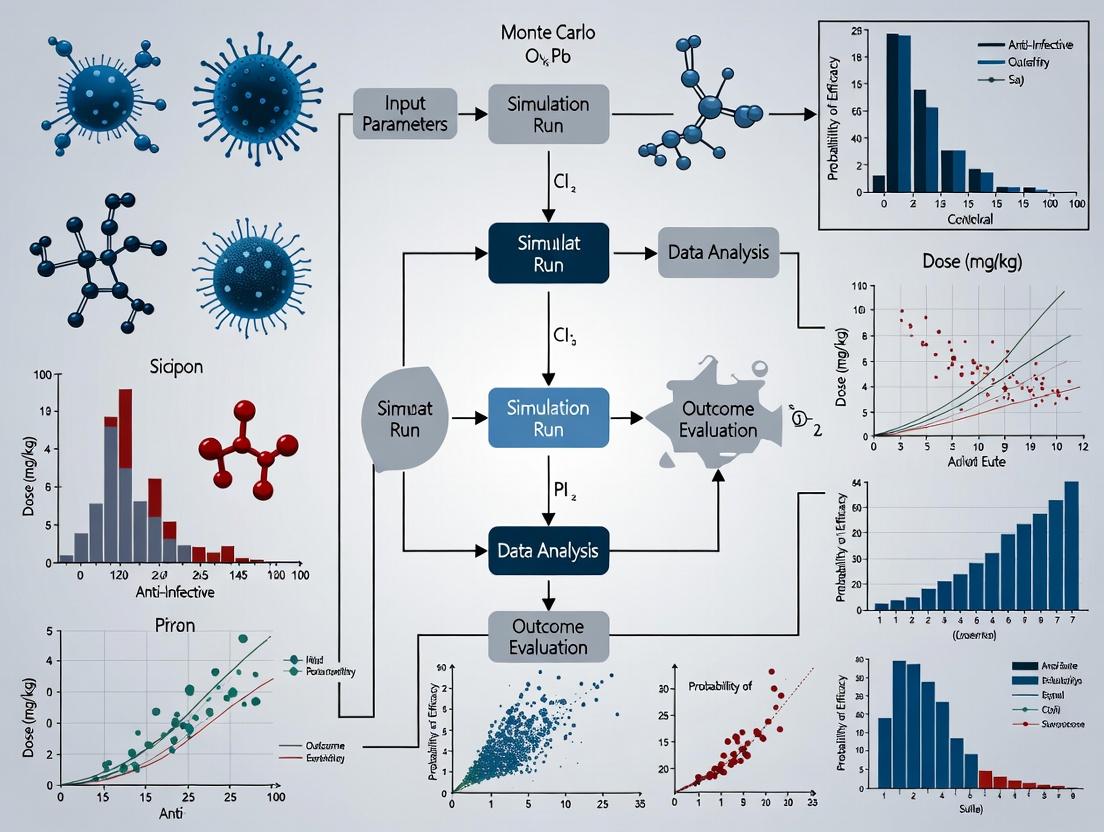
This article provides researchers, scientists, and drug development professionals with a comprehensive guide to applying Monte Carlo simulation (MCS) for optimizing antibiotic dosing regimens.
Revolutionizing Antibiotic Therapy: A Practical Guide to Monte Carlo Simulation for Precision Dose Optimization
Abstract
This article provides researchers, scientists, and drug development professionals with a comprehensive guide to applying Monte Carlo simulation (MCS) for optimizing antibiotic dosing regimens. We first explore the foundational principles of pharmacokinetic/pharmacodynamic (PK/PD) modeling and the necessity of stochastic methods in antimicrobial development. The core methodological section details the step-by-step process of building and executing an MCS, from defining parameter distributions to analyzing target attainment probabilities. We then address common challenges in model development and strategies for optimizing simulations for computational efficiency and clinical relevance. Finally, we examine validation frameworks, compare MCS to alternative trial design methods, and discuss its role in regulatory submissions and clinical guideline development. This guide synthesizes current best practices to empower the design of more effective and resilient antibiotic therapies.
Why Stochastic Models? The PK/PD Foundation of Modern Antibiotic Dose Finding
Deterministic pharmacokinetic/pharmacodynamic (PK/PD) models, which use fixed parameter values to predict drug behavior, are fundamentally limited in addressing the pervasive variability in biological systems. Within the broader thesis on Monte Carlo simulation for antibiotic dose optimization, this application note details why deterministic approaches fall short and how stochastic methods are essential for robust, clinically relevant dose prediction.
Quantifying the Limitations: Deterministic vs. Stochastic Outputs
Table 1: Comparison of Deterministic and Stochastic PK/PD Model Predictions for a Hypothetical Antibiotic
| Metric | Deterministic Model Prediction | Stochastic (Monte Carlo) Model Prediction (Mean ± SD) | Clinical Implication of Discrepancy |
|---|---|---|---|
| PTA for MIC=2 mg/L | 95% (Point Estimate) | 78% ± 12% | Deterministic model overestimates success; risk of underdosing. |
| Cmax (mg/L) | 25.0 | 24.8 ± 8.5 | Fixed estimate masks potential for toxic peaks in subpopulations. |
| Time > MIC (hours) | 32 | 28 ± 10 | Uniform prediction fails to identify patients with insufficient coverage. |
| Estimated Vd (L) | 50 | 50 ± 15 (Lognormal) | Single value ignores variability from weight, fluid status, disease. |
| Target Attainment in Critically Ill | 95% | 65% ± 18% | Deterministic model is blind to extreme variability in special populations. |
PTA: Probability of Target Attainment; MIC: Minimum Inhibitory Concentration; Vd: Volume of Distribution
Core Protocol: Performing a Monte Carlo Simulation for Antibiotic Dose Optimization
Protocol 1: Integrated PK/PD Monte Carlo Simulation Workflow
Objective: To simulate a target patient population's exposure to an antibiotic regimen and calculate the probability of achieving a predefined PK/PD target, accounting for parameter variability and uncertainty.
Materials & Reagents:
- High-performance computing workstation or cluster.
- Statistical software (e.g., R, NONMEM, Phoenix).
- Population PK model parameter estimates (mean, variance-covariance matrix).
- Defined PD target (e.g., %fT>MIC, AUC/MIC).
- Pathogen MIC distribution data (from surveillance studies like SENTRY or EUCAST).
Procedure:
- Define Structural PK Model & Parameters: Select a validated population PK model (e.g., two-compartment with first-order elimination). Define the fixed (typical) parameters (e.g., CL, V1, Q, V2) and the random effect parameters (between-subject variability, BSV, expressed as ω²).
- Define Covariate Relationships: Input mathematical relationships between patient factors (e.g., creatinine clearance, body weight) and PK parameters (e.g., CL). Assign distributions to covariate values in the virtual population.
- Generate Virtual Population: Using random number generation, create a virtual cohort (N=10,000 recommended) by sampling covariate values (e.g., weight from a normal distribution) and individual PK parameters from a multivariate log-normal distribution defined by the typical parameters and the variance-covariance matrix.
- Simulate Drug Exposure: For each virtual subject, simulate concentration-time profiles following the administration of the proposed antibiotic dose regimen.
- Integrate PD Target & MIC Distribution: For each subject, calculate the relevant PK/PD index (e.g., fT>MIC over 24h). Compare this index to a range of MIC values (e.g., 0.125 to 32 mg/L). For each MIC, calculate the proportion of subjects achieving the target (e.g., fT>MIC > 50%).
- Integrate MIC Distribution: Weight the PTA at each MIC by the probability of that MIC in the clinical population (from MIC distribution data). Sum these values to obtain the overall cumulative fraction of response (CFR).
- Iterate & Optimize: Repeat simulations with different dose regimens, infusion durations, or dosing intervals to identify the regimen that maximizes PTA or CFR for the target MIC breakpoint.
Experimental Protocols from Literature
Protocol 2: In Vitro PK/PD Model (One-Compartment Chevron Setup) for Studying Variability Objective: To experimentally validate the impact of PK variability on bacterial killing and resistance suppression.
Materials:
- Chemostat System: Multi-vessel bioreactor allowing independent control of dilution rates to simulate drug half-life.
- Bacterial Strain: Reference and clinically isolated strains of target pathogen (e.g., Pseudomonas aeruginosa).
- Antibiotic Stock Solution: Prepared in appropriate solvent per CLSI guidelines.
- Automated Samplers: For high-frequency sampling of bacterial density and antibiotic concentration.
Procedure:
- Fill each chemostat vessel with pre-warmed, aerated Mueller-Hinton broth. Inoculate to a target density (~10⁸ CFU/mL).
- Program pumps to achieve different dilution rates in each vessel, simulating a range of human drug clearances (e.g., representing normal renal function to augmented renal clearance).
- Administer a bolus of antibiotic to each vessel to achieve a target starting concentration.
- Collect samples from each vessel at predetermined timepoints over 24-48 hours.
- Quantitative Culture: Serially dilute samples, plate on agar, and enumerate CFU/mL to create time-kill curves.
- Resistance Screening: Plate samples on antibiotic-containing agar to quantify resistant subpopulations.
- Analysis: Fit a PD model (e.g., Hill-type) to the time-kill data from each vessel. Corrogate the killing effect with the simulated PK profile (AUC/MIC or %fT>MIC) to demonstrate the variable outcome.
Protocol 3: Protocol for Quantifying Between-Isolate PD Variability Objective: To measure the distribution of MIC and other PD parameters (e.g., killing rate, post-antibiotic effect) across a panel of clinical isolates.
Procedure:
- Select a diverse panel of 100-200 clinical isolates of the same bacterial species.
- Perform broth microdilution MIC testing in triplicate per CLSI M07 standards.
- For a subset of isolates spanning the MIC range, perform static time-kill assays at multiples of MIC (e.g., 0x, 1x, 2x, 4x, 8x MIC).
- Sample at 0, 2, 4, 6, 8, and 24 hours for CFU determination.
- Fit a Sigmoid Emax model to the kill rate data at 6h vs. concentration for each isolate to estimate the isolate-specific maximal kill rate (Emax) and concentration for half-maximal effect (EC50).
- Statistically describe the distributions of MIC, Emax, and EC50 (log-normal, etc.) for input into the Monte Carlo model.
Visualizing Concepts and Workflows
Title: Failure of Deterministic PK/PD Models
Title: Monte Carlo Simulation Workflow for PTA
The Scientist's Toolkit: Research Reagent & Software Solutions
Table 2: Essential Toolkit for Advanced PK/PD & Monte Carlo Studies
| Item / Solution | Function & Application | Example(s) |
|---|---|---|
| Population PK/PD Modeling Software | For developing the base model that quantifies fixed effects, BSV, and residual error. Essential for parameter estimation. | NONMEM, Monolix, Phoenix NLME, Pumas. |
| Scientific Programming Environment | For data wrangling, statistical analysis, running custom simulations, and advanced visualization. | R (with mrgsolve, PopED, ggplot2), Python (with SciPy, NumPy, PyMC). |
| In Vitro PK/PD Model (IVPM) System | Apparatus to simulate human PK profiles in vitro for studying time-dependent antibiotic effects and resistance. | Chemostat or bioreactor systems (e.g., BioFlo); hollow-fiber infection models (HFIM). |
| Liquid Chromatography-Tandem Mass Spectrometry (LC-MS/MS) | Gold standard for quantitative measurement of antibiotic concentrations in complex biological matrices (plasma, tissue). | Enables accurate PK parameter estimation. |
| Clinical MIC Distribution Databases | Source of real-world pathogen susceptibility data to define the PD input for simulations. | EUCAST MIC distributions, SENTRY Antimicrobial Surveillance Program. |
| High-Performance Computing (HPC) Cluster | For running large-scale, computationally intensive Monte Carlo simulations (e.g., 10,000 subjects x 1000 trials). | Accelerates model optimization and robust uncertainty analysis. |
This application note details the core PK/PD principles and experimental protocols for defining targets critical for antibiotic dose optimization. The content is framed within a thesis utilizing Monte Carlo simulation to bridge preclinical targets and clinical efficacy, predicting the probability of target attainment (PTA) and optimizing dosing regimens.
Core PK/PD Indices and Quantitative Targets
Table 1: Primary PK/PD Indices and Target Values for Key Antibiotic Classes
| Antibiotic Class | Primary PK/PD Index | Typical Target for Bacteriostasis (Non-neutropenic) | Typical Target for 1-2 log kill / Maximum Effect | Key Pathogens & Notes |
|---|---|---|---|---|
| β-Lactams (Penicillins, Cephalosporins, Carbapenems) | %fT>MIC | 20-40% | 60-70% | S. aureus, E. coli, P. aeruginosa. Time-dependent killing. |
| Aminoglycosides (Gentamicin, Amikacin) | Cmax/MIC | 8-10 | ≥10 | P. aeruginosa, Enterobacterales. Concentration-dependent killing; post-antibiotic effect (PAE). |
| Fluoroquinolones (Ciprofloxacin, Levofloxacin) | AUC24/MIC | 30-125 | ≥125 | S. pneumoniae, P. aeruginosa. Concentration-dependent. Targets vary by bug-drug combination. |
| Glycopeptides (Vancomycin) | AUC24/MIC | ≥400 (for S. aureus) | N/A | MRSA. AUC/MIC target based on clinical outcomes and nephrotoxicity risk. |
| Oxazolidinones (Linezolid) | AUC24/MIC / %fT>MIC | AUC/MIC 80-120 / %fT>MIC ~85% | N/A | VRE, MRSA. Both indices predictive. |
| Polymyxins (Colistin) | AUC24/MIC | 20-30 (for A. baumannii) | N/A | MDR Gram-negatives. Associated with nephrotoxicity at higher exposures. |
Abbreviations: fT>MIC: Time free drug concentration exceeds MIC; AUC24: Area under the concentration-time curve over 24h; Cmax: Peak concentration.
Experimental Protocols for PK/PD Index Determination
Protocol 3.1: In Vitro Hollow-Fiber Infection Model (HFIM) for Time-Kill Kinetics
Purpose: To simulate human pharmacokinetics in vitro and establish exposure-response relationships (e.g., fT>MIC, AUC/MIC) for antibiotics. Materials: See Scientist's Toolkit. Method:
- System Setup: Fill hollow-fiber cartridge with cation-adjusted Mueller Hinton broth (CA-MHB). Connect to a reservoir containing the same medium. Maintain at 35±2°C.
- Inoculation: Inject a log-phase bacterial suspension (~10^8 CFU) into the extracapillary space (ECS) to achieve ~10^6 CFU/mL.
- Dosing Simulation: Program the bioreactor pump to administer antibiotic from the central reservoir into the ECS, mimicking a human PK profile (e.g., half-life, Cmax).
- Sampling: At predetermined time points (e.g., 0, 1, 2, 4, 8, 24, 48h), aseptically sample from the ECS.
- Quantification: Serially dilute samples, plate on agar, and incubate for 18-24h to determine bacterial density (CFU/mL).
- Analysis: Plot CFU/mL vs. time for each simulated exposure. Determine the exposure (e.g., %fT>MIC) required for stasis and 1-2 log10 kill.
Protocol 3.2: Murine Thigh Infection Model for In Vivo PK/PD Correlation
Purpose: To validate PK/PD index targets and magnitudes in vivo using a neutropenic murine model. Method:
- Animal Preparation: Render mice neutropenic via cyclophosphamide (150 mg/kg, 4 days and 1 day pre-infection).
- Infection: Inoculate both thighs intramuscularly with ~10^6 CFU of the target pathogen.
- Dosing: At 2h post-infection, administer antibiotic via subcutaneous or intraperitoneal injection. Use multiple dose levels and regimens (e.g., q2h for β-lactams to vary %fT>MIC; single dose for aminoglycosides to vary Cmax/MIC).
- PK Sampling: In a parallel satellite group, collect serial blood samples via retro-orbital bleed to determine plasma PK.
- Endpoint: Sacrifice mice at 24h, excise thighs, homogenize, and quantify bacterial burden (CFU/thigh).
- Data Modeling: Fit a sigmoidal Emax model linking the relevant PK/PD index (e.g., log10 AUC24/MIC) to the log10 change in CFU from baseline.
Integration with Monte Carlo Simulation (MCS)
Protocol 4.1: Probability of Target Attainment (PTA) Analysis
Purpose: To integrate preclinical PK/PD targets with population PK variability to assess dosing regimen adequacy. Method:
- Define Target: Select PK/PD target from in vivo studies (e.g., AUC/MIC ≥100 for fluoroquinolones).
- Acquire Population PK Parameters: Obtain mean and variance (ω²) for PK parameters (e.g., Clearance, Volume) from published population PK models.
- Generate Virtual Population: Using MCS software (e.g., NONMEM, R), simulate PK profiles for 5000-10000 virtual subjects receiving the proposed dosing regimen.
- Calculate Individual PK/PD Indices: For each subject, calculate the index (e.g., fAUC24/MIC).
- Compute PTA: Determine the proportion of the virtual population achieving the PK/PD target for a range of MICs (e.g., 0.125 to 32 mg/L).
- Determine Cumulative Fraction of Response (CFR): Weigh the PTA at each MIC by the local/global MIC distribution of the target pathogen.
Table 2: Example MCS Output for Regimen Comparison
| Regimen | PTA at MIC=2 mg/L (%) | PTA at MIC=4 mg/L (%) | PTA at MIC=8 mg/L (%) | CFR vs. E. coli (%) |
|---|---|---|---|---|
| Drug A 500 mg q12h | 98.5 | 85.2 | 30.1 | 92.7 |
| Drug A 750 mg q12h | 99.9 | 96.8 | 65.4 | 98.1 |
| Drug B 1g q24h | 95.0 | 70.3 | 15.0 | 88.5 |
Visualizations
Title: PK/PD Target Optimization via Monte Carlo Simulation
Title: Relationship Between Dosing, PK/PD Indices, and Effect
The Scientist's Toolkit
Table 3: Key Research Reagent Solutions and Materials
| Item | Function in PK/PD Research | Example/Notes |
|---|---|---|
| Hollow-Fiber Bioreactor System | Simulates human PK profiles for bacteria in vitro; critical for determining exposure-response. | CellFlo IV, FiberCell Systems. Allows independent control of dilution and drug infusion rates. |
| Cation-Adjusted Mueller Hinton Broth (CA-MHB) | Standardized growth medium for MIC and HFIM studies; cations affect aminoglycoside & tetracycline activity. | CLSI recommended for broth microdilution. |
| Precision Syringe Pumps | For accurate infusion of antibiotics in HFIM to mimic half-life. | New Era Pump Systems, Chemyx. |
| Population PK Modeling Software | To analyze sparse clinical PK data and derive parameters for MCS. | NONMEM, Monolix, Phoenix NLME. |
| Monte Carlo Simulation Software | To simulate PK in virtual population and compute PTA. | R (mrgsolve, MonteCarlo), SAS, Pumas. |
| Neutropenic Murine Model Supplies | In vivo PK/PD correlation. | Cyclophosphamide for immunosuppression; specific pathogen-free mice. |
| Automated Blood Samplers | For serial PK sampling in small animals without excessive handling. | Culex, BASi. |
| LC-MS/MS System | Gold standard for quantifying antibiotic concentrations in biological matrices (plasma, tissue). | Enables precise PK profile generation. |
Monte Carlo (MC) simulation, a computational technique using random sampling to model complex stochastic systems, provides a critical framework for addressing uncertainty in pharmacological research. Within the broader thesis on "Advanced Computational Methods for Antibiotic Dose Optimization," this primer establishes the foundational stochastic methods essential for predicting pharmacokinetic/pharmacodynamic (PK/PD) outcomes, accounting for inter-individual variability, and ultimately optimizing dosing regimens to combat antibiotic resistance and improve patient outcomes.
Core Principles and Application to Pharmacometrics
Monte Carlo methods rely on the law of large numbers, using repeated random sampling to approximate solutions to problems that may be deterministic in principle but are infeasible to solve analytically due to uncertainty and variability.
Key Application in Antibiotic Research: Pharmacokinetic/Pharmacodynamic (PK/PD) Target Attainment Analysis. This involves simulating the concentration-time profile of an antibiotic in a virtual population and determining the probability of achieving a predefined PK/PD index (e.g., %fT>MIC, AUC/MIC) predictive of clinical efficacy.
Table 1: Key PK/PD Indices and Targets for Major Antibiotic Classes
| Antibiotic Class | Primary PK/PD Index | Typical Target for Efficacy | Pathogen Variability Consideration |
|---|---|---|---|
| β-Lactams (e.g., Penicillins, Cephalosporins) | %fT>MIC (Time free drug concentration > Minimum Inhibitory Concentration) | 40-70% fT>MIC (varies by drug and infection) | MIC distribution from surveillance studies (e.g., EUCAST) |
| Fluoroquinolones | AUC₂₄/MIC (Area Under the Curve over 24h to MIC ratio) | 125-250 for Gram-negatives | Protein binding, resistance mechanisms |
| Aminoglycosides | Cmax/MIC (Peak concentration to MIC ratio) | 8-10 for Gram-negatives | Post-antibiotic effect, renal function |
| Vancomycin | AUC₂₄/MIC | 400-600 (for S. aureus) | Monitoring trough levels, nephrotoxicity risk |
Experimental Protocol: Monte Carlo Simulation for Dose Regimen Evaluation
The following protocol details the steps for conducting a PK/PD target attainment analysis using Monte Carlo simulation.
Protocol Title: In Silico Assessment of Antibiotic Dosing Regimens Using Population PK Models and MIC Distributions.
Objective: To estimate the probability of target attainment (PTA) for a proposed antibiotic dose against a relevant bacterial population.
Materials & Computational Toolkit:
- Software: R (with
mrgsolve,Monolix, orNONMEMfor simulation), Python (withNumPy,SciPy,PyMC3), or specialized software (e.g., Maple, Berkeley Madonna). - Input Data: Population PK model parameters (fixed effects, variance-covariance matrix of random effects), demographic data distributions, protein binding value, MIC distribution data.
Procedure:
- Define the Population PK Model: Select a validated structural model (e.g., two-compartment intravenous) with its parameters (clearance CL, volume V) and between-subject variability (BSV, typically log-normal).
- Define the Virtual Population: Specify the size (N=10,000 recommended) and demographic characteristics (e.g., weight, creatinine clearance distributions) of the virtual patient cohort.
- Parameter Sampling: For each virtual subject, randomly sample individual PK parameters from the multivariate distribution defined by the population PK parameters and their covariance matrix.
- Dosing Regimen Simulation: Simulate the concentration-time profile for each virtual subject receiving the proposed dose and schedule over a defined time horizon.
- Incorporate the Pathogen MIC Distribution: Obtain a relevant MIC distribution (e.g., from the EUCAST database). For each virtual subject, randomly pair their simulated concentration profile with an MIC value sampled from this distribution.
- Calculate PK/PD Index: For each subject-MIC pair, calculate the relevant PK/PD index (e.g., AUC₂₄/MIC).
- Determine Target Attainment: Compare the calculated index to the pre-defined target. Count the subject as a "success" if the target is met or exceeded.
- Compute Probability of Target Attainment (PTA): PTA = (Number of Successes / Total Number of Subjects) * 100%.
- Iterate and Analyze: Repeat the simulation for multiple dosing regimens and MIC values. Plot PTA vs. MIC to create a target attainment profile.
The Scientist's Toolkit: Research Reagent & Computational Solutions
Table 2: Essential Tools for Monte Carlo Simulation in Dose Optimization
| Item / Solution | Function in MC Simulation |
|---|---|
| Population PK Model | Mathematical framework describing drug disposition and its variability in the target patient population. Serves as the core engine for concentration-time profile simulation. |
| Variance-Covariance Matrix (Omega Matrix) | Quantifies the magnitude of random inter-individual variability (BSV) and correlations between PK parameters. Critical for realistic sampling of virtual subjects. |
| EUCAST / CLSI MIC Distribution Data | Provides the real-world distribution of microbial susceptibility. Enables simulation of exposure against a clinically relevant range of pathogen MICs. |
| Statistical Software (R, Python) | Provides the environment for coding the simulation logic, random number generation, statistical analysis, and visualization of results (e.g., PTA curves). |
| High-Performance Computing (HPC) Cluster | Facilitates the execution of large-scale, computationally intensive simulations (e.g., >100,000 subjects, complex models) in a feasible timeframe. |
Visualizing the Workflow and Relationships
Title: Monte Carlo Simulation Workflow for Antibiotic PTA Analysis
Title: Logical Relationship Between Dose, PK/PD, and Outcome
Advanced Application: Optimizing Dosing in Special Populations
A critical extension involves integrating physiological (e.g., renal/hepatic function) and clinical covariates (e.g., albumin levels, disease state) into the population PK model. The MC simulation can then stratify PTA results for sub-populations (e.g., critically ill patients, pediatrics, obese patients), guiding tailored dosing recommendations.
Protocol Addendum for Renal Impairment:
- Establish a PK model where drug clearance (CL) is a function of estimated glomerular filtration rate (eGFR).
- Define the distribution of eGFR in the target virtual sub-population (e.g., CKD Stage 3).
- During parameter sampling, assign an individual eGFR value to each virtual subject, then calculate their individual CL.
- Proceed with the standard protocol. The final output will be a sub-population-specific PTA curve, highlighting the need for dose adjustment in renal impairment.
This primer establishes Monte Carlo simulation as an indispensable, evidence-based tool in modern antibiotic development and therapeutic optimization. By explicitly quantifying the impact of PK variability and pathogen susceptibility on drug exposure, it moves dose selection beyond empirical averages, enabling the design of robust, probabilistically justified dosing strategies that maximize therapeutic success and mitigate resistance development.
Application Notes
In Monte Carlo simulation (MCS) for antibiotic dose optimization, accurately characterizing and integrating sources of inter-patient variability is critical for predicting real-world efficacy and toxicity. These inputs directly inform the probability distributions of pharmacokinetic (PK) and pharmacodynamic (PD) parameters within the simulated population. The three primary sources—Demographics, Organ Function, and Genetics—act as key covariates that explain a significant portion of the variability observed in drug exposure and response.
Demographics (e.g., Age, Body Size, Sex) are foundational covariates. Age impacts renal and hepatic function, while body size (modeled via allometric scaling using total body weight or ideal body weight) is a key determinant of drug clearance (CL) and volume of distribution (Vd). Sex can influence body composition, glomerular filtration rate, and enzymatic activity.
Organ Function, particularly renal and hepatic, is the principal driver of variability in the elimination of most antibiotics. Measured creatinine clearance (CrCl) or estimated glomerular filtration rate (eGFR) is the standard covariate for renal clearance. Hepatic function, though harder to quantify, can be incorporated via biomarkers like albumin or Child-Pugh scores for liver disease.
Genetics explains variability in drug metabolism and transport. For antibiotics, the most salient examples involve genes affecting drug-metabolizing enzymes (e.g., NAT2 for isoniazid, CYP2C19 for voriconazole) or transporters. Polymorphisms can lead to distinct phenotypic subgroups (e.g., Poor, Intermediate, Extensive, Ultra-rapid Metabolizers) which must be assigned appropriate PK parameter distributions within the simulation.
Integrating these inputs into MCS involves a multi-step process: 1) Covariate Model Development: Using population PK/PD analyses to establish quantitative relationships between covariates and PK parameters. 2) Virtual Population Generation: Creating a large (e.g., n=10,000) virtual patient cohort with covariate values sampled from realistic demographic and clinical distributions. 3) Parameter Assignment: Assigning individual PK/PD parameters to each virtual patient based on covariate values, incorporating both the explained (covariate) and residual (unexplained) variability. This approach allows researchers to simulate the probability of achieving PK/PD targets (e.g., fT>MIC, AUC/MIC) across a heterogeneous population and identify optimal dosing strategies for specific subpopulations.
Table 1: Key Covariates and Their Quantitative Impact on Antibiotic Pharmacokinetics
| Covariate Category | Specific Covariate | Typical Quantification Method | Example PK Parameter Affected | Magnitude of Impact (Example) | Key Antibiotic Examples |
|---|---|---|---|---|---|
| Demographics | Total Body Weight (TBW) | Measured (kg) | Clearance (CL), Volume (Vd) | CL = Θ₁ * (TBW/70)^0.75; Vd = Θ₂ * (TBW/70) | Aminoglycosides, Vancomycin |
| Age | Years | CL (renal) | CL = Θ * (CrCl/100) * (Age/40)^-0.3 | Most renally cleared drugs | |
| Sex | Male/Female | Vd (distribution) | Vd ~20% higher in males for hydrophilic drugs | Many (e.g., β-lactams) | |
| Organ Function | Renal Function | Creatinine Clearance (CrCl, mL/min) | Renal CL | CLrenal = Θ * (CrCl/120) | Penicillins, Cephalosporins, Fluoroquinolones |
| Hepatic Function | Child-Pugh Score (A, B, C) | Non-renal CL | CLnr reduced by ~20% (B) and ~50% (C) | Metronidazole, Erythromycin | |
| Genetics | NAT2 Acetylator Status | Genotype (Slow/Intermediate/Rapid) | Acetylation CL | Slow vs. Rapid: >80% difference in CL | Isoniazid |
| CYP2C19 Status | Genotype (PM, IM, EM, UM) | Metabolic CL | PM vs. UM: ~500% difference in CL | Voriconazole | |
| ABCB1 (P-gp) Polymorphisms | SNP (e.g., C3435T) | Oral Bioavailability, Biliary CL | Variability in AUC up to 2-fold | Rifampin, Fexinidazole |
Table 2: Prevalence of Key Genetic Phenotypes in Major Populations
| Gene / Phenotype | Caucasian (%) | East Asian (%) | African (%) | Clinical Relevance for Antibiotics |
|---|---|---|---|---|
| NAT2 Slow Acetylator | 40-60 | 10-20 | 40-60 | Isoniazid toxicity (hepatotoxicity, neuropathy) |
| CYP2C19 Poor Metabolizer | 2-5 | 13-23 | 4-7 | Voriconazole overdose (neurotoxicity, hepatotoxicity) |
| CYP2C19 Ultra-rapid Metabolizer | 2-5 | <1 | 10-20 | Voriconazole therapeutic failure |
| G6PD Deficiency (A- variant) | <1 | <1 | 10-15 | Hemolytic anemia with sulfonamides, nitrofurantoin |
Experimental Protocols
Protocol 1: Population Pharmacokinetic (PopPK) Model Building for Covariate Identification
Objective: To develop a mathematical model describing the population mean PK, inter-individual variability (IIV), and residual error, and to identify significant demographic, organ function, and genetic covariates.
Materials: Rich or sparse PK sampling data from a clinical study; NONMEM, Monolix, or R/Python (nlmixr, Pumas) software; covariate dataset.
Procedure:
- Base Model Development:
- Fit structural PK models (e.g., 1- or 2-compartment) to the data.
- Estimate population typical values (e.g., TVCL, TVVd).
- Add IIV to parameters using exponential error models (e.g., CLᵢ = TVCL * exp(ηᵢ)).
- Select base model using goodness-of-fit plots and objective function value (OFV).
Covariate Model Development:
- Plot empirical Bayes estimates of IIV (η) against candidate covariates.
- Test covariate relationships using forward inclusion (ΔOFV > -3.84, p<0.05) and backward elimination (ΔOFV > +6.63, p<0.01).
- Test continuous (linear, power, exponential) and categorical relationships.
- Apply allometric scaling using TBW (power 0.75 for CL, 1 for Vd) as a standard.
Model Evaluation:
- Perform visual predictive checks (VPC) and bootstrap diagnostics.
- Finalize the model that best explains variability with biological plausibility.
Protocol 2: In Vitro Assessment of Genetic Variant Impact on Enzyme Activity
Objective: To determine the kinetic parameters (Km, Vmax) of a drug-metabolizing enzyme for a wild-type vs. a genetic variant.
Materials: cDNA-expressed human enzymes (wild-type and variant); antibiotic substrate; NADPH regeneration system; liquid chromatography-tandem mass spectrometry (LC-MS/MS).
Procedure:
- Reaction Incubation:
- Prepare incubation mixtures containing enzyme, MgCl₂, and substrate at 8-10 concentrations (spanning expected Km).
- Pre-incubate at 37°C for 5 min.
- Initiate reaction by adding NADPH regeneration system.
- Terminate reaction at multiple time points with ice-cold acetonitrile.
Analytical Quantification:
- Centrifuge samples, dilute supernatant, and inject into LC-MS/MS.
- Quantify metabolite formation using a calibrated standard curve.
Data Analysis:
- Plot metabolite formation rate vs. substrate concentration.
- Fit data to Michaelis-Menten equation (V = (Vmax * [S]) / (Km + [S])) using non-linear regression.
- Compare Km and Vmax (or Clint = Vmax/Km) between wild-type and variant enzymes.
Diagrams (Graphviz DOT)
Diagram 1: Integrating Variability Sources in Monte Carlo Simulation
Diagram 2: Pharmacogenomic Impact on Drug Metabolism Pathway
The Scientist's Toolkit
Table 3: Key Research Reagent Solutions for Variability Studies
| Item / Solution | Function & Application in Variability Research | Example Product/Assay |
|---|---|---|
| Recombinant Human Enzymes | In vitro characterization of genetic variant impact on drug metabolism kinetics (Km, Vmax). | Corning Gentest Supersomes (CYP450s, UGTs, NATs). |
| Transfected Cell Lines | Study of genetic polymorphisms in drug transporters (e.g., P-gp, OATP) on cellular uptake/efflux. | MDCKII or HEK293 cells overexpressing variant transporters. |
| Phenotyping Probe Kits | For in vivo or in vitro assessment of specific enzyme activity (e.g., CYP450) in human samples. | BioIVT CYP450 Cocktail (Phenotyping Substrates). |
| TaqMan Genotyping Assays | Accurate and high-throughput determination of patient genetic status for key polymorphisms. | Thermo Fisher Scientific TaqMan SNP Genotyping Assays. |
| Human Liver Microsomes (HLM) | Pooled or individual donor HLMs for assessing inter-individual variability in metabolic clearance. | XenoTech Human Liver Microsomes (from characterized donors). |
| Stable Isotope-Labeled Internal Standards | Essential for precise and accurate quantification of drugs and metabolites in biological matrices via LC-MS/MS. | Cambridge Isotope Laboratories (e.g., ¹³C₆-, D₄- labeled compounds). |
| Population PK/PD Software | Industry-standard tools for covariate model development and simulation. | Certara NONMEM, Lixoft Monolix, R (nlmixr2). |
| Physiologically-Based PK (PBPK) Software | To simulate and extrapolate PK incorporating physiology, genetics, and drug properties. | Certara Simcyp Simulator, GastroPlus. |
Monte Carlo Simulation (MCS) has evolved from a research tool to a regulatory expectation in antimicrobial drug development. Both the U.S. Food and Drug Administration (FDA) and the European Medicines Agency (EMA) explicitly endorse its use for designing optimal dosing regimens that maximize efficacy while minimizing resistance and toxicity. This application note details the protocols and data frameworks necessary to align with these regulatory guidelines, supporting the broader thesis that MCS is indispensable for translating pharmacokinetic/pharmacodynamic (PK/PD) targets into clinically effective antibiotic doses.
Key Regulatory Directives & Quantitative Targets
Current guidelines emphasize using PK/PD indices (e.g., %ƒT>MIC, ƒAUC/MIC) and Population PK models to simulate drug exposure. MCS is mandated to account for variability in PK parameters in the target patient population to achieve a high probability of target attainment (PTA) and a low probability of toxicity.
Table 1: Core PK/PD Targets and Regulatory Expectations from FDA & EMA Guidelines
| PK/PD Index | Typical Target (Bacteria-Dependent) | Regulatory PTA Benchmark | Guidance Source |
|---|---|---|---|
| %ƒT>MIC (Time-Dependent) | 40-70% of dosing interval | ≥90% PTA at approved dose | EMA CPMP/EWP/558/95, FDA Guidance 2013 |
| ƒAUC₀₂₄/MIC (Concentration-Dependent) | 30-400 (varies by bug/drug) | ≥90% PTA at approved dose | FDA Guidance 2013 |
| Cmax/MIC | 8-12 (for aminoglycosides) | Consider for efficacy & resistance suppression | Both Agencies |
| Cumulative Fraction of Response (CFR) | ≥90% for empiric therapy | Key for dose justification against wild-type populations | EMA Addendum (2019) |
Table 2: Critical Population Parameters for MCS Input
| Parameter | Description | Source Requirement |
|---|---|---|
| Mean & Variance of PK Parameters | e.g., Clearance (CL), Volume (V) | From population PK study in intended patient population |
| Covariates | e.g., Renal function, Body Weight | Must be incorporated to reflect sub-populations |
| Protein Binding (ƒ) | Measured, unbound fraction | Critical for deriving ƒAUC or ƒT>MIC |
| MIC Distribution | ≥1000 isolates per pathogen | From recognized surveillance programs (e.g., EUCAST, CLSI) |
Application Note: MCS Workflow for Regulatory Submission
This protocol outlines the end-to-end process for performing a regulatory-standard MCS analysis.
Title: Integrated MCS Workflow for Antimicrobial Dose Selection and Justification
Aim: To determine the dose that achieves ≥90% PTA for the relevant PK/PD target across the target patient population and pathogen MIC distribution.
Protocol:
- Define PD Target & Patient Population: Select the PK/PD index and target value based on the antibiotic's mechanism (see Table 1). Define the patient population (e.g., community-acquired pneumonia, complicated UTI).
- Develop Population PK Model: Using nonlinear mixed-effects modeling (e.g., NONMEM), develop a model from phase I/II data. The final model must include identified covariates (renal function, BMI).
- Acquire MIC Distribution: Obtain a recent, geographically relevant MIC distribution for the target pathogen(s) from a surveillance database. A minimum of 1000 isolates is recommended.
- Set Up MCS (10,000 Subjects):
- For each virtual subject, sample PK parameters (CL, V) from the multivariate distribution defined by the PopPK model's parameter estimates and variance-covariance matrix.
- For each virtual subject, simulate plasma concentration-time profiles for multiple candidate doses.
- Calculate PK/PD Index & PTA: For each dose and each MIC in the distribution, calculate the achieved PK/PD index for every virtual subject. Determine PTA as the proportion of subjects achieving the target at that MIC.
- Calculate Cumulative Fraction of Response (CFR): Integrate the PTA over the entire MIC distribution: CFR = Σ [PTA(MIC) * Frequency(MIC)]. A CFR ≥90% supports empiric therapy.
- Safety Boundary Analysis: Conduct a parallel MCS for key safety endpoints (e.g., peak concentration for aminoglycoside toxicity). Define a probability of toxicity threshold (e.g., <5%).
- Dose Recommendation: Select the dose regimen that achieves dual criteria: PTA ≥90% at the susceptibility breakpoint and CFR ≥90% and probability of toxicity <5%.
Visualizing the MCS Regulatory Pathway
Title: MCS-Driven Dose Justification Pathway for Regulatory Submissions
Title: PTA and CFR Calculation Workflow from MCS Output
The Scientist's Toolkit: Essential Research Reagents & Solutions
Table 3: Key Reagents & Materials for MCS-Supported Antimicrobial PK/PD Studies
| Item / Solution | Function in Protocol | Critical Specification / Note |
|---|---|---|
| Nonlinear Mixed-Effects Modeling Software (NONMEM, Monolix) | Building the population PK model that provides parameter distributions for MCS. | Industry regulatory standard; requires validated installation. |
| MCS Engine (R, SAS, Pumas, Crystal Ball) | Platform for performing the 10,000-subject simulation and PTA/CFR calculations. | Must handle correlated parameter sampling from variance-covariance matrix. |
| EUCAST or CLSI MIC Database | Source of pathogen-specific MIC distributions for CFR calculation. | Must be contemporary (last 3-5 years) and regionally relevant. |
| Validated LC-MS/MS Assay | Quantifying antibiotic concentrations in biological matrices for PopPK model development. | Validation must meet FDA/EMA bioanalytical method guidelines. |
| Protein Binding Assay (e.g., Ultrafiltration) | Determining the unbound fraction (ƒ) of drug in plasma. | Critical for calculating ƒAUC or ƒT>MIC. |
| Virtual Patient Population Simulator | Generating realistic demographic/covariate distributions for MCS (e.g., renal function). | Should mirror the intended trial patient population. |
Building the Simulation: A Step-by-Step Framework for MCS Implementation
In Monte Carlo simulation (MCS) research for antibiotic dose optimization, the initial and most critical step is the mathematical definition of the population pharmacokinetic (PK) model. This model quantifies the typical time course of drug concentrations in plasma and tissues, accounting for inter-individual variability (IIV) and inter-occasion variability. A precisely defined model with its parameter distributions forms the structural foundation for all subsequent simulations that predict target attainment rates for various dosing regimens against bacterial pathogens.
Core Structural Model Selection
The structural model describes the deterministic relationship between time and drug concentration. For antibiotics, common models include:
- One-Compartment Model: Describes the body as a single, homogeneous volume of distribution (V). Applied to drugs with rapid distribution.
- Two-Compartment Model: Comprises a central compartment (plasma) and a peripheral compartment (tissues). Essential for drugs like vancomycin and aminoglycosides that exhibit biphasic decline.
- Three-Compartment Model: Used for drugs with complex, multi-phasic distribution (e.g., some beta-lactams in specific populations).
The choice is guided by diagnostic plots (observed vs. predicted concentrations, residuals), scientific plausibility, and the Akaike/Bayesian Information Criterion (AIC/BIC).
Parameterizing the Population: Fixed & Random Effects
Population parameters are expressed as a combination of fixed effects (typical values, θ) and random effects (variances and covariances, Ω).
- Fixed Effects (θ): The typical value of a PK parameter for an individual with median covariate values (e.g., CL for a 70kg adult with normal renal function).
- Random Effects (η): Quantify the deviation of an individual's parameter from the typical value. These are assumed to be normally distributed with a mean of 0 and a variance of ω². The IIV is often expressed as a coefficient of variation (%CV).
Standard Model Formulation
For an individual i, a PK parameter Pᵢ (e.g., clearance, CL) is modeled as:
Pᵢ = θₚ × exp(ηᵢ)
where ηᵢ ~ N(0, ω²). This exponential error model ensures Pᵢ is always positive. The variance-covariance matrix Ω collects the variances (ω²) and covariances of the η's for all parameters.
Defining the Variance-Covariance Matrix (Ω)
Ω is a symmetric k x k matrix, where k is the number of random-effect parameters. It defines the IIV and potential correlations between parameters.
| Matrix Element | Description | Interpretation |
|---|---|---|
| Diagonals (ω²jj) | Variance of the η for parameter j. | IIV for parameter j. Calculated as ω (standard deviation) or %CV = 100% × √(exp(ω²) - 1). |
| Off-Diagonals (ωjk) | Covariance between η for parameter j and parameter k. | Describes correlation (e.g., between CL and V). Often re-parameterized as a correlation coefficient (ρ). |
Example Ω Matrix for a Two-Compartment IV Model: Parameters: CL (Clearance), V1 (Central Volume), Q (Inter-compartmental Clearance), V2 (Peripheral Volume)
| Parameter | CL (ω²CL) | V1 (ωCL,V1) | Q (ωCL,Q) | V2 (ωCL,V2) |
|---|---|---|---|---|
| CL | 0.12 | 0.06 | 0.01 | 0.02 |
| V1 | 0.06 | 0.18 | 0.00 | 0.03 |
| Q | 0.01 | 0.00 | 0.25 | 0.00 |
| V2 | 0.02 | 0.03 | 0.00 | 0.20 |
Values are example variances (diagonal, in (L/h)² or L² units) and covariances (off-diagonal).
Incorporating Covariate Relationships
Covariates (e.g., weight, renal function) explain a portion of IIV and improve predictive performance. Relationships are incorporated into the typical value parameter model.
Common Covariate Model Forms:
| Covariate (Cov) | Model Form | Application Example |
|---|---|---|
| Body Size (WT) | P = θₚ × (WT / 70) ^ θ<sub>WT</sub> |
Allometric scaling of CL and V. |
| Renal Function (CRCL) | CL = θ<sub>nonrenal</sub> + θ<sub>renal</sub> × (CRCL / 120) |
Tobramycin clearance. |
| Age (AGE) | P = θₚ × exp(θ<sub>AGE</sub> × (AGE - 40)) |
Maturation function in pediatrics. |
| Categorical (e.g., CYP genotype) | P = θₚ × (1 + θ<sub>mut</sub> × IND) |
Where IND = 1 for mutant, 0 for wild-type. |
Defining Residual Unexplained Variability (RUV)
RUV accounts for model misspecification, assay error, and intra-individual variability. It is often modeled as a proportional, additive, or combined error.
For observation yᵢⱼ at time j for individual i:
yᵢⱼ = IPREDᵢⱼ × (1 + ε₁ᵢⱼ) + ε₂ᵢⱼ
where ε₁, ε₂ ~ N(0, σ²). The variance σ² is estimated.
Experimental Protocol: PopPK Model Development & Estimation
Objective: To develop and estimate a population PK model from rich or sparse concentration-time data.
Materials & Software:
- Pharmacokinetic concentration-time dataset.
- Nonlinear Mixed-Effects Modeling software (e.g., NONMEM, Monolix, Phoenix NLME).
- Diagnostic plotting software (e.g., R, Python).
Procedure:
- Data Assembly: Prepare dataset with columns: ID, TIME, DV (drug concentration), AMT (dose), EVID (event identifier), RATE (infusion rate), and covariates (WT, CRCL, etc.).
- Exploratory Data Analysis (EDA): Plot concentration vs. time, stratified by covariates. Identify potential structural models.
- Base Model Development: a. Code the structural PK model (e.g., 2-compartment differential equations). b. Initially assume no covariate effects and diagonal Ω matrix (no correlations). c. Estimate fixed effects (θ) and random effects (ω, σ) using maximum likelihood methods (e.g., FOCE-I). d. Evaluate model using objective function value (OFV), parameter precision, and diagnostic plots.
- Covariate Model Building: a. Perform forward inclusion: Add covariate relationships one-by-one. Retain if ΔOFV > -3.84 (p<0.05, χ², df=1). b. Perform backward elimination: Remove covariates one-by-one from the full model. Keep if removal causes ΔOFV < +6.63 (p<0.01, χ², df=1).
- Model Refinement: Test full variance-covariance matrix structure. Evaluate alternative RUV models.
- Model Validation: Perform visual predictive check (VPC) or bootstrap to assess predictive performance.
The Scientist's Toolkit: Research Reagent Solutions
| Item | Function in PopPK Analysis |
|---|---|
| Nonlinear Mixed-Effects Modeling Software (NONMEM) | Industry-standard platform for population PK/PD model development and parameter estimation. |
Pharmacometric Scripting Environment (R with nlmixr2, xpose, ggPMX) |
Open-source environment for model diagnostics, visualization, and complementary estimation. |
| High-Performance Computing (HPC) Cluster or Cloud Instance | Accelerates long run-times for complex models, bootstraps, and simulation scenarios. |
| Clinical Data Management System (CDISC compliant) | Ensures standardized, high-quality input datasets (in .csv or specific software format). |
| Model Diagnosis Suite (e.g., Perl speaks NONMEM, Pirana) | Facilitates workflow management, run organization, and automated graphics generation. |
Visualizations
Diagram 1: PopPK Model Development & Estimation Workflow
Diagram 2: Structure of a Two-Compartment PK Model
Diagram 3: Relationship between Fixed Effects, IIV, and Individual Parameters
Application Notes
Within a thesis on Monte Carlo simulation for antibiotic dose optimization, this step is foundational. It involves integrating real-world microbiological surveillance data on the Minimum Inhibitory Concentration (MIC) distribution of target pathogens against a specific antibiotic. This transforms the simulation from a theoretical exercise into a model reflective of the clinical epidemiology a drug will encounter. EUCAST (European Committee on Antimicrobial Susceptibility Testing) and CLSI (Clinical & Laboratory Standards Institute) are the primary sources for standardized, high-quality MIC distribution data.
These MIC distributions represent the probability component of the pharmacokinetic/pharmacodynamic (PK/PD) target attainment Monte Carlo simulation. By sampling randomly from this distribution—paired with the PK parameter distributions—the simulation calculates the likelihood of achieving a PK/PD target (e.g., %fT>MIC) across a population of virtual patients and pathogens.
Table 1: Key Attributes of EUCAST vs. CLSI MIC Distribution Data
| Attribute | EUCAST | CLSI |
|---|---|---|
| Primary Data Source | EUCAST MIC Distribution Website | CLSI M39 / M100 Reports; ASM JCM Data |
| Data Format | Species/Agent-specific MIC distributions (counts at each 2-fold dilution) | Species/Agent-specific MIC distributions (counts at each 2-fold dilution) |
| Scope | Global, with emphasis on European data | Global, with emphasis on North American data |
| Update Frequency | Continuous, annual summary releases | Periodic (e.g., M100 annual update) |
| Clinical Breakpoints | Integrated with distribution tables | Published separately in M100 |
| Access | Freely available online | Some data freely available; detailed reports may require purchase |
Table 2: Example MIC Distribution for Pseudomonas aeruginosa vs. Meropenem (Hypothetical Composite Data)
| MIC (mg/L) | Number of Isolates | Cumulative Percentage (%) |
|---|---|---|
| ≤0.12 | 5 | 0.5 |
| 0.25 | 15 | 2.0 |
| 0.5 | 80 | 10.0 |
| 1 | 200 | 30.0 |
| 2 | 350 | 65.0 |
| 4 | 200 | 85.0 |
| 8 | 100 | 95.0 |
| 16 | 40 | 99.0 |
| ≥32 | 10 | 100.0 |
| Total N | 1000 |
Experimental Protocols
Protocol 1: Sourcing and Curating MIC Distribution Data from EUCAST/CLSI
Objective: To acquire, validate, and format a pathogen-antibiotic MIC distribution for use in Monte Carlo simulation. Materials: * Computer with internet access and statistical software (R, Python, SAS). Procedure: 1. Data Identification: Navigate to the EUCAST MIC distribution website (https://mic.eucast.org) or the CLSI resources. Locate the data table for the target antibiotic and bacterial species (e.g., Escherichia coli and Ceftriaxone). 2. Data Extraction: Manually transcribe or use web scraping tools (where permitted) to extract the MIC values (e.g., 0.125, 0.25, 0.5...) and the corresponding number of isolates reported at each dilution. Include entries for "≤" the lowest and "≥" the highest MIC. 3. Data Validation: Sum the isolate counts to confirm the total N. Cross-reference the distribution shape (modal MIC) with recent published literature to ensure plausibility. 4. Data Transformation: Convert the count data into a discrete probability distribution. * Calculate the probability for each MIC value: P(MICᵢ) = (Number of isolates at MICᵢ) / (Total N). * For "≤lowest" or "≥highest" MICs, assign them to the respective extreme MIC values (e.g., "≤0.12" → 0.12 mg/L) for sampling purposes. Document this assumption. 5. Formatting for Simulation: Create a two-column input file for your simulation software: * Column 1: MIC value (mg/L). * Column 2: Probability (or cumulative probability for efficient sampling).
Protocol 2: Integrating the MIC Distribution into a Monte Carlo Simulation Framework
Objective: To program the random sampling from the MIC distribution within a PK/PD Monte Carlo simulation. Materials:
- Statistical software (e.g., R with
data.table,ggplot2packages). - Formatted MIC distribution data from Protocol 1.
- Population PK parameter distributions (Mean, Variance-Covariance matrix). Procedure:
- Define Simulation Size: Determine the number of virtual subjects (e.g., n=10,000).
- Initialize Data Structures: Create arrays or data frames to store, for each virtual subject: sampled PK parameters, sampled MIC, and calculated PK/PD index.
- Loop for Each Virtual Subject: a. Sample MIC: Randomly select one MIC value from the discrete probability distribution constructed in Protocol 1, using a method like inverse transform sampling. b. Sample PK Parameters: From the multivariate log-normal distribution of PK parameters (e.g., Clearance, Volume), draw one correlated set of values. c. Calculate PK/PD Index: Using the sampled PK parameters, simulate a PK profile (e.g., via equation for a 1-compartment IV model). Calculate the relevant PK/PD index (e.g., fAUC/MIC or %fT>MIC) for the sampled MIC. d. Store Results.
- Calculate Target Attainment: After the loop, compare the calculated PK/PD index for all subjects against the pre-defined target value (e.g., %fT>MIC > 60%). Calculate the fraction of subjects achieving the target as the Probability of Target Attainment (PTA).
- Dose Optimization Analysis: Repeat the simulation (Steps 2-4) for different dosing regimens (e.g., 1g q8h, 2g q12h). Plot PTA vs. MIC to generate a target attainment profile and identify the optimal regimen.
Mandatory Visualization
Workflow for MIC Data Integration in PK/PD Monte Carlo Simulation
The Scientist's Toolkit
Table 3: Research Reagent Solutions for MIC Distribution Analysis
| Item | Function/Description |
|---|---|
| EUCAST MIC Distribution Website | Primary, freely accessible source for global, species- and agent-specific MIC frequency data. Essential for epidemiological input. |
| CLSI M100 / M39 Documents | Authoritative standards providing MIC distributions and clinical breakpoints, crucial for region-specific (e.g., US) analyses. |
| Statistical Software (R/Python) | Required for data curation, probability distribution fitting, and implementing the Monte Carlo sampling algorithm. |
| Web Scraping Tool (e.g., rvest in R) | Facilitates efficient, accurate extraction of tabular MIC data from online sources into analyzable formats. |
| Population PK Model File | Contains the structural model, fixed and random effect parameters defining the drug's pharmacokinetics in the target patient population. |
| Clinical PK/PD Target Value | The benchmark (e.g., 60% fT>MIC for beta-lactams) against which simulated outcomes are compared to determine PTA. |
Application Notes Within Monte Carlo simulation (MCS) frameworks for antibiotic dose optimization, setting PK/PD breakpoints and Probability of Target Attainment (PTA) goals is the critical translational step. This process bridges population pharmacokinetic (PK) models, in vitro pharmacodynamic (PD) targets, and clinical outcome data to define a rational exposure target and evaluate candidate dosing regimens. Unlike traditional MIC-based breakpoints, this approach incorporates the full variability of PK and MIC distribution to predict the likelihood of treatment success.
The primary output is the PK/PD breakpoint, defined as the highest minimum inhibitory concentration (MIC) at which a dosing regimen achieves a predefined PTA goal (typically ≥90%) against a target population of pathogens. This is a regimen-specific breakpoint for a given patient population and PD target.
Key Quantitative Data & Targets
Table 1: Common PK/PD Index Targets for Bactericidal Activity
| Antibiotic Class | Primary PK/PD Index | Typical Target for Bactericidal Activity | Common PTA Goal |
|---|---|---|---|
| Fluoroquinolones | AUC₂₄/MIC | 100-125 (Gram-negatives) | ≥90% |
| Aminoglycosides | Cmax/MIC | 8-12 | ≥90% |
| β-lactams (Time-dependent) | %fT>MIC | 40-70% of dosing interval | ≥90% |
| Glycopeptides | AUC₂₄/MIC | 400 (Vancomycin for MRSA) | ≥90% |
| Lipopeptides | AUC₂₄/MIC | Varies by pathogen | ≥90% |
Table 2: Inputs for PTA Analysis and PK/PD Breakpoint Determination
| Input Component | Description | Example Source/Data |
|---|---|---|
| Population PK Model | Structural model & estimates of between-subject variability (BSV) in PK parameters (CL, Vd). | Published NONMEM models from target patient population (e.g., critically ill, obese, pediatrics). |
| MIC Distribution | The frequency distribution of MICs for target pathogen(s). | Standardized databases (e.g., EUCAST, CLSI). |
| PK/PD Target | The exposure value (e.g., %fT>MIC) linked to clinical/microbiological efficacy. | Pre-clinical infection models or clinical outcome studies. |
| PTA Threshold | The minimum acceptable probability of target attainment. | Usually 90% for serious infections. |
| Dosing Regimen(s) | The candidate dose, route, frequency, and infusion duration to be simulated. | Proposed regimen for clinical testing. |
Experimental Protocol: Determining a PK/PD Breakpoint via Monte Carlo Simulation
Protocol Title: Integrated MCS Workflow for PK/PD Breakpoint and PTA Calculation.
Objective: To determine the regimen-specific PK/PD breakpoint and PTA profile for a proposed beta-lactam dosing regimen in a virtual population of critically ill patients.
Materials (Research Reagent Solutions)
- Software: MCS-capable software (e.g.,
Rwithmrgsolve/PopED,NONMEM, Phoenix WinNonlin). - PK Model: A published two-compartment population PK model for meropenem in critically ill patients (with parameter estimates and variance-covariance matrix).
- PD Data: An established %fT>MIC target of 40% for stasis and 100% for 1-log kill against Pseudomonas aeruginosa.
- MIC Data: A contemporary MIC distribution for P. aeruginosa (e.g., from the SENTRY database, n=1000 isolates).
- Computational Environment: Standard workstation (e.g., 16+ GB RAM, multi-core processor).
Methodology:
- Define Simulation Framework:
- Fix the candidate dosing regimen (e.g., Meropenem 2g IV q8h, 3h infusion).
- Set the PD target (e.g., %fT>MIC ≥ 40%).
- Define the PTA success threshold (≥90%).
- Define the range of MICs to evaluate (e.g., 0.125 to 64 mg/L, doubling dilutions).
Generate Virtual Population:
- Simulate a virtual population (N=10,000) representative of the target patient cohort (e.g., critically ill with varying renal function).
- For each virtual subject, stochastically generate a set of PK parameters (CL, V1, Q, V2) by sampling from a multivariate normal distribution defined by the population PK model's parameter estimates and their variance-covariance matrix (accounting for correlations).
Simulate Drug Exposure:
- For each virtual subject at each MIC value, simulate the concentration-time profile over 24-72 hours at steady-state using the individual's PK parameters and the defined dosing regimen.
- Calculate the achieved PK/PD index (e.g., %fT>MIC) for that subject-MIC pair.
Calculate PTA:
- At each MIC, determine the proportion of the 10,000 subjects whose calculated PK/PD index meets or exceeds the defined PD target.
- This proportion is the PTA at that specific MIC.
- Plot PTA (%) versus MIC.
Determine PK/PD Breakpoint:
- Identify the highest MIC at which the PTA remains ≥90% (the PTA threshold).
- This MIC value is the PK/PD breakpoint for the specific regimen, population, and PD target.
- Optional: Repeat steps 1-5 for alternative dosing regimens (e.g., prolonged infusions, different doses) to compare their breakpoints and PTA profiles.
Incorporate MIC Distribution (Cumulative Fraction of Response - CFR):
- Extend the analysis by weighting the PTA at each MIC by the actual frequency of that MIC in the observed pathogen distribution.
- Calculate the Cumulative Fraction of Response: CFR = Σ [PTA(MICi) * F(MICi)], where
F(MIC_i)is the fraction of isolates at that MIC. - The CFR represents the overall expected population probability of target attainment.
Visualizations
PTA and PK/PD Breakpoint Determination Workflow
PTA vs MIC Curve with Breakpoint
This Application Note details the execution phase of a Monte Carlo Simulation (MCS) within a broader thesis on antibiotic dose optimization. It provides protocols for determining simulation trials, defining dosing regimens, and implementing models using standard pharmacometric software. The goal is to generate robust predictions of target attainment for various dosing strategies against a resistant pathogen population.
Determining the Number of Trials
The number of MCS trials must be sufficient to ensure stability and precision in the estimated probability of target attainment (PTA).
Protocol 1.1: Empirical Stability Assessment
- Define a Key Output: Select a primary endpoint (e.g., PTA for a specific dose/regimen at a critical MIC value like 4 mg/L).
- Run Sequential Batches: Execute the MCS in batches (e.g., 5 batches of 2,000 subjects each).
- Calculate Cumulative PTA: After each batch, compute the cumulative PTA across all simulated subjects so far.
- Assess Convergence: Plot cumulative PTA against the cumulative number of subjects. The number of trials is deemed sufficient when the PTA fluctuates by less than ±0.5% over the last several batches. For most antibiotic PTA studies, 5,000 to 10,000 simulated subjects per regimen provide stable estimates.
Table 1: Recommended Minimum Trials for PTA Stability
| Simulation Complexity | Typical Minimum Trials (Subjects) | Rationale |
|---|---|---|
| Single Dose, Steady-State PK | 5,000 | Stable estimates for standard regimens. |
| Complex PD (e.g., time-dependent killing) | 8,000 - 10,000 | Accounts for variability in PK/PD index time courses. |
| Rare Subpopulation (e.g., renal impairment) | 10,000+ | Ensures adequate sampling of the tail of the distribution. |
Defining Dosing Regimens for Simulation
Regimens should reflect both clinical standards and innovative strategies for challenging infections.
Protocol 2.1: Dosing Regimen Construction for MCS
- Identify Comparator Regimens: Include FDA/EMA-approved doses for the infection type (e.g., meropenem 1g IV q8h, 1-hour infusion).
- Design Optimized Regimens: Propose pharmacodynamically optimized regimens based on preclinical data. Examples include:
- Prolonged Infusion: e.g., Meropenem 2g IV q8h, 3-hour infusion.
- Loading Dose + Extended Infusion: e.g., Loading dose of 2g over 30 min, followed by 4g continuous infusion over 24h.
- Renal-Adjusted Doses: Implement using the estimated creatinine clearance distribution from the virtual population.
- Define Simulation Matrix: Create a cross of all regimens against a relevant MIC distribution (e.g., 0.125 to 32 mg/L, doubling dilutions).
Table 2: Example Dosing Regimen Matrix for a Beta-Lactam Antibiotic
| Regimen ID | Dose | Infusion Duration | Dosing Interval | Simulated Scenarios |
|---|---|---|---|---|
| R1 (Standard) | 1 g | 1 h | 8 h | Normal Renal Function, Critically Ill |
| R2 (HI Dose) | 2 g | 1 h | 8 h | Normal Renal Function, Critically Ill |
| R3 (Prolonged) | 2 g | 3 h | 8 h | Normal Renal Function, Critically Ill |
| R4 (CI) | LD: 2g (0.5h), MI: 4g/24h | Continuous | - | Critically Ill (only) |
Software Tools: Implementation Protocols
Protocol 3.1: MCS Execution using NONMEM
- Model File ($EST): Use the
$EST METHOD=IMP INTERACTION MSFO=msf.filefor final parameter estimation. For simulation, use$EST MAXEVAL=0 METHOD=ZERO MSFO=msf.fileto read previous estimates without re-estimating. - Simulation Control ($SIM): Specify
(12345) UNIFORMfor seed,ONLYfor simulation-only run, andNSUBPROBLEMS=10000for the number of trials. - Output Definition ($TABLE): Output the PK/PD index (e.g., %fT>MIC) for each simulated subject at each MIC. Use a post-processing script (e.g., in R) to calculate PTA.
Protocol 3.2: MCS Execution using R (mrgsolve/popr)
The Scientist's Toolkit: Key Research Reagent Solutions
Table 3: Essential Software & Computational Tools
| Tool / Reagent | Function & Application |
|---|---|
| NONMEM | Industry-standard for nonlinear mixed-effects modeling; core engine for population PK and simulation. |
| R (with popr/mrgsolve) | Open-source platform for statistical computing, data manipulation, and flexible, script-driven MCS. |
| Phoenix NLME | Commercial GUI-based platform integrating PK/PD modeling, simulation, and data visualization workflows. |
| Pirana | Modeling workflow manager and interface for NONMEM, facilitating run management and result summarization. |
| Perl-speaks-NONMEM (PsN) | Toolkit for automating NONMEM runs, executing bootstrap, VPC, and MCS workflows. |
| Xpose | R package for diagnostics and visualization of population PK/PD model outputs. |
Visualizations
Diagram 1: MCS Execution Workflow for Dose Optimization
Diagram 2: Software Implementation Logic for a Single MCS Trial
This protocol details the final analytical step within a comprehensive Monte Carlo simulation (MCS) framework for antibiotic dose optimization. Following the simulation of thousands of virtual patients (Step 1), the calculation of pharmacokinetic (PK) exposure indices (Step 2), the application of pharmacodynamic (PD) targets (Step 3), and the determination of individual target attainment (Step 4), Step 5 focuses on population-level summary metrics. The Cumulative Fraction of Response (CFR) and Probability of Target Attainment (PTA) are the primary outputs that guide rational dosing regimen selection. These metrics are best visualized as heat maps, which enable researchers to identify optimal dose and dosing interval combinations that maximize efficacy and minimize toxicity across a simulated population.
Core Definitions and Quantitative Data
Table 1: Key Definitions for MCS Output Analysis
| Term | Acronym | Definition | Typical Target Value |
|---|---|---|---|
| Probability of Target Attainment | PTA | For a single dose, the percentage of simulated patients achieving a predefined PK/PD target (e.g., %fT>MIC). | PTA ≥90% for efficacy targets. |
| Cumulative Fraction of Response | CFR | The weighted average PTA across the entire distribution of MICs for a pathogen, reflecting the likelihood of success against that population. | CFR ≥80-90% for clinical success. |
| Pharmacodynamic Target | PD Target | The PK index (AUC/MIC, Cmax/MIC, %fT>MIC) linked to efficacy or safety. | Varies by antibiotic class (e.g., %fT>MIC for β-lactams). |
| Minimum Inhibitory Concentration | MIC | The lowest concentration of an antibiotic that inhibits visible growth of a microorganism. | Defined by clinical breakpoints (e.g., EUCAST, CLSI). |
Table 2: Example CFR Output Table for a β-lactam Antibiotic (Simulated Data)
| Dose (mg) | Dosing Interval (hours) | CFR for E. coli (MIC Distribution EUCAST 2023) (%) | CFR for P. aeruginosa (MIC Distribution EUCAST 2023) (%) | PTA for Toxicity Target (AUC>500 mg*h/L) (%) |
|---|---|---|---|---|
| 500 | 8 | 85.2 | 72.1 | 0.5 |
| 1000 | 8 | 95.8 | 88.5 | 2.1 |
| 1000 | 6 | 98.9 | 94.3 | 5.7 |
| 2000 | 8 | 99.5 | 96.7 | 15.3 |
| 2000 | 12 | 92.3 | 82.4 | 8.9 |
Experimental Protocol: Generating and Interpreting CFR/PTA Heat Maps
Protocol 3.1: Data Aggregation for Heat Map Generation
Purpose: To compile individual simulation results into population summary statistics. Materials: Output data from Step 4 (individual target attainment), MIC distribution data, statistical software (R, Python, SAS). Procedure:
- For each unique dose (
D) and dosing interval (τ) combination simulated, extract the calculated PK/PD index (e.g., %fT>MIC) for allNvirtual patients. - For a specific PD efficacy target (e.g., %fT>MIC > 60%), calculate the PTA:
- Count the number of patients (
n) whose PK/PD index meets or exceeds the target. - Compute PTA = (
n/N) * 100%.
- Count the number of patients (
- To calculate the CFR against a specific bacterial population:
- Obtain the MIC distribution (frequency of isolates at each MIC value) for the target pathogen from a reputable source (e.g., EUCAST, CDC).
- For each MIC value (
i) in the distribution: a. Determine the PTA for theD/τregimen against that specific MIC (from Step 4 outputs). b. Multiply this PTA_iby the frequency (Freq_i) of that MIC in the population. - Sum the products across all MICs: CFR = Σ (PTA
_i* Freq_i).
- Repeat steps 1-3 for all
D/τcombinations and, if applicable, for different PD targets (efficacy and safety).
Protocol 3.2: Creation of a PTA/CFR Heat Map
Purpose: To visualize the results of Protocol 3.1 for intuitive dose regimen selection.
Materials: Aggregated PTA/CFR table (see Table 2), data visualization software (R with ggplot2/pheatmap, Python with matplotlib/seaborn).
Procedure:
- Structure data into a matrix where rows represent dose levels, columns represent dosing intervals, and cell values are the CFR or PTA percentages.
- Choose a sequential color palette (e.g., from low [red, #EA4335] to high [green, #34A853]) to represent the numerical range (0-100%).
- Generate the heat map, ensuring each cell is annotated with the numeric CFR/PTA value.
- Critical Interpretation:
- Identify the region of the heat map where CFR for the target pathogen exceeds the desired threshold (e.g., ≥90%).
- Overlay or compare with a safety heat map (e.g., PTA for an AUC toxicity threshold). The optimal dosing regimen is typically in the high-efficacy, low-toxicity region.
- Consider clinical practicality (e.g., q12h vs. q8h dosing) within the optimal zone.
Visualizing the Analytical Workflow
Title: CFR/PTA Heat Map Generation Workflow
The Scientist's Toolkit: Research Reagent Solutions
Table 3: Essential Tools for CFR/PTA Analysis
| Item/Category | Function in Analysis | Example/Specification |
|---|---|---|
| Monte Carlo Simulation Engine | Executes the foundational PK/PD simulations. | NONMEM, R (mrgsolve, PopED), Phoenix NLME, ACSLX. |
| Pharmacokinetic Model Parameters | Defines the structural PK model and its population variability (IIV). | Volume (Vd), Clearance (CL), inter-individual variance (ω²), residual error (σ). Sourced from prior population PK studies. |
| MIC Distribution Databases | Provides the pathogen-specific MIC frequency data required for CFR calculation. | EUCAST MIC Distributions, CLSI Surveillance Data, CDC Antibiotic Resistance Bank. |
| Statistical Programming Environment | Platform for data aggregation, calculation, and visualization. | R (with tidyverse, ggplot2), Python (with pandas, numpy, seaborn). |
| Data Visualization Library | Creates the final PTA/CFR heat maps and related plots. | R: ggplot2, pheatmap, plotly. Python: matplotlib, seaborn, plotly. |
| Clinical Breakpoint References | Informs the selection of appropriate PD targets and MIC thresholds. | EUCAST Breakpoint Tables, CLSI Performance Standards (M100). |
Overcoming Pitfalls: Strategies for Robust and Efficient Monte Carlo Analyses
Within Monte Carlo simulation (MCS) for antibiotic dose optimization, two pervasive data gaps critically impact predictive accuracy: sparse sampling in pharmacokinetic/pharmacodynamic (PK/PD) studies and inadequate covariate modeling. These gaps introduce uncertainty, reducing the reliability of simulated target attainment (TA) for novel dosing regimens. This application note provides detailed protocols to address these gaps, framed within a thesis on advancing MCS for robust antimicrobial therapy.
Addressing Sparse Sampling in PK Studies
Sparse sampling, often necessitated by ethical or practical constraints in vulnerable populations (e.g., critically ill, pediatric patients), limits the ability to characterize individual PK profiles fully.
Quantitative Impact of Sparse Sampling
Table 1: Error in PK Parameter Estimation from Sparse vs. Rich Sampling
| PK Parameter (for a typical beta-lactam) | Rich Sampling (10+ points) Estimate (%RSE) | Sparse Sampling (2-3 points) Estimate (%RSE) | Increase in Bias (%) |
|---|---|---|---|
| Clearance (CL, L/h) | 5.0 (10%) | 4.7 (25%) | +6% |
| Volume of Distribution (Vd, L) | 20.0 (15%) | 22.5 (40%) | +12.5% |
| Half-life (t½, h) | 2.77 (12%) | 3.05 (35%) | +10% |
| AUC0-24 (mg·h/L) | 480 (11%) | 532 (30%) | +10.8% |
RSE: Relative Standard Error; AUC: Area Under the Curve.
Protocol: Population PK (PopPK) Modeling with Optimal Design
Title: PopPK Model Building from Sparse Data Using NONMEM.
Objective: To develop a robust population PK model that reliably estimates central tendency and inter-individual variability (IIV) from sparsely sampled data.
Materials & Software:
- NONMEM (ICON) or Monolix (Lixoft) for nonlinear mixed-effects modeling.
- PsN (Perl-speaks-NONMEM) for model qualification.
- Piraña or Pirana GUI for workflow management.
- R or Python for diagnostic graphics.
Procedure:
- Data Assembly: Collate all plasma concentration-time points, dosing records, and patient covariates (weight, serum creatinine, age, etc.). Format per NONMEM requirements.
- Base Model Development: a. Choose structural PK model (e.g., 2-compartment intravenous). b. Implement using ADVAN/TRAN subroutines. c. Model IIV on parameters (e.g., CL, Vd) assuming log-normal distribution: Pi = TVP × exp(ηi), where ηi ~ N(0, ω²). d. Select residual error model (e.g., additive + proportional).
- Model Fitting: Execute estimation (e.g., FOCE with INTERACTION).
- Covariate Model Building: a. Perform stepwise forward addition (p<0.05) and backward elimination (p<0.01) using likelihood ratio test. b. Test standard covariate relationships (e.g., CL ~ creatinine clearance via Cockcroft-Gault).
- Model Evaluation: a. Generate visual predictive checks (VPCs) and bootstrap diagnostics. b. Ensure parameter precision (%RSE <30% for fixed effects, <50% for random effects).
- Optimal Design Application: a. Using the final model, employ software like PopED or PkStaMp to evaluate the original sparse sampling schedule. b. Calculate the determinant of the Fisher Information Matrix (FIM) to assess design efficiency. c. If efficiency < 90%, propose a modified, feasible sparse schedule that maximizes information on key parameters.
Workflow for Building PopPK Models from Sparse Data
Advanced Covariate Modeling for MCS
Covariate models explain between-subject variability. Weak models fail to inform precise dosing in subpopulations.
Impact of Covariate Model Strength
Table 2: Monte Carlo Simulation Outcomes Based on Covariate Model Strength
| Scenario | PTA for Target fT>MIC=60% (95% CI) | Probability of Toxicity (AUC>450) (95% CI) | Width of Simulated AUC Distribution (IQR) |
|---|---|---|---|
| No Covariate Model | 78% (70-85%) | 15% (10-22%) | 180-520 mg·h/L |
| Basic Model (Weight on Vd) | 85% (80-89%) | 12% (8-17%) | 200-480 mg·h/L |
| Enhanced Model (Weight, eGFR, Albumin) | 92% (90-94%) | 8% (6-10%) | 250-420 mg·h/L |
PTA: Probability of Target Attainment; fT>MIC: Time free drug concentration exceeds MIC; IQR: Interquartile Range.
Protocol: Machine Learning-Augmented Covariate Detection
Title: Identifying Novel Covariates Using Random Forest for PopPK.
Objective: To leverage machine learning for unbiased screening of complex, non-linear covariate relationships to enhance model predictive performance.
Materials & Software:
- R packages:
rangerfor Random Forest,xgboostfor gradient boosting,caretfor training control. - Dataset: PopPK dataset with individual empirical Bayes estimates (EBEs) of PK parameters as response variables.
Procedure:
- Prepare Response Variable: From the base PopPK model (without covariates), extract EBEs for the parameter of interest (e.g., CL).
- Prepare Feature Matrix: Compile all potential covariates (demographic, clinical, genomic, concomitant medications) into a normalized matrix.
- Train Random Forest Model:
a. Use the
rangerfunction, regressing CL EBEs against all covariates. b. Set number of trees (num.trees) to 2000. c. Use out-of-bag (OOB) error for internal validation. - Assess Feature Importance: Extract and plot variable importance metrics (e.g., permutation importance or Gini index).
- Validate Findings: Perform k-fold cross-validation (k=5) to ensure robustness. Compare OOB R² to cross-validated R².
- Biological/Clinical Plausibility Check: A panel of PK and clinical experts reviews top-ranked covariates for plausibility.
- Incorporate into PopPK Model: Test significant and plausible covariates using traditional stepwise modeling in NONMEM. Evaluate improvement in objective function value (OFV) and reduction in IIV.
ML-Augmented Covariate Detection Workflow
Integrated Protocol: Feeding Refined Models into MCS for Dose Optimization
Title: MCS Workflow with Sparse Data-Informed PopPK and Enhanced Covariates.
Objective: To execute a clinically informative MCS that quantifies PTA across diverse patient strata and identifies optimal dosing.
Procedure:
- Define Patient Population: Create a virtual population (n=10,000) mimicking the target clinical trial or real-world population. Distributions for covariates (e.g., weight, renal function) should be representative.
- Parameter Simulation: For each virtual subject, simulate individual PK parameters using the final PopPK model: Pi = TVP × (Covariate Effect) × exp(ηi). Draw ηi from N(0, ω²).
- PD & Target Definition: Define the PD target (e.g., 60% fT>MIC for beta-lactams). Define a range of relevant MIC values (e.g., 0.125 to 32 mg/L).
- Dosing Regimen Simulation: Simulate steady-state PK profiles for multiple candidate regimens (e.g., 1g q8h, 2g q12h, continuous infusion).
- Target Attainment Calculation: For each regimen/MIC combination, calculate the PTA as the proportion of virtual subjects achieving the PD target.
- Breakpoint Analysis: Identify the highest MIC at which PTA ≥90% (the PK/PD breakpoint). Compare to clinical breakpoints.
- Stratified Analysis: Report PTA by covariate strata (e.g., renal impairment severity) to guide dose adjustments.
The Scientist's Toolkit: Research Reagent Solutions
Table 3: Essential Tools for Addressing Data Gaps in Antibiotic MCS Research
| Item/Category | Example/Specification | Function in Research |
|---|---|---|
| Nonlinear Mixed-Effects Modeling | NONMEM 7.5, Monolix 2024, Phoenix NLME | Gold-standard software for building PopPK models from sparse data. |
| Optimal Design Software | PopED 3.0, PkStaMp | Evaluates and optimizes sampling schedules to maximize information gain. |
| Machine Learning for Covariates | R ranger, caret; Python scikit-learn, XGBoost |
Identifies complex, non-linear covariate-PK relationships. |
| MCS & Visualization Platform | R mrgsolve, PopED; Simulx (Lixoft) |
Executes large-scale MCS and generates PTA curves and forest plots. |
| Biomarker Assay Kits | Procalcitonin ELISA, Renal Function Panels | Quantifies potential physiological covariates (inflammation, organ function). |
| In vitro PD Systems | Hollow-fiber infection models (HFIM) | Generates rich time-kill data to validate PK/PD targets and model resistance. |
| Clinical Data Standardization | CDISC SDTM/ADaM formats | Ensures consistent, high-quality data integration from multiple sources for modeling. |
1. Introduction and Thesis Context Within the broader thesis on Monte Carlo simulation for antibiotic dose optimization research, a critical challenge lies in the computational workflow. High-fidelity, physiologically-based pharmacokinetic-pharmacodynamic (PBPK/PD) models offer detailed predictions but are computationally expensive. Simplified models are fast but may lack predictive accuracy for diverse patient populations. This document outlines application notes and protocols for systematically balancing this trade-off, ensuring efficient and reliable simulation-based dose optimization.
2. Key Quantitative Data on Complexity-Runtime Trade-offs The following data, synthesized from current literature and benchmark tests, illustrates the typical impact of model design choices on simulation runtime for a 10,000-subject Monte Carlo simulation.
Table 1: Impact of Model Structure on Simulation Runtime and Output
| Model Complexity Tier | Key Characteristics | Avg. Runtime (10k subjects) | Typical Use Case in Dose Optimization | Output Granularity |
|---|---|---|---|---|
| Ultra-Fast (1-Compartment) | 1 PK compartment, static protein binding, empirical PD. | 2-5 minutes | Initial scoping of dose ranges; rapid sensitivity analysis. | Population PK/PD summary statistics only. |
| Intermediate (3-Compartment PBPK) | Organ-level PK (gut, liver, plasma), dynamic protein binding, linked to PD. | 30-60 minutes | Probabilistic dose optimization for standard cohorts (e.g., adult with renal impairment). | Time-course profiles for key compartments; probability of target attainment (PTA) curves. |
| High-Fidelity (Full PBPK/PD) | Multi-tissue PBPK, transporter kinetics, genetic polymorphism effects, immune response PD. | 6-24 hours | Precision dosing in special populations (e.g., pediatric, obese, critically ill); regulatory submission support. | High-resolution, patient-level data on drug exposure and bacterial kill kinetics in all tissues. |
Table 2: Effect of Algorithmic and Hardware Optimizations
| Optimization Factor | Configuration Change | Approximate Runtime Reduction | Notes & Constraints |
|---|---|---|---|
| Solver Tolerance | Relative tolerance from 1e-6 to 1e-3 | 40-60% | Introduces negligible error for population-level PTA analysis. |
| Parallelization | From single-core to 16-core CPU | 70-85% (8x speedup ideal) | Scalability depends on task independence; essential for large Monte Carlo runs. |
| Virtual Population Size | Reduce from 10,000 to 5,000 subjects | 50% | Increases uncertainty in tail (e.g., extreme phenotype) estimates. |
| Cloud vs. Local Compute | Use of high-performance cloud instances (e.g., 32 vCPUs) | Variable (Up to 90% vs. laptop) | Enables high-fidelity models within practical timeframes; cost is a factor. |
3. Experimental Protocols
Protocol 1: Stepwise Complexity Augmentation for Model Selection Objective: To identify the simplest model that meets predefined accuracy criteria for a given research question. Methodology:
- Define Validation Dataset: Curate a robust clinical PK/PD dataset (e.g., from published studies) for the antibiotic of interest, covering relevant patient covariates.
- Establish Accuracy Metric: Set a primary metric (e.g, % of observed data points within 90% prediction interval; RMSE of trough concentrations).
- Baseline Simulation: Run Monte Carlo simulations (N=5,000) using the simplest (e.g., 1-compartment) model. Record runtime (
T1) and calculate accuracy (A1). - Iterative Complexity Increase: Sequentially augment the model (e.g., add a peripheral compartment, incorporate creatinine clearance as a covariate, implement a mechanistic PD model). After each augmentation, re-run the simulation, record runtime (
Tn), and calculate accuracy (An). - Decision Point: Plot
Anvs.Tn. Select the model at the inflection point where further complexity yields diminishing returns in accuracy for a disproportionate increase in runtime. This model is used for subsequent dose optimization loops.
Protocol 2: Adaptive Monte Carlo Sampling for Runtime Efficiency Objective: To achieve stable estimates of the Probability of Target Attainment (PTA) with a minimal number of simulations. Methodology:
- Initialization: Start with a small, feasible sample size (e.g., N=500). Run the simulation and calculate PTA for the pharmacodynamic target (e.g., fT>MIC).
- Convergence Monitoring: Calculate the moving average and confidence interval (e.g., 95% CI) of the PTA estimate over the last 100 simulated subjects.
- Adaptive Loop: Continue adding blocks of new virtual subjects (e.g., in increments of 200).
- Stopping Rule: Terminate the simulation when the width of the 95% CI for the PTA falls below a pre-specified threshold (e.g., ±2%) for three consecutive blocks. The final PTA is reported.
- Validation: Confirm that the adaptive PTA is within 1% of a full, large-scale (N=10,000) simulation for a subset of key dosing regimens.
4. Visualization of Workflows and Relationships
Diagram 1: Model Selection via Stepwise Complexity Augmentation
Diagram 2: Adaptive Monte Carlo Sampling Workflow
5. The Scientist's Toolkit: Key Research Reagent Solutions
Table 3: Essential Computational Tools for Workflow Optimization
| Tool / Reagent | Category | Function in Workflow |
|---|---|---|
| GNU Parallel / MATLAB Parallel Computing Toolbox | Software Library | Enables efficient parallelization of independent simulation runs across multiple CPU cores, drastically reducing wall-clock time. |
| Julia Programming Language with DifferentialEquations.jl | Software Environment | Provides a high-performance, just-in-time compiled language specifically designed for scientific computing, offering fast ODE solver suites for PK/PD models. |
| Amazon EC2 (C5/G4 instances) / Google Cloud HPC | Cloud Computing | Offers scalable, on-demand high-performance computing resources to run high-fidelity models or large-scale parameter sweeps without local hardware limits. |
mrgsolve (R) / PKSim & MoBi |
Modeling & Simulation Software | Specialized toolkits for pharmacometric modeling. mrgsolve is efficient for population PK/PD; PKSim/MoBi are for full PBPK model development and simulation. |
pksensi (R Package) |
Sensitivity Analysis Tool | Performs global sensitivity analysis (e.g., Sobol method) to identify which model parameters contribute most to output variance, guiding model simplification. |
| Docker / Singularity Containers | Reproducibility Tool | Packages the entire simulation environment (OS, software, code, dependencies) into a portable container, ensuring consistent and reproducible runtime across different systems. |
This application note details the protocols for performing sensitivity analysis to identify parameters most influential on the Pharmacodynamic Target Attainment (PTA) and Cumulative Fraction of Response (CFR). This work is a core component of a broader thesis employing Monte Carlo simulation (MCS) for antibiotic dose optimization. In pharmacometric MCS, PTA is the probability that a dosing regimen achieves a predefined pharmacodynamic (PD) target for a specific pathogen MIC, while CFR is the population average of PTA across a distribution of MICs. The models (e.g., pharmacokinetic (PK)/PD) driving these simulations depend on multiple input parameters (e.g., clearances, volumes, MIC distributions). Sensitivity analysis (SA) systematically varies these inputs to rank their influence on PTA/CFR outputs, guiding robust dosing decisions and prioritizing future research on parameter precision.
Key Quantitative Data from Recent Literature
Table 1: Summary of Published Sensitivity Analyses for Key Antibiotic Classes
| Antibiotic Class (Example) | Primary Model Type | SA Method Used | Most Influential Parameters on PTA/CFR (Ranked) | Reference (Year) |
|---|---|---|---|---|
| Beta-lactams (Meropenem) | Population PK/PD (2-comp) | Local (One-at-a-Time) | Creatinine Clearance (CrCl), Protein Binding (%fT>MIC), MIC90 | Abdul-Aziz et al. (2020) |
| Fluoroquinolones (Ciprofloxacin) | Physiological PK/PD | Global (Morris Screening) | Renal Function, Albumin Level, Bacterial Inoculum Size | Tsuji et al. (2021) |
| Glycopeptides (Vancomycin) | Population PK (Bayesian) | Global (Sobol' Indices) | Creatinine Clearance, Volume of Central Compartment (V1), MIC Distribution | Al-Shaer et al. (2023) |
| Polymyxins (Colistin) | Complex PK/PD (NONMEM) | Global (Extended Fourier Amplitude) | Renal Function, Clearance of Formed Colistin, %fAUC/MIC | Landersdorfer et al. (2022) |
Table 2: Common Parameters Subject to Sensitivity Analysis
| Parameter Category | Specific Examples | Typical Distribution/Uncertainty |
|---|---|---|
| Patient Demographics | Creatinine Clearance (CrCl), Weight, Age, Albumin | Covariate distributions from real-world data. |
| PK Parameters | Clearance (CL), Volume of Distribution (V), Half-life | Inter-individual variability (IIV) as ω²; Residual error (σ²). |
| PD Parameters | MIC50, MIC90, MIC Distribution (log-normal), %fT>MIC Target | Epidemiological surveillance data (e.g., EUCAST). |
| Dosing Regimen | Dose, Infusion Duration, Dosing Interval, Loading Dose | Fixed or variable as per protocol. |
Experimental Protocols for Sensitivity Analysis
Protocol 3.1: Local (One-at-a-Time, OAT) Sensitivity Analysis
Objective: To assess the individual effect of varying a single input parameter across a defined range on PTA/CFR. Materials: See "The Scientist's Toolkit" (Section 6). Procedure:
- Establish Baseline: Run the MCS model with all parameters at their nominal (best estimate) values. Record baseline PTA/CFR.
- Define Parameter Ranges: For each parameter of interest (e.g., CrCl, CL), define a physiologically/pharmacologically plausible range (e.g., ±30% of nominal, or 5th-95th percentile of its population distribution).
- Iterative Variation: While holding all other parameters at baseline, vary the target parameter incrementally across its predefined range.
- Run Simulations: Execute the MCS for each incremental value. Use a minimum of 10,000 simulated subjects per run to ensure stability.
- Calculate Sensitivity: For each run, compute PTA/CFR. Sensitivity can be expressed as the absolute or percentage change in PTA/CFR per unit change in the input parameter (e.g., ΔPTA/ΔCrCl).
- Rank Parameters: Compare the magnitude of change in output across all tested parameters.
Protocol 3.2: Global Sensitivity Analysis Using Sobol' Indices
Objective: To quantify the contribution of each input parameter and its interactions with other parameters to the output variance of PTA/CFR.
Materials: Software capable of global SA (e.g., R with sensitivity package, SIMULINK, MATLAB).
Procedure:
- Define Probability Distributions: Assign a probability distribution (e.g., normal, log-normal, uniform) to each uncertain input parameter based on prior knowledge.
- Generate Sample Matrices: Use a quasi-random sequence (e.g., Sobol' sequence) to generate two independent sampling matrices (A and B) of size N x k, where N is the sample size (~1,000-10,000) and k is the number of parameters.
- Create Hybrid Matrices: For each parameter i, create a matrix AB(i), where all columns are from A except the i-th column, which is from B.
- Run Model Ensemble: Execute the MCS model for all rows in matrices A, B, and each AB(i). This requires (k+2) * N simulations.
- Variance Decomposition: Calculate the total variance (V) of the PTA/CFR output from the results of matrix A.
- Compute Indices:
- First-order (main) index (Si): Measures the individual contribution of parameter i to the output variance.
S_i = V[E(Y|X_i)] / V(Y) - Total-effect index (STi): Measures the total contribution of parameter i, including all interactions with other parameters.
- First-order (main) index (Si): Measures the individual contribution of parameter i to the output variance.
- Interpretation: A large difference between STi and Si indicates significant interaction effects. Parameters are ranked by STi.
Visualized Workflows and Relationships
Title: Sensitivity Analysis Workflow for PTA/CFR
Title: Logical Relationship from Parameters to PTA/CFR
The Scientist's Toolkit: Key Research Reagent Solutions
Table 3: Essential Materials and Software for SA in MCS Dose Optimization
| Item/Category | Example Product/Software | Function in SA Protocol |
|---|---|---|
| Population PK/PD Modeling Software | NONMEM, Monolix, Phoenix NLME | Platform for building the foundational MCS model and simulating virtual populations. |
| Scripting & Statistical Environment | R (with mrgsolve, PopED, sensitivity packages), Python (with PyMC, SALib) |
Enables automation of simulation workflows, parameter sampling, and calculation of sensitivity indices. |
| Global SA Software | SIMULINK Design Optimization, Dakota, GSA | Specialized tools for efficient design and execution of global SA methods (e.g., Sobol', Morris). |
| Clinical Data Source | Electronic Health Records, Published Population PK Studies | Provides covariate distributions (e.g., CrCl, weight) to define realistic parameter ranges and uncertainty. |
| MIC Distribution Database | EUCAST MIC Distributions, SENTRY Antimicrobial Surveillance Program | Source for defining the pathogen MIC distributions required for CFR calculation. |
| High-Performance Computing (HPC) | Local Clusters, Cloud Computing (AWS, Azure) | Facilitates the thousands of simulations required for robust global SA in a feasible timeframe. |
Within the broader thesis on Monte Carlo simulation (MCS) for antibiotic dose optimization, scenario planning for special populations is a critical translational step. MCS generates probability distributions of pharmacokinetic/pharmacodynamic (PK/PD) target attainment based on population PK models. This document provides application notes and protocols for designing and interpreting these simulations for patients with obesity, renal impairment, and critical illness—populations where altered physiology significantly distorts standard dosing assumptions.
Key Pathophysiological Alterations & PK Parameters
Table 1: Quantitative Summary of Key PK Alterations in Special Populations
| Population | Primary Pathophysiological Scenarios | Key PK Parameters Affected (Typical Direction vs. Healthy) | Representative Quantitative Impact (Literature Range) |
|---|---|---|---|
| Obesity | Increased adipose tissue, increased lean body mass, increased cardiac output. | Volume of Distribution (Vd) ↑↑ (lipophilic drugs); Vd ↑ (hydrophilic); Clearance (CL) ↑ (scaled to fat-free mass). | Vd of vancomycin: 0.4-0.7 L/kg TBW vs. 0.5-0.9 L/kg ABW. CL of cefepime: ~30% higher vs. standard LBW scaling. |
| Renal Impairment | Glomerular filtration rate (GFR) reduction, tubular secretion changes. | Renal Clearance (CLR) ↓↓; Non-renal CL may be altered; Vd may change due to fluid overload. | CLR of meropenem: ~50% decrease in CrCl 30-50 mL/min; >80% decrease in CrCl <10 mL/min. |
| Critically Ill | Capillary leak (oedema), organ dysfunction, augmented renal clearance (ARC), hypoalbuminemia. | Vd (hydrophilic drugs) ↑↑; Renal CL ↑ (ARC) or ↓ (AKI); Non-renal CL variable; Protein binding ↓. | Vd of piperacillin: Can increase >2-fold. ARC (CrCl >130 mL/min): Prevalence 30-65% in sepsis/trauma. |
Application Notes for Monte Carlo Simulation Design
3.1. Defining the Covariate Matrix for Scenario Creation
- Obesity: Incorporate total body weight (TBW), fat-free mass (FFM), and body mass index (BMI) as continuous covariates in the structural model. Create virtual patient cohorts stratified by BMI classes (e.g., 30, 40, 50 kg/m²).
- Renal Impairment: Use creatinine clearance (CrCl) as a primary covariate on drug clearance. Define scenarios for each CKD stage (e.g., GFR 90, 60, 30, 15 mL/min). Include a subgroup with sustained low-efficiency dialysis (SLED) or continuous renal replacement therapy (CRRT).
- Critically Ill: Model covariates for disease states (e.g., presence of sepsis, burns), fluid balance, serum albumin, and dynamic CrCl. Create competing scenarios for ARC and AKI within the same virtual ICU population.
3.2. Target Attainment Analysis (TTA) Scenarios For each population, simulations must evaluate multiple dosing regimens against relevant PK/PD targets (e.g., %fT>MIC, AUC/MIC). The primary output is the probability of target attainment (PTA) across a range of MICs. Dosing scenarios should include:
- Standard fixed dosing.
- Body-size adjusted dosing (total weight, adjusted body weight).
- Renal-adjusted dosing (per guidelines).
- Novel regimens (prolonged infusions, higher loading doses).
Experimental Protocols for Supporting Research
Protocol 1: In Vitro Hollow-Fiber Infection Model (HFIM) for Extreme Scenarios
- Objective: To validate simulated dosing regimens against dynamic PK profiles representing special population physiology.
- Methodology:
- PK Profile Generation: Use a programmable syringe pump to replicate the plasma concentration-time profile of an antibiotic derived from a population PK model for a specific scenario (e.g., obese patient with ARC).
- Bacterial Inoculation: Introduce a standardized inoculum (~10⁸ CFU) of the target pathogen (e.g., P. aeruginosa) into the central compartment of the hollow-fiber bioreactor.
- Regimen Simulation: Administer the antibiotic according to the test regimen (e.g., meropenem 2g q8h as a 3-hour infusion) via the PK simulation system over 5-7 days.
- Sampling & Analysis: Periodically sample from the bioreactor to quantify: (a) Bacterial density (CFU/mL) on agar plates, (b) Emergence of resistance on drug-supplemented plates, and (c) Actual drug concentration via LC-MS/MS.
- Endpoint: Compare bacterial kill and resistance suppression between standard and scenario-optimized regimens.
Protocol 2: Population PK Model Building from Sparse Observational Data
- Objective: To develop a PK model for a new antibiotic in a special population using opportunistic sampling.
- Methodology:
- Study Design: Conduct a prospective, observational study in critically ill, obese, or renally impaired patients receiving the drug of interest as standard of care.
- Sparse Sampling: Collect 2-4 blood samples per patient at opportunistic times post-dose, recorded precisely.
- Bioanalysis: Quantify drug concentrations using a validated LC-MS/MS method.
- Nonlinear Mixed-Effects Modeling: Using software (e.g., NONMEM, Monolix):
- Develop a structural PK model (e.g., 2-compartment).
- Test demographic and clinical covariates (weight, CrCl, SOFA score, albumin) for significance in explaining inter-individual variability on PK parameters.
- Validate the final model using visual predictive checks and bootstrap analysis.
- Output: A validated population PK model ready for integration into MCS.
Visualizations
Diagram 1: MCS Workflow for Special Population Dosing
Diagram 2: Special Population Impact on PK & Dosing
The Scientist's Toolkit: Research Reagent Solutions
Table 2: Essential Materials for Supporting Experiments
| Item | Function & Application in Dose Optimization Research |
|---|---|
| Hollow-Fiber Bioreactor System (e.g., HFIM) | A sophisticated in vitro pharmacodynamic model that simulates human PK profiles with bacteria, allowing prolonged study of dose-response and resistance emergence under dynamic conditions. |
| Validated LC-MS/MS Assay | Gold-standard bioanalytical method for precise quantification of antibiotic concentrations in complex biological matrices (plasma, bioreactor medium) for PK model building and validation. |
| Nonlinear Mixed-Effects Modeling Software (NONMEM, Monolix) | Industry-standard platforms for developing population PK/PD models from sparse, real-world patient data, which form the core structural model for MCS. |
| Monte Carlo Simulation Software (R, MATLAB, SAS) | Programming environments with statistical packages (e.g., mrgsolve in R) to automate the execution of thousands of simulated trials using developed PK models and covariate distributions. |
| Clinical Database with Rich Covariates (e.g., MIMIC-IV, NIH N3C) | Large-scale, de-identified electronic health record databases providing real-world covariate distributions (weights, lab values, outcomes) for building realistic virtual patient cohorts. |
| Quality Control Bacterial Strains (ATCC) | Standardized reference strains with defined MICs, essential for calibrating in vitro HFIM experiments and validating PK/PD breakpoints used in simulation targets. |
Application Notes
Within the broader thesis on Monte Carlo simulation for antibiotic dose optimization, this document details the application of stochastic modeling to design dosing regimens that suppress the emergence of antimicrobial resistance (AMR). The core strategy involves simulating antibiotic exposures to achieve drug concentrations above the Mutant Prevention Concentration (MPC) for a critical portion of the dosing interval, a concept known as Suppressive Dosing.
Key Concepts:
- Mutant Prevention Concentration (MPC): The drug concentration threshold that prevents the growth of the least susceptible single-step mutant from a large, susceptible bacterial population (typically ≥10^10 CFU). It defines the upper boundary of the mutant selection window (MSW).
- Suppressive Dosing: A regimen designed to maintain free drug concentrations above the MPC for a sufficient time to block the enrichment of pre-existing resistant mutants.
- Monte Carlo Simulation (MCS) Role: MCS integrates the distributions of MPC values (pathogen variability), Pharmacokinetic (PK) parameters (inter-patient variability), and Protein Binding to predict the probability of target attainment (PTA) for various suppressive dosing regimens in a virtual patient population.
Rationale: Traditional dosing aims to exceed the MIC for a pathogen. However, concentrations within the MSW (between MIC and MPC) selectively enrich resistant mutants. MCS allows researchers to quantify the likelihood that a given dose will achieve suppressive exposures, balancing efficacy with toxicity risks, thereby guiding optimal dose selection early in development.
Core Data & Parameters
Table 1: Key Pharmacodynamic & Pharmacokinetic Parameters for MCS Input
| Parameter | Description | Typical Distribution for MCS | Source/Example |
|---|---|---|---|
| MPC₉₀ | MPC for 90% of pathogen isolates. | Log-normal (Mean, SD derived from surveillance) | In vitro checkerboard assays vs. mutant libraries. |
| fMPC | Free (unbound) fraction of MPC. | fMPC = MPC * (1 - Protein Binding) |
Plasma protein binding studies. |
| PK Parameters (e.g., Clearance, Volume) | Describes drug disposition in body. | Derived from population PK models (e.g., log-normal). | Phase I clinical trials. |
| Protein Binding (%) | Fraction of drug bound to plasma proteins. | Beta or normal distribution. | In vitro equilibrium dialysis. |
| PTA Target | Desired probability for time above fMPC (T>MPC). | Fixed value (e.g., ≥90% of patients). | Based on preclinical suppression models. |
Table 2: Example MCS Output for Dose Comparison (Hypothetical Fluoroquinolone)
| Regimen | PTA for T>MIC ≥40% | PTA for T>fMPC ≥20% | Probability of AUC exceeding Toxicity Threshold |
|---|---|---|---|
| 500 mg q24h | 99.5% | 45.2% | 2.1% |
| 750 mg q24h | 99.9% | 78.7% | 8.5% |
| 500 mg q12h | 100% | 91.3% | 5.0% |
Experimental Protocols
Protocol 1: In Vitro Determination of Mutant Prevention Concentration (MPC) Objective: To experimentally determine the MPC value for a drug-bug combination. Materials: See "Scientist's Toolkit" below. Method:
- Bacterial Preparation: Grow the target bacterial strain to high density (~10^10 CFU/mL) in appropriate broth.
- Agar Plate Preparation: Prepare Mueller-Hinton agar plates containing serial two-fold concentrations of the antibiotic, encompassing a range from the MIC to well above it.
- Inoculation: Apply 100 µL of the high-density bacterial suspension onto each agar plate. Use a spreader for even distribution.
- Incubation: Incubate plates at 35±2°C for 48-72 hours.
- Analysis: Identify the lowest antibiotic concentration that allows no bacterial growth. The MPC is defined as the lowest concentration that prevents recovery of any mutants from the high-density inoculum. Confirm the absence of growth by sub-culturing from these plates.
- Replication: Perform experiments in triplicate using at least 3-5 independent bacterial colonies.
Protocol 2: Monte Carlo Simulation for Suppressive Dosing Assessment Objective: To simulate the probability of achieving suppressive dosing targets in a virtual population. Method:
- Define Pharmacodynamic Target: Set target as
T>fMPC ≥ X%of the dosing interval (e.g., 20-30% based on preclinical data). - Input Parameter Distributions: Populate the simulation with:
- A distribution of pathogen
fMPCvalues (e.g., from Protocol 1 across a strain collection). - A validated population PK model (mean, variance-covariance matrix for clearance, volume, etc.).
- Distribution for protein binding.
- A distribution of pathogen
- Generate Virtual Population: Randomly sample 5,000-10,000 virtual patients from the PK parameter distributions (accounting for correlations).
- Simulate Concentration-Time Profiles: For each virtual patient and each candidate dosing regimen, use the PK model to simulate free drug concentrations over time at steady state.
- Calculate Target Attainment: For each virtual patient, calculate the percentage of the dosing interval where free concentration exceeds their assigned
fMPC. Determine if it meets the target (e.g., T>fMPC >20%). - Compute Probability: The PTA is the percentage of the virtual population achieving the target.
- Iterate & Optimize: Repeat steps 4-6 for different dosing regimens (dose, interval) to identify the regimen that maximizes PTA while minimizing the probability of toxic exposure (simulated using a separate AUC or Cmax threshold).
Visualization
Diagram Title: Monte Carlo Simulation Workflow for Suppressive Dosing
The Scientist's Toolkit
Table 3: Essential Research Reagents & Materials
| Item | Function in MPC/Suppressive Dosing Research |
|---|---|
| Cation-Adjusted Mueller-Hinton Broth/Agar | Standardized medium for reproducible MIC/MPC determination and bacterial growth. |
| High-Density Bacterial Inoculum (≥10^10 CFU) | Essential for MPC assays to ensure presence of pre-existing resistant mutants. |
| Reference Antibiotic Powders | Pure drug substance for preparing precise concentration gradients in agar plates. |
| Population PK Modeling Software (e.g., NONMEM, Monolix) | To develop and qualify the PK models used as input for Monte Carlo simulations. |
| Monte Carlo Simulation Software (e.g., R, Python with NumPy, SAS) | Platform to code and execute stochastic simulations integrating PK/PD variability. |
| Equilibrium Dialysis Device | Standard method for determining fraction of unbound drug (fu) for fMPC calculation. |
| Automated Colony Counter | For accurate and efficient enumeration of bacterial growth on agar plates post-MPC assay. |
From Simulation to Reality: Validating MCS and Comparing It to Traditional Methods
Within antibiotic dose optimization research using Monte Carlo Simulation (MCS), validation is a critical step to ensure model predictions are reliable and can inform clinical decisions. This document outlines a structured framework for the external, internal, and predictive validation of MCS outcomes, providing detailed application notes and protocols.
Core Validation Framework
Table 1: Validation Types and Their Purpose in MCS for Antibiotics
| Validation Type | Primary Purpose | Key Question Answered | Typical Stage in Workflow |
|---|---|---|---|
| Internal | Assess model stability and robustness. | Are the simulation results reproducible and consistent given the model's assumptions? | During/After MCS Development |
| External | Evaluate model generalizability to new data. | Does the model perform accurately when applied to a completely independent dataset? | Prior to Clinical Application |
| Predictive | Quantify clinical accuracy of forecasts. | How well do the simulated PK/PD target attainment predictions match observed patient outcomes? | Final Stage Before Implementation |
Detailed Experimental Protocols
Protocol 2.1: Internal Validation (Bootstrap Resampling)
Aim: To quantify the uncertainty and stability of the MCS-derived probability of target attainment (PTA) estimates.
- From the original dataset of n subjects, draw a random sample of size n with replacement.
- Fit the Pharmacokinetic (PK) model (e.g., a two-compartment model) to this bootstrapped sample to generate a new set of parameter estimates (e.g., Clearance, Volume).
- Run the full MCS (10,000 subjects) using these new parameter distributions and the defined Pharmacodynamic (PD) target (e.g., %fT>MIC).
- Record the PTA for a range of doses.
- Repeat steps 1-4 for at least 1000 iterations.
- Analysis: Calculate the median PTA and the 2.5th/97.5th percentiles across all bootstrap iterations to form a 95% confidence interval for the PTA at each dose.
Protocol 2.2: External Validation Using a Hold-Out Cohort
Aim: To test the MCS model's predictive performance on entirely new data.
- Pre-requisite: Split the total available patient PK data (e.g., from therapeutic drug monitoring) into a training cohort (e.g., 70%) and a validation cohort (e.g., 30%) prior to any model building.
- Develop the final population PK model and execute the MCS using only the training cohort.
- Take the validation cohort PK data. For each patient in this cohort, simulate their individual PK profile using the model and their covariates.
- For a specific antibiotic dose regimen, calculate the achieved PD target (e.g., fAUC/MIC) for each validation patient using their simulated exposures and the observed MIC distribution.
- Analysis: Compare the predicted PTA from the MCS (step 2) to the observed target attainment rate in the validation cohort (step 4). Use metrics like prediction error or a calibration plot.
Protocol 2.3: Prospective Predictive Validation
Aim: To compare MCS dose recommendations against observed clinical outcomes in a prospective study.
- Based on prior MCS, identify an optimized dose regimen predicted to achieve >90% PTA for a specific pathogen (e.g., P. aeruginosa).
- Design a prospective, observational clinical study where patients with the target infection are treated with the MCS-optimized dose.
- Collect patient PK samples, documented MIC values, and clinical outcomes (e.g., clinical cure, microbiological eradication).
- For each patient, determine if the PK/PD target was attained based on measured drug levels.
- Analysis: Perform logistic regression to correlate target attainment with positive clinical outcome. The MCS is validated if the predicted PTA strongly correlates with the observed success rate.
Visualization of Workflows
MCS Internal Validation via Bootstrap
External Validation with Hold-Out Cohort
The Scientist's Toolkit
Table 2: Essential Research Reagents & Solutions for MCS Validation
| Item | Function in Validation | Example/Notes |
|---|---|---|
| Population PK/PD Software | For base model building, parameter estimation, and simulation. | NONMEM, Monolix, Pumas. Essential for Protocols 2.1 & 2.2. |
| MCS & Scripting Platform | To automate the simulation of thousands of virtual subjects. | R (with mrgsolve, PopED), Python (with PyMC, Pumas). Core to all protocols. |
| Bootstrapping Library | To automate the resampling procedure for internal validation. | R (boot package), Python (sklearn.resample). For Protocol 2.1. |
| Clinical Data with MICs | External datasets for validation; requires drug concentrations and pathogen MICs. | TDM databases, prior clinical trial data. Critical for Protocols 2.2 & 2.3. |
| Statistical Analysis Software | To calculate confidence intervals, prediction errors, and perform logistic regression. | R, Python (SciPy, statsmodels), SAS, GraphPad Prism. For final analysis in all protocols. |
| Visualization Tool | To create calibration plots, PTA curves with CIs, and forest plots. | R (ggplot2), Python (matplotlib, seaborn), Graphviz. For presenting results. |
Within the broader research thesis on Monte Carlo Simulation (MCS) for antibiotic dose optimization, this application note directly compares the predictive power of MCS against traditional deterministic (e.g., non-compartmental or population mean) dose calculation methods. The core hypothesis is that MCS, by explicitly accounting for variability in pharmacokinetics (PK), pharmacodynamics (PD), and pathogen susceptibility, provides a more robust and clinically predictive framework for optimizing dosing regimens, especially for critically ill patients and against multidrug-resistant organisms.
Table 1: Key Comparative Metrics of MCS and Deterministic Methods
| Metric | Deterministic (Population Mean) Calculation | Monte Carlo Simulation (MCS) | Implication for Predictive Power |
|---|---|---|---|
| Variability Handling | Uses fixed, average PK/PD parameters (e.g., mean Clearance, mean MIC). | Explicitly models parameter distributions (e.g., CL ~ Log-Normal, MIC ~ Histogram). | MCS quantifies probability of target attainment (PTA), critical for heterogeneous populations. |
| Primary Output | A single point estimate (e.g., PTA for a mean patient at a mean MIC). | A probability distribution (e.g., %PTA across 10,000 simulated subjects). | MCS outputs are probabilistic, directly informing risk/benefit. |
| Target Attainment | Predicts if the average patient achieves the PK/PD target. | Predicts the percentage of patients achieving the target across the MIC range. | MCS identifies regimens robust to real-world variability. |
| Resistance Suppression | Limited ability to predict resistance suppression. | Can model mutant selection window and integrate resistance prevention targets. | MCS is superior for designing regimens to suppress emergent resistance. |
| Clinical Correlation | Often overestimates efficacy in challenging sub-populations. | Better correlates with clinical outcomes, especially in critically ill patients. | MCS has higher predictive power for real-world clinical success. |
Table 2: Example PTA Comparison for a Hypothetical Beta-Lactam (fT>MIC target: 60%)
| MIC (mg/L) | Deterministic PTA (Mean Patient) | MCS PTA (95% CI) [N=10,000] | Regimen (1-hr infusion) |
|---|---|---|---|
| 2 | 100% | 92.5% (91.8 – 93.2) | 2g q8h |
| 4 | 85% | 67.3% (66.3 – 68.3) | 2g q8h |
| 8 | 0% (Fail) | 32.1% (31.2 – 33.0) | 2g q8h |
| 8 | 100% (if using mean) | 89.9% (89.2 – 90.6) | 2g q6h (Extended Infusion) |
The deterministic method fails at MIC=8mg/L for q8h dosing, while MCS shows a 32% PTA, highlighting sub-populations at risk. MCS also quantifies the benefit of regimen adjustment.
Experimental Protocols
Protocol 1: MCS Workflow for Antibiotic Dose Optimization Objective: To simulate the PTA for a proposed antibiotic regimen against a contemporary bacterial MIC distribution. Materials: See "The Scientist's Toolkit" below. Procedure:
- Parameter Distribution Definition: For the antibiotic, define probability distributions for key PK parameters (e.g., Clearance, Volume of Distribution) from a target population study (e.g., critically ill patients with augmented renal clearance). Use log-normal distributions typically.
- PD Target Selection: Define the PK/PD index target (e.g., fAUC/MIC > 100 for fluoroquinolones) and its critical value based on pre-clinical and clinical data.
- MIC Distribution Input: Input a relevant MIC distribution (e.g., from a surveillance program like EUCAST or local antibiogram) as a frequency table.
- Simulation Execution: Using software like R with the
mrgsolvepackage or specialized MCS tools (e.g., Simcyp, NONMEM), simulate 5,000-10,000 virtual subjects.- For each subject, randomly sample a PK parameter set from the defined distributions.
- For each subject, randomly assign an MIC from the input frequency table, weighted by its probability.
- Calculate the achieved PK/PD index for the subject given the sampled PK, the assigned MIC, and the proposed dose/interval/infusion duration.
- Determine if the target is attained (1) or not (0).
- Analysis: Aggregate results across all subjects and MICs. Calculate the cumulative fraction of response (CFR) or PTA at each MIC. The primary output is a PTA vs. MIC curve and the overall CFR.
Protocol 2: Deterministic (Population Mean) Calculation Objective: To calculate the expected PK/PD target attainment for a population-average patient. Procedure:
- Parameter Point Estimates: Use the mean or median values for PK parameters (e.g., mean Clearance) from a population PK study.
- Fixed MIC Scenarios: Perform calculations against a series of fixed, doubling-dilution MICs (e.g., 0.25, 0.5, 1, 2, 4, 8 mg/L).
- Calculation: For each MIC value, using the mean PK parameters, calculate the expected PK/PD index (e.g., fAUC/MIC) for the proposed regimen.
- Deterministic Output: Determine if the calculated index meets or exceeds the predefined target. The result is a binary "Yes/No" for each MIC.
Visualizations
Diagram 1: MCS vs Deterministic Method Workflow Comparison
The Scientist's Toolkit: Key Research Reagent Solutions
Table 3: Essential Tools for MCS in Antibiotic Dose Optimization
| Item / Solution | Function / Purpose |
|---|---|
| Population PK Model | A mathematical model describing drug disposition and its variability in the target human population. Provides the parameter distributions for MCS. |
| PD Target Index & Value | The specific PK/PD index (e.g., fT>MIC, fAUC/MIC) and its critical value associated with efficacy, derived from pre-clinical infection models and clinical data. |
| Contemporary MIC Distribution Data | Local, national, or international (e.g., EUCAST) histograms of MICs for target pathogens. Essential for simulating real-world susceptibility. |
| MCS Software Platform | Tools like R (mrgsolve, Monolix), NONMEM, SAS, or dedicated platforms (Simcyp, GastroPlus) to perform the stochastic simulations. |
| Clinical Outcome Data (for validation) | Data from clinical trials or cohorts used to validate the predictions of the MCS (e.g., correlating predicted PTA/CFR with observed clinical cure rates). |
The Role of MCS in Adaptive Trial Design and Bridging Studies
Within the broader thesis on Monte Carlo Simulation (MCS) for antibiotic dose optimization, the application of MCS to adaptive trial design and bridging studies represents a critical methodological pillar. MCS provides a computational framework to prospectively evaluate the operating characteristics of complex, data-driven clinical development programs, particularly under uncertainty about pharmacokinetic-pharmacodynamic (PK/PD) relationships and population heterogeneity. These simulations enable robust, pre-planned adaptation, increasing trial efficiency and the probability of success while maintaining statistical integrity.
Application Notes
MCS in Adaptive Dose-Finding Trials
For antibiotics, identifying the dose that maximizes efficacy while minimizing toxicity and resistance selection is paramount. MCS is used to design trials that can adapt allocation probabilities based on accumulating PK/PD and safety data.
- Key Application: Simulating a Bayesian adaptive dose-response trial where patient responses are modeled via a longitudinal PK/PD model linked to a clinical outcome (e.g., reduction in bacterial burden). Allocation probabilities to each dose arm are updated periodically based on the posterior probability of each dose being optimal.
- Quantitative Outputs from MCS: Typical simulation outputs are summarized below.
Table 1: MCS Outputs for an Adaptive Antibiotic Dose-Finding Trial (10,000 Simulations)
| Performance Metric | Dose A (Low) | Dose B (Medium) | Dose C (High) | Trial-Level Metric |
|---|---|---|---|---|
| Probability of Correct Selection (%) | 12.5 | 73.2 | 14.3 | N/A |
| Average Sample Size per Arm | 45 | 68 | 47 | Total Avg N: 160 |
| Type I Error Rate (Control) | N/A | N/A | N/A | 4.9% |
| Power (to identify optimal dose) | N/A | N/A | N/A | 85.1% |
| Avg. Patient Response at Optimal Dose | 1.5 log10 CFU/mL | 2.8 log10 CFU/mL | 2.7 log10 CFU/mL | N/A |
MCS in Bridging Studies for Dose Optimization
Bridging studies aim to extrapolate efficacy and safety data from one population (e.g., adults) to another (e.g., pediatrics, renally impaired). MCS quantifies the impact of between-population covariate differences (e.g., weight, creatinine clearance) on PK/PD target attainment.
- Key Application: Using a validated population PK model, MCS generates virtual patient populations for the target group, simulating concentration-time profiles and comparing PD target attainment (e.g., %fT>MIC) to the reference population.
- Quantitative Outputs from MCS: Summary of a bridging study simulation from adults to pediatrics.
Table 2: MCS for Bridging: PK/PD Target Attainment in Pediatric vs. Adult Populations
| Population (Virtual N=1000) | Proposed Dose (mg/kg) | PTA for fT>MIC Target of 50% (%) | PTA for fT>MIC Target of 75% (%) | Probability of Target Toxicity Threshold (<1%) |
|---|---|---|---|---|
| Adult (Reference) | 5 mg/kg q12h | 95.2 | 82.4 | 99.8 |
| Pediatric (2-5 yrs) | 5 mg/kg q12h | 91.7 | 78.1 | 99.7 |
| Pediatric (2-5 yrs) | 7 mg/kg q12h | 96.5 | 88.9 | 99.2 |
Experimental Protocols
Protocol 1: MCS-Driven Bayesian Adaptive Dose-Finding Trial
Objective: To identify the dose of a novel beta-lactam antibiotic that yields the highest probability of a ≥2 log10 CFU/mL reduction at 24 hours.
Workflow Diagram Title: Adaptive Trial Simulation Workflow
Methodology:
- Specify Models & Priors: Define a two-compartment population PK model and a sigmoidal Emax PD model linking free drug concentration to bacterial killing. Set weakly informative priors for model parameters.
- Initialize Trial: Define 4 dose levels (D1-D4). Set initial equal allocation probabilities (0.25 each). Define cohort size (e.g., n=8).
- Generate Cohort: For each virtual patient in the cohort, simulate covariates from real-world distributions.
- Simulate Outcomes: For a given dose, simulate PK profiles and calculate the PD endpoint (Δlog10 CFU/mL at 24h), adding residual noise.
- Bayesian Analysis: Update the posterior distribution of the Emax parameter for each dose using Markov Chain Monte Carlo (MCMC) sampling.
- Adapt Dose Allocation: Calculate the posterior probability that each dose is the best (Pbest). Re-allocate probabilities for the next cohort using a rule such as: Pnew(dose) ∝ Pbest(dose).
- Apply Stopping Rules: Stop the trial if the posterior probability for a dose being optimal exceeds 95% or if the maximum sample size (e.g., N=160) is reached.
- Full Simulation: Repeat steps 3-7 for 10,000 independent virtual trial replicates to characterize operating characteristics (Table 1).
Protocol 2: MCS for Pediatric Dose Bridging Based on PK/PD
Objective: To recommend a pediatric dose for an antibiotic that matches adult exposure associated with efficacy (PTA >90% for fT>MIC >50%).
Workflow Diagram Title: Bridging Study Simulation Logic
Methodology:
- Base Model: Start with a validated adult population PK model. Identify the primary PD driver (e.g., %fT>MIC).
- Define Target: Set the PK/PD target linked to efficacy in adults (e.g., fT>MIC ≥ 50%).
- Generate Virtual Pediatric Population: Simulate a representative cohort (N=1000) of pediatric patients, drawing covariates (weight, age, serum creatinine) from demographic databases.
- Scale Parameters: Adjust PK parameters (clearance, volume) from adults to children using allometric scaling (weight^0.75 for clearance, weight^1 for volume) and incorporating age-dependent maturation functions for clearance.
- Simulation & PTA Calculation: For a proposed pediatric dose regimen, simulate concentration-time profiles for each virtual child. Calculate the achieved fT>MIC for each subject, assuming a relevant MIC distribution (e.g., from surveillance data). Determine the PTA as the proportion of subjects achieving the target.
- Dose Optimization: Iteratively adjust the dose (mg/kg) and repeat step 5 until the pediatric PTA is non-inferior to the adult PTA (e.g., within 5%).
- Safety Check: Simulate Cmax or AUC distributions for the optimized dose to ensure they do not exceed safety thresholds established in adults.
The Scientist's Toolkit: Key Research Reagent Solutions
Table 3: Essential Materials for MCS in Antibiotic Dose Optimization Studies
| Item / Solution | Function in MCS Context |
|---|---|
| Nonmem / Monolix | Industry-standard software for nonlinear mixed-effects modeling, used to develop the foundational population PK/PD models that drive MCS. |
R with mrgsolve/RxODE packages |
Open-source environment for implementing custom MCS workflows, leveraging high-performance ODE solvers for PK/PD model simulation within virtual trials. |
Python with PyMC3/Stan |
Libraries for Bayesian statistical modeling and MCMC sampling, essential for performing the Bayesian updating step in adaptive trial simulations. |
Virtual Population Generator (simpop`` R package;Mango````) |
Tools to create physiologically plausible virtual patient cohorts with correlated covariates, ensuring realistic simulation inputs. |
Clinical Trial Simulation Platform (EDEMC````,ClinSpec````) |
Dedicated platforms for large-scale, end-to-end clinical trial simulations, managing complex adaptation algorithms and randomization rules. |
| PD Driver Database (e.g., EUCAST MIC distribution) | Repository of pathogen-specific MIC distributions and PK/PD breakpoints, critical for setting relevant simulation targets and assessing PTA. |
| High-Performance Computing (HPC) Cluster | Essential computational resource for running thousands of simulated trial replicates (10,000+) in a parallelized, time-efficient manner. |
Within the broader research thesis on Monte Carlo Simulation (MCS) for antibiotic dose optimization, this review analyzes pivotal applications that directly supported recent regulatory approvals. MCS serves as a critical pharmacometric tool, integrating preclinical Pharmacokinetic/Pharmacodynamic (PK/PD) data, population PK models, and pathogen susceptibility distributions to predict clinical efficacy and optimize dosing regimens prior to Phase 3 trials. This approach has become a regulatory expectation for dose justification of novel anti-infectives.
Recent Antibiotic Approvals Utilizing MCS for Dose Optimization
| Antibiotic (Brand) | Approval Year (FDA) | Indication | Primary PK/PD Target | Key MCS Outcome Supporting Approval | Probability of Target Attainment (PTA) Goal |
|---|---|---|---|---|---|
| Cefiderocol (Fetroja) | 2019 | cUTI, HAP, VAP (Gram-negative) | fT>MIC | 2 g q8h, 3-hr infusion justified for critically ill & renally impaired | ≥90% PTA for MIC ≤4 mg/L |
| Pretomanid (Part of BPaL) | 2019 | Highly drug-resistant TB | AUC0-24/MIC | 200 mg daily dose optimized for efficacy & safety (AUC threshold) | Optimal exposure for bactericidal effect & manageable QTc prolongation risk |
| Lefamulin (Xenleta) | 2019 | CABP | fAUC/MIC | IV 150 mg q12h & oral 600 mg q12h regimens validated against S. pneumoniae | ≥90% PTA for MIC ≤0.25 mg/L |
| Sulbactam-Durlobactam (Xacduro) | 2023 | Acinetobacter baumannii infections | fT>CT (Time above critical threshold) | 1g-1g q6h infusion justified against MDR Acinetobacter with high sulbactam MICs | ≥90% PTA for joint pharmacodynamic target |
Detailed Application Notes: Cefiderocol Case Study
Background: Cefiderocol is a siderophore cephalosporin for Gram-negative infections. Its unique iron-chelating mechanism required novel PK/PD modeling.
MCS Objective: To justify the 2 g q8h, 3-hour infusion regimen across patient subgroups, including those with renal impairment and augmented renal clearance.
Key Model Components:
- Population PK Model: Developed using data from Phase 1 and Phase 2 trials. Included covariates: creatinine clearance (CrCL), body weight.
- PD Target: 75% fT>MIC based on murine thigh infection models.
- MIC Distribution: Integrated MIC data for P. aeruginosa, A. baumannii, Enterobacterales from global surveillance (SIDERO-WT studies).
- Simulations: 5000-subject MCS for various dosing regimens across a CrCL range of 10 to 250 mL/min.
Critical Finding: The MCS demonstrated that a prolonged 3-hour infusion maintained PTA >90% at the susceptibility breakpoint (4 mg/L) even in patients with high CrCL (>150 mL/min), where shorter infusions failed. This was pivotal for the dosing recommendation in the label.
Experimental Protocols for MCS in Antibiotic Development
Protocol 1: Population Pharmacokinetic Model Building
Purpose: To characterize drug disposition and identify sources of variability. Methodology:
- Data Assembly: Collate rich PK data from Phase 1 SAD/MAD studies and sparse PK data from Phase 2/3 patient studies.
- Structural Model: Use non-linear mixed-effects modeling (e.g., NONMEM, Monolix) to fit 1-, 2-, or 3-compartment models.
- Statistical Model: Model inter-individual variability (IIV) and residual error.
- Covariate Analysis: Evaluate impact of demography (weight, age), pathophysiology (CrCL, albumin), and other factors using stepwise forward addition/backward elimination.
- Model Validation: Perform visual predictive checks (VPC), bootstrap, and goodness-of-fit diagnostics.
Protocol 2: MCS for Probability of Target Attainment (PTA)
Purpose: To predict the likelihood that a dosing regimen achieves a predefined PK/PD target against a pathogen population. Methodology:
- Define PD Target: Determine target from preclinical models (e.g., %fT>MIC, fAUC/MIC).
- Generate Virtual Population: Simulate 5000-10000 virtual patients matching the target trial population demographics and covariate distributions.
- Simulate PK Profiles: Use the final population PK model and parameter distributions to simulate concentration-time profiles for each virtual patient under proposed dosing regimens.
- Integrate MIC Data: Incorporate the MIC distribution (as a cumulative frequency) for the target pathogen(s) from surveillance studies.
- Calculate PTA: For each MIC value, calculate the percentage of virtual patients achieving the PD target. Plot PTA vs. MIC.
- Determine Breakpoint: Identify the MIC at which PTA falls below the desired threshold (e.g., 90%). This supports epidemiological cutoff (ECOFF) and clinical breakpoint setting.
Visualizations
Diagram Title: MCS Workflow for Antibiotic Dose Optimization
Diagram Title: Cefiderocol's Siderophore Mechanism of Action
The Scientist's Toolkit: Research Reagent Solutions
Table 2: Essential Materials for MCS-Guided Antibiotic Development
| Item/Category | Function in MCS & Dose Optimization | Example/Notes |
|---|---|---|
| Non-Linear Mixed-Effects Software | Building population PK/PD models. | NONMEM, Monolix, Phoenix NLME. |
| MCS & Data Analysis Platform | Scripting simulations and analyzing results. | R (with mrgsolve, PopED), Python (with PyMC, Pumas), SAS. |
| In Vitro PK/PD Model Systems | Preclinical determination of PK/PD index & target magnitude. | Hollow-fiber infection models (HFIM), chemostats. |
| Reference MIC Panels | Providing quality-controlled MIC distributions for simulations. | CLSI/ EUCAST reference strains, QC ranges for assay validation. |
| Lysed Horse Blood Supplement | For MIC testing of siderophore antibiotics like cefiderocol. | Provides iron-binding proteins to simulate human iron-limited conditions. |
| Biomathematical Modeling Tools | Linking in vitro data to in vivo predictions. | Berkeley Madonna, ACSL, specialized PK/PD scripts. |
| Clinical Isolate Repositories | Source of contemporary, geographically diverse MIC distributions. | SENTRY, SMART, ATCC collections. |
Application Notes: Current Limitations of MCS in Dose Optimization
Monte Carlo Simulation (MCS) remains a cornerstone of pharmacometric modeling for antibiotic dose optimization. However, its application faces distinct limitations in the era of precision medicine.
Key Limitations:
- Static Model Assumptions: Traditional MCS relies on fixed pharmacokinetic/pharmacodynamic (PK/PD) models and population distributions (e.g., from healthy volunteers). This fails to capture the dynamic, evolving nature of bacterial resistance and patient pathophysiology in real-world clinical settings.
- High-Dimensionality Challenges: Simulating complex, multi-factorial scenarios—such as the simultaneous impact of renal/hepatic function, drug-drug interactions, and resistance genotype—leads to exponential increases in computational cost and time.
- Limited Adaptive Learning: Conventional MCS is a forward-simulation tool. It cannot autonomously learn from new clinical outcome data to refine its own probability distributions or model structures.
- Data Integration Bottlenecks: Incorporating heterogeneous Real-World Evidence (RWE)—from electronic health records (EHRs), genomic databases, or wearable sensors—into simulation frameworks is non-trivial and often requires manual, ad-hoc processing.
Table 1: Quantitative Comparison of Standalone MCS vs. Potential Integrated Framework Performance
| Metric | Standalone MCS | MCS + AI/ML + RWE (Projected) |
|---|---|---|
| Model Calibration Time | 2-4 weeks (manual) | < 72 hours (automated) |
| Simulation Runtime for High-Dim Scenario | ~48 hours | ~2 hours (with surrogate models) |
| Number of Patient Covariates Typically Integrated | 3-5 (e.g., weight, renal function) | 15-20+ (incl. comorbidities, genetics) |
| Predictive Accuracy for Clinical Cure (AUC-ROC) | 0.65 - 0.75 | 0.82 - 0.90 (estimated) |
| Ability to Update with Streaming RWE | None / Manual | Continuous, automated |
Protocols for Synergistic Integration
Protocol 2.1: Building an AI-Informed Prior Distribution for MCS
Objective: To use machine learning (ML) models trained on RWE datasets to generate informative prior probability distributions for key MCS parameters (e.g., clearance, volume of distribution, MIC distribution), moving beyond non-informative or healthy-volunteer priors.
Methodology:
RWE Data Curation:
- Source: Extract structured data from EHRs (e.g., MIMIC-IV, TriNetX) for target patient population (e.g., sepsis in ICU).
- Key Variables: Collect demographics, lab values (serum creatinine, albumin), antibiotic dosing records, microbiological culture results (MICs), and outcomes (clinical cure, mortality).
- Preprocessing: Impute missing data using Multivariate Imputation by Chained Equations (MICE). Normalize continuous variables. Encode categorical variables.
ML Model Training for Parameter Estimation:
- Model: Implement a Bayesian Neural Network (BNN) or Gaussian Process Regression model.
- Input Features: Patient covariates (age, weight, eGFR, albumin, SOFA score).
- Output Targets: Posterior estimates of PK parameters (e.g., clearance) for a reference antibiotic (e.g., meropenem).
- Training: Use 70% of the RWE dataset. The BNN outputs a distribution for each parameter per patient profile.
Prior Distribution Generation:
- Cluster similar patient profiles from the RWE using k-means clustering.
- For each cluster, aggregate the BNN-predicted parameter distributions to form a representative "informative prior" (e.g., a Beta or Log-Normal distribution with defined mean and variance).
- Embed these cluster-specific priors into the MCS environment.
MCS Execution:
- For a new simulated patient, assign them to the closest RWE-derived cluster.
- Sample PK/PD parameters from the cluster's informative prior distributions, not standard textbook priors.
- Proceed with the conventional MCS for dose optimization.
Protocol 2.2: Real-Time MCS Calibration with Streaming RWE
Objective: To establish a feedback loop where outcomes from prospective clinical use or RWE continuously calibrate and validate the MCS model, ensuring its predictive accuracy degrades.
Methodology:
Establish Baseline MCS-PK/PD Model: Develop a standard PTA (Probability of Target Attainment) model for an antibiotic (e.g., vancomycin) using literature-derived PK parameters and a population PK model.
Define & Deploy Digital Twin Cohort: Generate a "digital twin" cohort in the MCS that mirrors the demographics of a real-world patient population being monitored (e.g., from a partner hospital's EHR).
Set Up RWE Ingestion Pipeline:
- Implement an API-based (e.g., FHIR standard) pipeline to receive anonymized, streaming patient data.
- Key Data: Actual administered doses, timed drug levels (e.g., troughs), serum creatinine trends, culture results.
Bayesian Calibration Engine:
- At predefined intervals (e.g., weekly), use newly acquired RWE drug levels to perform a population Bayesian update of the MCS model's core PK parameters.
- Tool: Use non-linear mixed-effects modeling (NONMEM) or Stan in an automated script.
- The updated parameter distributions are fed back into the MCS model.
Output Adaptive Dosing Recommendations: The recalibrated MCS model recalculates PTA for various dosing regimens. Updated dosing guidelines are pushed to a clinician-facing dashboard.
Protocol 2.3: AI-Driven Surrogate Modeling for High-Throughput MCS
Objective: To overcome computational bottlenecks by training a fast AI-based surrogate model (emulator) on a limited set of full MCS runs, enabling rapid exploration of ultra-high-dimensional parameter spaces.
Methodology:
Design of Experiments (DoE):
- Identify all uncertain input parameters for the MCS (e.g., 10-15 parameters: clearance, Vd, protein binding, MIC geomean, etc.).
- Use a Latin Hypercube Sampling (LHS) design to generate 5,000 - 10,000 unique parameter combination sets, ensuring efficient coverage of the high-dimensional space.
High-Performance Computing (HPC) MCS Run:
- Execute the full, mechanistic MCS (e.g., 10,000 subject simulations) for each parameter set from the DoE. This is the training data generation step.
- Output: For each run, record key outcomes: PTA at 24h, fT>MIC, AUC/MIC, predicted clinical cure rate.
Surrogate Model Training:
- Model Choice: Train a Gradient Boosting Machine (XGBoost) or a Deep Neural Network (DNN).
- Input: The vector of sampled input parameters.
- Output: The corresponding MCS outcome metrics.
- Validate model performance (R², RMSE) on a held-out test set of MCS runs.
Deployment and Exploration:
- Replace the slow MCS with the trained surrogate model for exploratory analysis, sensitivity analysis, or rapid dose regimen optimization.
- The surrogate can evaluate millions of candidate doses/parameter combinations in minutes.
- Critical Validation: Periodically validate surrogate predictions against a small number of full MCS runs.
Table 2: Research Reagent Solutions for Integrated MCS-AI Research
| Category | Item / Tool | Function in Protocol |
|---|---|---|
| Simulation & PK/PD | mrgsolve (R), NONMEM, Phoenix NLME |
Executes core population PK/PD models and MCS engine. |
| AI/ML Framework | PyTorch, TensorFlow, scikit-learn, XGBoost |
Builds BNNs, surrogate models, and clustering algorithms. |
| Bayesian Analysis | Stan (PyStan/CmdStanR), NumPyro |
Performs Bayesian calibration and generates posterior distributions. |
| RWE Data Handling | OHDSI OMOP CDM, FHIR APIs, Pandas (Python), data.table (R) |
Standardizes and processes heterogeneous real-world data streams. |
| High-Performance Compute | SLURM workload manager, Google Cloud Batch, AWS Batch |
Manages large-scale parallel MCS runs for training data generation. |
| Workflow & Visualization | Nextflow/Snakemake, RShiny/Dash, DiagrammeR (for DOT) |
Orchestrates reproducible analysis pipelines and creates interactive dashboards. |
Conclusion
Monte Carlo simulation has emerged as an indispensable, scientifically rigorous tool for antibiotic dose optimization, directly addressing the critical challenge of variability in patient populations and pathogen susceptibility. By moving from deterministic to probabilistic models, MCS enables the quantitative prediction of clinical success rates for proposed dosing regimens, informing both drug development decisions and clinical practice guidelines. The future of MCS lies in its integration with more sophisticated, real-time data streams—including therapeutic drug monitoring (TDM), real-world evidence, and machine learning—to create dynamic, patient-specific dosing models. For researchers and developers, mastering this methodology is no longer optional but essential for designing the next generation of precision antimicrobial therapies that maximize efficacy while minimizing toxicity and the emergence of resistance.