Natural Transformation: The Hidden Engine of Antibiotic Resistance Spread in Bacterial Pathogens
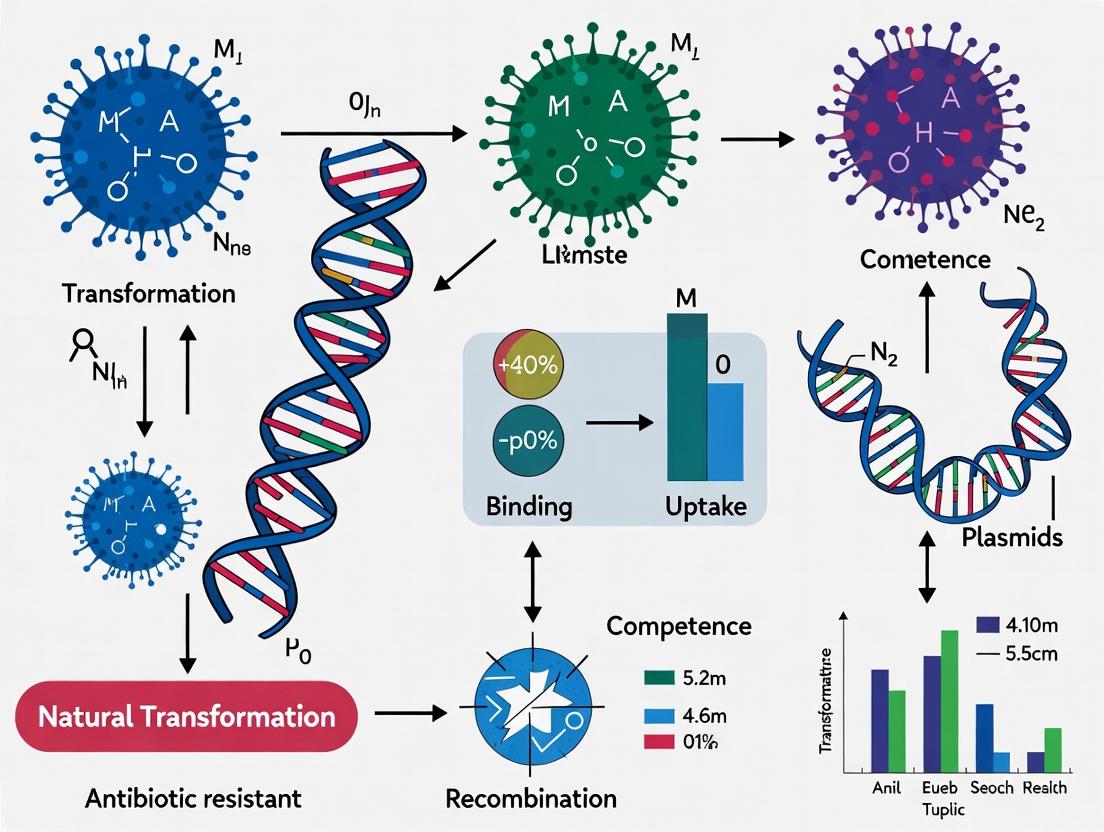
This comprehensive review explores the critical role of natural transformation in driving the evolution and dissemination of antibiotic resistance among bacterial pathogens.
Natural Transformation: The Hidden Engine of Antibiotic Resistance Spread in Bacterial Pathogens
Abstract
This comprehensive review explores the critical role of natural transformation in driving the evolution and dissemination of antibiotic resistance among bacterial pathogens. We establish foundational knowledge of the molecular mechanisms, including competence induction, DNA uptake, and genomic integration. We detail current methodologies for detecting and quantifying transformation events in clinical and environmental isolates, addressing key challenges in experimental design. The article provides troubleshooting guidance for common pitfalls and evaluates the relative contributions of natural transformation compared to other horizontal gene transfer mechanisms. Synthesizing recent research, we conclude by outlining implications for surveillance strategies and novel therapeutic interventions aimed at blocking this pervasive route of resistance gene acquisition.
Decoding the Machinery: How Natural Transformation Fuels Resistance Gene Acquisition
Within the critical field of antibiotic resistance research, horizontal gene transfer (HGT) stands as the primary accelerator for disseminating resistance determinants among bacterial populations. Natural transformation, a directed, genetically encoded process, is a pivotal HGT mechanism. This whitepaper posits that a detailed, mechanistic understanding of natural transformation is not merely a bacteriological curiosity but a fundamental prerequisite for devising novel therapeutic strategies to outpace the evolution of multidrug-resistant pathogens. By defining the molecular machinery, regulatory networks, and environmental triggers, we can identify potential targets to disrupt this pathway and mitigate the spread of resistance.
Core Mechanism and Molecular Machinery
Natural transformation is the genetically programmed uptake, integration, and functional expression of free extracellular DNA. This process is distinct from passive transformation and occurs in a multi-stage sequence: competence development, DNA binding and uptake, and genomic integration.
Key Protein Complexes:
- Type IV Pilus (T4P) / ComP: Initial DNA receptor and retraction motor for translocation across the outer membrane in Gram-negatives; homologs exist in Gram-positives.
- ComEA: DNA-binding protein at the cell surface/periplasm that acts as a ratchet.
- ComEC: Transmembrane channel forming the inner membrane DNA import pore.
- ComFA: Cytoplasmic ATPase driving single-stranded DNA (ssDNA) import.
- RecA: Facilitates homology search and strand exchange during integration of the ssDNA fragment.
- DprA & SsbB: Cytoplasmic proteins protecting and chaperoning incoming ssDNA to RecA.
Regulation of Competence: Signaling Pathways
Competence is tightly regulated by quorum sensing and stress responses. The canonical pathway in Streptococcus pneumoniae serves as a model.
Diagram 1: Competence Regulation in S. pneumoniae
Experimental Protocols for Studying Natural Transformation
Protocol 4.1: StandardIn VitroTransformation Assay for Quantification
Purpose: To quantify transformation frequency (transformants per viable cell) under controlled conditions.
- Culture Competent Cells: Grow the target bacterial strain (e.g., S. pneumoniae or Acinetobacter baylyi) to mid-exponential phase in appropriate media to induce competence naturally, or treat with competence-stimulating peptides/chemicals (e.g., cAMP for V. cholerae).
- Donor DNA Preparation: Isave plasmid or genomic DNA containing a selectable marker (e.g., antibiotic resistance gene, kanR). For genomic DNA, fragment to ~1-10 kb via sonication or enzymatic digestion.
- Transformation Reaction: Mix 100 µL of competent cells with 100-500 ng of donor DNA. Include controls: No-DNA (spontaneous resistance), DNA-only (sterility), and non-competent cells + DNA.
- Incubation: Incubate at permissive temperature (e.g., 37°C) for 30-90 minutes to allow DNA uptake and integration.
- Expression & Selection: Dilute reactions and plate on selective agar containing the relevant antibiotic. Also plate on non-selective agar for total viable count.
- Calculation: After 24-48 hours, count colonies. Transformation Frequency = (CFU on selective plate) / (CFU on non-selective plate).
Protocol 4.2: Fluorescent Reporter Fusion to Visualize Competence Development
Purpose: To track competence gene expression in real-time at single-cell resolution.
- Reporter Construction: Fuse a promoter of a key late competence gene (e.g., P_{ssbB} or P_{comEC}) to a gene encoding a stable fluorescent protein (e.g., GFP, mCherry) on a replicating plasmid or integrate into the chromosome.
- Live-Cell Imaging: Inoculate reporter strain in a microfluidic device or on an agarose pad. Mount on a temperature-controlled microscope stage.
- Time-Lapse Imaging: Acquire phase-contrast and fluorescence images every 5-10 minutes over several hours. Optionally, introduce stressor (e.g., sub-inhibitory antibiotic).
- Image Analysis: Use software (e.g., ImageJ, CellProfiler) to segment cells and quantify fluorescence intensity over time, identifying the fraction of competent cells and the dynamics of competence induction.
Quantitative Data on Natural Transformation in Key Pathogens
Table 1: Transformation Parameters Across Pathogens
| Pathogen | Inducing Signal | Typical DNA Uptake Length | Max In Vitro Frequency | Key Integrated Resistance Genes Reported |
|---|---|---|---|---|
| Streptococcus pneumoniae | CSP (ComDE QS) | ~5-10 kb ssDNA | 10⁻² - 10⁻³ | tetM, ermB, mosaic pbp genes |
| Neisseria gonorrhoeae | Unknown (Constitutive?) | >10 kb | 10⁻³ - 10⁻⁴ | penA (β-lactamase), gyrA (fluoroquinolone) |
| Acinetobacter baumannii | Starvation, DNA damage | ~5-30 kb | 10⁻⁵ - 10⁻⁷ | blaOXA-23, armA (16S rRNA methylase) |
| Vibrio cholerae | Chitin, Starvation (cAMP) | ~5-15 kb | 10⁻⁴ - 10⁻⁶ | sul2, catB9, CTX phage (cholera toxin) |
| Helicobacter pylori | DNA damage (ComB8/9) | ~1-5 kb | 10⁻⁴ - 10⁻⁵ | 23S rRNA (clarithromycin), gyrA |
Table 2: Impact of Environmental Stressors on Transformation Frequency
| Stressor | Pathogen Model | Effect on Frequency (vs. Baseline) | Proposed Mechanism |
|---|---|---|---|
| Sub-MIC β-lactam | S. pneumoniae | Increase up to 100-fold | Cell wall stress triggers ComDE/LiaRS TCS. |
| Fluoroquinolone | H. pylori | Increase up to 1000-fold | DNA damage induces ComEC/RecA expression. |
| Nutritional Limitation | V. cholerae | Increase up to 10⁴-fold | Increased cAMP activates TfoX regulator. |
| Cold Shock | A. baylyi | Moderate Increase | Unknown, potentially membrane fluidity changes. |
| Biofilm Growth | N. gonorrhoeae | Significant Increase | High local cell density and DNA availability. |
The Scientist's Toolkit: Research Reagent Solutions
Table 3: Essential Materials for Natural Transformation Research
| Item | Function & Application | Example Product/Catalog |
|---|---|---|
| Competence-Stimulating Peptide (CSP) | Synthetic peptide used to artificially induce the competence state in streptococcal species for in vitro assays. | Custom synthesis (e.g., GenScript); S. pneumoniae CSP-1 (EMRLSKFFRDFILQRKK). |
| Chitin Beads or Powder | Natural substrate used to induce natural competence in Vibrio cholerae and related species by mimicking its environmental niche. | Practical Grade Crab Shell Chitin (e.g., New England Biolabs, #S6651L). |
| DNase I (RNase-free) | Critical control enzyme to confirm transformation is DNA-dependent by degrading free extracellular DNA in control reactions. | DNase I, Amplification Grade (e.g., Invitrogen, #18068015). |
| Homologous Donor DNA (gBlocks, PCR amplicons) | Defined, selectable DNA fragments for precise transformation experiments and measuring recombination efficiency. | IDT gBlocks Gene Fragments or purified PCR products with antibiotic resistance cassettes. |
| Microfluidic Device (e.g., Mother Machine) | For long-term, single-cell time-lapse imaging to study heterogeneity and dynamics of competence development. | Custom fabricated PDMS devices or commercial cell culture chips. |
| RecA Inhibitor (e.g., RS-1) | Small molecule used to probe the role of homologous recombination in the integration step of transformation. | (RS-1) RecA agonist, can be used to modulate activity (e.g., Sigma-Aldrich, #SML0784). |
| Anti-ComEA or Anti-ComEC Antibody | For Western blot analysis to quantify expression levels of core transformation machinery proteins under different conditions. | Custom polyclonal antibodies from immunized hosts. |
| Luciferase or Fluorescent Transcriptional Reporter Plasmids | To construct promoter fusion reporters for real-time, high-throughput monitoring of competence gene expression. | Plasmid pPIL-sfGFP or integration vectors like pPP2 for streptococci. |
Experimental Workflow for Resistance Gene Capture Study
Diagram 2: Workflow to Track ARG Acquisition
Defining natural transformation at mechanistic and quantitative levels provides a framework for understanding the rapid evolution of antibiotic-resistant pathogens. Future research must focus on:
- High-throughput screens for small-molecule inhibitors of core transformation proteins (e.g., ComEC channel blockers).
- In vivo models to quantify transformation rates within host niches (e.g., the infected lung, gut microbiome).
- Surveillance genomics to identify recently mobilized resistance genes with hallmarks of natural transformation. By integrating this knowledge, the scientific community can shift from merely documenting resistance to proactively interfering with its fundamental dissemination pathways.
Natural transformation is a programmed horizontal gene transfer mechanism, critically enabling the dissemination of antibiotic resistance genes among bacterial pathogens. This whitepaper details the core molecular trilogy governing this process: the competence stimulon (regulatory network), the DNA uptake machinery (physical import apparatus), and recombinases (integration enzymes). Understanding their interplay is paramount for developing novel strategies to curtail the spread of resistance in pathogens like Streptococcus pneumoniae, Neisseria gonorrhoeae, and Acinetobacter baumannii.
The Competence Stimulon: Regulation of Transformation
The competence stimulon is a coordinated gene expression program triggered by specific intra- and extracellular signals, culminating in the production of DNA uptake and recombination proteins.
Key Regulatory Pathways
In Streptococcus pneumoniae: The master regulator is the ComDE two-component system. The peptide pheromone CSP (Competence-Stimulating Peptide) accumulates extracellularly, is detected by the histidine kinase ComD, which phosphorylates the response regulator ComE. Phospho-ComE activates transcription of the comX gene. ComX is an alternative sigma factor that directs RNA polymerase to the promoters of ~80 "late" competence genes, including those for DNA uptake and processing.
In Vibrio cholerae: Competence is regulated by a complex quorum-sensing cascade involving the master regulators TfoX and CRP. Chitin induction leads to TfoX expression, which upregulates genes for pilus production and DNA uptake. Concurrent quorum sensing via CAI-1 and autoinducer-2, integrated through the phosphorelay to LuxO and HapR, de-represses competence genes under high cell density.
Quantitative Data on Competence Induction
Table 1: Key Quantitative Parameters of Competence Induction in Model Pathogens
| Pathogen | Inducing Signal | Peak Competence Onset (min post-induction) | Fraction of Competent Cells (%) | Key Regulatory Protein | Reference(s) |
|---|---|---|---|---|---|
| Streptococcus pneumoniae | CSP (100 ng/ml) | 10-15 | ~100 (in vitro) | ComE, ComX | PMID: 32848192 |
| Neisseria gonorrhoeae | Microaerobic + lactate | Constitutive/Low | ~0.01-1 | Crp, FNR, IHF | PMID: 33500344 |
| Acinetobacter baylyi (model) | Starvation | 30-60 | ~20-30 | CRP, PlcC | PMID: 35099904 |
| Vibrio cholerae | Chitin + High Cell Density | 60-120 | ~10-20 | TfoX, HapR | PMID: 33707464 |
| Haemophilus influenzae | cAMP (Starvation) | 15-30 | ~100 (in vitro) | Sxy, CRP | PMID: 31285231 |
Experimental Protocol: Measuring Competence Dynamics (Fluorescent Reporter Assay)
Purpose: To quantify the timing and proportion of cells activating the competence stimulon. Materials:
- Bacterial strain harboring a transcriptional fusion of a competence-specific promoter (e.g., comX or ssbB) to a fluorescent protein gene (GFP, mCherry).
- Inducing medium (e.g., CAT medium for S. pneumoniae with/without synthetic CSP).
- Microplate reader with temperature control and shaking.
- Flow cytometer. Procedure:
- Grow bacteria to early exponential phase (OD600 ~0.05).
- Aliquot into a 96-well black-walled, clear-bottom plate. Add inducer (e.g., CSP) to test wells.
- Immediately place plate in a pre-warmed (37°C) microplate reader.
- Measure OD600 and fluorescence (ex/em: 488/510 nm for GFP) every 5-10 minutes for 2-3 hours.
- Data Analysis: Normalize fluorescence to OD600. Plot fluorescence/OD vs. time. The slope and peak indicate kinetics.
- Optional Single-Cell Resolution: At time points, sample culture, dilute, and analyze by flow cytometry. The percentage of fluorescent cells indicates the fraction of competent cells.
The DNA Uptake Machinery: Structural and Functional Components
This multi-protein complex captures extracellular DNA, processes it, and transports a single strand into the cytoplasm.
Core Components
- Type IV Pilus-like Apparatus (Com proteins in Firmicutes, Pil proteins in Neisseria): A dynamic filament that extends, binds DNA, and retracts. Key proteins: PilA (major pilin), PilC (tip adhesin in Neisseria), ComGC (major pseudopilin in S. pneumoniae).
- DNA Receptor: ComEA (in Gram-positives) binds double-stranded DNA at the cell surface.
- Endonuclease: EndA (in S. pneumoniae) or analogous nucleases cleave DNA into smaller fragments (~5-10 kb).
- Translocase: ComEC forms the transmembrane pore for single-stranded DNA import. ComFA is an associated helicase.
- Cytoplasmic DNA-Binding Protein: SsbB (in S. pneumoniae) coats and protects the incoming single-stranded DNA, directing it to the recombinase.
Quantitative Data on DNA Uptake
Table 2: Characteristics of DNA Uptake in Pathogenic Bacteria
| Pathogen | DNA Specificity | Average DNA Fragment Size Taken Up (kb) | Uptake Rate (bp/sec/cell, approx.) | Essential Pore Protein | Reference(s) |
|---|---|---|---|---|---|
| Streptococcus pneumoniae | Low (some GC preference) | 5-10 | 80-100 | ComEC | PMID: 29765031 |
| Neisseria gonorrhoeae | High (10-bm uptake sequence) | 1-10+ | 100-150 | ComA (ComEC homolog) | PMID: 32205476 |
| Haemophilus influenzae | High (9-bp USS) | ~5 | ~80 | ComEC homolog | PMID: 31285231 |
| Acinetobacter baumannii | Very Low (non-specific) | >10 | Not well quantified | ComEC | PMID: 35099904 |
Experimental Protocol: Quantitative DNA Uptake Assay (Radiolabeled DNA)
Purpose: To measure the amount and kinetics of DNA internalization by competent cells. Materials:
- Competent cells (induced) and isogenic non-competent control cells.
- Radiolabeled DNA substrate (³H-thymidine or ³²P-dCTP labeled genomic DNA, ~10,000 cpm/µg).
- Lysis buffer (10 mM Tris-HCl, pH 8.0, 1% SDS).
- Scintillation cocktail and counter.
- DNase I (RNase-free).
- EDTA (0.1 M, pH 8.0). Procedure:
- Induce competence in culture. At peak competence, split culture into two aliquots.
- Add radiolabeled DNA (100 ng/ml final) to both aliquots. Incubate at 37°C.
- Time-Course Sampling: At intervals (e.g., 2, 5, 10, 15, 30 min), remove 1 ml samples.
- Treat samples immediately with DNase I (10 µg/ml) for 10 min at 37°C to degrade all extracellular DNA. Stop reaction with EDTA (10 mM final).
- Collect cells by centrifugation (13,000 rpm, 2 min). Wash pellet 2x with ice-cold PBS.
- Lyse cell pellet in 200 µl lysis buffer. Transfer lysate to scintillation vials, add cocktail, and count radioactivity.
- Data Analysis: Plot cpm (or converted to ng DNA) vs. time. Subtract background from non-competent control. The slope of the initial linear phase gives the uptake rate.
Recombinases: Integration of Foreign DNA
Single-stranded DNA is integrated into the chromosome via homologous recombination, catalyzed by recombinases.
Key Proteins
- RecA/RadA: The central recombinase that catalyzes strand exchange. It polymerizes on ssDNA to form a nucleoprotein filament that invades homologous duplex DNA.
- DprA (Smf in Nesseria): A specific mediator that loads RecA onto SsbB-coated incoming ssDNA, a critical step in transformation-specific recombination.
- RecFOR or RecOR Complexes: In some organisms, facilitate RecA loading (more critical in repair than transformation).
Quantitative Data on Recombination Efficiency
Table 3: Recombination and Transformation Frequencies
| Pathogen | RecA Homolog | Typical Transformation Frequency (cfu/µg DNA) | DprA/Smf Mediator Essential? | Impact of recA Knockout | Reference(s) |
|---|---|---|---|---|---|
| Streptococcus pneumoniae | RecA | 10⁵ - 10⁶ | Yes (DprA) | Abolished (>10⁶-fold decrease) | PMID: 32848192 |
| Neisseria gonorrhoeae | RecA | 10³ - 10⁴ | Yes (Smf) | Abolished (>10⁵-fold decrease) | PMID: 33500344 |
| Acinetobacter baumannii | RecA | 10⁴ - 10⁵ | Yes (DprA) | Reduced ~10⁴-fold | PMID: 35099904 |
| Vibrio cholerae | RecA | 10² - 10³ | Yes (DprA) | Abolished | PMID: 33707464 |
Experimental Protocol: Measuring Transformation Frequency
Purpose: To determine the efficiency of antibiotic resistance marker acquisition via natural transformation. Materials:
- Competent cell culture.
- Donor DNA (purified genomic DNA from a strain carrying a selectable antibiotic resistance marker, e.g., streptomycin resistance rpsL point mutation or kanamycin cassette).
- Selective agar plates (containing appropriate antibiotic).
- Non-selective agar plates for viability count.
- DNase I. Procedure:
- Prepare serial dilutions of donor DNA (e.g., 0, 10, 50, 100, 500 ng) in a buffer compatible with transformation.
- Aliquot competent cells into tubes. Add DNA dilutions. Include a "no DNA" negative control and a "DNA + DNase I" degradation control.
- Incubate for transformation (e.g., 30-60 min at 37°C for S. pneumoniae).
- Stop reaction with DNase I (10 µg/ml, 10 min) for some pathogens, or simply dilute.
- Plate appropriate dilutions on selective (antibiotic) and non-selective (viability) agar plates.
- Incubate plates overnight at 37°C.
- Calculation: Transformation Frequency = (cfu on selective plate) / (cfu on non-selective plate). Plot frequency vs. DNA concentration; the linear range indicates saturation is not reached.
The Scientist's Toolkit: Key Research Reagent Solutions
Table 4: Essential Reagents for Studying Natural Transformation
| Reagent/Material | Function in Research | Example/Source |
|---|---|---|
| Synthetic Competence Pheromones (e.g., CSP) | Chemically defined inducer of competence stimulon; used for synchronized induction. | Custom peptide synthesis (e.g., GenScript). |
| Fluorescent Transcriptional Reporter Plasmids | Real-time, single-cell monitoring of competence gene expression (e.g., PcomX-GFP). | Available from Addgene or constructed via fusion PCR. |
| Biotin- or Fluorophore-labeled DNA | Visualization of DNA binding and uptake localization via microscopy (e.g., fluorescence quenching assays). | Labeling kits (e.g., Nick Translation, Cy3-dUTP). |
| Anti-Com or Anti-Pil Antibodies | Immunodetection and localization of uptake machinery components via Western blot or immunofluorescence. | Commercial (if available) or custom-generated. |
| recA or dprA Mutant Strains | Essential controls to dissect uptake vs. recombination steps; backgrounds for complementation. | Constructed via allelic replacement or available from mutant libraries. |
| Chitin Beads or Chitin Fragments | Physiologically relevant surface for inducing competence in V. cholerae and related species. | Purified from crab shells (e.g., Sigma-Aldrich). |
| Homologous Donor DNA (Marked Genomic DNA) | Substrate for quantifying transformation frequency and recombination efficiency. | Purified via phenol-chloroform or column kits from isogenic, marked donor strains. |
| Microfluidic Growth Chambers | For studying competence and transformation under controlled, confined environments mimicking host conditions. | CellASIC ONIX or custom PDMS devices. |
Visualizations
Title: Competence Stimulon Regulation in S. pneumoniae
Title: DNA Uptake and Integration Workflow
Title: Experimental Protocol for Transformation Frequency
Framing Context: This whitepaper details the environmental regulation of natural competence, a critical horizontal gene transfer mechanism driving the dissemination of antibiotic resistance genes among bacterial pathogens. Understanding these triggers is essential for developing strategies to mitigate the evolution and spread of multi-drug resistant strains.
Core Environmental and Chemical Inducers of Competence
Competence is a tightly regulated, transient state. Key triggers include:
- Nutrient Limitation: Starvation for carbon, nitrogen, or phosphorus is a dominant signal. It indicates a suboptimal environment, prompting bacteria to acquire new genetic material for adaptation.
- Population Density (Quorum Sensing): Many pathogens, like Streptococcus pneumoniae, use peptide-based quorum-sensing systems (e.g., ComABCDE) to induce competence synchronously at high cell density, maximizing the potential for genetic exchange.
- Antibiotic Exposure: Sub-inhibitory concentrations of certain antibiotics (e.g., β-lactams, fluoroquinolones) can directly or indirectly induce competence as part of a general stress response (SOS response) or via cell wall perturbation.
- DNA Damage & Oxidative Stress: Agents causing DNA damage (UV, mitomycin C) or oxidative stress (H₂O₂) often trigger competence, potentially to access homologous DNA for repair.
- Biofilm Growth: The structured, heterogeneous microenvironment within biofilms naturally generates gradients of nutrients and waste, creating localized stress conditions that can induce competence in subpopulations.
Quantitative Data on Key Competence Triggers
Table 1: Efficacy of Common Environmental Triggers on Competence Frequency in Model Pathogens
| Pathogen | Trigger Condition | Measured Competence Frequency (CFU transformed/μg DNA) | Key Regulatory Gene/Pathway | Reference (Example) |
|---|---|---|---|---|
| Streptococcus pneumoniae | CSP (10 ng/ml) in C+Y medium, pH 8.0 | ~1 x 10⁻² | ComABCDE, ComX | Johnston et al., 2023 |
| Vibrio cholerae | Chitin surface, starvation | ~5 x 10⁻⁴ | TfoX, CytR, CRP | Dalia et al., 2022 |
| Haemophilus influenzae | MIV medium (Starvation), cyclic AMP | ~2 x 10⁻³ | Sxy, CRP | Cameron et al., 2021 |
| Neisseria gonorrhoeae | Microaerobic, lactate + bicarbonate | ~1 x 10⁻⁵ | MisR/S, OxyR, CRP | Stohl et al., 2023 |
| Acinetobacter baumannii | Sub-MIC Imipenem (0.25 μg/ml) | ~3 x 10⁻⁶ | ComEA, Pilin genes | Liu et al., 2024 |
Table 2: Impact of Sub-Inhibitory Antibiotic Concentrations on Transformation
| Antibiotic Class | Example (Sub-MIC) | Pathogen Tested | Fold-Increase in Transformation vs. Control | Proposed Mechanism |
|---|---|---|---|---|
| β-lactam | Cefotaxime (0.03 μg/ml) | S. pneumoniae | 45x | Cell wall stress, ComW stabilization |
| Fluoroquinolone | Ciprofloxacin (0.01 μg/ml) | H. influenzae | 28x | SOS response induction |
| Aminoglycoside | Streptomycin (0.5 μg/ml) | V. cholerae | 12x | Mistranslation, stress response |
| Macrolide | Erythromycin (0.05 μg/ml) | S. pneumoniae | 5x | Secondary, via cell lysis & DNA release |
Experimental Protocols for Studying Competence Induction
Protocol 1: Standard Competence Induction and Transformation Assay (S. pneumoniae)
Purpose: To quantify transformation frequency under a specific environmental trigger.
- Culture: Grow strain of interest in appropriate medium (e.g., C+Y for S. pneumoniae) to mid-exponential phase (OD₆₀₀ ~0.1).
- Induction: Dilute culture 1:10 into pre-warmed induction medium containing the trigger (e.g., 100-200 ng/ml synthetic competence-stimulating peptide (CSP) for S. pneumoniae, or limiting nutrient medium).
- Incubation: Incubate at induction conditions (e.g., 37°C, 5% CO₂) for 10-15 minutes to allow competence development.
- Transformation: Add 100-500 ng of purified donor DNA (containing a selectable marker, e.g., antibiotic resistance gene) to 1 ml of competent cells. Include a no-DNA control.
- Expression: Incubate for 90-120 minutes to allow expression of the acquired resistance marker.
- Plating: Plate serial dilutions on non-selective agar (for total viable count) and selective agar containing the appropriate antibiotic.
- Calculation: Transformation frequency = (CFU on selective plate) / (CFU on non-selective plate).
Protocol 2: Monitoring Competence Gene Expression via Reporter Fusion
Purpose: To dynamically track competence induction in response to a stressor without a transformation assay.
- Strain Construction: Create a reporter strain where a fluorescent protein (e.g., GFP) is transcriptionally fused to a late competence gene promoter (e.g., comX or ssbB).
- Treatment: Subject the reporter strain to the environmental trigger (e.g., antibiotic pulse, pH shift) in a microtiter plate or controlled bioreactor.
- Measurement: Monitor fluorescence (ex/em ~488/510 nm for GFP) and OD in real-time using a plate reader.
- Analysis: Calculate fluorescence/OD ratios over time. The time-to-peak and amplitude indicate the kinetics and strength of the competence response.
Signaling Pathway and Experimental Workflow Diagrams
Title: Core Pathway from Environmental Stress to Competence
Title: Standard Competence Induction & Transformation Assay Workflow
The Scientist's Toolkit: Key Research Reagent Solutions
Table 3: Essential Reagents and Materials for Competence Research
| Item Name/Type | Function/Biological Role | Example Application |
|---|---|---|
| Synthetic Competence Peptides | Chemically synthesized quorum-sensing pheromones (e.g., CSP for S. pneumoniae). Used for reproducible, chemically defined competence induction. | Standardized induction in transformation assays; studying QS circuitry. |
| Defined Starvation Media | Media formulations lacking specific nutrients (C, N, P) to induce competence via physiological stress. (e.g., MIV for H. influenzae, MOPS-based medium). | Studying the link between metabolic state and competence regulation. |
| Reporter Plasmids & Strains | Plasmids or engineered strains with fluorescent/luminescent reporters under control of competence-specific promoters (e.g., PcomX-GFP, PssbB-lux). | Real-time, single-cell monitoring of competence induction kinetics. |
| Chitin Beads or Surfaces | Purified chitin from crab shells, used to mimic the natural environmental niche of V. cholerae, a potent competence inducer. | Studying ecologically relevant transformation in vibrios. |
| Sub-MIC Antibiotic Strips/E-strips | Gradient strips for determining precise sub-inhibitory concentrations of antibiotics for a given strain. | Standardizing antibiotic-mediated competence induction experiments. |
| PCR-Generated Donor DNA | Purified, homologous DNA fragments containing a selectable marker, generated via PCR. Prevents transduction/transfection artifacts in transformation assays. | Clean measurement of natural transformation efficiency. |
| Competence-Specific Inhibitors | Small molecules or peptides that block key steps in competence (e.g., ComD receptor inhibitors, pilus biogenesis blockers). | Probing pathway necessity; potential therapeutic development. |
The horizontal gene transfer (HGT) mechanism of natural transformation is a pivotal driver of antibiotic resistance in high-risk bacterial pathogens. This whitepaper focuses on four critical genera—Streptococcus, Acinetobacter, Neisseria, and Haemophilus—examining their capacity for natural competence and its direct contribution to the dissemination of resistance determinants. Understanding the species-specific regulation, DNA uptake machinery, and integration pathways of natural transformation is fundamental to developing novel therapeutic strategies aimed at blocking HGT and curtailing the spread of multi-drug resistant (MDR) infections.
Comparative Analysis of Natural Transformation Systems
Table 1: Core Competence and Transformation Features in High-Risk Pathogens
| Pathogen (Model Species) | Natural Competence State | Key Regulatory System(s) | Primary DNA Uptake Machinery | Clinically Relevant ARGs Acquired via Transformation | Transformation Frequency (Approx. Range) |
|---|---|---|---|---|---|
| Streptococcus pneumoniae | Transient, peptide-signal induced | ComABCDE (Competence Stimulating Peptide, CSP) | ComEA, ComEC, ComFA, SSB | pbp genes (β-lactam resistance), tetM, ermB | 10⁻² to 10⁻³ (peak competence) |
| Acinetobacter baumannii | Constitutive or stress-induced | Pilin Regulators (PilR/S), Two-Component Systems (e.g., BfmRS) | Type IV Pilus (T4P), ComEA, ComEC | Carbapenemase genes (blaOXA-23, blaNDM-1), aminoglycoside-modifying enzymes | 10⁻⁴ to 10⁻⁶ |
| Neisseria gonorrhoeae | Constitutive | MisRS (Anaerobic induction), RecA | Type IV Pilus (T4P), ComP, ComEA | Penicillinase (blaTEM-1), tetracycline (tetM), fluoroquinolone (gyrA mutations) | 10⁻³ to 10⁻⁵ |
| Haemophilus influenzae | Constitutive, USS-dependent | Cyclic AMP Receptor Protein (CRP), Sxy/TfoX | Type IV Pilus-like apparatus, ComE, ComA | β-lactamase (blaTEM-1), chloramphenicol acetyltransferase | 10⁻² to 10⁻⁴ (USS-specific) |
Table 2: Key Quantitative Data on Associated Antibiotic Resistance
| Pathogen | Global Mortality (Annual Estimate, MDR infections) | Key Resistance Phenotype | Primary Genetic Determinants | Common Acquisition Route via HGT |
|---|---|---|---|---|
| S. pneumoniae | ~300,000 (all forms) | β-lactam, macrolide resistance | pbp2x/2b/1a mosaics, mef(A)/erm(B) | Natural transformation |
| A. baumannii | ~50,000 (MDR) | Carbapenem resistance | blaOXA-23, blaNDM-1 | Natural transformation, plasmids |
| N. gonorrhoeae | N/A (High morbidity) | Extended-spectrum cephalosporin resistance | penA mosaics, mtrR mutations | Natural transformation |
| H. influenzae | Significant (opportunistic) | Ampicillin resistance | blaTEM-1 | Natural transformation (plasmids) |
Experimental Protocols for Studying Natural Transformation
Protocol 1: Standard In Vitro Transformation Assay for Competent Bacteria
- Objective: Quantify transformation efficiency and frequency.
- Materials:
- Competent cells (induced or constitutively competent).
- Donor DNA (genomic DNA with selectable marker, e.g., antibiotic resistance gene, or PCR product).
- Appropriate rich and selective agar media.
- Transformation buffer (often containing Ca²⁺ or Mg²⁺ for S. pneumoniae; BHI + cAMP for H. influenzae).
- Methodology:
- Grow donor and recipient strains to mid-log phase (OD₆₀₀ ~0.3-0.5).
- For inducible species (S. pneumoniae), induce competence by adding synthetic CSP (100 ng/mL final concentration) and incubating for 10 minutes.
- Mix 100 µL of competent cells with 1-100 ng of donor DNA. Include a no-DNA control.
- Incubate at 37°C for 30 minutes (N. gonorrhoeae, Haemophilus) or 2 hours (S. pneumoniae, A. baumannii) to allow DNA uptake and recombination.
- Stop reaction with DNase I (1 µg/mL, 5 min) for non-integrative assays (optional for genomic DNA).
- Plate serial dilutions on non-selective media to determine total viable count and on selective media to count transformants.
- Calculation: Transformation Frequency = (Number of transformants on selective plate) / (Total viable count on non-selective plate).
Protocol 2: Mouse Nasopharyngeal Colonization Model for In Vivo Transformation (S. pneumoniae)
- Objective: Demonstrate natural transformation occurs in a host niche.
- Materials:
- Mouse-adapted S. pneumoniae strains (recipient and isogenic donor, each with distinct antibiotic markers).
- 6-8 week old mice (e.g., BALB/c).
- Intranasal inoculation setup (PBS, pipettes).
- Methodology:
- Cohouse mice inoculated with recipient strain alone (control) or with both recipient and donor strains (experimental).
- At 24, 48, and 72 hours post-inoculation, euthanize mice and harvest nasopharyngeal tissue.
- Homogenize tissue and plate serial dilutions on media selective for recipient, donor, and potential double-resistant transformants.
- Confirm putative transformants by PCR and sequencing.
- This model provides in vivo evidence for transformation as a driver of resistance acquisition during co-colonization.
Visualizations
Title: S. pneumoniae Competence Signaling Pathway (100 chars)
Title: Natural Transformation Assay Workflow (76 chars)
The Scientist's Toolkit: Research Reagent Solutions
Table 3: Essential Research Reagents for Natural Transformation Studies
| Reagent/Material | Function & Application in Research | Example Supplier/Product |
|---|---|---|
| Synthetic Competence Peptides (CSPs) | Chemically defined peptides used to induce and synchronize competence in streptococcal species (e.g., CSP1 for S. pneumoniae). | Custom synthesis (GenScript, Sigma-Aldrich). |
| Defined Donor DNA Fragments | PCR-amplified DNA containing a selectable marker (e.g., antibiotic resistance cassette) flanked by homologous regions to the recipient genome. Enables precise transformation studies. | Prepared in-lab via PCR or gene synthesis. |
| Cyclic AMP (cAMP) | Critical competence inducer for Haemophilus influenzae. Added to growth media to maximize transformation efficiency in lab strains. | Sigma-Aldrich (A9501). |
| Competence-Specific Reporter Plasmids | Plasmids with fluorescent (GFP) or luminescent (lux) reporters under control of competence-specific promoters (e.g., comX promoter). Used for real-time monitoring of competence development. | Available from Addgene or constructed in-lab. |
| DNase I (RQ1 RNase-Free) | Used to terminate transformation reactions by degrading non-internalized extracellular DNA, ensuring only integrated DNA is scored. | Promega (M6101). |
| Anti-ComEA / Anti-Pilin Antibodies | Antibodies targeting key components of the DNA uptake machinery (ComEA) or the Type IV pilus. Used in Western blot, immunofluorescence, or inhibition assays. | Custom antibody production (e.g., Innovagen) or available from research consortia. |
| Membrane Filtration Kits (0.22 µm) | For sterilizing donor DNA preparations and media used in transformation assays to prevent contamination. | Millipore Sigma (SCGP00525). |
| Selective Agar Media Formulations | Precisely formulated agar plates containing specific antibiotics at breakpoint concentrations to select for transformants. Critical for frequency calculations. | Prepared in-lab from base components (e.g., BD BBL Mueller-Hinton II Agar). |
This whitepaper details the mechanisms of horizontal gene transfer (HGT), focusing on natural transformation as a primary vector for disseminating antibiotic resistance genes (ARGs) and integrative elements among bacterial pathogens. Within the broader thesis on "Natural transformation in antibiotic-resistant pathogens research," this document provides a technical guide to the molecular cargo—the genetic payload—that is acquired and stabilized, driving the relentless expansion of multidrug resistance (MDR). The capture and genomic integration of ARGs via mobile genetic elements (MGEs) represent a critical evolutionary leap, confounding therapeutic interventions.
Core Mechanisms of Genetic Payload Acquisition
The genetic payload comprises ARGs often flanked by integrative and conjugative elements (ICEs), insertion sequences (IS), transposons, and integrons. Natural transformation facilitates the uptake of free DNA from the environment, but the stable incorporation and expression of ARGs depend on these integrative elements.
Key Pathways:
- Integron-mediated Capture: Site-specific recombination systems, notably the intI-attC system, capture exogenous gene cassettes containing ARGs.
- Transposition: IS elements and transposons mobilize ARGs, facilitating their insertion into chromosomes, plasmids, or ICEs.
- Homologous Recombination: RecA-dependent integration of ARGs into genomic islands or regions of homology.
- ICE Activation: Integrated ICEs can excise, conjugate, and re-integrate into a new host's genome, transferring large ARG clusters.
Quantitative Data on ARG Prevalence in Key Pathogens
Recent surveillance and genomic studies highlight the burden of ARGs carried on integrative elements in clinically relevant, naturally transformable pathogens.
Table 1: Prevalence of Key ARGs and Associated Integrative Elements in Select Pathogens
| Pathogen | High-Frequency ARG(s) | Primary Associated Integrative Element | Estimated Prevalence in Clinical Isolates (2020-2024) | Common Co-resistance Pattern |
|---|---|---|---|---|
| Streptococcus pneumoniae | mef(A), erm(B) | Tn916-family ICE, COMEC | 34-41% | Macrolides-Lincosamides-Streptogramins B |
| Neisseria gonorrhoeae | penA mosaic, tet(M) | Neisseria Genomic Island, Tn916 | 85-92% (for penA) | β-lactams, Tetracycline |
| Acinetobacter baumannii | blaOXA-23, blaNDM-1 | Transposons (Tn2006, Tn125), Integrons | 68-77% (OXA-23) | Carbapenems, Aminoglycosides |
| Helicobacter pylori | 23S rRNA mutations (Clarithromycin) | ICEHptfs elements | >90% in resistant strains | Macrolides |
Table 2: Global Sampling Data on Environmental ARG Load (Meta-genomic Studies)
| Sample Source | Average ARG Abundance (copies per 16S rRNA) | Most Detected Integrative Element Gene | Correlation with Anthropogenic Activity (R²) |
|---|---|---|---|
| Wastewater Effluent | 0.45 - 1.2 | intI1 (Class 1 integron) | 0.89 |
| Agricultural Soil | 0.08 - 0.35 | ISCR1 (common region 1) | 0.76 |
| River Sediment | 0.15 - 0.60 | tnpA (transposase) | 0.82 |
Experimental Protocols for Capturing and Analyzing the Genetic Payload
Protocol 1: Capture and Characterization of Novel Integrons and Gene Cassettes
Objective: To isolate and sequence the variable region of integrons from bacterial isolates. Materials: Bacterial DNA, PCR reagents, specific primers (intI-F, attC-R), gel extraction kit, cloning vector, Sanger/Long-read sequencing. Methodology:
- PCR Amplification: Use a primer targeting the conserved integron integrase gene (intI) and a primer targeting the conserved segment of the attC site.
- Gel Electrophoresis & Purification: Separate amplicons by size. Excise and purify bands of varying lengths, indicating different numbers of captured cassettes.
- Cloning & Transformation: Clone purified amplicons into a plasmid vector and transform into competent E. coli.
- Sequencing & Analysis: Sequence inserts from multiple clones. Identify open reading frames (ORFs) and compare to ARG databases (e.g., CARD, ResFinder).
Protocol 2: Tracking Natural Transformation of ARG PayloadsIn Vitro
Objective: To quantify the transformation frequency of specific ARG-integrative element constructs. Materials: Competent cells of target pathogen (e.g., A. baumannii), donor DNA (purified genomic DNA containing an ARG on an ICE), selective agar plates (antibiotic), viability count plates. Methodology:
- Induction of Competence: Culture recipient pathogen under conditions known to induce natural competence (e.g., nutrient limitation, specific pheromones).
- Transformation Assay: Incubate competent cells with donor DNA (~1 µg/mL) for a defined period (e.g., 2 hours). Include a no-DNA control.
- Selection & Quantification: Plate cells on non-selective media for total viable count (TVC) and on antibiotic-containing media for transformant count (TFC). Use serial dilutions.
- Calculation: Transformation Frequency = TFC / TVC. Confirm transformants by PCR for the ARG and junction sequences.
Protocol 3: High-Throughput Identification of ICE-Borne ARGs (Bioinformatics Pipeline)
Objective: To identify and annotate ICEs and their ARG cargo from whole-genome sequencing (WGS) data. Materials: Paired-end WGS reads or assembled genomes, high-performance computing cluster. Methodology:
- Assembly & Annotation: De novo assemble reads using SPAdes. Annotate contigs with Prokka.
- ICE Detection: Run ICEfinder or T4SSfinder to identify ICE-related genes (integrase, conjugation machinery).
- ARG Screening: Screen all contigs against the ResFinder database using ABRicate or CARD RGI.
- Association Analysis: Manually inspect or script an analysis to determine if ARG-containing contigs also harbor ICE markers, confirming physical linkage.
Visualization of Key Pathways and Workflows
Diagram Title: Integron-Mediated ARG Cassette Capture
Diagram Title: Natural Transformation Assay Workflow
The Scientist's Toolkit: Key Research Reagent Solutions
Table 3: Essential Materials for Genetic Payload Research
| Item/Category | Specific Example/Product | Function & Rationale |
|---|---|---|
| Competence Inducers | Synthetic Competence-Stimulating Peptide (CSP) for S. pneumoniae; Choline analogs for H. pylori | Chemically induces the natural competence state in a controlled, reproducible manner for transformation assays. |
| Selective Agar Bases | Mueller-Hinton Agar (MHA) with defibrinated horse blood; GC Base Agar with IsoVitalex | Standardized medium for antibiotic susceptibility testing and culturing fastidious pathogens like Neisseria. |
| Antibiotic Stocks | Custom panels of β-lactams (e.g., ceftazidime), carbapenems (meropenem), macrolides (erythromycin) prepared to CLSI standards. | For creating selective plates to isolate transformants harboring specific ARG payloads. |
| High-Fidelity PCR Kits | Q5 High-Fidelity DNA Polymerase (NEB); Platinum SuperFi II (Thermo Fisher) | Accurate amplification of integron cassette arrays and ICE boundary regions prior to sequencing. |
| Long-Read Sequencing Kits | Oxford Nanopore Ligation Sequencing Kit (SQK-LSK114); PacBio SMRTbell prep kits. | Resolve complex, repetitive structures of integrative elements and full-length ARG operons. |
| Bioinformatics Suites | CLC Genomics Workbench (Qiagen); Geneious Prime; Custom Snakemake pipelines integrating ICEfinder, ResFinder. | For end-to-end analysis of WGS data, from assembly to annotation and MGE/ARG linkage mapping. |
| Cloning Vectors | pGEM-T Easy Vector (Promega); pCR4-TOPO TA vector (Thermo Fisher). | Rapid, efficient cloning of PCR-amplified integron regions for Sanger sequencing and cassette characterization. |
From Lab to Clinic: Techniques to Detect and Measure Transformation-Driven Resistance
Within the broader thesis on natural transformation in antibiotic-resistant pathogens, in vitro transformation assays are the cornerstone methodology for quantifying the genetic exchange that drives resistance dissemination. These assays directly measure a bacterial population's ability to uptake, recombine, and express extracellular DNA (eDNA), a process critical for the spread of resistance determinants. This guide details current standardized protocols and the essential controls required to generate robust, reproducible data in this field.
Core Protocols
Standard Plate-Based Transformation Assay
This protocol quantifies transformants capable of growing on selective media after exposure to purified antibiotic resistance gene (ARG) DNA.
Detailed Methodology:
- Culture Preparation: Grow the recipient bacterial strain (e.g., Acinetobacter baumannii, Streptococcus pneumoniae) to mid-exponential phase (OD₆₀₀ ~0.3-0.5) in an appropriate rich broth.
- Competence Induction: For species requiring induced competence (e.g., S. pneumoniae), add competence-stimulating peptide (CSP) at 100-200 ng/mL. For constitutively competent species (e.g., Neisseria gonorrhoeae), proceed directly.
- Transformation Reaction:
- Mix 100 µL of competent cells with 1-100 ng of purified, linear double-stranded DNA (dsDNA) containing an ARG (e.g., blaTEM-1).
- Include a "no-DNA" negative control.
- Incubate for 30-60 minutes at 37°C under optimal growth conditions.
- Selection and Quantification:
- Plate the entire reaction onto selective agar plates containing the relevant antibiotic.
- Plate serial dilutions onto non-selective agar to determine the total viable cell count (CFU/mL).
- Incubate plates for 16-48 hours.
- Calculate transformation frequency as: (Transformants CFU/mL) / (Total Viable Cells CFU/mL).
Liquid Microtiter Transformation Assay
A higher-throughput method suitable for kinetic studies or testing multiple conditions.
Detailed Methodology:
- Prepare competence as in the plate assay.
- Dispense 90 µL aliquots of cells into a 96-well microtiter plate.
- Add 10 µL of DNA solution (or buffer for controls) to each well. Final DNA concentration typically ranges from 0.1-10 µg/mL.
- Incubate the plate statically at 37°C for the transformation period (15-120 mins).
- Add a bactericidal concentration of an antibiotic (e.g., 200 µg/mL streptomycin) to kill non-transformed cells, or directly transfer aliquots to selective broth/agar.
- Measure growth in selective media over time via OD₆₀₀. Transformation frequency can be correlated with the time to positivity or endpoint OD.
Environmental Simulation Assay
Measures transformation using eDNA extracted from complex matrices (e.g., biofilm, soil, wastewater) to mimic natural conditions.
Detailed Methodology:
- eDNA Extraction: Isolate total community DNA from an environmental sample using a kit optimized for complex samples (e.g., with humic acid removal). Partially shear DNA to simulate natural degradation.
- Recipient Strain Preparation: Induce competence in the target pathogen as described.
- Co-incubation: Mix competent cells with a titrated amount of environmental eDNA (e.g., 0.1-1.0 µg). Incubate for 1-2 hours.
- Selection and Confirmation: Plate on selective media. Confirm putative transformants via PCR for the specific ARG and/or sequencing to verify recombination.
Key Controls and Data Interpretation
The validity of transformation assays hinges on rigorous controls.
Table 1: Essential Experimental Controls for In Vitro Transformation Assays
| Control Name | Purpose | Expected Result | Interpretation of Deviation |
|---|---|---|---|
| No-DNA Control | Detects pre-existing resistant mutants or contamination. | No growth on selective plates. | Background growth indicates spontaneous resistance; adjust antibiotic concentration or purify strain. |
| DNase-I Treated DNA | Confirms transformation is DNA-dependent. | Drastic reduction (≥99%) in transformants. | Persistent high counts suggest artifact (e.g., antibiotic degradation). |
| Non-competent Cells | Verifies competence state is required. | Few to no transformants. | High counts suggest passive DNA uptake is significant under test conditions. |
| Killed-Cell DNA Uptake | Ensures transformation requires living, metabolically active cells. | No transformants. | Counts indicate assay contamination. |
| Plasmid vs. Linear DNA | Assesses homology dependence for species. | Species-specific result (e.g., linear works for S. pneumoniae, plasmid for E. coli). | Unexpected result indicates issues with DNA preparation or strain competence pathway. |
| Transformation Standard | Intra-assay reproducibility control using a known DNA. | Frequency within an expected historical range. | Significant variation indicates technical issues with cell preparation or plating. |
Table 2: Typical Transformation Frequencies for Key Pathogens
| Bacterial Species | Competence State | DNA Type | Typical Transformation Frequency | Key Influencing Factors |
|---|---|---|---|---|
| Streptococcus pneumoniae | Induced (CSP) | Linear dsDNA | 10⁻³ – 10⁻² | CSP concentration, growth phase, peptide antibiotics. |
| Acinetobacter baumannii | Natural (Stationary) | Linear dsDNA | 10⁻⁵ – 10⁻⁴ | Starvation, DNA length (>500 bp optimal). |
| Neisseria gonorrhoeae | Constitutive | Linear dsDNA | 10⁻⁴ – 10⁻³ | Presence of specific DNA uptake sequences (DUS). |
| Haemophilus influenzae | Induced (Starvation) | Plasmid/Linear | 10⁻⁵ – 10⁻³ | Requirement for USS DNA uptake sequence. |
| Pseudomonas stutzeri | Induced (Low Nutrients) | Linear dsDNA | 10⁻⁶ – 10⁻⁵ | Calcium and magnesium ion concentration. |
The Scientist's Toolkit: Research Reagent Solutions
Table 3: Essential Materials for In Vitro Transformation Assays
| Item | Function & Rationale |
|---|---|
| Chemically Competent Cells (Commercial Kits) | Standardized, high-efficiency cells for assay development and positive controls. Ensure reproducibility. |
| Synthetic Competence-Stimulating Peptides (CSP) | Defined, pure peptides for reliable induction of competence in streptococci and other species, avoiding batch variability from culture supernatants. |
| Gel-Extracted or PCR-Purified Linear DNA Fragments | High-purity, protein/nuclease-free DNA substrates with defined ARG sequences and homology arms, essential for quantitative experiments. |
| Antibiotic Selection Media (Agar & Broth) | Pre-poured plates and QC-tested antibiotic stocks at defined concentrations for consistent and reliable selection pressure. |
| DNase I (RNase-free) | Critical for the DNA-dependence control reaction. High-quality enzyme ensures complete DNA degradation. |
| Microtiter Plates (96-well, treated) | For high-throughput liquid assays. Tissue-culture treated plates minimize cell adhesion to well walls. |
| Environmental DNA Extraction Kits (with inhibitors removal) | Specialized columns/buffers to obtain PCR-grade eDNA from complex samples like biofilm or soil for environmentally relevant assays. |
| Real-Time PCR Master Mix with Inhibitor Resistance | For quantifying eDNA concentration in environmental samples and confirming ARG acquisition in transformants via qPCR. |
Visualizations
Title: In Vitro Transformation Assay Core Workflow
Title: Decision Tree for Validating Transformation Results
This whitepaper provides a technical guide for developing and utilizing advanced in vitro model systems to study natural transformation in antibiotic-resistant pathogens. Framed within a broader thesis on horizontal gene transfer mechanisms, these models aim to recapitulate the complex, polymicrobial, and structured environments where resistance genes are acquired and disseminated.
Natural transformation is a key driver of antibiotic resistance spread in bacterial populations. Traditional planktonic monoculture studies fail to capture the critical environmental parameters that regulate competence and gene exchange in vivo. Biofilms and co-culture systems introduce essential elements: 1) spatial organization, 2) chemical gradients (e.g., oxygen, nutrients, waste), 3) interspecies interactions, and 4) stress responses that upregulate competence machinery. Simulating these conditions is paramount for predictive research and therapeutic intervention.
Core Model Systems: Design and Implementation
Static & Flow-Based Biofilm Models
Static Models (e.g., Microtiter Plate, Calgary Biofilm Device):
- Principle: Biofilms grow at the solid-liquid interface under non-agitated conditions.
- Protocol: Calgary Biofilm Device (CBD) Assay:
- Inoculate 96-peg lid with 150 µL of bacterial suspension (OD~600nm~ = 0.1 in growth media + appropriate antibiotics for selection) in a 96-well plate.
- Incubate lid on plate for 24-48 hrs at 37°C under static conditions for initial adhesion.
- Transfer lid to a new plate with fresh media (with or without inducing agents like stress factors or competence-stimulating peptides).
- Incubate further (e.g., 24 hrs) under mild agitation (e.g., 100 rpm) to promote biofilm maturation on pegs.
- For transformation assays, transfer pegs to wells containing donor DNA (e.g., 1 µg/mL purified genomic DNA or plasmid harboring resistance markers).
- After incubation, rinse pegs in saline to remove non-adherent cells.
- Biofilm disruption: Sonicate pegs (5-10 min, low power) or vortex in recovery media to harvest cells.
- Plate serial dilutions on selective and non-selective agar to determine transformation frequency and total viable count.
Flow Cell Models (Continuous Flow):
- Principle: Provides constant nutrient supply and shear force, enabling development of thick, architecturally complex biofilms amenable to real-time microscopy.
- Key Components: Peristaltic pump, medium reservoir, flow cell chamber, waste container, and tubing.
- Protocol Outline:
- Assemble and sterilize flow cell system.
- Inject bacterial inoculum into flow cell and let adhere for 1 hr without flow.
- Initiate laminar flow of defined medium (e.g., 0.2 mm/s velocity) using a peristaltic pump.
- After desired growth period (e.g., 72 hrs), inject fluorescently labelled donor DNA or donor cells.
- Monitor gene transfer events via confocal laser scanning microscopy (CLSM) using strains expressing fluorescent protein reporters.
Co-culture & Consortium Models
Direct Contact Co-culture:
- Principle: Pathogen of interest is cultured with one or more partner species (e.g., commensals, other pathogens) in direct contact, allowing for physical interaction and metabolic cross-talk.
- Protocol: Filter-Based Co-culture for Transformation:
- Grow donor strain (DNA source) and recipient pathogen separately to mid-log phase.
- Mix cultures at a defined ratio (e.g., 1:10 donor:recipient) or co-inoculate fresh media.
- Incubate for 2-4 hrs to allow for potential cell contact and DNA release.
- Add DNase I (100 U/mL) to degrade extracellular DNA and halt further transformation.
- Plate on selective media to quantify transformants. Control: Monoculture of recipient with added donor DNA.
Spatially Segregated Co-culture (e.g., Transwell/Insert Systems):
- Principle: Allows exchange of secreted molecules (signals, metabolites, eDNA) while preventing direct cell contact, isolating the effect of diffusible factors.
- Protocol:
- Seed pathogen in the bottom well of a multi-well plate.
- Place transwell insert with permeable membrane (0.4-3.0 µm pore size) into the well.
- Seed interacting species (e.g., host cells, other bacteria) in the insert.
- Co-culture for defined period. Soluble factors diffuse through the membrane.
- Assess changes in recipient pathogen's competence gene expression (via qRT-PCR) or transformation frequency.
Key Quantitative Parameters & Data
Table 1: Quantitative Metrics for Assessing Natural Transformation in Complex Models
| Metric | Definition | Typical Measurement Method | Representative Values in Biofilm Models |
|---|---|---|---|
| Transformation Frequency | (# of transformants) / (total # of recipient cells) | Selective plating & colony counting | 10^-4^ to 10^-7^ (can be 10-1000x higher than planktonic) |
| Biofilm Biomass | Total attached cellular material | Crystal violet staining (OD~570nm~), dry weight, or total protein | 2.0 - 5.0 OD~570nm~ units for mature biofilms |
| eDNA Concentration | Extracellular DNA in biofilm matrix | Fluorescence (PicoGreen), purification & quantification | 1 - 5 µg per mg of biofilm protein |
| Gradient Depth (O₂) | Distance from interface to anoxic zone | Microsensor profiling, fluorescent probes (e.g., GFP under O₂-sensitive promoter) | 50 - 200 µm in thick biofilms |
| Microcolony Size | Z-axis thickness of 3D structures | Confocal Laser Scanning Microscopy (CLSM) | 20 - 100 µm |
Table 2: Impact of Environmental Stressors on Transformation Frequency
| Stress Condition | Model System | Pathogen Example | Fold-Change vs. Control | Proposed Mechanism |
|---|---|---|---|---|
| Sub-inhibitory Antibiotic | Static Biofilm (CBD) | Streptococcus pneumoniae | ↑ 10-100x | SOS response, increased competence gene expression |
| Nutrient Limitation | Flow Cell Biofilm | Pseudomonas aeruginosa | ↑ 5-20x | Starvation-induced competence |
| Oxidative Stress (H₂O₂) | Co-culture (Transwell) | Acinetobacter baumannii | ↑ 3-15x | DNA damage, increased DNA uptake as nutrient source |
| pH Shift (Acidic) | Microcolony Model | Helicobacter pylori | ↑ 2-10x | Activation of com regulon via pH-sensing |
Visualization of Pathways and Workflows
Title: Stress-Induced Natural Transformation Pathway in Biofilms
Title: Generic Experimental Workflow for Transformation in Complex Models
The Scientist's Toolkit: Essential Research Reagents & Materials
Table 3: Key Reagent Solutions for Biofilm & Co-culture Transformation Studies
| Item / Reagent | Function / Purpose | Example Product / Specification |
|---|---|---|
| Calgary Biofilm Device (CBD) | High-throughput cultivation of 96 identical biofilms for genetic and susceptibility testing. | Innovotech "MBEC Assay" system. |
| Flow Cell Chambers | Provides a controlled hydrodynamic environment for real-time, microscopic study of 3D biofilm development. | Ibidi µ-Slide VI 0.4 or Stovall CFC-1 series. |
| Transwell/Insert Plates | Enables co-culture with spatial segregation by a permeable membrane for studying diffusible signals. | Corning Costar, polyester membrane, 0.4 µm or 3.0 µm pore. |
| Commercially Defined Biofilm Media | Reproducible, chemically defined media for consistent biofilm growth (e.g., M63, BM2, Artificial Sputum Media). | MilliporeSigma "Biofilm Media" kits or custom formulations. |
| Competence-Stimulating Peptides (CSP) | Synthetic peptides to artificially induce the competence state in species like S. pneumoniae. | Custom synthesis, >95% purity. |
| Fluorescent DNA Labels | Tagging donor DNA for visualization and quantification of uptake and location within biofilms. | Invitrogen YOYO-1, SYTOX Green nucleic acid stains. |
| Live/Dead BacLight Viability Stain | Differentiating live vs. dead cells in situ within biofilms, relevant for eDNA release zones. | Thermo Fisher "LIVE/DEAD" kit (SYTO9/PI). |
| Cell Dispersal & Homogenization Reagents | Enzymatic (Dispase, DNase I) or chemical (DTT) disruption of biofilm matrix for accurate cell harvesting. | MilliporeSigma Dispase (≥5 U/mg), Dithiothreitol (DTT). |
| Broad-Host-Range Reporter Plasmids | Plasmid vectors with fluorescent/antibiotic markers for tracking gene transfer across species. | pBBR1MCS series, pMPK series (GFP, RFP). |
| Microsensor Systems | Measuring chemical gradients (O₂, pH, Ca²⁺) within biofilms at µm resolution. | Unisense OX-50 (Oxygen) or PH-50 (pH) microsensors. |
Within the critical research domain of natural transformation in antibiotic-resistant pathogens, tracking horizontal gene transfer (HGT) is paramount. This technical guide details three cornerstone methodologies—PCR, sequencing, and reporter gene assays—for monitoring gene flow, essential for understanding the dissemination of resistance determinants like extended-spectrum beta-lactamase (ESBL) or carbapenemase genes.
Polymerase Chain Reaction (PCR)-Based Tracking
PCR enables targeted, sensitive detection of specific resistance genes within complex genomic backgrounds.
Experimental Protocol: Multiplex PCR for Resistance Gene Detection
- DNA Extraction: Use a commercial kit (e.g., Qiagen DNeasy) to isolate genomic DNA from bacterial cultures. For environmental samples, include a bead-beating step for thorough lysis.
- Primer Design: Design primers (18-22 bp) targeting conserved regions of genes of interest (e.g., blaCTX-M, blaNDM). Ensure amplicon sizes are distinct (100-500 bp difference) for multiplex assays. Validate specificity in silico via BLAST.
- Reaction Setup: Prepare a 25 µL reaction:
- 1X PCR buffer (with MgCl2)
- 200 µM of each dNTP
- 0.2-0.5 µM of each primer
- 1.25 U of hot-start Taq DNA polymerase
- 50-100 ng of template DNA
- Thermocycling:
- Initial Denaturation: 95°C for 5 min.
- 35 Cycles: Denature at 95°C for 30 sec, anneal at optimized temperature (55-62°C) for 30 sec, extend at 72°C for 1 min/kb.
- Final Extension: 72°C for 7 min.
- Analysis: Resolve products on a 1.5-2% agarose gel. Visualize with ethidium bromide or SYBR Safe.
Quantitative Data: PCR Detection Limits
| Method | Target | Theoretical Limit | Typical Efficiency | Key Application |
|---|---|---|---|---|
| Conventional PCR | Single gene | ~103 gene copies | 70-100% | Presence/Absence screening |
| Quantitative PCR (qPCR) | blaKPC | 10-100 copies/reaction | 90-105% (R2 > 0.99) | Quantification in metagenomes |
| Digital PCR (dPCR) | mcr-1 | 1-10 copies/reaction | Absolute quantification | Rare allele detection in HGT studies |
Diagram: Conventional PCR workflow for gene detection.
Sequencing-Based Approaches
Sequencing provides definitive, high-resolution characterization of mobilized genetic elements and their contexts.
Experimental Protocol: Whole Genome Sequencing (WGS) for HGT Analysis
- Library Preparation: Fragment 50-100 ng of high-quality genomic DNA via sonication or enzymatic digestion. Use a library prep kit (e.g., Illumina Nextera) to add platform-specific adapters. Include barcodes for multiplexing.
- Sequencing: Perform paired-end sequencing (2x150 bp) on an Illumina MiSeq or NovaSeq platform to achieve >100x coverage. For resolving repetitive regions (e.g., near plasmids), supplement with long-read sequencing (Oxford Nanopore or PacBio).
- Bioinformatics Analysis:
- Quality Control: Use FastQC and Trimmomatic.
- De novo Assembly: Assemble reads using SPAdes or Unicycler (for hybrid assemblies).
- Annotation: Identify resistance genes via ABRicate against CARD or ResFinder databases.
- HGT Identification: Use platforms like BRIG for circular genome comparison, or mob-suite to reconstruct plasmids. Identify genomic islands with IslandViewer.
Quantitative Data: Sequencing Platform Comparison
| Platform | Read Length | Throughput per Run | Accuracy | Best for HGT Tracking |
|---|---|---|---|---|
| Illumina MiSeq | Up to 2x300 bp | 0.3-15 Gb | >99.9% (Q30) | High-accuracy SNP calling, pan-genome analysis |
| Oxford Nanopore | Up to 2 Mb+ | 10-50 Gb | ~97% (Q20) | Plasmid assembly, structural variation |
| PacBio HiFi | 10-25 kb | 15-30 Gb | >99.9% (Q30) | Complete, closed genome assemblies |
Reporter Gene Assays
Reporter systems provide dynamic, real-time measurement of gene transfer and expression events.
Experimental Protocol: Fluorescent Reporter for Conjugation Efficiency
- Reporter Construct Cloning: Clone a promoterless gene for a fluorescent protein (e.g., gfpmut3) downstream of a constitutive promoter (e.g., PJ23100) in a broad-host-range plasmid (e.g., pBBR1 origin). Alternatively, fuse the reporter gene to a promoter of interest (e.g., induced by antibiotic stress).
- Strain Preparation: Transform the construct into the donor strain (e.g., E. coli S17-1 λpir). The recipient strain is a clinically relevant, antibiotic-resistant pathogen.
- Mating Assay: Mix donor and recipient at a 1:1 ratio (108 CFU/mL each) on a sterile filter placed on non-selective agar. Incubate 6-24 hours.
- Selection and Analysis: Resuspend cells, plate on agar containing antibiotics selective for the recipient and the reporter plasmid. Count fluorescent transconjugant colonies using a fluorescence microscope or plate reader. Calculate conjugation frequency (transconjugants/donor).
Quantitative Data: Common Reporter Systems
| Reporter Gene | Detection Method | Dynamic Range | Advantage for HGT |
|---|---|---|---|
| GFP/mCherry | Fluorescence microscopy/flow cytometry | 3-4 log units | Real-time, single-cell tracking of transfer |
| LuxCDABE | Bioluminescence (photons) | 6-8 log units | Sensitive, no external substrate needed |
| LacZ (β-galactosidase) | Colorimetric (OD420) | 2-3 log units | Quantitative, low-cost |
Diagram: Workflow for reporter gene-based conjugation assay.
The Scientist's Toolkit: Research Reagent Solutions
| Reagent/Material | Supplier Examples | Function in Gene Flow Tracking |
|---|---|---|
| Hot-start Taq DNA Polymerase | Thermo Fisher, NEB | Reduces non-specific amplification in multiplex PCR for complex samples. |
| Broad-Host-Range Cloning Vector (pBBR1/MOB) | Addgene, MoBiTec | Maintenance in diverse Gram-negative donors/recipients for conjugation assays. |
| Fluorescent Protein (sfGFP, mScarlet) | Allele Biotech, Chromotek | Bright, stable reporters for visualizing successful gene transfer events. |
| Nextera XT DNA Library Prep Kit | Illumina | Fast, standardized preparation of sequencing libraries for WGS. |
| Mobility Protein A (MobA) Antibody | Santa Cruz Biotechnology | Detection of conjugation machinery expression via Western blot. |
| ResFinder/ CARD Database | Genomic Epidemiology | In silico reference for annotating acquired resistance genes in sequence data. |
| Zero-Blunt TOPO Cloning Kit | Thermo Fisher | High-efficiency cloning of PCR-amplified genetic elements for functional study. |
High-Throughput Screening for Competence-Inducing or -Inhibiting Compounds
Within the critical research domain of natural transformation in antibiotic-resistant pathogens, targeting bacterial competence—the physiological state enabling DNA uptake—presents a promising therapeutic strategy. Competence inhibition could block horizontal gene transfer (HGT), slowing the spread of resistance genes. Conversely, inducing competence could potentiate antibiotic uptake or sensitize bacteria. High-throughput screening (HTS) is essential for discovering compounds that modulate this complex regulatory network. This guide details a comprehensive HTS framework for identifying competence modulators in model pathogens like Streptococcus pneumoniae and Vibrio cholerae.
Core Competence Pathways as Screening Targets
Competence is tightly regulated by species-specific signaling cascades. Key pathways serve as primary targets for HTS assay design.
1Streptococcus pneumoniae: The ComABCDE Pathway
The competence-stimulating peptide (CSP) activates the membrane histidine kinase ComD, leading to phosphorylation of the response regulator ComE. This activates transcription of early genes, including comX, which encodes the alternative sigma factor driving late competence gene expression.
2Vibrio cholerae: The TfoX and QS Systems
Chitin-induced competence involves the transcriptional activator TfoX. Its expression is influenced by quorum sensing (QS) via the autoinducer CAI-1 and the CqsS/CqsR system, integrating cell density signals.
Title: Core Competence Signaling Pathways in S. pneumoniae and V. cholerae
High-Throughput Screening Workflow
A multi-stage screening funnel efficiently identifies and validates hit compounds.
Title: HTS Funnel for Competence Modulator Discovery
Table 1: Key Performance Indicators for HTS Campaigns
| Parameter | Primary Screen | Confirmatory Screen | Validation |
|---|---|---|---|
| Assay Format | Luminescence Reporter (96/384-well) | Luminescence & AlamarBlue (96-well) | DNA Uptake & Transformation (96-well) |
| Library Size | 100,000 compounds | 500-1,000 compounds | 50-100 compounds |
| Concentration | 10 µM single dose | 0.1 - 100 µM (8-point dose) | 1x, 5x, 10x IC50/EC50 |
| Z' Factor | > 0.6 | > 0.7 | N/A |
| Signal Window | > 3 (S/B ratio) | > 5 (S/B ratio) | N/A |
| Hit Rate | 0.5 - 1.0% | 10 - 20% (of primary) | 10 - 40% (of confirmed) |
| Throughput | 5,000 - 10,000 wells/day | 500 - 1,000 wells/day | 100 - 200 wells/day |
Table 2: Representative Hit Compounds from Published Screens
| Compound/Class | Target Organism | Effect (Induce/Inhibit) | Putative Target/Mechanism | Reported Potency (IC50/EC50) |
|---|---|---|---|---|
| CSP Mimetic Peptides | S. pneumoniae | Induce | ComD Receptor Agonist | EC50 ~ 10-100 nM |
| Benzimidazole Derivatives | S. pneumoniae | Inhibit | ComD Receptor Antagonist | IC50 ~ 2.5 µM |
| Chitin Oligosaccharides | V. cholerae | Induce | TfoX Pathway Inducer | EC50 ~ 1-10 µM |
| Fluoroquinolones | S. pneumoniae | Induce | DNA Damage Response | EC50 variable |
| Raffinose | V. cholerae | Inhibit | Competence Gene Repression | IC50 ~ 5 mM |
Detailed Experimental Protocols
Protocol: Primary HTS Using a Luminescent Reporter Strain
Objective: Identify compounds that alter activity of a competence-specific promoter. Strain: S. pneumoniae D39 variant with PcomX-luc reporter integrated. Materials: See "Scientist's Toolkit" below. Procedure:
- Day 1: Inoculate reporter strain from -80°C glycerol stock into 5 ml C+Y medium (pH 8.0) with appropriate antibiotic. Grow to OD600 ~0.05 at 37°C + 5% CO2 without shaking.
- Day 2: Dilute culture to OD600 0.002 in fresh, pre-warmed C+Y. Incubate until OD600 reaches 0.02 (mid-exponential phase).
- Compound Addition: Using liquid handler, transfer 50 nL of 10 mM compound stock (in DMSO) to white, clear-bottom 384-well plates. Final DMSO concentration: 0.1%.
- Cell Dispensing: Add 50 µL of bacterial culture (OD600 0.02) to each well. Include controls: Column 23: DMSO only (negative control for inducers/positive for inhibitors). Column 24: 200 ng/mL synthetic CSP (positive control for inducers/negative for inhibitors).
- Induction & Readout: Incubate plate for 15 min at 37°C. Add 25 µL of Beetle Luciferin (Promega) prepared in C+Y (final 0.5 mM). Immediately measure luminescence (integration time 500 ms) using a plate reader.
- Data Analysis: Normalize luminescence to median of controls. Calculate Z' factor using (3σpositive + 3σnegative) / |μpositive - μnegative|. Hits: >3σ from mean for inducers; <3σ from mean for inhibitors.
Protocol: Validation via Natural Transformation Assay
Objective: Confirm hits alter actual DNA uptake and recombination. Procedure:
- Prepare competence-inducing conditions for target pathogen (e.g., S. pneumoniae in C+Y at pH 7.8 with 200 ng/mL CSP; V. cholerae in LB with 1% chitin flakes).
- Mix 90 µL of bacterial culture with 10 µL of hit compound at desired concentration and 100 ng of chromosomal DNA carrying a selectable antibiotic resistance marker (e.g., str for streptomycin). Incubate for 45-60 min.
- Add 1 unit of DNase I to degrade extracellular DNA. Incubate 10 min.
- Plate serial dilutions on non-selective agar to determine total CFU and selective agar containing antibiotic to determine transformant CFU.
- Calculate transformation frequency = (transformant CFU/mL) / (total CFU/mL). Compare to DMSO control. A valid inhibitor should reduce frequency by >70%; an inducer should increase it >5-fold.
The Scientist's Toolkit
Table 3: Essential Research Reagent Solutions
| Reagent/Material | Supplier Examples | Function in HTS |
|---|---|---|
| Bioluminescent Reporter Strains | BEI Resources, Lab-constructed | Engineered bacteria with competence promoter fused to luc or lux genes for signal detection. |
| Competence-Stimulating Peptide (CSP-1) | Anaspec, GenScript | Synthetic peptide to induce competence in S. pneumoniae as a positive control. |
| D-Luciferin (Beetle) | Promega (E1605), GoldBio | Substrate for firefly luciferase, generates luminescent signal proportional to promoter activity. |
| CellTiter-Fluor / AlamarBlue | Promega, Thermo Fisher | Cell viability assay reagents to assess compound cytotoxicity in confirmatory screens. |
| 384-Well, White, Clear-Bottom Plates | Corning (3573), Greiner | Optimal plates for luminescence assays with minimal signal crosstalk. |
| Automated Liquid Handler | Beckman Coulter (Biomek), Tecan | For precise, high-speed compound and reagent dispensing. |
| Multimode Plate Reader | BMG Labtech (CLARIOstar), PerkinElmer | Detects luminescence/fluorescence with high sensitivity and speed. |
| Chitin, Practical Grade | Sigma (C9213) | Used to induce natural competence in V. cholerae cultures. |
| Chemically-Competent E. coli | NEB, Thermo Fisher | For routine cloning to construct reporter strains. |
| Compound Libraries (e.g., LOPAC, Selleckchem) | Sigma, Selleckchem | Collections of pharmaceutically active compounds for primary screening. |
Within the critical research thesis on Natural transformation (NT) in antibiotic-resistant pathogens, identifying genomic "hotspots" that preferentially incorporate foreign DNA is paramount. NT is a key driver of horizontal gene transfer (HGT), accelerating the spread of antibiotic resistance genes (ARGs). This technical guide details computational methodologies to predict these transformation hotspots, enabling targeted genetic and therapeutic interventions.
Core Computational Methodologies & Protocols
In SilicoIdentification of Sequence-Specific Uptake Signals
Many naturally transformable bacteria recognize specific DNA uptake sequences (DUSs) or related motifs.
Protocol: Genome-Wide DUS Motif Scanning & Enrichment Analysis
- Input: Complete bacterial genome sequence(s) in FASTA format.
- Motif Definition: Define the consensus DUS. For Neisseria meningitidis: 5'-ATGCCGTCTGAA-3' (12-mer). Permitted degeneracies should be specified.
- Scanning: Use a sliding window algorithm (e.g.,
BiopythonSeqmodule,EMBOSS: fuzznuc) to identify all exact and degenerate motif matches across both strands. - Annotation: Map coordinates of matches to genomic features (genes, intergenic regions, ARGs) using a GFF/GTF annotation file.
- Enrichment Calculation: For each feature type, calculate the Observed/Expected (O/E) ratio of DUS density.
- Observed Density: (Number of DUS in feature) / (Length of feature in kbp).
- Expected Density: (Total DUS in genome) / (Total genome length in kbp).
- Statistical Test: Perform a Chi-squared or binomial test to determine if enrichment is significant (p < 0.01).
- Output: A table of genomic features ranked by DUS O/E ratio and p-value.
Table 1: Example DUS Enrichment in Neisseria gonorrhoeae FA1090 Genomic Features
| Genomic Feature | Total Length (kbp) | DUS Count | Observed Density (DUS/kbp) | O/E Ratio | p-value |
|---|---|---|---|---|---|
| Antibiotic Resistance Genes | 12.5 | 48 | 3.84 | 4.2 | <0.001 |
| Genomic Islands | 185.0 | 310 | 1.68 | 1.8 | <0.01 |
| Core Housekeeping Genes | 1250.0 | 850 | 0.68 | 0.74 | <0.05 |
| Intergenic Regions | 450.0 | 520 | 1.16 | 1.26 | 0.1 |
Machine Learning (ML) Integration for Hotspot Prediction
A multi-feature ML model improves prediction over single-motif analysis.
Protocol: Feature Engineering, Model Training & Validation
- Feature Collection (Per Genomic Window, e.g., 1 kbp):
- Sequence Features: DUS density, GC skew, AT content, k-mer frequency.
- Functional Features: Presence of ARG (from CARD database), proximity to integrase/transposase genes, phage-related elements.
- Structural Features: DNA curvature propensity, predicted duplex stability (using
UNAFold).
- Labeling: Use experimentally determined transformation frequency data (from deep sequencing of transformants) as the ground truth label for each window (High/Low uptake).
- Model Training: Train a supervised classifier (e.g., Random Forest, XGBoost) on 70% of the data.
- Validation: Test model performance on the held-out 30% using metrics: Precision, Recall, AUC-ROC.
- Feature Importance: Extract and rank features (e.g., Gini importance) to identify key genomic properties of hotspots.
Table 2: Performance Metrics of Different ML Classifiers for Hotspot Prediction
| Model | AUC-ROC | Precision (High Uptake) | Recall (High Uptake) | Key Predictive Features (Top 3) |
|---|---|---|---|---|
| Random Forest | 0.92 | 0.88 | 0.85 | 1. DUS Density, 2. ARG Proximity, 3. GC Skew |
| XGBoost | 0.94 | 0.90 | 0.87 | 1. DUS Density, 2. Phage Element Proximity, 3. AT Content |
| Logistic Regression | 0.81 | 0.79 | 0.72 | 1. DUS Density, 2. AT Content |
Experimental Validation Workflow
Computational predictions require empirical validation.
Protocol: Transformation Capture Sequencing (TrCap-Seq)
- Donor DNA Preparation: Fragment genomic DNA from a resistant strain to ~1-5 kb. Label with Biotin-16-dUTA via nick translation.
- Transformation: Incubate competent cells (sensitive strain) with biotinylated donor DNA for 20 mins. Use a no-DNA control.
- Streptavidin Capture: Lyse cells and incubate lysate with streptavidin-coated magnetic beads to specifically pull down biotin-tagged donor DNA and any closely associated genomic DNA.
- Library Prep & Sequencing: Isplicate the bound DNA, prepare an Illumina sequencing library, and perform paired-end sequencing.
- Bioinformatic Analysis: Map reads to the recipient genome. Identify "enriched" regions (hotspots) with significantly higher read coverage compared to the control using peak-calling tools (e.g.,
MACS2). Overlap these peaks with computational predictions.
TrCap-Seq Validation Workflow
The Scientist's Toolkit: Research Reagent Solutions
Table 3: Essential Materials for Transformation Hotspot Research
| Item | Function & Application | Example/Note |
|---|---|---|
| Competence-Inducing Media | Chemically induces natural competence state in bacteria (e.g., Streptococcus pneumoniae, Bacillus subtilis). | BHI + Competence Stimulating Peptide (CSP); MIV for E. coli artificial induction. |
| Biotin-16-dUTA | Nucleotide analog used to label donor DNA for selective capture in validation experiments (TrCap-Seq). | Incorporated via nick translation or PCR. |
| Streptavidin Magnetic Beads | Solid-phase matrix for pulldown of biotin-labeled donor DNA and associated genomic regions. | Critical for reducing background in validation assays. |
| DNase I (RNA-free) | Used in control experiments to confirm transformation is DNA-dependent. Degrades extracellular DNA. | |
| Anti-ssDNA Antibody | Detect single-stranded DNA intermediates during uptake via ELISA or immunofluorescence. | Monoclonal antibody, clone 16-19. |
| Fluorescently-labeled dCTP (Cy3-dCTP) | Visualize DNA uptake directly by fluorescence microscopy in single-cell assays. | |
| qPCR Kit (SYBR Green) | Quantify copy number of specific ARGs in transformants to measure uptake frequency into predicted hotspots. | Requires primers specific to ARG and flanking hotspot sequence. |
| Transposon Mutagenesis Kit | Generate mutant libraries to disrupt predicted hotspot loci and test impact on transformation efficiency. | Commercial systems available (e.g., EZ-Tn5). |
Integrated Pathway & Decision Logic
The following diagram integrates the computational and experimental logic for identifying and exploiting transformation hotspots in resistance research.
Hotspot ID to Therapeutic Strategy
Computational prediction of transformation hotspots provides a high-resolution map of genomic vulnerability to HGT. When integrated into the thesis of NT in resistant pathogens, this approach shifts the paradigm from observing resistance post-emergence to proactively predicting and potentially interfering with the genetic exchange events that create it. The synergy of in silico models and robust experimental validation outlined here forms a essential framework for future research and therapeutic development.
Overcoming Experimental Hurdles: Optimizing Natural Transformation Studies
Within the broader thesis on natural transformation as a driver of horizontal gene transfer in antibiotic-resistant pathogens, the challenge of low or variable transformation efficiency in clinical isolates represents a critical bottleneck. Unlike well-characterized laboratory strains, clinical isolates often exhibit recalcitrance to genetic manipulation, impeding functional genomics studies essential for understanding resistance mechanisms. This whitepaper provides a technical guide to diagnose and overcome these barriers, enabling robust genetic studies directly in clinically relevant backgrounds.
Barriers to Efficient Transformation in Clinical Isolates
Clinical isolates have evolved complex physiological and genetic defenses that restrict foreign DNA uptake and integration.
Key Barriers:
- Restriction-Modification (R-M) Systems: Diverse and potent R-M systems degrade unmethylated incoming DNA.
- CRISPR-Cas Systems: Adaptive immunity systems that cleave specific plasmid or linear DNA sequences.
- Cell Envelope Complexity: Thick capsules, altered lipopolysaccharide structures, and robust peptidoglycan layers physically impede DNA uptake.
- Poor Competence Induction: Many pathogens lack well-defined competence machinery or it is tightly regulated under specific, often unknown, in vitro conditions.
- Stress Responses: Isolates grown from infection sites may be in a persistent or stressed state, with downregulated metabolic activity.
Diagnostic Framework & Quantitative Benchmarks
A systematic approach is required to identify the primary limiting factor(s). The table below summarizes core diagnostics and typical efficiency ranges observed.
Table 1: Diagnostic Assays for Transformation Barriers
| Diagnostic Target | Method | Expected Output (Lab Strain) | Typical Output (Problematic Clinical Isolate) | Interpretation |
|---|---|---|---|---|
| DNA Uptake | qPCR for plasmid uptake over time (non-replicating plasmid) | 10^3 - 10^4 copies/μg DNA /10^8 cells at 30 min | <10^2 copies/μg DNA /10^8 cells | Barrier at initial binding/import |
| Restriction Activity | Transformation with unmethylated vs. in vitro methylated plasmid | Methylated: 10^4 CFU/μg; Unmethylated: 10^4 CFU/μg | Methylated: 10^3 CFU/μg; Unmethylated: <10^1 CFU/μg | Active R-M system present |
| CRISPR-Cas Targeting | Check for plasmid sequence matches to isolate's CRISPR spacers (bioinformatics) | No matches | 1-3 matches (esp. in P. aeruginosa, K. pneumoniae) | CRISPR interference likely |
| Surface Permeability | Fluorescent DNA analog (e.g., Cy3-dsDNA) binding/uptake assay by flow cytometry | >80% cells fluorescent | <20% cells fluorescent | Envelope blocks access |
| Competence State | RT-qPCR for key competence genes (e.g., comE, pilA, comGC) | High expression under inducing conditions | Low/absent expression | Competence not induced |
Diagram 1: Diagnostic workflow for transformation barriers.
Experimental Protocols for Overcoming Barriers
Protocol 4.1: Bypassing Restriction-Modification Systems
Objective: Generate plasmid DNA protected from host R-M cleavage. Materials: Isolate genomic DNA, E. coli dam/dcm- strain (e.g., ER2925), in vitro methyltransferase kits. Procedure:
- Identify Methylation Motif: Use REBASE database or PacBio SMRT sequencing to predict major R-M systems from isolate genome.
- In vivo Methylation: Propagate plasmid in an E. coli strain expressing a compatible methylase (e.g., cloning in E. coli expressing M.SssI for CpG methylation). Alternatively, transform plasmid into a dam/dcm- E. coli strain, then conjugate into clinical isolate (bypassing purification).
- In vitro Methylation: Purify plasmid from standard E. coli. Treat with commercial methyltransferase (e.g., M.SssI, M.CviPI) matching isolate's recognition motif in reaction buffer at 37°C for 2 hours. Heat-inactivate enzyme.
- Transformation: Use methylated and unmethylated plasmid controls in parallel transformation assays. Compare efficiencies.
Protocol 4.2: CRISPR-Cas Interference Evasion
Objective: Modify plasmid sequences to avoid CRISPR spacer recognition. Procedure:
- Spacer Identification: Extract CRISPR spacer array from isolate genome using CRISPRFinder.
- Alignment: BLAST spacer sequences against your plasmid. Identify protospacers with correct PAM (Protospacer Adjacent Motif).
- Silent Mutation: Using site-directed mutagenesis (e.g., Q5), introduce 2-4 silent mutations within the seed region (positions 1-12 of the protospacer) of the plasmid target. This disrupts Cas9/Cas12a binding while preserving amino acid sequence.
- Validation: Transform mutated and wild-type plasmids. Dramatic improvement with mutated plasmid confirms CRISPR interference.
Protocol 4.3: Inducing Competence in Recalcitrant Isolates
Objective: Activate endogenous competence machinery. Procedure (Example for Acinetobacter baumannii):
- Growth to Specific Phase: Grow isolate in LB at 37°C with shaking (200 rpm) to early stationary phase (OD600 ~2.5-3.0). Competence peaks here in many isolates.
- Competence Stimulus: Add 2.5 mM final concentration of synthetic competence-stimulating peptide (CSP) or 10% (v/v) sterile-filtered supernatant from a competent culture. Incubate for 30 min at 37°C.
- DNA Addition: Add 100-500 ng of plasmid or linear DNA. Incubate statically for 90 minutes.
- Recovery & Plating: Add recovery medium, incubate 1-2 hours, then plate on selective media.
Advanced Method:In vitroReconstitution of Natural Transformation
This protocol bypasses the cell envelope entirely, using cell-free systems.
Protocol 4.4: Cell-Free Transformation Mix Preparation Objective: Transform purified genomic DNA or large constructs via homologous recombination in a cell lysate. Procedure:
- Lysate Preparation: Grow clinical isolate to mid-log phase. Harvest cells, wash, and resuspend in ice-cold lysis buffer (20% sucrose, 50 mM Tris-HCl pH 8.0, 1 mM EDTA). Add 1 mg/mL lysozyme (Gram+) or 0.1% Triton X-100 (Gram-), incubate on ice 30 min. Centrifuge gently (12,000 x g, 10 min, 4°C). Use supernatant as "competent lysate."
- Reaction Setup: Combine 50 μL lysate, 5 μL 10X energy mix (10 mM ATP, 100 μg/mL NAD, 10 mM MgCl2), 100-500 ng donor DNA (PCR product with flanking homology), and 100 ng native plasmid (if targeting plasmid repair). Incubate at 30°C for 60-90 min.
- Recovery: Use 10 μL of reaction mix to electroporate intact, restriction-deficient cells of the same strain, or directly regenerate cells by adding peptidoglycan precursors and osmoprotectants for rare assembly.
Diagram 2: Cell-free transformation workflow.
The Scientist's Toolkit: Key Reagent Solutions
Table 2: Essential Research Reagents for Overcoming Transformation Barriers
| Reagent / Material | Function & Rationale | Example Product / Strain |
|---|---|---|
| dam/dcm- E. coli | Propagates plasmids lacking E. coli methylation, reducing one source of restriction. | NEB ER2925 (dam-/dcm-) |
| In vitro Methyltransferases | Artificially methylates plasmid DNA at specific motifs to protect against host R-M systems. | M.SssI (CpG), M.CviPI (GpC) (NEB) |
| Competence-Stimulating Peptides (CSP) | Synthetic peptides mimicking native quorum signals to induce competence state. | Custom synthesized (GenScript) |
| DpnI Endonuclease | Digests methylated template DNA post-PCR mutagenesis, crucial for CRISPR evasion workflows. | Thermo Fisher Scientific |
| Lysozyme (Gram+ optimized) | Hydrolyzes peptidoglycan for cell wall removal in lysate/cell-free system prep. | Sigma-Aldrich, recombinant |
| Universal Energy Mix | Provides ATP, Mg2+, NAD for recombination/repair enzymes in cell-free systems. | Homemade mix (see Protocol 4.4) |
| Electrocompetent Cell Prep Buffer (10% glycerol) | Low-salt, high-osmolarity buffer for preparing clinical isolates for electroporation. | 300 mM sucrose, 10% glycerol, 1 mM HEPES pH 7.0 |
Addressing low transformation efficiency in clinical isolates demands a mechanistic, diagnostic approach. By systematically identifying barriers—R-M systems, CRISPR, physical uptake, or competence regulation—and applying tailored molecular and physiological workarounds, researchers can achieve reliable genetic manipulation. This capability is foundational for advancing the core thesis, enabling direct functional validation of resistance genes and regulatory networks in the most clinically relevant genetic backgrounds.
The rise of antibiotic-resistant pathogens constitutes a global health crisis. A central pillar of research into combating this threat is understanding the mechanisms of horizontal gene transfer (HGT), which disseminates resistance genes. Natural transformation, the active uptake and integration of extracellular DNA by competent bacteria, is a major driver of HGT in pathogens like Streptococcus pneumoniae, Neisseria gonorrhoeae, and Acinetobacter baumannii. This whitepaper, framed within a broader thesis on natural transformation in antibiotic-resistant pathogens, provides an in-depth technical guide to optimizing the critical reagent: the DNA donor. The concentration, integrity, and methylation state of donor DNA are non-negotiable variables that directly dictate the efficiency, specificity, and biological relevance of transformation experiments, ultimately impacting the fidelity of research into resistance gene acquisition.
Critical Parameters for DNA Donor Preparation
Concentration
The concentration of donor DNA is a primary determinant of transformation frequency (TF), typically following a sigmoidal relationship. Sub-optimal concentrations yield low TF, while excessively high concentrations can inhibit transformation via mechanisms such as competition for DNA uptake machinery or increased cytotoxicity.
Table 1: Recommended DNA Donor Concentrations for Key Pathogens
| Pathogen Model | Optimal Linear DNA Range (ng/µL) | Optimal Plasmid DNA Range (ng/µL) | Key Consideration |
|---|---|---|---|
| Streptococcus pneumoniae | 10 - 100 | 1 - 10 | High competence; saturates quickly. |
| Neisseria gonorrhoeae | 0.1 - 10 | 0.01 - 1 | Very high affinity for specific uptake sequences (DUS). |
| Acinetobacter baumannii | 50 - 500 | 10 - 50 | Lower intrinsic competence; requires higher DNA loads. |
| Haemophilus influenzae | 1 - 50 | N/A | Requires specific 9-bp uptake signal sequence (USS). |
| Helicobacter pylori | 100 - 1000 | 50 - 200 | Competence is constitutive but inefficient. |
Integrity
DNA integrity refers to the physical and chemical state of the donor molecule. It is crucial for homologous recombination-dependent integration.
- Physical Integrity: Sheared or nicked DNA reduces the efficiency of homologous recombination. For allelic replacement, long, contiguous homologous arms (>500 bp) are essential.
- Chemical Integrity: Avoid UV exposure and repeated freeze-thaw cycles to prevent cross-linking and strand breaks. Assess integrity via agarose gel electrophoresis (sharp, high-molecular-weight band) and absorbance ratios (A260/A280 ~1.8; A260/A230 >2.0).
Methylation State
Bacterial restriction-modification (R-M) systems degrade foreign, unmodified DNA. The methylation state of donor DNA must be compatible with the recipient strain's R-M system to avoid cleavage.
Table 2: Impact of Methylation on Transformation Efficiency
| Methylation Source | Relevant Restriction Systems | Effect on Transformation | Experimental Strategy |
|---|---|---|---|
| Isolated from donor strain (e.g., E. coli dam+/dcm+) | Recipient enzymes sensitive to E. coli methylation (e.g., DpnI). | May be restricted if recipient lacks compatible modification. | Use DNA isolated from a dam-/dcm- E. coli strain (e.g., JM110) for universal compatibility. |
| Isolated from recipient strain (isogenic) | None (self-recognized as "own"). | Highest efficiency, avoids all restriction. | The gold standard for in-species transformation studies. |
| In vitro methylation | Can be tailored. | Can be used to bypass specific R-M barriers. | Use commercial methylases (e.g., M.SssI for CpG methylation). |
| No methylation | All active restriction systems. | Severely reduced or abolished. | Useful for testing R-M system activity in mutant strains. |
Detailed Experimental Protocols
Protocol 1: Preparation of High-Integrity Genomic DNA Donor for Allelic Replacement
Purpose: To generate long, shearing-minimized genomic DNA fragments for homologous recombination. Reagents: Recipient strain or isogenic donor strain, Phenol:Chloroform:Isoamyl Alcohol (25:24:1), Isopropanol, 70% Ethanol, TE buffer (pH 8.0), RNase A.
- Culture & Lysis: Grow 50 mL of donor strain to late-log phase. Pellet and resuspend in 5 mL TE buffer. Add Lysozyme (10 mg/mL final) and incubate 30 min at 37°C. Add SDS to 1% and Proteinase K to 100 µg/mL. Incubate at 55°C for 2 hours.
- Deproteinization: Add an equal volume of Phenol:Chloroform:Isoamyl Alcohol. Mix gently for 10 min. Centrifuge at 8,000 x g for 15 min. Carefully transfer the aqueous top layer to a new tube. Repeat until interface is clear.
- Precipitation & Recovery: Add 0.7 volumes of room-temperature isopropanol. Mix gently by inversion until DNA threads form. Spool DNA with a sealed Pasteur pipette. Wash DNA coil in 70% ethanol. Air-dry briefly and dissolve in 1 mL TE buffer overnight at 4°C.
- RNase Treatment & Quantification: Add RNase A (10 µg/mL final). Incubate 1 hour at 37°C. Re-extract with chloroform once. Precipitate with 0.1 volumes 3M NaOAc and 2.5 volumes ethanol. Wash, dry, and resuspend. Quantify via Nanodrop and assess integrity on a 0.5% agarose gel.
Protocol 2: DpnI Treatment for Counter-Selection of Methylated Template DNA
Purpose: To selectively digest template DNA isolated from dam+ E. coli after PCR, enriching for the synthesized, unmethylated mutant allele. Reagents: PCR product, DpnI restriction enzyme, appropriate 10x buffer.
- Following PCR amplification of the desired donor fragment using E. coli-derived plasmid as template, combine 20 µL of the PCR reaction with 2 µL of 10x reaction buffer and 1 µL (10 units) of DpnI enzyme.
- Incubate at 37°C for 2 hours. DpnI specifically cleaves the methylated (Gm6ATC) parental DNA template.
- Use 1-5 µL of the treated mixture directly for transformation or purify via a PCR cleanup kit before use. This protocol is critical for site-directed mutagenesis and gene knockout construction.
Protocol 3: Assessing Transformation Frequency (TF)
Purpose: To quantitatively measure the efficiency of DNA uptake and integration. Reagents: Competent cells, optimized donor DNA, selective agar plates, non-selective agar plates.
- Transformation: Mix 100 µL of competent cells with a known amount of donor DNA (e.g., 100 ng). Include a no-DNA negative control. Incubate under competence-inducing conditions (e.g., 30 min at 37°C for S. pneumoniae in C+Y medium).
- Outgrowth & Plating: Add a recovery medium (e.g., Todd-Hewitt broth with yeast extract) and incubate for 1-2 hours to allow expression of resistance markers. Perform serial dilutions.
- Calculation: Plate dilutions on both selective (antibiotic) and non-selective (for total viable count) agar plates. Incubate overnight.
- TF = (Number of colonies on selective plate) / (Total number of viable cells plated). Report as transformants per microgram of DNA or transformants per recipient cell.
Visualizations
Diagram Title: DNA Donor Parameter Impact on HGT Modeling
Diagram Title: Methylation Source & Experimental Consequence
The Scientist's Toolkit: Research Reagent Solutions
Table 3: Essential Materials for DNA Donor Preparation & Transformation Assays
| Item | Function & Rationale |
|---|---|
| dam-/dcm- E. coli Strains (e.g., SCS110, JM110) | Source for plasmid DNA propagation lacking Dam/Dcm methylation, preventing cleavage by many bacterial R-M systems. |
| DpnI Restriction Enzyme | Critical for site-directed mutagenesis; selectively digests methylated parental DNA template post-PCR, enriching for synthesized DNA. |
| Gel Extraction & PCR Cleanup Kits (e.g., Qiagen, NEB) | For purifying DNA fragments of correct size, removing enzymes, primers, and salts that can inhibit transformation. |
| High-Fidelity DNA Polymerase (e.g., Q5, Phusion) | Generates PCR-amplified donor fragments with ultra-low error rates, essential for precise allelic replacement. |
| Phenol:Chloroform:Isoamyl Alcohol | Used in manual genomic DNA extraction to effectively denature and remove proteins, yielding high-integrity DNA. |
| Competence-Specific Media (e.g., C+Y for S. pneumoniae, GCB for N. gonorrhoeae) | Chemically-defined media that reliably induce natural competence in specific pathogens. |
| Quant-iT PicoGreen dsDNA Assay | Fluorometric assay for accurate quantification of low-concentration dsDNA solutions, superior to absorbance for dilute samples. |
| Commercial Methyltransferases (e.g., M.SssI) | To artificially modify DNA in vitro, allowing study of specific R-M system effects or protecting DNA from restriction. |
This technical guide provides an in-depth examination of the critical culture parameters governing natural transformation in antibiotic-resistant pathogens. Framed within a broader thesis on horizontal gene transfer mechanisms, this document details the precise experimental conditions required to study, induce, or inhibit transformation—a key driver of multidrug resistance dissemination.
Growth Phase: The Competence Window
Competence for natural transformation is a transient, tightly regulated physiological state. The specific growth phase at which it peaks varies by species but is universally a decisive factor.
Table 1: Competence Peaks Across Key Pathogenic Species
| Pathogen | Optimal Growth Phase for Competence | Key Regulatory System |
|---|---|---|
| Streptococcus pneumoniae | Early to mid-exponential phase (OD~600~ 0.05-0.2) | ComABCDE, ComX (Competence-Stimulating Peptide, CSP) |
| Neisseria gonorrhoeae | Late exponential phase | CrgA, Sxy, cAMP |
| Haemophilus influenzae | Late exponential to early stationary phase | Sxy, cAMP-CRP |
| Acinetobacter baumannii | Late stationary phase | PlcR-like, AHL quorum sensing |
| Helicobacter pylori | Throughout growth, enhanced at low pH | ComB system, Nutritional stress |
Experimental Protocol: Determining Competence Window
- Culture Setup: Inoculate triplicate cultures of the target pathogen in appropriate pre-warmed media from a fresh colony.
- Growth Monitoring: Incubate with aeration as required. Monitor optical density (OD~600~) every 15-30 minutes.
- Competence Assay: At each timepoint, remove 1 mL aliquots.
- Add ~100 ng of purified, non-homologous antibiotic resistance marker DNA (e.g., cat gene for chloramphenicol resistance).
- Incubate for a standardized transformation period (e.g., 30-60 min).
- Stop reaction with DNase I (10 U/mL, 5 min).
- Plate serial dilutions on non-selective and antibiotic-containing media.
- Data Analysis: Calculate transformation frequency (CFU on selective media / total CFU on non-selective media). Plot transformation frequency against OD~600~ to identify the precise competence peak.
Diagram Title: Competence Progression Through Bacterial Growth Phases
Media Composition: Nutritional Cues and Stress
Media components directly influence metabolic state, signaling molecule production, and stress response pathways that gate competence.
Table 2: Media Formulations and Their Impact on Transformation Frequency
| Component | Standard Rich Media (e.g., BHI, GC broth) | Chemically Defined Minimal Media | Impact on Competence |
|---|---|---|---|
| Peptone/Extracts | High concentration (10-20 g/L) | Absent | Generally repressive; masks nutrient sensing. |
| Glucose | Often present (0.2-1%) | Variable as C-source | Catabolite repression; inhibits in many species. |
| Magnesium (Mg^2+^) | Variable, often sufficient | Controlled (1-2 mM) | Essential for DNA uptake machinery; optimal ~1 mM. |
| Calcium (Ca^2+^) | Variable | Controlled (0.1-1 mM) | Stabilizes competence-specific pili; optimal ~0.1-0.5 mM. |
| Iron (Fe^3+^) | Present in extracts | Chelated or limited | Limitation can induce competence as stress signal. |
| pH Buffer | Often weak (e.g., phosphate) | Strong (e.g., MOPS, HEPES) | Critical for H. pylori; acid shock induces competence. |
| Typical TF | 10^-4^ to 10^-6^ | Can increase to 10^-3^ | Higher, more reproducible frequencies in defined media. |
Experimental Protocol: Media Optimization for Maximal Competence
- Base Formulation: Start with a published, chemically defined medium for the target pathogen.
- Component Titration: Systematically vary concentrations of critical ions (Mg^2+^, Ca^2+^, Mn^2+^).
- Carbon Source Swap: Replace glucose with alternative sources (e.g., lactate, pyruvate) to relieve catabolite repression.
- Nutrient Limitation: Create chemostat or batch cultures with limiting concentrations of amino acids (e.g., cysteine, glutamate) or peptides.
- Stress Addition: Introduce sub-inhibitory concentrations of cell-wall antibiotics (e.g., β-lactams), oxidative stress (H~2~O~2~), or DNA-damaging agents (mitomycin C) during early growth.
- Assay: Use the competence assay from Protocol 1 under each condition to identify optimal media.
Inducing Signals: Molecular Triggers
Competence is a response to extracellular and intracellular signals, often integrated via quorum sensing and stress pathways.
Table 3: Key Inducing Signals and Their Receptors
| Signal Type | Example Molecule | Pathogen | Sensor/Receptor | Downstream Effect |
|---|---|---|---|---|
| Peptide Pheromone | Competence-Stimulating Peptide (CSP) | S. pneumoniae | Histidine kinase ComD | Phosphorelay to ComE, induces comX |
| DNA Damage | Single-stranded DNA | H. influenzae, Neisseria spp. | RecA, Sxy | Relief of Sxy degradation, CRP activation |
| Nutrient Limitation | Low Amino Acids | Bacillus subtilis | CodY, TnrA | Derepression of comK |
| Quorum Sensing | Autoinducer-2 (AI-2) | Vibrio cholerae | LuxPQ, LuxO | Induction of tfoX |
| Antibiotic Stress | Sub-MIC β-lactams | S. pneumoniae | VncS/R (?) | Overrides phase variation, induces competence |
Experimental Protocol: Artificial Induction of Competence
For CSP-dependent Streptococci:
- CSP Preparation: Synthesize or purify strain-specific CSP peptide. Prepare a stock solution (1 mg/mL in sterile 0.01% acetic acid).
- Culture Synchronization: Grow culture to an OD~600~ just before the expected competence window (e.g., OD~600~ 0.03).
- Induction: Add CSP to a final concentration of 50-100 ng/mL. Include a mock-treated control (0.01% acetic acid only).
- Transformation: Add donor DNA 10-15 minutes post-CSP addition. Proceed with standard transformation protocol.
Diagram Title: CSP Quorum Sensing Pathway Inducing Competence
The Scientist's Toolkit: Research Reagent Solutions
Table 4: Essential Reagents for Natural Transformation Research
| Reagent/Catalog | Function & Application in Competence Studies |
|---|---|
| Chemically Defined Media Kits (e.g., RPMI 1640, MOPS-based formulations) | Provides reproducible, component-controlled growth conditions to eliminate batch variability of rich media. |
| Synthetic Competence Peptides (CSP, XIP; >95% purity) | For precise, synchronous induction of competence in peptide-responsive species. |
| DNase I, RNase-free | To definitively terminate transformation by digesting exogenous DNA, confirming DNA-dependent event. |
| cAMP (dibutyryl cAMP, cell-permeable) | Directly modulate cAMP-CRP pathway in Haemophilus and Neisseria to induce competence. |
| Chromosomal DNA Isolation Kits (for Gram-positive/-negative bacteria) | Prepare pure, sheared donor DNA of consistent size (~1-5 kb) for transformation assays. |
| β-lactam Antibiotics (Sub-MIC) (e.g., Cefotaxime, Penicillin G) | Investigate the link between cell-wall stress and competence induction. |
| LuxI/LuxR System Inhibitors (e.g., furanones) | To dissect the role of canonical AHL quorum sensing in competence regulation. |
| Reporter Plasmids (P~comX~-gfp, P~comE~-luc) | Quantify promoter activity of key competence genes in real-time under different conditions. |
| Metal Chelators (e.g., EDTA, dipyridyl) | To create controlled ion (Mg^2+^, Ca^2+^, Fe^3+^) limitation conditions. |
Integrated Experimental Workflow
Diagram Title: Standard Workflow for Measuring Transformation Frequency
Mastery of the critical triumvirate—growth phase, media, and inducing signals—is non-negotiable for robust, reproducible research into natural transformation. As this process is a primary conduit for antibiotic resistance gene acquisition, its precise manipulation offers dual utility: as a tool for genetic manipulation of refractory pathogens, and as a target for novel therapeutic strategies aimed at curtailing horizontal gene transfer in clinical settings. Future work must focus on elucidating species-specific stress-signal integration and developing high-throughput screening platforms for compounds that selectively inhibit the competence state.
This guide is framed within a broader research thesis investigating the role of natural transformation in the dissemination and evolution of antibiotic resistance genes among bacterial pathogens. Accurately distinguishing this process from conjugation (plasmid-mediated transfer) and transduction (bacteriophage-mediated transfer) is not merely academic; it is critical for understanding the epidemiological pathways of resistance spread and for designing targeted interventions. Misattribution of genetic transfer mechanisms can lead to flawed models of resistance dynamics. This whitepaper details the essential experimental controls and methodologies required to unambiguously identify each horizontal gene transfer (HGT) mechanism.
Core Mechanistic Definitions and Distinguishing Features
| Feature | Natural Transformation | Conjugation | Transduction |
|---|---|---|---|
| Driving Force | Competence-specific protein machinery in recipient cell. | Conjugative pilus and transfer (T4SS) machinery in donor. | Bacteriophage (phage) packaging and delivery machinery. |
| Nucleic Acid Form | Free, extracellular DNA (linear or circular). | Plasmid or conjugative transposon (circular, self-replicating). | Bacteriophage capsid-encapsulated DNA (general/specialized). |
| Cell-to-Cell Contact | Not required. | Direct, stable contact required (via pilus). | Not required after phage production. |
| Donor Cell Viability | Not required (DNA can be from lysed cells). | Typically required for pilus formation and mating pair. | Required for lytic cycle; not for lysogenic donor in specialized. |
| Vector Involvement | None. | Conjugative plasmid or integrated element (ICE). | Bacteriophage (temperate or virulent). |
| DNase Sensitivity | Highly sensitive (definitive control). | Resistant (DNA transfer is intracellular). | Resistant (DNA is protected in phage capsid). |
Essential Controls for Discriminating HGT Mechanisms
The following table outlines the suite of controls necessary to conclusively assign an observed gene transfer event to one of the three mechanisms.
| Control Experiment | Expected Result for: | Interpretation | ||
|---|---|---|---|---|
| Transformation | Conjugation | Transduction | ||
| Treatment with DNase I | Abrogated | No effect | No effect | Confirms transformation (free DNA is essential). |
| Filter Separation (0.22 µm) | No effect | Abrogated | No effect | Confirms conjugation (requires direct contact). |
| Cell-Free Supernatant Transfer | Positive | Negative | Positive | Suggests transformation or transduction. Must combine with DNase. |
| Phage Inhibition (e.g., with antiserum) | No effect | No effect | Abrogated | Confirms phage-mediated transduction. |
| Plasmid Curing of Donor | No effect | Abrogated | Variable | If transfer ceases, the plasmid was essential (conjugation). |
| Use of Non-Mobilizable Plasmid | Positive (if DNA) | Abrogated | No effect | Distinguishes conjugation from transformation of plasmid DNA. |
| UV-Inactivation of Donor Cells | No effect | Abrogated | Variable | Viable donor required for conjugation, not for transformation. |
Detailed Experimental Protocols
Protocol 1: The Definitive DNase Control for Transformation
Objective: To distinguish transformation from conjugation and transduction.
- Prepare DNA: Isolate plasmid or genomic DNA containing a selectable marker (e.g., antibiotic resistance gene).
- Set Up Reaction Mixes:
- Experimental Tube: Competent recipient cells + DNA.
- DNase Control Tube: Competent recipient cells + DNA + DNase I (1-10 µg/mL) + Mg²⁺ (required cofactor for DNase activity).
- Viability Control: Competent recipient cells only (no DNA).
- Incubation: Perform standard transformation procedure (heat-shock for E. coli, competence-specific protocol for Streptococcus pneumoniae, Acinetobacter baumannii, etc.).
- Plating: Plate on selective agar for transformants and non-selective agar for viability count.
- Interpretation: Colonies only in the Experimental Tube (absent in DNase Control) confirm natural transformation. Colonies in both suggest conjugation or transduction.
Protocol 2: Physical Separation by Filtration to Confirm Conjugation
Objective: To prove transfer requires direct cell-to-cell contact.
- Setup: Mix donor and recipient cells in liquid mating broth.
- Division: Split the mixture into two.
- Direct Contact: Incubate one portion as a static mixture.
- Separation: Place the second portion in a 0.22 µm membrane filter chamber or between two agar layers separated by a membrane. This allows medium exchange but prevents cell contact.
- Incubation: Incubate under identical conditions (time, temperature).
- Plating: Wash cells, plate on selective agar that counts only transconjugants (selects against donor, for recipient).
- Interpretation: Transconjugants only in the Direct Contact condition confirm conjugation.
Protocol 3: Phage Neutralization Assay for Transduction
Objective: To implicate bacteriophage as the transfer vector.
- Generate Lysate: Produce a filter-sterilized (0.22 µm) lysate from a putative lysogenic donor or a phage stock.
- Neutralization: Pre-incubate an aliquot of the lysate with specific anti-phage antiserum (commercial or lab-generated) for 30 minutes. Use a pre-immune serum control.
- Infection: Infect the recipient bacterial strain with treated and untreated lysates.
- Plating: Plate on selective media for transductants.
- Interpretation: Significant reduction in transductants with antiserum treatment confirms transduction.
The Scientist's Toolkit: Research Reagent Solutions
| Reagent / Material | Function in HGT Experiments |
|---|---|
| DNase I (RNase-free) | Degrades free extracellular DNA; the critical reagent to confirm transformation. |
| Proteinase K | Inactivates DNase enzymes when required to stop the reaction, ensuring DNA integrity post-treatment. |
| 0.22 µm Membrane Filters | Physically separate donor and recipient cells to test contact-dependence (conjugation control). |
| Anti-Phage Neutralizing Antiserum | Specifically inactivates bacteriophage particles, confirming their role in transduction. |
| Mobilizable & Non-Mobilizable Plasmid Controls | Genetically engineered plasmids to distinguish between conjugation and transformation events. |
| Competence-Stimulating Peptide (CSP) | Synthetic peptide used to artificially induce natural competence in species like S. pneumoniae. |
| Selective Agar Media (Differential) | Contains antibiotics and/or nutrients to selectively count only donors, recipients, or transconjugants/transformants. |
Visualizing Experimental Logic and Pathways
Title: Decision Logic for Distinguishing HGT Mechanisms
Title: Natural Transformation Pathway in Bacteria
Within the critical research thesis on natural transformation in antibiotic-resistant pathogens, implementing the definitive controls and logical framework presented here is non-negotiable. The accelerating spread of multi-drug resistance demands precise attribution of genetic exchange routes. By rigorously applying these discriminative protocols—especially the DNase control, physical separation, and phage inhibition—researchers can build accurate models of resistance dissemination, ultimately informing the development of novel strategies to block the most prevalent pathways of HGT in clinical and environmental settings.
Within the broader thesis on natural transformation in antibiotic-resistant pathogens, understanding the cellular mechanisms that limit or modulate horizontal gene transfer (HGT) is critical. Two primary, intertwined barriers are Homologous Recombination (HR) Barriers and Restriction-Modification (R-M) Systems. Accurate data interpretation in this field requires accounting for these factors, as they significantly influence the success of transformation events and the subsequent spread of antimicrobial resistance (AMR) genes.
Core Mechanisms as Data Confounders
Homologous Recombination Barriers
HR is the process by which incoming exogenous DNA is integrated into the recipient genome using shared sequence homology. Barriers include:
- Sequence Divergence: Mismatches between donor and recipient DNA inhibit RecA-mediated strand invasion and exchange.
- Mismatch Repair System (MMRS): Systems like MutSL in Streptococcus pneumoniae and Neisseria gonorrhoeae actively reject heterologous DNA, acting as a "genetic immune system."
Restriction-Modification Systems
R-M systems are prokaryotic defense mechanisms that cleave incoming unmodified foreign DNA. Type II systems are particularly relevant, as they are ubiquitous and pose a significant, immediate barrier to transformation.
Table 1: Quantitative Impact of Barriers on Transformation Efficiency (TE)
| Barrier System | Pathogen Model | Experimental Condition | TE (CFU/µg DNA) | TE with Barrier Overcome | Fold Reduction |
|---|---|---|---|---|---|
| MMR (HexA) | S. pneumoniae | Heterologous DNA (10% divergence) | 1.2 x 10² | 2.1 x 10⁵ (ΔhexA mutant) | ~1750x |
| Type II R-M | Haemophilus influenzae | Unmethylated plasmid DNA | ≤ 1.0 x 10¹ | 5.0 x 10⁴ (Methylated DNA) | ~5000x |
| CRISPR-Cas | Campylobacter jejuni | Spacer-matched plasmid | 3.5 x 10¹ | 7.8 x 10⁵ (Spacer-mismatch) | ~22285x |
Experimental Protocols for Deconvoluting Barrier Effects
Protocol: Quantifying Homologous Recombination Barrier Strength
Objective: Measure the transformation efficiency of isogenic DNA fragments with varying degrees of sequence divergence in wild-type vs. MMR-deficient strains.
- DNA Fragment Generation: Design and synthesize ~1kb DNA fragments bearing a selectable marker (e.g., antibiotic resistance). Use site-directed mutagenesis to create series with 1%, 5%, 10%, and 15% sequence divergence from the recipient target locus.
- Recipient Preparation: Grow the pathogen (e.g., S. pneumoniae D39) to mid-log phase (OD₆₀₀ ~0.1) and induce competence using competence-stimulating peptide (CSP).
- Transformation: Add 100 ng of each DNA fragment to 1 ml of competent cells. Incubate for 30 minutes at 37°C, then plate on selective agar.
- Control: Repeat in an isogenic ΔmutS or ΔhexA mutant strain.
- Data Analysis: Count CFUs after 24-48 hours. TE = (CFU on selective plate / µg DNA) / (total CFU per ml).
Protocol: Assessing Restriction System Activity
Objective: Determine the in-vivo restriction activity against transformed DNA.
- Substrate Preparation: Prepare two versions of a non-replicating plasmid or linear fragment: one propagated in a donor strain with the native modification pattern, and one propagated in a methylation-deficient E. coli host (e.g., dam-/dcm-).
- Competent Cell Assay: Transform equal amounts (e.g., 50 ng) of both DNA substrates into the pathogenic recipient. Include a control using recipient cells heat-inactivated to eliminate enzymatic activity.
- Rescue Experiment: Co-transform with a second, non-targeted plasmid that is known to escape restriction (e.g., host-modified). This controls for general competence capacity.
- Analysis: Calculate the "Restriction Factor" = TE(methylated DNA) / TE(unmethylated DNA). A factor >1 indicates active restriction.
Visualizing Pathways and Workflows
Diagram Title: Natural Transformation Workflow with Key Barrier Checkpoints
Diagram Title: Decision Tree for Interpreting Low Transformation Efficiency Data
The Scientist's Toolkit: Research Reagent Solutions
Table 2: Essential Reagents for Barrier Studies in Natural Transformation
| Reagent / Material | Function & Rationale | Example / Specification |
|---|---|---|
| Competence-Inducing Peptides | Chemically defined induction of natural competence state for synchronized, high-efficiency transformation. | Synthetic CSP for Streptococcus spp.; Synthetic competence peptide for Vibrio cholerae. |
| Methyltransferase Kits | In vitro methylation of DNA substrates to mimic host modification patterns and bypass R-M systems. | M.HpaII, M.HhaI (for common Type II sites); Recombinant methyltransferase from the target pathogen. |
| MMR-Deficient Mutant Strains | Isogenic controls to quantify the specific impact of the mismatch repair barrier on transformation of divergent DNA. | ΔmutS, ΔhexA, or ΔmutL knockouts in the target pathogenic background. |
| Sequence-Defined DNA Fragments | Substrates with precise levels of sequence divergence (e.g., 95%, 90%, 85% identity) to titrate HR/MMR barrier strength. | Synthesized gBlocks or ultramer oligonucleotides, cloned into neutral vectors. |
| Restriction-Modification Knockout Strains | Controls to eliminate the confounding cleavage of incoming DNA, isolating other barrier effects. | ΔhsdR (restriction minus) or complete ΔhsdRMS mutants. |
| DAM-/DCM- E. coli Hosts | For propagating DNA substrates devoid of common E. coli methylation patterns, providing a "naïve" substrate for restriction assays. | E. coli GM2163 or similar (dam-/dcm-). |
| Plasmid Rescue Vectors | An internal control plasmid carrying a different selectable marker to normalize for general competence state vs. specific barrier activity. | A plasmid known to be non-restricted and non-integrating in the host (e.g., host-modified or very divergent origin). |
Weighing the Mechanisms: How Transformation Stacks Up Against Other HGT Pathways
The horizontal gene transfer (HGT) mechanisms of transformation, conjugation, and transduction are fundamental drivers in the dissemination of antibiotic resistance genes (ARGs) among bacterial pathogens. Within the broader thesis investigating the environmental triggers and molecular regulation of natural transformation in high-priority pathogens like Acinetobacter baumannii and Streptococcus pneumoniae, a quantitative comparison of these three pathways is essential. Understanding their relative frequencies, efficiencies, and bottlenecks provides a framework for assessing risk, modeling resistance spread, and identifying potential targets for novel therapeutic interventions aimed at curtailing HGT.
Table 1: Comparative Rates and Key Parameters of Major HGT Mechanisms
| Mechanism | Definition & Key Components | Typical Frequency (Events/Cell/Generation) | Key Influencing Factors | Primary Genetic Material Transferred | Common Experimental Model Systems |
|---|---|---|---|---|---|
| Transformation | Uptake of free environmental DNA via competence machinery (e.g., Com in S. pneumoniae, Pilin in N. gonorrhoeae). | 10⁻³ to 10⁻⁶ | Competence state induction, DNA concentration/availability, sequence homology, nucleases. | Any DNA fragment, often < 30 kbp. | S. pneumoniae, Bacillus subtilis, Haemophilus influenzae, A. baumannii. |
| Conjugation | Direct cell-to-cell transfer via a conjugative pilus and type IV secretion system (T4SS). | 10⁻¹ to 10⁻⁶ (per donor) | Plasmid type/mobility, donor-recipient proximity/species, mating conditions, surface exclusion. | Plasmids (conjugative/mobilizable), conjugative transposons. | E. coli (F plasmid), Enterococcus faecalis (pCF10), Broad-host-range plasmids (RP4, R388). |
| Transduction | Bacteriophage-mediated DNA transfer (generalized: any DNA; specialized: specific phage/adjacent genes). | 10⁻⁵ to 10⁻⁹ (per phage particle) | Phage titer, host receptor presence, lytic/lysogenic cycle, DNA packaging fidelity. | Generalized: Any host genomic fragment. Specialized: Specific phage and flanking genes. | Staphylococcus aureus (φ80α, φ11), E. coli (P1, λ), Pseudomonas aeruginosa. |
Table 2: Experimentally Determined Transfer Rates in Selected Pathogens
| Organism | HGT Mechanism | Measured Rate (Specific Conditions) | Reference Context (Recent Findings) |
|---|---|---|---|
| Acinetobacter baumannii | Natural Transformation | ~10⁻⁵ transformants/recipient (with genomic DNA containing resistance marker) | Inducible by antibiotic stress; key for carbapenemase gene uptake. |
| Streptococcus pneumoniae | Natural Transformation | Up to 1% of population becomes competent; high-frequency recombination. | Driven by peptide pheromone competence-stimulating peptide (CSP). |
| Escherichia coli | Conjugation (F plasmid) | ~0.5 transconjugants per donor in liquid mating. | Rates plummet under fluid flow, highlighting importance of surface colonization. |
| Enterococcus faecalis | Conjugation (pCF10 plasmid) | Up to 10⁻¹ transconjugants/donor; induced by recipient pheromones. | Critical for vancomycin resistance (vanA) spread in hospital settings. |
| Staphylococcus aureus (MRSA) | Generalized Transduction (φ11 phage) | ~10⁻⁶ transductants per plaque-forming unit (PFU). | Major driver of SCCmec and virulence factor spread within and across species. |
Detailed Experimental Protocols
Protocol 1: Measuring Natural Transformation Frequency
- Objective: Quantify the rate of uptake and integration of antibiotic resistance genes from free DNA.
- Materials: Competent bacterial culture, purified donor DNA (genomic or PCR-amplicon containing ARG), selective agar plates (with appropriate antibiotic), non-selective control plates, transformation buffer.
- Method:
- Induction: Grow recipient cells to mid-log phase. For some species, induce competence chemically (e.g., CaCl₂ for E. coli artificial transformation) or via physiological triggers (e.g., CSP for S. pneumoniae).
- Transformation Reaction: Incubate competent cells (e.g., 100 µL) with donor DNA (e.g., 100 ng) in appropriate buffer for a defined period (e.g., 30 min at 30°C for A. baumannii).
- Recovery: Add recovery medium, incubate briefly (1-2 hours) to allow expression of the newly acquired resistance gene.
- Plating and Calculation: Plate serial dilutions on selective and non-selective media. Incubate and count colonies.
- Calculation: Transformation Frequency = (CFU on selective plate) / (CFU on non-selective plate).
Protocol 2: Solid Surface Conjugation Assay
- Objective: Determine the transfer frequency of a conjugative plasmid from donor to recipient.
- Materials: Donor and recipient strains (differentially marked, e.g., Donor: Rif⁺, Recipient: Kan⁺), plasmid with selective marker (e.g., Amp⁺), LB agar plates, selective agar plates with combinations of antibiotics.
- Method:
- Mating: Mix donor and recipient cultures at a defined ratio (e.g., 1:10 donor:recipient) on a nitrocellulose filter placed on a non-selective agar plate. Incubate for mating (e.g., 6-24 hours).
- Harvesting: Resuspend cells from the filter into a known volume of buffer.
- Selective Plating: Plate serial dilutions onto: i) Media selecting for donor (e.g., Rif+Amp), ii) Media selecting for transconjugant (Recipient that acquired plasmid, e.g., Kan+Amp).
- Calculation: Conjugation Frequency = (Number of transconjugants) / (Number of donor cells at end of mating).
Protocol 3: Phage Lysate Preparation and Transduction Assay
- Objective: Measure the frequency of gene transfer via bacteriophage.
- Materials: Donor strain (host for phage propagation, contains ARG), recipient strain (phage susceptible, lacks ARG), appropriate phage, chloroform, CaCl₂/MgCl₂ solution, selective plates.
- Method:
- Lysate Prep: Infect donor culture with phage at high multiplicity of infection (MOI). Lyse completely (with chloroform if needed). Centrifuge, filter sterilize to create crude lysate containing packaged DNA.
- Transduction Reaction: Mix recipient cells in mid-log phase with CaCl₂/MgCl₂ (to facilitate phage adsorption) and a dilution of the lysate. Incubate for adsorption.
- Counter-Selection: Use methods to kill residual donor cells/donor phage (e.g., anti-phage serum, centrifugation, plating conditions that inhibit donor).
- Plating: Plate on media selective for the transduced ARG.
- Titering: Titer the lysate on a permissive host to determine plaque-forming units (PFU)/mL.
- Calculation: Transduction Frequency = (Number of transductants) / (Number of PFU used in assay).
Mandatory Visualizations
Diagram 1: HGT Pathway Logical Relationships
Diagram 2: Natural Transformation Experimental Workflow
The Scientist's Toolkit: Research Reagent Solutions
Table 3: Essential Reagents for HGT Rate Experiments
| Reagent / Material | Function in Experiment | Example/Specification |
|---|---|---|
| Competence-Inducing Peptides | Chemically triggers the natural competence state in specific bacteria. | Competence-Stimulating Peptide (CSP) for Streptococcus pneumoniae. |
| Purified Genomic DNA | Serves as the donor genetic material in transformation assays. | Isolated from a strain harboring the antibiotic resistance gene of interest. |
| Antibiotic Selection Markers | Allows selective growth of transformants, transconjugants, or transductants. | Kanamycin, Ampicillin, Chloramphenicol, etc., at strain-specific MICs. |
| Conjugative Plasmid | Self-mobile genetic element to study conjugation machinery and kinetics. | RP4 (broad-host-range), F plasmid (E. coli), pCF10 (Enterococcus). |
| Bacteriophage Lysate | Vector for transduction; carries packaged bacterial DNA. | φ11 phage for S. aureus; P1 phage for E. coli; must be titered (PFU/mL). |
| Membrane Filters (0.22/0.45 µm) | Provides solid surface for bacterial mating in conjugation assays. | Nitrocellulose or mixed cellulose ester filters. |
| DNase I | Control enzyme to confirm transformation is DNA-dependent. | Degrades free DNA in control reactions. |
| Anti-Phage Serum | Neutralizes free phage particles after transduction adsorption step. | Used for counter-selection in transduction protocols. |
| Calcium Chloride (CaCl₂) | Increases membrane permeability for artificial transformation. | Used in chemical competence protocols for E. coli. |
| M9 Minimal Salts Agar | Used in mating assays to prevent overgrowth and maintain selection pressure. | Provides a nutrient-poor environment for conjugation. |
This whitepaper is framed within a broader thesis investigating the role of Natural Transformation (NT) in the dissemination of antibiotic resistance genes (ARGs) among bacterial pathogens. While NT is a primary focus, a complete ecological understanding requires examining its prevalence relative to other Horizontal Gene Transfer (HGT) mechanisms—Conjugation and Transduction—across diverse environmental niches. The niche-specific dominance of a particular HGT pathway directly influences the dynamics of ARG spread and has profound implications for designing intervention strategies.
Table 1: Core Mechanisms of Horizontal Gene Transfer (HGT)
| Mechanism | Genetic Material Transferred | Required Vector/Cell Contact | Donor Cell State | Key Ecological Drivers |
|---|---|---|---|---|
| Natural Transformation | Free DNA (plasmid, chromosomal) | Free environmental DNA | Dead/lysed cells | Competence state induction, nutrient scarcity, high cell density, stress (e.g., antibiotics). |
| Conjugation | Plasmids, conjugative transposons | Direct cell-to-cell pilus or adhesin | Live donor cell | Plasmid host range, mating pair stability, spatial structure (e.g., biofilms). |
| Transduction | Chromosomal or plasmid DNA | Bacteriophage (virus) | Lytic: dead cells; Lysogenic: live cells | Phage host range, abundance, and life cycle; induction of prophages. |
Niche-Specific Prevalence & Ecological Impact
Quantitative data from recent meta-analyses and environmental studies highlight the variable dominance of HGT mechanisms.
Table 2: Niche-Specific Prevalence of Dominant HGT Mechanisms
| Environmental Niche | Dominant HGT Mechanism(s) | Estimated Relative Frequency* | Key Selective Pressures & Notes |
|---|---|---|---|
| Human Gut Microbiome | Conjugation | High (+++) | Extreme cell density, diverse plasmid pool, biofilm on mucosa. NT is rare. |
| Soil & Rhizosphere | Conjugation & Transduction | Medium-High (++/+++) | Spatial heterogeneity, abundant phage, root exudates promote plasmid transfer. |
| Freshwater & Marine | Transduction & Natural Transformation | Medium (++/+++) | High phage abundance (10x bacteria); NT driven by lysate-released DNA. |
| Wastewater & Biofilms | Conjugation & NT (in specific genera) | High (+++) | Extreme antibiotic selection, high cell density, extracellular DNA matrix. |
| Hospital Environments | Conjugation | Very High (++++) | Intensive antibiotic use selects for multi-drug resistance plasmids. |
*Relative Frequency: + (Low) to ++++ (Very High), based on gene transfer rate comparisons.
Experimental Protocols for Assessing HGT Prevalence
Protocol 1: Quantifying Natural Transformation FrequencyIn Situ
Objective: Measure the rate of NT in environmental samples using a selectable marker. Methodology:
- Sample Collection & Microcosm Setup: Collect environmental matrix (e.g., soil, water). Homogenize and subdivide into sterile microcosms.
- Spiking with Donor DNA: Add purified DNA (e.g., carrying a kanR gene with appropriate bacterial homologous regions) to microcosms. Include controls without DNA.
- Incubation: Incubate under conditions mimicking the native environment (temperature, nutrient levels).
- Selection & Enumeration: At time intervals, serially dilute samples and plate on selective media (containing kanamycin) and non-selective media. The transformation frequency is calculated as: (CFU on selective media) / (total CFU on non-selective media).
- Confirmation: PCR amplification of the kanR gene from transformant colonies.
Protocol 2: High-Throughput Conjugation Assay (Filter Mating)
Objective: Determine plasmid transfer rates between donor and recipient strains isolated from a niche. Methodology:
- Strain Preparation: Grow donor (carrying conjugative plasmid with aadA gene for spectinomycin resistance) and recipient (chromosomal rifR resistance) to mid-log phase.
- Mating: Mix donor and recipient cells at a defined ratio (e.g., 1:10). Concentrate on a sterile membrane filter placed on a non-selective agar plate.
- Incubation: Incubate for a defined conjugation period (e.g., 2-18 hours).
- Selection of Transconjugants: Resuspend the cells and plate on agar containing both spectinomycin and rifampicin. Plate donors and recipients separately on respective selective media as controls.
- Calculation: Conjugation frequency = (Number of transconjugants) / (Number of recipient cells).
Protocol 3: Metagenomic Inference of HGT Mechanisms (Bioinformatic Pipeline)
Objective: Use sequencing data to infer dominant HGT signals in an environmental sample. Methodology:
- Shotgun Metagenomic Sequencing: Perform high-depth sequencing of total community DNA.
- Assembly & Binning: Assemble reads into contigs and bin into Metagenome-Assembled Genomes (MAGs).
- HGT Signal Detection:
- Conjugation: Identify plasmid sequences, relaxase genes (traI, mob), and type IV secretion system genes.
- Transduction: Detect phage genomes, integrase genes, and genomic islands flanked by phage-like attachment (att) sites.
- Natural Transformation: Screen for competence genes (com genes, type IV pilus biogenesis) within MAGs.
- Quantification: Normalize the abundance of HGT-associated genes to single-copy core genes to compare across niches.
Visualizations
Title: Niche Pressures Drive HGT Mechanism Prevalence
Title: Metagenomic Workflow for HGT Analysis
The Scientist's Toolkit: Research Reagent Solutions
Table 3: Essential Reagents for HGT Mechanism Research
| Reagent / Material | Function & Application | Example/Notes |
|---|---|---|
| Selective Antibiotics | For selection of transformants, transconjugants, or recipients in mating assays. | Kanamycin, Spectinomycin, Rifampicin. Use clinical-grade for relevance. |
| Chromosomal & Plasmid DNA Purification Kits | To isolate high-purity donor DNA for transformation assays or plasmid DNA for conjugation studies. | Kits with endotoxin removal are critical for in vivo or sensitive bacterial assays. |
| Membrane Filters (0.22µm) | For filter mating conjugation assays to facilitate cell-cell contact. | Mixed donor/recipient cultures are concentrated on these filters. |
| Competence-Inducing Peptides/Media | To artificially induce the competence state in species capable of natural transformation. | Synthetic competence pheromones for streptococci; CaCl₂ treatment for E. coli artificial transformation. |
| Phage Induction Agents | To trigger the lytic cycle in lysogens for transduction studies. | Mitomycin C is a commonly used DNA-damaging agent for prophage induction. |
| Metagenomic Sequencing Kits | For library preparation from low-biomass environmental samples prior to HTS. | Kits optimized for microbial DNA, with host/predator DNA depletion options. |
| Bioinformatics Suites (HGT Detection) | Software/Tools to identify mobile genetic elements and HGT events from sequence data. | MOB-suite (plasmids), PHASTER (phages), and algorithms for detecting genomic islands. |
Contribution to Multi-Drug Resistance (MDR) and Pan-Resistance Development
Within the broader thesis on natural transformation in antibiotic-resistant pathogens, this whitepaper examines the critical mechanisms by which horizontal gene transfer (HGT), particularly natural transformation, contributes to the escalation from multi-drug resistance (MDR) to pan-resistance. Pan-resistance, defined as insensitivity to all clinically relevant antimicrobials, represents an ultimate threat to modern medicine. Natural transformation, the active uptake and incorporation of free extracellular DNA, serves as a direct conduit for disseminating resistance determinants across pathogen populations, accelerating this crisis.
Mechanisms of Resistance Accumulation via Natural Transformation
Natural transformation facilitates MDR development through two primary pathways:
- Uptake of Composite MDR Plasmids or Genomic Islands: Pathogens can internalize large DNA fragments containing pre-assembled cassettes of multiple resistance genes (e.g., blaNDM, rmtC, mcr-1).
- Stepwise Assembly of Resistance: Sequential rounds of transformation integrate individual resistance genes into the chromosome or resident plasmids, cumulatively building an MDR profile.
The competency state required for transformation is often induced by sub-inhibitory antibiotic concentrations, creating a perverse feedback loop where antibiotic pressure promotes the spread of resistance.
Quantitative Data on Gene Transfer and Resistance Emergence
Table 1: Frequency of Resistance Gene Acquisition via Natural Transformation in Key Pathogens
| Pathogen Species | Transformable Element (Gene) | Approximate Transformation Frequency (CFU/µg DNA) | Resultant Resistance Phenotype | Key Reference (Year) |
|---|---|---|---|---|
| Acinetobacter baumannii | blaOXA-23 cassette | 5.2 x 10^-4 | Carbapenem resistance | Wang et al. (2023) |
| Streptococcus pneumoniae | mef(A)/erm(B) mosaic | 3.8 x 10^-5 | Macrolide resistance | Lefort et al. (2022) |
| Neisseria gonorrhoeae | penA mosaic allele | 7.1 x 10^-6 | Extended-spectrum cephalosporin resistance | Unemo et al. (2024) |
| Pseudomonas aeruginosa | rmtB (16S rRNA methylase) | 2.1 x 10^-7 | Pan-aminoglycoside resistance | Li et al. (2023) |
Table 2: Common Co-acquired Resistance Determinants in MDR Clones
| Core Resistance Gene | Often Co-transformed Gene(s) | Associated Mobile Element | Resultant MDR Profile |
|---|---|---|---|
| blaKPC (Carbapenemase) | aac(6')-Ib-cr (Fluoroquinolone), blaCTX-M (ESBL) | Tn4401 | Carbapenems, 3rd/4th gen. Ceph, FQs |
| mcr-1 (Colistin) | blaNDM-1 (Carbapenemase), sul1 (Sulfonamide) | IncX4-type plasmids | Colistin, Carbapenems, Sulfa drugs |
| vanA (Vancomycin) | erm(B) (Macrolide), aac(6')-aph(2'') (Aminoglycoside) | Tn1546-like | Glycopeptides, Macrolides, AGs |
Experimental Protocol: Assessing Transformation-Driven MDR
Protocol: In vitro Simulation of Stepwise MDR Development via Natural Transformation
Objective: To quantify the stepwise acquisition of multiple antibiotic resistance genes via serial natural transformation assays in Acinetobacter baumannii.
Materials: See The Scientist's Toolkit below.
Methodology:
- Donor DNA Preparation: Extract genomic DNA from characterized MDR donor strains harboring specific resistance markers (e.g., strAB for streptomycin, tet(B) for tetracycline).
- Recipient Strain Preparation:
- Grow recipient (antibiotic-sensitive) A. baumannii to mid-log phase (OD600 ≈ 0.4-0.6).
- Induce competence by adding 0.2 mM IPTG (if using a competence-induced strain) or by sub-MIC exposure to 0.05 µg/mL imipenem for 1 hour.
- First-Round Transformation:
- Mix 100 µL of competent cells with 1 µg of donor DNA containing the first resistance marker.
- Incubate at 30°C for 90 minutes for DNA uptake.
- Add 900 µL of recovery broth (LB) and incubate at 37°C for 1 hour with shaking.
- Plate serial dilutions onto selective agar containing the corresponding antibiotic (e.g., streptomycin 20 µg/mL).
- Incubate at 37°C for 48 hours. Calculate transformation frequency.
- Selection and Verification:
- Pick 5-10 transformant colonies. Confirm resistance genotype by colony PCR and phenotype by MIC assay.
- Purify one confirmed transformant for the next round.
- Serial Transformation Rounds:
- Use the verified transformant from the previous round as the new recipient.
- Repeat steps 2-4 using donor DNA containing the next target resistance gene (e.g., tet(B)).
- Perform selection on agar containing both previously acquired and the new antibiotic.
- Final MDR Clone Analysis:
- Perform whole-genome sequencing on the final MDR clone to confirm integration sites.
- Conduct comprehensive broth microdilution MIC testing against a panel of 10-12 antibiotics from different classes.
Visualization of Pathways and Workflows
Diagram Title: Pathway from Competence to Pan-Resistance via Gene Acquisition
Diagram Title: Serial Natural Transformation Experimental Workflow
The Scientist's Toolkit: Key Research Reagent Solutions
Table 3: Essential Materials for Natural Transformation/MDR Research
| Reagent/Material | Function/Description | Example Vendor/Cat. No. (for illustration) |
|---|---|---|
| Competence-Inducing Agents | Chemical inducers (e.g., IPTG) or sub-MIC antibiotics used to trigger the competent state for DNA uptake. | MilliporeSigma (I5502 - IPTG) |
| Synthetic MDR Donor DNA Fragments | Custom, purified dsDNA fragments containing resistance gene(s) with flanking homologous regions for recombination. | Integrated DNA Technologies (gBlocks) |
| MDR Clinical Isolate Genomic DNA | High-quality, purified genomic DNA from well-characterized MDR/XDR pathogens, used as donor DNA. | ATCC Genuine DNA |
| Defined Antibiotic Microplates | Pre-dispensed, serial-diluted antibiotics in 96-well plates for high-throughput MIC determination. | Thermo Fisher Sensititre |
| Transformation Selection Agar | Mueller-Hinton or LB agar plates supplemented with specific, quality-controlled antibiotics for transformant selection. | Becton Dickinson |
| Competent Strain Construction Kits | CRISPR-Cas9 or allelic exchange kits for generating isogenic, competence-proficient recipient strains. | Bei Resources (ARPE-19) |
| Whole Genome Sequencing Kit | Library prep kits for next-generation sequencing of evolved MDR clones to confirm integration events. | Illumina Nextera XT |
Natural transformation, a horizontal gene transfer (HGT) mechanism, serves as a critical accelerator for the stepwise accumulation of antibiotic resistance determinants in bacterial pathogens. This whitepaper examines the molecular orchestration of transformation, its integration with stepwise mutational resistance, and its contribution to the emergence of multidrug-resistant (MDR) clones. Technical protocols and reagent solutions for contemporary research are provided.
Within the broader thesis of natural transformation's role in antibiotic resistance, this document focuses on its synergistic function with incremental chromosomal mutations. Transformation is not merely a source of novel resistance genes but a facilitator that "locks in" adaptive evolutionary trajectories by providing escape valves from fitness costs or by delivering potentiating genetic backgrounds.
Molecular Mechanisms & Quantitative Dynamics
The Competence-Transformation Cascade
Natural transformation is a regulated, multi-stage process: competence induction, DNA uptake, processing, and genomic integration via homology-directed recombination (HR).
Table 1: Key Regulatory Components and Uptake Efficiencies in Model Transformable Pathogens
| Pathogen | Key Competence Regulator | Inducing Signal(s) | Avg. Uptake Fragment Size (bp) | Transformation Frequency (CFU/µg DNA)* | Primary Resistance Acquisitions via Transformation |
|---|---|---|---|---|---|
| Streptococcus pneumoniae | ComABCDE, ComX | Competence-Stimulating Peptide (CSP), Antibiotic Stress | 5,000 - 15,000 | 10⁻³ - 10⁻⁵ | pbp mosaics (β-lactam), tetM, ermB |
| Neisseria gonorrhoeae | Regulated constitutively | ? | ~10,000 | 10⁻² - 10⁻⁴ | penA mosaics, mtrR, 16S rRNA (spectinomycin) |
| Helicobacter pylori | ComB Tra system | DNA damage, contact | 500 - 1,500 | 10⁻⁵ - 10⁻⁷ | gyrA (FQ), pbp1A, rdxA (MNZ) |
| Acinetobacter baylyi (model) | ComP, ComE | Starvation | ~5,000 | 10⁻³ - 10⁻⁴ | N/A (model organism) |
| Campylobacter jejuni | CjpR, CprS/CprR | Unknown, likely nutrient | ~5,000 | 10⁻⁶ - 10⁻⁸ | gyrA (FQ), 23S rRNA (MAC) |
*CFU: Colony Forming Units; FQ: Fluoroquinolone; MAC: Macrolides; MNZ: Metronidazole. Frequencies are strain- and condition-dependent.
Synergy with Stepwise Mutational Resistance
Transformation interacts with stepwise mutation in two primary modes:
- Allelic Replacement: Direct acquisition of pre-evolved, multiple-resistance alleles (e.g., mosaic pbp genes in pneumococcus) that represent a quantum leap in resistance.
- Genetic Scaffolding: Acquisition of a genetic background that increases the fitness or evolutionary potential of subsequent mutations (e.g., mtrR locus in N. gonorrhoeae potentiating efflux-mediated resistance).
Table 2: Documented Stepwise Resistance Pathways Augmented by Transformation
| Pathogen | Step 1 (Mutation/Transformation) | Step 2 (Mutation/Transformation) | Resultant Phenotype | Evidence Level |
|---|---|---|---|---|
| S. pneumoniae | Transformation: Mosaic pbp2x | Mutation: pbp2b modification | High-level β-lactam resistance (MIC >2 µg/mL) | Clinical isolate genomics |
| N. gonorrhoeae | Transformation: Mosaic penA | Mutation: mtrR promoter | High-level ceftriaxone resistance (MIC 0.5-2 µg/mL) | In vitro evolution studies |
| H. pylori | Mutation: gyrA (S91F) | Transformation: gyrA (D91N) from co-colonizer | Elevated fluoroquinolone resistance (8-16x MIC increase) | Experimental co-culture |
| C. jejuni | Mutation: 23S rRNA (A2075G) | Transformation: tetO gene acquisition | Multidrug resistance (Macrolide + Tetracycline) | Population genomics |
Experimental Protocols
Protocol:In VitroTransformation-Assisted Evolution Assay
Objective: To simulate and quantify the role of transformation in accelerating stepwise resistance acquisition under antibiotic pressure. Materials: Isogenic strain pair (Donor: marked with antibiotic resistance cassette and a resistance allele of interest; Recipient: susceptible, with a selectable marker different from donor). Gradient antibiotic strips or plates. Competence-inducing media. Procedure:
- Culture: Grow donor and recipient strains to mid-log phase.
- Induce Competence: Subculture recipient at 1:100 in pre-warmed competence-inducing medium. Incubate under inducing conditions (e.g., add CSP for S. pneumoniae) for 10-15 minutes.
- Transformation: Add 500 ng-1 µg of purified genomic DNA from donor strain. Include a no-DNA control. Incubate for 30-60 min to allow uptake and integration.
- Selection - Step 1: Plate transformation mixture on medium selecting for the recipient's marker and a low concentration of the antibiotic for which the donor allele provides resistance (Sub-MIC). Incubate.
- Outgrowth & Challenge: Pool Step 1 transformants. Grow in liquid culture without antibiotic for 4-6 hours to allow segregation.
- Selection - Step 2: Plate outgrowth culture on medium containing a higher concentration of the same antibiotic or a combination antibiotic. The second-step selection pressure should select for spontaneous mutations that, in combination with the transformed allele, confer higher-level resistance.
- Analysis: Compare frequency of double-resistant colonies in transformation vs. no-DNA control (which relies on two spontaneous mutations). Sequence resistant clones to confirm allele acquisition and identify secondary mutations.
Protocol: Measuring Transformation Frequency in Biofilms
Objective: To assess transformation efficiency in a physiologically relevant biofilm state. Materials: Flow cell or microtiter plate setup. Confocal laser scanning microscope (CLSM). Fluorescently tagged strain variants. DNA stains (e.g., SYTO dyes). Procedure:
- Biofilm Formation: Co-inoculate a transformable recipient strain and a donor strain (or add purified donor DNA) into a flow cell chamber with suitable growth medium. Allow biofilm to develop for 24-48h under continuous flow.
- Competence Induction: Introduce competence-inducing medium into the flow system.
- Visualization & Sampling: At intervals, stain biofilm with a live/dead stain and a DNA stain. Use CLSM to visualize spatial distribution of cells and extracellular DNA (eDNA). Harvest biofilm from specific sections by scraping.
- Selection & Quantification: Homogenize biofilm samples, plate serial dilutions on selective media to count transformants and total viable cells. Transformation frequency = (transformants CFU/mL) / (total viable CFU/mL).
- Spatial Correlation: Correlate transformation hotspots with CLSM images showing high eDNA concentration and high cell density.
The Scientist's Toolkit: Research Reagent Solutions
Table 3: Essential Materials for Transformation & Resistance Accumulation Studies
| Item | Function/Application | Example Product/Catalog Number |
|---|---|---|
| Competence-Inducing Peptides | Chemically defined induction of natural competence in streptococci and related species. | Synthetic CSP-1 (EMC Microcollections) |
| Defined Transformation Media | Reproducible, nutrient-controlled conditions for competence development. | N. gonorrhoeae GCB Medium (Difco) |
| Gradient Strip MIC Kits | Precise determination of minimum inhibitory concentration for stepwise selection. | MTS or MIC Test Strips (Liofilchem) |
| Genomic DNA Isolation Kit (Bacterial) | High-purity, sheared DNA preparation for use as donor material. | DNeasy UltraClean Microbial Kit (Qiagen) |
| Fluorescent Protein Plasmid Suite | Tagging donor/recipient strains for in situ visualization in biofilms. | pPIP plasmids for S. pneumoniae (Addgene #129021) |
| Next-Gen Sequencing Library Prep Kit | Comprehensive analysis of genomic changes in evolved resistant clones. | Nextera XT DNA Library Prep Kit (Illumina) |
| Live/Dead Bacterial Viability Kit | Assessing cell viability and membrane integrity in biofilm experiments. | BacLight Bacterial Viability Kit (Thermo Fisher) |
| Homologous Recombination Reporter Plasmid | Quantifying transformation efficiency via restoration of a reporter gene (e.g., gfp, lacZ). | Custom-constructed comX-gfp transcriptional fusion. |
Visualization of Pathways and Workflows
Diagram 1: Transformation to Stepwise Resistance Pathway
Diagram 2: In Vitro Transformation Evolution Assay Workflow
This technical guide details the integrative analysis of genomics and transcriptomics data to validate the in vivo relevance of molecular mechanisms, specifically within the broader thesis context of Natural Transformation in antibiotic-resistant pathogens. The convergence of these omics layers is critical for confirming that in vitro findings accurately reflect the complex host environment during infection and treatment.
The study of Natural Transformation—a horizontal gene transfer mechanism driving antibiotic resistance (AMR) dissemination in pathogens like Streptococcus pneumoniae, Neisseria gonorrhoeae, and Acinetobacter baumannii—often originates from controlled in vitro experiments. Genomics identifies the presence and variation of competence genes (e.g., com regulons, transformasomes). However, transcriptomics is required to confirm their active, coordinated expression under in vivo-mimicking conditions (e.g., host stress, sub-inhibitory antibiotic concentrations). Integration validates that genomic potential translates to functional, clinically relevant phenotypes.
Core Methodologies for Integrative Analysis
Genomic Data Acquisition and Processing
Protocol: Whole Genome Sequencing (WGS) of Pathogen Isolates
- DNA Extraction: Use mechanical lysis followed by column-based purification for high-molecular-weight DNA.
- Library Prep: Utilize a PCR-free library preparation kit to reduce bias.
- Sequencing: Perform paired-end sequencing on an Illumina NovaSeq platform (150bp reads, >100x coverage). For complex regions, supplement with Oxford Nanopore long-read sequencing.
- Bioinformatic Pipeline:
- Quality Control: FastQC v0.11.9.
- Trimming & Adapter Removal: Trimmomatic v0.39.
- Alignment: Map reads to a reference genome (e.g., A. baumannii ATCC 17978) using BWA-MEM v0.7.17.
- Variant Calling: Use GATK v4.2 for SNP/InDel identification. Focus on competence locus genes.
- Assembly & Annotation: For novel isolates, perform de novo assembly with SPAdes v3.15.3. Annotate using Prokka v1.14.6 and the VFDB (Virulence Factor Database).
Transcriptomic Data Acquisition from In Vivo Models
Protocol: Dual RNA-seq from Infected Host Tissue This captures both pathogen and host gene expression simultaneously.
- In Vivo Model Infection: Infect murine pneumonia model with wild-type and competence-deficient mutant (ΔcomEA) strains of S. pneumoniae.
- Sample Collection: At peak infection (e.g., 48h post-infection), harvest lung tissue. Immediately preserve in RNAlater.
- Total RNA Extraction: Homogenize tissue, extract total RNA using a kit with robust eukaryotic and prokaryotic RNA recovery. Include DNase I treatment.
- rRNA Depletion: Use a method that depletes both host (e.g., murine) and bacterial rRNA.
- Stranded Library Prep & Sequencing: Construct libraries for Illumina sequencing (75-100 million reads per sample).
- Bioinformatic Processing:
- Quality Trim: Trim Galore! (wrapper for Cutadapt & FastQC).
- Host Depletion: Align reads to host genome (GRCm39) using HISAT2 v2.2.1; retain unmapped reads.
- Pathogen Alignment: Map non-host reads to the pathogen genome with Bowtie2 v2.4.4.
- Quantification: Generate gene count matrices using featureCounts (Subread package v2.0.3).
- Differential Expression (DE): Analyze in R using
DESeq2. Compare in vivo vs. in vitro conditions and wild-type vs. mutant.
Integrative Bioinformatics Analysis
Core Workflow: Joint analysis of genomic variants and transcriptomic activity.
- Variant Effect on Expression: Overlay SNP data from WGS onto DE results to identify cis-regulatory variants affecting promoter regions of competence genes.
- Correlation Networks: Construct gene co-expression networks (e.g., using WGCNA) from in vivo transcriptomes. Identify modules highly correlated with the expression of key transformation genes.
- Pathway Enrichment: Perform Gene Set Enrichment Analysis (GSEA) on co-expressed modules using KEGG and GO databases to identify activated stress and competence pathways in vivo.
Diagram 1: Integrative Omics Workflow for In Vivo Validation
Data Presentation: Key Quantitative Findings
Table 1: Example Integrative Data from a Simulated S. pneumoniae In Vivo Study
| Gene ID (Locus) | Genomic Variant (vs. Reference) | In Vitro Log2FC (Competence Induced) | In Vivo Log2FC (Wild-type vs. Mutant) | Adjusted P-value (In Vivo) | Putative In Vivo Function |
|---|---|---|---|---|---|
| comX (Master Regulator) | Promoter: -10 T>A | +5.2 | +4.8 | 2.1E-12 | Upregulated; confirms active competence state in vivo |
| comEA (DNA Uptake) | Coding: Synonymous SNP | +3.1 | +2.9 | 5.7E-09 | Essential for transformation; significant expression in vivo |
| lytA (Autolysin) | None (Wild-type) | +1.5 | +6.3 | 3.4E-15 | Dramatically higher in vivo role in host cell lysis & DNA release |
| ciaR (Stress Response) | Coding: R135H | +0.8 | +3.5 | 1.8E-10 | Links competence activation to host-derived stress (e.g., oxidative) |
Table 2: Core Bioinformatics Tools & Databases
| Tool/Database | Category | Primary Use in Integration |
|---|---|---|
| GATK | Genomics | Standardized variant discovery; critical for identifying regulatory SNPs. |
| DESeq2 / edgeR | Transcriptomics | Robust statistical analysis of differential expression in complex designs. |
| bedtools | Integration | Genomic interval arithmetic (e.g., overlap variants with promoter regions). |
| STRING-db | Integration | Protein-protein interaction data to build functional networks from DE genes. |
| PATRIC | Database | Integrated microbial multi-omics data for comparative analysis. |
The Scientist's Toolkit: Research Reagent Solutions
Table 3: Essential Materials for Integrated Omics in Pathogen Research
| Item | Function | Example Product/Kit |
|---|---|---|
| Stabilization Reagent | Preserves in vivo gene expression profile instantly upon sample collection. | RNAlater Stabilization Solution |
| Dual RNA-seq Kit | Simultaneous enrichment of bacterial and eukaryotic mRNA from mixed samples. | MICROBEnrich or RiboZero Gold (Host Depletion) |
| PCR-free Library Prep Kit | Prevents amplification bias in WGS, ensuring accurate variant calling. | Illumina DNA PCR-Free Prep |
| Competence-Specific Reporter Strain | In vivo validation of promoter activity via bioluminescence/fluorescence. | Custom-built P_comX::lux in pathogen background. |
| Metabolite Assay Kits | Quantify host-derived signals (e.g., lactate, ROS) that induce competence in vivo. | Lactate-Glo Assay; ROS-Glo H2O2 Assay |
Validating a Hypothetical Signaling Pathway In Vivo
Integrative omics often reveals environmentally modulated pathways. Below is a pathway inferred from combined genomic (mutant) and transcriptomic (DE) data, showing how host stress may regulate natural transformation in vivo.
Diagram 2: In Vivo Host Stress-Induced Competence Pathway
The mandatory integration of genomics and transcriptomics provides an unambiguous validation bridge from in vitro mechanism to in vivo relevance in AMR research. This guide outlines protocols and analytical frameworks to confirm that the genetic architecture of natural transformation is actively deployed during infection. Future directions include incorporating proteomics to measure protein-level outputs and single-cell transcriptomics to understand heterogeneity in competence activation within bacterial populations in vivo. This multi-omic approach is indispensable for identifying high-value, clinically relevant targets to disrupt the spread of antibiotic resistance.
Conclusion
Natural transformation emerges as a potent, regulated, and environmentally responsive engine for antibiotic resistance dissemination, operating distinctly from conjugation and transduction. Its contribution is particularly significant in key ESKAPE and other opportunistic pathogens, where competence can be triggered by therapeutic and host environmental stresses. Methodological advances now allow for more accurate quantification in complex settings, yet standardization remains a challenge. Moving forward, the field must prioritize surveillance for transformation-prone clones in healthcare settings and explore anti-virulence strategies that target competence regulation or DNA uptake machinery as adjuvants to existing antibiotics. A holistic understanding of all horizontal gene transfer pathways, and their interplay, is essential for predicting and mitigating the next waves of resistance.