Monte Carlo Simulation for PTA: A Complete Guide to Predicting PK/PD Success in Drug Development
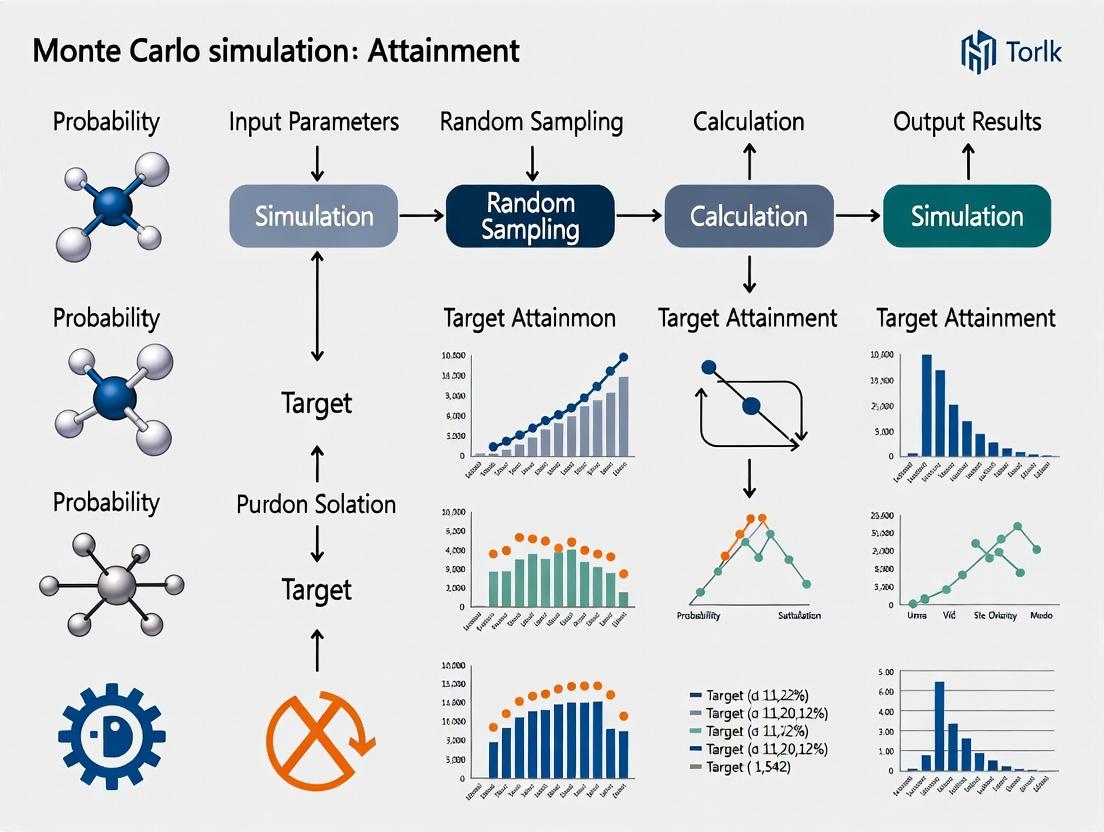
This comprehensive guide explains how Monte Carlo Simulation (MCS) is used to calculate the Probability of Target Attainment (PTA) in pharmacokinetic/pharmacodynamic (PK/PD) modeling.
Monte Carlo Simulation for PTA: A Complete Guide to Predicting PK/PD Success in Drug Development
Abstract
This comprehensive guide explains how Monte Carlo Simulation (MCS) is used to calculate the Probability of Target Attainment (PTA) in pharmacokinetic/pharmacodynamic (PK/PD) modeling. Designed for researchers and drug development professionals, it covers the core statistical concepts of PTA, detailed methodology for simulation setup using modern software tools, strategies for troubleshooting common modeling issues and optimizing study designs, and critical validation techniques for ensuring regulatory acceptance. The article provides actionable insights for applying PTA/MCS to optimize dosing regimens, support regulatory submissions, and derisk clinical development from pre-clinical stages through late-phase trials.
Understanding PTA and Monte Carlo Simulation: The Core PK/PD Framework for Rational Dosing
Probability of Target Attainment (PTA) is a quantitative metric used in pharmacokinetic/pharmacodynamic (PK/PD) analysis to estimate the likelihood that a specific dosing regimen will achieve a predefined PK/PD target index (e.g., %fT>MIC, AUC/MIC) associated with clinical efficacy or safety. It serves as a critical bridge linking drug exposure to microbiological and clinical outcomes, enabling rational dose selection and justification, particularly for anti-infective agents and targeted therapies.
Within the broader thesis on Monte Carlo simulation (MCS) for PTA research, PTA is the primary output of integrating population PK models with PK/PD targets via MCS. This approach accounts for inter-individual variability in PK parameters and uncertainty in the pathogen MIC distribution to predict the probability of success for a given dose across a simulated patient population.
Foundational Concepts & Key Data
Core PK/PD Indices and Efficacy Targets
The PK/PD target is a quantifiable exposure threshold derived from preclinical models or clinical data. The PTA is calculated as the proportion of simulated subjects whose drug exposure meets or exceeds this target.
Table 1: Common PK/PD Indices and Associated Efficacy Targets for Anti-Infectives
| Drug Class | Primary PK/PD Index | Typical Efficacy Target | Common Pathogen Type |
|---|---|---|---|
| β-lactams (Penicillins, Cephalosporins) | %fT>MIC | 40-70% fT>MIC | Bacteria (Gram-positive/-negative) |
| Fluoroquinolones | fAUC/MIC | 125-250 | Bacteria (Gram-negative) |
| Aminoglycosides | Cmax/MIC | 8-10 | Bacteria (Gram-negative) |
| Glycopeptides (Vancomycin) | AUC/MIC | 400-600 (for S. aureus) | Gram-positive Bacteria |
| Azoles (e.g., Fluconazole) | AUC/MIC | 25-100 | Fungi (e.g., Candida) |
Note: fT>MIC = percentage of dosing interval that free drug concentration exceeds MIC; fAUC = area under the free drug concentration-time curve; Targets are examples and vary by pathogen and infection site.
PTA Output Interpretation
A PTA of ≥90% for a given MIC is often considered an acceptable threshold for dose justification in anti-infective drug development, implying a high probability of therapeutic success. The relationship between PTA and MIC is used to determine the pharmacokinetic breakpoint.
Table 2: Example PTA Output for a Hypothetical β-lactam (2000 mg q8h, 1-hr infusion)
| Pathogen MIC (mg/L) | Mean fT>MIC (%) | PTA (%) |
|---|---|---|
| 0.25 | 100 | 100 |
| 1 | 95 | 99.5 |
| 2 | 80 | 95.2 |
| 4 | 55 | 75.1 |
| 8 | 25 | 30.4 |
| 16 | 10 | 5.0 |
Based on a target of 60% fT>MIC. The PK/PD breakpoint (PTA≥90%) is ~2 mg/L.
The Monte Carlo Simulation Protocol for PTA Analysis
This protocol outlines the core steps for conducting a PTA analysis using MCS, framed within a research thesis context.
Protocol: Population PK/PD Target Attainment Analysis via MCS
Objective: To estimate the PTA for a candidate dosing regimen against a range of pathogen MICs.
I. Prerequisites and Input Generation
- Population PK Model: Obtain a finalized population PK model (structural model, fixed and random effects parameters).
- PK/PD Target: Define the target index (e.g., AUC/MIC > 100) and its magnitude based on preclinical/clinical data.
- MIC Distribution: Obtain a relevant MIC distribution (e.g., from surveillance studies like EUCAST or CLSI) for the target pathogen(s).
II. Simulation Engine Setup
- Software: Utilize specialized software (e.g., NONMEM, R with
mrgsolve/RxODE, Phoenix WinNonlin, Simcyp Simulator). - Virtual Population: Simulate a large virtual population (e.g., N=5,000-10,000 subjects). Randomly sample individual PK parameters (e.g., CL, Vd) from the multivariate distributions defined by the population PK model, accounting for covariate effects (weight, renal function).
- Dosing Regimen: Program the software to simulate drug concentrations over time for the regimen(s) of interest.
III. Exposure and PTA Calculation
- Exposure Metric Calculation: For each virtual subject and each MIC in a defined range (e.g., 0.0625 to 64 mg/L, doubling dilutions), calculate the relevant PK/PD index (e.g., calculate fAUC and then fAUC/MIC ratio).
- Target Comparison: For each subject-MIC pair, determine if the calculated index meets or exceeds the predefined target (binary outcome: 1 for attainment, 0 for non-attainment).
- PTA Aggregation: For each MIC value, compute the PTA as the mean of the binary outcomes across all simulated subjects:
PTA(MIC) = (Number of subjects with index ≥ Target) / (Total number of subjects).
IV. Output and Analysis
- PTA vs. MIC Curve: Plot PTA (%) against MIC (mg/L) on a logarithmic scale.
- PK/PD Breakpoint Determination: Identify the highest MIC at which the PTA remains ≥90% (or another pre-specified threshold).
- Cumulative Fraction of Response (CFR): For a specific MIC distribution, calculate the weighted average PTA:
CFR = Σ [PTA(MIC_i) * f(MIC_i)], wheref(MIC_i)is the frequency of the i-th MIC in the population. CFR estimates the expected population PTA.
Key Assumptions:
- The population PK model adequately describes the target patient population.
- The PK/PD target is clinically relevant and constant across the simulated population.
- Protein binding is constant.
Diagram: PTA Analysis via Monte Carlo Simulation
Title: Workflow for Monte Carlo Simulation PTA Analysis
The Scientist's Toolkit: Key Research Reagent Solutions
Table 3: Essential Tools for PTA/Monte Carlo Simulation Research
| Category / Item | Function in PTA Research | Example Solutions/Software |
|---|---|---|
| Population PK Modeling | To develop the mathematical model describing drug disposition and its variability in the target population. | NONMEM, Monolix, Phoenix NLME, R (nlmixr2) |
| Pharmacometric Simulation | Engine to execute Monte Carlo simulations using PK models and generate virtual patient data. | R (mrgsolve, RxODE), Simcyp Simulator, GastroPlus, NONMEM with $SIM |
| PK/PD Analysis & Visualization | To calculate PK/PD indices from simulated data, perform target comparison, and generate PTA curves. | R (tidyverse, ggplot2), Phoenix WinNonlin, MATLAB/Python |
| MIC Data Source | Provides the pathogen susceptibility distribution required for CFR calculation and breakpoint analysis. | EUCAST MIC Distributions, CLSI Surveillance Data, Sponsor-specific surveillance studies |
| Clinical Pharmacokinetic Data | The foundational data from phase I/II studies used to build the population PK model. | Bioanalytical assay-validated concentration-time data (e.g., via LC-MS/MS) |
| PD/Efficacy Target Data | Informs the selection of the critical PK/PD index magnitude from preclinical infection models or clinical trials. | Data from murine thigh/lung infection models, hollow-fiber infection models, dose-ranging clinical studies |
Application Notes: Integrating Monte Carlo Simulation (MCS) into PK/PD Target Attainment Analysis
Deterministic PK/PD models, which use fixed parameter values (e.g., mean or median), provide a single-point estimate of drug exposure and effect. While useful for initial predictions, they fail to account for the inter-individual variability (IIV) and residual uncertainty inherent in real patient populations. This can lead to misleading conclusions about the likelihood of achieving a therapeutic target, such as a pharmacodynamic index (e.g., fT>MIC for antibiotics).
Monte Carlo Simulation (MCS) directly addresses this by incorporating the distributions of key PK/PD parameters—like clearance (CL), volume of distribution (Vd), and minimum inhibitory concentration (MIC)—to simulate thousands of virtual patients. The output is a probabilistic estimate of success, the Probability of Target Attainment (PTA), which forms the foundation for rational dosing regimen selection and susceptibility breakpoint determination.
The core advantage lies in moving from the question "What is the predicted exposure for an average patient?" to "What percentage of a heterogeneous population will achieve efficacious and safe exposure levels?" This is critical for optimizing doses for special populations, supporting regulatory filings, and justifying dose adjustments in clinical guidelines.
Key Quantitative Comparisons: Deterministic vs. Probabilistic Output
Table 1: Output Comparison for a Hypothetical Antibiotic (Target: fT>MIC > 50%)
| Metric | Deterministic Model (Mean Params) | Monte Carlo Simulation (n=10,000) |
|---|---|---|
| Primary Output | fT>MIC = 65% (Single value) | Probability of Target Attainment (PTA) = 78% |
| Information Provided | "Average" patient achieves target. | 78% of the simulated population achieves target. |
| Population Insight | None. Obscures variability. | Full distribution of fT>MIC; identifies sub-populations at risk of failure. |
| Dosing Decision Support | Limited. "Dose is adequate." | Robust. Allows dosing optimization to achieve PTA >90% (e.g., by increasing dose or frequency). |
Table 2: Impact of Parameter Variability on PTA (Example)
| Source of Variability | Coefficient of Variation (CV%) | Effect on PTA (for a fixed dose) |
|---|---|---|
| Low IIV in Clearance | 20% | PTA = 95% (Narrow, predictable outcome) |
| High IIV in Clearance | 60% | PTA = 72% (Broad risk of sub-therapeutic exposure) |
| Including MIC Distribution | NA (Geometric mean MIC=2 mg/L) | PTA drops from 88% (fixed MIC) to 75% (accounts for resistant pathogens) |
Experimental Protocols
Protocol 1: Standard PTA Analysis for an Anti-infective Agent
Objective: To determine the PTA for a novel beta-lactam antibiotic against a population of Pseudomonas aeruginosa isolates for a proposed 2g q8h 1-hour infusion regimen.
Materials & Software:
- Population PK model parameters (Mean θ, Inter-individual variance Ω, Residual error σ).
- MIC distribution data (≥1000 clinical isolates) from surveillance studies (e.g., SENTRY).
- Pharmacodynamic target (e.g., 40% fT>MIC).
- Software: Nonmem, R (with
mrgsolveorRxODE), Phoenix, or specialized MCS tools.
Methodology:
- Define Parameter Distributions: For each PK parameter (e.g., CL, Vd), assume a log-normal distribution. Specify the mean (θ) and variance (ω²).
- Define Covariate Relationships: Incorporate correlations (e.g., CL scaled by creatinine clearance using a power model).
- Generate Virtual Population: Simulate 10,000 virtual subjects. For each subject:
- Sample a random value for each PK parameter from its defined distribution.
- Sample a covariate value (e.g., CrCl) from a realistic demographic distribution.
- Apply covariate relationships to adjust PK parameters.
- Incorporate MIC Distribution: Sample an MIC value for each virtual subject from the empirical MIC distribution of the pathogen.
- Simulate PK Profiles: For each subject, simulate the plasma concentration-time profile over one dosing interval at steady-state using the subject's unique PK parameters.
- Calculate PD Index: For each subject, calculate the achieved fT>MIC.
- Determine Target Attainment: Compare each subject's fT>MIC to the target (e.g., 40%). Count the number of subjects meeting/exceeding the target.
- Calculate PTA: PTA = (Number of subjects attaining target / Total number of subjects) * 100.
- Iterate: Repeat the simulation for a range of doses (e.g., 1g, 2g, 3g) and dosing intervals (q8h, q12h) to generate PTA curves for dosing regimen optimization.
Protocol 2: PTA with Protein Binding and Tissue Penetration
Objective: To assess PTA for a highly protein-bound drug at the site of infection (e.g., epithelial lining fluid (ELF)).
Methodology:
- Follow Steps 1-4 from Protocol 1.
- Sample Protein Binding: For each subject, sample an unbound fraction (fu) value from a defined distribution (e.g., beta distribution based on in vitro data).
- Estimate Tissue Penetration: Apply a fixed or distributed penetration ratio (e.g., ELF/plasma ratio) to estimate unbound drug concentration at the effect site.
- Simulate Effect-Site PK: Simulate the unbound concentration-time profile in the target tissue.
- Calculate PD Index: Use the effect-site profile to calculate the relevant PD index (e.g., fAUC/MIC).
- Continue with Steps 7-9 from Protocol 1 using the effect-site PD index.
Visualizations
Diagram 1: MCS Workflow for PTA
Diagram 2: Deterministic vs. Probabilistic Model Logic
The Scientist's Toolkit: Research Reagent Solutions
Table 3: Essential Tools for MCS in PK/PD
| Item/Software | Function & Rationale |
|---|---|
| Population PK Model | Provides the structural model and estimates of IIV (Ω) and residual error (σ) required to define parameter distributions for simulation. |
| Clinical MIC Database | Source of pathogen-specific MIC distributions (e.g., from EUCAST or SENTRY). Critical for realistic simulation of microbial susceptibility. |
| Statistical Software (R/Python) | Core platform for scripting simulations, sampling from distributions, and analyzing/outputting PTA results. Packages: mrgsolve, RxODE, PopED. |
| Dedicated PK/PD Software | Tools like NONMEM, Phoenix NLME, or Simcyp have built-in MCS capabilities, streamlining workflow for complex models. |
| Virtual Population Generator | Integrated in some software or built custom; generates realistic covariate data (weight, renal function) for the simulated cohort. |
| PD Target Value | A well-justified, pre-defined exposure target (e.g., AUC/MIC >125) from preclinical or clinical studies to serve as the success criterion. |
Probability of Target Attainment (PTA) analysis, underpinned by Monte Carlo simulation, is a cornerstone of modern dose selection and rational drug development. It integrates three fundamental pillars: Pharmacokinetic (PK) variability, Pharmacodynamic (PD) targets, and the characteristics of the intended Patient Population. Within a thesis on advanced Monte Carlo methods, this framework moves from deterministic predictions to probabilistic, population-based forecasts of therapeutic success, directly informing critical Phase 2/3 dose decisions and regulatory submissions.
Core Components: Detailed Analysis
Pharmacokinetic (PK) Variability
PK variability quantifies the inter-individual differences in drug exposure (e.g., AUC, Cmax, trough concentration) following a given dose. This variability arises from physiological, genetic, and pathophysiological sources.
Key Sources of PK Variability:
- Demographics: Body size, age, sex.
- Organ Function: Renal and hepatic impairment status.
- Genetics: Polymorphisms in drug-metabolizing enzymes (e.g., CYP450s) and transporters.
- Comorbidities & Drug-Drug Interactions (DDIs): Disease state effects on physiology and concomitant medications.
In Monte Carlo simulation, this variability is described by population PK models. These models provide the structural model (e.g., 2-compartment) and, critically, the variance-covariance matrix defining the inter-individual variability (IIV) and residual error for PK parameters.
Diagram Title: Integration of PK Variability into Monte Carlo Simulation
Pharmacodynamic (PD) Targets
The PD target is the exposure metric linked to efficacy or toxicity. It is the "goal" that the simulated PK profiles must achieve.
Common PD Target Types:
- Static Target: e.g., % time above a minimum inhibitory concentration (%ƒT>MIC) for antibiotics.
- Cumulative Target: e.g., Area Under the inhibitory Curve (AUIC).
- Peak Target: e.g., Ratio of Cmax to MIC.
The target value is typically derived from pre-clinical models (e.g., murine thigh infection), in vitro data, or early clinical trials. The target must be defined for both efficacy and safety (e.g., a toxic Cmax threshold).
Diagram Title: Efficacy and Safety Targets in PTA
Patient Population
The virtual patient population in the simulation must reflect the intended clinical use population. This ensures the PTA estimate is clinically relevant.
Population Characteristics to Simulate:
- Covariate Distributions: Realistic ranges and correlations for weight, age, renal function (e.g., eGFR), serum albumin, etc.
- Prevalence of Conditions: Proportion of patients with renal impairment, obesity, or relevant comorbidities.
- Concomitant Medication Scenarios: Probability of co-administration with strong CYP inhibitors/inducers.
Table 1: Exemplar PK Variability Parameters for a Hypothetical Antibiotic (2-Compartment IV Model)
| Parameter (Unit) | Population Mean (RSE%) | Inter-Individual Variability (CV%) | Covariate Relationships |
|---|---|---|---|
| Clearance (CL, L/h) | 5.0 (3%) | 30% | CL = 5.0 * (WT/70)^0.75 * (1 - 0.3*(Renal_Impairment)) |
| Central Volume (V1, L) | 15.0 (5%) | 25% | V1 = 15.0 * (WT/70) |
| Inter-comp. Clearance (Q, L/h) | 8.5 (10%) | 40% | - |
| Peripheral Volume (V2, L) | 25.0 (8%) | 35% | - |
| Residual Error | Proportional: 15% | Additive: 0.2 mg/L | - |
Table 2: Common PD Targets for Anti-Infective Therapies
| Infection Type / Drug Class | Efficacy Target (Typical Value) | Primary PK/PD Index | Safety Target (Example) |
|---|---|---|---|
| Gram-negative Bacteria / β-lactams | ƒT>MIC = 40-70% | %ƒT>MIC | Cmax > 80 mg/L (Neurotoxicity risk) |
| Staphylococci / Vancomycin | AUC0-24/MIC > 400 | AUC/MIC | Trough > 15-20 mg/L (Nephrotoxicity risk) |
| Mycobacteria / Aminoglycosides | Cmax/MIC > 8-10 | Cmax/MIC | Trough > 1 mg/L (Ototoxicity risk) |
| Fungi / Echinocandins | AUC0-24/MIC > 3000 | AUC/MIC | Not commonly defined |
Experimental Protocols
Protocol 1: Executing a Population PK-Guided Monte Carlo Simulation for PTA
Objective: To estimate the PTA for a proposed dosing regimen against a range of pathogen MICs.
Materials & Software:
- Population PK model (NONMEM format or published parameters).
- Statistical software (R, SAS) or specialized simulation software (Phoenix NLME, Simcyp, R
mrgsolve/PKPDsim). - Covariate database for target population.
Procedure:
- Define Virtual Population: Generate a cohort of N=5000-10000 virtual subjects. For each subject, stochastically sample covariate values (e.g., weight, creatinine clearance) from distributions representative of the target patient population.
- Sample PK Parameters: For each virtual subject, sample individual PK parameters (CL, V, etc.) from the multivariate distribution defined by the population PK model's fixed effects and variance-covariance (Ω) matrix, incorporating the subject's specific covariates.
- Simulate PK Profiles: Using the individual PK parameters and the exact dosing regimen (dose, interval, infusion duration), simulate a steady-state PK profile (e.g., concentration-time curve over 24h) for each subject.
- Calculate PD Exposure Index: For each subject and a given MIC (e.g., 0.125 to 64 mg/L, 2-fold dilutions), calculate the relevant PK/PD index (e.g., %ƒT>MIC, AUC/MIC).
- Determine Target Attainment: Compare each subject's calculated index to the pre-defined PD target (e.g., %ƒT>MIC ≥ 50%). Record a binary outcome (Attained=1, Not Attained=0).
- Calculate PTA: For each MIC, compute PTA as the proportion of the virtual population achieving the target: PTA(MIC) = (Σ Attained) / N.
- Generate PTA vs. MIC Curve: Plot PTA (%) against MIC (mg/L) to visualize the breakpoint where PTA falls below a desired threshold (e.g., 90%).
Protocol 2: Incorporating Patient Population Subgroups in PTA Analysis
Objective: To compare PTA across distinct subpopulations (e.g., normal renal function vs. moderate renal impairment).
Procedure:
- Stratify Covariate Database: Partition the covariate database or define separate sampling distributions for each subgroup (e.g., eGFR ≥90 mL/min/1.73m² and eGFR 30-59 mL/min/1.73m²).
- Execute Parallel Simulations: Run the Monte Carlo simulation (Protocol 1) independently for each subgroup cohort, using the same underlying population PK model (which includes the covariate relationship, e.g., CL on eGFR).
- Generate Comparative Outputs: Create separate PTA vs. MIC curves for each subgroup. Present results in a multi-panel figure or overlayed plot.
- Statistical Comparison (Optional): Calculate the difference in PTA between groups at key MIC values (e.g., clinical breakpoint) and assess using confidence intervals.
Diagram Title: PTA Analysis via Monte Carlo Workflow
The Scientist's Toolkit: Research Reagent Solutions
Table 3: Essential Tools for PTA Analysis
| Item / Solution | Function in PTA Analysis |
|---|---|
| Population PK Model | The mathematical foundation describing average drug behavior and its variability. Provides parameter distributions for simulation. |
| Covariate Database | A representative dataset (e.g., from clinical trials, NHANES) defining the demographic and pathophysiological characteristics of the virtual population. |
| Monte Carlo Simulation Engine | Software (e.g., R, NONMEM, Pirana, Simcyp) that performs the stochastic sampling and numerical simulation of thousands of virtual patient courses. |
| PD Target Value | The critical exposure threshold (and its uncertainty) derived from preclinical/clinical data, serving as the go/no-go benchmark in simulations. |
| Pathogen MIC Distribution | The in vitro susceptibility profile (e.g., from surveillance studies like SENTRY) defining the range of MICs the regimen must cover. |
| Visualization & Reporting Tools | Software (e.g., R ggplot2, Python Matplotlib, Spotfire) to create publication-quality PTA curves and summary tables for regulatory documents. |
Application Notes
Introduction to PTA in a Monte Carlo Simulation Framework The Probability of Target Attainment (PTA) is a key pharmacokinetic/pharmacodynamic (PK/PD) metric that predicts the likelihood of achieving a predefined PK/PD target index (e.g., fT>MIC, AUC/MIC) for a given dosing regimen in a population. Originally developed and championed within antimicrobial stewardship to optimize dosing against resistant pathogens and support dose selection for new antibiotics, PTA analysis has evolved into a cornerstone of model-informed drug development (MIDD) across therapeutic areas.
Core Evolution and Broader Applications The foundational use of PTA in antibiotics leveraged Monte Carlo simulation (MCS) to account for variability in PK parameters (e.g., clearance, volume) and the minimum inhibitory concentration (MIC) distribution of pathogens. This framework is now applied to:
- Oncology: To attain target concentrations for molecularly targeted therapies (e.g., kinase inhibitors) and cytotoxic agents, using targets like fT>Cmin or AUC.
- Antiviral Therapy: For drugs against HIV, HCV, and influenza, targeting trough concentrations or AUC relative to inhibitory quotients.
- Immunosuppressants: To optimize dosing of drugs like tacrolimus for transplant patients, targeting trough levels within a narrow therapeutic window.
The shift involves moving from a microbiological target (MIC) to a pharmacological target (e.g., IC50, EC90) relevant to the disease physiology.
Integration with Pharmacometric Workflows PTA analysis is no longer an isolated step. It is integrated into comprehensive pharmacometric workflows that include:
- Population PK (PopPK) model development to characterize variability.
- Exposure-Response (E-R) analysis to identify the critical PK/PD target.
- MCS to estimate PTA across plausible dosing regimens and patient subpopulations.
- Clinical trial simulation to predict outcomes and optimize trial design.
Protocols
Protocol 1: Conducting a Standard PTA Analysis for an Antimicrobial Agent
Objective: To determine the probability that a proposed intravenous dosing regimen of a novel beta-lactam antibiotic achieves a free drug concentration above the MIC (fT>MIC) for 60% of the dosing interval across a population.
Materials & Software:
- PopPK model parameters (typical values & variance-covariance matrix).
- MIC distribution data (from surveillance studies, e.g., EUCAST).
- MCS software (e.g., R with
mrgsolve/PKPDsim, NONMEM, Phoenix WinNonlin). - High-performance computing resources (for large simulations).
Procedure:
- Define Simulation Population: Specify the virtual population size (e.g., n=10,000), demographics, and relevant covariates (e.g., renal function strata).
- Parameter Sampling: For each virtual subject, sample a set of PK parameters (e.g., CL, Vd) from a multivariate log-normal distribution defined by the PopPK model estimates.
- MIC Sampling: For each subject, sample a single MIC value from the empirical MIC distribution of the target pathogen (e.g., Pseudomonas aeruginosa).
- Simulate Concentration-Time Profiles: Using the sampled PK parameters and the exact dosing regimen, simulate the free drug concentration-time profile over a steady-state dosing interval.
- Calculate Target Attainment: For each subject, determine if the condition
fT>MIC >= 60%is met. - Calculate Population PTA: Aggregate results across all subjects. PTA = (Number of subjects attaining target / Total subjects) * 100.
- Dose Strategy Evaluation: Repeat steps 4-6 for a range of doses (e.g., 500mg, 1000mg, 2000mg q8h) and infusion durations.
Data Output & Table:
| Dosing Regimen | PTA at MIC=2 mg/L | PTA at MIC=4 mg/L | PTA at MIC=8 mg/L | PTA at MIC=16 mg/L |
|---|---|---|---|---|
| 1000 mg q8h, 0.5h infusion | 99.5% | 92.1% | 65.4% | 23.3% |
| 1000 mg q8h, 3h infusion | 100% | 99.8% | 88.9% | 45.6% |
| 2000 mg q8h, 3h infusion | 100% | 100% | 98.7% | 78.2% |
Protocol 2: PTA Analysis for a Targeted Oncology Kinase Inhibitor
Objective: To estimate the probability that oral dosing regimens of a kinase inhibitor achieve a trough concentration (Ctrough) above the preclinically determined target efficacious concentration (e.g., IC90 = 500 nM) in a simulated oncology patient population with varied CYP3A4 phenotypes.
Procedure:
- Define Population & Covariates: Simulate a population (n=5000) with proportions of CYP3A4 poor, normal, and rapid metabolizers based on known epidemiology.
- Integrate Complex PK: Utilize a PopPK model that includes non-linear absorption, CYP3A4-mediated clearance, and drug-drug interaction (DDI) with a common co-medication.
- Sample Parameters & Simulate: Sample parameters incorporating covariate effects. Simulate steady-state Ctrough after 4 weeks of daily dosing.
- Define & Apply Target: The target is
Ctrough,ss > 500 nM. Calculate attainment for each subject. - Stratified Analysis: Report overall PTA and PTA stratified by CYP3A4 phenotype and DDI status.
Data Output & Table:
| Dosing Regimen | Overall PTA | PTA (CYP3A4 Normal) | PTA (CYP3A4 Poor) | PTA (CYP3A4 Rapid) | PTA (with DDI) |
|---|---|---|---|---|---|
| 150 mg once daily | 78.3% | 75.1% | 99.2% | 45.6% | 91.5% |
| 200 mg once daily | 89.5% | 87.8% | 99.9% | 68.9% | 97.2% |
| 100 mg twice daily | 95.2% | 94.1% | 100% | 85.3% | 99.1% |
Visualizations
Title: Monte Carlo PTA Analysis Workflow
Title: PTA Evolution from Antimicrobials to Broad Use
The Scientist's Toolkit: Key Research Reagent Solutions
| Item | Function in PTA/MCS Research |
|---|---|
| Pharmacometric Software (NONMEM, Monolix) | Industry-standard for building nonlinear mixed-effects (PopPK) models, the primary source of parameter estimates and variability for MCS. |
MCS & Trial Simulation Platform (R with mrgsolve, Simulx) |
Flexible open-source environments for coding and executing complex, tailored MCS workflows and clinical trial simulations. |
| Clinical PK/PD Database (e.g., EUCAST MIC, NHANES) | Sources of real-world variability data (pathogen MICs, patient covariates) to inform realistic virtual population creation. |
| In vitro PD Parameter (IC50, Ki) Assay Kits | Cell-based or biochemical assays to determine the potency parameters that become the PD targets (e.g., IC90) in non-antibiotic PTA. |
| Physiologically-Based PK (PBPK) Software (GastroPlus, Simcyp) | Used to simulate and predict PK in special populations or with DDIs when clinical PK data are sparse, enriching the MCS inputs. |
| Validated Bioanalytical Assay (LC-MS/MS) | To generate high-quality concentration data from preclinical and clinical studies, which is essential for robust PopPK model development. |
| High-Performance Computing (HPC) Cluster | To run thousands of iterations of complex models and large virtual populations in a feasible timeframe for iterative dose optimization. |
Within the thesis framework of Monte Carlo simulation (MCS) for Probability of Target Attainment (PTA) research, understanding key pharmacokinetic/pharmacodynamic (PK/PD) indices and their target values is paramount. These metrics form the quantitative bridge between drug exposure and antimicrobial efficacy, enabling the prediction of clinical success via stochastic modeling. This document outlines essential terminology, application notes, and experimental protocols for their determination.
Key PK/PD Indices & Target Values
Pharmacodynamic targets are exposure thresholds associated with a high probability of a positive clinical or microbiological outcome.
Table 1: Core PK/PD Indices and Associated Target Values for Common Antibiotic Classes
| Antibiotic Class | Primary PK/PD Index | Typical Target Value (for Bacteriostasis) | Typical Target Value (for 1-2 log kill) | Key Pathogens |
|---|---|---|---|---|
| β-lactams (Penicillins, Cephalosporins, Carbapenems) | %fT>MIC | 30-40% | 60-70% | S. pneumoniae, E. coli |
| Fluoroquinolones | AUC₂₄/MIC | 30-125 | 100-250 | S. pneumoniae, P. aeruginosa |
| Aminoglycosides | Cmax/MIC | 8-10 | 10-12 | P. aeruginosa, Enterobacteriaceae |
| Glycopeptides (Vancomycin) | AUC₂₄/MIC | ≥400 | ≥400 | MRSA |
| Oxazolidinones (Linezolid) | AUC₂₄/MIC | 50-100 | 80-120 | MRSA, VRE |
Note: fT>MIC = percentage of dosing interval that free drug concentration exceeds MIC; AUC₂₄/MIC = ratio of 24-hour area under the free concentration-time curve to MIC. Targets are derived from preclinical in vivo models and clinical outcome analyses.
Cumulative Fraction of Response (CFR)
CFR is the expected population probability of target attainment, calculated by integrating the PTA for a specific dosing regimen against the MIC distribution of a bacterial population.
Definition: CFR = Σ [PTA(MICᵢ) * F(MICᵢ)], where PTA(MICᵢ) is the probability of attaining the PK/PD target at MICᵢ, and F(MICᵢ) is the frequency of that MIC in the population distribution.
Application Notes: Integration into Monte Carlo Simulation
Monte Carlo simulation is used to estimate PTA and CFR by accounting for variability and uncertainty in PK parameters and MIC distributions.
Workflow Overview:
- Define Population PK Model: Obtain parameter estimates (e.g., clearance, volume of distribution) and their inter-individual variability (IIV).
- Define MIC Distribution: Source from surveillance databases (e.g., EUCAST, CLSI).
- Define PD Target: Select appropriate index (fT>MIC, AUC/MIC) and target value.
- Perform Simulation: Simulate concentration-time profiles for thousands of virtual patients.
- Calculate PTA: For each MIC, determine the proportion of profiles achieving the target.
- Calculate CFR: Weigh PTA by the MIC distribution frequency.
Experimental Protocols
Protocol 4.1: Determining fT>MIC via In Vitro Pharmacodynamic Models
Objective: To experimentally measure the %fT>MIC required for static or bactericidal effect against a target organism. Materials: See Scientist's Toolkit. Methodology:
- Inoculum Preparation: Prepare a bacterial suspension of ~10⁸ CFU/mL in cation-adjusted Mueller-Hinton broth (CAMHB). Dilute to a final density of ~10⁶ CFU/mL in the model system.
- One-Compartment Model Setup: Fill the central chamber of an in vitro chemostat (e.g., hollow-fiber system) with CAMHB. Connect to a drug reservoir via a peristaltic pump to simulate desired half-life.
- Drug Administration: Administer antibiotic bolus to achieve initial peak concentration. The pump continuously removes and replaces media to simulate elimination.
- Sampling: Collect samples from the central chamber at predefined intervals (e.g., 0, 1, 2, 4, 8, 24h) for:
- Drug Concentration: Analyze via validated LC-MS/MS or bioassay.
- Bacterial Density: Serially dilute and plate on agar for CFU count.
- Data Analysis: Plot time-kill curves. Determine the duration (hours) during which drug concentrations remain above the MIC for the test strain. Calculate %fT>MIC = (Duration > MIC / Dosing Interval) * 100. Correlate with observed bacterial reduction (static, 1-log kill, etc.) to establish target.
Protocol 4.2: Population PK Modeling for Monte Carlo Simulation Input
Objective: To develop a population PK model that provides parameter estimates and variance for MCS. Methodology:
- Data Assembly: Collate rich or sparse plasma drug concentration-time data from phase I/II clinical trials.
- Model Development: Using non-linear mixed-effects modeling software (e.g., NONMEM, Monolix):
- Define structural model (e.g., 2-compartment, IV).
- Estimate population mean parameters (THETA).
- Estimate IIV (OMEGA matrix, log-normal assumed).
- Estimate residual error (SIGMA).
- Model Validation: Perform diagnostic plots, visual predictive checks (VPC), and bootstrap analysis.
- Output for MCS: Final model parameters (THETA, OMEGA, SIGMA) are used to simulate PK profiles in virtual patients, capturing true population variability.
Protocol 4.3: CFR Calculation Using Monte Carlo Simulation
Objective: To compute the CFR of a given dosing regimen against a specified pathogen population. Methodology:
- Inputs:
- PK Parameters: From Protocol 4.2 (e.g., CL=5 L/h ± 30% IIV).
- Dosing Regimen: e.g., 1g q8h, 30-min infusion.
- PD Target: e.g., fT>MIC ≥ 60% for bactericidal effect.
- MIC Distribution: e.g., 10,000 MIC values from EUCAST for E. coli.
- Simulation Execution:
- For j=1 to n (e.g., n=10,000 virtual patients):
- Randomly draw a set of PK parameters from the multivariate distributions defined by THETA and OMEGA.
- Simulate the steady-state concentration-time profile.
- For i=1 to m MIC values in the distribution:
- Calculate the achieved fT>MIC for the simulated profile against MICᵢ.
- Record if target (e.g., ≥60%) is attained (1) or not (0).
- PTA Calculation: For each unique MIC value, PTA(MIC) = (Number of patients attaining target at that MIC) / n.
- For j=1 to n (e.g., n=10,000 virtual patients):
- CFR Calculation: CFR = Σ [PTA(MICᵢ) * F(MICᵢ)] across all MICs in the population distribution. A CFR > 90% is generally considered optimal for empiric therapy.
Visualizations
Title: In Vitro fT>MIC Target Determination Workflow
Title: MCS Logic for PTA and CFR Calculation
The Scientist's Toolkit
Table 2: Essential Research Reagent Solutions and Materials
| Item | Function/Description |
|---|---|
| Cation-Adjusted Mueller-Hinton Broth (CAMHB) | Standardized growth medium for antimicrobial susceptibility testing, ensuring consistent cation concentrations (Ca²⁺, Mg²⁺) that affect drug activity. |
| Hollow-Fiber Infection Model (HFIM) System | Advanced in vitro system that can simulate human PK profiles (multi-exponential half-lives) for multiple drugs simultaneously against bacteria. |
| Validated LC-MS/MS Assay Kits | For precise, specific, and quantitative measurement of antibiotic concentrations in biological matrices (serum, broth). |
| Frozen Bacterial Panels | Characterized panels of clinical isolates with known MICs, representing the genetic and phenotypic diversity of target pathogens. |
| Population PK/PD Modeling Software (e.g., NONMEM) | Industry-standard tool for developing population models from sparse clinical data, providing essential parameters for MCS. |
| Monte Carlo Simulation Software (e.g., R, SAS, Phoenix) | Platforms to script and execute thousands of stochastic simulations integrating PK variability and MIC distributions. |
| EUCAST/CLSI MIC Distribution Data | Publicly available, curated databases providing the frequency distributions of MICs for pathogens against antibiotics, crucial for CFR calculation. |
Step-by-Step Guide to Building and Running PTA Simulations: From Data to Decision
Within Monte Carlo simulation (MCS) research for Probability of Target Attainment (PTA), defining the optimal pharmacodynamic (PD) index and its target value is the critical first step. This step establishes the PK/PD bridge, transforming pharmacokinetic (PK) exposure into a quantitative measure of antimicrobial effect or clinical outcome, which the MCS will subsequently test against a population PK model.
Key Pharmacodynamic Indices: Definitions and Rationale
The choice of PD index is driven by the drug's mechanism of action and its concentration-dependent or time-dependent killing characteristics.
- %fT>MIC: The percentage of a dosing interval that the free, unbound drug concentration exceeds the Minimum Inhibitory Concentration (MIC) of the pathogen. This is the primary index for time-dependent antimicrobials (e.g., β-lactams, glycopeptides), where sustained exposure above the MIC is required for efficacy.
- AUC₀–₂₄/MIC: The ratio of the Area Under the free concentration-time curve over 24 hours to the MIC. This is the primary index for concentration-dependent antimicrobials with persistent effects (e.g., fluoroquinolones, aminoglycosides, daptomycin), where the magnitude of exposure drives efficacy.
- Cₘₐₓ/MIC: The ratio of the peak free drug concentration to the MIC. This index is relevant for concentration-dependent antimicrobials where a high peak is critical for maximizing bacterial kill and suppressing resistance (e.g., aminoglycosides).
Establishing Target Values: Integrating Preclinical and Clinical Data
Target values are not arbitrary; they are derived from a synthesis of in vitro, in vivo, and clinical data.
1. Preclinical PK/PD Studies:
- In Vitro Models: Use time-kill curves or hollow-fiber infection models (HFIM) to characterize the relationship between drug exposure and bacterial kill or resistance suppression across a range of PD index values.
- In Vivo Models: Establish exposure-response relationships in animal infection models (e.g., murine neutropenic thigh or lung infection). The exposure associated with static effect, 1-log kill, or 2-log kill is determined.
2. Clinical Outcome Correlation:
- Retrospective analyses of Phase 2/3 clinical trial data link achieved PD indices in patients to clinical/microbiological outcomes (e.g., cure, failure). This validates and refines preclinical targets.
Table 1: Example Preclinical and Clinical PD Targets for Common Antimicrobial Classes
| Antimicrobial Class | Primary PD Index | Typical Preclinical Target (Murine Models) | Typical Clinical Target (from Trials) | Key Considerations |
|---|---|---|---|---|
| β-Lactams | %fT>MIC | 30-40% for stasis; 60-70% for 2-log kill | 40-100% (varies by infection/ pathogen) | Higher targets for severe infections (e.g., pneumonia, sepsis) or less susceptible pathogens. |
| Vancomycin | AUC₂₄/MIC | AUC₂₄/MIC ~400 for stasis (S. aureus) | AUC₂₄/MIC 400-600 (for MRSA) | Target based on both efficacy and toxicity (nephrotoxicity) considerations. |
| Fluoroquinolones | AUC₂₄/MIC | ~30-50 for stasis; >100 for 2-log kill | AUC₂₄/MIC >30-125 (varies by bug/drug) | High targets for Gram-positives (e.g., S. pneumoniae) vs. Gram-negatives. |
| Aminoglycosides | Cₘₐₓ/MIC | Cₘₐₓ/MIC >8-10 for efficacy | Cₘₐₓ/MIC >8-10 (once-daily dosing) | Target helps optimize single daily dose to maximize kill and minimize adaptive resistance. |
Detailed Protocol: Determining a PD Target via In Vivo Murine Thigh Infection Model
This protocol is a cornerstone for generating data to define %fT>MIC or AUC/MIC targets.
Objective: To establish the exposure-response relationship between a defined PD index and the change in bacterial density in a neutropenic mouse thigh infection model.
Materials & Reagents (The Scientist's Toolkit):
| Item | Function |
|---|---|
| Specific pathogen-free (SPF) mice (e.g., ICR or CD-1) | In vivo model system. Immunosuppression required. |
| Test antimicrobial (lyophilized powder, USP grade) | The compound under investigation. |
| Cyclophosphamide | Immunosuppressant to induce neutropenia in mice. |
| Mueller Hinton Broth (MHB) | Standardized growth medium for MIC determination and inoculum prep. |
| Target bacterial strain (with characterized MIC) | The pathogen of interest. |
| Sterile saline (0.9% NaCl) | Vehicle for drug dilution and reconstitution. |
| Homogenizer (e.g., bead mill) | For homogenizing excised thigh tissue to enumerate bacteria. |
| Columbia agar plates with 5% sheep blood | For colony counting (CFU determination). |
| Microcentrifuge tubes & sterile pipettes | Sample handling. |
| Analytical balance & pH meter | Precise solution preparation. |
Procedure:
- Mouse Neutropenia Induction: Administer cyclophosphamide (e.g., 150 mg/kg intraperitoneally) 4 days and 1 day prior to infection.
- Inoculum Preparation: Grow the target bacterium to mid-log phase in MHB, adjust to ~10⁸ CFU/mL in saline, and confirm by plating serial dilutions.
- Thigh Infection: Under brief anesthesia, inject 0.1 mL of inoculum (~10⁷ CFU) intramuscularly into both thighs of each mouse.
- Drug Administration: Two hours post-infection, begin treatment. Mice are randomly assigned to:
- Control groups: Receive vehicle only.
- Treatment groups: Receive the antimicrobial via a defined route (e.g., subcutaneous) at various dose levels and regimens (e.g., different total doses, fractionated to alter PK profile).
- Sample Collection & CFU Determination: At a fixed timepoint (e.g., 24h post-start of therapy), euthanize mice. Aseptically excise both thighs, homogenize individually in saline, perform serial 10-fold dilutions, and plate onto agar. Incubate plates for 18-24 hours and count colonies.
- PK Sampling & Analysis: In a parallel satellite group of infected mice, collect serial blood samples after a representative dose to characterize the plasma PK profile (concentration vs. time). Determine the free-drug exposure.
- Data Analysis:
- Calculate the change in bacterial density (log₁₀ CFU/thigh) from the start of therapy for each dose group.
- Use the measured PK profiles to calculate the PD index (%fT>MIC or AUC/MIC) achieved by each dosing regimen.
- Fit the exposure-response data (e.g., using an inhibitory sigmoid Eₘₐₓ model) to determine the PD index value associated with net stasis, 1-log kill, etc.
Workflow for Defining a PD Target for MCS
Logical Relationship: PK/PD Index Drives MCS PTA Analysis
In Monte Carlo simulations for Probability of Target Attainment (PTA) research, the accurate characterization of population pharmacokinetic (PK) parameters is foundational. This step involves defining the central tendency (mean/typical values) and the inter-individual variability (IIV) and covariance between parameters via the variance-covariance matrix (Ω). These parameters are directly estimated from population PK models using nonlinear mixed-effects modeling (NONMEM).
Core Parameter Definitions
Population PK parameters describe the drug's disposition in the target population. The two key components are:
- Fixed Effects (θ): The typical values for PK parameters (e.g., clearance [CL], volume of distribution [V]) in the population.
- Random Effects (η): Quantifies IIV for each PK parameter. These are assumed to be normally distributed with a mean of 0 and a variance of ω². The covariances between these ηs form the Ω matrix.
The individual PK parameter for the i-th individual (Pᵢ) is modeled as: Pᵢ = θ × exp(ηᵢ) where ηᵢ ~ N(0, Ω).
Structure of the Variance-Covariance Matrix (Ω)
The Ω matrix is symmetric and contains the variances of the random effects on its diagonal and their covariances on the off-diagonals.
Table 1: Example Variance-Covariance Matrix (Ω) for a Two-Parameter Model
| Parameter | CL (ω₁₁) | V (ω₂₂) | Covariance (ω₁₂=ω₂₁) |
|---|---|---|---|
| CL | 0.049 | - | 0.015 |
| V | 0.015 | - | 0.036 |
Interpretation: Variance of CL (ωCL²) = 0.049 (CV% ~22.1%); Variance of V (ωV²) = 0.036 (CV% ~19.0%); Covariance indicates correlated IIV between CL and V.
Experimental Protocol: Estimating Population PK Parameters
Protocol Title: Population PK Model Development and Parameter Estimation Using Nonlinear Mixed-Effects Modeling.
Objective: To develop a population PK model and estimate fixed effect parameters (θ) and the variance-covariance matrix (Ω) from serial PK samples collected in a clinical study.
Materials & Methods:
- Data Collection: Obtain rich or sparse serial PK concentration-time data from subjects/patients following drug administration. Record relevant covariates (e.g., weight, age, renal function).
- Software Setup: Initialize nonlinear mixed-effects modeling software (e.g., NONMEM, Monolix, Phoenix NLME).
- Base Model Development: a. Select a structural PK model (e.g., 1- or 2-compartment). b. Select an error model for residual variability (e.g., proportional, additive). c. Introduce IIV on appropriate PK parameters using an exponential error model: Pᵢ = θ × exp(ηᵢ). d. Estimate initial θ and diagonal Ω (covariances set to zero).
- Covariance Estimation: a. After identifying parameters with significant IIV, allow estimation of off-diagonal elements in the Ω matrix. b. Evaluate statistical significance of covariances using likelihood ratio test (drop in objective function value >3.84 for 1 df).
- Model Evaluation: Validate final parameter estimates using diagnostic plots (observations vs. population/individual predictions, conditional weighted residuals).
- Output Documentation: Extract and document final θ vector and full Ω matrix for simulation.
Title: Population PK Parameter Estimation Workflow
The Scientist's Toolkit: Key Research Reagent Solutions
Table 2: Essential Tools for Population PK Analysis
| Item | Function in Characterization |
|---|---|
| NONMEM | Industry-standard software for nonlinear mixed-effects modeling. Estimates θ and Ω. |
| Monolix | User-friendly software for population PK/PD analysis using stochastic approximation EM algorithm. |
| R (with packages: nlmixr, xpose, ggplot2) | Open-source environment for model fitting (nlmixr) and diagnostic visualization. |
| PsN (Perl-speaks-NONMEM) | Toolkit for automating model runs, diagnostics, and advanced analyses (e.g., bootstrap). |
| Pirana | Graphical interface for managing, executing, and evaluating NONMEM and PsN runs. |
| PDx-POP | Integrated platform for population PK/PD modeling and simulation. |
| Certara/Berkeley Madonna | Software for differential equation-based modeling and simulation. |
Application in PTA Simulation Workflow
The estimated θ and Ω are critical inputs for the simulation step. The Ω matrix, specifically its Cholesky decomposition, is used to generate correlated η values for virtual subjects, ensuring the simulated population reflects real-world variability and parameter relationships.
Title: Role of θ & Ω in PTA Simulation
Within the framework of a Monte Carlo simulation (MCS) for Probability of Target Attainment (PTA) research, Step 3 is the critical integration of physiological and genomic covariates. This step transforms a base pharmacokinetic (PK) model into a population model capable of simulating the diverse patient population encountered in clinical practice. Covariates such as weight, renal function, and cytochrome P450 (CYP) phenotypes are major determinants of inter-individual variability in drug exposure. Their systematic incorporation ensures that the final PTA estimates are clinically relevant and informative for dose selection across subpopulations.
The impact of covariates is typically quantified via allometric scaling or linear/nonlinear relationships established in population PK analyses.
Table 1: Common Covariate Effects and Their Typical Mathematical Parameterization in PK Models
| Covariate | PK Parameter Affected | Typical Relationship Formula | Notes & Example Values |
|---|---|---|---|
| Total Body Weight (WT) | Clearance (CL), Volume of Distribution (V) | P_i = P_std * (WT_i / WT_std)^θ |
Allometric scaling: θ ~0.75 for CL, ~1 for V. WT_std is a standard weight (e.g., 70kg). |
| Renal Function (e.g., eGFR, CrCL) | Renal Clearance (CLR) | CL_Ri = CL_Rstd * (CrCL_i / CrCL_std)^θ |
Linear/Nonlinear: Often linear (θ=1). CrCL_std is typical creatinine clearance (e.g., 90 mL/min). |
| Hepatic Function (e.g., Albumin, Child-Pugh) | Hepatic Clearance (CLH) | CL_Hi = CL_Hstd * (1 - θ * (Score_i - Score_std)) |
Relationship varies; may be multiplicative or categorical based on disease severity. |
| CYP Phenotype | Metabolic Clearance (CLm) | CL_mi = CL_mstd * Activity Multiplier |
Activity Multipliers (Example for CYP2D6): PM=0, IM=0.5, NM=1.0, UM=1.5-2.0. |
| Age (Pediatric) | Clearance, Volume | P_i = P_std * (WT_i / WT_std)^θ1 * (Age_i / Age_std)^θ2 |
Maturation functions (e.g., Hill equation) are often used alongside size scaling. |
Experimental Protocol: Integrating Covariates into a Monte Carlo Simulation
This protocol details the step-by-step methodology for incorporating covariate effects into a PTA MCS workflow.
Protocol Title: Integration of Patient Covariates into a Pharmacokinetic Monte Carlo Simulation for PTA Analysis.
Objective: To generate a virtual patient population with realistic covariate distributions and simulate their individual PK profiles based on covariate-adjusted PK parameters.
Materials & Inputs:
- Base PK Model: Structural model (e.g., 2-compartment) with fixed typical parameters (CLstd, Vstd, etc.) and estimates of inter-individual variability (IIV, as omega variance).
- Covariate Model: Validated mathematical relationships (from Table 1) linking covariates to PK parameters.
- Covariate Distributions: Statistical descriptions (mean, SD, proportion) for the target clinical population.
- Source: Real-world data, epidemiological studies, or phase 3 trial demographics.
Procedure:
- Define Virtual Population Size: Determine the number of virtual subjects (N ≥ 10,000) for stable PTA estimates.
- Generate Covariate Values: For each virtual subject (i = 1 to N), randomly sample a covariate vector from the defined multivariate distributions.
- Example: Use a multivariate normal or log-normal distribution for continuous covariates (Weight, CrCL) and multinomial sampling for categorical covariates (CYP Phenotype).
- Note: Account for correlations (e.g., weight and renal function).
- Calculate Individual PK Parameters: For each subject
i, apply the covariate model to adjust the typical PK parameters.- Formula:
CL_i = CL_std * (WT_i/70)^0.75 * (CrCL_i/90)^1.0 * (CYP2D6_Multiplier_i). - Repeat for all PK parameters (V, Q, etc.).
- Formula:
- Incorporate Residual Variability: Add the IIV (random effect, η) to each adjusted parameter. The η values are sampled from a normal distribution with mean 0 and variance ω².
- Formula (Log-normal):
P_i_final = P_i * exp(η_i).
- Formula (Log-normal):
- Execute Simulation: Use the final vector of individual PK parameters (
CL_i_final,V_i_final, etc.) to simulate the concentration-time profile for each virtual subject under a given dosing regimen. - Calculate PK/PD Target Attainment: For each simulated profile, determine if a predefined PK/PD target (e.g., fT > MIC, AUC/MIC) is achieved.
- Compute PTA: Aggregate results across the population. PTA = (Number of subjects achieving target / N) * 100%.
The Scientist's Toolkit: Research Reagent Solutions
Table 2: Essential Tools for Covariate-Driven MCS Research
| Tool / Reagent | Provider / Software | Primary Function in Protocol |
|---|---|---|
| Population PK Modeling Software | NONMEM, Monolix, Phoenix NLME | Used to develop the base PK and covariate model (Steps 1 & 2), estimating typical parameters and covariate relationships (θ). |
| Statistical Programming Environment | R (with mrgsolve, RxODE), Python (with PKPDsim, SciPy) |
Performs the MCS loop: generates virtual covariates, applies models, simulates profiles, and calculates PTA. |
| Covariate Distribution Datasets | NHANES (National Health and Nutrition Examination Survey), GE-Centricity Electronic Medical Records | Provides real-world demographic and laboratory value distributions for realistic virtual population generation. |
| Pharmacogenomic Frequency Databases | PharmGKB, CPIC (Clinical Pharmacogenetics Implementation Consortium) Guidelines | Provides allele frequencies and phenotype probabilities (e.g., % of PM, IM, NM, UM) for different ethnic populations. |
| High-Performance Computing (HPC) Cluster or Cloud Service | AWS, Google Cloud, Azure | Enables rapid execution of large-scale simulations (N > 100,000) with numerous dosing scenarios and covariate combinations. |
Visualizing the Covariate Integration Workflow
Diagram Title: Monte Carlo PTA Workflow with Covariate Integration
Diagram Title: Covariate Effects on Key PK Parameters
This protocol details the practical execution of Monte Carlo simulations (MCS) for Probability of Target Attainment (PTA) analysis in pharmacokinetic/pharmacodynamic (PK/PD) research. Within the broader thesis on MCS for PTA, this step transforms a developed pharmacometric model and trial design into a quantifiable probability of success. It focuses on the implementation using four primary software environments, each offering distinct advantages for specific workflows in drug development.
Quantitative Software Tool Comparison
The table below summarizes the core characteristics, strengths, and licensing models of the primary software tools used for PTA simulation execution.
Table 1: Comparison of Software Tools for PTA Simulation Execution
| Tool | Primary Use Case | Key Strengths for PTA | Typical Licensing Model |
|---|---|---|---|
| R | Open-source statistical computing and graphics. | Extensive PK/PD packages (mrgsolve, RxODE, PopED), unparalleled customization, reproducible research frameworks (RMarkdown), no cost. |
Open Source (Free) |
| NONMEM | Gold-standard for nonlinear mixed-effects modeling. | Industry-standard for population PK/PD, integrated with PsN for simulation-estimation workflows, robust estimation algorithms. | Commercial (ICON plc) |
| Phoenix NLME | Integrated GUI-based platform for PK/PD modeling. | User-friendly interface, seamless workflow from data wrangling to simulation and reporting, integrated WinNonlin tools. | Commercial (Certara) |
| MATLAB | High-level technical computing and algorithm development. | Powerful scripting, superior matrix operations, extensive toolboxes for custom model development and visualization. | Commercial (MathWorks) |
Core Experimental Protocol: PTA Simulation Workflow
Protocol Title: Execution of a Monte Carlo Simulation for PTA using a Population PK/PD Model.
Objective: To simulate the exposure of a novel antibiotic (Drug X) across a virtual patient population and calculate the PTA for a pharmacodynamic target (e.g., fT>MIC > 60%) across a range of dosing regimens.
3.1 Research Reagent Solutions & Essential Materials
| Item / Solution | Function in Protocol |
|---|---|
| Validated Population PK Model | Mathematical structure describing drug disposition and its inter-individual variability (IIV). Serves as the engine for exposure simulation. |
| Virtual Patient Population Dataset | A data frame defining the demographics (e.g., weight, renal function) and trial design (doses, intervals) for n virtual subjects. |
| Parameter Estimate Vector (THETA) | Fixed effects parameter estimates (e.g., clearance, volume). |
| Omega Matrix (Ω) | Variance-covariance matrix defining the magnitude and correlation of IIV. |
| Sigma Matrix (Σ) | Variance matrix defining residual unexplained variability (RUV). |
| PD Target Definition | The specific exposure metric (e.g., AUC/MIC, Cmax/MIC, fT>MIC) and its critical value for efficacy. |
| Simulation Software (as per Table 1) | The computational environment to execute the numerical simulation. |
3.2 Methodological Steps
- Software Setup & Model Translation: Implement the finalized population PK model in the chosen software. For NONMEM, this is a
.ctlfile; for R/mrgsolve, a.cppmodel file; in Phoenix, a model object. - Define Simulation Scenario: Specify the
n(e.g., 5000) virtual subjects, their covariates, and the dosing regimens to test (e.g., 500 mg, 750 mg, 1000 mg q12h). - Parameter Sampling: For each virtual subject, sample individual PK parameters from the multivariate distribution defined by THETA and Ω. Sample residual error from Σ.
- Exposure Simulation: Solve the differential equations of the PK model for each virtual subject using the sampled parameters, generating concentration-time profiles.
- PD Metric Calculation: For each subject, calculate the relevant PD index (e.g., fT>MIC) against a range of hypothetical MIC values (e.g., 0.06 to 64 mg/L).
- Target Attainment Determination: For each dose-MIC combination, count the proportion of virtual subjects whose PD index meets or exceeds the predefined target.
- PTA Curve Generation: Plot PTA (%) against MIC. The dosing regimen that achieves PTA ≥90% at the clinical breakpoint MIC is considered optimal.
Visualization of Workflows
PTA Simulation Workflow Overview
Software Ecosystem for PTA Analysis
Within the context of Monte Carlo simulation (MCS) for Probability of Target Attainment (PTA) research, generating PTA versus Minimum Inhibitory Concentration (MIC) or dose curves represents the critical, interpretative final step. These curves visually summarize the results of thousands of simulated drug exposures against a target pathogen population, quantifying the likelihood that a given dosing regimen will achieve a predefined pharmacodynamic (PD) target. This application note details the methodology for constructing and interpreting these essential outputs, forming the cornerstone for rational dose selection and susceptibility breakpoint determination in antimicrobial drug development.
Core Concepts and Data Workflow
The generation of PTA curves is the culmination of a multi-step MCS process. The primary input is the distribution of key pharmacokinetic (PK) parameters (e.g., Clearance, Volume of Distribution) derived from a population PK model. Using Monte Carlo simulation, these parameters are randomly sampled (typically n = 10,000 simulations) to generate a distribution of drug exposure metrics (e.g., fAUC/MIC, fT>MIC) for a specific dosing regimen. For each simulated subject, the exposure metric is compared to a pre-clinically validated PD target. The PTA is calculated as the proportion of the simulated population that achieves this target at a specific MIC or dose level.
Table 1: Key Input Parameters for PTA Curve Generation
| Parameter | Description | Typical Source | Example Value(s) |
|---|---|---|---|
| PK Parameter Distributions | Mean (or typical value) and variance (IIV, IOV) for structural PK model parameters. | Population PK Analysis (NONMEM, Monolix) | CL = 5 L/h (ω=0.3), Vd = 50 L (ω=0.2) |
| Dosing Regimen | Dose amount, interval, route, and infusion duration. | Protocol Design | 1000 mg, q8h, 1-hr IV infusion |
| PD Target Index | Exposure measure predictive of efficacy (e.g., fAUC/MIC, fT>MIC). | Pre-clinical in vivo PK/PD studies | fAUC/MIC ≥ 100 |
| MIC Distribution | Range of MICs to be evaluated. | Clinical or epidemiological databases (e.g., EUCAST) | 0.062 to 64 mg/L (2-fold dilutions) |
| Number of Simulations (N) | Number of virtual subjects in each MCS. | Based on desired precision. | 10,000 |
Title: Workflow for Calculating a Single PTA Point
Detailed Protocol: Generating PTA vs. MIC Curves
Materials and Software Requirements
The Scientist's Toolkit: Essential Research Reagents & Solutions
| Item | Function/Description |
|---|---|
| Population PK Model File | The finalized model output (e.g., .ctl or .mlxtran file) containing fixed and random effect parameters. Essential for defining the simulation structure. |
| Monte Carlo Simulation Engine | Software capable of executing the MCS (e.g., mrgsolve R package, PsN, Simulx in Monolix). Performs the stochastic sampling and PK profile generation. |
| Statistical Programming Environment | Primary platform for data manipulation, calculation, and visualization (e.g., R with tidyverse, ggplot2; Python with NumPy, pandas, Matplotlib). |
| Epidemiological MIC Data | A representative dataset of MICs for the target pathogen(s) (e.g., from EUCAST or SENTRY databases). Used to define the relevant MIC range for simulation. |
| Validated PD Target Value | The critical exposure index (e.g., fT>MIC of 40% for β-lactams) and its target value derived from robust pre-clinical PK/PD models. |
Stepwise Procedure
Protocol: Generation of a Standard PTA vs. MIC Curve
Define Simulation Framework:
- Load the final population PK parameter estimates (typical values and variance-covariance matrix for between-subject variability).
- Program the exact dosing regimen of interest (dose, route, frequency, duration) into the simulation code.
- Set the number of simulated subjects (
N) per MCS run (e.g.,N=10000).
Execute Monte Carlo Simulation for a Fixed MIC:
- Select a single MIC value from the range of interest (e.g., start with MIC = 0.5 mg/L).
- Run the MCS: For each of the N subjects, the software will:
a. Sample a set of PK parameters from the defined multivariate distribution.
b. Calculate the resulting PK profile (e.g., concentration-time curve).
c. Derive the relevant PD exposure index (e.g., calculate
fAUC24and thenfAUC24/MIC). - Output a vector of N exposure index values.
Calculate PTA for the Fixed MIC:
- Compare each of the N simulated exposure index values to the pre-defined PD target.
- Count the number of subjects where the target is attained (e.g.,
fAUC24/MIC ≥ 100). - Calculate PTA as:
PTA = (Number of subjects attaining target) / N * 100 (%).
Iterate Across MIC Range:
- Repeat Steps 2 and 3 systematically for a geometrically spaced series of MIC values (e.g., 0.062, 0.125, 0.25, ..., 64 mg/L).
- Automate this loop within the scripting environment.
Compile Results and Plot:
- Create a results table with columns:
MIC,PTA. - Generate a line plot with MIC (log2 scale) on the x-axis and PTA (%) on the y-axis.
- Create a results table with columns:
Title: Algorithm for Generating a PTA vs. MIC Curve
Interpreting the Output Curve and Key Metrics
The PTA vs. MIC curve is the primary tool for dose regimen decision-making. Critical breakpoints are read directly from the plot.
Table 2: Interpretation of Key Points on a PTA vs. MIC Curve
| Point on Curve | Interpretation | Clinical/Development Significance |
|---|---|---|
| PTA = 90% at MIC = X mg/L | The dose has a 90% probability of hitting the PD target against pathogens with an MIC of X mg/L. | Often used to define the epidemiological cutoff (ECOFF/ECV) or susceptibility breakpoint. The dose is considered adequate for pathogens with MICs ≤ X. |
| MIC at which PTA falls to 90% (or 80%) | The highest MIC where the regimen still provides ≥90% (or ≥80%) target attainment. | A key benchmark for comparing the potency of different dosing regimens or drugs. The 80% threshold is sometimes used for less severe infections or dose-ranging. |
| PTA at the Clinical Breakpoint (e.g., MIC=2 mg/L) | The probability of target attainment for a pathogen at the proposed clinical susceptibility breakpoint. | Determines if the proposed dose supports the proposed breakpoint. A PTA ≥ 90% is generally required. |
| Steepness of the Curve | Reflects the impact of PK variability on target attainment. Steeper curves indicate less variability. | Important for understanding the robustness of the dose. A shallow decline indicates the regimen is more forgiving of PK variability and higher MICs. |
Advanced Application: PTA vs. Dose Curves and 3D Surfaces
To inform dose selection directly, PTA can be plotted against dose for a set of fixed, clinically relevant MICs.
Protocol: Generating a PTA vs. Dose Curve (for a fixed MIC)
- Define MIC(s) of Interest: Select one or more MIC values (e.g., MIC = 1, 2, 4 mg/L representing susceptible, intermediate, and resistant categories).
- Define Dose Range: Specify a range of dose amounts to test (e.g., 500 mg to 3000 mg in 250 mg increments).
- Nested Simulation Loop: For each dose in the range, run the complete PTA vs. MIC algorithm for the fixed MIC(s). This results in a PTA value for each dose at each MIC.
- Plot: Generate a multi-line curve with Dose on the x-axis and PTA on the y-axis, with a separate line for each MIC.
Title: Workflow for PTA vs. Dose or 3D Surface Analysis
Table 3: Example PTA vs. Dose Output for MIC = 2 mg/L
| Dose (mg, q12h) | Simulated fAUC24/MIC (Median) | PTA (%) (Target: fAUC/MIC ≥ 100) |
|---|---|---|
| 500 | 75 | 45.2 |
| 750 | 113 | 78.9 |
| 1000 | 150 | 95.1 |
| 1250 | 188 | 99.3 |
| 1500 | 225 | 99.9 |
This table indicates that a 1000 mg dose achieves the benchmark PTA > 90% for an MIC of 2 mg/L.
Within the broader thesis on Monte Carlo simulation for Probability of Target Attainment (PTA) research, this document outlines a practical application: justifying dose selection for a Phase 3 clinical trial protocol. PTA analysis integrates pharmacokinetic (PK) variability, pharmacodynamic (PD) targets, and pathogen susceptibility to quantify the likelihood that a dosing regimen achieves a predefined efficacy or safety target. This approach provides a statistically robust, model-informed drug development (MIDD) foundation for Phase 3 dose justification, moving beyond empirical selection.
Core PTA Analysis Workflow
Diagram Title: PTA Analysis Workflow for Dose Selection
Table 1: Population PK Parameters (Final Model)
| Parameter | Estimate (%RSE) | IIV (%CV) | Description |
|---|---|---|---|
| CL (L/h) | 5.2 (3.5) | 28.5 | Apparent Clearance |
| Vc (L) | 35.0 (4.1) | 15.2 | Central Volume |
| Ka (1/h) | 0.8 (12.3) | 45.0* | Absorption Rate Constant |
| F1 (%) | 85 (5.6) | - | Absolute Bioavailability |
Additive residual error: 0.25 μg/mL.
Table 2: MIC Distribution for Target Pathogen (n=1,250 isolates)
| MIC (μg/mL) | 0.06 | 0.125 | 0.25 | 0.5 | 1.0 | 2.0 | 4.0 | 8.0 |
|---|---|---|---|---|---|---|---|---|
| % Cumul. | 15.2 | 41.5 | 68.0 | 88.5 | 96.2 | 99.0 | 99.8 | 100 |
Table 3: PTA (%) for Efficacy Target (fAUC/MIC > 60)
| Dose Regimen | MIC = 0.5 μg/mL | MIC = 1 μg/mL | MIC = 2 μg/mL | CFR* (%) |
|---|---|---|---|---|
| 500 mg q12h | 99.5 | 92.1 | 65.3 | 91.5 |
| 750 mg q12h | 100 | 98.8 | 85.7 | 96.8 |
| 1000 mg q12h | 100 | 99.9 | 96.0 | 99.1 |
| 750 mg q8h | 100 | 100 | 99.2 | 99.9 |
*Cumulative Fraction of Response (CFR) weighted by MIC distribution from Table 2.
Table 4: PTA (%) for Safety Threshold (Ctrough < 10 μg/mL)
| Dose Regimen | PTA for Safety |
|---|---|
| 500 mg q12h | 99.9 |
| 750 mg q12h | 99.5 |
| 1000 mg q12h | 98.1 |
| 750 mg q8h | 95.0 |
Detailed Experimental Protocol: Integrated PTA Analysis
Protocol Title: Monte Carlo Simulation for PTA to Support Phase 3 Dose Justification.
Objective: To determine the probability that candidate dosing regimens achieve simultaneous efficacy (fAUC/MIC > 60) and safety (Ctrough < 10 μg/mL) targets across the observed MIC distribution.
Materials & Software:
- Software: Nonlinear mixed-effects modeling software (e.g., NONMEM), R or Python for simulation/plotting, Graphviz.
- Input Data: Final population PK model file (.ctl or .nmctl), PK parameter variance-covariance matrix, observed MIC distribution data.
Procedure:
- Define Simulation Framework:
- Simulate N=10,000 virtual subjects reflecting the target Phase 3 population (demographics, covariates).
- Define simulation time course: Steady-state after 3 days of dosing.
Parameter Sampling:
- For each virtual subject, sample individual PK parameters from a multivariate normal distribution defined by the population PK parameter estimates (θ vector) and their variance-covariance matrix (Ω).
- Incorporate residual unexplained variability using the estimated error model.
Exposure Metrics Calculation:
- For each subject and regimen, simulate concentration-time profiles.
- Calculate relevant PD exposure metrics: fAUC over 24h (fAUC~0-24~) and Ctrough.
PD Target Integration:
- Define the efficacy target index (e.g., fAUC~0-24~/MIC).
- Define a range of MICs (e.g., 0.06 to 8 μg/mL).
Monte Carlo Iteration & PTA Calculation:
- For each MIC value:
- Calculate the target index (fAUC/MIC) for each virtual subject.
- Determine the proportion of subjects for whom fAUC/MIC > 60. This is the PTA for that MIC.
- For safety, determine the proportion of subjects with Ctrough < 10 μg/mL.
- For each MIC value:
CFR Calculation:
- Weight the PTA at each MIC by the frequency of that MIC in the observed pathogen distribution (Table 2).
- Sum the weighted probabilities to compute the Cumulative Fraction of Response (CFR).
Dose Selection Justification Logic:
- Apply a pre-specified decision criterion (e.g., CFR ≥90% and PTA for safety ≥95%).
- Compare regimens using the PTA/CFR outputs and safety thresholds.
Diagram Title: Dose Justification Decision Logic
The Scientist's Toolkit: Key Research Reagent Solutions
Table 5: Essential Materials for PTA Research
| Item | Function in PTA Analysis |
|---|---|
| Validated Population PK Model | Mathematical framework describing average drug behavior and inter-individual variability; the core engine for simulations. |
| Pathogen MIC Database | Contemporary, geographically relevant distribution of minimum inhibitory concentrations for the target organism(s); essential for weighting PTAs to calculate CFR. |
| Validated PD Target (e.g., fAUC/MIC) | Exposure index linked to clinical efficacy, typically derived from pre-clinical models and Phase 2 data; the "goal" for the simulation. |
| Monte Carlo Simulation Engine | Software (e.g., mrgsolve in R, Pumas) that performs stochastic sampling from parameter distributions to generate realistic variability in virtual patients. |
| Clinical Trial Simulator | Integrated platform that incorporates disease progression, placebo effect, and dropout models alongside PK/PD to predict trial outcomes. |
| Regulatory-Grade Modeling Software | Software suites (e.g., NONMEM, Monolix) used to develop the foundational PK/PD models, with supporting documentation for regulatory submission. |
Within the broader thesis on the application of Monte Carlo simulation (MCS) in pharmacometric research, this application note details the advanced integration of the Probability of Target Attainment (PTA) with clinical efficacy and safety outcomes through the establishment of PK/PD breakpoints. PTA, derived from MCS, estimates the likelihood that a given dosing regimen will achieve a predefined pharmacodynamic (PD) target index (e.g., %fT>MIC, AUC/MIC) for a population. The critical step is linking these probabilities to tangible clinical outcomes (clinical/microbiological cure, resistance suppression, toxicity) to define clinically relevant susceptibility breakpoints and optimize dosing regimens.
Table 1: Key PK/PD Targets and Associated Clinical Outcomes for Antibacterials
| Pathogen Class | Antibiotic Class | PK/PD Index | Target Value | Associated Clinical Outcome (≥90% PTA) |
|---|---|---|---|---|
| Gram-positive (S. pneumoniae) | β-Lactams | %fT>MIC | 40-50% | Microbiological eradication, clinical cure |
| Gram-negative (Enterobacterales) | Fluoroquinolones | AUC₀₂₄/MIC | 100-125 | Clinical efficacy, resistance prevention |
| P. aeruginosa | Aminoglycosides | Cₘₐₓ/MIC | 8-10 | Initial bactericidal activity |
| Acinetobacter spp. | Polymyxins | AUC/MIC | 30-60 | Microbiological response (colistin) |
| General | Vancomycin (MRSA) | AUC₂₄/MIC | 400-600 | Efficacy (≥400); Nephrotoxicity risk (≥600) |
Table 2: Example PTA Output and Clinical Breakpoint Determination
| MIC (mg/L) | PTA for Regimen A (%) | PTA for Regimen B (%) | Cumulative % of Population Isolates (MIC Distribution) | Suggested Clinical Breakpoint (S/R) |
|---|---|---|---|---|
| 0.5 | 99.8 | 100 | 65 | Susceptible (S) |
| 1 | 95.2 | 99.9 | 85 | Susceptible (S) |
| 2 | 80.1 | 99.5 | 94 | Susceptible-Dose Dependent (SDD) |
| 4 | 45.5 | 90.2 | 98 | Resistant (R) for Regimen A |
| 8 | 10.1 | 55.0 | 99.5 | Resistant (R) |
Detailed Experimental Protocols
Protocol 1: Integrated PTA-Clinical Outcome Analysis Workflow
- Objective: To establish a PK/PD breakpoint linked to a ≥90% probability of clinical success.
- Materials: Population PK model, pathogen MIC distribution (EUCAST/CLSI database), predefined PK/PD target from preclinical/clinical studies, clinical outcome data (cure/failure rates by MIC).
- Method:
- Define PD Target: Select the relevant PK/PD index and target (e.g., AUC/MIC ≥100).
- Perform MCS: Simulate 10,000 virtual patients using the population PK model and covariate distribution.
- Calculate PTA: For each MIC in a dilution series, compute the percentage of simulated patients achieving the PD target.
- Correlate with Outcomes: Integrate clinical trial data. Plot clinical cure rate against MIC (or binned PTA).
- Determine Breakpoint: Identify the highest MIC at which the PTA remains ≥90% and the observed clinical cure rate is ≥90% (non-inferiority margin). This defines the susceptibility breakpoint.
Protocol 2: PTA-Based Dose Optimization and Regimen Selection
- Objective: To select the optimal dose for a new compound targeting a specific pathogen population.
- Materials: Preclinical PK data (extrapolated to human), in vitro MIC data for target pathogens, efficacy target from animal PK/PD models.
- Method:
- Build Preliminary PK Model: Use allometry and in vitro clearance data to develop a human population PK model for simulation.
- Run MCS for Multiple Regimens: Simulate PTA for various doses (e.g., 500 mg q12h, 750 mg q24h) and infusion durations across the MIC distribution.
- Apply Safety Constraints: Incorporate a PK metric linked to toxicity (e.g., trough concentration >15 mg/L for nephrotoxicity) into the MCS. Calculate the Probability of Target Toxicity (PTT).
- Select Optimal Dose: Choose the regimen that provides PTA ≥90% at the desired epidemiological cutoff value (ECOFF/ECV) while minimizing PTT (e.g., to <5%).
Visualizations
Diagram 1: Workflow for Linking PTA to Clinical Outcomes
Diagram 2: PTA-Based Dose Optimization Protocol
The Scientist's Toolkit: Research Reagent Solutions
Table 3: Essential Materials for PTA-PK/PD Breakpoint Studies
| Item / Solution | Function in Research |
|---|---|
| Pharmacometric Software (e.g., NONMEM, Monolix, R/PKPDsim) | Performs population PK modeling and Monte Carlo simulation. Essential for generating PTA curves. |
| MIC Distribution Databases (EUCAST, CLSI) | Provides the empirical frequency distribution of MICs for target pathogens. Serves as the simulation input for the "bug" side of the "bug-drug" interaction. |
| Clinical Trial Data Repository | Contains patient-level data on PK, MIC, and clinical outcome (cure/failure). Crucial for validating the correlation between PTA and real-world efficacy. |
| In Vitro* Pharmacodynamic Models (e.g., Hollow-Fiber, Checkerboard) | Generates PK/PD index targets (e.g., static/concentration) and identifies resistance suppression thresholds prior to clinical trials. |
| Safety Biomarker Assays (e.g., Serum Creatinine, ALT) | Quantifies toxicity endpoints. Allows modeling of exposure-toxicity relationships to define a Probability of Target Toxicity (PTT) constraint. |
| Standardized Population PK Model Libraries | Pre-published, disease/patient-stratified PK models (e.g., in obese, critically ill, pediatric patients) that form the basis of realistic MCS. |
Solving Common PTA Simulation Challenges and Optimizing Model Performance
Troubleshooting Convergence Issues and Implausible Results
Application Note AN-MC-PTA-2024-01
1. Introduction Within Monte Carlo simulation (MCS) for Probability of Target Attainment (PTA) research, convergence issues and implausible results compromise the validity of pharmacokinetic/pharmacodynamic (PK/PD) assessments. This document provides a systematic troubleshooting guide, framed within a broader thesis on advancing robust PTA methodologies for optimal dosing regimen selection in drug development.
2. Common Failure Modes & Diagnostic Tables
Table 1: Convergence Failure Diagnostics
| Symptom | Potential Root Cause | Quantitative Check | ||
|---|---|---|---|---|
| Widely varying PTA (>10% change) with increasing iterations | Insufficient sample size | Compute running PTA mean; require <2% change over last 50k iterations. | ||
| Erratic quantiles (e.g., 5th, 95th) of PK exposure | Poor sampling of parameter distribution tails | Assess Geweke diagnostic (Z-score); | Z | > 1.96 indicates non-convergence. |
| High Monte Carlo standard error (MCSE) | High parameter variability or model misspecification | MCSE > 0.5% of PTA estimate suggests need for more iterations. |
Table 2: Implausible Result Diagnostics (e.g., PTA >100% or <0%)
| Implausible Output | Primary Investigation Path | Typical Culprit |
|---|---|---|
| PTA > 100% | 1. Drug exposure model check 2. PD target definition | Saturation of PK model leading to unrealistic C~max~; incorrect unit conversion for MIC distribution. |
| Negative drug concentrations | Integrity of differential equation solver/absorption model | Negative rate constants due to inappropriate covariance matrix sampling. |
| Bimodal PTA vs. MIC curve | Underlying population polymorphism in PK/PD | Misspecified bimodal distribution for clearance or volume. |
3. Experimental Protocols for Validation
Protocol 3.1: Iteration Sufficiency Testing
- Objective: Determine the minimum number of MCS iterations required for stable PTA estimates.
- Methodology:
- Run an initial simulation with N=10,000 subjects.
- Calculate the running cumulative PTA at the target MIC (e.g., 1 mg/L) every 1,000 iterations.
- Plot running PTA vs. iteration number.
- Define convergence as the point where the absolute difference in the running mean over the last 5,000 iterations is < 1%.
- Repeat for three critical MIC values (MIC~50~, MIC~90~, and clinical breakpoint).
- Acceptance Criterion: All three critical MIC PTA estimates meet the stability criterion.
Protocol 3.2: Parameter Sampling Integrity Check
- Objective: Verify that sampled PK/PD parameters correctly reflect the input multivariate distribution.
- Methodology:
- From a single MCS run (N > 5,000), extract the sampled values for core parameters (e.g., CL, Vd, ka).
- Calculate the empirical mean, variance, and correlation matrix.
- Statistically compare (e.g., using two-sample Kolmogorov-Smirnov test) the marginal distributions of sampled parameters to the intended input distributions.
- Visually inspect pairwise scatterplots with the input correlation matrix overlaid as ellipses.
- Acceptance Criterion: p-value > 0.05 for distribution comparisons; visual alignment of scatterplots with correlation ellipses.
Protocol 3.3: Extreme Scenario Testing (Stress Test)
- Objective: Identify model boundaries and ensure logical behavior under extreme but possible parameter values.
- Methodology:
- Define "extreme" but physiologically plausible values (e.g., clearance at the 99.5th percentile combined with volume at the 0.5th percentile).
- Manually set these parameter values in the simulation model, bypassing random sampling.
- Execute the simulation for a single virtual subject and inspect the resulting PK profile and calculated PD index (e.g., fAUC/MIC).
- Ensure the profile adheres to fundamental laws (non-negative concentrations, eventual elimination).
- Acceptance Criterion: PK profiles remain physiologically plausible; calculated PD indices are finite and interpretable.
4. Visual Diagnostics & Workflows
Troubleshooting Convergence & Implausible Results Workflow (Max 760px)
5. The Scientist's Toolkit: Research Reagent Solutions
Table 3: Essential Tools for Robust PTA Simulation
| Item / Software | Category | Function in PTA Research |
|---|---|---|
R with mrgsolve/RxODE |
Simulation Engine | Provides flexible, programming-based environment for implementing PK/PD models and performing high-performance MCS. |
| NONMEM / Monolix | Population PK/PD Estimator | Primary source of parameter estimates (θ, Ω) and their uncertainty, which form the input distributions for the MCS. |
| Perl Speaks NONMEM (PsN) | Workflow Automation | Facilitates automated run execution, convergence diagnostics, and visualization for population models feeding into MCS. |
ggplot2 (R) |
Data Visualization | Creates diagnostic plots (e.g., running PTA, parameter sampling distributions) for quality control. |
| Parallel Computing Cluster (e.g., SLURM) | Computational Infrastructure | Enables running thousands of simulated subjects across multiple cores for rapid, high-iteration MCS. |
| Pharmacokinetic Model Library (e.g., PK-Sim) | Structural Model Repository | Offers pre-validated, physiologically-based PK models as a starting point for complex simulation scenarios. |
| EUCAST / CLSI MIC Distributions | PD Input Data | Provides standardized, geographically-relevant microbial MIC distributions essential for defining the PD target. |
Handling Model Misspecification and Non-Normal Parameter Distributions
1. Introduction in Thesis Context Within Monte Carlo simulation (MCS) for Probability of Target Attainment (PTA) research, the accuracy of the final PTA estimate is critically dependent on two pillars: 1) the structural/statistical model used to describe pharmacokinetic/pharmacodynamic (PK/PD) relationships, and 2) the assumed joint distribution of model parameters. Model misspecification—where the fitted model diverges from the true data-generating process—and the assumption of multivariate normality for random effects can lead to severely biased PTA estimates. This document provides application notes and protocols for diagnosing and mitigating these issues to ensure robust PTA simulations.
2. Data Presentation: Common Issues and Diagnostic Metrics Table 1: Diagnostic Metrics for Model Misspecification & Non-Normality
| Diagnostic | Target/Threshold | Interpretation in PTA Context |
|---|---|---|
| Visual Predictive Check (VPC) | Simulated percentiles envelope ~10% of observed data | Systematic misfit indicates bias in central tendency/variability simulations. |
| Normalized Prediction Distribution Errors (NPDE) | Mean ~0, Variance ~1, Shapiro-Wilk p > 0.05 | Detects misspecification in the model's residual error structure. |
| Distribution of Empirical Bayes Estimates (EBEs) | Shapiro-Wilk p > 0.05 (for normality), | Heavy tails or skewness in EBEs suggest the normality assumption for η is invalid. |
| Box-Cox λ Parameter (from λ-transformation) | λ ≈ 1 (no transform), CI not including 1 | Suggests need for alternative random effects distribution (e.g., log-normal if λ≈0). |
| Bootstrap Parameter Distributions | Comparison with original estimate CIs | Identifies bias and asymmetry in fixed and random effect parameter distributions. |
Table 2: Impact of Misspecification on PTA (Hypothetical Case Study)
| Scenario | Assumed CL Distribution | True CL Distribution | PTA@fAUC>60 (%) | Bias (%) |
|---|---|---|---|---|
| Base Case | Normal (CV=30%) | Normal (CV=30%) | 78.5 | Reference |
| Misspec 1 | Normal (CV=30%) | Log-normal (CV=30%) | 72.1 | -8.2 |
| Misspec 2 | Normal (CV=25%) | Normal (CV=35%) | 85.3 | +8.7 |
| Misspec 3 | Normal | Bimodal Mixture | 65.4 | -16.7 |
3. Experimental Protocols
Protocol 3.1: Comprehensive Model Diagnostic Workflow Objective: To systematically evaluate potential model misspecification and non-normality of parameters prior to final PTA simulations. Materials: Final parameter estimates (THETA, OMEGA, SIGMA), individual PK/PD data, modeling software (e.g., NONMEM, PsN, R/Python). Procedure:
- Execute Visual Predictive Check (VPC):
- Using the final model, simulate 1000 replicate datasets at the original dosing/observation design.
- For each replicate, calculate the 5th, 50th, and 95th percentiles of the simulated dependent variable (e.g., concentration) per time bin.
- Calculate the corresponding percentiles from the observed data.
- Plot observed vs. simulated percentiles. Interpretation lies in the alignment.
- Calculate Normalized Prediction Distribution Errors (NPDE):
- Using the same 1000 simulated datasets, compute the NPDE for each observed data point using specialized software (e.g.,
npmdeR package). - Plot NPDE vs. time and vs. predictions. Perform a statistical test for N(0,1) distribution.
- Using the same 1000 simulated datasets, compute the NPDE for each observed data point using specialized software (e.g.,
- Assess Random Effects Distribution:
- Extract Empirical Bayes Estimates (EBEs) for each subject (η).
- Perform univariate Shapiro-Wilk tests and visually inspect Q-Q plots for each EBE distribution.
- Perform a multivariate normality test (e.g., Mardia's test) on the full EBE matrix.
- Parameter Uncertainty via Bootstrapping:
- Generate 1000 bootstrap datasets by resampling subjects with replacement.
- Re-estimate model parameters for each bootstrap dataset.
- Summarize the bootstrap distributions for key parameters (e.g., CL, Vd, IC50). Report medians and 95% percentile confidence intervals.
Protocol 3.2: Robust PTA Simulation Under Parameter Uncertainty & Non-Normality Objective: To generate a PTA estimate that accounts for parameter uncertainty and deviates from the multivariate normal assumption. Materials: Bootstrap parameter distributions (from Protocol 3.1), final model structure, target population design. Procedure:
- Define Simulation Framework:
- Define the target patient population size (e.g., N=5000), dosing regimen(s), and pharmacodynamic target (e.g., fAUC/MIC > 60).
- Implement Non-Parametric or Mixture Model Simulation:
- Option A (Non-Parametric): Randomly draw entire parameter vectors (all THETAs and OMEGAs for a subject) from the bootstrap distribution. This preserves the empirical correlation structure without distributional assumptions.
- Option B (Mixture Model): If EBEs were bimodal, use a Gaussian mixture model fit to the EBEs. For each simulated subject, first draw a component, then draw η from the multivariate normal of that component.
- Execute Monte Carlo Simulation:
- For each of the N subjects, simulate the PK/PD profile using the drawn parameters.
- Calculate whether the PD target is attained for that subject.
- Calculate and Report PTA:
- PTA = (Number of subjects attaining target) / N.
- Repeat the process (e.g., 500 times) to generate a distribution of PTA values. Report the median and 90% prediction interval.
4. Mandatory Visualization
Diagram Title: Workflow for Robust PTA Analysis
Diagram Title: Source of Bias in PTA from Misspecification
5. The Scientist's Toolkit: Research Reagent Solutions
Table 3: Essential Tools for Handling Misspecification
| Tool/Reagent | Function in Analysis | Example/Note |
|---|---|---|
| Diagnostic Software Suite | Automates key diagnostics (VPC, NPDE, bootstrap). | PsN (Perl-speaks-NONMEM), Xpose, nlmixr2. |
| Bootstrap Module | Performs non-parametric resampling to assess parameter uncertainty. | bootstrap function in PsN, boot package in R. |
| Mixture Model Estimation | Identifies subpopulations and fits multimodal distributions to EBEs. | mixtools package in R, NONMEM $MIXTURE. |
| Lambda-Transformation | Estimates optimal power transformation for random effects to achieve normality. | Implemented in NONMEM via BOXCOX function. |
| Alternative Error Models | Captures complex residual error structures (e.g., proportional, additive, combined). | Model code in $ERROR: Y = F + F*EPS(1) + EPS(2). |
| Robust Simulation Engine | Executes MCS from non-normal or empirical parameter distributions. | Custom scripts in R (data.table), Python (NumPy), or MATLAB. |
Within Monte Carlo simulation (MCS) for pharmacokinetic/pharmacodynamic (PK/PD) modeling and Probability of Target Attainment (PTA) research, a fundamental challenge is determining the optimal number of stochastic trials. Too few simulations yield unstable, inaccurate PTA estimates, while an excessively large number imposes an unnecessary computational burden, slowing research and development cycles. This application note provides a structured framework and protocols for optimizing simulation counts, ensuring robust PTA estimates for critical decisions in antibiotic and antiviral drug development.
Core Principles: Accuracy vs. Burden
The standard error (SE) of a Monte Carlo estimate for a proportion (like PTA) is given by: SE = sqrt[ p(1-p) / N ], where *p is the estimated PTA and N is the number of simulated subjects. Precision improves with the square root of N, leading to diminishing returns.
Table 1: Relationship Between Simulation Number (N), PTA, and Precision
| Target PTA (p) | Simulations (N) | Approx. 95% CI Width (±1.96*SE) | Key Implication |
|---|---|---|---|
| 0.90 | 1,000 | ±0.019 | May be sufficient for early screening. |
| 0.90 | 10,000 | ±0.006 | Standard for robust regulatory submissions. |
| 0.50 | 1,000 | ±0.031 | Widest CI; requires more N for equal precision. |
| 0.99 | 10,000 | ±0.002 | High precision for critical targets. |
| 100,000+ | Any p | < ±0.003 | For final, high-stakes dose justification. |
Experimental Protocol: Determining Optimal N
Protocol 1: Sequential Convergence Analysis for PTA Objective: To determine the minimum N required for a stable PTA estimate. Materials: PK/PD model (e.g., population PK parameters), predefined PK/PD target (e.g., fT>MIC), MCS software (e.g, NONMEM, R, Python). Procedure:
- Initialization: Set a maximum feasible N (e.g., N_max = 100,000) and a convergence threshold (e.g., ΔPTA < 0.5% over last 10% of runs).
- Batch Execution: Run simulations in sequential batches (e.g., Batch 1: N=1,000; Batch 2: N=2,000; ... up to N_max).
- Calculate Cumulative PTA: After each batch, compute the cumulative PTA using all simulations run to that point.
- Assess Convergence: Plot cumulative PTA vs. total N. Determine the point where the change in PTA over subsequent batches falls below the predefined threshold.
- Validate: At the identified optimal N, perform 10 independent replicate MCS runs. Calculate the standard deviation of the resulting PTA estimates. It should be ≤ the acceptable margin (e.g., 0.01).
Protocol 2: Power-Based Sample Size Calculation for PTA Comparisons Objective: To determine N sufficient to detect a clinically significant difference (Δ) in PTA between two dosing regimens. Materials: Two candidate dosing regimens, preliminary PTA estimates (p1, p2), significance level (α, typically 0.05), desired statistical power (1-β, typically 0.8-0.9). Procedure:
- Define Effect: Set the minimum clinically relevant PTA difference (Δ) to detect (e.g., Δ = 0.10).
- Use Formula: Apply a power calculation for two proportions: N per group = [ (Z(α/2)√(2p̄(1-p̄)) + Zβ√(p1(1-p1) + p2(1-p2)) )² ] / Δ² where p̄ = (p1+p2)/2, and Z are critical values from the normal distribution.
- Iterate: Perform a small pilot MCS (N=5,000) to obtain robust p1 and p2 estimates. Input these into the formula to calculate the required N.
- Run Final Comparison: Execute the full MCS for each regimen using the calculated N.
Table 2: Key Research Reagent Solutions & Computational Tools
| Item / Tool Name | Function in PTA MCS Research |
|---|---|
| NONMEM | Industry-standard software for population PK/PD modeling and simulation. |
R (mcr/Mrgsolve packages) |
Open-source environment for statistical computing and pharmacometric simulation. |
| Python (NumPy, SciPy, PyMC) | Flexible programming for custom simulation design and Bayesian analysis. |
| Pirana / PsN | Workflow managers and toolkits for automating and facilitating NONMEM runs. |
| Xpose / vpc | Diagnostics and visualization tools (e.g., Visual Predictive Check) for model evaluation. |
| High-Performance Computing (HPC) Cluster | Essential for running large-scale simulations (N > 50,000) in parallel. |
| Virtual Population Generator | Software to create physiologically plausible virtual patients for trial simulation. |
Visualization of Workflows
Monte Carlo Simulation Convergence Workflow
Factors Influencing Simulation Number Optimization
Addressing Sparse Data and Uncertainty in PK/PD Target Selection
Within the broader thesis on Monte Carlo simulation for probability of target attainment (PTA) research, selecting appropriate pharmacodynamic (PD) targets is foundational. Sparse clinical data, particularly in early development or special populations, and intrinsic biological uncertainty complicate this selection. These Application Notes detail protocols for leveraging Monte Carlo simulation and Bayesian methods to formally quantify and integrate this uncertainty into PK/PD target selection, ensuring robust dosing rationale.
The table below categorizes primary sources of uncertainty and typical data availability.
Table 1: Sources of Uncertainty and Data Characteristics in PK/PD Target Selection
| Uncertainty Source | Typical Data Scenario | Impact on Target (fAUC/MIC, %fT>MIC, etc.) |
|---|---|---|
| Pathogen MIC Distribution | Sparse surveillance data for novel pathogen/combination | Wide credible intervals for MIC₅₀, MIC₉₀ |
| Preclinical PK/PD Target | Data from 1-2 animal models (e.g., murine thigh/lung) | Point estimate with no human covariance |
| Clinical PK Variability | Limited Phase I data in healthy volunteers | Underestimated variance in clearance, volume |
| Protein Binding | In vitro data only, may differ in vivo | Uncertainty in free drug fraction (f) |
| Drug-Drug Interactions | Limited clinical DDI studies | Unquantified impact on exposure |
| Special Populations | Often no dedicated PK studies (e.g., ICU, pediatrics) | Extrapolated PK with high uncertainty |
Example: Integrating Preclinical and Sparse Clinical Data
The following table synthesizes hypothetical data for a novel antibiotic (Drug X) against Acinetobacter baumannii.
Table 2: Synthesized Data for "Drug X" PTA Analysis
| Data Type | Value | Uncertainty Estimate | Notes |
|---|---|---|---|
| Preclinical fAUC/MIC Target (Stasis) | 25 | SD: ±8 | Log-normal distribution assumed |
| Human Plasma fAUC (200mg q8h) | 60 mg·h/L | CV%: 35% | From Phase I (n=12) |
| Protein Binding (Human) | 90% free | Range: 88-92% | In vitro equilibrium dialysis |
| Clinical MIC₉₀ (Surveillance) | 4 mg/L | 95% CI: 2 - 8 mg/L | Based on n=45 isolates |
| Target Attainment Goal | 90% PTA | Fixed | Regulatory standard for dose justification |
Experimental Protocols
Protocol 1: Bayesian Hierarchical Model for Preclinical PK/PD Target Translation
Objective: To translate a preclinical PK/PD target (e.g., from murine models) to a human equivalent while quantifying uncertainty.
Materials: Preclinical dose-ranging efficacy data, murine PK data, in vitro human protein binding data, allometric scaling factors.
Procedure:
- Data Compilation: For each animal in the efficacy study, link the measured PK exposure (fAUC) with the observed PD outcome (e.g., log₁₀ CFU change).
- Model Specification: Fit a nonlinear Emax or logistic regression model:
E = E₀ + (Emax · fAUCᴺ)/(EA₅₀ᴺ + fAUCᴺ). Use a Bayesian approach with weakly informative priors for Emax, EA₅₀, and N. - Hierarchical Structure: If data from multiple infection models (thigh, lung) or strains exist, model them as random effects around a global mean EA₅₀ (the PK/PD target index).
- Uncertainty Propagation: Sample 10,000 times from the posterior distribution of the global EA₅₀. Apply a scalar for in vivo protein binding differences (if any) and allometric uncertainty (log-normal distribution, CV=20% suggested for cross-species scaling).
- Output: A probability distribution (e.g., kernel density estimate) for the human-equivalent PK/PD target (e.g., fAUC/MIC for stasis).
Protocol 2: Monte Carlo Simulation for PTA with Parameter Uncertainty
Objective: To calculate Probability of Target Attainment (PTA) across a range of MICs, formally incorporating uncertainty in all input parameters.
Materials: Distributions for PK parameters (mean, variance-covariance matrix), distribution for PK/PD target (from Protocol 1), distribution for MIC value of interest.
Procedure:
- Define Input Distributions:
- PK Parameters: Assume log-normal distributions. For sparse data, use the posterior distributions from a population PK model or apply a conservative CV (e.g., 40% for clearance).
- PK/PD Target (e.g., fAUC/MIC): Use the distribution derived from Protocol 1.
- MIC: For a given MIC value (e.g., 2 mg/L), represent it as a distribution, not a point. Use a Bayesian posterior MIC distribution or a discrete distribution (e.g., 1 mg/L: 20%, 2 mg/L: 60%, 4 mg/L: 20%) to reflect susceptibility test variability.
- Simulation Loop (n=10,000):
a. Randomly sample one set of PK parameters from their joint distribution.
b. Calculate the resulting steady-state exposure metric (e.g., fAUC₂₄).
c. Randomly sample one PK/PD target value from its distribution.
d. Randomly sample one MIC value from its distribution.
e. Calculate the PK/PD index value achieved:
Achieved Index = fAUC₂₄ / Sampled MIC. f. Compare theAchieved Indexto theSampled Target. Record a success ifAchieved Index ≥ Sampled Target. - PTA Calculation: For the given dose and MIC bin, PTA = (Number of Successes) / 10,000.
- Iterate: Repeat this process for a grid of MIC values (e.g., 0.125 to 32 mg/L) and multiple dosing regimens.
- Visualization: Create a PTA vs. MIC curve, with confidence bands representing the uncertainty (e.g., 5th and 95th percentiles from bootstrap).
Protocol 3: Optimal Dose Selection Using Expected Value Decision Framework
Objective: To select the optimal dose that maximizes the probability of success across the expected clinical MIC distribution, accounting for all uncertainties.
Materials: Output PTA curves from Protocol 2, epidemiological MIC distribution for the target pathogen(s).
Procedure:
- Integrate over MIC Distribution: For each dosing regimen (Dose i), calculate the Cumulative Fraction of Response (CFR):
CFRᵢ = ∑[PTAᵢ(MICⱼ) · f(MICⱼ)], wheref(MICⱼ)is the frequency of the pathogen at MICⱼ from surveillance data. - Propagate Target Uncertainty: Repeat step 1 for each sample from the PK/PD target distribution (from Protocol 1), generating a distribution of possible CFR values for each dose.
- Decision Rule: Apply a decision criterion. For example: select the lowest dose where the 5th percentile of its CFR distribution exceeds a pre-specified threshold (e.g., 85%). This is a conservative criterion accounting for uncertainty.
- Sensitivity Analysis: Perform a global sensitivity analysis (e.g., Sobol indices) to identify which source of uncertainty (PK variance, target translation, MIC distribution) contributes most to variance in the CFR.
Visualizations
Title: Workflow for Target Selection Under Uncertainty
Title: Monte Carlo PTA Simulation Logic
The Scientist's Toolkit
Table 3: Key Research Reagent Solutions for Uncertainty-Informed PK/PD
| Item / Solution | Function / Purpose | Key Consideration |
|---|---|---|
| Bayesian Modeling Software (e.g., Stan, PyMC3, NONMEM BAYES) | Fits hierarchical models to sparse data, providing full posterior distributions of parameters (like PK/PD targets). | Essential for Protocol 1 to quantify translation uncertainty. |
| Monte Carlo Simulation Engine (e.g., R, Python with NumPy) | Custom-built scripts to execute the simulation loops in Protocol 2 & 3, allowing full control over uncertainty propagation. | Flexibility to incorporate complex parameter correlations. |
| Epidemiological MIC Database (e.g., EUCAST, SENTRY) | Provides the frequency distribution f(MICⱼ) of target pathogens needed for CFR calculation in Protocol 3. |
Must be contemporary and geographically relevant. |
| Population PK Model (Published or In-house) | Provides the joint parameter distribution (means, variances, covariances) for key PK parameters in the target population. | For sparse data, covariances are critical for accurate simulation. |
| Allometric Scaling Calculator | Applies standardized cross-species scaling factors (with uncertainty) to translate preclinical PK to human predictions. | A key source of uncertainty in Protocol 1; should use probabilistic scaling. |
| Global Sensitivity Analysis Tool (e.g., SALib, R 'sensitivity') | Quantifies the contribution of each uncertain input to variance in the final output (CFR), prioritizing data collection. | Used in Protocol 3 to guide future research efforts. |
Strategies for Incorporating Drug-Drug Interactions and Special Populations
1. Introduction and Application Notes
Within Monte Carlo simulation (MCS) frameworks for determining the probability of pharmacological target attainment (PTA), a crucial step is the realistic characterization of patient variability. This includes systematically accounting for pharmacokinetic (PK) alterations due to Drug-Drug Interactions (DDIs) and the physiology of Special Populations (e.g., renally/hepatically impaired, elderly, obese). Failure to incorporate these factors can lead to non-generalizable PTA estimates and suboptimal dosing recommendations. This protocol details strategies for integrating these covariates into a PTA/MCS workflow.
2. Data Presentation: Quantitative Covariate Effects
The following tables summarize common PK modification factors derived from literature and regulatory guidance, which serve as inputs for MCS parameter adjustments.
Table 1: Representative Cytochrome P450-Based DDI Magnitude Factors
| Interacting Drug Role | CYP Enzyme | Substrate Drug AUC Change (Mean Fold) | Simulation Adjustment |
|---|---|---|---|
| Potent Inhibitor (e.g., Ketoconazole) | CYP3A4 | Increase 3-5 fold | CL = CLbase / 4 |
| Moderate Inducer (e.g., Efavirenz) | CYP3A4 | Decrease 0.5-0.7 fold | CL = CLbase * 1.6 |
| Potent Inhibitor | CYP2D6 | Increase 2-3 fold | CL = CLbase / 2.5 |
| Moderate Inhibitor | CYP2C9 | Increase 1.5-2 fold | CL = CLbase / 1.75 |
Table 2: Special Population PK Adjustment Factors
| Population | Key Physiological Change | Typical PK Parameter Adjustment (vs. Healthy) |
|---|---|---|
| Moderate Renal Impairment (eGFR 30-59 mL/min) | Reduced renal clearance | CLrenal = CLrenal * 0.65; Adjust Vd for fluid retention? |
| Severe Hepatic Impairment (Child-Pugh C) | Reduced metabolic & plasma protein synthesis | CLhep = CLhep * 0.5; Fu = Fubase * 1.8 |
| Elderly (>75 years) | Reduced renal CL, altered body composition | CLrenal = CLrenal * 0.75; Vdlipophilic = Vdbase * 1.2 |
| Morbid Obesity (BMI >40 kg/m²) | Increased lean body & adipose mass | Vd = a * (TBW) + b * (LBW); CL = CLbase * (LBW/70)0.75 |
Abbreviations: AUC: Area Under Curve; CL: Clearance; Vd: Volume of Distribution; Fu: Fraction unbound; eGFR: estimated Glomerular Filtration Rate; TBW: Total Body Weight; LBW: Lean Body Weight.
3. Experimental Protocols
Protocol 3.1: Integrating DDIs into a Population PK Model for MCS Objective: To simulate PTA in a virtual patient population receiving a concomitant CYP-modifying medication.
- Define Base Population PK Model: Start with a validated structural model (e.g., 2-compartment) and its associated parameter variability (ω) and covariance matrix.
- Identify DDI Mechanism: Determine if the interaction affects clearance (CL) via inhibition/induction, or absorption (e.g., P-gp effects).
- Apply Adjustment Factor: For a competitive inhibition effect on CL, modify the individual CL value in the simulation:
- CLi, DDI = CLi, base / (1 + (I/Ki))
- Where I is the inhibitor concentration (can be simulated), and Ki is the inhibition constant. Alternatively, use the mean fold-change from Table 1 as a deterministic scalar: CLi, DDI = CLi, base / Fold-Increase.
- Execute MCS: Run the simulation (n=5000-10000 subjects) using the DDI-modified model. Compare PTA curves (e.g., %fT>MIC) against the base population.
Protocol 3.2: Simulating PTA in Special Populations Using Covariate Modeling Objective: To generate virtual subpopulations with distinct physiology and assess PTA.
- Covariate Model Development: From a rich population PK study, derive mathematical relationships between patient factors (e.g., eGFR, albumin, body size) and PK parameters.
- Example: CLi = θCL * (eGFRi/90)θGFR * exp(ηCL,i)
- Define Virtual Population Demographics: Create a demographic input file (n=5000) for the special population with distributions matching real-world data (e.g., eGFR ~N(40, 10) for moderate renal impairment).
- Parameter Simulation: For each virtual subject, calculate their individual PK parameters using the covariate model equations from Step 1 and the demographic data from Step 2.
- Incorporate Additional Variability: Add the residual unexplained variability (σ) and between-subject variability (η) through random sampling from normal distributions N(0, ω²).
- Run PTA Simulation: Conduct the MCS using the full set of individualized parameters. Generate a separate PTA curve for the special population and compare it to the reference population.
4. Mandatory Visualization
PTA MCS Workflow with DDI and Special Populations
Mechanism of Competitive CYP Enzyme Inhibition
5. The Scientist's Toolkit: Research Reagent Solutions
| Item/Category | Function in DDI/Special Pop PTA Research |
|---|---|
| Population PK/PD Software (e.g., NONMEM, Monolix, Phoenix NLME) | Platform for developing covariate models that quantify relationships between patient factors (e.g., eGFR) and PK parameters. |
MCS & PTA Simulation Tools (e.g, R with mrgsolve, Simulx from lixoftSuite, SAS) |
Used to execute the virtual trial by sampling from parameter distributions and covariate models to generate concentration-time profiles and calculate PTA. |
| Physiologically-Based PK (PBPK) Software (e.g., GastroPlus, Simcyp Simulator) | Useful for a priori prediction of DDI magnitude and PK in special populations using in vitro data and physiological databases. |
| Clinical DDI Database (e.g., University of Washington Metabolism & Transport DDI Database, FDA drug labels) | Source for validated, quantitative DDI magnitude (AUC ratios) to inform simulation scaling factors. |
Virtual Population Generators (e.g., Simcyp's virtual populations, wrangleR for demographic data) |
Provides realistic distributions of demographic/physiological covariates (age, weight, organ function) for virtual cohort creation. |
| CYP Enzyme Phenotyping Panels (e.g., recombinant CYPs, selective chemical inhibitors) | In vitro tools to identify major metabolic pathways and quantify enzyme kinetic parameters (Km, Vmax) and inhibition constants (Ki). |
Within Monte Carlo simulation (MCS) research for probability of target attainment (PTA), a critical step is identifying which input parameters contribute most to variability in PTA outcomes. Sensitivity analysis (SA) quantifies this influence, directing refinement efforts and strengthening pharmacokinetic/pharmacodynamic (PK/PD) model conclusions. This document provides application notes and protocols for conducting SA in this context.
Core Methodologies for Sensitivity Analysis
Global Variance-Based Sensitivity Analysis (Sobol Method)
This method decomposes the total variance of the PTA output into contributions from individual input parameters and their interactions.
Protocol: Sobol Sensitivity Analysis for a PTA Model
Objective: To compute first-order (main effect) and total-order (total effect) Sobol indices for all PK/PD model parameters.
Pre-requisites:
- A defined PTA metric (e.g., PTA at 24h for ƒAUC/MIC > 100).
- A fully parameterized PK/PD model with defined probability distributions for all uncertain inputs (e.g., clearance, volume, MIC distribution).
Procedure:
- Sample Generation: Generate two independent sampling matrices (A and B) of size N x k, where N is the sample size (e.g., 10,000) and k is the number of uncertain input parameters. Use quasi-random sequences (Sobol sequences) for efficient space filling.
- Create Hybrid Matrices: For each parameter i, create a matrix AB^(i) where all columns are from A, except the i-th column, which is from B.
- Model Evaluation: Run the Monte Carlo simulation to compute the PTA for each row in matrices A, B, and all AB^(i) matrices.
- Variance Computation:
- Total variance V(Y) is estimated from the outputs of matrix A (and B).
- First-order effect for parameter i: Si = V[ E(Y | Xi) ] / V(Y). Estimated using outputs from A and AB^(i).
- Total-order effect for parameter i: STi = E[ V(Y | X~i) ] / V(Y) = 1 - [ V[ E(Y | X_~i) ] / V(Y) ]. Estimated using outputs from A, B, and AB^(i).
- Interpretation: S_i quantifies the expected reduction in variance if X_i were fixed. S_Ti includes all interaction effects; a large difference between S_Ti and S_i indicates significant parameter interactions.
Local Sensitivity Analysis: Elementary Effects Method (Morris Screening)
A computationally efficient screening method to rank parameter importance prior to more detailed variance-based SA.
Protocol: Morris Screening for Preliminary Parameter Ranking
Objective: To identify and rank "key drivers" and non-influential parameters.
Procedure:
- Parameter Space Discretization: Define a p-level grid over the k-dimensional parameter space.
- Trajectory Generation: Generate r random "trajectories" through this grid. Each trajectory starts at a random point, and each parameter is varied once per trajectory in a randomized order.
- Compute Elementary Effect (EE): For each step in a trajectory, compute the EE for parameter i: EE_i = [ PTA(..., X_i+Δ,...) - PTA(..., X_i,...) ] / Δ.
- Compute Sensitivity Metrics: For each parameter i, calculate:
- μ* (mean of the absolute EE values): Measures the overall influence.
- σ (standard deviation of the EE): Measures nonlinearity or interaction effects.
- Plot & Interpret: Create a μ* vs. σ plot. Parameters in the top-right quadrant (high μ, high σ) are key drivers with interactive/nonlinear effects. Parameters with low μ are negligible.
Regression-Based Sensitivity Analysis
Uses statistical models on the MCS input-output data to approximate sensitivity.
Protocol: Standardized Regression Coefficient (SRC) Analysis
Objective: To derive linear sensitivity measures assuming monotonic relationships.
Procedure:
- Use Existing MCS Data: Utilize the N x k input matrix and corresponding N PTA outputs from a prior global MCS run.
- Standardize Data: Standardize all input variables (X) and the output (Y) to mean=0 and standard deviation=1.
- Fit Linear Model: Perform a multiple linear regression on the standardized data: Y = Σ β_i * X_i.
- Interpret Coefficients: The absolute value of the standardized regression coefficient (SRC) β_i ranks the linear influence of X_i on PTA. The coefficient of determination (R²) indicates how well the linear model explains the total variance.
Data Presentation: Comparative Analysis of SA Methods
Table 1: Comparison of Sensitivity Analysis Methods for PTA Studies
| Method | Scope | Comput. Cost | Key Output(s) | Strengths | Limitations | Best Use Case |
|---|---|---|---|---|---|---|
| Sobol (Global) | Global, nonlinear | Very High (N*(k+2)) | Sobol Indices (Si, STi) | Quantifies main & interaction effects; robust. | Computationally expensive for complex models. | Final, detailed analysis of key model drivers. |
| Morris (Screening) | Global, nonlinear | Low (r*(k+1)) | μ* (magnitude), σ (interaction) | Efficient screening of many parameters. | Does not quantify variance contribution precisely. | Initial screening to identify key drivers from many parameters. |
| SRC (Regression) | Global, monotonic | Low (post-processing) | Standardized Coefficients (β_i) | Simple, intuitive, fast post-MCS analysis. | Assumes linearity; misleading for complex responses. | Quick check for dominant linear effects in well-behaved models. |
| PRCC | Global, monotonic | Low (post-processing) | Partial Rank Correlation Coefficient | Handles monotonic nonlinearities; robust to outliers. | Requires large N; fails for non-monotonic relationships. | Assessing monotonic parameter influence on PTA ranks. |
Workflow and Conceptual Diagrams
Sensitivity Analysis in PTA Workflow
Key Driver Mapping via Sobol Indices
The Scientist's Toolkit: Research Reagent Solutions
Table 2: Essential Tools for PTA Sensitivity Analysis
| Item / Software | Category | Function in SA/PTA Research |
|---|---|---|
R (with sensobol, sensitivity packages) |
Statistical Software | Open-source environment for implementing Sobol, Morris, and other SA methods; custom analysis scripting. |
| MATLAB SimBiology | Modeling & Simulation | Integrated platform for PK/PD model building, MCS execution, and built-in local/global SA tools. |
| GNU MCSim | Simulation Engine | High-performance tool specifically designed for MCS and Bayesian analysis; includes SA functionalities. |
| Python (NumPy, SciPy, SALib) | Programming Library | Flexible framework for running MCS and comprehensive SA using the SALib (Sensitivity Analysis Library) toolbox. |
| MONOLIX | PK/PD Software | Facilitates population PK/PD modeling, MCS for PTA, and includes embedded sensitivity analysis features. |
| Sobol Sequence Generators | Algorithm | Quasi-random number generators for efficient, low-discrepancy sampling of input parameter space in global SA. |
| High-Performance Computing (HPC) Cluster | Infrastructure | Enables the thousands of model runs required for robust global SA of complex, high-parameter models. |
| Published Population PK Parameter Distributions | Data | Source of means, variances, and covariance structures for defining realistic input distributions for the MCS. |
Validating PTA Simulations and Comparing MCS to Alternative Approaches
Within the context of Monte Carlo simulation (MCS) for Probability of Target Attainment (PTA) research, internal validation is paramount. PTA analysis uses MCS to predict the likelihood that a specific drug dosing regimen will achieve a predefined pharmacodynamic target, guiding dosing decisions. Validation ensures the predictive performance and robustness of the developed pharmacometric models. Visual Predictive Checks (VPC) and Bootstrap Methods are two cornerstone techniques for this internal validation.
Visual Predictive Checks (VPC)
A VPC assesses how well model simulations match the observed data, providing a visual diagnostic of model adequacy. For PTA studies, it validates the underlying Pharmacokinetic/Pharmacodynamic (PK/PD) model used in the simulation.
2.1. Protocol: Conducting a VPC for a PK/PD Model
- Model Finalization: Finalize the population PK or PK/PD model (e.g., a two-compartment PK model linked to an Emax PD model).
- Simulation: Using the finalized model and its estimated parameters (fixed and random effects), generate N (e.g., 1000) Monte Carlo simulations of the original dataset. Maintain the original dosing regimens, sampling times, and covariate distributions.
- Binning: For each independent variable (e.g., time), bin the data appropriately.
- Calculation of Prediction Intervals: Within each bin, calculate the observed data's percentiles (typically the 5th, 50th, and 95th). Separately, calculate the same percentiles from the N simulated datasets at each bin.
- Visualization: Plot the observed percentiles (as points or lines) overlaid with the simulated prediction intervals (e.g., shaded areas for the 5th-95th simulated percentiles, and a line for the median).
- Interpretation: A model is considered adequate if the observed percentiles fall within the simulated prediction intervals, indicating the model can reproduce the central tendency and variability of the data.
2.2. Data Presentation: VPC Interpretation Criteria Table 1: Key Criteria for Interpreting a Visual Predictive Check.
| Component | Acceptable Outcome | Indication of Model Misspecification |
|---|---|---|
| Observed Median (50th) | Lies within the simulated median prediction interval. | Systematic bias in central tendency. |
| Observed 5th & 95th Percentiles | Lie within the simulated 5th-95th prediction intervals. | Inaccurate characterization of variability (under- or over-prediction). |
| Symmetry of Observations | Similar number of observed data points above/below simulated median. | Bias in trend or distribution. |
Bootstrap Methods
Bootstrap methods evaluate the stability and precision of parameter estimates. In PTA research, this quantifies the uncertainty in key model parameters (e.g., clearance, volume) that directly influence the simulated exposure and the resulting PTA.
3.1. Protocol: Nonparametric Bootstrap for a Population PK Model
- Dataset Preparation: Start with the original dataset containing n subjects.
- Resampling: Generate B bootstrap samples (typically B=1000-2000). Each sample is created by randomly selecting n subjects with replacement from the original dataset.
- Model Estimation: For each bootstrap sample, re-estimate all parameters of the population model.
- Parameter Summary: Compile the B estimates for each model parameter. Calculate the median and the 2.5th and 97.5th percentiles to obtain nonparametric confidence intervals (e.g., 95% CI).
- Comparison & Validation: Compare the original model parameter estimates to the median and confidence intervals from the bootstrap. Significant deviation suggests instability. These confidence intervals can be propagated through the final PTA simulation.
3.2. Data Presentation: Bootstrap Results Example Table 2: Example Bootstrap Results for a Two-Compartment PK Model Parameters (B=2000).
| Parameter | Original Estimate | Bootstrap Median | Bootstrap 95% CI | Relative Bias (%) |
|---|---|---|---|---|
| Clearance (CL, L/h) | 5.00 | 5.05 | [4.62, 5.51] | +1.0% |
| Volume Central (V1, L) | 25.0 | 24.8 | [22.5, 27.3] | -0.8% |
| Inter-comp. Clearance (Q, L/h) | 8.50 | 8.61 | [7.45, 9.88] | +1.3% |
| Volume Peripheral (V2, L) | 70.0 | 71.2 | [62.1, 81.5] | +1.7% |
| IIV on CL (%CV) | 30.0 | 31.5 | [26.8, 37.1] | +5.0% |
Integration within PTA Workflow
VPC and Bootstrap are integrated into the overall PTA/MCS workflow to ensure a validated outcome.
Internal Validation in the PTA Simulation Workflow
The Scientist's Toolkit
Table 3: Essential Research Reagent Solutions for Internal Validation.
| Tool / Solution | Function in Validation | Example / Note |
|---|---|---|
| Pharmacometric Software | Executes bootstrap, VPC, and MCS. | NONMEM, Monolix, R (with packages like nlmixr2, xpose, PsN). |
| Scripting Language | Automates workflows and analysis. | R, Python, Perl (essential for running large-scale bootstrap and VPC). |
| High-Performance Computing (HPC) Cluster | Provides computational power for thousands of simulations. | Local clusters or cloud-based solutions (AWS, GCP). |
| Data Visualization Toolkit | Creates standard diagnostic plots (VPC, bootstrap distributions). | R/ggplot2, Xpose, Piraña. |
| Curated Dataset | Contains PK/PD data, dosing records, and patient covariates. | Must be structured per software requirements (e.g., $DATA in NONMEM). |
Application Notes
The predictive accuracy of Monte Carlo Simulation (MCS) for Probability of Target Attainment (PTA) must be rigorously validated against clinical trial outcomes. This external validation is the critical step in establishing the MCS model as a credible tool for dose selection and rational drug development. The following notes outline the principles and a framework for this comparison.
Core Concept: A PTA model, built from pre-clinical PK/PD data and in vitro MIC distributions, simulates the likelihood that a given dosing regimen achieves a predefined pharmacodynamic target (e.g., %fT>MIC, AUC/MIC) in a virtual patient population. External validation tests these simulated predictions against observed clinical efficacy and safety endpoints from subsequent Phase 2 or 3 trials.
Validation Tiers:
- Quantitative Predictivity: Comparing the predicted PTA for efficacy (e.g., >90% PTA) with the actual clinical response rate. Discrepancies trigger model re-evaluation.
- Dose Selection Concordance: Assessing whether the dose regimen selected via PTA analysis demonstrated optimal efficacy and safety in the trial.
- Bridging Validation: Using the validated model to support dose adjustments for new patient populations (e.g., pediatrics, critically ill) without new full-scale trials.
Table 1: Case Study Comparison of Predicted PTA vs. Clinical Outcomes for Antimicrobials
| Drug (Class) | Dosing Regimen | PK/PD Target | Predicted PTA (%) | Clinical Outcome (Response Rate) | Clinical Trial Phase | Reference / Identifier |
|---|---|---|---|---|---|---|
| Ceftazidime-Avibactam (β-lactam/β-lactamase inhibitor) | 2.5 g q8h, 2-hr infusion | 60% fT>MIC (for CAZ) | 98.7% (vs. P. aeruginosa) | 85.7% clinical cure (vs. 74.0% comparator) in cIAI | Phase III (RECLAIM) | NCT01726023 |
| Omadacycline (tetracycline) | 100 mg IV q12h (load: 200mg) | AUC0-24/MIC ≥ 12 | 91.2% (vs. S. pneumoniae) | 87.6% early clinical response in ABSSSI (vs. 82.5% linezolid) | Phase III (OASIS-1) | NCT02378480 |
| Plazomicin (aminoglycoside) | 15 mg/kg q24h | Cmax/MIC ≥ 10 | 88.5% (vs. CRE) | 81.7% composite cure in cUTI (vs. 70.1% meropenem) | Phase III (EPIC) | NCT02486627 |
| Cefiderocol (siderophore cephalosporin) | 2 g q8h, 3-hr infusion | 75% fT>MIC | 94.9% (vs. MDR P. aeruginosa) | 72.6% clinical cure at Day 14 in HAP/VAP (vs. 74.6% high-dose BAT) | Phase III (APEKS-NP) | NCT03032380 |
Abbreviations: PTA: Probability of Target Attainment; PK/PD: Pharmacokinetic/Pharmacodynamic; cIAI: complicated intra-abdominal infection; ABSSSI: acute bacterial skin and skin structure infection; cUTI: complicated urinary tract infection; HAP/VAP: hospital-acquired/ventilator-associated pneumonia; CRE: carbapenem-resistant Enterobacterales; BAT: best available therapy.
Experimental Protocols
Protocol 1: Framework for External Validation of PTA Simulations
Objective: To systematically compare MCS-based PTA predictions with clinical trial results.
Materials & Software:
- Validated population PK model (final estimates of parameters and variances).
- In vitro MIC distribution for target pathogen(s) from a surveillance study.
- Clinical trial report with clear efficacy endpoint and patient population description.
- MCS software (e.g., NONMEM, R, Simulx, Pumas).
Methodology:
- Define the Clinical Benchmark:
- Extract the primary efficacy endpoint rate (e.g., clinical cure at Test of Cure visit) from the pivotal trial report.
- Note the trial population demographics and infection types.
Recreate the PTA Simulation:
- Use the exact population PK model and covariates that were available prior to the clinical trial.
- Simulate the PK profile for the trial dosing regimen in a virtual population (n≥10,000) matching the trial's inclusion criteria.
- Apply the pre-specified PK/PD target (e.g., 40% fT>MIC) and the pathogen MIC distribution relevant to the trial.
Calculate Predictive Performance:
- Determine the predicted probability of success at the patient level:
Predicted PTA = (Number of virtual subjects achieving PK/PD target) / (Total virtual subjects). - Compare this aggregate PTA to the observed clinical response rate.
- Perform a predictive check: Calculate the predicted number of responders in a trial of size N (PTA * N) vs. the actual number. Use statistical intervals (e.g., 95% prediction interval) to assess concordance.
- Determine the predicted probability of success at the patient level:
Sensitivity & Discrepancy Analysis:
- If a discrepancy >10% is observed, conduct sensitivity analyses: a. Test alternative PK/PD targets. b. Evaluate impact of protein binding, resistant subpopulations, or infection site penetration. c. Re-assess the appropriateness of the MIC distribution used.
Protocol 2: Bayesian Posterior Predictive Check for PTA Validation
Objective: To use clinical trial data to update the MCS model and assess its original predictive capability.
Methodology:
- Incorporate Clinical PK Data: Using Bayesian estimation, feed sparse PK samples collected during the clinical trial into the pre-clinical population PK model to derive a "posterior" model.
- Generate Posterior Predictions: Run the MCS with the updated posterior model to predict the expected distribution of clinical outcomes.
- Visual Comparison: Plot the posterior predicted distribution of response rates against the actually observed response rate from the trial. If the observed value lies within the central 95% of the posterior predictive distribution, the model is considered validated.
Visualizations
Diagram 1 Title: Workflow for External Validation of PTA Simulations
Diagram 2 Title: Comparing Simulation Prediction to Clinical Outcome
The Scientist's Toolkit: Research Reagent Solutions
Table 2: Essential Materials for PTA Research & Validation
| Item / Solution | Function in PTA Research & Validation |
|---|---|
| Population PK Modeling Software (e.g., NONMEM, Monolix, Pumas) | Used to develop the mathematical model describing drug disposition and variability, which is the core engine for MCS. |
MCS & PTA Scripting Environment (e.g., R with mrgsolve, Simulx, Perl speaks NONMEM) |
Provides a flexible platform to execute thousands of virtual trials, integrate PK models with MIC data, and calculate PTA. |
| Standardized MIC Distribution Databases (e.g., EUCAST, CLSI surveillance data) | Provides the probability density of pathogen MICs against the drug, a critical input for the simulation of real-world scenarios. |
| Clinical Trial Data Repository (e.g., ClinicalTrials.gov results, CSDR, proprietary databases) | Source of the observed outcome data (PK samples and efficacy endpoints) required for the external validation step. |
Bayesian Estimation Tools (e.g., rstan, brms, NPAG) |
Enables the updating of pre-clinical PK models with sparse clinical trial PK data to perform posterior predictive checks. |
| PD Target Justification Database (e.g., literature-derived PK/PD index & breakpoint summaries) | Collates evidence from pre-clinical infection models and earlier clinical studies to justify the PK/PD target (e.g., fT>MIC) used in simulations. |
Virtual Population Generators (e.g., PopGen, physiologically-based covariate models) |
Creates demographically and physiologically realistic virtual patient cohorts for MCS, matching intended trial populations. |
Regulatory Expectations for PTA Analyses in FDA and EMA Submissions
Probability of Target Attainment (PTA) analysis, supported by Monte Carlo simulation (MCS), is a critical pharmacometric tool for recommending dose regimens during antibacterial drug development. It predicts the likelihood that a specific dosing regimen will achieve a predefined pharmacodynamic target associated with efficacy. Regulatory agencies, including the U.S. Food and Drug Administration (FDA) and the European Medicines Agency (EMA), expect PTA analyses to support dosing decisions in submissions for new antimicrobial agents.
These analyses are integral to the Pharmacokinetic/Pharmacodynamic (PK/PD) approach endorsed in key guidance documents. The primary regulatory expectation is that PTA analyses provide a robust, scientifically justified link between exposure, the microbiological target, and clinical efficacy to justify the proposed dose.
| Agency | Guidance Document | Key Points on PTA/MCS | Status/Year |
|---|---|---|---|
| FDA | Antimicrobial Drugs for Treatment of Acute Bacterial Skin and Skin Structure Infections (ABSSSI) | Supports using PK/PD analyses and MCS to justify dosing. Emphasizes linking exposure to microbiological response. | Final (2013) |
| FDA | Community-Acquired Bacterial Pneumonia (CABP) | Recommends using MCS to evaluate PTA for various dosing regimens and patient populations. | Final (2013) |
| FDA | Complicated Urinary Tract Infections (cUTI) | Endorses the use of PK/PD targets and MCS for dose selection. | Final (2013) |
| EMA | Guideline on the use of pharmacokinetics and pharmacodynamics in the development of antibacterial medicinal products | Explicitly details the use of MCS for PTA. Stresses defining the target, variability, and patient factors. | Final (2016) |
| EMA | Addendum to the guideline on the evaluation of medicinal products indicated for treatment of bacterial infections | Reinforces model-informed approaches and PTA for dose justification, especially for susceptibility test breakpoints. | Adopted (2019) |
Core Expectations from Both Agencies:
- Target Justification: The PK/PD index (e.g., fT>MIC, AUC/MIC) and its magnitude must be justified pre-clinically (e.g., in vivo infection models).
- Population PK Model: The analysis must use a robust, well-developed population PK model that captures sources of variability (covariates) relevant to the intended patient population.
- Comprehensive MCS: Simulations must account for parameter uncertainty and variability, include a wide range of doses/regimens, and be performed against a relevant range of MICs.
- Output and Target: The primary output is the PTA (%) for each regimen across MICs. A ≥90% PTA is commonly targeted for efficacy. The analysis should inform the clinical breakpoint.
Protocol for Conducting a Regulatory-Standard PTA Analysis
This protocol outlines the steps for a PTA analysis intended for regulatory submission.
Protocol Title:Monte Carlo Simulation for Probability of Target Attainment to Support Antibacterial Dose Justification
Objective: To simulate the PTA of proposed dosing regimens against a range of MICs using a population PK model and a predefined PK/PD target.
Materials & Software:
- Population PK Model: Final parameter estimates (fixed and random effects, covariance matrix) from a NONMEM or similar analysis.
- Statistical Software: R, SAS, or Python with capabilities for MCS.
- High-Performance Computing (Optional): For large-scale simulations (e.g., >10,000 subjects).
Procedure:
Define the Pharmacodynamic Target:
- Specify the PK/PD index (e.g., %fT>MIC over 24h).
- Define the target magnitude (e.g., 40% fT>MIC for bacteriostasis) based on pre-clinical data.
Prepare the Population PK Model Input:
- Extract the final model's parameter estimates: typical values (THETAs), inter-individual variability (ETAs, OMEGA matrix), and residual error (SIGMA).
- Identify and define key patient covariates (e.g., renal function, weight) for simulation.
Design the Simulation Scenario:
- Regimens: Define all dosing regimens to be tested (dose, route, interval, infusion duration).
- MIC Distribution: Define a geometric dilution series (e.g., 0.125 to 64 mg/L). A simulated or observed MIC distribution from surveillance studies may also be used.
- Virtual Population: Define the size (N ≥ 10,000 is standard) and demographic/covariate distribution (e.g., creatinine clearance, weight) of the virtual patient population. This should reflect the intended trial population.
Execute the Monte Carlo Simulation:
- For each virtual patient (i=1 to N):
- Sample individual PK parameters from the multivariate distribution defined by the population model (THETAs + OMEGA), incorporating covariate effects.
- Using these individual parameters, simulate the concentration-time profile for the specified dosing regimen.
- Calculate the attained PK/PD index value (e.g., %fT>MIC) for that patient.
- Repeat step 4 for each regimen and each MIC value in the defined range.
- For each virtual patient (i=1 to N):
Calculate PTA:
- For a given regimen and MIC, calculate PTA as:
PTA(%) = (Number of patients with PK/PD index ≥ Target) / (Total number of patients simulated) * 100 - Perform this calculation across all regimens and MICs.
- For a given regimen and MIC, calculate PTA as:
Generate Output Tables and Figures:
- Create a PTA table (see example below).
- Generate PTA vs. MIC plots for all regimens.
- Determine the highest MIC at which PTA remains ≥90% (PTA90).
Deliverables: A comprehensive report including simulation assumptions, detailed methodology, all input code/scripts, and final PTA tables/figures with interpretation.
Representative PTA Output Table
| MIC (mg/L) | Regimen A: 500 mg q12h | Regimen B: 750 mg q12h | Regimen C: 500 mg q8h |
|---|---|---|---|
| 0.125 | 100% | 100% | 100% |
| 0.25 | 99.8% | 100% | 100% |
| 0.5 | 98.5% | 99.9% | 100% |
| 1 | 92.1% | 98.7% | 99.8% |
| 2 | 75.3% | 92.5% | 98.5% |
| 4 | 45.6% | 78.9% | 92.0% |
| 8 | 15.2% | 52.1% | 78.4% |
| PTA90 MIC | 0.5 mg/L | 2 mg/L | 4 mg/L |
PTA90 MIC is the highest MIC at which PTA ≥ 90%.
The Scientist's Toolkit: Essential Reagents & Materials
| Item | Function in PTA/MCS Research |
|---|---|
| Population PK Model Software (NONMEM, Monolix) | Industry-standard for developing the population PK models that provide the parameter distributions for MCS. |
| Statistical Programming Environment (R, SAS, Python) | Used for data preparation, executing MCS (if not done within PK software), and creating final tables/figures. |
| High-Quality Pre-Clinical PK/PD Data | In vitro (e.g., time-kill) and in vivo infection model data are essential for justifying the PK/PD target used in the PTA analysis. |
| Clinical PK Data from Phase 1/2 Studies | Used to build and validate the population PK model that forms the foundation of the simulation. |
| Microbiological MIC Distribution Data | Contemporary surveillance data for target pathogens is crucial for interpreting PTA results in a clinically relevant context. |
| Guidance Documents (FDA, EMA) | Provide the regulatory framework and specific expectations for designing, executing, and reporting PTA analyses. |
Visualizations
PTA Analysis Workflow
Logical Flow of PTA Analysis
Within the thesis framework of advancing Monte Carlo simulation (MCS) for PTA research in drug development, this analysis contrasts the dynamic, probabilistic MCS approach with traditional deterministic modeling. PTA studies assess the likelihood that a specific dosing regimen will achieve a predefined pharmacodynamic target, crucial for rational dose selection, particularly for antimicrobials and targeted oncology therapies. The fundamental distinction lies in handling variability and uncertainty: deterministic models use fixed point estimates (e.g., mean parameter values), while MCS explicitly incorporates the distributions of input parameters (e.g., clearance, volume of distribution, MIC) to generate a probability distribution of outcomes.
Quantitative Comparison of Methodologies
Table 1: Core Methodological Comparison
| Aspect | Deterministic (Point Estimate) Model | Monte Carlo Simulation |
|---|---|---|
| Input Handling | Single, fixed values (e.g., mean or median). | Probability distributions for each input parameter. |
| Output | A single point estimate (e.g., fT>MIC = 45%). | A probability distribution (e.g., PTA = 78% at a given dose). |
| Uncertainty & Variability | Cannot quantify; buried within the point estimate. | Explicitly characterizes and propagates uncertainty (parametric, inter-individual). |
| Decision Insight | "Will we hit the target?" (Yes/No, based on a threshold). | "What is the probability we hit the target?" |
| Computational Complexity | Low; simple algebraic calculations. | High; requires thousands of iterative calculations. |
| Risk Assessment | Limited; cannot predict tails of distribution. | Robust; identifies probability of extreme outcomes (therapeutic failure/toxicity). |
Table 2: Illustrative PTA Study Output Comparison for a Hypothetical Antimicrobial
| Dosing Regimen | Deterministic fT>MIC (%) | Monte Carlo Simulation PTA (%) (Target: fT>MIC > 40%) |
|---|---|---|
| 500 mg q12h | 35% | 45% (95% CI: 38-52%) |
| 750 mg q12h | 52% | 78% (95% CI: 72-84%) |
| 1000 mg q12h | 68% | 92% (95% CI: 88-95%) |
Note: The deterministic model suggests 750 mg is adequate (52% > 40%). The MCS reveals only a 78% probability of attainment in the population, potentially necessitating dose escalation for a >90% PTA target.
Experimental Protocols for a PTA Study
Protocol 1: Deterministic (Point Estimate) PTA Analysis
- Parameter Selection: Obtain fixed pharmacokinetic (PK) parameter estimates (e.g., Clearance CL, Volume Vd) from a population PK model, typically using the typical population values (e.g., median).
- Pharmacodynamic (PD) Target Definition: Define the target index (e.g., fT>MIC for beta-lactams) and its critical value (e.g., 40% of dosing interval).
- Model Computation: Using a defined PK equation (e.g., for a one-compartment IV bolus model:
C(t) = (Dose/Vd) * exp(-(CL/Vd)*t)), calculate the PK profile. - Target Attainment Calculation: Determine if the calculated profile sustains concentrations above the Minimum Inhibitory Concentration (MIC) for the required fraction of the interval. Output is a binary Yes/No or a singular percentage.
- Dose Regimen Evaluation: Repeat steps 3-4 for different dosing regimens and MIC values.
Protocol 2: Monte Carlo Simulation PTA Analysis
- Define Input Distributions: For each key PK/PD parameter (CL, Vd, MIC), define a probability distribution. CL and Vd are typically log-normal (characterized by mean and variance ω² from a population PK model). MIC is defined as an empirical distribution from surveillance data.
- Set Simulation Conditions: Define the number of virtual subjects (e.g., N=10,000), dosing regimens, and simulation duration.
- Perform Iterative Simulation: For i = 1 to N: a. Randomly sample one value from each input parameter distribution. b. Compute the PK profile for the virtual subject using the sampled parameters. c. Calculate the PD target attainment (e.g., fT>MIC) for that subject against a range of MICs. d. Store the result.
- Aggregate Results: After N iterations, summarize the results. For each dosing regimen and MIC, calculate the PTA as: (Number of subjects with fT>MIC ≥ target) / N * 100%.
- Generate PTA Curves: Plot PTA (%) versus MIC to identify the MIC at which PTA falls below a desired threshold (e.g., 90%).
Visualized Workflows
Title: Deterministic Model Workflow
Title: Monte Carlo Simulation Workflow
The Scientist's Toolkit: Essential Research Reagent Solutions
Table 3: Key Tools for PTA Modeling & Simulation
| Item/Software | Function in PTA Research |
|---|---|
| Nonlinear Mixed-Effects Modeling Software (e.g., NONMEM, Monolix) | Used to develop the base population PK model, which provides the mean parameter estimates and the variance (ω²) that define the input distributions for MCS. |
MCS & PTA-Specific Software (e.g., R with mrgsolve/PopED, SAS, Phoenix WinNonlin) |
Platforms capable of automating the simulation of thousands of virtual subjects using differential equations and sampled parameters to generate PTA curves. |
| MIC Distribution Databases (e.g., EUCAST, CLSI surveillance data) | Provides the empirical probability distribution of MICs for specific pathogen-drug combinations, a critical stochastic input for the simulation. |
| High-Performance Computing (HPC) Cluster or Cloud Computing Services | Facilitates the running of large, complex MCS (e.g., 10,000 subjects x 100 regimens x 50 MICs) in a reasonable timeframe. |
| Graphical & Statistical Analysis Tools (e.g., R/ggplot2, Python/Matplotlib) | Essential for visualizing PTA curves, comparing regimens, and communicating probabilistic results to multidisciplinary teams. |
Within the broader thesis on Monte Carlo simulation (MCS) for Probability of Target Attainment (PTA) research, a critical evaluation of methodological frameworks is essential. PTA analysis, rooted in pharmacokinetic/pharmacodynamic (PK/PD) MCS, is a specialized probabilistic tool for dose selection and regimen optimization in antimicrobial and oncology drug development. This application note contrasts the PTA framework with other probabilistic methods, detailing its superior ability to integrate and propagate real-world physiological and pathogen variability, thereby providing a more clinically relevant prediction of drug efficacy.
The table below summarizes the core characteristics of PTA versus other common probabilistic modeling approaches.
Table 1: Comparison of Probabilistic Methods in Pharmacometrics
| Method | Primary Application | Handling of Variability | Output | Key Limitation for Real-World Capture |
|---|---|---|---|---|
| PTA (MCS-based) | Dose regimen optimization (Antimicrobials, Oncology). | Explicitly integrates inter-individual variability (IIV) in PK parameters and uncertainty in PK/PD targets & MIC distributions. | Probability (%) that a dosing regimen achieves a predefined PK/PD target (e.g., fT>MIC, AUC/MIC). | Computationally intensive; requires robust prior population PK models. |
| Deterministic (Point Estimate) | Preliminary dose calculation. | Uses fixed, typical parameter values (e.g., mean/median). Ignores variability. | Single point estimate (e.g., achieved AUC). | Fails to quantify likelihood of success or failure across a population. |
| Standard Sensitivity Analysis | Identifying influential model parameters. | Varies one parameter at a time (OAT) around a baseline. | Tornado plots showing parameter influence. | Does not simultaneously propagate combined parameter variability; unrealistic parameter combinations. |
| Bayesian Estimation | Individual parameter & uncertainty estimation (e.g., TDM). | Updates prior parameter distributions with individual patient data to produce posterior distributions. | Posterior parameter distributions for an individual. | Requires individual patient data; not inherently a population-level predictive tool for regimen design. |
| Frequentist Statistics | Hypothesis testing in clinical trials. | Analyzes observed data variability (e.g., standard deviation, confidence intervals). | p-values, confidence intervals for group means. | Retrospective analysis of aggregate data; not a forward-simulation predictive tool. |
Core Advantage: Integrated Variability Propagation in PTA
PTA's primary advantage is its mechanistic, integrated propagation of variability from multiple real-world sources within a Monte Carlo framework.
Table 2: Sources of Variability Integrated into a Comprehensive PTA Analysis
| Source of Variability | Description | How PTA Captures It | Typical Distribution Used |
|---|---|---|---|
| Pharmacokinetic (PK) IIV | Differences in drug absorption, distribution, metabolism, excretion between individuals. | Random sampling from multivariate distributions of PK parameters (e.g., CL, Vd) from a population PK model. | Log-Normal. |
| Pathogen Susceptibility (MIC) | Variation in drug potency against a population of pathogens. | Random sampling from a relevant minimum inhibitory concentration (MIC) distribution (e.g., EUCAST MIC database). | Empirical (non-parametric) or Log-Normal. |
| PK/PD Target Uncertainty | Uncertainty in the precise exposure target (e.g., fT>MIC = 60% vs 70%) linked to efficacy. | Can be sampled from a distribution of possible target values based on pre-clinical/clinical data. | Normal or Uniform. |
| Covariate Effects | Impact of patient factors (e.g., weight, renal function) on PK. | Built into the structural population PK model; values sampled from real-world covariate distributions. | Various (e.g., Normal, Lognormal). |
Diagram Title: Integrated Variability Propagation in PTA Analysis
Experimental Protocols
Protocol 1: Standard PTA Analysis for an Antimicrobial
Objective: To determine the probability that a proposed intravenous dosing regimen of a novel beta-lactam achieves a pharmacodynamic target (fT>MIC > 60%) against a prevalent Gram-negative pathogen population.
Materials & Reagents: See The Scientist's Toolkit below. Software: Non-linear mixed-effects modeling software (e.g., NONMEM, Monolix) for PK model development; MCS software (e.g., R, Pumas, Simulx, Matlab).
Methodology:
- Develop/Select Population PK Model: Utilize a published or developed population PK model describing the drug's concentration-time profile. The model must include estimates of fixed effects (typical parameters) and random effects (variance of IIV, often Ω matrix, and residual error).
- Define the PK/PD Target: Based on pre-clinical infection models or clinical data, define the target index (e.g., fT>MIC) and its critical value (e.g., 60% of dosing interval). Optionally, define a distribution for this target to incorporate its uncertainty.
- Acquire Pathogen MIC Distribution: Obtain a contemporary, geographically relevant MIC distribution for the target organism (e.g., Pseudomonas aeruginosa) from databases like EUCAST or CDC's Antibiotic Resistance Laboratory Network. The distribution should include at least 1000 isolates.
- Design Simulation Cohort: Define the virtual patient population size (N ≥ 10,000). Define covariate distributions (e.g., weight, creatinine clearance) to be sampled from, reflecting the target patient population.
- Execute Monte Carlo Simulation: a. For each virtual patient (i = 1 to N): i. Sample a vector of individual PK parameters (CLᵢ, Vdᵢ) from the multivariate normal distribution defined by the population PK model's parameters. ii. Sample a covariate value (e.g., CrClᵢ) and apply its effect on PK parameters per the model. iii. Using the individual PK parameters, simulate the steady-state plasma concentration-time profile for the proposed dosing regimen. iv. Sample a single MICᵢ from the empirical MIC distribution. v. Calculate the PK/PD index (e.g., fT>MICᵢ) for that patient-MIC pair. vi. Determine if the target is attained (e.g., fT>MICᵢ > 60%? → Success = 1, Failure = 0). b. Aggregate results across all N patients.
- Calculate PTA: PTA at a given MIC = (Number of successes at that MIC / N) * 100%. Repeat across the MIC range to generate a PTA vs. MIC curve.
- Determine Breakpoints: Identify the MIC at which PTA falls below a desired threshold (e.g., 90%). This is the simulated susceptibility breakpoint.
Diagram Title: Protocol: Standard PTA Analysis Workflow
Protocol 2: Comparator - Deterministic Exposure Analysis
Objective: To calculate the expected exposure (AUC) for a typical patient using fixed parameter values.
Methodology:
- Use Typical Parameters: Obtain the typical value (population mean) for clearance (CL) and volume of distribution (Vd) from a PK study.
- Apply Formula: For a dose (D) administered every tau (τ) hours, calculate the steady-state AUC over 24 hours (AUC₀–₂₄,ₛₛ) using the point estimate formula: AUC₀–₂₄,ₛₛ = (Dose * 24) / (CL * τ).
- Compare to Target: Compare the single, fixed AUC value to a fixed PK/PD target (e.g., AUC/MIC > 100). This yields a binary "yes/no" answer for a given MIC but provides no probability measure.
The Scientist's Toolkit: Key Research Reagent Solutions
Table 3: Essential Materials and Tools for PTA Research
| Item / Solution | Function / Purpose | Example / Notes |
|---|---|---|
| Population PK Model | The mathematical foundation describing average drug behavior and inter-individual variability. | Developed using NONMEM, Monolix, or Phoenix NLME. Must include covariance matrix. |
| Clinical MIC Database | Source of real-world pathogen susceptibility distributions for simulation. | EUCAST MIC distribution website, CDC AR Lab Network data, ATCC susceptibility panels. |
| Monte Carlo Simulation Engine | Software to execute the stochastic sampling and simulation. | R with mrgsolve or RxODE packages, Matlab, Pumas.jl, Simulx (Lixoft). |
| Bioanalytical Standard | Highly characterized drug compound for validating assay sensitivity in generating PK data for model building. | Certified Reference Material (CRM) from USP or drug manufacturer. |
| In vitro PK/PD Model (e.g., Chemostat) | Validates exposure-response relationships used to set PK/PD targets. | Hollow-fiber infection models (HFIM) for time-kill studies under simulated human PK. |
| Virtual Population Generator | Creates realistic covariate distributions for simulation cohorts. | truncnorm package in R, physiologically-based covariate distributions from NHANES data. |
| High-Performance Computing (HPC) Cluster | Enables rapid execution of large-scale simulations (N > 50,000). | Cloud-based (AWS, GCP) or local cluster for parallel processing. |
Application Notes
This review synthesizes published case studies where Monte Carlo simulation-based Probability of Target Attainment (PTA) analysis directly informed regulatory drug labels. PTA integrates pharmacokinetic (PK) variability, pharmacodynamic (PD) targets, and pathogen Minimum Inhibitory Concentration (MIC) distributions to quantify the likelihood of achieving a predefined efficacy or safety target. These analyses are pivotal in justifying dosing regimens for anti-infectives, especially in special populations and for novel pathogens. The primary regulatory impact has been seen in the justification of dose selection, dosing adjustments (e.g., in renal impairment), and breakpoint establishment within labels approved by the FDA and EMA.
Table 1: Summary of PTA-Informed Regulatory Decisions from Published Case Studies
| Drug (Class) | Regulatory Question | Key PTA Target & Threshold | Population / Pathogen | Outcome & Label Impact | Reference (Example) |
|---|---|---|---|---|---|
| Cefiderocol (Siderophore Cephalosporin) | Dose justification for nosocomial pneumonia against high MIC pathogens. | ƒT>MIC > 75% for 75% of patients. | Patients with ventilated bacterial pneumonia; Pseudomonas aeruginosa. | 2 g q8h (3-hr infusion) regimen justified. Supported FDA approval for HABP/VABP (2019). | Journal of Antimicrobial Chemotherapy |
| Ceftazidime-Avibactam (β-lactam/β-lactamase inhibitor) | Optimal infusion duration for critically ill patients. | ƒT>MIC > 50% (CAZ) & ƒT>CT > 50% (AVI). | Critically ill patients with augmented renal clearance. | Prolonged (3-hr) infusion supported for consistent target attainment. Informs recommended administration in label. | Antimicrobial Agents and Chemotherapy |
| Delafloxacin (Fluoroquinolone) | Dose adjustment in moderate renal impairment. | AUC/MIC > 53 for efficacy; AUC/MIC threshold for safety. | Patients with moderate renal impairment (eGFR 30-59 mL/min). | No dose adjustment required; PTA analysis supported standard dose in label. | Antimicrobial Agents and Chemotherapy |
| Omadacycline (Aminomethylcycline) | Oral loading dose justification for community-acquired bacterial pneumonia (CABP). | AUC/MIC > 24.1 (for S. pneumoniae). | Healthy volunteers & patients; Streptococcus pneumoniae. | Two 300 mg oral doses on Day 1 (loading) justified to achieve rapid PTA. Incorporated into approved dosing schedule. | Antimicrobial Agents and Chemotherapy |
Experimental Protocols
Protocol 1: Standard PTA Analysis for Dose Justification
Objective: To determine the probability that a proposed dosing regimen achieves a predefined pharmacodynamic target across a simulated patient population and pathogen MIC distribution.
Materials & Software:
- Population PK model parameters (e.g., clearance, volume of distribution, inter-individual variability).
- Pathogen MIC distribution (from surveillance data, e.g., EUCAST, SENTRY).
- Pharmacodynamic target (e.g., ƒT>MIC, AUC/MIC).
- Simulation software (e.g., NONMEM, R, Python, SAS, GastroPlus).
Methodology:
- Define Patient Population: Simulate a virtual population of 10,000 subjects using Monte Carlo methods. Incorporate relevant covariates (e.g., body weight, renal function, albumin levels) based on the target patient demographic.
- Generate PK Profiles: For each virtual subject, simulate individual PK parameter sets by sampling from the multivariate distribution defined by the population PK model. Generate concentration-time profiles over a dosing interval at steady-state.
- Define PD Target & MIC Distribution: Select the validated PD index (e.g., ƒT>MIC) and target value (e.g., 60% ƒT>MIC). Obtain the MIC distribution for the target pathogen(s) from a relevant surveillance study.
- Perform Monte Carlo Simulation: For each virtual subject, calculate the attained PD index. Then, for each MIC in the distribution (e.g., 0.062 to 64 mg/L), determine if the attained index meets or exceeds the target.
- Calculate PTA: At each MIC, compute the percentage of the virtual population attaining the target. Plot PTA (%) vs. MIC.
- Determine CFR: Calculate the Cumulative Fraction of Response (CFR) by summing the product of PTA at each MIC and the frequency of that MIC in the population distribution. A CFR ≥90% is often targeted.
- Sensitivity Analysis: Repeat the analysis for sub-populations (e.g., renal impairment, obesity) to evaluate the need for dose adjustment.
Protocol 2: PTA Analysis for Dosing Adjustment in Renal Impairment
Objective: To evaluate whether a standard dosing regimen maintains adequate PTA in patients with varying degrees of renal impairment.
Methodology:
- Define Renal Function Groups: Define virtual sub-populations based on eGFR categories (e.g., Normal: ≥90, Mild: 60-89, Moderate: 30-59, Severe: 15-29 mL/min/1.73m²).
- Modify PK Parameters: Adjust the clearance parameter for each sub-population based on established relationships between renal function and drug clearance (e.g., linear or covariate model from population PK).
- Simulate & Calculate PTA per Group: Execute the Standard PTA Analysis (Protocol 1) independently for each renal function sub-population.
- Compare PTA/CFR: Compare the PTA curves and CFR values across groups. If CFR falls below an acceptable threshold (e.g., <80-90%) for a specific group, propose and test adjusted dosing regimens (e.g., reduced dose, extended interval).
- Justify Final Recommendation: The regimen that maintains CFR across all groups with minimal toxicity risk supports a unified or adjusted dosing recommendation in the label.
The Scientist's Toolkit
Table 2: Key Research Reagent Solutions for PTA Analysis
| Item / Solution | Function in PTA Research |
|---|---|
| Population PK Model | Mathematical description of drug disposition and its variability in a target population. Foundation for simulating realistic concentration-time profiles. |
| PD Target Value (e.g., ƒT>MIC) | The exposure metric linked to efficacy or safety, derived from pre-clinical or clinical PK/PD studies. Serves as the goal for the simulation. |
| Epidemiological MIC Distribution | The frequency distribution of MICs for a target pathogen from a contemporary, geographically relevant surveillance database. Provides the "challenge" for the simulated regimen. |
| Monte Carlo Simulation Engine | Software (e.g., R with mrgsolve/PopED, NONMEM, MATLAB) that performs the stochastic sampling and mathematical computations to generate the virtual population and calculate targets. |
| Virtual Population Database | A covariate database (e.g., from NHANES, clinical trial archives) used to generate demographically realistic virtual subjects for simulation. |
Visualizations
Conclusion
Monte Carlo simulation for PTA provides a powerful, quantitative framework to translate complex PK/PD relationships into actionable probabilities of clinical success, fundamentally shifting dose selection from empirical to mechanistic. By mastering the foundational concepts, rigorous methodology, troubleshooting strategies, and validation standards outlined here, researchers can robustly predict optimal dosing regimens, significantly derisk clinical development programs, and strengthen regulatory submissions. The future of PTA/MCS lies in its integration with real-world data, systems pharmacology models, and machine learning to create even more predictive, patient-specific simulations, paving the way for truly personalized medicine across therapeutic areas beyond infectious diseases.