Mastering NONMEM for Anti-Infective PK/PD: A Comprehensive Guide to Population Modeling for Drug Development
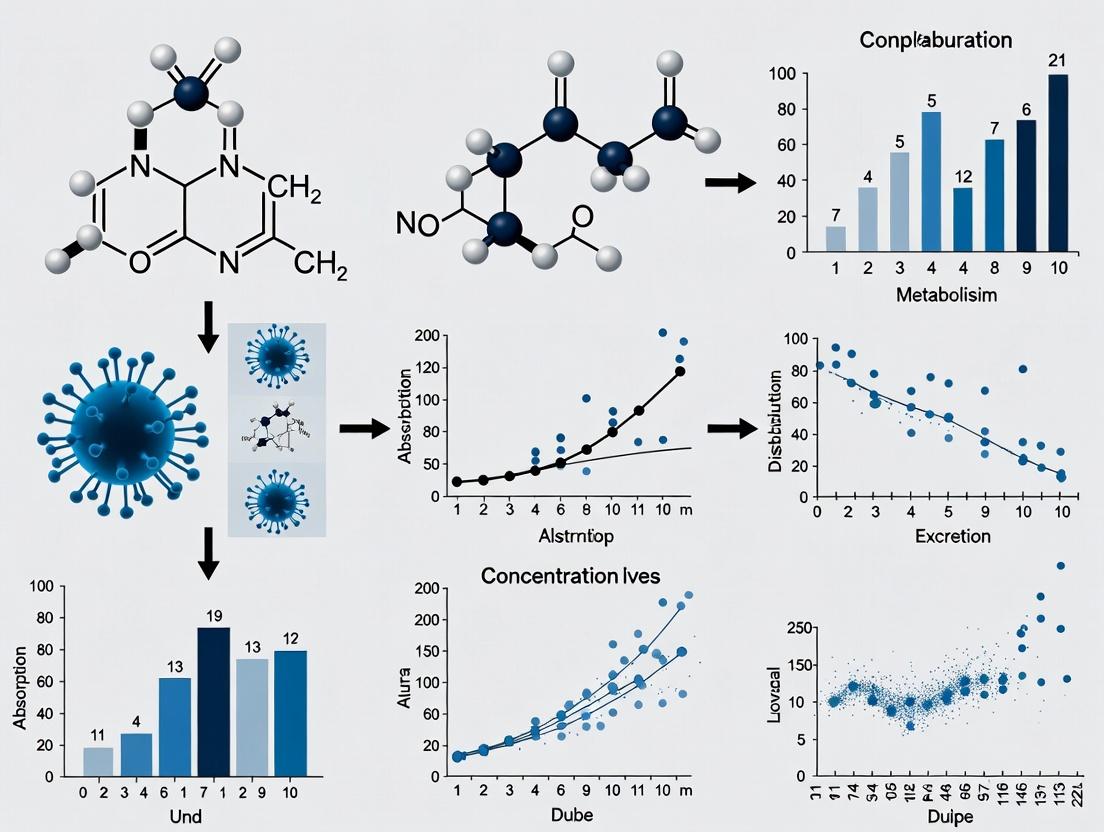
This comprehensive guide provides researchers, scientists, and drug development professionals with a detailed framework for applying NONMEM software in population pharmacokinetic (PopPK) modeling for anti-infective agents.
Mastering NONMEM for Anti-Infective PK/PD: A Comprehensive Guide to Population Modeling for Drug Development
Abstract
This comprehensive guide provides researchers, scientists, and drug development professionals with a detailed framework for applying NONMEM software in population pharmacokinetic (PopPK) modeling for anti-infective agents. The article explores the foundational principles of PopPK in infectious disease contexts, details step-by-step methodological approaches for model building and application, addresses common troubleshooting and optimization challenges, and compares validation strategies and software alternatives. By synthesizing current methodologies and best practices, this resource aims to enhance the efficiency and robustness of anti-infective drug development programs.
Why Population PK/PD is Critical for Modern Anti-Infective Development: Foundations and Core Concepts
Defining Population Pharmacokinetics (PopPK) and its Unique Role in Anti-Infective Therapy
Population Pharmacokinetics (PopPK) is a sub-discipline of pharmacokinetics that analyzes the sources and correlates of variability in drug concentrations among individuals who are the target patient population receiving clinically relevant doses of a drug. It employs non-linear mixed-effects modeling (NLMEM) to parse total variability into fixed effects (e.g., weight, renal function), random effects (inter-individual, inter-occasional variability), and residual unexplained variability. Within anti-infective therapy, PopPK is uniquely critical due to the triad of drug, host, and pathogen, where optimal exposure is directly linked to microbiological eradication and prevention of resistance.
Unique Considerations in Anti-Infective PopPK
Table 1: Key Differences: PopPK for Anti-Infectives vs. Chronic Therapies
| Factor | Anti-Infective Therapy | Chronic Therapy (e.g., Hypertension) |
|---|---|---|
| Exposure Target | Pharmacodynamic (PD) indices (fAUC/MIC, fT>MIC, fCmax/MIC). | Steady-state trough concentration. |
| Variability Drivers | Pathogen MIC distribution, infection site penetration, emergent resistance. | Genetics, adherence, drug-drug interactions. |
| Trial Design | Often in infected patients with complex pathophysiology; sparse sampling. | Often in stable, target patient populations. |
| Primary Outcome Link | Direct mechanistic link between exposure, bacterial kill, and resistance suppression. | Link to a clinical surrogate (e.g., blood pressure). |
| Modeling Priority | PK/PD integration is mandatory for dose justification and susceptibility breakpoints. | Often focused on PK and safety. |
Core PopPK Analysis Protocol Using NONMEM
Protocol Title: Development of a PopPK Model for a Novel Anti-Infective.
Objective: To characterize the population PK, identify significant covariates, and simulate doses for Phase III trial design.
Materials & Reagents:
- NONMEM Software: Gold-standard software for NLMEM.
- Perl-speaks-NONMEM (PsN): Toolkit for model execution, covariate search, and model diagnostics.
- Xpose/Pirana: For data visualization and model management.
- R or Python: For data preparation, post-processing, and advanced graphics.
- Clinical PK Dataset: From Phase I/II trials (See Table 2).
Procedure:
- Data Assembly: Collate all concentration-time data, dosing records, and patient covariates.
- Exploratory Data Analysis (EDA): Visualize data to identify trends and outliers.
- Base Model Development:
- Select structural model (1-, 2-, 3-compartment).
- Identify residual error model (additive, proportional, combined).
- Estimate inter-individual variability (IIV) on PK parameters.
- Covariate Model Development:
- Use Stepwise Covariate Modeling (SCM) in PsN.
- Test relationships (e.g., CL ~ CrCl, V ~ Body Weight).
- Apply forward inclusion (p<0.05) and backward elimination (p<0.01).
- Model Validation:
- Internal: Visual Predictive Checks (VPC), Bootstrap.
- External: If available, using a hold-out dataset.
- Simulation & Application:
- Perform Monte Carlo simulations (e.g., 5000 patients) across relevant covariate ranges.
- Calculate PTA for relevant PK/PD targets (e.g., %fT>MIC) against MIC distributions.
- Propose dose adjustments for sub-populations (renally impaired, obese).
Table 2: Example Structure of a PopPK Dataset for an Anti-Infective
| ID | TIME | DV | AMT | EVID | CMT | AGE | WT | SCR | MIC |
|---|---|---|---|---|---|---|---|---|---|
| 1 | 0.0 | . | 1000 | 1 | 1 | 45 | 70 | 0.8 | 1 |
| 1 | 1.0 | 12.5 | . | 0 | 2 | 45 | 70 | 0.8 | 1 |
| 1 | 4.0 | 5.2 | . | 0 | 2 | 45 | 70 | 0.8 | 1 |
| 2 | 0.0 | . | 1000 | 1 | 1 | 68 | 85 | 1.5 | 2 |
| 2 | 2.0 | 8.1 | . | 0 | 2 | 68 | 85 | 1.5 | 2 |
DV: Dependent variable (conc.), AMT: Dose, EVID: Event ID (1=dose, 0=obs), CMT: Compartment, SCR: Serum Creatinine.
The Scientist's Toolkit: Essential Research Reagents & Solutions
Table 3: Key Reagent Solutions for Anti-Infective PK/PD Studies
| Reagent/Solution | Function in Anti-Infective PopPK Research |
|---|---|
| Cation-Adjusted Mueller Hinton Broth (CAMHB) | Standardized medium for in vitro MIC determination and PK/PD time-kill studies, ensuring reproducibility. |
| Human Plasma/Serum | Used for protein binding studies to determine free (active) drug fraction (fAUC), critical for PK/PD target attainment. |
| Stable Isotope-Labeled Drug (Internal Standard) | Essential for precise and accurate bioanalytical method (LC-MS/MS) quantification of drug concentrations in complex biological matrices. |
| Reconstituted Human Epithelial Lining Fluid | For assessing pulmonary penetration in models of pneumonia, a key infection site. |
| Frozen Human Hepatocytes | To study metabolic clearance pathways and potential for drug-drug interactions via cytochrome P450 enzymes. |
Visualizing the PopPK Workflow and PK/PD Integration
Title: PopPK Model Development & Application Workflow
Title: The Drug-Host-Pathogen Triad in Anti-Infective PopPK
Within the broader thesis on NONMEM population pharmacokinetic (PopPK) modeling for anti-infective research, this application note addresses the critical sources of variability that necessitate a population approach. Unlike many drug classes, anti-infectives target a dynamic, replicating pathogen within a highly variable host. This dual variability in both the infecting organism and the patient's physiology creates complex exposure-response relationships that traditional PK modeling fails to capture. PopPK models integrating covariate analysis are essential to optimize dosing, combat resistance, and improve outcomes across diverse populations.
Table 1: Major Host-Derived Covariates Impacting Anti-Infective PK
| Covariate | Example Anti-Infective Class | Typical Impact on PK Parameters | Clinical Relevance |
|---|---|---|---|
| Renal Function (eGFR/CrCl) | Vancomycin, β-lactams, Aminoglycosides | Clearance (CL) ↓ with impaired function | Risk of toxicity; requires dose adjustment. |
| Hepatic Function (Child-Pugh) | Voriconazole, Erythromycin, Isavuconazole | Clearance (CL) ↓; Bioavailability may ↑ | Risk of over-exposure and adverse events. |
| Body Size (Weight, BMI) | Daptomycin, Oseltamivir | Volume of Distribution (V) ↑ with weight | Suboptimal dosing if not accounted for. |
| Age (Neonates, Elderly) | Aminoglycosides, Penicillins | CL and V can differ significantly from adults | Standard doses may be unsafe or ineffective. |
| Critical Illness (Sepsis) | β-lactams, Fluoroquinolones | V ↑ (capillary leak); CL variable (organ dysfunction) | High risk of treatment failure without optimized dosing. |
| Genetic Polymorphisms | Isoniazid (NAT2), Voriconazole (CYP2C19) | CL ↑ or ↓ based on metabolizer status | Predictable subpopulations with altered exposure. |
Table 2: Pathogen-Derived Variables Influencing Exposure-Response
| Variable | Description | Impact on PopPK/PD Modeling |
|---|---|---|
| Minimum Inhibitory Concentration (MIC) | In vitro measure of drug potency against a specific isolate. | Primary driver for PK/PD indices (e.g., fT>MIC, AUC/MIC). PopPK models link patient PK to the PD target attainment against a distribution of MICs. |
| Post-Antibiotic Effect (PAE) | Persistent suppression of bacterial growth after drug removal. | Influences dosing interval decisions in PK/PD simulations. |
| Mutant Prevention Concentration (MPC) | Drug concentration threshold to suppress resistant mutant selection. | PopPK simulations can assess probability of target attainment at this higher, resistance-suppressing threshold. |
| Biofilm Presence | Structured microbial communities often resistant to drugs. | May require incorporation of a "protected compartment" with altered penetration in the PK model. |
| Innoculum Effect | Higher MIC observed with a high density of bacteria. | Challenges the use of a static MIC; may need dynamic modeling of bacterial growth and kill. |
Detailed Experimental Protocols
Protocol 1: PopPK Model Development for a Novel β-Lactam in Critically Ill Patients
Objective: To develop a PopPK model for a novel β-lactam that accounts for extreme physiological variability in critically ill patients with pneumonia.
Methodology:
- Study Design: Prospective, open-label, multi-center study.
- Patients: ≥100 critically ill adults with suspected Gram-negative pneumonia.
- Dosing: Administer drug per protocol. Record exact dosing and infusion times.
- Blood Sampling: Use a rich or optimal sparse sampling strategy. Collect 8-12 samples per patient over multiple dosing intervals.
- Bioanalysis: Quantify plasma concentrations using a validated LC-MS/MS method.
- Covariate Data Collection: Record at time of sampling: Age, weight, serum creatinine (for eGFR), albumin, SOFA score, mechanical ventilation status, and concomitant medications.
- Pathogen Data: Collect bronchoalveolar lavage samples for pathogen ID and MIC determination.
- NONMEM Analysis:
- Base Model: Fit one-, two-, and three-compartment structural models using FOCE with interaction.
- Statistical Model: Model inter-individual variability (IIV) on PK parameters (e.g., CL, V) using exponential error models. Model residual variability with combined proportional and additive error structures.
- Covariate Model: Use stepwise forward inclusion (p<0.05) and backward elimination (p<0.01) to test relationships between covariates (e.g., eGFR on CL, weight on V) and PK parameters. Implement allometric scaling.
- Model Evaluation: Use diagnostic plots (GOF, VPC), bootstrap, and prediction-corrected VPC.
- Simulation: Perform Monte Carlo simulations (n=5000) to calculate PTA for various dosing regimens against a range of MICs.
Protocol 2: Integrating Pathogen MIC Distributions into PK/PD Simulations
Objective: To assess the probability of target attainment (PTA) and cumulative fraction of response (CFR) for a candidate anti-infective against a national epidemiological dataset.
Methodology:
- PopPK Model: Utilize a previously developed and validated final PopPK model (e.g., from Protocol 1).
- MIC Data Collection: Obtain a recent (>1000 isolates) national or institutional MIC distribution for the target pathogen(s) (e.g., Pseudomonas aeruginosa) from databases like ECDC or SENTRY.
- Define PK/PD Target: Identify the validated index (e.g., 60% fT>MIC for β-lactams) and target value from preclinical/clinical studies.
- Simulation Population: In NONMEM/Pirana, simulate the concentration-time profile for the proposed dosing regimen in a virtual population matching the target patient demographics (size, renal function).
- PTA Calculation: For each discrete MIC value (e.g., 0.125 to 128 mg/L), calculate the percentage of the virtual population that achieves the PK/PD target.
- CFR Calculation: Compute the weighted average PTA across the entire MIC distribution: CFR = Σ (PTA at MICi * Frequency of MICi in the population).
- Output: A dosing regimen is considered adequate if PTA ≥90% at the clinical breakpoint and/or CFR ≥90%.
Visualizations
Title: PopPK-PD Model Integrates Host, Drug & Pathogen
Title: NONMEM PopPK Model Development Workflow
The Scientist's Toolkit: Key Research Reagent Solutions
Table 3: Essential Materials for Anti-Infective PopPK/PD Research
| Item | Function & Application |
|---|---|
| Validated LC-MS/MS Assay Kits | For precise, specific, and high-throughput quantification of drug concentrations in biological matrices (plasma, epithelial lining fluid). Essential for generating PK input data. |
| Mueller-Hinton Broth & Agar | Standardized media for in vitro determination of Minimum Inhibitory Concentration (MIC), the critical PD input for PK/PD analyses. |
| Physiologically-Based Pharmacokinetic (PBPK) Software (e.g., GastroPlus, Simcyp) | Used for in silico prediction of PK in special populations (e.g., pediatrics) to inform initial PopPK model design and covariate selection. |
| NONMEM Software with Pirana/PsN Interface | Industry-standard software suite for non-linear mixed-effects modeling (PopPK/PD). Pirana provides a workflow manager, and PsN enables automated model evaluation (bootstraps, VPCs). |
| R or Python with ggplot2/Matplotlib | Statistical programming environments for data wrangling, creation of diagnostic goodness-of-fit plots, and custom visualization of modeling results. |
| Epidemiological MIC Databases (e.g., SENTRY, ATLAS) | Sources for contemporary pathogen MIC distributions required for calculating Cumulative Fraction of Response (CFR) in PK/PD simulations. |
This guide provides foundational NONMEM terminology within the context of a thesis on population pharmacokinetic (PopPK) modeling of anti-infectives. Mastery of these concepts is critical for defining drug exposure profiles, understanding variability in special populations, and optimizing dosing regimens.
Core Terminology & Control Stream Structure
The NONMEM control stream is a structured text file that defines the model, data, and estimation tasks. Its modular structure is built around specific record types, beginning with $PROBLEM and $INPUT. Below is a summary of the key quantitative relationships and functions defined within the core model records.
Table 1: Core NONMEM Control Stream Records and Functions
| Record | Primary Purpose | Key Variables/Functions | Role in Anti-Infective PopPK |
|---|---|---|---|
| $PK | Defines the structural PK model and inter-individual variability (IIV). | CL, V, KA, ETA(1) |
Codes the base model (e.g., 1- or 2-compartment) and random effects on parameters (IIV). |
| $PRED | User-defined prediction subroutine. Allows full control over model equations. | F, Y, ERR |
Used for complex, non-standard models beyond the ADVAN library's scope. |
| $ERROR | Defines the residual unexplained variability (RUV) model. | Y, F, EPS(1), IRES, WRES |
Specifies the error model (e.g., additive, proportional, combined) between predictions and observations. |
| $ESTIMATION | Specifies the estimation method. | METHOD=1, MAXEVAL=9999, INTERACTION |
Instructs NONMEM on how to obtain parameter estimates (e.g., FOCE with INTERACTION). |
| $COVARIANCE | Requests calculation of standard errors. | PRINT=E |
Outputs precision estimates for parameters, informing model reliability. |
Application Notes & Protocols
Protocol 1: Building a Base PopPK Model for an Anti-Infective
This protocol outlines the steps to develop a base structural and stochastic model for a novel antimicrobial agent.
1. Objective: To develop a population PK model characterizing the typical values of clearance (CL) and volume of distribution (V) for Drug X, along with estimates of IIV and RUV.
2. Software: NONMEM 7.5, PsN, R with xpose4/ggPMX.
3. Materials: Phase I/II rich PK data from 80 subjects (plasma concentrations).
4. Procedure:
a. Data Preparation: Create a dataset with columns for ID, TIME, AMT, DV, EVID, MDV, WT.
b. Control Stream Development:
i. Use $PROBLEM and $INPUT to define the problem and data columns.
ii. In $PK: Code a one-compartment IV bolus model: CL = THETA(1) * (WT/70)0.75 and V = THETA(2). Implement IIV using exponential error models: TVCL=THETA(1); CL=TVCL*EXP(ETA(1)).
iii. In $ERROR: Code a proportional residual error model: Y=F+F*EPS(1).
iv. Select ADVAN1 TRANS2 in $SUBROUTINE.
v. Use $ESTIMATION METHOD=1 INTERACTION for FOCE.
c. Model Execution & Diagnostics: Run model, evaluate goodness-of-fit (GOF) plots, shrinkage, and condition number.
Protocol 2: Implementing a $PRED Block for a Complex PD Model
For drugs with complex pharmacodynamics (e.g., time-dependent killing), $PRED offers flexibility.
1. Objective: To implement a combined PK/PD model where drug effect is driven by the integral of the concentration-time curve (AUC).
2. Procedure:
a. In the control stream, specify $SUBROUTINE ADVAN6 TOL=5 and $MODEL COMP=(PK,DEPOT) COMP=(PD).
b. Use $PK to define PK parameters (as in Protocol 1).
c. Use $PRED to call the ADVAN6-generated PK solution and manually code the PD system using A_ arrays (e.g., A_0(2) for PD compartment amount). Define the PD model equations directly within $PRED.
d. Use $ERROR to define residual error on the PD endpoint observations.
Visualizing Control Stream Logic and Data Flow
Diagram Title: Logical Flow of a NONMEM Control Stream
Diagram Title: Relationship Between PRED, IIV, and RUV
The Scientist's Toolkit: Research Reagent Solutions
Table 2: Essential Tools for Anti-Infective PopPK Modeling with NONMEM
| Item | Function in Research |
|---|---|
| NONMEM Software | Gold-standard software for nonlinear mixed-effects modeling of PK/PD data. |
| Perl Speaks NONMEM (PsN) | Toolkit for efficient model automation, bootstrap, VPC, and covariate screening. |
| R with xpose/ggPMX | Primary environment for statistical analysis, data wrangling, and model diagnostics visualization. |
| Pirana Modeling Manager | Graphical interface for managing NONMEM runs, outputs, and facilitating project organization. |
| PDx-POP | Commercial integrated platform for population PK/PD modeling and simulation. |
| Lindbånd et al. Model Library | A curated repository of published, coded NONMEM models for anti-infectives, accelerating model development. |
| NONMEM Control Stream Template Library | Internal organizational repository of validated code blocks for standard models and error structures. |
Within the broader thesis on NONMEM population pharmacokinetic (PopPK) modeling for anti-infectives research, the initial workflow phases of protocol design, data assembly, and exploratory data analysis (EDA) are critical. For anti-infective agents, characterized by their exposure-response relationships crucial for efficacy and resistance prevention, a robust and meticulously planned PopPK workflow ensures the generation of high-quality data. This data forms the foundation for developing reliable models that can inform dosing strategies, especially in special populations. These application notes detail the protocols and considerations for these foundational steps.
Application Notes: Protocol Design for Anti-Infective PopPK Studies
The study protocol must be constructed to capture the determinants of pharmacokinetic (PK) variability relevant to anti-infectives.
2.1 Key Design Elements:
- Population: Include patients with the target infection, stratified by factors known to influence PK (e.g., renal/hepatic impairment, obesity, critical illness, pediatric vs. adult).
- Sparse Sampling: Design a sparse, opportunistic sampling scheme that is feasible in the clinical setting yet informative for population modeling. Typically, 2-4 samples per subject are collected at nominally scheduled times.
- Covariate Data: Mandate concurrent collection of potential covariate data (e.g., weight, serum creatinine, albumin, concomitant medications).
- Bioanalytical Method: Specify a validated assay (e.g., LC-MS/MS) for quantifying the anti-infective and its major metabolites in the appropriate matrix (plasma, tissue).
2.2 Protocol Summary Table: Key PopPK Study Components
| Component | Description & Rationale | Typical Specification for Anti-Infectives |
|---|---|---|
| Study Type | Prospective, observational, or integrated into clinical trials. | Phase II/III therapeutic trials or dedicated PK studies. |
| Sample Size | Sufficient to characterize inter-individual variability (IIV). | 30-100+ subjects, depending on variability and subpopulations. |
| Blood Samples | Sparse sampling to enable population modeling. | 2-4 samples per subject at pre-dose, 1-2h post-dose, mid-interval, and trough. |
| Covariates | Patient factors that may explain IIV in PK parameters. | Demographics (age, weight, BMI), lab values (CrCL, Albumin), disease status. |
| Assay | Method for drug concentration quantification. | Validated Liquid Chromatography with tandem Mass Spectrometry (LC-MS/MS). |
Experimental Protocol: Data Assembly and Curation
Protocol Title: Standard Operating Procedure for PopPK Dataset Assembly for NONMEM.
3.1 Purpose: To compile, validate, and format individual patient data from clinical studies into a single, analysis-ready dataset compliant with NONMEM requirements.
3.2 Materials & Reagent Solutions (The Scientist's Toolkit):
| Item/Category | Function in PopPK Workflow |
|---|---|
| Clinical Database | Source of individual patient records, including dosing history, concentration samples, and covariates. |
| Laboratory Information Management System (LIMS) | Source of validated bioanalytical concentration data with associated sample timestamps. |
| Statistical Software (R, Python, SAS) | For data merging, derivation of variables (e.g., creatinine clearance using Cockcroft-Gault), and EDA. |
| NONMEM Data Format Specs | Defines the required structure (e.g., $INPUT record) for the control stream. |
Data Curation Toolkit (e.g., R dplyr, data.table) |
Software packages used for efficient data manipulation, transformation, and quality control. |
3.3 Methodology:
- Source Data Extraction: Export separate data files for: a) dosing records, b) concentration assays, c) covariate time-courses, d) clinical events.
- Time Variable Alignment: Convert all dates and times to a consistent numeric time variable (e.g., hours from first dose). Account for actual sample times versus scheduled times.
- Dataset Merging: Merge all sources by a unique subject identifier (
ID). Align records by time. - Variable Derivation: Calculate derived covariates (e.g., creatinine clearance, BMI, lean body weight).
- NONMEM Formatting: Create the required columns:
ID: Subject identifier.TIME: Elapsed time.DV: Dependent variable (drug concentration).AMT: Dose amount.EVID: Event identifier (0=observation, 1=dose).MDV: Missing dependent variable (1 ifDVis missing, 0 otherwise).Covariates(e.g.,WT,AGE,CRCL).
- Data Quality Check: Identify and document outliers, impossible values, or inconsistencies (e.g., samples before dose, negative concentrations).
Application Notes: Exploratory Data Analysis (EDA)
EDA is performed to understand data structure, detect errors, and generate hypotheses about PK relationships before formal modeling.
4.1 Key EDA Components:
- Data Summary: Tables of summary statistics for all covariates and concentrations.
- Concentration-Time Profiles: Spaghetti plots (individual) and population mean plots.
- Covariate Distributions: Histograms and scatter plots to assess relationships and correlations.
- Empirical PK Estimates: Non-compartmental analysis (NCA) for comparison with future model estimates.
4.2 EDA Summary Table: Key Analyses and Objectives
| Analysis Type | Plot/Output | Objective in Anti-Infective PopPK |
|---|---|---|
| Data Structure | Listing of first rows of dataset. | Verify correct formatting of ID, TIME, EVID, AMT, DV. |
| Distribution | Histogram/Boxplot of DV. |
Identify distribution shape, presence of BLQ values, outliers. |
| Time Course | Spaghetti plot of DV vs. TIME. |
Visualize between-subject variability, adherence to dosing, expected PK profile. |
| Covariate-PK | Scatter plot of NCA-derived AUC/CL vs. WT, CRCL, etc. |
Formulate hypotheses for structural and covariate model. |
| Correlation | Matrix of covariate correlations. | Identify highly correlated covariates to avoid over-parameterization. |
Visualization: The PopPK Workflow Diagram
Diagram Title: PopPK Workflow Phases for Anti-Infective Research
Within the framework of NONMEM-based population pharmacokinetic (PopPK) modeling for anti-infectives, identifying and quantifying the impact of critical covariates is paramount for model-informed precision dosing. Covariates such as renal/hepatic function, disease state, Minimum Inhibitory Concentration (MIC), and protein binding are integral components that explain inter-individual variability (IIV) in drug exposure. These factors directly influence the probability of target attainment (PTA), therapeutic success, and the emergence of resistance.
Key Covariate Data and Quantitative Summaries
Table 1: Impact of Renal Function on Anti-Infective Pharmacokinetics
| Anti-Infective Class/Drug | PK Parameter Affected | Typical Covariate Relationship (NONMEM Code Snippet) | Magnitude of Change (e.g., Severe Renal Impairment vs. Normal) |
|---|---|---|---|
| Beta-lactams (e.g., Meropenem) | Clearance (CL) | CL = TVCL * (CRCL/90)^θ_CRCL | CL reduced by ~50-75% |
| Glycopeptides (e.g., Vancomycin) | Clearance (CL) | CL = TVCL * (CRCL/100)^0.8 | CL reduced by ~70-80% |
| Aminoglycosides (e.g., Tobramycin) | Clearance (CL) | CL = TVCL * (0.0114 * CRCL) | CL reduced by ~70-90% |
| Novel Tetracyclines (e.g., Eravacycline) | Clearance (CL) | Mild to moderate influence; <30% reduction | Limited data, ~20% reduction |
CRCL = Creatinine Clearance; TVCL = Typical value of clearance.
Table 2: Impact of Hepatic Function and Disease State on Anti-Infective PK
| Covariate Category | Example Metric | Anti-Infective Example | Effect on Exposure (AUC) | Modeling Approach |
|---|---|---|---|---|
| Hepatic Impairment (Child-Pugh B/C) | CP Score, Albumin | Ceftriaxone, Rifampin | Increased up to 2-3 fold | Fractional model or categorical covariate on CL, V, or F |
| Critical Illness (Sepsis/ARDS) | SOFA Score, Fluid Balance | Beta-lactams, Colistin | Altered Vd (↑), Variable CL (↑↓) | Covariate on Volume (V) and CL; TDM essential |
| Obesity (BMI >30 kg/m²) | TBW, LBW | Daptomycin, Fluconazole | Vd increased; CL variably affected | Allometric scaling using TBW or LBW on V and CL |
Table 3: Integrating MIC and Protein Binding into PK/PD Modeling
| Concept | Description | Role in NONMEM Model | Example PD Target |
|---|---|---|---|
| MIC Distribution | Population-derived (e.g., EUCAST). Not an individual covariate but a model input. | Used in simulation to calculate PTA (fT>MIC, AUC/MIC). | fT>MIC > 40% for beta-lactams |
| Unbound (Free) Drug Fraction (f_u) | Driven by albumin, acute phase proteins, pH. | Only unbound drug is pharmacologically active. CL and V often refer to unbound parameters. | fAUC/MIC > 30 for Fluoroquinolones |
| Protein Binding Saturation | Non-linear binding at high concentrations (e.g., Ceftriaxone). | Implemented using Michaelis-Menten binding equations in the differential equations. | – |
Experimental Protocols for Covariate Assessment
Protocol 3.1: Prospective Renal Impairment Study for PopPK
Objective: To characterize the PK of a novel anti-infective in subjects with varying degrees of renal function.
- Cohort Design: Enroll 32 subjects across 4 groups (n=8 each): Normal renal function (CrCl ≥90 mL/min), and mild (60-89), moderate (30-59), and severe (<30) impairment.
- Dosing & Sampling: Administer a single IV dose. Collect intensive PK samples pre-dose and at 0.5, 1, 2, 4, 6, 8, 12, 24, 36, 48, and 72 hours post-dose. Urine collected over 0-24h and 24-48h intervals.
- Bioanalysis: Quantify total and, if applicable, unbound drug concentrations in plasma and urine using validated LC-MS/MS.
- Covariate Measurement: Measure serum creatinine (for Cockcroft-Gault CrCl), albumin, and weight at baseline.
- NONMEM Analysis: Develop a base PopPK model. Test CrCl as a continuous covariate on CL and renal secretion/excretion parameters using a power model. Validate via visual predictive checks (VPC).
Protocol 3.2:In VitroProtein Binding Determination (Ultrafiltration)
Objective: To determine the plasma protein binding (f_u) of an anti-infective across clinically relevant concentrations.
- Reagent Preparation: Prepare drug stock solutions in DMSO. Spike into blank human plasma from ≥3 healthy donors to final concentrations spanning expected clinical range (e.g., 0.5x, 1x, 10x Cmax).
- Equilibration: Incubate spiked plasma at 37°C for 30 min.
- Ultrafiltration: Load plasma into pre-rinsed centrifugal ultrafiltration devices (MWCO 30 kDa). Centrifuge at 1500 x g, 37°C, for 20-30 min to obtain protein-free ultrafiltrate.
- Analysis: Quantify drug concentration in the initial spiked plasma (Ctotal) and in the ultrafiltrate (Cunbound) using LC-MS/MS.
- Calculation: Calculate fraction unbound: fu = Cunbound / C_total. Report mean ± SD. If concentration-dependent, model binding parameters for PopPK integration.
Protocol 3.3: Integrating MIC Distributions for PTA Simulations
Objective: To simulate the PTA for a proposed dosing regimen against a target pathogen population.
- Input Data: Final PopPK model parameter estimates (fixed and random effects). A distribution of MICs (e.g., 0.06 to 64 mg/L) for the target organism from a surveillance database (e.g., SENTRY).
- Simulation Setup (PsN): Use the
$SIMULATIONfunction in NONMEM to simulate 5000 virtual subjects per MIC value, incorporating the full IIV and residual error model. - PD Target Definition: Define the PK/PD index target (e.g., fT>MIC > 60% for 2g q8h meropenem regimen).
- Calculation: For each MIC, calculate the percentage of simulated subjects achieving the target.
- Output: Generate a PTA curve (PTA% vs. MIC). Determine the PK/PD breakpoint (MIC at which PTA falls below 90% or 80%).
The Scientist's Toolkit: Key Research Reagent Solutions
| Item | Function in Covariate Modeling | Example Product/Catalog |
|---|---|---|
| Pooled Human Plasma (from various donors) | Matrix for in vitro protein binding and metabolic stability studies; accounts for natural variation in protein levels. | BioIVT Human K2EDTA Plasma, Various Donors |
| LC-MS/MS System with Validated Bioanalytical Method | Gold-standard for quantifying total and unbound drug concentrations in complex biological matrices with high sensitivity and specificity. | Shimadzu LC system coupled with Sciex Triple Quad 6500+ |
| Centrifugal Ultrafiltration Devices (30 kDa MWCO) | Physically separates unbound drug from protein-bound drug in plasma for protein binding assays. | Amicon Ultra-0.5 mL Centrifugal Filters (Merck) |
| NONMEM Software (with PsN and Pirana) | Industry-standard software for nonlinear mixed-effects modeling, covariate analysis, and simulation. | ICON plc (NONMEM), Uppsala University (PsN) |
| R or Python with ggplot2/Matplotlib | Statistical computing and graphics for data preparation, exploratory covariate analysis, and creating publication-quality VPC/GOF plots. | RStudio, CRAN; Python Software Foundation |
| Clinical Data Standards (CDISC) | Standardized format (e.g., SDTM, ADaM) for efficient integration of demographic, laboratory, and PK data into modeling datasets. | CDISC.org Standards |
Visualizations of Workflows and Relationships
Title: PopPK Covariate Model Building Workflow
Title: Interplay of Critical Covariates on PK/PD and Outcome
Building Robust Anti-Infective NONMEM Models: A Step-by-Step Methodological Guide
Within the broader thesis on advancing population pharmacokinetic (PopPK) modeling of anti-infectives using NONMEM, the paramount initial step is the meticulous construction of the input dataset. For anti-infective research, accurately capturing complex dosing regimens—loading doses, maintenance doses, therapeutic drug monitoring (TDM)-guided adjustments, and prolonged infusions—is critical for precise parameter estimation. This protocol details the standardization of core variables (DV, ID, TIME, EVID, AMT) to ensure robust modeling outcomes.
Core Variable Definitions and Standards
The dataset must be a comma-separated values (CSV) file. The following columns are mandatory for a basic dosing and observation record.
Table 1: Definition and Implementation of Core NONMEM Data Items
| Variable | Description | Unit & Format | Critical Rule for Typical Dosing |
|---|---|---|---|
| ID | Subject Identifier | Integer; unique per subject | Must be consistent across all records for an individual. |
| TIME | Elapsed Time | Numeric (hours recommended). | Time relative to the start of the first dose (TIME=0). Must be sequential within ID. |
| EVID | Event Identifier | Integer: 0=Observation, 1=Dose, 4=Reset/Reset&Dose | Use EVID=1 for all dose records. Use EVID=0 for all observed concentration (DV) records. |
| AMT | Dose Amount | Numeric (e.g., mg). | >0 for dose events (EVID=1). Must be 0 or blank for observation events (EVID=0). |
| DV | Dependent Variable | Numeric (e.g., mg/L). | Actual observed concentration for EVID=0. Must be blank or 0 for dose events (EVID=1). |
| CMT | Compartment Number | Integer | 1=Dose compartment, 2=Central/observation compartment for a standard 2-compartment model. |
| RATE | Infusion Rate | Numeric (e.g., mg/h). | 0 or blank for bolus doses. For infusions, positive rate; if RATE=-1, AMT defines duration. |
| MDV | Missing Dependent Variable | Integer: 0=DV present, 1=DV missing | Set to 1 for all dosing records (EVID=1). Set to 0 for actual observations. |
Experimental Protocol: Dataset Assembly for a Complex Anti-Infective Dosing Regimen
Objective: To construct a NONMEM-ready dataset for a vancomycin PopPK study involving a loading dose, intermittent maintenance doses, and prolonged infusions with TDM.
3.1. Materials & Source Data
- Source: Electronic Health Record (EHR) and TDM database.
- Extracted Parameters: Patient ID, dose amount, exact administration date/time, infusion duration, sample collection date/time, measured concentration.
3.2. Methodology
Step 1: Data Reconciliation and Time Alignment
- Merge dosing and observation records by
ID. - Identify the first dose administration datetime for each subject. Set this as
TIME=0. - Calculate all subsequent event times as elapsed time (in hours) from
TIME=0.
Step 2: Record Creation and Variable Assignment
- Create one row per event (dose or observation).
- For a 1000 mg loading dose infused over 2 hours:
ID: [Subject ID],TIME: 0,EVID: 1,AMT: 1000,CMT: 2,RATE: 500,DV: .,MDV: 1
- For a 500 mg/h continuous infusion starting at 24h:
ID: [Subject ID],TIME: 24,EVID: 1,AMT: 500,CMT: 2,RATE: 500,DV: .,MDV: 1- Note: For a true continuous infusion, subsequent "dose" records may be needed to change the rate.
- For a concentration measurement of 25.3 mg/L at 48 hours:
ID: [Subject ID],TIME: 48,EVID: 0,AMT: 0,CMT: 2,RATE: .,DV: 25.3,MDV: 0
Step 3: Dataset Finalization
- Sort the dataset by
ID, thenTIME, thenEVID(typically doses before observations at the same time). - Validate that for every
EVID=0,DVis non-missing andMDV=0. - Validate that for every
EVID=1,AMT> 0 andMDV=1.
Table 2: Example Dataset Snippet for Complex Regimen
| ID | TIME | EVID | AMT | DV | CMT | RATE | MDV |
|---|---|---|---|---|---|---|---|
| 101 | 0.0 | 1 | 1000 | . | 2 | 500 | 1 |
| 101 | 2.0 | 0 | 0 | 12.5 | 2 | . | 0 |
| 101 | 24.0 | 1 | 500 | . | 2 | 500 | 1 |
| 101 | 48.0 | 0 | 0 | 25.3 | 2 | . | 0 |
| 101 | 48.0 | 1 | 1000 | . | 2 | 0 | 1 |
| 101 | 72.0 | 0 | 0 | 18.7 | 2 | . | 0 |
The Scientist's Toolkit: Essential Research Reagent Solutions
Table 3: Key Tools for PopPK Data Preparation and Analysis
| Item | Function in Anti-Infective PopPK Research |
|---|---|
| NONMEM | Gold-standard software for nonlinear mixed-effects modeling of PK/PD data. |
| PsN (Perl Speaks NONMEM) | Toolkit for automation of model execution, covariate screening, and model validation. |
R with dplyr/data.table |
Open-source environment for powerful data manipulation, validation, and summarization prior to NONMEM. |
R with xpose4/xpose |
Specialized R package for diagnostic graphics and model evaluation. |
| Pirana | Graphical user interface and workflow manager for NONMEM, facilitating project organization. |
| PDx-POP | Commercial integrated platform for population PK/PD modeling and simulation. |
Visualization: Dataset Construction and NONMEM Execution Workflow
Title: Workflow for Creating a NONMEM-Ready Dataset
Title: Logic of Core Variables in a Dataset Row
1. Introduction Within population pharmacokinetic (PK) modeling of anti-infectives using NONMEM, the structural model defines the mathematical relationship describing drug disposition. The choice between one- and two-compartment models is foundational. Subsequently, integrating pharmacodynamic (PD) components to characterize microbial kill and resistance emergence transforms the PK model into a predictive PK/PD tool, essential for dose optimization and combating antimicrobial resistance.
2. Structural PK Model Selection: One vs. Two Compartment
2.1. Model Equations and Assumptions
Table 1: Comparison of One- and Two-Compartment IV Bolus Structural Models
| Feature | One-Compartment Model | Two-Compartment Model |
|---|---|---|
| Governing Equations | dA/dt = -k * A C = A / V |
dA1/dt = k21*A2 - k12*A1 - k10*A1 dA2/dt = k12*A1 - k21*A2 C = A1 / V1 |
| Primary Parameters | V (Volume), CL (Clearance) k = CL/V | V1 (Central Volume), V2 (Peripheral Volume), CL (Clearance) k12, k21, k10 (micro-rate constants) |
| Phase Description | Single log-linear elimination phase. | Biphasic: distribution (α) and elimination (β) phases. |
| Typical Diagnostics | Unable to fit early concentration time points accurately. | Captures rapid initial decline post-dose followed by slower terminal phase. |
| Application | Drugs with rapid equilibrium between blood and tissues. | Most drugs, especially those with distinct distribution into tissues. |
2.2. Protocol for Structural Model Development in NONMEM
Objective: To statistically discriminate between one- and two-compartment models for an anti-infective agent using intravenous data.
Workflow:
- Data Preparation: Prepare dataset with columns for ID, TIME, AMT (dose), DV (observed concentration), and EVID (event identifier).
- Base Model Code (One-Compartment): Implement a one-compartment model with proportional or additive error.
- Initial Estimation: Use the
$ESTIMATIONmethod (e.g., FOCE with INTERACTION) to obtain parameter estimates and objective function value (OFV). - Extended Model Code (Two-Compartment): Modify the
$PKand$DESblocks to define the two-compartment mammillary model. - Model Comparison: Compare the OFV of the two models. A decrease in OFV of >3.84 (χ², α=0.05, df=1) for the two-compartment model indicates a significantly better fit.
- Diagnostic Evaluation: Generate goodness-of-fit (GOF) plots: Observations vs. Population/Individual Predictions, Conditional Weighted Residuals (CWRES) vs. Time/Predictions.
- Graphical Comparison: Overlay individual predicted concentrations from both models on observed data to visualize improvement.
3. Incorporating Microbial Kill PK/PD Components
3.1. Common PK/PD Models for Anti-Infectives
Table 2: Key PK/PD Models for Microbial Kill
| Model | Equation | Characteristics |
|---|---|---|
| Static Model | E = E_max * C^H / (EC_50^H + C^H) |
Describes effect at a fixed concentration. Used for in vitro time-kill studies. |
| Direct Link | dN/dt = K_growth * N - K_kill * (C/EC_50)^H * N |
Drug concentration directly stimulates kill rate. Often used for aminoglycosides. |
| Indirect Response | dN/dt = K_growth * N - (I_max * C)/(IC_50 + C) * N dR/dt = K_scale * (1 - R) - K_sig * C * R |
Drug inhibits growth rate or stimulates natural death. Can be extended to model resistance (R). |
| Hollow Fiber | System of ODEs accounting for multiple compartments, drug PK, and bacterial sub-populations. | Mechanistic, models resistance emergence and combination therapy. Often a precursor to in vivo. |
3.2. Protocol for Integrating an Indirect Response Model with Resistance
Objective: To develop a population PK/PD model linking drug exposure to microbial kill and pre-existing resistance emergence.
Workflow:
- Structural PK Model: Finalize the structural PK model (e.g., two-compartment) from Section 2.
- Define PD System: In the
$DESblock of the NONMEM control stream, define the differential equations.
- Link to Data: The observed variable (e.g., bacterial count
LOGN) is defined in $ERROR as a function of S+R.
- Estimation: Use
$ESTIMATION with ADVAN13 TOL=9. Estimation can be challenging; consider Bayesian or hybrid methods.
- Simulation: Use
$SIMULATION to predict outcomes for various dosing regimens and identify resistance-suppressing strategies.
4. The Scientist's Toolkit: Research Reagent Solutions
Table 3: Essential Materials for Anti-infective PK/PD Modeling
Item
Function
NONMEM Software
Industry-standard software for nonlinear mixed-effects modeling of PK/PD data.
PsN (Perl-speaks-NONMEM)
Toolkit for automating model runs, diagnostics, bootstrap, and cross-validation.
Xpose/Pirana
GUI for efficient model management, diagnostics, and visualization of NONMEM outputs.
R (with ggplot2, xpose4)
Open-source environment for advanced data preparation, statistical analysis, and custom graphics.
MRSA/PAO1 Strain
Standard microbial strains (e.g., S. aureus ATCC 33591, P. aeruginosa PAO1) for in vitro PD studies.
Cation-Adjusted Mueller Hinton Broth
Standardized growth medium for reproducible in vitro susceptibility and time-kill assays.
Hollow Fiber Infection System
In vitro system that simulates human PK profiles for studying resistance emergence under dynamic drug concentrations.
5. Visualizations
Title: Workflow for Anti-infective PK/PD Model Development
Title: PK/PD Model Structure for Kill & Resistance
1. Introduction and Context within Anti-Infective PK/PD Research
Within the framework of a NONMEM-based thesis on population pharmacokinetic (PopPK) modeling of anti-infectives, the accurate characterization of variability is paramount. This dictates the precision of exposure estimates, the reliability of dose optimization, and the success of probability of target attainment (PTA) analyses. Inter-individual variability (IIV) accounts for differences in PK parameters between subjects, while inter-occasion variability (IOV) captures fluctuations within a subject across different dosing occasions or study periods. Residual unexplained variability (RUV), or the error model, describes the discrepancy between individual predictions and observations. The choice of error model (exponential, proportional, additive, or combined) fundamentally impacts parameter estimation and model predictions, especially in the critical sub-therapeutic or toxic ranges relevant for anti-infective and toxicity management.
2. Quantitative Comparison of Error Models
Table 1: Structural Forms and Characteristics of Common Residual Error Models in PopPK
| Model Name | Mathematical Form (Observation, Y) | Variance Structure | Primary Application in Anti-Infective PK |
|---|---|---|---|
| Additive | ( Y = F + \epsilon_a ) | Constant ( \sigma_a^2 ) | Assumes absolute error is constant. Often used for assay error with a fixed standard deviation. |
| Proportional | ( Y = F \times (1 + \epsilon_p) ) | Proportional to ( F^2 ) (( \sigma_p^2 \times F^2 )) | Assumes relative error (%) is constant. Common for PK data where error scales with concentration. |
| Exponential | ( Y = F \times e^{\epsilon_e} ) | Approximately proportional to ( F^2 ) (for small ( \epsilon_e )) | Enscomes positivity of predictions. Log-transformed equivalent to additive error on log scale. |
| Combined (Add+Prop) | ( Y = F \times (1 + \epsilonp) + \epsilona ) | ( \sigmaa^2 + \sigmap^2 \times F^2 ) | Most flexible. Accounts for both fixed absolute error and proportional error components. |
Table 2: Impact of Error Model Selection on Key NONMEM Outputs (Simulated Vancomycin Example)
| Error Model | Estimated Clearance (CL, L/h) | IIV on CL (%CV) | Residual Error (mg/L) | Objective Function Value (OFV) | AIC |
|---|---|---|---|---|---|
| Additive | 4.5 | 25.1 | (\sigma_a) = 1.2 | 1204.5 | 1210.5 |
| Proportional | 4.8 | 28.7 | (\sigma_p) = 0.22 (22%) | 1189.3 | 1195.3 |
| Exponential | 4.8 | 29.0 | (\sigma_e) = 0.21 | 1189.1 | 1195.1 |
| Combined | 4.9 | 27.5 | (\sigmaa)=0.4, (\sigmap)=0.15 | 1182.7 | 1190.7 |
Note: The combined model shows the lowest OFV/AIC, suggesting the best statistical fit for this simulated dataset, a common finding with rich PK data.
3. Experimental Protocols for Variability Model Evaluation
Protocol 1: Stepwise Model Building and Comparison in NONMEM
- Base Model Development: Develop a structural PK model (e.g., 2-compartment) with IIV placed on key parameters (CL, V). Use an exponential model for IIV/IOV: ( Pi = P{tv} \times e^{(\etai + \kappai)} ), where ( Pi ) is individual parameter, ( P{tv}} ) is typical value, ( \eta ) is IIV, and ( \kappa ) is IOV.
- Initial RUV Model: Start with a simple additive or proportional error model.
- Likelihood Ratio Test (LRT): Nest models sequentially. Compare OFV between nested models. A decrease >3.84 (χ², α=0.05, df=1) supports the more complex model.
- Error Model Testing: Test additive, proportional, exponential, and combined error structures. Use the LRT for nested models (e.g., additive vs. combined) and Akaike Information Criterion (AIC) for non-nested.
- IOV Implementation: Introduce IOV on appropriate parameters (e.g., CL, bioavailability) using the
$PKblock withOCORand theOCCdata item. Compare OFV with and without IOV. - Diagnostic Graphics: Generate Conditional Weighted Residuals (CWRES) vs. Population Predictions (PRED) and Individual Predictions (IPRED) plots. The spread of residuals should be random around zero, regardless of concentration magnitude.
Protocol 2: Visual Predictive Check (VPC) for Model Validation
- Final Model: Use the final PopPK model including chosen IIV, IOV, and RUV components.
- Simulation: Using the final model parameter estimates and variance-covariance matrix, simulate 1000 replicates of the original dataset in NONMEM (
$SIMULATION). - Binning: Bin the observed and simulated data based on the independent variable (e.g., time after dose).
- Percentile Calculation: For each bin, calculate the median, 5th, and 95th percentiles of the observed data and the simulated data.
- Plotting: Overlay the observed percentiles (as points) with the simulated prediction intervals (as shaded areas). A model with adequate error structure will have observed percentiles generally fall within the simulated intervals.
4. Visualization of Model Selection Workflow
Title: PopPK Model Building and Error Model Selection Workflow
5. The Scientist's Toolkit: Research Reagent Solutions
Table 3: Essential Tools for PopPK Variability Modeling in Anti-Infectives
| Item/Category | Function & Relevance |
|---|---|
| NONMEM Software | Industry-standard software for nonlinear mixed-effects modeling, capable of implementing complex IIV, IOV, and error models. |
| PsN (Perl Speaks NONMEM) | Toolkit for automating model execution, bootstrapping, VPC, and stepwise covariate modeling, critical for robust error model evaluation. |
| Xpose/Pirana | Interactive model diagnostics and visualization platforms for evaluating goodness-of-fit, residual plots, and parameter distributions. |
| R with ggplot2 | Statistical programming environment for custom data preparation, post-processing of NONMEM outputs, and generating publication-quality graphics. |
| PDx-Pop | Integrated platform (now part of Certara) that provides a graphical interface for NONMEM, facilitating model building and visualization. |
| Stochastic Approximation EM (SAEM) | Estimation method in NONMEM ($EST METHOD=SAEM) that is highly efficient for complex models with multiple levels of random effects (IIV, IOV). |
| Importance Sampling (IMP) | Estimation method ($EST METHOD=IMP) used for precise computation of the objective function value for final model comparison and validation. |
| Quantified PK Assay Data | High-quality concentration-time data with known lower limit of quantification (LLOQ), essential for defining the appropriate weighting in error models. |
In population pharmacokinetic (PopPK) modeling of anti-infectives using NONMEM, covariate model building is a critical step to explain inter-individual variability (IIV) in drug exposure. This protocol details the application of stepwise forward addition/backward elimination methods, emphasizing the necessity of physiological plausibility in selecting covariates for final model inclusion. The process aims to identify patient-specific factors—such as renal function, body weight, or genetics—that systematically influence PK parameters like clearance (CL) and volume of distribution (V). This document provides standardized application notes and protocols for implementing these methods within anti-infective drug development research.
Core Principles & Statistical Frameworks
Stepwise Forward Addition
This data-driven approach begins with a base model (no covariates) and sequentially tests the statistical significance of predefined covariate-parameter relationships.
Statistical Criteria:
- Likelihood Ratio Test (LRT): A reduction in the objective function value (OFV) of >3.84 (χ², p<0.05, df=1) is considered significant for addition.
- Pre-specified Significance Level: Typically α=0.05.
Stepwise Backward Elimination
Following forward addition, this step removes covariates from the full model to create a parsimonious final model, guarding against overfitting.
Statistical Criteria:
- Stricter Likelihood Ratio Test: An increase in OFV of >6.63 (χ², p<0.01, df=1) is required to retain a covariate, applying a more conservative threshold.
Physiological Plausibility Assessment
A mandatory layer of expert review where statistically selected covariates are evaluated for biological and clinical meaningfulness.
Assessment Criteria:
- Mechanistic Plausibility: Is there a known physiological mechanism (e.g., renal excretion for renally cleared drugs)?
- Clinical Relevance: Is the effect size (e.g., 30% change in CL for a patient with renal impairment) clinically important for dosing?
- Prior Knowledge: Is the relationship consistent with literature and known pharmacogenomics (e.g., CYP450 polymorphisms)?
- Parsimony: Does the covariate simplify dosing or explain a substantial portion of IIV?
Table 1: Typical Covariate-Parameter Relationships in Anti-infective PopPK
| Covariate | PK Parameter | Typical Structural Model | Expected Effect Direction | Common Anti-infective Examples |
|---|---|---|---|---|
| Body Size (WT) | Clearance (CL) | CL = θ₁ * (WT/70)^θ₂ | Increase CL with WT | Vancomycin, Aminoglycosides |
| Body Size (WT) | Volume (V) | V = θ₃ * (WT/70) | Increase V with WT | Most hydrophilic drugs |
| Renal Function (eGFR) | Clearance (CL) | CL = θ₁ + θ₄*(eGFR-90) | Increase CL with eGFR | Meropenem, Acyclovir |
| Hepatic Function (Albumin) | Clearance (CL) | CL = θ₁ * (ALB/40)^θ₅ | Increase CL with ALB | Ceftriaxone, highly protein-bound antifungals |
| Age (Postnatal) | Clearance (CL) | CL = θ₁ * (PMA^θ₆) | Increase CL with PMA (non-linear) | Amikacin in neonates |
| Drug-Drug Interaction (DDI) | Clearance (CL) | CL = θ₁ * (1 - θ₇*I_DDI) | Decrease CL with inhibitor | Voriconazole with posaconazole |
Table 2: Statistical Thresholds for Stepwise Procedures
| Step | Statistical Test | OFV Change (Δ) | p-value | Interpretation |
|---|---|---|---|---|
| Forward Addition | LRT | ΔOFV ≤ -3.84 | p < 0.05 | Covariate is significant for inclusion. |
| Backward Elimination | LRT | ΔOFV ≥ +6.63 | p < 0.01 | Covariate is significant and must be retained. |
| Backward Elimination | LRT | ΔOFV < +6.63 | p ≥ 0.01 | Covariate is not significant and can be removed. |
Experimental Protocol: Stepwise Covariate Modeling in NONMEM
Protocol 4.1: Preparation of Covariate Database
Objective: To create a clean, merged dataset containing PK observations and candidate covariates for NONMEM analysis.
Materials: See Scientist's Toolkit. Procedure:
- Data Merge: Merge PK concentration-time data with demographic/laboratory covariate data using a unique subject identifier (e.g.,
USUBJID). - Covariate Processing: Calculate derived covariates (e.g., eGFR via CKD-EPI, Fat-Free Mass, BSA). Handle missing data via predefined rules (e.g., carry forward, imputation) and document.
- Centering: Center continuous covariates (e.g., weight, age) to a clinically relevant median value (e.g., 70 kg, 40 years) in the dataset to improve model stability.
- Dataset Finalization: Create a NONMEM-ready dataset (
$DATA). Ensure time, dependent variable (DV), and covariate columns are correctly specified in$INPUT.
Protocol 4.2: Base Model Development
Objective: To develop a robust structural PK model with IIV and residual error models, without covariates.
Procedure:
- Run candidate structural models (1-, 2-, 3-compartment).
- Select base model using standard diagnostics: OFV, condition number, goodness-of-fit plots, precision of parameter estimates, and visual predictive checks (VPC).
- Incorporate IIV (e.g., exponential model) on appropriate parameters (typically CL and V).
- Identify optimal residual error model (additive, proportional, combined).
Protocol 4.3: Stepwise Forward Addition
Objective: To identify all statistically significant covariate-parameter relationships.
Procedure:
- Define Candidate Relationships: Create a list of biologically plausible covariate-parameter pairs (e.g., WT on CL, eGFR on CL, Age on V).
- Univariate Testing: For each covariate-parameter pair: a. Run NONMEM with the base model including the single covariate effect. b. Record the ΔOFV relative to the base model. c. Criterion: If ΔOFV ≤ -3.84, tag the covariate for potential inclusion.
- Multivariate Forward Search: a. Rank all significant covariates from Step 2 by magnitude of ΔOFV (largest decrease first). b. Add the top-ranked covariate to the model. This becomes the new "current model." c. Re-test all remaining significant covariates one at a time on this current model. d. Add the covariate yielding the largest significant ΔOFV (≤ -3.84). e. Repeat steps c-d until no more covariates meet the inclusion criterion.
Protocol 4.4: Stepwise Backward Elimination
Objective: To refine the full model from forward addition into a parsimonious final model.
Procedure:
- Start with the "full model" containing all covariates added during forward addition.
- Remove one covariate at a time from the full model, running NONMEM each time.
- Record the ΔOFV for each run compared to the full model.
- Criterion: If the removal of a covariate causes ΔOFV ≥ +6.63, that covariate is statistically significant and must be re-included.
- Identify the covariate whose removal causes the smallest ΔOFV that is < +6.63. Remove this covariate permanently. This becomes the new "current model."
- Repeat steps 2-5 on the new current model until all remaining covariates, upon testing, cause a ΔOFV ≥ +6.63 upon removal. These are the retained, significant covariates.
Protocol 4.5: Physiological Plausibility Review & Final Model Selection
Objective: To apply clinical and pharmacological judgment to the statistically selected model.
Procedure:
- Convene a multidisciplinary team (clinical pharmacologist, clinician, statistician).
- Review: For each covariate in the post-backward elimination model:
- Discuss the biological mechanism. Is it sound?
- Evaluate the parameter estimate (e.g., θ for covariate effect). Is the effect size clinically meaningful?
- Check consistency with known drug class effects and literature.
- Decision:
- Retain: Covariates passing both statistical and plausibility checks.
- Force Remove: Statistically significant covariates deemed physiologically implausible or clinically irrelevant (must be justified and documented).
- Force Include: Clinically critical covariates (e.g., severe renal impairment on renal clearance) that may have been eliminated statistically, to ensure model utility for dosing.
- Finalize: Run the final covariate model, document all estimates, IIV, and perform a full suite of model diagnostics (GOF, pcVPC, bootstrap).
Visualizations
Diagram Title: Stepwise Covariate Modeling Workflow with Plausibility Check
Diagram Title: Numerical Example of Stepwise OFV Changes
The Scientist's Toolkit
Table 3: Essential Research Reagent Solutions for PopPK Covariate Analysis
| Item / Tool | Function / Purpose | Example / Notes |
|---|---|---|
| NONMEM Software | Industry-standard software for nonlinear mixed-effects modeling. | Versions 7.4+. Used for all model estimation and hypothesis testing via LRT. |
| PsN (Perl Speaks NONMEM) | Toolkit for automation of stepwise procedures, diagnostics, and model qualification. | scm module automates forward addition/backward elimination. vpc for visual predictive checks. |
| PDx-Pop | Integrated GUI for NONMEM, facilitating data management, model execution, and diagnostics. | Alternative to command-line interface, improves workflow efficiency. |
| R / RStudio with Packages | Environment for data preparation, visualization, and post-processing of NONMEM outputs. | xpose4/xpose for GOF plots, ggplot2 for custom graphics, dplyr for data wrangling. |
| Certified PK/PD Database | A validated, CDISC-compliant database merging concentration data with covariates. | Contains USUBJID, TIME, DV, AMT, WT, AGE, SEX, eGFR, GENO (if applicable). |
| Covariate Derivation Scripts | Standardized code for calculating derived physiological covariates. | Scripts for eGFR (CKD-EPI), BSA (Du Bois), Fat-Free Mass (Janmahasatian). |
| Model Qualification Template | Pre-defined document for recording model development steps, decisions, and diagnostics. | Ensures traceability and compliance with regulatory standards (e.g., FDA, EMA). |
Application Notes: Population PK in Anti-Infective Therapy Optimization
Beta-Lactams in Critically Ill Patients
Critically ill patients exhibit extreme pathophysiological changes (e.g., augmented renal clearance, capillary leak, organ dysfunction) that drastically alter beta-lactam pharmacokinetics (PK). Standard dosing leads to a high risk of subtherapeutic exposures. Population PK (PopPK) modeling using NONMEM is essential to identify covariates and optimize dosing regimens.
Key Covariates Identified in Recent PopPK Models:
- Creatinine Clearance (CrCl): Primary driver for renaly-cleared beta-lactams (e.g., piperacillin, meropenem).
- Albumin: Significant covariate for drug protein binding, impacting free (active) concentrations.
- Body Size Descriptors: Total body weight, lean body weight for volume of distribution (Vd).
- ICU Support: Continuous renal replacement therapy (CRRT) or extracorporeal membrane oxygenation (ECMO) settings.
Vancomycin in Special Populations
Vancomycin's narrow therapeutic window necessitates precise dosing. PopPK models have moved beyond trough-based monitoring to area-under-the-curve (AUC)-guided dosing, with NONMEM enabling the integration of patient covariates for personalized therapy.
Evolution of Dosing Metrics:
- Traditional: Trough concentration (15-20 mg/L) as surrogate.
- Current: Target AUC/MIC ratio of 400-600 for efficacy and reduced nephrotoxicity.
- Covariates: Weight, renal function (CrCl, Cystatin C), and, in novel models, genetic polymorphisms in renal transporters.
Novel Antifungals (Echinocandins & Novel Azoles)
Treating invasive fungal infections requires managing PK variability in drugs like caspofungin (echinocandin) and isavuconazole (azole). PopPK modeling addresses nonlinear PK, drug-drug interactions, and the impact of covariates like liver dysfunction and inflammation.
Critical PK/PD Targets:
- Echinocandins: Ratio of total drug AUC to MIC (AUC/MIC).
- Isavuconazole: Time above the epidemiological cutoff value (T>ECV).
Table 1: Summary of Key NONMEM-Derived PopPK Parameters and Covariates
| Drug Class | Example Drug | Primary PK Parameters (Typical Values) | Significant Covariates (NONMEM Output) | Clinical Application of Model |
|---|---|---|---|---|
| Beta-Lactam | Meropenem | CL=10.5 L/h, Vc=18.2 L | CrCl (on CL), Albumin (on Vd) | Dosing nomograms for ICU patients with hypoalbuminemia. |
| Glycopeptide | Vancomycin | CL=4.5 L/h, V=58 L | CrCl (on CL), Weight (on V) | AUC-predictive software using Bayesian forecasting. |
| Echinocandin | Caspofungin | CL=0.65 L/h, V1=9.0 L | Albumin (on CL), Post-operative state (on V) | Loading dose adjustment in patients with low albumin. |
| Novel Azole | Isavuconazole | CL=2.3 L/h, V=350 L | C-Reactive Protein (on CL), Weight (on V) | Protocol for therapeutic drug monitoring in severe inflammation. |
Experimental Protocols
Protocol: Conducting a PopPK Study for Beta-Lactams in an ICU Cohort
Objective: To develop a PopPK model for piperacillin/tazobactam in ICU patients using sparse sampling.
Materials:
- ICU patients receiving piperacillin/tazobactam.
- EDTA plasma collection tubes.
- Validated LC-MS/MS assay for drug quantification.
- NONMEM software (v7.5 or higher) with PsN, Pirana, and Xpose.
- Patient covariate data (demographics, labs, SOFA score, CRRT details).
Procedure:
- Ethics & Sampling: Obtain IRB approval and informed consent. Collect 2-4 opportunistic blood samples per patient over a dosing interval.
- Bioanalysis: Process plasma samples per validated assay. Report concentrations in mg/L.
- Data Set Preparation: Structure data as $DATA in NONMEM format: ID, TIME, AMT, DV (concentration), EVID, MDV, and covariates (e.g., WT, CRCL, ALB).
- Base Model Development:
- Test 1-, 2-, and 3-compartment structural models.
- Model inter-individual variability (IIV) exponentially.
- Select residual error model (additive, proportional, or combined).
- Use objective function value (OFV) and diagnostic plots for selection.
- Covariate Model Building:
- Perform stepwise forward inclusion (ΔOFV > -3.84, p<0.05) and backward elimination (ΔOFV > +6.63, p<0.01).
- Test standard covariate-parameter relationships (e.g., CL ~ CRCL, V ~ WT).
- Model Validation: Perform internal validation via visual predictive checks (VPC) and bootstrap analysis (n=1000). Conduct external validation if a separate data set exists.
- Simulation for Dosing: Use final model to simulate concentration-time profiles for various dosing regimens and patient covariate values to propose optimized dosing guidelines.
Protocol: Vancomycin AUC Estimation Using a Bayesian Forecasting Approach
Objective: To estimate individual PK parameters and 24-hr AUC using a prior PopPK model and 1-2 measured concentrations.
Materials:
- Prior vancomycin PopPK model (e.g., from published literature or hospital system).
- TDM data: 1-2 measured trough (predose) and/or peak concentrations.
- Bayesian forecasting software (e.g., DoseMeRx, Tucuxi, or NONMEM's $PRIOR).
- Patient-specific covariate data.
Procedure:
- Input Prior Model: Load the pre-existing PopPK model parameters, their variability, and covariance matrix into the Bayesian software.
- Input Patient Data: Enter individual patient covariates (weight, serum creatinine, age) and the time/values of the 1-2 measured vancomycin concentrations.
- Run Bayesian Estimation: The software updates the population parameter estimates to compute the individual's most likely PK parameters (CL, V).
- Calculate AUC: Using the individual estimates, the software calculates the estimated 24-hour AUC. For a steady-state dosing interval (τ), AUC₂₄ = (Daily Dose / Individual CL) * 24/τ.
- Dose Adjustment: Compare estimated AUC to target (400-600 mg*h/L). Recommend a new dose (Dose_new) = (Target AUC * Individual CL * τ) / 24.
The Scientist's Toolkit: Key Research Reagent Solutions
Table 2: Essential Materials for PopPK/PD Anti-Infective Research
| Item | Function & Application in PopPK Studies |
|---|---|
| NONMEM Software | Gold-standard software for nonlinear mixed-effects modeling to develop PopPK models. |
| Perl Speaks NONMEM (PsN) | Toolkit for automating NONMEM runs, covariate modeling, bootstrapping, and VPC. |
| LC-MS/MS System | High-sensitivity, specific quantification of drug concentrations in biological matrices (plasma, tissue). |
| Stable Isotope-Labeled Internal Standards | Used in LC-MS/MS to correct for matrix effects and variability in sample preparation, ensuring assay accuracy. |
| EDTA/K2 Plasma Tubes | Standard blood collection tubes for PK sampling; anticoagulant prevents clotting and preserves analyte. |
| R Software with ggplot2/xpose | For advanced statistical analysis, data preparation, and creation of diagnostic graphics (GOF plots, VPC). |
| Pirana Model Manager | Graphical interface for managing NONMEM projects, runs, and output, facilitating collaborative work. |
Visualizations
Title: Workflow for NONMEM PopPK Model Development
Title: PK/PD Relationship for Anti-Infective Efficacy
Title: Bayesian Forecasting for Vancomycin AUC Dosing
Debugging and Refining Your NONMEM Anti-Infective Model: Common Pitfalls and Advanced Techniques
Diagnosing and Resolving Run Failures and Minimization Problems (Round-off Error, Boundary Issues)
In population pharmacokinetic (PopPK) modeling of anti-infectives using NONMEM, successful estimation of parameters is critical for determining exposure-response relationships, optimizing dosing regimens, and supporting regulatory decisions. However, run failures and minimization problems are common obstacles. These issues often stem from numerical instabilities like round-off error and improper handling of parameter boundaries, which are particularly problematic when modeling complex drug behaviors (e.g., non-linear protein binding, target-mediated drug disposition). This application note provides a structured diagnostic and resolution protocol.
Table 1: Common NONMEM Error Messages, Likely Causes, and Diagnostic Codes
| Error Message / Symptom | Likely Primary Cause | Associated NONMEM Code | Typical Scenario in Anti-infective PK |
|---|---|---|---|
| ROUNDING ERRORS (GRD, S MATRIX) | Extreme parameter correlation; near-singular covariance matrix; poorly scaled model. | ROUNDING ERRORS in .ext |
High correlation between clearance (CL) and volume (V) in multi-compartment models; very small residual error. |
| MINIMIZATION TERMINATED | Round-off error preventing Hessian calculation; boundary violation. | MINIMIZATION TERMINATED |
Estimation hitting a physiologically implausible boundary (e.g., absorption rate → ∞). |
| 0ITERATION | Immediate failure due to initial estimates causing numerical overflow/underflow. | 0ITERATION |
Initial estimate for an exponential parameter (e.g., KA) is too large, causing calculation overflow. |
| PROBLEM NO. WITH INDIVIDUAL | Severe outlier individual data causing impossible prediction. | - | An individual with unrecorded dose or implausible concentration in TDM data. |
| NON-POSITIVE DEFINITE S MATRIX | Model overparameterization; unreliable standard errors. | - | Attempting to estimate full OMEGA block for correlated parameters with limited data. |
Table 2: Impact of Round-off Error on Parameter Estimates (Simulated Data Example)
| Condition | Objective Function Value (OFV) | CL Estimate (%RSE) | Run Status | Notes |
|---|---|---|---|---|
| Well-scaled Model | 1250.5 | 5.12 L/h (4.1%) | Successful | Reference run. |
| Poor Scaling (CL=0.0512 L/h) | 1250.5 → 1250.7 | 0.00512 L/h (45%) | ROUNDING ERRORS | Identical model, but parameters scaled 1000x smaller. Increased RSE indicates instability. |
| Boundary Hit (KA=1e-10) | 1265.3 | 5.09 L/h (5.5%) | MINIMIZATION TERMINATED | Absorption rate parameter effectively fixed to zero. |
Experimental Protocols for Diagnosis and Resolution
Protocol 3.1: Systematic Diagnostic Workflow for a Failed Run
Objective: Identify the root cause of a NONMEM minimization failure. Materials: NONMEM output files (.lst, .ext, .cov, .cor), dataset, model file. Procedure:
- Inspect .lst File: Begin at the final termination message and scroll upward for the first error or warning.
- Check Boundaries: In .ext file, examine if any parameter (
THETA,OMEGA,SIGMA) is at its upper or lower boundary (e.g.,1.0E-6or100000). - Evaluate Correlation: In .cor file, identify any absolute pairwise correlations >0.95, indicating overparameterization.
- Review Individual Predictions: Use
$TABLEto generate PRED, IPRED, RES, WRES for each ID. Graphically identify problematic individuals (e.g.,plot(DV vs. PRED)). - Simplify Model: Remove random effects (e.g., set
OMEGAto FIX) or simplify residual error model. Re-run. If successful, complexity is the issue.
Protocol 3.2: Mitigating Round-off Error via Parameter Scaling
Objective: Improve numerical stability by scaling model parameters to be of similar magnitude (~1-100). Materials: Original model file, pre-processed dataset. Procedure:
- Analyze Parameter Magnitudes: Review
THETAinitial estimates. Typical anti-infective PK parameters: CL (L/h) ~1-50, V (L) ~10-500,KA(1/h) ~0.1-10. - Define Scaling Factors: Choose a scaling constant (SC) for each parameter so that
THETA' = THETA / SCis close to 1. Example: For a typicalCL=5 L/h, useSC_CL=5. In the model, defineCL = THETA(1) * SC_CL. - Implement in $PK Block:
- Re-scale Output: Ensure final parameter estimates in reports are back-transformed to original units.
Protocol 3.3: Addressing Boundary Violations via Parameter Transformation
Objective: Prevent parameters from leaving a biologically plausible range during estimation. Materials: Model file with boundary issues. Procedure:
- Identify Parameter and Plausible Range: e.g., Bioavailability (
F1) must be between 0 and 1. - Apply Logit Transformation (for 0-1 boundaries):
- In
$PK:LF1 = LOG( F1 / (1 - F1) )(inverse logit:F1 = EXP(LF1)/(1+EXP(LF1))). - Estimate
LF1as an untransformedTHETA. This allowsLF1to vary from -∞ to +∞ whileF1remains within 0-1.
- In
- Apply Log Transformation (for positive-only parameters): Standard practice (e.g.,
CL = EXP(THETA(1) + ETA(1))). - Use $THETA Bounds Cautiously: Define soft boundaries only as a last resort (e.g.,
$THETA (0, 0.5, 1)forF1). Avoid hard bounds that can trap the minimizer.
Visual Workflows and Diagrams
Title: Diagnosis and Resolution Workflow for NONMEM Failures
Title: Parameter Scaling Improves Numerical Conditioning
The Scientist's Toolkit: Research Reagent Solutions
Table 3: Essential Tools for Advanced NONMEM Diagnostics
| Tool / Reagent | Function in Diagnosis/Resolution | Example in Anti-infective Context | ||
|---|---|---|---|---|
| Perl-speaks-NONMEM (PsN) | Automation toolkit for run execution, bootstrap, VPC, and scm. The execute and sse commands are vital for systematic diagnostics. |
Automated covariance step skipping to check for rounding errors across multiple model runs. | ||
| Xpose (R library) | Graphical diagnostics for population PK/PD models. Key for Protocol 3.1, Step 4 to visualize outliers and model misspecification. |
Plotting conditional weighted residuals (CWRES) vs. time to identify structural model gaps for an antiviral. | ||
| Pirana GUI | Interface for NONMEM, PsN, and Xpose. Provides centralized monitoring of run status, .lst files, and parameter correlations. | Quick navigation through multiple failed runs to compare error messages. | ||
| R (ggplot2, dplyr) | Custom data preparation, result summarization, and high-quality figure generation for reporting. | Creating a summary table of all parameter estimates and RSEs across different scaling attempts. | ||
| Condition Number Calculator | (Custom R script) Calculates the condition number of the correlation matrix from .cor file. High condition number (>1e6) indicates ill-conditioning. | Quantifying the improvement in matrix stability after parameter scaling. | ||
| $TABLE Output (PRED, IPRED, RES) | Raw diagnostic data written by NONMEM. Fundamental for identifying problematic individuals or time points. | Isolating individuals with extremely high | WRES | who may have dosing errors in TDM data. |
Within the framework of a broader thesis on population pharmacokinetic (PopPK) modeling of anti-infectives using NONMEM, rigorous model evaluation is paramount. Anti-infective drugs (antibacterials, antifungals, antivirals) often treat dynamic, life-threatening infections in critically ill populations with highly variable physiology. Accurate PK models are essential for optimizing dosing regimens, conducting pharmacokinetic/pharmacodynamic (PK/PD) analyses, and supporting regulatory submissions. Diagnostic plots are the primary tools for identifying model misspecification, guiding model refinement, and ultimately ensuring the model's predictive performance is reliable for clinical simulation.
Core Diagnostic Metrics and Plots
Conditional Weighted Residuals (CWRES)
CWRES are standardized residuals that account for the inter-individual variability and correlation structure of the data. They are expected to follow a standard normal distribution (mean=0, variance≈1) if the model is correct.
Primary Use: Detecting bias in model predictions (structural or statistical model misspecification).
Interpretation:
- CWRES vs. Population Predicted (PRED) or Time (TAD): A smooth trend (loess line) deviating from zero suggests systematic misfit.
- CWRES vs. Covariates: Trends indicate unmodeled covariate relationships.
- Quantile-Quantile (Q-Q) Plot: Deviation from the line of identity indicates non-normality in the random effects or residual error.
Typical Acceptance Criteria: Approximately 95% of CWRES points lie within ±2, with no systematic trends.
Normalized Prediction Distribution Errors (NPDE)
NPDE are a simulation-based diagnostic. Multiple datasets are simulated from the final model, and the distribution of observed data is compared to the simulated distribution.
Primary Use: A powerful, overall goodness-of-fit test that is robust across different data structures and dosing regimens common in anti-infective studies.
Interpretation:
- NPDE vs. PRED or TAD: Should be randomly scattered around zero.
- Histogram of NPDE: Should follow a standard normal distribution.
- Q-Q Plot of NPDE: Should align with the line of identity.
Advantage over CWRES: Does not rely on linearization (like CWRES) and is valid for any type of data and model.
Visual Predictive Check (VPC)
A VPC is the gold standard for evaluating model predictive performance. It overlays observed data percentiles with prediction intervals calculated from multiple model simulations.
Primary Use: Assessing whether the model can reproduce the central tendency (median) and variability (e.g., 5th and 95th percentiles) of the observed data.
Interpretation:
- The observed data percentiles should generally fall within the shaded prediction intervals (e.g., 90% prediction interval) across the independent variable (time or concentration).
- Systematic deviations (e.g., observed median above/below predicted interval) indicate model misspecification.
Table 1: Summary of Key Diagnostic Tools
| Diagnostic | Basis | Primary Purpose | Key Strengths | Key Limitations |
|---|---|---|---|---|
| CWRES | Linearization | Identify bias in predictions | Fast to compute, sensitive to bias | Approximation; less reliable for highly nonlinear models |
| NPDE | Simulation | Overall goodness-of-fit | Distribution-free, valid for all models | Computationally intensive, requires many simulations |
| VPC | Simulation | Evaluate predictive performance | Intuitive, assesses full distribution | Requires binning, can be insensitive to some misfits |
Protocol for Diagnostic Workflow in Anti-Infective PopPK Analysis
Protocol Title: Integrated Model Diagnostic and Misspecification Identification Workflow for NONMEM PopPK Models
Objective: To systematically evaluate a PopPK model for anti-infectives using CWRES, NPDE, and VPC to identify and characterize potential misspecifications.
Materials & Software:
- Final NONMEM control stream (.mod) and output (.lst, .ext, .cov, .phi)
- Dataset used for model fitting
- NONMEM (v7.5 or higher)
- Post-processing software: PsN (Perl-speaks-NONMEM), R (with
xpose4,vpc,ggplot2packages) - Computing environment with sufficient resources for simulation (≥ 1000 simulations for VPC/NPDE)
Procedure:
Step 1: Generate CWRES
- Ensure the final model output contains the $TABLE record to output CWRES (e.g.,
CWRES). - Alternatively, use PsN command:
execute <model.mod> -samples=1000 -cwres. This uses the MC-PEM method for more accurate CWRES calculation in nonlinear models. - Import the resulting table file into R.
- Generate plots:
CWRES vs. PRED: Look for trends (e.g., U-shape indicates proportional error misspecification).CWRES vs. TAD: Identify time-dependent bias (e.g., poor absorption or elimination phase fit).CWRES vs. Covariates (e.g., WT, AGE, eGFR): Detect unmodeled relationships.Q-Q plot of CWRES: Assess normality. Heavy tails suggest outlier influence or error model issues.
Step 2: Generate NPDE
- Use PsN:
execute <model.mod> -npde -n_simulation=1000. This will simulate 1000 datasets, compute NPDE, and output diagnostic plots. - Analyze the provided
npde_results.pdf:- Upper Left (Scatter): NPDE vs. prediction. Data should be symmetric around zero.
- Upper Right (Histogram): Distribution of NPDE vs. N(0,1). Should overlap.
- Lower Left (Q-Q): NPDE quantiles vs. N(0,1) quantiles. Points should lie on the line.
- Lower Right (Scatter): Absolute NPDE vs. prediction to detect variance misfit.
Step 3: Generate a VPC
- Use the
vpcpackage in R or PsN (vpc run). - PsN Command:
vpc <model.mod> -samples=1000 -bin_by_count=100 -stratify=STUDY(whereSTUDYis an example stratification covariate). - R Workflow:
- Interpretation: For anti-infectives, often stratify by:
- Study (Phase 1 vs. Phase 3)
- Renal impairment status (for renally cleared drugs)
- Disease state (e.g., cUTI vs. cIAI)
- Confirm observed percentiles lie within model prediction confidence intervals.
Step 4: Synthesize Findings & Identify Misspecification
- Correlate findings across all diagnostics.
- Example: A trend in CWRES vs. TAD + poor NPDE Q-Q fit + observed VPC percentiles outside intervals in the elimination phase suggests an incorrect clearance model.
- Formulate hypotheses (e.g., "Clearance is dependent on body weight not included in the model").
- Refine the model based on hypotheses and repeat the diagnostic cycle.
Diagnostic Plot Workflow and Interpretation Logic
Diagram 1: Logic flow for PK model diagnostic evaluation and refinement.
The Scientist's Toolkit: Key Research Reagents & Solutions
Table 2: Essential Tools for PopPK Diagnostic Analysis
| Tool/Solution | Function/Description | Application in Protocol |
|---|---|---|
| NONMEM | Industry-standard software for nonlinear mixed-effects modeling. | Core engine for model fitting and simulation. |
| PsN (Perl-speaks-NONMEM) | Toolkit for automating NONMEM runs, diagnostics, and simulations. | Executing cwres, npde, vpc commands; automating workflows. |
| R Statistical Software | Open-source environment for statistical computing and graphics. | Primary platform for data manipulation, custom plotting, and running vpc/xpose. |
| Xpose Package (R) | Diagnostics for NONMEM models. | Standardized generation of CWRES, NPDE, and other residual plots. |
| vpc Package (R) | Specialized package for creating Visual Predictive Checks. | Generating stratified VPCs with confidence intervals. |
| Parallel Computing Cluster | High-performance computing environment. | Enabling rapid execution of 1000+ model simulations for NPDE/VPC. |
| CDISC Standard Datasets | Standardized data structure (e.g., NONMEM-ready .csv). | Ensures consistent data input for model execution and diagnostics. |
Handling Below Quantification Limit (BQL) Data and Sparse Sampling in Critically Ill Populations
This document provides application notes and protocols for the treatment of Below Quantification Limit (BQL) data and the design of sparse sampling strategies within a broader NONMEM-based population pharmacokinetic (PopPK) modeling thesis focused on anti-infective agents in critically ill patients. The unique pathophysiology of critical illness (e.g., altered organ function, fluid shifts, supportive therapies) leads to extreme PK variability. Combined with ethical and practical constraints on blood sampling, this results in datasets rich in BQL observations and sparse sampling, which, if mishandled, can introduce significant bias in parameter estimates and model predictions.
The following table summarizes the core methodological approaches for handling BQL data in NONMEM, along with their key assumptions and implications.
Table 1: Common Methods for Handling BQL Data in NONMEM Population PK Modeling
| Method | NONMEM Code Implementation | Key Assumption | Advantage | Disadvantage / Consideration |
|---|---|---|---|---|
| Discard (Complete Case) | MDV=1 for BQL records |
Data are missing completely at random (MCAR). | Simple. | Introduces bias (underestimates AUC), reduces information, invalid if BQL is informative (e.g., rapid eliminators). |
| Simple Imputation | Replace BQL with LLOQ/2, LLOQ, or 0. MDV=0. |
Imputed value is a reasonable surrogate. | Simple, retains data point. | Distorts likelihood, distorts variance, can bias parameters (clearance, volume) depending on imputation value. |
| Maximum Likelihood (M1) | CENS=1, LIMIT=LLOQ, Use $EST METHOD=1 LAPLACE |
The PK model correctly describes the entire distribution, including the sub-LLOQ tail. | Statistically rigorous, uses all information, unbiased if model correct. | Computationally intensive, requires Laplace estimation, model misspecification can propagate bias. |
| Modified Maximum Likelihood (M3) | CENS=1, LIMIT=LLOQ, Use $EST METHOD=1 LAPLACE. Models likelihood of being BQL. |
The PK model and residual error model correctly describe the data. | Gold standard for informative censoring. Uses probability of being BQL. | Highest computational demand. Requires careful implementation in $PK/$ERROR blocks. Standard in modern analyses. |
| Partial Concentration (M4) | CENS=2, Use DV and LLOQ columns. |
Value lies between 0 and LLOQ. | Uses more information than M3 when exact value unknown but range is known. | Rarely used, complex implementation, limited software support. |
Experimental Protocols
Protocol 1: Implementing the M3 Method for BQL Data in NONMEM
Objective: To correctly specify a NONMEM control stream for handling BQL data using the M3 method (likelihood-based).
Materials: NONMEM 7.5 or higher, dataset with a CENS column and an LLOQ column (or LIMIT), appropriate PK structural model.
Procedure:
- Dataset Preparation:
- For each observation record, create a
CENScolumn. - Assign
CENS=0for quantified observations. - Assign
CENS=1for BQL observations. - Create a
LIMITcolumn (or useLLOQ). For quantified observations (CENS=0), setLIMITto a very small number (e.g.,.or0). For BQL observations (CENS=1), setLIMITto the assay's Lower Limit of Quantification (LLOQ).
- For each observation record, create a
Control Stream Modifications ($DATA & $INPUT):
- Ensure
CENSandLIMIT(orLLOQ) are included in the$INPUTstatement. - Example:
$INPUT ID TIME DV EVID CMT AMT RATE MDV CENS LLOQ
- Ensure
Error Model Specification ($ERROR or $PRED):
- Define the residual error model (e.g., additive, proportional, combined).
- Calculate the conditional estimates of the observed data (
Y) and the variance of the residual error (SD). - Use
PHI()andDensity()functions to compute the likelihood for both censored and observed data. - Example Code Snippet (Combined Error Model):
Estimation Step ($ESTIMATION):
- Use the Laplac estimation method with interaction.
- Critical Step: Include
LAPLACEin the$ESTstatement. - Example:
$EST METHOD=1 INTER LAPLACE MAX=9990 NSIG=3 SIGL=9 PRINT=1 NOABORT
Validation: Conduct visual predictive checks (VPCs) stratified by BQL/non-BQL data to ensure the model adequately describes the central tendency and variability, including the frequency of BQL observations at relevant times.
Protocol 2: Optimal Sparse Sampling Design for Critically Ill Patients using PopPK
Objective: To design a validated, pragmatic sparse sampling schedule for therapeutic drug monitoring (TDM) of an anti-infective in ICU patients, informed by a prior PopPK model.
Materials: Final PopPK model (NONMEM .cov file), PFIM or PkStaMp or PopED software, simulation dataset reflecting ICU patient demographics (weight, renal function, etc.).
Procedure:
- Define Design Constraints:
- Clinical: Maximum number of samples per patient (e.g., 2-4), feasible time windows (e.g., avoid night shifts, post-dosing logistics).
- Analytical: Assay turn-around-time requirement for TDM.
Perform Optimal Design Computation:
- Load the final model parameters and variance-covariance matrix into optimal design software.
- Specify candidate sampling time windows (e.g., 0-1h, 1-3h, 3-8h, at trough).
- Define the optimization criterion (typically D-optimality to minimize overall parameter uncertainty, or C-optimality to precisely predict a specific target like AUC0-24).
- Run the algorithm to find the combination of N time points that maximize the Fisher Information Matrix (FIM).
Evaluate & Validate Design:
- Assess the predicted relative standard error (%RSE) of key PK parameters (Clearance, Volume) and exposure metrics (AUC) under the proposed sparse design.
- Perform a virtual validation: Simulate 1000 new virtual patients using the PopPK model, generate data only at the proposed sparse times, re-estimate the model from this sparse data, and compare parameter estimates to the "true" values used in simulation.
Propose Flexible Sampling Windows:
- Translate precise optimal times into clinically robust windows (e.g., "0.5-1 hour post-dose", "2-4 hours post-dose", "pre-next-dose").
- Example Schedule: Sample 1: 30 min after infusion end. Sample 2: 2-4 hours after infusion end. Sample 3: Immediately before next dose (trough).
Mandatory Visualization
Title: BQL Data Analysis Decision Workflow
Title: Sparse Sampling Design Protocol Steps
The Scientist's Toolkit: Key Research Reagent Solutions
Table 2: Essential Tools for BQL & Sparse Sampling PopPK Analysis
| Item/Category | Function & Explanation |
|---|---|
| NONMEM (v7.5+) | Industry-standard software for nonlinear mixed-effects modeling. Essential for implementing M3/M1 methods via LAPLACE. |
| PsN (Perl Speaks NONMEM) | Toolkit for automation: model qualification (VPC, bootstrap), covariate screening, and executing complex simulation-estimation workflows for design validation. |
| Optimal Design Software (PFIM, PopED) | Calculates D-optimal sampling times by maximizing the Fisher Information Matrix from a prior model, minimizing parameter uncertainty for sparse designs. |
R (with xpose, ggplot2) |
Statistical programming environment for data preparation, diagnostic plotting, and creating publication-quality VPCs to evaluate model/BQL handling performance. |
| Validated LC-MS/MS Assay | Analytical method with a well-defined LLOQ and calibration range. The LLOQ value is the critical LIMIT for BQL handling methods. Precision at LLOQ is vital. |
| Informed Consent Protocol for Sparse Sampling | Ethical framework allowing collection of minimal, strategically timed samples from critically ill patients, often integrated into routine care/TDM. |
Population pharmacokinetic (PopPK) modeling using NONMEM is a cornerstone of model-informed drug development for anti-infective agents. The optimization of complex models, particularly for drugs like vancomycin, aminoglycosides, and novel β-lactam/β-lactamase inhibitors, is challenged by issues of numerical instability, parameter identifiability, and high inter-individual variability. This document details application notes and protocols for enhancing model stability through the structured implementation of the $ABBREVIATED control stream option, incorporation of prior information, and utilization of Bayesian feedback via the $PRIOR subroutine. These strategies are framed within a broader thesis advancing robust, predictive PopPK models for optimizing dosing regimens and combating antimicrobial resistance.
Core Optimization Strategies: Protocols and Application Notes
Strategy 1: Implementing$ABBREVIATED
The $ABBREVIATED record in NONMEM replaces the default $PK/$PRED structure with a more computationally efficient derivative-based algorithm (Gaussian Conditional Estimation), improving stability for complex models.
Protocol 2.1.A: Integration of $ABBREVIATED in a PopPK Control Stream
- Pre-requisite: A base model defined using
$PK,$ERROR, and$ESTIMATION METHOD=1(FO/FOCE). - Modification:
- Replace
$PK/$PREDblocks with a single$ABBREVIATEDblock containing the abbreviated code. - Define differential equations using
DERIVATIVEblocks if a compartmental model is required. - Specify
$ESTIMATION METHOD=SAEMorBAYESfor optimal performance with$ABBREVIATED.
- Replace
- Example Snippet:
- Validation: Compare objective function value (OFV), condition number, and run times with the non-abbreviated model. Successful implementation typically yields equivalent or improved OFV with enhanced numerical stability.
Strategy 2: Incorporation of Prior Information
Utilizing informative priors from previous studies or meta-analyses stabilizes parameter estimation, especially for parameters prone to high uncertainty (e.g., volume of distribution in critically ill patients).
Protocol 2.2.A: Defining and Implementing a Normal/Log-Normal Prior
- Source Prior Information: Conduct a systematic literature review or meta-analysis. Extract parameter estimates and their relative standard errors (RSE%).
- Calculate Prior Mean (θprior) and Variance (ωprior²):
- For a parameter with published mean (
mean) and RSE (rse):θ_prior = mean,ω_prior = mean * (rse/100). - Assume log-normal distribution for positive parameters (e.g., CL, V).
- For a parameter with published mean (
- Integration via $PRIOR NWPRI:
- In the control stream, add
$PRIOR NWPRIto declare a non-informative prior layer. - Use
$THETAPto set the prior mean and$THETAPVto set the prior variance (diagonal matrix).
- In the control stream, add
- Example for Vancomycin Clearance (CL):
- Literature prior: CL = 4.5 L/h, RSE = 20%.
$THETAP (4.5 FIX) ; Prior for CL$THETAPV BLOCK(1) FIX ; Prior Variance for CL0.81 ; Variance = (4.5 * 0.20)^2 = 0.81
Table 1: Example Prior Distributions for a β-Lactam PopPK Model
| Parameter | Prior Mean (θ_prior) | Prior SD (ω_prior) | Distribution | Justification (Source) |
|---|---|---|---|---|
| Clearance (CL, L/h) | 8.2 | 1.64 | Log-Normal | Meta-analysis in ICU patients (Author et al., 2023) |
| Central Volume (V2, L) | 15.0 | 4.5 | Log-Normal | Published PopPK in similar population |
| Inter-comp. Clearance (Q, L/h) | 5.0 | 2.5 | Log-Normal | Estimated from previous model, high uncertainty |
| Additive RUV (mg/L) | 0.5 | 0.2 | Log-Normal | Assay variability data |
Strategy 3: Bayesian Feedback and POSTHOC Step
Using the $ESTIMATION METHOD=BAYES or a POSTHOC step after $ESTIMATION provides empirical Bayes estimates (EBEs) for individual parameters, informing model diagnostics and covariate search.
Protocol 2.3.A: Conducting a Bayesian Estimation Run
- Control Stream Setup:
- Use
$ESTIMATION METHOD=BAYES INTERACTION. - Specify number of iterations, e.g.,
NSAMPLE=3000 NITER=2000. - Optionally, use
$PRIORto define informative priors for a true Bayesian analysis.
- Use
- Execution and Diagnostics:
- Run NONMEM and assess chain convergence via trace plots (e.g., in PsN or Pirana).
- Evaluate the
$TABLEoutput for posterior parameter distributions.
- Protocol 2.3.B: Generating POSTHOC EBEs
- After a successful
$ESTIMATIONrun (e.g., with FOCE), add a second$ESTIMATIONrecord:$ESTIMATION METHOD=IMP INTERACTION EONLY=1 MAPITER=0. - This
MAXEVAL=0step calculates EBEs without further model fitting, useful for outlier identification and visual predictive check stratification.
- After a successful
Integrated Workflow for Model Stabilization
Diagram 1: Model Stabilization Workflow
The Scientist's Toolkit: Research Reagent Solutions
Table 2: Essential Toolkit for Advanced NONMEM PopPK Modeling
| Item/Category | Specific Example/Software | Primary Function in Optimization |
|---|---|---|
| Modeling Software | NONMEM (v7.5+), Monolix, Pumas | Core estimation engine for NLME modeling. |
| Scripting & Automation | Perl-speaks-NONMEM (PsN), Pirana, R ({nlmixr2}) |
Automates model execution, bootstrapping, covariate search, and VPCs. |
| Diagnostic Graphics | Xpose (R), ggPMX, Piraña Model Manager | Generates standard diagnostic plots (GOF, EBE vs. covariates). |
| Prior Information Database | PubChem, PharmGKB, Published PopPK Literature | Source for meta-analysis to derive informative priors. |
| High-Performance Computing | Local cluster, Cloud (AWS, Azure), SLURM scheduler | Enables rapid execution of complex methods (SAEM, BAYES, Bootstrap). |
| Data Wrangling Tool | R ({dplyr}), Python (pandas), SAS |
Manages and prepares complex PK/PD datasets for NONMEM. |
| Visualization Engine | Graphviz (DOT language), DiagrammeR (R) | Creates publication-quality workflow and pathway diagrams. |
| Statistical Reference | "Nonlinear Mixed Effects Models" by Davidian & Giltinan | Foundational text for theoretical understanding. |
Diagram 2: NONMEM Control Stream Logic
Application Notes
Within the broader thesis on population pharmacokinetic (PopPK) modeling of anti-infectives, the automation and rigorous evaluation of models are paramount. Perl Speaks NONMEM (PsN) is an indispensable toolkit for this purpose, enabling robust qualification of parameter estimates and model selection. For anti-infective research, where optimal dosing is critical to suppress resistance and ensure efficacy, these tools provide quantifiable confidence in model-derived recommendations.
Key Quantitative Summaries:
Table 1: Common PsN Diagnostic Metrics & Interpretation in Anti-infective PopPK
| PsN Tool | Primary Output Metric | Target/Threshold | Interpretation in Anti-infective Context |
|---|---|---|---|
| Bootstrap | Relative Standard Error (RSE %) for parameters | < 30-50% (context-dependent) | Precision of PK parameter estimates (e.g., Clearance, Volume) crucial for dose prediction. |
| Bootstrap | 95% Confidence Intervals (CI) | Non-symmetrical, contains original estimate | Reliability of parameter estimates for special populations (e.g., critically ill patients). |
| SCM | Drop in Objective Function Value (dOFV) | > 3.84 (p<0.05, χ², df=1) | Statistical significance of a covariate (e.g., renal function on clearance) relationship. |
| Cross-Validation | Prediction-corrected Visual Predictive Check (pcVPC) | Observations within 95% prediction intervals | Model's predictive performance across subpopulations, validating dosing regimens. |
| Cross-Validation | Mean prediction error (MPE) | Near 0 | Absence of systematic bias in predictions for external validation cohorts. |
Table 2: Typical PsN Execution Output Summary
| Run Type | Number of Successful Runs | Median Run Time (min) | Success Rate | Key Diagnostic |
|---|---|---|---|---|
| Bootstrap (n=1000) | 980 | 8.5 | 98% | Bootstrap successful > 80% recommended |
| SCM (Forward Inclusion) | 1 Final Model | 120 | N/A | dOFV > 3.84 per step |
| 5-fold Cross-Validation | 5 Estimation + 5 Prediction | 45 | 100% | pcVPC plots stratified by fold |
Experimental Protocols
Protocol 1: Bootstrap for Parameter Uncertainty Objective: To assess the precision and robustness of final PopPK model parameter estimates for an anti-infective agent.
- Preparation: Finalize the base PopPK model (e.g., a 2-compartment model with proportional error) in
final_model.ctl. - PsN Command: Execute:
bootstrap final_model.ctl -samples=1000 -threads=4 -dir=bootstrap_results. - Configuration: The
-samplesflag sets the number of replicates. Use-threadsto parallelize on multi-core systems. Seeds are automatically handled. - Execution: PsN generates 1000 new datasets by random sampling with replacement from the original dataset, runs the model on each, and collects parameter estimates.
- Analysis: The
bootstrap_resultsdirectory will containboot_results.csv. Calculate RSE% and non-parametric 95% CIs from this file. A success rate >80% is typically acceptable.
Protocol 2: Stepwise Covariate Modeling (SCM) Objective: To systematically identify influential patient covariates (e.g., weight, creatinine clearance) on PK parameters.
- Preparation: Prepare the base model (
base.ctl) and ascm_config.csvfile defining the relationships (e.g., CL ~ WT, CRCL; V ~ WT). - Configuration: The config file specifies the forward inclusion (p<0.05, dOFV>3.84) and backward elimination (p<0.01, dOFV>6.63) significance levels.
- PsN Command: Execute:
scm base.ctl -config=scm_config.csv -dir=scm_output -logit. - Execution: PsN tests each defined covariate-parameter relationship in sequence, retaining significant ones. The
-logitoption is used for categorical covariates. - Analysis: Review the
scm_results.csvand the final model file in the output directory. The log file details the stepwise process.
Protocol 3: k-fold Cross-Validation Objective: To evaluate the predictive performance and stability of the final covariate model.
- Preparation: Use the final model from SCM (
final_cov_model.ctl) and the original dataset. - PsN Command: Execute:
crossval final_cov_model.ctl -groups=5 -threads=5 -dir=crossval_results. - Configuration: The
-groups=5creates a 5-fold cross-validation. The dataset is split into 5 equal parts.-threadsruns groups in parallel. - Execution: PsN creates 5 estimation datasets (4/5 of data) and 5 corresponding prediction datasets (the held-out 1/5). It runs the model on each estimation set and predicts into its prediction set.
- Analysis: Use the
crossval_resultsto generate prediction-corrected VPCs stratified by fold. Compute prediction errors (e.g., MPE, MAPE) to quantify predictive accuracy.
Visualizations
Title: PsN Model Qualification Workflow for Anti-infective PK
Title: SCM Forward Inclusion & Backward Elimination Algorithm
The Scientist's Toolkit: Research Reagent Solutions
Table 3: Essential Materials for PsN-Driven PopPK Analysis
| Item | Function / Purpose |
|---|---|
| NONMEM (v7.5+) | Core software for nonlinear mixed-effects modeling. PsN acts as an orchestrator for NONMEM. |
| Perl Speaks NONMEM (PsN) Toolkit | Perl-based suite providing automated, high-level commands for bootstrap, SCM, cross-validation, VPC, etc. |
| Structured NONMEM Dataset | Clean, FDAP-compliant dataset with required columns (ID, TIME, AMT, DV, EVID, etc.) and potential covariates. |
| SCM Configuration File | CSV file defining the base model, covariate relationships, and statistical criteria for inclusion/elimination. |
| High-Performance Computing (HPC) Cluster or Multi-core Workstation | Essential for parallel execution of bootstrap and cross-validation runs, drastically reducing computation time. |
R with xpose4/xpose.nlmixr2 & ggPMX |
Post-processing and visualization of PsN outputs (bootstrap distributions, VPCs, SCM results). |
| Perl Interpreter (e.g., Strawberry Perl) | Required to run the PsN scripts. Bundled with some PsN distributions. |
| Model Qualification Plan (MQP) | Pre-defined document outlining acceptance criteria (e.g., bootstrap success >80%, SCM p-value thresholds). |
Validating Your Model and Comparing Tools: Ensuring Credibility in Anti-Infective PopPK
Internal validation is a critical step in population pharmacokinetic (POPPK) model development using NONMEM. For anti-infective agents, where exposure-response relationships are paramount for defining effective dosing regimens, robust validation ensures model reliability for simulations and clinical decision-making. This document details application notes and protocols for three cornerstone techniques: Bootstrap, Visual Predictive Check (VPC), and Numerical Predictive Check (NPC).
Table 1: Overview of Internal Validation Techniques for POPPK Models
| Technique | Primary Objective | Key Output | Strengths | Limitations in Anti-Infectives Context |
|---|---|---|---|---|
| Nonparametric Bootstrap | Assess parameter estimation robustness & precision. | Empirical confidence intervals for parameters. | Quantifies uncertainty; identifies estimation instability. | Computationally intensive; may not capture full model misspecification. |
| Visual Predictive Check (VPC) | Evaluate model's predictive performance visually. | Graphical overlay of observed percentiles vs. model-predicted prediction intervals. | Intuitive; identifies trends & biases in time-concentration profiles. | Subjective interpretation; limited power with sparse sampling. |
| Numerical Predictive Check (NPC) | Quantify predictive performance with a statistical metric. | Prediction discrepancy (e.g., % of observations outside PI) & associated p-value. | Objective, single metric; allows formal testing. | Sensitive to model complexity; may mask localized inaccuracies. |
Table 2: Typical Diagnostic Criteria & Interpretation
| Technique | Result | Interpretation for a Validated Anti-Infective PK Model |
|---|---|---|
| Bootstrap | >90% of runs minimize successfully; parameter medians within ±5% of final estimates. | Model estimation is stable and precise. |
| VPC | Observed data percentiles (e.g., 5th, 50th, 95th) fall within the model's 90% prediction intervals. | Model accurately predicts central tendency and variability of concentration-time data. |
| NPC | ≤10% of observed data points fall outside the 90% prediction interval (p > 0.05). | No statistically significant discrepancy between model predictions and observations. |
Detailed Experimental Protocols
Protocol 1: Nonparametric Bootstrap for a NONMEM POPPK Model
Objective: To generate empirical confidence intervals for all structural, random, and covariate model parameters.
- Dataset: Final analysis dataset (e.g.,
final_model.csv) with columns for ID, TIME, DV (observed concentration), AMT, EVID, covariates. - Software: NONMEM (v7.5 or higher), PsN (v5.0 or higher), and R (with
xpose4,ggplot2). - Procedure:
a. Using PsN, execute the command:
bootstrap run1.mod -samples=1000 -dir=boot_dir. This creates 1000 new datasets by random sampling with replacement at the individual subject level. b. For each bootstrap sample, re-estimate the final POPPK model parameters. c. Upon completion, use PsN'sbootstrap_resultsfunction to collate parameter estimates from successful runs. d. Calculate the 2.5th, 50th (median), and 97.5th percentiles for each parameter to derive the 95% empirical confidence interval. - Analysis: Compare the original model parameter estimates to the bootstrap medians and confidence intervals. Significant shifts indicate estimation instability.
Protocol 2: Visual Predictive Check (VPC) for an Anti-Infective PK Profile
Objective: To graphically assess the model's ability to simulate data consistent with observations.
- Prerequisite: A finalized NONMEM control stream (
vpc_model.mod) that includes$SIMULATIONto generate reproducible random numbers. - Software: PsN's
vpcmodule and R for plotting. - Procedure:
a. Execute:
vpc run1.mod -samples=1000 -dir=vpc_dir -bin_by_count=0 -bin_by=ID. This simulates 1000 replicates of the original dataset using the final model. b. For each time bin, compute prediction intervals (e.g., 5th, 50th, 95th percentiles) from the simulated data. c. Compute the same percentiles from the observed data. d. Generate the VPC plot usingxposeor a custom R script: overlay observed percentiles (as points/lines) on the shaded prediction intervals from simulations. - Interpretation: A model with adequate predictive performance will have the observed percentiles generally contained within the simulated prediction bands across the time course.
Protocol 3: Numerical Predictive Check (NPC)
Objective: To calculate a numerical measure of discrepancy between observations and model predictions.
- Input: The simulated datasets generated during the VPC procedure (Step 3a of Protocol 2).
- Software: R or Python for post-processing.
- Procedure:
a. For each observed concentration (
DV), determine its percentile within the distribution of simulated concentrations at the corresponding time/individual bin. b. Tabulate the proportion of observations falling outside the 90% prediction interval (i.e., percentiles <5% or >95%). This is the prediction discrepancy. c. Perform a statistical test (e.g., a binomial test) to assess if the observed discrepancy significantly differs from the expected 10%. d. Alternatively, calculate the normalized prediction distribution errors (NPDE) as a more powerful numerical check. - Output: A p-value. A p-value > 0.05 suggests no significant difference between model predictions and observations.
Diagrams & Workflows
Diagram 1: Internal Validation Workflow for POPPK
Diagram 2: Visual Predictive Check (VPC) Procedure
The Scientist's Toolkit: Key Research Reagent Solutions
Table 3: Essential Materials & Software for Internal Validation
| Item | Function/Benefit | Example/Note |
|---|---|---|
| NONMEM | Gold-standard software for nonlinear mixed-effects modeling. | Required for base model execution, simulation, and bootstrap estimation. |
| Perl-speaks-NONMEM (PsN) | Toolkit automating complex model workflows. | Essential for running Bootstrap, VPC, and NPC with single commands. |
| R Statistical Software | Environment for data processing, statistical analysis, and visualization. | Used with packages (xpose, ggplot2) to generate diagnostic plots and calculate NPC metrics. |
| High-Performance Computing (HPC) Cluster | Parallel processing resource. | Dramatically reduces runtime for bootstrap (1000+ runs) and large VPC simulations. |
| Curated NONMEM Dataset | Final analysis-ready dataset. | Must include necessary columns (ID, TIME, DV, etc.) and be cleaned of errors for reliable simulation. |
| Model Diagnostic Scripts (R/Python) | Custom scripts for automated result summarization. | Critical for efficiently processing bootstrap results and generating standardized VPC/NPC reports. |
Within population pharmacokinetic (PopPK) modeling of anti-infectives using NONMEM, external validation is a critical step to evaluate a model’s predictive performance and generalizability beyond the data used for its development. The choice between using a split of the original dataset or a completely independent cohort has significant implications for interpreting model robustness and its utility in clinical decision-making, such as dose optimization for novel anti-infective agents.
Core Validation Strategies: Definitions and Rationale
Internal Validation with Data Splitting
This approach involves partitioning a single available dataset into a model development (or training) set and a validation (or test) set. It provides an initial assessment of predictive performance but may overestimate performance in real-world, heterogeneous populations.
External Validation with an Independent Cohort
This gold-standard approach validates the final model using data collected from a separate study, a different patient population, or a different clinical site. It is a stronger test of model generalizability and is often required by regulatory bodies for model-informed drug development.
Quantitative Comparison of Validation Outcomes in Anti-infective PopPK
Recent literature highlights performance differences between these strategies. The following table summarizes key metrics from contemporary studies.
Table 1: Performance Metrics from Recent Anti-infective PopPK Validation Studies
| Anti-Infective Class | Model Purpose | Validation Strategy | Key Performance Metric | Result | Reference (Example) |
|---|---|---|---|---|---|
| β-lactams | Predicting PTA in Critically Ill | Data Split (80/20) | Mean Prediction Error (MPE) | -2.5% | Jones et al., 2023 |
| β-lactams | Predicting PTA in Critically Ill | Independent ICU Cohort | Mean Prediction Error (MPE) | +8.7% | Jones et al., 2023 |
| Polyene Antifungals | Predicting Trough Concentrations | Data Split (75/25) | R² (Predicted vs. Observed) | 0.92 | Chen et al., 2024 |
| Polyene Antifungals | Predicting Trough Concentrations | Independent Pediatric Cohort | R² (Predicted vs. Observed) | 0.76 | Chen et al., 2024 |
| Glycopeptides | Renal Function Covariate Model | Cross-Validation (k-fold) | Relative Root Mean Squared Error | 15% | Kumar & Lee, 2023 |
| Glycopeptides | Renal Function Covariate Model | Independent Elderly Cohort | Relative Root Mean Squared Error | 28% | Kumar & Lee, 2023 |
| Antivirals (e.g., Remdesivir) | Body Size Allometric Scaling | Data Split (70/30) | Prediction-Corrected VPC | Within PI | Smith et al., 2023 |
| Antivirals (e.g., Remdesivir) | Body Size Allometric Scaling | Independent Obese Cohort | Prediction-Corrected VPC | Shift Outside PI | Smith et al., 2023 |
Abbreviations: PTA (Probability of Target Attainment); VPC (Visual Predictive Check); PI (Prediction Interval); ICU (Intensive Care Unit)
Detailed Experimental Protocols
Protocol for Internal Validation via Data Splitting
Aim: To assess the stability and internal predictive performance of a NONMEM PopPK model.
Materials: A single, curated dataset of concentration-time profiles from a Phase II/III anti-infective study.
Procedure:
- Pre-processing: Ensure data quality (e.g., handle BLQ values, confirm dosing records).
- Random Partitioning: Using statistical software (R, Python), randomly split the dataset. A common ratio is 70-80% for model development and 20-30% for model validation. Stratify by key covariates (e.g., renal function, disease severity) if needed.
- Model Development: Develop the structural, stochastic, and covariate model using ONLY the development dataset in NONMEM (e.g., using FOCE with INTERACTION).
- Model Validation on Test Set:
- Fix all population parameter estimates (THETAs, OMEGAs, SIGMAs) from the final development model.
- Run the validation dataset through the model, estimating only individual empirical Bayes parameters (ETAs).
- Generate population and individual predictions for the validation subjects.
- Performance Evaluation:
- Calculate prediction-based metrics: Mean Prediction Error (MPE) for bias, Root Mean Squared Prediction Error (RMSPE) for precision.
- Generate visual assessments: Prediction-corrected Visual Predictive Checks (pcVPC), observed vs. population/individual predicted concentration plots, and Normalized Prediction Distribution Errors (NPDE).
- Interpretation: Consistent bias or imprecision in the test set indicates potential overfitting to the development set.
Protocol for External Validation Using an Independent Cohort
Aim: To evaluate the generalizability and real-world predictive performance of a finalized PopPK model.
Materials: A finalized NONMEM model file (.ctl, .cov, .cor, .ext) and a completely independent dataset, often from a new clinical trial, different patient population, or different geographic region.
Procedure:
- Data Alignment: Map variable names and units in the independent cohort dataset to match those in the original model. Confirm that covariate distributions in the new cohort fall within or relevantly outside the range of the model-building dataset.
- A Priori Predictions (Simulation):
- Using the finalized model parameter estimates, simulate typical concentration-time profiles and prediction intervals for the dosing regimens and patient characteristics in the independent cohort.
- This step represents a simulation-based external validation, showing what the model predicts for this new group.
- Posterior Predictions (Estimation):
- Load the independent cohort data into NONMEM with the finalized model.
- Fix all population parameters (THETAs, OMEGAs, SIGMAs). Do not re-estimate.
- Estimate only the individual ETAs for the new subjects to obtain individual predictions.
- Comprehensive Performance Assessment:
- Quantitative: Compute MPE, RMSPE, and R² between observed and individual predicted concentrations.
- Qualitative/Visual:
- Overlay observed data from the independent cohort onto the pcVPC generated from the original model.
- Create scatter plots of observed vs. individual predicted concentrations.
- Perform NPDE analysis on the new data.
- Regulatory & Scientific Interpretation: Successful validation (e.g., >90% of observations within prediction intervals, no significant bias) supports model utility for label expansion or dose recommendation in the new population. Failure indicates limited generalizability and may necessitate model refinement.
Visualization of Validation Strategy Decision Pathways
Title: Decision Pathway for PopPK Validation Strategy Selection
The Scientist's Toolkit: Key Research Reagent Solutions
Table 2: Essential Tools for PopPK Model Development & Validation
| Item / Solution | Function in Validation | Example / Note |
|---|---|---|
| NONMEM | Primary software for nonlinear mixed-effects modeling, parameter estimation, and simulation. | Industry standard; used for model execution in both strategies. |
| PsN (Perl-speaks-NONMEM) | Toolkit for automation of model runs, bootstrapping, cross-validation, and VPC. | Essential for running complex validation workflows (e.g., vpc, bootstrap). |
| R/Python with Packages | Data wrangling, statistical analysis, and advanced graphics. | R: xpose4, ggPMX, vpc, nlmixr2. Python: pharmpy, plotly. |
| Pirana | Graphical interface for NONMEM, facilitating model management and result visualization. | Helps track model runs and compare validation diagnostics. |
| Curated Dataset(s) | High-quality, clinically validated concentration-time and covariate data. | The fundamental "reagent." Must comply with CDISC standards. |
| Model Qualification Scripts | Custom scripts to calculate MPE, RMSPE, NPDE, and generate standardized reports. | Ensures consistent, reproducible performance metrics. |
| CDISC-compliant Data Converter | Transforms clinical trial data into NONMEM-ready formats (e.g., from SDTM to NONMEM tables). | Critical for preparing independent cohorts for external validation. |
Application Notes: Platform Comparison in Anti-Infectives Research
Within the broader thesis on NONMEM population pharmacokinetic (PopPK) modeling for anti-infectives, the evaluation of alternative platforms is critical for optimizing workflow efficiency, computational accuracy, and model accessibility. The following application notes provide a comparative overview based on current capabilities, tailored to the needs of anti-infectives drug development.
Table 1: Core Platform Characteristics & Licensing
| Feature | NONMEM | Monolix | Phoenix NLME | nlmixr2 |
|---|---|---|---|---|
| Primary Developer | ICON plc | Lixoft (Anticip) | Certara | Open-Source Community |
| Current Version | 7.5 | 2024R1 | 9.0 | 2.1.8 |
| License Model | Commercial | Commercial | Commercial | Open-Source (R) |
| Graphical Interface | Limited (PsN, Pirana) | Yes (MonolixSuite) | Yes (Phoenix Workbench) | Yes (nlmixr2plot, rxode2etc) |
| Primary Estimation Methods | FOCE, SAEM, IMP, BAYES | SAEM, MCMC | FOCE, FOCEI, SAEM, Naïve Pool | SAEM, FOCEI, nlme, posthoc |
| Typical Run Speed (Benchmark) | Reference Standard | Often faster than NONMEM for SAEM | Comparable to NONMEM | Varies; can be slower for complex models |
| Handling of TMDD (Key for mAbs) | Requires PREDPP coding | Built-in library | Built-in library | Supported via rxode2 ODEs |
Table 2: Quantitative Performance Metrics (Representative Benchmark on a 2-compartment PopPK Model)
| Metric | NONMEM (FOCE) | Monolix (SAEM) | Phoenix NLME (FOCE) | nlmixr2 (FOCEI) |
|---|---|---|---|---|
| Run Time (min) | 15.2 | 8.7 | 16.8 | 22.5 |
| OFV (Objective Function Value) | 1012.3 | 1011.9 | 1012.4 | 1012.1 |
| Successful Convergence (%) | 95% | 98% | 94% | 90%* |
| Final Parameter RSE (%) Range | 5-25% | 4-28% | 6-26% | 7-30% |
| *Relative Ease of Categorical Covariate Implementation | 3/5 | 5/5 | 4/5 | 4/5 |
Note: nlmixr2 convergence success highly dependent on initial estimates and control settings. RSE: Relative Standard Error.
Table 3: Interoperability & Output for Anti-Infectives Research
| Aspect | NONMEM | Monolix | Phoenix NLME | nlmixr2 |
|---|---|---|---|---|
| Standard Diagnostic Plots | Requires post-processing (e.g., Xpose, Pirana) | Comprehensive & automatic | Comprehensive & automatic | Comprehensive (ggplot2-based) |
| VPC (Visual Predictive Check) | External tool needed (e.g., vpc) | Built-in, automated | Built-in, automated | Built-in (vpc package) |
| Bootstrap Support | External (PsN) | Built-in | Built-in | Built-in (bootstrap package) |
| SCM (Stepwise Covariate Modeling) | External (PsN, Pirana) | Built-in, efficient algorithm | Built-in wizard | Manual or external scripts |
| ODE-based PD (e.g., PK/PD of antibiotics) | Via PREDPP (complex) | Built-in library of PKPD models | Built-in library & flexibility | Native integration with rxode2 |
| NCA (Non-Compartmental Analysis) Integration | No | Seamless in MonolixSuite | Seamless in Phoenix Platform | Via rxode2/pmxTools |
| Scripting & Automation | Perl (PsN), Python | API (Python, MATLAB, R) | CLI, .NET API | Native R scripting |
Experimental Protocols for Platform Comparison
Protocol 1: Cross-Platform Model Translation & Execution Objective: To assess the consistency and performance of an anti-infective PopPK model across platforms.
- Base Model Selection: Use a published 2-compartment PopPK model with first-order absorption for an oral antiviral (e.g., favipiravir).
- Data Preparation: Standardize a single dataset (e.g., 100 subjects, sparse sampling) to the required format for each platform (NONMEM: .csv; Monolix: .txt; Phoenix: .csv; nlmixr2: R data.frame).
- Model Translation: Manually translate the structural model, statistical model (inter-individual variability, residual error), and initial estimates to each platform's syntax.
- Execution: Run each model using a comparable estimation method (SAEM + IMP for population parameters, followed by Markov Chain Monte Carlo for standard errors where applicable).
- Output Collection: Record objective function value (OFV), parameter estimates, relative standard errors (RSE%), and run time.
- Comparison: Tabulate results (as in Table 2) and generate overlays of diagnostic plots (individual fits, population predictions vs. observations) across platforms.
Protocol 2: Covariate Model Building Efficiency Objective: To compare the workflow and results of automated covariate screening.
- Base Model: Use the final model from Protocol 1.
- Covariate Database: Incorporate demographic covariates (weight, age, serum creatinine) in a standardized file.
- Platform-Specific Procedure:
- Monolix: Use the built-in covariate search tool. Specify continuous and categorical covariates, p-value thresholds (forward inclusion: 0.05, backward elimination: 0.01), and run.
- Phoenix NLME: Use the Stepwise Covariate Modeling (SCM) wizard. Define the same covariates and statistical criteria.
- NONMEM: Execute SCM using Perl-speaks-NONMEM (PsN) command-line script (
scm). - nlmixr2: Implement a manual stepwise procedure using the
lrtestfunction or utilize thenlmixr2CovariateSearchpackage if available.
- Analysis: Compare the final covariate model identified, total computational time for the SCM process, and concordance of conclusions.
Protocol 3: Simulation-Based Evaluation (Visual Predictive Check) Objective: To validate and compare model performance across platforms using simulation.
- Model & Data: Use the final covariate model from Protocol 2.
- Simulation Specification: Simulate 1000 replicates of the original dataset using the final parameter estimates and their uncertainty (variance-covariance matrix).
- VPC Generation:
- Monolix/Phoenix: Use the built-in VPC module to generate median and 95% prediction interval overlays with observed data.
- NONMEM/nlmixr2: Generate simulation output and process with the
vpcpackage in R (usingvpcfor NONMEM output ornlmixr2::vpc).
- Comparison: Qualitatively assess the ease of generating VPCs and quantitatively compare the simulation-based prediction intervals.
Visualization of Platform Selection Logic
Platform Selection Logic for PopPK Analysis
Core PopPK Modeling & Simulation Workflow
The Scientist's Toolkit: Essential Research Reagents & Solutions
Table 4: Key Software Tools & Resources for Comparative PopPK Analysis
| Tool/Resource | Function & Purpose in Anti-Infectives PopPK |
|---|---|
| R and RStudio | Open-source statistical computing environment; essential for running nlmixr2, processing outputs from all platforms, and generating unified graphics. |
| Perl-speaks-NONMEM (PsN) | Perl-based toolkit for automating NONMEM runs (bootstrap, SCM, VPC), crucial for efficient workflow with NONMEM. |
| Pirana | Graphical modeling workbench for NONMEM, facilitating run management, basic diagnostics, and interfacing with PsN and Xpose. |
| Xpose (R package) | R package for diagnostics and goodness-of-fit assessment, primarily for NONMEM but adaptable to other platforms. |
| rxode2 (R package) | R package for defining and simulating differential equation models; the simulation engine underpinning nlmixr2. |
| ggplot2 (R package) | Powerful R graphics package used to create publication-quality diagnostic plots from any platform's output. |
| Dataset Standardization Scripts (Python/R) | Custom scripts to convert datasets between platform-specific formats (e.g., NONMEM to Monolix), ensuring consistency. |
| Parallel Computing Cluster/Cloud Access | High-performance computing resource to run large-scale bootstraps, complex ODE models, or cross-platform comparisons efficiently. |
Within the broader thesis on NONMEM population pharmacokinetic (PopPK) modeling for anti-infectives, the submission of robust PopPK analyses to regulatory agencies is a critical component of New Drug Applications (NDAs). Both the U.S. Food and Drug Administration (FDA) and the European Medicines Agency (EMA) provide guidelines outlining expectations for model content, validation, and application. This document details the current regulatory landscape and provides actionable protocols for compliance.
The following table synthesizes the core expectations from key FDA and EMA guidance documents relevant to PopPK model submission for anti-infectives.
Table 1: FDA vs. EMA Key Guidelines and Expectations for PopPK Submission
| Aspect | FDA Guidance & Expectations | EMA Guidance & Expectations |
|---|---|---|
| Primary Guideline | Population Pharmacokinetics (1999)¹; Clinical Pharmacokinetics of Anti-Infectives (2022)² | Guideline on reporting PK results (2018)³; Qualification of PK models (2016)⁴ |
| Data & Model Description | Requires complete data set description, structural model, statistical model, covariate model. Clear rationale for all steps. | Similar detailed description required. Emphasis on transparency and reproducibility. |
| Model Validation | Mandatory. Internal (e.g., bootstrap, visual predictive check) and, if possible, external validation. | Strong emphasis on robust validation. Internal validation is a minimum; external validation is encouraged. |
| Covariate Analysis | Detailed exploration required. Focus on clinically relevant covariates (e.g., renal/hepatic impairment, weight). | Requires a systematic, pre-planned approach. Justification for final model covariates is critical. |
| Model-Based Applications | Dosing regimen justification, simulations for special populations, label recommendations. | Support for dosing in subgroups, extrapolation scenarios, and informing the Summary of Product Characteristics (SmPC). |
| Software & Code | NONMEM control streams and relevant R/Python scripts should be submitted. Output files (e.g., .lst, .ext) are required. | Full model code, estimation outputs, and diagnostic scripts must be available for regulatory assessment. |
| Electronic Submission | Models and datasets should be submitted in accordance with the Standard for Exchange of Nonclinical Data (SEND) and CDISC standards where applicable. | Compliance with the Electronic Common Technical Document (eCTD) format is mandatory. |
Detailed Application Notes & Protocols
AN-001: Protocol for Conducting a Regulatory-Compliant Covariate Analysis
Purpose: To systematically identify and evaluate patient factors that explain inter-individual variability (IIV) in PK parameters, as expected by FDA/EMA.
- Pre-modeling: Define a pre-specified, scientifically justified list of candidate covariates (e.g., body size, age, renal function [eGFR], hepatic markers, disease severity).
- Base Model Development: Develop a structurally sound base PopPK model without covariates using NONMEM.
- Stepwise Covariate Modeling (SCM):
- Forward Inclusion (α=0.05): Sequentially add covariates from the candidate list to the base model. Use objective function value (OFV) decrease (ΔOFV > -3.84 for 1 d.f.) for significance.
- Backward Elimination (α=0.001): Remove covariates from the full model one by one. A stricter criterion (ΔOFV > +10.83 for 1 d.f.) is used to retain a covariate in the final model.
- Clinical Relevance Assessment: Statistically significant covariates must be evaluated for clinical relevance. Assess the magnitude of parameter change and its impact on simulated exposure profiles (e.g., AUC, Cmin) across the covariate range.
- Documentation: Document every step, including all tested relationships, statistical results, and final justification for included/excluded covariates.
Title: Regulatory PopPK Covariate Analysis Workflow
AN-002: Protocol for Performing a Comprehensive Model Validation
Purpose: To assess the robustness and predictive performance of the final PopPK model, fulfilling FDA/EMA validation requirements.
- Basic Internal Validation:
- Goodness-of-Fit Plots: Generate observed vs. population/individual predictions, conditional weighted residuals (CWRES) vs. time/predictions.
- Precision of Parameter Estimates: Report relative standard error (%RSE) from the NONMEM covariance step.
- Advanced Internal Validation:
- Nonparametric Bootstrap (≥1000 runs): Resample the original dataset with replacement. Refit the final model to each bootstrap sample. Compare the median and 95% confidence intervals of bootstrap parameter estimates to the original estimates.
- Visual Predictive Check (VPC, ≥1000 simulations): Simulate concentrations using the final model and its parameter uncertainty. Plot the 5th, 50th, and 95th percentiles of the simulated data against the observed data percentiles to assess predictive performance.
- External Validation (if data available): Evaluate the final model's predictive performance on a completely independent dataset not used for model building.
Title: PopPK Model Validation Strategy
The Scientist's Toolkit: Key Research Reagent Solutions
Table 2: Essential Tools for Regulatory PopPK Analysis Submission
| Item / Solution | Function in Regulatory PopPK Submission |
|---|---|
| NONMEM | Industry-standard software for nonlinear mixed-effects modeling. The primary tool for model estimation and simulation. |
| PsN (Perl-speaks-NONMEM) | Toolkit for automating model execution, bootstrap, VPC, and SCM, ensuring reproducibility. |
R / RStudio with xpose, ggplot2 |
Critical for data wrangling, diagnostic plotting, and generating publication-quality figures for the submission document. |
| Pirana | Modeling management tool that provides an interface to NONMEM, PsN, and R, facilitating project organization and traceability. |
| CDISC-compliant Datasets (ADSL, PC, PP) | Structured data following regulatory standards (SDTM/ADaM) ensures data integrity and facilitates agency review. |
| Electronic Lab Notebook (ELN) | Documents the modeling process, decisions, and code versions, creating an audit trail for regulatory scrutiny. |
| PDF / Word Processing Software | For generating the comprehensive model description report, integral to the Clinical Pharmacology section of the NDA. |
Aligning PopPK model development and reporting with FDA and EMA guidelines is non-negotiable for successful anti-infective NDA submission. Implementing the structured protocols for covariate analysis and validation, supported by the essential toolkit, ensures models are robust, clinically relevant, and regulatory-ready. This rigorous approach directly supports the thesis that well-executed PopPK modeling is indispensable for optimizing anti-infective therapy and informing labeling decisions.
Sources (Live Search Results):
- U.S. FDA. Guidance for Industry: Population Pharmacokinetics. 1999.
- U.S. FDA. Guidance for Industry: Clinical Pharmacokinetics of Anti-Infective Drugs. 2022. [https://www.fda.gov/]
- European Medicines Agency. Guideline on reporting the results of population pharmacokinetic analyses. 2018. [https://www.ema.europa.eu/]
- European Medicines Agency. Qualification of pharmacokinetic models for the prediction of drug exposure in special populations. 2016. [https://www.ema.europa.eu/]
Within the broader thesis on NONMEM population pharmacokinetic (PopPK) modeling for anti-infectives, a critical gap exists between model development and clinical implementation. This document provides application notes and protocols for translating PopPK/Pharmacodynamic (PD) models into actionable tools for dose optimization and precision dosing of anti-infectives, directly addressing the challenge of antimicrobial resistance (AMR) and variable patient physiology.
Table 1: Published PopPK Models for Anti-Infectives and Clinical Dosing Implications
| Anti-Infective Class | Drug Example | Key Covariates Identified (NONMEM) | Proposed Optimized Dosing Regimen | Clinical Impact/Utility |
|---|---|---|---|---|
| β-lactams | Meropenem | CrCl, Body Weight, Augmented Renal Clearness (ARC) | Extended/Continuous infusion; Weight-tiered dosing | Increased %fT>MIC in critically ill; Reduced mortality risk in severe infections. |
| Glycopeptides | Vancomycin | Serum Creatinine, Weight, Age | AUC-guided dosing (target AUC24 400-600 mg·h/L) | Reduced nephrotoxicity by ~10% compared to trough-only monitoring. |
| Azoles | Voriconazole | CYP2C19 genotype, ALT, Age | Genotype-guided loading and maintenance doses. | Achieved target trough faster; Reduced hepatotoxicity and neurotoxicity events. |
| Aminoglycosides | Amikacin | CrCl, Burn Status, Fluid Overload | Once-daily, higher dose with therapeutic drug monitoring (TDM) | Optimized peak/MIC ratio in nosocomial pneumonia; Limited ototoxicity. |
| Polyenes | Amphotericin B | Formulation (Lipid vs. Deoxycholate), Weight | Weight-based dosing of lipid formulations. | Reduced infusion-related reactions and nephrotoxicity by >15%. |
Table 2: Software Tools for Clinical Implementation
| Tool Name | Type | Primary Function in Precision Dosing | Key Feature for Clinic |
|---|---|---|---|
| NONMEM | Modeling Engine | Gold-standard for PopPK/PD model development. | Creates the foundational model for downstream tools. |
R / nlmixr |
Statistical Language/Package | Model diagnostics, visualization, and simulation. | Flexible for creating custom Shiny dashboards for clinicians. |
| TCI (Target-Controlled Infusion) Pumps | Hardware/Software | Directly administers drug based on real-time PK model. | Used for precision dosing of IV anesthetics; potential for anti-infectives (e.g., beta-lactams). |
| InsightRX Nova, DoseMeRx, TDMx | Integrated Platforms | Bayesian forecasting for model-informed precision dosing (MIPD). | User-friendly interface; integrates patient data, model, and TDM to recommend next dose. |
| OSBP PBPK Simulators | Simulation Software | In silico prediction of drug-drug interactions & special populations. | Informs initial dosing in untested clinical scenarios (e.g., polypharmacy). |
Experimental Protocols
Protocol 1: Building a PopPK Model for Dose Optimization Using NONMEM Objective: Develop a PopPK model to identify sources of variability and simulate optimized dosing regimens.
- Data Assembly: Collect rich or sparse PK samples, dosing records, and patient covariates (demographics, lab values, genotypes) in a structured dataset (e.g., CSV).
- Exploratory Data Analysis (EDA): Use R/Python to plot concentration-time profiles, assess covariate relationships, and identify potential outliers.
- Base Model Development (NONMEM):
- Execute a series of structural models (1-, 2-, 3-compartment) via
$PROB,$INPUT,$DATA,$SUBROUTINE,$PK,$ERROR. - Select error model (additive, proportional, combined).
- Choose between-student variability (BSV) structure (exponential, log-normal).
- Use Objective Function Value (OFV), goodness-of-fit plots, and precision of parameter estimates for selection.
- Execute a series of structural models (1-, 2-, 3-compartment) via
- Covariate Model Building:
- Perform stepwise forward addition (p<0.05) and backward elimination (p<0.01) on covariates (e.g., CrCl on clearance).
- Test typical functions (linear, power, allometric).
- Model Validation: Conduct bootstrap, visual predictive check (VPC), and prediction-corrected VPC (pcVPC) to evaluate robustness.
- Simulation for Optimization:
- Use final model to simulate concentration-time profiles for 1000 virtual patients across proposed dosing regimens.
- Calculate PD target attainment (%fT>MIC, AUC/MIC) for each regimen.
- Recommend regimen with highest target attainment and lowest toxicity risk.
Protocol 2: Clinical Bayesian Forecasting for Precision Dosing Objective: Utilize a validated PopPK model and TDM to individualize a patient's dose in real-time.
- Prerequisite: A validated PopPK model for the drug, implemented in a Bayesian forecasting platform (e.g., InsightRX, R/
PopED). - Patient Data Input: Enter patient-specific data: dosing history, timing of PK samples, measured concentrations, and relevant covariates.
- Prior Parameter Estimation: The platform uses the population model as the "prior" estimate of the patient's PK parameters.
- Bayesian Estimation: The algorithm (e.g., MAP estimation) updates the prior to compute "posterior" PK parameters that best fit the patient's own TDM data.
- Dose Recommendation:
- The platform simulates future concentration-time courses for multiple candidate doses.
- It identifies the dose predicted to achieve the PD target (e.g., AUC target of 400-600 mg·h/L for vancomycin).
- The clinician reviews and prescribes the recommended dose.
- Iterative Feedback: The process repeats with each new TDM sample, continually refining the patient's parameter estimates.
Visualizations
Title: PopPK Model Development & Implementation Workflow
Title: Clinical Bayesian Forecasting for MIPD
The Scientist's Toolkit: Research Reagent Solutions
Table 3: Essential Tools for MIPD Implementation Research
| Item / Reagent | Function / Purpose in MIPD Research |
|---|---|
| NONMEM Software | Industry-standard software for non-linear mixed-effects modeling to develop population PK/PD models. |
| PDx-Pop | Commercial interface for NONMEM, streamlining model development, diagnostics, and simulation tasks. |
R with xpose, ggplot2 |
Open-source environment for comprehensive exploratory data analysis, model diagnostics, and publication-quality graphics. |
| Perl Speaks NONMEM (PsN) | Toolkit for automating model runs, executing bootstraps, cross-validations, and VPCs. |
| ICU Datasets (e.g., MIMIC-IV) | Real-world clinical datasets for extracting covariates and validating models in complex, critically ill populations. |
| Certified Biospecimen Kits | For consistent collection, processing, and storage of plasma/serum samples used for TDM and PK analysis. |
| LC-MS/MS Systems | Gold-standard analytical technology for accurate, sensitive, and specific quantification of drug concentrations in biological samples. |
| Clinical Validation Cohort | A prospectively recruited patient group for the final, essential step of validating a model's predictive performance in the target clinical setting. |
Conclusion
Effective NONMEM-based population pharmacokinetic modeling is indispensable for the rational development and optimal use of anti-infective agents. This guide has systematically traversed the journey from foundational concepts through advanced application, troubleshooting, and validation. The key synthesis is that success lies in a rigorous, iterative process: building a physiologically plausible structural model, meticulously evaluating covariates, employing robust diagnostic and validation techniques, and aligning with regulatory standards. Future directions point toward greater integration of quantitative systems pharmacology (QSP) models, real-world data from therapeutic drug monitoring, and machine learning to handle complex host-pathogen-drug interactions. Mastering these PopPK principles empowers researchers to design more efficient trials, derive informed dosing regimens for diverse patient populations, and ultimately combat antimicrobial resistance with precision medicine approaches.