Mastering Mueller Hinton Agar Preparation for Well Diffusion: A Complete Guide for Antimicrobial Testing
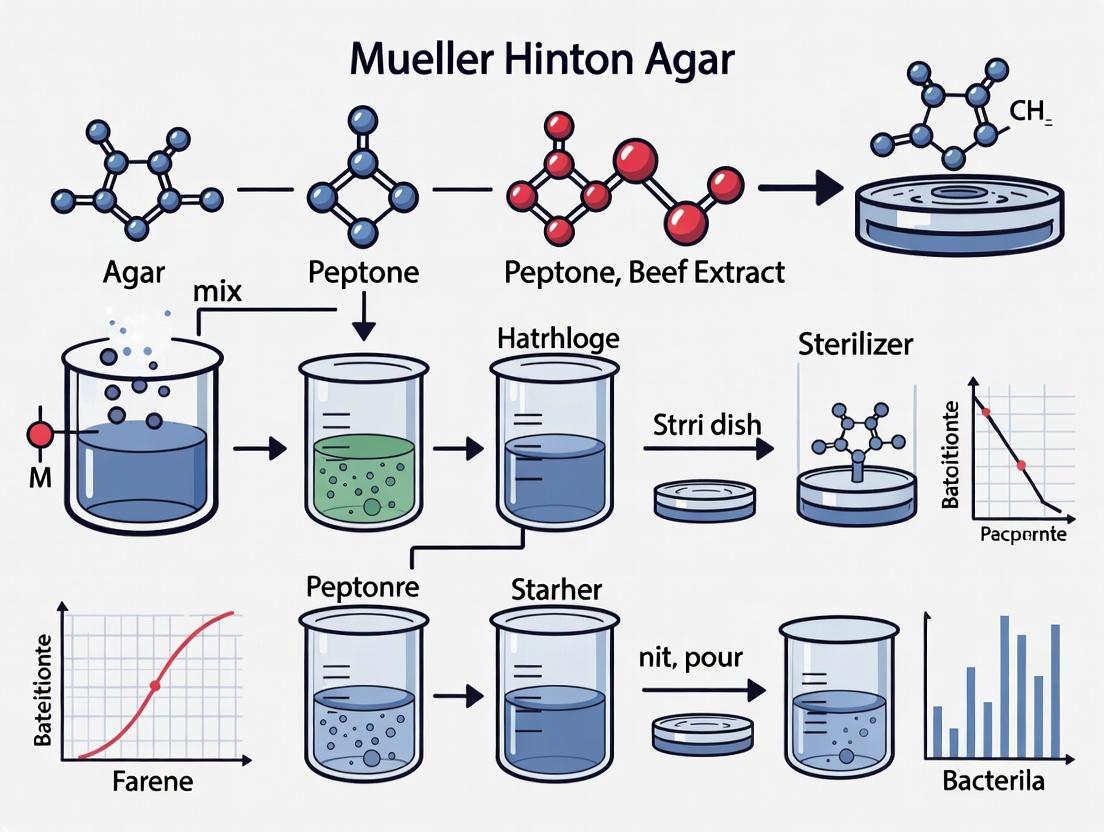
This comprehensive guide details the precise preparation, application, troubleshooting, and validation of Mueller Hinton Agar (MHA) specifically for the well diffusion method in antimicrobial susceptibility testing.
Mastering Mueller Hinton Agar Preparation for Well Diffusion: A Complete Guide for Antimicrobial Testing
Abstract
This comprehensive guide details the precise preparation, application, troubleshooting, and validation of Mueller Hinton Agar (MHA) specifically for the well diffusion method in antimicrobial susceptibility testing. Tailored for researchers and drug development professionals, it provides a step-by-step methodological framework, addresses common optimization challenges, and discusses validation protocols against established standards like CLSI and EUCAST, ensuring reliable and reproducible results in novel antimicrobial discovery and efficacy studies.
Understanding Mueller Hinton Agar: The Gold Standard for Well Diffusion Antimicrobial Testing
The Critical Role of MHA in Modern Antimicrobial Susceptibility Testing (AST)
Within the context of research utilizing the well diffusion method, the preparation and standardization of Mueller Hinton Agar (MHA) is not merely a preliminary step but a fundamental determinant of experimental validity. As the gold-standard medium for AST per CLSI and EUCAST guidelines, MHA’s unique composition provides a reproducible, low-antagonist environment that allows for the accurate diffusion of antimicrobials and unimpeded bacterial growth. This application note details the critical protocols and specifications for MHA preparation in research settings, ensuring data integrity for researchers and drug development professionals.
Quantitative Specifications for Standardized MHA
The following table summarizes the critical parameters for compliant MHA preparation, derived from current international standards.
Table 1: Critical Composition & Performance Specifications for Standardized MHA
| Parameter | Specification | Rationale / Impact |
|---|---|---|
| pH (at 25°C) | 7.2 – 7.4 | Optimizes antimicrobial activity and bacterial growth. |
| Ca²⁺ Concentration | 20 – 25 mg/L | Critical for accurate testing of aminoglycosides & polymyxins. |
| Mg²⁺ Concentration | 10 – 12.5 mg/L | Essential for accurate testing of tetracyclines & aminoglycosides. |
| Thymidine/Thymine | ≤ 0.03 μg/mL | Prevents false resistance (e.g., to Trimethoprim/Sulfamethoxazole). |
| Agar Depth | 4.0 ± 0.5 mm | Standardizes diffusion kinetics for zone of inhibition measurements. |
| Inoculum Density | ~1-2 x 10⁸ CFU/mL (0.5 McFarland) | Ensures confluent, even lawn of growth for reliable diffusion. |
| Incubation Conditions | 35 ± 2°C, Ambient air, 16-24h | Standardizes growth rate across experiments. |
| Performance Control (E. coli ATCC 25922, Ciprofloxacin) | Zone Diameter: 30-40 mm (CLSI) | Validates medium batch performance. |
Core Protocols
Protocol 3.1: Preparation of Standardized MHA for Well Diffusion Studies Objective: To prepare MHA plates with controlled ion content and depth for reproducible well diffusion assays. Materials: See "The Scientist's Toolkit" (Section 5). Procedure:
- Suspension: Weigh 38g of commercially available MHA powder per liter of deionized water.
- Dissolution & Adjustment: Heat with stirring to boil. Add required volumes of sterile CaCl₂ and MgCl₂ stock solutions after autoclaving and cooling to ~50°C to prevent precipitation.
- pH Verification: Cool a sample to 25°C. Adjust pH to 7.3 ± 0.1 using 1N NaOH or HCl.
- Pouring: Dispense exactly 25-30 mL per 100mm petri dish on a level surface to achieve a uniform 4mm depth. Let solidify at room temperature.
- Drying: Leave lids ajar in a laminar flow hood for 10-15 minutes to remove surface condensation, which can alter diffusion.
- Storage: Seal plates in plastic bags and store at 2-8°C for up to 2 weeks. Bring to room temperature before use.
Protocol 3.2: Well Diffusion Method for Novel Compound Screening Objective: To assess the antimicrobial activity of novel compounds or plant extracts using prepared MHA. Procedure:
- Inoculum Preparation: Adjust a log-phase bacterial suspension in sterile saline to a 0.5 McFarland standard.
- Lawn Seeding: Dip a sterile swab into the inoculum, rotate against the tube wall to express excess fluid, and swab the entire surface of the MHA plate three times, rotating 60° each time.
- Well Creation: Using a sterile cork borer or tip, create 6-8mm diameter wells in the agar. Remove the agar plug.
- Compound Loading: Pipette a standardized volume (e.g., 50-100 µL) of the test compound/extract solution into the well. Include positive (known antibiotic) and negative (solvent) controls.
- Incubation & Analysis: Allow compound to pre-diffuse for 15 mins at room temperature. Invert and incubate plates under standard conditions (Table 1). Measure zones of inhibition (including well diameter) using calipers. Perform in triplicate.
Visualization of Workflows and Concepts
Title: AST Well Diffusion Experimental Workflow
Title: How MHA Properties Drive Reliable AST Results
The Scientist's Toolkit: Key Reagents & Materials
Table 2: Essential Research Reagent Solutions for MHA-based AST
| Item | Function / Specification |
|---|---|
| Mueller Hinton Agar Powder | Dehydrated base medium providing beef infusion, casein hydrolysate, and starch. Must be certified for low thymidine. |
| Cation Supplements (CaCl₂, MgCl₂) | Sterile stock solutions for post-autoclave adjustment of divalent cations to CLSI/EUCAST ranges. |
| pH Standard Buffers (pH 7.0 & 7.4) | For precise calibration of pH meter prior to verifying MHA pH. |
| 0.5 McFarland Standard | Turbidity standard for accurate bacterial inoculum preparation. |
| Sterile Saline (0.85% NaCl) | Solution for bacterial suspension and dilution to achieve correct inoculum density. |
| Quality Control Strains | Reference strains (e.g., E. coli ATCC 25922, S. aureus ATCC 29213) for validating medium performance. |
| Cork Borers (6-8mm diameter) | Sterilizable stainless-steel borers for creating uniform wells in agar. |
| Digital Calipers / Zone Reader | For precise measurement of inhibition zone diameters (mm). |
| Sterile, Square Bioassay Plates | Recommended for well diffusion to maximize number of wells per plate. |
This application note, framed within the broader thesis on Mueller Hinton Agar (MHA) preparation for well diffusion method research, details the chemical and physicochemical properties that make MHA the standardized medium for antimicrobial susceptibility testing via the agar well diffusion assay. The well diffusion method is a cornerstone technique for evaluating the efficacy of antimicrobial agents, requiring a medium that supports robust, reproducible microbial growth while allowing predictable diffusion of test compounds.
Chemical Composition & Functional Rationale
The standardized formulation of MHA provides a non-selective, nutritionally adequate environment for the growth of non-fastidious pathogens, particularly those targeted in antibiotic testing. Its composition is precisely balanced to minimize variables that could interfere with antibiotic diffusion.
Table 1: Key Components of Mueller Hinton Agar and Their Functional Roles
| Component | Quantitative Range (per Liter) | Primary Function in Well Diffusion Assay |
|---|---|---|
| Beef Extract & Acid Hydrolysate of Casein | 300 mg (Beef Extract), 17.5 g (Acid Hydrolysate of Casein) | Provides nitrogen, vitamins, carbon, sulfur, and essential amino acids in a readily assimilable form for consistent, rapid growth. |
| Starch | 1.5 g | Acts as a colloid to absorb and neutralize toxic metabolites; minimizes the impact of bacterial inhibitors, ensuring uninhibited antibiotic diffusion. |
| Agar | 17.0 g | Provides the solid matrix. Concentration is critical: it must be rigid enough for well creation, yet porous enough to allow uniform radial diffusion of antimicrobials. |
Mechanisms Underlying Ideal Diffusion Properties
pH and Divalent Cation Control
MHA is buffered to a final pH of 7.2 – 7.4 at room temperature. This neutral range is optimal for the activity of most antibiotics and supports standard bacterial growth. Crucially, the medium has a low and consistent content of divalent cations (Ca²⁺, Mg²⁺), which is essential for accurate testing of aminoglycosides and tetracyclines, as high levels can antagonize these drugs.
Depth and Uniformity Standardization
For reproducible diffusion kinetics, the agar depth is standardized to 4 mm. This strict control ensures that the diffusion distance from the well through the agar to the developing lawn of bacteria is uniform, a critical variable for comparing zone of inhibition sizes.
Absence of Inhibitory Substances
MHA is free from sulfonamide and trimethoprim inhibitors (thymidine and thymine), which would otherwise antagonize these antimicrobial classes, leading to falsely small zones and resistant interpretations.
Diagram 1: Antibiotic Diffusion Kinetics in MHA Matrix
Detailed Experimental Protocols
Protocol: Preparation of Standardized Mueller Hinton Agar Plates
Objective: To prepare MHA plates of standardized depth (4 mm) for well diffusion assays. Materials: MHA powder, distilled water, conical flask, autoclave, water bath (45-50°C), sterile Petri dishes (100 x 15 mm), leveling table. Procedure:
- Suspend 38 g of MHA powder in 1 L of distilled water.
- Heat with agitation to dissolve completely.
- Autoclave at 121°C for 15 minutes.
- Cool in a water bath to 45-50°C.
- Pour approximately 25-30 mL per plate onto level, sterile Petri dishes on a leveled surface. This yields a depth of ~4 mm.
- Allow to solidify at room temperature. Store plates at 2-8°C in sealed bags.
Protocol: Well Diffusion Assay for Antimicrobial Testing
Objective: To evaluate the antimicrobial activity of a test compound using the well diffusion method on MHA. Materials: Standardized MHA plates, standardized bacterial inoculum (0.5 McFarland), sterile swabs, sterile cork borer or punch (6-8 mm diameter), antimicrobial solution (known concentration), micrometer. Procedure:
- Using a sterile swab, evenly inoculate the entire surface of the MHA plate with the standardized bacterial suspension.
- Allow the inoculum to dry for 5-15 minutes.
- Using a sterile borer, aseptically punch 3-4 wells in the agar.
- Fill each well with a precise volume (e.g., 50-100 µL) of the antimicrobial solution to be tested. A known standard should be included on each plate.
- Allow the solution to diffuse at room temperature for 10-15 minutes.
- Invert and incubate plates at 35±2°C for 16-18 hours.
- Measure the diameter of each zone of inhibition (ZOI) to the nearest millimeter using calipers.
Diagram 2: Well Diffusion Assay Workflow
The Scientist's Toolkit: Key Research Reagent Solutions
Table 2: Essential Materials for MHA Well Diffusion Research
| Item | Function & Specification |
|---|---|
| Mueller Hinton Agar Powder | The standardized base medium. Must be from a certified supplier (e.g., Oxoid, Becton Dickinson, HiMedia) to ensure consistent composition. |
| Cation-Adjusted MHA (CA-MHA) | For testing Pseudomonas and other species, or specific antibiotics. Contains defined levels of Ca²⁺ and Mg²⁺. |
| Sterile Cork Borer (6-8 mm) | Creates uniform wells for antibiotic application. Must be perfectly cylindrical for consistent diffusion geometry. |
| McFarland Standard 0.5 | A turbidity standard to calibrate the bacterial inoculum density (~1.5 x 10^8 CFU/mL), ensuring confluent lawn growth. |
| Sterile Dimethyl Sulfoxide (DMSO) | A common solvent for reconstituting hydrophobic antimicrobial compounds for well loading. Must be at a concentration non-inhibitory to growth (<5% v/v in well). |
| Precision Digital Calipers | For accurate measurement of zone diameters to the nearest 0.1 mm, critical for quantitative analysis. |
Within the thesis "Standardization of In Vitro Susceptibility Testing: Optimization of Mueller Hinton Agar (MHA) for the Well Diffusion Method," the precise control of key quality parameters is paramount. MHA is the standard medium for antimicrobial susceptibility testing (AST). For well diffusion research, which quantifies antibiotic potency via inhibition zone diameters, inter-batch variability in MHA must be minimized. Three critical, interdependent parameters—pH, divalent cation content (Mg²⁺, Ca²⁺), and thymidine content—directly influence antibiotic diffusion, bacterial growth, and, ultimately, the accuracy and reproducibility of zone measurements. This application note details their significance, quantification methods, and control protocols.
Parameter Significance and Impact Data
The following table summarizes the target values, acceptable ranges, and primary impacts of each key parameter based on current CLSI (Clinical and Laboratory Standards Institute) guidelines and recent research.
Table 1: Key Quality Parameters for MHA in Well Diffusion Studies
| Parameter | Optimal/Target Value | Clinically Acceptable Range | Impact on Well Diffusion Assay |
|---|---|---|---|
| Final pH | 7.3 ± 0.1 at 25°C | 7.2 - 7.4 | Affects antibiotic stability, charge, and solubility, influencing diffusion rate and bacterial growth rate. |
| Divalent Cations | Critical for aminoglycoside & polymyxin activity; low levels cause falsely large zones (↑ susceptibility). | ||
| • Mg²⁺ | 10-12.5 mg/L (as MgCl₂) | 6-12.5 mg/L | Cofactor for gentamicin/tobramycin uptake. |
| • Ca²⁺ | 20-25 mg/L (as CaCl₂) | 20-25 mg/L | Essential for daptomycin and polymyxin binding. |
| Thymidine/Thymine | ≤ 0.03 μg/mL | ≤ 0.03 μg/mL | High levels antagonize trimethoprim and sulfonamide activity, causing falsely small zones (↓ susceptibility). |
Detailed Experimental Protocols
Protocol 1: Measurement and Adjustment of MHA pH
Objective: To ensure the final pH of prepared MHA is 7.3 ± 0.1 at room temperature (25°C). Materials: pH meter (calibrated with buffers at pH 4.01, 7.00, 10.01), sterile borosilicate glass electrode, magnetic stirrer/hotplate, 1M NaOH, 1M HCl. Procedure:
- Prepare MHA according to manufacturer instructions. Autoclave (121°C, 15 min) and cool in a water bath to 50-55°C.
- Calibrate the pH meter at 25°C. Immerse the sterilized electrode into the molten agar under gentle stirring.
- Record the pH reading once stabilized. Critical: Temperature correction must be applied if measurement is not at 25°C.
- Adjustment: If pH < 7.2, add small increments (e.g., 0.1 mL/L) of sterile 1M NaOH. If pH > 7.4, add sterile 1M HCl. Mix thoroughly and re-measure.
- Pour plates immediately after pH adjustment to prevent re-acidification.
Protocol 2: Atomic Absorption Spectrophotometry (AAS) for Divalent Cations
Objective: Quantify Mg²⁺ and Ca²⁺ concentrations in a prepared batch of MHA. Materials: AAS spectrometer, Mg & Ca hollow cathode lamps, concentrated HNO₃ (trace metal grade), deionized water (≥18 MΩ·cm), standard solutions (Mg & Ca, 1000 mg/L). Procedure:
- Sample Digestion: Weigh 5.0 g of MHA into a digestion vessel. Add 10 mL concentrated HNO₃. Digest using a microwave digester or hot block until a clear digestate is obtained. Dilute to 50 mL with deionized water.
- Standard Preparation: Prepare calibration standards (e.g., 0.5, 1.0, 2.0, 5.0 mg/L for both ions) in 2% HNO₃ matrix.
- AAS Analysis: Set instrument parameters (Mg: 285.2 nm, Ca: 422.7 nm, air-acetylene flame). Run blanks and standards to create calibration curves.
- Calculation: Determine sample concentration from curve. Account for dilution factor to report final concentration in mg/L of agar.
- Correction: If Mg²⁺/Ca²⁺ are out of specification, supplement the molten agar with sterile, concentrated stock solutions of MgCl₂·6H₂O or CaCl₂·2H₂O.
Protocol 3: Thymidine Content Bioassay usingEnterococcus faecalisATCC 29212
Objective: Qualitatively and semi-quantitatively assess thymidine/thymine content in MHA. Materials: E. faecalis ATCC 29212, Thymidine-free MHA (reference medium), Trimethoprim/Sulfamethoxazole (SXT) discs (1.25/23.75 µg), 0.5 McFarland standard. Procedure:
- Prepare test and reference thymidine-free MHA plates.
- Prepare a 0.5 McFarland suspension of E. faecalis ATCC 29212 and lawn inoculate both plates.
- Place an SXT disc on each plate. Incubate aerobically at 35°C for 18-24 hours.
- Interpretation: Measure the zone of inhibition. A zone diameter >20 mm on the test medium indicates acceptable low thymidine (≤0.03 µg/mL). A zone diameter ≤20 mm or a "light growth" within the zone indicates excessive thymidine, which antagonizes the SXT.
The Scientist's Toolkit: Key Research Reagent Solutions
Table 2: Essential Materials for MHA Quality Control
| Item | Function/Explanation |
|---|---|
| Certified pH Buffers (pH 4.01, 7.00, 10.01) | For accurate 3-point calibration of pH meters, ensuring traceable measurement. |
| Sterile 1M NaOH / 1M HCl | For fine, aseptic adjustment of molten agar pH after autoclaving. |
| MgCl₂·6H₂O & CaCl₂·2H₂O Stock Solutions | Sterile, concentrated aqueous stocks for precise post-autoclave cation supplementation. |
| Trace Metal Grade HNO₃ | For digesting MHA matrix prior to AAS analysis without introducing cation contaminants. |
| Cation Standard Solutions (1000 mg/L) | Certified reference materials for creating accurate AAS calibration curves. |
| Enterococcus faecalis ATCC 29212 | QC strain recommended by CLSI for thymidine/thymine bioassay. |
| Thymidine-Free MHA | Reference medium with guaranteed low thymidine for comparative bioassay. |
| Trimethoprim/Sulfamethoxazole (SXT) Discs | Indicator discs whose zone size is inversely proportional to thymidine concentration. |
Visualizations
Title: MHA Quality Control Workflow for Well Diffusion
Title: How Key Parameters Influence Well Diffusion Results
Within a broader thesis on the optimization of Mueller Hinton Agar (MHA) preparation for the well diffusion method, a critical examination of the growth medium itself is fundamental. The choice of medium directly impacts the size of inhibition zones, influencing the reproducibility and clinical relevance of antibiotic susceptibility testing (AST). This application note provides a comparative overview of MHA against alternative media, detailing protocols and data to guide researchers in selecting the appropriate matrix for diffusion-based assays.
Media Comparison: Composition & Impact
The table below summarizes the key characteristics of MHA relative to other common media used in antimicrobial activity screening.
Table 1: Comparative Analysis of Media for Antibiotic Diffusion Assays
| Media Type | Key Components | Standardized for AST | Protein Content | Typical Use Case | Primary Advantage | Primary Limitation |
|---|---|---|---|---|---|---|
| Mueller Hinton Agar (MHA) | Beef infusion, casein hydrolysate, starch. | Yes (CLSI, EUCAST). | Low, non-sulfonamide antagonists. | Standardized disk/well diffusion for common bacteria. | Reproducibility, defined depth (4 mm), minimal interference. | Not optimal for fastidious organisms. |
| Muller Hinton Blood Agar (MHBA) | MHA base + 5% sheep blood. | Yes for specific organisms (e.g., S. pneumoniae). | Low, plus blood. | Fastidious organisms like Streptococcus spp. | Supports growth of fastidious bacteria. | Zone edges less distinct; blood can bind some drugs. |
| Muller Hinton Chocolate Agar | MHA base + heated blood. | Yes for Haemophilus, Neisseria. | Low, plus lysed blood. | Very fastidious organisms requiring NAD/hemin. | Provides X and V factors. | Not for standard AST; complex matrix. |
| Iso-Sensitest Agar (ISA) | Similar to MHA, proprietary formulation. | Yes (EUCAST standard). | Very low, consistent. | High reproducibility for gradient and diffusion methods. | Low batch-to-batch variability. | Higher cost than MHA. |
| Tryptic Soy Agar (TSA) | Tryptone, soy peptone, NaCl. | No. | High. | General microbial growth, not standard AST. | Rich growth for diverse microbes. | High protein can antagonize antibiotics, non-standard. |
| Brain Heart Infusion Agar (BHIA) | Brain and heart infusions, peptones. | No. | Very high. | Culturing fastidious organisms, not routine AST. | Extremely nutrient-rich. | Severe antagonism of many antibiotics (e.g., tetracyclines). |
Quantitative Data Summary: Zone Diameter Impact
Table 2: Example Inhibition Zone Diameter (mm) Variations on Different Media (Hypothetical Data for Ciprofloxacin vs. E. coli ATCC 25922)
| Media | Mean Zone Diameter (mm) | Standard Deviation (mm) | % Deviation from MHA Standard |
|---|---|---|---|
| MHA (Reference) | 32.0 | 0.8 | 0% |
| Iso-Sensitest Agar | 32.5 | 0.6 | +1.6% |
| Muller Hinton Blood Agar | 30.5 | 1.2 | -4.7% |
| Tryptic Soy Agar | 28.2 | 1.5 | -11.9% |
| Brain Heart Infusion Agar | 25.1 | 2.0 | -21.6% |
Experimental Protocols
Protocol 1: Standardized MHA Preparation for Well Diffusion Assay
Objective: To prepare reference MHA plates for comparative antibiotic diffusion studies. Materials: See Scientist's Toolkit. Procedure:
- Suspension: Suspend 38g of commercial MHA powder in 1L of deionized water.
- Dissolution & Sterilization: Heat with stirring until completely dissolved. Autoclave at 121°C for 15 minutes.
- Cooling & Pouring: Cool to 45-50°C in a water bath. Aseptically pour exactly 25 mL per 100 mm diameter petri dish on a level surface.
- Solidification & Drying: Allow to solidify at room temperature. Dry plates with lids ajar in a 35°C incubator for 10-15 minutes to remove surface moisture. Store sealed at 2-8°C for up to 2 weeks.
Protocol 2: Comparative Well Diffusion Assay
Objective: To evaluate antibiotic diffusion and activity on MHA versus a test medium. Materials: Test antibiotic solution, standardized bacterial inoculum (0.5 McFarland), sterile swabs, cork borer or tip (6-8 mm). Procedure:
- Inoculation: Evenly swab the standardized inoculum onto the surface of comparative agar plates (MHA vs. Test Media).
- Well Creation: Using a sterile borer or tip, create 3-4 equidistant wells in the agar. Remove the agar plug.
- Loading: Pipette a standardized volume (e.g., 100 µL) of the antibiotic solution into each well. Use a negative control (solvent).
- Diffusion & Incubation: Allow the solution to absorb at room temperature for 15 minutes. Incubate plates inverted at 35±2°C for 16-18 hours.
- Analysis: Measure the diameter of inhibition zones (including well diameter) in mm using calipers. Compare mean zones between media types.
Signaling Pathway & Experimental Workflow
Diagram Title: Media Comparison Workflow for Well Diffusion Assay
Diagram Title: Factors in Agar Affecting Antibiotic Diffusion & Zone Formation
The Scientist's Toolkit: Research Reagent Solutions
Table 3: Essential Materials for MHA-based Well Diffusion Assays
| Item | Function & Specification | Critical Notes |
|---|---|---|
| Mueller Hinton Agar Powder | Provides the standardized, low-antagonist base medium. CLSI-recommended formulation. | Must be from a reputable supplier; batch-to-batch consistency is key. |
| Sterile Petri Dishes (100 x 15 mm) | Containers for agar solidification and assay. | Must be perfectly level to ensure uniform agar depth (target 4 mm). |
| Cork Borer or Sterile Tips (6-8 mm) | Creates uniform wells for antibiotic application. | Diameter must be consistent; sterilize before each use. |
| McFarland Standard (0.5) | Reference for standardizing bacterial inoculum density (~1.5 x 10^8 CFU/mL). | Ensures reproducible lawn growth. |
| Sterile Cotton Swabs | For evenly inoculating the agar surface with the standardized bacterial suspension. | Use non-inhibitory materials. |
| Antibiotic Standard Solutions | Pure compounds of known potency for creating test solutions. | Prepare fresh or store aliquots at recommended conditions. |
| Digital Calipers or Zone Reader | Precisely measures inhibition zone diameters to the nearest 0.1 mm. | Essential for accurate, objective quantitative data. |
| pH Meter | Verifies final agar pH (MHA must be 7.2-7.4 at room temp). | Critical, as pH affects activity of many antibiotics (e.g., aminoglycosides, macrolides). |
Within the thesis on optimizing Mueller Hinton Agar (MHA) for the well diffusion method, sourcing high-quality components is the foundational step that determines experimental reproducibility and validity. This protocol details the critical equipment, reagents, and sourcing strategies for preparing MHA that meets Clinical and Laboratory Standards Institute (CLSI) specifications for antimicrobial susceptibility testing.
Research Reagent Solutions: The Core Toolkit
The following table details the essential materials required for the precise preparation of MHA for the well diffusion method.
| Component Name | Specification / Grade | Function in MHA Preparation | Critical Quality Attribute(s) |
|---|---|---|---|
| Beef Extract (Dehydrated) | Analytical Reagent, Low in Inhibitors | Source of nitrogen, vitamins, and minerals for bacterial growth. | Low in nucleic acid precursors; Consistent composition. |
| Casein Acid Hydrolysate | Pharmaceutical Grade, Ultra-filtered | Provides amino acids and peptides as a primary nutrient source. | Low salt content; Standardized peptide profile. |
| Starch, Soluble | Laboratory Grade, Pure | Binds to toxic metabolites released by bacteria, allowing for clear zone edges. | High purity; Defined molecular weight range. |
| Agar, Bacteriological | High-Gel Strength, Low Ash & Nitrogen | Solidifying agent that forms a gel matrix allowing for bacterial lawn and well creation. | Gel strength > 900 g/cm²; Ash content < 2.5%. |
| Distilled & Deionized Water | CLRW (Clinical Laboratory Reagent Water), Type I | Solvent for all components; must not contain interfering ions. | Resistivity ≥ 18.2 MΩ·cm; Bacterial count < 10 CFU/mL. |
| Calcium & Magnesium Ions | Standardized Divalent Cation Solution | Corrects for cation content to standardize aminoglycoside & tetracycline activity. | Precisely quantified Ca²⁺ (~20-25 mg/L) and Mg²⁺ (~10-12.5 mg/L). |
| pH Buffer | High-Purity Phosphate Buffer | Maintains pH at 7.2 ± 0.1 after gelling, critical for antibiotic stability and activity. | Sterile, non-pyrogenic; Accurate molarity. |
Application Note: Sourcing and Qualification Protocol for Agar
Objective: To establish a reliable supply chain and qualification method for bacteriological agar to ensure consistent MHA gel strength and diffusion characteristics.
Background: Agar quality is the single greatest variable affecting antibiotic diffusion in the well diffusion method. Inconsistent gel strength leads to irregular zone shapes and sizes.
Protocol: Agar Qualification Test
- Sample Preparation: Prepare a 1.5% (w/v) agar solution in Type I water from three candidate supplier lots. Autoclave at 121°C for 15 minutes.
- Gel Strength Measurement (Bloom Method):
- Pour 100 mL of each molten agar into a standardized cylindrical container.
- Allow to set at 20°C for 2 hours.
- Using a texture analyzer, depress a standard plunger (12.7 mm diameter) 4 mm into the gel surface.
- Record the force required in grams per square centimeter (g/cm²).
- Diffusion Uniformity Test:
- Prepare full MHA plates with each qualified agar lot.
- Seed with a 0.5 McFarland E. coli ATCC 25922 lawn.
- Create 6 mm wells and fill with a standardized gentamicin solution (10 µg/mL).
- Incubate at 35°C for 18 hours.
- Measure inhibition zone diameters from the well edge to the edge of visible growth using digital calipers.
- Acceptance Criteria:
- Gel Strength: 900 - 1100 g/cm².
- Zone Diameter for E. coli ATCC 25922 with gentamicin: 19-23 mm (per internal validation based on CLSI M02).
- Coefficient of variation across triplicate plates ≤ 3%.
Data Summary: Table: Qualification Results for Three Agar Supplier Lots
| Supplier Lot # | Gel Strength (g/cm²) | Mean Inhibition Zone (mm) | % CV (Triplicates) | Pass/Fail |
|---|---|---|---|---|
| AG-LOT-2023-001 | 1050 | 21.2 | 1.8% | Pass |
| AG-LOT-2023-045 | 780 | 24.5 | 4.1% | Fail (Low gel strength, high diffusion) |
| AG-LOT-2023-102 | 980 | 20.8 | 2.2% | Pass |
Protocol: Preparation of Standardized Mueller Hinton Agar
Materials:
- Beef Extract Powder (Qualified Lot)
- Acid Hydrolysate of Casein (Qualified Lot)
- Soluble Starch
- Qualified Bacteriological Agar
- Type I Water
- pH Meter (Calibrated)
- Analytical Balance (Calibrated)
- Autoclave with validated cycle
- Water Bath, 45-50°C
Methodology:
- Weighing: Accurately weigh:
- Beef Extract: 2.0 g
- Acid Hydrolysate of Casein: 17.5 g
- Soluble Starch: 1.5 g
- Bacteriological Agar: 17.0 g
- Combine dry components in a clean, sterile flask.
- Hydration and Dissolution: Add 1000 mL of Type I water. Swirl to suspend.
- Heating: Heat with frequent agitation (using a magnetic stirrer) until the mixture boils and all components are fully dissolved.
- Sterilization: Loosen the flask cap and autoclave at 121°C for 15 minutes.
- pH Adjustment and Cation Standardization: Cool the molten agar in a 45-50°C water bath.
- Aseptically add sterile, standardized solutions of Calcium (CaCl₂) and Magnesium (MgCl₂) to achieve final concentrations of 20-25 mg/L and 10-12.5 mg/L, respectively.
- Check the pH. If necessary, adjust to 7.2 ± 0.1 at room temperature using sterile 1M NaOH or HCl.
- Pouring: Pour approximately 25 mL per 90 mm Petri dish on a level surface. Allow to set at room temperature.
- Quality Control: Perform QC on each batch using control strains (E. coli ATCC 25922, S. aureus ATCC 25923*) with standard antibiotic disks prior to use in research.
Visualizations
MHA Component Sourcing & Release Workflow
Reagent Parameters Affecting Antibiotic Diffusion
Step-by-Step Protocol: Preparing and Pouring MHA for Optimal Well Diffusion Assays
Application Notes and Protocols for Thesis: "Standardization of Mueller Hinton Agar Preparation for the Well Diffusion Method in Novel Antimicrobial Discovery"
Quantitative Calculations for Bulk Medium Preparation
Efficient scaling from a single plate to batch production requires precise calculations. The following tables summarize core quantitative data for standard 90mm Petri dishes (approximate 25mL volume per plate).
Table 1: Component Calculations for Mueller Hinton Agar (MHA)
| Component | Standard Concentration (g/L) | Mass for 1L (g) | Mass for 5L Batch (g) | Function in Research |
|---|---|---|---|---|
| Beef Infusion | 2.0 | 2.0 | 10.0 | Nutrient source for bacterial growth |
| Casein Acid Hydrolysate | 17.5 | 17.5 | 87.5 | Amino acid and nitrogen source |
| Starch | 1.5 | 1.5 | 7.5 | Binds toxic metabolites; promotes diffusion |
| Agar | 17.0 | 17.0 | 85.0 | Solidifying agent for well formation |
Table 2: Volume & Material Logistics for Experimental Batches
| Parameter | Value | Notes for Protocol |
|---|---|---|
| Final Volume per Plate | 25 mL | Optimal for 90mm dish; ensures uniform depth. |
| Agar Volume per Plate | ~23.5 mL | Accounts for evaporation loss (~5%) during pouring. |
| Working Batch Size | 4.0 L | Yields ~160 plates, optimal for autoclave capacity. |
| Deionized Water Volume | 4.0 L | Hydration medium for components. |
| Total Prepared Volume | ~3.8 L | Post-evaporation and sampling volume. |
| pH (Post-Sterilization) | 7.3 ± 0.1 | Critical for antibiotic stability and activity. |
Detailed Experimental Protocols
Protocol 2.1: Calculation and Weighing of Components
- Determine the total number of plates required for the experiment, including a 10% overage for quality control and spills.
- Using the values in Table 1, calculate the total mass of each component required. For a 4L working batch targeting 160 plates: Beef Infusion (8.0g), Casein Acid Hydrolysate (70.0g), Starch (6.0g), Agar (68.0g).
- Tare a weighing boat on an analytical balance. Accurately weigh each component separately to prevent cross-contamination.
- Combine all dry components in a clean, dry beaker and mix thoroughly with a sterile spatula to ensure homogeneity before hydration.
Protocol 2.2: Hydration, Sterilization, and Pouring
- Transfer the dry mixture into a 5L autoclavable flask or bottle.
- Add 4.0 L of deionized water. Swirl gently to suspend the powder without creating excessive foam.
- Loosely cap the vessel with a closure designed for steam penetration (e.g., a cotton plug/aluminum foil or a loosely threaded cap).
- Autoclave at 121°C, 15 psi, for 15 minutes. Note: Extended cycles may degrade starch and alter diffusion properties.
- Post-sterilization, carefully remove the flask and allow it to cool in a 48-50°C water bath until the medium is cool to the touch but remains fluid.
- Aseptically pour approximately 23-25 mL into each sterile Petri dish on a level surface. Allow plates to solidify for 45-60 minutes at room temperature before stacking.
- Store solidified plates sealed in plastic sleeves at 2-8°C for up to 4 weeks. Prior to use in the well diffusion assay, dry plates uncovered in a 37°C incubator for 20-30 minutes to remove surface condensation.
Visualization of Workflow and Critical Control Points
Title: MHA Preparation and Quality Control Workflow
The Scientist's Toolkit: Key Research Reagent Solutions & Materials
Table 3: Essential Materials for MHA Preparation in Well Diffusion Research
| Item | Function & Research Significance |
|---|---|
| Mueller Hinton Broth (Dehydrated) | The base powder containing beef infusion, casein hydrolysate, and starch. Provides standardized nutrition for reproducible bacterial growth. |
| Bacteriological Agar | High-purity solidifying agent. Consistency is critical for uniform diffusion of antimicrobials from wells into the agar matrix. |
| pH Meter (Calibrated) | To verify post-sterilization pH of 7.3 ± 0.1. pH directly influences antibiotic stability and zone of inhibition size. |
| Autoclave with Validated Cycle | Ensures complete sterilization without degrading thermolabile components (e.g., starch) that affect the diffusion assay. |
| Precision Analytical Balance | For accurate weighing of components (±0.01g). Small errors in agar concentration significantly alter diffusion rates. |
| 48-50°C Water Bath | Maintains molten agar in a liquid state for pouring without compromising heat-labile components or causing excessive condensation. |
| Sterile Petri Dishes (90mm) | Standardized size is essential for consistent agar depth (≈4mm), a critical variable in the well diffusion method. |
| Sterility Controls (Tryptic Soy Agar) | Used to confirm the sterility of each prepared MHA batch, preventing false negatives in antimicrobial testing. |
Within the context of preparing Mueller Hinton Agar (MHA) for the well diffusion method in antimicrobial susceptibility testing, precise execution of the initial stages—weighing, hydration, and heating—is paramount. These steps directly influence the solubility of agar and other components, preventing the formation of precipitates that can compromise the medium's clarity, consistency, and, critically, its diffusion characteristics. This protocol details a standardized methodology to mitigate common precipitation issues.
Application Notes & Protocols
Table 1: Standardized Quantities for MHA Preparation (1L Batch)
| Component | Quantity | Function | Critical Note for Precipitation Avoidance |
|---|---|---|---|
| Mueller Hinton Broth (Dehydrated) | 22.0 g | Nutrient base (beef infusion, casein hydrolysate, starch) | Starch acts as a protective colloid; accurate weighing is critical. |
| Agar (Bacteriological Grade) | 17.0 g | Solidifying agent | Impure or incorrectly weighed agar is a primary source of haze/particulates. |
| Distilled/Delonized Water | 1000 mL | Solvent | High mineral content (hard water) can cause salt precipitation upon autoclaving. |
| Final pH (after autoclaving) | 7.3 ± 0.1 @ 25°C | - | Alkaline pH shifts can promote precipitation of calcium and magnesium salts. |
Table 2: Troubleshooting Common Precipitation Issues
| Issue | Potential Cause | Recommended Corrective Protocol |
|---|---|---|
| Cloudy/Hazy Agar | Incomplete hydration of starch/proteins before autoclaving. | Extend cold hydration time (See Protocol Step 2). |
| Grittiness/Visible Particulates | 1. Poor-quality agar with high mineral content.2. Precipitation of phosphates or other salts. | 1. Use certified bacteriological agar.2. Ensure correct pH and use high-purity water. |
| Precipitation upon Cooling | Too rapid cooling or uneven temperature during pouring. | Allow autoclaved medium to cool uniformly in a 45-50°C water bath. |
| Crystalline Formation | Overheating or "baking" of dried medium on glassware during sterilization. | Ensure containers are properly covered during autoclaving to prevent excessive evaporation. |
Detailed Experimental Protocol for Precipitation-Free MHA Preparation
Protocol: Optimized MHA Preparation for Well Diffusion Studies
Objective: To prepare clear, homogeneous Mueller Hinton Agar plates devoid of precipitates, ensuring standardized diffusion of antimicrobial agents from wells.
Research Reagent Solutions & Essential Materials:
- Dehydrated Mueller Hinton Broth: Nutrient foundation.
- High-Purity Bacteriological Agar: Solidifying agent; low in calcium/magnesium.
- Distilled or Deionized Water (Resistivity ≥1 MΩ·cm): Prevents mineral precipitation.
- pH Meter (Calibrated): For verifying medium pH.
- Analytical Balance (0.01 g accuracy): For precise weighing of components.
- Heat-Stir Plate & Magnetic Stir Bar: For even heating and mixing.
- Autoclave with Validated Cycle: For sterilization.
- Temperature-Controlled Water Bath (45-50°C): For holding agar post-autoclaving.
- Glassware (Flasks/Beakers): With at least 2x the medium volume to prevent boil-over.
Methodology:
- Weighing:
- Using an analytical balance, accurately weigh 22.0 g of dehydrated Mueller Hinton Broth powder and 17.0 g of bacteriological-grade agar.
- Note: Tare the container and avoid static electricity, which can lead to weighing errors and an incorrect agar-to-broth ratio.
Hydration (Critical Step):
- Add the weighed powders to a 2L flask containing 1000 mL of cold distilled/deionized water.
- Swirl gently to suspend the powders. DO NOT APPLY HEAT YET.
- Allow the suspension to stand at room temperature for 15-20 minutes with occasional gentle swirling. This ensures complete hydration of starch and other hydrocolloids, preventing the formation of gelatinous clumps upon heating.
Heating and Sterilization:
- Place the flask on a heat-stir plate with a magnetic stir bar. Begin medium stirring and gradually apply heat until the medium comes to a boil with constant agitation. The agar must be completely dissolved (solution should be clear, without translucent "specks").
- Loosely cover the flask with a cap or aluminum foil.
- Autoclave at 121°C (15 psi) for 15 minutes. Ensure the autoclave cycle includes a slow exhaust phase to prevent violent boiling.
Post-Autoclave Handling:
- Immediately after the autoclave cycle, remove the flask and swirl the medium gently to homogenize.
- Cool the medium in a temperature-controlled water bath set to 45-50°C. This uniform, controlled cooling is essential to prevent thermal shock that can induce precipitation.
- Once equilibrated, verify the pH is 7.3 ± 0.1. Adjust only if necessary with sterile, mild acid/base, mixing gently to avoid bubbles.
Pouring Plates:
- Pour approximately 25-30 mL of medium per standard Petri dish (100 mm diameter) on a level surface.
- Allow plates to solidify at room temperature, then dry lids slightly (in a 37°C incubator for 20-30 minutes with lids ajar) to remove condensation before storage or use in the well diffusion assay.
Visualization: Process Workflow
Title: MHA Preparation: Weighing to Plating Workflow
The Scientist's Toolkit: Essential Materials
Table 3: Research Reagent Solutions & Key Materials
| Item | Function in MHA Prep for Well Diffusion | Rationale for Precipitation Avoidance |
|---|---|---|
| High-Purity Deionized Water (≥1 MΩ·cm) | Solvent for all components. | Eliminates calcium/magnesium ions that can form insoluble salts with phosphates in the broth during autoclaving. |
| Certified Bacteriological Agar | Gelling agent providing the solid matrix for diffusion. | High-quality agar has lower mineral and impurity content, reducing source-based haze. |
| Calibrated pH Meter | To verify medium pH after autoclaving and cooling. | Maintaining pH at 7.3 prevents alkaline-induced precipitation of salts. |
| Temperature-Controlled Water Bath | For cooling and holding molten agar at 45-50°C. | Ensures even, controlled cooling, preventing thermal shock and localized gelling that traps particulates. |
| Flasks with >2x Volume Capacity | Container for medium during heating/autoclaving. | Prevents boil-over, which can cause medium to dry and "bake" on flask walls, creating insoluble residues. |
| Magnetic Stirrer & Heat Plate | For even dissolution of components during heating. | Prevents localized overheating and ensures complete dissolution of agar before sterilization. |
This application note details the critical parameters for sterilizing microbiological media, with a specific focus on preparing Mueller Hinton Agar (MHA) for antibiotic susceptibility testing via the well diffusion method. Proper autoclaving is essential for sterilization while preventing the thermal degradation of key nutrients, which can compromise research validity. These protocols support a broader thesis on standardizing MHA preparation for reproducible drug discovery outcomes.
Key Autoclaving Parameters and Data
Sterilization efficacy is determined by time and temperature, following the principle that microbial death is logarithmic. The standard condition achieves a Sterility Assurance Level (SAL) of 10^-6.
Table 1: Standard Autoclaving Cycles for Aqueous Solutions
| Medium Type | Recommended Temperature | Minimum Hold Time | Typical Pressure | Notes |
|---|---|---|---|---|
| General Media (e.g., MHA Broth) | 121°C | 15 minutes | 15 psi (103 kPa) | Standard cycle for most thermostable media. |
| Agar-Based Media (e.g., MHA) | 121°C | 15 minutes | 15 psi (103 kPa) | Ensure complete dissolution of agar prior to cycle. Prolonged heating leads to degradation. |
| Heat-Sensitive Components | 115°C | 25 minutes | 10 psi (69 kPa) | Alternative for slightly thermolabile substances. Less common. |
| Large Liquid Volumes (≥1 L) | 121°C | 20-30 minutes | 15 psi (103 kPa) | Extended time ensures heat penetration to the center of the container. |
Table 2: Consequences of Autoclaving Parameter Deviation
| Parameter | Deviation | Risk | Impact on MHA for Well Diffusion |
|---|---|---|---|
| Temperature | Too Low (<121°C) | Incomplete sterilization. | Microbial contamination, ruined assays. |
| Temperature | Too High/Time Too Long | Media degradation (Maillard reaction, caramelization). | Altered pH, reduced nutrient availability (e.g., breakdown of thymidine), softer agar, variable antibiotic diffusion. |
| Pressure | Excessive | Risk of container failure. | Safety hazard, loss of media. |
| Cooling | Too Slow (not vented) | Overcooking, excessive evaporation. | Agar may become brittle or too concentrated. |
Detailed Protocol: MHA Preparation for Well Diffusion Method
Objective: To prepare sterile, non-degraded Mueller Hinton Agar plates optimized for antibiotic diffusion.
Materials (The Scientist's Toolkit): Table 3: Essential Research Reagent Solutions for MHA Preparation
| Item | Function | Specification Notes |
|---|---|---|
| Mueller Hinton Broth (Dehydrated) | Nutrient base for bacterial growth. | Must be low in thymidine/thymine to avoid sulfonamide/trimethoprim antagonism. |
| Bacteriological Agar | Solidifying agent. | Use high purity, typically 1.5% w/v final concentration. |
| Deionized Water | Solvent. | Required for precise ionic composition; avoids mineral interference. |
| pH Meter & Standards | To adjust final pH to 7.3 ± 0.1 at room temperature. | Critical for antibiotic activity. |
| Autoclave with validated cycle | Sterilization. | Must reach and maintain 121°C. |
| Water Bath (45-50°C) | To hold sterilized agar before pouring. | Prevents premature solidification. |
| Sterile Petri Dishes | Platform for agar solidification. | Standard 90-100 mm diameter. |
| Sterile Graduated Cylinders/Flasks | For measuring and mixing. |
Procedure:
- Weighing & Suspension: Weigh 38g of commercial MHA dehydrated powder per liter of deionized water. Suspend completely using a magnetic stirrer to avoid clumps.
- pH Adjustment (Pre-autoclave): Check pH. Adjust to 7.3 ± 0.1 using 1M NaOH or HCl before autoclaving. Note: pH typically drops by ~0.1-0.2 units after sterilization.
- Dividing Volume: Dispense the medium into loosely capped autoclavable flasks. Do not fill flasks more than 50% capacity (e.g., 500 mL per 1L flask) to ensure proper steam penetration and prevent boil-over.
- Autoclaving Cycle:
- Load the autoclave, ensuring free steam circulation around flasks.
- Run a "Liquid Cycle" or "Gravity Displacement Cycle."
- Set parameters: 121°C for 15 minutes. Start timing once the temperature inside the chamber (not just the set point) reaches 121°C.
- Allow the cycle to complete and the chamber pressure to return to zero naturally. Do not force a rapid exhaust, as this will cause media to boil over.
- Cooling and Pouring:
- Immediately remove the flask and place it in a 50°C water bath. Allow the medium to equilibrate for 20-30 minutes.
- Pour approximately 25-30 mL into each sterile Petri dish on a level surface. Avoid creating bubbles.
- Let plates solidify for at least 1 hour at room temperature, then stack and store inverted at 2-8°C in sealed bags.
- Quality Control: Perform sterility checks by incubating random plates at 37°C for 24h. Verify plate depth (4mm ± 0.5mm) for standardized diffusion.
Autoclaving Decision Pathway
Title: MHA Autoclaving and Pouring Workflow Decision Tree
Experimental Protocol: Assessing Media Degradation
Objective: To quantify the effect of excessive autoclaving on MHA performance in antibiotic diffusion assays.
Method:
- Prepare Batches: Prepare 2L of MHA suspension. Split into four 500 mL aliquots.
- Apply Treatments:
- Control: Autoclave at 121°C for 15 minutes.
- Overtime 1: Autoclave at 121°C for 30 minutes.
- Overtime 2: Autoclave at 121°C for 45 minutes.
- Overheat: Autoclave at 126°C for 15 minutes (if equipment allows).
- Plate Preparation: Cool and pour all batches identically following the standard protocol.
- Testing:
- pH Measurement: Record pH of each melted batch post-cooling.
- Agar Hardness (optional): Use a penetrometer to measure gel strength.
- Bioassay: Seed all plates with a standardized inoculum of Staphylococcus aureus (ATCC 25923). Apply identical wells and fill with a standard antibiotic (e.g., 30µg tetracycline). Incubate at 37°C for 18-24h.
- Analysis: Measure zones of inhibition (ZOI) in triplicate. Compare mean ZOI and zone clarity (sharpness of edge) between treatments. Statistical analysis (e.g., ANOVA) will reveal significant degradation effects.
Expected Outcome: Prolonged or excessive heat will likely result in smaller, more variable ZOIs and potentially hazy zone edges due to altered nutrient diffusion and bacterial growth characteristics.
Application Notes
Within the critical workflow of preparing Mueller Hinton Agar (MHA) for the well diffusion method in antimicrobial susceptibility testing (AST), plate geometry is a paramount yet often under-standardized variable. This document details protocols to achieve a target agar depth of 4mm ± 0.5mm with high uniformity, a parameter directly influencing antibiotic diffusion kinetics and resultant zone of inhibition diameters. Inconsistent depth leads to inter-plate and intra-plate variability, compromising the reproducibility essential for research and early-stage drug development.
Table 1: Impact of Agar Depth on Diffusion Zone Diameters (Theoretical Model)
| Agar Depth (mm) | Theoretical Relative Diffusion Time (Arbitrary Units) | Expected Impact on Zone Edge Definition |
|---|---|---|
| 3.5 | 85 | Sharper, potentially larger diameter |
| 4.0 | 100 (Reference) | Ideal, standard reference |
| 4.5 | 115 | Slightly diffuse, potentially smaller |
Table 2: Common Pouring Methodologies & Precision Outcomes
| Pouring Method | Average Depth Achieved (mm) | Standard Deviation (mm) | Key Advantage | Key Limitation |
|---|---|---|---|---|
| Manual, Unmeasured Volume | Variable (3-6) | >0.8 | Low resource requirement | High variability, unreliable for research |
| Fixed-Volume Pipetting (Per Plate) | 4.1 | 0.3 | High precision, excellent uniformity | Time-consuming for high throughput |
| Calibrated Peristaltic Pump | 3.9 | 0.15 | High throughput, excellent uniformity | Equipment cost and setup |
| Automated Agar Dispenser | 4.05 | 0.1 | Highest precision and throughput | Significant capital investment |
Experimental Protocols
Protocol 1: Calibration of Agar Volume for Target Depth
Objective: To determine the exact volume of molten MHA required to achieve a depth of 4.0mm in a specific petri dish model. Materials: Sterile petri dishes (e.g., 90mm or 150mm diameter), molten MHA (held at 50°C ± 2°C in water bath), graduated cylinder (100mL), temperature-controlled water bath, ruler with mm precision or digital caliper. Procedure:
- Calculate Theoretical Volume: Using the formula for cylinder volume (V = πr²h), calculate the volume for 4.0mm depth. For a 90mm dish (radius=45mm): V = 3.1416 * (45)² * 0.4cm = ~254.5 mL. This is a starting point only.
- Empirical Calibration: a. Pour 254 mL of molten MHA into a first plate on a perfectly level surface. b. Allow to solidify completely at room temperature (≈30 min). c. Using a caliper, measure the depth at a minimum of 5 points (center and 4 quadrants). d. Calculate average depth. If depth is not 4.0mm, adjust volume proportionally (e.g., if measured depth is 4.4mm, target volume = (4.0/4.4) * 254 mL = 231 mL). e. Repeat with adjusted volume until the mean depth is 4.0mm ± 0.1mm. Record this final calibrated volume for your specific dish lot.
- Validation: Pour 5 plates using the calibrated volume. Measure and record depth at 5 points per plate. The grand mean should be 4.0mm with a standard deviation <0.2mm.
Protocol 2: Fixed-Volume Pipetting Method for Research-Grade Uniformity
Objective: To pour MHA plates with a depth of 4.0mm ± 0.5mm using a calibrated, fixed-volume approach. Materials: Sterile petri dishes, molten MHA (50°C ± 2°C), calibrated large-volume pipette or repeater pipette (e.g., 50mL), sterile pipette reservoirs, level bench surface, bunsen burner (for sterile technique if working in open air). Procedure:
- Preparation: Ensure the work surface is perfectly level using a spirit level. Pre-warm sterile petri dishes to 40-45°C to minimize premature solidification at edges.
- Dispensing: a. Aseptically transfer molten MHA to a sterile reservoir. b. Using the calibrated pipette, dispense the precisely calibrated volume (from Protocol 1) into the center of the first petri dish. c. Gently swirl the dish to allow the agar to spread evenly across the bottom. Avoid creating bubbles or touching the agar to the lid. d. Place the dish on the level surface and allow it to solidify undisturbed for 20-30 minutes. e. Repeat for all plates.
- Quality Control: Randomly select 10% of the batch (min. 3 plates). Measure depth at 5 points per plate as in Protocol 1. All measurements must fall within the 3.5mm - 4.5mm range. Plates with >0.5mm variation between any two points should be discarded.
Visualizations
Title: Workflow for Achieving Uniform 4mm Agar Depth
Title: Impact of Inconsistent Agar Depth on AST Results
The Scientist's Toolkit
Table 3: Essential Research Reagent Solutions & Materials for Standardized MHA Pouring
| Item | Function & Importance |
|---|---|
| Mueller Hinton Agar | The standardized, non-inhibitory growth medium specified by CLSI/EUCAST for AST. |
| Sterile Petri Dishes | Consistent diameter and bottom flatness are critical for uniform depth calculation. |
| Temperature-Controlled Water Bath | Maintains molten agar at 50°C ± 2°C, preventing solidification during pouring and ensuring even spread without thermal shock. |
| Large-Volume Calibrated Pipette (e.g., 25-50mL) | Enables precise, repeatable dispensing of the calibrated agar volume per plate. |
| Digital Caliper | For accurate measurement of agar depth to 0.1mm precision during calibration and QC. |
| Spirit Level | Ensures the work surface is perfectly level, preventing uneven agar distribution due to gravity. |
| Pre-Warming Plate Incubator | Warming plates to ~40°C before pouring minimizes edge effects and promotes uniform solidification. |
Within the standardized framework of preparing Mueller Hinton Agar (MHA) for antimicrobial susceptibility testing via the well diffusion method, the precision of well creation is a critical, yet often under-optimized, variable. The consistency of well diameter directly influences drug diffusion kinetics, zone of inhibition measurement, and the resultant accuracy of Minimum Inhibitory Concentration (MIC) estimations. This protocol details the methodologies for achieving uniform, reproducible wells using sterile borers or tips, a foundational step for generating reliable data in comparative drug efficacy research.
Table 1: Impact of Well Diameter Variability on Zone of Inhibition Measurements
| Well Diameter (mm) | Mean Zone Diameter (mm) for Standard Antibiotic X | Standard Deviation (mm) | Coefficient of Variation (%) |
|---|---|---|---|
| 6.0 (Target) | 22.5 | 0.8 | 3.6 |
| 5.5 | 23.1 | 1.2 | 5.2 |
| 6.5 | 21.9 | 1.4 | 6.4 |
| Range: 5.5-6.5 | 20.5 - 24.0 | 2.1 | 9.8 |
Data synthesized from current literature indicates that maintaining a well diameter within ±0.1 mm of the target reduces inter-assay CV to below 4%, which is critical for high-confidence comparative studies.
Experimental Protocol: Standardized Well Creation for MHA Plates
A. Materials and Preparation
- Mueller Hinton Agar Plates: Prepared per CLSI guidelines, poured to a uniform depth of 4.0 ± 0.5 mm. Allow to solidify completely at room temperature, then refrigerate (2-8°C) for a minimum of 30 minutes prior to well creation to firm the agar.
- Sterile Borers/Tips:
- Stainless Steel Borers: 6 mm internal diameter, sterilized by autoclaving (121°C, 15 mins) or dry heat. Inspect cutting edge for nicks or deformities before each use.
- Sterile Pipette Tips: High-quality, wide-bore tips (e.g., 200 µL) can be used as disposable borers. Must be precisely trimmed to ensure a perfectly circular, sharp edge.
- Template: A sterile, transparent plastic or metal guide with pre-marked, evenly spaced well locations.
- Aspiration Device: Sterile needle (18-20G) attached to a vacuum trap or a fine-tip gel extraction pipette.
- Leveling Platform: Ensures the agar plate rests on a perfectly horizontal surface.
B. Step-by-Step Protocol
- Plate Positioning: Place the chilled MHA plate on the leveling platform. Affix the sterile template securely over the lid to guide well placement.
- Boring Technique:
- For Steel Borers: Hold the borer perfectly vertical. Apply firm, even pressure in a single, straight-down twisting motion to cut through the agar to the bottom of the plate. Do not rock or tilt the borer.
- For Pipette Tips: Using a pre-trimmed tip attached to a pipette, press vertically into the agar with a consistent force. Rotate the tip 180 degrees to ensure a clean cut.
- Agar Plug Removal: Carefully remove the borer/tip. Using the sterile needle attached to gentle vacuum or a fine pipette tip, aspirate the agar plug without damaging the well walls. If necessary, a sterile pin can be used to gently lift the plug.
- Well Inspection: Visually inspect each well for smooth, vertical walls and a clean bottom. Discard plates with torn, irregular, or incomplete wells.
- Loading: Immediately and carefully load the well with the precise volume (typically 50-100 µL) of antimicrobial solution using a calibrated micropipette. Avoid spillage into the surrounding agar.
Diagram: Experimental Workflow for Well Diffusion Assay
Diagram 1: Well Diffusion Assay Workflow
The Scientist's Toolkit: Essential Research Reagent Solutions
Table 2: Key Materials for Consistent Well Creation
| Item | Function & Specification | Critical Quality Control Step |
|---|---|---|
| Stainless Steel Borer (6 mm) | Creates the physical well. Must have a sharp, even cutting edge. | Pre-sterilization visual inspection under magnification for burrs or dullness. |
| Depth-Calibrated MHA | Standardized medium for diffusion. | Measure agar depth at multiple points; accept only 4.0 ± 0.5 mm. |
| Sterile Template Guide | Ensures consistent, reproducible well spacing and plate-edge distance. | Autoclave or ethanol-sterilize. Verify markings are accurate and clear. |
| Vertical Holding Stand | Holds borer/tip at a perfect 90° angle to the plate surface. | Use a spirit level to calibrate the platform. |
| High-Vacuum Grease | A thin layer applied to the bouter outer wall reduces agar sticking and tearing. | Use sparingly and ensure it is sterile and non-inhibitory to microbial growth. |
| Precision Calipers (Digital) | For direct measurement of well diameter post-creation on a sample basis. | Calibrate to zero before use. Measure two perpendicular diameters per well. |
Diagram: Factors Influencing Zone of Inhibition Consistency
Diagram 2: Factors Affecting Inhibition Zone Consistency
Troubleshooting Protocol: Addressing Common Well Creation Issues
Problem: Ragged or Tapered Well Walls.
- Probable Cause: Dull borer, tilted boring action, or agar too warm/soft.
- Protocol for Correction: 1) Replace or sharpen the steel borer. 2) Re-train on vertical boring technique using a guide. 3) Ensure plates are adequately chilled (extend refrigeration time to 45 mins) and used immediately upon removal.
Problem: Inconsistent Well Diameter (> ±0.1 mm variation).
- Probable Cause: Worn borer, use of untrimmed/uncalibrated pipette tips, or variable pressure applied during boring.
- QC Experiment: Perform a validation run on dyed water agar plates. Create 10 wells per borer/tip batch. Aspirate wells dry and measure diameter under a stereo microscope with a calibrated graticule. Calculate mean and SD. Accept the tool only if SD < 0.05 mm.
Problem: Agar Fracture or Lift at Well Edge.
- Probable Cause: Excess vacuum during plug removal or dryness of the agar surface.
- Corrective Method: 1) Adjust vacuum suction to minimum effective level. 2) Prior to boring, briefly humidity the incubator chamber where plates are stored. 3) Use a sterile needle to gently score and lift the plug before applying vacuum.
This application note details the standardization of bacterial lawn culture for the well diffusion method, a cornerstone of antimicrobial susceptibility testing (AST). This work is a critical component of a broader thesis on the optimization of Mueller Hinton Agar (MHA) preparation for reproducible well diffusion research. Reproducibility in AST hinges on precise inoculum preparation and uniform lawn seeding, which directly impacts zone of inhibition size and clarity.
Key Quantitative Parameters for Standardization
Table 1: Critical Quantitative Parameters for Bacterial Lawn Preparation
| Parameter | Target Value/Specification | Rationale & Impact on Reproducibility |
|---|---|---|
| Inoculum Density (McFarland Standard) | 0.5 McFarland (≈1-2 x 10^8 CFU/mL) | Standard turbidity ensures consistent bacterial load for confluent lawn without over-seeding. |
| Inoculum Adjustment Time | Within 15 minutes of preparation | Prevents significant changes in CFU due to bacterial growth or death. |
| Agar Depth | 4.0 ± 0.5 mm | Uniform depth is critical for consistent antibiotic diffusion. Affects zone size. |
| Agar Plate Drying | 10-15 minutes with lids ajar in laminar flow | Removes surface moisture for optimal bacterial absorption and even spreading. |
| Inoculum Application Volume (for swabbing) | 100-200 µL per 100 mm plate | Ensures complete, even coverage without excess fluid. |
| Plate Drying Post-Inoculation | 3-5 minutes, lids ajar | Allows inoculum to absorb into agar before well/disk placement. |
| Incubation Temperature | 35 ± 2 °C | Standardized growth condition for non-fastidious organisms. |
| Incubation Time | 16-18 hours | Standard reading time for most bacteria; extended incubation can alter zone edges. |
Detailed Protocols
Protocol A: Preparation of Standardized Inoculum from Fresh Colonies
Purpose: To achieve a reproducible bacterial suspension of 0.5 McFarland standard.
Materials: Sterile saline or broth, sterile loops/swabs, McFarland densitometer or visual comparator, vortex mixer.
Method:
- Select 3-5 well-isolated colonies of the target organism from an 18-24 hour non-selective agar plate.
- Transfer colonies to a tube containing 4-5 mL of sterile saline (0.85% NaCl) or Mueller-Hinton Broth.
- Vortex vigorously for 15-20 seconds to create a homogeneous suspension.
- Adjust turbidity visually or instrumentally to match the 0.5 McFarland standard.
- Visual: Compare against a white background with a contrasting black line.
- Instrumental: Use a densitometer; acceptable range is 0.08-0.10 OD at 625 nm.
- Use the adjusted suspension within 15 minutes for lawn preparation.
Protocol B: Seeding a Confluent Lawn via the Swab Method
Purpose: To create a uniform, confluent layer of bacterial growth on MHA.
Materials: Prepared 0.5 McFarland inoculum, sterile cotton swabs, pre-poured and dried MHA plates, forceps.
Method:
- Pre-condition Plates: Ensure MHA plates are at room temperature and surface moisture has evaporated (approx. 10-15 min post-pouring or refrigeration removal).
- Dip Swab: Immerse a sterile swab into the adjusted inoculum tube. Rotate the swab against the inner wall of the tube above fluid level to remove excess liquid.
- Inoculate Plate: Streak the swab over the entire agar surface in three directions (rotating plate approximately 60° each time) to ensure even coverage. Pay special attention to swabbing the edges.
- Final Seal: Run the swab around the circumference of the agar edge.
- Dry: Let the inoculated plate stand, lid slightly ajar, for 3-5 minutes in a laminar flow hood to allow complete absorption.
- Apply Wells/Disks: Using sterile forceps or an automated dispenser, place antibiotic-containing wells or disks onto the agar surface. Press gently to ensure full contact.
- Incubate: Invert plates and incubate at 35 ± 2 °C for 16-18 hours in an ambient air incubator.
Protocol C: Quality Control for the Seeding Process
Purpose: To verify the adequacy and uniformity of the bacterial lawn.
Method:
- After incubation, prior to zone measurement, visually inspect each plate.
- Acceptable Lawn: Confluent or nearly confluent growth, uniform across the plate, with a semiconfluent appearance (fine, sometimes barely visible colonies).
- Unacceptable Lawns:
- Over-inoculated: Thick, opaque growth; may reduce zone sizes.
- Under-inoculated: Discrete, separate colonies; leads to larger, irregular zones.
- Non-uniform: Patchy growth; invalidates zone measurements.
- QC Organism: Include a control organism with known zone diameters (e.g., E. coli ATCC 25922, S. aureus ATCC 25923) in each run. Measured zones must fall within published reference ranges.
Visualizations
Diagram 1: Workflow for Standardized Lawn Culture
Diagram 2: Critical Parameters Impacting Reproducibility
The Scientist's Toolkit: Essential Research Reagent Solutions
Table 2: Key Reagents and Materials for Standardized Lawn Culture
| Item | Function & Specification | Critical Notes for Reproducibility |
|---|---|---|
| Mueller Hinton Agar | Non-selective, low inhibitor medium for AST. Must meet CLSI cation concentrations (Ca²⁺, Mg²⁺). | Batch-to-batch consistency is paramount. Dehydrated powder should be from a certified supplier. |
| Mueller Hinton Broth | For broth-based inoculum preparation. | Alternative to saline; may support better survival of fastidious organisms during adjustment period. |
| Sterile 0.85% Saline | Isotonic suspension medium for inoculum. | Prevents osmotic shock to bacterial cells. Must be sterile and particle-free. |
| McFarland Standards | Reference for turbidimetric inoculum standardization. | Can be commercial latex standards or prepared barium sulfate. Must be stored properly and replaced periodically. |
| Densitometer | Instrument for precise optical density measurement at 625 nm. | Provides objective, reproducible measurement superior to visual comparison. Requires regular calibration. |
| Sterile Cotton-tipped Swabs | For applying inoculum evenly across agar surface. | Must be absorbent and non-toxic. Use one per plate; do not re-dip. |
| Quality Control Strains (e.g., E. coli ATCC 25922, S. aureus ATCC 25923) | To validate the entire testing process, from media to inoculation. | Zone diameters must fall within CLSI/ISO published ranges for the method to be considered in control. |
| Calibrated Loops/Pipettes | For transferring standardized volumes of inoculum if a non-swab method is used. | Requires regular calibration to ensure accurate volume delivery. |
Troubleshooting MHA Well Diffusion: Solving Common Problems for Sharper Zones
Within the broader thesis on standardizing Mueller Hinton Agar (MHA) preparation for the well diffusion method, addressing irregularities in zone morphology is paramount. Irregular, faint, or inconsistent zones of inhibition compromise the accuracy and reproducibility of antibiotic susceptibility testing and novel compound screening. This document details the primary causes and provides actionable protocols to mitigate these issues, ensuring reliable data for drug development research.
The following table consolidates key factors leading to poor zone definition, supported by recent experimental data.
Table 1: Primary Causes of Irregular/Faint Zones and Their Impact
| Cause Category | Specific Factor | Typical Impact on Zone Diameter (Variation) | Effect on Zone Morphology |
|---|---|---|---|
| Agar Medium | Inconsistent thickness (< 3 mm) | ± 2-4 mm from standard | Faint, irregular edges |
| Incorrect pH (outside 7.2-7.4) | Up to ± 3 mm | Faint, poorly defined | |
| Excess cation content (Ca²⁺, Mg²⁺) | Reduction of 1-3 mm for Aminoglycosides | Irregular shape | |
| Low gel strength (Agar % < 1.5%) | ± 2 mm, diffusion blurring | Fuzzy, faint borders | |
| Diffusion Process | Overloaded or underfilled well (>90% or <50% capacity) | ± 1-2 mm | Double zones, teardrop shapes |
| Well damage during creation (rough edges) | N/A (local variation) | Asymmetric, ragged zones | |
| Incomplete solvent evaporation (aqueous solutions) | Up to ± 2 mm | Faint, oversized zones | |
| Microbial Lawn | Inoculum density too high ( > 1.5 McFarland) | Reduction of 2-5 mm | Sharp but small zones |
| Inoculum density too low ( < 0.5 McFarland) | Increase of 1-3 mm | Faint, confluent growth in zone | |
| Uneven lawn seeding | N/A (local variation) | Irregular, skewed zones | |
| Antibiotic Agent | Poor solubility in diffusion medium | Up to 50% reduction | Faint, uneven diffusion front |
| Instability at incubation temperature | Time-dependent fading | Faint after incubation |
Detailed Diagnostic and Corrective Protocols
Protocol 1: Standardized MHA Preparation and QC for Well Diffusion
Objective: To prepare MHA plates that ensure consistent antibiotic diffusion and zone formation. Materials: See "The Scientist's Toolkit" below. Procedure:
- Hydration & Dissolution: Suspend 38g of commercial MHA powder in 1L of deionized water. Allow to soak for 10 min.
- Heating & pH Adjustment: Heat with stirring until boiling to dissolve completely. Cool to ~50°C. Adjust pH to 7.3 ± 0.1 using 1N NaOH or HCl. Document the final pH.
- Sterilization: Autoclave at 121°C for 15 minutes.
- Pouring: Place plates on a leveling table. Aseptically pour exactly 25-30 mL of agar per 100 mm plate to achieve a uniform 4 mm thickness. Let set undisturbed for 30 min.
- Drying: Dry plates lids-ajar in a 35°C incubator for 20-30 minutes until surface moisture just disappears. Over-drying must be avoided.
- QC Check: Measure agar thickness in multiple locations using a caliper. Acceptable range: 3.8 - 4.2 mm.
Protocol 2: Inoculum Standardization and Lawn Preparation
Objective: To achieve a confluent, even lawn of standard density. Procedure:
- Standardization: Adjust a log-phase bacterial suspension in saline to a 0.5 McFarland standard (approx. 1-2 x 10⁸ CFU/mL for E. coli).
- Inoculation: Within 15 minutes of adjustment, dip a sterile cotton swab and remove excess fluid by rotating against the tube wall.
- Lawn Seeding: Swab the entire surface of the MHA plate in three directions (vertical, horizontal, and perimeter) to ensure confluent growth.
- Drying: Let inoculated plates dry at room temperature for 10-15 minutes with lids ajar before creating wells.
Protocol 3: Precise Well Creation and Agent Loading
Objective: To create uniform wells and load agent reproducibly. Materials: Sterile stainless steel or ceramic borer (6 mm), low-retention micropipette tips. Procedure:
- Well Creation: Using a template, create wells with a sterile borer. Gently remove the agar plug by aspiration. Avoid tearing the agar edges.
- Well Sealing (Critical Step): Using a micropipette, place a tiny droplet (≈5 µL) of molten agar (50°C) at the interface of the well bottom and the agar plate to seal it. Let solidify.
- Agent Loading: Using a calibrated micropipette, load the test agent solution (e.g., antibiotic in suitable solvent). Fill to 90% of well capacity (e.g., 90 µL for a 100 µL capacity well). For aqueous solutions, allow pre-diffusion at 4°C for 2 hours or at room temperature until dry.
- Incubation: Incubate under standard conditions (e.g., 35°C, 18-24 h).
Visualization of Workflow and Relationships
Troubleshooting Decision Pathway
Variables Influencing Zone Morphology
The Scientist's Toolkit: Essential Research Reagent Solutions
Table 2: Key Materials for Reliable Well Diffusion Assays
| Item | Function & Importance in Zone Clarity |
|---|---|
| Certified Mueller Hinton Agar Powder | Standardized, with controlled divalent cation content (Ca²⁺, Mg²⁺) to prevent aberrant antibiotic activity. |
| pH Meter (Calibrated) | Ensures agar pH is 7.3 ± 0.1. Critical for antibiotic stability and diffusion rate. |
| Leveling Table / Plate Pouring Stand | Guarantees uniform agar thickness (4 mm), the single most important factor for circular diffusion. |
| 0.5 McFarland Standard (Latex or Turbidity) | Provides exact inoculum density for a confluent but non-resistant lawn. |
| Sterile Well Borers (6 mm ± 0.1 mm) | Creates uniform wells with smooth edges. Ceramic borers minimize agar tearing. |
| Precision Micropipettes (10-100 µL) | Allows accurate, reproducible filling of wells (e.g., to 90% capacity). |
| Low-Adhesion Microplate Sealing Film | Used to cover plates during solvent pre-diffusion, preventing contamination without pressure. |
| Digital Calipers | For direct, quantitative measurement of agar thickness and zone diameters. |
| Solvent Controls (DMSO, Water) | High-purity solvents to dissolve test agents without precipitation or antagonistic effects. |
Thesis Context: This protocol forms part of a broader thesis investigating the optimization of Mueller Hinton Agar (MHA) preparation for the well diffusion method in antimicrobial susceptibility testing (AST). Specifically, it addresses the critical issue of swarming (motility-based) or confluent overgrowth of test organisms, which can obscure inhibition zone edges and compromise data accuracy.
Swarming and overgrowth in AST are primarily influenced by two controllable variables: the agar concentration in the medium and the density of the inoculum. Adjusting these parameters is essential for obtaining clear, measurable inhibition zones.
Table 1: Standard vs. Adjusted Parameters for Swarm-Prone Organisms
| Organism Type | Standard Agar Conc. | Adjusted Agar Conc. | Standard Inoculum (CFU/mL) | Adjusted Inoculum (CFU/mL) | Primary Effect |
|---|---|---|---|---|---|
| Proteus spp., Serratia marcescens, Clostridium spp. | 1.7% (w/v) | 1.8% - 2.0% | ~1 x 10⁸ | 0.5 x 10⁸ | Inhibits flagellar motility & swarm fronts. |
| Fast-growing, non-motile (e.g., some E. coli, S. aureus) | 1.7% (w/v) | 1.7% - 1.8% | ~1 x 10⁸ | 0.5 x 10⁸ | Prevents confluent "lawn" overgrowth. |
| Pseudomonas aeruginosa | 1.7% (w/v) | 1.8% - 2.0% | ~1 x 10⁸ | 1 x 10⁸ | Controls spreading while maintaining growth. |
Detailed Protocols
Protocol 2.1: Preparation of Adjusted Mueller Hinton Agar
- Objective: To prepare MHA with increased agar concentration to inhibit swarming.
- Materials:
- Mueller Hinton Broth powder.
- Bacteriological Agar.
- Deionized water.
- pH meter, balance, autoclave, water bath (45-50°C).
- Method:
- Weigh Mueller Hinton Broth powder as per manufacturer's instructions for 1L.
- Weigh agar: For 1.8% agar, add 18.0g; for 2.0%, add 20.0g (vs. standard 17.0g).
- Suspend in 1L deionized water and mix thoroughly.
- Heat with stirring until completely dissolved.
- Autoclave at 121°C for 15 minutes.
- Cool in a water bath to 45-50°C.
- Pour ~25 mL per sterile Petri dish on a level surface. Allow to solidify and dry.
Protocol 2.2: Standardization and Adjustment of Inoculum Density
- Objective: To prepare a bacterial suspension at a reduced density (0.5 McFarland) to prevent overgrowth.
- Materials:
- 0.5 McFarland standard or densitometer.
- Sterile saline (0.85% NaCl) or Mueller Hinton Broth.
- Sterile swabs or spreader.
- Spectrophotometer (optional, for verification at 625 nm).
- Method:
- Grow test organism to logarithmic phase (4-6 hours in broth).
- Adjust turbidity in sterile saline to match the 0.5 McFarland standard (approx. 1.5 x 10⁸ CFU/mL).
- Verification: Using a spectrophotometer, the absorbance at 625 nm should be ~0.08-0.10 for a 0.5 McFarland standard.
- Within 15 minutes, dip a sterile swab into the adjusted suspension, remove excess liquid, and streak evenly over the entire surface of the prepared MHA plate (from Protocol 2.1) in three directions.
Protocol 2.3: Well Diffusion Assay with Optimized Parameters
- Objective: To perform the well diffusion test using adjusted conditions.
- Method:
- Prepare inoculated plate as per Protocol 2.2.
- Allow plate surface to dry for 5-10 minutes in a laminar flow hood.
- Using a sterile cork borer or tip, create 6 mm diameter wells in the agar.
- Fill wells with a precise volume (e.g., 50 µL) of the antimicrobial solution.
- Allow pre-diffusion at room temperature for 30 minutes.
- Incubate plate right-side-up at 35±2°C for 16-20 hours.
- Measure inhibition zone diameters (including well diameter) using calipers.
The Scientist's Toolkit: Research Reagent Solutions
Table 2: Essential Materials for Optimized MHA Preparation
| Item | Function/Brief Explanation |
|---|---|
| Mueller Hinton Broth (Dehydrated) | The nutrient base for the agar, standardized for AST to minimize interference with antimicrobial agents. |
| High-Purity Bacteriological Agar | The gelling agent. Concentration must be precisely measured and increased to physically impede bacterial motility. |
| 0.5 McFarland Turbidity Standard | Reference for preparing a reduced-density inoculum (≈1.5x10⁸ CFU/mL) to mitigate confluent growth. |
| Sterile 0.85% NaCl Solution | Used for diluting bacterial suspensions to achieve the desired McFarland standard without promoting growth. |
| Digital pH Meter | To verify final agar pH is 7.2-7.4 post-sterilization, a critical factor for antimicrobial activity and bacterial growth. |
| Spectrophotometer (625 nm) | Provides an objective, quantitative verification of inoculum turbidity against the McFarland standard. |
Diagrams
Title: Experimental Workflow for Resolving Swarming
Title: Problem Causes and Targeted Solutions
Application Notes and Protocols This document details the critical parameters for preparing and standardizing Mueller Hinton Agar (MHA) plates for antimicrobial susceptibility testing using the well diffusion method. Optimal and reproducible diffusion of antimicrobial agents is foundational for accurate zone of inhibition measurements, a cornerstone of research in drug development and microbiology.
1. Quantitative Parameter Analysis The diffusion of an antimicrobial compound through MHA is governed by physical laws (Fick's laws) and is highly sensitive to agar matrix properties. The following table summarizes the effects and optimal ranges for key parameters.
Table 1: Impact of Physical Parameters on Diffusion in MHA
| Parameter | Typical Range | Optimal Value for Standardization | Observed Impact on Zone Size | Primary Mechanistic Effect |
|---|---|---|---|---|
| Agar Thickness | 3.0 - 5.0 mm | 4.0 ± 0.5 mm | +/- 1.0 mm can alter zone diameter by 10-15%. | Alters the diffusion path length and effective antibiotic concentration gradient. |
| Incubation Temperature | 35 ± 2°C | 35.0 ± 0.5°C | Variation >1°C can affect bacterial growth rate & diffusion kinetics. | Governs bacterial growth rate and molecular kinetic energy for diffusion. |
| Pre-diffusion Humidity | Ambient - 100% RH | High Relative Humidity (>90% RH) for 30 min pre-incubation | Prevents agar surface drying, ensuring uniform initial diffusion. | Maintains agar hydration, preventing premature compound concentration at the well rim. |
| Agar Concentration | 1.0 - 1.5% (w/v) | 1.2% (w/v) for MHA | Higher % reduces pore size, slowing diffusion; lower % may cause swarming. | Determines gel porosity and the effective diffusion coefficient of the molecule. |
| Well Volume | 20 - 100 µL | 50 - 70 µL (for 6-8 mm diameter well) | Critical for delivering a consistent initial bolus; affects zone diameter linearly. | Defines the initial amount (Q) of the antimicrobial agent available for diffusion. |
2. Detailed Experimental Protocols
Protocol 2.1: Standardized Preparation of MHA Plates for Diffusion Studies
- Objective: To produce MHA plates with consistent thickness, hydration, and surface properties.
- Materials: Dehydrated MHA powder, distilled water, autoclave, water bath (45-50°C), leveling table, digital caliper or agar depth gauge, sterile Petri dishes (typically 90-100 mm diameter).
- Procedure:
- Prepare MHA according to manufacturer instructions (typically 38g powder per liter). Autoclave at 121°C for 15 minutes.
- Cool in a water bath to 45-50°C.
- Place sterile Petri dishes on a perfectly level surface.
- Aseptically dispense a calculated volume of MHA to achieve the target thickness. Formula: Volume (mL) = π * (Plate Radius in cm)^2 * (Desired Thickness in cm). For a 90 mm plate (r=4.5 cm) and 4 mm thickness (0.4 cm): π * (4.5)^2 * 0.4 ≈ 25 mL.
- Allow plates to solidify on the level surface for 30 minutes at room temperature.
- Critical Step: Invert and dry plates in a laminar flow hood with lids slightly ajar for 15-20 minutes to remove excess surface condensation. Do not over-dry.
- Store plates in sealed plastic bags at 2-8°C. Use within 1 week for research-grade consistency.
Protocol 2.2: Controlled Pre-diffusion Humidity Conditioning
- Objective: To standardize agar hydration prior to antibiotic application, preventing edge effects.
- Materials: Prepared MHA plates, humidity chamber (sealed container with wet paper towels or saturated KNO₃ solution for ~93% RH), timer.
- Procedure:
- After well creation and bacterial inoculation (if using lawn method), place the plates (lids on) inside the humidity chamber.
- Condition plates at room temperature for 30 minutes. This allows the antibiotic solution to begin diffusing from the well into a fully hydrated agar matrix.
- Remove plates and immediately transfer to the incubator set at the standardized temperature (35.0 ± 0.5°C).
Protocol 2.3: Experimental Workflow for Parameter Optimization The following diagram illustrates the logical flow for a systematic study of diffusion parameters.
Diagram Title: Workflow for Diffusion Parameter Optimization Study
Protocol 2.4: Validating Temperature Uniformity in Incubators
- Objective: To map and verify temperature consistency within a research incubator.
- Materials: Certified digital thermometer with multiple probes or data logger, empty Petri dishes, incubator.
- Procedure:
- Place temperature probes in at least 5 locations: four corners and the center of the incubator shelf. Suspend probes in empty Petri dishes to simulate plate conditions.
- Close the incubator and allow to stabilize at set point (e.g., 35°C) for a minimum of 4 hours.
- Record temperatures from all probes simultaneously over a 24-hour period.
- Calculate the mean, standard deviation, and range. For research purposes, the variation across the shelf should be ≤ 0.5°C. Use this map to define the optimal plate placement zone.
3. The Scientist's Toolkit: Research Reagent Solutions
Table 2: Essential Materials for MHA Diffusion Research
| Item | Function & Research Importance |
|---|---|
| Mueller Hinton Agar | The standardized, semi-defined medium specified by CLSI/EUCAST for susceptibility testing. Provides reproducible cation concentrations (Ca²⁺, Mg²⁺) critical for aminoglycoside/tetracycline activity. |
| Agar Depth Gauge / Digital Caliper | To quantitatively measure plate thickness at multiple points, ensuring compliance with the 4.0 mm standard, directly controlling a key diffusion variable. |
| Digital Micropipettes (2-20 µL, 20-200 µL) | For accurate and precise inoculation of bacterial suspensions and filling of wells. Volumetric accuracy is critical for reproducibility. |
| Sterile Well Borers (6-8 mm) | To create uniform wells for antibiotic deposition. Consistency in well diameter is as crucial as well volume. |
| Precision Incubator | A forced-air incubator with ≤ ±0.5°C uniformity and stability. Temperature directly impacts bacterial growth kinetics and diffusion rates. |
| Humidity Chamber | A sealed container with a saturated salt solution or wet towels to maintain >90% RH for pre-diffusion conditioning, preventing agar dehydration artifacts. |
| Zone Reader / Digital Calipers | For accurate, unbiased measurement of zone diameters to the nearest 0.1 mm. Manual calipers must be used perpendicular to the plate surface. |
| Standard Reference Strains | E. coli ATCC 25922, P. aeruginosa ATCC 27853, S. aureus ATCC 25923. Used to validate the entire test system performance on each batch of plates. |
4. Conceptual Diffusion Pathway in Agar The following diagram conceptualizes the factors influencing the movement of an antimicrobial molecule from the well into the agar matrix.
Diagram Title: Key Factors Governing Antibiotic Diffusion in MHA
Introduction and Thesis Context Within the framework of a thesis investigating standardized Mueller Hinton Agar (MHA) preparation for the well diffusion method, the challenge of culturing fastidious organisms is paramount. Standard MHA, while ideal for routine antimicrobial susceptibility testing (AST), lacks essential growth factors for organisms like Haemophilus spp., Streptococcus spp., and Neisseria gonorrhoeae. This necessitates precise supplementation protocols. These Application Notes detail the rationale, preparation, and quality control for supplementing MHA to ensure reliable, reproducible results in well diffusion research.
1.0 Critical Growth Factors and Quantitative Supplementation Fastidious organisms require specific enrichment, primarily blood-based or defined chemical supplements. The following table summarizes standard supplementation data.
Table 1: Common MHA Supplements for Fastidious Organisms
| Organism Group | Required Supplement(s) | Typical Concentration in Final Medium | Primary Function |
|---|---|---|---|
| Most Streptococci, Staphylococcus aureus | Defibrinated Horse Blood or Sheep Blood | 5% v/v (50 mL/L) | Provides X and V factors (in RBCs), neutralizes inhibitory substances. |
| Haemophilus influenzae, H. parainfluenzae | Heat-lysed Horse Blood (Chocolatization) or Fildes Enrichment | 5-10% v/v | Releases X (hemin) and V (NAD) factors from RBCs; lysed blood is essential for H. influenzae. |
| Haemophilus spp. (Defined medium) | NAD (V Factor) & Hemin (X Factor) | 15 µg/mL & 15 µg/mL | Defined source of essential growth coenzymes. |
| Neisseria gonorrhoeae | Defined Supplement (e.g., GC Vitamins, IsoVitaleX) | 1% v/v | Provides vitamins (e.g., vitamin B12), amino acids, and cofactors. |
| Campylobacter jejuni | Defibrinated Sheep Blood | 5-7% v/v | Scavenges toxic oxygen derivatives, provides nutrients. |
2.0 Protocol: Preparation of Supplemented MHA for Well Diffusion This protocol is optimized for research using the well diffusion method.
2.1 Materials: The Scientist's Toolkit
| Research Reagent Solution / Material | Function in Protocol |
|---|---|
| Mueller Hinton Agar (Dehydrated) | Basal medium providing protein, starch, and mineral base. |
| Defibrinated Horse/Sheep Blood | Source of growth factors for general fastidious organisms. |
| β-Nicotinamide Adenine Dinucleotide (NAD) | Purified V factor for defined supplementation. |
| Hemin Chloride Stock Solution | Purified X factor for defined supplementation. |
| Sterile 0.9% Saline Solution | Diluent for preparing stock solutions of supplements. |
| Sterile Petri Dishes | Final vessel for agar medium. |
| Water Bath, precise at 48-50°C | For cooling agar before adding thermo-labile supplements. |
| Anaerobic Jar System (if needed) | For creating microaerophilic/capnophilic conditions for certain organisms. |
2.2 Workflow: Preparation of 1L of 5% Blood-Supplemented MHA
- Prepare Basal MHA: Suspend 38g of MHA powder in 1L of deionized water. Autoclave at 121°C for 15 minutes.
- Cool Agar: Place the autoclaved agar in a 48-50°C water bath. Allow temperature to equilibrate (approx. 30-45 mins). Verify internal temperature with a sterile thermometer.
- Warm Supplement: Aseptically warm the defibrinated blood to room temperature (approx. 25°C).
- Aseptic Supplementation: In a biosafety cabinet, add 50 mL of blood to the cooled agar. Gently swirl to mix thoroughly. Avoid creating bubbles.
- Pour Plates: Immediately pour 25-30 mL per standard Petri dish (~90-100mm diameter). Allow to solidify on a level surface.
- Dry Plates: Leave plates slightly open in the laminar flow hood for 15-20 minutes to remove excess surface moisture, critical for well integrity in diffusion assays.
- Storage: Store plates at 2-8°C in sealed bags for up to 1 week. Bring to room temperature before use.
2.3 Protocol: Defined Supplementation with NAD/Hemin for Haemophilus spp.
- Prepare Stock Solutions:
- Hemin (X Factor): Dissolve 50 mg hemin chloride in 1 mL of 1N NaOH. Add 99 mL of distilled water. Sterilize by filtration (0.22 µm). Final stock: 0.5 mg/mL.
- NAD (V Factor): Dissolve 50 mg NAD in 100 mL sterile distilled water. Sterilize by filtration (0.22 µm). Final stock: 0.5 mg/mL.
- Prepare and Cool Basal MHA: As per steps 2.1-2.2 above.
- Supplement: To 1L of cooled MHA, aseptically add 30 mL of Hemin stock (final: 15 µg/mL) and 30 mL of NAD stock (final: 15 µg/mL). Mix gently.
- Pour and Dry Plates: Proceed as in steps 2.5-2.7.
3.0 Quality Control and Experimental Validation for Research All supplemented batches must be validated prior to use in well diffusion experiments.
- Sterility Check: Incubate 3-5% of prepared plates at 35°C for 24 hours. No growth should be observed.
- Performance Check: Inoculate the supplemented MHA with control strains (e.g., Haemophilus influenzae ATCC 49247, Streptococcus pneumoniae ATCC 49619) using a standard method (e.g., swab for lawn). Test a relevant antibiotic via well diffusion. Compare zone diameters to published CLSI or EUCAST ranges for disk diffusion on recommended media (e.g., HTM for Haemophilus). Consistency is key for comparative research.
Diagram: Workflow for Supplementing MHA in Well Diffusion Research
Diagram: Role of X & V Factors in Fastidious Bacterial Growth
Within the critical protocol of preparing Mueller Hinton Agar (MHA) plates for the well diffusion method, the final step of filling wells with antimicrobial solutions is a pivotal point where precision directly impacts research validity. Inaccurate volume delivery or spillage compromises zone of inhibition measurements, leading to erroneous minimum inhibitory concentration (MIC) estimations. This application note details standardized techniques to achieve high-precision, reproducible well filling, forming an essential component of a robust MHA preparation thesis.
Key Challenges & Quantitative Impact Analysis
The following table summarizes common errors and their quantifiable effects on well diffusion assay results.
Table 1: Impact of Well-Filling Errors on Assay Data
| Error Type | Typical Volume Deviation | Estimated Effect on Zone Diameter | Consequence for MIC Reliability |
|---|---|---|---|
| Manual Pipetting Spillage | +5% to +15% per well | Increase of 0.5 - 1.5 mm | False negative tendency (underestimation of potency) |
| Meniscus Misreading | ±2% to ±5% | Variation of 0.2 - 0.7 mm | High inter-operator variability |
| Capillary Action Loss | -3% to -8% (on tip withdrawal) | Decrease of 0.3 - 1.0 mm | False positive tendency (overestimation of MIC) |
| Well Overfilling (Spillover) | N/A (Lateral diffusion) | Irregular, asymmetric zones (+2-4 mm) | Data unusable; plate must be discarded |
| Bubble Formation | Effective volume -10% to -20% | Decrease of 1.0 - 2.5 mm; irregular edges | Unreliable, non-reproducible readings |
Protocol for Precision Well Filling in MHA Well Diffusion Assays
A. Materials & Pre-Filling Preparation
- Prepared MHA Plates: Agar depth: 4.0 ± 0.5 mm. Wells bored using sterile borer (6-8 mm diameter) with neat, vertical edges.
- Antimicrobial Solutions: Prepared in appropriate solvent at 2x desired final test concentration (accounting for diffusion).
- Calibrated Microsyringe or Electronic Pipette: Use instruments with calibrated volumes between 50-100 µL, typically corresponding to well capacity. Verify calibration monthly.
- Flat, Level Surface: Use a bubble level to ensure the MHA plate is perfectly horizontal during filling.
B. Stepwise Filling Protocol
- Instrument Priming:
- Pre-wet the pipette tip or syringe by aspirating and dispensing the antimicrobial solution three times.
- Visually inspect for air bubbles within the tip barrel. Expel and re-prime if present.
- Well Alignment & Approach:
- Hold the pipette/syringe vertically (90° to plate surface).
- Position the tip just above the center of the well, not touching the agar edge.
- Dispensing Technique:
- Use the "slow dispense" mode if using an electronic pipette.
- Gently depress the plunger to the first stop, allowing the solution to flow down the inner wall of the well.
- Pause for one second after dispensing.
- Tip Withdrawal:
- Slowly withdraw the tip vertically from the center of the well to minimize capillary action.
- Do not touch the agar or well wall during withdrawal.
- Volume Verification:
- Observe the well meniscus. It should be slightly concave and level with the agar surface.
- If spillage occurs on the agar surface, mark the plate as compromised. Do not blot.
C. Post-Filling Procedure
- Allow plates to stand at room temperature on a level surface for 30 minutes to facilitate pre-diffusion.
- Invert plates and transfer to incubator at 35 ± 2°C.
Advanced Technique: The "Double-Dispense" Method for High-Viscosity Solutions
For viscous solutions (e.g., certain plant extracts), use a modified protocol to ensure complete delivery.
- Dispense 90% of the target volume using the standard technique above.
- Without moving the tip, pause for 2 seconds.
- Dispense the remaining 10% of the volume using a slower, controlled push to the final stop.
- Withdraw the tip as described.
The Scientist's Toolkit: Essential Materials for Precision Well Filling
Table 2: Key Research Reagent Solutions & Materials
| Item | Function & Importance |
|---|---|
| Electronic Positive Displacement Pipette (10-100 µL) | Eliminates air cushion; ideal for volatile or viscous antimicrobial solutions. Provides consistent plunger force. |
| Calibration Weights & Balance (0.1 mg accuracy) | For gravimetric verification of pipette accuracy and precision at specific volumes (e.g., 50 µL of water). |
| Sterile, Low-Retention Pipette Tips | Minimizes solution adhesion to tip wall, ensuring full volume delivery. Critical for protein-based agents. |
| Plate Leveling Jacks or Adjustable Stage | Allows micro-adjustments to ensure absolute plate horizontality, preventing meniscus slant and uneven filling. |
| Dye Tracer Solution (e.g., Methylene Blue 0.1%) | Added to antimicrobial solution for training purposes to visualize spillage, meniscus, and dispersion patterns. |
| Pre-Cast MHA Plates with Standardized Well Dimensions | Commercially available plates ensure consistent well diameter and agar depth, reducing a major variable. |
Validation & Quality Control Workflow
This diagram outlines the logical workflow for validating the well-filling process and its integration into the broader MHA plate preparation thesis.
Title: Validation Workflow for Precision Well Filling
Visual Guide to Optimal vs. Suboptimal Filling Techniques
This diagram contrasts correct and incorrect methodologies, highlighting critical control points.
Title: Optimal vs Suboptimal Well Filling Technique
Achieving precision in well filling is not a standalone technique but an integral component of reproducible Mueller Hinton Agar preparation for the well diffusion method. By adhering to the detailed protocols, utilizing the recommended toolkit, and implementing the provided quality control workflow, researchers can significantly reduce data variability. This ensures the accurate delivery of antimicrobial volumes, leading to reliable zone diameter measurements and robust conclusions within drug development research.
Application Notes and Protocols
Within the context of a broader thesis on optimizing Mueller Hinton Agar (MHA) preparation for antimicrobial susceptibility testing via the well diffusion method, maintaining plate integrity throughout storage is non-negotiable. Variations in moisture content, surface pH, and agar depth—compromised by improper storage—directly impact antibiotic diffusion rates and zone of inhibition clarity, introducing significant error into research on novel antimicrobial agents. These protocols detail evidence-based practices for pre- and post-solidification storage to ensure plate consistency.
Quantitative Data on Storage Conditions and MHA Integrity
Table 1: Impact of Storage Parameters on Critical MHA Plate Characteristics
| Storage Parameter | Condition | Impact on Agar Depth | Impact on Moisture Loss (% Weight) | Impact on Zone Diameter Variability | Recommended Maximum Duration |
|---|---|---|---|---|---|
| Pre-pour, Liquid | 45-50°C (Holding) | N/A | N/A | Increased diffusion (+≤1.5mm)* | 4-6 hours |
| Post-pour, Fresh | 2-8°C, Sealed | Minimal change | <0.5% per week | ≤0.5mm standard deviation | 7 days |
| Post-pour, Dry | 2-8°C, Unsealed | Reduced (evaporation) | 2-5% per week | Increased (≥1.0mm SD)* | 24 hours |
| Room Temperature | 25°C, Sealed | Slight reduction | ~1% per week | ≤0.8mm standard deviation | 72 hours |
| Long-term | 2-8°C, Vacuum Sealed in Plastic Film | No significant change | <0.2% per month | ≤0.3mm standard deviation | 4 weeks |
*Data synthesized from CLSI M07 and contemporary laboratory validation studies.
Experimental Protocols
Protocol 1: Validating Pre-Poured Plate Shelf-Life Objective: To determine the maximum storage time for poured MHA plates under defined conditions without affecting antibiotic diffusion. Materials: Freshly poured MHA plates (4mm ± 0.5mm depth), sterile polyethylene bags, refrigerator (2-8°C), desiccator. Method:
- Grouping: Divide 100 plates into 5 groups (n=20). Group A: tested immediately. Groups B-E: stored sealed at 2-8°C.
- Storage: Remove Groups B (7 days), C (14 days), D (21 days), and E (28 days) at respective intervals.
- Conditioning: Prior to testing, acclimate all plates to room temperature for 30 minutes in a single stack.
- Testing: Using a standardized well diffusion method with a control organism (E. coli ATCC 25922) and reference antibiotic (Ciprofloxacin 5µg), perform assays on all groups in a single run.
- Analysis: Measure zone diameters precisely. Plate integrity is compromised if the mean zone for any stored group differs from Group A by >1.0mm or shows significantly increased variance (p<0.05, ANOVA).
Protocol 2: Assessing Plate Dehydration Post-Pouring Objective: To quantify moisture loss and its direct effect on agar depth and surface integrity. Materials: Analytical balance (±0.01g), MHA plates, humidity indicator cards, sealing apparatus. Method:
- Weighing: Weigh each empty plate petri dish. After pouring and solidification, weigh plates immediately (initial weight, Wᵢ). Label plates individually.
- Storage Groups: Store plates under three conditions: (i) Sealed in bags with a humidified towel, (ii) Sealed in bags alone, (iii) Unsealed on a lab bench.
- Monitoring: Weigh plates (Wₜ) at 24h, 48h, 7d, and 14d. Concurrently, measure agar depth at 5 points using a micrometer.
- Calculation: Calculate % moisture loss: [(Wᵢ - Wₜ) / Wᵢ] x 100%. Correlate weight loss with agar depth reduction and visual surface cracking or wrinkling.
Visualization of Storage Decision Pathway
Title: MHA Plate Storage Decision Pathway for Well Diffusion Assays
The Scientist's Toolkit: Key Research Reagent Solutions
Table 2: Essential Materials for MHA Plate Integrity Studies
| Item | Function in Protocol | Critical Specification |
|---|---|---|
| Mueller Hinton Agar | Base medium for well diffusion assays. | Must meet CLSI specifications for cation content (Ca²⁺, Mg²⁺). |
| Sterile Polyethylene Bags | To seal plate stacks, minimizing moisture loss during storage. | Breathable or non-breathable based on protocol; must be sterile. |
| Vacuum Sealer & Barrier Film | For creating an impermeable seal for long-term plate storage. | Film must have low moisture vapor transmission rate (MVTR). |
| Humidity Indicator Cards | To monitor internal relative humidity within storage bags. | Range: 10% - 90% RH. Placed inside sealed storage. |
| Agar Depth Micrometer | To precisely measure agar thickness at multiple points. | Stainless steel probe, accuracy ±0.1mm. |
| Desiccant Packs (Anhydrous CaSO₄) | For controlled dry storage experiments. | Non-dusting, laboratory grade. |
| Positive Control Strain (E. coli ATCC 25922) | Standard organism to assay plate performance post-storage. | Used with reference antibiotic disks/powders. |
| Precision Analytical Balance | To track minute weight changes indicating moisture loss. | Capacity 500g, readability 0.01g. |
Validating Your MHA Protocol: Ensuring CLSI/EUCAST Compliance and Assay Reliability
Within the research framework of a thesis on Mueller-Hinton Agar (MHA) preparation for the well diffusion method, the selection and use of appropriate reference strains are fundamental for assay validation, quality control, and inter-laboratory reproducibility. This protocol details the application of three non-fastidious, well-characterized quality control strains: Escherichia coli ATCC 25922, Staphylococcus aureus ATCC 29213, and Pseudomonas aeruginosa ATCC 27853. Their use ensures the prepared MHA meets performance specifications for cation content, pH, and depth, critical for accurate diffusion of antimicrobial agents from wells.
Key Research Reagent Solutions & Materials
The following table lists essential materials for preparing and standardizing MHA for use with the reference strains in well diffusion assays.
| Item | Function in Protocol |
|---|---|
| Mueller-Hinton Broth (MHB) | Liquid medium for cultivating reference strain inocula to the required turbidity standard (0.5 McFarland). |
| Mueller-Hinton Agar (MHA) | Solid medium prepared to a depth of 4 mm (±0.5 mm) in plates. Must be cation-adjusted for reliable antibiotic diffusion, especially with aminoglycosides and tetracyclines against P. aeruginosa. |
| 0.5 McFarland Standard | A barium sulfate turbidity standard (approx. 1-2 x 10⁸ CFU/mL for E. coli). Used to visually or instrumentally standardize bacterial inoculum density. |
| Sterile Saline (0.85-0.9% NaCl) | Solution for diluting or adjusting bacterial suspensions to the correct density for plating. |
| Sterile Cotton Swabs | For evenly inoculating the standardized bacterial suspension across the entire surface of the MHA plate. |
| Sterile Borer/Cork Borer (6-8 mm) | For creating uniform wells in the seeded MHA for antibiotic solution deposition. |
| Reference Antibiotic Powders | High-potency, standardized powders (e.g., ciprofloxacin, gentamicin, oxacillin) for preparing known-concentration stock solutions to validate MHA performance. |
| ATCC Reference Strains | E. coli 25922, S. aureus 29213, P. aeruginosa 27853. Provide predictable, documented susceptibility ranges to validate the entire well diffusion system. |
Quantitative QC Ranges for Reference Strains
The following table summarizes the acceptable zone diameter inhibition ranges (in mm) for specific antibiotics when testing these strains on properly prepared MHA, as per current CLSI guidelines. These ranges are used to validate the MHA medium and the well diffusion protocol.
Table 1: Expected Inhibition Zone Diameters for Reference Strains (Well Diffusion Method)
| Organism (ATCC) | Antibiotic | Expected Zone Diameter (mm) | Key Performance Indicator |
|---|---|---|---|
| E. coli 25922 | Ciprofloxacin (5 µg) | 30-40 | Validates agar depth and cation concentration. |
| E. coli 25922 | Gentamicin (10 µg) | 19-26 | Sensitive to Mg²⁺/Ca²⁺ levels; checks cation adjustment. |
| S. aureus 29213 | Oxacillin (1 µg) | 18-24 | Confirms agar quality for Gram-positive testing. |
| S. aureus 29213 | Vancomycin (30 µg) | 17-21 | Checks for inhibitors in agar. |
| P. aeruginosa 27853 | Ceftazidime (30 µg) | 22-29 | Critical for validating cation-adjusted MHA. |
| P. aeruginosa 27853 | Tobramycin (10 µg) | 19-25 | Highly cation-sensitive; primary MHA QC parameter. |
Detailed Protocol: MHA Validation Using Reference Strains
4.1 Preparation and Standardization of Inoculum
- Subculture each reference strain from a frozen stock or a fresh colony onto non-selective agar. Incubate: E. coli & P. aeruginosa at 35±2°C for 18-24 hours; S. aureus for 18-24 hours.
- Select 3-5 well-isolated colonies and suspend in 4-5 mL of sterile MHB.
- Incubate the broth at 35±2°C with shaking until it achieves or slightly exceeds the turbidity of the 0.5 McFarland standard (typically 2-6 hours).
- Adjust the suspension with sterile saline to match the 0.5 McFarland standard using a spectrophotometer (OD₆₂₀ ≈ 0.08-0.10). This yields a suspension of ~1-2 x 10⁸ CFU/mL.
- Important: Use the adjusted suspension within 15 minutes for plate inoculation.
4.2 Seeding MHA Plates and Well Preparation
- Dip a sterile cotton swab into the adjusted inoculum, remove excess by rotating against the tube wall.
- Swab the entire surface of a prepared MHA plate (depth: 4 mm) three times, rotating the plate approximately 60° between streaks to ensure confluent, even growth.
- Allow the inoculated plate to dry at room temperature for 10-15 minutes with the lid ajar.
- Using a sterile borer or pipette tip, aseptically create 6-8 mm diameter wells in the agar, spaced 20-25 mm apart (center-to-center).
- Carefully fill each well with a precise volume (typically 50-100 µL) of the antibiotic test solution at the desired concentration. Do not allow overflow.
4.3 Incubation and Measurement
- Allow the antibiotic solution to diffuse into the agar at room temperature for 10-15 minutes before inverting plates.
- Incubate plates at 35±2°C for 16-20 hours in an ambient air incubator.
- Measure the diameter of the complete inhibition zone (including well diameter) to the nearest millimeter using calipers or an automated zone scanner. Measure from the top of the plate against a dark, non-reflective background.
Data Interpretation and MHA Acceptance Criteria
For the prepared MHA batch to be deemed acceptable for research use in the well diffusion method, the observed zone diameters for the antibiotics listed in Table 1 must fall within the published QC ranges. Results outside these ranges indicate potential issues with MHA preparation, such as incorrect pH, improper cation concentration, or inadequate depth, and the batch should not be used for experimental work.
Application Notes
Performance standards in antimicrobial susceptibility testing (AST) using the well diffusion method on Mueller-Hinton Agar (MHA) require rigorous correlation between measured zone diameters and established interpretive breakpoints. These standards, published by organizations like the Clinical and Laboratory Standards Institute (CLSI) and the European Committee on Antimicrobial Susceptibility Testing (EUCAST), are critical for categorizing bacterial isolates as Susceptible (S), Intermediate (I), or Resistant (R). Accurate measurement and interpretation are foundational to research in drug development and antimicrobial resistance surveillance.
The reliability of these measurements hinges on strict adherence to standardized MHA preparation, inoculation, and incubation protocols. Any deviation can alter diffusion kinetics, leading to erroneous zone diameters and misclassification. Researchers must validate their well diffusion method against reference strains with known zone diameter ranges to ensure their protocol's precision and accuracy before applying it to novel compounds or clinical isolates.
Experimental Protocols
Protocol 1: Standardized Mueller-Hinton Agar Preparation for Well Diffusion
Objective: To prepare standardized MHA plates that ensure reproducible antibiotic diffusion.
Materials:
- Mueller-Hinton Agar powder (commercial, certified)
- Deionized water
- pH meter
- Autoclave
- Water bath (45-50°C)
- Sterile Petri dishes (90-100 mm diameter)
- Leveling table
Methodology:
- Weigh 38g of MHA powder per liter of deionized water.
- Suspend and heat to boiling to dissolve completely.
- Adjust pH to 7.2-7.4 at room temperature (25°C).
- Sterilize by autoclaving at 121°C for 15 minutes.
- Cool in a water bath to 45-50°C.
- Pour approximately 25-30 mL into each sterile Petri dish on a level surface (final agar depth: 4.0 ± 0.5 mm).
- Allow to solidify at room temperature. Store plates at 2-8°C in sealed plastic bags for up to 2 weeks. Before use, dry plates with lids ajar in a 35°C incubator for 10-15 minutes to remove surface moisture.
Protocol 2: Well Diffusion Assay and Zone Diameter Measurement
Objective: To determine the susceptibility of a bacterial strain by measuring inhibition zone diameters and interpreting them against published breakpoints.
Materials:
- Prepared MHA plates
- Sterile saline (0.85% NaCl) or broth (e.g., Mueller-Hinton Broth)
- McFarland 0.5 turbidity standard
- Sterile cotton swabs or automated inoculator
- Sterile borer or punch (6-8 mm diameter)
- Test antimicrobial solutions at standardized concentrations
- Vernier calipers or automated zone reader
- Incubator (35 ± 2°C)
Methodology:
- Inoculum Preparation: Adjust the turbidity of a log-phase bacterial suspension in saline to a 0.5 McFarland standard (~1-2 x 10^8 CFU/mL).
- Inoculation: Within 15 minutes of adjustment, streak a sterile swab over the entire agar surface three times, rotating the plate 60° between each streak to ensure a confluent lawn.
- Well Creation: Using a sterile borer, create 4-6 wells (depending on plate size) in the inoculated agar. Aspirate the agar plugs.
- Antibiotic Application: Fill each well with a precise volume (typically 50-100 µL) of the test antimicrobial solution. Allow to diffuse at room temperature for 10-15 minutes.
- Incubation: Invert plates and incubate at 35 ± 2°C for 16-24 hours.
- Measurement: Measure the diameter of each complete zone of inhibition (including well diameter) to the nearest millimeter using calibrated calipers under reflected light. Perform triplicate measurements.
- Interpretation: Compare the mean zone diameter to the relevant published breakpoint table for the antibiotic-bacterium combination.
Protocol 3: Quality Control Using Reference Strains
Objective: To validate the entire well diffusion assay system.
Methodology: In parallel with test strains, perform the assay (Protocol 2) using quality control reference strains (e.g., E. coli ATCC 25922, S. aureus ATCC 25923, P. aeruginosa ATCC 27853). The measured zone diameters for standard antibiotics must fall within the published QC ranges provided by CLSI or EUCAST. This confirms correct MHA preparation, inoculation density, incubation, and measurement.
Data Presentation
Table 1: Example CLSI Breakpoints for Staphylococcus aureus (Well Diffusion, MHA)
| Antimicrobial Agent | Disk Content | Breakpoint Zone Diameter (mm) | ||
|---|---|---|---|---|
| Resistant | Intermediate | Susceptible | ||
| Oxacillin | 1 µg | ≤10 | 11-12 | ≥13 |
| Vancomycin | 30 µg | - | - | ≥15 |
| Ciprofloxacin | 5 µg | ≤15 | 16-20 | ≥21 |
| Clindamycin | 2 µg | ≤14 | 15-20 | ≥21 |
| Trimethoprim-sulfa | 1.25/23.75 µg | ≤10 | 11-15 | ≥16 |
Table 2: Critical Factors in MHA Preparation Affecting Zone Diamence Diameter
| Factor | Target Specification | Impact on Zone Size if Deviated |
|---|---|---|
| Agar Depth | 4.0 ± 0.5 mm | Deeper: Smaller zone. Shallower: Larger zone. |
| pH | 7.2 - 7.4 at 25°C | Lower pH: Aminoglycosides appear less active. Higher pH: Tetracyclines appear less active. |
| Divalent Cations (Mg2+, Ca2+) | As per manufacturer | Excess: Reduces aminoglycoside zone size. Deficiency: Increases polymyxin/colistin zone size. |
| Thymidine Content | Low | High content antagonizes trimethoprim/sulfonamides, causing smaller zones or false resistance. |
Diagrams
The Scientist's Toolkit
Table 3: Key Research Reagent Solutions for Well Diffusion AST
| Item | Function in Experiment | Critical Specification |
|---|---|---|
| Mueller-Hinton Agar | The growth medium. Provides reproducible diffusion of antibiotics and supports non-fastidious organism growth. | Must be compliant with CLSI/EUCAST specifications for cation content, pH, and low thymidine. |
| McFarland 0.5 Turbidity Standard | Reference for standardizing the density of the bacterial inoculum. | Ensures a confluent lawn of growth, critical for reproducible zone edges. |
| Sterile Physiological Saline (0.85% NaCl) | Diluent for preparing bacterial suspensions for inoculation. | Isotonic to prevent cell lysis during suspension preparation. |
| Antimicrobial Stock Solutions | The test agents prepared at precise concentrations for well loading. | Must be prepared from reference powder, dissolved in correct solvent, and stored per stability guidelines. |
| Quality Control Reference Strains (e.g., ATCC) | Used to validate the entire test system (agar, inoculum, incubation, measurement). | Must have documented, stable susceptibility profiles and zone diameter ranges. |
| Zone Measurement Tool (Calipers/Automated Reader) | For accurate, precise measurement of inhibition zone diameter. | Must be calibrated regularly; measurement is to the nearest whole millimeter. |
1.0 Application Notes
Within the context of a thesis on standardizing Mueller Hinton Agar (MHA) preparation for the well diffusion method, ensuring inter-laboratory reproducibility is paramount. A critical component of this standardization is the implementation of statistical Quality Control (QC) charts. QC charts provide a visual, data-driven method to monitor the performance of MHA batches against a defined standard, enabling the detection of systematic errors and random variation that could compromise antibiotic susceptibility testing (AST) results.
1.1 Rationale for QC Charts in MHA Preparation Variability in MHA pH, cation concentration (Mg²⁺, Ca²⁺), depth, and thymidine content directly impacts zone of inhibition sizes. Implementing QC charts for these parameters, using a reference strain (e.g., Staphylococcus aureus ATCC 25923, Escherichia coli ATCC 25922), transforms subjective assessment into objective, continuous monitoring. This allows laboratories to distinguish between acceptable batch-to-batch variation and significant deviations requiring corrective action.
1.2 Key Performance Indicators (KPIs) for QC The primary quantitative KPIs for MHA QC are the zone diameters obtained with specific antibiotic control disks using reference strains. The mean and standard deviation of these zones, established over multiple batches, form the basis of the QC chart.
Table 1: Example QC Range for Reference Strains on MHA (Based on CLSI Guidelines)
| Reference Strain | Antibiotic (Disk Potency) | Expected QC Range (mm) | Target Mean (mm) |
|---|---|---|---|
| S. aureus ATCC 25923 | Oxacillin (1 µg) | 18-24 | 21 |
| S. aureus ATCC 25923 | Tobramycin (10 µg) | 19-26 | 22.5 |
| E. coli ATCC 25922 | Ciprofloxacin (5 µg) | 30-40 | 35 |
| E. coli ATCC 25922 | Amikacin (30 µg) | 19-26 | 22.5 |
| Pseudomonas aeruginosa ATCC 27853 | Ceftazidime (30 µg) | 22-29 | 25.5 |
2.0 Protocols
2.1 Protocol: Establishing a QC Chart for MHA Batches
A. Materials & Pre-Establishment Phase
- Prepare a minimum of 20 consecutive batches of MHA according to the standardized thesis protocol.
- For each batch, perform AST in triplicate using the well diffusion method with the designated reference strains and antibiotic disks from Table 1.
- Record all zone diameters meticulously.
B. Calculation of Statistical Parameters For each antibiotic/reference strain combination:
- Calculate the mean (x̄) of all zone measurements (e.g., 60 data points from 20 batches).
- Calculate the standard deviation (SD).
- Set control limits:
- Upper Warning Limit (UWL): x̄ + 2SD
- Upper Control Limit (UCL): x̄ + 3SD
- Lower Warning Limit (LWL): x̄ - 2SD
- Lower Control Limit (LCL): x̄ - 3SD
C. Chart Implementation & Routine Use
- For each new MHA batch, perform the QC test in triplicate.
- Plot the mean zone diameter for the batch on the appropriate chart.
- Apply established decision rules (e.g., Westgard rules) to interpret the chart.
2.2 Protocol: Routine QC Testing of a New MHA Batch
Title: Routine QC Test for MHA Batch Release Principle: To verify the performance of a newly prepared batch of MHA against the established historical QC data before use in research. Procedure:
- Inoculum Preparation: Adjust the turbidity of a fresh culture of the reference strain (e.g., E. coli ATCC 25922) to a 0.5 McFarland standard (~1.5 x 10⁸ CFU/mL).
- Inoculation: Within 15 minutes of standardization, swab the entire surface of the QC MHA plate three times, rotating 60° each time.
- Disk Application: Aseptically apply the relevant antibiotic control disks (e.g., ciprofloxacin 5 µg, amikacin 30 µg).
- Incubation: Incubate at 35±2°C for 16-18 hours.
- Measurement: Measure zone diameters to the nearest millimeter using calipers.
- Charting & Decision: Calculate the mean of the triplicate measurements. Plot this mean on the corresponding QC chart. The batch is approved for research use only if the point falls within the warning limits (x̄ ± 2SD). Points between warning and control limits trigger a caution and investigation. Points outside control limits reject the batch.
3.0 The Scientist's Toolkit: Research Reagent Solutions
Table 2: Essential Materials for MHA QC Implementation
| Item | Function in QC |
|---|---|
| Mueller Hinton Agar (Dehydrated) | The growth medium being standardized. Must be from a certified, consistent supplier. |
| Cation-Adjusted Mueller Hinton Broth | For preparing the 0.5 McFarland inoculum standard, ensuring correct cation concentration. |
| Reference Strain Lyophilisates (ATCC) | Provides genetically stable, traceable microorganisms for reproducible QC testing. |
| Antibiotic Disks (CLSI-grade) | Standardized potency and concentration for generating reliable zone diameters. |
| McFarland Standard (0.5) | Essential for standardizing inoculum density, a critical pre-analytical variable. |
| Sterile Cotton Swabs or Dispensers | For uniform lawn inoculation of the MHA test plate. |
| Zone Diameter Calipers | For precise, accurate measurement of inhibition zones. |
| Statistical Process Control (SPC) Software | For constructing QC charts, calculating limits, and applying Westgard rules. |
4.0 Visualization: QC Chart Workflow and Decision Logic
Title: QC Chart Decision Workflow for MHA Batch Release
Title: Feedback Loop of MHA QC System
This application note is framed within a thesis investigating the optimization of Mueller Hinton Agar (MHA) preparation for well diffusion method research. The well diffusion method is a cornerstone technique for evaluating antimicrobial activity, particularly for plant extracts, novel compounds, or sera. Its accuracy and reproducibility are intrinsically linked to the physicochemical properties of the prepared MHA. This document provides a comparative analysis of the well diffusion, standard disk diffusion (Kirby-Bauer), and reference broth microdilution methods when performed on MHA, detailing protocols and critical data to guide researchers in method selection and MHA standardization.
Quantitative Data Comparison
Table 1: Core Methodological Comparison of Antimicrobial Susceptibility Tests on MHA
| Parameter | Well Diffusion | Disk Diffusion (Kirby-Bauer) | Broth Microdilution (Reference) |
|---|---|---|---|
| Agar Requirement | MHA, poured to 4.0 ± 0.5 mm depth. | MHA, poured to 4.0 ± 0.5 mm depth. | Not applicable (uses broth). |
| Test Agent Format | Liquid sample in 6-8 mm diameter wells. | Impregnated, dried paper disks (e.g., 6 mm). | Serial dilutions in liquid broth. |
| Result Readout | Zone of Inhibition (ZOI) diameter (mm). | Zone of Inhibition (ZOI) diameter (mm). | Minimum Inhibitory Concentration (MIC) in µg/mL. |
| Quantitative Output | Semi-quantitative (correlates with concentration). | Qualitative/Susceptible, Intermediate, Resistant (SIR). | Fully quantitative (exact MIC). |
| Standardization (CLSI/EUCAST) | No official standard; method-specific protocols. | Yes (M02), strictly controlled. | Yes (M07), strictly controlled. |
| Primary Use Case | Screening novel compounds/extracts. | Routine clinical susceptibility testing. | Gold standard for MIC determination. |
| Key MHA Variable | Well integrity, diffusion characteristics. | Batch-to-batch consistency for disk diffusion. | Not applicable. |
Table 2: Comparative Performance Metrics (Hypothetical Data for E. coli ATCC 25922)
| Method | Test Agent (Ciprofloxacin) | Result | Correlation with MIC | Inter-operator CV* |
|---|---|---|---|---|
| Well Diffusion | 20 µL of 1 mg/mL solution | ZOI: 28 ± 1.5 mm | Moderate (R² ~0.85) | 5-8% |
| Disk Diffusion | 5 µg disk | ZOI: 33 ± 1.0 mm (S) | Established via breakpoints | 2-4% |
| Broth Microdilution | Serial dilution (0.06-4 µg/mL) | MIC: 0.06 µg/mL | Gold Standard | 1-3% |
*CV: Coefficient of Variation
Detailed Experimental Protocols
Protocol 1: Preparation of Standardized Mueller Hinton Agar (for Well & Disk Diffusion)
- Weigh 38 g of commercial MHA powder per liter of distilled water.
- Suspend and heat with frequent agitation until completely boiled.
- Sterilize by autoclaving at 121°C for 15 minutes.
- Cool in a water bath to 45-50°C.
- For standard MHA, aseptically pour 25 mL into sterile 90 mm Petri dishes on a level surface to achieve a uniform depth of 4 mm. Let solidify at room temperature.
- For Well Diffusion: After solidification, use a sterile cork borer or tip to cut 6-8 mm diameter wells, spaced 20-30 mm apart. Seal the bottom of the well with 10 µL of soft agar to prevent leakage.
- Dry plates with lids slightly ajar in a 37°C incubator for 20-30 minutes before inoculation.
Protocol 2: Well Diffusion Method on MHA
- Inoculum Preparation: Adjust a log-phase bacterial suspension in saline to 0.5 McFarland standard (~1-2 x 10⁸ CFU/mL).
- Inoculation: Using a sterile cotton swab, lawn the entire surface of the prepared MHA plate uniformly with the standardized inoculum.
- Loading: Aseptically pipette a precise volume (e.g., 50-100 µL) of the test sample (filtered extract/compound solution) into each well. Include positive (known antibiotic) and negative (solvent) controls.
- Incubation: Allow the sample to diffuse into the agar at room temperature for 1-2 hours. Then incubate plates right-side-up at 37°C for 16-24 hours.
- Analysis: Measure the diameter of the Zone of Inhibition (ZOI) from the well edge to the edge of clear growth inhibition using calipers. Record in mm.
Protocol 3: Reference Broth Microdilution Method (CLSI M07)
- Prepare cation-adjusted Mueller Hinton Broth (CAMHB) as per manufacturer instructions.
- Prepare a twofold serial dilution of the antimicrobial agent in CAMHB across a 96-well microtiter plate (e.g., 64 µg/mL to 0.125 µg/mL).
- Standardize the inoculum to 0.5 McFarland, then dilute in CAMHB to achieve a final concentration of ~5 x 10⁵ CFU/mL in each well.
- Add the diluted inoculum to all test wells. Include growth control (no drug) and sterility control (no inoculum) wells.
- Incubate the plate at 37°C for 16-20 hours.
- Read the Minimum Inhibitory Concentration (MIC) as the lowest concentration of antimicrobial that completely inhibits visible growth.
Visualization of Method Workflows
Title: AST Method Comparison Workflow
Title: Principle of ZOI vs MIC Determination
The Scientist's Toolkit: Key Research Reagent Solutions
Table 3: Essential Materials for MHA-based Diffusion Studies
| Item | Function in Experiment | Critical Specification for Well Diffusion |
|---|---|---|
| Mueller Hinton Agar | Supports non-fastidious bacterial growth; low in inhibitors. | pH must be 7.2-7.4 post-pouring. Depth must be 4.0 ± 0.5 mm. |
| Cation-Adjusted MHB | Reference broth for microdilution; ensures accurate cation levels. | Magnesium (10-12.5 mg/L) and Calcium (20-25 mg/L) concentrations critical. |
| 0.5 McFarland Standard | Optical standard for inoculum density (~1.5 x 10⁸ CFU/mL). | Must be verified spectrophotometrically (OD625 ≈ 0.08-0.1) or with a densitometer. |
| Sterile Cork Borer/Tip | Creates uniform wells in agar for sample application. | Diameter (6-8 mm) must be consistent; creates sharp, vertical well walls. |
| Dimethyl Sulfoxide (DMSO) | Common solvent for dissolving hydrophobic test compounds. | Final concentration in well/broth should be ≤1% (v/v) to avoid antimicrobial effects. |
| Positive Control Disks/Standards | Validates test system performance (e.g., Ciprofloxacin disk for E. coli). | Use CLSI-recommended quality control strains and agents with known ZOI/MIC ranges. |
| Digital Calipers | Accurate measurement of Zone of Inhibition (ZOI) diameters. | Resolution of 0.1 mm; measure from back of plate against a dark, non-reflective background. |
Application Notes
The standardized Kirby-Bauer disk diffusion assay, employing Mueller-Hinton Agar (MHA) as specified by CLSI/EUCAST, is designed for pure, soluble antimicrobials. However, the urgent need for novel antimicrobial agents necessitates adapting this gold-standard platform for complex matrices like plant extracts, nanoparticle suspensions, and synthetic compound libraries. These materials present unique challenges: variable solubility, diffusibility, chemical interaction with media, and undefined mechanisms of action. This adaptation requires meticulous modifications to MHA preparation and protocol to ensure interpretable and reproducible results, forming a critical methodological bridge between discovery and clinical application.
Protocol 1: Screening of Crude Plant Extracts via Agar Well Diffusion
Objective: To evaluate the antimicrobial activity of crude, semi-crude, or fractionated plant extracts against bacterial pathogens using a modified well diffusion method on MHA.
Key Challenges: Extract viscosity, solvent toxicity, and non-specific binding to agar components.
Modified MHA Preparation:
- Prepare standard MHA according to manufacturer instructions (e.g., 38 g/L) and autoclave.
- Cool to 48-50°C in a water bath.
- For highly tannin-rich or pigmented extracts, consider supplementing MHA with 0.5% w/v activated charcoal powder (sterilized by dry heat) to adsorb pigments and prevent false-positive zones from compound aggregation. Mix thoroughly before pouring.
- Pour plates to a uniform depth of 4 mm (approximately 25 mL for 90 mm plate). Allow to solidify and dry with lids ajar in a laminar flow hood for 15-20 minutes.
Procedure:
- Standardize Inoculum: Adjust a direct broth culture or saline suspension of the test organism to 0.5 McFarland standard (~1-2 x 10^8 CFU/mL).
- Lawn Culture: Using a sterile cotton swab, inoculate the entire surface of the MHA plate uniformly in three directions.
- Create Wells: Using a sterile cork borer or tip, aseptically punch 6 mm diameter wells in the inoculated agar. Remove the agar plug by suction.
- Extract Preparation: Dissolve or suspend the plant extract in an appropriate solvent (e.g., dimethyl sulfoxide [DMSO], methanol, water). Critical: Include a solvent control well (e.g., 10% DMSO). The final solvent concentration in the well must be non-inhibitory to the test organism (pre-determined by control assays).
- Loading: Pipette 50-100 µL of the extract solution or control (standard antibiotic in appropriate solvent) into the respective well. Do not overfill.
- Pre-diffusion: Allow plates to stand at room temperature for 1 hour for pre-diffusion of the solvent.
- Incubation: Invert and incubate at 35±2°C for 18-24 hours.
- Analysis: Measure the diameter of the zone of inhibition (ZOI) in millimeters, from the edge of the well. Subtract the well diameter for the net ZOI. Interpret with caution, as ZOI size is influenced by extract diffusibility, not solely potency.
Protocol 2: Evaluating Antimicrobial Nanoparticles (NPs) via Well Diffusion
Objective: To assess the bioactivity of metal or polymeric nanoparticle suspensions against bacteria using MHA well diffusion.
Key Challenges: NP aggregation, sedimentation, and diffusion limitations in solid agar matrices.
Modified MHA Preparation & Procedure:
- Prepare and pour standard MHA plates as in Protocol 1, step 4.
- Inoculate plates as per Protocol 1, steps 1-2.
- Create wells (5-6 mm diameter).
- NP Suspension Stability: Sonicate NP stock suspension in a water bath sonicator for 10-15 minutes immediately before loading to ensure disaggregation.
- Loading: Carefully load 50-100 µL of the homogeneous NP suspension into the well. Include a vehicle/buffer control.
- Incubation & Analysis: Incubate plates right-side-up (do not invert) to minimize NP sedimentation due to gravity. Incubate at 35±2°C for 18-24 hours. Measure the ZOI. A clear zone indicates diffusible antimicrobial activity; a hazy zone may suggest limited diffusion or bacterial static effect.
Protocol 3: High-Throughput Screening (HTS) of Novel Synthetic Compound Libraries
Objective: To adapt the well diffusion method for the primary screening of large libraries of novel synthetic compounds.
Key Challenges: Compound solubility, rapid screening throughput, and data consistency.
Modified MHA Preparation & Procedure:
- Automated Plating: Utilize an automated spiral plater or a liquid handler to deposit a standardized bacterial lawn on square bioassay plates (e.g., 120 x 120 mm) filled with MHA to a precise depth.
- Well/Spot Creation: Use automated arraying systems to deposit nanoliter-to-microliter volumes of compound solutions directly onto the agar surface or into pre-formed micro-wells.
- Compound Preparation: Compounds are typically pre-dissolved in DMSO at a high concentration (e.g., 10 mM) and stored in master plates. During assay, they are diluted in buffer to a standard test concentration (e.g., 100 µM), ensuring final DMSO concentration is ≤1-2%.
- Controls: Include positive (known antibiotic) and negative (DMSO vehicle) controls on every plate for normalization.
- Incubation & Automated Reading: Incubate and then image plates using a high-resolution digital imaging system. ZOI diameters are measured by automated image analysis software.
Quantitative Data Summary
Table 1: Comparative Protocol Parameters for Non-Standard Agents on MHA
| Agent Type | Recommended Solvent | Typical Well Load Volume | Key MHA Modification | Critical Control | Incubation Orientation | ZOI Interpretation Caveat |
|---|---|---|---|---|---|---|
| Crude Plant Extract | DMSO, Methanol, Water | 50-100 µL | 0.5% Charcoal for pigments | Solvent control (e.g., 10% DMSO) | Inverted | Confounded by diffusibility & solubility |
| Nanoparticles (Suspension) | Water, Buffer (e.g., PBS) | 50-100 µL | Standard formulation | Vehicle/Buffer control | Upright | Hazy zone may indicate bacteriostatic effect |
| Synthetic Compound (HTS) | DMSO (final ≤2%) | 0.1-1 µL (nL spot) | Automated pouring for uniformity | DMSO & antibiotic controls on each plate | Inverted | Requires automated digital analysis |
Table 2: Example Activity Data from Literature for Various Agents Tested via MHA Well Diffusion
| Test Agent | Target Bacterium | Concentration Loaded | Average Net ZOI (mm) | Positive Control (Ciprofloxacin) ZOI (mm) | Reference Key Finding |
|---|---|---|---|---|---|
| Moringa oleifera Leaf Extract (Methanol) | Staphylococcus aureus (MRSA) | 100 mg/mL | 12.5 ± 1.2 | 28.0 ± 0.8 | Synergistic effect observed with ciprofloxacin |
| Silver Nanoparticles (AgNPs) 10 nm | Escherichia coli | 50 µg/well | 9.0 ± 0.5 | 30.0 ± 1.0 | Activity inversely correlated with NP aggregation |
| Novel Quinazolinone Derivative (Code: QZ-101) | Pseudomonas aeruginosa | 50 nmol/well | 15.2 ± 1.1 | 22.5 ± 1.3 | Superior activity against efflux-pump mutant strain |
Visualizations
Workflow for Modified Well Diffusion Assay on MHA
Agent Mechanisms Linked to Well Diffusion Phenotypes
The Scientist's Toolkit: Key Research Reagent Solutions
Table 3: Essential Materials for Advanced AST Screening on MHA
| Item | Function & Rationale |
|---|---|
| Mueller-Hinton Agar (Dehydrated or Prepared) | The standardized, low-antagonist base medium ensuring reproducible cation concentrations and pH for valid diffusion assays. |
| Activated Charcoal (Powder, Sterile) | Adsorbs pigments and tannins from crude plant extracts, preventing false-positive inhibition zones and allowing clearer visualization of true activity. |
| Dimethyl Sulfoxide (DMSO), Molecular Biology Grade | Universal solvent for dissolving a wide range of organic synthetic compounds and plant-derived chemicals; used at non-inhibitory concentrations (typically ≤2% v/v in agar). |
| Cation-Adjusted Mueller-Hinton Broth (CAMHB) | For preparing standardized bacterial inocula (0.5 McFarland) and for pre-determining solvent toxicity prior to agar assays. |
| Sterile Phosphate Buffered Saline (PBS) or 0.85% NaCl | For suspending bacterial colonies and for diluting/dissolving nanoparticle suspensions to prevent aggregation in high-ionic-strength solutions. |
| Reference Antibiotic Powder (e.g., Ciprofloxacin) | For preparation of positive control solutions to validate each assay run and for comparison of novel agent potency. |
| Automated Zone Imaging & Analysis System | For high-throughput, unbiased, and precise measurement of inhibition zones in large-scale screening studies, eliminating human measurement error. |
| Ultrasonic Water Bath | For de-aggregating nanoparticle suspensions immediately prior to loading into wells, ensuring a homogeneous and reproducible dose. |
Within the broader thesis on optimizing Mueller Hinton Agar (MHA) for the well diffusion method in antimicrobial susceptibility testing, meticulous documentation is paramount. This protocol outlines the essential data to record to ensure both scientific reproducibility and regulatory compliance for drug development research.
Application Notes: Core Data Categories for MHA Well Diffusion Studies
Raw Material & Reagent Documentation
All components used in MHA preparation and subsequent testing must be fully characterized. This forms the foundation for any troubleshooting or process validation.
Process & Preparation Parameters
Detailed recording of the MHA preparation protocol is critical. Variations in preparation can significantly alter the medium's performance in the well diffusion assay.
Experimental & Analytical Results
Precise recording of all outputs from the well diffusion method ensures accurate interpretation of antimicrobial activity.
Essential Data Tables for Publication & Compliance
Table 1: MHA Formulation & Reagent Specifications
| Data Point | Example Specification | Rationale for Recording |
|---|---|---|
| Agar Lot & Manufacturer | Sigma-Aldrich, Lot# 12345 | Inter-lot variability can affect gel density and diffusion. |
| Beef Extract/Infusion Details | Oxoid, Dehydrated, 2.0 g/L | Nutrient source; critical for standardized bacterial growth. |
| Starch Manufacturer & Lot | Difco, Soluble Potato Starch, 1.5 g/L | Binds toxic metabolites; concentration affects zone clarity. |
| Water Quality | Type I Deionized, 18.2 MΩ·cm | Ionic content can influence antibiotic diffusion and ion-sensitive agents. |
| pH Pre- & Post-Sterilization | 7.3 ± 0.1 at 25°C | Critical for antibiotic stability and bacterial growth rate. |
| Final Agar Thickness | 4.0 ± 0.5 mm | Directly impacts zone of inhibition diameter (CLSI guideline M02). |
Table 2: MHA Preparation Protocol Parameters
| Process Step | Parameter to Record | Target/Example Value | Compliance Standard |
|---|---|---|---|
| Weighing | Balance Calibration ID & Uncertainty | Balance CAL-2023-01, ±0.01g | ISO/IEC 17025 |
| Dissolution | Heating Temperature & Time | 100°C, with stirring until clear | Internal SOP |
| Sterilization | Autoclave Cycle (Temp/Time/Pressure) | 121°C, 15 min, 15 psi | Validated cycle per USP <1229> |
| Pouring | Agar Temp at Pouring | 48 - 50°C | CLSI M02-A13 |
| Solidification & Storage | Drying Time & Storage Conditions | 15 min lid ajar, 2-8°C, <7 days | CLSI M02-A13 |
Table 3: Well Diffusion Assay Results & Metadata
| Data Category | Specific Data Point | Format |
|---|---|---|
| Microbial Data | Strain ID, ATCC/Collection Number, Passage Number | E. coli ATCC 25922, P5 |
| Inoculum | Preparation Method (Direct Colony vs. Broth), Turbidity Standard (McFarland), Verification Method | 0.5 McFarland, verified by spectrophotometer (OD625) |
| Test Compound | Compound ID, Solvent, Stock Concentration, Dilution Series | Compound-X, DMSO 1% v/v, 10 mg/mL |
| Plate Layout | Diagram or coordinate system for well positions | (Include a reference diagram) |
| Incubation | Atmosphere, Temperature, Duration | Ambient air, 35 ± 2°C, 16-18 hrs |
| Result Measurement | Zone Diameter (including well size), Measurement Tool/Software, Replicates | Zone = 22.5 mm (well Ø=6mm), Digital caliper, n=3 |
| Control Results | Positive Control (e.g., Ciprofloxacin), Negative Control (Solvent), Reference Strain Results | Cipro: 30 mm, Solvent: 6 mm (well size), QC within range |
Detailed Experimental Protocols
Protocol 1: Preparation of Standardized Mueller Hinton Agar Plates for Well Diffusion
Objective: To prepare MHA plates of consistent thickness and composition for reproducible well diffusion assays.
Materials:
- Mueller Hinton Agar powder (commercial dehydrated)
- Type I deionized water
- Graduated glass flask (or suitable heat-resistant vessel)
- Analytical balance (calibrated)
- pH meter (calibrated)
- Autoclave
- Water bath (48-50°C)
- Leveling table or platform
- Sterile Petri dishes (90-100 mm diameter)
Procedure:
- Weighing: Accurately weigh the amount of MHA powder specified by the manufacturer (typically 38 g/L) for the desired volume. Record balance ID and exact weight.
- Hydration & Mixing: Suspend the powder in the appropriate volume of deionized water in a flask. Mix thoroughly using a magnetic stirrer to ensure even suspension before heating.
- Heating with Stirring: Heat the suspension with continuous stirring until it comes to a boil and the agar is completely dissolved (solution appears clear).
- pH Adjustment: Cool slightly and measure pH at room temperature (25°C). Adjust to pH 7.3 ± 0.1 using 1M NaOH or HCl as needed. Record final pH.
- Sterilization: Loosely cap the flask and sterilize by autoclaving at 121°C for 15 minutes. Record autoclave run number.
- Cooling & Tempering: Cool the sterilized agar in a water bath set to 48-50°C. Allow sufficient time for the entire batch to equilibrate to this temperature.
- Pouring: Place sterile Petri dishes on a leveled surface. Aseptically pour approximately 25-30 mL of tempered agar into each plate to achieve a uniform depth of ~4 mm. Record agar batch ID and plate lot number.
- Solidification & Drying: Allow plates to solidify on the level surface with lids slightly ajar for about 15 minutes to evaporate surface condensation.
- Quality Check & Storage: Visually inspect plates for bubbles, uniformity, and surface imperfections. Store prepared plates in sealed plastic bags at 2-8°C for up to 1 week. Record storage date.
Protocol 2: Well Diffusion Method for Antimicrobial Activity Screening
Objective: To evaluate the inhibitory activity of test compounds against a target bacterium using the well diffusion assay on standardized MHA.
Materials:
- Standardized MHA plates (from Protocol 1)
- Test microorganism (e.g., reference strain)
- Cation-adjusted Mueller Hinton Broth (CAMHB)
- Sterile saline (0.85% NaCl) or phosphate buffer
- McFarland 0.5 turbidity standard or spectrophotometer
- Sterile cotton swabs or spreader
- Sterile cork borer or tip (typically 6-8 mm diameter)
- Test compounds (in appropriate solvent)
- Positive control antibiotic (e.g., ciprofloxacin for Gram-negatives)
- Micropipettes and sterile tips
- Digital calipers or automated zone scanner
- Incubator (35 ± 2°C)
Procedure:
- Inoculum Preparation: Grow the test organism in CAMHB to mid-log phase (approx. 5-6 hrs). Adjust the suspension with sterile saline to match the 0.5 McFarland standard (≈1-2 x 10^8 CFU/mL). Verify turbidity by spectrophotometer (OD625 ≈0.08-0.1). Record McFarland value or OD reading.
- Plate Inoculation: Within 15 minutes of standardization, dip a sterile swab into the inoculum, remove excess by rotating against the tube wall, and swab the entire surface of the MHA plate in three directions (rotating the plate ~60° each time) to ensure a confluent lawn. Let the inoculum dry for 5-10 minutes with the lid ajar.
- Well Creation: Using a sterile cork borer or pipette tip, create equidistant wells in the agar (typically 4-6 wells per plate). Carefully aspirate the agar plug from the well using a sterile needle or pipette tip.
- Compound Loading: Piper a precise, standardized volume (typically 50-100 µL) of each test compound, control, and solvent into the respective wells. Clearly label the bottom of the plate with a diagram mapping each well. Record the layout.
- Diffusion & Incubation: Allow the plate to sit at room temperature for 15-30 minutes for pre-diffusion. Invert and incubate at 35 ± 2°C for 16-18 hours in an ambient air incubator.
- Measurement: After incubation, measure the diameter of each zone of inhibition (including the well diameter) to the nearest 0.1 mm using digital calipers. Perform measurements in triplicate for each zone from the plate underside. Record all raw measurements.
- Data Calculation: Calculate the mean zone diameter for each test condition. For the test compound, subtract the well diameter to report the zone of inhibition attributable to diffusion alone. Compare positive control results to established QC ranges (e.g., CLSI guidelines).
Visualization: Experimental Workflow
Workflow for MHA Well Diffusion Experiment
The Scientist's Toolkit: Essential Research Reagent Solutions
| Item | Function in MHA Well Diffusion Research |
|---|---|
| Dehydrated Mueller Hinton Agar | The foundational gelling agent providing nutrients (beef extract, casein hydrolysate) and starch for bacterial growth and clear zone formation. |
| Cation-Adjusted Mueller Hinton Broth (CAMHB) | Used for inoculum preparation. The cation adjustment standardizes concentrations of Ca2+ and Mg2+, critical for accurate testing of aminoglycosides and tetracyclines. |
| McFarland Turbidity Standards | Visual or densitometric standards (0.5 McFarland) to standardize bacterial inoculum density, ensuring confluent lawn growth and reproducible diffusion kinetics. |
| Reference Strain Lyophilisates | QC organisms (e.g., E. coli ATCC 25922, S. aureus ATCC 29213) with known susceptibility profiles to validate entire assay performance. |
| Reference Antibiotic Powders | Potency-certified antibiotics for use as positive and quantitative controls. Essential for plate QC and standard curve generation in some studies. |
| Dimethyl Sulfoxide (DMSO) | Common solvent for reconstituting and diluting hydrophobic test compounds. Must be used at non-inhibitory concentrations (typically ≤1% v/v in the well). |
| Sterile Saline (0.85% NaCl) or Phosphate Buffer | For diluting bacterial inocula and sometimes test compounds. Provides isotonic conditions to maintain cell viability. |
| pH Calibration Buffers (pH 4.0, 7.0, 10.0) | For calibrating the pH meter prior to adjusting MHA to the critical specification of pH 7.3 ± 0.1. |
| Agarose (Molecular Biology Grade) | May be used in supplementary experiments to study diffusion in pure gels, contrasting with the complex MHA matrix. |
Conclusion
The reliable preparation of Mueller Hinton Agar is the cornerstone of reproducible and valid well diffusion assays, a fundamental tool in antimicrobial research and development. By mastering the foundational principles, adhering to a meticulous methodological protocol, proactively troubleshooting common issues, and rigorously validating results against international standards, researchers can generate high-quality, defendable data. This precision is paramount for advancing the discovery of new antimicrobial agents, combating antibiotic resistance, and translating laboratory findings into clinical applications. Future directions include adapting MHA-based well diffusion for high-throughput screening and standardizing its use for emerging antimicrobial classes like phages and antimicrobial peptides.