INT vs. Resazurin: A Modern Comparison of Viability Assays for Accurate Bacterial MIC Determination
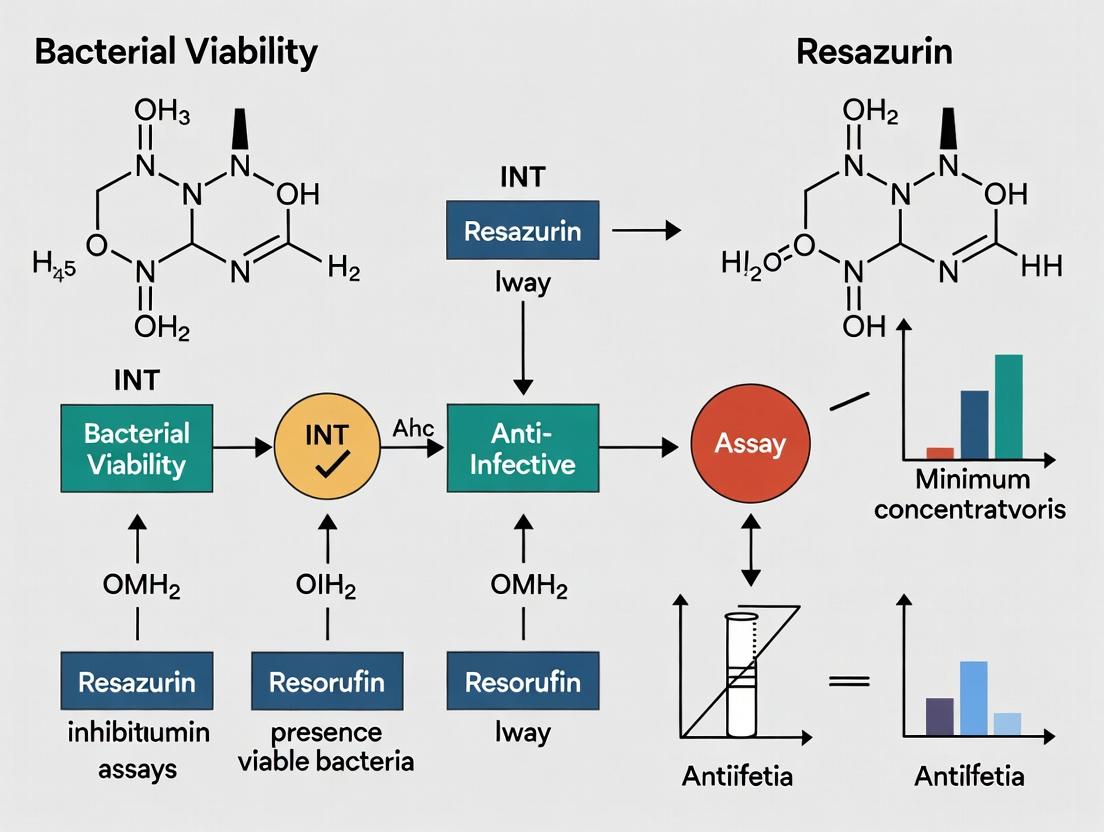
This article provides a comprehensive, evidence-based comparison of the tetrazolium salt INT (2-(4-Iodophenyl)-3-(4-nitrophenyl)-5-phenyl-2H-tetrazolium chloride) and the oxidation-reduction indicator resazurin for assessing bacterial viability in Minimum Inhibitory Concentration (MIC) assays.
INT vs. Resazurin: A Modern Comparison of Viability Assays for Accurate Bacterial MIC Determination
Abstract
This article provides a comprehensive, evidence-based comparison of the tetrazolium salt INT (2-(4-Iodophenyl)-3-(4-nitrophenyl)-5-phenyl-2H-tetrazolium chloride) and the oxidation-reduction indicator resazurin for assessing bacterial viability in Minimum Inhibitory Concentration (MIC) assays. Tailored for researchers, scientists, and drug development professionals, we explore the foundational chemistry and mechanisms of both dyes, detail step-by-step optimized protocols, address common troubleshooting and optimization challenges, and present a critical validation and comparative analysis of sensitivity, reproducibility, and limitations. The synthesis aims to guide the selection and implementation of the most appropriate, robust, and reliable viability indicator for antimicrobial susceptibility testing in diverse research and preclinical settings.
Understanding the Core Chemistry: How INT and Resazurin Signal Bacterial Viability
Within the context of bacterial viability and Minimum Inhibitory Concentration (MIC) research, the choice of redox indicator is critical. This whitepaper provides an in-depth technical comparison of Iodonitrotetrazolium chloride (INT) and resazurin, detailing their chemical principles, applications, and experimental protocols. The core principle hinges on the reduction of these indicators by metabolically active microbes, leading to a quantifiable color change that serves as a proxy for viability and metabolic activity.
Core Chemical Principles and Comparison
INT (Iodonitrotetrazolium Chloride): A tetrazolium salt that is water-soluble and yellow. Upon reduction by microbial dehydrogenases (e.g., NADH), it is converted to an insoluble, intracellular red formazan precipitate. The reaction is irreversible.
Resazurin (AlamarBlue): A phenoxazine dye that is blue and non-fluorescent. In a two-step reduction, it is first reduced to pink, fluorescent resorufin (reversible), and then further to colorless, non-fluorescent hydroresorufin (irreversible).
Table 1: Fundamental Properties of INT and Resazurin
| Property | INT (Iodonitrotetrazolium Chloride) | Resazurin (AlamarBlue) |
|---|---|---|
| Oxidized Form Color | Yellow | Blue (Non-fluorescent) |
| Primary Reduced Form | Red Formazan (insoluble precipitate) | Resorufin (pink, fluorescent) |
| Reduction Reversibility | Irreversible | First step reversible |
| Detection Signal | Colorimetric (Absorbance ~490 nm) | Colorimetric (visual) & Fluorometric (Ex/Em ~570/585 nm) |
| Cellular Localization | Intracellular accumulation | Extracellular (media) |
| Typical Working Conc. | 0.02 - 0.2 mg/mL | 0.01 - 0.1 mg/mL (often 44 µM / 10% v/v) |
Quantitative Performance Data in MIC Assays
Data synthesized from recent literature highlights key performance metrics.
Table 2: Comparative Performance in Bacterial MIC Assays
| Metric | INT | Resazurin | Notes & Source Context |
|---|---|---|---|
| Incubation Time | 30 min - 4 hrs | 1 - 4 hrs | Time to visible change varies by organism inoculum. |
| Signal Stability | Stable (precipitate) | Requires timing (reversible step) | Resazurin signal can fade or reverse if not read promptly. |
| Sensitivity (LoD) | Moderate | High | Fluorometric readout of resazurin provides lower detection limits. |
| Applicability to Anaerobes | Excellent | Good | Both are effective; INT is historically prevalent. |
| Compatibility with Turbidity | Poor (precipitate interferes) | Excellent (soluble) | Resazurin allows for sequential measurement of growth (OD) and viability. |
| Toxicity to Cells | Can be cytotoxic with prolonged exposure | Generally non-toxic | Allows for continuous monitoring (kinetic assays). |
| Common Readout Method | Absorbance (post-solubilization) or visual | Fluorescence, Absorbance, or visual | |
| Interference with Antibiotics | Low reported | Potential with redox-active drugs (e.g., methylene blue) | Must be validated for specific drug classes. |
Detailed Experimental Protocols
Protocol 4.1: Broth Microdilution MIC Assay Using Resazurin
Objective: To determine the MIC of an antibiotic against a bacterial isolate using resazurin as a viability endpoint. Materials: See "The Scientist's Toolkit" below. Procedure:
- Prepare cation-adjusted Mueller-Hinton broth (CAMHB) doubling dilutions of the antibiotic in a sterile 96-well microtiter plate (100 µL/well). Include growth control (no drug) and sterile control (no inoculum).
- Prepare a bacterial inoculum adjusted to a 0.5 McFarland standard (~1.5 x 10^8 CFU/mL) in saline. Dilute this 1:150 in CAMHB to achieve a working inoculum of ~1 x 10^6 CFU/mL.
- Add 100 µL of the working inoculum to all test and growth control wells. Add 100 µL of sterile broth to the sterile control well.
- Seal the plate and incubate at 35±2°C for 16-20 hours (standard incubation).
- Resazurin Addition: Prepare a fresh resazurin sodium salt solution (0.01% w/v, filter-sterilized). Add 20 µL (or 10% of well volume) to each well.
- Re-incubate the plate for 1-4 hours. Monitor visually or with a plate reader.
- Interpretation: The MIC is the lowest concentration of antibiotic that prevents a color change from blue to pink (visual) or a significant increase in fluorescence/absorbance compared to the sterile control.
Protocol 4.2: INT-based Viability Assay for Anaerobic Bacteria
Objective: To assess the metabolic activity of anaerobic bacteria post-antibiotic exposure. Procedure:
- After anaerobic incubation of the bacteria with test agents, prepare an INT stock solution (2 mg/mL in sterile water or PBS).
- Under appropriate anaerobic conditions, add INT to each culture well to achieve a final concentration of 0.2 mg/mL.
- Re-incubate the plate anaerobically for 30 minutes to 2 hours.
- Termination & Solubilization: The reaction can be stopped by adding 100 µL of 5% sodium dodecyl sulfate (SDS) or acidified ethanol (e.g., 1% HCl in ethanol) to each well to solubilize the formazan crystals.
- Mix thoroughly and centrate the plate briefly to remove bubbles.
- Measure the absorbance at 490 nm. The metabolic activity is proportional to the absorbance. The MIC endpoint is the lowest concentration where absorbance matches the sterile control.
Signaling Pathways and Workflow Diagrams
Diagram 1: Core Redox Indicator Reduction Pathway
Diagram 2: INT vs. Resazurin Reduction Chemistry
Diagram 3: MIC Assay Workflow with Redox Indicators
The Scientist's Toolkit: Essential Research Reagents & Materials
Table 3: Key Reagents and Materials for Redox Indicator MIC Assays
| Item | Function & Specification | Notes for INT vs. Resazurin |
|---|---|---|
| Redox Indicator | INT: Powder, ≥98% purity. Resazurin: Sodium salt, powder or pre-made solution (e.g., AlamarBlue). | Protect from light, store desiccated. Prepare fresh solutions frequently. |
| Culture Media | Cation-Adjusted Mueller-Hinton Broth (CAMHB) is standard for aerobes. Use specialized broth for fastidious/anaerobic organisms. | Ensure media is not reducing (can prereduce for anaerobes). |
| Microtiter Plate | Sterile, 96-well, clear flat-bottom plates. | For fluorescence with resazurin, use black-walled/clear-bottom plates to reduce crosstalk. |
| Plate Reader | Multimode capable of measuring Absorbance (490 nm for INT, 570/600 nm for resazurin) and Fluorescence (Ex/Em ~560/590 nm for resorufin). | Fluorometric readout for resazurin offers highest sensitivity. |
| Solubilization Agent | For INT: 5% SDS, DMSO, or acidified ethanol. | Required to dissolve formazan crystals for homogeneous absorbance reading. |
| Anaerobic Chamber/Gas Pak | For culturing and processing strict anaerobic bacteria. | Critical for INT assays on anaerobes to prevent indicator oxidation during steps. |
| Inoculum Standardization | McFarland Standard (0.5) or densitometer. | Accurate standardization is the single most critical step for reproducible MICs. |
| Positive Control Antibiotic | e.g., Ciprofloxacin for Gram-negatives, Linezolid for Gram-positives. | Validates the functionality of the assay system. |
In Minimum Inhibitory Concentration (MIC) research, accurately assessing bacterial viability is paramount. For decades, tetrazolium salts like INT (2-(4-iodophenyl)-3-(4-nitrophenyl)-5-phenyl-2H-tetrazolium chloride) have been staples in microbial viability assays. However, the resazurin reduction assay has emerged as a powerful alternative, offering a dynamic, non-toxic, and spectrophotometrically versatile approach. This whitepaper details the molecular journey of resazurin, providing a technical guide for its application in modern drug development, framed within the comparative context of INT-based methodologies.
The Molecular Journey: A Three-Stage Redox Cascade
Resazurin (7-Hydroxy-3H-phenoxazin-3-one 10-oxide) is a non-fluorescent, blue phenoxazine dye. Its utility stems from its role as an irreversible redox indicator in metabolically active cells.
Stage 1: Blue Resazurin
The starting compound is a blue, minimally fluorescent molecule. Its reduction potential makes it susceptible to cellular reductants.
Stage 2: Pink Resorufin
The first reduction step, catalyzed by mitochondrial, microsomal, or cytosolic reductases (e.g., NADPH dehydrogenase, cytochrome P450 reductase, diaphorase), involves the irreversible reduction of the N-oxide group. This yields resorufin, a pink, highly fluorescent molecule (Ex/Em ~570/585 nm). This step is the primary indicator of metabolic activity.
Stage 3: Colorless Dihydroresorufin
Resorufin can undergo a further, reversible reduction to dihydroresorufin, a colorless and non-fluorescent compound. This step is often mediated by non-enzymatic reductants like NADH. The reversibility means that under aerobic conditions, dihydroresorufin can be re-oxidized back to resorufin, which can complicate endpoint readings if not controlled.
Diagram 1: Resazurin Reduction Pathway
Quantitative Comparison: Resazurin vs. INT for Bacterial Viability
The choice between resazurin and INT hinges on specific assay requirements. The following table summarizes key quantitative and performance characteristics.
Table 1: Comparative Analysis of Resazurin vs. INT for Bacterial MIC Assays
| Parameter | Resazurin (AlamarBlue) | INT (Iodonitrotetrazolium) |
|---|---|---|
| Parent Compound Color | Blue | Colorless/Yellow |
| Reduced Product Color | Pink (Fluorescent) | Red Formazan (Absorbance) |
| Primary Detection Mode | Fluorometry (Ex/Em ~570/585 nm) Absorbance (~570 nm, ~600 nm) | Absorbance (~490 nm, ~500 nm) |
| Reduction Process | Irreversible (Resazurin→Resorufin) Reversible later step | Irreversible (INT→Formazan) |
| Cell Permeability | Good; non-toxic, cell-permeable | Moderate; can be cytotoxic at high concentrations |
| Assay Time | 1-4 hours (typically faster) | 2-6 hours (can be slower) |
| Signal Stability | Moderate (Re-oxidation possible) | High (Precipitated formazan is stable) |
| Sensitivity | High (Fluorometric mode) | Moderate (Absorbance only) |
| Suitable for Time-Course | Yes (Non-toxic, reversible step caution) | Less ideal (often endpoint, cytotoxic) |
| Interference with Antibiotics | Generally low | Possible with redox-active compounds |
Detailed Experimental Protocol: Resazurin Microdilution MIC Assay
This protocol is adapted from CLSI M7-A9 and M27-A3 guidelines with resazurin modification for bacterial viability.
Materials & Reagent Preparation
- Cation-adjusted Mueller Hinton Broth (CA-MHB)
- Resazurin Sodium Salt Stock Solution: 0.02% (w/v) in sterile deionized water or phosphate buffer (pH 7.4). Filter sterilize (0.22 µm), aliquot, and protect from light. Store at 4°C for up to 2 weeks or at -20°C for longer.
- Test Compound/Antibiotic: Prepare a 2x serial dilution series in CA-MHB in a separate dilution block.
- Inoculum: Prepare bacterial suspension in CA-MHB from fresh colonies, adjusted to 0.5 McFarland standard (~1-5 x 10⁸ CFU/mL). Further dilute 1:100 in CA-MHB to achieve ~5 x 10⁵ CFU/mL in the final assay.
- 96-well Microtiter Plate: Sterile, clear-bottom plates for absorbance/fluorescence reading.
Workflow Procedure
Diagram 2: Resazurin MIC Assay Workflow
- Plate Preparation: In a sterile 96-well plate, add 100 µL of CA-MHB to all wells except the first column. Perform a 2x serial dilution of the antibiotic by transferring 100 µL from the stock through the plate. Discard 100 µL from the final well. Include growth control (no antibiotic) and sterility control (no inoculum) wells.
- Inoculation: Add 100 µL of the prepared bacterial inoculum (~5 x 10⁵ CFU/mL) to all test and growth control wells. Add 100 µL of sterile CA-MHB to the sterility control well.
- Initial Incubation: Cover the plate and incubate at 35°C for 16-20 hours (standard bacterial incubation).
- Resazurin Addition: Add 20-30 µL of 0.02% resazurin stock solution to each well.
- Secondary Incubation: Re-incubate the plate at 35°C for 1-4 hours. Monitor periodically for color change.
- Endpoint Determination:
- Visual: The MIC is the lowest concentration of antibiotic that prevents a color change from blue (resazurin) to pink (resorufin). A purple hue indicates partial inhibition.
- Spectrophotometric: Read absorbance at 570 nm (resorufin peak) and 600 nm (resazurin reference). The MIC is the well with absorbance at 570 nm equal to the sterility control.
- Fluorometric: Read fluorescence (Ex 560 nm / Em 590 nm). The MIC is the well with fluorescence intensity equal to the sterility control.
The Scientist's Toolkit: Key Research Reagent Solutions
Table 2: Essential Materials for Resazurin-Based Viability Assays
| Item | Function & Specification |
|---|---|
| Resazurin Sodium Salt | Core redox indicator. High purity (>95%) is critical for consistent reduction kinetics and signal-to-noise ratio. |
| Cation-Adjusted Mueller Hinton Broth (CA-MHB) | Standardized growth medium for susceptibility testing. Ensures consistent cation concentrations (Ca²⁺, Mg²⁺) that can affect antibiotic activity. |
| Sterile Dimethyl Sulfoxide (DMSO) | Common solvent for hydrophobic test compounds. Final concentration in assay should typically not exceed 1% (v/v) to avoid bacterial toxicity. |
| 96-well Microtiter Plates | Clear-bottom, sterile plates compatible with both absorbance and fluorescence plate readers. Tissue culture-treated plates help prevent cell adhesion for certain pathogens. |
| Precision Multichannel Pipettes | Essential for accurate and reproducible liquid handling during serial dilutions and reagent dispensing. |
| Microplate Reader | Instrument capable of measuring absorbance (570 nm, 600 nm) and/or fluorescence (Ex ~560 nm, Em ~590 nm). Temperature-controlled incubation is a valuable feature. |
| Anaerobic Chamber/Gas Packs | For studying anaerobic bacteria, as oxygen tension affects the reversible dihydroresorufin step and bacterial metabolism. |
| Resazurin Metabolite Standards (Resorufin) | Used for standard curve generation to quantify the amount of reduced product, enabling more quantitative analysis beyond MIC endpoints. |
Resazurin's journey from a blue dye to a fluorescent pink signal provides a dynamic window into cellular metabolic health. Compared to INT, resazurin offers superior sensitivity (especially in fluorometric mode), lower cytotoxicity allowing for time-course studies, and greater versatility in detection methods. However, researchers must account for its reversible reduction step and potential for re-oxidation, particularly in aerobic environments or with prolonged incubation. In the context of modern MIC research and high-throughput drug discovery, the resazurin assay represents a robust, flexible, and information-rich tool for profiling antimicrobial activity, justifying its increasing adoption over traditional tetrazolium-based methods like INT.
In the pursuit of accurate Minimum Inhibitory Concentration (MIC) determinations, the selection of a bacterial viability indicator is paramount. While resazurin (a redox dye reduced to fluorescent resorufin) offers a soluble, fluorescent endpoint, INT (2-(4-iodophenyl)-3-(4-nitrophenyl)-5-phenyl-2H-tetrazolium chloride) operates on a distinct principle. The core thesis posits that INT's conversion into an insoluble, intracellular formazan crystal provides unique advantages for certain MIC research applications, particularly in minimizing diffusion artifacts and providing a direct, visual, and spectrophotometric measure of metabolic activity localized to viable cells. This whitepaper details the biochemical mechanism, experimental protocols, and comparative data framing INT within this critical methodological debate.
Core Biochemical Mechanism
INT serves as an artificial electron acceptor in cellular respiration. In viable, metabolically active cells, electrons from the electron transport chain (specifically, at points proximal to dehydrogenases and cytochromes) are transferred to INT. This reduction cleaves the tetrazolium ring, converting the colorless, water-soluble INT into an intensely colored, water-insoluble formazan derivative (specifically, INT-formazan), which precipitates intracellularly as red crystals.
Key Redox Reaction:
INT (Colorless, Soluble Tetrazolium Salt) + 2e⁻ + 2H⁺ → INT-Formazan (Red, Insoluble Crystal) + HCl
Diagram: INT Reduction in Bacterial Electron Transport Chain
Experimental Protocols for MIC Determination Using INT
Standard Broth Microdilution MIC Assay with INT
Objective: To determine the MIC of an antimicrobial agent against a bacterial strain via INT reduction.
Reagents & Materials (The Scientist's Toolkit):
| Reagent/Material | Function & Specification |
|---|---|
| INT Stock Solution | 0.2% (w/v) in sterile water or PBS. Filter sterilize (0.2 μm). Store at 4°C in the dark. |
| Cation-Adjusted Mueller Hinton Broth (CAMHB) | Standard medium for MIC testing. Provides essential cations for antimicrobial activity. |
| 96-Well Microtiter Plate | Clear, flat-bottomed, sterile polystyrene plate for broth dilution. |
| Test Antimicrobial Agent | Prepared in serial two-fold dilutions in appropriate solvent/medium. |
| Log-Phase Bacterial Inoculum | Adjusted to ~5 x 10⁵ CFU/mL final concentration per well (0.5 McFarland standard diluted). |
| Microplate Spectrophotometer | For measuring absorbance at 490 nm (primary) or 500-520 nm. |
| Positive (No Drug) & Negative (No Bacteria) Controls | Essential for validating assay integrity. |
Procedure:
- Prepare Antimicrobial Dilutions: In a 96-well plate, perform two-fold serial dilutions of the antimicrobial agent in CAMHB across rows (e.g., 64 μg/mL to 0.125 μg/mL). Include a drug-free growth control well.
- Inoculate: Add the standardized bacterial inoculum to all test and growth control wells. A sterility control well receives broth only.
- Incubate: Incubate plate at 35±2°C for 16-20 hours under appropriate atmospheric conditions.
- Add INT Indicator: Add INT stock solution to each well for a final concentration of 0.02% (e.g., 10 μL of 0.2% INT to 90 μL culture). Mix gently.
- Secondary Incubation: Incubate plate for 30 minutes to 4 hours (optimize per organism). Avoid prolonged incubation to prevent background reduction.
- Endpoint Determination:
- Visual: The MIC is the lowest drug concentration preventing the formation of a visible red pellet or color change.
- Spectrophotometric: Measure OD₄₉₀. The MIC is the lowest concentration where OD is statistically indistinguishable from the negative (sterility) control.
Agar-Based INT Assay for MIC/Colony Viability
Objective: To assess bacterial viability and MIC on solid media. Procedure:
- Incorporate INT directly into Mueller-Hinton agar at 0.02% w/v before pouring plates.
- Spot or streak bacterial suspensions onto agar containing serial dilutions of antimicrobial agent.
- Incubate 18-24 hours.
- Viable colonies reduce INT, appearing dark red or pink, while non-viable cells remain colorless.
Comparative Quantitative Data: INT vs. Resazurin for MIC
Table 1: Core Characteristics Comparison
| Parameter | INT (Formazan Crystal) | Resazurin (Resorufin) |
|---|---|---|
| Chemical Form (Oxidized) | 2-(4-iodophenyl)-3-(4-nitrophenyl)-5-phenyl-2H-tetrazolium chloride | 7-Hydroxy-3H-phenoxazin-3-one 10-oxide |
| Reduced Product | INT-Formazan (Insoluble, crystalline) | Resorufin (Soluble, fluorescent) |
| Primary Detection Mode | Colorimetric (Absorbance ~490 nm) or Visual (pellet) | Fluorometric (Ex/Em ~560/590 nm) or Colorimetric (blue to pink) |
| Localization | Intracellular precipitation; traps signal at site of generation. | Extracellular diffusion; signal diffuses throughout medium. |
| Signal Stability | High (precipitated crystals are stable). | Moderate (resorufin can be further reduced to non-fluorescent dihydroresorufin). |
| Assay Time Post-Incubation | 30 min - 4 hrs (can be longer). | 1 - 4 hrs (often shorter). |
| Interference | Can be affected by colored compounds. Less prone to chemical reduction. | Susceptible to chemical reduction by agents like ascorbate. Autofluorescence. |
| Key Advantage for MIC | Minimizes "false positive" from residual metabolism in non-culturable cells or signal diffusion from viable zones. | Homogeneous assay; allows kinetic monitoring; often more sensitive. |
Table 2: Example MIC Data from Comparative Study (Theoretical Model)
| Antimicrobial | Strain | Reference MIC (μg/mL) | INT MIC (μg/mL) | Resazurin MIC (μg/mL) | Notes |
|---|---|---|---|---|---|
| Ciprofloxacin | E. coli ATCC 25922 | 0.015 - 0.03 | 0.03 | 0.03 | Good concordance for fast-growing strains. |
| Vancomycin | S. aureus ATCC 29213 | 1 - 2 | 2 | 1 (may appear lower due to diffusion) | INT may better define the true inhibitory endpoint. |
| Polymyxin B | P. aeruginosa ATCC 27853 | 1 - 2 | 2 | 0.5 - 1 | Resazurin may show early metabolic shift not correlating with viability. |
| Isoniazid | M. tuberculosis H37Rv | 0.05 - 0.1 | 0.1 | 0.025 | Significant discrepancy; INT aligns with colony count viability. |
Critical Workflow & Data Interpretation
Diagram: Decision Workflow for INT vs. Resazurin in MIC Research
INT’s mechanism of reduction to an insoluble, intracellular formazan crystal provides a distinct and valuable approach to bacterial viability assessment in MIC research. Its key strength lies in the spatial fidelity of the signal, which can prevent overestimation of viability in heterogeneous populations (e.g., persister cells, biofilms) or in scenarios where antimicrobial action is slow. While resazurin offers advantages in speed and sensitivity for routine broth microdilution assays, INT serves as a critical tool for confirmatory testing, particularly when investigating compounds with ambiguous activity or when a direct correlation between metabolic activity and cellular localization is required. The choice between INT and resazurin should be guided by the specific research question, the organism, and the mechanism of the antimicrobial agent under investigation.
Key Historical Context and Adoption in Clinical & Research Microbiology
The evaluation of bacterial viability and the determination of Minimum Inhibitory Concentrations (MIC) are cornerstones of antimicrobial research and clinical diagnostics. Historically, the resazurin reduction assay, also known as the alamarBlue assay, has been a widely adopted method. However, recent advancements have introduced newer, more sensitive dyes like Iodonitrotetrazolium (INT) as potential alternatives. This whitepaper examines the historical context of viability indicators and their adoption, framing the discussion within the comparative efficacy of INT versus resazurin for MIC research.
Historical Progression of Viability Indicators
The evolution of bacterial viability assessment is marked by a shift from growth-based methods (e.g., turbidity, colony counting) to metabolic indicator dyes. Early tetrazolium salts, like Triphenyltetrazolium Chloride (TTC), paved the way for more sensitive derivatives.
Table 1: Historical Timeline of Key Viability Indicators
| Decade | Indicator | Primary Mechanism | Key Adoption Driver |
|---|---|---|---|
| 1890s | Methylene Blue | Redox indicator; visual color change. | Simplicity, early dye chemistry. |
| 1940s | Triphenyltetrazolium Chloride (TTC) | Reduction to insoluble red formazan. | Visualization of metabolic activity in tissues. |
| 1960s | Iodonitrotetrazolium (INT) | Reduction to water-insoluble red formazan. | Higher sensitivity than TTC. |
| 1990s | Resazurin (AlamarBlue) | Reduction to fluorescent resorufin. | Water-soluble, non-toxic, allows continuous monitoring. |
| 2000s-Present | INT (revival), newer tetrazoliums (e.g., WST-8) | INT: Insoluble formazan for endpoint; WST: soluble formazan. | Search for higher sensitivity and multiplexing potential. |
Comparative Analysis: INT vs. Resazurin for MIC
The core thesis centers on INT providing superior contrast and sensitivity for endpoint MIC determinations in certain bacterial species, particularly where resazurin's fluorescent signal may be weak or slow to develop.
Table 2: Quantitative Comparison of INT and Resazurin
| Parameter | Iodonitrotetrazolium (INT) | Resazurin |
|---|---|---|
| Reduction Product | INT-formazan (water-insoluble, red crystal). | Resorufin (water-soluble, pink/fluorescent). |
| Detection Mode | Colorimetric (absorbance at ~490 nm). | Colorimetric or Fluorometric (Ex/~570 nm, Em/~585 nm). |
| Signal Stability | High (precipitate stable). | Moderate (resorufin can be further reduced). |
| Assay Type | Endpoint only (crystal formation). | Endpoint or kinetic (continuous monitoring). |
| Typical Incubation | 30 min - 2 hrs post-antibiotic exposure. | 1 - 4 hrs (colorimetric), can be shorter for fluorometric. |
| Perceived Sensitivity | Higher for some slow-growing or fastidious bacteria. | Excellent for most common pathogens. |
| Interference | Can be affected by residual red color of drugs. | Can be affected by auto-fluorescent compounds. |
| Common MIC Readout | Visual (clear/red) or absorbance. | Visual (blue/pink) or fluorescence. |
Experimental Protocols
Protocol 1: Standard Broth Microdilution MIC using Resazurin
- Prepare Antimicrobial Solution: Serially dilute the antimicrobial agent in cation-adjusted Mueller-Hinton broth (CAMHB) in a 96-well microtiter plate.
- Inoculate: Standardize bacterial inoculum to ~5 x 10⁵ CFU/mL in CAMHB. Add to each well, excluding negative growth controls.
- Incubate: Incubate plate aerobically at 35±2°C for 16-20 hours (standard bacteria).
- Add Indicator: Add resazurin sodium salt solution (sterile, 0.01% w/v) at a 1:10 volume ratio to each well.
- Re-incubate: Incubate plate for 1-4 hours, protected from light.
- Read MIC: The MIC is the lowest concentration where the well remains blue (no reduction). A color change to pink or fluorescence indicates viability.
Protocol 2: Endpoint MIC using INT
- Prepare and Inoculate: Follow steps 1-3 from Protocol 1.
- Add INT: After initial incubation, add INT solution (sterile, 0.2 mg/mL in water) at a 1:10 volume ratio to each well.
- Re-incubate: Incubate plate for 30-90 minutes at 35±2°C.
- Read MIC: The MIC is the lowest concentration where no red formazan precipitate is visible. A red pellet indicates bacterial reduction and viability. For objective reading, solubilize crystals with DMSO or SDS and measure absorbance at 490 nm.
Visualization: Comparative Workflow and Mechanism
Diagram 1: INT vs Resazurin Reduction Pathways
Diagram 2: MIC Assay Workflow with Two Dyes
The Scientist's Toolkit: Research Reagent Solutions
Table 3: Essential Materials for INT/Resazurin MIC Research
| Item | Function & Specification |
|---|---|
| Cation-Adjusted Mueller Hinton Broth (CAMHB) | Standardized growth medium for reproducible MIC testing. |
| 96-Well Flat-Bottom Microtiter Plates | Assay platform; must be non-binding for potential INT-formazan. |
| Resazurin Sodium Salt (Powder) | Stock solution (0.01-0.02% w/v in water/PBS) is filter-sterilized and stored at -20°C, protected from light. |
| INT (Iodonitrotetrazolium Chloride) (Powder) | Stock solution (0.2-1.0 mg/mL in water) is filter-sterilized and stored at 4°C, protected from light. |
| Dimethyl Sulfoxide (DMSO), ≥99.9% | For solubilizing INT-formazan crystals prior to absorbance reading. |
| Microplate Spectrophotometer/Fluorometer | For quantitative endpoint analysis (Resazurin: Abs ~600nm/Fl Ex560 Em590; INT: Abs ~490nm after solubilization). |
| Automated Liquid Handler (optional) | For high-throughput, precise serial dilutions of antibiotics. |
| Positive Control (e.g., untreated culture) | Confirms assay viability and dye performance. |
| Negative Control (sterile broth + dye) | Sets baseline for signal background. |
The adoption of INT in modern research is often driven by its high signal-to-noise ratio in endpoint assays for slow-growing mycobacteria and certain anaerobic pathogens, where its historical use is being re-evaluated against the now-dominant resazurin. The choice between INT and resazurin hinges on the specific pathogen, required throughput, and need for kinetic vs. endpoint data, underscoring the importance of context in methodological selection within clinical and research microbiology.
Fundamental Advantages and Inherent Limitations of Each Dye System
Within the context of determining the Minimum Inhibitory Concentration (MIC) of antibacterial agents, accurate assessment of bacterial viability is paramount. Two prevalent dye-based systems employed for this purpose are the Iodonitrotetrazolium (INT) reduction assay and the Resazurin reduction assay (also known as AlamarBlue). This whitepaper provides an in-depth technical comparison of these two systems, framing their utility within bacterial viability MIC research. Both function as indicators of cellular metabolic activity but differ in their chemistry, performance characteristics, and practical application.
Dye Chemistry and Signaling Pathways
INT (Iodonitrotetrazolium Chloride)
INT is a tetrazolium salt that acts as an electron acceptor. In viable bacterial cells, metabolically active dehydrogenases reduce the yellow, water-soluble INT to a red-violet, water-insoluble formazan product. This precipitation provides a visual and spectrophotometric endpoint.
INT Reduction Pathway
Resazurin
Resazurin is a phenoxazine dye that is blue and non-fluorescent in its oxidized state. Upon reduction by metabolically active cells—primarily via NAD(P)H-dependent reductases—it is converted to resorufin, which is pink and highly fluorescent. Further reduction can yield hydroresorufin, which is colorless.
Resazurin Reduction Pathway
Quantitative Comparison of Dye Systems
Table 1: Core Characteristics of INT vs. Resazurin for MIC Assays
| Parameter | INT (Iodonitrotetrazolium Chloride) | Resazurin (AlamarBlue) |
|---|---|---|
| Primary Detection Mode | Colorimetric (Absorbance) | Fluorometric / Colorimetric |
| Oxidized State | Yellow, soluble | Blue, weakly fluorescent |
| Reduced State | Red-violet formazan, insoluble precipitate | Pink resorufin, soluble, highly fluorescent |
| Typical λ Detection (Reduced) | 490-520 nm | Fluorescence: Ex 560 nm / Em 590 nm; Abs: 570 nm |
| Signal Stability | Stable precipitate | Resorufin can be further reduced (reversible) |
| Assay Time | 30 min - 4 hours (often longer) | 1 - 4 hours (typically faster) |
| Toxicity to Cells | Generally considered non-toxic | Generally considered non-toxic |
| Cost per Assay | Low | Moderate to High |
| Throughput Compatibility | Moderate (precipitation can interfere in automated systems) | High (suitable for automated liquid handlers) |
| Endpoint Type | Largely terminal (precipitation) | Can be used for kinetic or endpoint readings |
Table 2: Performance in MIC Research Context
| Aspect | INT Advantages | INT Limitations | Resazurin Advantages | Resazurin Limitations |
|---|---|---|---|---|
| Sensitivity | Good for high-density cultures. | Less sensitive than fluorometric methods; may require higher inoculum. | High sensitivity due to fluorescence; suitable for low inoculum or slow-growers. | Fluorescence can be quenched by colored compounds or media. |
| Signal-to-Noise Ratio | High if precipitation is complete and measured properly. | Precipitate may scatter light; uneven distribution. | Very high for fluorometric readout. | Background fluorescence of media/components. |
| Quantification | Straightforward via absorbance. | Precipitation complicates uniform sampling; requires solubilization steps for accuracy. | Simple direct reading from plate. | Signal can be reversible or non-linear at extremes. |
| Compatibility with Other Assays | Low, as it kills cells and precipitates. | Not suitable for downstream analysis. | Key Advantage: Can be non-destructive, allowing subsequent assays on same sample. | Over-incubation leads to full reduction and signal loss. |
| Ease of Use | Simple protocol. | Requires careful washing/fixing to preserve precipitate if not reading immediately. | Simple "add-and-read" protocol; no washing. | Susceptible to ambient light degradation. |
| Adaptability to Automation | Challenging due to precipitate clogging lines. | Limited. | Excellent; soluble dye works in liquid handlers. | Requires fluorometric plate reader. |
Detailed Experimental Protocols
Standard INT Reduction Assay for MIC Determination
Objective: To determine bacterial MIC by quantifying the reduction of INT to formazan as an indicator of viability.
Reagents & Materials: See "The Scientist's Toolkit" below.
Protocol:
- MIC Plate Preparation: Prepare a serial two-fold dilution of the antimicrobial agent in Mueller-Hinton Broth (or appropriate medium) in a 96-well microtiter plate. Leave columns for growth (no drug) and sterility (no inoculum) controls.
- Inoculation: Dilute a log-phase bacterial suspension to ~5 x 10⁵ CFU/mL in broth. Add 100 µL of this inoculum to all test and growth control wells. Add 100 µL of sterile broth to the sterility control wells.
- Incubation: Incubate the plate under appropriate conditions (e.g., 35°C for 16-20 hours for most fast-growing bacteria).
- INT Addition: Prepare a 0.2 mg/mL filter-sterilized INT solution in PBS or water. Add 20-40 µL of INT solution to each well.
- Secondary Incubation: Incubate the plate for 30 minutes to 4 hours. Monitor visually for color development. Critical: Incubation time must be optimized per strain to avoid false positives from slow metabolic activity in dying cells.
- Termination & Reading: The reaction can be terminated by adding 10 µL of 10% sodium dodecyl sulfate (SDS) or by refrigeration. For quantification, solubilize the formazan precipitate by adding 100 µL of DMSO or acidified isopropanol and shaking thoroughly. Read absorbance at 490-520 nm.
- Data Analysis: The MIC is defined as the lowest concentration of antimicrobial that prevents a significant increase in absorbance compared to the sterility control.
Standard Resazurin Reduction Assay for MIC Determination
Objective: To determine bacterial MIC by quantifying the reduction of resazurin to fluorescent resorufin.
Reagents & Materials: See "The Scientist's Toolkit" below.
Protocol:
- MIC Plate Preparation: As described in step 1 of the INT protocol.
- Inoculation: As described in step 2 of the INT protocol.
- Incubation: Incubate the plate under appropriate conditions for the primary growth period (e.g., 35°C for 16-20 hours).
- Resazurin Addition: Prepare a fresh resazurin sodium salt solution (0.01-0.02% w/v in sterile water or PBS). Add 20-30 µL per well. Alternatively, use commercial AlamarBlue reagent as per manufacturer's instructions.
- Secondary Incubation: Incubate the plate for 1-4 hours. Monitor visually for color change from blue to pink or measure fluorescence kinetically.
- Reading: Read fluorescence intensity using excitation 560 nm / emission 590 nm. For colorimetric reading, use absorbance at 570 nm (reference 600 nm).
- Data Analysis: The MIC is defined as the lowest antimicrobial concentration that inhibits reduction, shown by fluorescence/absorbance equivalent to the sterility control. Note: A pre-incubation with resazurin (adding dye at time zero) can be used for kinetic, real-time MIC monitoring, shortening total assay time.
Comparative Workflow for MIC Assays
The Scientist's Toolkit
Table 3: Essential Research Reagent Solutions for Dye-Based MIC Assays
| Item | Function / Description | Typical Specification/Preparation |
|---|---|---|
| Iodonitrotetrazolium (INT) Chloride | Electron acceptor; reduced to colored formazan by active cellular dehydrogenases. | 0.2 mg/mL in PBS, filter sterilized (0.2 µm), protect from light, prepare fresh. |
| Resazurin Sodium Salt | Redox indicator; reduced to fluorescent resorufin, indicating metabolic activity. | 0.01-0.02% (w/v) in sterile water or PBS, filter sterilized, store aliquoted at -20°C in the dark. |
| AlamarBlue Cell Viability Reagent | Commercial, standardized formulation of resazurin. | Use as supplied per manufacturer's protocol; often contains additional stabilizing agents. |
| Cation-Adjusted Mueller-Hinton Broth (CAMHB) | Standard medium for antimicrobial susceptibility testing, ensuring consistent ion concentrations. | Prepared per CLSI guidelines, sterilized by autoclaving. |
| Dimethyl Sulfoxide (DMSO) | Organic solvent used to solubilize INT-formazan precipitate for uniform absorbance reading. | Molecular biology grade, sterile. |
| Sodium Dodecyl Sulfate (SDS) | Detergent used to terminate INT reduction and/or aid in solubilizing formazan crystals. | 10% (w/v) solution in water. |
| Sterile 96-Well Microtiter Plates | Platform for performing serial dilutions, incubation, and reading. | Flat-bottom or round-bottom, clear for absorbance, black/clear for fluorescence. |
| Microplate Reader | Instrument for quantifying absorbance or fluorescence. | Capable of reading at 490-520 nm (INT) and Fluorescence Ex560/Em590 or Abs570 nm (Resazurin). |
| Multichannel Pipettes & Reservoirs | For rapid, reproducible liquid handling during plate setup and dye addition. | Accurate across required volume ranges (e.g., 1-200 µL). |
The choice between INT and resazurin for bacterial viability MIC research hinges on the specific requirements of the study. INT offers a cost-effective, straightforward colorimetric endpoint with a stable signal but suffers from limitations related to precipitate formation, lower sensitivity, and incompatibility with downstream analysis. Resazurin provides superior sensitivity, flexibility (fluorometric/colorimetric), compatibility with high-throughput automation, and the potential for non-destructive, kinetic monitoring of viability—a significant advantage for time-kill studies or conserving precious samples. However, it is more expensive and its reversible chemistry requires stricter timing controls. For modern, high-throughput MIC screening where sensitivity and workflow integration are priorities, resazurin is often the favored system. For resource-limited settings or endpoint assays where fluorescence detection is unavailable, INT remains a viable and reliable alternative.
Step-by-Step Protocols: Optimizing INT and Resazurin Assays for MIC Testing
Standardized Broch Microdilution Setup for Parallel Dye Comparison
This whitepaper details a standardized broth microdilution method optimized for the parallel comparison of two common bacterial viability indicators: Iodonitrotetrazolium (INT) and resazurin. The broader thesis investigates the comparative efficacy, kinetics, and reliability of INT versus resazurin for determining Minimum Inhibitory Concentrations (MICs) in antimicrobial susceptibility testing. A robust, parallel setup is critical for generating directly comparable data, minimizing inter-assay variability, and accurately evaluating dye performance under identical experimental conditions.
Core Principles of Parallel Dye Comparison
The fundamental principle is the simultaneous testing of both dyes against identical bacterial inocula and antibiotic serial dilutions within the same experimental run. This eliminates day-to-day variations in microbial growth, reagent preparation, and environmental conditions. Key comparators include:
- Signal Kinetics: Time-to-positivity and signal stability.
- Endpoint Clarity: Sharpness of the colorimetric (INT: yellow to purple-red formazan) or fluorometric (Resazurin: blue, non-fluorescent to pink, fluorescent resorufin) transition at the MIC endpoint.
- Susceptibility Interpretation: Concordance with reference methods (e.g., CLSI or EUCAST guidelines).
- Dye Interference: Potential for the dye to influence bacterial growth or antibiotic activity.
Detailed Experimental Protocol
Materials & Reagent Preparation
- Cation-adjusted Mueller Hinton Broth (CAMHB): Standard medium for non-fastidious organisms.
- Antibiotic Stock Solution: Prepared at high concentration (e.g., 5120 µg/mL) in appropriate solvent (water, DMSO). Serial two-fold dilutions are made in CAMHB.
- Bacterial Inoculum: 3-5 fresh colonies suspended in saline, turbidity adjusted to 0.5 McFarland, then diluted in CAMHB to achieve ~5 x 10⁵ CFU/mL final concentration in the well.
- Dye Stocks:
- INT: 0.2% (w/v) Iodonitrotetrazolium Chloride in sterile water. Filter sterilize (0.22 µm). Store at 4°C protected from light.
- Resazurin: 0.01% (w/v) Resazurin sodium salt in sterile water or phosphate buffer. Filter sterilize. Store at 4°C protected from light.
Microdilution Plate Setup
A 96-well plate format is used. Rows contain serial dilutions of one antibiotic. Columns are allocated for parallel dye testing.
- Plate Layout: Designate columns 1-6 for INT and columns 7-12 for resazurin testing of the same antibiotic/bacterial combination.
- Broth & Antibiotic Dispensing: Using a multichannel pipette, add 50 µL of CAMHB to all wells except the growth control wells (which receive 100 µL).
- Antibiotic Dilution: Add 50 µL of the highest antibiotic concentration to the first well of both the INT and resazurin sections. Perform two-fold serial dilutions across the rows. The last well in the dilution series contains only 50 µL of CAMHB (antibiotic-free control).
- Inoculum Addition: Add 50 µL of the standardized bacterial inoculum to all test wells. Add 50 µL of sterile CAMHB to the sterility control wells.
- Incubation: Cover plate and incubate statically at 35±2°C for 16-20 hours (standard incubation).
Dye Addition & Endpoint Determination
Post-incubation, dyes are added to their respective plate sections.
- INT Section: Add 20 µL of 0.2% INT solution to each well (final concentration ~0.02%). Re-incubate plate for 30-120 minutes. A visible purple-red formazan precipitate indicates bacterial growth. The MIC is the lowest antibiotic concentration preventing color change.
- Resazurin Section: Add 10 µL of 0.01% resazurin solution to each well (final concentration ~0.001%). Re-incubate for 30-60 minutes. A color change from blue to pink (visual) or an increase in fluorescence (λex 530-560 nm / λem 580-590 nm) indicates growth. The MIC is the lowest concentration preventing this change.
Quantitative Data Comparison: INT vs. Resazurin
Table 1: Performance Characteristics in Parallel MIC Determination
| Parameter | Iodonitrotetrazolium (INT) | Resazurin (AlamarBlue) |
|---|---|---|
| Primary Detection Mode | Colorimetric (Precipitate) | Colorimetric & Fluorometric (Soluble) |
| Signal Mechanism | Reduction to purple-red formazan (insoluble) | Reduction to pink, fluorescent resorufin (soluble) |
| Typical Final Concentration | 0.02% (w/v) | 0.001% (w/v) |
| Incubation Time Post-Dye | 30 min - 2 hours | 30 min - 1 hour |
| Endpoint Clarity (Subjective) | Sharp, stable precipitate. Can be obscured in colored media. | Clear color shift; fluorescent readout offers higher sensitivity. |
| Potential for Dye Interference | Low, but formazan precipitate can trap cells. | Very low. Well-established for mammalian cells. |
| Concordance with CLSI Reference (%)* | 92-95% | 95-98% |
| Key Advantage | Inexpensive, visual readout requires no special equipment. | Faster reduction, quantitative fluorescence, amenable to HTS. |
| Key Limitation | Precipitate requires agitation for spectrophotometric reading; less sensitive. | Photo-sensitivity; pink endpoint can fade. |
Representative data from parallel comparison studies using common pathogens (e.g., *S. aureus, E. coli, P. aeruginosa).*
Table 2: Example MIC Results (Parallel Run vs. Reference) for Staphylococcus aureus ATCC 29213
| Antibiotic | CLSI Reference MIC (µg/mL) | Parallel MIC - INT (µg/mL) | Parallel MIC - Resazurin (µg/mL) |
|---|---|---|---|
| Oxacillin | 0.25 | 0.25 | 0.25 |
| Vancomycin | 1 | 2 | 1 |
| Ciprofloxacin | 0.5 | 0.5 | 0.5 |
| Erythromycin | 0.5 | 1 | 0.5 |
The Scientist's Toolkit: Key Research Reagent Solutions
Table 3: Essential Materials for Parallel Broth Microdilution
| Item | Function in the Experiment | Key Consideration |
|---|---|---|
| Cation-Adjusted Mueller Hinton Broth (CAMHB) | Standardized growth medium ensuring consistent cation concentrations (Ca²⁺, Mg²⁺) for accurate antibiotic activity. | Essential for reproducibility; prevents cation-dependent antibiotic binding. |
| 96-Well Flat-Bottom Microtiter Plate | Platform for housing serial dilutions, bacterial inoculum, and dyes. | Must be sterile, non-binding, and compatible with plate readers (for resazurin fluorescence). |
| Iodonitrotetrazolium (INT) Chloride | Tetrazolium salt serving as an electron acceptor, reduced by metabolically active bacteria to colored formazan. | Filter sterilize; avoid freeze-thaw cycles; protect from light to prevent auto-reduction. |
| Resazurin Sodium Salt | Blue, non-fluorescent redox indicator reduced to pink, highly fluorescent resorufin by viable cells. | Highly light-sensitive; prepare fresh weekly for optimal performance. |
| Dimethyl Sulfoxide (DMSO) | Common solvent for preparing stock solutions of hydrophobic antibiotics. | Keep final concentration in well ≤1% (v/v) to avoid bacterial inhibition. |
| Sterile, 0.22 µm Pore Filters | For sterilizing dye and antibiotic stock solutions without autoclaving (which may degrade compounds). | Use low-protein-binding PVDF or PES membranes. |
| Multichannel Pipette & Reagent Reservoirs | Enables rapid, consistent dispensing of broth, inoculum, and dyes across the 96-well plate. | Critical for maintaining assay precision and throughput. |
| Microplate Reader (Fluorescence Capable) | For quantifying resazurin reduction fluorescence, enabling objective, quantitative MIC determination. | Requires appropriate filters (Ex ~560 nm, Em ~590 nm). |
Visualized Workflows and Pathways
Parallel Broth Microdilution Workflow
Viability Dye Reduction Pathways
Critical Discussion & Best Practices
- Standardization is Paramount: The power of the parallel setup is lost without rigorous standardization of inoculum size, incubation time, and dye concentration.
- Reading Methods: While INT is typically visual, reading absorbance at ~490 nm (after solubilizing formazan with DMSO or SDS) can provide objectivity. Resazurin is superior for quantitative, high-throughput analysis via fluorescence.
- Organism Considerations: Fastidious organisms may require enriched media and longer incubation pre-dye addition. Some organisms (e.g., Mycobacteria) have inherent reductase activity affecting dye kinetics.
- Data Interpretation: The MIC from the dye assay is defined as the lowest concentration showing no signal change (no reduction), indicating complete inhibition of metabolic activity. Results from the parallel run must be interpreted in tandem with positive (growth) and negative (sterility) controls.
This standardized protocol provides a robust framework for generating high-quality, comparable data to critically evaluate INT and resazurin within a research thesis, ultimately guiding the selection of the most fit-for-purpose viability indicator for specific MIC research applications.
Within the context of comparative methodologies for determining minimum inhibitory concentrations (MICs) in bacterial viability studies, the resazurin reduction assay presents a robust, fluorometric/colorimetric alternative to traditional tetrazolium salts like INT (2-(4-iodophenyl)-3-(4-nitrophenyl)-5-phenyl-2H-tetrazolium chloride). This technical guide details the critical parameters of the resazurin protocol, focusing on optimal reagent concentration, incubation time, and accurate signal interpretation to ensure reliable, high-throughput results for antimicrobial susceptibility testing (AST) and drug discovery.
Chemical Principle and Signaling Pathway
Resazurin (7-Hydroxy-3H-phenoxazin-3-one 10-oxide) is a blue, non-fluorescent, and cell-permeable dye. Upon metabolic reduction primarily by NAD(P)H-dependent oxidoreductases in viable cells, it is irreversibly converted to resorufin, a pink and highly fluorescent compound. Further, non-enzymatic reduction can convert resorufin to hydroresorufin, a non-fluorescent end product. This pathway is central to its function as a redox indicator.
Diagram Title: Resazurin Reduction Metabolic Pathway
Critical Protocol Parameters: Concentration and Incubation
Optimal performance requires precise optimization of resazurin concentration and incubation time to balance signal intensity, linear range, and assay sensitivity.
Recommended Resazurin Concentrations
Table 1: Standard Resazurin Working Concentrations for Bacterial Viability Assays
| Bacterial Load (CFU/mL) | Recommended Resazurin Stock | Final Well Concentration | Key Application |
|---|---|---|---|
| High (>1 x 10^6) | 0.15 - 0.5 mg/mL in PBS/dH₂O | 10 - 30 µg/mL | Broth microdilution MIC |
| Moderate (1 x 10^5 - 10^6) | 0.1 - 0.25 mg/mL | 5 - 15 µg/mL | Standard AST |
| Low (<1 x 10^5) | 0.05 - 0.1 mg/mL | 2.5 - 7.5 µg/mL | Slow-growing or fastidious species |
Note: Filter-sterilize stock solutions (0.22 µm) and store protected from light at 4°C for up to 4 weeks.
Incubation Time Guidelines
Incubation time is organism- and inoculum-dependent. The endpoint should be determined when the signal in the positive growth control (no antibiotic) has fully developed, but before the signal plateaus or decreases due to over-reduction to hydroresorufin.
Table 2: Typical Incubation Times Post-Resazurin Addition
| Organism Category | Temperature | Typical Incubation Range | Signal Read Mode |
|---|---|---|---|
| Rapid-growing aerobes (e.g., E. coli, S. aureus) | 35±2°C | 1 - 4 hours | Fluorescence (Ex/Em ~560/590 nm) |
| Fastidious bacteria (e.g., S. pneumoniae) | 35±2°C, 5% CO₂ | 4 - 6 hours | Colorimetry or Fluorescence |
| Mycobacteria | 37°C | 24 - 48 hours | Colorimetry |
| Anaerobes | 37°C, anaerobic | 2 - 6 hours | Colorimetry |
Experimental Protocol: Broth Microdilution MIC with Resazurin
Materials: See "The Scientist's Toolkit" below. Workflow:
Diagram Title: Resazurin MIC Assay Workflow
Detailed Steps:
- MIC Plate Preparation: Prepare a 2x concentration series of the antimicrobial agent in cation-adjusted Mueller-Hinton broth (or appropriate medium) in a 96-well microtiter plate, leaving columns for growth (no drug) and sterility (broth only) controls.
- Inoculation: Dilute a log-phase bacterial culture to a 0.5 McFarland standard, then further dilute in broth to achieve a final inoculum of ~5 x 10⁵ CFU/mL upon addition to the plate. Add the bacterial suspension to all wells except the sterility control.
- Pre-incubation: Incubate the sealed plate for 16-20 hours at 35±2°C under appropriate atmospheric conditions.
- Resazurin Addition: Prepare a sterile resazurin sodium salt solution at 0.1 mg/mL in sterile water or PBS. Add a volume equal to 10% of the well's total volume (e.g., 10 µL to 100 µL of culture). Include resazurin in the sterility control well.
- Signal Development: Re-incubate the plate for the organism-specific time (Table 2). Protect from direct light.
- Signal Interpretation: Proceed to Section 5.
Signal Interpretation and MIC Determination
Table 3: Signal Interpretation for Resazurin MIC Assays
| Observation | Color (Visible) | Fluorescence (Ex/Em) | Interpretation |
|---|---|---|---|
| No reduction | Blue (original) | Low or no fluorescence | No metabolic activity; Bacterial kill |
| Partial reduction | Purple/Violet | Moderate fluorescence | Inhibited metabolism; Bacterial inhibition |
| Complete reduction | Pink/Colorless* | High fluorescence (may fade) | Active metabolism; Bacterial growth |
*Pink indicates resorufin; prolonged incubation leads to colorless hydroresorufin, which can be misinterpreted. Use controls.
MIC Determination: The MIC is defined as the lowest concentration of antimicrobial agent that prevents a color change from blue to pink (colorimetric) or shows minimal fluorescence increase (fluorometric) compared to the sterility control. The growth control must show full reduction (pink/high fluorescence).
The Scientist's Toolkit
Table 4: Essential Research Reagent Solutions for Resazurin MIC Assays
| Reagent/Material | Function & Specification |
|---|---|
| Resazurin Sodium Salt (High Purity) | Redox indicator. Prepare at 0.1-0.5 mg/mL, filter sterilized, light-protected. |
| Cation-Adjusted Mueller-Hinton Broth (CAMHB) | Standard medium for non-fastidious aerobes. Ensures consistent cation concentrations. |
| 96-Well Flat-Bottom Microtiter Plates | Assay vessel. Must be sterile, non-binding, and compatible with plate readers. |
| Sterile Dimethyl Sulfoxide (DMSO) | Solvent for hydrophobic antibiotics. Final concentration in well should be ≤1% (v/v). |
| McFarland Standard (0.5) | For standardizing bacterial inoculum density (~1.5 x 10^8 CFU/mL). |
| Multichannel Pipettes & Sterile Tips | For accurate, high-throughput liquid handling. |
| Microplate Reader (Fluorescence/OD) | For endpoint quantification. Fluorescence settings: Excitation 530-570 nm, Emission 580-620 nm. |
| Anaerobic Chamber or CO₂ Incubator | For culturing fastidious, microaerophilic, or anaerobic organisms. |
This technical guide details the critical protocol parameters for using 2-(4-iodophenyl)-3-(4-nitrophenyl)-5-phenyl-2H-tetrazolium chloride (INT) as a redox indicator in bacterial viability and Minimum Inhibitory Concentration (MIC) research. Within the context of comparative viability stain research, INT serves as a direct indicator of cellular dehydrogenase activity, forming an insoluble, intracellular formazan precipitate. Its performance must be evaluated against alternative dyes like resazurin (Alamar Blue), which undergoes a soluble, reversible color change. This document focuses on the practical, hands-on aspects of INT utilization that are pivotal for generating reproducible, quantitative data.
Core Physicochemical Properties and Solubility
INT is a tetrazolium salt designed to be water-soluble and cell-permeable. Upon reduction by active bacterial dehydrogenases, it is converted to iodonitrotetrazolium formazan (INT-formazan), which is highly insoluble in aqueous solutions. This property is both an advantage (localization of signal) and a challenge (requiring a secondary extraction step for quantification).
Key Solubility Data:
- INT Salt: Highly soluble in water (≥10 mg/mL) and aqueous buffers (e.g., PBS, HEPES).
- INT-Formazan (Reduced Product): Practically insoluble in water. Soluble in a variety of organic solvents, acidic ethanol, and surfactants.
Comprehensive Experimental Protocol
Reagent Preparation
- INT Stock Solution (1-2 mg/mL): Dissolve INT in deionized water or phosphate-buffered saline (PBS). Filter sterilize (0.2 µm pore size). Protect from light and store at 4°C for up to 1 month. For longer storage, prepare aliquots and freeze at -20°C.
- Extraction Solvent: Prepare fresh as needed. Common choices include:
- Acidified Ethanol: 90% ethanol, 10% 1M HCl (v/v).
- DMSO: 100% dimethyl sulfoxide.
- SDS Solution: 1% Sodium Dodecyl Sulfate in 50% aqueous DMSO.
Staining Procedure for MIC Assays
- Inoculation: Prepare a standard bacterial inoculum (e.g., 5 x 10^5 CFU/mL) in appropriate broth (Mueller-Hinton, cation-adjusted, or other as required).
- Dilution & Drug Exposure: Serially dilute the antimicrobial agent in a 96-well microtiter plate. Add the bacterial inoculum to all test wells. Include growth (no drug) and sterile (no inoculum) controls.
- Incubation: Incubate under standard conditions (e.g., 35°C, 18-24 hours) to allow for drug-bacterium interaction.
- INT Addition: After incubation, add INT stock solution directly to each well. Final working concentration is typically 0.2-0.5 mg/mL. Mix gently.
- Critical: Staining Incubation: Incubate the plate under appropriate growth conditions. Staining time is highly organism- and inoculum-dependent. Monitor visually for color development.
- Typical Range: 30 minutes to 4 hours.
- Endpoint: The development of a distinct, dark red/purple precipitate in metabolically active wells. Over-incubation can lead to non-specific reduction or precipitation in negative controls.
Formazan Extraction & Quantification
Since INT-formazan is intracellular and insoluble, it must be solubilized for spectrophotometric reading.
- Lysis & Solubilization: Add an equal volume of extraction solvent (e.g., acidified ethanol) to each well. For bacterial biofilms or pellets, a volume sufficient to cover the biomass is needed.
- Incubation: Agitate the plate on an orbital shaker for 15-60 minutes, protected from light, to ensure complete formazan dissolution and cell lysis.
- Centrifugation (Optional): If particulate matter persists, centrifuge the plate (e.g., 5 min at 3000-4000 x g) to pellet debris.
- Measurement: Transfer 100-150 µL of the colored supernatant to a new plate (or read directly if clear). Measure absorbance at 490 nm (peak for INT-formazan). Acidified ethanol blanks should be used for background subtraction.
Table 1: Optimization Parameters for INT Staining in Bacterial MIC Assays
| Parameter | Typical Range | Optimal Starting Point | Notes & Considerations |
|---|---|---|---|
| INT Working Concentration | 0.05 - 1.0 mg/mL | 0.2 mg/mL | Higher conc. may increase background; lower may reduce sensitivity. |
| Staining Time | 30 min - 6 hrs | 1-2 hrs (planktonic) | Must be determined empirically per strain. Biofilms require longer (2-4+ hrs). |
| Extraction Solvent | Acidified Ethanol, DMSO, SDS-DMSO | Acidified Ethanol | DMSO excellent for solubilization; acidified ethanol helps lyse cells and stabilize color. |
| Extraction Time | 15 - 90 min | 30 min (with agitation) | Ensure complete dissolution. No agitation requires longer times. |
| Absorbance Wavelength | 480 - 500 nm | 490 nm | Peak can shift slightly with solvent. Use same wavelength for all comparative studies. |
| MIC Correlation | High with CFU (r >0.9) | Dependent on protocol rigor | The MIC is defined as the lowest concentration preventing significant formazan production (≥90% inhibition vs. growth control). |
Table 2: Comparison of Key Features: INT vs. Resazurin for Viability MIC
| Feature | INT (Tetrazolium) | Resazurin (Alamar Blue) |
|---|---|---|
| Reduction Product | INT-Formazan (insoluble, intracellular) | Resorufin (soluble, extracellular) |
| Signal Type | Endpoint (requires extraction) | Kinetic or Endpoint (no extraction) |
| Assay Workflow | More steps (add stain, incubate, extract, read) | Fewer steps (add stain, incubate, read) |
| Key Advantage | Signal localized to viable cells; low background in supernatant. | Homogeneous assay; allows time-course monitoring. |
| Key Disadvantage | Destructive; extra step adds time and variability. | Can be reduced by chemical agents; may be less sensitive for slow growers. |
| Typical Incubation | 1-4 hours | 1-4 hours (or longer for slow growers) |
| Readout | Absorbance @490 nm | Fluorescence (Ex 560nm / Em 590nm) or Absorbance (600nm/570nm) |
Visual Workflows and Pathways
INT Reduction Pathway in Bacterial Cells
Experimental Workflow for INT-Based MIC Assay
The Scientist's Toolkit: Essential Research Reagents
Table 3: Key Reagents and Materials for INT Viability Assays
| Item | Function & Critical Notes |
|---|---|
| INT (2-(4-iodophenyl)-3-(4-nitrophenyl)-5-phenyl-2H-tetrazolium chloride) | The redox dye. Purity is critical for consistent reduction kinetics. Store desiccated, protected from light. |
| Clear 96-Well Microtiter Plates | For broth microdilution assay. Must be compatible with organic solvents during extraction (e.g., polystyrene, polypropylene). |
| Acidified Ethanol (90% EtOH, 10% 1M HCl) | Common extraction solvent. The acid lyses cells and stabilizes the formazan chromophore. Prepare fresh. |
| Dimethyl Sulfoxide (DMSO), 100% | Alternative extraction solvent. Excellent solubilization power without the need for acid. |
| Microplate Reader with 490 nm Filter | For quantifying extracted formazan. A plate shaker attachment is highly beneficial for extraction step. |
| Sterile Phosphate-Buffered Saline (PBS) or HEPES Buffer | For preparing INT stock solutions and washing cells if required. |
| Positive Control (e.g., Untreated, High-Density Culture) | Essential for determining maximum signal (0% inhibition) in every experiment. |
| Negative Control (Sterile Medium + INT) | Essential for determining background/non-biological reduction signal. |
| Multichannel Pipettes & Reagent Reservoirs | For consistent and efficient liquid handling during plating, staining, and extraction. |
The accurate determination of Minimum Inhibitory Concentration (MIC) is foundational to antimicrobial susceptibility testing and drug development. The shift from subjective, growth-based endpoints to objective, metabolic indicators like tetrazolium salts (INT) and resazurin has increased precision. However, the reliability of these viability indicators is critically dependent on stringent standardization of core experimental parameters. Inoculum size, medium composition, and incubation conditions directly influence bacterial growth kinetics, metabolic state, and the subsequent reduction of INT or resazurin. This technical guide examines these parameters in depth, providing a framework for robust and reproducible MIC assays that underpin high-quality research comparing INT and resazurin methodologies.
In-Depth Analysis of Critical Parameters
Inoculum Size
Inoculum size is a primary determinant of assay outcome. A high inoculum can lead to false-resistant results (increased MIC) due to increased inoculum effect or rapid dye reduction before antibiotic action. A low inoculum may cause false-susceptible results. The standard for broth microdilution is (5 \times 10^5) CFU/mL, but this must be validated for fastidious organisms or specific dye protocols.
Table 1: Impact of Inoculum Size on MIC Endpoints for Common Pathogens
| Organism | Standard Inoculum (CFU/mL) | Effect of 10-fold Increase on MIC (Typical) | Implications for Dye Reduction |
|---|---|---|---|
| E. coli (ATCC 25922) | (5 \times 10^5) | 2-4 fold increase | Faster resazurin reduction; may obscure partial inhibition. |
| S. aureus (ATCC 29213) | (5 \times 10^5) | 2-4 fold increase | INT formazan precipitation can occur more rapidly. |
| P. aeruginosa (ATCC 27853) | (5 \times 10^5) | 1-2 fold increase | Variable reduction kinetics; critical for resazurin. |
| C. albicans (ATCC 90028) | (0.5 - 2.5 \times 10^3) | Significant increase (≥4 fold) | Extended incubation often required before dye addition. |
Detailed Protocol: Standardizing Inoculum via McFarland Standard and Colony Count Verification
- Preparation: Grow the test organism on appropriate agar to obtain isolated colonies (18-24 hours, 35±2°C).
- Suspension: Select 3-5 colonies and suspend in sterile saline or broth to match a 0.5 McFarland standard (approx. (1 \times 10^8) CFU/mL for bacteria).
- Verification: Perform a viable count by serially diluting the suspension (e.g., (10^{-5}) to (10^{-7})) in saline and plating 100 µL onto agar. Count colonies after incubation.
- Dilution: Calculate the dilution required in growth medium to achieve the final target inoculum (e.g., a 1:200 dilution of a 0.5 McFarland gives ~(5 \times 10^5) CFU/mL).
- Confirmation: For critical studies, confirm the final inoculum in the assay plate wells by plating at time zero.
Growth Medium Composition
The medium provides nutrients and can modulate antibiotic activity. Cation concentrations (Ca²⁺, Mg²⁺) affect aminoglycoside and polymyxin activity. pH influences antibiotic stability and uptake. Protein binding components (e.g., in Mueller-Hinton Broth with supplements) must be controlled.
Table 2: Common Media for MIC Assays with Dye-Based Endpoints
| Medium | Standard Use | Critical Components | Effect on INT/Resazurin |
|---|---|---|---|
| Cation-Adjusted Mueller-Hinton Broth (CAMHB) | Non-fastidious aerobic bacteria | Ca²⁺: 20-25 mg/L, Mg²⁺: 10-12.5 mg/L | Standard; provides consistent reduction kinetics. |
| RPMI 1640 (with MOPS) | Fungi, yeast | MOPS buffer, no bicarbonate | Supports fungal metabolism for reliable AlamarBlue (resazurin) reduction. |
| Iso-Sensitest Broth | General susceptibility | Low in thymidine and sulfonamide inhibitors | Low background, clean color change for both dyes. |
| Brain Heart Infusion (BHI) | Fastidious organisms, streptococci | Rich in nutrients | Can cause rapid, non-specific dye reduction; requires optimization of dye concentration and timing. |
Detailed Protocol: Preparation of Cation-Adjusted Mueller-Hinton Broth (CAMHB)
- Weigh: Dissolve Mueller-Hinton Broth powder (commercially available) as per manufacturer's instructions in deionized water.
- Adjust Cations: After autoclaving and cooling, aseptically add filter-sterilized stock solutions of CaCl₂ and MgCl₂.
- Target Concentrations: Achieve final concentrations of 20-25 mg/L Ca²⁺ and 10-12.5 mg/L Mg²⁺.
- pH Check: Confirm pH is 7.2-7.4 at 25°C.
- Quality Control: Test with E. coli ATCC 25922 and ciprofloxacin (MIC range: 0.004-0.016 µg/mL) to ensure performance.
Incubation Conditions
Time and temperature affect growth rate and antibiotic pharmacodynamics. Static vs. shaking incubation impacts aeration, crucial for resazurin reduction. Humidity prevents evaporation in microtiter plates.
Table 3: Standard Incubation Conditions for MIC Assays
| Parameter | Standard Condition | Alternative for Fastidious Organisms | Impact on Viability Dye Readout |
|---|---|---|---|
| Temperature | 35±1°C | 30°C (some fungi), 37°C in CO₂ (capnophiles) | Directly controls metabolic rate and dye reduction speed. |
| Duration | 16-20h (bacteria) | 24-48h (fungi, slow growers) | Must be optimized to allow antibiotic effect before dye addition. |
| Atmosphere | Ambient air | 5% CO₂ (for streptococci, H. influenzae) | CO₂ can alter medium pH, affecting resazurin (blue to pink) color transition. |
| Agitation | Static | Orbital shaking (200 rpm) | Increases aeration, can accelerate resazurin reduction; must be consistent. |
Detailed Protocol: Incubation and Dye Addition Timing for Resazurin MIC
- Plate Setup: Dispense antibiotics, inoculum, and controls in a sterile 96-well microtiter plate. Include growth and sterile controls.
- Pre-Incubation: Incubate plate under optimized conditions (e.g., 35°C, static) for a predetermined period before adding dye (e.g., 18h for bacteria).
- Dye Addition: Prepare a sterile resazurin solution (0.01% w/v in water or PBS). Aseptically add 20 µL to each 200 µL well.
- Post-Dye Incubation: Return plate to incubator. Monitor color change visually or fluorometrically (Ex 530-570 nm, Em 580-620 nm) at 1-4 hour intervals.
- Endpoint: Record the lowest concentration that prevents color change (remains blue) relative to the growth control (turns pink/colorless).
Experimental Workflow and Decision Pathways
Workflow for MIC Assay with Viability Dyes
Signaling Pathways in Dye Reduction
Metabolic Reduction Pathways for INT and Resazurin
The Scientist's Toolkit: Research Reagent Solutions
Table 4: Essential Materials for MIC Assays with Viability Dyes
| Item | Function & Rationale | Key Consideration for INT/Resazurin |
|---|---|---|
| Resazurin Sodium Salt (AlamarBlue reagent) | Cell-permeable blue dye reduced to fluorescent pink resorufin by viable cells. | Stock solution (e.g., 0.1% w/v in PBS) must be filter-sterilized, protected from light, and stored at -20°C. |
| INT (Iodonitrotetrazolium Chloride) | Yellow tetrazolium salt reduced to red, insoluble formazan crystals by dehydrogenases. | Typically used at 0.2 mg/mL final concentration. Solubility issues may require DMSO stock; crystals can be dissolved with solvent (e.g., acidified ethanol) for absorbance reading. |
| Cation-Adjusted Mueller-Hinton Broth (CAMHB) | Standard medium for non-fastidious bacteria; controlled divalent cation levels ensure reproducible antibiotic activity. | Essential for benchmarking against CLSI/EUCAST guidelines. Verify lot-to-lot consistency. |
| Sterile 96-Well Flat-Bottom Microtiter Plates | Platform for broth microdilution assay. | Optically clear for absorbance/fluorescence reading. Use non-treated plates to avoid cell attachment. |
| Precision Multichannel Pipettes (e.g., 8- or 12-channel) | Enables rapid, reproducible dispensing of inoculum, medium, and dyes across plate. | Critical for minimizing well-to-well variability, which affects dye reduction uniformity. |
| Microplate Spectrophotometer/Fluorometer | For objective, quantitative endpoint determination. | For INT, measure absorbance ~490 nm. For resazurin, measure fluorescence (Ex 560 nm, Em 590 nm) or absorbance (570 nm & 600 nm). |
| McFarland Standard Set (0.5) or Densimat | To standardize initial bacterial suspension turbidity. | Must be verified by colony counts. Electronic devices (Densimat) improve precision over visual comparison. |
| Dimethyl Sulfoxide (DMSO) | Universal solvent for preparing stock solutions of hydrophobic antibiotics and INT. | Final concentration in assay should be ≤1% (v/v) to avoid antimicrobial or cytotoxic effects. |
| Sterile Phosphate-Buffered Saline (PBS) | For making bacterial suspensions and diluting dyes. | Maintains osmolarity and pH, preventing cell lysis or metabolic shock before assay. |
| Anaerobic Jar or Chamber (if required) | Creates low-oxygen environment for testing anaerobes. | Resazurin itself is an oxygen indicator; ensure full anaerobiosis to prevent non-specific oxidation/reduction cycles. |
This technical guide details three core data acquisition modalities—spectrophotometric, fluorometric, and visual endpoint reading—within the critical context of evaluating bacterial viability for Minimum Inhibitory Concentration (MIC) determination. The central thesis contrasts two key reagents: Iodonitrotetrazolium (INT) and resazurin. INT, a tetrazolium salt, is reduced by metabolically active bacteria to a visible, insoluble formazan pigment. Resazurin, a redox indicator, is reduced to the highly fluorescent resorufin. The choice of reagent and corresponding acquisition method directly impacts the sensitivity, throughput, objectivity, and dynamic range of MIC assays, which are foundational to antibacterial drug discovery and development.
Comparative Analysis: INT vs. Resazurin
Table 1: Core Characteristics of INT and Resazurin for Viability MIC Assays
| Parameter | Iodonitrotetrazolium (INT) | Resazurin |
|---|---|---|
| Chemical Class | Tetrazolium salt | Phenoxazinium dye |
| Reduced Product | INT-formazan (insoluble, purple) | Resorufin (soluble, pink/fluorescent) |
| Primary Readout Mode | Visual (qualitative), Spectrophotometric (540-570 nm) | Fluorometric (Ex/Em ~560/590 nm), Visual (pink), Spectrophotometric (600 nm) |
| Sensitivity | Moderate; requires higher cell density (~10^6 CFU/mL) | High; can detect lower metabolic activity/cell density |
| Assay Time | Longer incubation (often 30 min - 2+ hours post-antibiotic) | Shorter incubation (typically 1-4 hours) |
| Key Advantage | Clear visual endpoints; insoluble product avoids signal diffusion. | Homogeneous assay; superior sensitivity and quantitative dynamic range. |
| Key Limitation | Insoluble precipitate can complicate plate readers; less sensitive. | Photobleaching potential; background fluorescence from media/components. |
| Best Suited For | Visual MIC determination, labs without fluorometers. | High-throughput screening, quantitative dose-response studies. |
Table 2: Data Acquisition Method Comparison for MIC Endpoints
| Method | Principle | Typical INT Parameters | Typical Resazurin Parameters | Pros | Cons |
|---|---|---|---|---|---|
| Visual Endpoint | Subjective determination of color change by human eye. | Purple precipitate vs. colorless well. | Pink color (resorufin) vs. blue (resazurin). | Low cost, no instrumentation, simple. | Subjective, low precision, poor for partial inhibition, no permanent record. |
| Spectrophotometric | Measures absorbance of light by a sample. | Absorbance at 540-570 nm (Formazan). | Absorbance at 600 nm (Resazurin depletion) or 570 nm (Resorufin generation). | Widely available instrumentation, good for high-density cultures. | Less sensitive than fluorescence, interference from turbidity/compound color. |
| Fluorometric | Measures light emitted by a fluorescent molecule after excitation. | Not applicable (non-fluorescent). | Excitation: 530-560 nm, Emission: 580-590 nm (Resorufin). | Highest sensitivity, wide dynamic range, minimizes background from turbidity. | Requires specialized plate reader, potential for compound interference (quenching). |
Detailed Experimental Protocols
Protocol 3.1: Broth Microdilution MIC using Resazurin (Fluorometric Endpoint)
Objective: To determine the MIC of a test antibiotic against a bacterial strain using resazurin reduction and fluorometric detection.
- Preparation: Prepare Mueller-Hinton Broth (MHB) according to CLSI guidelines. Standardize bacterial inoculum to ~5 x 10^5 CFU/mL in MHB.
- Plate Setup: In a sterile 96-well microtiter plate, add 100 µL of bacterial inoculum to all wells of columns 2-12. Add 200 µL of inoculum to column 1 (growth control). Add 100 µL of sterile broth to column 12 (sterility control).
- Compound Dilution: Perform two-fold serial dilutions of the antibiotic directly across the plate from column 2 to 11.
- Incubation: Cover plate and incubate statically at 35±2°C for 16-20 hours.
- Resazurin Addition: Prepare a 0.01% (w/v) resazurin sodium salt solution in sterile water. Add 20 µL to each well.
- Secondary Incubation: Incubate plate for 1-4 hours at 35±2°C.
- Data Acquisition: Using a fluorescence microplate reader, measure fluorescence intensity (Ex: 560 nm, Em: 590 nm, with appropriate bandwidths).
- Analysis: The MIC is the lowest antibiotic concentration where fluorescence is ≤ the background level (sterility control + 3x standard deviation).
Protocol 3.2: MIC using INT (Visual/Spectrophotometric Endpoint)
Objective: To determine the MIC using INT reduction with visual or plate reader-based detection.
- Steps 1-4: Identical to Protocol 3.1 (Broth microdilution setup and initial incubation).
- INT Addition: Prepare a filter-sterilized 0.2 mg/mL INT solution in PBS or water. Add 40 µL to each well.
- Secondary Incubation: Incubate plate at 35±2°C for 30 minutes to 2 hours, monitoring for color change.
- Data Acquisition:
- Visual: The MIC is the lowest concentration where no purple formazan precipitate is visible.
- Spectrophotometric: Measure absorbance at 540-570 nm. The MIC is the lowest concentration with absorbance ≤ the sterility control + 0.05 AU.
Visualized Workflows and Pathways
Title: Metabolic Reduction Pathways for INT and Resazurin
Title: General Workflow for MIC Assays with Endpoint Detection
The Scientist's Toolkit: Essential Research Reagents & Materials
Table 3: Key Reagents and Materials for Spectrophotometric, Fluorometric, and Visual MIC Assays
| Item | Function & Importance |
|---|---|
| Cation-Adjusted Mueller-Hinton Broth (CAMHB) | Standardized growth medium for MIC assays, ensuring reproducible cation concentrations that affect antibiotic activity. |
| Resazurin Sodium Salt | Cell-permeable redox dye. Reduction to fluorescent resorufin indicates metabolic activity. Critical for fluorometric/high-sensitivity assays. |
| Iodonitrotetrazolium Chloride (INT) | Tetrazolium salt reduced to purple formazan by bacterial dehydrogenases. Provides a clear visual endpoint. |
| Sterile 96-Well Microtiter Plates | Platform for broth microdilution. Must be non-binding for drugs and compatible with plate readers (clear, flat-bottom). |
| Multichannel & Electronic Pipettes | Essential for accurate, high-throughput serial dilutions and reagent dispensing. |
| Microplate Spectrophotometer | Measures absorbance (OD) in 96/384-well format. Used for INT-formazan quantification and turbidity-based MICs. |
| Fluorescence Microplate Reader | Excites and detects emitted light. Required for sensitive, quantitative detection of resorufin fluorescence. |
| Anaerobic Chamber/Gas Packs | For MIC assays against obligate anaerobes, as both INT and resazurin reductions are oxygen-sensitive. |
| DMSO (Cell Culture Grade) | High-purity solvent for dissolving hydrophobic antibiotic compounds with minimal cytotoxicity. |
| CLSI/EUCAST Reference Strains | Quality control organisms (e.g., S. aureus ATCC 29213, E. coli ATCC 25922) to validate assay performance. |
Solving Common Problems: Enhancing Accuracy and Reproducibility in Viability Assays
Within bacterial viability and Minimum Inhibitory Concentration (MIC) research, the choice of metabolic indicator dye is critical. The broader thesis positions the traditional INT (2-(4-iodophenyl)-3-(4-nitrophenyl)-5-phenyl-2H-tetrazolium chloride) formazan assay against the more contemporary resazurin (AlamarBlue, PrestoBlue) assay. INT is reduced to an insoluble, intracellular red formazan, requiring a solvent extraction step. Resazurin is reduced to resorufin, a soluble, highly fluorescent product. A primary operational challenge in both systems is weak or faint signal generation, which compromises endpoint clarity and dynamic range. This guide details the core technical parameters—dye concentration and bacterial metabolic state optimization—to resolve this issue, framing the discussion within the comparative strengths and weaknesses of INT versus resazurin for MIC determination.
Core Principles: Dye Reduction Pathways
The biochemical pathways for INT and resazurin reduction are distinct, influencing optimization strategies.
Title: Bacterial Reduction Pathways for INT and Resazurin Dyes
Quantitative Parameter Optimization
Optimal Dye Working Concentration Ranges
Excessive dye can be cytotoxic or self-quench; insufficient dye yields faint signals.
Table 1: Recommended Dye Concentration Ranges for Bacterial Viability Assays
| Dye | Typical Stock Solution | Final Working Concentration (in well) | Key Consideration |
|---|---|---|---|
| INT | 2-5 mg/mL in PBS or DMSO | 0.1 - 0.5 mg/mL | Solubility; must dissolve formazan with solvent (e.g., DMSO, ethanol) for OD reading. |
| Resazurin | 0.1-1.0 mg/mL in PBS or dH₂O | 10 - 100 µg/mL (<0.1 mg/mL) | Higher concentrations can increase background fluorescence. 44 µM (~22 µg/mL) is a common standard. |
Bacterial Inoculum and Metabolic State Optimization
Signal strength is directly tied to the number and metabolic rate of viable bacteria.
Table 2: Optimizing Bacterial Metabolism for Robust Signal
| Parameter | Optimal Range (General) | Effect on INT | Effect on Resazurin |
|---|---|---|---|
| Inoculum Density | 5e4 - 5e5 CFU/well (for microtiter) | Too low: faint signal. Too high: rapid depletion, false low viability. | More tolerant of lower densities due to signal amplification. |
| Growth Phase | Mid- to late-log phase | Actively metabolizing cells reduce dye most rapidly. | Same as INT, but stationary phase cells may still reduce resazurin. |
| Pre-incubation with Antibiotic | 18-24h (CLSI standard) prior to dye add | Critical; allows antibiotic effect. Add dye after incubation. | Same as INT. Can also be used for real-time MIC (dye added at time zero). |
| Media & Conditions | Nutrient-rich (e.g., CAMHB), proper temperature | Avoid media with high reducing agents. Ensure aerobic conditions for ETS activity. | Resazurin more sensitive to reducing media (background change). Aerobic conditions preferred. |
Detailed Experimental Protocols
Protocol A: Optimizing Dye Concentration (Checkerboard Titration)
Objective: Determine the minimal dye concentration yielding maximal signal-to-noise for a specific bacterial strain. Materials:
- Bacterial suspension at ~5e5 CFU/mL in CAMHB.
- Sterile 96-well flat-bottom microplate.
- INT stock (5 mg/mL in DMSO) or Resazurin stock (0.5 mg/mL in PBS).
- Microplate reader (OD₅₇₀ for INT-formazan; Ex/Em 560/590 nm for resorufin).
Procedure:
- Prepare a 2X serial dilution of the dye stock across a plate, varying the final concentration in broth (e.g., from 1.0 mg/mL to 0.015 mg/mL for INT; 200 µg/mL to 3.125 µg/mL for Resazurin).
- Add an equal volume of bacterial suspension to all test wells. Include controls: dye + sterile media (background), bacteria + no dye (auto-control).
- Incubate statically at 35°C for 1-4 hours (resazurin) or 2-6 hours (INT). Note: Monitor closely.
- For INT: Add an equal volume of DMSO (or specified solvent) to each well, mix thoroughly to solubilize formazan crystals. Read OD₅₇₀.
- For Resazurin: Read fluorescence directly.
- Calculation: Signal-to-Noise Ratio (SNR) = (Mean Signaltest - Mean Signalbackground) / StdDev_background. Plot SNR vs. dye concentration. The optimal concentration is at the beginning of the plateau before background rises sharply.
Protocol B: Metabolic Priming for Enhanced Signal
Objective: Increase the metabolic rate of bacteria at the time of dye addition to amplify signal. Materials:
- Bacterial culture in late-log phase.
- Assay media with and without a low concentration of a metabolizable carbon source (e.g., 0.1% glucose).
- Dye at optimized concentration.
Procedure:
- Following standard antibiotic incubation (if any), centrifuge microplate (if possible) or gently remove a portion of spent medium.
- Replace with fresh, pre-warmed assay media with the supplemental carbon source.
- Immediately add the optimized dye solution.
- Incubate and measure as above. Compare signals to non-primed controls. This "pulse" of fresh substrate can significantly boost reduction rates, especially for stressed cells.
The Scientist's Toolkit: Research Reagent Solutions
Table 3: Essential Materials for Signal-Optimized Viability Assays
| Item / Reagent | Function & Rationale |
|---|---|
| Resazurin Sodium Salt (High Purity) | The core dye for fluorometric/colorimetric viability. High purity reduces background variability. |
| INT (Tetrazolium Violet) | The core dye for colorimetric, endpoint formazan assays. Preferred for some anaerobic or specific enzyme studies. |
| Cation-Adjusted Mueller Hinton Broth (CAMHB) | Standardized, reproducible medium for antimicrobial susceptibility testing (AST), ensuring consistent bacterial metabolism. |
| Dimethyl Sulfoxide (DMSO), Anhydrous | Critical solvent for INT stock preparation and for solubilizing INT-formazan crystals prior to absorbance reading. |
| 96-Well Black/Clear Flat-Bottom Plates | Optimal for fluorescence (black) or absorbance (clear) reading. Flat-bottom ensures consistent pathlength. |
| Multichannel Pipettes & Sterile Reservoirs | Enables rapid, uniform addition of dye and reagents across high-throughput microplates. |
| Microplate Centrifuge (with plate carriers) | Allows gentle pelleting of bacteria for media exchange/primer steps without disturbing the biofilm/pellet. |
| Temperature-Controlled Microplate Spectrofluorometer | For kinetic or endpoint reading of resorufin fluorescence, providing high sensitivity for weak signals. |
Workflow for Addressing Faint Signals
Title: Systematic Troubleshooting Workflow for Faint Dye Signals
Systematic optimization of dye concentration and bacterial metabolic parameters is essential for robust signal generation in viability-based MIC assays. For the INT assay, optimization focuses on balancing solubility, extraction efficiency, and avoiding dye precipitation. For the resazurin assay, the focus is on minimizing background fluorescence and leveraging its superior sensitivity and real-time capabilities. Addressing faint signals not only improves assay reliability but also clarifies the comparative advantages of each dye: INT's stability and endpoint clarity versus resazurin's sensitivity, speed, and suitability for kinetic analysis. The protocols and frameworks provided here serve as a technical foundation for rigorous, reproducible bacterial viability assessment within this comparative research thesis.
1. Introduction
In bacterial viability Minimum Inhibitory Concentration (MIC) research, the choice of detection dye, such as the redox indicator resazurin (AlamarBlue) versus the tetrazolium salt INT (2-(4-iodophenyl)-3-(4-nitrophenyl)-5-phenyl-2H-tetrazolium chloride), presents distinct challenges and opportunities. A core principle underpinning the validity of any comparative study is the rigorous exclusion of contaminants and non-viable signals. This guide details the aseptic techniques and sterility controls essential for preventing false-positive (e.g., contamination growth) and false-negative (e.g., unintended inhibition) results, which can critically confound data interpretation in INT vs. resazurin research.
2. Sources of Error in INT/Resazurin MIC Assays
| Error Type | Potential Cause in INT Assays | Potential Cause in Resazurin Assays | Impact on MIC Data |
|---|---|---|---|
| False Positive | - Chemical reduction of INT by medium components (e.g., cysteine). - Particulate formazan crystals mistaken for growth. - Contaminant growth. | - Non-enzymatic, chemical reduction of resazurin at low pH or by serum components. - Photo-reduction of resazurin. - Contaminant growth. | MIC appears lower (falsely indicates inhibition). |
| False Negative | - Insufficient incubation time for formazan crystal formation. - Loss of bacterial viability due to improper handling. - Antibiotic degradation due to non-sterile conditions. | - Quenching of fluorescence by colored compounds or test agents. - Enzyme inhibition by test agent affecting cellular reductase activity without affecting growth. - Loss of bacterial viability due to improper handling. | MIC appears higher (falsely indicates resistance). |
3. Foundational Aseptic Technique Protocols
3.1. Critical Workspace and Material Preparation
- Biosafety Cabinet (BSC) Decontamination: All assay set-up must occur in a Class II BSC. Surfaces must be decontaminated with 70% ethanol and/or 1% sodium hypochlorite before and after use, followed by 15 minutes of UV irradiation (with cabinet fan off).
- Media & Reagent Sterilization: All media, buffers, and solutions (except pre-sterilized commercial reagents) must be autoclaved (121°C, 15 psi, 20 min) or filter-sterilized (0.22 μm pore-size membrane). Post-sterilization, integrity is validated by incubating 3% of the batch at 37°C for 48 hours.
- Equipment Sterilization: Pipettes, microplate lids, and tube racks must be wiped with 70% ethanol before entering the BSC. Pipette tips and microplates must be certified sterile and DNase/RNase-free.
3.2. Standardized Inoculum Preparation Protocol (Broth Microdilution)
- Revive Culture: Streak frozen stock of reference strain (e.g., E. coli ATCC 25922) onto non-selective agar. Incubate at 37°C for 18-24h.
- Colony Selection: Pick 3-5 morphologically identical colonies with a sterile loop. Suspend in 5 mL sterile cation-adjusted Mueller-Hinton Broth (CAMHB).
- Pre-Incubation: Incubate suspension at 37°C with shaking (200 rpm) until it reaches the mid-log phase (OD600 ~0.3, typically 2-5h).
- Standardization: Dilute the active culture with sterile CAMHB to a 0.5 McFarland standard (~1-2 x 10^8 CFU/mL). Confirm density using a densitometer.
- Final Inoculum: Perform a 1:150 dilution in sterile CAMHB to achieve a working concentration of ~5 x 10^5 CFU/mL. This step must be completed within 15 minutes of preparation.
4. Mandatory Sterility and Control Assays
4.1. Essential Control Wells for Each Microplate Include the following controls in triplicate on every 96-well plate used for INT/resazurin MIC determination.
| Control Well Type | Contents | Purpose & Interpretation |
|---|---|---|
| Sterility Control | Medium only (CAMHB). | Detects medium contamination. Any signal (INT formazan, resorufin fluorescence) invalidates the plate. |
| Dye Background Control | Medium + Dye (INT or resazurin). | Measures non-biological reduction of the dye. Signal must be negligible. |
| Inoculum Viability Control (IVC) | Medium + Inoculum (no antibiotic). | Confirms inoculum viability and adequate growth. Must produce a strong, consistent signal. |
| Antibiotic/Compound Sterility Control | Medium + Highest test concentration of each agent. | Checks for agent contamination or auto-fluorescence (for resazurin). |
| Reference Antibiotic Control | Medium + Inoculum + Reference antibiotic (e.g., ciprofloxacin). | Validates assay performance against known MIC ranges. |
4.2. Protocol for Visual vs. Spectrophotometric Endpoint Determination
- INT: After incubation (e.g., 18-24h), add INT stock solution (0.2 mg/mL final concentration). Incubate further for 1-4h. The well with the lowest concentration that shows no visible pink/red color (no formazan) is the visual MIC. For quantification, solubilize crystals with DMSO or SDS and measure OD540.
- Resazurin: Add resazurin stock solution (0.01% w/v final concentration). Incubate for 1-4h. The well with the lowest concentration that shows no color change from blue to pink and no fluorescence (Ex/Em ~560/590 nm) is the MIC.
5. The Scientist's Toolkit: Key Research Reagent Solutions
| Item | Function in INT/Resazurin MIC Assays |
|---|---|
| Cation-Adjusted Mueller-Hinton Broth (CAMHB) | Standardized, low in inhibitors, ensures consistent cation concentrations for antibiotic activity. |
| Resazurin Sodium Salt (AlamarBlue) | Cell-permeable blue dye; reduced by cellular reductases to pink, fluorescent resorufin indicating viability. |
| INT (p-Iodonitrotetrazolium Violet) | Yellow tetrazolium salt; reduced by dehydrogenases to insoluble, red formazan crystals indicating metabolic activity. |
| Dimethyl Sulfoxide (DMSO), Sterile | Sterile solvent for hydrophobic test compounds and for solubilizing INT formazan crystals for OD reading. |
| Polysorbate 80 (Tween 80) | Added to INT stock (e.g., 0.1%) to promote even distribution and reduce crystal clumping. |
| 0.22 μm PES Syringe Filters | For sterile filtration of antibiotic stock solutions, dye stocks, and media supplements. |
| Pre-sterilized, 96-well Flat-Bottom Polystyrene Plates | Optically clear for reading; non-binding surface minimizes cell/adherent loss. |
| Automated Electronic Pipettes with Sterile Tips | Ensures precise, reproducible liquid handling and minimizes aerosol generation. |
6. Experimental Workflow and Decision Pathways
Workflow for Sterility Controlled MIC Assay
Dye Reduction Pathways and Error Sources
7. Conclusion
Integrity in INT versus resazurin comparative MIC research is wholly dependent on the stringency of aseptic technique and the completeness of sterility controls. False signals, arising from either methodological artifact or contamination, can lead to profound misinterpretation of a dye's sensitivity, specificity, and suitability for specific applications. The protocols and controls outlined here provide a necessary framework to isolate and measure the true biological signal of bacterial viability, ensuring that observed differences are attributable to the detection chemistry itself and not to preventable experimental error.
Managing Background Signal and Non-Specific Reduction in Media
Within the comparative evaluation of INT (2-(4-Iodophenyl)-3-(4-nitrophenyl)-5-phenyl-2H-tetrazolium chloride) versus resazurin (AlamarBlue) for bacterial viability assays in Minimum Inhibitory Concentration (MIC) research, a critical challenge is the management of media-dependent background signals and non-specific reduction. This technical guide delves into the core principles and experimental strategies for mitigating these confounders, which are essential for obtaining accurate, reproducible viability endpoints. High background or abiotic reduction diminishes assay sensitivity and can lead to significant overestimation of metabolic activity, directly impacting the reliability of MIC determinations.
The background signal in redox dye-based viability assays originates from two primary sources:
- Media Components: Certain tissue culture and microbiological media contain reducing agents (e.g., ascorbic acid, glutathione, thioglycolate) or exhibit inherent reducing capacity due to pH, transition metals, or other reactive compounds.
- Non-Specific Reduction: This refers to the chemical or enzymatic reduction of the dye not mediated by the active bacterial metabolism under study. It can be caused by:
- Abiotic Factors: Light exposure, heat, or specific chemical interactions in the media.
- Cellular Components: Release of reducing molecules from dead or lysed cells.
The susceptibility to these interferences differs between INT and resazurin. Resazurin, being more redox-sensitive, often exhibits higher non-specific reduction rates in complex media compared to INT, which is more stable but requires an additional solubilization step for formazan product measurement.
Quantitative Comparison of Dye Characteristics
Table 1: Core Characteristics of INT vs. Resazurin in Bacterial Viability Assays
| Parameter | INT (Tetrazolium Salt) | Resazurin (Blue, Non-Fluorescent) |
|---|---|---|
| Reduced Product | INT-formazan (Purple, insoluble) | Resorufin (Pink, highly fluorescent) |
| Primary Readout | Absorbance (OD~490nm) after solubilization | Fluorescence (Ex/~560nm, Em/~590nm) or Absorbance (OD~570/600nm) |
| Typical Working Concentration | 0.2 - 0.5 mg/mL | 10 - 50 µg/mL (0.44 - 0.22 mM) |
| Reduction Potential (E'°) | Approx. -0.1 to -0.2 V | Approx. -0.05 V (vs. NHE) |
| Susceptibility to Media Reduction | Lower (More chemically stable) | Higher (More readily reduced by media components) |
| Key Interfering Media Components | Strong reducing agents (e.g., DTT, 2-ME). Less affected by serum. | Ascorbate, thiols (cysteine), serum albumin, phenol red, light exposure. |
| Common Signal Correction Method | Subtract absorbance of cell-free media + INT control incubated in parallel. | Kinetic measurement; subtract time-zero fluorescence of media + resazurin control. |
| Impact on MIC | Potential for false-negative if formazan precipitation is incomplete. | Potential for false-positive (lower MIC) due to high background in untreated controls. |
Table 2: Reported Background Signal in Common Microbiological Media (Representative Data)
| Media Type | Resazurin Background (ΔRFU/hr, no cells)* | INT Background (ΔOD~490/hr, no cells)* | Recommended Pre-treatment |
|---|---|---|---|
| Tryptic Soy Broth (TSB) | High (15-25) | Low (<0.02) | Heat-inactivation (autoclave/extended heating) |
| Mueller-Hinton Broth (MHB) | Moderate (5-15) | Very Low (<0.01) | Often used directly; filtration recommended for critical work. |
| Lysogeny Broth (LB) | Moderate-High (10-20) | Low (<0.02) | Filtration (0.22 µm) to remove particulates. |
| RPMI-1640 (with phenol red) | Very High (30-50+) | Low-Moderate (0.05-0.1) | Must use phenol red-free formulation for resazurin. |
| Brain Heart Infusion (BHI) | High (20-30) | Low (<0.02) | Heat-inactivation and filtration. |
Note: RFU=Relative Fluorescence Units; OD=Optical Density. Values are illustrative ranges compiled from literature. Actual rates depend on specific media batch, incubation temperature, and dye lot.
Experimental Protocols for Background Management
Protocol 4.1: Assessment of Media-Specific Background Reduction
Objective: To quantify the non-specific reduction rate of INT or resazurin in the target media. Materials: Target microbiological media, sterile-filtered dye stock solution (INT in PBS/DMSO; Resazurin in PBS), 96-well microplate, plate reader. Procedure:
- Prepare a solution of the target media containing the standard working concentration of the dye.
- Dispense 200 µL/well into at least 6 replicate wells.
- For INT: Immediately solubilize one set of wells (t=0) with 100 µL of 10% SDS (or appropriate solubilizer), measure OD~490. Incubate the remaining plate at assay temperature (e.g., 37°C). At endpoint (t=end, e.g., 24h), solubilize and read OD~490. Background rate = (OD~end - OD~t0)/Time.
- For Resazurin: Immediately read fluorescence/absorbance (t=0). Incubate plate. Take readings kinetically (e.g., every 30-60 min). Plot signal vs. time; the slope of the linear phase for the no-cell control is the background reduction rate.
- A significant positive slope indicates problematic media interference requiring mitigation.
Protocol 4.2: Media Pre-treatment for Background Reduction Mitigation
Objective: To reduce the inherent reducing capacity of media prior to assay setup. Methods (to be tested comparatively):
- Heat Inactivation: Autoclave media for an extended cycle (e.g., 121°C for 30 mins) or heat at 80°C for 1 hour. Cool before adding dye. Caution: May degrade heat-labile nutrients.
- Dialysis: Dialyze media against assay buffer or water using a membrane with a low MWCO (e.g., 1 kDa) to remove small reducing molecules.
- Filtration: Use 0.22 µm low-protein-binding filters to remove particulate matter that may catalyze reduction.
- Charcoal Treatment: Add activated charcoal (1-5% w/v), stir, then filter to remove organic reductants. May also absorb nutrients.
Protocol 4.3: Optimized MIC Assay with Background Correction
Objective: To perform a bacterial MIC assay using INT or resazurin with integrated background signal correction. Procedure:
- Prepare two sets of sterile 96-well plates: an Assay Plate and a Background Correction Plate.
- In the Assay Plate, serially dilute the antimicrobial agent in the pre-treated culture media across rows. Include growth control (no drug) and sterility control (media only) columns.
- Add standardized bacterial inoculum to all wells except sterility controls. Incubate for the predetermined period (e.g., 18-24h).
- For INT: Add INT solution to all wells of the Assay Plate and to the corresponding wells of the Background Correction Plate (which contains only media + drug dilutions, no cells). Incubate for a short, standardized period (e.g., 1-2h). Add solubilizer and read OD~490. Corrected OD = OD(Assay Well) - OD(Avg. Background Correction Well at same drug dilution).
- For Resazurin: Add resazurin solution to the Assay Plate. Read fluorescence kinetically (e.g., every 30 min for 2-4h). For each well, calculate the slope of signal increase (ΔRFU/hr). The Background Correction Plate (media + drug + resazurin, no cells) provides the non-specific reduction slope for each drug concentration. Corrected Metabolic Rate = Slope(Assay Well) - Slope(Avg. Background Correction Well at same drug dilution).
- The MIC is the lowest drug concentration where the Corrected signal is not significantly above the sterility control.
Visualizations
Diagram 1: Signaling Pathways for INT and Resazurin Reduction
Diagram 2: Workflow for Background-Corrected MIC Assay
The Scientist's Toolkit: Research Reagent Solutions
Table 3: Essential Materials for Managing Background in Redox Dye Assays
| Item | Function/Benefit | Key Considerations |
|---|---|---|
| Pre-reduced Media | Commercially available media (e.g., anaerobic) pre-treated to minimize reducing capacity. | Reduces initial background but verify nutrient integrity for target bacteria. |
| Phenol Red-Free Media | Essential for resazurin assays to avoid spectral overlap and chemical interaction. | Standard for fluorescence-based resazurin reading. |
| Low-Background Fetal Bovine Serum (FBS) | Charcoal/dextran-treated to remove small molecules, reducing background in cell-based assays with media containing serum. | Critical when using resazurin in mammalian cell-culture infection models. |
| Sterile, Low-Protein Binding 0.22 µm Filters | For media clarification to remove particles that can catalyze non-specific reduction. | Use PES or PVDF membranes; pre-rinse with buffer if needed. |
| Light-Blocking Microplates/Tape | Prevents photochemical reduction of resazurin, a major source of background. | Essential for kinetic resazurin assays. Aluminum sealing tape is effective. |
| INT Formazan Solubilization Solution | 10% SDS in water, or DMSO, or acidified isopropanol. Ensures complete dissolution of precipitated formazan crystals for accurate absorbance reading. | Must be tested for compatibility with media; SDS is common but can foam. |
| Resazurin Sodium Salt (Cell Culture Grade) | Higher purity grade minimizes lot-to-lot variability and inherent background. | Prepare concentrated stock in PBS, filter, aliquot, and store protected from light at -20°C. |
| Automated Plate Reader with Kinetic Function | Enables continuous or frequent interval reading for resazurin, allowing calculation of reduction rate rather than single endpoint, which is more robust to initial background. | Fluorescence mode with appropriate filters (Ex ~560nm/Em ~590nm) is most sensitive for resazurin. |
Optimization for Fastidious, Slow-Growing, or Anaerobic Bacteria
This whitepaper provides an in-depth technical guide for optimizing antimicrobial susceptibility testing (AST) and Minimum Inhibitory Concentration (MIC) determination for fastidious, slow-growing, and anaerobic bacteria. The content is framed within a critical methodological thesis comparing two primary bacterial viability indicators: INT (2-(4-Iodophenyl)-3-(4-nitrophenyl)-5-phenyl-2H-tetrazolium chloride) and Resazurin (AlamarBlue, 7-Hydroxy-3H-phenoxazin-3-one 10-oxide).
The core thesis posits that while both dyes function as redox indicators in viability assays, their biochemical mechanisms, reduction kinetics, and susceptibility to interference differ significantly, impacting their suitability for challenging bacterial phenotypes. Accurate MIC data for these organisms is essential for developing new antimicrobials against resistant pathogens like Mycobacterium tuberculosis, Helicobacter pylori, and obligate anaerobes such as Bacteroides fragilis.
Comparative Analysis of Viability Indicators: INT vs. Resazurin
Biochemical Mechanisms
- INT (Tetrazolium Salt): A yellow, water-soluble compound that is reduced by active bacterial electron transport chains (primarily via NADH dehydrogenases and succinate dehydrogenases) to a red-violet, water-insoluble formazan product. Precipitation can complicate spectrophotometric reading but allows for visual colony-level detection.
- Resazurin (Oxidized Form): A blue, non-fluorescent dye. Upon reduction by metabolically active cells (via reductases, diaphorases, and other NADPH-dependent enzymes), it is converted to resorufin, a pink, highly fluorescent compound. The reaction is reversible, and resorufin can be further reduced to colorless, non-fluorescent hydroresorufin.
Quantitative Data Comparison
Table 1: Core Characteristics of INT and Resazurin for Bacterial Viability Assays
| Parameter | INT (Tetrazolium) | Resazurin |
|---|---|---|
| Primary Detection Mode | Colorimetric (Absorbance of formazan) | Fluorometric (Fluorescence of resorufin) / Colorimetric |
| Typical λex/λem (nm) | 450-500 (Absorbance max) | 560/590 (Fluorescence) |
| Signal Dynamics | Irreversible; product precipitates | Reversible; signal can degrade |
| Time to Signal (Typical) | Slower (4-24h, organism-dependent) | Faster (1-8h, organism-dependent) |
| Sensitivity | High (detects low metabolic activity) | Very High (amplified fluorescent signal) |
| Key Interfering Factors | Low pH, high cell density, light | Oxygen concentration (reversible oxidation), serum albumin, light |
| Optimal for Anaerobes? | Yes, but precipitation may hinder reading | Highly suitable; low redox potential ideal for anaerobic metabolism. |
| Toxicity to Cells | Can be inhibitory at high concentrations | Generally non-toxic; allows for continuous monitoring. |
| Common Working Conc. | 0.02 - 0.2 mg/mL | 0.01 - 0.1 mg/mL (10% v/v of stock) |
Table 2: Suitability for Challenging Bacterial Classes (Synthesized from Recent Studies)
| Bacterial Class/Example | Recommended Dye | Rationale & Optimization Notes |
|---|---|---|
| Fastidious (e.g., H. pylori, Streptococcus pneumoniae) | Resazurin | Faster signal generation in nutrient-rich, complex media (e.g., Brucella broth + supplements). INT reduction can be too slow. Pre-reduced media components must be considered. |
| Slow-Growing (e.g., M. tuberculosis, Nontuberculous Mycobacteria) | Both, with caveats. Resazurin for speed (7-14 days vs. 21 for visual growth). INT for clarity in Middlebrook 7H9/7H10 agar due to distinct red colonies. Resazurin may require anti-oxidants to prevent reoxidation in long incubations. | |
| Obligate Anaerobes (e.g., Bacteroides spp., Clostridium difficile) | Resazurin (Superior). | Functions as a reliable redox potential indicator in anaerobic chambers/jars. Its low redox potential aligns with anaerobic metabolic pathways. INT reduction may be inefficient. Resazurin stock must be prepared anaerobically. |
| Microaerophiles | INT | In microaerobic conditions, resazurin's redox state can be unstable. INT's irreversible reduction provides a more stable endpoint. |
Detailed Experimental Protocols
Protocol A: Resazurin-Based Microplate MIC Assay for Anaerobic Bacteria
Objective: Determine MIC under strict anaerobic conditions. Materials: Pre-reduced anaerobically sterilized (PRAS) broth (e.g., Brucella, BHIS), anaerobic chamber (N₂:CO₂:H₂, 80:10:10), 96-well U-bottom microplates, anaerobic reservoir system, resazurin sodium salt stock solution (0.01% w/v in anaerobic water or PBS, stored at -20°C in aliquots).
- Inoculum Preparation: Suspend colonies from a 48-72h anaerobic blood agar plate in PRAS broth to a 0.5 McFarland standard (~1.5 x 10⁸ CFU/mL). Further dilute in broth to achieve a final concentration of ~5 x 10⁵ CFU/mL in the assay (e.g., 1:150 dilution followed by 1:20 addition to wells).
- Plate Preparation (in Anaerobic Chamber):
- Add 100 µL of PRAS broth to all wells of a microplate.
- Perform a serial dilution of the antimicrobial compound in the first row (100 µL additions/mixing, transfer 100 µL to next row).
- Add 90 µL of the diluted bacterial inoculum to all test wells. Include growth control (bacteria, no drug) and sterility control (broth only).
- Incubation: Seal plates in anaerobic bags with an oxygen-absorbing sachet or inside the chamber. Incubate at 35-37°C for 24-48h (species-dependent).
- Viability Staining: Add 10 µL of the anaerobic resazurin stock solution (final conc. ~0.001%) to each well. Re-seal and incubate anaerobically for 2-6 hours.
- Reading: Use a microplate reader. Fluorometric: Measure fluorescence (λex 560 nm, λem 590 nm). Colorimetric: Measure absorbance at 570 nm (pink) and 600 nm (blue). Calculate the difference (ΔOD₅₇₀₋₆₀₀). The MIC is the lowest concentration where fluorescence/ΔOD is ≤ the sterility control + threshold (typically 10%).
Protocol B: INT-Based Agar Dilution MIC for Slow-Growing Mycobacteria
Objective: Determine MIC on solid media for M. tuberculosis complex. Materials: Middlebrook 7H10 agar supplemented with OADC, antimicrobial stock solutions, INT solution (1 mg/mL in sterile water, filter-sterilized, stored in dark at 4°C).
- Agar Plate Preparation: Prepare Middlebrook 7H10 agar with OADC and a range of 2-fold dilutions of the antimicrobial drug. Pour into quadrant or whole plates.
- Inoculation: Prepare a bacterial suspension of the mycobacterial strain in 7H9 broth to a McFarland 1.0 standard. Spot 3 µL (~10⁴ CFU) of the suspension onto each drug-containing quadrant and control quadrant (no drug).
- Incubation: Incubate plates at 37°C in 5-10% CO₂ for 7-21 days until visible growth appears on the control quadrant.
- Viability Staining: Overlay the agar surface with 1-2 mL of INT solution (0.05 mg/mL final concentration). Allow to absorb at room temperature for 30-60 minutes in the dark.
- Reading & MIC Determination: Incubate plates for an additional 24-48 hours. Viable, metabolically active colonies will reduce the yellow INT to a distinct red-violet formazan. The MIC is the lowest drug concentration that completely prevents the formation of red-colored colonies (≥99% inhibition).
The Scientist's Toolkit: Research Reagent Solutions
Table 3: Essential Materials for Optimized AST with Fastidious/Slow-Growing/Anaerobic Bacteria
| Item | Function & Rationale |
|---|---|
| Pre-reduced, Anaerobically Sterilized (PRAS) Broths | Eliminates dissolved oxygen to prevent toxicity to obligate anaerobes and false negatives in viability assays. Essential for Bacteroides, Clostridium. |
| Hemin & Vitamin K1 Supplements | Critical growth factors for many fastidious anaerobes (e.g., Prevotella, Porphyromonas). Added to basal media. |
| Anaerobic Chamber (Glove Box) | Provides an oxygen-free environment (maintained by palladium catalyst and gas mix) for preparing, inoculating, and incubating sensitive cultures and assay plates. |
| Resazurin Sodium Salt (Cell Culture Grade) | High-purity dye for consistent performance in redox assays. Prepared as an anaerobic stock for anaerobic work. |
| INT (p-Iodonitrotetrazolium Violet) | Preferred tetrazolium for many bacteria due to its relatively low toxicity and clear color change. More stable than MTT in complex media. |
| Middlebrook 7H9/7H10 Media & OADC Enrichment | Standard for culturing mycobacteria. OADC (oleic acid, albumin, dextrose, catalase) provides essential nutrients and neutralizes toxic byproducts. |
| Microplate Sealing Films & Oxygen-Absorbing Sachets | Maintains anaerobic or microaerobic conditions during plate incubation outside a chamber. |
| Fluorescence Microplate Reader | Required for sensitive detection of resorufin from resazurin reduction. More sensitive than absorbance for low biomass (slow growers). |
| Sterile, Anaerobic Dilution Fluid | Typically a buffered salt solution with a reducing agent (e.g., L-cysteine, thioglycolate) and resazurin as an oxygen indicator (pink=oxic, colorless=anoxic). |
Visualizations
Viability Dye Reduction Pathways
Dye Selection Decision Workflow
Strategies for Dealing with Precipitates and Dye Stability Issues
Abstract Within bacterial viability MIC research, the choice between the tetrazolium salt INT (2-(4-iodophenyl)-3-(4-nitrophenyl)-5-phenyl-2H-tetrazolium chloride) and the resazurin reduction assay is critical. A significant, yet often underreported, determinant of assay success and data integrity is the effective management of chemical precipitates and dye stability. This guide provides in-depth technical protocols and strategies to mitigate these issues, ensuring reproducible and accurate results in high-throughput screening and fundamental microbiological studies.
1.0 Introduction: INT vs. Resazurin in the Context of Precipitate Formation Both INT and resazurin are redox indicators used to measure microbial metabolic activity. INT, upon reduction by dehydrogenases, forms an insoluble, purple formazan precipitate within cells. Resazurin (blue, non-fluorescent) is reduced to resorufin (pink, fluorescent) and further to hydroresorufin (colorless, non-fluorescent). While INT's precipitate is the intended endpoint, it can cause issues with quantification and instrument clogging. Resazurin's challenges involve dye instability, photobleaching, and potential secondary precipitation of reduced products. Managing these inherent properties is paramount for comparative research validity.
2.0 Quantitative Comparison of Core Issues
Table 1: Primary Challenges with INT and Resazurin Assays
| Parameter | INT (Formazan) | Resazurin (AlamarBlue) |
|---|---|---|
| Primary Issue | Insoluble intracellular/formazan crystal formation. | Dye instability, photobleaching, reaction reversibility. |
| Quantification Impact | Precipitates require solubilization for OD reading; risk of crystal loss during washing. | Signal decay over time affects fluorescence/absorbance readings. |
| Spectral Interference | High; precipitates can scatter light. | Medium; media components (e.g., phenol red) can interfere. |
| Common Culprits | Over-reduction, prolonged incubation, certain media components. | Light exposure, reactive oxygen species, pH shifts, bacterial reductases. |
Table 2: Stability and Solubility Data
| Reagent | Stock Solvent | Recommended Stock Concentration | Storage Stability (-20°C, dark) | Working Solution Stability (4°C, dark) |
|---|---|---|---|---|
| INT | DMSO, PBS, or H₂O | 0.2% (w/v) in PBS or H₂O | >6 months | 1-2 weeks |
| Resazurin | PBS or H₂O | 0.1% (w/v) or 440 µM in PBS | >12 months | 1 week (prone to gradual reduction) |
3.0 Experimental Protocols for Mitigation
Protocol 3.1: Optimized INT Assay with Controlled Solubilization Objective: To generate reproducible INT-formazan signal while preventing precipitate interference with spectrophotometry.
- Bacterial Incubation: Perform standard MIC broth microdilution in a 96-well plate.
- INT Addition: Add filter-sterilized INT stock (0.2% in PBS) to each well for a final concentration of 0.02% (w/v). Incubate protected from light (30 min – 2 hrs, empirically determined for organism).
- Reaction Termination: Add 50 µL of 10% Sodium Dodecyl Sulfate (SDS) solution containing 0.01M HCl to each well. Mix gently.
- Solubilization: Incubate plate at 37°C for 30-60 minutes to fully solubilize the formazan crystals.
- Quantification: Read absorbance at 490 nm (formazan peak) using a plate reader. Include wells with INT but no bacteria as blanks.
Protocol 3.2: Stabilized Resazurin Assay for Long-Term Incubations Objective: To maintain resazurin signal stability during extended viability assays.
- Dye Preparation: Prepare fresh resazurin solution (440 µM) in sterile, deionized water. Filter sterilize (0.2 µm). Wrap aliquot in foil.
- Assay Setup: After bacterial exposure to antimicrobials, add resazurin to a final concentration of 44 µM (10% v/v).
- Stabilized Incubation: Incubate plates in the dark at 37°C. For readings taken over >4 hours, supplement the reaction mixture with 10 mM HEPES buffer (pH 7.4) to minimize pH-induced signal drift.
- Kinetic Reading: Measure fluorescence (Excitation 560 nm, Emission 590 nm) at multiple timepoints (e.g., 0, 1, 2, 4 hrs). Use the linear phase of fluorescence increase for analysis, avoiding the plateau phase where reduction to hydroresorufin may occur.
- Plate Preservation: After final read, add 50 µL of 1% (v/v) formalin to each well to sterilize and fix the reaction.
4.0 The Scientist's Toolkit: Research Reagent Solutions
Table 3: Essential Materials for Precipitate and Stability Management
| Reagent/Material | Function & Rationale |
|---|---|
| DMSO (Cell Culture Grade) | Universal solvent for preparing high-concentration INT stocks; ensures complete dissolution. |
| SDS with Mild Acid | Solubilizing agent for INT-formazan crystals; acidification stabilizes the chromophore. |
| HEPES Buffer (1M, pH 7.4) | Maintains pH in resazurin assays, preventing false signal decay due to acidosis from bacterial metabolism. |
| Light-Tight Microplates | Prevents photobleaching of resazurin and decomposition of INT. |
| 0.2 µm Syringe Filters | Critical for sterilizing dye stocks, removing microbial contaminants and pre-existing aggregates. |
| Plate Sealer (Foil) | Provides a physical light barrier during incubation. |
| Sodium Hydrosulfite (Dithionite) | Positive control for full reduction of resazurin (to pink resorufin). |
5.0 Visualized Workflows and Pathways
Diagram 1: INT formazan assay workflow (68 characters)
Diagram 2: Resazurin reduction and stability pathway (67 characters)
Diagram 3: Assay selection and problem-solving tree (63 characters)
6.0 Conclusion Successful bacterial viability MIC research using INT or resazurin hinges on proactively addressing their physical-chemical limitations. For INT, this means embracing and systematically solubilizing its formazan precipitate. For resazurin, it requires rigorous protection from environmental degradants and kinetic monitoring. By implementing the protocols and strategies outlined herein, researchers can generate robust, comparable data, advancing the development of novel antimicrobial agents.
Head-to-Head Analysis: Sensitivity, Speed, and Cost Comparison for Research & Development
This whitepaper explores the comparative sensitivity of two primary assays—the Iodonitrotetrazolium (INT) reduction assay and the Resazurin reduction assay—for determining minimum inhibitory concentrations (MICs) in antibacterial research. Framed within the broader thesis of evaluating INT vs. resazurin for bacterial viability MIC studies, this guide provides a technical analysis of detection limits, which vary significantly across bacterial species and mechanisms of action of antimicrobial agents.
Fundamental Principles of Viability Assays
Both INT and resazurin are redox-sensitive dyes used as indicators of cellular metabolic activity. Viable bacteria with active electron transport chains reduce these dyes, resulting in a quantifiable color change.
- INT (Iodonitrotetrazolium Chloride): A yellow, water-soluble tetrazolium salt reduced to a red, water-insoluble formazan product.
- Resazurin (AlamarBlue): A blue, non-fluorescent dye reduced to pink, highly fluorescent resorufin.
The rate and extent of reduction are proportional to the number of viable cells and the metabolic vigor, forming the basis for MIC determination. The limit of detection (LoD) for each assay is the lowest number of bacterial cells that produces a statistically significant signal change above background.
The following tables summarize compiled data on the comparative sensitivity of INT and resazurin assays across different experimental parameters. Data is synthesized from current literature.
Table 1: Typical Limits of Detection (CFU/mL) by Bacterial Species and Assay
| Bacterial Species | INT Assay LoD (CFU/mL) | Resazurin Assay LoD (CFU/mL) | Key Growth Characteristics |
|---|---|---|---|
| Escherichia coli (ATCC 25922) | 10^5 - 10^6 | 10^4 - 10^5 | Fast-growing, aerobic, facultative |
| Staphylococcus aureus (ATCC 29213) | 10^5 - 10^6 | 10^4 - 10^5 | Fast-growing, facultative anaerobic |
| Pseudomonas aeruginosa (ATCC 27853) | 10^6 - 10^7 | 10^5 - 10^6 | Aerobic, robust metabolism |
| Mycobacterium tuberculosis (H37Ra) | 10^6 - 10^7 | 10^5 - 10^6 | Slow-growing, oxidative metabolism |
| Enterococcus faecalis (ATCC 29212) | 10^5 - 10^6 | 10^4 - 10^5 | Facultative anaerobic, fermentative |
Table 2: Impact of Drug Class on Assay Sensitivity and MIC Determination
| Drug Class | Primary Mechanism of Action | Potential Assay Interference & Notes | Typical Preferred Assay in Literature |
|---|---|---|---|
| β-lactams | Inhibit cell wall synthesis (PBP binding) | Minimal direct dye interaction. Detection relies on metabolic halt in dying cells. Resazurin often more sensitive for detecting early metabolic slowdown. | Resazurin |
| Fluoroquinolones | Inhibit DNA gyrase/topoisomerase IV | Some (e.g., ciprofloxacin) may have intrinsic fluorescence, potentially interfering with resorufin detection. INT is less susceptible. | Context-dependent; INT for fluorescent drugs. |
| Aminoglycosides | Inhibit protein synthesis (30S subunit) | Bactericidal, causing rapid metabolic collapse. Both assays effective, but INT formazan precipitation can aid visual endpoint determination. | Both, INT for visual MICs. |
| Tetracyclines | Inhibit protein synthesis (30S subunit) | Autofluorescence under some conditions. May compete for reduction pathways. Requires careful control. | INT |
| Nitroimidazoles | Produce toxic radicals after anaerobic reduction | Can directly reduce redox dyes under certain conditions, causing false-positive viability signals. Requires strict anaerobiosis and killed-cell controls. | Specialized protocols required. |
Detailed Experimental Protocols
Protocol 1: Standard Broth Microdilution MIC using Resazurin
Principle: Resazurin reduction in liquid medium indicates metabolic activity.
- Inoculum Preparation: Adjust a log-phase bacterial suspension in cation-adjusted Mueller-Hinton Broth (CAMHB) to ~5 x 10^5 CFU/mL.
- Plate Setup: Dispense 100 µL of serial 2-fold dilutions of antimicrobial agent in CAMHB into a sterile 96-well plate.
- Inoculation: Add 100 µL of the standardized inoculum to each test well. Include growth (no drug) and sterility (no inoculum) controls.
- Incubation: Incubate plate statically at 35±2°C for 16-20 hours (standard bacteria).
- Dye Addition: Add 20 µL of filter-sterilized resazurin sodium salt solution (0.01% w/v) to each well.
- Re-incubation: Incubate plate for 2-4 hours.
- Endpoint Determination: Measure fluorescence (Ex 560 nm / Em 590 nm) or observe color shift visually. The MIC is the lowest concentration where the well remains blue (non-fluorescent).
Protocol 2: Agar-based MIC using INT
Principle: INT reduction on solid medium forms visible red formazan crystals.
- Agar Preparation: Incorporate serial 2-fold dilutions of the antimicrobial agent into molten Mueller-Hinton Agar (MHA). Pour plates.
- Inoculation: Spot 2-5 µL of a standardized bacterial suspension (~10^6 CFU/mL) onto the surface of the agar plates. Alternatively, use a multipoint inoculator.
- Incubation: Incubate plates at 35±2°C for 18-24 hours.
- Dye Overlay: Prepare a sterile 0.2 mg/mL INT solution. Carefully overlay each plate with 3-5 mL of INT solution, ensuring even coverage.
- Re-incubation: Incubate plates for 1-3 hours.
- Endpoint Determination: The MIC is the lowest antibiotic concentration agar plate where the bacterial growth spot remains its original color (no red formazan precipitate). Pink/red coloration indicates metabolic activity and thus, growth.
Visualizing Assay Workflows and Pathways
Workflow: INT vs Resazurin MIC Assays
Pathway: Redox Dye Reduction in Viability Assays
The Scientist's Toolkit: Key Research Reagent Solutions
| Reagent / Material | Function in INT/Resazurin MIC Assays |
|---|---|
| Iodonitrotetrazolium (INT) Chloride | The oxidised tetrazolium substrate. Reduced by metabolically active cells to a red formazan, providing a colorimetric endpoint. |
| Resazurin Sodium Salt | The "blue" non-fluorescent precursor dye. Reduction by viable cells yields pink, fluorescent resorufin. |
| Cation-Adjusted Mueller-Hinton Broth (CAMHB) | Standardized growth medium for broth microdilution, ensuring consistent cation concentrations (Ca2+, Mg2+) for antibiotic activity. |
| Mueller-Hinton Agar (MHA) | Solid medium for agar dilution or INT overlay methods. Provides a uniform substrate for bacterial growth and drug diffusion. |
| Sterile 96-well Microtiter Plates | Platform for high-throughput broth microdilution assays. Must be non-binding for drugs and non-fluorescent for resazurin reads. |
| Multichannel Pipettes & Reservoirs | Essential for efficient and reproducible dispensing of broths, inocula, and dye solutions across multiple test wells. |
| Microplate Spectrofluorometer | For quantitative measurement of resorufin fluorescence (Ex ~560 nm, Em ~590 nm), offering higher sensitivity than visual reads. |
| Anaerobic Chamber/Gas Paks | For testing anaerobic bacteria or drugs whose action/assay interference is oxygen-sensitive (e.g., nitroimidazoles). |
The choice between INT and resazurin for MIC determination is not universal. Resazurin generally offers a lower limit of detection (10^4-10^5 CFU/mL) and is amenable to quantitative fluorescence reading, making it suitable for fast-growing organisms and high-throughput screening. INT, with a slightly higher LoD (10^5-10^7 CFU/mL), provides a stable, visual endpoint due to formazan precipitation, which can be advantageous for slow-growing species or in resource-limited settings. Critically, the mechanism of the antibiotic itself can influence assay performance, necessitating careful selection and validation. This comparative analysis underscores that the optimal sensitivity in antimicrobial susceptibility testing is achieved by aligning the assay chemistry with the specific bacterial species and drug class under investigation.
Within the context of a comparative thesis on the INT (2-(4-iodophenyl)-3-(4-nitrophenyl)-5-phenyl-2H-tetrazolium chloride) versus Resazurin (Alamar Blue) assays for bacterial viability in Minimum Inhibitory Concentration (MIC) research, a critical determinant of assay selection is the speed of result acquisition. This in-depth guide evaluates the time-to-result for each assay, providing a technical framework for researchers and drug development professionals to optimize their workflows for rapid antimicrobial susceptibility testing.
Key Assay Mechanisms and Time-to-Result Fundamentals
Resazurin Assay Mechanism
Resazurin is a blue, non-fluorescent, and non-toxic dye that serves as a metabolic indicator. In viable cells, intracellular reductases irreversibly reduce resazurin to pink, fluorescent resorufin. A further reduction to non-fluorescent hydroresorufin can occur. The metabolic conversion rate is the primary time-limiting factor.
INT Assay Mechanism
INT is a tetrazolium salt that is yellow and water-soluble. Dehydrogenases in metabolically active bacteria reduce INT to an insoluble, purple-red formazan crystal. This endpoint is a direct precipitate, and the rate is governed by enzymatic activity and formazan crystallization.
Comparative Time-to-Result Data
Based on current literature and standard protocols, the typical time-to-result for MIC determination varies significantly between assays. The table below summarizes key quantitative metrics.
Table 1: Comparative Time-to-Result Analysis for MIC Assays
| Parameter | Resazurin Assay | INT Assay | Notes |
|---|---|---|---|
| Typical Incubation Time Post-Inoculation | 2 - 4 hours | 30 minutes - 2 hours | Time until dye addition. |
| Dye Incubation/Development Time | 1 - 4 hours | 30 minutes - 2 hours | Critical for measurable signal. |
| Total Typical Time-to-Readout | 3 - 8 hours | 1 - 4 hours | From inoculation to visual/spectral result. |
| Key Time-Limiting Factor | Rate of metabolic reduction to resorufin. | Rate of enzymatic reduction & formazan precipitation. | |
| Early Detection Potential | Moderate (detects metabolic flux). | High (rapid, sharp colorimetric endpoint). | |
| Impact of Bacterial Species | High (varies with reductase activity). | Moderate (varies with dehydrogenase activity). | Fast-growing Enterobacteriaceae show shortest times. |
Detailed Experimental Protocols for Time Optimization
Protocol A: Rapid MIC using INT Assay
Objective: Determine MIC within 2-4 hours of total assay time.
- Inoculum & Plate Preparation: Prepare a 0.5 McFarland standard of the test organism in cation-adjusted Mueller-Hinton Broth (CA-MHB). Dilute to ~5 x 10⁵ CFU/mL. Dispense 100 µL per well into a 96-well microtiter plate containing serial dilutions of the antimicrobial agent.
- Incubation: Incubate the plate at 35±2°C for 1 hour.
- INT Addition: Add 20 µL of a filter-sterilized 0.2 mg/mL INT solution to each well.
- Development & Reading: Incubate further for 30-60 minutes. The MIC is read as the lowest concentration where no purple-red formazan precipitate is visible.
- Validation: Confirm results by comparing with CLSI/EUCAST standard 18-24 hour broth microdilution for a subset of strains.
Protocol B: Accelerated MIC using Resazurin Assay
Objective: Determine MIC within 4-6 hours of total assay time.
- Inoculum & Plate Preparation: As in Protocol A.
- Initial Incubation: Incubate the plate at 35±2°C for 2-3 hours to allow bacterial metabolic recovery and initial replication.
- Resazurin Addition: Add 20 µL of a filter-sterilized 0.01% (w/v) resazurin sodium salt solution to each well. Mix gently.
- Development & Reading: Incubate for 1-2 hours. The MIC is the lowest concentration where the blue color persists (no change to pink or purple). Fluorescence (Ex 530-560 nm / Em 590 nm) can provide an earlier, more sensitive endpoint than visual colorimetry.
- Validation: As in Protocol A.
Visualizing Signaling Pathways and Workflows
Title: Resazurin Reduction Metabolic Pathway
Title: INT Reduction and Precipitation
Title: Comparative Experimental Workflow for MIC Speed
The Scientist's Toolkit: Research Reagent Solutions
Table 2: Essential Materials for Rapid MIC Time-to-Result Experiments
| Item | Function | Key Consideration for Speed |
|---|---|---|
| Resazurin Sodium Salt | Blue metabolic indicator dye. Reduction signals viability. | Use fresh, filter-sterilized stock (0.01-0.02%). Higher purity reduces background noise for faster interpretation. |
| INT (p-Iodonitrotetrazolium Violet) | Yellow tetrazolium dye. Reduction yields colored formazan precipitate. | Prepare in sterile water or PBS (0.2-1 mg/mL). Filter sterilization is critical to avoid particulate confusion. |
| Cation-Adjusted Mueller Hinton Broth (CA-MHB) | Standardized growth medium for MIC assays. | Ensure proper cation concentrations for accurate antibiotic activity, preventing falsely long/short times. |
| 96-Well Flat-Bottom Microplates | Platform for broth microdilution. | Use clear, sterile plates for visual INT; black/clear plates with flat bottoms for resazurin fluorescence. |
| Multichannel Pipettes & Reagent Reservoirs | For rapid, uniform dispensing of inoculum and dyes. | Enables parallel processing, minimizing time delays between sample treatments. |
| Microplate Spectrophotometer/Fluorometer | Quantify color change (INT OD~490nm) or fluorescence (Resazurin Ex/Em ~560/590nm). | Instrumentation allows objective, earlier endpoint detection than visual assessment alone. |
| Positive (No Drug) & Negative (No Inoculum) Controls | Essential for validating assay performance and setting thresholds. | Critical for determining the precise timepoint of adequate signal development in each run. |
The INT assay consistently offers faster MIC readouts (1-4 hours total) compared to the resazurin assay (3-8 hours total), primarily due to the rapid precipitation of the formazan endpoint versus the slower metabolic conversion of resazurin. This speed advantage must be balanced against other thesis considerations, such as assay toxicity (INT can inhibit some bacteria), the need for a precipitative endpoint, and the preference for a fluorescent versus colorimetric signal. For research prioritizing the fastest possible phenotypic susceptibility data, the INT assay presents a superior time-to-result profile.
Within the context of bacterial viability Minimum Inhibitory Concentration (MIC) research, the choice of assay readout critically determines the success of High-Throughput Screening (HTS). This guide examines the core distinctions between quantitative and qualitative readouts, with specific reference to the ongoing methodological comparison between the highly quantitative INT (2-(4-Iodophenyl)-3-(4-nitrophenyl)-5-phenyl-2H-tetrazolium chloride) reduction assay and the widely used, often semi-quantitative, resazurin (AlamarBlue) assay.
Core Definitions and Suitability
Quantitative Readouts provide continuous, numerical data that directly correlates with the magnitude of a biological response (e.g., exact cell number, enzyme activity). They are ideal for HTS campaigns requiring precise potency ranking (e.g., IC50/IC90 determination) and robust statistical analysis. The INT assay, measuring formazan production spectrophotometrically or colorimetrically, is a canonical quantitative endpoint.
Qualitative (or Semi-Quantitative) Readouts yield categorical data (e.g., positive/negative, live/dead) or ordinal rankings. While useful for initial hit/no-hit calls in primary screens, they offer limited resolution for dose-response. Traditional resazurin reduction, assessed visually for a color change from blue to pink/colorless, often falls into this category, though it can be rendered quantitative with fluorometric/colorimetric plate readers.
Comparative Analysis in MIC Research
The following table summarizes key performance characteristics of INT and resazurin as exemplars of quantitative and semi-quantitative endpoints in HTS-friendly MIC assays.
Table 1: Comparative Analysis of INT vs. Resazurin Assays for Bacterial Viability HTS
| Parameter | INT Assay (Quantitative) | Resazurin Assay (Semi-Quantitative/Quantitative) |
|---|---|---|
| Primary Readout | Spectrophotometric/Colorimetric (Formazan) | Fluorometric/Colorimetric/Visual (Resorufin) |
| Data Output | Continuous (Absorbance at 450-500 nm) | Can be continuous (RFU/OD) or categorical (color shift) |
| HTS Suitability | Excellent for automated potency ranking. | High for primary hit identification; requires follow-up for potency. |
| Sensitivity | High; signal proportional to metabolically active cells. | Very high; fluorescent signal offers high signal-to-noise. |
| Time to Result | 1-4 hours post-incubation. | 2-6 hours; shorter for some fast-growing strains. |
| Interference | Potential with colored compounds. | Potential with fluorescent or quenching compounds. |
| Endpoint | Terminal (cells are typically lysed). | Can be used as a reversible, non-destructive indicator. |
| Cost per Well | Low | Low to Moderate |
Table 2: Quantitative Data Summary from Recent Comparative Studies
| Study Focus | Key Quantitative Finding (INT) | Key Quantitative Finding (Resazurin) | Implied HTS Advantage |
|---|---|---|---|
| MIC Determination Consistency | CV < 15% across 5 replicates for S. aureus. | CV < 20% for visual, <10% for plate reader readout. | INT offers marginally better precision for automated workflows. |
| Dynamic Range | Linear range from ~10^4 to 10^7 CFU/mL. | Linear range from ~10^3 to 10^7 CFU/mL (fluorescent). | Resazurin offers superior sensitivity at very low bacterial densities. |
| Signal-to-Noise Ratio | Typically 5:1 to 20:1. | Typically 10:1 to 50:1 (fluorescent). | Higher S/N in resazurin accelerates plate reading in HTS. |
| Assay Time | Formazan crystal formation complete in 1 hr for most gram-positives. | Colorimetric shift detectable in 2-4 hrs for same strains. | INT provides a faster kinetic endpoint for rapid screening cycles. |
Detailed Experimental Protocols
Protocol 1: Quantitative MIC Using INT Reduction Assay
Objective: To determine the MIC of test compounds against a bacterial pathogen using a quantitative, HTS-adapted INT endpoint.
Materials: (See The Scientist's Toolkit below) Procedure:
- In a sterile 96-well or 384-well microtiter plate, serially dilute the antimicrobial compound in cation-adjusted Mueller-Hinton Broth (CAMHB) in a final volume of 100 µL per well.
- Prepare a bacterial inoculum from a mid-log phase culture, adjusted to a density of 5 x 10^5 CFU/mL in CAMHB.
- Inoculate each well (except sterility and growth controls) with 100 µL of the bacterial suspension (final ~5 x 10^5 CFU/well). Include growth control (no drug) and sterility control (no bacteria) wells.
- Seal the plate and incubate statically at 35±2°C for 16-20 hours.
- Following incubation, add 20 µL of a sterile 0.2 mg/mL INT solution (in PBS) to each well.
- Re-incubate the plate at 35±2°C for 30-60 minutes, protected from light.
- Measure the absorbance at 490 nm using a microplate reader. The development of a pink/red color (formazan) indicates metabolic activity.
- Data Analysis: The MIC is defined as the lowest concentration of antimicrobial that inhibits visible formazan production. For quantitative HTS, normalize absorbance readings to growth control (100%) and sterility control (0%). Fit dose-response curves to calculate IC50/IC90 values.
Protocol 2: MIC Using Resazurin Reduction (AlamarBlue) Assay
Objective: To determine the MIC using a resazurin endpoint, adaptable for visual (qualitative) or plate reader-based (quantitative) HTS.
Materials: (See The Scientist's Toolkit below) Procedure:
- Perform steps 1-4 from Protocol 1 to set up the broth microdilution.
- Following the 16-20 hour incubation, add 20 µL of a 0.015% (w/v) resazurin sodium salt solution (sterile-filtered) to each well.
- Re-incubate the plate at 35±2°C for 2-6 hours, monitoring periodically.
- Endpoint Determination:
- Qualitative/Visual: The MIC is the lowest drug concentration that prevents the color change from blue (oxidized, non-fluorescent) to pink/purple (reduced, fluorescent). A colorless well indicates complete reduction and is also scored as positive for growth.
- Quantitative/Fluorometric: Read fluorescence (Excitation 530-560 nm / Emission 590 nm) or absorbance (570 nm and 600 nm for dual-wavelength calculations) using a plate reader. The MIC is the lowest concentration that results in fluorescence/absorbance ≤ a predetermined threshold (e.g., 10% of growth control).
- HTS Data Analysis: For quantitative reads, calculate percent reduction of resazurin relative to controls. Apply algorithm-based hit calling for primary screens (e.g., >50% inhibition) and perform dose-response for confirmed hits.
Visualization of Assay Pathways and Workflows
Title: INT Reduction Metabolic Pathway
Title: Resazurin Reduction Metabolic Pathway
Title: HTS Workflow for Viability Assays
The Scientist's Toolkit: Essential Research Reagent Solutions
Table 3: Key Reagents for INT and Resazurin MIC Assays
| Reagent/Material | Function in Assay | Key Considerations for HTS |
|---|---|---|
| INT (2-(4-Iodophenyl)-3-(4-nitrophenyl)-5-phenyl-2H-tetrazolium chloride) | Tetrazolium salt; accepts electrons from reductases to form colored formazan. | Prepare fresh stock in DMSO/PBS; filter sterilize. Light-sensitive. Optimal concentration minimizes background. |
| Resazurin Sodium Salt (AlamarBlue) | Cell-permeable redox dye; reduced to fluorescent resorufin. | Stable in solution when protected from light. Final concentration is critical to avoid toxicity during prolonged incubation. |
| Cation-Adjusted Mueller Hinton Broth (CAMHB) | Standardized growth medium for MIC assays. | Essential for reproducible, cation-dependent antibiotic activity (e.g., aminoglycosides). |
| Sterile, Tissue-Culture Treated Microplates (96/384-well) | Assay vessel. | Opt for clear-bottom plates for absorbance/fluorescence reading. Low-evaporation lids are critical for long incubations. |
| DMSO (Cell Culture Grade) | Universal solvent for compound libraries. | Keep final concentration consistent and below toxic levels (typically ≤1%). |
| Precision Multi-Channel Pipettes & Reagent Reservoirs | For rapid, uniform liquid handling. | Essential for HTS scalability and reproducibility. |
| Automated Plate Reader (Absorbance/Fluorescence) | Enables quantitative, high-throughput data acquisition. | For resazurin, fluorescence mode offers highest sensitivity. For INT, absorbance at 490 nm is standard. |
| Positive Control Antibiotic (e.g., Ciprofloxacin) | Assay validation and quality control. | Run standard curve on each plate to ensure assay performance. |
For HTS in bacterial MIC research, the choice between quantitative (INT) and qualitative/semi-quantitative (resazurin) readouts is dictated by screening goals. Quantitative INT-based assays deliver robust, continuous data ideal for direct potency ranking and are less prone to subjective interpretation. The resazurin assay, particularly in its quantitative plate-reader format, offers superior sensitivity and flexibility, serving as an excellent primary screen. The optimal HTS pipeline may employ a resazurin-based primary screen for hit identification, followed by an INT-based secondary assay for precise MIC/IC50 determination, balancing throughput with data richness.
The choice of bacterial viability indicator in Minimum Inhibitory Concentration (MIC) research is a critical determinant of experimental cost, throughput, and data reliability. This analysis frames the cost-benefit comparison between the classical INT (2-(4-Iodophenyl)-3-(4-nitrophenyl)-5-phenyl-2H-tetrazolium chloride) reduction assay and the modern resazurin (AlamarBlue) reduction assay within a broader thesis. The thesis posits that while INT offers lower per-test reagent expense, the superior solubility, safety profile, and automation compatibility of resazurin lead to significant long-term savings in equipment and labor, ultimately enhancing research reproducibility and scalability in drug development.
Quantitative Comparison: Core Cost & Performance Data
The following tables summarize key quantitative data from recent literature and supplier catalogs (2023-2024).
Table 1: Reagent Cost & Properties Comparison
| Property | INT (Iodonitrotetrazolium) | Resazurin (AlamarBlue) |
|---|---|---|
| Approx. Cost per 1g (USD) | $80 - $120 | $250 - $350 |
| Standard Working Conc. | 0.2 - 0.5 mg/mL | 0.01 - 0.1 mg/mL |
| Cost per 96-well plate assay (reagent only) | ~$0.25 - $0.50 | ~$1.00 - $1.50 |
| Solubility in Aqueous Buffer | Poor, requires solubilizing agents (e.g., DMSO) | Excellent |
| Signal Type | Formazan precipitate (insoluble) | Fluorescent/Colorimetric (soluble) |
| Toxicity | Considered cytotoxic | Generally non-cytotoxic |
Table 2: Equipment & Labor Implications
| Factor | INT Assay | Resazurin Assay |
|---|---|---|
| Essential Equipment | Microplate reader (absorbance), plate shaker/incubator. | Microplate reader (fluorescence and/or absorbance). |
| Secondary Processing | Often requires solvent (e.g., DMSO, isopropanol) addition to dissolve formazan crystals post-incubation. | No secondary processing; direct measurement. |
| Assay Time-to-Result | 2-24h incubation + 30-60min post-processing. | 1-4h incubation (often shorter), direct read. |
| Automation Friendliness | Low; precipitate can clog liquid handlers. | High; homogeneous, soluble endpoint. |
| Labor Time per Plate (Est.) | 45-60 minutes (hands-on). | 15-20 minutes (hands-on). |
| Data Quality (Typical CV) | Higher variability (15-25%) due to precipitation inconsistency. | Lower variability (5-10%). |
Experimental Protocols for MIC Determination
Protocol 3.1: MIC using Resazurin Reduction (Broth Microdilution, CLSI M07-A11 Adapted)
Principle: Viable bacteria reduce blue, non-fluorescent resazurin to pink, fluorescent resorufin. Materials: See "The Scientist's Toolkit" below. Procedure:
- Prepare a 2X serial dilution of the antimicrobial agent in cation-adjusted Mueller-Hinton broth (CAMHB) in a sterile 96-well plate (100 µL/well).
- Prepare a bacterial inoculum adjusted to 0.5 McFarland standard (~1.5 x 10^8 CFU/mL) in CAMHB.
- Dilute the inoculum 1:100 in CAMHB, then add 100 µL to each well containing the antimicrobial dilution. This yields a final bacterial density of ~5 x 10^5 CFU/mL. Include growth control (no drug) and sterility control (no inoculum).
- Incubate plate at 35±2°C for 16-20h.
- Post-Incubation: Add 20 µL of sterile 0.015% (w/v) resazurin sodium salt solution to each well.
- Re-incubate plate for 1-4h.
- Endpoint Reading: Visual inspection for color change (blue to pink) or quantitative measurement using a microplate reader (Excitation 530-570 nm, Emission 580-620 nm).
- MIC Definition: The lowest concentration of antimicrobial that prevents a color change (or shows <10% fluorescence relative to growth control).
Protocol 3.2: MIC using INT Reduction (Broth Microdilution)
Principle: Viable bacteria reduce yellow, water-soluble INT to red, water-insoluble INT-formazan. Materials: See "The Scientist's Toolkit" below. Procedure:
- Perform steps 1-4 as in Protocol 3.1.
- Post-Incubation: Add 40 µL of a 0.2 mg/mL INT solution (prepared in DMSO or sterile water) to each well.
- Re-incubate plate for 30-60 minutes.
- If necessary, add 100 µL of solubilization solution (e.g., 10% SDS in DMSO) to each well and shake for 1 hour to dissolve the formazan precipitate.
- Endpoint Reading: Measure absorbance at 490 nm using a microplate reader.
- MIC Definition: The lowest concentration of antimicrobial that results in ≥90% reduction in absorbance compared to the growth control.
Visualization of Workflows and Pathways
Diagram 1: Comparative Workflow for INT vs. Resazurin MIC Assays
Diagram 2: Cellular Reduction Pathways for Resazurin and INT
The Scientist's Toolkit
Table 3: Essential Research Reagent Solutions & Materials
| Item | Function in MIC Assay | Key Considerations |
|---|---|---|
| Cation-Adjusted Mueller-Hinton Broth (CAMHB) | Standardized growth medium for MIC testing. | Ensures reproducibility by controlling divalent cation concentrations (Ca2+, Mg2+) that affect drug activity. |
| Resazurin Sodium Salt (≥95% purity) | Cell-permeable redox indicator. Soluble in water/buffer. Non-toxic. | Purchase in powder form for cost-effective stock solution preparation (e.g., 0.015% w/v in water, filter sterilize). Stable at 4°C, protected from light. |
| INT (Iodonitrotetrazolium Chloride, ≥98% purity) | Tetrazolium salt redox indicator. | Requires dissolution in DMSO or warm water. Stock solutions (e.g., 2 mg/mL) should be freshly prepared or stored at -20°C in aliquots, protected from light. |
| Dimethyl Sulfoxide (DMSO), Sterile | Solvent for preparing INT stock solutions and for solubilizing INT-formazan precipitate. | High-grade, sterile DMSO is essential to avoid microbial contamination and cytotoxicity at high concentrations. |
| Sterile 96-Well Microplates (Flat-/Round-Bottom) | Vessel for broth microdilution assay. | Use tissue-culture treated, non-pyrogenic plates. Round-bottom can aid in mixing but flat-bottom is standard for plate readers. |
| Microplate Reader with Fluorescence Capability | For quantifying resazurin reduction (fluorescence) and/or INT-formazan (absorbance). | Requires appropriate filters (Ex ~560nm/Em ~590nm for resazurin) and software for kinetic/endpoint analysis. |
| Multichannel Pipettes & Reagent Reservoirs | For efficient, reproducible liquid handling during plate setup. | Critical for minimizing labor time and pipetting error across 96-well formats. |
| Positive Control Antibiotic (e.g., Ciprofloxacin) | Quality control to ensure assay functionality. | Use a reference powder with known potency against quality control strains (e.g., E. coli ATCC 25922). |
The accurate determination of Minimum Inhibitory Concentration (MIC) is a cornerstone of antibiotic development and resistance mechanism studies. This whitepaper presents a technical analysis of case studies, framed within the comparative evaluation of two key bacterial viability indicators: INT (2-(4-Iodophenyl)-3-(4-nitrophenyl)-5-phenyl-2H-tetrazolium chloride) and Resazurin (Alamar Blue). The core thesis posits that while both are redox indicators used in colorimetric and fluorometric microdilution assays, their performance characteristics—including sensitivity, dynamic range, and susceptibility to interference—significantly impact data reliability in high-throughput screening and mechanistic studies.
Core Quantitative Performance Data
Table 1: Comparative Performance of INT vs. Resazurin in MIC Assays for Novel Antibiotics
| Parameter | INT (Colorimetric) | Resazurin (Fluorometric) |
|---|---|---|
| Primary Detection Mode | Color change (Yellow to Purple/Red) | Fluorescence reduction (Non-fluorescent Resorufin) |
| Typical Incubation Time | 30 min - 2 hours | 1 - 4 hours |
| Signal Stability | High (Formazan precipitate stable) | Moderate (Resorufin can be photo-sensitive) |
| Sensitivity (Avg. CFU detection threshold) | ~10^5 CFU/mL | ~10^4 - 10^5 CFU/mL |
| Dynamic Range | Moderate | Broad |
| Interference from Test Compounds | Higher risk (Color/redox interference) | Lower risk, but fluorescence quenching possible |
| Cost per 96-well plate (USD) | $4.50 - $6.00 | $8.00 - $12.00 |
| Applicability for Anaerobic Bacteria | Suitable | Highly Suitable (Preferred) |
Table 2: Case Study Data - MIC Discrepancies in Novel β-Lactamase Inhibitor Development
| Bacterial Strain (Resistance Mechanism) | Reference Broth MIC (µg/mL) | INT-Based MIC (µg/mL) | Resazurin-Based MIC (µg/mL) | Discrepancy Notes |
|---|---|---|---|---|
| E. coli (NDM-1 producer) | 32 | 64 | 32 | INT showed false elevation; potential inhibitor interaction. |
| K. pneumoniae (KPC-3 producer) | 8 | 8 | 8 | Concordance across methods. |
| P. aeruginosa (AmpC hyperproducer) | 16 | 32 | 16 | INT formazan crystallization issues in high-density wells. |
Detailed Experimental Protocols
Protocol A: Standard Broth Microdilution MIC using Resazurin
Objective: To determine the MIC of a novel antibiotic candidate against a panel of resistant pathogens. Materials: Cation-adjusted Mueller-Hinton Broth (CA-MHB), sterile 96-well polystyrene plates, logarithmic-phase bacterial inoculum (5x10^5 CFU/mL final), antibiotic serial dilutions, 0.02% w/v Resazurin sodium salt solution. Procedure:
- Prepare twofold serial dilutions of the antibiotic in CA-MHB across the plate's rows (100 µL/well).
- Add 100 µL of standardized bacterial inoculum to all test wells. Include growth control (bacteria, no drug) and sterile control (broth only).
- Cover plates and incubate at 35±2°C for 16-20 hours under appropriate atmospheric conditions.
- Add 20 µL of 0.02% resazurin solution to each well.
- Re-incubate plates for 2-4 hours.
- Endpoint Reading: Visually inspect for a color change from blue (oxidized, non-fluorescent) to pink (reduced, fluorescent). The MIC is defined as the lowest antibiotic concentration that prevents this color change. For increased precision, measure fluorescence (Ex560/Em590) using a plate reader.
Protocol B: Time-Kill Study Analysis with INT
Objective: To assess the bactericidal kinetics of a novel antibiotic and study post-antibiotic effects. Materials: Tryptic Soy Broth (TSB), antibiotic stock, bacterial culture, 0.2 mg/mL INT solution in PBS, phosphate-buffered saline (PBS), 96-well plates for sampling. Procedure:
- Expose a high-density bacterial culture (~10^8 CFU/mL) in TSB to 1x, 4x, and 10x the predetermined MIC of the antibiotic in a shaking incubator.
- At pre-defined time intervals (e.g., 0, 2, 4, 8, 24 hours), remove 100 µL aliquots from each flask.
- Serially dilute samples in PBS and transfer 100 µL of each dilution to a 96-well plate.
- Add 20 µL of INT solution to each well. Incubate statically for 30-60 minutes.
- Quantification: Measure absorbance at 540 nm. Correlate OD540 with viable counts from parallel plating on agar to construct a standard curve. Plot log10 CFU/mL vs. time for each antibiotic concentration.
Visualization of Workflows and Pathways
Title: MIC Assay Workflow: INT vs Resazurin Paths
Title: Resazurin Reduction Pathway by Viable Bacteria
The Scientist's Toolkit: Research Reagent Solutions
Table 3: Essential Reagents and Materials for INT/Resazurin MIC & Resistance Studies
| Item | Function/Description | Key Consideration |
|---|---|---|
| Resazurin Sodium Salt | Cell-permeant blue dye; acts as an electron acceptor in viable cells, converting to pink fluorescent resorufin. | Purchase high-purity, cell culture tested. Prepare stock (e.g., 0.02% w/v in water/dPBS), filter sterilize, aliquot, and protect from light. |
| INT (p-Iodonitrotetrazolium Violet) | Yellow tetrazolium salt reduced to red formazan by bacterial dehydrogenases. | Prepare fresh 0.2 mg/mL solution in PBS or water. Filter to sterilize. Can be cytotoxic with long incubation. |
| Cation-Adjusted Mueller-Hinton Broth (CA-MHB) | Standard medium for MIC testing; consistent divalent cation (Ca²⁺, Mg²⁺) levels prevent antibiotic chelation artifacts. | Must follow CLSI guidelines for preparation. Critical for reproducibility, especially with polymyxins. |
| Sterile, Non-Binding 96-Well Plates | Microplate for broth microdilution assays. | Use plates with low protein/polymer binding properties to prevent antibiotic loss. |
| Precision Multichannel Pipettes & Repeaters | For accurate serial dilutions and reagent dispensing across high-throughput plates. | Regular calibration is essential. Use filtered tips for sterility. |
| Microplate Reader (Multi-mode) | For absorbance (INT: 540 nm) and fluorescence (Resazurin: Ex560/Em590) endpoint quantification. | Instrument validation and consistent gain settings are crucial for inter-assay comparison. |
| Anaerobic Chamber or Gas-Pak Systems | For creating an anaerobic environment required for studying certain resistant anaerobes (e.g., B. fragilis). | Resazurin itself is an oxygen indicator, turning pink in its presence; requires careful interpretation under anaerobiosis. |
| Reference Bacterial Strains | Quality control strains with known MICs (e.g., E. coli ATCC 25922, P. aeruginosa ATCC 27853). | Essential for validating each assay run and comparing inter-laboratory data. |
Conclusion
Both INT and resazurin assays are invaluable, yet distinct, tools for determining bacterial viability in MIC testing. The choice between them is not one of universal superiority but of context-specific optimization. Resazurin offers a rapid, fluorometrically quantifiable signal ideal for high-throughput workflows, while INT provides a stable, visually discernible endpoint beneficial for resource-limited settings or organisms with low metabolic activity. The key takeaway is that robust MIC determination relies on understanding the underlying mechanism of each dye and rigorously optimizing the protocol for the specific bacterial pathogen and antimicrobial agent under investigation. Future directions include the development of standardized, dye-coupled protocols for emerging pathogens, integration into automated AST systems, and exploration of synergistic use with other viability markers (e.g., ATP bioluminescence) to enhance accuracy and combat the growing threat of antimicrobial resistance. Ultimately, this comparative knowledge empowers researchers to generate more reliable, reproducible, and clinically predictive susceptibility data.