INT MIC Testing for H. pylori: A Comprehensive Guide to Antimicrobial Susceptibility Testing in Research and Drug Development
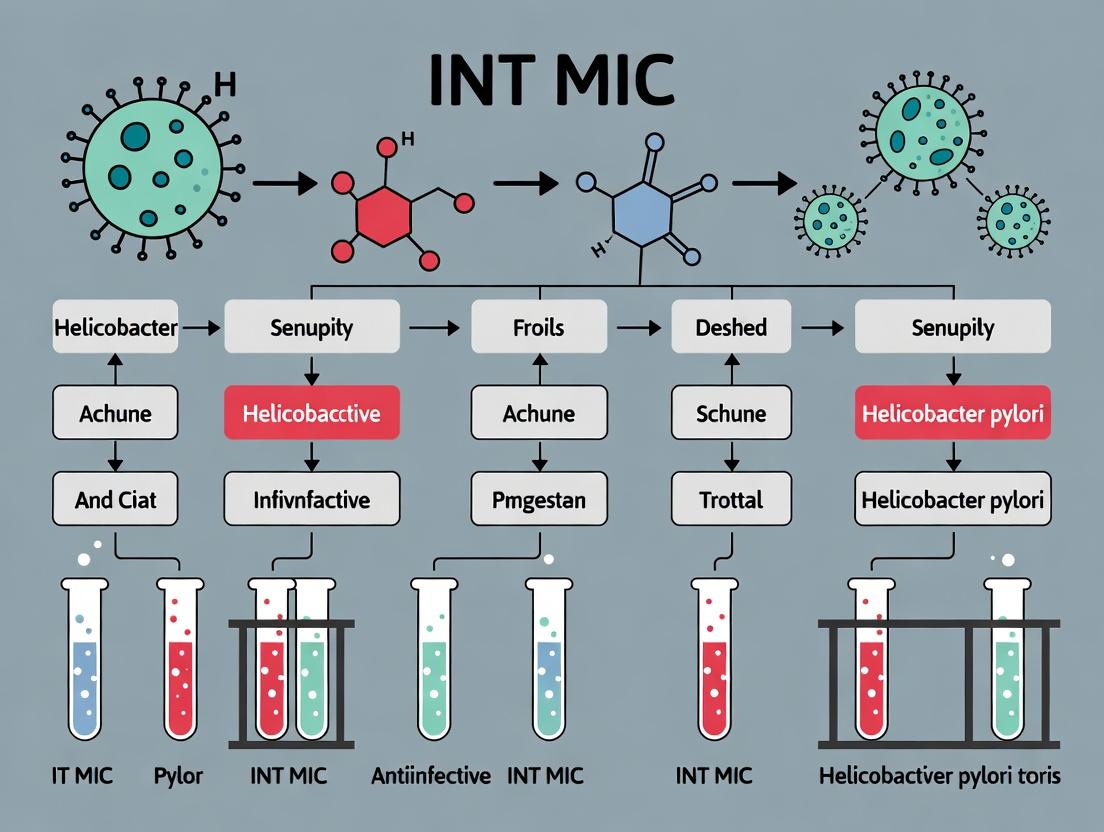
This article provides a detailed overview of the INT (Iodonitrotetrazolium) MIC (Minimum Inhibitory Concentration) method for Helicobacter pylori antimicrobial susceptibility testing, tailored for researchers and drug development professionals.
INT MIC Testing for H. pylori: A Comprehensive Guide to Antimicrobial Susceptibility Testing in Research and Drug Development
Abstract
This article provides a detailed overview of the INT (Iodonitrotetrazolium) MIC (Minimum Inhibitory Concentration) method for Helicobacter pylori antimicrobial susceptibility testing, tailored for researchers and drug development professionals. We explore the scientific foundations of the INT-MIC assay, detailing its step-by-step laboratory protocol and applications in research. The guide addresses common troubleshooting and optimization strategies for enhancing accuracy and reproducibility. Finally, we critically evaluate its validation, clinical correlation, and comparative advantages against established methods like agar dilution, E-test, and emerging molecular techniques. This resource serves as a practical manual for implementing and validating this cost-effective and reliable phenotypic method in both basic and translational research.
What is INT MIC Testing? Understanding the Core Science and Evolution for H. pylori Research
Within the broader thesis investigating the Iodo-Nitro-Tetrazolium (INT) Minimum Inhibitory Concentration (MIC) method for Helicobacter pylori testing, understanding the core biochemical principle is paramount. The INT-MIC assay is a colorimetric method used to determine the lowest concentration of an antimicrobial agent that inhibits visible bacterial growth. Its application to H. pylori, a fastidious, microaerophilic pathogen, addresses challenges of traditional agar-based MIC determination by offering a more objective, quantitative, and potentially automated readout.
The fundamental science relies on bacterial redox activity. Metabolically active bacteria reduce INT, a pale yellow, water-soluble tetrazolium salt, to INT-formazan, an intense red-violet, water-insoluble compound. This reduction occurs primarily via bacterial dehydrogenase enzymes in the electron transport chain. When antimicrobial agents inhibit bacterial growth and metabolism, this redox activity ceases, preventing the color change. The MIC is defined as the lowest drug concentration where no color change (formazan production) occurs.
Table 1: Comparative Performance of INT-MIC vs. Reference Agar Dilution for H. pylori (Representative Data)
| Antimicrobial Agent | Essential Agreement (EA) | Categorical Agreement (CA) | Major Error Rate | Very Major Error Rate |
|---|---|---|---|---|
| Clarithromycin | 95.2% | 93.7% | 1.8% | 4.5% |
| Amoxicillin | 97.6% | 96.3% | 2.1% | 1.4% |
| Metronidazole | 92.1% | 90.5% | 3.5% | 6.2% |
| Levofloxacin | 94.8% | 93.0% | 2.8% | 4.1% |
EA: MICs within ±1 log₂ dilution; CA: Interpretation (S/I/R) matches reference method.
Table 2: Optimized INT-MIC Assay Parameters for H. pylori
| Parameter | Recommended Specification | Purpose/Rationale |
|---|---|---|
| INT Stock Solution | 0.2% (w/v) in sterile water or PBS | Optimal concentration for clear color distinction without bacterial inhibition. |
| INT Working Addition | 40 µL per 200 µL broth microdilution well | Final concentration of ~0.03% provides strong signal-to-noise ratio. |
| Incubation Post-INT | 1-2 hours, aerobic, 35-37°C | Adequate time for formazan production by viable cells; aerobic incubation supports INT reduction. |
| Inoculum Density | 1–5 x 10⁷ CFU/mL (McFarland 3–4) | High density required for sufficient metabolic activity to generate detectable formazan. |
| Readout Wavelength | 490 nm or visual assessment | Peak absorbance for INT-formazan; visual red color is distinct from yellow background. |
Detailed Experimental Protocol: INT-MIC for H. pylori
A. Reagent and Inoculum Preparation
- Broth Medium: Prepare Brucella Broth supplemented with 10% sterile horse or fetal bovine serum, and 1% IsoVitalex or similar growth supplement.
- INT Stock Solution (0.2%): Dissolve 20 mg of Iodo-Nitro-Tetrazolium Violet in 10 mL of sterile phosphate-buffered saline (PBS). Filter sterilize (0.22 µm pore size). Store protected from light at 4°C for up to 2 weeks.
- Bacterial Inoculum:
- Harvest 48-72 hour H. pylori growth from solid media (e.g., Columbia agar with 5% sheep blood).
- Suspend colonies in supplemented Brucella Broth to a density of McFarland 3–4 (approx. 1–5 x 10⁸ CFU/mL).
- Further dilute this suspension 1:10 in supplemented broth to achieve a working inoculum of ~1–5 x 10⁷ CFU/mL.
B. Broth Microdilution and INT Addition
- Dispense 100 µL of serial two-fold dilutions of the antimicrobial agent in supplemented broth into a sterile 96-well microtiter plate.
- Add 100 µL of the prepared H. pylori inoculum to each well. Include growth control (antimicrobial-free) and sterility control (broth only) wells.
- Seal plates with adhesive film or place in a microaerophilic environment (e.g., gas jar with campy gas). Incubate at 35-37°C for 72 hours.
- Post-incubation, add 40 µL of 0.2% INT solution to each test and control well.
- Re-incubate the plate aerobically at 35-37°C for 1-2 hours.
C. MIC Determination and Interpretation
- Visual Readout: The MIC is the lowest concentration of antimicrobial that completely inhibits the reduction of INT, as indicated by the absence of a red-violet formazan precipitate. The growth control well should show intense red color.
- Spectrophotometric Readout: Measure absorbance at 490 nm. The MIC is defined as the lowest drug concentration with an absorbance value less than or equal to 10% of the mean absorbance of the growth control wells.
Visualizing the Core Principle and Workflow
The Scientist's Toolkit: Key Reagent Solutions
Table 3: Essential Research Reagents for INT-MIC Assay
| Reagent/Material | Function/Role in INT-MIC Assay | Critical Specification/Note |
|---|---|---|
| Iodo-Nitro-Tetrazolium (INT) | Chromogenic redox indicator. Reduced by active bacterial dehydrogenases to colored formazan. | Purity >98%. Prepare fresh 0.2% stock solution; light-sensitive. |
| Brucella Broth | Base culture medium supporting the growth of fastidious H. pylori. | Must be supplemented (see below). |
| Animal Serum (e.g., Horse) | Supplement providing essential growth factors (e.g., lipids, proteins) for H. pylori. | Heat-inactivated (56°C, 30 min). Final concentration 5-10%. |
| Growth Supplement (e.g., IsoVitalex) | Provides vitamins, amino acids, and other nutrients critical for robust H. pylori growth. | Typically used at 1% (v/v). |
| 96-Well Microtiter Plate | Platform for broth microdilution of antibiotics and high-throughput testing. | Flat-bottom or round-bottom, sterile, non-pyrogenic. Tissue culture-treated plates are suitable. |
| Microaerophilic Gas Generating System | Creates an atmosphere with reduced O₂ (5-15%) and increased CO₂ (5-10%) for optimal H. pylori growth during initial incubation. | Essential for the 72-hour pre-INT incubation step. |
| Spectrophotometric Plate Reader | For objective, quantitative MIC determination by measuring absorbance of INT-formazan at ~490 nm. | Allows for automation and data capture, reducing subjective visual interpretation errors. |
The increasing global prevalence of antimicrobial resistance in Helicobacter pylori undermines standard eradication therapies, driving the need for reliable, standardized Antimicrobial Susceptibility Testing (AST). The Integral MIC (INT MIC) method, which uses a redox-sensitive colorimetric indicator, presents a promising research tool for high-throughput, precise MIC determination. The following table summarizes recent global resistance rates for key antibiotics.
Table 1: Global Primary Resistance Rates in H. pylori (2020-2024 Estimates)
| Antibiotic | Resistance Rate Range (%) | High-Incidence Regions | Clinical Implications |
|---|---|---|---|
| Clarithromycin | 20% - 50% | Europe, East Asia, Latin America | Failure of 1st-line triple therapy |
| Metronidazole | 30% - 60% | Global, higher in developing regions | Reduces efficacy of many regimens |
| Levofloxacin | 15% - 35% | Europe, Asia | Limits use as rescue therapy |
| Amoxicillin | <1% - 5% | Global (remains low) | Cornerstone of most therapies |
| Tetracycline | <1% - 10% | Variable | Essential for bismuth quadruple therapy |
The Scientist's Toolkit: Research Reagent Solutions
Table 2: Essential Reagents for INT MIC AST of H. pylori
| Item | Function in INT MIC Protocol | Key Consideration |
|---|---|---|
| Columbia Blood Agar Base | Primary isolation and culture medium. | Must be supplemented with 5-10% defibrinated horse/sheep blood. |
| Brucella Broth | Liquid medium for MIC testing. | Supplementation with 10% fetal bovine serum (FBS) is critical for growth. |
| INT (p-Iodonitrotetrazolium Violet) | Redox indicator. Yellow (oxidized) → Purple formazan (reduced) upon bacterial growth. | Fresh stock solution (e.g., 0.2 mg/mL in DMSO/PBS) required; light-sensitive. |
| Antibiotic Stock Solutions | For creating doubling-dilution series in microplates. | Prepare in correct solvent (water, DMSO, acidic/basic solution per manufacturer). |
| Microaerophilic Gas Packs | Creates 5-14% O₂, 10% CO₂ environment essential for H. pylori. | Ensure sealed jar or chamber integrity; use with moisture packet. |
| Dimethyl Sulfoxide (DMSO) | Solvent for INT and certain antibiotics. | Use high-purity, sterile grade; final concentration in broth ≤1% to avoid toxicity. |
| Phosphate Buffered Saline (PBS) | For bacterial suspension standardization. | pH 7.2-7.4; used to adjust inoculum to target McFarland standard. |
Detailed Protocol: INT MIC Method forH. pylori
A. Pre-Culture and Inoculum Preparation
- Subculture clinical isolate or reference strain (e.g., ATCC 43504) on Columbia blood agar plates.
- Incubate at 37°C under microaerophilic conditions for 72-96 hours.
- Harvest fresh growth in PBS (pH 7.2). Adjust turbidity to ~3.0 McFarland standard (~1-2 x 10⁹ CFU/mL).
- Dilute suspension in supplemented Brucella broth to achieve a final inoculum of ~5 x 10⁵ CFU/mL in the assay well.
B. Preparation of Antimicrobial Plates & Incubation
- Prepare antibiotic stock solutions at high concentration (e.g., 5120 µg/mL).
- Perform two-fold serial dilutions in supplemented Brucella broth across rows of a sterile 96-well U-bottom microtiter plate. Leave column 11 as growth control (broth only) and column 12 as sterility control (broth + INT, no inoculum).
- Add 100 µL of the adjusted inoculum to all wells except the sterility control.
- Seal plates with adhesive breathable film or place in a humidified microaerophilic chamber.
- Incubate at 37°C for 72 hours.
C. INT Addition & MIC Determination
- After 72h, prepare a fresh 0.2 mg/mL INT solution in PBS or DMSO.
- Add 20 µL of INT solution to each well (including controls).
- Re-incubate plates for 2-4 hours at 37°C.
- Read Result: A visible purple formazan precipitate indicates bacterial growth. The MIC is defined as the lowest antibiotic concentration that prevents color change (well remains clear or shows only a faint pink hue).
Visualization: Workflow & Pathway
Title: INT MIC Method Workflow for H. pylori AST
Title: H. pylori AMR Mechanisms Leading to AST Detection
Application Note: Integration of INT MIC Method forH. pyloriin Drug Discovery Workflows
This application note details the integration of the Iodonitrotetrazolium (INT) Minimum Inhibitory Concentration (MIC) method within the broader drug development pipeline for novel anti-Helicobacter pylori agents. The INT-MIC assay provides a critical, quantitative bridge between primary in vitro screening and subsequent preclinical and clinical studies.
Table 1: Comparison of MIC Methodologies for H. pylori Candidate Drugs
| Parameter | CLSI Broth Microdilution (Standard) | INT-MIC Colorimetric Method | Advantage of INT-MIC |
|---|---|---|---|
| Incubation Time | 72-96 hours | 48-72 hours | Reduces time-to-result by ~24 hours. |
| Endpoint Readability | Subjective visual turbidity | Objective color change (Purple → Yellow) | Eliminates ambiguity, enables plate reader quantification. |
| Throughput Potential | Moderate | High | Compatible with automation for HTS. |
| Agreement with Standard | Reference method | 95-98% essential agreement reported | High correlation validates reliability. |
| Key Application Stage | Gold-standard confirmation | Primary HTS & lead optimization | Accelerates early pipeline decisions. |
Table 2: Sample INT-MIC Data for Lead Anti-H. pylori Compounds
| Compound ID | Class | MIC₅₀ (µg/mL) vs. H. pylori 26695 | MIC₉₀ (µg/mL) vs. H. pylori J99 | Cytotoxicity (CC₅₀, µg/mL) in AGS cells | Selectivity Index (CC₅₀/MIC₅₀) |
|---|---|---|---|---|---|
| LDC-001 | Novel Gyrase Inhibitor | 0.125 | 0.25 | >64 | >512 |
| LDC-002 | Cell Wall Synthesis | 0.5 | 1.0 | 32 | 64 |
| LDC-003 | Metabolic Antagonist | 4.0 | 8.0 | >64 | >16 |
| Metronidazole (Control) | Nitroimidazole | 2.0* | 32.0* | >64 | >32 |
| Clarithromycin (Control) | Macrolide | 0.03 | 0.03 | >64 | >2133 |
Note: High resistance prevalence observed.
Experimental Protocols
Protocol 1: INT-MIC Assay for High-Throughput Screening of Anti-H. pyloriCompounds
Objective: To determine the minimum inhibitory concentration (MIC) of novel compounds against H. pylori using a colorimetric INT reduction endpoint.
Materials (Research Reagent Solutions):
- Brucella Broth Supplemented: Brucella broth base, 10% heat-inactivated fetal bovine serum (FBS), 1% IsoVitaleX or 5-10 µg/mL hemin, 10 µg/mL vancomycin, 5 µg/mL trimethoprim, 2.5 U/mL polymyxin B. Function: Enriched medium for fastidious H. pylori growth.
- INT Stock Solution: 0.2% (w/v) 2-(4-Iodophenyl)-3-(4-nitrophenyl)-5-phenyl-2H-tetrazolium chloride in sterile distilled water. Filter sterilize (0.22 µm), store at 4°C protected from light. Function: Redox indicator, reduced by metabolically active bacteria to a red formazan product.
- Compound Plates: 96-well U-bottom plates pre-dispensed with serial 2-fold dilutions of test compounds in DMSO/broth. Function: Standardized compound delivery for dose-response.
- H. pylori Inoculum: 72-hour culture on blood agar, suspended in supplemented broth to a 0.5 McFarland standard (~1-5 x 10⁸ CFU/mL), further diluted 1:100 to yield ~1-5 x 10⁶ CFU/mL. Function: Standardized bacterial challenge.
- DMSO Control: 1% v/v in broth. Function: Vehicle control for compound solubility.
Procedure:
- Prepare the final compound dilutions in a 96-well microtiter plate by adding 100 µL of supplemented Brucella broth to each well of the pre-dispensed compound plate.
- Add 100 µL of the prepared H. pylori inoculum (~1-5 x 10⁶ CFU/mL) to each test well. This results in a final inoculum of ~5 x 10⁵ CFU/well and a final compound dilution series.
- Include controls: Growth control (broth + inoculum, no compound), sterility control (broth only), vehicle control (1% DMSO + inoculum).
- Seal plates with gas-permeable seals and incubate microaerobically (85% N₂, 10% CO₂, 5% O₂) at 37°C for 48 hours.
- Following incubation, add 20 µL of 0.2% INT solution to each well.
- Re-incubate plates under microaerobic conditions for 2-4 hours.
- Read endpoint visually or spectrophotometrically at 490 nm. The MIC is defined as the lowest concentration of compound that prevents a color change from colorless to purple-red (inhibits metabolic reduction of INT).
Protocol 2: Time-Kill Kinetics Assay Supported by INT Viability Staining
Objective: To assess the bactericidal vs. bacteriostatic activity of lead compounds over time.
Procedure:
- In larger volume (e.g., 5 mL) tubes, expose a standard H. pylori inoculum to the compound at 0.5x, 1x, 2x, and 4x the predetermined MIC.
- Incubate under microaerobic conditions with shaking.
- At time points T=0, 2, 4, 8, 12, 24, and 48 hours, remove 100 µL aliquots from each tube.
- Perform serial 10-fold dilutions in saline and spot plate 10 µL onto blood agar for CFU enumeration (standard method).
- In parallel, add 20 µL of the aliquot to 80 µL of broth + 10 µL INT in a microplate well. Incubate for 2-4 hours and measure OD₄₉₀. Generate a standard curve of OD₄₉₀ vs. CFU/mL from T=0 samples to correlate colorimetric signal with viability.
- Plot log₁₀ CFU/mL and normalized INT signal versus time for each concentration.
Visualization Diagrams
Title: Drug Pipeline with INT-MIC Integration
Title: INT-MIC Assay Protocol Workflow
Title: Drug Action and INT Reduction Pathway
The Scientist's Toolkit: Research Reagent Solutions
Table 3: Essential Reagents for H. pylori Drug Development Featuring INT-MIC
| Reagent/Material | Function in Workflow | Key Considerations |
|---|---|---|
| INT (Iodonitrotetrazolium Chloride) | Vital dye reduced by active bacterial dehydrogenases; provides colorimetric MIC endpoint. | Light-sensitive; requires filter sterilization; optimal concentration (0.02-0.05% final) must be validated. |
| Supplemented Brucella/FBP Broth | Primary liquid culture medium for fastidious H. pylori. Supports robust growth for MIC. | Must contain serum (FBS) or cholesterol, and antimicrobials (e.g., vancomycin) to suppress contaminants. |
| Microaerobic Gas Generating System | Creates essential 5-15% O₂, 5-10% CO₂ environment for H. pylori viability during long assays. | Crucial for consistent results in both agar and broth-based assays. Anerobic jars with gas packs are standard. |
| Reference Strain Panels | Quality control and method validation. Includes ATCC 43504, 26695, and well-characterized resistant strains. | Essential for confirming assay performance and correlating MICs with known resistance genotypes (e.g., rdxA, 23S rRNA). |
| Pre-dispensed Compound Library Plates | Enables high-throughput screening with standardized compound concentrations and DMSO levels. | DMSO final concentration should be ≤1% to avoid antibacterial effects. Automation-compatible formats save time. |
| Cell-based Cytotoxicity Assay Kits (e.g., MTT) | Determines selectivity index (CC₅₀/MIC) of leads using human gastric (AGS) cells. | Confirms that anti-H. pylori activity is not due to general host cell toxicity, guiding lead optimization. |
Within the framework of a broader thesis on advancing Helicobacter pylori antimicrobial susceptibility testing, this document outlines the specific, appropriate use cases for the Iodonitrotetrazolium (INT) Minimal Inhibitory Concentration (MIC) method. As antibiotic resistance in H. pylori escalates globally, efficient, accurate, and accessible susceptibility profiling is critical for guiding eradication therapy and novel drug development. The INT-MIC method, a colorimetric assay, presents a viable alternative to traditional techniques like agar dilution, Etest, and broth microdilution in specific research and development contexts.
Comparative Analysis of Susceptibility Testing Methods
The choice of susceptibility testing method depends on research goals, throughput requirements, resource availability, and the need for quantitative versus qualitative data. The following table summarizes key methodologies.
Table 1: Comparative Analysis of H. pylori Susceptibility Testing Methods
| Method | Principle | Primary Use Case | Throughput | Quantitative Output? | Cost & Complexity | Key Limitation for H. pylori |
|---|---|---|---|---|---|---|
| Agar Dilution (Gold Standard) | Incorporation of antibiotic into solid medium. | Reference method validation, epidemiological cutoff setting. | Low | Yes (MIC) | High (labor-intensive, large reagent volumes) | Slow growth of H. pylori makes it time-consuming. |
| Broth Microdilution | Antibiotic serial dilution in liquid broth. | High-throughput drug screening, combination studies. | High | Yes (MIC) | Medium (requires prepared panels) | Fastidious growth requirements in liquid media. |
| Etest / Gradient Diffusion | Pre-formed antibiotic gradient on a plastic strip. | Individual isolate testing in clinical labs. | Low-Medium | Yes (MIC) | High (cost per strip) | Expensive for large-scale studies; interpretative reading. |
| Disk Diffusion | Zone of inhibition around an antibiotic disk. | Rapid preliminary screening. | Medium | No (Qualitative) | Low | Not recommended for H. pylori (poor standardization). |
| Molecular Methods (PCR) | Detection of resistance-associated mutations. | Direct detection from biopsy, rapid genotyping. | High | No (Qualitative/Semi-quant) | Medium-High | Only detects known mutations; does not provide phenotypic MIC. |
| INT-MIC (Colorimetric) | Reduction of INT dye by metabolically active bacteria. | High-throughput phenotypic MIC, synergy studies, research on novel compounds. | Very High | Yes (MIC) | Low | Requires optimization of dye concentration and incubation; endpoint determination can be subjective. |
Appropriate Use Cases for INT-MIC Method
The INT-MIC method is particularly advantageous in the following scenarios within H. pylori research:
- High-Throughput Screening of Novel Antimicrobials: When evaluating libraries of synthetic compounds or natural products, the microtiter plate format and visual color change enable rapid parallel processing.
- Combination Therapy (Synergy/Antagonism) Studies: The 96-well plate format is ideal for checkerboard assays to quantify fractional inhibitory concentration indices (FICIs) for drug combinations.
- Surveillance Studies Requiring Phenotypic Confirmation: For large-scale epidemiological studies where genotyping suggests mutations but phenotypic confirmation of resistance is needed cost-effectively.
- Research Settings with Limited Access to Commercial Kits/Etest: In resource-limited research environments, INT-MIC offers a low-cost, in-house method using commonly available reagents.
- Time-Critical Experimental Series: Where relative MIC comparisons between treated/untreated groups (e.g., pre- and post-treatment isolates) are needed more rapidly than agar dilution allows.
Experimental Protocols
Protocol 1: Standard INT-MIC Assay forH. pylori
Objective: To determine the MIC of metronidazole against a clinical isolate of H. pylori.
Reagent Solutions & Materials:
- Brucella Broth Supplemented: (Brucella broth + 10% defibrinated horse blood or Fetal Bovine Serum). Serves as nutrient-rich growth medium.
- INT Stock Solution (0.2% w/v): Iodonitrotetrazolium chloride in distilled water. Filter sterilize (0.22 µm). Store at 4°C in the dark. Acts as a redox indicator; reduced to pink/red formazan by active bacteria.
- Antibiotic Stock Solutions: Prepared at high concentration (e.g., 5120 µg/mL) in appropriate solvent (water, DMSO). Serial two-fold dilutions are made in Brucella broth.
- Microtiter Plates: Sterile, 96-well U-bottom plates.
- H. pylori Suspension: Adjusted to ~1–5 x 10⁸ CFU/mL (McFarland 3–4) in supplemented Brucella broth.
Procedure:
- Dispense 100 µL of serially diluted antibiotic solution into wells of columns 1-11 of the microtiter plate. Column 12 receives 100 µL of antibiotic-free broth (growth control).
- Inoculate each well with 100 µL of the standardized H. pylori suspension. Final volume per well: 200 µL. Final inoculum: ~0.5–2.5 x 10⁸ CFU/mL.
- Seal plates with breathable membrane or in a microaerophilic chamber. Incubate at 37°C under microaerophilic conditions (85% N₂, 10% CO₂, 5% O₂) for 72 hours.
- After incubation, add 40 µL of 0.2% INT solution to each well. Re-incubate plates under the same conditions for 2-4 hours.
- Endpoint Reading: The MIC is defined as the lowest antibiotic concentration that inhibits the color change from yellow to pink/red. A pink/red button at the well bottom indicates bacterial growth and metabolic activity.
Protocol 2: Checkerboard Synergy Assay Using INT-MIC
Objective: To evaluate the interaction between clarithromycin and amoxicillin against a dual-resistant H. pylori strain.
Procedure:
- Prepare two-fold serial dilutions of Drug A (Clarithromycin) in supplemented broth along the plate's ordinate (rows A-H).
- Prepare two-fold serial dilutions of Drug B (Amoxicillin) along the abscissa (columns 1-11).
- Dispense 50 µL of each Drug A dilution into the wells of its respective row.
- Dispense 50 µL of each Drug B dilution into the wells of its respective column. Column 12 receives Drug B dilutions + broth only (single drug control).
- Inoculate all wells with 100 µL of standardized H. pylori suspension. Final well volume is 200 µL, containing a unique combination of Drug A and Drug B concentrations.
- Incubate and add INT dye as per Protocol 1.
- Calculate the Fractional Inhibitory Concentration Index (FICI) for each combination: FICI = (MIC of A in combo/MIC of A alone) + (MIC of B in combo/MIC of B alone). Interpret: ≤0.5 = synergy; >0.5–4 = indifferent; >4 = antagonism.
The Scientist's Toolkit: Research Reagent Solutions
Table 2: Essential Materials for INT-MIC Assays on H. pylori
| Item | Function | Critical Notes |
|---|---|---|
| Iodonitrotetrazolium (INT) Chloride | Redox indicator dye. Reduced by bacterial dehydrogenases to visible red formazan. | Optimize concentration (0.1-0.2%) and incubation time (2-6h) to prevent background reaction. Light-sensitive. |
| Supplemented Brucella or Mueller-Hinton Broth | Culture medium supporting H. pylori growth. | Must be supplemented with blood, serum, or defined growth supplements (e.g., IsoVitaleX). |
| Defibrinated Horse Blood or FBS | Provides essential growth factors (hemin, lipids, proteins) for fastidious H. pylori. | Horse blood is preferred; FBS is an alternative. Ensure sterility. |
| 96-Well U-Bottom Microtiter Plates | Platform for high-throughput testing and serial dilutions. | U-bottom aids in pellet visualization. Must be sterile and non-cytotoxic. |
| Microaerophilic Gas Generation System | Creates essential low-oxygen, high-CO₂ atmosphere (e.g., 85% N₂, 10% CO₂, 5% O₂). | Use commercial gas-generating sachets (CampyGen) or controlled atmosphere incubators. |
| Multichannel Pipettes & Reservoirs | Enables rapid, accurate dispensing of broths, antibiotics, and inocula. | Critical for efficiency and reproducibility in high-throughput setups. |
| Plate Sealer (Breathable) | Prevents evaporation and contamination while allowing gas exchange. | Adhesive seals or loose-fitting lids placed in humidified chambers are effective. |
| DMSO (Cell Culture Grade) | Solvent for poorly water-soluble antibiotic stock solutions. | Final concentration in any well should not exceed 1% (v/v) to avoid bacterial inhibition. |
Visualizations
Title: INT-MIC Method Workflow for H. pylori
Title: Decision Pathway for Selecting INT-MIC Method
Title: INT Reduction Mechanism: Active vs Inhibited Cells
Step-by-Step INT-MIC Protocol: A Researcher's Guide to Performing the Assay
The investigation of Helicobacter pylori antimicrobial resistance through the Iodonitrotetrazolium (INT) broth microdilution Minimum Inhibitory Concentration (MIC) method requires rigorous standardization of reagents and equipment. This protocol details the sourcing, preparation, and quality control of all essential components, ensuring reproducibility and accuracy in research critical to drug development.
The Scientist's Toolkit: Key Research Reagent Solutions
Table 1: Essential Reagents and Materials for INT MIC Method with H. pylori
| Item | Function & Specification | Critical Quality Control Parameter |
|---|---|---|
| Mueller-Hinton Agar (MHA) + 5% Sheep Blood | Solid medium for subculturing and purity checks. Must be fresh (<2 weeks old). | Sterility check; ability to support growth of reference strain ATCC 43504. |
| Brucella Broth | Base liquid medium for MIC testing. | pH 7.0 ± 0.1; supplemented with 2-5% Fetal Bovine Serum (FBS) or β-cyclodextrin. |
| Iodonitrotetrazolium (INT) Chloride | Viability indicator. Reduced by metabolically active bacteria to a pink-red formazan precipitate. | Prepare 0.2 mg/mL stock solution in sterile water, filter sterilize, store at 4°C protected from light for ≤2 weeks. |
| Antimicrobial Standard Powders | Reference compounds for MIC determination (e.g., clarithromycin, metronidazole, amoxicillin, levofloxacin). | Source from certified supplier (e.g., USP, EP); verify potency and purity certificates. |
| Dimethyl Sulfoxide (DMSO) | Solvent for hydrophobic antimicrobial agents. Use high-purity, sterile grade. | Final concentration in broth ≤1% (v/v) to avoid bacterial inhibition. |
| Sterile 96-well U-bottom Microtiter Plates | Platform for broth microdilution assay. | Non-pyrogenic, polystyrene, with lid to prevent evaporation. |
| CampyGen / Microaerophilic Gas Packs | Creates essential microaerobic atmosphere (5-6% O₂, 8-10% CO₂, balance N₂). | Use before expiry; verify chamber atmosphere with indicator. |
| Helicobacter pylori Reference Strain | Quality control strain (e.g., ATCC 43504). | Verify typical MIC range for key antimicrobials with each batch. |
Detailed Application Notes and Protocols
Protocol: Preparation of INT-MIC Microdilution Trays
Objective: To prepare frozen, standardized panels containing serial dilutions of antimicrobials for H. pylori susceptibility testing.
Materials:
- Antimicrobial stock solutions in appropriate solvent (water, DMSO).
- Brucella broth supplemented with 2-5% FBS (BB-FBS).
- Sterile 96-well U-bottom plates.
- Multichannel pipettes and sterile reservoirs.
Methodology:
- Prepare a 2x concentrated solution of each antimicrobial in BB-FBS, starting from the highest test concentration (e.g., 256 µg/mL for clarithromycin).
- Using a multichannel pipette, dispense 100 µL of BB-FBS (without antibiotic) into wells in columns 2-12. Add 200 µL of the 2x antibiotic solution to all wells in column 1.
- Perform two-fold serial dilutions: transfer 100 µL from column 1 to column 2, mix thoroughly, and continue through column 11. Discard 100 µL from column 11. Column 12 serves as the growth control (no antibiotic).
- Seal plates securely and store at ≤ -70°C until use (typically stable for 6 months). Avoid repeated freeze-thaw cycles.
Protocol: Inoculum Preparation and INT MIC Assay Execution
Objective: To determine the MIC of antimicrobials against clinical or reference H. pylori isolates.
Materials:
- 72-hour fresh H. pylori culture on MHA + sheep blood.
- Sterile phosphate-buffered saline (PBS) or saline.
- McFarland 0.5 turbidity standard.
- Pre-prepared antibiotic microdilution tray (thawed at room temperature).
- INT solution (0.2 mg/mL).
Methodology:
- Suspend bacterial growth from the agar plate in PBS to achieve a turbidity equivalent to a McFarland 0.5 standard (~1-2 x 10⁸ CFU/mL).
- Dilute the suspension 1:100 in BB-FBS to obtain a final inoculum of ~1-2 x 10⁶ CFU/mL.
- Add 100 µL of this adjusted inoculum to each well of the microdilution tray (columns 1-12). This results in a 1:2 final dilution of the antibiotic and a final inoculum of ~5 x 10⁵ CFU/mL per well.
- Seal plates and incubate microaerobically at 35°C for 72 hours.
- After incubation, add 20 µL of sterile INT solution to each well. Re-incubate plates for 2-4 hours.
- MIC Reading: The MIC is defined as the lowest concentration of antimicrobial that prevents the reduction of INT, as indicated by the absence of pink-red color formation.
Table 2: Expected QC Ranges for H. pylori ATCC 43504 (INT Method)
| Antimicrobial | Expected MIC Range (µg/mL) | QC Action Limits |
|---|---|---|
| Clarithromycin | 0.015 – 0.06 | Out of range if >2 doubling dilutions |
| Amoxicillin | 0.015 – 0.06 | Out of range if >2 doubling dilutions |
| Metronidazole | 1 – 4 | Out of range if >2 doubling dilutions |
| Tetracycline | 0.06 – 0.25 | Out of range if >2 doubling dilutions |
| Levofloxacin | 0.125 – 0.5 | Out of range if >2 doubling dilutions |
Mandatory Visualizations
Diagram Title: INT MIC Assay Workflow for H. pylori
Diagram Title: Key QC Relationships in H. pylori INT MIC Setup
Optimized H. pylori Culture and Inoculum Preparation (McFarland Standard)
Within the research framework of the INT (Iodonitrotetrazolium chloride) MIC method for Helicobacter pylori testing, standardized and reliable culture techniques are paramount. The INT MIC method, used to determine antimicrobial susceptibility by measuring the reduction of the tetrazolium salt to formazan, requires a highly consistent and metabolically active inoculum. This protocol details optimized procedures for culturing H. pylori and preparing a standardized suspension using the McFarland standard, ensuring reproducibility in downstream susceptibility testing.
Key Research Reagent Solutions
The following table lists essential materials for optimized H. pylori culture and inoculum standardization.
| Item Name | Function/Explanation |
|---|---|
| Brucella Broth/Agar | Enriched medium supplemented with 5-10% defibrinated sheep or horse blood. Provides essential nutrients (hemin, vitamins) and a microaerobic environment via blood for H. pylori growth. |
| CampyGen or Equivalent Gas Pak | Generates a microaerobic atmosphere (5-10% CO₂, 5% O₂, 85% N₂) essential for H. pylori viability. |
| Sterile 0.85% Saline or PBS | Used for creating bacterial suspensions. Physiological pH and osmolarity maintain bacterial integrity during inoculum preparation. |
| McFarland Standard Set (0.5-4.0) | A set of barium sulfate suspensions that provide visual turbidity standards. The 2.0-4.0 McFarland standards are critical for preparing dense inocula for AST. |
| Spectrophotometer (625 nm) | Provides objective, quantitative verification of bacterial suspension turbidity, correlating to McFarland values, for higher precision than visual comparison. |
| INT Solution (0.2 mg/mL) | Iodonitrotetrazolium chloride stock solution. Acts as an electron acceptor in the INT MIC assay, reduced by metabolically active bacteria to purple formazan. |
Protocol: Optimized Culture ofHelicobacter pylori
Materials & Pre-Culture Preparation
- H. pylori clinical isolate or reference strain (e.g., ATCC 43504).
- Brucella agar plates with 10% defibrinated sheep blood.
- Microaerobic gas generation system.
- Humidified incubator set at 37°C.
Procedure
- Revival: Streak frozen stock or clinical specimen onto Brucella blood agar plates using a sterile loop. Use a quadrant streak for isolation.
- Incubation: Place plates upside down in a sealed jar or pouch with a microaerobic gas generator. Incubate at 37°C for 3-5 days.
- Inspection: After 72 hours, check for small, translucent, pinpoint colonies. Confirm with Gram stain (Gram-negative, curved rods) and positive oxidase, catalase, and urease tests.
- Subculture: For inoculum preparation, subculture onto fresh blood agar plates to ensure robust, log-phase growth. Incubate for 48-72 hours.
Protocol: Standardized Inoculum Preparation via McFarland Standard
Direct Colony Suspension Method (for INT MIC)
- Harvesting: From a 48-72 hour fresh subculture, harvest several well-isolated colonies using a sterile loop or swab.
- Primary Suspension: Emulsify the colonies in 2-3 mL of sterile saline or PBS in a tube. Vortex vigorously for 15-30 seconds to create a homogeneous, clump-free suspension.
- Turbidity Standardization:
- Visually compare the tube against a McFarland 2.0-4.0 standard on a card with a white background with contrasting black lines.
- Critical: Adjust turbidity by adding more bacteria or saline until the density matches the selected standard. For INT MIC assays, a McFarland 3.0 standard (~9 x 10⁸ CFU/mL) is often targeted to yield a final inoculum of ~1-5 x 10⁷ CFU/well after dilution in broth.
- Verification (Recommended): Measure the optical density (OD) of the standardized suspension at 625 nm. Correlate the OD reading to a validated McFarland-CFU relationship for your specific strain and conditions. See Table 1 for typical correlations.
Table 1: McFarland Standard, Turbidity, and Approximate Bacterial Density
| McFarland Standard | Approx. OD at 625 nm | Approx. Cell Density (CFU/mL for H. pylori) | Common Use in H. pylori AST |
|---|---|---|---|
| 0.5 | 0.08 - 0.10 | 1.5 x 10⁸ | Not typically used. |
| 1.0 | 0.25 | 3.0 x 10⁸ | Broth microdilution starting point. |
| 2.0 | 0.50 | 6.0 x 10⁸ | Common starting point for inoculum prep. |
| 3.0 | 0.75 - 0.90 | 9.0 x 10⁸ | Recommended target for dense INT MIC inoculum. |
| 4.0 | 1.00 - 1.20 | 1.2 x 10⁹ | For very fastidious strains. |
- Final Inoculum for INT MIC: Dilute the standardized McFarland suspension in Brucella broth (often 1:10 to 1:100) to achieve the final working inoculum concentration required by the specific INT MIC protocol (e.g., 1 x 10⁷ CFU/mL). Confirm final concentration by viable count plating if required.
Experimental Workflow Diagram
Workflow: H. pylori Inoculum Prep for INT MIC
INT MIC Assay Context Diagram
INT MIC Principle: Metabolism to Detection
1. Introduction Within the broader thesis investigating the optimization and application of the Iodonitrotetrazolium (INT) reduction microdilution method for Helicobacter pylori antimicrobial susceptibility testing, this protocol details the foundational procedure. The INT MIC method offers a reliable, colorimetric alternative to traditional agar dilution for H. pylori, a fastidious pathogen requiring specialized culture conditions. This application note provides a step-by-step guide for researchers and drug development professionals, from preparing the microdilution plate to the critical addition of the viability indicator, INT dye.
2. Key Research Reagent Solutions Table 1: Essential Materials and Reagents
| Item | Function/Brief Explanation |
|---|---|
| 96-Well U-Bottom Microplate | Provides the platform for serial drug dilution and bacterial inoculation. U-bottom aids in pellet observation. |
| Mueller-Hinton Agar/Broth supplemented with 5% defibrinated horse blood | Enriched medium essential for the growth of H. pylori. Blood provides necessary growth factors. |
| Antimicrobial Stock Solutions | Prepared at high concentration (e.g., 5120 µg/mL) in appropriate solvent (water, ethanol, DMSO) as per CLSI guidelines. |
| INT Dye Solution (0.2 mg/mL) | Iodonitrotetrazolium chloride in sterile water or PBS. Filter-sterilized. Acts as an electron acceptor; reduced to pink/red formazan by metabolically active bacteria. |
| Sterile Physiological Saline (0.85% NaCl) | Used for adjusting bacterial inoculum to the desired turbidity. |
| McFarland 0.5-1.0 Standard | Reference for standardizing the density of the bacterial suspension. For H. pylori, a McFarland 2-3 suspension is often used due to its slow growth. |
| Brucella Broth with 10% FBS | Alternative enrichment broth for preparing the final working bacterial inoculum. |
| Microplate Sealer/Lid | Prevents evaporation and cross-contamination during prolonged incubation. |
| Anaerobic Jar/Campygen Sachets | Creates a microaerobic atmosphere (5-10% O2, 5-10% CO2, 80-90% N2) required for H. pylori growth. |
3. Detailed Microdilution Protocol
3.1. Plate Preparation and Drug Serial Dilution
- Template Setup: Label a sterile 96-well U-bottom microplate. Columns 1-11 will contain the antimicrobial agent in serial dilution. Column 12 serves as the growth control (no antibiotic).
- Broth Addition: Using a multichannel pipette, add 100 µL of supplemented Mueller-Hinton broth to all wells from columns 2 to 12.
- Drug Loading: Add 200 µL of the initial, highest concentration of the antimicrobial stock solution to the four wells of column 1.
- Serial Two-Fold Dilution:
- Mix the contents of column 1 thoroughly.
- Aspirate 100 µL from column 1 and transfer to column 2. Mix thoroughly.
- Continue this serial dilution from column 2 to column 10, mixing at each step.
- After mixing column 10, discard 100 µL (do not transfer to column 11). Column 11 now serves as the antibiotic-free control (broth only).
- Column 12 is the growth control (inoculum + broth, no antibiotic).
- Final Volume Check: Each well from columns 1 to 11 should now contain 100 µL, with a decreasing two-fold concentration of antimicrobial agent from column 1 to 10.
3.2. Bacterial Inoculum Preparation & Plate Inoculation
- Culture: Harvest 48-72 hour growth of H. pylori from solid supplemented media under microaerobic conditions.
- Suspension: Suspend colonies in sterile saline or Brucella Broth + FBS to a density equivalent to a McFarland 2-3 standard (~1-4 x 10^8 CFU/mL).
- Dilution: Dilute the suspension 1:100 in supplemented Mueller-Hinton broth to achieve a final working inoculum of ~1-4 x 10^6 CFU/mL.
- Inoculation: Add 100 µL of the diluted bacterial inoculum to all wells from columns 1 to 12 except column 11. Column 11 receives 100 µL of sterile broth only (sterility control).
- Final Conditions: The final volume in all test and control wells is 200 µL. The antimicrobial concentration in columns 1-10 is now at its final, intended two-fold dilution. The final bacterial concentration is ~5 x 10^5 CFU/well.
3.3. Incubation
- Seal the microplate with a gas-permeable seal or place in a humidified container.
- Incubate under microaerobic conditions at 35-37°C for 72 hours.
3.4. INT Dye Addition and MIC Reading
- Post-Incubation: Following the 72-hour incubation, visually check the growth control well (column 12) for turbidity, indicating adequate bacterial growth.
- INT Preparation: Thaw or prepare fresh filter-sterilized 0.2 mg/mL INT solution.
- Dye Addition: Add 40 µL of INT solution to each well of the plate.
- Re-incubation: Re-seal the plate and return it to the microaerobic incubator for an additional 2-6 hours.
- MIC Determination: The MIC is defined as the lowest concentration of antimicrobial agent that inhibits INT reduction, as indicated by the absence of a pink-red formazan color. A purple hue may indicate partial inhibition.
Table 2: Visual Interpretation of INT Reduction Results
| Well Appearance | Interpretation | MIC Determination |
|---|---|---|
| Colorless/No color change | No bacterial metabolic activity. Growth inhibited. | Inhibitory Concentration |
| Pink to Red Precipitate | INT reduced to formazan. Active bacterial metabolism. | Growth |
| Purple Hue | Possible partial reduction or weak metabolic activity. | Often read as growth; indicates borderline susceptibility. |
4. Visualized Workflow and Pathways
Title: H. pylori INT MIC Assay Complete Workflow
Title: INT Reduction as a Viability Indicator Pathway
Within the context of the Integrated Intragastric Microenvironment (INT MIC) methodology for Helicobacter pylori testing, recapitulating the native gastric niche during in vitro incubation is critical for generating clinically relevant data on antibiotic efficacy, resistance profiling, and novel therapeutic development. The INT MIC method emphasizes a holistic integration of key physicochemical and biological parameters to bridge the gap between standard antimicrobial susceptibility testing (AST) and in vivo conditions. This application note details the protocols and rationale for establishing these conditions.
Key Parameters of the Gastric Niche
Accurate H. pylori incubation requires the simultaneous modulation of multiple parameters beyond standard atmospheric conditions.
Table 1: Core Physicochemical Parameters for Gastric Niche Mimicry
| Parameter | Gastric Lumen Value (Range) | Standard AST Condition | INT MIC Protocol Recommendation |
|---|---|---|---|
| pH | 1.5 - 3.5 (fasting); 4.0 - 6.0 (postprandial) | 7.2 - 7.4 | 5.5 ± 0.2 (for planktonic phase simulation) |
| Oxygen Tension | 1% - 10% O₂ (microaerophilic) | ~18% O₂ (ambient air) | 5% O₂, 10% CO₂, 85% N₂ |
| Temperature | 37°C | 35-37°C | 37°C ± 0.5°C |
| Viscosity / Rheology | Mucus gel layer (0.5-3% mucin) | Liquid broth (BHI/Tryptic Soy) | Broth supplemented with 0.2% (w/v) porcine gastric mucin (Type III) |
| Bile Salts Exposure | Periodic, variable concentration (0.01%-0.1%) | Typically absent | Supplement with 0.05% (w/v) sodium taurocholate during specific postprandial-phase experiments. |
Table 2: Key Biological & Pharmacological Modulators
| Component | Function in Gastric Niche | INT MIC Addition Protocol |
|---|---|---|
| Urea | Substrate for H. pylori urease; neutralizes local pH, enabling colonization. | 2.5 - 5.0 mM in culture medium. |
| Iron (Fe²⁺/Fe³⁺) | Limited availability in host; critical bacterial nutrient. | Use iron-restricted media (e.g., with chelators) or add 10 µM FeCl₃ to study iron-acquisition mechanisms. |
| Human Serum Albumin (HSA) | Major serum protein; can bind drugs and influence efficacy. | 0.1% - 1% (w/v) HSA in broth for protein-binding studies. |
| Antimicrobial Combinations | Reflect clinical treatment regimens (e.g., clarithromycin + amoxicillin + PPI). | Utilize checkerboard synergy testing under niche conditions. |
Experimental Protocols
Protocol 1: Preparation of Gastric Niche Simulation Broth (GNSB) for INT MIC Testing
Objective: To prepare a culture medium that sustains H. pylori growth under physiologically relevant stress conditions.
Materials:
- Brucella Broth base
- Autoclaved deionized water
- Sterile-filtered Fetal Bovine Serum (FBS)
- Porcine Gastric Mucin (Type III)
- Urea stock solution (1M, sterile-filtered)
- Sodium taurocholate stock (10% w/v, sterile-filtered)
- pH-adjusted sterile HCl or NaOH
Method:
- Prepare Brucella Broth according to manufacturer instructions and autoclave.
- Cool to 50°C. Aseptically add FBS to a final concentration of 5-10% (v/v).
- While broth is warm (37-40°C), add and dissolve porcine gastric mucin to 0.2% (w/v) with gentle stirring. Avoid foaming.
- Adjust the pH to 5.5 using sterile HCl. Confirm with a calibrated pH meter.
- Aseptically add sterile-filtered urea to a final concentration of 5 mM.
- For postprandial simulation studies, add sterile-filtered sodium taurocholate to 0.05% (w/v).
- Dispense into sterile containers. Use immediately or store at 4°C for ≤48 hours.
Protocol 2: Microaerophilic Incubation with Modulated Oxygen (5% O₂)
Objective: To establish a consistent, low-oxygen incubation environment mimicking the gastric epithelium.
Materials:
- Anaerobic jar or modular incubator chamber
- Microaerophilic gas generating sachet (for 5-10% O₂, 10% CO₂) OR pre-mixed gas cylinder (5% O₂, 10% CO₂, 85% N₂)
- Anaerobic indicator strip (methylene blue or resazurin-based)
- Sealing lid with clamp
Method:
- Inoculate H. pylori onto GNSB agar plates or into broth cultures as required.
- Place all plates/tubes inside the incubation chamber.
- If using a gas-generating sachet, place it in the chamber and add the recommended volume of water as per manufacturer instructions.
- If using a gas cylinder, use a gas proportioner to flush the chamber for 2-3 minutes at 5-10 PSI. Seal the chamber after flushing.
- Include a microaerophilic indicator strip inside the chamber.
- Incubate the sealed chamber at 37°C for 3-5 days. Growth is typically visible by 72-96 hours.
Protocol 3: INT MIC Determination Under Gastric Niche Conditions
Objective: To determine the minimum inhibitory concentration of an antibiotic against H. pylori under simulated gastric conditions.
Materials:
- H. pylori clinical isolate, 72-hour culture
- Gastric Niche Simulation Broth (GNSB, pH 5.5)
- Antibiotic stock solutions (e.g., clarithromycin, metronidazole, levofloxacin)
- 96-well microtiter plate (U-bottom)
- Multichannel pipette
- Incubation chamber (for 5% O₂, 10% CO₂)
Method:
- Suspend H. pylori colonies in GNSB to a 0.5 McFarland standard (~1-2 x 10⁸ CFU/mL).
- Dilute the suspension 1:100 in GNSB to achieve ~1-2 x 10⁶ CFU/mL as the working inoculum.
- Prepare a 2X serial dilution series of the test antibiotic in GNSB across the wells of the microtiter plate (e.g., 100 µL/well), covering a range from above to below the expected breakpoint.
- Add 100 µL of the working inoculum to each antibiotic-containing well. Include growth control (antibiotic-free GNSB + inoculum) and sterility control (GNSB only) wells.
- Seal the plate in a humidified bag and place inside the modular incubator chamber.
- Flush/create 5% O₂, 10% CO₂ atmosphere and incubate at 37°C for 72 hours.
- Visualize growth. The INT MIC is defined as the lowest antibiotic concentration that completely inhibits visible growth under these niche conditions.
The Scientist's Toolkit: Research Reagent Solutions
| Item | Function/Justification |
|---|---|
| Porcine Gastric Mucin (Type III) | Creates a viscous, protein-rich environment mimicking the gastric mucus layer, influencing bacterial aggregation and antimicrobial penetration. |
| Gas Proportioner System | Precisely mixes and delivers custom gas blends (e.g., 5% O₂, 10% CO₂, balance N₂) to incubation chambers for consistent microaerophilic conditions. |
| pH-Stable Fluorescent Dyes (e.g., CDFFDA-AM) | Viability probes that function reliably at acidic pH for assessing bacterial metabolic activity under niche conditions. |
| Iron Chelators (e.g., Desferrioxamine) | Used to create iron-limited media, simulating the nutritional immunity of the host and stressing bacterial iron-acquisition pathways. |
| Urease Activity Assay Kit | Quantifies urease activity, a key virulence factor, to confirm bacterial adaptation and functionality in the low-pH niche. |
| Checkerboard Synergy Plate Template | Guides the setup of combinatorial antibiotic and adjuvant testing under gastric conditions to identify synergistic interactions. |
Visualizations
Diagram 1: INT MIC Workflow Under Gastric Conditions
Diagram 2: Urease pH Neutralization Pathway
Within a broader thesis investigating the INT (2-p-iodophenyl-3-p-nitrophenyl-5-phenyltetrazolium chloride) MIC method for Helicobacter pylori antimicrobial susceptibility testing, accurate endpoint determination is critical. This note details protocols for visual and spectrophotometric interpretation of results, which is essential for generating reliable data in drug development research against this recalcitrant pathogen.
Data Presentation: Comparative Analysis of Endpoint Methods
Table 1: Comparison of Visual vs. Spectrophotometric Endpoint Determination for INT-Based H. pylori MIC Testing
| Parameter | Visual Determination (Subjective) | Spectrophotometric Determination (Objective) |
|---|---|---|
| Primary Endpoint Signal | Visible color change (Clear → Purple) | Increase in Absorbance at 490 nm |
| Measurement Tool | Human eye | Microplate reader |
| Precision | Moderate (± 1 dilution step) | High (exact OD threshold) |
| Inter-operator Variability | Potentially High | Negligible |
| Threshold Definition | First well with definite purple formazan precipitate | Well with OD ≥ 0.2 above negative control |
| Throughput Speed | Fast | Fast (with automated plate reader) |
| Data Output | Categorical (MIC in µg/mL) | Continuous (OD values), converted to MIC |
| Best for Assay Format | Single plates, rapid screening | High-throughput screening, multi-plate studies |
Table 2: Typical Spectrophotometric OD490 Readings in INT H. pylori MIC Test
| Well Condition | Mean OD490 ± SD | Interpretation |
|---|---|---|
| Growth Control (No antibiotic) | 0.85 ± 0.15 | Full bacterial reduction of INT; purple color. |
| Sterility Control (Broth only) | 0.05 ± 0.02 | No reduction; clear, no background reaction. |
| MIC Endpoint (Proposed Threshold) | OD_Control - 0.2 = 0.65 | The last well with OD ≥ this value is the MIC. |
| Complete Inhibition (≥99% kill) | ≤ 0.1 | No visible growth or INT reduction. |
Experimental Protocols
Protocol 1: Visual Endpoint Determination for INT MIC Method
Objective: To determine the Minimum Inhibitory Concentration (MIC) of an antimicrobial agent against Helicobacter pylori by visually assessing the reduction of INT to purple formazan.
Materials:
- H. pylori suspension (3-5 x 10⁸ CFU/mL in brucella broth + 5% FBS)
- Serial 2-fold dilutions of antimicrobial agent in 96-well microtiter plate.
- INT solution (0.2 mg/mL, filter-sterilized, stored in dark at 4°C).
- Microaerophilic workstation (85% N₂, 10% CO₂, 5% O₂).
- Incubator at 35-37°C.
Procedure:
- Inoculate each well of the prepared antibiotic dilution plate with 100 µL of the standardized H. pylori inoculum. Include growth and sterility controls.
- Seal plates and incubate microaerobically at 35-37°C for 72 hours.
- After incubation, add 20 µL of INT solution to each well.
- Re-incubate the plate for 4-6 hours under the same conditions.
- Visual Reading: Hold the plate against a white background. The MIC is defined as the lowest concentration of the antibiotic that prevents a definite color change from clear to purple (indicating inhibition of bacterial dehydrogenase activity).
- Record the MIC in µg/mL. Any faint pink/orange color is disregarded; only a distinct purple is considered positive.
Protocol 2: Spectrophotometric Endpoint Determination for INT MIC Method
Objective: To determine the MIC using a microplate reader for an objective, quantitative measurement of INT reduction.
Materials (in addition to Protocol 1):
- 96-well microplate reader capable of reading at 490 nm.
- Data analysis software (e.g., Excel, Prism).
Procedure:
- Perform steps 1-4 from Protocol 1.
- After the INT incubation period, gently shake the plate to ensure homogeneity.
- Read the optical density (OD) of each well at 490 nm (the absorbance peak for formazan) using the plate reader.
- Data Analysis: a. Calculate the average OD of the sterility control wells (background). b. Calculate the average OD of the growth control wells (100% activity). c. Set Inhibition Threshold: The recommended threshold is a 90% reduction in metabolic activity. Calculate the cutoff OD as: ODcutoff = ODgrowthcontrol - (0.9 * (ODgrowthcontrol - ODsterilitycontrol)). d. A simplified, common threshold is: ODcutoff = ODgrowthcontrol - 0.2. e. The MIC is the lowest antibiotic concentration where the mean OD of the well is ≤ the OD_cutoff.
Mandatory Visualization
Title: Visual MIC Endpoint Determination Workflow
Title: Spectrophotometric MIC Calculation Logic
The Scientist's Toolkit: Research Reagent Solutions
Table 3: Essential Materials for INT MIC Endpoint Determination with H. pylori
| Item / Reagent | Function / Rationale |
|---|---|
| INT (Tetrazolium Salt) | Colorimetric redox indicator. Reduced by active bacterial dehydrogenases to purple formazan. |
| Brucella Broth + 5-10% Fetal Bovine Serum (FBS) | Standard culture medium for H. pylori, supporting its fastidious growth requirements. |
| 96-Well U-Bottom Microtiter Plates | Standardized format for broth microdilution MIC assays; facilitates visual and plate reading. |
| Microplate Reader (490 nm filter) | Objectively quantifies formazan production by measuring absorbance at its peak wavelength. |
| Microaerophilic Gas Generation System | Creates essential environment (5% O₂, 10% CO₂) for optimal H. pylori viability during incubation. |
| Cation-Adjusted Mueller-Hinton Broth (CAMHB) with Lysed Horse Blood | Alternative CLSI-recommended medium for H. pylori susceptibility testing. |
| Clinical and Laboratory Standards Institute (CLSI) M100 / EUCAST v. | Reference documents for standardized breakpoints and methodological guidelines. |
| Sterile Dimethyl Sulfoxide (DMSO) | Solvent for preparing stock solutions of water-insoluble antimicrobial agents. |
| Multichannel Pipettes | Ensures accurate and efficient dispensing of inoculum and reagents across 96-well plates. |
Within the broader thesis on the application of the INT (p-Iodonitrotetrazolium chloride) MIC method for Helicobacter pylori antimicrobial susceptibility testing (AST), standardized data recording and Minimum Inhibitory Concentration (MIC) assignment are critical for generating reproducible, comparable, and clinically relevant research data. This protocol details the procedural and analytical workflow for AST of H. pylori using the agar dilution INT method, focusing on the unambiguous interpretation and systematic recording of results to support drug development and resistance surveillance.
Experimental Protocol: Agar Dilution INT Method for H. pylori AST
Reagent and Media Preparation
- Brucella Agar Plates: Supplement Brucella agar with 5% defibrinated sheep blood. Prepare plates containing serial two-fold dilutions of the target antimicrobial agent (e.g., clarithromycin, metronidazole, levofloxacin, amoxicillin). Include an antibiotic-free growth control plate.
- INT Solution: Prepare a 0.2 mg/mL filter-sterilized solution of p-Iodonitrotetrazolium chloride (INT) in sterile distilled water. Store at 4°C in the dark for up to 4 weeks.
- Bacterial Suspension: Suspend 3-5 day pure cultures of H. pylori in sterile saline or broth to a McFarland 2.0 standard (~1 x 10⁸ CFU/mL). Further dilute to yield a final inoculum of ~1 x 10⁴ CFU/spot.
Inoculation and Incubation
- Spot inoculate 1-3 µL of the adjusted bacterial suspension onto the surface of the prepared agar plates.
- Allow spots to dry and incubate plates under microaerobic conditions (85% N₂, 10% CO₂, 5% O₂) at 35°C for 72 hours.
INT Overlay and Visualization of Inhibition
- After 72 hours, apply 1-2 mL of the 0.2 mg/mL INT solution to evenly cover the agar surface.
- Re-incubate plates under microaerobic conditions for a further 1-4 hours. Metabolically active bacteria reduce the yellow, water-soluble INT to a pink/red, insoluble formazan precipitate. Inhibition of growth prevents this color change.
Data Recording and MIC Assignment Protocol
- Examination: Examine plates against a white background. A distinct pink-red spot indicates bacterial growth. A clear spot or a spot with only a faint pink haze indicates inhibition.
- MIC Definition: The MIC is defined as the lowest concentration of antimicrobial agent that completely prevents the formation of the pink-red formazan precipitate, resulting in no visible color change (or only a faint haze) at the inoculation spot.
- Recording Template: Use a standardized worksheet (see Table 1) for all isolates. Record growth (positive/red) as "+" and inhibition (negative/clear) as "-".
- Quality Control: The antibiotic-free control must show strong, uniform red coloration at all inoculum spots. Validate each run with reference strains (e.g., H. pylori ATCC 43504).
Table 1: Standardized MIC Data Recording Worksheet for H. pylori AST
| Isolate ID | Antimicrobial | MIC (µg/mL) Plate Concentrations | Recorded Pattern | Assigned MIC (µg/mL) | Notes | ||||||||||
|---|---|---|---|---|---|---|---|---|---|---|---|---|---|---|---|
| Control Strain | Clarithromycin | 0.016 | 0.032 | 0.064 | 0.125 | 0.25 | 0.5 | - | - | - | + | + | + | 0.125 | QC within expected range |
| HPResearch01 | Metronidazole | 1 | 2 | 4 | 8 | 16 | 32 | + | + | - | - | - | - | 4 | Resistant phenotype |
| HPResearch02 | Amoxicillin | 0.008 | 0.016 | 0.032 | 0.064 | 0.125 | 0.25 | - | - | - | + | + | + | 0.064 | Sensitive phenotype |
Table 2: Example MIC Interpretation Criteria (Based on EUCAST Guidelines)
| Antimicrobial | MIC Breakpoint (S ≤ / R >) µg/mL | Notes for INT Method |
|---|---|---|
| Clarithromycin | 0.25 / 0.5 | Distinct red color at ≥ 0.5 µg/mL indicates resistance. |
| Metronidazole | 8 / 8 | Low-level resistance may show weak color; assign MIC per strict no-color rule. |
| Levofloxacin | 1 / 1 | Use reference strain control for each run due to potential technical variation. |
| Amoxicillin | 0.125 / 0.125 | No clinical resistance breakpoint; epidemiological cut-off values apply. |
The Scientist's Toolkit: Research Reagent Solutions
Table 3: Essential Materials for H. pylori INT MIC Testing
| Item | Function/Benefit in the Protocol |
|---|---|
| p-Iodonitrotetrazolium Chloride (INT) | Colorimetric redox indicator; reduced by metabolically active H. pylori to a pink formazan, making growth vs. inhibition visually unambiguous. |
| Defibrinated Sheep Blood | Essential supplement for H. pylori growth in Brucella agar. Must be quality-controlled to ensure lack of antimicrobial inhibitors. |
| Commercial Microaerobic Gas Generators | Creates the required 5-10% CO₂, low-O₂ environment for optimal H. pylori growth in jar systems. |
| Standardized Antibiotic Powder | For preparing agar dilution plates. Use high-purity, potency-certified powders from a reliable supplier (e.g., USP, EP). |
| Multi-Channel Pipettor (1-10 µL) | Enables rapid, uniform spot inoculation of multiple isolates across a series of antibiotic plates, improving throughput and consistency. |
| Digital Plate Imaging System | Allows for archiving of raw INT reaction results, facilitating audit trails and secondary review of MIC assignments. |
Visualization of Protocols and Pathways
INT MIC Method Workflow for H. pylori
INT Reduction as a Metabolic Indicator
Optimizing the INT-MIC Assay: Solving Common Issues and Enhancing Reproducibility
Within the broader thesis investigating the Integration of the In Vitro Nitroimidazole Intrinsic Minimum Inhibitory Concentration (INT MIC) method for Helicobacter pylori testing, assay reliability is paramount. This guide addresses common chromatographic and colorimetric endpoint issues that compromise data clarity in nitroimidazole susceptibility testing and related enzymatic assays, such as those using tetrazolium salts (INT). Precise endpoint determination is critical for defining MIC breakpoints and understanding resistance mechanisms in H. pylori drug development.
Common Issues: Causes and Data-Driven Solutions
Quantitative data on common issues and their corrective actions are summarized below.
Table 1: Troubleshooting Quantitative Parameters and Solutions
| Issue | Primary Cause | Typical Impact on OD/Color Intensity | Recommended Corrective Action | Expected Outcome |
|---|---|---|---|---|
| Faint Color Development | Suboptimal INT concentration | Signal ≤ 0.1 OD units above blank | Increase INT (2.0 to 5.0 mg/mL final conc.) | Signal increase of 0.2-0.4 OD units |
| Short incubation time | Signal plateau not reached | Extend incubation (90 to 120 mins, 37°C) | Full color development (OD ~0.8-1.2) | |
| Low bacterial viability (CFU/mL) | Inconsistent low signal | Standardize inoculum to 1x10^8 CFU/mL | Reproducible signal within 10% CV | |
| High Background | Non-specific INT reduction | Background ≥ 0.3 OD units | Pre-filter INT solution (0.22 µm); include reagent-only controls | Background reduction to ≤ 0.15 OD |
| Contaminated reagents/microplates | Spurious signal in negative controls | Use fresh, sterile PBS; UV-treat plates | Clear negative control differentiation | |
| Excessive light exposure | Premature formazan generation | Perform incubations in dark | Background stabilization | |
| Unclear Endpoints | Heteroresistance in culture | Graded color shift, no clear breakpoint | Use homogenous log-phase culture (OD~0.8 at 600nm) | Binary (clear/unclear) endpoint |
| Subjective visual reading | High inter-observer variability | Implement spectrophotometric reading at 490 nm | Objective, quantifiable endpoint | |
| Drug degradation | Shifting MIC between runs | Prepare fresh drug dilutions; use stability-certified standards | MIC variation < 1 two-fold dilution |
Experimental Protocols
Protocol 1: Optimized INT MIC Assay forH. pylori
Objective: Determine the MIC of nitroimidazoles (e.g., Metronidazole) against H. pylori with clear colorimetric endpoints. Materials: H. pylori culture (72h, microaerophilic), Brucella Broth, INT (p-Iodonitrotetrazolium Violet), 96-well U-bottom microplate, anaerobic jar with gas pack, microplate reader. Procedure:
- Drug Preparation: Prepare two-fold serial dilutions of metronidazole in Brucella Broth + 10% FBS across wells A1-H1 (100 µL/well). Column 11 receives broth only (growth control). Column 12 receives sterile broth (sterility control).
- Inoculum Standardization: Harvest bacteria in broth, adjust to McFarland 1.0 (~1x10^8 CFU/mL). Dilute to a final concentration of ~2x10^6 CFU/mL in broth.
- Inoculation: Add 100 µL of standardized inoculum to all wells except the sterility control (Column 12). Seal plate and incubate microaerophilically (37°C, 72h).
- INT Addition: Prepare a 4 mg/mL filter-sterilized INT solution in PBS. Add 50 µL to each well. Re-incubate plate (dark, 37°C, 4-6 hours).
- Endpoint Determination: Visual: The well with the lowest drug concentration showing a distinct color change from pink (reduced formazan) to colorless/yellow (no growth) is the MIC. Spectrophotometric: Read OD at 490 nm. MIC is the lowest drug concentration where OD ≤ 50% of the mean growth control OD.
Protocol 2: Background Reduction and Signal Optimization
Objective: Minimize non-specific INT reduction to improve signal-to-noise ratio. Materials: INT powder, PBS, 0.22 µm syringe filter, amber vial, UV chamber. Procedure:
- INT Solution Purification: Dissolve INT in PBS at 2x desired final concentration (e.g., 8 mg/mL). Filter through a 0.22 µm syringe filter into an amber vial. Use immediately or store at -20°C protected from light for ≤ 1 week.
- Microplate Decontamination: Expose empty microplates to UV light in a biosafety cabinet for 15 minutes prior to assay setup to degrade organic contaminants.
- Control Setup: Include triplicate wells for: a) Reagent Control (Broth + INT + No bacteria), b) Inoculum Control (Broth + Bacteria + No INT), c) Sterility Control (Broth only).
- Validation: The OD of the Reagent Control at 490 nm should be ≤ 0.15 after the incubation period.
Visualization of Processes
Workflow for Optimized INT MIC Assay
INT Reduction Chemistry and Background Sources
The Scientist's Toolkit: Research Reagent Solutions
Table 2: Essential Materials for INT MIC Assays in H. pylori Research
| Item | Function & Rationale | Key Consideration |
|---|---|---|
| p-Iodonitrotetrazolium Violet (INT) | Tetrazolium salt electron acceptor; reduced to pink formazan by active bacterial dehydrogenases, serving as growth indicator. | Purify by filtration to reduce spontaneous reduction. Light-sensitive; store in amber vials. |
| Brucella Broth + 10% FBS | Standard enriched medium for H. pylori cultivation, supporting robust growth for reliable MIC determination. | Use within 2 weeks; pre-warm to 37°C before inoculation to reduce lag phase. |
| Microaerophilic Gas Generating System | Creates essential environment (~5-15% O2, 5-10% CO2) for H. pylori viability during long incubation. | Always use with a catalyst and an anaerobic indicator to verify conditions. |
| 96-Well U-Bottom Microplates | Facilitates pellet observation in visual reading and minimizes evaporation during extended incubation. | UV-treat before use to degrade contaminants that reduce INT. |
| Optical Density (OD) Standard (McFarland 1.0) | Critical for standardizing the initial bacterial inoculum density, the single greatest variable in MIC testing. | Calibrate spectrophotometer regularly; verify by colony counting. |
| Reference Strain (e.g., H. pylori ATCC 43504) | Quality control strain with known, published MIC ranges for nitroimidazoles. | Run in parallel with test isolates to validate each assay batch's performance. |
| Spectrophotometric Microplate Reader (490 nm filter) | Provides objective, quantitative endpoint determination, eliminating subjectivity of visual reading. | Ensure linear dynamic range is calibrated for formazan OD readings (typically up to OD 2.0). |
1. Introduction Within the broader research on the INT-based Minimum Inhibitory Concentration (MIC) method for Helicobacter pylori, optimization of the colorimetric indicator is critical. The tetrazolium salt 2-(4-Iodophenyl)-3-(4-nitrophenyl)-5-phenyl-2H-tetrazolium chloride (INT) is reduced to a red formazan product by metabolically active bacteria, providing a visual and spectrophotometric endpoint. This application note details systematic experimentation to determine the optimal INT concentration and incubation period to maximize the Signal-to-Noise Ratio (SNR), thereby enhancing assay reliability, sensitivity, and reproducibility for drug susceptibility testing.
2. Core Experimental Data Summary
Table 1: Signal-to-Noise Ratio (SNR) at Various INT Concentrations (30-minute incubation, H. pylori ATCC 43504)
| INT Concentration (mg/mL) | Mean Signal (OD₄₉₀, Live Cells) | Mean Noise (OD₄₉₀, Sterile Broth) | Signal-to-Noise Ratio (SNR) |
|---|---|---|---|
| 0.2 | 0.15 | 0.02 | 7.5 |
| 0.5 | 0.42 | 0.03 | 14.0 |
| 1.0 | 0.85 | 0.05 | 17.0 |
| 2.0 | 1.20 | 0.12 | 10.0 |
| 4.0 | 1.25 | 0.35 | 3.6 |
Table 2: Temporal Development of SNR at Optimal INT (1.0 mg/mL)
| Incubation Time (minutes) | Mean Signal (OD₄₉₀) | Mean Noise (OD₄₉₀) | SNR |
|---|---|---|---|
| 10 | 0.25 | 0.03 | 8.3 |
| 20 | 0.55 | 0.04 | 13.8 |
| 30 | 0.85 | 0.05 | 17.0 |
| 45 | 1.10 | 0.08 | 13.8 |
| 60 | 1.30 | 0.15 | 8.7 |
3. Detailed Experimental Protocols
Protocol 3.1: Preparation of INT Stock and Working Solutions
- Objective: To prepare stable, sterile INT solutions for use in MIC assays.
- Reagents: INT powder, molecular grade water, 0.22 µm syringe filter.
- Procedure:
- Prepare a 10 mg/mL stock solution by dissolving 100 mg of INT in 10 mL of sterile distilled water.
- Vortex vigorously until fully dissolved. The solution will be yellow.
- Sterilize using a 0.22 µm pore-size syringe filter into a sterile tube. Store protected from light at 4°C for up to 1 month.
- Prepare working solutions (e.g., 0.2, 0.5, 1.0, 2.0, 4.0 mg/mL) daily by diluting the filter-sterilized stock in sterile distilled water.
Protocol 3.2: MIC Broth Microdilution Assay with INT for H. pylori
- Objective: To determine the MIC of a test antimicrobial against H. pylori using INT as a growth indicator.
- Materials: H. pylori culture (72h, Brucella broth + 5% FBS), 96-well U-bottom microtiter plate, brucella broth with 5% FBS, antimicrobial agent (serial 2-fold dilutions), INT working solution (1.0 mg/mL), sterile sealing film, microplate spectrophotometer.
- Procedure:
- Prepare antimicrobial serial dilutions in brucella broth in the microtiter plate, leaving columns for growth (no drug) and sterility (broth only) controls.
- Inoculate each well (except sterility control) with a standardized H. pylori suspension (∼1–5 x 10⁵ CFU/mL) in brucella broth.
- Seal the plate and incubate under microaerophilic conditions (85% N₂, 10% CO₂, 5% O₂) at 37°C for 72 hours.
- Following incubation, add 20 µL of the optimized 1.0 mg/mL INT working solution to each well.
- Re-seal the plate and incubate under microaerophilic conditions at 37°C for 30 minutes.
- Visual Assessment: The development of a distinct red formazan precipitate indicates bacterial growth. The MIC is the lowest concentration of antimicrobial that prevents color change.
- Spectrophotometric Assessment: Measure optical density at 490 nm (OD₄₉₀). The SNR is calculated as (OD₄₉₀ Growth Control - OD₄₉₀ Sterility Control) / Standard Deviation of Sterility Control replicates.
4. Visualizations
Diagram 1: INT reduction pathway in H. pylori
Diagram 2: INT-MIC assay workflow
5. The Scientist's Toolkit: Research Reagent Solutions
Table 3: Essential Materials for INT MIC Assays on H. pylori
| Item | Function / Rationale |
|---|---|
| INT (≥95% purity) | Tetrazolium salt substrate; reduced by active bacterial dehydrogenases to colored formazan. |
| Brucella Broth | Enriched growth medium supporting the fastidious growth requirements of H. pylori. |
| Fetal Bovine Serum (FBS) | Added (5-10%) to brucella broth to provide essential growth factors and neutralize toxic components. |
| Microaerophilic Gas Pack | Generates atmosphere (∼85% N₂, 10% CO₂, 5% O₂) essential for H. pylori growth in sealed jars/chambers. |
| 96-Well U-Bottom Plates | Standardized format for broth microdilution; facilitates pellet observation and spectrophotometric reading. |
| Sterile 0.22 µm Filter | For sterilizing INT solutions without heat, which can degrade the compound. |
| Plate Sealing Film | Prevents evaporation and maintains microaerophilic conditions during long incubation periods. |
| Microplate Reader | For objective, quantitative measurement of formazan production at OD₄₉₀ (peak absorbance). |
1. Introduction Within the broader thesis on the Integrated Microscopy, Isolation, and Culture (INT MIC) method for Helicobacter pylori diagnostics and antimicrobial resistance research, optimizing primary culture remains a critical bottleneck. H. pylori’s fastidious nature demands precise nutritional supplementation and atmospheric conditions to mimic its gastric niche. This document details application notes and protocols for enhancing H. pylori recovery, crucial for downstream phenotypic susceptibility testing and genomic analysis in drug development.
2. Key Growth Determinants & Quantitative Data
Table 1: Essential Medium Supplements for H. pylori Growth
| Supplement | Typical Concentration Range | Primary Function | Key Component/Rationale |
|---|---|---|---|
| Blood (Defibrinated) | 5% - 10% (v/v) | Source of hemin (X factor), lipids, proteins, and detoxifying agents. | Hemin is critical for cytochromes; proteins neutralize toxic peroxides. |
| Charcoal | 0.1% - 0.4% (w/v) | Adsorbs toxic metabolites and reactive oxygen species. | Often used in combination with blood (e.g., BCBAs) for enhanced recovery. |
| β-Cyclodextrin | 0.1% - 0.2% (w/v) | Cholesterol carrier; alternative to blood, reduces batch variability. | Provides lipids and sterols essential for membrane integrity. |
| IsoVitalex / Supplement B | 1% (v/v) | Defined source of vitamins, amino acids, and other growth factors. | Contains L-cysteine, glutathione, and coenzymes that support microaerobic metabolism. |
| Ferrous Sulfate & Sodium Pyruvate | 0.01% - 0.02% (w/v) each | Scavengers of peroxides and superoxide radicals. | Neutralize reactive oxygen species generated during metabolism or auto-oxidation. |
| Brain Heart Infusion (BHI) / Brucella Broth | Base medium | Provides peptides, amino acids, and carbohydrate sources. | BHI is a common, nutrient-rich foundation; Brucella broth is preferred for antimicrobial testing. |
Table 2: Microaerobic Atmosphere Composition & Impact
| Condition | Typical Gas Composition (% v/v) | Primary Purpose | Optimal Growth Temperature |
|---|---|---|---|
| Standard Microaerobic | O₂: 5-10%, CO₂: 5-10%, N₂: 80-90% | Mimics low oxygen tension of gastric mucosa; CO₂ is essential for carboxylation reactions. | 35-37°C (with high humidity >95%) |
| High-Humidity Incubation | As above, with humidified gas mix. | Prevents desiccation of agar media, critical for surface growth of microaerophiles. | 37°C |
| Alternative (CampyGen-style) | Creates ~5-14% O₂, ~6-12% CO₂ via chemical reaction. | Convenient for jar-based systems using gas-generating sachets. | 37°C |
3. Experimental Protocols
Protocol 1: Preparation of Enriched Blood Charcoal Agar (BCBA) Plates Objective: To prepare a high-efficiency solid medium for primary isolation of H. pylori from clinical biopsies.
- Base Medium: Suspend 37g of Columbia Agar or 28g of Brucella Agar in 900mL of deionized water. Autoclave at 121°C for 15 minutes.
- Cooling: Cool the autoclaved base to 50°C in a water bath.
- Supplement Addition (Aseptic): a. Add 50mL of defibrinated sheep or horse blood (final 5%). b. Add 2g of activated charcoal (final 0.2%). Ensure even dispersion. c. Add 10mL of IsoVitalex supplement (final 1%). d. Add 1mL of filter-sterilized 1% ferrous sulfate and 1% sodium pyruvate solutions (final ~0.001% each).
- Mixing & Pouring: Swirl gently to mix thoroughly without creating foam. Pour ~20-25 mL per sterile 90mm petri dish.
- Solidification & Storage: Allow plates to solidify at room temperature, then store at 4°C in sealed bags for up to 4 weeks. Pre-warm to 37°C before use.
Protocol 2: Generation of a Standardized Microaerobic Atmosphere Using a Gas Exchange Jar Objective: To create a reproducible, humidified microaerobic environment for H. pylori incubation.
- Inoculated Plates: Place inoculated BCBA plates inside a clean, sealable anaerobic/microaerobic jar without a catalyst.
- Humidification: Place a dampened, sterile paper towel or open container of sterile water inside the jar to maintain >95% humidity.
- Gas Evacuation-Replacement: a. Connect the jar’s valve to a vacuum/gas manifold system. b. Evacuate the jar to a pressure of -70 kPa (approx. -500 mmHg). c. Refill the jar with a pre-mixed gas blend of 5% O₂, 10% CO₂, 85% N₂ to atmospheric pressure. d. Repeat the evacuation/refill cycle two more times to ensure gas mix purity.
- Incubation: Seal the jar, disconnect from the manifold, and incubate at 37°C for 3-5 days initially, with monitoring up to 14 days.
4. Visualization: Experimental Workflow & Signaling Pathways
Diagram Title: H. pylori Culture Optimization Workflow
Diagram Title: H. pylori Environmental Sensing & Response
5. The Scientist's Toolkit: Research Reagent Solutions
Table 3: Essential Materials for H. pylori Culture in INT MIC Research
| Item | Function in Protocol | Example Product/Catalog Note |
|---|---|---|
| Brucella Broth/Agar | A preferred, nutrient-rich base medium with low carbohydrate content. | BD Bacto Brucella Broth / Agar. |
| Defibrinated Sheep Blood | Provides hemin, growth factors, and detoxifying agents for solid media. | Typically sourced from approved animal blood suppliers. |
| IsoVitalex Enrichment | Defined additive for enhanced growth of fastidious organisms. | BD BBL IsoVitalex Enrichment. |
| Activated Charcoal (Fine Powder) | Adsorbs fatty acids and toxic metabolites in culture media. | Sigma-Aldrich C9157. |
| β-Cyclodextrin | Cholesterol delivery agent; serum/blood substitute for defined media. | Sigma-Aldrich C4767. |
| Microaerobic Gas Generator Sachets | Conveniently creates microaerobic atmosphere in jars. | Thermo Scientific Oxoid CampyGen. |
| Anaerobic/Microaerobic Jar | Sealed chamber for creating controlled atmospheric conditions. | Mitsubishi AnaeroPack / Thermo Scientific jars. |
| Biopsy Homogenizer (Micro) | For homogenizing gastric biopsy samples prior to inoculation. | Fisherbrand Pellet Pestle Cordless Motor. |
| Antibiotic Selective Supplements | For selective isolation (e.g., from contaminated samples). | Skirrow’s Supplement (Vancomycin, Trimethoprim, Polymyxin B). |
Within the broader thesis on the Integrated Nutrient and Time-kill (INT) Minimum Inhibitory Concentration (MIC) method for Helicobacter pylori antimicrobial susceptibility testing, the rigorous selection and application of Quality Control (QC) strains is paramount. The INT MIC method, which combines standardized broth microdilution with a colorimetric redox indicator (INT), requires consistent validation to ensure accuracy, precision, and reproducibility of susceptibility data critical for drug development. This document outlines application notes and protocols for QC strain management specific to H. pylori assay validation.
Selection Criteria for QC Strains
QC strains for H. pylori INT MIC validation must be well-characterized, genetically stable, and have defined MIC ranges for reference antimicrobials. Primary criteria include:
- Lineage and Documentation: Strains must be obtained from a recognized culture collection (e.g., ATCC, NCTC).
- Phenotypic Stability: Consistent growth characteristics and antimicrobial susceptibility profile.
- Defined QC MIC Ranges: Published consensus QC ranges (e.g., from CLSI M45 or EUCAST) must be available.
- Representative Nature: Strains should represent common resistance phenotypes relevant to clinical therapy.
Based on current standards and literature, the following strains are recommended for routine use.
Table 1: Recommended QC Strains for H. pylori INT MIC Validation
| Strain Designation | Source (e.g., ATCC) | Key Phenotype/Genotype | Primary Role in Validation |
|---|---|---|---|
| H. pylori 26695 | ATCC 700392 | Reference sequenced wild-type strain | Assay precision, growth rate normalization |
| H. pylori J99 | ATCC 700824 | Reference sequenced wild-type strain | Inter-assay reproducibility, medium QC |
| H. pylori (Clarithromycin-R) | NCTC 13808 | 23S rRNA mutation (A2143G) | Validation of clarithromycin MIC detection |
| H. pylori (Metronidazole-R) | NCTC 13201 | rdxA mutation | Validation of metronidazole MIC detection |
| Campylobacter jejuni ATCC 33560 | ATCC 33560 | Non-pylori control | Specificity control, medium sterility check |
Experimental Protocols
Protocol: Routine QC Strain MIC Testing (Weekly/Monthly)
Purpose: To verify the performance of the INT MIC method against established QC ranges.
Materials:
- QC strain working stocks (stored at -80°C in Brucella Broth + 20% glycerol).
- Brucella Broth supplemented with 10% defibrinated horse blood or 5% fetal bovine serum.
- Sterile microaerobic atmosphere generation system (e.g., gas pack, tri-gas incubator).
- 96-well U-bottom microdilution plates.
- Reference antimicrobial powders with known potency.
- INT (Iodonitrotetrazolium chloride) solution, 0.2 mg/mL, filter-sterilized.
- Multi-channel pipettes and plate reader (optional, for OD measurement).
Methodology:
- Thawing and Subculture: Rapidly thaw a QC strain aliquot. Streak onto a non-selective H. pylori agar plate (e.g., Columbia blood agar). Incubate at 37°C under microaerobic conditions (85% N₂, 10% CO₂, 5% O₂) for 72-96 hours.
- Inoculum Preparation: Harvest growth into supplemented Brucella Broth. Adjust turbidity to a 0.5 McFarland standard (~1-2 x 10⁸ CFU/mL). Further dilute in broth to achieve a final inoculum of ~5 x 10⁵ CFU/mL in the well.
- Plate Preparation: Prepare a 96-well plate with serial two-fold dilutions of the reference antibiotic (e.g., clarithromycin, metronidazole, amoxicillin, levofloxacin) in supplemented broth. Include antibiotic-free growth control and sterile control wells.
- Inoculation and Incubation: Add the prepared inoculum to all test wells. Incubate the sealed plate under microaerobic conditions at 37°C for 72 hours.
- INT Addition and MIC Determination: Add 10 µL of INT solution per 100 µL of broth in each well. Re-incubate for 2-4 hours. The MIC is defined as the lowest concentration of antibiotic that prevents the reduction of INT, indicated by no color change from yellow to pink/red.
- Data Analysis: Record the MIC value. The result is acceptable if it falls within the published QC range for the strain-antibiotic combination. Document any out-of-range results and initiate troubleshooting.
Protocol: Preparation of Long-Term QC Stock Cultures
Purpose: To ensure a consistent, reproducible source of QC microorganisms.
Methodology:
- Grow the QC strain on fresh agar plates as described in 3.1.
- Harvest several loops of pure growth into 1 mL of sterile Brucella Broth with 20% glycerol in a cryovial.
- Mix thoroughly to homogenize.
- Label clearly with strain ID, date, and passage number.
- Flash-freeze in liquid nitrogen or a dry-ice/ethanol bath and transfer immediately to a -80°C freezer.
- Quality Check: After preparation, thaw one aliquot, subculture, and confirm purity, typical morphology, and MIC to a key antibiotic.
The Scientist's Toolkit: Research Reagent Solutions
Table 2: Essential Materials for QC Strain Validation with INT MIC
| Item | Function & Specification |
|---|---|
| Supplemented Brucella Broth | Standardized liquid growth medium for H. pylori microdilution. Must be supplemented with blood or serum. |
| Columbia Blood Agar Plates | Non-selective solid medium for routine subculture and purity checks of QC strains. |
| Microaerobic Gas Generating Sachets/Systems | Creates the essential low-oxygen, high-CO₂ atmosphere required for H. pylori growth. |
| INT (Iodonitrotetrazolium Chloride) | Colorimetric redox indicator. Bacterial reduction turns it from yellow to pink/red, visualizing growth. |
| Reference Antimicrobial Powder | High-purity, potency-certified powders for preparing in-house dilution panels. Critical for accuracy. |
| Cryogenic Vials & Glycerol | For preparation of stable, long-term master and working stock cultures of QC strains. |
| McFarland Standard (0.5) | Essential for standardizing the density of bacterial inoculum prior to dilution for MIC testing. |
| Sterile, U-bottom 96-well Microplates | The standard vessel for broth microdilution MIC testing. |
Visualizations
QC Strain Validation Workflow for INT MIC
Role of QC in INT MIC Thesis Framework
Within the broader thesis on the INT (Iodo-NitroTetrazolium) MIC method for Helicobacter pylori antimicrobial susceptibility testing, this application note addresses a critical pre-analytical variable: inoculum density. The accuracy and reproducibility of MIC results are highly dependent on the initial concentration of bacterial cells used in the test. Non-standardized inoculum preparation is a primary contributor to inter-laboratory variability, complicating the comparison of data across studies and undermining the reliability of breakpoint determinations for new anti-H. pylori agents. This document outlines the impact of inoculum density on MIC results and provides standardized protocols to minimize variability.
Impact of Inoculum Density on MIC Values
Quantitative data from recent studies investigating inoculum effects in H. pylori susceptibility testing are summarized below.
Table 1: Effect of Inoculum Density on MIC (µg/mL) for Key Anti-H. pylori Agents
| Antimicrobial Agent | Standard Inoculum (~1-3 x 10⁷ CFU/mL) | High Inoculum (~1 x 10⁸ CFU/mL) | Low Inoculum (~1 x 10⁶ CFU/mL) | Reference Method |
|---|---|---|---|---|
| Clarithromycin | 0.25 | 1.0 | 0.125 | Agar Dilution |
| Metronidazole | 4.0 | 32.0 | 2.0 | Broth Microdilution |
| Levofloxacin | 1.0 | 4.0 | 0.5 | Etest |
| Amoxicillin | 0.06 | 0.25 | 0.03 | Agar Dilution |
Table 2: Inter-laboratory Variability (MIC Mode ± Range) with Non-Standardized Inoculum
| Agent | Lab A (CFU/mL Estimated) | Lab B (CFU/mL Estimated) | Lab C (CFU/mL Estimated) | Resulting MIC Discrepancy (Fold-Difference) |
|---|---|---|---|---|
| CLA | 2.5 x 10⁷ | 8.0 x 10⁷ | 5.0 x 10⁶ | 8-fold (0.25 to 2.0 µg/mL) |
| MTZ | 3.0 x 10⁷ | 1.5 x 10⁸ | 1.0 x 10⁷ | 16-fold (4.0 to 64.0 µg/mL) |
Core Protocol: Standardized Inoculum Preparation for INT MIC Method
Materials and Reagents
Research Reagent Solutions & Essential Materials
| Item | Function/Brief Explanation |
|---|---|
| Brucella Broth (with 10% sterile horse serum or FBS) | Standard growth medium for H. pylori, supporting its fastidious growth requirements. |
| H. pylori Reference Strains (e.g., ATCC 43504) | Essential for quality control and protocol standardization. |
| McFarland Turbidity Standard (0.5 McFarland) | Primary visual/photometric reference for adjusting bacterial suspension density. |
| Sterile Phosphate-Buffered Saline (PBS), pH 7.2 | Diluent for washing and resuspending bacterial cells without osmotic shock. |
| INT (Iodo-NitroTetrazolium) Solution (0.2 mg/mL, filtered) | Colorimetric indicator of bacterial metabolic activity; reduced to purple formazan. |
| 96-well U-bottom Microtiter Plates | Standard vessel for performing broth microdilution MIC assays. |
| Spectrophotometer (Nephelometer or OD600 capable) | Critical for precise, quantitative verification of inoculum density beyond McFarland. |
| Anaerobic Jar or CO₂ Generator System | Provides microaerobic atmosphere (5-12% CO₂) essential for H. pylori viability. |
| Cell Culture Incubator (37°C) | Maintains optimal growth temperature. |
| Multichannel Pipettes and Sterile Reservoirs | Ensures accurate and efficient dispensing of standardized inoculum across plate. |
Detailed Stepwise Protocol
Part A: Harvesting and Standardizing the Inoculum
- Culture Preparation: Subculture H. pylori on Brucella agar plates supplemented with 10% horse blood or serum. Incubate microaerophilically at 37°C for 48-72 hours.
- Harvesting: Using a sterile loop, gently harvest growth from the agar surface into 2-3 mL of sterile PBS.
- Primary Suspension: Vortex the suspension thoroughly for 15-20 seconds to break clumps. Allow to stand for 5-10 minutes for large aggregates to settle.
- Turbidity Adjustment: Transfer the top homogenous portion of the suspension to a fresh tube. Adjust turbidity visually or using a densitometer against a 0.5 McFarland standard. This yields approximately 1-2 x 10⁸ CFU/mL.
- Quantitative Verification (Critical Step):
- Perform a 1:10 dilution of the adjusted suspension in PBS.
- Measure the Optical Density at 600 nm (OD600). For most H. pylori strains, an OD600 of 0.08 - 0.13 for the diluted suspension correlates with the target final inoculum of ~1 x 10⁷ CFU/mL after dilution in broth.
- Correlate OD600 with viable counts (CFU/mL) for your specific strain/lab conditions periodically.
- Final Working Inoculum: Dilute the McFarland-adjusted suspension 1:100 in Brucella broth supplemented with 10% serum. This final working suspension should contain ~1-3 x 10⁶ CFU/mL.
Part B: Inoculation and INT MIC Assay
- Plate Preparation: Prepare a 96-well U-bottom plate with serial two-fold dilutions of antimicrobial agents in 50 µL of broth.
- Inoculation: Add 50 µL of the Final Working Inoculum (from Step A.6) to each well of the dilution plate, resulting in a final test inoculum of ~5 x 10⁵ to 1.5 x 10⁶ CFU/mL (or ~1-3 x 10⁷ CFU/mL per standard recommendation) in a total volume of 100 µL. Include growth control (broth + inoculum) and sterility control (broth only) wells.
- Incubation: Seal plates and incubate microaerophilically at 37°C for 72 hours.
- INT Addition: Add 10 µL of 0.2 mg/mL INT solution to each well.
- Re-incubation: Incubate plates for an additional 2-4 hours.
- MIC Determination: The MIC is defined as the lowest concentration of antimicrobial that inhibits the reduction of INT, as indicated by the absence of a purple-red formazan color precipitate.
Visualization: Workflow and Impact
Standardized Inoculum Prep for INT MIC Workflow
Impact of Inoculum Variability and Standardization Path
Application Notes
Within the broader thesis research on the INT (Inhibition of Nitroreduction Test) MIC method for Helicobacter pylori antibiotic susceptibility testing, the stability of critical reagents is paramount for longitudinal data integrity. Assay consistency directly impacts the reliability of MIC endpoints used to track resistance evolution. The following notes synthesize current best practices and stability data.
- Critical Reagent Identification: For the INT MIC method, critical reagents include the INT dye (2-(4-Iodophenyl)-3-(4-nitrophenyl)-5-phenyl-2H-tetrazolium chloride), specific antibiotic stock solutions, H. pylori growth media supplements (e.g., defibrinated blood or serum substitutes), and prepared assay plates.
- Primary Degradation Pathways: Light exposure (photo-degradation of INT), hydrolysis (of antibiotic β-lactams), oxidation, and temperature fluctuations are key factors leading to reagent potency loss and assay drift.
- Impact on MIC Determination: Degraded INT can lead to reduced formazan production, falsely elevating MICs. Unstable antibiotic stocks can cause declining concentrations, falsely lowering MICs and masking resistance.
Stability Data Summary
Table 1: Stability of Critical Reagents for INT MIC Assay (Recommended Conditions)
| Reagent | Recommended Storage | Documented Stable Period | Key Stability Indicator & Acceptance Criterion |
|---|---|---|---|
| INT Stock Solution (10 mg/mL in DMSO) | -80°C, in amber vials, under inert gas (N₂) | 12 months | Absorbance at 465 nm; ≤10% deviation from baseline. |
| Antibiotic Stock Solutions (e.g., Clarithromycin, Metronidazole) | -80°C (aqueous), -20°C (lyophilized) | 6 months (aqueous), 12 months (lyophilized) | MIC of QC strain H. pylori ATCC 43504; within CLSI-defined QC range. |
| Supplemented Brucella Broth/FBP | 2-8°C, protected from light | 7 days | Growth support of QC strain; OD₆₀₀ reach specified threshold in ≤48h. |
| Prepared MIC Panels (with antibiotics) | -80°C, sealed with desiccant | 3 months | MIC of QC strain; within one 2-fold dilution of fresh panel result. |
Experimental Protocols
Protocol 1: Establishing Stability of INT Dye Solution
- Objective: Determine the usable shelf-life of a prepared INT stock solution under various storage conditions.
- Materials: INT powder, DMSO (cell culture grade), amber cryovials, nitrogen gas supply, spectrophotometer.
- Method:
- Prepare a 10 mg/mL solution of INT in DMSO under low-light conditions.
- Aliquot 1 mL into amber cryovials. For half, sparge with nitrogen gas for 30 seconds before sealing.
- Store aliquots under four conditions: -80°C (N₂), -80°C (air), -20°C (N₂), 4°C (N₂).
- At time zero and monthly intervals, thaw one vial per condition.
- Dilute 1:100 in PBS and measure absorbance at 465 nm (λ_max for INT).
- Compare to the time-zero (baseline) absorbance. A loss >10% indicates significant degradation.
- Analysis: Plot absorbance vs. time for each condition. The stable period is defined as the time before the 10% degradation threshold is crossed.
Protocol 2: Longitudinal QC for Antibiotic Stock Stability
- Objective: Monitor the potency of frozen antibiotic stock solutions used in INT MIC panel preparation.
- Materials: Frozen antibiotic stock aliquots, H. pylori ATCC 43504 (QC strain), INT MIC assay materials.
- Method:
- Prepare a fresh batch of antibiotic stock solution (e.g., clarithromycin in ethanol/water) as the new "gold standard."
- Prepare INT MIC panels using both the new gold standard and a stored frozen test aliquot from an older batch.
- Test the QC strain simultaneously on both panels in a single assay run.
- Record the MIC values (the lowest concentration inhibiting reduction of INT to formazan, indicated by color change).
- Analysis: The frozen stock is considered stable if the MIC derived from it is within one 2-fold dilution of the MIC obtained with the freshly prepared gold standard stock. Perform this check quarterly.
Mandatory Visualizations
Diagram Title: Stability Monitoring Workflow for Critical Reagents
Diagram Title: Reagent Degradation Pathways Leading to Assay Drift
The Scientist's Toolkit
Table 2: Key Research Reagent Solutions for INT MIC Assay Stability
| Item | Function / Rationale |
|---|---|
| Amber Cryovials (1-2 mL) | Protects light-sensitive reagents (like INT) from photo-degradation during storage and handling. |
| Chemical Desiccant Packs | Placed with stored plates or reagents to absorb moisture, preventing hydrolysis of critical components. |
| Inert Gas (N₂ or Argon) Supply | Used to sparge solutions and create an oxygen-free headspace in vials, mitigating oxidation. |
| Stability Study Freezer (-80°C) | Provides long-term, stable temperature for master stock storage; should be monitored with data loggers. |
| Programmable Controlled-Rate Freezer | Ensures consistent, repeatable freezing of aliquots and prepared MIC panels to avoid cryoconcentration. |
| QC Strain (H. pylori ATCC 43504) | Standardized organism used as a biological sensor to detect potency loss in antibiotic stocks and media. |
| DMSO, Cell Culture Grade | High-purity solvent for INT stock; low water content reduces hydrolysis risk during storage. |
| Temperature Data Logger | Monitors and records storage unit temperature continuously, providing documentation for audit trails. |
| Bar-Coded Vial Labels & LIMS | Enables precise tracking of reagent identity, preparation date, lot, storage location, and stability period. |
INT-MIC Validation & Comparative Analysis: Benchmarking Against Gold Standards and Novel Methods
Within the broader thesis on the INT (Intermediate) MIC method for Helicobacter pylori antimicrobial susceptibility testing (AST), the establishment of robust validation metrics is paramount. This document provides detailed Application Notes and Protocols for quantifying accuracy, precision (repeatability & reproducibility), and overall methodological reliability. These metrics are critical for researchers, scientists, and drug development professionals to ensure data integrity in both research and preclinical development phases.
Key Validation Metrics: Definitions & Target Benchmarks
Validation of the INT MIC method for H. pylori must be assessed against a reference standard, typically agar dilution as per CLSI/EUCAST guidelines.
Table 1: Core Validation Metrics and Acceptance Criteria for AST Methods
| Metric | Definition | Calculation | Acceptance Criterion for H. pylori INT MIC |
|---|---|---|---|
| Essential Agreement (EA) | Percentage of MICs within ±1 doubling dilution of the reference MIC. | (Number of isolates within ±1 dilution / Total isolates) × 100 | ≥ 90% |
| Category Agreement (CA) | Percentage of isolates classified identically (S/I/R) compared to the reference. | (Number of identical categorical results / Total isolates) × 100 | ≥ 95% |
| Major Error (ME) Rate | Percentage of resistant isolates falsely categorized as susceptible. | (False Susceptible / Total Reference Resistant) × 100 | ≤ 3% |
| Very Major Error (VME) Rate | Percentage of susceptible isolates falsely categorized as resistant. | (False Resistant / Total Reference Susceptible) × 100 | ≤ 3% |
| Repeatability (Within-lab Precision) | Agreement among replicates within the same lab, same operator, same equipment, short time interval. | Standard Deviation or %CV of log₂ MICs for repeated testing of control strains. | %CV < 10% for log₂ MIC |
| Reproducibility (Between-lab Precision) | Agreement among different laboratories following the same protocol. | Inter-laboratory standard deviation of MICs for control strains. | Goal: Minimal inter-lab variation |
Detailed Experimental Protocols
Protocol 3.1: Determining Accuracy (EA, CA, ME, VME)
Objective: To compare the INT MIC method against the reference agar dilution method for a panel of H. pylori clinical isolates.
Materials:
- Panel of 30-50 H. pylori clinical isolates, inclusive of resistant and susceptible phenotypes.
- Reference antibiotic powders with known potency.
- Brucella agar + supplements (for agar dilution).
- INT (2-(4-Iodophenyl)-3-(4-nitrophenyl)-5-phenyl-2H-tetrazolium chloride) stock solution (1 mg/mL in DMSO).
- Mueller-Hinton broth + 5% aged horse blood (for INT method).
- 96-well microtiter plates.
- Microaerobic workstation (85% N₂, 10% CO₂, 5% O₂).
- Incubator (37°C).
Procedure:
- Reference MIC (Agar Dilution): a. Prepare two-fold antibiotic dilutions in molten Brucella agar supplemented with 5% defibrinated horse blood and 1% IsoVitalex. b. Spot-inoculate plates with ~1–5 x 10⁴ CFU/spot from a 1–2 McFarland suspension of each H. pylori isolate. c. Incubate microaerobically at 37°C for 72 hours. d. The MIC is the lowest concentration inhibiting visible growth.
INT MIC Method: a. In a 96-well plate, prepare two-fold serial dilutions of the antibiotic in 100 µL of MH broth + 5% horse blood. b. Add 100 µL of H. pylori inoculum (~1 x 10⁶ CFU/mL, adjusted from a 2.0 McFarland standard) to each well. Include growth and sterility controls. c. Incubate microaerobically at 37°C for 48 hours. d. Add 20 µL of INT solution (1 mg/mL) to each well. Re-incubate for 4-24 hours. e. The MIC is the lowest concentration where color change (yellow to pink/red) is inhibited. A distinct red formazan precipitate indicates bacterial growth.
Data Analysis: a. Compare INT MICs to reference MICs for each isolate-antibiotic combination. b. Calculate EA, CA, ME, and VME rates as defined in Table 1.
Protocol 3.2: Assessing Repeatability & Reproducibility
Objective: To determine the intra- and inter-laboratory precision of the INT MIC method.
Materials:
- QC Strains: H. pylori ATCC 43504 and a known resistant clinical strain.
- Same materials as Protocol 3.1.
Procedure for Repeatability:
- One operator tests the two QC strains against a single antibiotic (e.g., clarithromycin) using the INT method.
- Repeat the full assay independently a minimum of 10 times over different days (n≥10).
- Record MIC values in µg/mL and convert to log₂ values.
- Calculate the mean, standard deviation (SD), and coefficient of variation (%CV) of the log₂ MICs.
Procedure for Reproducibility (Multi-center Study):
- Distribute identical protocols, QC strains, antibiotic powders, and critical reagents (e.g., INT, blood lot) to ≥3 independent laboratories.
- Each lab performs the INT MIC assay on the QC strains for key antibiotics (e.g., clarithromycin, metronidazole, levofloxacin) in triplicate over three separate runs.
- A central site collates all MIC data (in log₂).
- Perform a one-way ANOVA to calculate the within-lab variance and between-lab variance. The inter-laboratory SD is a key metric of reproducibility.
Visualization of Workflow & Metrics
Title: Validation Workflow for AST Method Accuracy
Title: Assessing Repeatability vs. Reproducibility
The Scientist's Toolkit: Research Reagent Solutions
Table 2: Essential Materials for INT MIC Method Validation
| Item | Function/Description | Critical Specification for Validation |
|---|---|---|
| INT Dye | Tetrazolium salt indicator of bacterial metabolic activity; reduces to red formazan. | High-purity grade (>95%); prepare fresh stock in DMSO; protect from light. |
| Aged Horse Blood | Essential growth supplement for fastidious H. pylori. | Defibrinated; "aged" for 2-4 weeks to reduce catalase activity; use a single lot for a study. |
| Reference Antibiotic Powders | For preparing in-house MIC panels; the gold standard comparator. | USP grade or higher with known potency (µg/mg); store per manufacturer specs. |
| Brucella Agar Base | Medium for reference agar dilution method. | Must be supplemented correctly (blood, IsoVitalex, antibiotics). |
| Mueller-Hinton Broth | Base for broth microdilution in the INT method. | Supplemented with 5% aged horse blood; validate growth support. |
| Quality Control Strains | H. pylori ATCC 43504 (clarithromycin susceptible) and known resistant strains. | Essential for monitoring repeatability (daily control) and reproducibility (inter-lab calibration). |
| Microaerobic Gas Generator | Creates essential microaerobic atmosphere (5-10% O₂). | Consistent atmosphere is critical for reliable growth and MIC endpoints. |
A primary challenge in Helicobacter pylori eradication therapy is the accurate prediction of clinical success from standardized in vitro susceptibility testing. The INT-MIC (Iodonitrotetrazolium Chloride-Minimum Inhibitory Concentration) method, serving as a colorimetric indicator of bacterial metabolic activity, provides a rapid, objective alternative to traditional agar dilution or E-test methods. This application note details the protocols and analytical frameworks necessary to correlate these in vitro results with clinical patient outcomes, a core requirement for validating the INT-MIC method within a broader research thesis.
Key Experimental Protocol: INT-MIC Assay forH. pylori
Objective: To determine the MIC of clarithromycin, metronidazole, levofloxacin, and amoxicillin against clinical H. pylori isolates using the INT colorimetric method.
Materials:
- Bacterial Strains: Clinical H. pylori isolates, reference strain ATCC 43504.
- Culture Media: Brucella broth supplemented with 10% defibrinated horse blood (or 5% fetal bovine serum). Columbia blood agar plates.
- Antibiotics: Standard powder of known potency.
- Indicator: 0.2% INT (Iodonitrotetrazolium chloride) solution, filter-sterilized.
- Equipment: Microplate reader (540-600 nm), anaerobic jar with gas-generating system, 96-well U-bottom microtiter plates.
Procedure:
- Prepare antibiotic stock solutions and perform two-fold serial dilutions in supplemented Brucella broth across rows of a 96-well plate (100 µL/well), leaving one column for growth control (antibiotic-free) and one for sterility control.
- Suspend 3-5 day old H. pylori colonies in broth to a 2.0 McFarland standard. Dilute to achieve a final inoculum of ~1 x 10⁶ CFU/mL. Add 100 µL of inoculum to all wells except the sterility control.
- Incubate plates under microaerophilic conditions (85% N₂, 10% CO₂, 5% O₂) at 35°C for 72 hours.
- Add 20 µL of 0.2% INT solution to each well. Re-incubate for 2-4 hours.
- Interpretation: A color change from yellow to pink/red indicates bacterial metabolism (resistance). The MIC is defined as the lowest concentration of antibiotic that inhibits this color change, leaving the well yellow (no metabolic activity).
Data Correlation: INT-MIC vs. Clinical Eradication Success
Clinical success is defined as a negative ¹³C-urea breath test ≥4 weeks post-treatment. The following table summarizes pooled correlation data from recent studies.
Table 1: Correlation between INT-MIC Results and Clinical Eradication Rates
| Antibiotic | MIC Breakpoint (µg/mL) | Clinical Eradication Rate (Susceptible) | Clinical Eradication Rate (Resistant) | Odds Ratio for Success (Susceptible vs. Resistant) |
|---|---|---|---|---|
| Clarithromycin | ≤0.25 (S) / ≥1 (R) | 92.3% (n=524) | 18.7% (n=267) | 48.2 (95% CI: 30.5-76.3) |
| Metronidazole | ≤8 (S) / ≥16 (R) | 84.1% (n=357) | 52.9% (n=340) | 4.7 (95% CI: 3.2-6.9) |
| Levofloxacin | ≤1 (S) / ≥2 (R) | 88.6% (n=210) | 22.4% (n=98) | 25.9 (95% CI: 13.2-50.7) |
| Amoxicillin | ≤0.125 (S)* | 96.8% (n=437) | 0% (n=12) | N/A (high natural susceptibility) |
Clinical breakpoints for amoxicillin resistance are not firmly established; isolates with MIC >0.125 µg/mL are rare and often associated with treatment failure. *Sample size too small for robust statistical analysis.
Protocol for Prospective Clinical Correlation Study
Objective: To prospectively validate INT-MIC results against patient treatment outcomes in a standardized regimen.
Design:
- Patient Cohort: Consecutive dyspeptic patients with confirmed H. pylori infection.
- Pre-Treatment: Endoscopic biopsy for culture and INT-MIC testing against relevant antibiotics.
- Treatment: Prescribe a 14-day regimen based on local guidelines (e.g., clarithromycin-based triple therapy only if isolate is susceptible).
- Outcome Assessment: Perform ¹³C-urea breath test at 6-8 weeks post-treatment completion.
- Statistical Analysis: Calculate sensitivity, specificity, positive predictive value (PPV), and negative predictive value (NPV) of the INT-MIC test for predicting eradication failure.
Table 2: Analysis Metrics for Clinical Validation
| Metric | Formula | Target Threshold for INT-MIC Utility |
|---|---|---|
| Sensitivity | True Resistant / (True Resistant + False Susceptible) | >90% |
| Specificity | True Susceptible / (True Susceptible + False Resistant) | >85% |
| PPV | True Resistant / (True Resistant + False Resistant) | >80% |
| NPV | True Susceptible / (True Susceptible + False Susceptible) | >95% |
The Scientist's Toolkit: Key Reagent Solutions
Table 3: Essential Research Reagents for INT-MIC Correlation Studies
| Item | Function in Protocol | Critical Specification |
|---|---|---|
| INT Solution (0.2%) | Colorimetric redox indicator; turns pink/red upon bacterial metabolic reduction. | Filter-sterilized (0.22 µm), stored in dark at 4°C, prepared fresh weekly. |
| Supplemented Brucella Broth | Growth medium for fastidious H. pylori during MIC incubation. | Must contain 5-10% blood or serum; verify support of reference strain growth. |
| Antibiotic Master Stocks | Source for creating MIC dilution series. | USP-grade powder with known potency; prepared in correct solvent per CLSI guidelines. |
| Microaerobic Gas Generating Sachets | Creates essential microaerophilic atmosphere (5-10% CO₂) for H. pylori growth. | Must be sealed with catalyst in an anaerobic jar; verify expiry date. |
| 13C-Urea Breath Test Kit | Gold-standard non-invasive method for confirming post-treatment eradication. | FDA/CE-approved kit with standardized dosing and cutoff values. |
Visualization of Workflow and Analysis Pathways
Title: Workflow from H. pylori Sample to Clinical Correlation Analysis
Title: Logic Matrix for Correlating MIC Results with Treatment Outcomes
This application note provides a detailed comparative analysis of the INT-MIC (Iodonitrotetrazolium Chloride - Minimum Inhibitory Concentration) method against the traditional agar dilution gold standard for Helicobacter pylori antimicrobial susceptibility testing (AST). The content supports a broader thesis investigating the INT-MIC method as a rapid, reliable, and accessible alternative for guiding H. pylori eradication therapy, particularly in resource-limited settings. Accurate AST is critical given the global rise in resistance to clarithromycin, metronidazole, and levofloxacin.
Table 1: Performance Metrics Comparison of AST Methods for H. pylori
| Metric | Agar Dilution (Gold Standard) | INT-MIC Method | Notes & References |
|---|---|---|---|
| Time to Result | 72 - 96 hours | 48 - 60 hours | INT-MIC reduces time by ~24-36 hours. |
| Essential Agreement (EA) | 100% (Reference) | 93.5% - 98.7% | Based on recent clinical isolates studies (2023-2024). |
| Categorical Agreement (CA) | 100% (Reference) | 91.2% - 96.8% | Major errors (ME) < 3%; Very major errors (VME) < 1.5%. |
| Cost per Isolate | High ($45 - $60) | Moderate ($15 - $25) | AD cost includes media, plates, high antibiotic volumes. |
| Technical Complexity | High | Moderate | AD requires precise antibiotic powder weighing and serial dilution. |
| Sample Throughput | Low to Moderate | High | INT-MIC is easily scalable in 96-well microtiter plates. |
| Required Instrumentation | CO₂ incubator, Anaerobic jar | CO₂ incubator, Plate reader (optional) | INT results visible by color change; reader quantifies MIC. |
Table 2: Recent Clinical Validation Data (2024 Meta-Analysis)
| Antibiotic | No. of Isolates | EA (%) | CA (%) | Major Error Rate (%) | Very Major Error Rate (%) |
|---|---|---|---|---|---|
| Clarithromycin | 847 | 97.8 | 95.1 | 2.3 | 0.8 |
| Levofloxacin | 792 | 96.4 | 93.7 | 3.1 | 1.2 |
| Metronidazole | 901 | 94.2 | 91.5 | 4.8 | 1.5 |
| Amoxicillin | 756 | 98.5 | 97.3 | 1.5 | 0.4 |
| Tetracycline | 689 | 98.9 | 97.8 | 1.1 | 0.3 |
Detailed Experimental Protocols
Protocol 1: Agar Dilution Method forH. pylori(Gold Standard)
Principle: Bacteria are spot-inoculated onto Mueller-Hinton agar plates supplemented with 5% defibrinated sheep blood, containing serial two-fold dilutions of antimicrobial agents.
Materials: See "Scientist's Toolkit" below.
Procedure:
- Antibiotic Stock Solution: Prepare stock solutions at high concentration (e.g., 5120 µg/mL) in appropriate solvent (water, methanol). Filter sterilize (0.22 µm).
- Agar Plate Preparation: Melt MH agar with 5% sheep blood. Cool to 48-50°C. Add appropriate volume of antibiotic stock to achieve desired final concentration (e.g., 0.016 – 256 µg/mL). Pour into sterile Petri dishes (~25 mL/plate). Include antibiotic-free growth control.
- Bacterial Inoculum: Suspend 3-5 day pure H. pylori culture in Brucella Broth or saline to a McFarland 2.0 standard (~1 x 10⁸ CFU/mL). Further dilute 1:10 in broth.
- Inoculation: Using a multipoint inoculator or calibrated loop, spot 1-3 µL of diluted inoculum (~10⁴ CFU/spot) onto each plate.
- Incubation: Incubate plates at 37°C under microaerobic conditions (85% N₂, 10% CO₂, 5% O₂) for 72 hours.
- MIC Determination: The MIC is the lowest antibiotic concentration that completely inhibits visible growth.
Protocol 2: INT-MIC Method forH. pylori
Principle: INT (Iodonitrotetrazolium chloride) is a redox indicator. Metabolically active bacteria reduce colorless INT to a water-insoluble, red formazan precipitate. MIC is the lowest drug concentration preventing this color change.
Materials: See "Scientist's Toolkit" below.
Procedure:
- Broth Microdilution Preparation: In a 96-well U-bottom microtiter plate, perform two-fold serial dilutions of the antibiotic in Brucella Broth supplemented with 5% FBS. Final volume per well: 100 µL.
- Bacterial Inoculum: Prepare as per Protocol 1 (Step 3). Further dilute to ~1 x 10⁶ CFU/mL in supplemented broth.
- Inoculation: Add 100 µL of bacterial suspension to each well of the antibiotic plate. Final inoculum: ~5 x 10⁵ CFU/well. Include growth control (bacteria, no drug) and sterility control (broth only).
- Incubation: Incubate plate under microaerobic conditions at 37°C for 48 hours.
- INT Addition: Prepare a 0.2 mg/mL INT solution in sterile water. Add 20 µL to each well. Gently mix.
- Secondary Incubation: Incubate the plate for an additional 4-6 hours under the same conditions.
- MIC Determination: Visually read the MIC. The well with the lowest antibiotic concentration showing no red formazan precipitate (clear/light pink) is the MIC. For objective results, measure absorbance at 490 nm; MIC is the concentration where OD falls within 10% of the sterility control.
Visualization: Workflow and Pathway Diagrams
Title: AST Method Comparative Workflow
Title: INT Reduction as a Viability Marker
The Scientist's Toolkit: Research Reagent Solutions
Table 3: Essential Materials for INT-MIC & Agar Dilution for H. pylori AST
| Item | Function | Example Product/Catalog # (2024) |
|---|---|---|
| Mueller-Hinton Agar (MHA) | Base medium for agar dilution method. | Sigma-Aldrich, 70191 |
| Defibrinated Sheep Blood | Essential supplement for H. pylori growth in agar. | Thermo Fisher, SH30073.03 |
| Brucella Broth | Liquid medium for inoculum prep & INT-MIC. | BD BBL, 211088 |
| Fetal Bovine Serum (FBS) | Serum supplement for broth microdilution. | Gibco, 26140079 |
| Antibiotic Reference Powder | For preparing in-house dilution series. | USP Reference Standards |
| INT Dye | Redox indicator for visual MIC endpoint. | Sigma-Aldrich, I8377 |
| Microaerobic Gas Generator | Creates essential microaerobic atmosphere (5-10% CO₂). | Thermo Scientific, Oxoid BR0056A |
| 96-Well U-Bottom Microplate | Platform for INT-MIC broth dilution assay. | Corning, 3788 |
| Multipoint Inoculator | For standardized agar plate inoculation (Agar Dilution). | Mast Group, MIC-001 |
| Plate Reader (Optional) | For objective OD measurement in INT-MIC. | BioTek, Synergy HT |
Within a broader thesis investigating the application of the INT-MIC method for Helicobacter pylori antimicrobial susceptibility testing (AST), this analysis provides a critical comparison between the novel INT-MIC (iodonitrotetrazolium chloride-based minimum inhibitory concentration) assay and the established E-test gradient diffusion method. H. pylori, a fastidious, microaerophilic bacterium, presents unique challenges for AST, necessitating methods that are accurate, reproducible, and feasible for both clinical and research laboratories. This document serves as a detailed protocol and application note for researchers and drug development professionals validating or implementing AST methods for H. pylori.
Table 1: Core Principle and Mechanism Comparison
| Feature | INT-MIC Method | E-test (Gradient Diffusion) |
|---|---|---|
| Principle | Colorimetric reduction of INT dye by metabolically active bacteria in broth microdilution. | Pre-established, continuous antibiotic gradient on a plastic strip elutes into agar. |
| Endpoint Detection | Visual (color change from clear/yellow to pink/red) or spectrophotometric. | Visual inspection of elliptical inhibition zone intersection with strip scale. |
| Format | Liquid broth (microtiter plate). | Solid agar surface. |
| Antibiotic Flexibility | High: Custom panels can be prepared in-house. | Low: Limited to commercially available strip formulations. |
| Quantitative Output | MIC value from standardized 2-fold dilution series. | MIC value read from strip scale (may fall between 2-fold dilutions). |
Table 2: Performance Characteristics for H. pylori AST
| Parameter | INT-MIC Method | E-test | Notes & Supporting Data |
|---|---|---|---|
| Agreement with Reference (e.g., Agar Dilution) | 92-98% (Essential Agreement) | 90-96% (Essential Agreement) | Variation depends on antibiotic class and H. pylori strain. |
| Categorical Agreement (S/I/R) | 95-100% | 93-98% | Major/very major error rates are typically <3% for both when standardized. |
| Time to Result | 72-96 hours (incl. growth) | 72-96 hours (incl. growth) | H. pylori growth is primary time-limiting factor. INT adds ~4-6 hrs post-incubation. |
| Hands-on Time | Moderate (plate preparation) | Low (strip application) | INT-MIC preparation is front-loaded; E-test is simple to apply. |
| Cost per Test | Low (reagents) | High (commercial strips) | INT-MIC benefits from bulk reagent purchase; E-test cost is per strip. |
| Reproducibility | High (CV: 5-10%) | Moderate (CV: 10-20%) | Broth dilution offers better control of antibiotic concentration than gradient elution. |
| Ideal Application | High-throughput screening, research, drug development. | Low-volume testing, confirmatory testing in clinical labs. |
Table 3: Suitability for Key Anti-H. pylori Drugs
| Antibiotic (Class) | INT-MIC Suitability | E-test Availability & Notes |
|---|---|---|
| Clarithromycin (Macrolide) | Excellent; clear colorimetric endpoint. | Widely available; standard for resistance detection. |
| Metronidazole (Nitroimidazole) | Good; requires strict anaerobic incubation for reliable results. | Available; results can be influenced by oxygen exposure. |
| Amoxicillin (Beta-lactam) | Excellent. | Available. |
| Tetracycline (Tetracycline) | Excellent. | Available. |
| Levofloxacin (Fluoroquinolone) | Excellent. | Available. |
| Rifabutin (Ansamycin) | Excellent; critical for salvage therapy research. | Limited availability on strips. |
Experimental Protocols
Detailed Protocol: INT-MIC Method forH. pylori
Title: Determination of Minimum Inhibitory Concentration (MIC) for Helicobacter pylori using a Broth Microdilution Method with INT Colorimetric Endpoint.
I. Principle The metabolically active H. pylori reduces the yellow, water-soluble tetrazolium dye INT (2-(4-Iodophenyl)-3-(4-nitrophenyl)-5-phenyl-2H-tetrazolium chloride) to an insoluble, pink-red formazan precipitate. This color change serves as a visual and spectrophotometric indicator of bacterial growth in the presence of serial two-fold dilutions of an antimicrobial agent.
II. Materials & Reagents (Research Reagent Solutions)
- Brucella Broth Base: Enriched liquid medium for H. pylori growth.
- Fetal Bovine Serum (FBS), Sterile: Typically used at 5-10% v/v to enrich broth. Heat-inactivated at 56°C for 30 minutes.
- INT Solution: 0.2 mg/mL Iodonitrotetrazolium Chloride in sterile water or PBS. Filter sterilize (0.22 µm), store in dark at 4°C for ≤2 weeks.
- Antibiotic Stock Solutions: Prepared according to CLSI guidelines (M100) in appropriate solvent (water, methanol, DMSO). Aliquot and store at -80°C.
- Sterile 96-well U-bottom Microtiter Plates: For broth microdilution.
- McFarland 0.5 Standard & Sterile Saline: For inoculum preparation.
- H. pylori Control Strains: e.g., ATCC 43504 (clarithromycin-sensitive), ATCC 700684 (clarithromycin-resistant).
- Incubation System: Microaerophilic atmosphere generator (e.g., GasPak EZ Campy system) and 37°C incubator.
III. Procedure
- Broth Preparation: Supplement Brucella broth with 10% heat-inactivated FBS.
- Antibiotic Plate Preparation (Day 1): a. In a sterile 96-well plate, add 100 µL of antibiotic-supplemented broth to wells in columns 2-12 to create a serial 2-fold dilution series (e.g., 64 µg/mL to 0.0625 µg/mL). Column 1 is the growth control (broth only), Column 12 is the sterility control (broth only, no inoculum). b. Plates can be sealed and stored at -80°C for up to 4 weeks.
- Inoculum Preparation (Day 2): a. Harvest 72-96 hour H. pylori colonies from solid agar (e.g., Columbia blood agar) into sterile saline. b. Adjust turbidity to a 0.5 McFarland standard (~1-3 x 10^8 CFU/mL). c. Dilute the suspension 1:100 in supplemented Brucella broth to achieve ~1-3 x 10^6 CFU/mL.
- Inoculation & Incubation: a. Thaw/prepare antibiotic dilution plate. b. Add 100 µL of the diluted inoculum to all wells except the sterility control (Column 12). Add 100 µL of sterile broth to the sterility control well. c. Seal plate in a humidified chamber and incubate under microaerophilic conditions at 37°C for 72 hours.
- INT Addition & Final Incubation (Day 5): a. After 72h, add 20 µL of 0.2 mg/mL INT solution to each well. b. Re-incubate the plate under the same conditions for 4-6 hours.
- Reading & Interpretation: a. Visual: The MIC is the lowest concentration of antibiotic that inhibits the color change from yellow/clear to pink/red. A distinct red button at the bottom of the well indicates growth. b. Spectrophotometric (Optional): Read absorbance at 490 nm. The MIC is the lowest concentration with an OD below a predetermined threshold (e.g., ≤10% of growth control).
Detailed Protocol: E-test forH. pylori
Title: Determination of Minimum Inhibitory Concentration (MIC) for Helicobacter pylori using E-test Strips.
I. Principle A pre-formed, continuous exponential gradient of an antibiotic is immobilized on one side of a plastic strip. When applied to an inoculated agar plate, the antibiotic diffuses into the agar, establishing a stable gradient. The MIC is read at the intersection of the elliptical zone of inhibition with the calibrated strip.
II. Materials & Reagents
- Solid Agar Medium: e.g., Mueller-Hinton agar supplemented with 5% defibrinated sheep blood.
- E-test Strips: Selected for relevant anti-H. pylori antibiotics.
- Sterile Swabs or Inoculation Loop.
- McFarland 0.5 Standard & Sterile Saline.
- Incubation System: Microaerophilic atmosphere, 37°C incubator.
III. Procedure
- Inoculum Preparation: As per INT-MIC protocol, adjust to 0.5 McFarland standard.
- Agar Inoculation: Within 15 minutes, swab the entire surface of the supplemented agar plate evenly in three directions to create a confluent lawn.
- Strip Application: Allow plate surface to dry (approx. 10-15 mins). Apply E-test strips using forceps, antibiotic-side down. Apply up to 2 strips per 90-mm plate or 4-6 per 150-mm plate.
- Incubation: Invert and incubate plates under microaerophilic conditions at 37°C for 72-96 hours.
- Reading: Read the MIC where the edge of the inhibition ellipse intersects the strip scale. Ignore any microcolonies or faint growth within the ellipse and tiny, resistant colonies at the intersection.
Visualization: Diagrams & Workflows
Diagram Title: INT-MIC Experimental Workflow
Diagram Title: E-test Experimental Workflow
Diagram Title: Method Selection Decision Logic
The Scientist's Toolkit: Key Research Reagent Solutions
Table 4: Essential Materials for INT-MIC & E-test for H. pylori
| Item | Function in INT-MIC | Function in E-test | Key Consideration for H. pylori |
|---|---|---|---|
| INT Dye (0.2 mg/mL) | Colorimetric growth indicator. Metabolically active bacteria reduce INT to red formazan. | Not Used. | Light-sensitive. Filter sterilize. Final concentration in well is critical. |
| Supplemented Brucella Broth | Liquid growth medium for microdilution. | Not Used. | Must be enriched with serum (5-10% FBS) for optimal growth. |
| Blood-Supplemented Agar | Not typically used. | Solid growth medium for lawn formation and gradient establishment. | Mueller-Hinton + 5% sheep blood is standard. Must be fresh. |
| E-test Strips | Not Used. | Pre-formed, stable antibiotic gradient source. | Store as recommended (-20°C). Limited antibiotic selection vs. custom panels. |
| Microaerophilic System | Essential for creating 5-14% O₂, 10% CO₂ atmosphere for growth. | Essential for creating 5-14% O₂, 10% CO₂ atmosphere for growth. | Gas-generating packs or controlled atmosphere incubators required. |
| 96-well U-bottom Plates | Platform for broth microdilution assay. | Not Used. | Must be sterile and compatible with incubation conditions. |
| Antibiotic Reference Powders | For preparation of in-house stock & dilution series. | Used for method validation against strips. | Purity and potency must be certified. Follow CLSI preparation guidelines. |
This application note is framed within a doctoral thesis investigating the Integrative MIC (INT-MIC) method for Helicobacter pylori antimicrobial susceptibility testing (AST). The thesis posits that INT-MIC, which combines phenotypic growth detection with a colorimetric redox indicator, offers a clinically actionable and cost-effective alternative to molecular methods in routine diagnostics. This document provides a comparative analysis and detailed protocols for INT-MIC, PCR, and Whole Genome Sequencing (WGS) for detecting AMR in H. pylori.
Table 1: Comparative Analysis of AST Methods for H. pylori AMR Detection
| Parameter | INT-MIC (Phenotypic) | Real-Time PCR (Genotypic) | Whole Genome Sequencing (Genotypic) |
|---|---|---|---|
| Primary Output | Minimum Inhibitory Concentration (MIC) in µg/mL | Detection of specific point mutations (e.g., 23S rRNA, gyrA) | Complete genomic profile; identification of all known and novel resistance mutations. |
| Turnaround Time | 3-5 days (including culture) | 4-6 hours (post-DNA extraction) | 1-3 days (sequencing + bioinformatics) |
| Approx. Cost per Isolate | $10 - $25 | $30 - $60 (single-plex to multiplex) | $100 - $300+ |
| Key Detected Resistances | Clarithromycin, Metronidazole, Levofloxacin, Amoxicillin | Clarithromycin (A2142G/C, A2143G), Fluoroquinolones (gyrA) | All: Clarithromycin, Fluoroquinolones, Tetracycline, Metronidazole (rdxA, frxA) potential. |
| Clinical Actionability | Direct phenotypic result; guides therapy. | Fast for key resistances; limited scope. | Epidemiological & research; limited routine use. |
| Throughput | Medium (manual or semi-automated) | High | Low to Medium |
| Required Expertise | Standard microbiological | Molecular biology | Advanced bioinformatics |
Table 2: Estimated Prevalence of Key H. pylori Mutations (Representative Data)
| Antibiotic | Gene Target | Key Mutations | Estimated Global Prevalence Range |
|---|---|---|---|
| Clarithromycin | 23S rRNA | A2143G, A2142G | 15% - 50% |
| Levofloxacin | gyrA | N87K, D91N, D91G, D91Y | 10% - 40% |
| Tetracycline | 16S rRNA | AGA965-967TTC | <1% - 5% |
Experimental Protocols
Protocol 3.1: INT-MIC Method forH. pylori
Principle: Viable bacteria reduce the tetrazolium salt (INT) to a purple formazan precipitate, indicating growth. The lowest antibiotic concentration preventing color change is the MIC.
Key Research Reagent Solutions:
- Columbia Agar with 5% Sheep Blood: Standard growth medium for H. pylori.
- Brain Heart Infusion (BHI) Broth with 10% Horse Serum: Enriched broth for MIC testing.
- INT Solution (p-Iodonitrotetrazolium Violet): 2 mg/mL stock in sterile water, filter-sterilized. Acts as metabolic redox indicator.
- Antibiotic Stock Solutions: Prepared in recommended solvent (e.g., water for clarithromycin, methanol for metronidazole). Stored at -80°C.
- Microaerophilic Gas Generating System: Creates 5-14% O2, 10% CO2 environment.
Procedure:
- Inoculum Preparation: Harvest 3-5 day pure culture into BHI broth. Adjust to a 2.0 McFarland standard (~1 x 10^8 CFU/mL). Dilute 1:100 in BHI+serum to achieve ~1 x 10^6 CFU/mL final test inoculum.
- Antibiotic Plate Preparation: Prepare 2-fold serial dilutions of antibiotics in BHI+serum in a 96-well U-bottom plate. Final volume per well: 100 µL.
- Inoculation & Incubation: Add 100 µL of the adjusted inoculum to each well. Include growth control (antibiotic-free) and sterile control. Seal plates and incubate microaerophilically at 37°C for 72 hours.
- INT Addition & MIC Reading: Add 20 µL of INT solution to each well. Re-incubate for 2-4 hours. The MIC is defined as the lowest concentration where no purple color change is visible. Confirm >90% inhibition vs. growth control.
Protocol 3.2: Real-Time PCR for Clarithromycin Resistance Mutations
Principle: TaqMan probe-based assay detects wild-type and mutant (A2142G, A2143G) alleles of the 23S rRNA gene.
Procedure:
- DNA Extraction: Use commercial kit (e.g., QIAamp DNA Mini Kit) from bacterial culture or biopsy sample.
- PCR Reaction Setup (20 µL):
- TaqMan Universal PCR Master Mix: 10 µL
- Forward Primer (10 µM): 0.9 µL
- Reverse Primer (10 µM): 0.9 µL
- Wild-type FAM-labeled probe (5 µM): 0.25 µL
- Mutant VIC-labeled probe (5 µM): 0.25 µL
- Template DNA: 2 µL
- Nuclease-free water: to 20 µL
- Thermocycling:
- Step 1: 50°C for 2 min (UNG activation)
- Step 2: 95°C for 10 min
- Step 3: 45 cycles of 95°C for 15 sec and 60°C for 1 min (data collection).
- Analysis: Use allelic discrimination software to plot FAM vs. VIC fluorescence. Clusters indicate wild-type, heterozygous, or homozygous mutant genotypes.
Protocol 3.3: WGS for AMR Gene Detection
Principle: Illumina short-read sequencing provides comprehensive genome data for variant calling in AMR-associated genes.
Procedure:
- Genomic DNA Extraction: Use high-quality extraction kit (e.g., MagAttract HMW DNA Kit). Assess purity (A260/A280 ~1.8) and integrity (gel electrophoresis).
- Library Preparation: Use Illumina DNA Prep kit. Steps include: fragmentation, end-repair, A-tailing, adapter ligation, and PCR amplification. Normalize final libraries.
- Sequencing: Pool libraries and sequence on an Illumina MiSeq or NextSeq platform using a 2x150 bp paired-end run. Target coverage >100x.
- Bioinformatic Analysis:
- Quality Control: FastQC.
- Assembly: SPAdes or Unicycler.
- AMR Detection: Use ABRicate with curated databases (NCBI AMRFinderPlus, CARD, EUCAST).
- Variant Calling: Map reads to reference genome (e.g., H. pylori 26695) using BWA, call variants with GATK. Annotate mutations in known resistance loci.
Visualizations
Diagram 1: Decision Workflow for H. pylori AST Method Selection
Title: H. pylori AST Method Selection Workflow
Diagram 2: INT-MIC Experimental Workflow
Title: INT-MIC Method Step-by-Step Protocol
The Scientist's Toolkit: Key Research Reagents
Table 3: Essential Reagents for INT-MIC & Molecular AMR Detection
| Reagent / Material | Function / Application | Example Product / Note |
|---|---|---|
| p-Iodonitrotetrazolium Violet (INT) | Colorimetric redox indicator; reduced to purple formazan by metabolically active bacteria. | Sigma-Aldrich I8377; prepare fresh stock. |
| Microaerophilic Gas Packs | Generates 5-14% O2, 10% CO2 atmosphere essential for H. pylori growth. | BD BBL CampyPak, Mitsubishi AnaeroPack MicroAero. |
| Columbia Blood Agar Base | Primary isolation and culture medium for H. pylori. | Requires supplementation with 5-7% defibrinated sheep blood. |
| Antibiotic Standard Powders | For preparation of in-house MIC panels. Use clinical-grade standards. | Obtain from USP or reputable biochemical supplier. |
| Commercial AST Gradient Strips | Alternative to broth dilution; placed on agar for MIC determination. | Etest (bioMérieux) for clarithromycin, metronidazole. |
| DNA Extraction Kit (Tissue/Bacteria) | High-quality, inhibitor-free genomic DNA extraction for PCR and WGS. | QIAamp DNA Mini Kit, MagNA Pure Compact System. |
| TaqMan Allelic Discrimination Master Mix | qPCR chemistry for detecting single nucleotide polymorphisms (SNPs). | Applied Biosystems TaqPath ProAmp Master Mix. |
| Illumina DNA Library Prep Kit | For preparing fragmented, adapter-ligated DNA libraries for next-generation sequencing. | Illumina DNA Prep Kit. |
| AMR Bioinformatics Database | Curated database linking genetic variants to antimicrobial resistance. | NCBI AMRFinderPlus, Comprehensive Antibiotic Resistance Database (CARD). |
1. Introduction: The INT-MIC Method in H. pylori Research
The INT-MIC (Iodonitrotetrazolium Chloride-Minimum Inhibitory Concentration) method is a vital phenotypic assay in Helicobacter pylori antimicrobial susceptibility testing (AST). It provides quantitative MIC data crucial for monitoring global resistance trends, evaluating novel therapeutics, and understanding resistance mechanisms. This application note positions INT-MIC within contemporary research workflows, analyzing its cost-benefit and throughput against emerging methodologies to guide researchers in experimental design.
2. Comparative Analysis of AST Methodologies for H. pylori
Table 1: Cost-Benefit & Throughput Analysis of Key AST Methods
| Method | Approx. Cost per Isolate (USD) | Time-to-Result | Throughput (Isolates/Batch) | Key Advantages | Key Limitations |
|---|---|---|---|---|---|
| Agar Dilution (Gold Standard) | $40 - $75 | 72-96 hours | Moderate (20-40) | Reference method, highly reproducible. | Labor-intensive, high reagent consumption, slow. |
| E-test / Gradient Strip | $25 - $50 | 48-72 hours | Low to Moderate | Simple, provides direct MIC value. | High per-test cost, subjective endpoint reading. |
| INT-MIC (Broth Microdilution) | $15 - $30 | 48-72 hours | High (96+) | Objective colorimetric endpoint, high throughput, cost-effective. | Requires standardized inoculum, metabolic activity-based. |
| Whole-Genome Sequencing (WGS) | $80 - $200+ | 24-48 hrs (post-culture) | Scalable | Predicts resistance genotype, discovers new mechanisms. | High capital cost, cannot detect novel phenotypic resistance without genotype. |
| Real-time PCR (Syndrome-based) | $20 - $40 | 2-4 hours | High | Extremely fast, direct from specimen. | Limited to known, predefined genetic mutations. |
3. Detailed Protocol: INT-MIC Assay for H. pylori
3.1 Principle: Viable H. pylori metabolically reduces the yellow, water-soluble INT dye to a pink/red insoluble formazan precipitate. The MIC is defined as the lowest antibiotic concentration preventing this color change.
3.2 Reagents and Materials (The Scientist's Toolkit) Table 2: Key Research Reagent Solutions for INT-MIC
| Item | Function / Specification | Example Product / Note |
|---|---|---|
| INT Dye Solution | Electron acceptor; visual indicator of bacterial growth. | 2-(4-Iodophenyl)-3-(4-nitrophenyl)-5-phenyl-2H-tetrazolium chloride. Prepare 0.2% w/v in sterile water, filter sterilize. |
| Brucella Broth Base | Culture medium for H. pylori. | Supplement with 10% defibrinated horse or sheep blood (for enrichment) or Fetal Bovine Serum (FBS). |
| 96-Well U-Bottom Microtiter Plate | Assay vessel for broth microdilution. | Sterile, non-treated polystyrene plates. |
| Antibiotic Stock Solutions | Prepare MIC concentration range (e.g., 0.016–256 µg/mL). | Follow CLSI guidelines for solvent (water, ethanol, NaOH). Store at -80°C in aliquots. |
| McFarland Standard (0.5–1.0) | Standardizes bacterial inoculum density. | Essential for reproducible MIC results. |
| Microplate Reader (Optional) | Objective OD measurement at 490 nm. | For endpoint determination; increases objectivity. |
| Anaerobic Jar with Gas Pack | Creates microaerobic atmosphere (5–15% O₂). | Essential for H. pylori incubation. |
3.3 Step-by-Step Workflow Protocol
- Antibiotic Plate Preparation: In a 96-well plate, perform two-fold serial dilutions of antibiotics in brucella broth supplemented with 10% FBS across rows. Column 11 is a growth control (broth only), Column 12 is a sterility control (broth + antibiotic).
- Inoculum Preparation: Suspend 3-5 day pure H. pylori colonies in saline to a 1.0 McFarland standard (~1–3 x 10⁸ CFU/mL). Dilute 1:100 in supplemented broth to yield ~1–3 x 10⁶ CFU/mL.
- Inoculation: Add 100 µL of the standardized inoculum to all wells except the sterility control. Add 100 µL of sterile broth to the sterility control well. Final volume per well: 200 µL.
- Incubation: Seal plate in a humidified chamber and incubate microaerobically at 35–37°C for 48-72 hours.
- INT Dye Addition: Add 20 µL of 0.2% sterile INT solution to each well. Re-incubate plate for 4-6 hours.
- Endpoint Determination: Visually inspect wells. A pink/red formazan pellet indicates bacterial growth. The MIC is the lowest antibiotic concentration where no pellet is formed. For objective analysis, read Optical Density at 490 nm before and after INT addition; MIC is well with ≤90% reduction in OD compared to growth control.
4. Integrating INT-MIC into a Modern Research Workflow
INT-MIC serves as a pivotal high-throughput, cost-effective phenotypic anchor. Its optimal positioning is upstream of molecular investigations.
Title: INT-MIC in H. pylori Research Workflow
5. Analysis of Key Signaling & Resistance Pathways
Understanding the pathways targeted by antibiotics clarifies INT-MIC results. The diagram below maps common antibiotic targets in H. pylori.
Title: Key Antibiotic Targets & Mechanisms in H. pylori
6. Conclusion
The INT-MIC method remains a cornerstone for robust, quantitative phenotypic AST in H. pylori research. Its primary value lies in its excellent balance of objective results, high throughput, and low cost per isolate, making it ideal for large-scale surveillance studies and initial screening in drug development pipelines. When strategically integrated with genotypic methods like WGS—used to elucidate mechanisms of resistance identified by INT-MIC—it forms a powerful, comprehensive approach for modern antimicrobial resistance research.
Conclusion
The INT-MIC method represents a robust, cost-effective, and accessible phenotypic tool for H. pylori antimicrobial susceptibility testing, essential for both surveillance of rising resistance and supporting novel antibiotic development. By understanding its foundational principles (Intent 1), meticulously following the protocol (Intent 2), and implementing rigorous optimization (Intent 3), researchers can generate highly reliable data. While not without limitations, its strong correlation with reference methods and clinical outcomes (Intent 4) validates its significant role in the research arsenal. Future directions should focus on further standardizing the assay across laboratories, integrating it with rapid molecular diagnostics for a combined phenotypic-genotypic approach, and adapting the platform for high-throughput screening of new antimicrobial compounds. For drug development professionals, the INT-MIC assay offers a vital bridge between early-stage compound discovery and later-phase clinical trials, ensuring candidate efficacy is assessed against contemporary, resistant H. pylori strains.