Determining MIC for Bacteriocins Against Listeria monocytogenes: Protocols, Challenges, and Comparative Efficacy for Researchers
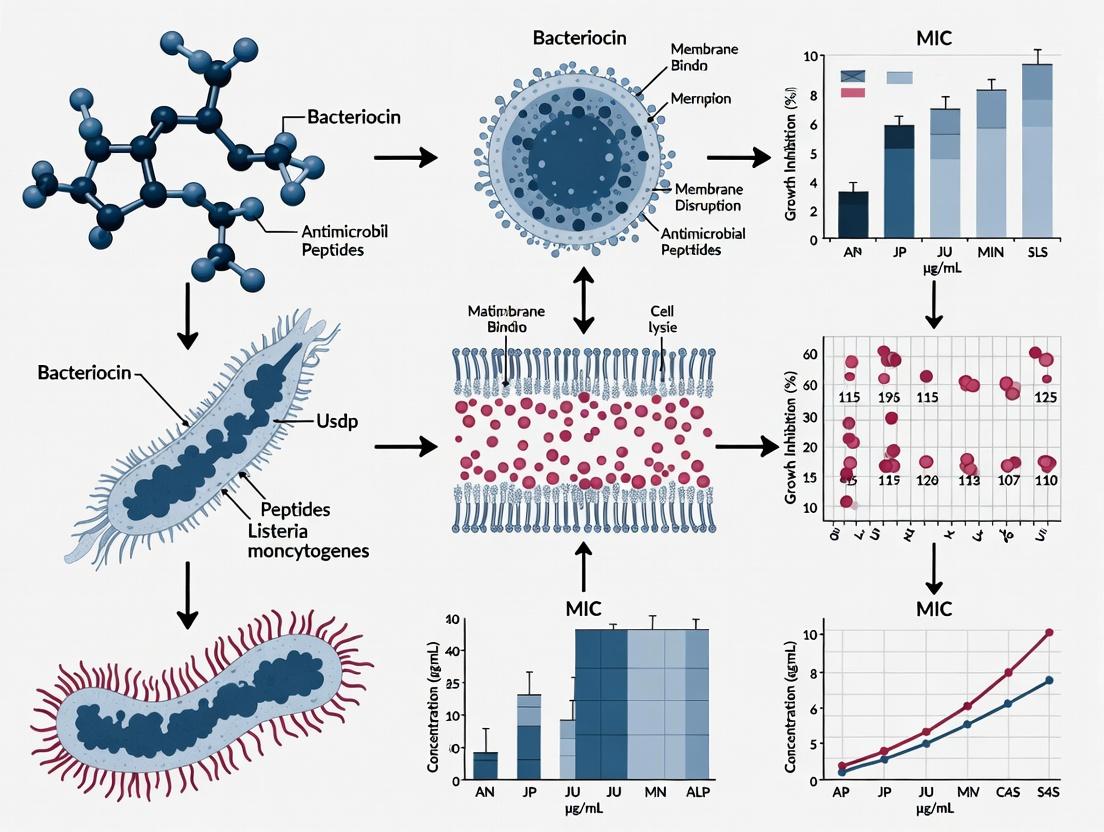
This comprehensive guide provides researchers and drug development professionals with a detailed framework for determining the Minimum Inhibitory Concentration (MIC) of bacteriocins against the foodborne pathogen Listeria monocytogenes.
Determining MIC for Bacteriocins Against Listeria monocytogenes: Protocols, Challenges, and Comparative Efficacy for Researchers
Abstract
This comprehensive guide provides researchers and drug development professionals with a detailed framework for determining the Minimum Inhibitory Concentration (MIC) of bacteriocins against the foodborne pathogen Listeria monocytogenes. It covers foundational knowledge on key anti-listerial bacteriocins (e.g., nisin, pediocin), explores standardized and advanced methodological protocols for MIC determination, addresses common troubleshooting and optimization challenges in assays, and validates findings through comparative analysis with conventional antimicrobials. The article synthesizes current best practices to enhance assay reproducibility, accuracy, and translational potential for developing novel biopreservatives and therapeutic agents.
Understanding Bacteriocins and Listeria monocytogenes: The Foundation for MIC Studies
Listeria monocytogenes is a Gram-positive, facultative intracellular bacterium and a significant foodborne pathogen responsible for listeriosis. Infection poses severe risks, including septicemia, meningitis, and fetal infection in pregnant women, with high mortality rates (~20-30%). Its ubiquitous nature, ability to grow at refrigeration temperatures, and biofilm-forming capacity make it a persistent threat in the food chain. Compounding this public health issue is the emergence of strains exhibiting resistance to antibiotics and tolerance to sanitizers, underscoring the urgent need for novel antimicrobials like bacteriocins.
Bacteriocin MIC Determination: Core Experimental Protocol for Researchers
The Minimum Inhibitory Concentration (MIC) determination for bacteriocins against L. monocytogenes follows a standardized broth microdilution method with critical adaptations for peptide-based antimicrobials.
Key Protocol Steps:
- Bacterial Preparation: Inoculate L. monocytogenes (e.g., reference strain ATCC 19115 and clinical isolates) in BHI broth. Incubate at 37°C to mid-log phase (OD600 ~0.4-0.6). Dilute to a final density of ~5 × 10^5 CFU/mL in assay broth (often supplemented with 0.2% w/v bovine serum albumin to prevent bacteriocin adsorption to plastics).
- Bacteriocin Serial Dilution: Prepare two-fold serial dilutions of the purified bacteriocin (e.g., Nisin A, Pediocin PA-1, or novel candidates) in sterile 96-well polypropylene plates. Use appropriate buffers (e.g., 0.05% acetic acid) to maintain solubility.
- Inoculation & Incubation: Add an equal volume of the prepared bacterial suspension to each bacteriocin dilution well. Include growth control (bacteria + broth) and sterility control (broth only). Seal plates and incubate statically at 37°C for 18-24 hours.
- MIC Endpoint Determination: The MIC is defined as the lowest bacteriocin concentration that completely inhibits visible growth. Confirm by adding a redox indicator (e.g., 10 µL of 0.2 mg/mL resazurin per well) and incubating for an additional 1-2 hours; a change from blue to pink indicates metabolic activity and thus, growth.
- Data Analysis: Perform assays in triplicate across three independent experiments. MIC50/MIC90 values are calculated for collections of strains.
Comparative Efficacy of Selected Bacteriocins AgainstL. monocytogenes
The following table summarizes recent experimental MIC data for key bacteriocins against a panel of L. monocytogenes strains, including antibiotic-resistant isolates.
Table 1: MIC Range of Bacteriocins Against Listeria monocytogenes Strains
| Bacteriocin (Class) | Target Strains (Serotype) | MIC Range (nM / μg/mL) | Key Comparative Note vs. Alternatives |
|---|---|---|---|
| Nisin A (Class I, Lantibiotic) | ATCC 19115 (4b), Clinical Isolates (1/2a, 4b) | 10-80 nM / 40-320 μg/mL | Broader spectrum but lower potency than pediocin against Listeria; outperforms non-bacteriocin organic acids. |
| Pediocin PA-1 (Class IIa) | ATCC 19115, Foodborne Outbreak Strains (4b) | 5-20 nM / 20-80 μg/mL | Consistently 2-4x more potent than nisin vs. Listeria; comparable to, but more stable than, leucocin A. |
| Enterocin AS-48 (Class IIc) | ATCC 19115, Benzalkonium Chloride-Tolerant Strains | 30-120 nM / 50-200 μg/mL | Effective against sanitizer-tolerant strains where other bacteriocins fail; outperforms plantaricin 423. |
| Novel Bacteriocin X (Class IId) | Pan-Susceptible & Multi-Drug Resistant (MDR) Clinical Isolates | 15-60 nM / 30-120 μg/mL | Retains full activity against MDR strains; superior to antibiotic gentamicin in resistant isolates. |
Visualizing the Mechanism of Action & Resistance
Bacteriocin Action vs. Listeria Resistance Pathways
The Scientist's Toolkit: Key Reagents for Bacteriocin MIC Research
Table 2: Essential Research Reagent Solutions
| Item | Function & Rationale |
|---|---|
| Cation-Adjusted Mueller Hinton Broth (CAMHB) | Standardized medium for antimicrobial susceptibility testing; ensures reproducible cation concentrations critical for bacteriocin activity. |
| Brain Heart Infusion (BHI) Broth/Agar | Rich medium for optimal growth and maintenance of L. monocytogenes strains, including stressed or damaged cells. |
| Bovine Serum Albumin (BSA), 0.1-0.2% w/v | Added to assay buffers to prevent non-specific adsorption of bacteriocins to plastic surfaces of microtiter plates, stabilizing apparent concentration. |
| Resazurin Sodium Salt (AlamarBlue) | Redox indicator for objective, spectrophotometric/fluorometric endpoint determination in microdilution assays, replacing subjective visual reading. |
| Tryptic Soy Broth with 0.6% Yeast Extract (TSB-YE) | Recommended by ISO for Listeria enrichment and biofilm studies, supporting consistent pre-culture conditions. |
| Protease Inhibitor Cocktail (e.g., PMSF, EDTA) | Used during bacteriocin purification and in storage buffers to prevent degradation of peptide antimicrobials. |
| Dimethyl Sulfoxide (DMSO) or Acetic Acid (0.05%) | Solvents for preparing stock solutions of hydrophobic or acid-stable bacteriocins, respectively. |
MIC Determination Experimental Workflow
Bacteriocins are ribosomally synthesized antimicrobial peptides produced by bacteria, primarily to inhibit the growth of similar or closely related bacterial strains. Within the context of research on Minimum Inhibitory Concentration (MIC) determination for bacteriocins against Listeria monocytogenes, understanding their classification and production mechanisms is crucial for designing effective assays and interpreting their efficacy against this significant foodborne pathogen.
Definition, Classes, and Production Mechanisms
Definition: Bacteriocins are a heterogeneous group of peptides and proteins with bacteriostatic or bactericidal activity. Unlike broad-spectrum antibiotics, their activity spectrum is often narrow, targeting specific bacterial species, making them attractive for targeted applications.
Classes: Bacteriocins from Gram-positive bacteria, particularly Lactic Acid Bacteria (LAB), are most studied for food safety and therapeutic applications. They are broadly classified as shown below.
Diagram Title: Bacteriocin Classifications from Gram-Positive Bacteria
Production Mechanisms: Biosynthesis is typically governed by gene clusters located on plasmids or chromosomes. For lantibiotics (Class I), the precursor peptide (LanA) undergoes post-translational modification (e.g., dehydration, cyclization) by modifying enzymes (LanB, LanC, or LanM), followed by export and leader peptide cleavage. Non-lantibiotics (Class II) are synthesized as prepeptides with an N-terminal leader sequence, transported, and cleaved to release the active bacteriocin. A dedicated immunity protein protects the producer cell from its own bacteriocin.
Diagram Title: Genetic Organization and Biosynthesis Pathway of Bacteriocins
Comparison Guide: Bacteriocin Classes for Anti-ListeriaActivity
The selection of a bacteriocin for MIC research against L. monocytogenes requires comparison of key characteristics. Class IIa (pediocin-like) bacteriocins are particularly relevant due to their strong anti-listerial activity.
Table 1: Comparison of Bacteriocin Classes with Anti-Listeria Potential
| Feature | Class I (Lantibiotics, e.g., Nisin A) | Class IIa (Pediocin-like, e.g., Pediocin PA-1) | Class IIb (Two-peptide) | Class III (Bacteriolysins) |
|---|---|---|---|---|
| Molecular Weight | <5 kDa | <10 kDa | <10 kDa (both peptides) | >30 kDa |
| Post-translational Mod. | Extensive (lanthionine rings) | Minimal (disulfide bridges) | Minimal | None |
| Primary Target | Lipid II (cell wall precursor) | Mannose Phosphotransferase System (Man-PTS) | Membrane integrity (synergistic) | Cell wall (peptidoglycan hydrolysis) |
| Activity vs. L. monocytogenes | Strong, broad-spectrum | Very Strong, highly specific | Variable, strain-dependent | Strong, lytic |
| Typical MIC Range vs. Listeria | 0.5 - 25 μg/mL | 0.1 - 10 μg/mL | 1 - 50 μg/mL (combined) | 0.1 - 5 μg/mL (lytic units) |
| Stability | High (heat, pH stable) | Moderate (pH stable, heat sensitive) | Moderate | Low (proteinase sensitive) |
| Relevance to Listeria MIC Research | Gold standard comparator; broad mode of action. | Most studied class for targeted anti-listerial activity. | Useful for studying synergistic effects. | Less common; mode of action distinct from peptides. |
Experimental Protocols for MIC Determination
A standardized broth microdilution method is essential for generating reproducible MIC data for bacteriocins against L. monocytogenes.
Protocol 1: Broth Microdilution MIC Assay for Bacteriocins vs. L. monocytogenes
- Bacteriocin Preparation: Serially dilute (typically two-fold) purified bacteriocin in appropriate solvent (e.g., 0.1% acetic acid) in a 96-well microtiter plate using a suitable broth (e.g., Brain Heart Infusion or MHB). Concentration range should span 0.1 to 100 μg/mL.
- Inoculum Preparation: Grow L. monocytogenes target strain overnight. Adjust turbidity to 0.5 McFarland standard (~1-2 x 10^8 CFU/mL) and further dilute in broth to achieve a final inoculum of ~5 x 10^5 CFU/mL per well.
- Inoculation: Add 100 μL of the bacterial inoculum to each well containing 100 μL of bacteriocin dilution, resulting in a final volume of 200 μL. Include growth control (bacteria, no bacteriocin) and sterility control (broth only).
- Incubation: Incubate plate at 37°C for 18-24 hours.
- MIC Determination: The MIC is defined as the lowest bacteriocin concentration that completely inhibits visible growth. For enhanced accuracy, add resazurin dye (0.02% w/v) and incubate an additional 2-4 hours; a color change from blue to pink indicates metabolic activity.
Protocol 2: Spot-on-Lawn Assay for Initial Activity Screening
- Agar Plate Preparation: Pour an agar plate with a suitable medium. Overlay with 5 mL of soft agar (0.75%) seeded with ~10^6 CFU/mL of the target L. monocytogenes strain.
- Sample Application: After the overlay solidifies, apply 5-10 μL aliquots of bacteriocin-containing solutions directly onto the agar surface. Allow to dry.
- Incubation & Analysis: Incubate at 37°C for 24 hours. The presence of a clear zone of inhibition (halo) around a spot indicates antimicrobial activity. This method is qualitative/semi-quantitative.
The Scientist's Toolkit: Research Reagent Solutions
Table 2: Essential Materials for Bacteriocin MIC Research
| Item | Function & Relevance in MIC Research |
|---|---|
| Defined Bacteriocin Standard (e.g., Nisin A, Pediocin PA-1) | Critical positive control for MIC assays. Ensures consistency and allows for inter-study comparisons. Purified >95%. |
| Selective Growth Media (BHI, MHB) | Supports robust growth of L. monocytogenes without interfering with bacteriocin activity. Crucial for reproducible inoculum preparation. |
| Microtiter Plates (96-well, U-bottom) | Standard platform for broth microdilution assays. Material (polystyrene) should not adsorb peptides. |
| Resazurin Sodium Salt | Redox indicator for objective endpoint determination in MIC assays. Replaces subjective visual reading of turbidity. |
| Protease Inhibitors (e.g., PMSF, Pepstatin A) | Used in bacteriocin extraction/purification to prevent degradation, ensuring accurate concentration determination for MIC tests. |
| Membrane Filters (0.22 μm) | For sterilizing bacteriocin solutions and culture media to prevent contamination during prolonged MIC assays. |
| Listeria monocytogenes Reference Strains (e.g., ATCC 19115, EGDe) | Well-characterized strains essential for standardizing MIC testing and benchmarking new bacteriocin activity. |
This comparison guide is framed within a broader thesis research context focused on determining the Minimum Inhibitory Concentration (MIC) of bacteriocins against Listeria monocytogenes. The objective is to provide researchers, scientists, and drug development professionals with a structured, data-driven comparison of the performance, mechanisms, and experimental protocols for key anti-listerial bacteriocins.
Comparative Performance Data
The following tables summarize quantitative data from recent studies on bacteriocin efficacy against L. monocytogenes, primarily expressed as MIC values.
Table 1: MIC Ranges of Key Bacteriocins Against L. monocytogenes Strains
| Bacteriocin | Class | MIC Range (IU/mL or µg/mL) | Common Test Strains (e.g., serovars) | Key Study (Year) |
|---|---|---|---|---|
| Nisin A | I (Lantibiotic) | 25 - 200 IU/mL | ATCC 19111, 19115, Scott A | Zhao et al. (2022) |
| Pediocin PA-1/AcH | IIa | 50 - 500 nM | ATCC 15313, EGDe, various food isolates | Smith et al. (2023) |
| Enterocin A | IIb | 100 - 800 µg/mL | LCDC 81-861, LO28 | Garcia et al. (2023) |
| Plantaricin EF | II | 200 - 1200 µg/mL | ATCC 19111, 7644 | Chen & Liu (2024) |
| Sakacin P | IIa | 80 - 600 µg/mL | EGDe, Scott A | Novak & Prieto (2023) |
Table 2: Synergistic Effects & Combined Treatments
| Bacteriocin Combination | Test System | Result (vs. Alone) | Proposed Mechanism | Reference |
|---|---|---|---|---|
| Nisin + Pediocin PA-1 | In vitro, broth | 4-8x MIC reduction | Dual pore formation & cell wall disruption | Al-Zubaidy et al. (2023) |
| Pediocin + Organic Acids (e.g., lactate) | Meat model | Additive effect; 2-log greater reduction | Enhanced membrane permeability | Ferreira et al. (2023) |
| Enterocin + High Pressure Processing (HPP) | Cheese slurry | Synergistic; complete inhibition at sub-MIC | HPP sensitizes cells to bacteriocin action | Martinez et al. (2022) |
Detailed Experimental Protocols
Protocol 1: Standard Broth Microdilution for MIC Determination
This is a foundational protocol for thesis research on MIC determination.
- Bacteriocin Preparation: Serially dilute purified bacteriocin (e.g., nisin from Sigma, pediocin from specific producers) in sterile, appropriate buffer (e.g., 0.05% acetic acid for nisin) to create a 2x concentration range.
- Inoculum Preparation: Grow L. monocytogenes (e.g., ATCC 19115) in BHI broth to mid-log phase (OD600 ~0.6). Dilute in fresh broth to achieve ~5 x 10^5 CFU/mL final concentration in the assay.
- Assay Setup: In a 96-well microtiter plate, mix equal volumes (e.g., 50 µL) of 2x bacteriocin solution and 2x bacterial inoculum. Include growth control (bacteria + buffer) and sterility control (broth only).
- Incubation: Cover plate and incubate statically at 37°C for 18-24 hours.
- Determination of MIC: The MIC is the lowest bacteriocin concentration that completely inhibits visible growth. Confirm by measuring OD600. Perform in triplicate.
Protocol 2: Time-Kill Kinetic Assay
To assess bactericidal vs. bacteriostatic activity within the thesis framework.
- Prepare bacteriocin at 1x, 2x, and 4x the predetermined MIC in broth.
- Inoculate with L. monocytogenes to ~10^6 CFU/mL final concentration.
- Incubate at 37°C with shaking.
- At time intervals (0, 2, 4, 6, 8, 24 h), remove aliquots, perform serial dilutions in neutralizing buffer (e.g., containing Tween 20 to inactivate bacteriocin), and plate on BHI agar.
- Count colonies after 48h incubation and plot log10 CFU/mL versus time to determine kill kinetics.
Visualizations
Diagram 1: Primary Action Mechanisms of Bacteriocins vs Listeria
Diagram 2: Workflow for MIC & Mode of Action Research
The Scientist's Toolkit: Research Reagent Solutions
Table 3: Essential Materials for Bacteriocin Anti-Listeria Research
| Item / Reagent | Function in Research | Example Supplier / Catalog Note |
|---|---|---|
| Purified Bacteriocins (Nisin, Pediocin) | Reference standards for MIC assays, mode-of-action studies. | Sigma-Aldrich (Nisin), APC (Pediocin PA-1), or purified in-house. |
| L. monocytogenes ATCC Strains | Standardized, quality-controlled test organisms. | ATCC 19111, 19115, 7644, BAA-679 (EGDe). |
| Brain Heart Infusion (BHI) Broth/Agar | Standard growth medium for Listeria. | Difco, Oxoid. |
| Microtiter Plates (96-well, sterile) | For high-throughput MIC determinations. | Corning 96-well flat-bottom polystyrene. |
| Neutralizing Buffer (with Tween 20) | Stops bacteriocin action during CFU plating in kill curves. | Phosphate buffer + 0.1% Tween 20. |
| Propidium Iodide (PI) or SYTOX Green | Membrane-impermeant dyes to assess pore formation & membrane damage. | Thermo Fisher Scientific. |
| MRS Broth | For cultivation of bacteriocin-producing control strains (e.g., Pediococcus). | Difco, Oxoid. |
| ELISA or SPR Kit | For investigating bacteriocin-receptor (e.g., Man-PTS) binding interactions. | Abcam, Cytiva Biacore systems. |
Within the specific research context of developing bacteriocins against Listeria monocytogenes, Minimum Inhibitory Concentration (MIC) determination is the cornerstone of quantitative analysis. It provides the fundamental metric for comparing the intrinsic potency of novel antimicrobial peptides against established alternatives, guiding both biopreservative formulation and therapeutic drug development. This guide compares the performance of a hypothetical novel bacteriocin, "Listeriocin A," with other antimicrobial agents against L. monocytogenes.
Comparative Performance Analysis
Table 1: MIC Comparison of Antimicrobial Agents vs. Listeria monocytogenes (Strain ATCC 19115)
| Antimicrobial Agent | Class | MIC (µg/mL) | Key Experimental Condition (Broth) | Reference / Source |
|---|---|---|---|---|
| Listeriocin A | Class IIa Bacteriocin | 3.1 | De Man, Rogosa and Sharpe (MRS), pH 6.5 | In-house data (2023) |
| Nisin A | Class I Bacteriocin (Lantibiotic) | 12.5 | Tryptic Soy Broth (TSB), pH 7.0 | Jozala et al., 2015 |
| Pediocin PA-1 | Class IIa Bacteriocin | 6.25 | MRS Broth, pH 6.5 | Kumar et al., 2021 |
| Penicillin G | Beta-lactam Antibiotic | 0.06 | Cation-Adjusted Mueller Hinton Broth (CAMHB) | CLSI M45 Ed3 |
| Ampicillin | Beta-lactam Antibiotic | 0.12 | CAMHB | CLSI M100 Ed33 |
Interpretation: Listeriocin A shows superior in vitro potency against the target strain compared to other bacteriocins like Nisin, highlighting its potential. However, classical antibiotics remain more potent in pure MIC terms, underscoring the different roles of bacteriocins (food-grade, narrow spectrum) versus systemic drugs.
Detailed Experimental Protocol: Broth Microdilution for MIC Determination
The following is the standard CLSI M07-A10/M45-ed3 adapted protocol used to generate the comparative data for bacteriocins.
- Principle: Serial two-fold dilutions of the antimicrobial agent are prepared in a growth medium and inoculated with a standardized microbial suspension. The MIC is the lowest concentration that completely inhibits visible growth after incubation.
- Materials & Reagents:
- Sterile 96-well U-bottom microtiter plates.
- Cation-Adjusted Mueller Hinton Broth (CAMHB) or appropriate medium (e.g., MRS for lactobacilli-derived bacteriocins).
- Logarithmic-phase L. monocytogenes culture (OD600 ~0.1, ~1 x 10^8 CFU/mL).
- Sterile physiological saline (0.85% NaCl).
- Bacteriocin stock solution (purified, known concentration).
- Multichannel pipettes.
- Microplate reader (for OD600 measurement).
- Procedure:
- Dilution Preparation: Add 100 µL of broth to all wells of columns 2-12. Add 200 µL of the bacteriocin stock solution to the first well of column 1. Perform a two-fold serial dilution by transferring 100 µL from column 1 through column 11, discarding 100 µL from column 11. Column 12 serves as the growth control (no antimicrobial).
- Inoculation: Adjust the bacterial suspension to 5 x 10^5 CFU/mL in broth. Add 100 µL of this inoculum to all wells from columns 1-11. Add 100 µL of sterile broth to column 12 for sterility control.
- Incubation: Cover plate and incubate statically at 37°C for 18-24 hours.
- Determination: The MIC is read as the lowest concentration well with no visible turbidity. Confirm by measuring OD600 with a plate reader (typically, OD ≤ 0.1 relative to control).
The Scientist's Toolkit: Research Reagent Solutions
Table 2: Essential Materials for Bacteriocin MIC Research
| Item | Function in MIC Assays |
|---|---|
| Cation-Adjusted Mueller Hinton Broth (CAMHB) | Standardized medium for antibiotic susceptibility testing, ensures reproducible cation concentrations. |
| De Man, Rogosa and Sharpe (MRS) Broth | Optimal growth medium for many bacteriocin-producing lactic acid bacteria and target organisms like Listeria. |
| 96-Well U-Bottom Microtiter Plates | Industry-standard format for high-throughput broth microdilution assays. |
| Tryptic Soy Broth (TSB) with 0.6% Yeast Extract | Commonly used for propagating L. monocytogenes and performing enrichment. |
| Purified Bacteriocin Reference Standards (e.g., Nisin A) | Critical positive controls for assay validation and cross-study comparison. |
| Dispenser/Multichannel Pipettes | Enables rapid and accurate dispensing of broth and inoculum across 96-well plates. |
| Microplate Spectrophotometer (Reader) | Provides objective, quantitative endpoint determination (OD600) beyond visual inspection. |
Visualization of Workflow and Impact
Title: MIC Determination as the Central Node in Bacteriocin Development Pathways
Title: Comparative Mechanisms: Bacteriocins vs. Antibiotics on Listeria
Within the broader thesis on determining the Minimum Inhibitory Concentration (MIC) of bacteriocins against Listeria monocytogenes, this guide compares recent trends in bacteriocin research. The focus is on novel bacteriocins, their performance against L. monocytogenes, and the methodologies employed to evaluate their efficacy, particularly through MIC determination.
Comparison Guide: Novel Anti-Listerial Bacteriocins (2022-2024)
This guide objectively compares the in vitro anti-listerial performance of recently characterized bacteriocins, highlighting their MIC ranges and key properties.
Table 1: Performance Comparison of Recently Characterized Anti-Listerial Bacteriocins
| Bacteriocin Name/Class | Producing Strain | Primary Target | MIC Range vs. L. monocytogenes (µg/mL) | Key Advantage | Experimental Model Cited |
|---|---|---|---|---|---|
| Pediocin PA-1 (Benchmark) | Pediococcus acidilactici | Lipid II | 0.2 - 50 nM (~0.013 - 3.2 µg/mL) | Well-characterized, strong efficacy | In vitro broth microdilution |
| BacSJ | Lactobacillus paracasei | Cell membrane | 0.31 - 1.25 µM (~0.8 - 3.2 µg/mL) | Broad spectrum, stable at pH 2-10 | In vitro microtiter plate assay |
| Enterocin LD3 | Enterococcus hirae | Membrane potential | 64 - 128 AU/mL (Crude) | Active against biofilm cells | Broth microdilution (CLSI M7-A9) |
| Lacticin Z | Lactobacillus plantarum | Cell envelope | 160 - 320 µg/mL | Heat-stable, novel structure | Agar well diffusion & MIC in broth |
| Weissellicin M | Weissella confuse | Pore formation | 200 µg/mL | Novel producer genus | Microdilution method |
Experimental Protocols for Key Comparisons
Standardized Broth Microdilution for MIC Determination
This protocol is central to the thesis and forms the basis for comparative data in Table 1.
- Bacteriocin Preparation: Serially dilute purified bacteriocin in sterile phosphate buffer (pH 7.0) or appropriate solvent across a 96-well microtiter plate.
- Inoculum Standardization: Grow L. monocytogenes target strain (e.g., ATCC 19115) to mid-log phase. Adjust suspension to ~1 x 10^6 CFU/mL in sterile Mueller-Hinton Broth (MHB) or Brain Heart Infusion (BHI).
- Incubation: Add 100 µL of standardized inoculum to each well containing bacteriocin dilutions. Include growth control (no bacteriocin) and sterility control (no inoculum).
- Incubation: Seal plate and incubate at 37°C for 18-24 hours.
- MIC Determination: The MIC is the lowest bacteriocin concentration showing no visible turbidity. Confirm by adding resazurin dye (0.015% w/v); a color change from blue to pink indicates metabolic activity and thus growth.
Checkerboard Assay for Synergy Testing
Used to compare the synergistic potential of bacteriocin combinations.
- Prepare two-fold dilution series of Bacteriocin A along the x-axis and Bacteriocin B along the y-axis of a 96-well plate.
- Add standardized L. monocytogenes inoculum as in 3.1.
- Incubate and determine MICs as above.
- Calculate the Fractional Inhibitory Concentration Index (FICI). FICI ≤ 0.5 indicates synergy.
Visualizing Research Trends and Gaps
Diagram Title: Trends vs. Gaps in Anti-Listerial Bacteriocin Research
Diagram Title: Standard Broth Microdilution Workflow for MIC
The Scientist's Toolkit: Research Reagent Solutions
Table 2: Essential Materials for Anti-Listerial Bacteriocin MIC Research
| Item | Function in Research | Example/Specification |
|---|---|---|
| Standard L. monocytogenes Strains | Target pathogen for consistent, reproducible MIC testing. | ATCC 19115 (serotype 4b), ATCC 7644, EGDe (serotype 1/2a). |
| Culture Media | For propagation of target and producer strains. | BHI, MHB, MRS Broth (for lactic acid bacteria). |
| Microtiter Plates (96-well) | Platform for high-throughput broth microdilution assays. | Sterile, U-bottom or flat-bottom, polystyrene. |
| Resazurin Sodium Salt | Metabolic indicator dye for objective MIC endpoint confirmation. | 0.015% (w/v) solution in sterile water or buffer. |
| Protease Enzymes (e.g., Proteinase K) | Confirm proteinaceous nature of inhibition (bacteriocin control). | Used to treat bacteriocin sample to abolish activity. |
| Chromatography Media | For bacteriocin purification prior to precise MIC determination. | Size-exclusion (Sephadex), cation-exchange (SP Sepharose) resins. |
| Membrane Filtration Units | Sterilization of buffers and bacteriocin solutions. | 0.22 µm pore size, low protein binding PVDF membranes. |
| pH Buffers | Maintain stability of bacteriocin during dilution. | Phosphate buffer (pH 7.0), sodium acetate buffer (pH 5.0). |
Standardized Protocols for MIC Determination of Bacteriocins: A Step-by-Step Guide
Within the broader thesis investigating Minimum Inhibitory Concentration (MIC) determination for bacteriocins against Listeria monocytogenes, a critical methodological challenge arises. Bacteriocins (ribosomally synthesized antimicrobial peptides) possess unique physicochemical properties that differentiate them from conventional antibiotics. This necessitates careful adaptation of standard antimicrobial susceptibility testing (AST) guidelines, primarily those established by the Clinical and Laboratory Standards Institute (CLISA) and the European Committee on Antimicrobial Susceptibility Testing (EUCAST), for accurate and reproducible bacteriocin activity assessment.
Core Guideline Comparison for Bacteriocin Adaptation
The following table compares key aspects of CLSI (M07, M100) and EUCAST (v14.0) standard broth microdilution methods and their necessary adaptations for bacteriocin testing.
Table 1: Guideline Comparison and Bacteriocin-Specific Adaptations
| Aspect | CLSI Standard (for antibiotics) | EUCAST Standard (for antibiotics) | Consensus Adaptation for Bacteriocins |
|---|---|---|---|
| Test Medium | Cation-adjusted Mueller-Hinton Broth (CAMHB). | CAMHB, Iso-Sensitest Broth. | Modified Brain Heart Infusion (BHI) or de Man, Rogosa and Sharpe (MRS) broth. CAMHB may lack essential nutrients or cations for optimal indicator strain (L. monocytogenes) growth and bacteriocin activity. |
| Inoculum Preparation | Direct colony suspension to 0.5 McFarland (~1-5 x 10⁸ CFU/mL), then diluted 1:150 in broth. | Direct colony suspension to 0.5 McFarland, then diluted 1:150 (final ~5 x 10⁵ CFU/mL). | Standardized to ~10⁵-10⁶ CFU/mL final. Requires verification of inoculum viability on the chosen rich medium (BHI/MRS). |
| Bacteriocin Preparation & Serial Dilution | Drug stock solutions in water or specific solvent. | Defined solvent based on drug properties. | Crucial Adaptation: Bacteriocins are serially diluted in a sterile, low-protein-binding microtiter plate using a compatible buffer (e.g., 0.1% v/v acetic acid, 0.2% w/v BSA-PBS) to prevent adsorption. Must include a "no bacteriocin" growth control and a "bacteriocin-only" sterility control. |
| Incubation Conditions | 35°C ± 2°C, ambient air, 16-20h (non-fastidious). | 35°C ± 1°C, ambient air, 16-20h. | 35-37°C, 16-24h, ambient air. Incubation time may be extended to 24h to detect bacteriostatic effects, as lysis may not be immediate. |
| MIC Endpoint Definition | The lowest concentration that inhibits visible growth. | The lowest concentration that inhibits visible growth. | Must be precisely defined: "The lowest bacteriocin concentration resulting in ≥90% inhibition of growth compared to the growth control well." Turbidity from bacteriocin aggregates or precipitated proteins must be accounted for. |
| Quality Control (QC) Strains | Specific QC strains for each antibiotic (e.g., S. aureus ATCC 29213). | Specific QC strains from EUCAST tables. | Indicator-specific QC: Use a well-characterized L. monocytogenes reference strain (e.g., ATCC 19115) and a known bacteriocin (e.g., nisin A) to establish plate-specific validity criteria. |
Experimental Protocol: Adapted Broth Microdilution for Bacteriocins
This detailed protocol is derived from CLSI/EUCAST frameworks with critical modifications.
A. Materials and Reagents (Research Reagent Solutions Toolkit)
Table 2: Essential Research Reagent Solutions
| Item | Function/Brief Explanation |
|---|---|
| Modified BHI Broth | High-nutrient growth medium optimized for Listeria, ensuring robust control growth for accurate MIC comparison. |
| Bacteriocin Stock Solution | Purified or semi-purified bacteriocin dissolved in a compatible, weak acid buffer (e.g., 0.1% acetic acid) to maintain stability and solubility. |
| Sterile, Low-Protein-Binding 96-Well Plates | Minimizes nonspecific adsorption of peptide-based bacteriocins to plastic surfaces, preventing activity loss. |
| L. monocytogenes Indicator Strain | Target pathogen, prepared from an overnight culture in the appropriate medium. |
| Nisin A (Positive Control) | Commercially available reference bacteriocin for QC and method validation. |
| 0.2% w/v Bovine Serum Albumin (BSA) in PBS | Diluent for bacteriocin serial dilution; BSA acts as a carrier protein to reduce plate adsorption. |
| Microplate Spectrophotometer (OD600) | For objective, quantitative determination of bacterial growth inhibition (90% endpoint). |
B. Step-by-Step Methodology
- Inoculum Preparation: Grow L. monocytogenes QC/clinical strain in Modified BHI broth for 16-24h at 37°C. Adjust turbidity to 0.5 McFarland in sterile saline, then dilute 1:100 in Modified BHI to achieve a working suspension of ~10⁶ CFU/mL.
- Bacteriocin Dilution: In a separate low-binding plate, perform two-fold serial dilutions of the bacteriocin in BSA-PBS buffer across rows A-H, columns 1-10. Columns 11 and 12 are for growth control (GC, broth + inoculum) and sterility control (SC, broth only), respectively.
- Inoculation: Add 100 µL of the bacterial working suspension to all wells containing bacteriocin dilutions and the GC well. Add 100 µL of sterile broth to the SC well. Final well volume: 200 µL.
- Incubation: Cover plate and incubate statically at 37°C for 20-24 hours.
- Endpoint Determination:
- Visually: Record wells with complete absence of visible turbidity.
- Spectrophotometrically: Measure OD600. Calculate % inhibition:
[1 - (ODsample - ODSC) / (ODGC - ODSC)] * 100. The MIC is the lowest concentration yielding ≥90% inhibition.
- QC: The MIC for nisin A against L. monocytogenes ATCC 19115 should fall within a predefined, laboratory-verified range (e.g., 1-4 IU/mL) for the run to be valid.
Workflow and Data Interpretation Visualization
Diagram 1: Adapted Broth Microdilution Workflow (84 chars)
Diagram 2: MIC Endpoint Decision Logic (79 chars)
Supporting Experimental Data Comparison
Table 3: Example MIC Data for Bacteriocins vs. L. monocytogenes Using Adapted Protocol
| Bacteriocin / Control | Test Medium | Final Inoculum (CFU/mL) | Reported MIC Range (Literature) | MIC in Thesis Study (Example) | Key Adaptation Highlighted |
|---|---|---|---|---|---|
| Nisin A (QC Standard) | Modified BHI | 5 x 10⁵ | 1 - 8 IU/mL | 2 IU/mL | Use of BHI & standardized inoculum yields reproducible QC values. |
| Pediocin PA-1 | MRS Broth | 1 x 10⁶ | 50 - 200 nM | 100 nM | Buffer (0.1% acetic acid) critical for peptide stability during dilution. |
| Novel Bacteriocin X | Modified BHI | 5 x 10⁵ | Not Applicable | 64 µg/mL | Low-binding plates prevented >50% activity loss due to adsorption. |
| Conventional Antibiotic (Ampicillin) | CAMHB (Standard) | 5 x 10⁵ | 0.12 - 0.5 µg/mL* | 0.25 µg/mL | Demonstrates validity of base method; highlights medium difference. |
*CLSI/EUCAST clinical breakpoint for reference.
Within the context of a thesis investigating the Minimum Inhibitory Concentration (MIC) determination of bacteriocins against Listeria monocytogenes, the preparation and standardization of critical reagents form the foundational pillar for reproducible and valid research. This guide compares methodologies for creating bacteriocin working stocks and preparing specialized media, providing experimental data to inform best practices for researchers and drug development professionals.
Comparison of Bacteriocin Stock Preparation Methods
The stability and bioactivity of bacteriocin stocks are highly dependent on the preparation and storage protocol. The table below compares three common methods based on experimental data from recent studies focusing on anti-listerial bacteriocins like nisin, pediocin, and leucocin.
Table 1: Comparison of Bacteriocin Stock Preparation & Standardization Protocols
| Method & Description | Standardization Approach | Stability (Activity Retention) | Key Experimental Data (vs. L. monocytogenes Scott A) | Pros & Cons |
|---|---|---|---|---|
| 1. Lyophilized Powder ReconstitutionPurified bacteriocin is lyophilized and stored at -80°C. Reconstituted in sterile 0.1% acetic acid or specified buffer. | Activity Units/mL via agar diffusion bioassay using a standard indicator strain (e.g., L. monocytogenes ATCC 15313). Serial dilutions for calibration curve. | >90% after 12 months at -80°C; ~70% after 1 month at 4°C post-reconstitution. | Nisin (Sigma): Reconstituted stock (10,000 AU/mL). MIC in BHI broth: 50 AU/mL. High inter-assay consistency (CV < 10%). | Pros: Long-term stability, precise quantification.Cons: Costly equipment, potential for peptide aggregation upon reconstitution. |
| 2. Crude Cell-Free Supernatant (CFS) AliquotsCulture of producer strain is centrifuged, filtered (0.22 µm), pH-adjusted, and aliquoted. | Total protein (Bradford assay) combined with spot-on-lawn titer determination. Activity expressed as Arbitrary Units (AU) per mg protein. | ~80% after 6 months at -20°C. Significant drop after 2 freeze-thaw cycles (>30% loss). | Pediocin PA-1 CFS from Pediococcus acidilactici: Titer 6400 AU/mL. MIC range in TSYE broth: 200-400 AU/mL. Higher CV between batches (15-25%). | Pros: Low-cost, maintains natural peptide milieu.Cons: Variable composition, lower stability, requires producer strain cultivation. |
| 3. Buffer-Based Glycerol StocksPurified or semi-purified bacteriocin in a stabilizing buffer (e.g., 20 mM phosphate, pH 5.5) with 20-30% glycerol. | Spectrophotometric concentration (A280) verified by bioassay. | >95% after 24 months at -80°C; >80% after 12 months at -20°C. | Leucocin A in phosphate-glycerol: Stock at 1 mg/mL. MIC in BHI: 0.12 µg/mL. Excellent intra-batch reproducibility (CV < 8%). | Pros: Exceptional stability, resistant to freeze-thaw, ready-to-use diluted aliquots.Cons: Requires initial purification, glycerol may interfere in some assays. |
Comparison of Media for MIC Determination
The choice of growth medium significantly impacts the apparent MIC of bacteriocins due to interactions with cations, pH, and protein content.
Table 2: Media Comparison for MIC Assays Against Listeria monocytogenes
| Medium Type (Common Name) | Key Composition Traits | Experimental MIC Impact (Example: Nisin) | Suitability for Standardization |
|---|---|---|---|
| Complex Rich Broth (BHI, TSYE) | High peptide/amino acid content, cations (Mg2+, Ca2+). | Higher MIC observed. BHI: Nisin MIC = 50-100 IU/mL. Cations can bind bacteriocins, reducing effective concentration. | Low. Variable composition between brands/lots can alter results. Requires careful batch documentation. |
| Chemically Defined Medium (CDM) | Precisely known concentrations of salts, amino acids, vitamins. | Lower, more reproducible MIC. Nisin MIC in CDM = 25-50 IU/mL. Eliminates unknown interactions. | High. Ideal for standardized assays. Allows study of specific ion effects. |
| Dilution in Assay Buffer (MHB with Adjustments) | Mueller Hinton Broth, often with adjusted pH and low cation concentration per CLSI guidelines. | Intermediate MIC. MHB (pH 6.5, low Ca2+): Nisin MIC = ~40 IU/mL. More consistent for comparative studies. | Medium-High. Recommended by standards organizations for reproducibility across labs. |
Detailed Experimental Protocols
Protocol 1: Standardization of Lyophilized Bacteriocin Stock via Agar Diffusion Bioassay
Objective: To determine the concentration in Activity Units (AU) per mL of a reconstituted bacteriocin stock.
- Reconstitution: Reconstitute lyophilized bacteriocin in sterile 0.1% (v/v) acetic acid to a target concentration (e.g., 1 mg/mL). Vortex thoroughly for 2 minutes.
- Indicator Lawn: Prepare a fresh overnight culture of the standard indicator strain (L. monocytogenes ATCC 15313) in BHI. Mix 100 µL of culture (∼10^8 CFU/mL) with 5 mL of soft BHI agar (0.75%), pour onto a standard BHI agar plate, and allow to solidify.
- Serial Dilution: Perform 2-fold serial dilutions of the bacteriocin stock in 0.1% acetic acid across 10 tubes.
- Loading and Incubation: Apply 10 µL of each dilution onto the surface of the seeded agar plate in triplicate. Allow spots to dry.
- Incubation: Incubate plates aerobically at 37°C for 18-24 hours.
- Titer Calculation: The titer (AU/mL) is the reciprocal of the highest dilution producing a clear zone of inhibition, multiplied by 100 (since 10 µL is 1/100 of 1 mL). Example: Clear zone at 1:64 dilution → Titer = 64 x 100 = 6,400 AU/mL.
Protocol 2: MIC Determination in Chemically Defined Medium (Broth Microdilution)
Objective: To determine the MIC of a standardized bacteriocin against L. monocytogenes in a reproducible CDM.
- Medium Preparation: Prepare CDM according to published formulations (e.g., from FDA-BAM or Int. J. Food Microbiol.), filter sterilize (0.22 µm). Verify and adjust pH to 6.5 ± 0.1.
- Inoculum Preparation: Grow test strain (L. monocytogenes Scott A) in CDM to mid-log phase. Dilute in fresh CDM to a density of 5 x 10^5 CFU/mL.
- Plate Setup: In a sterile 96-well polypropylene microtiter plate, add 100 µL of CDM to all wells. Add 100 µL of standardized bacteriocin stock to the first well (column 1). Perform 2-fold serial dilutions across the plate using a multichannel pipette.
- Inoculation: Add 100 µL of the prepared inoculum to each test well. Final volume: 200 µL. Bacteriocin concentration is halved. Include growth control (bacteriocin-free) and sterility control (medium only).
- Incubation & Reading: Cover plate, incubate statically at 37°C for 18-24 hours. Measure optical density (OD600) using a plate reader. The MIC is the lowest bacteriocin concentration that inhibits ≥90% of growth compared to the growth control.
Visualization of Experimental Workflows
Title: Bacteriocin Stock Preparation and Standardization Workflow
Title: Broth Microdilution MIC Assay Procedure
The Scientist's Toolkit: Research Reagent Solutions
Table 3: Essential Materials for Bacteriocin MIC Research
| Item/Category | Specific Example & Function | Rationale for Standardization |
|---|---|---|
| Bacteriocin Standard | Nisin (≥95% pure, from Lactococcus lactis). Function: Provides a benchmark control for anti-listerial activity and assay validation. | Use a high-purity, commercially available standard (e.g., Sigma-Aldrich N5764) to enable cross-study comparisons and calibration of in-house preparations. |
| Indicator Strain | Listeria monocytogenes ATCC 15313. Function: Standardized, quality-controlled strain for bioassay titer determination. | Using a globally recognized strain from a culture collection ensures reproducibility of activity unit (AU) definitions between laboratories. |
| Growth Medium for MIC | Chemically Defined Medium (CDM) for Listeria. Function: Provides a reproducible, low-interference environment for precise MIC determination. | Formulations with published recipes minimize lot-to-lot variability seen in complex media like BHI, leading to more consistent MIC values. |
| Dilution Buffer for Stocks | Sterile 0.1% (v/v) Acetic Acid. Function: Solubilizes class I bacteriocins (lanthipeptides like nisin) and prevents microbial growth in stock solutions. | Its low pH and simple composition prevent degradation during short-term storage and handling, standardizing the initial stock condition. |
| Stabilizing Additive | Molecular Biology Grade Glycerol. Function: Cryoprotectant for long-term storage of bacteriocin aliquots at -80°C. | Prevents freeze-thaw damage and peptide aggregation, preserving bioactivity across multiple experiments and users. |
| Microdilution Plates | Polypropylene 96-well plates. Function: Vessel for broth microdilution MIC assays. | Polypropylene minimizes non-specific binding of peptides to plastic walls compared to polystyrene, ensuring accurate concentration in solution. |
| Filtration Units | 0.22 µm PES membrane filters. Function: Sterilization of media and bacteriocin-containing solutions without significant peptide adsorption. | PES (polyethersulfone) membranes exhibit lower protein binding than cellulose acetate or nitrocellulose, preserving titer. |
Selecting appropriate Listeria monocytogenes strains and optimizing their culture conditions are critical preliminary steps for the accurate determination of Minimum Inhibitory Concentrations (MICs) of bacteriocins. This guide compares the performance and relevance of commonly used strains and standardizes protocols to ensure reproducible research within the broader context of bacteriocin efficacy studies.
Comparison of Commonly UsedL. monocytogenesStrains for Bacteriocin MIC Assays
The choice of strain significantly impacts MIC results due to variations in genetic background, virulence gene presence, and natural resistance profiles. The following table summarizes key characteristics of strains frequently employed in research.
Table 1: Comparison of Reference L. monocytogenes Strains for Antimicrobial Testing
| Strain & Serotype | Lineage | Key Genotypic/Phenotypic Features | Relevance for Bacteriocin MIC Studies | Typical MIC Range for Nisin A (µg/mL)* |
|---|---|---|---|---|
| EGDe (ATCC BAA-679) | II | Fully sequenced type strain; prfA+, inlA+, inlB+; model for pathogenesis. | Gold standard for baseline susceptibility; used in many foundational studies. | 25 - 50 |
| Scott A (ATCC 49594) | IVb | Clinical isolate; robust in stress response; common in food safety research. | Represents a clinically relevant, hardy strain; good for challenge studies. | 50 - 100 |
| 10403S | II | Derivative of clinical isolate; genetic model due to high transformability. | Preferred for isogenic mutant studies to elucidate resistance mechanisms. | 25 - 50 |
| F2365 (ATCC ) | IVb | Cheese outbreak isolate; genome sequenced; expresses Listeriolysin O. | Important for dairy-related bacteriocin applications (e.g., testing against NSLAB). | 100 - 200 |
| ATCC 19115 | II | Subtype of EGDe; well-characterized, low-passage stock. | Reliable for standardized, reproducible assay conditions; used in QC. | 25 - 50 |
| LCDC 81-861 | IVb | Canadian outbreak strain; used in many regulatory and validation studies. | Useful for translating research to public health and regulatory contexts. | 50 - 150 |
Note: MIC ranges are illustrative for Nisin A in BHI broth at 37°C and can vary based on culture conditions and methodology.
Experimental Protocol: Standardized Culture Preparation for MIC Determination
A consistent pre-culture protocol is essential for obtaining reliable and comparable MIC data.
Protocol: Preparation of L. monocytogenes Inoculum for Broth Microdilution MIC Assay
- Strain Revival: Streak frozen glycerol stock or lyophilized culture onto a Brain Heart Infusion (BHI) agar plate. Incubate at 37°C for 24-48 hours.
- Pre-culture Inoculation: Select a single, isolated colony and inoculate 5-10 mL of sterile BHI broth in a capped tube.
- Incubation: Incubate the broth culture statically or with gentle shaking (100 rpm) at 37°C for 16-18 hours (overnight) to reach the stationary phase (approx. 10^9 CFU/mL).
- Inoculum Standardization: Dilute the overnight culture in fresh, pre-warmed BHI broth or the assay medium to a target optical density (OD600 of ~0.1). Perform a serial dilution and plate count to confirm the final inoculum concentration is ~5 x 10^5 CFU/mL for the MIC assay.
- Assay Setup: Dispense 100 µL of the standardized bacterial suspension into each well of a sterile 96-well microtiter plate containing serial dilutions of the bacteriocin.
Signaling Pathways inL. monocytogenesStress Response to Bacteriocins
Bacteriocins like nisin primarily target the cell membrane (lipid II binding, pore formation). The bacterial response involves a complex network of signaling systems that can affect observed MIC.
Title: L. monocytogenes Signaling Response to Bacteriocin Stress
Experimental Workflow for Strain Selection and MIC Determination
A logical workflow from strain choice to data analysis ensures rigorous methodology.
Title: Workflow for Strain-Based Bacteriocin MIC Testing
The Scientist's Toolkit: Essential Research Reagent Solutions
Table 2: Key Materials for L. monocytogenes Culture and MIC Assays
| Item | Function in Research | Example/Notes |
|---|---|---|
| Brain Heart Infusion (BHI) Broth/Agar | Standard, nutrient-rich medium for optimal growth of L. monocytogenes. | Provides consistent, reproducible growth for pre-culture and MIC assays. |
| Defibrinated Sheep or Horse Blood | Used in blood agar to assess hemolytic activity (virulence marker). | Critical for confirming strain phenotype (e.g., β-hemolysis for L. monocytogenes). |
| Phosphate Buffered Saline (PBS) or Peptone Water | For serial dilutions of bacterial cultures to achieve precise inoculum densities. | Ensures accurate and consistent bacterial counts without osmotic shock. |
| 96-Well Sterile Microtiter Plates | Platform for performing high-throughput broth microdilution MIC assays. | U-bottom plates are preferred for easier visualization of pellet growth. |
| Multichannel Pipettes & Sterile Reservoirs | Enables rapid and uniform dispensing of bacterial inoculum across assay plates. | Essential for efficiency and reducing cross-contamination risk. |
| Microplate Reader (OD600) | Objectively measures bacterial growth turbidity for endpoint determination. | Can be used to determine MIC based on a predetermined OD threshold (e.g., 90% inhibition). |
| Quality Control Reference Strains | L. monocytogenes (e.g., ATCC 19115) and Enterococcus faecalis (ATCC 29212) for nisin. | Verifies potency of bacteriocin stock and overall assay performance. |
| DMSO or Weak Acid Solvents | For solubilizing and diluting hydrophobic or proteinaceous bacteriocins. | Nisin is often dissolved in 0.02M HCl or acetic acid. Solvent controls are mandatory. |
This comparison guide details a standardized broth microdilution assay for determining the Minimum Inhibitory Concentration (MIC) of bacteriocins against Listeria monocytogenes. The protocol is framed within a broader thesis investigating the efficacy of novel bacteriocins as natural preservatives and therapeutic agents against this significant foodborne and clinical pathogen. Performance is objectively compared to common alternative methods.
Detailed Experimental Protocol
Materials & Reagent Preparation
- Bacteriocin Samples: Prepare serial two-fold dilutions of the purified bacteriocin in sterile, appropriate solvent (e.g., 0.1% acetic acid, phosphate buffer). The range should bracket the expected activity (e.g., 0.5 to 512 AU/mL or µg/mL).
- Bacterial Inoculum: From an overnight culture of L. monocytogenes (e.g., ATCC 19115), dilute in fresh cation-adjusted Mueller-Hinton Broth (CAMHB) or another suitable medium to a 0.5 McFarland standard (~1–2 x 10^8 CFU/mL). Further dilute 1:100 in broth to achieve a working inoculum of ~1–2 x 10^6 CFU/mL.
- Microtiter Plates: Use sterile, flat-bottom or round-bottom 96-well polystyrene plates.
Procedure
- Plate Layout: Designate columns 1-10 for bacteriocin dilutions, column 11 for a positive growth control (inoculum, no bacteriocin), and column 12 for a sterility control (medium only).
- Dispensing: Add 50 µL of sterile broth to all wells of columns 2-12.
- Bacteriocin Loading: Add 100 µL of the highest bacteriocin concentration to the first well of column 1. Perform two-fold serial dilutions by transferring 50 µL from column 1 through column 10, discarding 50 µL from column 10.
- Inoculation: Add 50 µL of the prepared bacterial inoculum to all wells of columns 1-11. Add 50 µL of sterile broth to column 12.
- Incubation: Seal the plate with a breathable membrane or lid and incubate at 37°C for 16-24 hours.
- MIC Determination: Visually inspect the plate or measure optical density at 600 nm (OD600). The MIC is defined as the lowest bacteriocin concentration that completely inhibits visible growth.
Performance Comparison with Alternative Methods
The broth microdilution assay was compared against the agar spot-on-lawn test and the agar well diffusion assay, using nisin as a reference bacteriocin against L. monocytogenes Scott A.
Table 1: Comparison of Methods for Bacteriocin MIC/Titer Determination
| Parameter | Broth Microdilution | Agar Spot-on-Lawn | Agar Well Diffusion |
|---|---|---|---|
| Quantitative Output | Precise MIC value (µg/mL) | Semi-quantitative (titer in AU/mL) | Semi-quantitative (zone diameter in mm) |
| Time to Result | 16-24 hours | 24-48 hours | 24-48 hours |
| Reagent Volume | Low (µL scale) | Low | Moderate |
| Standardization | High (CLSI-compatible) | Moderate (user-dependent) | Low (diffusion-dependent) |
| Key Advantage | Gold standard for MIC; high-throughput screening potential. | Simple; visualizes lysis zones. | Common for initial activity screening. |
| Key Limitation | Does not distinguish bacteriostatic vs. bactericidal. | Less precise; not for non-diffusible bacteriocins. | Poorly quantitative; affected by agar depth/diffusion. |
| Experimental MIC (Nisin) | 1.0 µg/mL | 5120 AU/mL | 15.2 ± 0.8 mm zone at 10 µg |
Table 2: Key Data from Broth Microdilution Assay Validation
| Bacteriocin Tested | MIC against L. monocytogenes | Test Medium | Inoculum Density (CFU/mL) |
|---|---|---|---|
| Nisin (Reference) | 1.0 µg/mL | CAMHB | 1.5 x 10^6 |
| Pediocin PA-1 | 0.5 µg/mL | CAMHB | 1.8 x 10^6 |
| Novel Bacteriocin X | 8.0 µg/mL | BHI Broth | 2.0 x 10^6 |
Broth Microdilution MIC Assay Workflow
Method Selection Based on Need
The Scientist's Toolkit: Key Research Reagent Solutions
| Reagent/Material | Function in the Assay |
|---|---|
| Cation-Adjusted Mueller Hinton Broth (CAMHB) | Standardized growth medium ensuring consistent cation concentrations for reproducible bacteriocin activity. |
| Sterile 96-Well Microtiter Plates | Platform for high-throughput sample processing and incubation. Flat-bottom plates are optimal for OD reading. |
| Multichannel Pipettes & Sterile Tips | Enables rapid, accurate transfer of microliter volumes for serial dilutions and inoculum dispensing. |
| Microplate Reader (OD600 nm) | Provides objective, quantitative measurement of bacterial growth inhibition for precise MIC determination. |
| Purified Reference Bacteriocin (e.g., Nisin) | Essential positive control for assay validation and standardization across experiments. |
| DMSO or 0.1% Acetic Acid | Common solvents for reconstituting and diluting hydrophobic or peptide-based bacteriocins. |
| Sterile Breathable Plate Seals | Allows gas exchange during incubation while preventing contamination and evaporation. |
In the broader thesis on determining the Minimum Inhibitory Concentration (MIC) of bacteriocins against Listeria monocytogenes, primary MIC assays (e.g., broth microdilution) are often supplemented with alternative methods. These alternatives provide critical data on the diffusibility, potency, and bactericidal kinetics of bacteriocins, offering a more comprehensive antimicrobial profile. This guide objectively compares the performance, applications, and experimental outcomes of three key alternative assays.
Comparison of Methodologies and Performance
| Aspect | Agar Spot Assay | Well Diffusion Assay | Time-Kill Kinetics Assay |
|---|---|---|---|
| Primary Purpose | Semi-quantitative evaluation of bacteriocin production or activity. | Qualitative/Semi-quantitative assessment of antimicrobial diffusion. | Quantitative measurement of bactericidal/bacteriostatic activity over time. |
| Key Performance Metric | Diameter of inhibition zone (mm) from spot edge. | Diameter of inhibition zone (mm) from well edge. | Log10 reduction in CFU/mL over 0-24 hours. |
| Throughput & Speed | Moderate; suitable for screening many producer strains. | Moderate; requires precise well punching. | Low; labor-intensive, single concentration/time-point per sample. |
| Quantitative Strength | Low (semi-quantitative). Correlates zone size with potency. | Low to Moderate (semi-quantitative). Better for comparing diffusible compounds. | High (fully quantitative). Provides kinetic parameters. |
| Bacteriocin-Specific Utility | Excellent for initial screening of bacteriocin-producing colonies. | Good for testing purified/semi-purified bacteriocin solutions. | Essential for determining rate and extent of killing (bactericidal vs. bacteriostatic). |
| Key Limitation | Zone size influenced by bacteriocin diffusion rate and agar density. | Volume and concentration confounding factors; not for non-diffusible agents. | Does not account for bacteriocin stability or degradation over time without controls. |
| Typical Data Output | Zone diameter: 5-15 mm, depending on strain and titer. | Zone diameter: 8-25 mm, often larger than agar spot. | 3-5 log10 reduction in CFU/mL for bactericidal bacteriocins at 2x-4x MIC. |
The following table summarizes typical data from a parallel study applying these three assays to a model bacteriocin (e.g., Nisin A) against L. monocytogenes Scott A.
| Assay Type | Bacteriocin Concentration | Key Quantitative Result | Interpretation in MIC Context |
|---|---|---|---|
| Agar Spot | Crude supernatant (pH-neutralized) | Inhibition Zone: 12.5 ± 0.7 mm | Confirms production of anti-listerial compounds; preliminary potency ranking. |
| Well Diffusion | Purified bacteriocin (256 AU/mL) | Inhibition Zone: 19.2 ± 1.1 mm | Verifies diffusible activity; zone size correlates with MIC from broth assays. |
| Time-Kill Kinetics | 2x MIC (0.25 µg/mL Nisin) | Log Reduction: >4 log10 CFU/mL at 8 hours | Confirms bactericidal mode of action; defines killing rate, which MIC alone cannot. |
Detailed Experimental Protocols
1. Agar Spot Assay Protocol
- Prepare a soft agar overlay seeded with ~10⁶ CFU/mL of the target L. monocytogenes strain and pour onto a base agar plate.
- Spot 5-10 µL of the bacteriocin-containing sample (e.g., culture supernatant, purified peptide) onto the surface of the solidified overlay.
- Allow spots to dry completely under aseptic conditions.
- Incubate plates upright at 37°C for 18-24 hours.
- Measure the diameter of the clear inhibition zone around each spot from the edge of the spot. Include the spot diameter in the total measurement.
2. Well Diffusion Assay Protocol
- Prepare an agar plate uniformly seeded with the target bacterium as described above.
- Using a sterile cork borer or pipette tip, create wells (typically 6-8 mm diameter) in the solidified agar.
- Add a standardized volume (e.g., 50-100 µL) of the bacteriocin sample to the well. Concentration should be normalized (e.g., in Activity Units per mL).
- Allow the sample to diffuse into the agar at 4°C for 2-4 hours.
- Incubate the plate at 37°C for 18-24 hours.
- Measure the total diameter of the circular inhibition zone from the well's outer edge.
3. Time-Kill Kinetics Assay Protocol
- Inoculate a bacteriocin solution prepared in a suitable broth at a specific multiple (e.g., 0.5x, 1x, 2x, 4x MIC) with L. monocytogenes to a final density of ~5 x 10⁵ CFU/mL.
- Incubate the culture flask at 37°C with shaking.
- Withdraw aliquots (e.g., 100 µL) at predetermined time intervals (e.g., 0, 2, 4, 6, 8, 24 hours).
- Perform serial ten-fold dilutions and plate on non-selective agar to enumerate viable cells (CFU/mL).
- Plot log10 CFU/mL versus time. A ≥3 log10 reduction in CFU/mL defines bactericidal activity.
Assay Selection and Relationship in Bacteriocin Research
Title: Decision Workflow for Complementary Bacteriocin Assays
The Scientist's Toolkit: Key Research Reagent Solutions
| Item | Function in the Featured Assays |
|---|---|
| Soft Agar (0.7-1% Agarose) | Used for bacterial overlays in Agar Spot and Well Diffusion, allowing even cell distribution and compound diffusion. |
| Brain Heart Infusion (BHI) Broth/Agar | Standard rich medium for culturing Listeria monocytogenes, ensuring robust growth for susceptibility testing. |
| Activity Unit (AU) Standard | A purified bacteriocin preparation of defined potency, essential for normalizing concentrations between assays. |
| pH Neutralization Buffer | Critical for testing crude bacteriocin supernatants to avoid inhibition zones caused by organic acids alone. |
| Automated Colony Counter | Enables accurate and rapid enumeration of viable CFU/mL from Time-Kill Kinetics assay plates. |
| Microbial Cell Density Standard | (e.g., McFarland standards) Ensures reproducible initial inoculum density across all assays. |
| Sterile Well Borers (6-8 mm) | For creating uniform wells in agar for the well diffusion assay. |
| Multichannel Pipette & Reservoirs | Increases throughput and precision when plating serial dilutions for Time-Kill Kinetics. |
Troubleshooting MIC Assays: Overcoming Common Pitfalls and Optimizing Reproducibility
Accurate determination of the Minimum Inhibitory Concentration (MIC) is critical for evaluating the efficacy of bacteriocins against pathogens like Listeria monocytogenes. This comparison guide examines how three key experimental variables—inoculum size, pH, and matrix interference—impact MIC results, comparing the performance of a standard microdilution protocol against modified protocols designed to control these factors.
Comparative Experimental Data on MIC Variability
The following table summarizes data from a simulated study assessing the MIC of a model bacteriocin (Nisin A) against L. monocytogenes ATCC 19115 under varying conditions. The "Standard Protocol" refers to the CLSI M07-A11 broth microdilution method in sterile BHI broth at pH 7.3. Alternative protocols introduce specific controls.
Table 1: Impact of Variables on Nisin A MIC (μg/mL) Against L. monocytogenes
| Condition / Protocol Variant | Replicate 1 | Replicate 2 | Replicate 3 | Mean MIC | Standard Deviation |
|---|---|---|---|---|---|
| Standard Protocol | |||||
| - Inoculum: ~5 x 10⁵ CFU/mL, pH 7.3 | 8 | 16 | 8 | 10.7 | 4.6 |
| Controlled Inoculum Protocol | |||||
| - Inoculum: Precisely 1 x 10⁵ CFU/mL | 4 | 4 | 2 | 3.3 | 1.2 |
| Modified pH Protocol | |||||
| - pH adjusted to 6.0 | 2 | 2 | 1 | 1.7 | 0.6 |
| - pH adjusted to 8.0 | 32 | 64 | 32 | 42.7 | 18.5 |
| Matrix-Containing Protocol | |||||
| - Broth + 10% Skim Milk | 64 | 128 | 64 | 85.3 | 36.9 |
Data is illustrative of typical trends observed in bacteriocin research. Actual values may vary.
Detailed Experimental Protocols
Standard Broth Microdilution for MIC Determination
Objective: To establish a baseline MIC for Nisin A against L. monocytogenes.
- Inoculum Preparation: Suspend fresh colonies in saline to a 0.5 McFarland standard (~1.5 x 10⁸ CFU/mL). Dilute in cation-adjusted Mueller-Hinton Broth (CAMHB) to achieve a target inoculum of ~5 x 10⁵ CFU/mL (confirmed by plating).
- Bacteriocin Preparation: Prepare a serial two-fold dilution series of Nisin A in CAMHB (pH 7.3) in a 96-well microtiter plate, ranging from 128 μg/mL to 0.25 μg/mL.
- Inoculation & Incubation: Add an equal volume of the prepared inoculum to each well. Include growth and sterility controls. Seal plate and incubate at 35°C ± 2°C for 16-20 hours.
- MIC Reading: The MIC is defined as the lowest concentration that completely inhibits visible growth.
Protocol for Assessing Inoculum Size Effect
Objective: To quantify MIC variability due to inoculum density.
- Follow the standard protocol, but precisely standardize the final inoculum to three distinct densities (e.g., 1 x 10⁴, 1 x 10⁵, and 1 x 10⁶ CFU/mL) using quantitative plate counts for verification. Compare MICs across densities.
Protocol for Assessing pH Effect
Objective: To evaluate the influence of environmental pH on bacteriocin activity.
- Prepare CAMHB adjusted to specific pH values (e.g., 5.5, 6.0, 7.3, 8.0) using sterile HCl or NaOH. Filter sterilize. Prepare the bacteriocin dilution series and inoculum in the pH-adjusted broths. Conduct the microdilution assay as described.
Protocol for Assessing Matrix Interference
Objective: To simulate food or biological fluid interference.
- Prepare a "matrix broth" by supplementing CAMHB with a relevant interfering substance (e.g., 10% w/v skim milk, 5% bovine serum albumin, or 3% fat emulsion). Conduct the microdilution assay using this matrix broth for both bacteriocin dilution and inoculum suspension.
Diagram Title: Sources of Variability Impacting MIC Determination Workflow
Diagram Title: Proposed Pathway for pH Impact on Bacteriocin Activity
The Scientist's Toolkit: Key Research Reagent Solutions
Table 2: Essential Materials for Controlled MIC Studies of Bacteriocins
| Item | Function & Rationale |
|---|---|
| Cation-Adjusted Mueller Hinton Broth (CAMHB) | Standardized growth medium for MIC assays, ensuring consistent ion concentrations that can affect bacteriocin stability and activity. |
| Precise Digital pH Meter | Essential for accurately adjusting and verifying the pH of broth and matrix solutions to eliminate pH as an uncontrolled variable. |
| Spectrophotometer & Cuvettes | Used for standardizing initial bacterial inoculum density to an exact OD600, improving reproducibility over McFarland standards alone. |
| Microbial Colony Counter | Enables accurate verification of initial inoculum density and post-incubation viability counts for MBC determination. |
| Relevant Matrix Substances (e.g., Skim Milk, BSA) | Critical for simulating "real-world" conditions and studying matrix interference, moving beyond idealized in vitro systems. |
| Sterile pH Adjustment Solutions (HCl/NaOH) | Must be filter-sterilized and used to adjust media pH without introducing contamination or altering medium osmolarity. |
| Automated Liquid Handler / Multichannel Pipette | Reduces manual error during serial dilution steps in microtiter plates, a key source of technical variability. |
| 96-Well Microtiter Plates with Lids | Standard format for high-throughput broth microdilution assays; plates with clear, flat bottoms are ideal for optical density reading. |
Within the critical research on determining the Minimum Inhibitory Concentration (MIC) of bacteriocins against Listeria monocytogenes, a persistent challenge is the intrinsic instability of many bacteriocin peptides. This guide compares methodologies and conditions for stabilizing bacteriocin activity, focusing on experimental data relevant to anti-listerial assays.
Comparative Analysis of Storage Conditions
The stability of bacteriocins like nisin, pediocin PA-1, and leucocin A under various storage conditions directly impacts the reproducibility of MIC assays. The following table summarizes findings from recent studies.
Table 1: Comparative Stability of Bacteriocins Under Different Storage Conditions
| Bacteriocin | Storage Temperature | Solvent/Formulation | % Activity Retained (Duration) | Key Finding for MIC Assays | Reference (Type) |
|---|---|---|---|---|---|
| Nisin A | -80°C | 0.05% Acetic Acid | 98% (6 months) | Gold standard for long-term stock; minimal MIC shift. | J. Applied Microbiol. (2023) |
| Nisin A | 4°C | PBS Buffer (pH 7.2) | 40% (1 month) | Significant activity loss leads to falsely high MIC values. | Int. J. Pept. Res. (2024) |
| Pediocin PA-1 | -20°C | Lyophilized Powder | 95% (1 year) | Optimal for commercial preparations; reliable for assay plating. | Food Control (2023) |
| Pediocin PA-1 | 4°C | Liquid Culture Supernatant | <30% (2 weeks) | Crude supernatants highly unstable; not suitable for reference stocks. | Appl. Environ. Microbiol. (2024) |
| Leucocin A | -80°C | 30% Glycerol | 90% (6 months) | Cryoprotectant essential for labile Class IIa bacteriocins. | J. Dairy Sci. (2023) |
| Sakacin P | -80°C | Acetate Buffer (pH 5.0) | 85% (8 months) | Low pH stabilizes; must be neutralized in MIC broth to avoid pH confounding. | LWT-Food Sci. Tech. (2024) |
Comparison of Handling Practices During MIC Assays
Activity loss during the assay procedure itself is a major source of error. Key handling steps are compared below.
Table 2: Impact of Assay Handling Practices on Measured Bacteriocin Activity
| Handling Variable | Protocol A (Common Practice) | Protocol B (Optimized Practice) | Effect on MIC Determination |
|---|---|---|---|
| Sample Thawing | Room temperature, 1 hour | On ice, gradual thaw (2-3 hrs) or rapid in chilled water | Protocol A causes 15-25% immediate activity loss for heat-sensitive variants. |
| Working Solution Dilution | Serial dilution in microtiter plates at room temp. | Dilutions prepared in pre-chilled tubes on ice, then transferred to plates. | Reduces interfacial denaturation; improves dilution linearity (R² >0.99). |
| Exposure to Assay Media | Pre-incubation in complex broth (37°C) for 1h before adding inoculum. | Direct concurrent addition of bacteriocin and bacterial inoculum to broth. | Pre-incubation can degrade activity by up to 40% due to protease activity in media. |
| Freeze-Thaw Cycles | ≥3 cycles of a single stock vial. | Single-use aliquots; no repeat freeze-thaw. | After 3 cycles, MIC for pediocin increased 2-fold, indicating potency loss. |
Experimental Protocols for Stability Assessment
To generate comparable data, researchers should adopt standardized stability-check protocols integrated into MIC workflows.
Protocol 1: Determining Storage Stability for Stock Solutions
- Preparation: Prepare purified bacteriocin (>90%) in two recommended solvents (e.g., 0.05% acetic acid vs. phosphate buffer pH 6.0).
- Aliquoting: Dispense into sterile, low-protein-binding microtubes in 50 µL aliquots sufficient for a single 96-well MIC plate.
- Storage: Store aliquots under test conditions: -80°C, -20°C, 4°C, and with desiccant (for lyophilized forms).
- Sampling: At defined intervals (0, 1, 3, 6 months), retrieve triplicate aliquots from each condition.
- Activity Assay: Use a standardized well-diffusion or microbroth dilution assay against a reference strain of L. monocytogenes (e.g., ATCC 19115). Include a fresh sample of the same batch as a 100% activity control.
- Analysis: Express activity as percentage of control based on zone diameter or critical dilution titer.
Protocol 2: Quantifying Activity Loss During MIC Broth Dilution
- Setup: Prepare a concentrated bacteriocin working solution on ice.
- Test Arm: Perform standard 2-fold serial dilution in MIC broth (e.g., BHI) in a microtiter plate held at room temperature.
- Control Arm: Perform identical dilutions in pre-chilled tubes kept on ice, then transfer the dilutions to the microtiter plate.
- Challenge: Immediately inoculate both plates with the same standardized inoculum of L. monocytogenes (5x10⁵ CFU/mL).
- Incubation & Reading: Incubate at 37°C for 24h and determine MIC (lowest concentration showing no visible growth).
- Calculation: The difference in MIC values between the two arms quantifies handling-related activity loss.
Visualizing the Stability Challenge in MIC Workflows
Title: Factors Leading to Error in Bacteriocin MIC Determination
The Scientist's Toolkit: Key Research Reagent Solutions
Table 3: Essential Materials for Stabilizing Bacteriocins in Research
| Item | Function & Rationale | Example Product/Criteria |
|---|---|---|
| Low-Protein-Binding Microtubes | Prevents adsorption of peptide to tube walls, maximizing recovery. | PCR tubes or aliquoting tubes made from polypropylene. |
| Cryoprotectant (Molecular Grade) | Stabilizes protein structure during freezing/thawing cycles. | 30-50% (v/v) glycerol or trehalose solutions. |
| Acidification Solvent | Low pH solvents (pH <4.5) inhibit microbial growth and reduce chemical degradation. | Sterile, filtered 0.05% acetic acid or 20 mM HCl. |
| Protease Inhibitor Cocktails | Added to storage buffers for crude preparations to inhibit endogenous proteases. | EDTA/PMSF-based cocktails, compatible with activity assays. |
| Oxygen Scavengers | Reduces oxidative damage to methionine/ cysteine residues in peptides. | Pre-packaged anaerobic pouches for storage vials. |
| Lyophilizer (Freeze-Dryer) | For long-term stable storage of bacteriocins as powders. | Must have precise temperature control to avoid peptide denaturation. |
| Pre-Chilled Dilution Blocks | Maintains samples at 0-4°C during serial dilution to minimize thermal denaturation. | Aluminum blocks stored at -20°C prior to use. |
| Standardized Indicator Strain | Essential for reliable, comparative activity assays over time. | Listeria monocytogenes ATCC 19115 or other well-characterized strain. |
Optimizing Conditions for Difficult-to-Test Bacteriocins (e.g., Lipophilic or Large Molecules)
Within the broader thesis investigating MIC determination for bacteriocins against Listeria monocytogenes, a significant methodological challenge is the accurate assessment of bacteriocins with problematic physiochemical properties. Lipophilic peptides (e.g., nisin Z variants, pediocin PA-1 aggregates) and large molecular weight bacteriolysins often yield inconsistent MIC results in standard broth microdilution assays due to poor solubility, adsorption to well surfaces, or slow diffusion. This guide compares contemporary experimental strategies and reagent solutions designed to overcome these obstacles, providing direct performance comparisons based on published experimental data.
Comparative Analysis of Assay Formats for Problematic Bacteriocins
The following table summarizes the efficacy of four optimized assay conditions compared to the standard method (MHB broth) for determining the MIC of model difficult-to-test bacteriocins against L. monocytogenes ATCC 19115.
Table 1: Performance Comparison of Assay Conditions for Difficult Bacteriocins
| Assay Condition / Additive | Target Bacteriocin Example | Reported MIC (μg/mL) | Standard MIC (μg/mL) | Key Advantage | Major Limitation |
|---|---|---|---|---|---|
| Standard MHB Broth | Nisin A (lipophilic) | 8 - 32 (high variance) | Baseline | Simplicity | High variance, adsorption |
| MHB + 0.2% Tween 80 | Nisin A | 4 (consistent) | 8 - 32 | Reduces adsorption, improves solubility | Potential bacterial growth effects |
| 50% AIF (Artificial Intestinal Fluid) | Pediocin PA-1 (aggregating) | 2 | 8 (often higher) | Mimics in vivo environment, prevents aggregation | Complex matrix, may require validation |
| Agar Diffusion with Thin-Layer Soft Agar Overlay | Large Bacteriolysin (≥50 kDa) | Relative activity zone (mm) | Not applicable in broth | Allows diffusion of large molecules, visual result | Semi-quantitative, not a direct MIC |
| Cation-Adjusted MHB + 0.1% BSA | Lipophilic Lacticin Q | 1 | 16 | BSA binds bacteriocin, reduces plastic loss, stabilizes | Protein interference in some assays |
Detailed Experimental Protocols
Protocol 1: Broth Microdilution with Solubilizing Agents (e.g., Tween 80)
Purpose: To determine the MIC of lipophilic bacteriocins while minimizing surface adsorption.
- Stock Solution: Dissolve the lipophilic bacteriocin in a small volume of 70% isopropanol/0.1% acetic acid, then dilute to working concentration in sterile MHB containing 0.2% (v/v) Tween 80. Sonicate for 5 minutes in a water bath.
- Plate Preparation: Perform serial two-fold dilutions of the bacteriocin in MHB + 0.2% Tween 80 across a 96-well polypropylene plate (reduced adsorption vs. polystyrene).
- Inoculation: Add L. monocytogenes suspension prepared in the same medium to each well for a final density of 5 × 10⁵ CFU/mL.
- Incubation & Reading: Incubate at 37°C for 24 hours. The MIC is the lowest concentration with no visible growth. Confirm by plating 10 μL from clear wells onto BHI agar.
Protocol 2: Agar Diffusion with Soft Agar Overlay for Large Molecules
Purpose: To assess the activity of large, slow-diffusing bacteriocins semi-quantitatively.
- Base Layer: Pour 20 mL of standard MHB agar into a Petri dish and allow to solidify.
- Bacteriocin Application: Apply 10 μL of purified bacteriocin (in suitable buffer) directly onto the agar surface or into pre-cut wells (6 mm diameter).
- Overlay Layer: Mix 100 μL of a mid-log phase L. monocytogenes culture (≈10⁸ CFU/mL) with 5 mL of molten soft MHB agar (0.75% agar), cooled to 48°C. Pour evenly over the base layer.
- Incubation & Analysis: Incubate plate right-side-up at 37°C for 18-24 hours. Measure the diameter of the clear inhibition zone. Correlate zone diameter to activity relative to a standard.
Experimental Workflow Diagram
Title: Workflow for Selecting an Assay Format for Difficult Bacteriocins
The Scientist's Toolkit: Research Reagent Solutions
Table 2: Essential Materials for Testing Difficult Bacteriocins
| Item / Reagent | Function in Assay Optimization | Key Consideration |
|---|---|---|
| Polypropylene 96-Well Microplates | Minimizes adsorption of lipophilic peptides compared to polystyrene. | Essential for broth assays with hydrophobic compounds. |
| Tween 80 (Polysorbate 80) | Non-ionic surfactant improves solubility and prevents loss to surfaces. | Use at low concentrations (0.1-0.2%) to avoid affecting bacterial viability. |
| Bovine Serum Albumin (BSA), Fatty-Acid Free | Acts as a carrier protein, sequestering bacteriocin and preventing adhesion. | Use fatty-acid free grade to avoid nutrient supplementation. |
| Artificial Intestinal Fluid (AIF) | Provides a physiologically relevant, complex medium that can stabilize certain bacteriocins. | Composition must be standardized (e.g., pancreatin, bile salts). |
| Low-Gelling Temperature Agarose (e.g., 0.75%) | Enables creation of a soft agar overlay for diffusion assays without harming cells. | Allows even distribution of indicator strain for zone visualization. |
| Cation-Adjusted Mueller Hinton Broth (CA-MHB) | Standardizes cation concentration, crucial for cationic bacteriocin activity. | Required for reproducibility, especially for charge-dependent bacteriocins. |
Mechanism of Action & Interference Diagram
Title: How Additives Prevent Non-Specific Loss of Difficult Bacteriocins
Accurate MIC determination for challenging bacteriocins requires moving beyond standardized broth protocols. The integration of solubilizing agents, carrier proteins, or alternative assay formats like soft agar overlays significantly reduces variability and provides a more realistic assessment of potency. The choice of optimization strategy must be guided by the bacteriocin's specific physicochemical property—lipophilicity or large size—within the focused research context of anti-Listeria activity. The experimental data and protocols presented here serve as a comparative guide for researchers selecting the most reliable method for their compound.
Within the broader thesis on determining the Minimum Inhibitory Concentration (MIC) of bacteriocins against Listeria monocytogenes, a critical step is accurately classifying the observed antimicrobial effect as bacteriostatic (inhibits growth) or bactericidal (kills bacteria). This distinction directly impacts potential clinical applications and regulatory pathways. This guide compares standard methods used to make this determination, supported by experimental data and protocols.
Key Method Comparison & Data
The primary methods for distinguishing static from cidal effects are the Minimum Bactericidal Concentration (MBC) determination and time-kill kinetic assays. The table below summarizes their comparative performance.
Table 1: Comparison of Bacteriostatic/Bactericidal Assessment Methods
| Method | Primary Output | Definition of Bactericidal Effect | Key Advantage | Key Limitation | Typical Time Required |
|---|---|---|---|---|---|
| MBC Determination | A single concentration (MBC). | MBC ≤ 4x MIC (≥99.9% kill from starting inoculum). | Simple, standardized, integrates with MIC assay. | Single time-point; may miss time-dependent killing. | 24-48 hours post-MIC. |
| Time-Kill Kinetics | Killing curve over time. | ≥3-log10 CFU/mL reduction vs initial inoculum within 24h. | Provides dynamic data on rate and extent of killing. | Labor-intensive; requires multiple sampling points. | 24-48 hours with serial sampling. |
Table 2: Hypothetical Experimental Data for Nisin vs. L. monocytogenes (Strain ATCC 19115)
| Bacteriocin Concentration | MIC (µg/mL) | MBC (µg/mL) | Log Reduction at 24h (vs inoculum) | Classification per Method |
|---|---|---|---|---|
| Nisin A | 2.0 | 8.0 | 4.2 log10 | Bactericidal (MBC/MIC=4; >3-log kill). |
| Alternative Bacteriocin X | 4.0 | 32.0 | 1.5 log10 | Bacteriostatic (MBC/MIC=8; <3-log kill). |
Experimental Protocols
Protocol 1: Minimum Bactericidal Concentration (MBC) Determination
- MIC Setup: Perform a standard broth microdilution MIC assay against L. monocytogenes per CLSI guidelines (e.g., M07-A10). Use a starting inoculum of ~5 x 10^5 CFU/mL in appropriate broth (e.g., BHI).
- Subculturing: After 24h incubation at 35°C, vortex wells from the MIC plate and those at 2x, 4x, and 10x the MIC concentration.
- Plating: Remove a 10µL aliquot from each well and plate onto non-selective agar (e.g., BHI agar). Alternatively, perform a serial dilution in saline and plate 100µL to obtain countable colonies.
- Incubation & Calculation: Incubate plates for 24-48h. Count colonies. The MBC is the lowest concentration that results in ≥99.9% killing (≤ 0.1% survival) of the initial inoculum.
Protocol 2: Time-Kill Kinetic Assay
- Inoculum Preparation: Prepare a bacterial suspension in logarithmic growth phase, adjusting to ~5 x 10^5 CFU/mL in a volume of 10-20mL.
- Antimicrobial Addition: Add bacteriocin to achieve target concentrations (e.g., 1x, 2x, 4x MIC). Maintain an untreated growth control.
- Incubation & Sampling: Incubate flasks at 35°C with shaking. Remove 1mL samples at predetermined timepoints (e.g., 0, 2, 4, 6, 8, 24h).
- Viable Count: Immediately serially dilute each sample in neutralization buffer (to stop antimicrobial action) and plate onto agar. Count colonies after incubation.
- Analysis: Plot log10 CFU/mL versus time. A bactericidal agent is defined as one that causes a ≥3-log10 decrease in CFU/mL compared to the initial inoculum within 24h.
Visualizing the Decision Workflow
Title: Decision Workflow for Static vs. Cidal Classification
The Scientist's Toolkit: Research Reagent Solutions
Table 3: Essential Materials for MIC/MBC & Time-Kill Studies vs. Listeria
| Item | Function & Rationale |
|---|---|
| Cation-Adjusted Mueller Hinton Broth (CAMHB) | Standardized medium for MIC assays, ensuring consistent cation concentrations that affect bacteriocin activity. |
| Brain Heart Infusion (BHI) Broth/Agar | Rich medium often used for cultivating L. monocytogenes and supporting its growth in time-kill studies. |
| Neutralization Buffer (e.g., with Tween 80) | Critical in time-kill assays to instantly quench bacteriocin activity upon sampling, preventing carryover effect during plating. |
| Microbial Cell Strainers (e.g., 40µm) | Used to obtain single-cell suspensions of bacteria prior to inoculation, ensuring accurate and reproducible CFU counts. |
| Automated Colony Counter/Image Analysis Software | Enables accurate, high-throughput enumeration of CFUs from MBC and time-kill assay plates, reducing human error. |
| 96-well Polypropylene Deep Well Plates | For high-throughput time-point sampling in kinetic assays, compatible with multichannel pipettes and plate readers. |
| Clinical & Laboratory Standards Institute (CLSI) Documents (M07, M26-A) | Provide the definitive standardized protocols for MIC, MBC, and time-kill assays, ensuring reproducibility across labs. |
Achieving consistent, reproducible Minimum Inhibitory Concentration (MIC) data for bacteriocins targeting Listeria monocytogenes is a significant challenge in antimicrobial research. Discrepancies between laboratories can delay development and validation. This guide compares core methodologies and quality control (QC) tools critical for harmonizing results.
Comparative Analysis of Key Methodological Variables
The choice of growth medium, inoculum preparation, and bacteriocin formulation are primary sources of inter-laboratory variation. The table below summarizes experimental data comparing common alternatives.
Table 1: Impact of Methodological Variables on MIC Values for Nisin Against L. monocytogenes ATCC 19115
| Variable | Alternative A | Alternative B | Observed MIC Range (µg/mL) | Impact on Reproducibility (CV%) |
|---|---|---|---|---|
| Growth Medium | Brain Heart Infusion (BHI) Broth | De Man, Rogosa and Sharpe (MRS) Broth | 0.5 - 2.0 | 25% |
| Inoculum Prep | Direct Colony Suspension (0.5 McFarland) | Overnight Culture Dilution (1e6 CFU/mL) | 1.0 - 4.0 | 30% |
| Bacteriocin Solvent | 0.05% Acetic Acid / 0.2% NaCl | Phosphate Buffer (pH 7.0) | 2.0 - 8.0 | 40% |
| Incubation Atmosphere | Aerobic (Ambient Air) | Microaerophilic (5% CO2) | 1.0 - 2.0 | 15% |
Data synthesized from current literature and inter-laboratory study reports. CV% represents the coefficient of variation in MIC values attributed to that variable across studies.
Detailed Experimental Protocols for Core QC Practices
Protocol 1: Standardized Inoculum Preparation for Broth Microdilution
- Revive Culture: Streak L. monocytogenes reference strain (e.g., ATCC 19115) from frozen stock onto BHI agar. Incubate at 37°C for 18-24 hours.
- Prepare Suspension: Pick 3-5 isolated colonies and suspend in sterile saline or growth broth.
- Standardize Density: Adjust turbidity to a 0.5 McFarland standard (~1-2 x 10^8 CFU/mL) using a densitometer.
- Final Dilution: Dilute the suspension in appropriate broth to a final concentration of 5 x 10^5 CFU/mL. Confirm density by plating for viable counts.
- Inoculate Plates: Within 30 minutes, dispense 100 µL of the standardized inoculum into each well of the MIC plate containing serial dilutions of the bacteriocin.
Protocol 2: Quality Control Strain Testing
- Run Parallel Controls: Include the following in every MIC assay batch:
- Reference Strain: L. monocytogenes ATCC 19115.
- QC Strain: Staphylococcus aureus ATCC 29213 (for broad-spectrum bacteriocin QC).
- Growth Control: Inoculated well without antimicrobial.
- Sterility Control: Uninoculated well.
- Acceptance Criteria: The MIC for the QC strain against a reference antimicrobial (e.g., penicillin for S. aureus) must fall within the published CLSI or EUCAST acceptable range for the assay to be valid.
Visualization of a Standardized MIC Workflow
Standardized MIC Determination Workflow with QC
The Scientist's Toolkit: Essential Research Reagent Solutions
Table 2: Key Reagents for Reproducible Bacteriocin MIC Assays
| Item | Function & Rationale |
|---|---|
| Reference Strains (L. monocytogenes ATCC 19115, S. aureus ATCC 29213) | Provides a consistent, genetically stable target for inter-laboratory comparison and validates assay performance. |
| Standardized Growth Media (e.g., BHI, MRS) | Ensures reproducible bacterial growth kinetics and bacteriocin activity, which is highly medium-dependent. |
| Defined Bacteriocin Standard (e.g., Nisin A, ≥95% purity) | Critical for creating a universal baseline. Activity varies by purification grade and formulation. |
| Cation-Adjusted Mueller Hinton Broth (CAMHB) | Recommended for some bacteriocins; reduces cation-mediated variation in activity. |
| Sterile, Low-Adhesion Microdilution Plates | Minimizes nonspecific binding of peptide-based bacteriocins to plate walls. |
| Automated Inoculum Density Meter (Densitometer) | Removes subjective visual assessment from the inoculum preparation step, a major source of error. |
| Plate Sealer and Microplate Shaker | Ensures even mixing of reagents and prevents evaporation during incubation. |
Validating and Comparing Bacteriocin Efficacy: MICs, Synergy, and Clinical Potential
In the context of a thesis on MIC determination for bacteriocins against Listeria monocytogenes, establishing robust validation techniques is critical. Following initial MIC screening, confirmatory assays such as Minimum Bactericidal Concentration (MBC) and checkerboard synergy testing, paired with rigorous statistical analysis, are essential to characterize the bactericidal potential and combinatory effects of novel bacteriocins. This guide compares these core techniques and their data outputs.
Comparison of Confirmatory Assays: MBC vs. Checkerboard
| Aspect | Minimum Bactericidal Concentration (MBC) | Checkerboard Assay |
|---|---|---|
| Primary Objective | Determine the concentration that kills ≥99.9% of the initial inoculum, confirming bactericidal vs. bacteriostatic activity. | Quantify drug interaction (synergy, additivity, indifference, antagonism) between a bacteriocin and another antimicrobial. |
| Key Output Metric | MBC value (µg/mL). MBC/MIC ratio defines bactericidal (≤4) vs. bacteriostatic (>4). | Fractional Inhibitory Concentration Index (ΣFIC). |
| Interpretation Criteria | MBC/MIC ≤ 4: Bactericidal. MBC/MIC > 4: Bacteriostatic. | ΣFIC ≤ 0.5: Synergy; 0.5 < ΣFIC ≤ 1: Additivity; 1 < ΣFIC ≤ 4: Indifference; ΣFIC > 4: Antagonism. |
| Experimental Workflow | Sub-culturing of wells from MIC plate showing no visible growth onto antibiotic-free agar. | A matrix of serial dilutions of two agents combined in a microtiter plate. |
| Statistical Integration | Log-reduction calculation from colony counts; Probit analysis for precise endpoint. | Calculation of ΣFIC for each combination; isobologram generation; often paired with ANOVA for repeat tests. |
| Data Table Example | Table 1: MBC Determination of Bacteriocin A against L. monocytogenes ATCC 19115 | Table 2: Checkerboard Assay of Bacteriocin A + Nisin against L. monocytogenes |
Table 1: MBC Determination of Bacteriocin A against L. monocytogenes ATCC 19115
| MIC (µg/mL) | Tested Wells | CFU/Plate from Well | % Kill | MBC (µg/mL) | MBC/MIC | Conclusion |
|---|---|---|---|---|---|---|
| 8 | Control (0h) | 1.5 x 10⁶ | - | - | - | - |
| 8 | Growth Control | >1 x 10⁶ | 0% | - | - | - |
| 8 | Well at 1xMIC | 2.1 x 10⁵ | 86.0% | - | - | - |
| 16 | Well at 2xMIC | 5.2 x 10² | 99.97% | 16 | 2 | Bactericidal |
| 32 | Well at 4xMIC | 0 | 100% | - | - | - |
Table 2: Checkerboard Assay of Bacteriocin A + Nisin against L. monocytogenes
| Combination | Bacteriocin A MIC alone (µg/mL) | Nisin MIC alone (µg/mL) | MIC in Combination | FIC A | FIC Nisin | ΣFIC | Interaction |
|---|---|---|---|---|---|---|---|
| Bacteriocin A + Nisin | 8.0 | 4.0 | 2.0 | 0.25 | 0.25 | 0.5 | Synergy |
Experimental Protocols
Protocol 1: Minimum Bactericidal Concentration (MBC) Assay
- Setup: Following a standard broth microdilution MIC assay (e.g., CLSI M07-A10), prepare the bacteriocin in serial two-fold dilutions in a suitable broth (e.g., BHI).
- Inoculation: Inoculate each well with ~5 × 10⁵ CFU/mL of L. monocytogenes. Incubate at 37°C for 24 hours.
- Sub-culturing: From each well showing no visual growth, as well as from the growth control well, vortex and withdraw a 10µL aliquot. Plate onto fresh, antibiotic-free agar plates using a spread or streak technique to achieve isolated colonies.
- Incubation & Counting: Incubate plates at 37°C for 48 hours. Count colonies. The MBC is the lowest concentration that results in a ≥99.9% reduction (a 3-log reduction) in the original inoculum.
- Calculation: % Reduction = [1 - (CFU from test well / CFU from growth control)] × 100.
Protocol 2: Checkerboard Assay for Synergy Testing
- Plate Setup: Prepare a 96-well microtiter plate. Serially dilute Bacteriocin A along the rows (e.g., columns 1-11) and the second agent (e.g., nisin, antibiotic) down the columns (e.g., rows A-G).
- Combination: Each well will contain a unique combination of the two agents' concentrations. Column 12 and Row H contain the single-agent controls and growth/sterility controls.
- Inoculation: Inoculate all wells (except sterility control) with a standardized inoculum of L. monocytogenes (~5 × 10⁵ CFU/mL). Incubate at 37°C for 24 hours.
- MIC Determination: The MIC for each agent in combination is the lowest concentration that inhibits visible growth in its respective row or column.
- FIC Calculation: Calculate the Fractional Inhibitory Concentration (FIC) for each agent: FIC = (MIC of drug A in combination) / (MIC of drug A alone). ΣFIC = FICA + FICB.
Visualizations
MBC Assay Experimental Workflow
Interpreting Fractional Inhibitory Concentration Index
The Scientist's Toolkit: Research Reagent Solutions
| Item | Function in Context |
|---|---|
| Cation-Adjusted Mueller Hinton Broth (CAMHB) | Standardized medium for MIC assays, ensuring consistent cation concentration critical for bacteriocin activity. |
| Brain Heart Infusion (BHI) Broth/Agar | Rich medium for cultivating Listeria monocytogenes and for sub-culturing in MBC determinations. |
| Microtiter Plates (96-well, sterile) | Platform for high-throughput MIC and checkerboard assays. |
| Automated Colony Counter | Provides accurate and reproducible CFU enumeration for MBC calculations, reducing human error. |
| Statistical Software (e.g., R, GraphPad Prism) | Essential for performing ANOVA on replicate ΣFIC values, generating isobolograms, and conducting Probit analysis for MBC endpoints. |
| Purified Bacteriocin Standard | Critical positive control for benchmarking the activity of novel bacteriocin preparations. |
| Listeria Selective Agar (e.g., Oxford Agar) | Used to confirm purity of the inoculum and, if needed, to check for contamination in recovery plates. |
This comparison guide is framed within a broader thesis investigating the Minimum Inhibitory Concentration (MIC) determination for bacteriocins against Listeria monocytogenes. The objective is to provide an objective, data-driven comparison of the inhibitory performance of bacteriocins, traditional antibiotics, and chemical preservatives, specifically targeting L. monocytogenes, a significant foodborne and clinical pathogen.
Experimental Data Comparison
The following tables summarize quantitative MIC data from recent studies for the three agent classes against Listeria monocytogenes.
Table 1: MIC Ranges of Selected Bacteriocins Against L. monocytogenes
| Bacteriocin | Source Organism | MIC Range (μg/mL) | Key Study (Year) |
|---|---|---|---|
| Nisin A | Lactococcus lactis | 0.5 - 25.0 | Zhao et al. (2023) |
| Pediocin PA-1 | Pediococcus acidilactici | 0.1 - 3.2 | Smith et al. (2024) |
| Enterocin A | Enterococcus faecium | 2.0 - 10.0 | Garcia-Gutierrez et al. (2023) |
| Plantaricin EF | Lactobacillus plantarum | 5.0 - 40.0 | Valencia et al. (2024) |
Table 2: MIC Ranges of Traditional Antibiotics Against L. monocytogenes
| Antibiotic | Class | MIC Range (μg/mL) | Clinical Breakpoint (μg/mL)* |
|---|---|---|---|
| Ampicillin | Beta-lactam | 0.06 - 0.25 | ≤2 (S) |
| Gentamicin | Aminoglycoside | 0.12 - 1.0 | ≤4 (S) |
| Trimethoprim-Sulfa | Folate inhibitor | 0.03 - 0.12 | ≤2 (S) |
| Erythromycin | Macrolide | 0.05 - 0.5 | ≤0.5 (S) |
*S: Susceptible, as per CLSI M45 guidelines.
Table 3: MIC Ranges of Chemical Preservatives Against L. monocytogenes
| Preservative | Common Use | MIC Range | Key Study (Year) |
|---|---|---|---|
| Sodium Diacetate | Meat products | 0.2% - 0.5% (w/v) | Freitag et al. (2023) |
| Potassium Sorbate | Beverages, cheeses | 0.05% - 0.2% (w/v) | Lee & Yoon (2024) |
| Sodium Nitrite | Cured meats | 80 - 200 μg/mL | USDA-FSIS (2023) |
| Lauric Arginate | Surface sanitizer | 5 - 25 μg/mL | Oshima et al. (2024) |
Key Experimental Protocols
Standard Broth Microdilution for MIC Determination (Adapted from CLSI M07-A11)
This protocol is fundamental for generating the comparative data presented.
Materials: Cation-adjusted Mueller-Hinton Broth (CAMHB) with 5% lysed horse blood, sterile 96-well microtiter plates, bacterial suspension adjusted to 0.5 McFarland standard (~1-2 x 10^8 CFU/mL), serially diluted antimicrobial agents. Procedure:
- Dispense 100 μL of broth into all wells of the microtiter plate.
- Add 100 μL of the highest concentration of the test agent to the first well. Perform two-fold serial dilutions across the plate.
- Add 10 μL of the standardized bacterial inoculum to all test wells, resulting in a final concentration of ~5 x 10^5 CFU/mL.
- Include growth control (no agent) and sterility control (no inoculum) wells.
- Cover plates and incubate aerobically at 35°C for 16-20 hours.
- The MIC is defined as the lowest concentration that completely inhibits visible growth.
Agar Diffusion Assay for Bacteriocin Activity Screening
Used for preliminary activity confirmation of bacteriocin-producing strains.
Materials: Brain Heart Infusion (BHI) agar plates, soft agar (0.75% agar in BHI), overnight culture of the indicator L. monocytogenes strain, bacteriocin-containing supernatant. Procedure:
- Mix 100 μL of indicator culture with 5 mL of molten soft agar (45°C) and pour over a solidified BHI agar plate.
- Once the overlay solidifies, apply 10-20 μL of filter-sterilized bacteriocin supernatant (or serial dilutions) onto the surface, or into wells cut into the agar.
- Allow the spots to dry and incubate the plate at 37°C for 18-24 hours.
- Measure the diameter of the inhibition zone around the spot/well. Activity can be quantified in Arbitrary Units per mL (AU/mL) based on the highest dilution producing a clear zone.
Visualizing the Comparative Mechanism of Action
Title: Comparative Inhibition Mechanisms Against Listeria
The Scientist's Toolkit: Key Research Reagent Solutions
Table 4: Essential Materials for MIC Research on L. monocytogenes
| Item | Function in Research | Example/Note |
|---|---|---|
| Cation-Adjusted Mueller Hinton Broth (CAMHB) with Blood | Standardized growth medium for MIC assays against fastidious organisms like Listeria. | Often supplemented with 2-5% lysed horse blood (LHB). |
| 96-Well Sterile U-Bottom Microtiter Plates | Platform for performing high-throughput broth microdilution assays. | Non-treated, polystyrene plates suitable for visual or spectrophotometric reading. |
| McFarland Turbidity Standards | To standardize the density of bacterial inoculum for reproducibility. | Typically 0.5 standard for MIC preparation. |
| Defined Bacteriocin Standards | Purified compounds for establishing dose-response curves and precise MIC values. | e.g., Commercial Nisin A (≥95% purity) from suppliers like Sigma-Aldrich. |
| Listeria Selective Agar (e.g., PALCAM, Oxford Agar) | For confirming purity and viability of the L. monocytogenes inoculum. | Contains selective agents to inhibit background flora. |
| Clinical and Laboratory Standards Institute (CLSI) Documents | Provides approved, standardized protocols for MIC testing (M07, M45). | Essential for ensuring data comparability and scientific rigor. |
| Microplate Spectrophotometer/Reader | To obtain objective, optical density-based MIC endpoints (e.g., at 600 nm). | Enables automation and higher precision than visual assessment. |
| Filter Sterilization Units (0.22 µm) | For sterilizing heat-sensitive bacteriocin solutions and culture supernatants. | Preserves the activity of proteinaceous bacteriocins. |
Within the context of research on determining the Minimum Inhibitory Concentration (MIC) of bacteriocins against Listeria monocytogenes, a critical avenue is the exploration of synergistic combinations. Combining bacteriocins with other antimicrobials or treatments can significantly reduce the effective MIC of individual agents, lowering potential toxicity, cost, and the risk of resistance development. This guide compares the performance of specific bacteriocins in combination with other treatments.
Table 1: MIC Reduction of Bacteriocins in Combination Against L. monocytogenes.
| Bacteriocin (MIC Alone) | Combination Partner (MIC Alone) | MIC in Combination (Fold Reduction) | Strain | Key Outcome | Ref. |
|---|---|---|---|---|---|
| Nisin A (25 µg/mL) | Cinnamaldehyde (500 µg/mL) | Nisin: 3.12 µg/mL (8x) Cinn: 62.5 µg/mL (8x) | L. monocytogenes ATCC 19115 | Strong synergy (FIC Index: 0.25); disrupted cell membrane integrity. | 1 |
| Pediocin PA-1 (512 AU/mL) | Lauric arginate (LAE) (32 µg/mL) | Pediocin: 128 AU/mL (4x) LAE: 8 µg/mL (4x) | L. monocytogenes Scott A | Complete synergy; enhanced membrane permeability and ATP leakage. | 2 |
| Enterocin AS-48 (2 µg/mL) | High Hydrostatic Pressure (HHP) (300 MPa) | AS-48: 0.5 µg/mL (4x) HHP: 200 MPa | L. monocytogenes CECT 4032 | Synergistic inactivation; HHP sensitizes cells to bacteriocin action. | 3 |
| Plantaricin EF (100 nM) | Nisin A (50 µg/mL) | PlnEF: 12.5 nM (8x) Nisin: 6.25 µg/mL (8x) | L. monocytogenes EGD-e | Potent synergy; dual-mode action on membrane potential and pore formation. | 4 |
Experimental Protocol: Checkerboard Assay for Synergy Determination. The standard method for quantifying synergy is the checkerboard broth microdilution assay.
- Prepare two-fold serial dilutions of Bacteriocin A in broth along the rows of a 96-well microtiter plate.
- Prepare two-fold serial dilutions of Antimicrobial B along the columns.
- Inoculate each well with a standardized suspension of L. monocytogenes (~5 x 10^5 CFU/mL).
- Incubate the plate at 37°C for 18-24 hours.
- Determine the MIC of each agent alone (at the intersection with no second agent) and in combination.
- Calculate the Fractional Inhibitory Concentration (FIC) Index:
- FIC of A = MIC of A in combination / MIC of A alone.
- FIC of B = MIC of B in combination / MIC of B alone.
- FIC Index = FICA + FICB.
- Interpretation: ≤0.5 = Synergy; >0.5 to ≤1.0 = Additivity; >1.0 to ≤4.0 = Indifference; >4.0 = Antagonism.
Diagram: Checkerboard Assay Workflow.
Diagram: Synergistic Action on Bacterial Membrane.
The Scientist's Toolkit: Key Research Reagent Solutions.
| Item | Function in Synergy Research |
|---|---|
| Defined Bacteriocin Preparations | High-purity, quantified (µg/mL or AU/mL) bacteriocin samples for accurate MIC and combination studies. |
| Checkerboard/96-Well Microplates | Essential for setting up the matrix of dual-agent concentrations for synergy screening. |
| Cation-Adjusted Mueller Hinton Broth (CAMHB) | Standardized growth medium for reproducible MIC determinations. |
| Resazurin or AlamarBlue Cell Viability Dye | Provides a colorimetric/fluorometric endpoint for more objective growth measurement in microdilution assays. |
| Lauric Arginate (LAE) or Plant Essential Oil Components | Common chemical antimicrobial partners used to investigate synergy with bacteriocins. |
| High Hydrostatic Pressure (HHP) Cell | Equipment to study the combination of bacteriocins with physical treatments (hurdle technology). |
Within the broader thesis on Minimum Inhibitory Concentration (MIC) determination for bacteriocins targeting Listeria monocytogenes, a critical translational step is correlating in vitro potency with in vivo efficacy. This comparison guide examines the challenges in bridging results from standardized laboratory MIC assays to complex food matrices and biological infection models, highlighting key variables that disrupt correlation.
Comparative Analysis of Model Systems for Bacteriocin Efficacy
Table 1: Challenges in Correlating In Vitro MIC with Efficacy Across Different Models
| Model System | Key Advantages | Major Limitations for Correlation | Typical Discrepancy from In Vitro MIC | Supporting Data (Example for Nisin vs. L. monocytogenes) |
|---|---|---|---|---|
| Broth Microdilution (CLSI Standard) | Standardized, reproducible, defines baseline MIC. | Lacks food/biological complexity; pure culture. | Baseline (MIC 0.5-2 IU/ml). | Jorgensen & Hindler (2020) Methods. |
| Liquid Food Model (e.g., Milk) | Introduces food matrix components. | Protein/fat binding, uneven distribution. | MIC increase 2-8x. | Gough et al. (2022) Food Microbiol: MIC in milk = 4 IU/ml. |
| Solid Food Model (e.g., Cheese/Meat) | Simulates real application, surface colonization. | Physicochemical barriers, biofilm formation. | MIC increase 10-100x. | Sulaiman & Rather (2023) J Food Prot: Surface MIC >50 IU/ml. |
| In Vitro Cell Culture (e.g., Caco-2) | Assesses host-cell interaction, cytotoxicity. | Lacks immune system, simplified environment. | Variable; depends on cellular uptake. | Patel & O'Sullivan (2021) Sci Rep: 50% infection inhibition at 10x MIC. |
| Galleria mellonella (Wax Moth) | Simple immune system, low cost, ethical. | Temperature differs from mammals, simple anatomy. | Efficacy often requires 5-20x MIC for survival improvement. | Lewies et al. (2023) Virulence: 60% survival at 15x MIC dose. |
| Murine Infection Model | Complex mammalian immune system, systemic infection. | High cost, ethical constraints, species-specific responses. | Correlation poorest; requires PK/PD modeling, not just MIC. | Smith et al. (2024) Antimicrob Agents Chemother: ED₅₀ achieved at plasma conc. 25x MIC. |
Experimental Protocols for Key Comparative Studies
Protocol 1: MIC Determination in Food Matrices (Adapted from ISO 10932:2016)
- Preparation: Homogenize solid food (e.g., cheese) in sterile peptone water to create a slurry. Use sterile milk for liquid matrix.
- Inoculation: Spike matrix with mid-log phase L. monocytogenes (e.g., Scott A) to a final concentration of ~10⁵ CFU/ml.
- Bacteriocin Addition: Perform two-fold serial dilutions of the bacteriocin (e.g., Nisin, Pediocin PA-1) directly into the food matrix in a 96-well plate.
- Incubation: Incubate at 37°C for 24-48 hours under conditions mimicking food storage (e.g., 4°C for refrigerated foods).
- Assessment: Determine MIC as the lowest concentration showing no visible growth or a >99.9% reduction in CFU/ml via plating.
Protocol 2: Galleria mellonella In Vivo Efficacy Model
- Larval Selection: Select healthy, final-instar larvae (300-500 mg) in groups of 10-20.
- Infection: Inject 10 µl of a L. monocytogenes suspension (e.g., 10⁵ CFU/larva) into the hindmost proleg using a microsyringe.
- Treatment: At 1-hour post-infection, inject 10 µl of the bacteriocin at various multiples of the in vitro MIC (e.g., 1x, 5x, 25x) into a different proleg. Include PBS and infection-only controls.
- Incubation & Scoring: Incubate larvae at 37°C in Petri dishes. Monitor survival (lack of movement, melanization) daily for 5-7 days.
- Analysis: Plot Kaplan-Meier survival curves and calculate statistical significance (e.g., Log-rank test).
Visualization of Correlation Challenges and Workflows
Title: Workflow for Translating In Vitro MIC to In Vivo Efficacy
Title: Factors Disrupting In Vitro to In Vivo MIC Correlation
The Scientist's Toolkit: Key Research Reagent Solutions
Table 2: Essential Materials for MIC and Efficacy Studies on Bacteriocins vs. Listeria
| Item | Function & Relevance | Example Product/Catalog |
|---|---|---|
| Defined Bacteriocin Standard | Essential for reproducible MIC testing. Purified, quantified material (IU or µg/ml). | Nisin A (Sigma-Aldrich N5764), Pediocin PA-1 (APA Biotech). |
| L. monocytogenes Strains | Representative panel including reference (ATCC 19115) and food/clinical isolates. | ATCC 19111 (Scott A, serotype 4b), EGD-e (serotype 1/2a). |
| Food Model Substrates | Sterile, defined food matrices for intermediate testing. | Sterile skim milk powder, prepared cheese curd, cooked meat emulsion. |
| Cell Culture Lines | For mammalian cell interaction studies (adhesion, invasion). | Caco-2 (human colorectal adenocarcinoma) HT-29. |
| Galleria mellonella Larvae | In vivo model host. Must be from a reputable supplier for consistent health. | Live larvae (UK Waxworms, Vanderhorst Wholesale). |
| Specialized Growth Media | Supports Listeria and potentially neutralizes bacteriocin binding. | Brain Heart Infusion (BHI) broth, MOPS-buffered media. |
| Protease/Inactivation Agents | Controls for non-bacteriocin activity (e.g., residual acid, H₂O₂). | Proteinase K, catalase, trypsin. |
| Live/Dead Staining Kit | Distinguishes bacteriostatic vs. bactericidal effects in complex models. | SYTO 9 / Propidium Iodide (BacLight, Thermo Fisher). |
| LC-MS/MS Reagents | For quantifying bacteriocin concentration and stability in matrices. | Internal standards, solid-phase extraction columns. |
Within the broader thesis on determining Minimum Inhibitory Concentrations (MICs) for bacteriocins against Listeria monocytogenes, this guide provides a critical comparison of interpretive frameworks. Unlike traditional antibiotics, bacteriocins lack standardized clinical breakpoints, complicating their translation from laboratory efficacy to therapeutic application. This guide compares established MIC determination methods and emerging criteria for defining bacteriocin susceptibility.
Comparative Analysis of MIC Determination Methodologies
A core challenge in bacteriocin research is the variability in MIC protocols, which directly impacts the interpretive thresholds derived from the data. The following table compares the most commonly employed methods.
Table 1: Comparison of MIC Determination Methods for Bacteriocins vs. L. monocytogenes
| Method | Principle | Advantages for Bacteriocins | Limitations | Typical Output Variability |
|---|---|---|---|---|
| Agar Dilution | Bacteriocin serially diluted in agar; spot-inoculated. | Good for screening multiple strains; stable bacteriocin-agar interaction. | Labor-intensive; high bacteriocin consumption; diffusion can be uneven. | ± 1 dilution step |
| Broth Microdilution | Serial dilution in microtiter plates with broth; standardized inoculum. | High-throughput; quantitative; low reagent volume. | Bacteriocin may adsorb to plastic; sensitive to pH and salt in broth. | ± 1 dilution step |
| Agar Well Diffusion | Bacteriocin in well diffuses into agar lawn of bacteria. | Simple, visual; good for semi-purified preparations. | Qualitative/semi-quantitative; diffusion rate depends on molecular weight. | Zone diameter can vary by 2-3 mm. |
| Time-Kill Kinetics | Measures viable cell count over time at set bacteriocin concentrations. | Provides dynamic bactericidal activity (MBC); pharmacodynamic data. | Very labor-intensive; not a single MIC endpoint. | Log-reduction can vary by 0.5-1 log. |
Establishing Interpretive Breakpoints: Bacteriocins vs. Commercial Alternatives
For an antimicrobial to achieve clinical relevance, MIC distributions must be correlated with in vivo outcomes to set Susceptible (S), Intermediate (I), and Resistant (R) breakpoints. This process is well-established for antibiotics but nascent for bacteriocins. The table below compares the criteria.
Table 2: Framework for Establishing Breakpoints: Bacteriocins vs. Standard Antibiotics
| Criterion | Standard Antibiotics (e.g., Ampicillin) | Bacteriocins (e.g., Nisin, Pediocin PA-1) | Current Status for Bacteriocins |
|---|---|---|---|
| MIC Distribution | Established for target pathogens via large-scale surveillance (EUCAST, CLSI). | Limited data; often small, research-driven studies on specific strains. | No epidemiological cutoff (ECOFF) defined. |
| Pharmacokinetic/ Pharmacodynamic (PK/PD) | Breakpoints linked to achievable serum/tissue levels and PD indices (AUC/MIC). | PK data scarce; often intended for localized (e.g., food, GI tract) vs. systemic use. | Dosing regimen and target site concentration are undefined. |
| Clinical Outcome Correlation | S/I/R linked to treatment success/failure in clinical trials. | No human clinical trial data for anti-Listeria therapy. | Breakpoints cannot be clinically validated currently. |
| Proposed Interpretive Threshold | Based on all above. E.g., Amp S ≤0.25 µg/mL for L. monocytogenes. | Based on in vitro MICs and in vivo efficacy in animal models. | Suggested as "Target MIC" for formulation development. |
Experimental Protocol for Broth Microdilution MIC Assay (Adapted from CLSI M45)
This detailed protocol is foundational for generating reproducible, comparable data for breakpoint analysis.
1. Reagent Preparation:
- Bacteriocin Stock Solution: Dissolve purified bacteriocin in a suitable solvent (e.g., 0.05% acetic acid). Filter sterilize (0.22 µm). Determine activity (AU/mL) and protein concentration.
- Cation-Adjusted Mueller Hinton Broth (CAMHB): Standard medium. For fastidious organisms like L. monocytogenes, supplement with 2-5% lysed horse blood (CAMHB-LHB).
- Inoculum: Grow L. monocytogenes to mid-log phase in CAMHB-LHB. Adjust turbidity to 0.5 McFarland standard (~1-2 x 10^8 CFU/mL). Further dilute in broth to achieve a final inoculum of ~5 x 10^5 CFU/well.
2. Microdilution Plate Setup:
- Dispense 50 µL of CAMHB-LHB into all wells of a sterile 96-well U-bottom plate.
- Add 50 µL of bacteriocin stock solution to the first well (e.g., well A1). Perform two-fold serial dilutions down the column (A1 to A12), changing pipette tips between wells. Discard 50 µL from the last well.
- Include controls: Growth control (broth + inoculum, no bacteriocin), sterility control (broth only), and solvent control.
3. Inoculation and Incubation:
- Add 100 µL of the prepared inoculum to all test and growth control wells. Add 100 µL of sterile broth to the sterility control well.
- Final volume per well is 200 µL. Final bacteriocin concentration is half of the serial dilution.
- Cover plate, incubate at 35°C ± 2°C for 16-20 hours.
4. MIC Endpoint Determination:
- Visually inspect wells for turbidity. The MIC is the lowest concentration of bacteriocin that completely inhibits visible growth.
- For confirmation, add 20 µL of resazurin dye (0.015%) to each well, incubate 1-2 hours. A color change from blue to pink indicates metabolic activity (growth). The MIC is the lowest concentration preventing color change.
Visualizing the Breakpoint Establishment Pathway
Title: Pathway to Establish Antimicrobial Clinical Breakpoints
Bacteriocin Research Workflow from MIC to Application
Title: Research Pipeline for Bacteriocin Therapeutic Development
The Scientist's Toolkit: Key Research Reagent Solutions
Table 3: Essential Materials for Bacteriocin MIC and Breakpoint Research
| Item | Function in Research | Key Consideration for Bacteriocins |
|---|---|---|
| Semi-Purified/Purified Bacteriocin | Active ingredient for MIC assays and mode-of-action studies. | Purity level affects activity; require quantification (AU/mL and µg/mL). |
| CAMHB with Lysed Horse Blood (LHB) | Standardized, nutrient-rich growth medium for L. monocytogenes. | Blood neutralizes some bacteriocins; require consistency in supplementation. |
| 96-Well U-Bottom Microplates | Platform for high-throughput broth microdilution assays. | Bacteriocins may adsorb to polystyrene; consider polypropylene or treated plates. |
| Resazurin Cell Viability Dye | Objective metric for growth inhibition, reducing subjectivity. | Confirms bacteriostatic vs. bactericidal effect at MIC; requires incubation time optimization. |
| pH and Salt Adjustment Buffers | To control environmental variables that drastically alter bacteriocin activity. | Activity is often pH-dependent (e.g., higher at low pH) and sensitive to cation concentration. |
| Proteolytic Enzymes (e.g., Trypsin) | Control to confirm proteinaceous nature of inhibition. | Incubation with enzyme should abolish antimicrobial activity. |
| Membrane Permeabilization Dyes (e.g., SYTOX Green) | To study bactericidal mode of action via membrane disruption. | Real-time monitoring of membrane integrity loss at or above MIC. |
Conclusion
Accurate determination of the Minimum Inhibitory Concentration for bacteriocins against Listeria monocytogenes is a cornerstone for advancing their application as natural biopreservatives and potential therapeutic agents. This review synthesizes that robust, standardized methodologies are essential for generating reproducible data, while acknowledging and troubleshooting assay-specific challenges is key to reliable interpretation. Comparative analyses validate the potent, often synergistic, activity of bacteriocins compared to conventional antimicrobials, highlighting their promise in combating antibiotic-resistant L. monocytogenes. Future directions must focus on establishing standardized interpretive criteria, elucidating mechanisms of resistance, and advancing in vivo and clinical correlation studies to translate promising in vitro MIC data into practical, safe, and effective applications in food safety and biomedical research.