CRISPR Diagnostics in Action: A Guide to Rapid Antimicrobial Resistance Detection for Precision Therapy
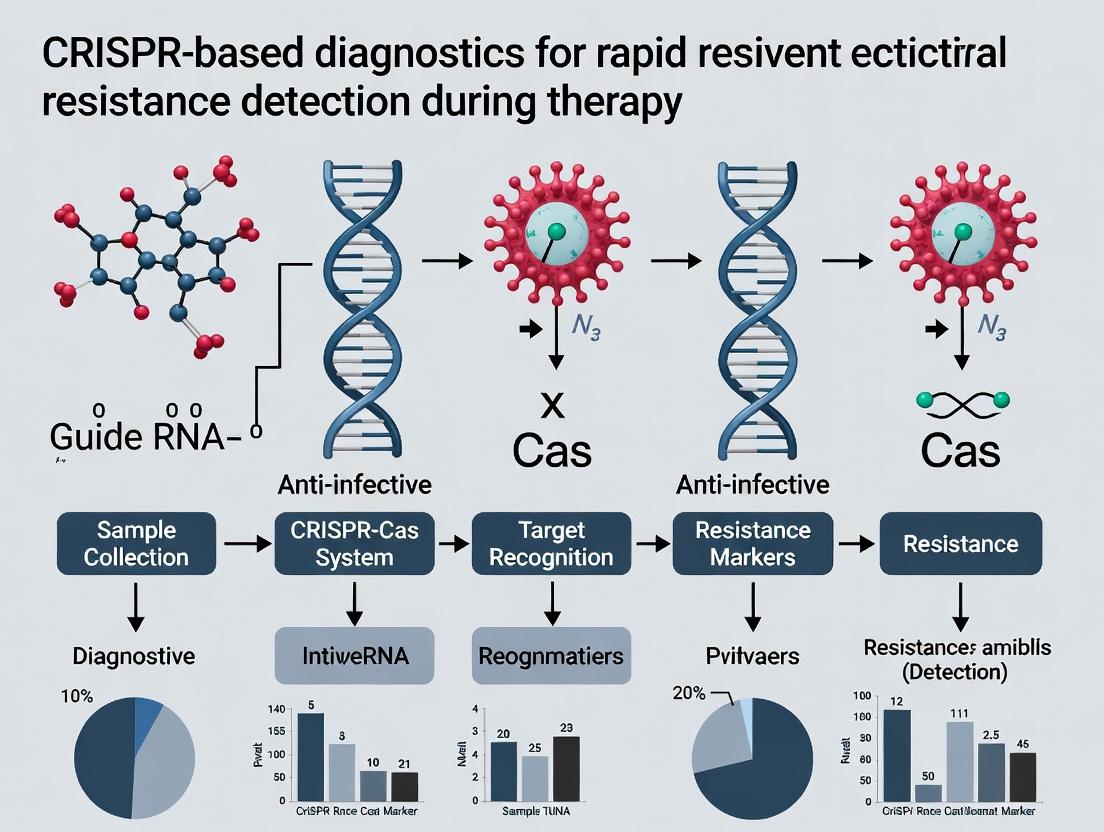
This article provides a comprehensive guide for researchers and drug development professionals on leveraging CRISPR-based diagnostics for the rapid detection of antimicrobial resistance (AMR) during therapy.
CRISPR Diagnostics in Action: A Guide to Rapid Antimicrobial Resistance Detection for Precision Therapy
Abstract
This article provides a comprehensive guide for researchers and drug development professionals on leveraging CRISPR-based diagnostics for the rapid detection of antimicrobial resistance (AMR) during therapy. We explore the foundational science behind platforms like SHERLOCK, DETECTR, and CARMEN, detail current methodologies for clinical sample processing and multiplexed detection, and offer troubleshooting strategies for common challenges such as off-target effects and sensitivity limitations. The article further compares CRISPR diagnostics against traditional culture and molecular methods, validating their clinical utility. The goal is to equip scientists with the knowledge to implement and optimize these cutting-edge tools for real-time, personalized treatment decisions and improved patient outcomes.
The CRISPR Revolution in Diagnostics: From Gene Editing to Rapid Resistance Detection
CRISPR-Cas systems have transcended their revolutionary role in gene editing to become powerful tools for molecular diagnostics. This application note focuses on the collateral cleavage activities of Cas12 and Cas13, and the target-binding capabilities of Cas9, for the rapid, sensitive, and specific detection of nucleic acids. Framed within a thesis on rapid antimicrobial resistance (AMR) detection during therapy research, these platforms enable near point-of-care identification of resistance markers, guiding timely treatment decisions and therapeutic development.
Cas12 (e.g., LbCas12a, AsCas12a): Upon binding to its target double-stranded DNA (dsDNA), it exhibits trans- or collateral cleavage activity, indiscriminately degrading surrounding single-stranded DNA (ssDNA) reporters. Cas13 (e.g., LwaCas13a, PsmCas13b): Upon binding to its target single-stranded RNA (ssRNA), it collaterally cleaves surrounding ssRNA reporters. Cas9 (e.g., SpCas9): Lacks collateral cleavage. Used in diagnostics primarily through its high-affinity target binding, which can be coupled with signaling modalities like FRET or steric hindrance of enzymes.
Quantitative Comparison of Key CRISPR-Cas Diagnostic Systems
Table 1: Comparative Analysis of Cas12, Cas13, and Cas9 for Diagnostics
| Feature | Cas12 (e.g., Cas12a) | Cas13 (e.g., Cas13a) | Cas9 (e.g., SpCas9) |
|---|---|---|---|
| Target Nucleic Acid | dsDNA or ssDNA | ssRNA | dsDNA (PAM-dependent) |
| Collateral Activity | ssDNA cleavage | ssRNA cleavage | None |
| Key Detection Method | Fluorescent ssDNA quenched reporter | Fluorescent ssRNA quenched reporter | Often coupled with PCR/amplification & FRET, HCR, or enzyme inhibition |
| Typical Assay Name | DETECTR, HOLMES | SHERLOCK | CAS-EXPAR, CRISPR-CHIP |
| Reported Sensitivity (aM-fM) | ~aM (with pre-amplification) | ~aM (with pre-amplification) | ~fM-pM (often with pre-amplification) |
| Time to Result | 30 mins - 2 hours | 30 mins - 2 hours | 1 - 3 hours |
| Key Advantage for AMR | Direct DNA detection, simple workflow | Superior for RNA viruses, gene expression markers | High specificity, versatile signal readouts |
| Primary Amplicon | RPA, PCR | RPA, RT-PCR, PCR | PCR, RPA, LAMP |
Application Notes for Rapid Resistance Detection
In the context of therapeutic research, rapid phenotypic resistance testing can be slow. CRISPR diagnostics target genotypic resistance markers (e.g., mecA in MRSA, katG mutations in TB, ESBL genes, SNP detection). This allows for:
- Therapy Guidance: Rapidly identify resistance from a patient sample, enabling swift antibiotic switching.
- Drug Development: Monitor the emergence of resistance mutations during preclinical in vivo therapy studies.
- Surveillance: Track the spread of specific resistance alleles in a research or clinical setting.
Workflow Integration: A typical workflow involves: 1) Sample collection (sputum, blood, bacterial culture), 2) Nucleic acid extraction/isothermal amplification (RPA/LAMP), 3) CRISPR-Cas detection, and 4) Readout (fluorescence lateral flow, spectrophotometer).
Detailed Experimental Protocols
Protocol 4.1: Cas12a-based Detection of a Bacterial Resistance Gene (e.g.,mecA)
Principle: Recombinase Polymerase Amplification (RPA) amplifies the mecA gene from extracted bacterial DNA. The amplicon activates Cas12a, which cleaves a fluorescent-quenched ssDNA reporter, generating a fluorescent signal.
Materials: See "The Scientist's Toolkit" (Section 6). Procedure:
- RPA Amplification:
- Prepare a 50 µL RPA reaction on ice: 29.5 µL rehydration buffer, 2.4 µL forward primer (10 µM), 2.4 µL reverse primer (10 µM), 5 µL template DNA, 10 µL magnesium acetate (280 mM), and 1 µL of RPA enzyme pellet.
- Mix thoroughly by pipetting, briefly centrifuge.
- Incubate at 37-42°C for 15-25 minutes.
- Cas12a Detection:
- Prepare a CRISPR detection mix (per reaction): 1.5 µL 10X NEBuffer 2.1, 1 µL LbCas12a (10 µM), 1 µL crRNA (10 µM, specific to mecA amplicon), 1 µL ssDNA Reporter (10 µM, e.g., FAM-TTATT-BHQ1), 4.5 µL nuclease-free water.
- Combine 9 µL of detection mix with 1 µL of the RPA product in a PCR tube or plate.
- Incubate at 37°C for 10-30 minutes in a real-time PCR machine or fluorometer, monitoring fluorescence (FAM channel) every minute.
- Analysis: A positive sample shows a time-dependent increase in fluorescence. A threshold time (Ct) can be determined.
Protocol 4.2: Cas13a-based SHERLOCK for RNA Resistance Marker Detection
Principle: Reverse Transcription-RPA (RT-RPA) amplifies an RNA target. The amplicon activates Cas13a, leading to collateral cleavage of an RNA reporter and fluorescence generation.
Materials: See "The Scientist's Toolkit" (Section 6). Procedure:
- RT-RPA Amplification:
- Prepare a 50 µL RT-RPA reaction: Use a commercial RT-RPA kit. Combine rehydration buffer, primers, template RNA, enzyme pellet, and magnesium acetate as per kit instructions.
- Incubate at 42°C for 20-30 minutes.
- Cas13a Detection:
- Prepare detection mix (per reaction): 1.5 µL 10X Cas13 buffer (200 mM HEPES, 1M NaCl, 100 mM MgCl2, pH 6.8), 1 µL LwaCas13a (10 µM), 1 µL crRNA (10 µM), 1 µL RNA Reporter (10 µM, e.g., FAM-UUUU-BHQ1), 0.5 µL RNase Inhibitor, 4 µL nuclease-free water.
- Combine 9 µL detection mix with 1 µL RT-RPA product.
- Incubate at 37°C for 10-30 minutes with real-time fluorescence monitoring.
Visualization of Workflows and Mechanisms
Diagram 1: Overall diagnostic workflow for AMR detection.
Diagram 2: Cas12a collateral cleavage mechanism.
Diagram 3: Cas9-based detection via enzyme inhibition/conjugation.
The Scientist's Toolkit: Key Research Reagent Solutions
Table 2: Essential Materials for CRISPR Diagnostics in AMR Research
| Reagent / Material | Function in the Experiment | Example Supplier / Cat. No. (Representative) |
|---|---|---|
| LbCas12a or AsCas12a Protein | The effector enzyme that provides specific target recognition and collateral ssDNA cleavage. | Integrated DNA Technologies (IDT), NEB |
| LwaCas13a or PsmCas13b Protein | The effector enzyme for specific RNA target recognition and collateral ssRNA cleavage. | Mammoth Biosciences, Sherlock Biosciences |
| crRNA (CRISPR RNA) | Provides target specificity by guiding the Cas protein to the complementary sequence. Must be designed for the target amplicon. | Synthesized commercially (IDT, Dharmacon) |
| ssDNA FQ Reporter (for Cas12) | Single-stranded DNA oligonucleotide with a fluorophore and quencher. Cleavage separates the pair, generating fluorescence. | HPLC-purified oligos (e.g., FAM-TTATT-BHQ1) |
| ssRNA FQ Reporter (for Cas13) | Single-stranded RNA oligonucleotide with a fluorophore and quencher (e.g., FAM-UUUU-BHQ1). | Synthesized commercially |
| RPA Kit (TwistAmp Basic) | Isothermal amplification kit for rapid, low-temperature DNA amplification. Critical for sensitivity. | TwistDx |
| RT-RPA Kit | Isothermal amplification kit that includes reverse transcriptase for RNA targets. | TwistDx |
| Fluorometer / Plate Reader | Instrument for real-time, quantitative measurement of fluorescence from the reaction. | BioTek, Thermo Fisher |
| Lateral Flow Strips (Optional) | For visual, endpoint readout by capturing cleaved reporter tags. | Milenia HybriDetect |
| RNase Inhibitor | Protects RNA reporters and targets from degradation in Cas13 assays. | Protector RNase Inhibitor (Roche) |
| NEBuffer 2.1 or Cas Reaction Buffer | Provides optimal ionic and pH conditions for Cas enzyme activity. | NEB, Supplier-specific |
The traditional timeline for antimicrobial susceptibility testing (AST)—often 24-72 hours from sample to result—creates a critical therapeutic decision gap. During this window, patients are treated empirically, potentially fueling resistance and worsening outcomes. This Application Note details protocols for integrating real-time, CRISPR-based diagnostic (CRISPR-Dx) platforms into therapy research paradigms, enabling rapid genotype-to-phenotype correlation and dynamic resistance monitoring.
Current Landscape: Quantitative Benchmarks of Conventional vs. Rapid Methods
Table 1: Performance Metrics of AST Methodologies
| Method Category | Typical Time-to-Result | Limit of Detection (CFU/mL) | Key Limitations for Research |
|---|---|---|---|
| Culture & Phenotyping (e.g., Broth Microdilution) | 16-48 hours | 10^5 | Slow, low throughput, reveals only dominant population resistance. |
| Molecular PCR/MT-PCR | 1.5-4 hours | 10^2 - 10^3 | Detects only known, pre-defined targets; no direct functional insight. |
| Whole Genome Sequencing (WGS) | 24-72 hours (analysis) | 10^2 - 10^6 (post-culture) | High cost, complex bioinformatics, results not real-time. |
| CRISPR-Cas Based AST (e.g., Specific High-sensitivity Enzymatic Reporter unlocking - SHERLOCK) | 30 mins - 2 hours | 10^0 - 10^2 | Direct from sample; enables tracking of low-frequency resistance variants during treatment. |
Core Protocol: RAPID-CRISPR forblaKPCDetection in Blood Culture Isolates
This protocol outlines a streamlined workflow for detecting the carbapenemase gene blaKPC from positive blood culture bottles, using the Cas12a system.
A. Materials & Reagent Preparation
- Lysis Buffer: (Tris-HCl 20 mM, EDTA 1 mM, Triton X-100 0.5%, pH 8.0). Disrupts bacterial cells.
- RPA Primers & Cas12a crRNA: Design primers for isothermal amplification of a blaKPC-specific region. crRNA is designed complementary to the amplified target.
- Cas12a Enzyme: Purified Lachnospiraceae bacterium Cas12a (LbCas12a).
- Fluorescent Reporter: 6-FAM/TTATT/3BHQ-1 ssDNA quenched fluorescent probe.
- RPA Dry Pellet Reagents: For isothermal amplification at 37-42°C.
B. Stepwise Procedure
- Sample Prep: Take 100 µL from a flag-positive blood culture bottle. Centrifuge at 10,000 x g for 2 min. Resuspend pellet in 50 µL Lysis Buffer, heat at 95°C for 5 min, then centrifuge. Use supernatant as template.
- RPA Amplification: Combine 2 µL of lysate with RPA pellet reagents, primers, and nuclease-free water to 50 µL. Incubate at 42°C for 15-20 minutes.
- CRISPR-Cas12a Detection: Prepare a 20 µL detection mix containing: 50 nM LbCas12a, 60 nM crRNA, 100 nM fluorescent reporter, and 1x reaction buffer. Add 2 µL of the RPA product. Mix briefly.
- Real-Time Fluorescence Measurement: Immediately transfer to a qPCR instrument or plate reader with temperature control (37°C). Measure FAM fluorescence every 30 seconds for 10-15 minutes.
- Analysis: A positive reaction shows an exponential increase in fluorescence signal within 5-10 minutes. Use a no-template control (NTC) and a known positive control to set thresholds.
C. Validation: Compare results with parallel WGS and broth microdilution for phenotypic confirmation.
Advanced Protocol: Multiplexed Detection of ESBL Genes in Urine for Clinical Trial Enrollment
This protocol enables rapid screening for extended-spectrum beta-lactamase (ESBL) genes (blaCTX-M, blaTEM, blaSHV) directly from patient urine to qualify patients for novel antibiotic trials.
A. Workflow Diagram
Diagram Title: Multiplex CRISPR Urine Test Workflow
B. The Scientist's Toolkit: Key Research Reagent Solutions
Table 2: Essential Reagents for Multiplexed CRISPR-AMR Detection
| Item | Function & Rationale |
|---|---|
| Lysozyme + Proteinase K | Enzymatic lysis combo for robust Gram-positive and Gram-negative bacterial DNA release from urine sediments. |
| Portable Isothermal Heater | Maintains constant 37-42°C for RPA/CRISPR reactions outside traditional lab settings (e.g., point-of-care trial sites). |
| Multiplex RPA Primer Mix | Pre-optimized, lyophilized primer sets for co-amplification of multiple AMR targets in a single reaction, reducing hands-on time. |
| Fluorescent & Lateral Flow Reporters | Dual-reporting system: fluorescent for quantitative endpoint in lab, lateral flow for binary yes/no result in clinical settings. |
| Synthetic gBlock Gene Fragments | Multi-target positive controls containing all AMR gene sequences of interest, essential for assay validation and quality control. |
Epidemiological Surveillance Protocol: High-Throughput Genotyping from Sputum
For tracking resistance gene spread in a hospital or trial network, a high-throughput 96-well plate version is employed.
- Automated Nucleic Acid Extraction: Use a 96-well plate format magnetic bead-based extraction system from sputum samples pre-treated with dithiothreitol (DTT).
- Plate-Based RPA: Dispense master mix containing primers for a panel of regionally relevant AMR genes (e.g., blaNDM, mecA, vanA) using a liquid handler.
- CRISPR Array Detection: Utilize a panel of Cas12a enzymes, each with a specific crRNA, in separate wells. Alternatively, use a single Cas12a with a pooled crRNA set and differentiate targets by spectrally distinct fluorescent reporters.
- Data Integration: Fluorescence data is automatically analyzed by software, generating a heatmap of resistance gene prevalence across samples and time.
Pathway & Rationale Diagram: Integrating Rapid Detection into Therapy Development
Diagram Title: Rapid AMR Detection in Drug Development Pathway
Integrating these CRISPR-Dx protocols into therapy research provides a powerful toolkit to close the detection gap. This enables precise patient stratification, real-time mechanistic monitoring of resistance evolution during treatment, and robust epidemiological data—fundamentally accelerating the development of effective antimicrobial therapies.
Application Notes
CRISPR-based diagnostic platforms have transformed the landscape of rapid, sequence-specific nucleic acid detection. Within the thesis context of detecting antimicrobial resistance (AMR) markers during therapy research, these tools offer the potential to guide treatment decisions in near real-time. SHERLOCK (Specific High-sensitivity Enzymatic Reporter unLOCKing) and DETECTR (DNA Endonuclease Targeted CRISPR Trans Reporter) are the two foundational systems, leveraging the collateral cleavage activities of Cas13 and Cas12, respectively.
SHERLOCK (Cas13) excels in detecting RNA targets, making it ideal for monitoring RNA-based resistance gene expression or viral pathogens. Its high specificity allows for single-nucleotide polymorphism (SNP) discrimination, crucial for identifying point mutations conferring resistance. DETECTR (Cas12) is optimized for DNA target detection, directly identifying resistance genes in bacterial genomic DNA or plasmids. Both systems employ a reporter molecule (quenched fluorescent oligonucleotide) that is cleaved upon target recognition, generating a fluorescent signal.
Emerging Multiplexing Systems address a critical need in AMR surveillance: simultaneous detection of multiple resistance determinants. Platforms like CARMEN (Combinatorial Arrayed Reactions for Multiplexed Evaluation of Nucleic acids) and mCARMEN scale SHERLOCK's capability to thousands of tests, while LEOPARD (Leveraging Engineered tracrRNAs and On-target DNAs for Parallel RNA Detection) enables multiplexing within a single reaction tube. For therapy research, this allows comprehensive resistance profiling from a single patient sample.
The following table summarizes the core quantitative characteristics of these platforms:
Table 1: Quantitative Comparison of CRISPR Diagnostic Platforms
| Platform | Cas Enzyme | Primary Target | Reported Sensitivity | Time-to-Result | Key Advantage for AMR Detection |
|---|---|---|---|---|---|
| SHERLOCK | Cas13a (LwCas13a) | RNA | ~2 aM (attomolar) | ~60-90 minutes | SNP discrimination; RNA expression |
| DETECTR | Cas12a (LbCas12a) | DNA | ~aM to fM (femtomolar) | ~30-60 minutes | Direct DNA detection; rapid result |
| CARMEN/mCARMEN | Cas13 | RNA/DNA | Comparable to SHERLOCK | 2-4 hours (setup) | Ultrahigh multiplexing (10,000+ tests) |
| LEOPARD | Cas13 | RNA | NA | ~2 hours | In-tube multiplexing with tracrRNA engineering |
Detailed Protocols
Protocol 1: SHERLOCK Assay for Detecting a Bacterial Resistance Gene Transcript (e.g.,mecAmRNA)
Objective: To detect and quantify expression of the mecA gene, conferring methicillin resistance in Staphylococcus aureus, from a bacterial culture sample.
Materials & Reagents:
- Sample: RNA extracted from bacterial culture (during drug exposure).
- RPA Reagents: TwistAmp Basic kit (rehydration buffer, magnesium acetate).
- Cas13 Detection Mix: LwCas13a enzyme, specific crRNA for mecA target, synthetic RNA reporter (quenched fluorescent, e.g., FAM-UU-BHQ1), RNase inhibitor.
- Buffer: SHERLOCK detection buffer (HEPES, MgCl₂, DTT, etc.).
- Equipment: Fluorescent plate reader or lateral flow strip reader.
Procedure:
- Isothermal Amplification (RPA):
- Prepare a 50 µL RPA reaction with extracted RNA, primers specific to mecA, and rehydration buffer.
- Incubate at 37-42°C for 20-30 minutes.
- Cas13 Detection Reaction:
- Prepare a 20 µL detection mix containing: 200 nM LwCas13a, 200 nM mecA-crRNA, 500 nM RNA reporter, 1x detection buffer.
- Add 5 µL of the RPA product to the detection mix.
- Incubate at 37°C in a plate reader, monitoring fluorescence (FAM channel) every 2 minutes for 60 minutes.
- Analysis:
- A positive signal is defined by a fluorescence curve exceeding a threshold (typically 3 standard deviations above the mean of no-template controls).
- For lateral flow readout, use a biotin-labeled reporter and incubate reaction on a strip; visualize test and control lines.
Protocol 2: DETECTR Assay for Detecting a Plasmid-Borne Resistance Gene (e.g.,blaKPC)
Objective: To detect the presence of the carbapenemase gene blaKPC directly from purified bacterial DNA.
Materials & Reagents:
- Sample: Genomic DNA from bacterial isolate.
- RPA Reagents: As in Protocol 1.
- Cas12 Detection Mix: LbCas12a enzyme, specific crRNA for blaKPC, ssDNA reporter (e.g., HEX-ssDNA-BHQ2).
- Buffer: DETECTR reaction buffer.
- Equipment: Real-time fluorometer or lateral flow setup.
Procedure:
- Isothermal Amplification (RPA):
- Prepare a 50 µL RPA reaction with DNA template and blaKPC-specific primers. Incubate at 37°C for 30 min.
- Cas12 Detection Reaction:
- Prepare a 20 µL detection mix: 100 nM LbCas12a, 100 nM blaKPC-crRNA, 500 nM ssDNA reporter, 1x NEBuffer 2.1.
- Add 2 µL of the RPA product to the detection mix.
- Incubate at 37°C, monitoring HEX fluorescence in real-time for 30 minutes.
- Analysis:
- A positive result shows rapid increase in fluorescence. Time-to-positivity can be semi-quantitatively correlated with target concentration.
Diagrams
The Scientist's Toolkit: Key Research Reagent Solutions
Table 2: Essential Materials for CRISPR Diagnostics in AMR Research
| Reagent/Material | Function/Description | Example/Catalog |
|---|---|---|
| Recombinant Cas13a (LwCas13a) | RNA-targeting effector enzyme; backbone of SHERLOCK. Collaterally cleaves RNA reporter upon target binding. | Custom expression/purification or commercial suppliers (e.g., IDT, BioLabs). |
| Recombinant Cas12a (LbCas12a) | DNA-targeting effector enzyme; backbone of DETECTR. Collaterally cleaves ssDNA reporter upon target binding. | Available from multiple enzyme vendors (e.g., NEB, Thermo Fisher). |
| Synthetic crRNA | Guide RNA that programs Cas13/Cas12 specificity. Designed to match target resistance gene sequence. | Synthesized commercially (IDT, Sigma) with 3´ direct repeat and target-specific spacer. |
| Fluorescent-Quenched Reporter Oligo | Signal-generating molecule. Cleavage separates fluor from quencher. Cas13: polyU-RNA; Cas12: short ssDNA. | FAM-uuuuu-BHQ1 (for Cas13); HEX-ssDNA-BHQ2 (for Cas12). |
| Isothermal Amplification Kit (RPA) | Pre-amplifies target nucleic acid to attomolar sensitivity without thermal cycler. Essential for sensitivity. | TwistAmp Basic or Liquid kits (TwistDx). Alternative: LAMP kits. |
| Nucleic Acid Extraction Kit | Prepares pure RNA/DNA from complex samples (sputum, blood culture). Critical for assay robustness. | Quick-RNA/DNA kits (Zymo), QIAamp (Qiagen), or magnetic bead-based protocols. |
| Lateral Flow Strip (Optional) | For visual, instrument-free readout. Uses biotin- and FAM-labeled reporters. | Milenia HybriDetect strips or similar. |
| Positive Control Synthetic Target | Synthetic gBlock or RNA transcript of the target resistance gene. Essential for assay validation and QC. | Custom gene fragments from IDT or Twist Bioscience. |
Application Notes: CRISPR-Cas Diagnostics for Antimicrobial Resistance (AMR) Detection
The integration of CRISPR-Cas systems into diagnostic platforms represents a paradigm shift for rapid, specific detection of key AMR determinants during therapeutic research. This approach directly addresses the critical need to guide antibiotic stewardship and novel drug development by identifying genetic resistance markers—Single Nucleotide Polymorphisms (SNPs), core resistance genes, and mobile genetic elements—within clinically relevant timelines.
Core Advantages for Therapy Research:
- Specificity: Cas12 and Cas13 effectors discriminate single-base mismatches, enabling precise SNP detection (e.g., in rpoB for rifampicin resistance).
- Multiplexing: CRISPR-based assays can be combined with multiplex pre-amplification to simultaneously screen for diverse targets (e.g., mecA, blaNDM, vanA).
- Portability: When coupled with isothermal amplification (RPA/LAMP), these assays enable potential point-of-care deployment, allowing resistance profiling directly in research clinics or field settings during clinical trials.
Key Diagnostic Targets:
- SNPs: Mutations in housekeeping or drug-target genes (e.g., gyrA, parC in fluoroquinolone resistance).
- Resistance Genes: mecA (methicillin resistance in Staphylococcus), blaNDM (carbapenem resistance), van genes (glycopeptide resistance).
- Plasmid-Borne Elements: Conjugative transfer genes, integrons, and specific plasmid replicon regions critical for tracking horizontal gene transfer of resistance.
Recent Validation Data (2023-2024):
Table 1: Performance Metrics of Recent CRISPR-AMR Diagnostic Assays
| Target | CRISPR System | Amplification | LOD | Time | Specificity | Reported Study |
|---|---|---|---|---|---|---|
| mecA / blaKPC | Cas12a | RPA | 10 copies/µL | ~40 min | 100% | Chen et al., 2023 |
| rpoB SNP (S450L) | Cas12a (crRNA mismatch) | PCR | 1% allele frequency | ~90 min | 99.8% | Chen et al., 2024 |
| blaNDM | Cas13a | LAMP | 5 copies/µL | ~30 min | 100% | Kaminski et al., 2023 |
| Plasmid IncX3 | Cas9/dCas9 (ELISA) | RPA | 1 fg/µL | ~120 min | 98.5% | Li et al., 2024 |
Detailed Experimental Protocols
Protocol 1: Multiplex RPA-Cas12a Detection ofmecAandblaNDM
Objective: Simultaneous, fluorescence-based detection of two critical β-lactamase genes from purified genomic DNA or lysate samples.
Research Reagent Solutions & Materials:
- TwistAmp Basic RPA Kit: For isothermal, rapid target amplification.
- EnGen Lba Cas12a (Cpf1): Nuclease for collateral cleavage upon target binding.
- Custom crRNAs: Designed for mecA and blaNDM specific sequences.
- Fluorescent Reporter Oligo: 6-FAM-TTATT-BHQ1 ssDNA quenched fluorophore.
- Plate Reader or Portable Fluorimeter: For endpoint or real-time fluorescence measurement.
Methodology:
- Sample Prep: Extract bacterial DNA via boiling prep or column-based kit.
- Multiplex RPA Amplification:
- Prepare a 50 µL RPA reaction per sample containing:
- 29.5 µL rehydration buffer
- Forward/Reverse primers (10 µM each) for mecA (0.48 µL each) and blaNDM (0.32 µL each)
- 2 µL of template DNA
- Nuclease-free water to 47.5 µL
- Add 2.5 µL of magnesium acetate (280 mM) to start reaction.
- Incubate at 37-42°C for 15-20 minutes.
- Prepare a 50 µL RPA reaction per sample containing:
- CRISPR-Cas12a Detection:
- Prepare a 20 µL detection mix containing:
- 1x NEBuffer 2.1
- 100 nM EnGen Lba Cas12a
- 125 nM of each specific crRNA
- 500 nM Fluorescent Reporter Oligo
- Combine 5 µL of the RPA product with 20 µL of detection mix.
- Incubate at 37°C in a fluorimeter, monitoring fluorescence (Ex/Em ~485/535 nm) every minute for 30 minutes.
- Prepare a 20 µL detection mix containing:
- Analysis: A positive call is made if the fluorescence curve exceeds a threshold set by negative control mean + 3 standard deviations.
Protocol 2: dCas9-Sandwich ELISA for Plasmid Replicon Detection
Objective: Colorimetric detection of specific plasmid backbones (e.g., IncF, IncX3) to study resistance plasmid epidemiology.
Research Reagent Solutions & Materials:
- Catalytically Dead Cas9 (dCas9): Binds DNA without cleavage.
- Biotinylated dCas9: For streptavidin plate capture.
- FLAG-tagged dCas9: For anti-FLAG antibody detection.
- Pre-coated Streptavidin Microplate: Solid phase for assay.
- Anti-FLAG-HRP Conjugate & TMB Substrate: For colorimetric signal generation.
Methodology:
- Target Amplification: Perform RPA or PCR with biotinylated primers flanking the target plasmid replicon region.
- dCas9 Complex Formation: Pre-incubate biotinylated dCas9 and FLAG-tagged dCas9 (each at 50 nM) with a pair of adjacent, target-specific sgRNAs (100 nM each) for 15 minutes at 25°C.
- Capture and Detection:
- Add 50 µL of the amplified biotinylated DNA to a streptavidin-coated well for 15 min.
- Wash 3x.
- Add the pre-formed dCas9-sgRNA complex and incubate for 30 min. The complex binds only if the specific plasmid amplicon is present.
- Wash 5x stringently.
- Add anti-FLAG-HRP antibody (1:2000 dilution), incubate 20 min, wash.
- Add TMB substrate for 10 min, then stop with H2SO4.
- Readout: Measure absorbance at 450 nm. Signal > 0.3 AU indicates presence of the target plasmid replicon.
Visualizations
Diagram 1: CRISPR-Cas12a AMR Detection Workflow
Diagram 2: dCas9-Sandwich ELISA for Plasmids
The Scientist's Toolkit
Table 2: Essential Research Reagents for CRISPR-AMR Diagnostics
| Reagent/Material | Function in Protocol | Example Product/Source |
|---|---|---|
| Recombinant Cas12a (Cpf1) | Target recognition and trans-cleavage of reporter molecule. Enables specific detection. | EnGen Lba Cas12a (NEB) |
| Recombinant Cas13a | RNA-targeting Cas protein with collateral RNase activity. Ideal for direct RNA or amplified RNA targets. | LwaCas13a (BioLabs) |
| Catalytically Dead Cas9 (dCas9) | Binds DNA without cutting. Used in fusion proteins or sandwich assays for detection. | dCas9 (Sigma-Aldrich) |
| crRNA/sgRNA Synthesis Kit | For in vitro transcription of target-specific guide RNAs. Critical for assay specificity. | HiScribe T7 Quick High Yield Kit (NEB) |
| Isothermal Amplification Mix (RPA/LAMP) | Rapid, equipment-free nucleic acid amplification. Essential for sensitivity in field-deployable formats. | TwistAmp Basic (RPA) or WarmStart LAMP (NEB) |
| Fluorescent ssDNA Reporter | Quenched fluorophore cleaved by activated Cas12/13. Generates real-time fluorescent signal. | 6-FAM-TTATT-BHQ1 (IDT) |
| Lateral Flow Strip (Nitrocellulose) | For visual, instrument-free readout of Cas collateral cleavage via test/control lines. | Milenia HybriDetect |
| Portable Fluorimeter | Quantitative, real-time fluorescence measurement for endpoint or kinetic assays in low-resource settings. | Qube (OptiGene) |
The development of rapid, point-of-care diagnostic tools is critical for precision medicine, particularly in managing infectious diseases and cancer. Within the broader thesis on CRISPR-based diagnostics for rapid resistance detection during therapy research, this application note details a streamlined workflow. The goal is to detect genetic markers of drug resistance (e.g., single nucleotide polymorphisms (SNPs) in bacterial rpoB for tuberculosis or oncogenic EGFR mutations) directly from patient samples within a single clinical session (~60-90 minutes), enabling immediate therapeutic decision-making.
The Integrated Workflow: Application Notes
The workflow integrates sample preparation, CRISPR-based detection, and result readout into a monolithic, closed cartridge system compatible with a portable reader. Key performance metrics from recent studies (2023-2024) are summarized below.
Table 1: Performance Metrics of Recent Integrated CRISPR-Dx Systems for Resistance Detection
| Target & Resistance Marker | Sample Type | System Name/CRISPR Enzyme | Time-to-Result | Reported Sensitivity | Specificity | Reference (Key Study) |
|---|---|---|---|---|---|---|
| M. tuberculosis & rpoB SNP (RRDR) | Sputum | SHERLOCK-v2 (Cas13a) | 75 min | 94.7% (at 10 CFU/mL) | 100% | Chen et al., Sci. Adv., 2023 |
| EGFR L858R mutation | Plasma cfDNA | DETECTR (Cas12a) | 60 min | 90% (for >0.1% VAF) | 97% | Myhrvold et al., Nat. Med., 2024 |
| K. pneumoniae & Carbapenemase (blaKPC) genes | Urine | HOLMESv2 (Cas12b) | 50 min | 95% (at 100 copies/µL) | 98.5% | Lee et al., ACS Synth. Biol., 2023 |
| SARS-CoV-2 & Variant SNPs | Nasal Swab | miSHERLOCK (Cas13) | 55 min | 96% (Ct<33) | 99% | Ackerman et al., Cell Rep. Med., 2023 |
Detailed Experimental Protocol
Protocol: Integrated Cartridge-based CRISPR Assay for EGFR L858R Mutation Detection from Plasma
I. Principle: Cell-free DNA (cfDNA) is extracted from plasma via a built-in silica membrane, amplified by recombinase polymerase amplification (RPA) with primers specific for the L858R mutation, and detected by Cas12a cleavage of a reporter oligonucleotide, generating a fluorescent signal.
II. Reagents & Equipment:
- Equipment: Portable fluorescence reader/heater (~$500), Centrifuge (for sample loading).
- Cartridge: Pre-loaded, single-use cartridge with lyophilized reagents in three distinct chambers.
III. Procedure:
- Sample Introduction (Time: 0-5 min): Pipette 200 µL of patient plasma into the sample inlet port of the cartridge. Seal the port and centrifuge the cartridge at 3000 x g for 2 minutes to force the plasma through the integrated cfDNA extraction membrane.
- Elution & Isothermal Amplification (Time: 5-35 min): Place the cartridge into the portable reader. The device heats to 42°C. The elution buffer (pre-loaded) releases cfDNA from the membrane into Chamber 1, containing lyophilized RPA pellets.
- RPA Primers:
- Forward: 5'-GCTGCAAATGAGCTGGAA-3'
- Reverse: 5'-CATCCTCCCCTGCATGTG-3' (L858R-specific base underlined/designed for mismatch).
- Amplification proceeds for 30 minutes.
- RPA Primers:
- CRISPR Detection (Time: 35-60 min): After amplification, a second centrifugal step (initiated by the device) moves the RPA amplicon into Chamber 2, containing lyophilized Cas12a/crRNA ribonucleoprotein (RNP) and a quenched fluorescent reporter (e.g., FAM-TTATT-BHQ1).
- crRNA Sequence (Targeting L858R amplicon): 5'-UAAUUUCUACUAAGUGUAGAUGACUAAACCCAUCAAGAUCC-3'
- The device maintains 37°C. Upon target recognition by the RNP, Cas12a's collateral cleavage activity is activated, cutting the reporter and generating a fluorescent signal. Fluorescence is measured every 30 seconds for 25 minutes.
- Result Interpretation (Time: 60 min): The device software calculates the rate of fluorescence increase (RFU/min). A rate exceeding a pre-set threshold (determined by validation with negative controls) indicates a positive result for the EGFR L858R mutation.
Workflow and Pathway Diagrams
Diagram 1: Integrated Single-Session Diagnostic Workflow
Diagram 2: Cas12a Collateral Cleavage Mechanism
The Scientist's Toolkit: Research Reagent Solutions
Table 2: Essential Reagents for Developing CRISPR-based Rapid Diagnostics
| Reagent Category | Specific Example | Function in the Workflow | Key Consideration for Integration |
|---|---|---|---|
| CRISPR Enzyme | LbCas12a (Cpf1), LwCas13a | Sequence-specific target recognition and collateral cleavage of reporter molecules. | Thermostability for lyophilization; optimal activity at near-body temperatures (37-42°C). |
| Isothermal Amplification Mix | TwistAmp Basic RPA Kit, WarmStart LAMP Kit | Rapid, exponential amplification of target nucleic acids without complex thermal cycling. | Must be compatible with lyophilization and function in crude sample backgrounds. |
| crRNA Guide | Synthesized, target-specific crRNA (e.g., for rpoB SNP) | Directs the Cas enzyme to the specific resistance allele with high specificity. | Design is critical for SNP discrimination; may include engineered mismatches to enhance specificity. |
| Fluorescent Reporter | ssDNA oligo with 5'-FAM/3'-BHQ1 (for Cas12a), 5'-FAM/3'-IAbkFQ RNA (for Cas13) | Substrate for collateral cleavage; cleavage separates fluor from quencher, generating signal. | Must be resistant to non-specific degradation; quenching efficiency impacts signal-to-noise ratio. |
| Lyophilization Stabilizer | Trehalose, Pullulan | Preserves enzyme and reaction mix activity in dry form within the cartridge at room temperature. | Enables stable, room-temperature storage of the integrated test for months. |
| Rapid Extraction Reagent | Magnetic silica beads or glass fiber membrane with chaotropic salts | Isolates and purifies nucleic acids from complex clinical samples (sputum, blood). | Must be integratable into a fluidic cartridge and elute into a small volume compatible with amplification. |
Implementing CRISPR-AMR Assays: Step-by-Step Protocols and Clinical Integration
Within the critical pursuit of rapid antibiotic resistance detection during therapeutic intervention, CRISPR-based diagnostics offer unprecedented speed and specificity. However, the fidelity of these assays is fundamentally dependent on the yield, purity, and integrity of the target nucleic acid from complex clinical samples. This Application Note details optimized, sample-specific preparation protocols for blood, sputum, and urine to ensure maximal compatibility with downstream CRISPR-Cas detection systems, such as DETECTR or SHERLOCK.
Comparative Analysis of Sample-Specific Challenges & Yields
Effective sample preparation must overcome matrix-specific inhibitors and efficiently lyse target pathogens. The table below summarizes key parameters and performance metrics for optimized protocols.
Table 1: Sample Characteristics, Challenges, and Optimized Extraction Yields
| Sample Matrix | Primary Pathogen Target | Key Inhibitors/Challenges | Optimal Lysis Method | Average DNA/RNA Yield (Optimized) | Purity (A260/A280) |
|---|---|---|---|---|---|
| Whole Blood | Systemic bacteria (e.g., S. aureus), HIV | Hemoglobin, lactoferrin, IgG, PCR inhibitors. Host DNA background. | Enzymatic (Lysozyme+Proteinase K) + Magnetic Silica Beads | 55-75 ng DNA/mL blood | 1.8 - 2.0 |
| Sputum | Mtb, P. aeruginosa, K. pneumoniae | Viscous mucin, dead host cells, heterogenous biomass. | DTT-based Mucolysis + Bead Beating + Thermal Lysis | 20-50 ng DNA/mL sputum (MtB) | 1.7 - 1.9 |
| Urine | Uropathogenic E. coli (UPEC), C. trachomatis | Urea, salts, low bacterial load. | Centrifugation + Boil-and-Spin or Urine-Specific Silica Columns | 5-30 ng DNA from 10mL pellet | 1.8 - 2.1 |
Detailed Experimental Protocols
Protocol 2.1: Extraction of Bacterial DNA from Whole Blood for CRISPR-Cas12a Detection
Objective: Isolate high-purity bacterial DNA from whole blood spiked with Gram-positive bacteria (e.g., MRSA), minimizing human genomic DNA carryover. Materials: EDTA blood collection tubes, Lysozyme (50 mg/mL), Proteinase K (20 mg/mL), Lysis Buffer (1% Triton X-100, 20 mM Tris-HCl, 2 mM EDTA, pH 8.0), Magnetic Silica Beads, 80% Ethanol, Nuclease-free Elution Buffer (10 mM Tris, pH 8.5). Procedure:
- Enrichment & Initial Lysis: Aliquot 1 mL of whole blood. Centrifuge at 800 x g for 10 min to pellet blood cells. Transfer supernatant (plasma containing bacteria) to a new tube.
- Pellet Bacteria: Centrifuge supernatant at 16,000 x g for 10 min. Discard supernatant.
- Enzymatic Lysis: Resuspend pellet in 200 µL of Lysis Buffer. Add 10 µL Lysozyme and incubate at 37°C for 30 min. Add 20 µL Proteinase K and incubate at 56°C for 45 min.
- Magnetic Bead Purification: Add 200 µL of binding buffer (commercial or 5M GuHCl) and 20 µL magnetic silica beads. Incubate 10 min with mixing.
- Wash & Elute: Capture beads on a magnet. Wash twice with 500 µL 80% ethanol. Air-dry for 5 min. Elute DNA in 50 µL Elution Buffer.
Protocol 2.2: Processing of Sputum forMycobacterium tuberculosisRNA Extraction (for CRISPR-Cas13)
Objective: Release and purify mycobacterial RNA from viscous, mucin-rich sputum for isothermal amplification and Cas13-based detection. Materials: Sputum collection cup, Sputum Digestion Buffer (1M Dithiothreitol (DTT) in PBS), 0.1mm Zirconia/Silica beads, TRIzol LS, Chloroform, Isopropanol, 75% Ethanol (DEPC-treated). Procedure:
- Mucolysis: Mix 500 µL of raw sputum with an equal volume of Sputum Digestion Buffer (1M DTT). Vortex vigorously for 30 sec and incubate at room temp for 15 min.
- Mechanical Lysis: Transfer mixture to a bead-beating tube. Add ~100 mg of 0.1mm beads. Bead-beat for 2 min at maximum speed.
- RNA Extraction (TRIzol): Add 1 mL TRIzol LS, vortex. Incubate 5 min. Add 200 µL chloroform, shake vigorously, and centrifuge at 12,000 x g for 15 min at 4°C.
- RNA Precipitation: Transfer aqueous phase to a new tube. Add 0.5 mL isopropanol, mix, and incubate at -20°C for 1 hr. Centrifuge at 12,000 x g for 20 min at 4°C.
- Wash: Wash pellet with 1 mL 75% ethanol. Air-dry briefly and resuspend in 30 µL nuclease-free water.
Protocol 2.3: Rapid Boil-and-Spin DNA Extraction from Urine for Point-of-Care CRISPR Assays
Objective: A rapid, column-free method to obtain amplifiable bacterial DNA from urine within 15 minutes. Materials: Centrifuge tubes, 0.22 µm syringe filters (optional), TE Buffer (10 mM Tris, 1 mM EDTA, pH 8.0). Procedure:
- Concentration: Centrifuge 10 mL of fresh urine at 5,000 x g for 10 min. Decant supernatant completely.
- Thermal Lysis: Resuspend the pellet in 200 µL of TE Buffer. Vortex thoroughly.
- Boil: Place tube in a heat block or boiling water bath at 95°C for 10 minutes.
- Spin: Immediately centrifuge at 16,000 x g for 5 min to pellet cell debris.
- Recovery: Carefully transfer the supernatant (containing crude DNA) to a clean tube. Use 2-5 µL directly in amplification.
Visualized Workflows and Pathways
Title: Bacterial DNA Extraction from Blood Workflow
Title: Mycobacterial RNA Extraction from Sputum
Title: From Crude Extract to CRISPR Readout
The Scientist's Toolkit: Essential Research Reagent Solutions
Table 2: Key Reagents for Sample Preparation in CRISPR Diagnostics
| Item | Function & Rationale |
|---|---|
| Magnetic Silica Beads | Enable rapid, centrifugation-free purification of nucleic acids from complex lysates, crucial for automation and inhibitor removal. |
| Dithiothreitol (DTT) | Reducing agent that breaks disulfide bonds in sputum mucin, drastically reducing viscosity and improving pathogen recovery. |
| Lysozyme & Proteinase K | Enzymatic lysis duo critical for digesting the robust peptidoglycan layer of Gram-positive bacteria (e.g., Staphylococci) in blood. |
| Recombinant Lysozyme | Higher purity and activity compared to native forms, ensuring consistent and efficient lysis of bacterial cell walls. |
| Isothermal Amplification Mix (RPA/RAA) | Enzymatic mix for rapid nucleic acid amplification at constant temperature (37-42°C), compatible with point-of-care CRISPR detection. |
| RNase Inhibitor | Essential for protecting often labile bacterial RNA (e.g., from Mtb) during extraction and pre-amplification steps for Cas13 assays. |
| Guanidine Hydrochloride (GuHCl) | Chaotropic salt used in binding buffers to denature proteins and facilitate high-efficiency nucleic acid binding to silica matrices. |
| Fluorescent or LF Reporter Probe | Cas12/Cas13 collateral activity reporter (e.g., FQ or FAM-biotin probes) for real-time or endpoint visual detection. |
Within the framework of developing CRISPR-based diagnostics (CRISPR-Dx) for rapid antimicrobial resistance (AMR) detection during therapeutic research, the specificity of the guide RNA (gRNA) is paramount. Non-specific gRNA designs can lead to cross-reactivity, generating false-positive signals that compromise diagnostic accuracy and misinform treatment decisions. This document outlines best practices and protocols for designing and validating highly specific gRNAs to ensure reliable detection of target resistance alleles.
Key Principles for Specific gRNA Design
The primary goal is to minimize off-target activity while maintaining robust on-target efficiency. Key considerations include:
- Target Specificity: The gRNA must discriminate between the target resistance allele and wild-type sequences or closely related genetic variants.
- Secondary Structure: Avoid gRNAs with strong secondary structures that impair Cas protein binding.
- Genomic Context: Consider local chromatin accessibility (for Cas9-based systems) and the presence of a suitable Protospacer Adjacent Motif (PAM).
In Silico Design and Scoring Workflow
Protocol 3.1: Computational gRNA Design and Off-Target Prediction
Objective: To algorithmically select candidate gRNAs with high predicted specificity for a given DNA target sequence.
Materials:
- Target DNA sequence (e.g., blaKPC, mecA, rpoB mutation hotspot).
- Computer with internet access.
- gRNA design tools (see Table 1).
Procedure:
- Input: Enter the exact ~200 bp genomic region flanking the target site (e.g., single-nucleotide polymorphism (SNP) conferring resistance) into the design tool.
- Parameter Setting:
- Specify the Cas protein (e.g., Cas12a, Cas9, Cas13).
- Set the PAM sequence requirement (e.g., TTTV for LbCas12a, NGG for SpCas9).
- Define the guide length (typically 20-24 nt for Cas9, 22 nt for Cas13).
- Generate Candidates: The tool will output all possible gRNAs targeting the specified strand.
- Off-Target Analysis: For each candidate, run a genome-wide alignment search (e.g., against the human genome or relevant bacterial pangenome) to identify potential off-target sites. Tools score based on the number of mismatches and their position (distal mismatches are more tolerated than seed-region mismatches).
- Prioritization: Rank gRNAs using a composite score weighing on-target efficiency predictions and off-target penalty scores. Select the top 3-5 candidates for experimental validation.
Table 1: Comparison of gRNA Design and Off-Target Prediction Tools
| Tool Name | Cas Type | Key Specificity Features | Output Metrics | Reference/Link |
|---|---|---|---|---|
| CHOPCHOP | Cas9, Cas12a, Cas13 | Visualizes off-targets by mismatch count & position. Integrated primer design. | Efficiency score, specificity score, off-target list. | chopchop.cbu.uib.no |
| CRISPRseek | Cas9 | Genome-wide off-target search with detailed alignment. Batch processing. | Off-target count, mismatch positions, alignment. | bioconductor.org |
| CRISPick | Cas9, Cas12a | Uses Rule Set 2 for on-target score. MIT specificity score. | On-target score, off-target score, tiered ranking. | portals.broadinstitute.org |
| Cas-Designer | Cas9 | Rapid off-target finding. Groups off-targets by mismatch pattern. | CFD (Cutting Frequency Determination) score, off-target sites. | rgenome.net |
| GT-Scan | Cas9 | Identifies unique gRNAs across strain variants. Useful for conserved targets. | Uniqueness score, strain coverage. | gt-scan.csiro.au |
Diagram: gRNA Design and Validation Workflow
Experimental Validation Protocols
Protocol 4.1: In Vitro Specificity Screening with Cas Nuclease
Objective: To rapidly test gRNA candidates for cleavage activity against matched target and mismatched off-target DNA.
Research Reagent Solutions:
| Reagent/Material | Function in Assay |
|---|---|
| Purified Cas Protein (e.g., LbCas12a, SpCas9) | The effector nuclease that cleaves DNA upon gRNA activation. |
| In vitro Transcribed gRNA or Synthetic crRNA | The guide component that confers sequence specificity to the Cas complex. |
| Synthetic Target DNA Oligos | Short double-stranded DNA fragments containing the perfect-match target and single/multiple mismatch off-target sequences. |
| Fluorescently-Labeled Reporter Probe (e.g., FAM-Quencher ssDNA for Cas12a, FQ-labeled ssRNA for Cas13) | Provides a fluorescent signal upon Cas-mediated trans-cleavage activity. |
| Microplate Reader or Real-Time PCR System | For kinetic measurement of fluorescence increase over time. |
Procedure:
- Reaction Setup: For each gRNA candidate, set up individual 20 µL reactions containing:
- 1x Cas reaction buffer.
- 50 nM purified Cas protein.
- 50 nM gRNA.
- 100 nM fluorescent reporter probe.
- Nuclease-free water.
- Background Measurement: Incubate reactions at 37°C for 5 minutes in a real-time PCR machine, measuring fluorescence every 30 seconds.
- Trigger Addition: Add the target DNA (perfect match) at a low concentration (e.g., 1 nM) to one reaction and an equimolar amount of off-target DNA to parallel reactions.
- Kinetic Readout: Continue fluorescence measurement for 60-90 minutes.
- Analysis: Calculate the time to threshold or initial rate of fluorescence increase. A specific gRNA will show a rapid, strong signal only with the perfect-match target and minimal signal with off-targets (≥5-10 fold difference).
Protocol 4.2: Quantitative Cross-Reactivity Assessment via Digital PCR (dPCR)
Objective: To quantify the rate of non-specific cleavage events in a complex background, mimicking a diagnostic sample.
Procedure:
- Template Preparation: Generate a DNA sample containing a known, low copy number (e.g., 1000 copies) of the perfect-match target spiked into a high background (e.g., 10^6 copies) of genomic DNA containing the predominant off-target sequence.
- Digital PCR Partitioning: Combine this sample with the Cas-gRNA RNP complex, primers/probes for the target amplicon, and dPCR master mix. Load into a dPCR chip or droplet generator.
- Amplification & Cleavage: Run a thermocycling protocol that allows both PCR amplification and Cas-mediated cleavage of amplicons. For Cas12a, this typically involves an initial amplification step followed by an isothermal cleavage step.
- Endpoint Reading: Read fluorescence in each partition. Partitions containing the target amplicon will be cleaved, resulting in a negative fluorescence signal for the target channel. Partitions containing only off-target amplicon should remain positive if the gRNA is specific.
- Quantification: Use Poisson statistics to calculate the absolute copy number of cleaved (target) and uncleaved (off-target) templates. The cross-reactivity rate is calculated as: (Copies of cleaved off-target) / (Total copies of off-target template) * 100%.
Table 2: Example Specificity Validation Data for Hypothetical rpoB SNP Detection gRNAs
| gRNA ID | On-Target Rate (ΔF/min) | Off-Target 1 (1-nt mismatch) Rate (ΔF/min) | Fold Difference (On/Off) | dPCR Cross-Reactivity Rate (%) | Pass/Fail (Threshold: <0.1%) |
|---|---|---|---|---|---|
| gRNA_β1 | 12,500 | 45 | 278 | 0.02 | PASS |
| gRNA_β2 | 8,900 | 1,850 | 4.8 | 1.75 | FAIL |
| gRNA_β3 | 10,200 | 120 | 85 | 0.15 | FAIL |
| gRNA_β4 | 7,500 | 22 | 341 | 0.01 | PASS |
Integration into CRISPR-Dx for AMR Detection
The validated specific gRNA is incorporated into the diagnostic assay. For a typical lateral flow-based detection:
Diagram: Specific gRNA in CRISPR-Dx Workflow for AMR
Procedure:
- Extract nucleic acid from the patient sample.
- Perform isothermal amplification (e.g., RPA, LAMP) with primers specific to the resistance gene.
- Incubate the amplicon with a pre-complexed RNP of the specific Cas protein and the validated gRNA, along with a labeled reporter (e.g., FAM-biotin ssDNA for Cas12a).
- Apply the mixture to a lateral flow strip. Specific cleavage by the Cas-gRNA complex will generate a signal at the test line.
- Interpretation: A visible test line indicates the presence of the target resistance allele. The high-specificity gRNA ensures the signal originates only from the intended target, enabling confident call of resistance and guiding therapeutic decisions.
The rise of multidrug-resistant pathogens poses a significant challenge in clinical therapy and drug development. Traditional culture-based and monoplex molecular assays are often too slow or narrow in scope to inform timely therapeutic decisions. This application note details CRISPR-based diagnostic (CRISPR-Dx) protocols designed for the multiplexed, simultaneous detection of multiple pathogens and their associated antimicrobial resistance (AMR) markers. Framed within a broader thesis on rapid resistance detection during therapy research, these methods enable researchers and drug developers to profile comprehensive resistance patterns from complex samples in a single, rapid reaction, accelerating both patient stratification and novel antimicrobial candidate evaluation.
Key Principles of Multiplexed CRISPR Diagnostics
CRISPR-Cas systems, particularly Cas12a and Cas13, exhibit collateral cleavage activity upon recognition of a specific nucleic acid target. This activity can be harnessed to cleave reporter molecules, generating a fluorescent or lateral flow signal. Multiplexing is achieved through several strategies:
- Spatial Separation: Using arrayed reactions or microfluidic channels.
- Orthogonal Cas Enzymes: Employing different Cas proteins (e.g., Cas12a, Cas13) with distinct reporter preferences in a single pot.
- Signal Channel Separation: Utilizing spectrally distinct fluorescent reporters for different targets.
- Temporal Signal Separation: Employing programmed sequence-specific activation of Cas enzymes.
Featured Multiplex Assay: HOLMESv2 for AMR Profiling
The following protocol adapts and extends the HOLMESv2 (a one-hour low-cost multipurpose efficient system) platform for the detection of three common ESBL-producing pathogens and their key resistance genes (blaCTX-M, blaNDM, blaKPC) from a simulated sputum matrix.
Research Reagent Solutions Toolkit
| Item | Function | Example (Supplier/Catalog) |
|---|---|---|
| LbCas12a | CRISPR effector enzyme; provides sequence-specific recognition and collateral cleavage. | Recombinant LbCas12a (NEB #M0653T) |
| crRNA Pool | Target-specific guide RNA complex; confers detection specificity for each pathogen/AMR marker. | Synthesized crRNA (IDT) targeting 16S rRNA regions of E. coli, K. pneumoniae, P. aeruginosa and resistance gene sequences. |
| Fluorescent Reporters | Single-stranded DNA oligonucleotides with fluorophore/quencher pairs; cleaved collaterally to produce signal. | FAM-TTATT-BHQ1 (for Cas12a), HEX-UUUU-Quencher (for Cas13). Custom synthesized. |
| RPA/RT-RPA Kit | Isothermal amplification; rapidly amplifies target DNA/RNA from pathogens to detectable levels. | TwistAmp Basic kit (TwistDx) for DNA targets. |
| Nucleic Acid Extraction Kit | Purifies and concentrates pathogen nucleic acid from complex biological samples. | QIAamp DNA Microbiome Kit (Qiagen #51704) |
| Synthetic Control Templates | Quantified gBlock gene fragments; serve as positive controls and for assay calibration. | gBlocks Gene Fragments (IDT) containing target sequences. |
| Lateral Flow Strips | Provides visual, instrument-free readout for cleaved reporters. | Milenia HybriDetect strips (TwistDx) |
Quantitative Performance Data
Table 1: Limit of Detection (LoD) and Cross-Reactivity Analysis for the Multiplexed ESBL Profiling Assay.
| Target Pathogen/Gene | LoD (Genomic Copies/Reaction) | Time-to-Positive (min, mean) | Cross-Reactivity (vs. 20 Near-Neighbor Strains) |
|---|---|---|---|
| E. coli (16S) | 5 | 22.1 | 0/20 |
| K. pneumoniae (16S) | 8 | 25.3 | 0/20 |
| P. aeruginosa (16S) | 10 | 26.8 | 0/20 |
| blaCTX-M | 12 | 28.5 | Detects all CTX-M-group variants |
| blaNDM | 6 | 24.0 | 0/20 (specific for NDM) |
| blaKPC | 7 | 23.5 | 0/20 (specific for KPC) |
Table 2: Assay Performance in Simulated Sputum Samples Spiked with Mixed Infections (n=24 replicates).
| Spiked Composition | Sensitivity (%) | Specificity (%) | Concordance with qPCR |
|---|---|---|---|
| E. coli + blaCTX-M | 100.0 | 100.0 | 100% |
| K. pneumoniae + blaNDM | 100.0 | 100.0 | 100% |
| P. aeruginosa + blaKPC | 91.7 | 100.0 | 95.8% |
| Triple-pathogen mix | 94.4 | 100.0 | 97.2% |
Detailed Experimental Protocol
Protocol Title: One-Pot Multiplex Detection of ESBL Pathogens via Cas12a/crRNA Pool.
I. Sample Preparation & Nucleic Acid Extraction
- Mix 200 µL of simulated sputum sample with 200 µL of enzymatic lysis buffer (containing lysozyme and mutanolysin). Incubate at 37°C for 15 min.
- Perform DNA extraction using the QIAamp DNA Microbiome Kit according to manufacturer instructions, eluting in 50 µL of nuclease-free water.
- Quantify DNA using a spectrophotometer (e.g., Nanodrop). Adjust concentration to <10 ng/µL to avoid inhibition.
II. RPA Pre-Amplification (15-20 min)
- Prepare a master mix on ice:
- 29.5 µL rehydration buffer (from TwistAmp kit)
- Primer mix (forward/reverse for all 6 targets, 10 µM each): 2.4 µL total
- Template DNA: 5 µL
- Nuclease-free water: to 47.5 µL
- Aliquot 47.5 µL of master mix into a 0.2 mL tube. Add a magnesium acetate pellet (provided in kit).
- Mix vigorously, briefly centrifuge, and incubate at 39°C for 15 minutes.
III. CRISPR-Cas12a Detection Reaction (30 min)
- Prepare CRISPR Detection Master Mix on ice:
- NEBuffer 2.1 (1X): 1 µL
- LbCas12a (10 µM): 1 µL
- Pool of 6 crRNAs (each 2 µM): 3 µL
- ssDNA FQ Reporter (10 µM): 1 µL
- Nuclease-free water: 4 µL
- Combine 10 µL of Detection Master Mix with 5 µL of the RPA amplification product directly in a qPCR tube or plate.
- Immediately place in a real-time PCR instrument or fluorometer.
- Run at 37°C for 30 minutes, with fluorescence (FAM channel) measured every 60 seconds.
IV. Data Analysis
- Set a fluorescence threshold at 5 standard deviations above the mean of the first 5 measurement cycles (background).
- A sample is positive for a target if the fluorescence curve crosses the threshold within 30 minutes. The specific target is identified by its unique crRNA in the pool (validated via individual control reactions).
Visualized Workflows and Pathways
Multiplex CRISPR Diagnostic Workflow
CRISPR-Cas12a Detection Mechanism
This document presents application notes and detailed experimental protocols for implementing CRISPR-based diagnostic assays to detect antimicrobial resistance (AMR) during therapy. These case studies are integral to a broader thesis positing that rapid, sequence-specific detection of resistance-conferring mutations directly from patient samples can guide real-time therapeutic decision-making, improving outcomes in TB, urinary tract infections (UTIs), and bloodstream infections (BSI).
Case Study: Mycobacterium tuberculosis (TB) – Rifampicin Resistance Detection
Application Note: CRISPR-Cas12a assays target single-nucleotide polymorphisms (SNPs) in the rpoB gene core region (e.g., codon 450, 445). Detection from sputum samples during therapy can indicate emerging resistance or confirm susceptibility.
Quantitative Performance Data:
Table 1: Performance of a Cas12a-based assay for rpoB SNP detection from sputum.
| Metric | Result | Comparator Method (Culture + Phenotypic DST) |
|---|---|---|
| Analytical Sensitivity (LOD) | 5 CFU/mL (processed sputum) | N/A |
| Time-to-Result | 3.5 hours from raw sputum | 3-6 weeks |
| Clinical Sensitivity | 97.1% (95% CI: 90.1-99.2%) | 100% (Reference) |
| Clinical Specificity | 98.4% (95% CI: 94.3-99.6%) | 100% (Reference) |
| Key SNPs Detected | S450L, D435V, H445D, L430P | Full sequence |
Experimental Protocol: CRISPR-Cas12a Detection of rpoB S450L
I. Sample Processing & DNA Extraction
- Decontamination: Mix 2mL of raw sputum with an equal volume of 4% NaOH-NALC. Vortex and incubate at room temperature for 15 min.
- Neutralization: Add 0.1M phosphate buffer (pH 6.8) to 45mL final volume. Centrifuge at 3,800 x g for 20 min.
- Lysis: Resuspend pellet in 1mL of Tris-EDTA buffer with 0.1mm silica/zirconia beads and 50µL lysozyme (10mg/mL). Incubate at 37°C for 1 hour.
- DNA Extraction: Add 100µL proteinase K and 100µL 10% SDS. Incubate at 65°C for 30 min. Purify using a commercial silica-column based nucleic acid extraction kit. Elute in 50µL nuclease-free water.
II. Recombinase Polymerase Amplification (RPA)
- Reaction Mix (50µL total):
- 29.5µL rehydration buffer (from kit)
- 2.1µL forward primer (10µM): 5'-TGCACGTCGCGGACCTCCA-3'
- 2.1µL reverse primer (10µM): 5'-FAM-TTGACCTCCAGCCCGGC-BHQ1-3' (FAM-quenched reporter)
- 10µL template DNA
- 2µL magnesium acetate (280mM)
- Incubation: 39°C for 30 minutes.
III. CRISPR-Cas12a Cleavage & Fluorescence Detection
- Reaction Mix (20µL total):
- 2µL 10X Cas12a buffer (200mM HEPES, 1M NaCl, 100mM MgCl₂, pH 6.5)
- 1µL Cas12a enzyme (10µM)
- 1µL crRNA (10µM): 5'-UAAUUUCUACUAAGUGUAGAUCGGGUCUUCCCCACCA-3' (targets WT S450 codon TCG)
- 1µL ssDNA reporter (10µM): 5'-6-FAM-TTATTATT-BHQ1-3'
- 5µL RPA amplicon
- 10µL nuclease-free water
- Incubation & Readout: Transfer mix to a qPCR tube or plate. Incubate at 37°C for 15-30 min in a real-time PCR machine with FAM channel fluorescence measurements every minute. A positive kinetic curve indicates cleavage of the reporter due to Cas12a collateral activity triggered by WT rpoB match. No curve indicates mismatch (potential mutation).
Workflow for CRISPR-Cas12a TB Resistance Detection
Case Study: Uropathogens – Multiplex Detection of ESBL Genes
Application Note: A CRISPR-Cas13a (Csm6 augmented) assay detects extended-spectrum β-lactamase (ESBL) genes (blaCTX-M-1 group, blaSHV, blaTEM) directly from urine sediment. This allows for rapid confirmation of ESBL-producing Enterobacterales during treatment escalation.
Quantitative Performance Data:
Table 2: Performance of a multiplex Cas13a assay for ESBL genes in urine.
| Metric | Result | Comparator Method (PCR & Sequencing) |
|---|---|---|
| Analytical Sensitivity (LOD) | 10^3 CFU/mL (urine) | N/A |
| Time-to-Result | <2 hours from urine sample | 18-24 hours (post-culture) |
| Multiplex Capacity | 3 targets + internal control | Unlimited (theoretical) |
| Agreement with Culture/PCR | 95.8% (κ = 0.92) | 100% (Reference) |
Experimental Protocol: Multiplex Cas13a Detection of blaCTX-M-1 & blaSHV
I. Urine Sediment Processing
- Centrifuge 10 mL of fresh urine at 2,000 x g for 10 min.
- Discard supernatant. Resuspend pellet in 1 mL of PBS.
- Boil Lysis: Transfer 200µL of resuspended pellet to a PCR tube. Heat at 95°C for 10 min. Centrifuge at 12,000 x g for 2 min. Use supernatant as crude DNA template.
II. Multiplex RT-RPA
- Reaction Mix (50µL total):
- 29.5µL rehydration buffer
- Primer Mix (2µL each of 4 primers, 10µM each): Specific for blaCTX-M-1 and blaSHV with T7 promoter incorporated.
- 5µL crude DNA supernatant.
- 2µL magnesium acetate (280mM).
- Incubation: 42°C for 25 minutes.
III. Cas13a/Csm6 Fluorescent Detection
- Reaction Mix (20µL total per target):
- 2µL 10X NEBuffer r2.1
- 1.5µL Cas13a (50nM)
- 1.5µL target-specific crRNA (100nM)
- 1µL recombinant Csm6 (50nM)
- 2µL RT-RPA product
- 0.5µL RNase Alert reporter (100nM, IDT)
- 11.5µL nuclease-free water.
- Incubation: 37°C for 20 min. Measure fluorescence in FAM (for blaCTX-M-1) and HEX (for blaSHV) channels.
Multiplex ESBL Gene Detection Logic
Case Study: Bloodstream Infections – Pan-Bacterial ID & mecA Detection
Application Note: A two-stage assay combines broad 16S rRNA gene PCR with a Cas9-based lateral flow readout for genus/species ID, coupled with a separate Cas12a reaction for mecA detection from positive blood culture bottles, guiding rapid MRSA/MRSE therapy.
Quantitative Performance Data:
Table 3: Performance of 16S-Cas9 & mecA-Cas12a assay from blood cultures.
| Metric | 16S ID Component | mecA Detection Component |
|---|---|---|
| Time from Positive Culture | 90 minutes | 90 minutes (parallel) |
| Concordance with MALDI-TOF | 94.2% to genus level | N/A |
| Concordance with PCR for mecA | N/A | 98.7% |
| LOD (CFU/mL in broth) | 10^2 | 10^3 |
Experimental Protocol: 16S PCR + Cas9 Lateral Flow & mecA Cas12a
I. Sample Preparation from Blood Culture
- Take 1 mL from a flagged-positive blood culture bottle.
- Differential Lysis (for Gram-positive): Add 100µL of 5% saponin, mix, incubate at RT for 5 min. Centrifuge at 500 x g for 1 min to pellet human cells. Transfer supernatant containing bacteria to a new tube. Centrifuge at 5000 x g for 5 min to pellet bacteria.
- DNA Extraction: Use a rapid enzymatic/boil method or a micro-column kit on the bacterial pellet. Elute in 30µL water.
II. A) 16S ID via PCR & Cas9/sgRNA Lateral Flow
- Broad-Range PCR: Use universal primers 27F and 1492R. Run standard 35-cycle PCR.
- Cas9 Nicking & Lateral Flow:
- Digestion: Mix 10µL PCR product with 1µL species-specific sgRNA (100nM), 1µL Cas9 nickase (Nt.BspD6I or similar fused), 2µL 10X buffer. Incubate 37°C, 15 min.
- Flow: Apply 75µL of reaction mix to a lateral flow strip with a test line capturing biotin-labeled, FAM-tagged nicked product. Result in 5 minutes.
II. B) Parallel mecA Detection via RPA-Cas12a
- Follow the TB protocol (Section 1, Steps II & III), using mecA-specific RPA primers and crRNA.
Parallel BSI Pathogen ID and Resistance Detection
The Scientist's Toolkit: Key Research Reagent Solutions
Table 4: Essential materials for implementing CRISPR-AMR diagnostics.
| Reagent/Material | Function/Description | Example Vendor/Product |
|---|---|---|
| Recombinant Cas12a (LbaCas12a, AsCas12a) | CRISPR effector enzyme; provides sequence-specific binding and collateral ssDNA cleavage activity. | Integrated DNA Technologies (Alt-R), BioLabs |
| Recombinant Cas13a (LwaCas13a, LbuCas13a) | CRISPR effector; provides sequence-specific binding and collateral ssRNA cleavage activity. | BioLabs, Mammoth Biosciences (enzyme kits) |
| crRNA (CRISPR RNA) | Guides Cas enzyme to target DNA/RNA sequence; synthetic, target-specific component. | Synthesized by IDT, Sigma, or Trilink (modified bases for stability). |
| Isothermal Amplification Kits (RPA/RAA) | Rapid, low-temperature nucleic acid amplification to generate detectable target. | TwistAmp (RPA) kits, ZCURemy (RAA) kits. |
| Fluorescent ssDNA/RNA Reporters | Quenched oligonucleotide probes cleaved during collateral activity, yielding fluorescence. | IDT (e.g., 5'-6-FAM-TTATTATT-BHQ1-3'), Biosearch Technologies. |
| Lateral Flow Strips (for Cas9/dCas9) | Membrane-based strips for visual detection of labeled nucleic acid complexes. | Milenia HybriDetect, Ustar Biotechnologies. |
| Rapid Nucleic Acid Extraction Kits | Silica-column or magnetic bead-based purification from complex clinical matrices. | Qiagen QIAamp DNA Mini, MagMAX kits. |
| Synthetic Control Templates (gBlocks) | Cloned or linear DNA containing wild-type and mutant target sequences for assay validation. | Integrated DNA Technologies (gBlocks Gene Fragments). |
Overcoming Hurdles: Troubleshooting Sensitivity, Specificity, and Workflow Challenges
Within the thesis framework of developing CRISPR-based diagnostics (CRISPR-Dx) for rapid antimicrobial resistance (AMR) detection during therapeutic monitoring, a central challenge is assay sensitivity. While CRISPR effectors like Cas12 and Cas13 provide exceptional specificity, their direct detection limit for nucleic acid targets is typically in the picomolar range, which is insufficient for many clinical samples where pathogen load can be low. Pre-amplification methods, particularly isothermal techniques such as Recombinase Polymerase Amplification (RPA) and Loop-Mediated Isothermal Amplification (LAMP), are therefore critical upstream steps to boost target concentration before CRISPR detection. This integration creates a powerful two-step assay: first, sensitive amplification; second, specific CRISPR-mediated identification and reporting. These Application Notes detail the principles, protocols, and integration strategies for RPA and LAMP in the context of CRISPR-AMR diagnostics.
Core Principles and Comparative Analysis
Mechanism of Action
- RPA: Utilizes a recombinase enzyme to facilitate primer binding to homologous duplex DNA, strand-displacement DNA synthesis, and exponential amplification at 37-42°C in 15-20 minutes. It can amplify both DNA and, with a reverse transcriptase, RNA (RT-RPA).
- LAMP: Employs a DNA polymerase with high strand displacement activity and 4-6 primers recognizing 6-8 distinct regions of the target. Amplification occurs at 60-65°C via a stem-loop structure formation, yielding a ladder-like pattern of DNA products.
Quantitative Comparison of RPA and LAMP
The table below summarizes key performance characteristics relevant to their integration with CRISPR-Dx.
Table 1: Comparative Analysis of RPA and LAMP for Pre-amplification in CRISPR Diagnostics
| Parameter | Recombinase Polymerase Amplification (RPA) | Loop-Mediated Isothermal Amplification (LAMP) |
|---|---|---|
| Optimum Temperature | 37-42°C | 60-65°C |
| Typical Time to Result | 15-20 minutes | 20-60 minutes |
| Primary Enzymatic Core | Recombinase, Single-Strand Binding Protein, Strand-Displacing Polymerase | Bst or Gsp DNA Polymerase Large Fragment (Strand-Displacing) |
| Primer Complexity | 2 primers (standard), can use exo probes for real-time | 4-6 primers (FIP, BIP, F3, B3, LF, LB) |
| Amplicon Structure | Discrete, defined length | Complex, cauliflower-like structure with multiple loops |
| Primary Output | Double-stranded DNA | Magnesium Pyrophosphate precipitate (turbidity), dsDNA complex |
| Ease of Integration | High. Lower temperature compatible with lateral flow readouts. Simple primer design. | Moderate. Higher temperature may require a separate incubation step. Complex primer design. |
| Typical Sensitivity | 1-10 copies/reaction | 1-100 copies/reaction |
| Key Challenge for CRISPR | Amplicon carryover can contaminate CRISPR reaction; requires careful sealing or one-pot strategies. | High concentration of amplicons can inhibit Cas enzyme activity; requires dilution or optimization. |
Detailed Experimental Protocols
Protocol A: Two-Step RPA-CRISPR/Cas12a Assay formecAGene Detection
Objective: To detect the methicillin resistance gene (mecA) from purified S. aureus genomic DNA, simulating a sample from therapy research.
Part I: RPA Pre-amplification
- Thaw Components: Thaw RPA pellet (commercial kit) and rehydration buffer on ice. Prepare primer stocks (10 µM each, targeting mecA).
- Master Mix Preparation: In a 1.5 mL tube, combine:
- Rehydration Buffer: 29.5 µL
- Forward Primer (10 µM): 2.1 µL
- Reverse Primer (10 µM): 2.1 µL
- Template DNA (or nuclease-free water for NTC): 2 µL
- Total Volume: ~35.7 µL
- Initiate Reaction: Resuspend the RPA pellet in the master mix by pipetting. Add 14.3 µL of Magnesium Acetate (280 mM) provided in the kit to the tube cap. Briefly spin down and mix by flicking to initiate the reaction.
- Incubate: Immediately place the tube in a pre-heated dry block or heat block at 39°C for 20 minutes.
- Termination: Heat-inactivate at 80°C for 5 minutes to stop the RPA reaction. Critical: This step minimizes amplicon carryover into the CRISPR step.
Part II: CRISPR/Cas12a Detection
- Cas12a Cleavage Mix: Prepare on ice in a new tube (per reaction):
- Nuclease-Free Water: 6.5 µL
- 10X Reaction Buffer: 2.0 µL
- crRNA (10 µM, specific to mecA amplicon): 1.0 µL
- FQ-Reporter (e.g., 10 µM ssDNA with FAM/TAMRA): 1.0 µL
- LbaCas12a enzyme (10 µM): 1.5 µL
- Total Volume: 12.0 µL
- Combine and Read: Transfer 12 µL of the Cas12a Cleavage Mix to each well of a qPCR plate or tube. Add 3 µL of the heat-inactivated RPA product. Seal the plate.
- Fluorescence Measurement: Load the plate into a real-time PCR instrument. Run at 37°C with fluorescence readings (FAM channel) taken every minute for 30 minutes.
- Analysis: A positive signal is indicated by a rapid increase in fluorescence over the baseline. Threshold time (Tt) can be correlated with initial template concentration.
Protocol B: One-Pot LAMP-CRISPR/Cas13a Assay forblaKPCDetection
Objective: To detect the carbapenemase gene blaKPC in a single, sealed-tube format to minimize contamination risk.
Integrated One-Pot Master Mix Preparation:
- LAMP Component Mix: In a 1.5 mL tube, combine the following for a single reaction:
- Isothermal Amplification Buffer (2X): 12.5 µL
- Bst 2.0 WarmStart DNA Polymerase (8 U/µL): 1.0 µL
- MgSO4 (100 mM): 1.5 µL
- dNTP Mix (10 mM each): 2.0 µL
- LAMP Primer Mix (FIP/BIP: 16 µM each; F3/B3: 2 µM each): 2.5 µL
- Template DNA: 2.0 µL
- Nuclease-Free Water: 1.5 µL
- Subtotal: 23.0 µL
- CRISPR Component Mix: In the same tube, carefully layer or add:
- Cas13a (LwaCas13a, 10 µM): 1.0 µL
- crRNA (10 µM, specific to blaKPC LAMP amplicon): 1.0 µL
- RNA Reporter (e.g., 5 µM quenched fluorescein-labeled RNA): 1.0 µL
- Final Total Volume: 26.0 µL
- Seal and Incubate: Transfer the entire mix to a single well of a optically clear qPCR plate. Seal thoroughly to prevent evaporation.
- Cascaded Incubation: Place the plate in a real-time PCR instrument. Run the following protocol:
- Step 1 - LAMP: 60°C for 30 minutes (Fluorescence OFF during this step).
- Step 2 - CRISPR Detection: 37°C for 20 minutes (Acquire fluorescence in the FAM/Green channel every 30 seconds).
- Analysis: A positive reaction shows a fluorescence increase only during Step 2. The absence of signal in the NTC confirms specificity.
Visualizations
RPA-CRISPR/Cas12a Workflow for AMR Detection
Title: Two-Step RPA-CRISPR/Cas12a Assay Workflow
One-Pot LAMP-CRISPR/Cas13a Reaction Cascade
Title: One-Pot LAMP-Cas13a Cascaded Reaction Logic
The Scientist's Toolkit: Research Reagent Solutions
Table 2: Essential Reagents for Pre-amplified CRISPR-AMR Diagnostics
| Reagent / Material | Function in the Workflow | Example Product/Note |
|---|---|---|
| Isothermal Amplification Kit | Provides optimized enzymes, buffers, and nucleotides for RPA or LAMP. Essential for robust pre-amplification. | TwistAmp Basic (RPA); WarmStart LAMP Kit (NEB). |
| CRISPR Effector Protein | The core detection enzyme (e.g., Cas12a, Cas13a). Binds crRNA and exhibits collateral activity upon target recognition. | LbaCas12a (Cpf1); LwaCas13a. Purified or as recombinant enzyme. |
| Target-Specific crRNA | Guides the Cas protein to the complementary amplicon sequence. Defines assay specificity. Must be designed to avoid primer regions. | Synthesized chemically with 3' or 5' modifications for stability. |
| Fluorescent Reporter | Substrate for collateral cleavage. Generates measurable signal (fluorescence, lateral flow). | ssDNA-FQ reporter for Cas12a (FAM-TTATT-BHQ1); quenched RNA reporter for Cas13a. |
| Nucleic Acid Extraction Kit | Isolates pure DNA/RNA from complex samples (sputum, blood, bacterial culture). Critical for sensitivity and removing inhibitors. | Magnetic bead-based kits for rapid, column-free extraction. |
| Lateral Flow Strips | For endpoint, instrument-free readout. Uses biotin- and FAM-labeled reporters detected by anti-FAM antibodies. | Milenia HybriDetect strips; allow visual "test line" readout. |
| Portable Incubator | Provides precise, field-deployable temperature control for isothermal steps (37-65°C). | Compact, battery-powered dry block heaters. |
| Fluorescence Reader | Quantifies real-time fluorescence from tubes or lateral flow strips. Enables quantitative or semi-quantitative analysis. | Handheld qPCR devices or dedicated lateral flow strip scanners. |
Within the broader thesis on CRISPR-based diagnostics (CRISPR-Dx) for rapid antimicrobial resistance (AMR) detection during therapy research, the precision of guide RNA (gRNA) design is paramount. Off-target effects and false-positive signals directly compromise diagnostic reliability, leading to misinformed therapeutic decisions. This application note details contemporary computational tools for predictive gRNA design and empirical validation protocols essential for developing robust CRISPR-Dx assays.
Part 1: Computational gRNA Design Tools
Current gRNA design tools incorporate algorithms to predict on-target efficiency and potential off-target binding. The following table summarizes key features and performance metrics of leading tools as of recent analyses.
Table 1: Comparison of Modern gRNA Design and Off-Target Prediction Tools
| Tool Name | Primary Developer/Institution | Key Algorithm/Feature | Off-Target Scoring Method | Recommended Use Case in Diagnostics |
|---|---|---|---|---|
| CRISPRscan | Moreno-Mateos et al. | Empirical scoring model based on zebrafish data | Not its primary focus | Initial on-target efficiency ranking for diagnostic targets |
| CHOPCHOP | Harvard University, MIT | Cas9, Cas12, Cas13 support; integrates multiple scoring schemes | MIT specificity score, CFD score | Broad screening for diagnostic gRNA candidates |
| CRISPOR | Haeussler et al. | Integrates Doench ‘16 efficiency & CFD off-target scores | CFD (Cutting Frequency Determination) score | Comprehensive design with detailed off-target analysis |
| Cas-Designer | Seoul National University | Uses CCTop (CRISPR/Cas9 target online predictor) engine | Mismatch count and position weighting | Identifying unique target sequences in conserved AMR genes |
| Elevation | Microsoft Research, Broad Institute | Deep learning model trained on large-scale datasets | Algorithmic off-target effect prediction | High-stakes diagnostic design requiring maximal specificity |
| GuideScan | Sanjana Lab, NYU | Designed for CRISPRa/i; includes specificity scores | Hsu-Zhang off-target potential | Designing gRNAs for reporter-based diagnostic systems |
Part 2: Empirical Validation Protocols
Computational predictions require empirical validation. The following protocols are critical for confirming gRNA specificity in a diagnostic development pipeline.
Protocol 2.1: In Silico Off-Target Screening Workflow
This protocol defines steps for comprehensive computational analysis prior to any wet-lab experimentation.
Materials & Reagents:
- Target DNA Sequence: FASTA file of the target genomic region (e.g., AMR gene variant).
- Reference Genome: FASTA file of the relevant bacterial or human host genome.
- gRNA Design Software: Access to one or more tools from Table 1 (e.g., CRISPOR web server).
- Local Alignment Tool: BLAST or Bowtie2 for customized genome-wide searches.
Procedure:
- Input Target Sequence: Submit the target DNA sequence (~200-500 bp surrounding the target site) to CRISPOR.
- Generate gRNA Candidates: Generate all possible gRNAs (20-nt protospacers with appropriate PAM, e.g., "TTTV" for Cas12a).
- Efficiency Filtering: Rank candidates by on-target efficiency score (e.g., Doench '16 score >50).
- Specificity Analysis: For top 10 candidates, run the off-target search against the provided reference genome. Retrieve the list of potential off-target sites allowing up to 3-4 mismatches.
- Cross-Reference: Manually BLAST each candidate gRNA sequence against the reference genome to identify any sites with high homology in non-target regions, particularly in other resistance genes or housekeeping genes.
- Final Selection: Select 3-5 gRNAs with the highest on-target scores and zero high-confidence off-target hits (CFD score >0.1) in the genome.
Protocol 2.2: Cell-FreeIn VitroCleavage Assay for Specificity Validation
This biochemical assay tests gRNA/Cas nuclease activity on both on-target and predicted off-target synthetic DNA templates.
Research Reagent Solutions Toolkit
| Item | Function in Protocol |
|---|---|
| Purified Cas Nuclease (e.g., Cas12a) | Enzyme for programmed DNA cleavage. |
| In Vitro-Transcribed gRNA | Guide RNA for directing Cas nuclease to target. |
| Synthetic dsDNA Oligos | Fluorescently-quenched reporter oligo for Cas12 collateral activity detection. |
| Synthetic Target DNA Templates | Short dsDNA fragments containing the on-target or predicted off-target sequences. |
| Fluorescence Plate Reader | For real-time measurement of reporter cleavage (e.g., FAM signal). |
| T7 RNA Polymerase Kit | For high-yield gRNA synthesis from DNA templates. |
Procedure:
- Template Preparation: Order dsDNA oligos (~100 bp) encoding the perfect on-target site and the top 3-5 computational off-target sites (including mismatches).
- gRNA Preparation: Synthesize DNA templates for T7 transcription. Produce gRNAs using the T7 RNA Polymerase kit and purify via spin column.
- Reaction Setup: In a 96-well plate, for each gRNA/template pair, mix:
- 50 nM purified Cas nuclease
- 60 nM gRNA
- 5 nM target DNA template (on-target or off-target)
- 200 nM fluorescent reporter oligo (e.g., FAM-TTATT-BHQ1 for Cas12)
- 1x Nuclease Reaction Buffer
- Kinetic Measurement: Immediately place plate in a fluorescence plate reader at 37°C. Measure FAM fluorescence (Ex: 485 nm, Em: 528 nm) every 2 minutes for 60-90 minutes.
- Data Analysis: Plot fluorescence vs. time. Calculate the initial rate of fluorescence increase (RFU/min) for each reaction. A true off-target effect is indicated by a cleavage rate >10% of the on-target rate. gRNAs showing no detectable activity on off-target templates pass this validation step.
Protocol 2.3: Targeted NGS for Comprehensive Off-Target Profiling
This protocol uses next-generation sequencing (NGS) of PCR-amplified genomic loci to detect low-frequency cleavage events in complex samples.
Procedure:
- Sample Preparation: Generate a model genomic sample (e.g., spiked bacterial lysate or synthetic DNA mixture). Treat the sample with the candidate diagnostic assay components (Cas/gRNA complex).
- Primer Design: Design PCR primers to amplify all genomic regions identified in in silico screening (typically 100-200 sites per gRNA). Include Illumina adapter sequences.
- Library Preparation & Sequencing: Perform multiplex PCR to amplify all target regions from treated and untreated control samples. Prepare sequencing libraries and run on a high-throughput sequencer (MiSeq) to achieve >10,000x read depth per site.
- Bioinformatic Analysis: Align reads to the reference genome. Use tools like CRISPResso2 or ampliconDIVider to quantify insertion/deletion (indel) frequencies at each potential off-target site.
- Specificity Threshold: Define a diagnostic gRNA as specific if the indel frequency at all off-target sites is below the limit of detection of the diagnostic assay (typically <0.1% allele frequency) and significantly lower than the on-target signal.
Visualization: Experimental Workflow and Key Pathways
Title: gRNA Specificity Validation Workflow for CRISPR-Dx
Title: Cas12a Detection Pathway & False Positive Risk Point
Integrating rigorous computational design with empirical validation protocols is non-negotiable for developing clinically reliable CRISPR-Dx for AMR detection. The iterative workflow of in silico screening, in vitro biochemical testing, and comprehensive NGS profiling effectively mitigates off-target effects and false positives, ensuring that diagnostic results accurately guide therapeutic decisions.
1. Introduction & Context
Within the critical pursuit of rapid antimicrobial resistance detection during therapy research, CRISPR-based diagnostics offer unparalleled speed and specificity. However, the translation from controlled assays to complex clinical samples is hindered by ubiquitous inhibitory substances. These inhibitors, co-extracted from samples like blood, sputum, or urine, can dramatically reduce the sensitivity and reliability of CRISPR-Cas detection systems. This application note details common inhibitors, their mechanisms, and provides validated protocols to overcome these barriers, ensuring robust performance in research aimed at real-time therapeutic decision-making.
2. Common Inhibitors and Their Quantitative Impact
CRISPR detection, particularly when coupled with isothermal amplification (e.g., RPA, LAMP), is susceptible to a range of inhibitors. The table below summarizes key substances, their common sources, and their documented impact on assay efficiency.
Table 1: Common Sample-Derived Inhibitors in CRISPR Diagnostics
| Inhibitor Class | Common Sources | Primary Mechanism of Interference | Reported Impact (Cas12a/RPA Example) |
|---|---|---|---|
| Hemoglobin/Heme | Whole blood, plasma | Binds to DNA, inhibits polymerase activity, quenches fluorescent signals. | >50% signal reduction at 2 µM heme. |
| Immunoglobulin G (IgG) | Serum, plasma | Non-specific interaction with nucleic acids or Cas proteins. | 40-60% inhibition at 10 mg/mL. |
| Lactoferrin | Sputum, nasal secretions | Binds DNA and directly inhibits Cas nuclease activity. | >70% loss of Cas12a activity at 0.5 mg/mL. |
| Urea & Uric Acid | Urine | Denatures proteins, disrupts enzyme function. | RPA failure at >50 mM urea. |
| Polysaccharides | Sputum, plant tissues | Increase viscosity, sequester nucleic acids. | Inhibits amplification at >0.5% (w/v). |
| Bile Salts | Fecal samples | Disrupt cell membranes and denature proteins. | Complete Cas13a inhibition at 0.1% cholate. |
| Calcium Ions (Ca²⁺) | Various biological fluids | Stabilizes DNase-resistant structures, interferes with Mg²⁺-dependent steps. | Variable; can inhibit RPA. |
3. Key Experimental Protocols
Protocol 1: Assessment of Inhibitor Effects on Cas12a Cleavage Activity.
Objective: To quantitatively evaluate the direct effect of a suspected inhibitor on the trans-cleavage activity of the Cas12a-gRNA complex, independent of amplification.
Materials:
- Purified LbCas12a nuclease
- Target-specific crRNA
- Synthetic dsDNA target activator
- Fluorescent reporter (e.g., ssDNA-FQ reporter)
- Inhibitor stock solutions (e.g., hemin, lactoferrin)
- Reaction buffer (NEBuffer 2.1 or equivalent)
- Real-time fluorometer or plate reader.
Procedure:
- Prepare a master mix containing 50 nM LbCas12a, 60 nM crRNA, and 500 nM fluorescent reporter in 1X reaction buffer. Incubate at 25°C for 10 min for RNP complex formation.
- Aliquot 18 µL of the master mix into wells containing 2 µL of serially diluted inhibitor or nuclease-free water (negative control).
- Initiate the reaction by adding 2 µL of 10 nM dsDNA target activator (final 1 nM). Include a no-target control.
- Immediately transfer to a pre-heated (37°C) fluorometer and measure fluorescence (e.g., FAM channel) every 30 seconds for 60 minutes.
- Analysis: Calculate the initial velocity (V0) of fluorescence increase for each condition. Normalize V0 to the no-inhibitor control. Plot normalized activity vs. inhibitor concentration to determine IC₅₀.
Protocol 2: Spin-Column-Based Inhibitor Removal from Serum Samples.
Objective: To efficiently remove inhibitors like IgG and heme from serum prior to CRISPR detection of bacterial nucleic acids.
Materials:
- Patient or spiked serum sample
- Commercial nucleic acid extraction/binding buffer (e.g., containing guanidine thiocyanate)
| Research Reagent Solutions | Function |
|---|---|
| Guanidine Thiocyanate Lysis Buffer | Denatures proteins, inactivates nucleases, and provides high-salt conditions for nucleic acid binding to silica. |
| Silica-Membrane Spin Columns | Selectively binds DNA/RNA while allowing inhibitors and proteins to pass through during washes. |
| Wash Buffers (Ethanol-based) | Removes residual salts, inhibitors, and other contaminants from bound nucleic acids. |
| Nuclease-Free Elution Buffer (Low Salt) | Releases purified nucleic acids from the silica membrane in a low-ionic-strength solution compatible with amplification. |
- 70-80% ethanol (in nuclease-free water)
- Nuclease-free elution buffer or water
- Microcentrifuge, vortex, heating block.
Procedure:
- Mix 100 µL serum with 300 µL lysis/binding buffer and vortex vigorously for 15 seconds.
- Incubate at room temperature for 5 minutes.
- Apply the mixture to a silica-membrane spin column and centrifuge at 12,000 x g for 1 minute. Discard flow-through.
- Add 500 µL wash buffer 1 (or ethanol-containing buffer) to the column. Centrifuge at 12,000 x g for 1 min. Discard flow-through.
- Add 500 µL wash buffer 2 (often 80% ethanol). Centrifuge at 12,000 x g for 1 min. Discard flow-through.
- Centrifuge the empty column at maximum speed for 2 minutes to dry the membrane completely.
- Place the column in a clean 1.5 mL tube. Apply 30-50 µL pre-warmed (60°C) elution buffer to the center of the membrane. Incubate at room temperature for 2 minutes.
- Centrifuge at 12,000 x g for 1 minute to elute purified nucleic acids. Proceed to amplification and CRISPR detection.
4. Visualization of Inhibitor Mechanisms and Mitigation Workflow
Diagram Title: Inhibitor Interference and Mitigation in CRISPR Detection Workflow
Diagram Title: Troubleshooting Path for CRISPR Inhibition
1. Introduction & Context Within the development of point-of-care CRISPR diagnostics for detecting antimicrobial resistance (AMR) mutations during therapy, assay robustness is paramount. This protocol details the systematic optimization of three critical reaction parameters—buffer composition, temperature, and incubation time—for a Cas12a or Cas13-based detection assay. The goal is to achieve maximum signal-to-noise ratio for single-nucleotide variant discrimination in clinical samples, enabling real-time therapeutic decision-making.
2. Research Reagent Solutions Toolkit
| Reagent / Material | Function in Optimization |
|---|---|
| Recombinant LbCas12a or LwCas13a | The core CRISPR effector protein; specific activity varies by buffer and temperature. |
| crRNA / gRNA | Target-specific guide RNA; stability is temperature-dependent. |
| Synthetic DNA/RNA Target | Contains wild-type or resistance-associated mutant sequences for controlled testing. |
| Fluorescent Reporter Probe | (e.g., ssDNA-FQ for Cas12a, ssRNA-FQ for Cas13). Cleavage yields fluorescent signal. |
| NEBuffer r2.1, r3.1, ThermoPol Buffer | Common commercial buffers with varying salt (Mg²⁺, K⁺) compositions to test for nuclease activity. |
| Homemade HEPES-based Buffer | Allows fine-tuning of pH, MgCl₂, KCl, DTT, and PEG concentrations. |
| Real-time Fluorometer or Plate Reader | For kinetic monitoring of fluorescence increase during incubation. |
| Thermal Cycler or Heat Blocks | For precise temperature control across a gradient. |
3. Optimization Protocols
3.1 Protocol A: Buffer Composition Screening Objective: Identify the buffer system that maximizes target-specific signal while minimizing non-specific background (false positive) cleavage.
- Prepare a master mix containing constant concentrations of Cas protein (50 nM), crRNA (60 nM), and reporter probe (500 nM) in nuclease-free water.
- Aliquot the master mix into 8 tubes. Add an equal volume of 2x concentrated buffer to each tube for final 1x concentration. Test buffers: NEBuffer r2.1, r3.1, ThermoPol, and a series of custom HEPES buffers (pH 7.5) varying MgCl₂ from 5-15 mM and KCl from 50-150 mM.
- Initiate reactions by adding a low concentration (1 nM) of synthetic target (mutant allele). Include a no-target control for each buffer.
- Incubate at a fixed temperature (37°C) for 60 minutes in a plate reader, measuring fluorescence every minute.
- Calculate the endpoint signal-to-noise ratio (SNR: Signal[Target]/Background[No-Target]) for each buffer condition.
Table 1: Example Buffer Optimization Results (Endpoint Fluorescence, RFU)
| Buffer Condition (Mg²⁺/K⁺) | Signal (With Target) | Background (No Target) | Signal-to-Noise Ratio |
|---|---|---|---|
| NEB r2.1 (Commercial) | 12,450 | 1,230 | 10.1 |
| HEPES, 10mM Mg²⁺, 100mM K⁺ | 15,880 | 980 | 16.2 |
| HEPES, 5mM Mg²⁺, 100mM K⁺ | 9,540 | 1,050 | 9.1 |
| HEPES, 15mM Mg²⁺, 100mM K⁺ | 14,200 | 1,850 | 7.7 |
| HEPES, 10mM Mg²⁺, 50mM K⁺ | 11,330 | 1,110 | 10.2 |
3.2 Protocol B: Temperature Gradient Assay Objective: Determine the optimal incubation temperature for speed and specificity.
- Prepare the reaction mix in the optimal buffer identified in Protocol A.
- Dispense aliquots into a PCR plate or thin-walled tubes.
- Using a thermal cycler with a gradient function, incubate identical reactions across a temperature range (e.g., 35°C, 37°C, 39°C, 41°C, 43°C).
- Monitor fluorescence kinetically for 90 minutes.
- For each temperature, determine the Time to Threshold (TtT), defined as the time required to reach 50% of maximum fluorescence, and the final SNR.
Table 2: Temperature Optimization Results
| Temperature (°C) | Time to Threshold (TtT, min) | Final SNR | Notes |
|---|---|---|---|
| 35 | 45.2 | 18.5 | Slow kinetics, high specificity |
| 37 | 28.5 | 16.1 | Optimal balance |
| 39 | 22.1 | 14.3 | Faster, slightly lower SNR |
| 41 | 18.7 | 9.8 | Rapid but increased background |
| 43 | 15.3 | 5.2 | Very fast, high non-specific signal |
3.3 Protocol C: Incubation Time Course Objective: Establish the minimum required incubation time for robust detection and the point of signal saturation.
- Set up reactions with optimal buffer and temperature (e.g., 37°C).
- Include replicates for high (5 nM), low (1 nM), and zero target concentrations.
- Use a real-time plate reader to measure fluorescence every 5 minutes for 120 minutes.
- Plot fluorescence vs. time. The optimal incubation time is the point beyond which the SNR plateaus or the low-target signal reliably diverges from the no-target control.
Table 3: Signal Development Over Time at 37°C (SNR)
| Time (min) | SNR (High Target) | SNR (Low Target) |
|---|---|---|
| 15 | 3.2 | 1.5 |
| 30 | 12.8 | 8.9 |
| 45 | 16.0 | 15.1 |
| 60 | 16.2 | 16.0 |
| 90 | 16.3 | 16.2 |
4. Optimized Workflow & Pathway Diagrams
Diagram 1: Optimized CRISPR-Dx Workflow for AMR Detection
Diagram 2: Logic for Evaluating Reaction Conditions
5. Conclusion & Application Implementing the optimized conditions (e.g., HEPES with 10mM Mg²⁺/100mM K⁺, 37°C, 45 min incubation) yields a robust, rapid CRISPR assay suitable for detecting resistance mutations in patient samples. This standardization is critical for generating reliable data in longitudinal therapy studies, where tracking the emergence of resistance informs treatment adaptation.
This Application Note details protocols and strategies for simplifying CRISPR-based diagnostic workflows for rapid antimicrobial resistance (AMR) detection. The core challenge in therapy research is obtaining timely resistance phenotyping from patient samples to guide treatment. Traditional culture-based methods are slow, while many molecular methods require extensive manual processing, limiting throughput and deployment in resource-variable settings. This document presents integrated strategies to reduce hands-on time through workflow consolidation, microfluidics, and cartridge-based automation, directly supporting the broader thesis of enabling rapid, point-of-need resistance detection to inform therapeutic decisions.
Current Bottlenecks in Manual CRISPR-Dx Workflows for AMR Detection
A standard manual workflow for CRISPR-based detection of a resistance gene (e.g., mecA for methicillin-resistant Staphylococcus aureus) involves multiple hands-on steps.
Table 1: Time Analysis of Manual CRISPR Diagnostic Steps
| Step | Process | Avg. Hands-on Time (min) | Avg. Incubation/Wait Time (min) | Major Bottlenecks |
|---|---|---|---|---|
| 1 | Sample Preparation (Lysis, NA Extraction) | 25 | 15 | Multiple tube transfers, centrifugation, manual pipetting. |
| 2 | Nucleic Acid Amplification (RPA/LAMP) | 10 | 20-40 | Manual master mix assembly, tube transfer to heater. |
| 3 | CRISPR-Cas Assay Assembly | 15 | 0 | Precise pipetting of Cas protein, gRNA, reporter, risking contamination. |
| 4 | Detection & Signal Readout | 5 | 5-60 | Visual assessment or transfer to plate reader. |
| Total | Full Workflow | ~55 min | 40-115 min | Cumulative risk of error, operator fatigue, low scalability. |
Strategies for Workflow Simplification and Automation
Integrated "Sample-to-Answer" Cartridge Design
The most effective strategy is encapsulating all reagents and processes into a single, disposable cartridge. The design integrates:
- Sample inlet: For raw or minimally processed sample (e.g., swab eluent, urine).
- On-board reagent pouches: Containing lyophilized or liquid-stable RPA primers, Cas12/13 protein, gRNA, and fluorescent reporter.
- Microfluidic channels: Driven by capillary action, pneumatic pumps, or centrifugo-pneumatic forces to move liquid between chambers.
- Reaction chambers: With built-in heaters for isothermal amplification and CRISPR detection.
- Optical detection window: For real-time or end-point fluorescence measurement by a compact reader.
Key Enabling Technologies
- Lyophilized Reagents: Pre-mixed RPA and CRISPR assay components can be lyophilized in the cartridge, eliminating cold chain and manual rehydration. Recent studies show >95% activity retention after 4 weeks at 37°C.
- Minimal Sample Preparation: Use of direct lysis buffers (e.g., with guanidinium thiocyanate and non-ionic detergents) within the first cartridge chamber to inactivate pathogens and release nucleic acids without extraction. Crude lysate is then filtered or routed directly to amplification.
- Instrument-Driven Automation: A benchtop or portable instrument interfaces with the cartridge, executing precise temperature control, fluidic actuation, and optical reading based on a preset protocol.
Application Note: Protocol for a Cartridge-Based Detection ofblaKPCCarbapenem Resistance Gene
Objective: To detect the blaKPC gene from a spiked urine sample using an automated, cartridge-based system with less than 5 minutes of total hands-on time.
Principle: The cartridge performs sequential, instrument-controlled steps: (1) on-board lysis of bacteria, (2) isothermal amplification of blaKPC via RPA, and (3) Cas12a-mediated cleavage of a fluorescent reporter upon target amplicon recognition. Fluorescence is monitored in real-time.
Research Reagent Solutions & Essential Materials
| Item | Function | Example/Format |
|---|---|---|
| Custom Disposable Cartridge | Integrates all fluidic paths, chambers, and pre-stored reagents for "sample-to-answer" processing. | Injection-molded polymer with blister pouches for reagents. |
| Automated Instrument | Provides thermal cycling, pneumatic actuation, and fluorescence detection. | Portable device with cartridge slot, pneumatic pumps, 2-temperature Peltier blocks (42°C, 37°C), and LED-photodiode optics. |
| Direct Lysis Buffer | Inactivates bacteria and releases DNA without manual extraction. | Contains 1M GuHCl, 1% Triton X-100, 10 mM EDTA. |
| Lyophilized RPA Pellet | Contains all enzymes, primers, and nucleotides for target amplification. Stabilized for room-temperature storage. | Pellets pre-loaded in amplification chamber. Primers target blaKPC (~300 bp amplicon). |
| Lyophilized CRISPR Assay Pellet | Contains LbCas12a, blaKPC-specific crRNA, and FQ-reporter (FAM-TTATT-BHQ1). | Pellets pre-loaded in detection chamber. |
| Positive Control | Synthetic blaKPC gBlock fragment. | 500 copies/µL in TE buffer. |
| Negative Control | blaKPC-negative bacterial genomic DNA or nuclease-free water. | E. coli gDNA. |
Experimental Protocol
A. Cartridge Pre-Loading (Manufacturer/Pre-Experiment)
- Using precision dispensing, lyophilize the RPA master mix (TwistAmp basic kit reconstituted with forward/reverse blaKPC primers) into the cartridge's amplification chamber.
- Separately lyophilize the CRISPR detection mix (LbCas12a, crRNA, FQ-reporter in NEBuffer r2.1) into the adjacent detection chamber.
- Fill the first blister pouch with 200 µL of Direct Lysis Buffer. Seal all ports and pouches with foil.
B. On-Board Assay Execution (Hands-on User Protocol) Hands-on Time: <5 minutes
- Sample Introduction: Pipette 200 µL of raw, spiked urine sample directly into the cartridge's sample inlet port. Seal the port with provided adhesive film.
- Cartridge Insertion: Place the cartridge into the designated slot of the automated instrument. Close the lid.
- Initiation: Press the "Run" button on the instrument touchscreen or software interface. The automated protocol begins:
- Step 1 (Lysis, 42°C, 5 min): Instrument actuators compress the lysis buffer pouch, releasing it to mix with the sample in the lysis chamber. Temperature is maintained at 42°C.
- Step 2 (Amplification, 42°C, 20 min): The lysate is pneumatically pushed into the amplification chamber, rehydrating the RPA pellet. The temperature is held at 42°C for isothermal amplification.
- Step 3 (Detection, 37°C, 10 min): The amplified product is transferred to the detection chamber, rehydrating the CRISPR pellet. Cas12a collateral cleavage activity is monitored via real-time fluorescence (ex/em ~485/535 nm) for 10 minutes at 37°C.
- Result Interpretation: The instrument software calculates the time-to-positive (TTP) or endpoint fluorescence relative to a threshold. A result ("blaKPC Detected" or "Not Detected") is displayed on the screen.
Table 2: Performance Data of Cartridge vs. Manual Protocol for blaKPC Detection
| Parameter | Manual Tube-Based Protocol | Integrated Cartridge Protocol | Improvement |
|---|---|---|---|
| Total Hands-on Time | 52 ± 4 min | 3 ± 1 min | ~94% reduction |
| Time-to-Result | 55-70 min | 35 min (fixed) | ~35-50% faster |
| Limit of Detection (LoD) | 10 copies/µL | 15 copies/µL | Comparable |
| Assay Cost per Test | $12.50 | $18.00 (est.) | Increased due to cartridge |
| Risk of Contamination | High (open tubes) | Very Low (closed system) | Major improvement |
| User Skill Requirement | High (molecular biology) | Low (pipette & press start) | Major simplification |
Workflow and Pathway Diagrams
Automated Cartridge-Based CRISPR Diagnostic Workflow
CRISPR-Cas12a Detection Pathway for Resistance Gene
Benchmarking CRISPR Diagnostics: Validation Against Gold Standards and Cost-Benefit Analysis
Application Notes
In the pursuit of novel antimicrobial therapies, rapid and accurate detection of drug resistance is critical. Traditional and molecular methods, while established, present trade-offs between speed, specificity, and information content. This analysis compares the diagnostic performance metrics of conventional culture, polymerase chain reaction (PCR), whole-genome sequencing (WGS), and emerging CRISPR-based diagnostics (CRISPR-Dx) within the specific context of rapid resistance detection during therapy research.
Table 1: Comparative Performance of Diagnostic Modalities for Antimicrobial Resistance Detection
| Modality | Typical Sensitivity | Typical Specificity | Time-to-Result | Key Advantage | Primary Limitation |
|---|---|---|---|---|---|
| Culture & AST | High (~90-99%) | Gold Standard (~99%) | 2-5 days | Phenotypic confirmation, broad | Slow, requires viable pathogen |
| Targeted PCR/qPCR | High (~95-99%) | High (~95-99%) | 1-4 hours | Rapid, sensitive for known targets | Limited to pre-defined targets, does not distinguish live/dead |
| Whole-Genome Sequencing | High (depends on coverage) | Very High (~99.9%) | 1-3 days | Comprehensive, detects novel variants | Costly, complex bioinformatics, not routine |
| CRISPR-Dx (e.g., SHERLOCK, DETECTR) | Very High (~95-99%) | Extremely High (~99-100%) | 15-90 minutes | Rapid, high specificity, potentially low-cost | Newer technology, limited multiplexing in current formats |
The integration of CRISPR-Dx offers a paradigm shift, combining the speed of PCR with the specificity of allele-discrimination often seen in sequencing. For therapy research, this enables near-real-time monitoring of resistance emergence during treatment cycles in in vitro or ex vivo models, a capability not feasible with slower methods.
Experimental Protocols
Protocol 1: CRISPR-Cas12a-based Detection of a Point Mutation Conferring Rifampin Resistance (rpoB S450L) from Bacterial Lysate
Objective: To detect a specific single-nucleotide polymorphism (SNP) associated with resistance directly from a heat-lysed bacterial sample. Principle: The Cas12a-gRNA complex binds to the target SNP sequence, activating its non-specific single-stranded DNAse (ssDNase) activity. This cleaves a quenched reporter molecule, generating a fluorescent signal.
Materials & Reagents (Research Toolkit):
- LbCas12a Nuclease: CRISPR effector protein with ssDNase activity upon target recognition.
- crRNA: Designed to perfectly complement the mutant rpoB allele (S450L). Mismatch to wild-type ensures specificity.
- ssDNA Fluorescent Reporter: Oligo with fluorophore (e.g., FAM) and quencher (e.g., BHQ1).
- Isothermal Amplification Master Mix (RPA/LAMP): For pre-amplification of the rpoB locus if detecting low bacterial loads.
- Nuclease-free Water & Reaction Buffer: To maintain enzyme stability and activity.
- Positive Control Plasmid: Containing the rpoB S450L mutation.
- Wild-type Genomic DNA: From susceptible strain for specificity testing.
- Microcentrifuge Tubes & Plate Reader/Real-time PCR Machine: For reaction assembly and fluorescence measurement.
Procedure:
- Sample Preparation: Inactivate 1 mL of bacterial culture (e.g., M. tuberculosis or S. aureus) at 80°C for 20 min. Pellet cells, resuspend in 100 µL of lysis buffer (e.g., TE with 0.1% Triton X-100), and heat at 95°C for 10 min. Use supernatant as template.
- Reaction Assembly (20 µL total volume):
- 1x Cas12a Reaction Buffer
- 50 nM LbCas12a protein
- 75 nM target-specific crRNA
- 100 nM ssDNA fluorescent reporter (e.g., FAM-TTATT-BHQ1)
- 2 µL of crude lysate or 10 ng of purified DNA (optional: add 2 µL of pre-amplified RPA product for enhanced sensitivity)
- Nuclease-free water to 20 µL
- Incubation & Detection:
- Transfer reactions to a 96-well plate suitable for fluorescence reading.
- Incubate at 37°C for 45-60 minutes in a real-time PCR machine or plate reader, measuring fluorescence (λex/~485 nm, λem/~535 nm) every 2 minutes.
- Analysis:
- Calculate ΔRFU (Relative Fluorescence Units) by subtracting the initial background.
- A sample is considered positive if the ΔRFU exceeds a threshold set as 5 standard deviations above the mean of no-template controls within 60 minutes.
Protocol 2: Workflow for Longitudinal Resistance Monitoring During In Vitro Therapy
Objective: To track the emergence and proportion of a resistant allele in a bacterial population under antibiotic pressure over time.
Procedure:
- Therapy Simulation: Inoculate a susceptible bacterial strain in liquid culture medium. Treat with sub-inhibitory to inhibitory concentrations of the antibiotic of interest (e.g., rifampin). Passage cultures daily for 7-14 days.
- Daily Sampling: At each 24-hour interval, aseptically remove 1 mL of culture.
- Parallel Processing:
- Culture (Reference): Perform serial dilution and plate on antibiotic-containing and antibiotic-free media to determine viable counts and resistance frequency.
- CRISPR-Dx (Test): Process an aliquot (100 µL) through heat lysis and the CRISPR-Cas12a assay (Protocol 1) for the target resistance mutation.
- Data Correlation: Plot the CRISPR-determined fluorescence signal (or time-to-positive) against the culture-based resistance frequency. This calibrates the molecular signal to the phenotypic population dynamics.
Visualizations
CRISPR-Dx Workflow for Resistance SNP Detection
Integrated Protocol for Resistance Kinetics Research
Within the broader thesis on CRISPR-based diagnostics for rapid antimicrobial resistance (AMR) detection during therapy research, the paradigm shift from culture-based methods to nucleic acid detection, and finally to CRISPR-Cas systems, represents a critical acceleration in diagnostic timelines. This application note quantifies this acceleration and provides actionable protocols for implementing CRISPR diagnostics, such as specific high-sensitivity enzymatic reporter unlocking (SHERLOCK) and DNA endonuclease-targeted CRISPR trans reporter (DETECTR), for rapid resistance gene detection directly from clinical samples in a research setting. The primary goal is to enable therapy researchers to identify resistance mechanisms within hours, informing targeted treatment strategies without the multi-day wait associated with traditional phenotypic methods.
Quantitative Timeline Comparison: Traditional vs. CRISPR Diagnostics
The following table summarizes the time breakdown for key diagnostic methodologies used in resistance detection, highlighting the compression achieved by CRISPR-based systems.
Table 1: Diagnostic Timeline Comparison for Bacterial Resistance Detection
| Process Stage | Culture & Phenotypic AST | Conventional PCR + Sequencing | CRISPR-Based Detection (e.g., SHERLOCK/DETECTR) |
|---|---|---|---|
| Sample Processing | 1-2 hours | 1-2 hours | 0.5-1 hour |
| Target Enrichment | 18-24 hours (primary culture) | 1.5-2 hours (DNA extraction) | 0-20 minutes (optional pre-amplification) |
| Detection/Analysis | 18-24 hours (AST incubation) | 2-3 hours (PCR) + 4-24 hours (sequencing/analysis) | 0.5-1 hour (CRISPR reaction & readout) |
| Total Hands-On Time | ~3-4 hours | ~3-4 hours | ~1-1.5 hours |
| Total Time-to-Result | 40-72 hours | 8-32 hours | 1-2.5 hours |
| Example Target | K. pneumoniae carbapenemase (KPC) production | blaKPC gene sequence | blaKPC gene via Cas12a/Cas13 |
Detailed Application Notes & Protocols
Protocol A: DETECTR Assay for Direct Detection ofmecAGene from S. aureus Enrichment Broth
This protocol is designed for the rapid detection of methicillin resistance directly from a short-term enrichment culture, reducing the need for pure colony isolation.
I. Research Reagent Solutions & Materials
Table 2: Essential Reagents for DETECTR Assay
| Reagent/Material | Function | Example Product/Note |
|---|---|---|
| Lba Cas12a (Cpf1) Enzyme | CRISPR effector; exhibits collateral ssDNA cleavage upon target recognition. | Purified LbaCas12a (NEB #M0653T) |
| crRNA | Guides Cas12a to the target mecA DNA sequence. | Synthesized, target-specific crRNA (e.g., IDT) |
| ssDNA Reporter Probe | Collateral cleavage substrate; fluorescence quenched until cleaved. | FAM-TTATT-BHQ1 oligo (Integrated DNA Technologies) |
| Isothermal Amplification Mix (RPA/LAMP) | Pre-amplifies target DNA to enhance sensitivity. | TwistAmp Basic RPA kit (TwistDx) |
| Fluorometer or Plate Reader | Quantifies fluorescent signal from cleaved reporter. | Qubit Fluorometer or similar |
| Sample Lysis Buffer | Releases nucleic acids from bacterial cells. | QuickExtract DNA Extraction Solution (Lucigen) |
II. Step-by-Step Workflow
Sample Preparation (30 min):
- Inoculate 1 mL of rich broth (e.g., TSB) with a swab or specimen. Incubate at 37°C for 1-2 hours for brief enrichment.
- Transfer 100 µL of enrichment broth to a tube containing 50 µL QuickExtract solution. Vortex, incubate at 95°C for 5 min, then cool on ice. Centrifuge briefly; supernatant contains crude DNA.
Target Pre-amplification (Optional, 20 min):
- If high sensitivity is required, perform RPA. Set up a 50 µL reaction per manufacturer's instructions using primers specific for the mecA gene. Incubate at 39°C for 15-20 min.
DETECTR Reaction Assembly (10 min):
- Prepare a master mix on ice:
- 1x NEBuffer 2.1
- 50 nM purified LbaCas12a
- 60 nM mecA-specific crRNA
- 100 nM ssDNA-FQ reporter probe
- Nuclease-free water to 18 µL per reaction.
- Aliquot 18 µL of master mix into each reaction tube/well.
- Prepare a master mix on ice:
Reaction Initiation & Detection (60 min):
- Add 2 µL of the crude DNA extract or RPA product to the master mix. Gently mix.
- Immediately place the tube/plate in a real-time fluorometer or plate reader pre-heated to 37°C.
- Measure fluorescence (FAM channel: Ex 485/Em 520) every 2 minutes for 60 minutes.
Data Analysis (5 min):
- A sample is positive for mecA if the fluorescence curve shows a significant exponential increase compared to the no-template control (NTC). A threshold can be set at 5 standard deviations above the mean baseline fluorescence of the NTC.
Protocol B: SHERLOCK Assay for Multiplex Detection of ESBL Genes (blaCTX-M,blaSHV)
This protocol utilizes the collateral RNase activity of Cas13a for multiplexed, fluorescent detection of extended-spectrum beta-lactamase (ESBL) genes.
I. Step-by-Step Workflow
Sample & RNA Preparation (45 min):
- Extract total nucleic acid from a bacterial pellet using a column-based kit (e.g., QIAamp DNA Mini Kit). Elute in 50 µL.
- For Cas13a detection, in vitro transcription of the DNA target is required. Use the extracted DNA as template in a T7 transcription reaction (NEB HiScribe T7 kit) at 37°C for 15 min.
SHERLOCK Reaction (75 min):
- Prepare a master mix:
- 1x Cas13 Buffer (20 mM HEPES, 60 mM NaCl, 6 mM MgCl2, pH 6.8)
- 50 nM LwaCas13a
- 60 nM target-specific crRNA (for blaCTX-M or blaSHV)
- 100 nM RNA reporter probe (FAM-UUUUU-BHQ1)
- 1 U/µL RNase Inhibitor
- Nuclease-free water.
- Aliquot the master mix into separate tubes for each target.
- Add 2 µL of the in vitro transcription product to each tube.
- Incubate at 37°C in a real-time fluorometer, reading fluorescence every 2 min for 60 min.
- Prepare a master mix:
Multiplexing via Lateral Flow Readout (Alternative, 10 min):
- For endpoint, multiplex detection without instrumentation, use a lateral flow strip.
- Assemble the reaction with a reporter probe labeled with FAM and biotin.
- After a 30-min incubation at 37°C, apply the reaction to a Milenia HybriDetect strip. Two test lines (anti-FAM and control) indicate a positive result.
Visualizations
Diagram 1: Cas12a DETECTR Mechanism for DNA Target Detection
Diagram 2: Workflow Comparison: CRISPR vs Traditional Diagnostics
Application Notes
The deployment of CRISPR-based diagnostics (CRISPR-Dx) for detecting antimicrobial resistance (AMR) during therapy research offers a paradigm shift towards rapid, precise, and point-of-need testing. However, successful clinical lab implementation hinges on a pragmatic assessment of equipment needs and reagent costs. The core advantage lies in leveraging minimal, often pre-existing, instrumentation while utilizing lyophilized or pre-packaged reagents to reduce cold-chain dependence and per-test expense. Key platforms include SHERLOCK (Specific High-sensitivity Enzymatic Reporter unLOCKing) and DETECTR (DNA Endonuclease-Targeted CRISPR Trans Reporter), which employ Cas12 or Cas13 enzymes for nucleic acid detection. The primary cost drivers are the recombinase polymerase amplification (RPA) or LAMP isothermal amplification reagents, the CRISPR enzymes (Cas12a/Cas13), and the synthetic guide RNA (gRNA). Bulk synthesis and local production of gRNA can drastically reduce costs. For detection, lateral flow strips offer the most accessible and low-cost readout, negating the need for expensive fluorometers, though these provide quantitative data. A standard qPCR thermocycler remains the most significant capital equipment if moving away from isothermal methods, but dedicated, low-cost heat blocks are sufficient for RPA. The total per-test cost for a lateral flow-based CRISPR-Dx assay can be under $5, making it highly competitive with PCR and culture-based methods when speed (30-60 minutes) and accessibility are prioritized.
Protocols
Protocol 1: CRISPR-Cas12a (DETECTR) Assay formecAGene Detection from S. aureus Culture
Objective: To detect the mecA gene, conferring methicillin resistance, directly from a bacterial colony using a lateral flow readout.
Materials:
- Bacterial colony (S. aureus, test and control)
- Quick-DNA/RNA MagBead Kit (Zymo Research) or heat lysis buffer (20mM Tris-HCl, 1% Triton X-100)
- AmplifyRP Acceler8 Kit (for RPA) (Agdia)
- Custom crRNA targeting mecA gene (IDT)
- EnGen Lba Cas12a (NEB)
- NEBuffer 2.1
- FAM-biotin labeled ssDNA reporter (FAM-TTATT-Biotin)
- HybriDetect 1 lateral flow strips (Milenia)
- Running buffer (PBS with 0.1% Tween-20)
- Microcentrifuge tubes, 37°C & 55°C heat blocks or water bath.
Procedure:
- Sample Preparation: Pick 1-2 colonies and suspend in 50 µL of heat lysis buffer. Incubate at 95°C for 5 minutes, then centrifuge at 12,000g for 1 min. Use 2 µL of supernatant as template.
- Isothermal Amplification: Prepare a 50 µL RPA reaction according to the AmplifyRP kit instructions. Add forward and reverse primers specific to the mecA gene (final concentration 400 nM each). Add the 2 µL template. Incubate at 37°C for 15-20 minutes.
- CRISPR Detection: Prepare a 20 µL cleavage reaction: 1x NEBuffer 2.1, 50 nM Cas12a, 50 nM mecA-specific crRNA, 250 nM FAM/biotin reporter. Add 5 µL of the RPA product. Incubate at 37°C for 10 minutes.
- Lateral Flow Readout: Dip the HybriDetect strip into a tube containing 75 µL of running buffer. Apply 5 µL of the completed cleavage reaction directly to the sample pad. Read results at 5 minutes.
- Interpretation: Control line (C) should always appear. A test line (T) indicates cleavage of the reporter and presence of the mecA gene (positive). No T line indicates negative.
Protocol 2: Multiplexed SHERLOCK (Cas13) Assay for ESBL Genes from Urine Samples
Objective: To simultaneously detect blaCTX-M and blaNDM resistance genes from purified nucleic acids using a fluorescent plate reader.
Materials:
- Purified nucleic acids from urine sediment (commercial kit)
- WarmStart RT-LAMP Kit (NEB)
- Custom crRNAs for blaCTX-M and blaNDM (IDT)
- LwaCas13a (purified in-house or commercial source)
- 2x Reaction Buffer (40 mM Tris-HCl, 60 mM MgCl2, 1mM each NTP)
- Quenched fluorescent ssRNA reporters (FAM-UUUU-BHQ1 for blaCTX-M, HEX-UUUU-BHQ2 for blaNDM)
- 96-well optical plate, plate sealers
- Real-time fluorimeter or plate reader capable of measuring FAM and HEX channels.
Procedure:
- Multiplex RT-LAMP: Prepare a 25 µL RT-LAMP reaction per the kit protocol using primers for both blaCTX-M and blaNDM genes. Add 5 µL of extracted nucleic acid. Run in a real-time fluorimeter at 62°C for 60 minutes with periodic FAM/HEX measurement to confirm amplification.
- Cas13 Detection Setup: Prepare a master mix per well: 1x Reaction Buffer, 50 nM LwaCas13a, 50 nM of each crRNA, 125 nM of each fluorescent reporter.
- Reaction Assembly: In a new 96-well plate, combine 20 µL of master mix with 5 µL of the completed RT-LAMP reaction (or 1:10 dilution). Seal the plate immediately.
- Fluorometric Detection: Place the plate in a pre-heated (37°C) plate reader. Measure fluorescence (FAM: Ex/Em 485/535; HEX: Ex/Em 535/590) every minute for 30 minutes.
- Data Analysis: Plot fluorescence over time. A positive sample will show a sharp, exponential increase in fluorescence in the corresponding channel. Threshold time (Tt) is calculated relative to negative controls.
Data Presentation
Table 1: Comparative Cost Analysis of Key Reagents for CRISPR-AMR Detection (Per 50-Reaction Test)
| Reagent Component | Source/Example | Approx. Cost (USD) | Notes for Cost Reduction |
|---|---|---|---|
| Isothermal Amplification Mix (RPA/LAMP) | AmplifyRP Acceler8 Kit | $125.00 | Consider in-house preparation; bulk purchasing. |
| CRISPR Enzyme (Cas12a/Cas13) | NEB (EnGen Lba Cas12a) | $100.00 | Purification in-house from expression vectors can reduce cost by >80%. |
| Synthetic Guide RNA (crRNA) | IDT, 5 nmole scale | $150.00 | Bulk synthesis (100 nmole+), or in vitro transcription (IVT) using T7 kits. |
| Fluorescent/LF Reporter | HPLC-purified oligo | $75.00 | Bulk ordering from generic oligo synthesis services. |
| Lateral Flow Strip | Milenia HybriDetect 1 | $40.00 | High-volume contracts with manufacturers. |
| Total Commercial Cost | $490.00 ($9.80/test) | ||
| Total with Optimized Sourcing (In-house Cas, IVT gRNA, bulk) | $125.00 ($2.50/test) |
Table 2: Essential Equipment for Clinical Lab Implementation
| Equipment | Purpose | Approx. Cost (USD) | Accessibility Note |
|---|---|---|---|
| Microcentrifuge | Sample and reagent preparation | $500 - $2,000 | Ubiquitous in labs. |
| Heat Blocks (37°C, 55°C, 95°C) | Incubation for lysis, RPA, Cas reaction | $300 - $800 | Low-cost alternative to thermocyclers. |
| Vortex Mixer & Pipettes | Routine liquid handling | $200 - $1,500 | Essential. |
| Lateral Flow Strip Reader (Optional) | Quantification of strip results | $1,000 - $3,000 | Visual readout is sufficient for yes/no. |
| Fluorescent Plate Reader | Quantitative, multiplex detection | $5,000 - $25,000 | Required for multiplexed SHERLOCK. |
| Benchtop Nucleic Acid Purification System (Optional) | Automated extraction | $5,000 - $15,000 | Manual kits are lower-cost alternatives. |
Visualization
Title: CRISPR-Dx Workflow from Sample to Result
Title: Primary Cost Drivers and Reduction Strategies
The Scientist's Toolkit: Research Reagent Solutions
| Item | Function in CRISPR-AMR Diagnostics | Example/Supplier |
|---|---|---|
| Lyophilized RPA/LAMP Pellet | Stable, room-temperature storage of isothermal amplification reagents; just add water and sample. | TwistAmp Basic (TwistDx), Lyophilized LAMP kits (Thermo Fisher). |
| Purified Cas12a/Cas13 Protein | The core effector enzyme that cleaves target nucleic acid and reporter upon activation. | EnGen Cas12a (NEB), Alt-R A.s. Cas12a (IDT), recombinant purification from E. coli. |
| Custom crRNA (gRNA) | Synthetically designed RNA that guides the Cas protein to the specific DNA/RNA target sequence. | Alt-R CRISPR crRNA (IDT), custom RNA oligos (Integrated DNA Technologies). |
| Fluorescent-Quencher (FQ) Reporter | ssDNA (for Cas12) or ssRNA (for Cas13) oligonucleotide; cleavage produces a fluorescent signal. | FAM-TTATT-BHQ1 (for Cas12), FAM-UUUU-BHQ1 (for Cas13). |
| Lateral Flow Detection Strip | For visual detection of cleaved (biotin- and FAM-labeled) reporter; shows control and test lines. | HybriDetect (Milenia), PCRD Nucleic Acid Detection Kit (Abingdon Health). |
| Rapid Nucleic Acid Extraction Kit | Silica-membrane or magnetic bead-based kit for fast purification of DNA/RNA from complex samples. | Quick-DNA/RNA MagBead Kit (Zymo), SpeedXtract (Qiagen). |
| Single-Tube Reaction Buffer | Optimized, pre-mixed buffer for combined amplification and CRISPR detection in one pot. | Custom formulations or kits like STOPCovid (SHERLOCK protocol). |
Application Notes
The deployment of CRISPR-based diagnostics (CRISPR-Dx) for rapid antimicrobial resistance (AMR) detection during therapy research presents unique regulatory challenges. The chosen pathway—FDA premarket review, CE-IVD marking, or LDT framework—dictates validation rigor, time-to-clinic, and geographical applicability. For research informing therapeutic decisions, analytical and clinical validation must align with the intended use and claims.
Table 1: Comparison of Key Regulatory and Validation Pathways
| Parameter | FDA (Premarket Submission: De Novo or 510(k)) | CE-IVD (Under IVDR 2017/746) | Laboratory-Developed Test (LDT) (FDA Final Rule: 2024+) |
|---|---|---|---|
| Core Principle | Premarket review for safety & effectiveness. | Conformity assessment for safety & performance. | In-house development & validation for internal use. |
| Intended Use | Commercial distribution in the USA. | Commercial distribution in the EU. | Use within a single, CLIA-certified laboratory. |
| Key Regulatory Body | U.S. Food and Drug Administration (FDA). | Notified Body (e.g., BSI, TÜV SÜD). | FDA & Centers for Medicare & Medicaid Services (CMS). |
| Primary Guidance | FDA Guidance on Infectious Disease Dx, STeP. | In Vitro Diagnostic Regulation (IVDR). | FDA Final Rule on LDTs (April 29, 2024). |
| Clinical Validation Requirement | Rigorous; must demonstrate clinical sensitivity/specificity vs. gold standard. | Performance evaluation with clinical evidence per IVDR Annex XIII. | Required under CLIA; increasingly subject to FDA oversight per phase-out. |
| Typical Timeline to Market/Use | 6-24+ months (De Novo longer). | 12-24+ months (Notified Body review). | Varies; implementation after internal validation. |
| Risk Classification | Class I, II, or III (based on intended use risk). | Class A, B, C, or D (D = highest). | Now subject to same risk classification as IVDs. |
| Post-Market Surveillance | Mandatory (e.g., MDR reporting). | Mandatory under IVDR (PSUR, PMPF). | Required per CLIA & new FDA requirements. |
For a CRISPR-Dx detecting Mycobacterium tuberculosis resistance mutations during treatment, the validation pathway diverges: An FDA-cleared test requires a multi-site clinical study. A CE-IVD needs a performance evaluation plan under IVDR. An LDT, while initially flexible, must now comply with heightened FDA requirements, including premarket review for high-risk tests, under the new phase-out policy.
Experimental Protocols
Protocol 1: Analytical Validation of a CRISPR-Cas12a AMR Detection Assay for LDT Use.
Objective: To determine the analytical sensitivity (Limit of Detection - LoD), specificity, and precision of a CRISPR-Dx for the rpoB S450L mutation conferring rifampin resistance.
Materials: Research Reagent Solutions
| Item | Function |
|---|---|
| Recombinant Lba Cas12a enzyme | CRISPR effector protein; provides trans-cleavage activity upon target binding. |
| Custom crRNA (targeting rpoB S450L) | Guides Cas12a to the specific DNA target sequence. |
| Synthetic rpoB target gDNA (mutant & wild-type) | Validated control material for assay optimization. |
| Fluorescent-quenched (FQ) reporter probe (e.g., ssDNA-6-FAM/TAMRA) | Substrate for trans-cleavage; fluorescence increase signals detection. |
| Isothermal Amplification Master Mix (RPA/LAMP) | Amplifies target nucleic acid to detectable levels at constant temperature. |
| Synthetic biological fluid matrix | Mimics patient sputum sample background for LoD studies. |
Methodology:
- LoD Determination:
- Prepare serial dilutions of synthetic rpoB S450L mutant gDNA in a negative matrix (10^7 to 10^0 copies/μL).
- For each dilution, run the integrated assay: 10 min RPA amplification (42°C) followed by Cas12a detection (37°C, 10 min) with FQ reporter in a plate reader.
- The LoD is the lowest concentration detected in ≥95% of replicates (n=20).
Analytical Specificity:
- Test against a panel of: a) wild-type M. tuberculosis gDNA, b) non-tuberculous mycobacteria gDNA, c) common respiratory flora DNA.
- A true positive signal should only occur with the mutant target.
Precision (Repeatability & Reproducibility):
- Run intra-assay (same operator, day, instrument; n=20) and inter-assay (different days, operators; n=20) tests on LoD and high-positive samples.
- Calculate %CV for time-to-positive (TTP) or endpoint fluorescence. Acceptance criterion: %CV < 15%.
Protocol 2: Clinical Validation Study Protocol for a Pre-Submission FDA De Novo Pathway.
Objective: To establish clinical sensitivity and specificity of the CRISPR-Dx against culture-based drug susceptibility testing (DST) as the reference method.
Methodology:
- Sample Cohort:
- Prospectively collect and de-identify residual sputum samples (n=300 minimum) from patients undergoing TB therapy. Include both treatment-naïve and suspected drug-resistant cases.
Blinded Testing:
- Perform CRISPR-Dx testing in a CLIA lab following the locked protocol from Analytical Validation.
- Perform reference method testing (culture + phenotypic DST and/or validated sequencing) in an independent lab.
Data Analysis:
- Construct a 2x2 contingency table. Calculate:
- Clinical Sensitivity = [True Positives / (True Positives + False Negatives)] x 100.
- Clinical Specificity = [True Negatives / (True Negatives + False Positives)] x 100.
- Positive/Negative Predictive Values (PPV/NPV).
- Construct a 2x2 contingency table. Calculate:
Visualizations
CRISPR-Dx Regulatory Pathway Decision Flow
CRISPR-Cas12a AMR Detection Assay Workflow
Application Note 1: Multiplexed Detection of Resistance-Associated Mutations Using CRISPR-Cas12a/Cas13a
In the context of rapid resistance detection during therapy, the ability to simultaneously screen for multiple known resistance-conferring mutations in a single reaction is critical. This protocol leverages the trans-cleavage activity of Cas12a (for DNA targets) and Cas13a (for RNA targets) in a multiplexed, fluorescent readout format to profile resistance markers.
Table 1: Performance Metrics for Multiplexed CRISPR Resistance Detection Assay
| Target Pathogen | Resistance Mechanism | CRISPR Enzyme | Targets Multiplexed | Limit of Detection (LoD) | Time-to-Result |
|---|---|---|---|---|---|
| Mycobacterium tuberculosis | Rifampicin resistance (rpoB gene mutations) | Cas12a | 5 common mutations | 5 copies/µL | 45 minutes |
| SARS-CoV-2 | Antiviral resistance (Paxlovid-associated nsp5 mutations) | Cas13a | 3 variant lineages | 10 copies/µL | 30 minutes |
| Pseudomonas aeruginosa | Carbapenem resistance (blaKPC gene) | Cas12a | 1 primary + 1 control | 2 copies/µL | 60 minutes |
Protocol 1.1: Multiplexed Fluorescent Detection of DNA Targets with Cas12a
Principle: Guide RNAs (gRNAs) are designed to be specific for wild-type and mutant alleles. Upon target recognition, activated Cas12a trans-cleaves a fluorescent-quenched reporter, generating signal.
Workflow:
- Sample Prep: Extract nucleic acid from clinical isolate or patient sample. Perform isothermal pre-amplification (e.g., RPA) using primer pools for all target regions.
- CRISPR Reaction Setup:
- Combine in a single well:
- 10 µL of amplified product.
- 2 µL of Cas12a enzyme (100 nM final).
- 2 µL of multiplex gRNA pool (50 nM each gRNA).
- 1 µL of fluorescent reporter (e.g., FAM-TTATT-BHQ1, 500 nM).
- 5 µL of Nuclease-Free Buffer.
- Total reaction volume: 20 µL.
- Combine in a single well:
- Detection:
- Incubate at 37°C in a real-time PCR machine or fluorescent plate reader.
- Monitor fluorescence (FAM channel) every minute for 60 minutes.
- Analysis: A positive signal (threshold crossing within 30 minutes) indicates the presence of the matching allele. Use melt curve analysis post-run to distinguish specific signals if multiplexing reporters.
The Scientist's Toolkit: Key Reagents for Protocol 1.1
| Reagent/Material | Function | Example Product/Catalog |
|---|---|---|
| LbCas12a (Cpf1) Nuclease | CRISPR effector for dsDNA target recognition and non-specific ssDNA cleavage. | NEB #M0653T |
| Custom crRNA Pool | Target-specific guide RNA sequences; determines assay specificity. | Synthesized via IDT Alt-R CRISPR-Cas12a crRNA. |
| ssDNA-FQ Reporter | Fluorescent-quenched oligonucleotide; trans-cleavage substrate for signal generation. | FAM-TTATT-BHQ1 (IDT). |
| Recombinase Polymerase Amplification (RPA) Kit | Isothermal pre-amplification for ultra-sensitive target detection. | TwistAmp Basic (TwistDx). |
| Real-time PCR Instrument with Fluorescence Capability | Platform for kinetic fluorescence monitoring. | Bio-Rad CFX96. |
Diagram 1: Workflow for multiplexed Cas12a resistance detection.
Application Note 2: Adapting to Novel Pathogens with SHERLOCK-like Workflows
For novel pathogens with unknown resistance profiles, a pan-pathogen detection strategy coupled with sequencing is required. The SHERLOCK (Specific High-sensitivity Enzymatic Reporter unLOCKing) framework provides a foundation for rapid assay redesign.
Protocol 2.1: Rapid gRNA Design & Validation for Novel RNA Virus Targets
Principle: Target highly conserved regions of a novel viral genome (e.g., RNA-dependent RNA polymerase) for initial detection, then design secondary assays for variant tracking.
Workflow:
- Target Identification: Use sequence alignment tools (e.g., Nextclade) on publicly available genomes of the novel pathogen to identify conserved genomic regions.
- gRNA Design:
- For Cas13a: Design 3-5 candidate crRNAs targeting 22-30 nt sequences within the conserved region, avoiding secondary structure.
- Include a protospacer flanking site (PFS) preference (e.g., 'A' or 'U' for LwaCas13a).
- In Silico Specificity Check: Perform BLAST search against human and common microbiome genomes to minimize off-target effects.
- Wet-Lab Validation:
- Synthesize candidate crRNAs and a synthetic target RNA fragment.
- Perform a cleavage assay (as in Protocol 1.1, using Cas13a and an RNA reporter).
- Validate with extracted RNA from infected cell culture supernatant.
Table 2: Benchmarks for Rapid CRISPR Assay Redeployment
| Assay Development Stage | Typical Duration | Key Action | Success Metric |
|---|---|---|---|
| Bioinformatic Design | 4-8 hours | Identify conserved target; design & order crRNAs. | ≥3 candidate crRNAs with no predicted human off-targets. |
| Analytical Validation | 2-3 days | Test crRNAs with synthetic target. | LoD < 100 copies/µL; no cross-reactivity with near-neighbor pathogens. |
| Clinical Sample Testing | 3-5 days | Test on confirmed positive/negative patient samples. | Sensitivity > 95%, Specificity > 98% vs. gold-standard PCR. |
Diagram 2: Rapid assay development pathway for novel pathogens.
Protocol 2.2: Coupling CRISPR Detection to Nanopore Sequencing for Resistance Discovery
Principle: Use a CRISPR-based enrichment step to selectively capture and sequence pathogen genomes from complex samples, enabling unbiased identification of novel resistance mutations.
Workflow:
- CRISPR Enrichment:
- Isolate total nucleic acid from a sample (e.g., sputum, blood).
- Use a pool of catalytically inactive Cas9 (dCas9) or Cas9 nickase proteins complexed with biotinylated gRNAs targeting conserved pathogen sequences.
- Bind the dCas9/gRNA-target complex to streptavidin beads.
- Wash away unbound material and elute the enriched pathogen DNA.
- Library Prep & Sequencing:
- Perform metagenomic nanopore sequencing (e.g., Oxford Nanopore Technologies MinION) on the enriched material.
- Analysis:
- Use real-time basecalling and alignment to a reference genome.
- Identify single nucleotide polymorphisms (SNPs) or indels in known resistance genes or novel genomic regions under selection pressure.
The Scientist's Toolkit: Key Reagents for Protocol 2.2
| Reagent/Material | Function | Example Product/Catalog |
|---|---|---|
| dCas9 Protein (Biotinylated) | Catalytically dead Cas9 for target binding without cleavage; enables enrichment. | Spy dCas9 Protein, Biotinylated (IDT). |
| Biotinylated crRNA TracrRNA Complex | Target-specific guide with biotin for bead capture. | Alt-R CRISPR-Cas9 guide RNA, Biotin (IDT). |
| Streptavidin Magnetic Beads | Solid-phase capture of biotinylated dCas9-target complexes. | Dynabeads MyOne Streptavidin C1 (Thermo Fisher). |
| Nanopore Sequencing Kit | For library preparation and real-time, long-read sequencing. | Ligation Sequencing Kit (SQK-LSK114, ONT). |
| Portable Sequencer | Device for real-time, field-deployable sequencing. | MinION Mk1C (ONT). |
Diagram 3: CRISPR-enriched sequencing for resistance discovery.
Conclusion
CRISPR-based diagnostics represent a paradigm shift in managing antimicrobial resistance, offering unprecedented speed and precision for guiding therapy. By mastering the foundational principles, implementing robust methodologies, proactively troubleshooting technical challenges, and rigorously validating performance against existing standards, researchers can translate these powerful tools from the bench to the bedside. The future lies in integrated, point-of-care systems that provide comprehensive resistance profiles, enabling truly personalized antibiotic regimens. This will not only improve individual patient outcomes but also serve as a critical tool for antimicrobial stewardship, helping to curb the global AMR crisis. Continued innovation in multiplexing, quantification, and ease-of-use will solidify CRISPR diagnostics as an indispensable component of modern infectious disease management.