AcrAB-TolC Multidrug Efflux Pump: Structural Insights, Functional Mechanisms, and Therapeutic Targeting Strategies
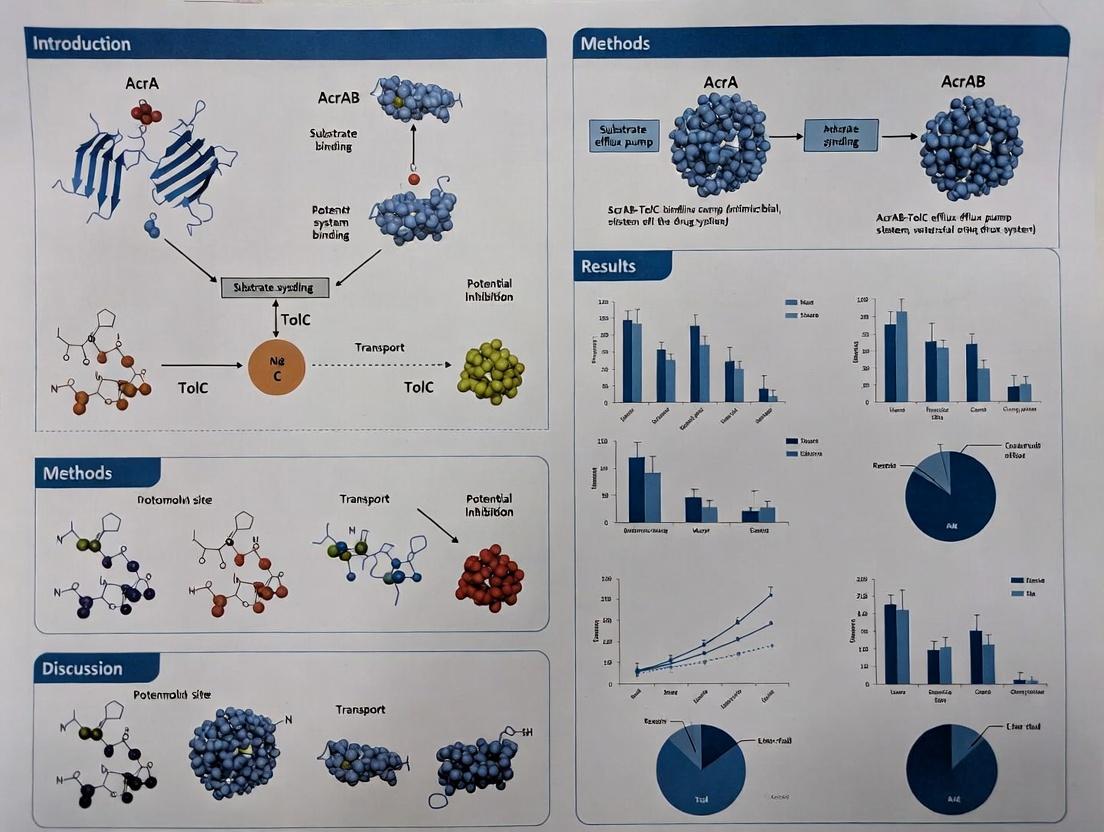
This comprehensive review delves into the AcrAB-TolC tripartite efflux pump, a major contributor to multidrug resistance in Gram-negative bacteria like Escherichia coli.
AcrAB-TolC Multidrug Efflux Pump: Structural Insights, Functional Mechanisms, and Therapeutic Targeting Strategies
Abstract
This comprehensive review delves into the AcrAB-TolC tripartite efflux pump, a major contributor to multidrug resistance in Gram-negative bacteria like Escherichia coli. We explore its intricate molecular architecture, from the inner membrane AcrB transporter and membrane fusion protein AcrA to the outer membrane channel TolC. The article details functional mechanisms, including substrate recognition, energy transduction via the proton motive force, and the peristaltic pumping action. We critically analyze experimental methodologies for studying the pump, discuss common challenges in research, and compare AcrAB-TolC with other efflux systems. Finally, we evaluate current and emerging strategies for efflux pump inhibition (EPIs), providing a roadmap for researchers and drug developers aiming to overcome antimicrobial resistance.
Decoding the AcrAB-TolC Tripartite Complex: Core Components and Architectural Blueprint
Within the context of a structural and functional analysis research thesis, the AcrAB-TolC multidrug efflux pump of Gram-negative bacteria, particularly in Enterobacteriaceae like Escherichia coli and Klebsiella pneumoniae, represents a paradigm for intrinsic and acquired antimicrobial resistance (AMR). This tripartite complex, spanning the inner membrane, periplasmic space, and outer membrane, actively extrudes a staggeringly broad spectrum of antibiotics, biocides, and host-derived compounds. Its overexpression is a primary contributor to multidrug-resistant (MDR) phenotypes, threatening the efficacy of last-resort drugs like carbapenems and tigecycline. This whitepaper details its mechanism, clinical impact, and essential research methodologies.
Core Structure and Mechanism of Action
The AcrAB-TolC system functions as a proton motive force-driven (PMF) assembly.
- AcrB (Inner Membrane Transporter): A homotrimeric RND (Resistance-Nodulation-Division) pump. Each monomer cycles through loose (L), tight (T), and open (O) conformational states, facilitating a functionally rotating mechanism that binds substrates from the periplasm or inner membrane leaflet.
- AcrA (Membrane Fusion Protein): A periplasmic adapter, hexameric in assembly, that forms a coiled-coil bridge, structurally and energetically coupling AcrB to TolC.
- TolC (Outer Membrane Factor): A homotrimeric channel that forms a continuous, ~140 Å long conduit spanning the outer membrane and periplasm.
The assembled complex creates a direct conduit from the cell interior to the external environment, enabling efflux.
Diagram Title: AcrAB-TolC Tripartite Assembly and Efflux Mechanism
Clinical Threat and Quantitative Impact
AcrAB-TolC overexpression significantly elevates Minimum Inhibitory Concentrations (MICs) for numerous drug classes. Its regulation is often linked to mutations in local repressors (e.g., acrR) or global regulators (e.g., marA, soxS, rob). The table below summarizes its contribution to resistance levels.
Table 1: Impact of AcrAB-TolC Overexpression on Antibiotic MICs in E. coli
| Antibiotic Class | Representative Drug | MIC Fold-Change (Wild-type vs. Overexpression) | Clinical Threat Level |
|---|---|---|---|
| β-Lactams | Piperacillin | 8 - 16x | High |
| Fluoroquinolones | Ciprofloxacin | 32 - 128x | Critical |
| Tetracyclines | Tetracycline | 16 - 64x | High |
| Glycylcyclines | Tigecycline | 4 - 8x | Critical |
| Macrolides | Erythromycin | >256x | Moderate |
| Chloramphenicol | Chloramphenicol | 32 - 64x | Moderate |
| Rifamycins | Rifampin | 16 - 32x | Moderate |
| Biocides | Triclosan | 8 - 32x | N/A |
Key Research Methodologies
Efflux Inhibition Assay (Checkerboard Synergy Assay)
Purpose: To identify potential efflux pump inhibitors (EPIs) by measuring synergy with a substrate antibiotic.
Protocol:
- Bacterial Strain: Wild-type and an isogenic acrB knockout strain.
- Antimicrobials: Prepare 2X stocks of the test antibiotic (e.g., ciprofloxacin) and the putative EPI (e.g., PAβN).
- Microdilution Plate Setup: Dispense 50 μL of cation-adjusted Mueller-Hinton broth (CAMHB) into all wells of a 96-well plate.
- Serial Dilution:
- Add 50 μL of the antibiotic in the first column and perform a 2-fold serial dilution along the x-axis.
- Add 50 μL of the EPI in the first row and perform a 2-fold serial dilution along the y-axis.
- This creates a matrix of combined concentrations.
- Inoculation: Add 50 μL of a standardized bacterial suspension (5 × 10^5 CFU/mL final) to each well.
- Incubation: Incubate at 37°C for 18-24 hours.
- Analysis: Determine the MIC of the antibiotic alone and in combination. Calculate the Fractional Inhibitory Concentration Index (FICI). FICI ≤ 0.5 indicates synergy, suggesting efflux inhibition.
Real-time Fluorometric Efflux Assay
Purpose: To directly visualize efflux activity using a fluorescent substrate.
Protocol:
- Bacterial Preparation: Grow bacteria to mid-log phase. Harvest, wash, and resuspend in assay buffer (e.g., PBS with 0.4% glucose) to an OD600 ~ 0.5.
- Energy Depletion: Treat cells with 10 mM carbonyl cyanide m-chlorophenyl hydrazone (CCCP), a protonophore, for 15 min to deplete PMF and allow intracellular accumulation.
- Dye Loading: Add a fluorescent efflux substrate (e.g., 10 μM ethidium bromide or 1 μM Nile red). Incubate with CCCP for 20-30 min in the dark.
- Efflux Initiation: Pellet cells, wash rapidly to remove CCCP and external dye, and resuspend in warm, glucose-containing buffer (to restore PMF).
- Fluorescence Monitoring: Immediately transfer suspension to a quartz cuvette or multi-well plate. Measure fluorescence (Ex/Em: 530/600 nm for EtBr) every 30 seconds for 10-15 minutes in a fluorometer.
- Data Interpretation: A rapid decrease in fluorescence indicates active efflux. Compare rates between strains or with/without EPIs.
Diagram Title: Real-time Fluorometric Efflux Assay Workflow
The Scientist's Toolkit: Key Research Reagents
Table 2: Essential Reagents for AcrAB-TolC Research
| Reagent/Solution | Function/Application | Example/Note |
|---|---|---|
| Isogenic Bacterial Strains | Comparative studies to attribute phenotype specifically to AcrAB-TolC. | E. coli K-12 BW25113 vs. its ΔacrB (Keio collection). |
| Phenylalanine-Arg β-Naphthylamide (PAβN) | Broad-spectrum EPI; used as a positive control in efflux inhibition assays. | Non-specific, inhibits multiple RND pumps. |
| Carbonyl Cyanide m-Chlorophenyl Hydrazone (CCCP) | Protonophore uncoupler; depletes PMF to study energy-dependent efflux and load dyes. | Toxic; handle with care. Used in fluorometric assays. |
| Ethidium Bromide (EtBr) | Fluorescent efflux substrate; used in real-time efflux and accumulation assays. | Carcinogen; requires safe disposal. Alternative: Hoechst 33342, Nile red. |
| Antibiotic Panel | Substrates for MIC determination and synergy studies. | Should include fluoroquinolones, β-lactams, tetracyclines, tigecycline. |
| Cation-adjusted Mueller Hinton Broth (CAMHB) | Standardized medium for antimicrobial susceptibility testing (AST). | Essential for reproducible MIC and checkerboard assays. |
| Anti-AcrB / Anti-TolC Antibodies | For detection and quantification of pump components via Western blot, FACS, or microscopy. | Commercial polyclonal/monoclonal antibodies are available. |
| Molecular Cloning & CRISPR-Cas9 Tools | For constructing gene deletions, tagged fusions (e.g., GFP-AcrB), and regulatory mutants. | Essential for structure-function analysis. |
This article provides a historical and technical overview of the seminal discoveries that led to the identification and genetic characterization of the AcrAB-TolC multidrug efflux system in Escherichia coli. It is framed within the context of ongoing research into the structure-function relationships of Resistance-Nodulation-Division (RND) transporters, a critical area for combating antimicrobial resistance (AMR).
The Chronological Path to Discovery
The identification of AcrAB-TolC was not a single event but a convergence of genetic, biochemical, and physiological studies spanning decades.
| Year/Period | Key Discovery | Experimental Approach | Quantitative/Significant Finding |
|---|---|---|---|
| Late 1970s - 1980s | Identification of acrA (formerly marA) locus. | Selection for mutants resistant to antibiotics or organic solvents (e.g., cyclohexane, nalidixic acid). | Mutants showed 2- to 64-fold increase in MICs to multiple antibiotics (tetracycline, chloramphenicol, β-lactams). |
| 1993 | Cloning and sequencing of the acrAB operon. | Complementation of hypersensitive mutant (ΔacrAB) with genomic libraries. | Defined a two-gene operon: acrA (membrane fusion protein) and acrB (inner membrane RND transporter). |
| 1994, 1998 | Discovery of TolC as the outer membrane channel. | Second-site suppressor mutations restoring drug resistance in tolC mutants; Biochemical copurification. | ΔtolC mutants showed identical hypersusceptibility as ΔacrAB. Efflux of fluoroquinolones was reduced by >90% in tolC mutants. |
| 1999-2002 | Functional reconstitution and structural biology. | In vitro transport assays with proteoliposomes; X-ray crystallography of AcrB, TolC, and AcrA. | High-resolution structures: AcrB (3.5 Å), TolC (2.1 Å), AcrA (partial). Demonstrated proton-dependent efflux. |
| 2000s-Present | Elucidation of regulatory networks (marRAB, soxRS, rob). | Transcriptional reporter fusions, EMSA, ChIP-seq. | Overexpression of marA increases acrAB transcription 10- to 100-fold. |
Detailed Experimental Protocols for Foundational Experiments
Protocol 1: Original Genetic Screen foracrA/marAMutants
- Objective: Isolate mutants with increased resistance to hydrophobic antibiotics or organic solvents.
- Method:
- Culture & Mutagenesis: Grow wild-type E. coli K-12 to mid-log phase. Treat with a mild mutagen (e.g., ethyl methanesulfonate, EMS) or use a transposon library.
- Selection: Plate ~10⁸ cells onto Luria-Bertani (LB) agar containing a sub-inhibitory concentration of an agent like tetracycline (0.2 µg/mL) or nalidixic acid (2 µg/mL). Alternatively, use cyclohexane vapor exposure in a sealed chamber.
- Screening: Isolate colonies that grow after 48h. Re-streak to confirm phenotype.
- Backcrossing: Transduce the mutation into a fresh genetic background using P1 phage to confirm linkage.
- Key Reagents: EMS, Tetracycline, Cyclohexane, P1 Vir phage.
Protocol 2: Complementation of Hypersusceptibility (ΔacrAB)
- Objective: Clone the gene(s) complementing the multidrug hypersusceptibility phenotype.
- Method:
- Strain Construction: Create a precise ΔacrAB deletion mutant via λ Red recombinase system or P1 transduction from an existing mutant.
- Library Transformation: Transform the mutant with a wild-type E. coli genomic library cloned into a medium-copy-number plasmid (e.g., pBR322).
- Selection: Plate transformed cells onto LB agar containing a normally inhibitory concentration of a drug (e.g., 0.05 µg/mL erythromycin) for which the mutant is hypersensitive.
- Identification: Isolate plasmid DNA from resistant colonies, retransform into the mutant to confirm, and sequence the insert.
- Key Reagents: ΔacrAB mutant, Genomic library plasmid, Erythromycin.
Protocol 3:In VitroProton-Dependent Transport Assay
- Objective: Demonstrate the direct, energy-coupled transport function of reconstituted AcrB.
- Method:
- Membrane Preparation: Overexpress and purify His-tagged AcrB from E. coli membranes using detergent (e.g., n-dodecyl-β-D-maltoside) and nickel-affinity chromatography.
- Proteoliposome Reconstitution: Mix purified AcrB with pre-formed liposomes (e.g., E. coli polar lipid extract) in detergent. Remove detergent via dialysis or bio-beads to form sealed proteoliposomes.
- Loading & Initiation: Load proteoliposomes with a fluorescent substrate (e.g., 1 µM ethidium bromide). Dilute the liposomes into an external buffer.
- Energy Coupling: Initiate transport by creating an artificial proton motive force: add an outward-directed ΔpH (e.g., internal pH 7.5, external pH 6.0) using a buffer jump or by adding an electron donor to incorporated cytochrome oxidase.
- Measurement: Monitor the decrease in internal fluorescence (quenching of ethidium by DNA) or increase in external fluorescence over time using a fluorometer.
- Control: Use liposomes without protein or add a protonophore (e.g., CCCP).
- Key Reagents: Purified AcrB, E. coli polar lipids, n-Dodecyl-β-D-maltoside, Ethidium bromide, CCCP.
The Scientist's Toolkit: Key Research Reagent Solutions
| Reagent/Material | Function in AcrAB-TolC Research |
|---|---|
| ΔacrAB or ΔtolC Mutant Strains | Isogenic hypersusceptible control strains for phenotypic complementation and efflux assays. |
| P1 Vir Phage | Standard tool for generalized transduction to move mutations between genetic backgrounds. |
| pCA24N-based ASKA Library | Comprehensive, inducible overexpression library of E. coli ORFs for screening multicopy suppressors. |
| Fluorescent Efflux Substrates (e.g., Hoechst 33342, Nile Red, Ethidium Bromide) | Real-time, quantitative probes for measuring efflux pump activity in whole cells or in vitro systems. |
| Protonophores (e.g., CCCP, Carbonyl cyanide-m-chlorophenyl hydrazine) | Uncouplers of proton motive force; used as negative controls to confirm energy-dependent efflux. |
| Pump Inhibitors (e.g., Phe-Arg-β-naphthylamide (PAβN), 1-(1-naphthylmethyl)-piperazine (NMP)) | Broad-spectrum efflux pump inhibitors used to potentiate antibiotic activity and confirm pump involvement. |
| Anti-AcrA/AcrB/TolC Antibodies | For Western blotting, localization studies (immunofluorescence), and protein quantification. |
| n-Dodecyl-β-D-maltoside (DDM) | Mild, non-ionic detergent critical for the solubilization and purification of functional AcrB and TolC complexes. |
Visualization of Key Concepts
Title: Workflow for Genetic Identification of AcrAB-TolC
Title: Regulatory Network Controlling AcrAB-TolC Expression
Title: AcrAB-TolC Assembly and Drug Efflux Path
1. Introduction within the Thesis Context This whitepaper details the core component of the Escherichia coli AcrAB-TolC multidrug efflux pump: the inner membrane transporter AcrB. As part of a broader thesis on AcrAB-TolC structure and function analysis, understanding the AcrB protomer's architecture and its dynamic substrate-binding pockets is fundamental. AcrB is a homotrimeric protein that functions as a proton/drug antiporter, capturing substrates from the periplasm or inner membrane and powering their translocation via the proton motive force. Its asymmetric conformational cycling, synchronized with the accessory protein AcrA and the outer membrane channel TolC, is the engine of efflux. The precise characterization of its substrate-binding regions—the Deep Binding Pocket (DBP) and the Access Pocket (AP)—is critical for rational drug design aimed at inhibiting efflux and overcoming antimicrobial resistance.
2. Architecture of the AcrB Protomer and Substrate-Binding Pockets Each AcrB protomer consists of a transmembrane domain (with 12 α-helices) and a large periplasmic domain. Within the periplasmic domain, two primary substrate-binding sites have been identified through X-ray crystallography and cryo-electron microscopy:
- Deep Binding Pocket (DBP): Also known as the distal binding pocket, it is located deep within the periplasmic domain, proximal to the transmembrane domain. It is the high-affinity binding site for many substrates, including doxorubicin, minocycline, and rifampicin.
- Access Pocket (AP): A more superficial, vestibule-like region located closer to the periplasmic funnel leading to TolC. It is thought to act as a initial capture site or a conduit for substrates entering from the lipid bilayer.
The functional unit is the trimer, where each protomer adopts one of three consecutive conformational states: Loose (Access), Tight (Binding), and Open (Extrusion). Substrate is thought to move from the AP in the Loose state to the DBP in the Tight state, before being expelled in the Open state.
Table 1: Key Structural Features of AcrB Substrate-Binding Pockets
| Feature | Deep Binding Pocket (DBP) | Access Pocket (AP) |
|---|---|---|
| Location | Deep in periplasmic domain, near TM helices | Vestibule in periplasmic domain, near funnel/TolC interface |
| Primary Role | High-affinity substrate binding & specificity determination | Initial substrate capture & pathway from bilayer |
| Key Residues (E. coli) | Phe136, Phe178, Phe615, Phe617, Asn274 | Arg176, Gln569, Phe666, Thr677 |
| Example Substrates | Doxorubicin, Minocycline, Rhodamine 6G, β-Lactams | Lipophilic drugs, Hoechst 33342, Novobiocin |
| Reported KD Range | ~0.1 - 10 µM (varies by substrate & method) | Typically lower affinity; precise KD data scarce |
3. Experimental Protocols for Pocket Analysis
3.1. X-ray Crystallography of AcrB-Substrate Complexes
- Objective: Determine high-resolution structures of AcrB with substrates bound to the DBP/AP.
- Methodology:
- Protein Expression & Purification: Express His-tagged AcrB in E. coli C43(DE3) cells. Solubilize from membranes using n-dodecyl-β-D-maltoside (DDM). Purify via Ni-NTA affinity and size-exclusion chromatography (SEC).
- Crystallization: Perform co-crystallization by incubating purified AcrB (10 mg/mL) with 1-5 mM substrate prior to setup. Use sitting-drop vapor diffusion with PEG-based conditions.
- Data Collection & Analysis: Flash-freeze crystals in liquid N2. Collect data at a synchrotron source. Solve structure by molecular replacement using a known AcrB structure (e.g., PDB: 4DX5). Model substrate into clear electron density in the DBP/AP.
3.2. Site-Directed Mutagenesis and Efflux Assays
- Objective: Validate the functional role of specific pocket residues.
- Methodology:
- Mutant Construction: Introduce point mutations (e.g., F136A, R176A) into the acrB gene on a plasmid using PCR-based mutagenesis.
- Phenotypic Assay: Transform plasmids into an E. coli strain lacking endogenous acrB (ΔacrB). Assess minimum inhibitory concentration (MIC) of antibiotics using broth microdilution (CLSI guidelines).
- Quantitative Efflux Assay: Load cells with a fluorescent substrate (e.g., ethidium bromide). Monitor fluorescence decay over time upon energization with glucose using a plate reader. Calculate initial efflux rates.
Table 2: Example MIC Shift Data for AcrB Binding Pocket Mutants
| AcrB Variant | Minocycline MIC (µg/mL) | Doxorubicin MIC (µg/mL) | Novobiocin MIC (µg/mL) | Interpretation |
|---|---|---|---|---|
| Wild-Type | 2.0 | 4.0 | 32.0 | Baseline efflux |
| F136A (DBP) | 0.25 (8x ↓) | 0.5 (8x ↓) | 32.0 (no change) | Disrupts DBP-specific substrates |
| R176A (AP) | 1.0 (2x ↓) | 2.0 (2x ↓) | 4.0 (8x ↓) | Broad effect, impacts AP substrates |
4. The Scientist's Toolkit: Key Research Reagents
Table 3: Essential Reagents for AcrB Binding Pocket Research
| Reagent/Solution | Function & Explanation |
|---|---|
| n-Dodecyl-β-D-Maltoside (DDM) | Mild, non-ionic detergent for solubilizing and stabilizing membrane-bound AcrB during purification. |
| Crystallization Screen Kits (e.g., MemGold, MemMeso) | Sparse-matrix screens optimized for membrane proteins to identify initial crystallization conditions. |
| Fluorescent Efflux Substrates (Ethidium Bromide, Hoechst 33342) | Real-time, quantitative probes for measuring AcrB transport activity in whole-cell or proteoliposome assays. |
| AcrB-KO E. coli Strain (e.g., ΔacrB) | Isogenic host strain for expressing wild-type or mutant AcrB, eliminating background efflux activity. |
| Proteoliposome Kit (e.g., Liposome Reconstitution Kit) | For reconstituting purified AcrB into lipid bilayers to study transport in a controlled, isolated system. |
5. Visualizing Conformational Cycling and Substrate Pathway
Title: AcrB Trimer Conformational Cycle & Substrate Path
Title: Substrate Journey Through an AcrB Protomer
Within the tripartite AcrAB-TolC multidrug efflux system of Escherichia coli, the AcrA protein functions as a critical periplasmic adaptor. This in-depth guide, framed within a broader thesis on AcrAB-TolC structure and function analysis, details the role of AcrA as a Membrane Fusion Protein (MFP). AcrA dynamically bridges the inner membrane transporter AcrB and the outer membrane channel TolC, facilitating the extrusion of diverse antimicrobial compounds across the cell envelope. Understanding its molecular architecture, conformational dynamics, and interaction interfaces is paramount for researchers and drug development professionals aiming to combat multidrug-resistant bacterial infections.
Molecular Architecture and Domains
AcrA belongs to the hydrophobe/amphiphile efflux-1 (HAE1) family of MFPs. Its elongated structure comprises four distinct domains arranged in a coiled-coil hairpin formation:
- α-Hairpin Domain: A long, antiparallel α-helical hairpin that forms the central spine.
- Lipoyl Domain: A β-rich domain involved in initial interactions with TolC.
- β-Barrel Domain: A globular domain that interacts with the periplasmic surface of AcrB.
- Membrane-Proximal (MP) Domain: A small domain near the inner membrane.
Table 1: Structural Domains of AcrA and Their Functional Roles
| Domain | Structural Features | Primary Interaction Partner | Key Function |
|---|---|---|---|
| α-Hairpin | Long, coiled-coil antiparallel helices (~100 Å) | TolC (tip), AcrB (base) | Provides structural scaffold; transmits conformational changes. |
| Lipoyl | β-sandwich fold | TolC (opening) | Initiates and stabilizes engagement with the TolC entrance. |
| β-Barrel | Globular β-strand bundle | AcrB (ToIC docking domains) | Anchors AcrA to the AcrB transporter. |
| MP Domain | Small, structured region near IM | Inner Membrane Lipids | Positions AcrA proximal to the inner membrane and AcrB. |
Mechanistic Role in Complex Assembly and Function
AcrA is not a static connector but a dynamic molecular engine. Its primary functions are:
- Adaptor Bridge: Physically links AcrB and TolC, spanning the ~200 Å periplasmic space.
- Complex Assembly: Initiates the assembly of the tripartite complex, often by first binding to AcrB.
- TolC Recruitment & Opening: Through its lipoyl and α-hairpin tip domains, AcrA interacts with the periplasmic entrance of TolC, inducing an allosteric transition from a closed to an open state.
- Energy Transmission: May participate in transducing conformational changes from the proton motive force-driven AcrB to TolC.
Diagram 1: AcrA-Mediated Tripartite Assembly Pathway
Key Experimental Evidence and Protocols
Research elucidating AcrA's function relies on multidisciplinary approaches.
Crystallography and Cryo-Electron Microscopy
Protocol: Single-Particle Cryo-EM of the AcrAB-TolC Complex
- Sample Preparation: Purify the full tripartite complex using affinity chromatography and size-exclusion chromatography in a mild detergent (e.g., DDM).
- Grid Preparation: Apply 3.5 µL of sample to a glow-discharged holey carbon grid, blot, and plunge-freeze in liquid ethane.
- Data Collection: Acquire movie stacks on a 300 keV cryo-electron microscope with a K3 direct electron detector at a nominal magnification of 81,000x (yielding ~1.0 Å/pixel).
- Processing: Motion-correct and dose-weight movies. Perform particle picking, 2D classification, ab-initio reconstruction, and high-resolution 3D refinement with symmetry imposed (C3 for AcrB-TolC).
- Model Building: Fit existing crystal structures of AcrA, AcrB, and TolC into the EM density map using Chimera/Coot, followed by real-space refinement.
Site-Directed Mutagenesis & Functional Assays
Protocol: Efflux Assay with AcrA Variants
- Mutant Construction: Generate site-directed mutations in the acrA gene (e.g., in plasmid pET28a) targeting specific interprotein interfaces (e.g., D150A in β-barrel for AcrB binding).
- Strain Preparation: Transform mutants into an E. coli ΔacrAB background strain.
- Accumulation Assay: Grow cells to mid-log phase. Load with a fluorescent substrate (e.g., Hoechst 33342, 1 µM). Inhibit energy with CCCP (50 µM) for a negative control.
- Measurement: Monitor intracellular fluorescence (ex/em ~350/450 nm) over time using a plate reader. Initial rate of fluorescence decrease indicates efflux activity.
- Analysis: Compare efflux rates of mutant strains to wild-type complemented strain.
Table 2: Quantitative Functional Data for Selected AcrA Mutants
| AcrA Variant | Targeted Interface | Minimum Inhibitory Concentration (MIC) Fold Change* | Ethidium Bromide Accumulation (% of WT) | Reference (Example) |
|---|---|---|---|---|
| Wild-Type | N/A | 1.0 | 100% | (Du et al., 2014) |
| D150A | AcrB Binding (β-barrel) | 0.25 - 0.5 | ~220% | (Symmons et al., 2009) |
| R624E | TolC Interaction (α-hairpin tip) | 0.5 | ~180% | (Xu et al., 2021) |
| G405P | α-Hairpin Flexibility | 0.12 - 0.25 | ~300% | (Janganan et al., 2011) |
*Normalized to WT for drugs like novobiocin, erythromycin.
The Scientist's Toolkit: Key Research Reagent Solutions
Table 3: Essential Reagents for AcrAB-TolC (AcrA-Focused) Research
| Reagent / Material | Function / Application | Key Consideration |
|---|---|---|
| C43(DE3) E. coli Strain | Expression host for membrane proteins like AcrB and AcrA. | Reduces toxicity of overexpression; improves yield. |
| n-Dodecyl-β-D-Maltoside (DDM) | Mild non-ionic detergent for solubilizing and purifying the efflux complex. | Maintains complex integrity but can be costly for large preps. |
| Strep-tag II / Twin-Strep-tag | Affinity tag for gentle, one-step purification of AcrA or subcomplexes. | High purity and specificity; elution with biotin/desthiobiotin. |
| Proteo-Liposome Kit | Forms artificial liposomes for in vitro reconstitution of efflux activity. | Allows control over lipid composition (e.g., E. coli polar lipids). |
| Fluorescent Efflux Substrates (Hoechst 33342, EthBr, Nile Red) | Probe for functional efflux assays in whole cells or proteoliposomes. | Different substrates may probe distinct transport pathways. |
| Crosslinking Reagents (e.g., BS3, DSG) | Captures transient interactions within the tripartite complex for structural analysis. | Vary spacer arm length to probe different interaction distances. |
Diagram 2: Key Experimental Workflow for AcrA Functional Analysis
Implications for Drug Development
Inhibition of the AcrAB-TolC system is a promising strategy to rejuvenate existing antibiotics. AcrA presents a unique target as a periplasmic protein. Potential approaches include:
- Peptide Inhibitors: Mimicking interface sequences to disrupt AcrA-AcrB or AcrA-TolC interactions.
- Small Molecules: Allosteric inhibitors that lock AcrA in an inactive conformation, preventing TolC opening. The structural and functional insights from ongoing research, as framed in this thesis, are critical for the rational design of such efflux pump inhibitors (EPIs).
This whitepaper details the structure and function of the TolC outer membrane channel, a critical component of the AcrAB-TolC multidrug efflux system in Escherichia coli. The analysis is framed within a broader research thesis aimed at elucidating the complete structural assembly, energy transduction mechanism, and substrate promiscuity of the AcrAB-TolC complex to inform novel antimicrobial strategies targeting efflux-mediated resistance.
Structural Architecture of TolC
TolC is a homotrimeric protein that forms a unique, constitutively open conduit spanning the periplasm and outer membrane. Its architecture comprises two principal domains:
- The Outer Membrane β-Barrel (12-stranded): Formed by four β-strands from each monomer, this domain anchors TolC in the outer membrane. It has a large internal diameter (~35 Å) and is permanently open to the extracellular milieu.
- The Periplasmic α-Helical Tunnel (12-helix): A continuous, elongated cylinder formed by long α-helices from each subunit. This domain extends ~100 Å into the periplasm and is normally in a closed state at its periplasmic end (the "iris").
Table 1: Quantitative Structural Parameters of the TolC Channel
| Parameter | Measurement | Method of Determination |
|---|---|---|
| Total Length | ~140 Å | X-ray Crystallography (1EK9) |
| Outer Membrane β-Barrel Diameter | ~35 Å | X-ray Crystallography |
| α-Helical Tunnel Diameter | ~20 Å (closed state) | X-ray Crystallography, Cryo-EM |
| α-Helical Tunnel Length | ~100 Å | X-ray Crystallography |
| Pore Volume | ~37,000 ų | Computational Analysis |
| Opening at Aperture ("Iris") | <5 Å (closed), >25 Å (open) | Molecular Dynamics Simulations |
Functional Role in AcrAB-TolC Efflux
TolC functions as the final exit duct for substrates. The periplasmic adapter protein AcrA docks with the closed end of the TolC tunnel and, coupled with the proton motive force-driven conformational changes in the inner membrane transporter AcrB, induces an allosteric transition in TolC. This transition involves an untwisting of its α-helical coils, opening the iris and creating a contiguous channel from AcrB to the extracellular space.
Key Experimental Protocols for TolC Analysis
Protocol: Cryo-EM Structure Determination of the AcrAB-TolC Holocomplex
Objective: Solve the near-atomic resolution structure of the fully assembled efflux pump.
- Protein Production & Purification: Express E. coli AcrA, AcrB, and TolC with appropriate tags in compatible vectors. Purify individual components via affinity (Ni-NTA) and size-exclusion chromatography (SEC). Reconstitute the complex by mixing at a 3:6:3 (AcrB:AcrA:TolC) molar ratio and perform final SEC.
- Grid Preparation: Apply 3 μL of purified complex (~3 mg/mL) to a glow-discharged cryo-EM grid (e.g., Quantifoil R1.2/1.3). Blot and plunge-freeze in liquid ethane using a Vitrobot (100% humidity, 4°C).
- Data Collection: Collect movies on a 300 keV cryo-electron microscope (e.g., Titan Krios) with a K3 direct electron detector at a nominal magnification of 105,000x (pixel size ~0.83 Å). Use a defocus range of -1.0 to -2.5 μm. Target a total dose of ~50 e⁻/Ų.
- Image Processing: Motion-correct and dose-weight frames using Relion or cryoSPARC. Perform template-based particle picking, 2D classification to remove junk particles, followed by ab initio reconstruction and heterogeneous refinement. Generate an initial model, then perform multiple rounds of non-uniform refinement and CTF refinement. Final resolution is estimated via the Fourier Shell Correlation (FSC=0.143) criterion.
- Model Building & Refinement: Fit existing crystal structures of components (PDB: 4DX5) into the cryo-EM map using Chimera. Manually rebuild in Coot and refine with phenix.realspacerefine.
Protocol: Site-Directed Mutagenesis and Efflux Assay
Objective: Assess the functional role of specific TolC residues (e.g., in the iris gate).
- Mutagenesis: Design primers incorporating the desired point mutation. Perform PCR using a high-fidelity polymerase (e.g., Q5) on a plasmid containing the tolC gene. Digest the parental DNA template with DpnI. Transform the PCR product into competent E. coli cloning cells, then sequence-verify the plasmid.
- Strain Construction: Transform the mutated plasmid or a gene fragment into a ΔtolC E. coli strain via electroporation or λ-Red recombinase-mediated recombination.
- Efflux Assay (Fluorometric): Grow mutant and wild-type strains to mid-log phase. Load cells with a fluorescent substrate (e.g., 10 μM Hoechst 33342, 5 μM ethidium bromide) in the presence of an energy inhibitor (e.g., CCCP). Wash cells and resuspend in energizing buffer. Monitor fluorescence intensity (λex/λem specific to substrate) over time using a plate reader. Initial efflux rate is calculated from the fluorescence decay slope upon energization.
The Scientist's Toolkit: Research Reagent Solutions
Table 2: Essential Reagents for AcrAB-TolC Structural & Functional Studies
| Reagent / Material | Function / Application | Key Notes |
|---|---|---|
| pET Vector Series | High-level expression of recombinant AcrA, AcrB, TolC in E. coli. | Often requires co-expression with chaperones (e.g., pGro7) for membrane proteins. |
| n-Dodecyl-β-D-Maltoside (DDM) | Mild non-ionic detergent for solubilizing membrane proteins (AcrB, TolC) from lipid bilayers. | Critical for maintaining native conformation during purification. |
| Amphipol A8-35 | Synthetic amphipathic polymer used to replace detergents for stabilizing purified membrane proteins for biophysical assays. | Enhances protein stability for cryo-EM or spectroscopy. |
| Fluorescent Efflux Substrates (Ethidium Bromide, Hoechst 33342, Nile Red) | Real-time monitoring of efflux pump activity in live cells or proteoliposomes. | Each has specific excitation/emission spectra and preferred binding sites. |
| Carbonyl Cyanide m-Chlorophenyl Hydrazone (CCCP) | Protonophore that dissipates the proton motive force (PMF). | Negative control for energy-dependent efflux assays. |
| Lipid Mix (E. coli polar extract, POPC) | Formation of proteoliposomes for in vitro transport assays. | Provides a native-like lipid environment for reconstituted AcrAB-TolC. |
| GraDeR Kit | Gradient dialysis device for gentle detergent removal and membrane protein reconstitution into liposomes. | Standardizes the preparation of samples for functional transport studies. |
| GDN (Glycerol-Diosgenin) | Detergent for stabilizing large, dynamic complexes like AcrAB-TolC for cryo-EM. | Often yields better particle homogeneity than DDM. |
This whitepaper details the structural assembly and functional stoichiometry of the Escherichia coli AcrAB-TolC multidrug efflux pump, a critical target in combating antimicrobial resistance. Research into the tripartite complex, comprising the inner membrane transporter AcrB, the periplasmic adaptor protein AcrA, and the outer membrane channel TolC, is foundational to a broader thesis analyzing the structure-function relationships of Resistance-Nodulation-Division (RND) efflux systems. The established 3:6:3 (AcrB:AcrA:TolC) stoichiometry is central to understanding its assembly mechanism and drug extrusion capability.
Structural Composition and Stoichiometric Determination
The complex spans the entire gram-negative bacterial cell envelope. Determining its exact stoichiometry required a convergence of techniques, including single-particle cryo-electron microscopy (cryo-EM), native mass spectrometry, and cross-linking studies. The consensus model identifies a trimer of AcrB in the inner membrane, a hexamer of AcrA in the periplasm, and a trimer of TolC in the outer membrane.
Table 1: Key Stoichiometric Findings from Recent Studies
| Technique Used | Reported Stoichiometry (AcrB:AcrA:TolC) | Resolution/Precision | Key Reference (Year) |
|---|---|---|---|
| Cryo-EM Single Particle Analysis | 3:6:3 | ~3.5 Å | Du et al., 2018 |
| Cross-linking Mass Spectrometry (XL-MS) | Supports 3:6:3 | Interaction Pairs Identified | Symmons et al., 2019 |
| Native Mass Spectrometry | Confirms 3:6:3 | Intact Complex Mass | Liko et al., 2020 |
| Asymmetric Cryo-EM Analysis* | 3:6:3 | ~3.0 Å | Wang et al., 2022 |
Note: Recent high-resolution studies continue to affirm this stoichiometry while elucidating dynamic conformational states during the transport cycle.
Detailed Experimental Protocols
Protocol for Cryo-EM Sample Preparation and Data Collection for AcrAB-TolC
This protocol is adapted from recent high-resolution structural studies.
- Protein Complex Purification: Express His-tagged AcrB, untagged AcrA, and untagged TolC in an E. coli ΔAcrAB strain. Solubilize membranes with n-dodecyl-β-D-maltoside (DDM). Purify the assembled complex via immobilized metal affinity chromatography (IMAC) followed by size-exclusion chromatography (SEC) in a buffer containing 20 mM Tris-HCl (pH 7.5), 150 mM NaCl, and 0.02% DDM.
- Grid Preparation: Apply 3.5 μL of purified complex at ~3 mg/mL to a freshly glow-discharged (15 mA, 60 sec) 300-mesh gold Quantifoil R1.2/1.3 grid. Blot for 3-4 seconds at 100% humidity and 4°C before plunging into liquid ethane using a Vitrobot Mark IV.
- Data Collection: Collect movies on a 300 keV cryo-TEM (e.g., Titan Krios) equipped with a direct electron detector (e.g., Gatan K3). Use a nominal magnification of 105,000x, yielding a pixel size of 0.826 Å. Collect 40 frames per movie with a total dose of 50 e⁻/Ų.
- Image Processing: Perform motion correction and dose-weighting (MotionCor2). Estimate CTF parameters (CTFFIND4/Gctf). Use reference-free 2D classification to select good particles. Generate an initial model ab initio or from a low-resolution template. Perform multiple rounds of 3D classification and heterogeneous refinement to isolate particles representing the intact 3:6:3 complex. Finalize with non-uniform refinement and local resolution estimation.
Protocol for Cross-linking Mass Spectrometry (XL-MS) to Map Interactions
- Cross-linking Reaction: Incubate 50 μg of purified AcrAB-TolC complex with 1 mM disuccinimidyl suberate (DSS), a lysine-reactive cross-linker, for 30 min at 25°C in SEC buffer. Quench the reaction with 50 mM ammonium bicarbonate for 10 min.
- Proteolytic Digestion: Denature and reduce the cross-linked sample with 5 mM DTT (56°C, 30 min), then alkylate with 15 mM iodoacetamide (room temperature, dark, 30 min). Digest with trypsin (1:50 enzyme:protein) overnight at 37°C.
- LC-MS/MS Analysis: Desalt peptides and analyze by nano-liquid chromatography coupled to a high-resolution tandem mass spectrometer (e.g., Orbitrap Eclipse). Use a 120-min gradient for peptide separation.
- Data Analysis: Search fragmented spectra against the E. coli proteome supplemented with AcrA/B/TolC sequences using dedicated XL-MS software (e.g., MeroX, pLink2). Identify cross-linked peptide pairs and map them onto the available 3D structure to validate interfacial contacts supporting the 3:6:3 assembly.
Visualizing Assembly and Function
Diagram 1: AcrAB-TolC 3:6:3 Assembly Architecture
Diagram 2: Efflux Cycle & Experimental Workflow
The Scientist's Toolkit: Essential Research Reagents & Materials
Table 2: Key Reagent Solutions for AcrAB-TolC Research
| Item | Function/Application | Key Considerations |
|---|---|---|
| n-Dodecyl-β-D-Maltoside (DDM) | Mild, non-ionic detergent for solubilizing inner and outer membrane proteins while preserving the native complex. | Critical concentration (~0.02%) for SEC maintains complex stability without inducing aggregation. |
| Amphipol A8-35 | Amphipathic polymer used to replace detergents for stabilizing membrane proteins in solution for cryo-EM or biophysics. | Enhances complex stability and particle distribution on cryo-EM grids. |
| Disuccinimidyl Suberate (DSS) | Homobifunctional, amine-reactive cross-linker with an ~11.4 Å spacer arm for XL-MS interaction mapping. | Freshly prepared in dry DMSO; quench conditions must be optimized to avoid over-crosslinking. |
| GraDeR Kit | Gradient detergent removal kit for gently exchanging detergent micelles with amphipols or nanodiscs. | Essential for preparing the complex in a more native lipid environment for functional studies. |
| Fluorescent Substrates (e.g., Nile Red, Ethidium Bromide) | Probe molecules for in vitro or whole-cell efflux assays to measure pump activity and inhibition. | Allow real-time, quantitative kinetic measurements of transport function. |
| Proteoliposome Prep Mix | Defined lipid mixtures (e.g., DOPE:DOPG:cardiolipin) for reconstituting the purified complex into artificial membranes. | Enables study of proton-coupled transport activity in a controlled system. |
| SEC Buffer (w/ Glycerol & TCEP) | Standard storage/purification buffer: 20 mM Tris, 150 mM NaCl, 0.02% DDM, 5% glycerol, 0.5 mM TCEP. | Glycerol prevents aggregation; TCEP maintains reducing environment, preserving cysteine integrity. |
This whitepaper details the bioenergetic principles underpinning the function of multidrug efflux pumps, with a specific focus on the AcrAB-TolC complex. As a central component of the resistance nodulation division (RND) superfamily in Gram-negative bacteria, AcrAB-TolC exemplifies how the proton motive force (PMF) is harnessed to drive the extrusion of diverse toxic compounds. This analysis is presented within the context of a broader thesis dedicated to the structural and functional dissection of the AcrAB-TolC machinery, providing a foundational energetic framework for researchers and drug development professionals.
The Proton Motive Force: Definition and Components
The proton motive force (PMF) is an electrochemical gradient of protons (H⁺) across the cytoplasmic membrane. It is the primary energy currency for many bacterial transport processes and consists of two interdependent components:
- Chemical Gradient (ΔpH): The difference in proton concentration ([H⁺]) across the membrane.
- Electrical Gradient (ΔΨ): The difference in electrical potential (voltage) across the membrane.
The PMF (Δp) is expressed in millivolts (mV) and calculated as: Δp = ΔΨ - (2.3RT/F)ΔpH Where R is the gas constant, T is temperature, and F is Faraday's constant. At 37°C, 2.3RT/F ≈ 60 mV.
Quantitative Profile of the PMF inE. coli
Table 1: Typical PMF parameters in growing Escherichia coli.
| Parameter | Symbol | Typical Value | Unit |
|---|---|---|---|
| Total Proton Motive Force | Δp | -130 to -170 | mV |
| Membrane Potential (Interior) | ΔΨ | -100 to -140 | mV |
| Chemical pH Gradient | ΔpH | -0.5 to -1.0 | pH units |
| Contribution of ΔpH to Δp | (2.3RT/F)ΔpH | -30 to -60 | mV |
PMF Coupling in the AcrAB-TolC Efflux Mechanism
The AcrAB-TolC complex is a tripartite, proton-substrate antiporter. Energy transduction occurs within the inner membrane component, AcrB, a homotrimeric RND transporter. Each protomer of AcrB cycles through three conformational states: Access (Loose), Binding (Tight), and Extrusion (Open), in a functionally rotating mechanism.
The Proton-Substrate Antiport Cycle
The transport cycle is driven by the obligate coupling of proton influx to substrate efflux:
- Proton Binding: In the periplasmic domain of AcrB, two conserved acidic residues (Asp407 and Asp408 in E. coli) bind protons from the periplasm. This binding is favored in the Access/Binding conformations.
- Conformational Change: Protonation triggers a major conformational shift in the transmembrane domain, which is mechanically transmitted to the periplasmic substrate-binding domain.
- Substrate Extrusion: The conformational change reduces the affinity of the substrate-binding pocket, expelling the substrate into the funnel of the periplasmic adaptor protein AcrA.
- Proton Release & Reset: The transporter transitions to the Open conformation, releasing the protons into the cytoplasm. Subsequent deprotonation resets the protomer to its original state.
This cycle operates asymmetrically across the trimer, ensuring a continuous efflux flux.
Diagram Title: Proton-Substrate Antiport Cycle in AcrB
Experimental Protocols for Probing PMF-Dependent Efflux
Protocol: Measuring Efflux Dependence on ΔΨ and ΔpH
Objective: To dissect the individual contributions of ΔΨ and ΔpH to AcrAB-TolC-mediated efflux.
Reagents:
- Carbonyl cyanide m-chlorophenyl hydrazone (CCCP): A protonophore that dissipates both ΔΨ and ΔpH.
- Valinomycin: A K⁺ ionophore that dissipates ΔΨ specifically in the presence of K⁺.
- Nigericin: A K⁺/H⁺ exchanger that dissipates ΔpH specifically.
- Ethidium Bromide (EtBr): A fluorescent substrate of AcrAB-TolC.
Method:
- Grow E. coli cells to mid-log phase in appropriate broth.
- Harvest, wash, and resuspend cells in assay buffer (with or without 100 mM KCl for valinomycin/nigericin assays).
- Load cells with EtBr (e.g., 10 µg/mL) in the presence of an energy inhibitor like CCCP to allow passive uptake.
- Wash cells to remove extracellular EtBr and CCCP.
- Resuspend cells in fresh buffer. Aliquot into a 96-well plate for fluorescence monitoring (Ex: 530 nm, Em: 600 nm).
- Establish a baseline fluorescence (quenched due to EtBr binding to DNA).
- Initiate Efflux: Add glucose (0.2% final) to energize the cells and generate PMF. Observe rapid fluorescence increase as EtBr is extruded.
- Inhibitor Treatments: In parallel experiments, add specific uncouplers 1 minute prior to glucose:
- For total Δp dissipation: Add CCCP (50 µM).
- For ΔΨ dissipation: Add Valinomycin (10 µM) in K⁺-containing buffer.
- For ΔpH dissipation: Add Nigericin (10 µM) in K⁺-containing buffer.
- Data Analysis: Calculate initial efflux rates from the fluorescence increase slope. Express as % inhibition relative to the uninhibited, energized control.
Expected Outcome: CCCP causes complete inhibition. Valinomycin causes strong inhibition, indicating primary dependence on ΔΨ. Nigericin may show partial inhibition, indicating a minor role or compensatory effect of ΔpH.
Table 2: Example results from PMF dissection experiment with EtBr efflux.
| Condition | PMF Component Affected | Expected Efflux Rate Inhibition | Interpretation |
|---|---|---|---|
| Glucose Only | None (Control) | 0% | Fully energized efflux. |
| + CCCP | ΔΨ & ΔpH (Total Δp) | 95-100% | Efflux is PMF-dependent. |
| + Valinomycin (+K⁺) | ΔΨ | 70-90% | Efflux is primarily driven by ΔΨ. |
| + Nigericin (+K⁺) | ΔpH | 10-30% | ΔpH plays a secondary/regulatory role. |
Protocol: Directed Mutagenesis of AcrB Proton Relays
Objective: To confirm the essentiality of specific residues in proton translocation.
Method:
- Site-Directed Mutagenesis: Generate acrB plasmid variants with mutations at conserved proton relay residues (e.g., D407A, D408N).
- Strain Construction: Transform mutant plasmids into an E. coli strain with chromosomal acrB deletion.
- Membrane Potential Assay: Using the fluorescent dye 3,3'-Diethyloxacarbocyanine iodide [DiOC₂(3)], measure ΔΨ in cells expressing mutant vs. wild-type AcrB. A defective proton conduit may alter membrane polarization under efflux load.
- Efflux Assay: Perform the EtBr efflux assay (Protocol 4.1) with isogenic strains expressing mutant or wild-type AcrB.
- MIC Determination: Measure Minimum Inhibitory Concentrations (MICs) for multiple AcrB substrates (e.g., erythromycin, chloramphenicol, tetracycline).
Diagram Title: Workflow for Analyzing AcrB Proton Relay Mutants
The Scientist's Toolkit: Key Research Reagents
Table 3: Essential reagents for studying PMF-driven efflux.
| Reagent | Category | Primary Function in PMF/Efflux Research |
|---|---|---|
| CCCP | Chemical Uncoupler | Dissipates the total PMF (ΔΨ + ΔpH) by facilitating H⁺ transport across the membrane. Serves as a positive control for efflux inhibition. |
| Valinomycin | Ionophore (K⁺) | Specifically collapses the electrical component (ΔΨ) by mediating electrophoretic K⁺ transport. Used to isolate ΔΨ contribution. |
| Nigericin | Ionophore (K⁺/H⁺) | Specifically collapses the chemical component (ΔpH) by exchanging K⁺ for H⁺. Used to isolate ΔpH contribution. |
| Ethidium Bromide (EtBr) | Fluorescent Efflux Substrate | A model substrate for RND pumps. Its fluorescence increase upon efflux provides a real-time, quantitative readout of pump activity. |
| DiOC₂(3) | Fluorescent Dye | A membrane potential-sensitive dye. Its fluorescence shift (green/red ratio) allows ratiometric quantification of ΔΨ changes. |
| Ortho-Nitrophenyl-β-galactoside (ONPG) | β-galactosidase Substrate | Used in indirect assays. Accumulation due to efflux inhibition of β-lactam antibiotics can be measured spectrophotometrically. |
| AcrB-specific Inhibitors (e.g., Phenylalanine-arginine β-naphthylamide, PAβN) | Efflux Pump Inhibitor (EPI) | Competitive inhibitor of RND pumps. Used to potentiate antibiotic activity and confirm efflux-mediated resistance. |
| Proteoliposomes | Artificial Membrane System | Reconstituted lipid bilayers containing purified AcrB. Used to study proton translocation and drug transport in a defined, isolated system. |
Experimental Approaches for Probing AcrAB-TolC: From Structural Biology to Functional Assays
This technical guide contextualizes milestone developments in X-ray crystallography and cryo-electron microscopy (cryo-EM) within a broader research thesis focused on elucidating the structure and function of the Escherichia coli AcrAB-TolC multidrug efflux pump. Understanding this tripartite complex is critical for combating antimicrobial resistance.
Milestone Developments in Structural Biology
Table 1: Key Milestones in X-ray Crystallography and Cryo-EM
| Technique | Year | Milestone Achievement | Key Resolution | Significance for AcrAB-TolC Research |
|---|---|---|---|---|
| X-ray Crystallography | 1958 | First protein structure (myoglobin) solved by Kendrew et al. | 6 Å | Established feasibility of determining atomic protein structures. |
| X-ray Crystallography | 2000-2002 | Individual crystal structures of AcrB, AcrA, and TolC components solved. | 2.5-3.5 Å | Provided first atomic insights into pump components, revealing TolC tunnel, AcrB periplasmic domains, and AcrA elongated structure. |
| X-ray Crystallography | 2006-2011 | Asymmetric crystal structures of AcrB trimer with bound substrates. | 2.9-3.2 Å | Demonstrated the "Functional Rotation" mechanism and drug translocation pathways within the AcrB proton motive force-driven transporter. |
| Cryo-EM | 2013-2014 | "Resolution Revolution" enabled by direct electron detectors. | ~3-4 Å | Made cryo-EM competitive with crystallography for many macromolecular complexes. |
| Cryo-EM | 2018-2020 | First near-atomic resolution structures of intact E. coli AcrAB-TolC and related pumps. | 3.0-3.6 Å | Revealed full assembly, adaptor (AcrA) bridging geometry, inter-component interactions, and drug-binding sites in native state. |
| Cryo-EM | 2022-2023 | Cryo-EM structures of AcrAB-TolC with inhibitors (e.g., MBX-3132) and in different conformational states. | 2.8-3.5 Å | Enabled structure-guided inhibitor design by capturing pump in inhibited or intermediate states, revealing mechanistic details. |
Experimental Protocols for AcrAB-TolC Structural Analysis
Protocol 1: X-ray Crystallography of Individual Components (e.g., AcrB)
- Expression & Purification: Clone acrB gene into expression vector. Overexpress in E. coli membrane-preparations. Solubilize using n-dodecyl-β-D-maltoside (DDM). Purify via affinity (e.g., His-tag) and size-exclusion chromatography (SEC).
- Crystallization: Employ vapor-diffusion (sitting drop) with lipidic cubic phase (LCP) or detergent screens. Optimize pH, precipitant (e.g., PEG), and temperature.
- Data Collection: Flash-cool crystal in liquid N2. Collect diffraction data at synchrotron beamline (e.g., 100K, X-ray wavelength ~1Å). Measure intensity of Bragg spots.
- Phase Determination & Modeling: Solve phase problem via molecular replacement using homologous structure. Build and iteratively refine atomic model against electron density map using software like Phenix or Refmac.
Protocol 2: Single-Particle Cryo-EM of Intact AcrAB-TolC Complex
- Native Complex Purification: Overexpress AcrAB-TolC in a hyperexpression strain. Extract complex in native-like state using mild detergent (e.g., DDM). Purify via tandem affinity/SEC to ensure homogeneity.
- Grid Preparation: Apply 3-4 μL of sample to glow-discharged holey carbon grid. Blot and plunge-freeze in liquid ethane using a vitrobot (100% humidity, 4°C).
- Data Acquisition: Image vitrified grids on a 300 kV cryo-electron microscope equipped with a direct electron detector (e.g., K3 or Falcon4). Collect movies (~40 frames) in super-resolution mode at defocus range of -0.5 to -2.5 μm, with total dose of 50-60 e⁻/Ų.
- Image Processing: Motion-correct and dose-weight frames. Perform particle picking (2D classification), ab-initio reconstruction, and 3D classification in Relion or CryoSPARC. Refine final map, perform post-processing (B-factor sharpening), and build/refine atomic model.
Diagrams of Key Workflows and Mechanisms
Cryo-EM Data Processing Pipeline
AcrAB-TolC Drug Efflux Pathway
The Scientist's Toolkit: Research Reagent Solutions
Table 2: Essential Materials for AcrAB-TolC Structural Studies
| Item | Function in Research | Specific Example/Note |
|---|---|---|
| Detergents | Solubilize membrane proteins while maintaining stability and complex integrity. | n-Dodecyl-β-D-maltoside (DDM), Lauryl Maltose Neopentyl Glycol (LMNG) for cryo-EM; Octyl glucoside for crystallography. |
| Affinity Tags | Enable rapid, specific purification of recombinant protein components or complexes. | Polyhistidine (His-tag), FLAG-tag, or Strep-tag II fused to target gene. |
| Lipid Cubic Phase (LCP) Materials | Matrix for crystallizing membrane proteins in a more native lipid environment. | Monoolein lipids for setting up LCP crystallization trials of AcrB. |
| Cryo-EM Grids | Support film for vitrified sample, enabling electron transmission. | Quantifoil or C-flat holey carbon grids (e.g., 300 mesh, Au, R1.2/1.3). |
| Direct Electron Detector | Camera for cryo-EM that counts individual electrons, enabling high-resolution reconstruction. | Gatan K3, Thermo Fisher Falcon 4, or DE-64. Critical for "Resolution Revolution". |
| Cryoprotectant | Prevent ice crystal formation during plunge-freezing for cryo-EM. | Not required for vitrification in pure buffer; sometimes used: glycerol (for negative stain) or trehalose. |
| Structure Refinement Software | Fit atomic models into experimental electron density or cryo-EM maps. | Phenix, Refmac (for crystallography); Coot, ISOLDE, real-space refine in Phenix (for cryo-EM). |
| Inhibitors/Substrates | Used to trap complexes in specific conformational states for structural analysis. | Doxycycline, minocycline (substrates); MBX-3132, ABI-PP (experimental inhibitors). |
This whitepaper details the application of Molecular Dynamics (MD) simulations to study substrate transport and pump dynamics, with a specific focus on the Escherichia coli AcrAB-TolC multidrug efflux pump. This work is framed within a broader thesis aimed at elucidating the complete structure-function relationship of this tripartite complex to inform novel antimicrobial strategies. The AcrAB-TolC system is a primary contributor to multidrug resistance in Gram-negative bacteria, expelling a wide array of antibiotics. A mechanistic understanding of its dynamics—from periplasmic drug capture by AcrA and AcrB to extrusion through the TolC channel—is critical. In silico MD simulations provide unparalleled temporal and spatial resolution to observe these atomic-scale processes, complementing experimental structural biology and biochemistry.
Core Methodologies: MD Simulation Protocols
The following protocols are standard for studying membrane protein systems like AcrAB-TolC.
System Preparation and Equilibrium
Objective: Construct a physiologically realistic simulation environment.
- Protein and Membrane Embedding:
- Obtain coordinates for the full AcrAB-TolC complex (or subcomponents) from PDB entries (e.g., 5O66, 4DX7). Use homology modeling for missing loops if necessary.
- Insert the protein into a pre-equilibrated phospholipid bilayer (e.g., POPE/POPG 3:1 mix) using tools like
g_membedor the CHARMM-GUI web server. - Solvate the system with explicit water models (TIP3P, SPC/E) in a periodic box, maintaining a minimum 10 Å buffer from protein to box edge.
- Add ions (e.g., 150 mM KCl or NaCl) to neutralize the system charge and mimic physiological ionic strength.
- Energy Minimization and Equilibration:
- Perform steepest descent energy minimization (5,000-10,000 steps) to remove steric clashes.
- Conduct equilibration in stages under NVT and NPT ensembles (typically 100 ps each) with positional restraints gradually released on the protein backbone and lipids.
Production Simulation and Enhanced Sampling
Objective: Generate trajectories for analysis of dynamics and transport.
- Classical MD:
- Run unrestrained production simulations using software like GROMACS, NAMD, or AMBER. Typical timescales range from 100 ns to several microseconds.
- Employ a 2-fs integration time step. Use LINCS constraints on bonds involving hydrogen.
- Maintain temperature (310 K) and pressure (1 bar) using coupling algorithms (e.g., Nosé-Hoover, Parrinello-Rahman).
- Enhanced Sampling for Substrate Pathway Analysis:
- Umbrella Sampling: To calculate the Potential of Mean Force (PMF) for a substrate moving through the pump.
- Define a reaction coordinate (e.g., center-of-mass distance along the transport axis).
- Run multiple independent simulations ("windows") with harmonic restraints placed at different points along the coordinate.
- Use the Weighted Histogram Analysis Method (WHAM) to reconstruct the free energy profile.
- Gaussian Accelerated MD (GaMD): To accelerate conformational sampling of large-scale motions (e.g., AcrA bending, TolC opening) by adding a harmonic boost potential to the system's potential energy.
- Umbrella Sampling: To calculate the Potential of Mean Force (PMF) for a substrate moving through the pump.
Key Quantitative Findings from Recent Simulations
The following tables summarize critical data derived from MD studies of AcrAB-TolC and related pumps.
Table 1: Energetic and Kinetic Parameters from PMF Calculations
| Substrate / Pathway | Energy Barrier (kcal/mol) | Preferred Binding Site (Residues) | Key Gating Element (Residue/Motif) | Reference (Example) |
|---|---|---|---|---|
| Doxorubicin (Through AcrB) | ~12.5 | Access Pocket (Phe136, Arg620) | GATE (Phe617) | J. Chem. Inf. Model. 2023 |
| Minocycline (Through AcrB) | ~8.7 | Deep Binding Pocket (Asn274) | Switch Loop (Gly616) | Commun Biol. 2022 |
| β-Lactam (Periplasmic Entry) | ~5.0 | AcrA Hairpin/MPD | Membrane-Proximal Domain (MPD) | PNAS. 2021 |
| Proton (H+) Relay (AcrB) | N/A | Asp407, Asp408, Lys940, Thr978 | Transmembrane Helices 4 & 10 | Sci. Adv. 2020 |
Table 2: Dynamic Structural Metrics from Trajectory Analysis
| Metric | Average Value (± SD) | Functional Implication | Method of Calculation |
|---|---|---|---|
| TolC α-helical Barrel Diameter | 18.5 ± 1.2 Å (Open) | Dictates substrate size exclusion | Cα Root Mean Square Deviation |
| AcrA Periplasmic Height | 85 ± 15 Å | Determines span between IM and OM | End-to-End Distance |
| AcrB Protomer Rotation Angle | 12° ± 5° per 100 ns | Drives functional rotation in drug transport | Principal Component Analysis |
| Lipid Order Parameter (POPE tail) | 0.18 ± 0.03 near AcrB | Indicates membrane perturbation by protein | NMR-like SCD from MD |
Visualization of Workflows and Mechanisms
MD Simulation and Analysis Workflow
Substrate Transport Pathway in AcrAB-TolC
The Scientist's Toolkit: Essential Research Reagents & Software
Table 3: Key Computational Tools and Resources for MD Studies of Efflux Pumps
| Item (Software/Database/Force Field) | Primary Function | Application in AcrAB-TolC Research |
|---|---|---|
| GROMACS/NAMD/AMBER | High-performance MD simulation engines. | Core software for running production simulations. |
| CHARMM36m/AMBER Lipid21 | Force fields parameterized for proteins, lipids, and ions. | Provides the physics model for accurate energy calculations. |
| CHARMM-GUI/MemProtMD | Web servers for building complex membrane-protein simulation systems. | Automated system preparation (embedding, solvation, ionization). |
| VMD/ChimeraX/PyMOL | Molecular visualization and trajectory analysis software. | Visualizing pump dynamics, substrate pathways, and creating figures. |
| PLUMED | Library for enhanced sampling and free-energy calculations. | Implementing umbrella sampling and metadynamics for PMF. |
| GPCRmd/MemProtMD Database | Repositories of curated membrane protein MD simulations. | Access to initial structures and validation against existing data. |
| MDTraj/MDAnalysis | Python libraries for analyzing MD trajectories. | Calculating RMSD, distances, angles, and collective motions. |
| PyContact/LigPlot+ | Tools for analyzing intermolecular interactions (H-bonds, hydrophobic contacts). | Mapping substrate-protein and protein-protein interfaces. |
Within the context of a comprehensive thesis on AcrAB-TolC structure and function analysis, functional assays are indispensable for quantifying the real-time activity of this major multidrug efflux pump in Enterobacteriaceae. This guide details two principal, complementary methodologies: fluorophore accumulation assays for direct, quantitative measurement of efflux activity, and minimum inhibitory concentration (MIC) determinations for assessing the phenotypic impact of efflux on antibiotic resistance. Together, these assays form the cornerstone for characterizing pump dynamics, substrate specificity, and inhibitor efficacy.
Measuring Efflux via Fluorophore Accumulation
This assay directly measures the intracellular accumulation of fluorescent probe substrates (efflux substrates) in the presence or absence of a functional AcrAB-TolC pump or efflux pump inhibitors (EPIs). Accumulation inversely correlates with efflux activity.
Core Protocol: Flow Cytometry-Based Accumulation Assay
Principle: Cells are incubated with a fluorescent substrate. Inhibition of AcrAB-TolC (e.g., via genetic knockout, energy poisons, or chemical EPIs) leads to increased intracellular fluorescence, detectable by flow cytometry or fluorometry.
Detailed Methodology:
- Bacterial Strains & Growth: Grow overnight cultures of (a) wild-type (e.g., E. coli K-12), (b) an isogenic acrB or acrAB knockout mutant, and (c) a strain harboring a plasmid for AcrAB-TolC overexpression.
- Sub-Culturing: Dilute cultures 1:100 in fresh Mueller-Hinton Broth (MHB) and grow to mid-log phase (OD600 ~0.5).
- Sample Preparation: Aliquot 1 mL of culture per condition. For inhibitor studies, pre-incubate wild-type cells with an EPI (e.g., 50 µM Phe-Arg-β-naphthylamide (PAβN)) for 10 minutes. Include an energy poison control (e.g., 100 µM carbonyl cyanide m-chlorophenyl hydrazone (CCCP)) incubated for 10 minutes.
- Fluorophore Loading: Add the fluorescent substrate. Common probes include:
- Hoechst 33342: (1 µg/mL final), lipophilic, DNA-binding. Incubate 10-20 min at 37°C.
- Ethidium Bromide (EtBr): (1-10 µg/mL final), nucleic acid intercalator. Incubate 10 min at 37°C.
- Nile Red: (0.5-5 µM final), lipophilic dye.
- Washing & Suspension: Pellet cells, wash twice with ice-cold phosphate-buffered saline (PBS), and resuspend in 500 µL PBS.
- Measurement: Analyze immediately by flow cytometry (e.g., 10,000 events, excitation/emission appropriate for the dye) or using a fluorescence microplate reader.
Data Analysis: Report geometric mean fluorescence intensity (MFI). Activity is often expressed as an Accumulation Ratio:
Accumulation Ratio = (MFI of Test Condition) / (MFI of Wild-type, uninhibited Control)
Table 1: Example Accumulation Data for Ethidium Bromide (EtBr) in E. coli
| Strain / Condition | Efflux Status | Mean Fluorescence Intensity (a.u.) | Accumulation Ratio (vs. WT) |
|---|---|---|---|
| Wild-type (MG1655) | Fully Active | 1,000 ± 150 | 1.0 |
| ΔacrB Mutant | Inactive | 8,500 ± 950 | 8.5 |
| WT + CCCP (100 µM) | Energy Poisoned | 9,200 ± 1,100 | 9.2 |
| WT + PAβN (50 µM) | Chemically Inhibited | 5,400 ± 700 | 5.4 |
| AcrAB-Oversxpressing | Hyperactive | 450 ± 80 | 0.45 |
MIC Determinations for Phenotypic Efflux Assessment
MIC assays measure the lowest concentration of an antibiotic that inhibits visible bacterial growth. They provide a direct, phenotype-based readout of how AcrAB-TolC-mediated efflux contributes to clinical resistance levels.
Core Protocol: Broth Microdilution MIC (CLSI/EUCAST Guidelines)
Principle: Serial two-fold dilutions of an antibiotic are prepared in a microtiter plate, inoculated with a standardized bacterial suspension, and incubated. The MIC is determined visually or spectrophotometrically.
Detailed Methodology:
- Antibiotic Stock Solution: Prepare a high-concentration stock (e.g., 5120 µg/mL) of the test antibiotic in appropriate solvent (water, DMSO).
- Broth Preparation: Dispense 50 µL of cation-adjusted MHB (CAMHB) into all wells of a 96-well U-bottom plate.
- Dilution Series: Add 50 µL of the antibiotic stock to the first well (e.g., column 1). Mix and perform serial two-fold dilutions across the plate (columns 1-11). Column 12 is a growth control (no antibiotic).
- Inoculum Preparation: Dilute mid-log phase cultures to a 0.5 McFarland standard (~1.5 x 10^8 CFU/mL). Further dilute 1:150 in CAMHB to achieve ~1 x 10^6 CFU/mL.
- Inoculation: Add 50 µL of the diluted inoculum to each well (final volume 100 µL, final bacterial density ~5 x 10^5 CFU/mL).
- For Efflux Studies: Include conditions with a sub-inhibitory concentration of an EPI (e.g., 25 µg/mL PAβN) added to both broth and inoculum dilution.
- Incubation & Reading: Seal plate and incubate statically at 35°C for 16-20 hours. Determine the MIC as the lowest concentration with no visible growth. Confirm purity by sub-culturing.
Data Analysis: The key metric is the Fold Change in MIC:
Fold Change = MIC (without EPI) / MIC (with EPI)
A fold reduction ≥ 4 in the presence of EPI is strongly indicative of efflux-mediated resistance.
Table 2: Example MIC Data Demonstrating AcrAB-TolC-Mediated Resistance
| Antibiotic (Class) | E. coli WT MIC (µg/mL) | E. coli ΔacrB MIC (µg/mL) | WT + PAβN (25 µg/mL) MIC (µg/mL) | Fold Reduction (WT vs WT+PAβN) |
|---|---|---|---|---|
| Ciprofloxacin (FQ) | 0.06 | ≤0.008 | 0.015 | 4 |
| Erythromycin (ML) | 128 | 4 | 16 | 8 |
| Chloramphenicol (Amp) | 8 | 1 | 2 | 4 |
| Tetracycline (Tet) | 2 | 0.25 | 0.5 | 4 |
| Novobiocin (Amin) | 32 | 2 | 8 | 4 |
The Scientist's Toolkit: Research Reagent Solutions
Table 3: Essential Materials for Efflux Functional Assays
| Reagent / Material | Function / Role in Assay |
|---|---|
| Fluorophores: Ethidium Bromide (EtBr), Hoechst 33342, Nile Red | Substrate probes for AcrAB-TolC; their accumulation inversely indicates pump activity. |
| Efflux Pump Inhibitors (EPIs): Phe-Arg-β-naphthylamide (PAβN), 1-(1-naphthylmethyl)-piperazine (NMP) | Chemical inhibitors used to block AcrB function, demonstrating efflux contribution in WT strains. |
| Energy Poison: Carbonyl cyanide m-chlorophenyl hydrazone (CCCP) | Protonophore that collapses the proton motive force (PMF), abolishing energy-dependent efflux. |
| Cation-Adjusted Mueller Hinton Broth (CAMHB) | Standardized, recommended medium for MIC determinations and routine bacterial culture for assays. |
| Isogenic Bacterial Strain Panel: WT, ΔacrB/ΔacrAB, AcrAB-overexpressor | Genetically defined controls essential for attributing phenotypic changes directly to AcrAB-TolC activity. |
| 96-well U-bottom Microtiter Plates | Standard vessel for performing broth microdilution MIC tests. |
| Flow Cytometer or Fluorescence Plate Reader | Instrumentation for quantifying intracellular fluorescence in accumulation assays. |
| DMSO (Cell Culture Grade) | Common solvent for hydrophobic antibiotics, EPIs, and fluorophores; used at non-inhibitory concentrations (<1%). |
Within the context of research on the AcrAB-TolC multidrug efflux pump, a critical determinant of antimicrobial resistance in Escherichia coli and other Enterobacteriaceae, genetic manipulation serves as the foundational toolkit. A comprehensive understanding of this complex's structure, function, and regulation necessitates precise genetic alterations. This whitepaper details three core methodologies—knockout strains, site-directed mutagenesis, and reporter fusions—providing technical protocols and applications directly relevant to probing the AcrAB-TolC system. These approaches enable researchers to delineate essential residues, map regulatory networks, and identify novel efflux pump inhibitors.
Knockout Strains in AcrAB-TolC Research
Knockout strains, where specific genes are inactivated, are essential for establishing phenotypic baselines and functional hierarchies. In AcrAB-TolC studies, single (acrA, acrB, tolC) or double knockouts are routinely created to assess the pump's contribution to intrinsic and acquired antibiotic resistance.
Key Experimental Protocol: λ-Red Recombinase-Mediated Knockout
This rapid, PCR-based method is the standard for generating E. coli knockout mutants.
Materials:
- Bacterial Strain: E. coli strain harboring a temperature-sensitive plasmid expressing λ-Red recombinase genes (e.g., pKD46).
- Selection Cassette: A PCR product containing an antibiotic resistance gene (e.g., kanamycin, aph) flanked by ~50 nt homology arms identical to sequences upstream and downstream of the target gene.
- Primers: Primers with 50-nt gene-specific homology extensions and 20-nt overhangs complementary to the template selection cassette.
- Electrocompetent Cells: Prepared from the strain expressing λ-Red.
- FLP Recombinase Plasmid: (e.g., pCP20) for subsequent removal of the antibiotic marker.
Procedure:
- Grow the donor strain (with pKD46) at 30°C to mid-log phase.
- Induce λ-Red expression with 10 mM L-arabinose for 1 hour.
- Prepare electrocompetent cells and electroporate with ~100-500 ng of the purified PCR product.
- Recover cells in SOC medium at 37°C for 2-3 hours to both allow recombination and cure the temperature-sensitive pKD46.
- Plate on media containing the appropriate antibiotic (e.g., kanamycin, 50 µg/mL).
- Verify gene replacement by colony PCR using verification primers outside the homology region.
- (Optional) Transform the knockout strain with pCP20, induce FLP recombinase at 42°C to excise the antibiotic marker, leaving a short FRT scar sequence.
Quantitative Data from AcrAB-TolC Knockout Studies:
Table 1: Minimum Inhibitory Concentration (MIC) Reductions in AcrAB-TolC Knockout Strains vs. Wild-Type E. coli
| Antibiotic Class | Example Agent | Wild-Type MIC (µg/mL) | ΔacrAB or ΔtolC MIC (µg/mL) | Fold Reduction |
|---|---|---|---|---|
| Fluoroquinolone | Ciprofloxacin | 0.03 - 0.06 | 0.004 - 0.008 | 8 - 16 |
| β-Lactam | Cefepime | 0.25 - 0.5 | 0.06 - 0.125 | 4 - 8 |
| Tetracycline | Tetracycline | 2 - 4 | 0.25 - 0.5 | 8 - 16 |
| Macrolide | Erythromycin | 64 - 128 | 4 - 8 | 16 - 32 |
| Chloramphenicol | Chloramphenicol | 4 - 8 | 0.5 - 1 | 8 - 16 |
(Note: Representative ranges from published literature; actual values are strain-dependent.)
Site-Directed Mutagenesis for Functional Analysis
Site-directed mutagenesis (SDM) allows for the substitution of specific amino acids within AcrA, AcrB, or TolC to probe their role in assembly, substrate specificity, or proton translocation.
Key Experimental Protocol: Overlap Extension PCR
This method is ideal for introducing point mutations without leaving residual scars.
Materials:
- Template DNA: Plasmid containing the gene of interest (e.g., acrB in an expression vector).
- High-Fidelity DNA Polymerase: (e.g., PfuUltra, Q5).
- Four Primers: Two mutagenic inner primers (containing the desired mutation) and two outer primers.
- DpnI Endonuclease: To digest methylated parental template DNA post-PCR.
Procedure:
- Perform two separate primary PCRs:
- Reaction A: Outer Forward Primer + Mutagenic Reverse Primer.
- Reaction B: Mutagenic Forward Primer + Outer Reverse Primer.
- Purify both PCR products.
- Perform Overlap Extension PCR: Mix purified products A and B as template, add only the outer primers. The overlapping complementary ends of A and B anneal, allowing polymerase to extend the full-length product.
- Treat the final PCR product with DpnI (37°C, 1-2 hrs) to digest the original methylated plasmid template.
- Transform the DpnI-treated DNA into competent E. coli.
- Sequence the entire gene to confirm the desired mutation and absence of secondary mutations.
Application Example: Creating an AcrB catalytic proton relay mutant (e.g., D408A) to study transport energetics.
Reporter Fusions for Regulatory Analysis
Reporter gene fusions (e.g., lacZ, gfp, lux) to the promoters of AcrAB-TolC components (acrA, acrB, tolC, or regulatory genes like marR, soxS, rob) are crucial for real-time monitoring of efflux pump expression under stress (antibiotics, solvents, salicylates).
Key Experimental Protocol: Transcriptional Fusion withlacZ(β-Galactosidase Assay)
Materials:
- Reporter Plasmid: Promoter region of interest cloned upstream of a promoterless lacZ gene in a low-copy vector.
- Host Strain: Relevant E. coli genetic background.
- Substrate: Ortho-Nitrophenyl-β-galactoside (ONPG).
- Assay Buffer: Z-buffer (60 mM Na₂HPO₄, 40 mM NaH₂PO₄, 10 mM KCl, 1 mM MgSO₄, pH 7.0).
- Stop Solution: 1 M Na₂CO₃.
Procedure:
- Grow reporter strains under test conditions (e.g., +/- sub-MIC of tetracycline).
- At mid-log phase, measure OD600. Permeabilize cells with sodium dodecyl sulfate (SDS) and chloroform.
- Initiate the reaction by adding ONPG (0.8 mg/mL final concentration) in Z-buffer at 28°C.
- Stop the reaction with 1 M Na₂CO₃ once a pale yellow color develops.
- Measure absorbance at 420 nm (product, o-nitrophenol) and 550 nm (light scattering).
- Calculate Miller Units: MU = 1000 * [A420 - (1.75 * A550)] / (time in minutes * volume of culture in mL * OD600).
Table 2: Key Research Reagent Solutions for Genetic Manipulation of AcrAB-TolC
| Reagent / Solution | Function / Purpose | Example in Protocols |
|---|---|---|
| λ-Red Recombinase System (pKD46/pKD3) | Enables homologous recombination of PCR products for rapid gene knockouts. | Generating ΔacrB::kan strains. |
| FLP Recombinase Plasmid (pCP20) | Excisable antibiotic resistance marker, leaves a minimal FRT scar. | Creating markerless, in-frame deletions. |
| High-Fidelity Polymerase (Q5, Pfu) | Reduces error rate during PCR for mutagenesis and cloning. | Overlap extension PCR for site-directed mutagenesis. |
| DpnI Restriction Enzyme | Digests methylated parental DNA template, enriching for mutated plasmids. | Site-directed mutagenesis cleanup step. |
| ONPG (o-Nitrophenyl-β-galactoside) | Colorimetric substrate for β-galactosidase (lacZ); yields yellow product upon cleavage. | Reporter fusion assays to measure promoter activity. |
| Arabinose (10 mM L-) | Inducer for araBAD promoter controlling λ-Red genes on pKD46. | Inducing recombinase expression pre-electroporation. |
Visualizations
Title: λ-Red Workflow for Knockout Strain Generation
Title: Key Regulators of AcrAB-TolC Expression
In the study of the E. coli AcrAB-TolC multidrug efflux pump, a tripartite complex critical for antibiotic resistance, understanding molecular interactions is paramount. Determining the binding affinities, kinetics, and thermodynamics of substrates (e.g., antibiotics) to the AcrB transporter, or of regulatory proteins (e.g., AcrR) to the acrAB promoter, is essential for deciphering function and guiding inhibitor design. Two complementary biophysical techniques, Surface Plasmon Resonance (SPR) and Isothermal Titration Calorimetry (ITC), provide a comprehensive view of these interactions, from real-time binding rates to the complete thermodynamic profile.
Core Principles and Complementary Data
Surface Plasmon Resonance (SPR) measures changes in the refractive index on a sensor surface upon biomolecular binding. It provides real-time, label-free data on association (ka) and dissociation (kd) rates, from which the equilibrium dissociation constant (KD = kd/ka) is derived. It is highly sensitive to mass changes and ideal for kinetic analysis.
Isothermal Titration Calorimetry (ITC) directly measures the heat released or absorbed during a binding event. It provides a complete set of thermodynamic parameters in a single experiment: binding constant (Kb, hence KD), enthalpy change (ΔH), entropy change (ΔS), and stoichiometry (n). It operates in solution without the need for immobilization.
Table 1: Comparative Output of SPR and ITC in Binding Studies
| Parameter | SPR Measures | ITC Measures |
|---|---|---|
| Affinity | KD (from kinetics) | KD (from equilibrium) |
| Kinetics | ka, kd | Not directly measured |
| Thermodynamics | Indirectly inferred | Direct ΔH, ΔS, ΔG |
| Stoichiometry (n) | Possible, if accurate concentration known | Directly measured |
| Sample Consumption | Low (ligand in solution) | Higher (both molecules in cell) |
| Throughput | Medium to High | Low |
| Key Requirement | One molecule must be immobilized | Both molecules must be in solution |
Detailed Experimental Protocols
SPR Protocol for Studying AcrB-Substrate Binding
Objective: Determine the kinetic rate constants and affinity of a novel antibiotic binding to purified AcrB transporter.
Sensor Chip Preparation: A carboxymethylated dextran (CM5) chip is used. AcrB is immobilized via amine coupling.
- Surface Activation: Inject a 1:1 mixture of 0.4 M EDC and 0.1 M NHS for 7 minutes.
- Ligand Immobilization: Dilute AcrB in 10 mM sodium acetate buffer (pH 4.5) to 50 µg/mL. Inject over the activated surface until ~10,000 Response Units (RU) are achieved.
- Deactivation: Inject 1 M ethanolamine-HCl (pH 8.5) for 7 minutes to block unreacted groups. A reference flow cell is activated and deactivated without AcrB.
Analyte Binding Kinetics: The antibiotic (analyte) is serially diluted in running buffer (e.g., HEPES-buffered saline with 0.05% surfactant P20).
- Equilibration: Flow running buffer at 30 µL/min until a stable baseline is achieved.
- Association Phase: Inject antibiotic concentrations (e.g., 0.5, 1, 2, 4, 8 µM) for 2-3 minutes.
- Dissociation Phase: Switch back to running buffer for 5-10 minutes.
- Regeneration: Inject a 10 mM glycine-HCl (pH 2.0) pulse for 30 seconds to fully dissociate bound antibiotic without denaturing AcrB.
Data Analysis: Reference cell data is subtracted to correct for bulk refractive index changes. The resulting sensorgrams are fitted to a 1:1 Langmuir binding model using the instrument's software (e.g., Biacore Evaluation Software) to extract ka, kd, and KD.
ITC Protocol for Studying AcrR-DNA Interaction
Objective: Determine the thermodynamics of the repressor protein AcrR binding to its target DNA operator sequence.
Sample Preparation:
- Purified AcrR protein and double-stranded DNA oligonucleotide containing the target sequence are dialyzed overnight into identical, degassed buffer (e.g., 20 mM Tris, 150 mM NaCl, pH 7.5). Exact buffer matching is critical.
- Concentrate AcrR to 50-100 µM (in the syringe). Dilute DNA to 5-10 µM (in the sample cell).
Titration Experiment:
- Load the DNA solution into the adiabatic sample cell (typically 200 µL). Load AcrR into the stirring syringe.
- Set experimental parameters: Temperature (25°C), reference power (10 µcal/s), stirring speed (750 rpm).
- Program titration: A single 0.4 µL injection (discarded) followed by 19 injections of 2.0 µL each, spaced 180 seconds apart.
Data Analysis: The raw data (µcal/sec vs. time) is integrated to produce a plot of heat per mole of injectant vs. molar ratio. This isotherm is fitted to a one-site binding model using the instrument's software (e.g., MicroCal PEAQ-ITC Analysis Software) to derive n, Kb (1/KD), ΔH, and ΔS (calculated via ΔG = -RTlnK = ΔH - TΔS).
Visualization of Methodologies and Data Integration
SPR Experimental Workflow
ITC Data Analysis Pathway
Integrating SPR and ITC Data
The Scientist's Toolkit: Essential Research Reagents & Materials
Table 2: Key Reagents for SPR and ITC Studies of AcrAB-TolC
| Item | Function in Experiment | Example for AcrAB-TolC Research |
|---|---|---|
| Carboxymethylated (CM) Sensor Chip | Provides a hydrogel matrix for covalent immobilization of proteins via amine, thiol, or other chemistries. | Immobilizing His-tagged AcrB or TolC protein. |
| Amine Coupling Kit (EDC, NHS, Ethanolamine) | Activates carboxyl groups on the chip surface for coupling to primary amines (lysines) on the ligand. | Standard method for immobilizing AcrA or AcrB. |
| HBS-EP+ Buffer | Standard SPR running buffer (HEPES, NaCl, EDTA, surfactant P20). Maintains pH/ionic strength and minimizes non-specific binding. | Essential for all AcrB-substrate interaction studies. |
| Glycine-HCl (pH 2.0-3.0) | Low-pH regeneration solution to break protein-protein or protein-small molecule interactions without denaturing the chip surface. | Stripping bound antibiotics from AcrB between cycles. |
| High-Precision ITC Syringe | Delivers the titrant with extreme accuracy and constant stirring for efficient mixing and heat measurement. | Titrating AcrR protein into DNA solution. |
| Degassed, Matched Buffer | Buffer from which all dissolved gases are removed to prevent bubbles in the ITC cell; perfect matching is non-negotiable. | Critical for studying AcrA-TolC assembly thermodynamics. |
| Concentrated, Pure Protein | Samples must be at high concentration (ITC) and of exceptional purity to avoid confounding signals from contaminants. | Purified, stable AcrB trimer or full AcrAB-TolC complex. |
This technical guide is framed within the context of a broader thesis analyzing the structure and function of the E. coli AcrAB-TolC multidrug efflux pump. The overexpression of resistance-nodulation-division (RND) family pumps like AcrAB-TolC is a major contributor to antimicrobial resistance (AMR). Efflux Pump Inhibitors (EPIs) are compounds that block these pumps, restoring the activity of existing antibiotics. Identifying and characterizing novel EPIs is therefore a critical avenue in drug discovery.
The AcrAB-TolC System: A Primary Target
AcrAB-TolC is a tripartite, proton-motive force-driven efflux complex.
- AcrB: The inner membrane RND transporter that binds and extrudes substrates.
- AcrA: The membrane fusion protein (MFP) that bridges AcrB and TolC.
- TolC: The outer membrane channel.
EPIs can target different components or functional states of this complex, such as binding to the substrate binding pockets of AcrB, interfering with AcrA-AcrB-TolC assembly, or disrupting proton translocation.
Key Experimental Protocols for EPI Discovery
High-Throughput Screening (HTS) for EPI Activity
Objective: To identify compounds that potentiate antibiotic activity in efflux pump-overexpressing bacteria.
Protocol:
- Strains: Use paired isogenic bacterial strains: a wild-type and an efflux pump-overexpressing mutant (e.g., E. coli AG100 vs. AG100A [acrAB overexpressor]).
- Preparation: Grow strains to mid-log phase in Mueller-Hinton broth (MHB).
- Assay Setup: In a 384-well microtiter plate, serially dilute a test antibiotic (e.g., ciprofloxacin, erythromycin) in the presence of a fixed, sub-inhibitory concentration of the candidate EPI.
- Inoculation: Add bacterial suspension to each well to a final density of ~5 x 10^5 CFU/mL.
- Incubation: Incubate statically at 37°C for 18-24 hours.
- Detection: Measure optical density (OD600) or use a resazurin-based viability dye.
- Data Analysis: Calculate the Minimum Inhibitory Concentration (MIC) of the antibiotic in the presence and absence of the EPI candidate. A ≥4-fold reduction in MIC in the overexpressing strain, with minimal effect in the wild-type, indicates efflux pump-specific potentiation.
Ethidium Bromide (EtBr) Accumulation Assay
Objective: To directly visualize and quantify the inhibition of efflux activity.
Protocol:
- Cell Preparation: Harvest efflux-proficient bacteria, wash, and resuspend in buffer (e.g., PBS with 0.4% glucose) to an OD600 of ~0.5.
- Energy Depletion: Add a proton uncoupler like Carbonyl Cyanide m-Chlorophenyl Hydrazone (CCCP, 50 µM) to a control sample to collapse the proton motive force and fully inhibit active efflux. Incubate for 10 min.
- Loading: Add EtBr (1-2 µg/mL) to all samples, including one pre-treated with the candidate EPI.
- Measurement: Monitor fluorescence (excitation 530 nm, emission 600 nm) over time (e.g., 10-20 minutes) using a plate reader or fluorometer.
- Analysis: The initial rate of EtBr accumulation is inversely proportional to efflux activity. Compare the rate in EPI-treated cells to untreated and CCCP-treated controls.
Real-Time PCR for Efflux Pump Gene Expression
Objective: To determine if a putative EPI acts by downregulating pump gene expression.
Protocol:
- Treatment: Expose bacteria to a sub-MIC of the candidate EPI for a defined period (e.g., 2 hours).
- RNA Extraction: Use a commercial kit (e.g., TRIzol, RNeasy) to isolate total RNA. Treat with DNase I.
- cDNA Synthesis: Perform reverse transcription using random hexamers and a reverse transcriptase enzyme.
- qPCR Setup: Prepare reactions with gene-specific primers for target efflux pump genes (acrA, acrB, tolC) and housekeeping genes (rpoB, gyrB). Use a SYBR Green or TaqMan master mix.
- Run & Analyze: Perform qPCR and calculate relative gene expression using the 2^(-ΔΔCt) method, comparing treated samples to an untreated control.
Data Presentation
Table 1: Summary of Key EPI Characterization Assays
| Assay | Primary Readout | Key Outcome Measure | Interpretation of Positive EPI Signal |
|---|---|---|---|
| Checkerboard MIC | Bacterial Growth (OD600) | Fractional Inhibitory Concentration Index (FICI) | FICI ≤ 0.5 indicates synergy; specific reversal in overexpressor strain. |
| EtBr Accumulation | Fluorescence Intensity over Time | Initial Rate of Accumulation | Increased accumulation rate relative to untreated control. |
| Real-Time PCR | Cycle Threshold (Ct) | Relative Fold-Change in mRNA | Downregulation of acrA, acrB, tolC genes. |
| Proteomics (e.g., WB) | Protein Band Intensity | Relative Protein Abundance | Decreased AcrB or TolC protein levels. |
| Molecular Docking | Binding Affinity (kcal/mol) | Predicted Pose & Interaction Energy | Stable binding to AcrB substrate binding pockets or AcrA/TolC interfaces. |
Table 2: Example Data from a Hypothetical EPI Candidate (Compound X)
| Parameter | Antibiotic Alone | Antibiotic + Compound X (20 µg/mL) | Fold Change |
|---|---|---|---|
| Ciprofloxacin MIC vs. E. coli AG100 | 0.03 µg/mL | 0.015 µg/mL | 2 |
| Ciprofloxacin MIC vs. E. coli AG100A (Overexpressor) | 2 µg/mL | 0.125 µg/mL | 16 |
| EtBr Accumulation Rate (RFU/min) | 15 | 42 | 2.8 |
| acrB Gene Expression (Relative) | 1.0 | 0.9 | 1.1 |
The Scientist's Toolkit: Key Research Reagent Solutions
| Item | Function in EPI Research | Example Product/Catalog |
|---|---|---|
| Isogenic Bacterial Strain Pairs | To differentiate specific efflux inhibition from general antibacterial effects. | E. coli K-12 AG100 & AG100A (ATCC) |
| Protonophore (CCCP) | Positive control for complete efflux inhibition in accumulation assays. | Carbonyl cyanide 3-chlorophenylhydrazone (C2759, Sigma) |
| Fluorescent Efflux Substrate (EtBr) | Model substrate to visually monitor real-time efflux activity. | Ethidium bromide solution (E1510, Sigma) |
| Resazurin Viability Dye | For endpoint metabolic readout in high-throughput screening. | Resazurin sodium salt (R7017, Sigma) |
| AcrB Protein (Purified) | For biochemical binding assays (SPR, ITC) and crystallography. | Recombinant E. coli AcrB (ab203321, Abcam) |
| Anti-AcrB Antibody | For detecting pump expression levels via Western Blot. | Anti-AcrB antibody [EPR22331-188] (ab301814, Abcam) |
| SYBR Green qPCR Master Mix | For quantifying efflux pump gene expression changes. | PowerUp SYBR Green Master Mix (A25742, Thermo Fisher) |
Visualizations
Diagram 1: AcrAB-TolC Efflux Complex and EPI Sites
Title: AcrAB-TolC Structure and EPI Inhibition Sites
Diagram 2: Workflow for EPI Discovery & Validation
Title: EPI Discovery and Validation Pipeline
Within the broader context of AcrAB-TolC structure and function analysis, understanding efflux pump activity is paramount. The AcrAB-TolC system in E. coli is the archetype of Resistance-Nodulation-Division (RND) multidrug efflux pumps, a major contributor to antimicrobial resistance (AMR). Direct, real-time measurement of its activity in vivo remains a significant technical challenge. This whitepaper details the engineering of genetically encoded biosensor reporter systems designed to quantify efflux pump activity dynamically, offering a powerful tool for fundamental research and drug development aimed at efflux pump inhibition (EPI).
Core Principles of Efflux Activity Reporters
Reporter systems for efflux activity are predicated on linking the intracellular concentration of a specific substrate to a quantifiable signal. The general design involves:
- Reporter Molecule: A fluorescent protein (e.g., GFP, mCherry) or an enzyme (e.g., β-galactosidase).
- Regulatory Element: A promoter responsive to the intracellular concentration of a compound.
- Efflux Substrate: The compound whose export is mediated by the target pump (e.g., AcrAB-TolC).
When the efflux pump is active, the substrate is efficiently exported, keeping its intracellular concentration low, resulting in minimal reporter expression. Inhibition or overload of the efflux pump leads to substrate accumulation, triggering reporter gene expression and generating a detectable signal.
Key Reporter System Architectures
Transcription Factor-Based Biosensors
These systems utilize native bacterial transcriptional regulators that bind specific efflux pump substrates.
Protocol: Construction and Use of a marRAB-GFP Reporter for AcrAB-TolC Activity Principle: The MarA transcription factor activates expression of the acrAB and tolC genes. Many MarA-inducing compounds (e.g., salicylate, menadione) are also AcrAB-TolC substrates. Intracellular accumulation of these compounds activates MarA, which binds the mar promoter (Pmar), driving GFP expression.
Methodology:
- Reporter Strain Construction: Clone the Pmar promoter upstream of a promoterless gfp gene on a medium-copy plasmid. Transform into a wild-type E. coli strain (e.g., MG1655) and an isogenic ΔacrB strain.
- Culture Preparation: Grow overnight cultures of both strains in LB with appropriate antibiotic. Dilute 1:100 in fresh medium and grow to mid-log phase (OD600 ~0.5).
- Assay Setup: Aliquot cells into a microplate. Add:
- Negative Control: Buffer only.
- Inducer Control: A known MarA inducer (e.g., 2mM sodium salicylate).
- Test Compound: The putative EPI or substrate at varying concentrations, with or without a sub-inhibitory concentration of an AcrAB-TolC substrate (e.g., 10µM ethidium bromide).
- Measurement: Incubate the plate at 37°C with shaking in a plate reader. Monitor OD600 (biomass) and GFP fluorescence (ex: 485nm, em: 520nm) kinetically for 4-6 hours.
- Data Analysis: Normalize GFP fluorescence to OD600. Increased GFP signal in the wild-type strain treated with "Test Compound + Substrate" compared to "Substrate alone" indicates efflux inhibition and intracellular inducer accumulation.
Intrinsic Fluorophore-Based Assays
These assays directly measure the accumulation of fluorescent efflux substrates.
Protocol: Real-Time Ethidium Bromide (EtBr) Accumulation Assay Principle: EtBr is a fluorescent DNA intercalator and a substrate for AcrAB-TolC. In cells with active efflux, EtBr fluorescence is low. Upon inhibition, EtBr accumulates, leading to increased fluorescence.
Methodology:
- Cell Preparation: Grow wild-type and ΔacrB E. coli to mid-log phase. Harvest cells, wash twice, and resuspend in assay buffer (e.g., PBS or minimal medium) to an OD600 of 0.5.
- Energy Poisoning Control: Pre-incubate an aliquot of wild-type cells with 10mM sodium azide (an energy uncoupler) for 10 minutes to collapse the proton motive force and fully inhibit RND pumps.
- Assay Execution: Load cells into a black, clear-bottom microplate. Add EtBr to a final concentration of 2µM. Immediately add the test EPI or solvent control.
- Kinetic Measurement: Immediately place the plate in a pre-warmed (37°C) plate reader. Measure EtBr fluorescence (ex: 530nm, em: 590nm) every 30-60 seconds for 30 minutes.
- Data Analysis: The initial rate of fluorescence increase and the final plateau level are proportional to the degree of efflux inhibition. The azide-treated control provides the maximum accumulation baseline.
Data Presentation
Table 1: Performance Comparison of Efflux Activity Reporter Systems
| Reporter Type | Key Components | Measured Output | Advantages | Limitations | Typical Response Time |
|---|---|---|---|---|---|
| Transcriptional (Pmar-GFP) | Pmar promoter, GFP | Fluorescence Intensity | High sensitivity, genetically encoded, suitable for HTS. | Indirect measure; affected by regulatory networks. | 60-180 minutes |
| Fluorophore Accumulation (EtBr) | Ethidium Bromide | Fluorescence Intensity | Direct, real-time measurement of efflux function. | Potential cytotoxicity, non-specific binding. | 1-30 minutes |
| FRET-based Substrate | Custom fluorogenic substrate | Fluorescence Ratio | Highly specific, can be tuned for specific pumps. | Requires chemical synthesis, complex assay development. | 5-60 minutes |
Table 2: Quantitative Data from a Model Study Using EPIs Assay: EtBr accumulation in E. coli MG1655. FCCP (carbonyl cyanide-p-trifluoromethoxyphenylhydrazone) is a protonophore used as a positive control inhibitor.
| Efflux Pump Inhibitor (EPI) | Concentration (µM) | Initial Accumulation Rate (RFU/min) | Fold Increase vs. DMSO Control | Reference MIC Shift (Tetracycline) |
|---|---|---|---|---|
| DMSO Control | - | 12.5 | 1.0 | - |
| FCCP (Positive Control) | 50 | 112.3 | 9.0 | 8-fold |
| PAβN (MC-207,110) | 50 | 98.7 | 7.9 | 16-fold |
| MBX-2319 | 10 | 75.4 | 6.0 | 4-fold |
| Test Compound A | 25 | 45.6 | 3.6 | 2-fold |
The Scientist's Toolkit: Key Research Reagent Solutions
| Reagent/Material | Function/Description | Example Vendor/Product |
|---|---|---|
| Ethidium Bromide (EtBr) | Fluorescent DNA intercalator and AcrAB-TolC substrate used in accumulation assays. | Thermo Fisher Scientific (Cat# 15585011) |
| PAβN (Phe-Arg β-naphthylamide) | Broad-spectrum peptidomimetic efflux pump inhibitor; used as a positive control. | Sigma-Aldrich (Cat# 191342) |
| Carbonyl Cyanide m-Chlorophenyl Hydrazone (CCCP) | Protonophore that dissipates proton motive force, fully inhibiting RND pumps. | Cayman Chemical (Cat# 25458) |
| pZE21-mcs2 or pPROBE Vector | Low/medium-copy reporter plasmid backbones with MCS for promoter-reporter fusions. | Addgene (Plasmid # 37299, etc.) |
| Poly-D-Lysine Coated Microplates | Enhance bacterial cell adhesion for improved wash steps in accumulation assays. | Corning (Cat# 354640) |
| Fluorescent Dye Hoechst 33342 | DNA stain; a substrate for AcrAB-TolC; used in dual-dye efflux assays. | Invitrogen (Cat# H3570) |
| Sodium Salicylate | MarR antagonist and MarA inducer; used to calibrate Pmar-based reporter systems. | Sigma-Aldrich (Cat# S3007) |
| 96/384-Well Assay Plates, Black with Clear Bottom | Optimal for coupled OD and fluorescence measurements in kinetic mode. | Greiner Bio-One (Cat# 655090) |
Visualizations
Overcoming Research Hurdles: Common Pitfalls in AcrAB-TolC Analysis and Solutions
Challenges in Purifying and Reconstituting the Intact Tripartite Complex
Within the context of a broader thesis on AcrAB-TolC structure and function analysis, a central experimental hurdle is the isolation and reassembly of the intact tripartite efflux pump. The Escherichia coli AcrAB-TolC complex is the archetype for Resistance-Nodulation-Division (RND) family efflux systems, responsible for multidrug resistance. Its full mechanistic understanding requires biochemical and biophysical analysis of the holocomplex, which is notoriously unstable when removed from its native membrane environment. This whitepaper details the core challenges and state-of-the-art methodologies for purifying and reconstituting this intricate molecular machine.
Core Technical Challenges
The tripartite complex, comprising the inner membrane RND pump AcrB, the membrane fusion protein AcrA, and the outer membrane channel TolC, presents multi-faceted purification challenges due to its size (~1 MDa), transmembrane nature, and dynamic assembly.
Key Obstacles:
- Differential Solubilization: AcrB (inner membrane) and TolC (outer membrane) require careful selection of detergents for extraction without denaturation.
- Stoichiometric Instability: The native in vivo stoichiometry is believed to be AcrB3:AcrA6:TolC3, but this precise assembly readily dissociates upon solubilization.
- Loss of Functional Conformation: Detergent micelles are poor mimics of the native asymmetric bilayer, often leading to loss of activity and allosteric communication between subunits.
- Reconstitution Fidelity: Incorporating all three components into a single lipid bilayer system (e.g., a proteoliposome or nanodisc) that mirrors the physiological trans-periplasmic architecture is immensely complex.
Table 1: Comparison of Detergent Efficacy for Solubilizing Tripartite Components
| Detergent | CMC (mM) | AcrB Solubilization Yield (%) | TolC Solubilization Yield (%) | Complex Stability (Half-life) |
|---|---|---|---|---|
| n-Dodecyl-β-D-Maltoside (DDM) | 0.17 | 85-90 | 95+ | ~48 hours |
| Lauryl Maltose Neopentyl Glycol (LMNG) | 0.02 | 90+ | 90+ | >72 hours |
| Octyl Glucose Neopentyl Glycol (OGNG) | 0.32 | 75-80 | 85-90 | ~24 hours |
| Fos-Choline-12 (FC-12) | 1.6 | 50-60 | 10-20* | <6 hours |
*TolC is particularly unstable in short-chain detergents like FC-12.
Table 2: Success Rates of Different Reconstitution Methods
| Reconstitution Method | Successful Tripartite Incorporation (%) | Reported Proton-Motive Force Activity | Suitability for Cryo-EM |
|---|---|---|---|
| Dialysis / Bio-Beads (Liposomes) | 10-30 | Yes | Low (Heterogeneous) |
| Direct Dilution (Liposomes) | 15-35 | Yes | Low |
| Styrene Maleic Acid Lipid Particles (SMALPs) | 60-80 | No (Native lipids retained) | Moderate |
| Membrane Scaffold Protein Nanodiscs (MSP-NDs) | 40-70* | Yes | High (Controllable size) |
*Highly dependent on scaffold protein length and lipid composition.
Experimental Protocols
Protocol 1: Sequential Purification of Individual Components
- AcrB Purification: Overexpress His-tagged AcrB in E. coli C43(DE3) cells. Harvest and lyse cells. Solubilize membranes with 1% DDM in buffer (50 mM HEPES pH 7.5, 300 mM NaCl). Purify via Ni-NTA affinity chromatography. Elute with imidazole and further polish by size-exclusion chromatography (SEC) in 0.03% LMNG buffer.
- AcrA Purification: Overexpress AcrA (native or tagged) in the periplasm. Perform osmotic shock release. Purify from the periplasmic fraction via anion-exchange chromatography, followed by SEC in low-salt buffer (20 mM Tris pH 8.0).
- TolC Purification: Overexpress TolC. Isclude the outer membrane fraction via sucrose density gradient centrifugation. Solubilize with 2% octyl-polyoxyethylene (OPOE). Purify via anion-exchange and SEC in 0.05% DDM.
Protocol 2:In VitroAssembly and SEC Analysis
- Mix purified AcrB, AcrA, and TolC at a molar ratio of 3:6:3 in reconstitution buffer (50 mM HEPES pH 7.0, 150 mM KCl, 0.01% LMNG, 5 mM MgCl2).
- Incubate on ice for 30 minutes, then at 22°C for 15 minutes.
- Inject the mixture onto a Superose 6 Increase 3.2/300 SEC column pre-equilibrated with the same buffer.
- Monitor absorbance at 280 nm. The intact complex elutes at ~1 MDa. Analyze fractions by SDS-PAGE and negative-stain EM.
Protocol 3: Reconstitution into Nanodiscs for Functional Assays
- Lipid Preparation: Mix E. coli polar lipid extract and POPC (3:1) in choloroform. Dry under nitrogen to form a film and desiccate overnight. Rehydrate and solubilize with 40 mM sodium cholate.
- Complex Formation: Pre-mix purified components as in Protocol 2.
- Nanodisc Assembly: Combine the tripartite mix, solubilized lipids, and membrane scaffold protein (MSP1E3D1) at a molar ratio of ~1:10 complexes, 350:1 lipids:MSP, 0.8:1 cholate:lipid. Incubate 1 hour at 4°C.
- Biobeads Addition: Add pre-washed Bio-Beads SM-2 to remove detergent. Rotate gently for 3-4 hours at 4°C.
- Purification: Remove Bio-Beads. Purify formed nanodiscs containing the complex via SEC on a Superose 6 column.
Visualizations
Title: AcrAB-TolC Tripartite Complex Assembly
Title: Tripartite Complex Purification and Reconstitution Workflow
The Scientist's Toolkit: Research Reagent Solutions
Table 3: Essential Materials for Tripartite Complex Studies
| Reagent/Material | Function & Rationale |
|---|---|
| Lauryl Maltose Neopentyl Glycol (LMNG) | A "gentle" bivalent detergent with very low CMC. Ideal for solubilizing and stabilizing large membrane protein complexes like AcrAB-TolC for structural studies. |
| Membrane Scaffold Proteins (MSPs) | Engineered variants of Apolipoprotein A-1. Used to form Nanodiscs of defined size (e.g., MSP1E3D1) that provide a native-like lipid bilayer environment for reconstitution. |
| Superose 6 Increase SEC Column | High-resolution size-exclusion chromatography matrix critical for separating the intact ~1 MDa complex from sub-complexes and free components. |
| E. coli Polar Lipid Extract | A natural lipid mixture used in reconstitutions to provide a membrane environment with physiological lipid headgroups and fatty acid chains. |
| Bio-Beads SM-2 | Hydrophobic polystyrene beads used to remove detergent by adsorption during the reconstitution of proteins into liposomes or nanodiscs. |
| Proteoliposome Assay Kit (e.g., with pH-sensitive dyes) | Enables functional validation of the reconstituted complex by measuring proton influx driven by AcrB activity in response to substrate binding. |
| Negative-Stain EM Grids (e.g., Uranyl Formate) | For rapid assessment of complex homogeneity, integrity, and single-particle distribution after purification or reconstitution. |
Within the broader thesis on AcrAB-TolC structure and function analysis, a critical technical challenge is the accurate attribution of observed antimicrobial resistance (AMR) phenotypes. Functional assays designed to quantify efflux pump activity, particularly of the major E. coli tripartite system AcrAB-TolC, are frequently confounded by artifacts arising from other resistance mechanisms. This guide provides a technical framework for identifying and mitigating these artifacts to ensure precise characterization of efflux-mediated resistance.
Common Artifacts and Confounding Mechanisms
Artifacts in efflux assays can lead to false positives (overestimation of efflux contribution) or false negatives (masking of true efflux activity).
Primary Confounding Mechanisms:
- Impermeability: Reduced outer membrane permeability, often via porin loss (e.g., OmpF), decreases intracellular drug accumulation independently of efflux.
- Target Modification: Mutations in drug targets (e.g., gyrA for fluoroquinolones) reduce binding, lowering susceptibility.
- Enzymatic Inactivation: Production of enzymes (e.g., β-lactamases, aminoglycoside-modifying enzymes) degrades or modifies the antimicrobial.
- Biofilm Formation: Enhanced biofilm production creates a physical diffusion barrier.
- Non-Specific Binding: Drug adsorption to assay components (e.g., plastic, cells) reduces free concentration.
- Metabolic State & Growth Rate: Differences in growth kinetics can dramatically affect susceptibility readouts.
Table 1: Impact of Common Resistance Mechanisms on Key Efflux Assay Readouts
| Mechanism | Intracellular Accumulation (Fluorometry) | MIC (with/without inhibitor) | BER (EtBr Agar) | NMP/CCCP Sensitive? | Key Distinguishing Feature |
|---|---|---|---|---|---|
| Active Efflux (e.g., AcrAB-TolC) | Low; increases with EPI* | ≥4-fold reduction with EPI* | Positive (pink halo) | Yes | Inhibition by CCCP (proton motive force uncoupler) or NMP. |
| Porin Loss (Impermeability) | Low; unchanged with EPI* | Minimal change with EPI* | Negative (no halo) | No | Often coupled with specific porin gene mutations (e.g., ΔompF). |
| Target Modification | Normal/High; unchanged with EPI* | Minimal change with EPI* | Negative (no halo) | No | Identifiable via target gene sequencing (e.g., gyrA, rpoB). |
| Enzymatic Inactivation | Variable; unchanged with EPI* | Minimal change with EPI*; supernatant transfer active | Negative (no halo) | No | Loss of activity in cell-free supernatant incubation assays. |
| Biofilm-Associated | Highly variable, context-dependent | Increased in biofilm state only | Negative (no halo) | No | Resistance phenotype is growth-surface and culture-volume dependent. |
EPI: Efflux Pump Inhibitor (e.g., Phe-Arg-β-naphthylamide (PAβN) for RND pumps).
Table 2: Typical Fold-Change in MIC for E. coli K-12 Strains Exposed to Ciprofloxacin
| Strain & Genotype | Mechanism | MIC (μg/mL) | MIC + PAβN (50 μg/mL) | Fold-Change (MIC / MIC+PAβN) | Data Source (Live Search) |
|---|---|---|---|---|---|
| AG100 (Wild-type) | Basal AcrAB-TolC | 0.03 | 0.0075 | 4 | Lomovskaya et al., Antimicrob Agents Chemother, 2001 |
| AG102 (ΔacrAB) | Efflux Deficient | 0.0075 | 0.0075 | 1 | Lomovskaya et al., Antimicrob Agents Chemother, 2001 |
| Porin mutant (ΔompF) | Impermeability | 0.06 | 0.06 | ~1 | Current literature consensus |
| gyrA mutant (S83L) | Target Modification | 0.5 - 2.0 | 0.5 - 2.0 | ~1 | Current literature consensus |
Core Experimental Protocols for Distinction
Protocol: Integrated Intracellular Accumulation Assay with Controls
Objective: To measure drug accumulation while controlling for impermeability and binding artifacts. Reagents: Test antibiotic (fluorescent e.g., Hoechst 33342, or radio-labeled); EPI (PAβN, 50-100 μg/mL); Uncoupler (CCCP, 50 μM); E. coli strains (wild-type, ΔacrAB, known porin mutant). Procedure:
- Grow bacterial strains to mid-log phase (OD600 ~0.5) in appropriate broth.
- Harvest, wash, and resuspend in assay buffer (e.g., PBS with 0.4% glucose) to OD600 ~0.2.
- Pre-incubation: Divide suspension into aliquots. Treat with: a) Buffer only (control), b) EPI (PAβN) for 10 min, c) CCCP for 5 min.
- Accumulation Phase: Add fluorescent/radiolabeled substrate. Incubate at 37°C with shaking.
- Sampling: At intervals (e.g., 0, 5, 10, 20 min), take 1 mL aliquots, immediately centrifuge (14,000 rpm, 2 min, 4°C), and wash twice with ice-cold buffer.
- Quantification:
- Fluorometry: Lyse cells (0.1% SDS), measure fluorescence.
- Radiolabel: Measure pellet radioactivity via scintillation counting.
- Normalization: Normalize to total cell protein or OD600. Interpretation: A significant increase in accumulation upon addition of EPI or CCCP specifically in the wild-type strain indicates active efflux. Similar low accumulation in all strains suggests impermeability as the dominant mechanism.
Protocol: Checkerboard MIC Assay with Targeted Inhibitors
Objective: To dissect the contribution of efflux vs. other mechanisms to the MIC. Reagents: Cation-adjusted Mueller-Hinton Broth (CAMHB); antimicrobial; EPI (PAβN); strain panel (clinical isolate, isogenic efflux-knockout, complemented strain). Procedure:
- Prepare 2X serial dilutions of the antimicrobial along the x-axis of a 96-well plate.
- Prepare 2X serial dilutions of PAβN along the y-axis.
- Inoculate each well with ~5 x 10^5 CFU/mL of bacterial suspension.
- Incubate at 37°C for 18-24 hours.
- Determine the MIC at each PAβN concentration. Calculate the Fractional Inhibitory Concentration Index (FICI). Interpretation: A FICI ≤0.5 (synergy) indicates the EPI potentiates the antibiotic, confirming efflux involvement. A FICI >0.5 suggests the primary resistance mechanism is not efflux.
Protocol: Biochemical Deactivation Assay (Supernatant Incubation)
Objective: To rule out enzymatic inactivation. Reagents: Filter-sterilized culture supernatant from test strain; susceptible indicator strain (e.g., E. coli ATCC 25922); antimicrobial. Procedure:
- Grow the test strain to stationary phase. Centrifuge and filter-sterilize (0.22 μm) the supernatant.
- Mix equal volumes of supernatant and antimicrobial solution at 2x the desired final concentration. Include a broth + antimicrobial control.
- Incubate at 37°C for 2-4 hours.
- Determine the remaining antimicrobial activity via standard broth microdilution against the indicator strain or a bioassay (agar diffusion). Interpretation: A significant reduction in antimicrobial activity in the test supernatant mix vs. control indicates enzymatic deactivation.
Visualization of Experimental Strategy and Pathway
Title: Decision Tree for Distinguishing Resistance Mechanisms
Title: AcrAB-TolC Efflux Pathway and Inhibition
The Scientist's Toolkit: Research Reagent Solutions
Table 3: Essential Reagents for Distinguishing Efflux Artifacts
| Reagent / Material | Primary Function in Assays | Key Consideration & Role in Distinction |
|---|---|---|
| Phe-Arg-β-naphthylamide (PAβN) | Broad-spectrum EPI for RND pumps. | Used in checkerboard MIC & accumulation assays. Synergy confirms RND-type efflux involvement. Caution: Can alter membrane permeability at high concentrations. |
| Carbonyl Cyanide m-Chlorophenyl Hydrazone (CCCP) | Proton motive force uncoupler. | Distinguishes active (energy-dependent) efflux from passive mechanisms like impermeability. Loss of efflux upon CCCP addition is diagnostic. |
| Ethidium Bromide (EtBr) | Fluorescent efflux substrate. | Used in qualitative (BER assay) and quantitative accumulation assays. A classic probe for MDR pumps like AcrAB-TolC. |
| Hoechst 33342, Nile Red | DNA-binding & hydrophobic fluorescent dyes. | Alternative efflux probes for specific pump subtypes; useful for multi-drug profiling. |
| Isogenic Mutant Strains (e.g., ΔacrAB, ΔacrB) | Genetic controls. | Critical. Direct comparison of wild-type vs. efflux-deficient strains provides the clearest evidence for efflux contribution. |
| Porin-Deficient Control Strains (e.g., ΔompF) | Controls for impermeability. | Essential to differentiate low accumulation due to efflux vs. reduced uptake. |
| Cation-Adjusted Mueller Hinton Broth (CAMHB) | Standardized susceptibility testing medium. | Ensures reproducible MIC results by controlling cation concentrations that affect drug activity and membrane integrity. |
| Radio-labeled Antibiotics (e.g., ^3H-, ^14C-) | Gold standard for accumulation/efflux assays. | Provides direct, quantitative measurement of intracellular drug concentration, avoiding fluorescence quenching artifacts. |
| Fluorometric Plate Reader with Temperature Control | Quantifying fluorescent substrate accumulation. | Enables real-time kinetic efflux assays. Temperature control (37°C) is vital for proper pump function. |
| β-lactamase/Nitrocefin | Enzymatic inactivation control. | Nitrocefin hydrolysis provides a visual colorimetric assay to confirm β-lactamase presence, which can confound efflux assays with β-lactams. |
Limitations of Model Substrates and Interpreting Accumulation Data
Within the comprehensive analysis of AcrAB-TolC structure and function, a critical methodological challenge lies in the experimental use of model substrates and the interpretation of the resulting accumulation data. This guide addresses the inherent limitations of these approaches, which are central to characterizing this major multidrug efflux pump in Enterobacteriaceae.
The Problem of Model Substrates
Model substrates, such as fluorescent dyes and antibiotics, are indispensable for high-throughput efflux assays. However, their use introduces significant interpretive constraints.
Table 1: Common Model Substrates for AcrAB-TolC and Their Limitations
| Substrate | Primary Use | Key Limitation | Impact on Interpretation |
|---|---|---|---|
| Ethidium Bromide | Fluorescent efflux assay | Binds extensively to DNA & membranes. | Accumulation reflects binding, not just cytoplasmic concentration. |
| Hoechst 33342 | DNA-binding probe | Efflux is AcrB-independent; via MdtEF. | Misattribution of efflux activity if AcrB is solely targeted. |
| Nile Red | Hydrophobic compound probe | Partitions into membranes. | Signal reports membrane partitioning, not free intracellular pool. |
| Ciprofloxacin | Antibiotic efficacy | Multiple intracellular targets & influx routes. | Accumulation change may not correlate directly with efflux pump activity. |
| Minocycline | Tetracycline derivative | May be affected by other resistance mechanisms (e.g., ribosomal protection). | Reduced accumulation is not conclusive proof of AcrAB-TolC efflux. |
Critical Interpretation of Accumulation Data
Accumulation assays, typically measuring intracellular fluorescence or radiolabel, are often interpreted as direct inverses of efflux activity. This overlooks key confounding variables:
- Influx Kinetics: Changes in outer membrane permeability or inner membrane transporters dramatically affect net accumulation.
- Metabolic Trapping: Substrates like ethidium bromide are not in equilibrium; fluorescence signal is not proportional to concentration.
- Energy Coupling: CCCP (carbonyl cyanide m-chlorophenyl hydrazone) is used to dissipate proton motive force (PMF), but it also affects ATP levels and membrane integrity.
- Substrate Competition: In vivo, multiple compounds compete for AcrB binding pockets, altering the efflux rate of any single probe.
Experimental Protocol: Standard Fluorescent Dye Accumulation Assay
Objective: To assess AcrAB-TolC function using ethidium bromide accumulation in Escherichia coli.
Materials:
- Bacterial strains: Wild-type and isogenic ΔacrB mutant.
- Growth Medium: Mueller-Hinton Broth (MHB).
- Assay Buffer: 50mM phosphate buffer, pH 7.0, with 5mM MgCl₂.
- Efflux Inhibitor: 50 μM Carbonyl Cyanide m-Chlorophenylhydrazone (CCCP).
- Substrate: 10 μg/mL Ethidium Bromide.
- Equipment: Spectrofluorometer with temperature control.
Procedure:
- Grow bacteria to mid-log phase (OD₆₀₀ ≈ 0.5) in MHB.
- Harvest cells by centrifugation (3,500 x g, 10 min). Wash twice with assay buffer.
- Resuspend cells to an OD₆₀₀ of 0.2 in assay buffer. Pre-warm at 37°C.
- Energy Depletion: Divide suspension. To one portion, add CCCP (final 50 μM) and incubate for 5 min. The other portion is untreated.
- Loading: Add ethidium bromide (final 10 μg/mL) to both portions. Incubate for 60 min to allow uptake/equilibration.
- Efflux Initiation: Centrifuge samples rapidly, resuspend in fresh, warm assay buffer with or without CCCP, as per the pretreatment.
- Measurement: Immediately transfer to a fluorometer cuvette. Measure fluorescence (excitation 530 nm, emission 590 nm) every 30 sec for 15 min.
- Data Analysis: Plot fluorescence vs. time. The initial rate of fluorescence decrease upon resuspension in substrate-free buffer approximates efflux activity. Compare wild-type vs. ΔacrB, and +/- CCCP.
The Scientist's Toolkit: Key Research Reagent Solutions
Table 2: Essential Reagents for AcrAB-TolC Functional Studies
| Reagent / Material | Function & Rationale |
|---|---|
| Isogenic ΔacrB Mutant | Critical control strain to baseline AcrAB-TolC efflux activity. |
| CCCP (Protonophore) | Dissipates PMF to inhibit RND-type pumps like AcrB; positive control for energy-dependent efflux. |
| PAβN (Phe-Arg β-naphthylamide) | Broad-spectrum efflux pump inhibitor; used to confirm pump involvement in resistance. |
| Lipid Bilayer Nanodiscs | Membrane mimetics for reconstituting purified AcrAB-TolC to study transport in a controlled system. |
| Fluorescent Probe Panel (e.g., EthBr, Nile Red, Hoechst) | Substrates with different physicochemical properties to probe pump promiscuity and kinetics. |
| Cryo-EM Grids (Quantifoil R1.2/1.3) | For high-resolution structural analysis of AcrAB-TolC complexes in different functional states. |
Diagram: Interpreting Accumulation Assay Variables
Title: Factors Influencing Net Substrate Accumulation in Efflux Assays
Diagram: Experimental Workflow for Validating Efflux
Title: Validating AcrAB-TolC Role in Substrate Efflux: A Workflow
In conclusion, rigorous analysis of AcrAB-TolC function must move beyond simplistic interpretations of model substrate accumulation. Employing controlled experimental designs, multiple substrates, and complementary techniques (e.g., structural analysis, direct binding assays) is essential to accurately delineate pump function within the complex cellular milieu.
Difficulties in Capturing Transient Conformational States and Drug Binding Events
Within the ongoing research thesis on the AcrAB-TolC multidrug efflux pump, a central challenge is the direct observation of its transient conformational states and fleeting drug binding events. The AcrAB-TolC system in Escherichia coli and other Gram-negative bacteria is a paradigm for resistance-nodulation-division (RND) transporters. Its function—extruding a wide array of antibiotics—depends on a coordinated cycle of conformational changes across its three components (AcrB periplasmic pump, AcrA membrane fusion protein, TolC outer membrane channel). Capturing these dynamic, millisecond-scale states and the initial drug-protein interactions is critical for structure-based drug design aimed at inhibiting efflux and overcoming antimicrobial resistance.
Core Technical Challenges
The primary difficulties stem from the inherent properties of the biological processes and the limitations of classical structural biology techniques.
2.1. Temporal Resolution Gap: The functional cycle of AcrB involves rotations and piston-like movements in the sub-millisecond to millisecond range. Crystallography typically captures static, thermodynamically stable states, often stabilized by inhibitors or mutations, which may not represent true intermediates.
2.2. Ensemble Heterogeneity: At any given moment, a population of AcrAB-TolC complexes exists in an ensemble of states (Access, Binding, Extrusion). Bulk techniques average these states, obscuring the minor populations that are key to understanding the mechanism.
2.3. Low Occupancy & Weak Affinity: Many drug substrates bind with low micromolar affinity and rapid off-rates. This results in low occupancy in a crystal or cryo-EM sample, making the binding site electron density weak or undetectable.
2.4. Membrane Protein Complexity: The complex is membrane-embedded, asymmetric, and flexible, posing challenges for purification, reconstitution, and maintaining native-like activity in vitro.
Advanced Methodologies & Experimental Protocols
To address these challenges, integrated approaches are required.
3.1. Time-Resolved Cryo-Electron Microscopy (Cryo-EM)
- Objective: Trap transient conformational states of the intact AcrAB-TolC complex.
- Protocol:
- Sample Preparation: Purify the AcrAB-TolC complex in detergent or nanodiscs. Pre-incubate with a substrate (e.g., minocycline) or an inhibitor (e.g., MBX-3132).
- Rapid Mixing & Freezing: Use a spraying or plunging device to mix the protein sample with a triggering solution (e.g., ATP analog for the AcrB proton motive force mimic, or a pH jump) immediately before plunging into cryogen. Varying the delay time (1-1000 ms) captures different time points.
- Data Collection & Analysis: Collect millions of particle images on a 300 keV cryo-TEM. Use advanced 3D classification (e.g., in RELION or cryoSPARC) to separate multiple conformational states from a single sample, reconstructing their distinct densities.
3.2. Single-Molecule Förster Resonance Energy Transfer (smFRET)
- Objective: Observe real-time conformational dynamics of individual AcrB or AcrA subunits in liposomes.
- Protocol:
- Labeling: Introduce cysteine mutations at strategic sites (e.g., TolC docking domain, AcrB porter domains). Label with donor (Cy3) and acceptor (Cy5) fluorophores.
- Reconstitution: Incorporate labeled proteins into proteoliposomes.
- Data Acquisition: Image immobilized liposomes using a TIRF microscope. Track FRET efficiency changes over time for single molecules.
- Triggering: Initiate transport by rapidly injecting a proton motive force initiator (e.g., a pH buffer) or a drug substrate.
3.3. Native Mass Spectrometry (Native MS) with Ion Mobility
- Objective: Detect direct, weak drug binding and measure complex stoichiometry.
- Protocol:
- Sample Desalting: Buffer-exchange purified AcrB trimer into volatile ammonium acetate solution (e.g., 200 mM, pH 7.0).
- Drug Incubation: Titrate the protein with increasing molar equivalents of a drug substrate (e.g., erythromycin).
- Electrospray Ionization: Gently ionize the native complex using nano-ESI at low voltages.
- Mass Analysis & Ion Mobility: Measure mass shifts in a high-mass Q-TOF mass spectrometer to determine drug binding stoichiometry. Use ion mobility separation (DTIMS or TWIMS) to differentiate co-existing conformational families based on their collision cross-section (CCS).
3.4. Molecular Dynamics (MD) Simulations
- Objective: Model the atomic-scale trajectory of drug entry and passage.
- Protocol:
- System Setup: Embed a high-resolution structure of AcrB (e.g., PDB: 4DX5) in an asymmetric lipid bilayer solvated with water and ions.
- Drug Placement: Position a substrate molecule (e.g., doxorubicin) in the distal binding pocket or the access groove.
- Simulation: Run all-atom MD simulations on high-performance computing clusters for 1-10 microseconds. Apply collective variable-driven (e.g., metadynamics) simulations to accelerate rare events like drug flipping.
- Analysis: Calculate root-mean-square deviation (RMSD), pore radii, and interaction free energies.
Data Presentation
Table 1: Comparison of Techniques for Studying Transient States in AcrAB-TolC
| Technique | Temporal Resolution | Spatial Resolution | Key Measurable Parameter | Primary Limitation for AcrAB-TolC |
|---|---|---|---|---|
| Time-Resolved X-ray Crystallography | ~100 ps – 10 ms | ~1.5 – 3.0 Å | Atomic coordinates of intermediates | Requires microcrystals; difficult for large complexes. |
| Time-Resolved Cryo-EM | ~1 ms – 1 s | ~3.0 – 5.0 Å | 3D density of conformational states | High sample consumption; mixing challenges. |
| smFRET | ~1 ms – 1 s | ~2 – 10 Å (distance change) | Distance dynamics between labeled sites | Requires labeling; low throughput. |
| Native MS / Ion Mobility | N/A (equilibrium) | N/A (ensemble avg.) | Mass, stoichiometry, collision cross-section | Non-physiological buffer conditions. |
| Molecular Dynamics | fs – µs | Atomic | Atomic trajectories, energy landscapes | Computational cost; force field accuracy. |
Table 2: Example Kinetic Data for AcrB-Drug Interactions (Hypothetical Data from Literature)
| Drug Substrate | Binding Affinity (Kd) | Estimated Residence Time | Proposed Primary Binding Site | Method of Estimation |
|---|---|---|---|---|
| Doxycycline | ~1.2 µM | ~5 ms | Distal Binding Pocket (Deep) | MD Simulations + ITC |
| Erythromycin | ~0.8 µM | ~10 ms | Access Groove (Proximal) | smFRET / Native MS |
| Rhodamine 6G | ~5.0 µM | < 1 ms | Proximal Multidrug Binding Pocket | Stopped-flow Fluorescence |
| MBX-3132 (Inhibitor) | ~0.05 µM | > 100 ms | Between Porter Domains | SPR / X-ray Crystallography |
Visualization of Workflows & Pathways
Diagram Title: Integrative Approach to Capture AcrAB-TolC Dynamics
Diagram Title: Simplified AcrB Trimer Functional Rotation Cycle
The Scientist's Toolkit: Key Research Reagent Solutions
| Reagent / Material | Function in Experiment | Key Consideration for AcrAB-TolC |
|---|---|---|
| Digitonin / DDM/NG Detergents | Solubilizes membrane protein complex while maintaining activity. | Choice affects complex stability and subunit interaction; NG often preferred for stability. |
| Nanodiscs (MSP1E3D1) | Provides a native-like lipid bilayer environment for reconstitution. | Allows study of lateral interaction and proton motive force dependency. |
| MBX-3132 / D13-9001 Inhibitors | High-affinity efflux pump inhibitors that stabilize specific conformations. | Crucial for trapping and solving structures of "inhibited" or "pre-extrusion" states. |
| Biotinylated Lipids & Streptavidin Surface | For immobilizing proteoliposomes in smFRET or SPR experiments. | Enforces orientation and reduces non-specific binding on microscopy slides. |
| Deuterated Detergents (e.g., d-DDM) | For native mass spectrometry, reduces adduct formation for accurate mass measurement. | Essential for resolving mass shifts from small molecule drug binding. |
| ATPase/Proton Motive Force Regeneration Systems | Drives the transport cycle in vitro for functional assays. | Requires careful reconstitution into liposomes with ion gradients. |
| Cysteine-reactive fluorophores (Cy3B, Cy5) | Site-specific labeling for smFRET distance measurements. | Requires cysteine-less background and mutational validation of function. |
| Cryo-EM Grids (UltraFoil R1.2/1.3) | Gold grids with regular holes for optimal ice thickness and particle distribution. | Critical for high-resolution data collection from large, flexible complexes. |
Optimizing Conditions for In Vitro Reconstitution and Activity Measurements
Within the broader thesis on AcrAB-TolC structure and function analysis, the in vitro reconstitution of this tripartite multidrug efflux pump is a critical step. It enables the decoupling of pump activity from complex cellular physiology, allowing for precise mechanistic studies, inhibitor screening, and functional validation of structural models. This guide details optimized protocols for assembling purified components and measuring their transport activity under controlled conditions.
Core Optimization Parameters
Successful reconstitution hinges on optimizing several interdependent variables to mimic the native membrane environment while maintaining protein stability and function.
Table 1: Key Optimization Variables for AcrAB-TolC Reconstitution
| Parameter | Optimal Range / Condition | Impact on Reconstitution & Activity | Rationale |
|---|---|---|---|
| Lipid Composition | 70-80% DOPC, 20-30% DOPG | Maximal proton motive force (PMF)-driven activity | Mimics E. coli inner membrane anionic charge; DOPG essential for AcrB proton relay. |
| Protein-to-Lipid Ratio (w/w) | 1:50 to 1:100 | Maintains monodispersity and prevents aggregation. | Ensures sufficient lipid environment for proper insertion and oligomerization. |
| Detergent Type & Removal Rate | DDM for solubilization; Slow removal via dialysis/biobeads. | Preserves complex integrity during liposome formation. | Fast removal leads to inactive, aggregated protein. |
| Reconstitution Buffer | 50 mM KPi, pH 7.0, 100 mM KCl, 5 mM MgCl₂ | Supports AcrB proton translocation and TolC docking. | Provides ionic strength and cations for structural stability. |
| Energy Source (PMF) | NADH (for coupled oxidase) or ΔpH/ΔΨ (artificial gradients) | Drives active transport; ΔpH (inside acidic) is most effective. | AcrAB-TolC utilizes proton influx as primary energy source. |
| Temperature & Time | 25-30°C for 2-4 hours post-mixing. | Allows for functional complex assembly on membrane. | Lower temps slow assembly; higher risks denaturation. |
Detailed Experimental Protocols
Protocol 1: Reconstitution into Proteoliposomes
Objective: Incorporate purified AcrA, AcrB, and TolC into liposomes to form functional complexes.
Materials:
- Purified AcrA (in 20 mM Tris-HCl, pH 8.0, 0.05% DDM)
- Purified AcrB (in 20 mM Tris-HCl, pH 7.5, 0.05% DDM)
- Purified TolC (in 20 mM Tris-HCl, pH 8.0)
- DOPC and DOPG lipids in chloroform
- Detergent (n-Dodecyl-β-D-maltoside, DDM)
- Reconstitution Buffer (50 mM KPi, pH 7.0, 100 mM KCl, 5 mM MgCl₂)
- SM-2 Biobeads (pre-hydrated)
- Nitrogen gas stream
Procedure:
- Lipid Film Preparation: Mix DOPC and DOPG (7:3 molar ratio) in a glass vial. Dry under a gentle N₂ stream, then under vacuum for >2 hrs.
- Liposome Formation: Hydrate the lipid film in Reconstitution Buffer to 10 mg/mL. Subject to 5 freeze-thaw cycles (liquid N₂/room temp), then extrude through a 100 nm polycarbonate membrane 21 times.
- Protein-Lipid Mixing: Solubilize pre-formed liposomes with 1.2 mM DDM. Mix with purified AcrA, AcrB, and TolC at a molar ratio of 2:6:3 (AcrA:AcrB:TolC). Maintain total protein-to-lipid ratio at 1:80 (w/w). Incubate on ice for 30 min.
- Detergent Removal: Add pre-hydrated SM-2 Biobeads (80 mg/mL) to the mixture. Incubate at 4°C with gentle rotation for 4 hours. Replace with fresh biobeads and incubate overnight.
- Harvesting Proteoliposomes: Remove biobeads by pipetting. Collect proteoliposomes by centrifugation at 200,000 x g for 45 min at 4°C. Gently resuspend pellet in a small volume of Reconstitution Buffer.
Protocol 2: Hoechst 33342 Efflux Assay
Objective: Quantify AcrAB-TolC transport activity in real-time using a fluorescent substrate.
Materials:
- AcrAB-TolC proteoliposomes (from Protocol 1)
- Control liposomes (no protein)
- Hoechst 33342 dye (10 μM stock)
- Reconstitution Buffer (for baseline)
- Energy Source Buffer (Reconstitution Buffer + 5 mM NADH)
- Inhibitor Control: 50 μM CCCP (protonophore) or 100 μM Phenylalanine-arginine β-naphthylamide (PAβN)
- Fluorescence plate reader (ex/em: 355/460 nm)
Procedure:
- Dye Loading: Incubate proteoliposomes with 2 μM Hoechst 33342 on ice for 15 min. This allows passive diffusion and binding to internal sites.
- Baseline Measurement: Aliquot dye-loaded proteoliposomes into a 96-well plate. Record fluorescence (F₀) for 2 min in Reconstitution Buffer.
- Initiate Transport: Rapidly add an equal volume of Energy Source Buffer (containing NADH to initiate a PMF via an included oxidase system) or a buffer pre-set with an artificial ΔpH (e.g., pH 6.0 inside, pH 7.8 outside).
- Data Acquisition: Record fluorescence (F) continuously for 10-15 min. Active efflux reduces internal dye concentration, decreasing fluorescence.
- Controls: Run parallel reactions with (a) protein-free liposomes, and (b) proteoliposomes with inhibitor (CCCP/PAβN) added.
- Analysis: Calculate normalized activity: % Efflux = [(F₀ - Fₜ) / F₀] * 100, where Fₜ is fluorescence at time t. Initial rates (RFU/min) are derived from the linear phase.
Visualizing the Workflow and Mechanism
Title: Proteoliposome Reconstitution Workflow
Title: AcrAB-TolC Efflux Mechanism & PMF Coupling
The Scientist's Toolkit: Research Reagent Solutions
Table 2: Essential Reagents for In Vitro Reconstitution & Assay
| Item | Function / Role in Experiment | Key Consideration |
|---|---|---|
| DOPC (1,2-dioleoyl-sn-glycero-3-phosphocholine) | Major structural lipid for forming liposome bilayer. | High purity (>99%) ensures consistent vesicle formation and stability. |
| DOPG (1,2-dioleoyl-sn-glycero-3-phospho-(1'-rac-glycerol)) | Anionic lipid critical for AcrB proton translocation and complex stability. | Required at 20-30% molar ratio to mimic bacterial membrane. |
| n-Dodecyl-β-D-maltoside (DDM) | Mild, non-ionic detergent for protein solubilization and liposome destabilization. | Critical for mixed micelle formation prior to detergent removal. |
| SM-2 Biobeads | Hydrophobic polystyrene beads that adsorb detergent for gentle removal. | Must be pre-hydrated and used in sufficient mass (80-100 mg/mL). |
| Hoechst 33342 | Fluorescent DNA-binding dye used as a model efflux substrate. | Fluorescence is quenched upon DNA binding; efflux increases signal. |
| NADH / Coupled Oxidase System | Generates a proton motive force (PMF) inside proteoliposomes. | More physiologically relevant than artificial gradients. |
| CCCP (Carbonyl cyanide m-chlorophenyl hydrazone) | Protonophore that dissipates the PMF; serves as a negative control. | Validates that efflux is energy-dependent. |
| PAβN (Phe-Arg-β-naphthylamide) | Competitive inhibitor of AcrB; efflux pump inhibitor control. | Confirms that efflux is specifically mediated by the AcrB binding pocket. |
Standardizing EPI Screening Protocols to Avoid False Positives
Within the critical research on AcrAB-TolC structure and function analysis, the identification of efflux pump inhibitors (EPIs) is paramount for overcoming multidrug resistance in Gram-negative bacteria. However, current screening campaigns are plagued by high rates of false positives, skewing data interpretation and wasting resources. This whitepaper provides an in-depth technical guide for standardizing EPI screening protocols to enhance specificity and reliability, directly supporting the rigorous validation required in structural-functional studies of this major efflux system.
The tripartite AcrAB-TolC efflux pump is a primary determinant of intrinsic and acquired multidrug resistance in Enterobacteriaceae. Research focused on its structure, dynamics, and function aims to identify novel EPIs that can potentiate existing antibiotics. Screening assays often measure increased intracellular antibiotic accumulation or potentiation of antibiotic activity. A significant challenge is that many putative "hits" are not true EPIs but act through non-specific mechanisms such as membrane disruption, cytotoxicity, or assay interference, generating false positives. Standardization is therefore not merely procedural but foundational to producing interpretable data for downstream structural and mechanistic analyses.
| Source of False Positive | Mechanism | Standardized Mitigation Protocol |
|---|---|---|
| Membrane Permeabilizers | Non-specifically increase permeability, allowing passive influx of substrate. | Co-measure fluorescence from a membrane integrity dye (e.g., propidium iodide) in accumulation assays. A true EPI should not increase permeabilizer signal. |
| Bactericidal Compounds | Kill cells, preventing efflux activity; misinterpreted as potentiation. | Check for standalone bactericidal activity at EPI test concentration via time-kill curves or post-assay CFU plating. |
| Fluorescent Compound Interference | Quench or fluoresce at assay wavelengths in accumulation assays (e.g., CCCP, PAβN). | Include internal controls with non-fluorescent substrates or use LC-MS/MS for direct, label-free quantitation of intracellular antibiotic. |
| ATP Depletors | Collapse proton motive force (PMF) non-specifically (e.g., CCCP). | Measure cytoplasmic ATP levels in parallel; a selective EPI targeting AcrB should not deplete ATP. |
| Cytotoxicity (Mammalian Cells) | Misleading selectivity if only bacterial assays are used. | Mandatory counter-screening against mammalian cell lines (e.g., HepG2) to calculate a selectivity index (SI > 10 is a typical threshold). |
Standardized Tiered Screening Workflow
A multi-tiered approach is essential to triage and validate hits from high-throughput screens (HTS).
Diagram Title: Tiered EPI Screening Workflow to Eliminate False Positives
Detailed Protocol: Primary HTS with Specificity Controls
Objective: Identify compounds that increase accumulation of a fluorescent efflux probe (e.g., Hoechst 33342, ethidium bromide) in a resistant strain (e.g., E. coli AG100 or its ΔacrB mutant).
Materials:
- Bacterial strain: Wild-type (WT) and isogenic ΔacrB mutant.
- Fluorescent substrate: Hoechst 33342 (1 µg/mL final).
- Positive Control: 50 µM Phenylalanine-arginine β-naphthylamide (PAβN).
- Negative Control: 0.5% DMSO (vehicle).
- Membrane Integrity Control: Propidium Iodide (PI, 5 µg/mL final).
- Microplate reader capable of fluorescence top/bottom reading.
Method:
- Grow bacteria to mid-log phase (OD600 ~0.5) in appropriate broth.
- Wash and resuspend in assay buffer (e.g., PBS with 0.4% glucose).
- In a black 96-well plate, add test compounds (final concentration typically 20-50 µM), bacteria, and Hoechst 33342. Include separate wells with PI added.
- CRITICAL: Include a parallel plate with ΔacrB mutant to assess baseline accumulation. A true EPI should bring WT fluorescence closer to ΔacrB levels, not exceed them.
- Incubate protected from light at 37°C with shaking.
- Measure fluorescence kinetically (e.g., every 5 min for 60 min). Hoechst: Ex/Em ~355/460 nm. PI: Ex/Em ~535/620 nm.
- Data Analysis: Calculate fold-change in fluorescence intensity (FI) relative to DMSO control at endpoint. Normalize PI signal to a 100% lysis control (e.g., 70% isopropanol). Exclude compounds that increase PI signal >10% from DMSO control.
Quantitative Data from Standardized Assays
Table 1: Expected Results for Control Compounds in Standardized Accumulation Assay
| Compound (50 µM) | Mechanism | FI Increase (Hoechst, WT) | FI Increase (Hoechst, ΔacrB) | PI Signal Increase | Verdict |
|---|---|---|---|---|---|
| DMSO (0.5%) | Vehicle | 1.0 (baseline) | 3.5 ± 0.4 | < 5% | Negative Control |
| PAβN | Known EPI | 3.2 ± 0.3 | 3.6 ± 0.2 | < 5% | True Positive |
| CCCP | Protonophore | 4.1 ± 0.5 | 3.8 ± 0.3 | < 5% | ATP Depletor (False Positive) |
| Polymyxin B | Membrane Disruptor | 5.8 ± 0.7 | 4.0 ± 0.5 | > 95% | Membrane Permeabilizer (False Positive) |
Table 2: Key Metrics for Hit Triage from a Standardized Screen
| Triage Criteria | Threshold for Progression | Assay/Measurement |
|---|---|---|
| Potency (EC50) | ≤ 50 µM in primary accumulation | Dose-response in HTS assay |
| Efficacy (Max Fold-Change) | ≥ 70% of PAβN effect | Compare to known EPI control |
| Membrane Integrity | PI influx < 10% over baseline | Co-incubation with PI |
| Standalone Antibacterial Activity | MIC > 4x test concentration | Broth microdilution of EPI alone |
| Selectivity Index (SI) | SI (CC50/MIC fold-change) > 10 | Mammalian cytotoxicity vs. potentiation |
The Scientist's Toolkit: Essential Research Reagent Solutions
| Reagent/Category | Specific Example(s) | Function in EPI Screening |
|---|---|---|
| Fluorescent Efflux Probes | Hoechst 33342, Ethidium Bromide, Nile Red | Substrates for real-time, quantitative measurement of intracellular accumulation. |
| Membrane Integrity Dyes | Propidium Iodide (PI), SYTOX Green | Distinguish true EPI activity from non-specific membrane damage. |
| Isogenic Bacterial Strain Pairs | E. coli AG100 (WT) & AG100A (ΔacrB) | Gold-standard control to confirm target-specific activity. |
| Validated EPI Controls | PAβN, 1-(1-Naphthylmethyl)-piperazine (NMP) | Benchmark compounds for assay validation and data normalization. |
| Proton Motive Force Disruptors | Carbonyl cyanide m-chlorophenyl hydrazone (CCCP) | Control for identifying false positives acting via general energy uncoupling. |
| Biophysical Analysis Kits | Surface Plasmon Resonance (SPR) chips with immobilized AcrB, Thermal Shift Assay (TSA) kits | Confirm direct binding to efflux pump components. |
| Cell Viability Assays | AlamarBlue, MTT, ATP-based luminescence (for mammalian cells) | Assess compound cytotoxicity to establish therapeutic windows. |
Advanced Mechanistic Confirmation Protocols
To definitively rule out false positives, hits must be validated in target-specific functional and binding assays.
Protocol: Real-Time Ethidium Bromide Efflux Assay
Objective: Directly visualize the inhibition of active efflux, the most definitive functional test.
Method:
- Load bacterial cells with Ethidium Bromide (EtBr, 10 µg/mL) in the presence of CCCP (100 µM) to allow passive influx, incubating for 60 min.
- Wash cells thoroughly to remove CCCP and external EtBr, resuspend in glucose-containing buffer.
- Distribute aliquots to a plate reader. Add test compound or DMSO immediately before measurement.
- Measure EtBr fluorescence (Ex/Em ~530/600 nm) kinetically. The addition of glucose re-energizes efflux, causing a rapid decrease in fluorescence. A true EPI will attenuate this decrease.
Diagram: AcrAB-TolC Inhibition Pathways
Diagram Title: EPI Mechanisms at the AcrAB-TolC Complex
Integrating these standardized, multi-parametric protocols into the research pipeline for AcrAB-TolC structure and function analysis is non-negotiable. It ensures that resources are focused on genuine EPI candidates with a high probability of engaging the intended target. This rigor directly enhances the quality of downstream biochemical, biophysical, and structural studies, accelerating the rational design of next-generation efflux pump inhibitors to combat antimicrobial resistance.
This whitepaper, framed within a broader thesis on AcrAB-TolC structure and function analysis, provides a technical guide for correlating specific mutations in multidrug efflux pump components with quantitative antimicrobial resistance profiles. The AcrAB-TolC system in Enterobacteriaceae is a primary target for understanding resistance mechanisms and developing efflux pump inhibitors.
Experimental Protocols for Key Analyses
Protocol 2.1: Saturation Mutagenesis and MIC Profiling
- Site-Directed Mutagenesis: Using primers designed for targeted residues in acrA, acrB, or tolC, perform PCR-based mutagenesis on a plasmid-borne efflux pump operon. Purify the mutant plasmid.
- Transformation: Transform the mutant plasmid into an efflux pump-deleted strain (e.g., E. coli K-12 ΔacrAB).
- Broth Microdilution Assay: In a 96-well plate, prepare two-fold serial dilutions of a panel of antimicrobials (e.g., ciprofloxacin, chloramphenicol, erythromycin, tetracycline, β-lactams). Inoculate each well with ~5x10^5 CFU/mL of the transformed strain.
- Incubation & Analysis: Incubate plate at 37°C for 18-20 hours. Determine the Minimum Inhibitory Concentration (MIC) as the lowest concentration that inhibits visible growth. Perform in triplicate.
Protocol 2.2: Protein Purification and Crystallography of Mutant Variants
- Overexpression: Clone the mutant gene (e.g., acrB) into an expression vector with a His-tag. Express in E. coli BL21(DE3) with 0.5 mM IPTG induction at 18°C for 16 hours.
- Purification: Lyse cells and purify the protein using Ni-NTA affinity chromatography, followed by size-exclusion chromatography (Superdex 200).
- Crystallization: Use sitting-drop vapor diffusion. Mix purified protein (10 mg/mL) with reservoir solution. Optimize conditions for mutant protein.
- Data Collection & Refinement: Collect X-ray diffraction data at a synchrotron source. Solve structure by molecular replacement using wild-type model (PDB: 4DX5). Refine using Phenix and Coot.
Protocol 2.3: Real-Time Efflux Assay using Fluorescent Dyes
- Cell Preparation: Grow mutant and wild-type strains to mid-log phase (OD600 ~0.5). Harvest and wash cells in PBS buffer (pH 7.0).
- Dye Loading: Incubate cells with 10 µM fluorescent substrate (e.g., Hoechst 33342, ethidium bromide, Nile red) for 30 minutes at 37°C.
- Efflux Measurement: Resuspend dye-loaded cells in PBS with or without an energy inhibitor (e.g., 10 mM sodium azide). Transfer to a quartz cuvette.
- Kinetics: Monitor fluorescence intensity (ex/em specific to dye) over 10 minutes using a spectrofluorometer. Calculate initial efflux rates.
Table 1: Phenotypic Resistance Profiles of Select AcrB Mutations MIC values are fold-change relative to wild-type AcrAB-TolC expressed in ΔacrAB* E. coli background.*
| AcrB Mutation (Residue) | Location/ Domain | Ciprofloxacin (µg/mL) [Fold Change] | Chloramphenicol (µg/mL) [Fold Change] | Erythromycin (µg/mL) [Fold Change] | Nile Red Efflux Rate (% of WT) |
|---|---|---|---|---|---|
| Wild-Type | - | 0.03 [1.0] | 4 [1.0] | 32 [1.0] | 100 |
| F610A | Distal Binding Pocket | 0.004 [0.13] | 1 [0.25] | 4 [0.12] | 22 |
| Q569L | Gated Pore (ToPC) | 0.25 [8.3] | 16 [4.0] | 256 [8.0] | 165 |
| D566N | Proton Relay Network | 0.015 [0.5] | 2 [0.5] | 16 [0.5] | 45 |
| F666A | Proximal Binding Pocket | 0.06 [2.0] | 8 [2.0] | 64 [2.0] | 85 |
Table 2: Correlating AcrA TolC-Tip Mutations with β-Lactam Resistance Strains tested in presence of 0.2 mM EPI Phe-Arg-β-naphthylamide to isolate AcrAB-TolC-specific contribution.
| AcrA Mutation (Residue) | Region | Ceftazidime MIC (µg/mL) | Aztreonam MIC (µg/mL) | Periplasmic Drug Accumulation Assay (Relative Fluorescence) |
|---|---|---|---|---|
| Wild-Type | - | 0.5 | 0.25 | 1.0 |
| R595E | TolC Tip Helix | 0.125 | 0.125 | 0.4 |
| F586A | TolC Tip Helix | 2.0 | 1.0 | 2.3 |
| Δ597-598 (Deletion) | TolC Tip Hairpin | 4.0 | 2.0 | 3.1 |
The Scientist's Toolkit: Research Reagent Solutions
| Item / Reagent | Function in Experiment |
|---|---|
| E. coli K-12 BW25113 ΔacrAB ΔtolC (Keio Collection) | Isogenic host strain for plasmid-based expression of mutant efflux pumps, eliminating background efflux activity. |
| pUC19-based acrAB-tolC Operon Cloning Vector | Medium-copy-number plasmid for constitutive expression of the tripartite pump from a native promoter. |
| Site-Directed Mutagenesis Kit (e.g., Q5 by NEB) | High-fidelity PCR-based introduction of point mutations, insertions, or deletions into the efflux pump genes. |
| Cation-Adjusted Mueller-Hinton Broth (CAMHB) | Standardized medium for broth microdilution MIC assays, ensuring reproducible results. |
| Fluorescent Efflux Substrates (Hoechst 33342, Ethidium Bromide, Nile Red) | Dyes with varying physicochemical properties used as proxy substrates to measure efflux kinetics and pump specificity. |
| Carbonyl Cyanide m-Chlorophenyl Hydrazone (CCCP) | Protonophore that dissipates the proton motive force (PMF), used as a negative control to confirm energy-dependent efflux. |
| Efflux Pump Inhibitor (EPI) Phe-Arg-β-naphthylamide (PAβN) | Competitive inhibitor of AcrB, used to dissect the contribution of the AcrAB-TolC system to overall resistance. |
| Ni-NTA Superflow Resin | For immobilized metal affinity chromatography (IMAC) purification of His-tagged mutant AcrB or TolC proteins for structural studies. |
| PEG 3350, Ammonium Sulfate, MES Buffer (pH 6.5) | Common components of crystallization screens for membrane-associated proteins like AcrB. |
Visualizations
Title: Workflow for Correlating Mutations with Phenotypes
Title: Mutant Efflux Pump Transport Pathway
Benchmarking AcrAB-TolC: Validation Strategies and Comparative Analysis with Other Efflux Systems
The emergence and proliferation of multidrug-resistant (MDR) Gram-negative pathogens represent a critical global health threat. A primary mechanism underlying this resistance is the activity of Resistance-Nodulation-Division (RND) family efflux pumps, with the tripartite AcrAB-TolC complex in Escherichia coli serving as the archetype. This complex actively extrudes a wide range of structurally diverse antibiotics, biocides, and host-derived molecules, reducing their intracellular concentration to sub-therapeutic levels. Research focused on the structure and function of AcrAB-TolC has unequivocally demonstrated its role as a formidable barrier to antimicrobial efficacy.
Efflux pump inhibitors (EPIs) are compounds designed to bind to and inhibit the function of efflux pumps, thereby potentiating the activity of co-administered antibiotics. Validating the efficacy and mode of action of novel EPIs is a cornerstone of this research field. This guide details two fundamental, complementary experimental approaches for EPI validation within the context of AcrAB-TolC research: combination therapy studies and quantitative checkerboard assays. These methods are essential for differentiating true efflux inhibition from mere additive antimicrobial effects and for providing the quantitative data necessary for drug development decisions.
Core Experimental Methodologies
Combination Therapy Studies: The Initial Screen
This protocol provides a qualitative to semi-quantitative assessment of whether a candidate EPI potentiates the activity of a known efflux pump substrate antibiotic.
Detailed Protocol:
- Bacterial Strains: Utilize a pair of isogenic strains: a wild-type strain (e.g., E. coli K-12 MG1655) and a well-characterized efflux pump-deficient mutant (e.g., ΔacrB or tolC::kan). Including a hyper-expressing strain (e.g., marR mutant) is advantageous.
- Antibiotic Disc Preparation: Prepare sterile filter paper discs (6 mm diameter). Impregnate discs with:
- Substrate Antibiotic Alone: e.g., 10 µL of a ciprofloxacin solution (0.1 mg/mL, resulting in 1 µg/disc).
- Candidate EPI Alone: e.g., 10 µL of the EPI at a sub-inhibitory concentration (e.g., 1/4 or 1/8 of its MIC).
- Combination: 10 µL of the same antibiotic solution + 10 µL of the EPI solution onto a single disc (allowing to dry between applications if necessary).
- Agar Plating: Prepare Mueller-Hinton Agar (MHA) plates. Create a bacterial lawn by spreading 100 µL of a 0.5 McFarland standard bacterial suspension (~1.5 x 10^8 CFU/mL).
- Disc Application & Incubation: Aseptically place the three discs (antibiotic, EPI, combination) equidistantly on a single plate. Incubate at 37°C for 16-20 hours.
- Interpretation: Measure the zones of inhibition (ZOI) in mm.
- A significantly larger ZOI for the combination disc compared to the antibiotic-alone disc specifically in the wild-type strain suggests potentiation.
- This potentiation should be absent or markedly reduced in the efflux-deficient mutant, as the antibiotic is already active due to the lack of efflux. This genetic control is critical for attributing the effect to efflux inhibition.
Checkerboard Assay: The Quantitative Gold Standard
The checkerboard broth microdilution assay provides a quantitative measure of the interaction between an antibiotic and an EPI, determining the Fractional Inhibitory Concentration Index (FICI).
Detailed Protocol:
- Microtiter Plate Setup:
- Use a sterile 96-well polystyrene microtiter plate.
- Axis 1 (Rows): Perform a 2-fold serial dilution of the antibiotic (e.g., ciprofloxacin) along the rows. Typical range: 8x to 1/32x of the expected MIC.
- Axis 2 (Columns): Perform a 2-fold serial dilution of the candidate EPI along the columns. The EPI should be tested at sub-inhibitory concentrations (typically up to 1/2 or 1/4 of its standalone MIC).
- Controls: Include wells for: growth control (medium + bacteria), sterility control (medium only), antibiotic-only control (highest concentration column), and EPI-only control (highest concentration row).
- Inoculation: Dilute a log-phase bacterial culture to ~5 x 10^5 CFU/mL in cation-adjusted Mueller-Hinton Broth (CAMHB). Add 50 µL of this inoculum to all wells except the sterility control.
- Incubation: Cover the plate and incubate statically at 37°C for 16-20 hours.
- Determination of Minimum Inhibitory Concentration (MIC): The MIC is defined as the lowest concentration of agent that prevents visible growth.
- MICAB: MIC of the antibiotic alone.
- MICEPI: MIC of the EPI alone.
- MICAB,comb: MIC of the antibiotic in combination with a specific concentration of EPI.
- MICEPI,comb: MIC of the EPI in combination with a specific concentration of antibiotic.
- Calculation of FICI:
- For each well that shows no growth, calculate the FIC of each component:
- FICAB = (MICAB,comb) / (MICAB)
- FICEPI = (MICEPI,comb) / (MICEPI)
- FICI = FICAB + FICEPI
- For each well that shows no growth, calculate the FIC of each component:
- Interpretation of FICI:
- Synergy: FICI ≤ 0.5
- Additivity/Indifference: 0.5 < FICI ≤ 4.0
- Antagonism: FICI > 4.0 A synergistic interaction (FICI ≤ 0.5) is the primary indicator of EPI activity.
Table 1: Example Checkerboard Assay Results for Candidate EPI "X" against E. coli WT
| Antibiotic | MICAB (µg/mL) Alone | MICEPI (µg/mL) Alone | Optimal Combination [AB, EPI] (µg/mL) | MICAB,comb (µg/mL) | MICEPI,comb (µg/mL) | FICAB | FICEPI | FICI | Interaction |
|---|---|---|---|---|---|---|---|---|---|
| Ciprofloxacin | 0.125 | 64 | [0.0156, 8] | 0.0156 | 8 | 0.125 | 0.125 | 0.25 | Synergy |
| Erythromycin | 32 | 64 | [4, 8] | 4 | 8 | 0.125 | 0.125 | 0.25 | Synergy |
| Chloramphenicol | 4 | 64 | [1, 16] | 1 | 16 | 0.25 | 0.25 | 0.50 | Synergy |
| Meropenem* | 0.03 | 64 | [0.03, 32] | 0.03 | 32 | 1.0 | 0.5 | 1.50 | Indifference |
Note: Meropenem is not a substrate of AcrAB-TolC, serving as a negative control.
Table 2: Genetic Control Data from Combination Disc Assay (Zone of Inhibition in mm)
| Strain (Genotype) | Ciprofloxacin (1µg) | EPI X (32µg) | Cipro + EPI X | Potentiation? |
|---|---|---|---|---|
| E. coli MG1655 (WT) | 22 | 6 | 35 | Yes (+13 mm) |
| E. coli ΔacrB (Efflux-) | 38 | 6 | 39 | No (+1 mm) |
| E. coli MarR (Overexpressor) | 12 | 6 | 30 | Yes (+18 mm) |
Visualizing Workflows and Pathways
Diagram 1: EPI Validation Experimental Decision Workflow (100 chars)
Diagram 2: EPI Inhibition of the AcrAB-TolC Efflux Complex (99 chars)
The Scientist's Toolkit: Key Research Reagent Solutions
Table 3: Essential Materials for EPI Validation Studies
| Item | Function/Description | Example Product/Catalog # (Hypothetical) |
|---|---|---|
| Isogenic Bacterial Strain Panel | Critical genetic controls. Must include: Wild-type, efflux pump deletion mutant (e.g., ΔacrB, ΔtolC), and a regulatory mutant leading to pump overexpression (e.g., ΔmarR). | E. coli K-12 Keio Collection strains; JW0451 (ΔacrB), JW5503 (ΔtolC). |
| Cation-Adjusted Mueller Hinton Broth (CAMHB) | Standardized medium for antimicrobial susceptibility testing (AST), ensuring consistent cation concentrations that impact antibiotic activity. | BD BBL Mueller Hinton II Broth, Cation-Adjusted. |
| Polystyrene 96-Well Microtiter Plates | For performing checkerboard broth microdilution assays. Non-binding surface recommended for peptide EPIs. | Corning 96-Well Clear Flat-Bottom Polystyrene Plate. |
| Microbial Growth Indicator | Allows for precise, spectrophotometric determination of MIC endpoints in broth assays, reducing subjectivity. | Resazurin Sodium Salt (AlamarBlue reagent). |
| Positive Control EPI | A known EPI to validate assay performance. PAβN (Phe-Arg-β-naphthylamide) is commonly used, though non-specific. | Sigma-Aldrich, Phenylarginine-β-naphthylamide (PAβN). |
| Broad-Spectrum Antibiotic Panel | To test EPI activity against key AcrAB-TolC substrates (fluoroquinolones, macrolides, tetracyclines, chloramphenicol, β-lactams) and non-substrates (negative controls). | Ciprofloxacin, Erythromycin, Minocycline, Chloramphenicol, Meropenem. |
| Automated Liquid Handler | For accurate, high-throughput serial dilutions in checkerboard assays, improving reproducibility and efficiency. | Beckman Coulter Biomek 4000 Laboratory Automation Workstation. |
| Plate Reader (OD600) | For measuring bacterial growth in microtiter plates to determine MIC values quantitatively. | BioTek Synergy H1 Hybrid Multi-Mode Reader. |
This whitepaper provides an in-depth technical analysis of two prototypical Resistance-Nodulation-Division (RND) efflux pumps: Escherichia coli's AcrAB-TolC and Pseudomonas aeruginosa's MexAB-OprM. Framed within a broader thesis on AcrAB-TolC structure-function analysis, this guide compares the structural architecture, functional mechanisms, and clinical implications of these critical antimicrobial resistance determinants. The analysis is pertinent for researchers and drug developers aiming to design novel efflux pump inhibitors (EPIs).
System Architecture & Structural Components
Both systems are tripartite complexes spanning the inner membrane, periplasm, and outer membrane.
Table 1: Core Component Comparison
| Component | AcrAB-TolC (E. coli) | MexAB-OprM (P. aeruginosa) | Primary Function |
|---|---|---|---|
| Inner Membrane Protein | AcrB (RND transporter) | MexB (RND transporter) | Proton-substrate antiport; primary substrate recognition and energy transduction. |
| Periplasmic Adaptor | AcrA (Membrane Fusion Protein - MFP) | MexA (Membrane Fusion Protein - MFP) | Structural bridging; complex stabilization; may assist in substrate recruitment. |
| Outer Membrane Factor | TolC (OMP) | OprM (OMP) | Forms an exit duct; final conduit for substrates to the extracellular space. |
| Operon Organization | acrAB constitutively expressed; tolC separate. | mexAB-oprM in a single operon. | Impacts regulation and co-expression. |
Table 2: Key Quantitative Structural Parameters
| Parameter | AcrAB-TolC | MexAB-OprM | Method (Typical) |
|---|---|---|---|
| Complex Height (Å) | ~170-180 | ~170-180 | Cryo-Electron Microscopy |
| Proton Relay Network | Asp407, Asp408 (TM4), Lys940 (TM10) | Asp407, Asp408, Lys939 | X-ray Crystallography / Mutagenesis |
| Substrate Binding Pockets | Distal (Deep) Pocket; Proximal Pocket; Gate | Deep Binding Pocket; Access Pocket | Co-crystallography / Molecular Dynamics |
| Tunnel Diameter (Å) - OMF | ~20 at periplasmic entrance | ~20 at periplasmic entrance | Cryo-EM Single Particle Analysis |
| Periplasmic α-hairpins | 6 pairs (AcrA) | 6 pairs (MexA) | Structural Alignment |
Detailed Experimental Protocols
Protocol for Cryo-EM Structure Determination of Tripartite Complex
Objective: Solve the near-atomic resolution structure of the assembled efflux pump.
- Membrane Preparation: Overexpress the pump components in their native host or a heterologous system. Isolate inner and outer membranes via differential ultracentrifugation after cell disruption.
- Complex Stabilization: Use a crosslinker (e.g., glutaraldehyde at 0.1% for 2 min, quenched with glycine) or a stabilizing buffer (e.g., amphipols, nanodiscs) to maintain the tripartite complex during purification.
- Affinity Purification: Solubilize membranes in detergent (e.g., n-Dodecyl-β-D-maltoside). Purify the complex via a tagged component (e.g., His-tag on the RND pump) using Ni-NTA affinity chromatography.
- Grid Preparation: Apply 3-4 μL of purified complex (~3 mg/mL) to a glow-discharged cryo-EM grid. Blot and plunge-freeze in liquid ethane using a vitrification device (e.g., Vitrobot).
- Data Collection: Image grids using a 300 keV cryo-electron microscope equipped with a direct electron detector. Collect ~3,000-5,000 micrographs in super-resolution mode with a defocus range of -1.0 to -2.5 μm.
- Image Processing: Perform motion correction and CTF estimation. Pick particles (~1-2 million) using template-based or neural-net picking. Iterative 2D and 3D classification in RELION or cryoSPARC to select homogeneous complexes. Final refinement and post-processing to achieve 3.0-3.5 Å resolution.
- Model Building: Fit existing high-resolution crystal structures of individual components into the cryo-EM density map using Chimera. Perform real-space refinement in Coot and Phenix.
Protocol for Real-Time Efflux Activity Assay (Fluorometric)
Objective: Quantify efflux kinetics of a fluorescent substrate.
- Cell Preparation: Grow P. aeruginosa or E. coli to mid-log phase. Harvest cells, wash twice, and resuspend in assay buffer (e.g., 50 mM phosphate buffer, pH 7.0, with 5 mM MgCl₂).
- Energy Depletion: Treat cells with 10 mM sodium azide (a respiratory inhibitor) for 15 min at 37°C to deplete proton motive force (PMF) and inhibit active efflux.
- Substrate Loading: Incubate azide-treated cells with a fluorescent substrate (e.g., 10 µM N-phenyl-1-naphthylamine for MexAB-OprM; 5 µM ethidium bromide for AcrAB-TolC) for 30 min at 37°C to allow passive accumulation.
- Baseline Measurement: Place loaded cells in a fluorometer cuvette with continuous stirring. Record baseline fluorescence for 60 seconds (λex/λem specific to substrate).
- Energy Restoration & Inhibition: Rapidly add 20 mM glucose (energy source to restore PMF) to initiate active efflux. For inhibition control, pre-incubate a separate sample with an EPI (e.g., 50 µM Phe-Arg-β-naphthylamide for Mex pumps) before glucose addition.
- Data Analysis: Record fluorescence decay for 5-10 min. Initial efflux rate is calculated from the slope of fluorescence decrease immediately after glucose addition. Normalize rates to cell density (OD600).
Visualized Pathways and Workflows
Title: RND Efflux Pump Substrate Transport Mechanism
Title: Cryo-EM Workflow for Efflux Pump Structure
The Scientist's Toolkit: Research Reagent Solutions
Table 3: Essential Reagents for Efflux Pump Research
| Reagent / Material | Function / Application | Example Product / Note |
|---|---|---|
| Detergents for Membrane Protein Solubilization | Solubilize lipid bilayers to extract protein complexes while maintaining stability. | n-Dodecyl-β-D-maltoside (DDM), Lauryl Maltose Neopentyl Glycol (LMNG) |
| Amphipols / Nanodiscs | Membrane mimetics that provide a stable, native-like lipid environment for structural studies. | A8-35 Amphipols; MSP1D1 protein for Nanodisc formation. |
| Fluorescent Efflux Substrates | Probe pump activity in real-time via fluorescence quenching/accumulation. | Ethidium Bromide, Hoechst 33342, N-phenyl-1-naphthylamine (NPN). |
| Proton Motive Force (PMF) Modulators | Manipulate energystate of cells to prove PMF-dependence of efflux. | Carbonyl cyanide m-chlorophenyl hydrazone (CCCP) (uncoupler); Sodium Azide (inhibitor). |
| Efflux Pump Inhibitors (EPIs) | Positive controls in activity assays; tools for probing pump function and binding sites. | Phe-Arg-β-naphthylamide (PAβN) for RND pumps; 1-(1-naphthylmethyl)-piperazine (NMP). |
| Crosslinking Reagents | Stabilize transient protein-protein interactions in multipart complexes for structural biology. | Glutaraldehyde, Disuccinimidyl suberate (DSS), BS3. |
| Cryo-EM Grids | Support film for vitrified sample in cryo-electron microscopy. | Quantifoil R1.2/1.3 or R2/2 300-mesh Au grids. |
| Affinity Chromatography Resins | Purify tagged protein components with high specificity. | Nickel-NTA agarose (for His-tagged proteins); Streptactin resin (for Strep-tag). |
1. Introduction Within the broader context of AcrAB-TolC structure and function analysis, a comprehensive understanding of multidrug efflux requires comparison across major superfamilies. The Resistance-Nodulation-Division (RND) family, exemplified by AcrB, is a primary focus due to its clinical significance in Gram-negative bacteria. This whitepaper delineates the functional parallels and critical divergences between the RND, Major Facilitator Superfamily (MFS), Small Multidrug Resistance (SMR), and ATP-Binding Cassette (ABC) transporter families, providing a technical guide for researchers engaged in antimicrobial development.
2. Core Functional Mechanisms & Quantitative Comparison
Table 1: Core Characteristics of Major Drug Efflux Transporter Families
| Feature | RND (e.g., AcrB) | MFS (e.g., MdfA) | SMR (e.g., EmrE) | ABC (e.g., MsbA) |
|---|---|---|---|---|
| Energy Source | Proton Motive Force (H+) | Proton Motive Force (H+) or Sodium Gradient | Proton Motive Force (H+) | ATP Hydrolysis |
| Typical Topology | 12 transmembrane segments (TMS) | 12 or 14 TMS | 4 TMS (functions as dimer) | 6 TMS per subunit + Nucleotide-Binding Domain (NBD) |
| Assembly | Tripartite Complex (OM-Mid-IM) | Predominantly Single Component | Homo-dimer | Homo- or Hetero-dimer |
| Translocon Type | Hydrophobic/Hydrophilic Alternating Access | Rocker-Switch or Alternating Access | Antiporter-like Rocker-Switch | Alternating Access via NBD dimerization |
| Substrate Specificity | Extremely Broad (Amphiphilic) | Moderate to Broad | Small, Cationic Compounds | Defined but can be broad (Lipids, Drugs) |
| Primary Phylogenetic Domain | Primarily Gram-negative | Ubiquitous | Primarily Bacteria & Archaea | Ubiquitous |
Table 2: Representative Kinetic and Structural Parameters
| Parameter | RND (AcrB) | MFS (MdfA) | SMR (EmrE) | ABC (MsbA) |
|---|---|---|---|---|
| Transport Turnover Rate (approx.) | 10-100 mol/min* | 1-50 mol/min* | 10-30 mol/min* | 1-100 cycles/min (ATP-dependent) |
| Proton:Substrate Stoichiometry | 1 H+ : 1 Drug (Proposed) | 1-2 H+ : 1 Drug (Varies) | 2 H+ : 1 Drug (Cationic) | N/A (Uses ATP) |
| Representative Structure Resolution (Å) | 2.5 - 3.5 (Cryo-EM/X-ray) | 3.0 - 4.0 (X-ray) | 3.5 - 4.5 (NMR/Cryo-EM) | 2.5 - 3.8 (Cryo-EM/X-ray) |
| Oligomeric State (Functional) | Homotrimer (AcrB) | Monomer or Dimer | Antiparallel Homodimer | Heterodimer or Homodimer |
*Rates are highly substrate-dependent and measured in proteoliposome or membrane preparations.
3. Experimental Protocols for Comparative Analysis
Protocol 1: Efflux Activity Assay Using Real-Time Fluorometry
- Objective: Quantify transport kinetics and energy-coupling across families.
- Reagents: Purified transporter reconstituted into proteoliposomes, fluorescent substrate (e.g., Hoechst 33342, ethidium bromide), energy source (NADH for respiratory chain, ATP, or direct ΔpH/ΔΨ).
- Method:
- Prepare proteoliposomes with reconstituted transporter and an internal quenching agent or appropriate buffer.
- Initiate energization: Add 5mM NADH for PMF-generation in RND/MFS/SMR systems, or 5mM ATP/Mg²⁺ for ABC systems.
- Rapidly inject fluorescent substrate (e.g., 10 µM final) and monitor fluorescence (λex/λem specific to dye) over time.
- Add uncoupler (50 µM CCCP) at endpoint to confirm energy-dependence.
- Calculate initial velocity and compare across transporter types.
Protocol 2: Cross-Linking Coupled Mass Spectrometry (XL-MS) for Oligomeric State Determination
- Objective: Define homo-/hetero-oligomeric interfaces critical for function.
- Reagents: Purified membrane protein in detergent (e.g., DDM), deuterated cross-linker (DSS-d¹²), trypsin/Lys-C, LC-MS/MS system.
- Method:
- Incubate 50 µg purified protein with 1 mM DSS-d¹² for 30 min at room temperature. Quench with 100 mM Tris-HCl.
- Precipitate, denature, reduce, and alkylate protein. Digest with trypsin overnight.
- Analyze peptides via high-resolution LC-MS/MS.
- Identify cross-linked peptides using software (e.g., pLink, XlinkX) to map residue proximity, defining dimer/trimer interfaces.
Protocol 3: Site-Directed Mutagenesis of Conserved Motifs
- Objective: Probe functional divergence in conserved residues (e.g., proton relay vs. ATP hydrolysis).
- Reagents: Wild-type gene plasmid, mutagenic primers, DpnI, competent E. coli, activity assay reagents.
- Method:
- Design primers to mutate conserved residues (e.g., RND Asp407, MFS Glu26, ABC Walker A Lys).
- Perform PCR-based mutagenesis, digest template with DpnI, transform.
- Overexpress and purify mutant proteins.
- Compare activity to wild-type using Protocol 1. For ABC transporters, include ATPase assay (e.g., NADH-coupled enzyme system).
4. Visualizing Functional Relationships and Workflows
Diagram 1: Energy Coupling and Substrate Specificity Across Families (78 chars)
Diagram 2: Experimental Workflow for Comparative Analysis (74 chars)
5. The Scientist's Toolkit: Key Research Reagent Solutions
Table 3: Essential Materials for Efflux Transporter Research
| Reagent / Material | Function / Application | Example Product/Catalog |
|---|---|---|
| n-Dodecyl-β-D-Maltoside (DDM) | Mild non-ionic detergent for membrane protein solubilization and purification. | GoldBio DDM, Anatrace D310 |
| Proteoliposome Kit | Pre-formed liposomes for efficient reconstitution of purified transporters. | Merck L4395 Liposome Kit |
| Fluorescent Efflux Substrates | Real-time monitoring of transport activity. | Thermo Fisher H1399 (Hoechst 33342), Ethidium Bromide |
| Membrane Protein Purification Resin | Affinity chromatography for His-tagged transporters. | Cytiva HisTrap HP, Ni-NTA Superflow |
| Bis(sulfosuccinimidyl)suberate (BS3) | Water-soluble, amine-reactive crosslinker for XL-MS studies. | Thermo Fisher 21580 |
| NADH-Coupled ATPase Assay Kit | Spectrophotometric measurement of ABC transporter ATP hydrolysis. | Sigma MAK113 |
| Site-Directed Mutagenesis Kit | Rapid, high-efficiency introduction of point mutations. | NEB Q5 Site-Directed Mutagenesis Kit |
| Cryo-EM Grids (Quantifoil) | Support film for high-resolution single-particle cryo-electron microscopy. | Quantifoil R1.2/1.3, 300 mesh Au |
6. Conclusion The functional analysis of AcrAB-TolC is profoundly informed by parallels (e.g., alternating access mechanisms) and divergences (energy coupling, assembly, specificity) with MFS, SMR, and ABC families. This comparative framework, supported by the quantitative data, standardized protocols, and reagent toolkit provided, enables targeted research into efflux inhibition—a cornerstone of overcoming antimicrobial resistance in drug development.
Thesis Context: This whitepaper, framed within a broader research project analyzing the structure and function of the E. coli AcrAB-TolC multidrug efflux pump, provides a technical comparison of its substrate spectrum against other major bacterial RND (Resistance-Nodulation-Division) and MFS (Major Facilitator Superfamily) efflux systems.
The AcrAB-TolC tripartite complex is the primary multidrug efflux system in Escherichia coli and a major contributor to intrinsic and acquired antibiotic resistance in Enterobacteriaceae. Its broad substrate promiscuity is a paradigm for RND pump function. Understanding the breadth and limits of this spectrum relative to other pumps (e.g., MexAB-OprM in Pseudomonas aeruginosa, MdfA in E. coli) is critical for designing efflux pump inhibitors (EPIs) and novel antimicrobials that bypass efflux.
Quantitative Comparison of Efflux Pump Substrate Spectra
The following tables summarize current data on the substrate ranges of key bacterial efflux pumps. Data is derived from MIC (Minimum Inhibitory Concentration) shift assays in isogenic pump knockout versus wild-type strains, and from direct transport assays.
Table 1: Substrate Spectrum of Representative RND Pumps
| Pump (Organism) | Antibiotic Classes Effluxed | Other Substrates | Key Distinguishing Features |
|---|---|---|---|
| AcrAB-TolC (E. coli) | β-lactams, Tetracyclines, Fluoroquinolones, Chloramphenicol, Macrolides, Novobiocin, Rifamycins | Dyes (e.g., Ethidium, Hoechst 33342), Bile salts, SDS, Organic solvents | Extremely broad, "hydrophobic vacuum cleaner"; prefers amphiphilic/ cationic compounds. |
| MexAB-OprM (P. aeruginosa) | β-lactams (e.g., carbenicillin), Fluoroquinolones, Tetracyclines, Chloramphenicol, Novobiocin | Organic solvents, Dyes (e.g., MC-207,110), Disinfectants | Broad spectrum; primary intrinsic pump in P. aeruginosa; excludes aminoglycosides. |
| AcrD (E. coli) | Aminoglycosides (e.g., gentamicin, streptomycin) | Negatively charged β-lactams (e.g., aztreonam), Bile salts | Unusual for RNDs; specializes in hydrophilic, anionic substrates. |
| MtrCDE (Neisseria gonorrhoeae) | β-lactams, Tetracyclines, Fluoroquinolones, Rifamycins | Hydrophobic agents (e.g., crystal violet), Bile salts, Fatty acids | Critical for gonococcal resistance to host-derived antimicrobials. |
Table 2: Comparison with Non-RND Pumps
| Pump (Superfamily) | Organism | Primary Substrates | Notable Spectrum Limitations |
|---|---|---|---|
| MdfA (MFS) | E. coli | Chloramphenicol, Fluoroquinolones, Tetracyclines, Ethidium, Dyes | Narrower than AcrAB; also transports neutral/ cationic compounds. |
| NorA (MFS) | S. aureus | Fluoroquinolones (e.g., ciprofloxacin), Ethidium, Dyes | Primarily hydrophilic fluoroquinolones and cationic dyes. |
| QacA (MFS) | S. aureus | Quaternary ammonium compounds, Diamidines, Biguanides, Dyes | Specializes in mono- and divalent cationic biocides. |
| MacAB-TolC (ABC) | E. coli | Macrolides (e.g., erythromycin), Peptide toxins | Limited, specific spectrum; involved in secretion. |
Experimental Protocols for Assessing Substrate Promiscuity
Minimum Inhibitory Concentration (MIC) Shift Assay
Purpose: To quantitatively determine the contribution of an efflux pump to resistance against a specific agent. Protocol:
- Strains Required: Isogenic pair: wild-type strain and its efflux pump gene deletion mutant (e.g., ΔacrB).
- Preparation: Inoculate strains in cation-adjusted Mueller-Hinton Broth (CAMHB) and grow to mid-log phase (OD600 ~0.5).
- Dilution: Perform serial two-fold dilutions of the antimicrobial compound in a 96-well microtiter plate using CAMHB as diluent.
- Inoculation: Add bacterial inoculum to each well at a final density of ~5 x 10^5 CFU/mL. Include growth and sterility controls.
- Incubation: Incubate plate at 35°C for 16-20 hours.
- Analysis: Determine the MIC as the lowest concentration that inhibits visible growth. Calculate the MIC fold-reduction (MIC wild-type / MIC mutant). A fold-reduction ≥4 is typically considered indicative of substrate efflux.
Ethidium Bromide Accumulation/Acriflavine Efflux Assay
Purpose: To directly visualize and quantify efflux pump activity using fluorescent substrates. Protocol:
- Cell Preparation: Grow wild-type and efflux-deficient strains to mid-log phase. Harvest cells, wash, and resuspend in assay buffer (e.g., PBS or 50mM phosphate buffer, pH 7.0) containing a metabolic inhibitor (e.g., 10mM NaN3) to inhibit active efflux. Incubate for 10 min.
- Loading: Add the fluorescent substrate (e.g., 10 µg/mL Ethidium Bromide) to the cell suspension. Incubate for an additional 20-30 minutes to allow passive uptake and binding to nucleic acids.
- Baseline Measurement: Aliquot the loaded cell suspension into a quartz cuvette or black microplate. Measure fluorescence (Ex: 530 nm, Em: 600 nm for EtBr) for 60-120 seconds to establish a steady baseline.
- Energy Addition: Rapidly add a metabolizable energy source (e.g., 0.2% glucose) to initiate active efflux. Critical: For assays with P. aeruginosa, use 50mM Tris-HCl buffer, pH 7.0.
- Kinetic Measurement: Continuously monitor fluorescence for 10-15 minutes. A rapid decrease in fluorescence indicates active efflux of the substrate.
- Data Analysis: Calculate initial rates of fluorescence decrease or relative fluorescence at endpoint normalized to cell density (OD600).
Visualizing Efflux Pathways and Experimental Workflows
Title: AcrAB-TolC Tripartite Efflux Mechanism
Title: MIC Shift Assay Workflow
The Scientist's Toolkit: Key Research Reagent Solutions
| Reagent/Material | Function/Explanation in Efflux Research |
|---|---|
| Isogenic Efflux Pump Knockout Strains (e.g., E. coli ΔacrB, P. aeruginosa ΔmexB) | Essential controls for attributing resistance phenotypes to a specific pump via comparative MIC or accumulation assays. |
| Carbonyl Cyanide m-chlorophenyl hydrazone (CCCP) | A protonophore that dissipates the proton motive force (PMF). Used as a control to confirm energy-dependent efflux activity in accumulation assays. |
| Phenylalanine-arginine β-naphthylamide (PAβN) | A broad-spectrum efflux pump inhibitor (EPI) for RND pumps. Used to potentiate antibiotic activity and confirm efflux-mediated resistance in MIC assays. |
| Ethidium Bromide | A classic fluorescent substrate for many MDR pumps (e.g., AcrAB-TolC, NorA). Its increased fluorescence upon DNA binding allows real-time quantification of intracellular accumulation/efflux. |
| Hoechst 33342 | A DNA-binding dye effluxed by AcrAB-TolC and others. Useful for flow cytometry-based efflux assays. |
| Membrane Vesicles (Inside-Out) | Prepared from pump-overexpressing strains. Allow direct measurement of substrate transport in a controlled system, independent of cytoplasmic enzymes. |
| Custom Antibiotic Libraries (e.g., panels of fluoroquinolone analogs) | Used for systematic structure-activity relationship (SAR) studies to define the physicochemical boundaries of a pump's substrate recognition pocket. |
A comprehensive analysis of the E. coli AcrAB-TolC efflux pump's structure and function is central to understanding multidrug resistance (MDR) and developing efflux pump inhibitors (EPIs). This multi-protein complex exports a diverse array of antibiotics, biocides, and detergents. Its expression is tightly controlled by a hierarchical regulatory network. This whitepaper dissects this network, contrasting the localized, specific repression by AcrR with the global, stress-responsive activation by MarA, SoxS, and Rob. Understanding this dual regulatory mechanism is critical for the thesis research, as it informs strategies to modulate pump expression and combat MDR.
Local Regulation: AcrR Repressor
The acrR gene is located directly upstream of the acrAB operon and is divergently transcribed. AcrR functions as a classic transcriptional repressor in the TetR family.
- Mechanism: AcrR binds as a homodimer to the intergenic promoter region between acrR and acrAB, physically blocking RNA polymerase access and repressing acrAB transcription.
- Induction: Certain substrates of the AcrAB-TolC pump (e.g., flavonoids, bile salts) can bind directly to AcrR. This ligand binding induces a conformational change that reduces AcrR's DNA-binding affinity, leading to its dissociation from the operator and derepression of acrAB.
- Scope: This regulation is highly local, autoregulating the acrR-acrAB locus, providing a direct, rapid feedback loop in response to pump substrates.
Table 1: Key Characteristics of Local vs. Global Regulators ofacrAB
| Feature | Local Regulator (AcrR) | Global Regulators (MarA, SoxS, Rob) |
|---|---|---|
| Regulatory Class | Transcriptional Repressor (TetR family) | Transcriptional Activators (AraC/XylS family) |
| Gene Location | Divergent from acrAB (local) | Distant, in separate regulons (marRAB, soxRS, rob) |
| Primary Signal | Direct binding of pump substrates (e.g., bile salts) | Oxidative stress (SoxS), antibiotics/salicylates (MarA), bile salts/2,2'-Dipyridyl (Rob) |
| Binding Site | Single operator in acrAB promoter | "Marbox" consensus sequence (5'-AWTWANNYNNNWTWMA-3') in >40 promoters |
| Regulon Size | Primarily acrAB (and acrR itself) | 40-100+ genes per regulon |
| Induction Kinetics | Rapid, direct | Slower, requires upstream cascade (SoxS, MarA) |
| Core Function | Direct, negative feedback | Coordinated stress response & MDR phenotype |
Global Regulation: The MarA, SoxS, Rob Activators
MarA, SoxS, and Rob are considered "global" regulators due to their control of large, overlapping regulons (≥40 genes each) that orchestrate a coordinated stress response, including MDR.
- Common Mechanism: All three activate transcription by binding as monomers to a conserved, degenerate ~20 bp asymmetric sequence known as the "marbox" located in the -35 region of target promoters like acrAB. Binding recruits RNA polymerase and facilitates open complex formation.
- Distinct Induction Pathways:
- MarA: Encoded by the marRAB operon. The repressor MarR binds salicylate, antibiotics, or oxidative stress compounds, derepressing marA transcription.
- SoxS: Synthesized de novo following oxidation of the [2Fe-2S] clusters in the SoxR sensor. Oxidized SoxR then activates soxS transcription.
- Rob: Constitutively expressed but mostly inactive. Its activity is potentiated by binding of effectors like bile salts or 2,2'-Dipyridyl, which enhance its DNA-binding affinity without affecting cellular concentration.
Table 2: Quantitative Data on Regulator Binding and Impact onacrABExpression
| Parameter | AcrR | MarA | SoxS | Rob |
|---|---|---|---|---|
| Approx. Binding Affinity (Kd) to acrAB promoter | ~15-50 nM | ~200-500 nM | ~200-500 nM | ~100-300 nM |
| Fold Activation of acrAB (Max Reported) | N/A (derepression) | 5-10 fold | 3-8 fold | 2-5 fold |
| Typical Cellular Conc. (Monomers/Cell) | 100-500 | <10 (uninduced) to ~100 (induced) | <5 (uninduced) to ~5,000 (induced) | ~5,000 - 20,000 |
| Key Inducing Effector(s) | Bile salts, flavonoids | Salicylate, tetracycline, menadione | Paraquat, plumbagin | Bile salts, 2,2'-Dipyridyl |
| Half-life (Protein) | ~30-60 min | ~6-8 min | ~2-3 min | Stable |
Experimental Protocols for Key Assays
Protocol 1: Electrophoretic Mobility Shift Assay (EMSA) for Regulator-Promoter Binding
- Objective: Validate direct binding of AcrR/MarA/SoxS/Rob to the acrAB promoter.
- Method:
- DNA Probe: PCR-amplify and label the acrAB promoter region (~250 bp) with biotin or [γ-32P]ATP.
- Protein Purification: Express and purify His-tagged regulator proteins.
- Binding Reaction: Incubate labeled DNA (0.1-1 nM) with purified protein (0-500 nM) in binding buffer (10 mM Tris, 50 mM KCl, 1 mM DTT, 0.05% NP-40, 2.5% glycerol, 50 µg/mL poly(dI-dC)) for 20 min at 25°C.
- Electrophoresis: Resolve complexes on a pre-run 6% non-denaturing polyacrylamide gel in 0.5X TBE buffer at 100V for 1-1.5 hrs at 4°C.
- Detection: Detect shift using autoradiography (32P) or chemiluminescence (biotin).
Protocol 2: β-Galactosidase Reporter Assay for In Vivo Regulation
- Objective: Quantify the impact of regulators on acrAB promoter activity.
- Method:
- Strain Construction: Fuse the acrAB promoter to a promoterless lacZ gene on a plasmid or single-copy lysogen. Use isogenic strains with deletions in acrR, marA, soxS, or rob.
- Culture & Induction: Grow strains to mid-log phase (OD600 ~0.3-0.5). Add specific inducers (e.g., salicylate for Mar, paraquat for Sox) or potential EPIs.
- Assay: After 1-2 hours, perform a Miller assay. Mix culture with Z-buffer, lyse cells with SDS/chloroform, and initiate reaction with ONPG. Stop with Na2CO3.
- Calculation: Measure OD420 and OD550. Miller Units = 1000 * [OD420 - (1.75*OD550)] / (time (min) * volume (mL) * OD600 of culture).
Protocol 3: Chromatin Immunoprecipitation (ChIP)-qPCR
- Objective: Confirm in vivo binding of regulators to the acrAB promoter under physiological conditions.
- Method:
- Crosslinking & Lysis: Treat E. coli cultures with 1% formaldehyde for 20 min. Quench with glycine. Pellet and lyse cells.
- Sonication: Shear chromatin to ~200-500 bp fragments via sonication.
- Immunoprecipitation: Incubate lysate with antibody specific to the regulator (e.g., anti-FLAG if tagged) conjugated to beads. Use IgG as control.
- Reversal & Purification: Reverse crosslinks, digest RNA/protein, and purify DNA.
- qPCR: Amplify the acrAB promoter region and a control genomic region. Enrichment is calculated as % input or fold over control IP.
Regulatory Pathway Diagrams
Diagram Title: Global & Local Regulation of acrAB Efflux Pump
The Scientist's Toolkit: Essential Research Reagents
| Category | Item/Reagent | Function in Research |
|---|---|---|
| Molecular Cloning | pET Expression Vectors | High-yield protein expression for regulator purification (e.g., His-tagged MarA). |
| pUA66 or pPROBE Vectors | Promoter-less GFP or lacZ reporter vectors for promoter fusion constructs. | |
| Protein Analysis | Anti-FLAG/His-Tag Antibodies | Immunodetection and ChIP for tagged regulator proteins. |
| Ni-NTA Agarose Resin | Affinity purification of polyhistidine-tagged regulator proteins. | |
| Assay Kits | β-Galactosidase Assay Kit (Miller) | Quantitative measurement of promoter activity from reporter fusions. |
| EMSA Kit (Biotin-based) | Non-radioactive detection of protein-DNA complexes. | |
| ChIP-Seq Kit (Bacterial) | Genome-wide mapping of regulator binding sites. | |
| Chemical Inducers | Sodium Salicylate (≥10 mM) | Classic inducer of the marRAB operon. |
| Paraquat (Methyl Viologen, ~0.2 mM) | Superoxide generator inducing the soxRS regulon. | |
| 2,2'-Dipyridyl (2-5 mM) | Membrane-permeant chelator and potent effector of Rob. | |
| Decanoate/Bile Salts (e.g., cholate) | Natural pump substrates and inducers of AcrR/Rob. | |
| Strain Background | BW25113 & Keio Collection | Isogenic E. coli K-12 strains with single-gene knockouts (ΔacrR, ΔmarA, etc.). |
This whitepaper serves as a core technical guide within a broader thesis analyzing the structure and function of the E. coli AcrAB-TolC multidrug efflux pump. The primary objective is to critically evaluate the development and efficacy of Efflux Pump Inhibitors (EPIs) targeting the AcrAB-TolC system (RND family) by benchmarking them against inhibitors developed for other major pump families (e.g., MFS, SMR, MATE, ABC). Understanding these comparative landscapes is essential for rational, pump-specific therapeutic targeting to combat antimicrobial resistance (AMR).
Current Landscape of Major Efflux Pump Families & Their Inhibitors
The table below categorizes the primary efflux pump families, their representative pumps, and the status of inhibitor development.
Table 1: Comparative Overview of Major Bacterial Efflux Pump Families and Inhibitor Development
| Pump Family (Representative Example) | Organism(s) | Energy Source | Substrate Profile | Known Inhibitors (Examples) | Development Stage (for cited inhibitors) |
|---|---|---|---|---|---|
| RND (AcrAB-TolC) | E. coli, P. aeruginosa (MexAB-OprM) | Proton Motive Force | Extremely broad: β-lactams, FQs, tetracyclines, dyes, detergents | PAβN (MC-207,110), D13-9001, MBX2319, novel pyranopyridines | Lead optimization (D13-9001), Preclinical (MBX2319) |
| MFS (NorA) | S. aureus | Proton Motive Force | Hydrophilic FQs (ciprofloxacin), dyes | Reserpine, INF55, 5-methoxyhydnocarpin | Research tools, low potency/selectivity |
| SMR (QacC) | S. aureus, Enterobacteriaceae | Proton Motive Force | Quaternary ammonium compounds, dyes | α-Phenyl-N-tert-butylnitrone (PBN) analogs | Early research |
| MATE (NorM) | V. cholerae, E. coli | Sodium Ion Gradient | Hydrophilic FQs, aminoglycosides, dyes | Hexylresorcinol, certain pyrimidinone derivatives | Early research, low specificity |
| ABC (MsrA) | S. aureus | ATP Hydrolysis | Macrolides, streptogramins | Not well-developed; potential ATP-competitive analogs | Conceptual/Target identification |
Key Insight: RND family pumps, particularly AcrAB-TolC and its homologs, are primary targets for EPI development due to their broad substrate specificity and clinical significance in Gram-negative resistance. Inhibitors for other pumps largely remain research tools with significant challenges in potency, selectivity, or bacterial penetration.
Experimental Protocols for Evaluating & Comparing EPI Efficacy
The following methodologies are central to benchmarking AcrAB-TolC EPIs against inhibitors of other pumps.
Protocol 3.1: Minimum Inhibitory Concentration (MIC) Modulation Assay
Purpose: To quantify the potentiation effect of an EPI on a co-administered antibiotic.
- Prepare: Mueller-Hinton Broth (MHB), log-phase bacterial culture (e.g., E. coli AG100, S. aureus SA-1199), antibiotic stock solutions (e.g., ciprofloxacin, ethidium bromide), EPI stock solutions (e.g., PAβN for RND, reserpine for MFS).
- Setup: In a 96-well microtiter plate, perform a 2-fold serial dilution of the antibiotic across rows.
- Addition: Add a sub-inhibitory concentration of the EPI (e.g., 10-50 µg/mL, determined from prior cytotoxicity/standalone MIC assays) to all wells in test columns. Control columns receive solvent only.
- Inoculation: Add standardized bacterial inoculum (5 x 10⁵ CFU/mL final) to all wells.
- Incubation: Incubate at 37°C for 18-24 hours.
- Analysis: Determine the MIC (lowest concentration with no visible growth). Calculate the Fold Reduction (FR) in MIC: FR = MIC(antibiotic alone) / MIC(antibiotic + EPI).
Protocol 3.2: Ethidium Bromide (EtBr) Accumulation Assay (Fluorometric)
Purpose: To directly assess efflux pump activity inhibition by measuring intracellular accumulation of a fluorescent pump substrate.
- Prepare: Bacterial cells harvested at mid-log phase, washed twice in PBS (pH 7.4) with or without an energy inhibitor (e.g., CCCP, 50 µM, as a positive control).
- Load Cells: Resuspend cells in PBS with glucose (0.4% w/v for energy) and EtBr (0.5-2 µg/mL). Aliquot into a black 96-well plate.
- Pre-read: Measure initial fluorescence (λex = 530 nm, λem = 600 nm) for baseline.
- Inject EPI: Automatically inject the test EPI or control (solvent) into selected wells.
- Monitor: Immediately begin kinetic fluorescence reading every 1-2 minutes for 30-60 minutes at 37°C.
- Analyze: Plot Relative Fluorescence Units (RFU) vs. Time. The initial slope or final plateau RFU value indicates accumulation rate/level, proportional to pump inhibition.
Protocol 3.3: Checkerboard Synergy Assay (FIC Index Determination)
Purpose: To formally evaluate the interaction (synergy, additivity, indifference) between an antibiotic and an EPI.
- Prepare: As in Protocol 3.1.
- Setup: Create a two-dimensional grid. Perform 2-fold serial dilutions of the antibiotic along the x-axis and of the EPI along the y-axis.
- Inoculate: Add standardized bacterial inoculum to all wells.
- Incubate & Read: Incubate and determine the MIC for each agent alone and in combination.
- Calculate FIC: For each combination well that inhibits growth:
- FIC(antibiotic) = MIC(antibiotic in combination) / MIC(antibiotic alone)
- FIC(EPI) = MIC(EPI in combination) / MIC(EPI alone)
- ΣFIC = FIC(antibiotic) + FIC(EPI)
- Interpret: ΣFIC ≤ 0.5 = synergy; 0.5 < ΣFIC ≤ 4 = additivity/indifference; ΣFIC > 4 = antagonism.
Visualization: Pathways, Workflows, and Comparisons
Diagram 1: Generalized EPI Discovery & Evaluation Workflow (92 chars)
Diagram 2: Inhibitor Strategies by Pump Family (87 chars)
The Scientist's Toolkit: Essential Research Reagent Solutions
Table 2: Key Reagents for Efflux Pump Inhibition Research
| Reagent / Material | Primary Function in EPI Research | Example & Notes |
|---|---|---|
| Protonophores (e.g., CCCP) | Positive control in accumulation assays. Collapses the proton motive force (PMF), disabling PMF-driven pumps (RND, MFS, SMR). | Use at 50-100 µM. Cytotoxic, for in vitro controls only. |
| Model Fluorophore Substrates (EtBr, Hoechst 33342) | Direct probe for efflux activity. Accumulation measured fluorometrically indicates pump inhibition. | EtBr universal; Hoechst specific for certain pumps. Handle as mutagens. |
| Standard EPIs (PAβN, Reserpine) | Benchmark compounds for RND and MFS family inhibition, respectively. Used for assay validation and comparison. | PAβN (RND): Broad-spectrum, but toxic. Reserpine (MFS): Low potency, issues with specificity. |
| Genetically Defined Bacterial Strains | Isogenic pairs (pump overexpressor vs. deletion mutant) are crucial to confirm on-target EPI activity. | e.g., E. coli AG100 (wild-type) vs. AG100A (ΔacrB). |
| Membrane Permeabilizers (e.g., Polymyxin B nonapeptide) | Used in Gram-negative studies to enhance penetration of EPIs without intrinsic antibacterial activity. | Helps distinguish between poor activity due to lack of penetration vs. lack of pump inhibition. |
| ATPase Inhibitor (e.g., Sodium Orthovanadate) | Positive control for inhibiting ABC family efflux pumps, which utilize ATP hydrolysis. | Confirms ABC pump activity in accumulation assays. |
Resistance-Nodulation-Division (RND) efflux pumps are central to multidrug resistance (MDR) in Gram-negative pathogens. Framed within a broader thesis on AcrAB-TolC structure-function analysis, this whitepaper details the evolutionary conservation, adaptive mechanisms, and experimental interrogation of these complexes. The AcrAB-TolC system in Escherichia coli serves as the archetype, with homologs like MexAB-OprM in Pseudomonas aeruginosa and AdeABC in Acinetobacter baumannii demonstrating pathogen-specific adaptations. This guide provides a technical resource for researchers aiming to understand and counteract these critical resistance determinants.
RND efflux pumps are tripartite complexes spanning the inner membrane, periplasm, and outer membrane. The AcrAB-TolC system is the most characterized, comprising the inner membrane RND transporter (AcrB), the periplasmic membrane fusion protein (AcrA), and the outer membrane channel (TolC). Evolutionarily, these components are highly conserved across Gram-negative bacteria, but sequence variations and regulatory adaptations underpin niche specialization and antibiotic resilience.
Evolutionary Conservation and Divergence: Quantitative Analysis
Phylogenetic analysis reveals deep conservation of core structural domains, particularly within the AcrB transporter's drug-binding pockets and proton relay network. However, pathogen-specific pressures have driven adaptive changes in substrate specificity and regulatory control.
Table 1: Conservation Metrics of Core RND Pump Components Across Select Pathogens
| Component | Organism | Homolog | % Identity to E. coli AcrB | Key Adaptive Features | Primary Substrate Profile |
|---|---|---|---|---|---|
| RND Transporter | E. coli (Reference) | AcrB | 100% | Reference prototype | Broad: β-lactams, fluoroquinolones, dyes, detergents |
| P. aeruginosa | MexB | 68% | Enhanced large cavity; OprM interaction specificity | Broad + triclosan, aminoglycosides | |
| A. baumannii | AdeB | 52% | Unique hydrophobic trap; AdeRS regulation | Tigecycline, aminoglycosides, chloramphenicol | |
| N. gonorrhoeae | MtrD | 45% | Narrower substrate channel for hydrophobic agents | FA derivatives, erythromycin, β-lactams | |
| Membrane Fusion Protein | E. coli | AcrA | 100% | Hexameric coiled-coil engagement with TolC | Structural adapter |
| P. aeruginosa | MexA | 55% | Aligned with MexB/OprM interface | Structural adapter | |
| Outer Membrane Factor | E. coli | TolC | 100% | α-helical tunnel, periplasmic α/β barrel | Universal conduit |
| P. aeruginosa | OprM | 32% | Altered external loops; MexA-specific docking | Dedicated conduit |
Table 2: Expression Regulation and Associated Clinical Relevance
| Regulatory System | Pathogen | Efflux System | Inducing Conditions/Cues | Fold-Change in Expression | Clinical Impact |
|---|---|---|---|---|---|
| Local Repressor (AcrR) | E. coli | AcrAB-TolC | Bile salts, fatty acids | 5-10x | Intestinal colonization |
| Two-Component (AdeRS) | A. baumannii | AdeABC | Antibiotic sub-MIC, chlorhexidine | 20-100x | MDR outbreaks, tigecycline failure |
| Transcriptional Activator (RamA) | K. pneumoniae | AcrAB-TolC | Colistin, envelope stress | 15-50x | Carbapenem resistance co-factor |
| Sensor Kinase/Response Regulator (BpeRS) | B. pseudomallei | AmrAB-OprA | Aminoglycosides | >100x | Intrinsic aminoglycoside resistance |
Core Experimental Methodologies
Protocol: Minimum Inhibitory Concentration (MIC) Modulation Assay
Purpose: To quantify the contribution of an RND pump to antibiotic resistance. Reagents: Cation-adjusted Mueller-Hinton Broth (CAMHB), antibiotic stock solutions, efflux pump inhibitor (e.g., Phe-Arg-β-naphthylamide, PABN), mid-log phase bacterial culture. Procedure:
- Prepare two-fold serial dilutions of the target antibiotic in CAMHB in a 96-well plate.
- To experimental wells, add a sub-inhibitory concentration of efflux pump inhibitor (e.g., 20 µg/mL PABN for P. aeruginosa). Control wells receive solvent only.
- Inoculate all wells with ~5 x 10^5 CFU/mL of bacteria.
- Incubate at 35°C for 16-20 hours.
- The MIC is the lowest concentration inhibiting visible growth. A ≥4-fold decrease in MIC in the presence of the inhibitor indicates significant efflux-mediated resistance.
- Calculate the Fractional Inhibitory Concentration (FIC) index to assess synergy.
Protocol: Real-Time Quantitative PCR (RT-qPCR) for Expression Analysis
Purpose: To measure gene expression changes in RND pump components under stress. Reagents: TRIzol for RNA extraction, DNase I, reverse transcription kit, SYBR Green qPCR master mix, gene-specific primers (e.g., acrB, mexB, adeB), housekeeping primers (e.g., rpoD, gyrB). Procedure:
- Treatment & Lysis: Expose bacteria to stressor (e.g., sub-MIC antibiotic) for defined duration. Pellet cells and lyse in TRIzol.
- RNA Isolation: Chloroform extraction, isopropanol precipitation, wash with 75% ethanol. Treat with DNase I.
- cDNA Synthesis: Use 1 µg total RNA with random hexamers and reverse transcriptase.
- qPCR: Prepare reactions with SYBR Green master mix, cDNA template, and primers. Run in triplicate. Standard cycling: 95°C for 10 min, then 40 cycles of 95°C for 15 sec and 60°C for 1 min.
- Analysis: Calculate ΔΔCt values normalized to housekeeping gene and untreated control. Fold-change = 2^(-ΔΔCt).
Protocol: Ethidium Bromide (EtBr) Accumulation Assay (Fluorometric)
Purpose: To directly visualize efflux pump activity in real-time. Reagents: Bacterial cells in HEPES buffer (pH 7.0), Ethidium Bromide (EtBr) stock, efflux pump inhibitor (PABN, CCCP), glucose (energy source). Procedure:
- Loading: Wash mid-log phase cells and resuspend in HEPES buffer with 20 mM glucose. Add EtBr (final conc. 2-5 µg/mL). Incubate 30-60 min at 35°C to allow uptake.
- Baseline: Pellet loaded cells, wash, resuspend in HEPES+glucose. Aliquot into a quartz cuvette or black-walled microplate. Measure fluorescence (excitation 530 nm, emission 600 nm) every 30 sec for 2 min.
- Energy-Dependent Efflux: At t=2 min, add glucose (final 20 mM) to energize efflux. Monitor fluorescence decrease for 10 min.
- Inhibition Control: Repeat with cells pre-treated with inhibitor (e.g., 50 µM CCCP) or include PABN at t=2 min.
- Analysis: Plot fluorescence vs. time. The initial rate of fluorescence decrease after glucose addition quantifies active efflux.
Visualizing RND Pump Function and Regulation
Diagram 1: Two-component regulation of RND pump expression.
Diagram 2: MIC modulation assay workflow.
The Scientist's Toolkit: Key Research Reagents
Table 3: Essential Research Reagents for RND Pump Studies
| Reagent / Material | Supplier Examples | Function in Experimentation |
|---|---|---|
| Phe-Arg-β-naphthylamide (PAβN) | Sigma-Aldrich, Tocris | Broad-spectrum efflux pump inhibitor; used in MIC modulation assays to confirm pump-mediated resistance. |
| Carbonyl cyanide m-chlorophenyl hydrazone (CCCP) | Sigma-Aldrich, Cayman Chemical | Protonophore that dissipates the proton motive force (PMF); used in EtBr accumulation assays to inhibit energy-dependent efflux. |
| Ethidium Bromide (EtBr) | Thermo Fisher, Sigma-Aldrich | Fluorescent efflux pump substrate; used in fluorometric accumulation/efflux assays to measure real-time pump activity. |
| TRIzol Reagent | Thermo Fisher, Invitrogen | Monophasic solution of phenol and guanidine isothiocyanate for simultaneous cell lysis and RNA stabilization during RNA isolation for expression studies. |
| SYBR Green qPCR Master Mix | Thermo Fisher, Bio-Rad | Optimized mix for quantitative real-time PCR; enables accurate measurement of RND pump gene expression via intercalation-based detection. |
| Anti-AcrB / Anti-MexB Antibodies | MyBioSource, Abcam, custom | Polyclonal or monoclonal antibodies for Western Blot analysis, protein localization (e.g., via immunofluorescence), or quantification of pump expression. |
| Cation-Adjusted Mueller Hinton Broth (CAMHB) | Becton Dickinson, Sigma-Aldrich | Standardized growth medium for antimicrobial susceptibility testing (MIC assays), ensuring reproducible cation concentrations. |
| E. coli BW25113 ΔacrB | CGSC, Keio Collection | Isogenic knockout strain used as a control to benchmark efflux activity against wild-type in functional assays. |
Conclusion
The AcrAB-TolC efflux pump represents a formidable and complex barrier in the treatment of Gram-negative infections. A deep understanding of its structure, from the asymmetric rotating mechanism of AcrB to the concerted assembly with AcrA and TolC, is fundamental. This knowledge, combined with robust methodological approaches and an awareness of research pitfalls, enables the rational design of interventions. Comparative analyses highlight both the unique challenges and shared principles of efflux-mediated resistance. The future of combating multidrug resistance lies in integrating these structural and functional insights to develop next-generation, high-potency EPIs that can be used in adjuvant therapy. Furthermore, translating this research into clinical practice requires sustained efforts in compound optimization, pharmacokinetic studies, and innovative delivery systems to effectively neutralize this critical bacterial defense mechanism.